

In a closing paragraph to my June 14th post “A Note on ‘the tenderness of the warrior,'” I wrote:
“Somewhat tangentially, someone once said, though I can’t remember who: ‘No bride tending to that final perfect draping of her veil or geisha having her obi perfectly folded and tied is as engaged in as deep an aesthetic rite of life and death as a Marine putting on his dress blues.’ The feminine heart at the depth of so much that’s hypermasculine…and death-related, or like Hillman says, the beauty and virtue that arises ‘from the underworld of death.'”
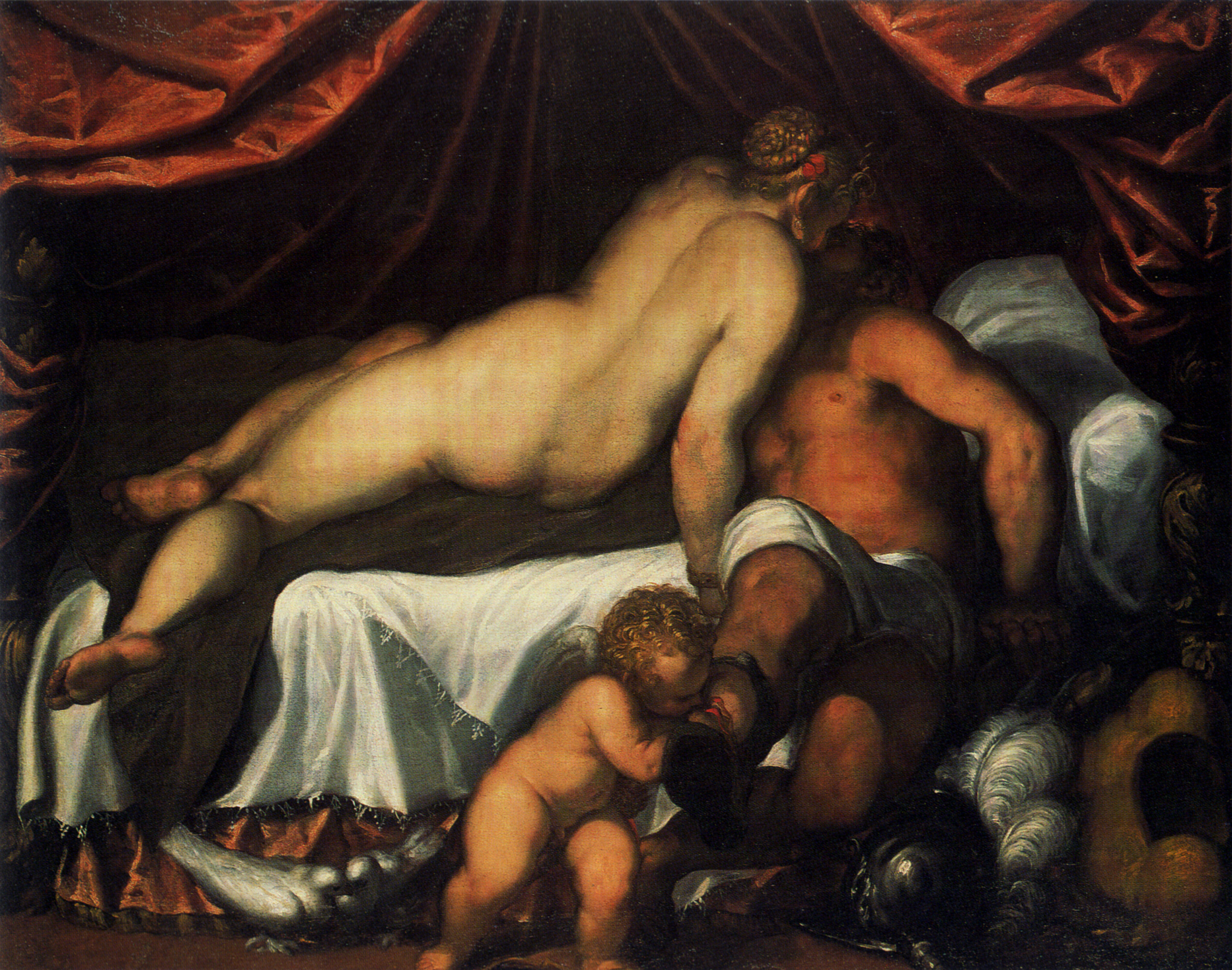
Actually, it most likely was Hillman, I just can’t find the source right now. What Hillman does discuss extensively in his “War is Sublime” chapter of A Terrible Love of War, is the degree to which deities of love and beauty, such as the Mespopotamian Ereshkigal and Hecate and Aphrodite or the Oşun/Erzulie goddesses of the West African and Afro-Caribbean pantheons, all have their dark, murderous, warrior, chthonic side, which is for him the archetypal representation of the aesthetic pull and beauty of war we feel despite it’s horrors, and how in almost all these religious traditions — Mars and Venus, Ares and Aphrodite, Chango and Ochun — are all also lovers. Aries/Mars and Aphrodite/Venus are siblings on top of that. No resisting a man in uniform…
Here’s Hillman:
“Alone, Homer’s Aphrodite has little bellicosity. Zeus pulls her off the battlefield saying, sayng: “Not to you child have been given the works of war.” Nonetheless, Aphrodite did have fierce epithets, Rocher and Kerényi have collected many examples: “the dark one,” or “the black one” [like so many of our Black Virgins?], associates her with the three-faced figure of Hekate of whom witches were fond and to whom dogs were sacrificed, and also the terrible Erinyes among whom she was named as one. The goddess of delicacy and roses was also called androphonos (killer of men) and anosia (the unholy) and tymborychos (the gravedigger). As epitymbidia she is “upon the graves.” There is also a black-bearded Aphrodite; and in Sparta and in Corinth “There was a local cult of warrior Aphrodite.” Concealed within the golden, smiling one, so “feminine,” as we like to say today, are strange images, such as a little terra-cotta of the seventh century BC which shows a bearded Aphrodite emerging from a scrotal sac; and the play on words: philommeides (laughter-loving) and philommedes (to her belong male genitals). In Ovid‘s tale of Anaxarete and Iphis (Metamorphoses 14), Iphis suffers the killing cruelty of the goddess. And we shudder at her deadly revenge on the dashing young Hippolytos for neglecting her.”
And Hillman’s — or any Jungian’s — point throughout, is that the more we neglect these archetypes, the more they’ll take their revenge on humanity in more and more horrendous and ultimately holocaustic form.
Venus and Mars, Palma il Giovane (click)
–
Comment: nikobakos@gmail.com
–


 Jadde: from Bosnia to Bengal