Tag Archives: Albanians

TIMES letter to the editor: “Albanians and Serbs”

4 Dec

Occasionally something encouraging:

November 28, 2013

Albanians and Serbs

To the Editor:

Casting Light on Little-Known Story of Albania Rescuing Jews From Nazis” (news article, Nov. 19) was no surprise to me. I witnessed the humanity of Albanians toward minority groups when I worked in Kosovo from 2000 to 2002.

I explained to a group of Albanian teenagers participating in an education program that I had begun that we could not truly represent Kosovo unless we involved Serbs, Bosnians and other minority groups. There was silence until a young Albanian girl named Pranvera blurted out in Albanian with enthusiasm, “Why not!”

This was followed by the quiet but firm voice of Labinot, who had lost several male members of his family in the war with the Serbs. He said, “I will not block it.”

Shortly thereafter, five female Serbian teenagers joined our project. One eventually assumed a leadership role in the group. While the project was conducted in English, the Albanian teenagers did not hesitate to use their Serbian language skills to bring the Serbian girls up to speed quickly.

The project continues in Kosovo today. Many of the teenagers from my group completed college and now hold professional jobs.

STEPHANIE V. GREPO
New York, Nov. 19, 2013


The writer is director of capacity building at the Institute for the Study of Human Rights, Columbia University.

See previous Jadde post: BESA: A Code of Honor (November 20, 2013)

comment: nikobakos@gmail.com

BESA: A Code of Honor

20 Nov

I can’t convey the indescribable beauty of this word for me.

For a people constantly maligned as bandits and cutthroats:

“Casting Light on Little-Known Story of Albania Rescuing Jews From Nazis”  from today’s Times:

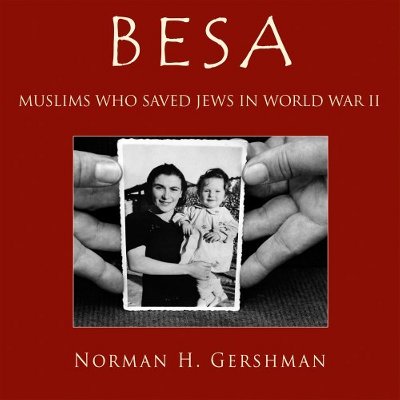
“The exceptional difference in Albania, experts on the episode say, was rooted in a national creed called besa that obligates Albanians to provide shelter and safe passage for anyone seeking protection, particularly if there has been a promise to do so. Failure to act results in a loss of honor and standing. [my emphases]

“It involves uncompromising protection of a guest, even at the point of forfeiting one’s own life,” wrote Shirley Cloyes DioGuardi, an organizer of the New York event whose husband, former Representative Joseph H. DioGuardi, visited Albania in the early 1990s and helped unearth details of the rescue.”

and:

“Another explanation, Ms. Cloyes DioGuardi says, is that in Albania, a Roman Catholic and Eastern Orthodox country until Ottoman rule led to conversions to Islam starting in the 15th century, ethnicity has always trumped religion, and piety is less than zealous. “We knew our enemies wanted to use religion to divide and conquer us, but we knew we had the same blood,” said Akim Alickaj (a-LITCH-kye), an ethnic Albanian raised in Kosovo who owns a New York travel agency and whose father helped rescue Jews. “Religion changes, but nation and blood can’t be changed.””

And a beautiful book that came out last year:

besa_big1

And see Yad Vashem’s site:

splash1

And I guess why I love Afghanistan so much.

comment: nikobakos@gmail.com


Where’s Charlemagne When We Need Him?

1 Jul

Huh?

Not the most brilliant thing I’ve read lately but one important, though really flawed, point:

“BY 1900, only two genuine multinational empires remained. One was the Ottoman, which was by then in the process of abandoning its traditional religious toleration for Turkish nationalism and even racism. [A completely, unfair, simplistic and un-historical assessment]  The other was Austria-Hungary, home to 11 major national groups: a paradise in comparison with what it was to become. Its army had 11 official languages, and officers were obliged to address the men in up to four of them.

It wasn’t terribly efficient, but it secured an astonishing degree of loyalty. It also brought rapid economic and cultural progress to an area extending from the Swiss border to what is today western Ukraine. During World War I, Austria-Hungary fielded eight million soldiers commanded by, among others, some 25,000 Jewish reserve officers. Thirty years later, the nation-states that succeeded the empire sent most of the surviving Jewish officers to the gas chambers.”

Unfortunately, the poison of the ethnic-based nation-state ideal had gotten too far by then.  Even the portrait of Austria-Hungary he gives us is completely idealized and existed in the form he describes for less than a century.
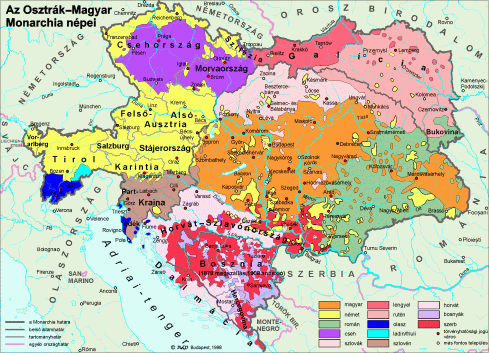
(Click above)

How sweet though, to have lived in a world that interesting instead of the stupefying monotony of the modern nation-state.  But that idea is so powerful — no, not because it’s natural and inborn, but because the modern, bureaucratic state was the first with the technical apparatus to impose it on its population(s) — that it deletes all historical files dealing with plurality.  Not a single European tourist who comes to New York fails to make the same comment: “Amazing…all these peoples living together…” and I want to explain that that’s how humanity lived for most of its civilized existence — or just pull my hair out — but I usually don’t bother.

But that reminds me: I do live in a world that “sweet” and “interesting:”

Mr. Deak (Hungarian?) is also wrong on an even more crucial point.  The Ottoman and Austro-Hungarian empires were not the world’s last multi-ethnic states.  There’s still China.  Most of southeast Asia.  And Russia.  And most ex-Soviet republics.  And certain Latin American countries.  And almost all of Africa.  And Syria and Lebanon and Iraq and Iran and Afghanistan and Pakistan and the world’s great wonder, India.  Even Turkey.  (And wherever ethnic nationalism is a problem in those countries it’s based on the Western intellectual model.)  In fact, most of the world still lives in “plural” situations.  Only Europe (and even in Europe there’s Spain and the U.K.), has an issue with this concept, but it seems to be fading even there.  Its last bastion will probably be the growing number of viciously homogenized, ugly little states of Eastern Europe and the Balkans.  Which brings us back to Michael Ignatieff:

“The misery of the Balkans stems in part from a pathetic longing to be good Europeans — that is, to import the West’s murderous ideological fashions.  These fashions proved fatal in the Balkans because national unification could be realized only by ripping apart the plural fabric of Balkan village life in the name of the violent dream of ethnic purity.”

From Blood and Belonging: Journeys into the New Nationalism, Michael Ignatieff


Where is this Jiannena / Yanya?

23 Jun

Here: “Ioannina”


Comment: nikobakos@gmail.com

And On Albanians generally…

19 May

From Andrew Sullvan’s Daily Beast:

A reader writes:

“The Huff Post’s article is interesting but incomplete.  The best the writer can come up with by way of an explanation for Albania’s progressiveness on gay rights is that it has a strong “feeling of community” among the new gay Albanian activists, who also engage regularly in interventions and collaborations with other human rights NGOs and the government. The real explanation is much more basic – and way more interesting:

Until very recently, Albania was a total mess (I mean, it’s still a mess; you should see it, but it’s all relative). After all, Albania had endured over four decades of insane rule by Enver Hoxha, and when he died in the ’80s, the country descended into a period of prolonged chaos (remember the crazy stock market Ponzi schemes that nearly threw Albania into revolution?). It was just like North Korea would be if suddenly its totally unsocialized citizens were granted the freedom to do whatever the hell they wanted.

Fast forward a few decades and Albania achieved some measure of stability. It’s a new century. Technology advances connect the country to the rest of the world in hitherto unimaginable ways. The borders to neighboring countries like Greece opened up. It’s fair to say that the Albanians’ minds were blown. Exposed now to the Europe that Hoxha tried everything to prevent them from learning about, the population was able to take stock more fully of just how screwed up a country they had.  Decade after decade, as the world advanced, Albania had remained a North Korea-like backwater, and suddenly the veil was lifted. It’s like they’d just come out of stasis.

Albanians were (and still are) aghast at their fate. They’re deeply traumatized and embarrassed by how far they lag behind the rest of Europe, and they are OBSESSED with achieving modernity.  [my emphasis]

I was in Albania pretty recently and have friends there (and in Greece, were a number of them work on my family’s farmland). We talked about the push for gay rights, and they attribute it to the prime minister’s attempt to make up for lost time – to show the rest of Europe that Albania isn’t just making progress; it’s leading the way. The push for marriage equality there wasn’t quite a political stunt, but it was definitely intended to be an attention grabber that would change the rest of the world’s perception of Albania in the most dramatic way possible. The PM didn’t have any particular investment in the issue of gay rights; he just wanted to get Albania on the map FAST.

A few other things come into play, by the way. One is that it’s probably the most progressive Moslem-dominated country on the planet.  Read about Albania’s brand of Islam. It’s something unto itself. In fact, the Saudis have poured money into Albania to establish its brand of Islam there, and the Albanians thus far have had very little interest in embracing it. But that’s a topic for another email.”

Two points on what the above Beast reader writes…  My father was from Albania.  So kudos and high lauds to anyone who testifies and gives witness to what Albanians have been through in this century.  People’s complete ignorance of what an almost fictional Stalinist gulag that whole country was turned into for so many decades always infuriated me — did then and still does twenty years later — as the many friends and acquaintances that I’ve unfairly exploded at upon immediate detection of that ignorance can testify to.  (And then there were the justifiable “hay-siktiria”: like at lefty Greeks in the eighties who used to tell me everything in Albania was cool, or at Neo-Greek society in general who had emotionally abandoned ethnic Greeks in Albania until it rediscovered its claptrap nationalism in the nineties.)

Surprisingly I don’t find them to be quite as damaged as the writer says, however — they’re a pretty resilient bunch, to say the least — and I think they’re too proud, as well, for us to so easily ascribe Berisha’s comments to the channelling of some collective need to curry Western admiration; that’s probably a Greek projection.  When I went to Albania in 1992 to visit my father’s village and see relatives for the first time (my father never saw his parents again after 1945; my grandfather disappeared into a prison camp in the early sixties and my grandmother soldiered on in solitude until she died in 1989, just a year before we would’ve been able to see her again) I expected to find them all in shocked grief.  Instead — there were tears, yes — I found them in that state of relieved giddiness that one feels upon waking from a life-threatening nightmare and that they had almost immediately converted their experience into something like an absurdist performance piece that they had had to sit through and hadn’t quite understood but whose remnant bad taste they needed to laugh off at once.  To hear an eighty-year-old woman cackle about having to attend a “social criticism” meeting in what had been her church and confess that, yes, she kept two chickens more than what was permitted by the village collective’s policy, was a real lesson in how smart black humour sustained the peoples of Eastern Europe through the murderous idiocy of communism.  And, like the writer says, they were brimming with an enthusiasm to embrace anything that meant a new life.  Some beautiful parts of my village’s, and the country’s, culture may have been lost through that enthusiasm but we can do without any tradition that’s only preserved in the aspic of that kind of tyranny.

Some older folks in my village, Dervitsani, in the valley of Dropoli, the women with the characteristic white headdress of the region (click)  (photo from Michel Setboun)

Immigrants from Albania, of whatever ethnicity, brought lots of that strength and energy to Greece as well.  In the 1990’s, when Albanians flooded Greece and Greeks were faced with the horrifying realization that their northern border hadn’t really been with Austria all that time, many of them predictably behaved like racist jerks, a performance they’re repeating with others right now, except more viciously because this time they’re scared.  The Eurolatry and the essentially colonized core of the Neo-Greek mind produces a kind of delusional isolation that may be more impermeable than Albania’s ever was — a historical-emotional bubble of ignorance, a probably now unhealable neurotic disconnect from the subject’s surroundings — that made it hard for Greeks at the time to realize that that migration was only the most recent wave in a millenia-long process* that makes Greeks and Albanians practically co-peoples in so many ways.  There’s a show running in Athens now, with a sister production here in Astoria in New York, called “In-Laws from Tirane” — silly but fun and kind of smart ultimately — whose essential thesis is precisely that.  It opens with one of the main characters fuming that that year’s high school valedictorian was an Albanian immigrant kid and got to lead the town’s Independence Day parade, the irony — intentional or not — being that much of the Greek “independence” struggle from the Ottomans was fought by men who didn’t speak a word of anything but Albanian.  It’s made me happy to see how well-integrated a part of Greek life they’ve become lately (even as it crumbles around them) and what an almost American-style immigrant success story they are in so many ways.  Many have even moved on to the U.S., and are over-represented in entrepreneurial life here in Greek New York; the wildly successful seafood restaurant “Kyklades” in Astoria, known throughout the boroughs (but which I have some culinary gripes with), is owned by an Albanian who may not have seen the sea till he was fifteen.  They certainly have the kind of immigrant work ethic that puts everyone around them to shame.  When I was in Greece in 2010 I was initially baffled by the ubiquitous presence of young, attractive, well-mannered waiters and waitresses and found myself wondering who they were, since no Athenian kid has condescended to work as a waiter in about forty years, until I asked once or twice and then stopped.  They were all Albanian.

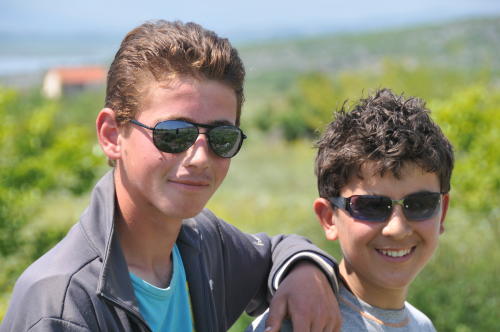
Two boys, Northern Albania, from Michael Totten

As for the writer’s Albanian “brand of Islam,” he means a heavily Bektashi-influenced form which one can probably apply to Balkan Islam in general.  The Bektashis are a Sufi order of almost Shia-like content and some pretty attractively unorthodox views of its own; on Wiki it’s surprisingly placed as part of an “Alevism” series, and they share some core beliefs and rituals, but I don’t know if either Alevis or Bektashi followers will ever tell you they’re related.  Centuries of harassment and outright persecution made both, but Alevis especially, fairly secretive about themselves and their practices; that changed radically in Turkey after some horrific twentieth-century episodes and the subsequent finding of a strong and admirably outspoken political voice on their part, but even now you get the sense that an Alevi (Turk or Kurd) needs to know you a little before he tells you.  I also don’t think either will tell you they’re Shiites: http://en.wikipedia.org/wiki/Bektashi_Order  http://en.wikipedia.org/wiki/Alevi (They’re both really interesting — read about them.)  The Bektashi order was widely associated with the Janissary corps; the classical period Janissary corps was heavily Albanian and Serbian in origin; maybe its influence in the Balkans was a circular process — I don’t know.  If you clear away the boogeyman-like associations the devsirme has in Balkan Christian legend, one of the things you learn is that many Janissaries, and even those in the Ottoman slave corps generally, maintained more contact with their culture and even community of origin than one would think (man, am I gonna get it for that one…).

Devshirme: http://en.wikipedia.org/wiki/Dev%C5%9Firme

World Headquarters of the Bektashi Community in Tirane, Albania

*Italians had trouble realizing this at the same time, meaning the almost equally constant history of Albanian migration to southern Italy and Sicily.  See Gianni Amelio’s beautiful 1994 Lamerica, which is the story of how a cool, smug Young European Sicilian gets stranded in Albania and realizes that he’s only a generation away from being counted among the wretched of the earth himself — and how dangerous it is to forget that.  It should be mandatory viewing in Greece right now.

Comment: nikobakos@gmail.com

“Hapja e ekspozitës LGBT “Kukafshehti”

14 May

From the American Anthropological Association, Mindy Michels Ph.D.: http://www.huffingtonpost.com/american-anthropological-association/albania-gay-rights_b_1497865.html :

“Next week Albanian activists will host the country’s first-ever gay, lesbian, bisexual, and transgender (LGBT) photo exposition, with invitations sent out to ambassadors and foreign dignitaries. More important than the presence of diplomats, though, is the fact that the exhibition is open to the public, and that the exhibition, part of the activities for the International Day Against Homophobia, will be covered by the media. Attendees will walk through a labyrinth of one-meter-square photos that evoke the feeling of being an LGBT person in Albania. Such a high-profile event featuring same-sex desire is extraordinary in this small, Balkan country. What is even more exceptional is the recent history leading to this moment.

“Not quite three years ago, lesbian, gay, bisexual, and transgender issues suddenly became Albanian headlines when Prime Minister Sali Berisha (who is still in office) unexpectedly declared his support for same-sex marriage at a televised meeting of his ministers. The surprising July 2009 comment came amidst his expected support for a comprehensive national anti-discrimination law.

“…Today, to the surprise of the Albanian public, Albanian gay activists are stepping forward, showing their faces, and claiming their right to participate in the conversation about their lives.

“What lies behind this remarkable and swift transformation? In 2009 fears about possible violence, discrimination, lack of acceptance, and, perhaps most importantly, the shame that it would cause family members meant that not one person in Albania would publicly acknowledge same-sex attraction. Today, there are LGBT activists openly protesting the homophobic and violent remarks of governmental officials. Young LGBT Albanians are giving presentations in college classrooms and going on television talk shows, educating students and the Albanian public about the realities of their lives. Leaders of LGBT organizations are speaking out in newspapers and on television. There is widespread publicity for the photo exhibit. What made it possible for such change to happen in three years, for these new activists to overcome the barriers to public action and dialogue?”


Go figure…


Comment: nikobakos@gmail.com

“…lessons on patriotism, but not in a patriotic way…” Djokovic on Kosovo, Croats, etc.

22 Apr


Something we should all strive for — one more reason to love this kid.

I just knew it, though.  I knew he was southern, or from an Old Serbia/Kosovo family.  What is it exactly?  Can I dare say it’s because he looks so Albanian?  Nobody will get angry, right?  I’ve established my Serbophile credentials, haven’t I?


Comment: nikobakos@gmail.com