Tag Archives: Epiros

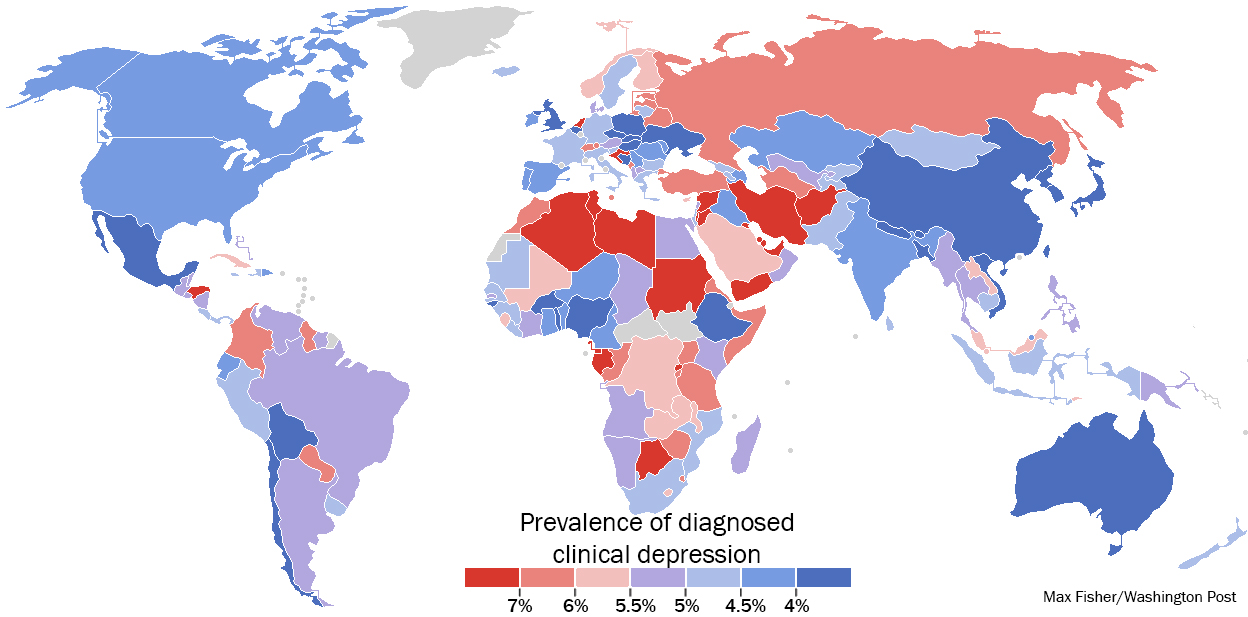
“The most depressed country is Afghanistan, where more than one in five people suffer from the disorder.”

13 Nov

From Washington Post:  “The Middle East and North Africa suffer the world’s highest depression rates, according to a new study by researchers at Australia’s University of Queensland — and it’s costing people in the region years off their lives.”

Aside from the real conditions that might explain this — real conditions — there are some really big questions though on what depression means to people.  Is ‘sadness’ or Freudian ‘melancholy’ a recognized cultural trait in these regions, a way of seeing life, even an aesthetic sensibility and not at all a debilitating force? perhaps even an empowering one? Because then we’re talking about an entirely different set of issues that I think this study may have missed.
depression-rates

An American will always tell you his life is going great, no?  Meanwhile, we have Oum Kalthoum.  And if you want to find a suite like her stunning “El Atlal” a marker of depression, you’ve got the whole culture/s wrong.  And I did not use the word “empowerment” above lightly; when you’ve seen how the public reacts in footage like this, or at a South Asian or Afghan poetry session, or even in the ritualized grieving at a funeral in Epiros, you’ll see that the participants are not ‘debilitated’ or ‘depressed’ in the least by the  emotional mood that’s generated — quite the opposite.

(Note: again, as with all this music, this is a suite, with a musical narrative structure essential to appreciating it; not a 2:30 CD track.  When you have the time, give it a chance as a whole piece. And she was such a brilliant performer…  Here’s a go-to site for translation of Arab music: Arabic Music Translation)

“Al Atlal” by the way, makes a beautiful ‘appearance’ in Anthony Shadid’s moving House of Stone: A Memoir of Home, Family, and a Lost Middle East.)

Here are the lyrics in English and Arabic:

The Ruins

My heart, don’t ask where the love has gone
It was a citadel of my imagination that has collapsed
Pour me a drink and let us drink of its ruins
And tell the story on my behalf as long as the tears flow
Tell how that love became past news
And became another story of passion
I haven’t forgotten you
And you seduced me with a sweetly-calling and tender tongue
And a hand extending towards me like a hand stretched out through the waves to a drowning person
You seduced me with the saliva (of a kiss) that a night traveler thirsts for
But where is that light in your eyes?
My darling, I visited your nest one day as a bird of desire singing my pain
You’ve become self-important, spoiled and capricious
And you inflict harm like a powerful tyrant
And my longing for you cauterized my ribs (soul or insides)
And the waiting was like embers in my blood
Give me my freedom, release my hands
Indeed, I’ve given you yours and did not try to retain anything
Ah, your chains have bloodied my wrists
I haven’t kept then nor have they spared me
Why do I keep promises that you do not honor?
When will this captivity end, when the world is before us?
He is far away, my enchanting love
Full of pride, majesty and delicacy
Sure-footed walking like an angel with oppressive beauty and rapacious glory
Redolent of charm like the breeze of the hills
Pleasant to experience like the night’s dreams
I’ve lost forever the charm of your company that radiated brilliantly
I, wandering in love, a bewildered butterfly, approached you
And between us, desire was a messenger and drinking companion that presented the cup to us
Had love seen two as intoxicated as us?
So much hope we had built up around us
And we walked in the moonlit path, joy skipping along ahead of us
And we laughed like two children together
And we ran and raced our shadows
And we became aware after the euphoria and woke up
If only we did not awaken
Wakefulness ruined the dreams of slumber
The night came and the night became my only friend
And then the light was an omen of the sunrise and the dawn was towering over like a conflagration
And then the world was as we know it, with each lover in their own path
Oh sleepless one who slumbers and remembers the promise when you wake up
Know that if a wound begins to recover another wound crops up with the memory
So learn to forget and learn to erase it
My darling everything is fated
It is not by our hands that we make our misfortune
Perhaps one day our fates will cross when our desire to meet is strong enough
For if one friend denies the other and we meet as strangers
And if each of us follows his or her own way
Don’t say it was by our own will
But rather, the will of fate.

Al Atlal (الأطلال)

شعر: إبراهيم ناجي غناء: أم كلثوم ألحان: رياض السنباطي
يا فؤادي لا تسل أين الهوى كان صرحاً من خيالٍ فهوى
اسقني واشرب على أطلاله وأروي عني طالما الدمع روى
كيف ذاك الحب أمسى خبراً وحديثاً من أحاديث الجوى

لست أنساك وقد أغريتني بفم عذب المناداة رقيق
ويدٍ تمتد نحوي كيدٍ من خلال الموج مدت لغريق
وبريق يظمأ الساري له أين في عينيك ذياك البريق

يا حبيباً زرت يوماً أيكه طائر الشوق أغني ألمي
لك إبطاء المذل المنعم وتجلي القادر المحتكم
وحنيني لك يكوي أضلعي والثواني جمرات في دمي

أعطني حريتي أطلق يديا إنني أعطيت ما استبقيت شيئا
آه من قيدك معصمي لم أبقيه فما أبقى عليا
ما احتفاظي بعهود لم تصنها وإلام الأسر والدنيا لديا

أين من عيني حبيبي ساحر فيه عزُ وجلال وحياء
واثق الخطوة يمشي ملكاً ظالم الحسن شجي الكبرياء
عبق السحر كأنفاس الربا تائه الطرف كأحلام المساء
أين مني مجلسٌ أنت به فتنة…. س…وس..
ها أنا حب وقلب هائمٌ وفراشٌ حائرٌ….من كذا….

ومن الشوق رسولٌ بيننا ونديمٌ قدم الكاس لنا
هل رأى الحب سكارى مثلنا كم بنينا من خيالٍ حولنا
ومشينا في طريقٍ مقمرٍ تجد الفرحة فيه قبلنا
وضحكنا ضحك طفلين معاً وعدونا فسبقنا ظلنا

وانتبهنا بعدما زال الرحيل وأفقنا ليت أنا لا نفيق
يقظة طاحت بأحلام الكرى وتولى الليل والليل صديق
وإذا النور نذير طالع وإذا الفجر مطلٌ كالحريق
وإذا الدنيا كما نعرفها وإذا الأحباب كلٌ في طريق

أيها الساهر تغفو تذكر العهد وتصحو
وإذا ما التئم جرح جد بالتذكار جرح
فتعلم كيف تنسى وتعلم كيف تمحو

يا حبيبي كل شيء بقضاء ما بأيدينا خلقنا ضعفاء
ربما تجمعنا أقدارنا ذات يوم بعدما عز اللقاء
فإذا أنكر خلٌ خله وتلاقينا لقاء الغرباء
ومضى كلٌ إلى غايته لا تقل شئنا فإن الحظ شاء
فإن الحظ شاء فإن الحق شاء

Where is this Jiannena / Yanya?

23 Jun

Here: “Ioannina”


Comment: nikobakos@gmail.com

Turkey in Europe

22 Apr

According to Stephen Kinzer, New York Times correspondent and the paper’s bureau chief in Istanbul for a good part of the nineties, the appeal of EU membership to those countries waiting for it is (or was) political, social, and economic.  “For Turkey it is also psychological,” he writes in his 2001 Crescent and Star:

“The central question facing Turks today is whether their country is ready for full democracy, but behind that question lies a more diffuse and puzzling one: who are we?  The Ottomans knew they were the servants of God and lords of a vast and uniquely diverse empire.  The true heart of their empire, however, was not Anatolia but the Balkans…  But by caprice of history the founders of the Turkish republic found themselves bereft of the Balkans and masters instead of Anatolia.  To make matters worse, through a series of twentieth-century tragedies Anatolia lost most of the Armenians, Greeks and Jews who had given it some of the same richness that made the Balkans so uniquely appealing.”

There’s a lot there I’m not sure of, like the Ottomans’ heart having been in the Balkans and their backs turned on Anatolia.  I also don’t know if “who are we?” isn’t too categorical a way to phrase the dilemma Kinzer is talking about.  Unlike Greeks, Turks know who they are; their growing willingness to accept, not only the former existence of their neighbors among them, but the plurality of their own ethnic make-up would indicate that: Albanian fraternal associations, Tatar and Circassian language classes, seem to be coming out of the woodwork of the Republic’s forced homogenization, and even the lay-low-and-keep-your-head-down Alevis have found a new courage in asserting themselves.  (Poor Republic: no sooner does it harass one minority out of its existence, another one pops up to take its place.)  That’s a process that requires confidence, whereas we remain isolated in our ignorant dream of purity — and banging our feet to prove it to the rest of the world on top of it — a ringing sign of insecurity.  As mangled as Turks’ knowledge of themselves may have become by their own nationalism, I think phenomena like nostalgia for the multiethnic or the Neo-Ottomanism that has pervaded cultural life and even motivated political life and foreign policy in Turkey recently (and I don’t think that’s a bad thing or necessarily a “threat” to anyone; we, Greeks, might want to take advantage of it actually) is an attempt to right that disfigurement, not a deep existential reorientation.  Proof might be that since Kinzer wrote his book in 2001, Turkish membership in the European Union has pretty much become a dead-in-the-water issue.  And that may be partly because, in almost head-on contrast to Kinzer’s interpretation, Turkey was looking for political and economic benefits and not for Europe to validate its psychological needs, as the Neo-Greek statelet always has since its beginnings, a craven and cringingly embarrassing pandering to the West’s classical image of what Greeks are supposed to be being the foundation of Neo-Greek identity.  However the Ottomans may have felt about the Balkans or wherever modern Turks end up with their renewed embracing of the Ottoman past, they seem to be increasingly feeling — even the old, staunchly Kemalist bourgeoisie, or at least their children — that they don’t need European validation to prove they’re part of a civilization that they’re not.  And good for them.  I wonder when we’ll get the message.

On a lighter note, it’s not often one hears the Balkans described as “so uniquely appealing.”  It’s a line I’ll have to remember.  Often when people find out I’m Greek, they launch into delirious and happy memories of the Aegean and little white houses and sparkling blue waters and then I have to watch their faces drop as I tell them: “Well, the part of Greece my family is from is really more the Balkans than the Mediterranean…  And it rains all the time.”

Landscape approaching my mother’s village, in its usual mood. (click)

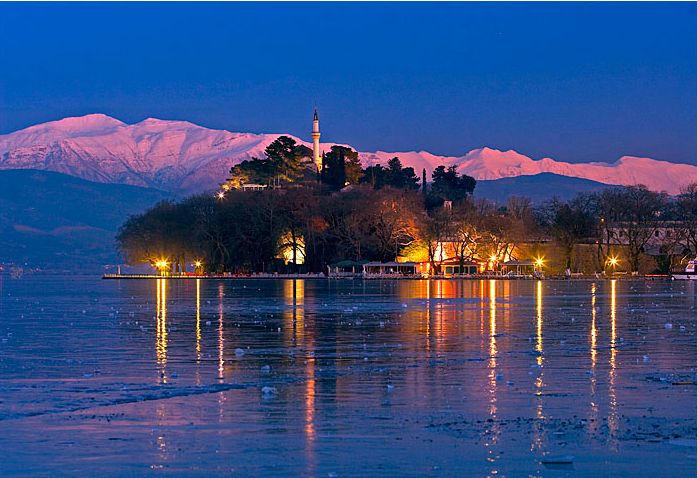
But then it is often “so uniquely appealling,” to get back to the Turks and the Balkans.  The main city of the region (Epiros) is Jiannena/Yanya, a beautiful little city by a lake that always had an air of luxuriant civility about it, proof of which may be that the Greek population didn’t rush to pull down the minarets or demolish all the mosques of the city as soon as the last Turks left in the twenties.*  It’s one of those Balkan cities the Turks loved.  Here’s a winter photo of Yanya’s main cami, the Aslan Pasha Mosque, overlooking the icy lake, below. (click)

Jiannena deserves a post of its own.  I gotta dig up some 2010 notes I have.

* On the other hand, the city government and developers have done all they can since WWII, including harassment and straight-out vandalism, to expropriate the city’s large and very romantic Jewish cemetery, which unfortunately for the city’s 40 surviving Jews, sits on some prime real estate.  Last I heard they had taken the issue to the EU, which makes me very happy.  Maybe the economic slump will give them a reprieve.  More on Jiannena’s Jews in the future.


Comment: nikobakos@gmail.com

Corn Bread, Hog Maw and Chitterlin’

9 Apr

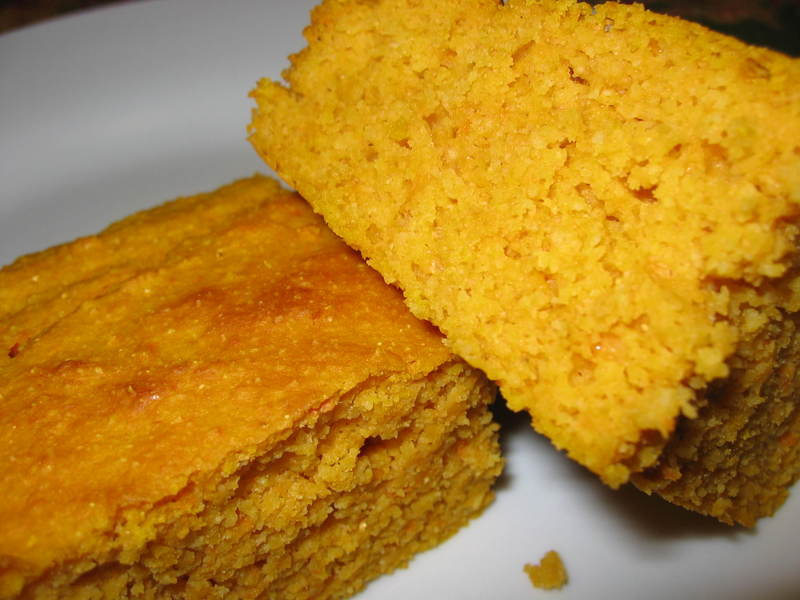
I’ve been reading so much about the Balkans lately (I’m on my third consecutive read of Milovan Djilas’ Land Without Justice) that I’ve developed an intense craving for cornbread — serious, hard, Balkan cornbread, what they call “bobota” in Epiros or “proja” in Serbia and Montenegro; I don’t know if they do so anywhere else.  I also miss a kind of cornbread burek they used to make – “bliatsaria” they used to call it – which was two layers of cornbread with a burek filling in between: spinach, leeks, feta, maybe eggs.  Corn was the poor man’s wheat; it yields far greater amounts of grain per acre than wheat does and will grow almost anywhere, like in my mother’s village, where after two feet you hit bedrock.

Does anybody have a recipe?  Somebody from the Epiros-Albania-Montenegro-Sandjak axis, or someone of Pontio-Karadenizli background is most likely to know.  The sweet, cake-like recipes  that people have posted in this recent New York Times article definitely won’t produce the dry, nearly unswallowable texture I’m looking for.

The next day, when it became truly rock hard (kids would use it in slingshots my mom used to say), they used to break it up into chunks and dump it into buttermilk (xynogalo, ayran, lassi) to make it edible.  I know that traditional cornbread in the American South used to be like that too because once in a conversation about food with a fifty-ish Black woman here in New York, I mentioned the buttermilk practice and she doubled over laughing, then smiled and snorted with that great look of feigned embarrassment and homey joy that Black Americans make when they’re talking about something – a guilty pleasure usually – that’s too down-home or too ghetto to own up to.  She couldn’t believe that people half way round the world used to eat stale cornbread mush with buttermilk the way they used to.

And tell the folks in the comments that lard is good for you and that, yes, it’s time to talk about chitterlings.  Easter’s coming up, innit?

Here’s Joe Cuba’s 1966 boogaloo classic “Bang Bang” which I used to think was called “Cornbread, Hog Maw and Chitterlins” because those are the only real lyrics.  What’s boogaloo?  “…the first Nuyorican music”: Boogaloo

Comment: nikobakos@gmail.com

The Banner Photos

7 Apr

A few people have asked what the two photographs at the top of the blog are of and, even more, what their juxtaposition is supposed to mean?

The photo on the left is of a coffeehouse in Istanbul at the turn of the previous century.  The photo on the right is one taken by me in the mid-eighties of children in the Vlach village of Samarina in the Pindos mountains, near the watershed that separates Epiros (where my family is from) from western Greek Macedonia.  As for the relationship between the two, I’ll leave that to readers to ponder or figure out if they care to.  As a certain Nasreddin Hoca joke (Mullah Nasreddin in Iranian lands) much beloved by my father says: “Well, if you don’t know, go home…”

Maybe I’ll make a competition out of it…

Again, any questions: what’s a Vlach? where’s Epiros? why do I call it Greek Macedonia?  Please ask.


Comment: nikobakos@gmail.com