Tag Archives: Lebanon

Today is the Feast of the Prophet Elijah

20 Jul

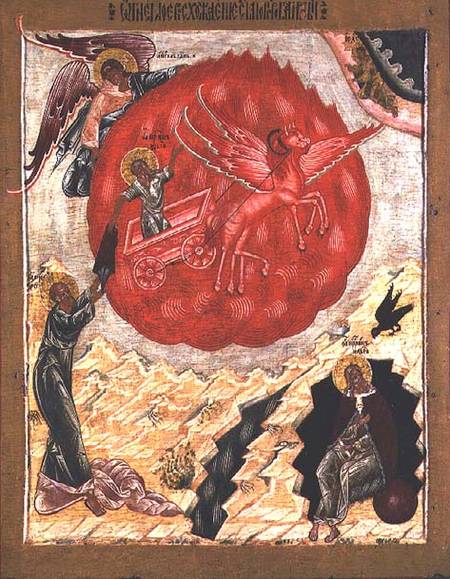
The Russians, with their flair for red, always made the most beautiful Elijah icons and were always partial to the “fiery ascent to heaven” part of his story.  Greek images of Elijah usually focus on the image in the lower right of this icon, that of Elijah in the cave in the wilderness and the “still, small voice:”

And he came thither unto a cave, and lodged there; and, behold, the word of the Lord came to him, and he said unto him, What doest thou here, Elijah?

10 And he said, I have been very jealous for the Lord God of hosts: for the children of Israel have forsaken thy covenant, thrown down thine altars, and slain thy prophets with the sword; and I, even I only, am left; and they seek my life, to take it away.

11 And he said, Go forth, and stand upon the mount before the Lord. And, behold, the Lord passed by, and a great and strong wind rent the mountains, and brake in pieces the rocks before the Lord; but the Lord was not in the wind: and after the wind an earthquake; but the Lord was not in the earthquake:

12 And after the earthquake a fire; but the Lord was not in the fire: and after the fire a still small voice.

13 And it was so, when Elijah heard it, that he wrapped his face in his mantle, and went out, and stood in the entering in of the cave. And, behold, there came a voice unto him, and said, What doest thou here, Elijah?

9 καὶ εἰσῆλθεν ἐκεῖ εἰς τὸ σπήλαιον καὶ κατέλυσεν ἐκεῖ καὶ ἰδοὺ ῥῆμα κυρίου πρὸς αὐτὸν καὶ εἶπεν τί σὺ ἐνταῦθα Ηλιο

10 καὶ εἶπεν Ηλιου ζηλῶν ἐζήλωκα τῷ κυρίῳ παντοκράτορι ὅτι ἐγκατέλιπόν σε οἱ υἱοὶ Ισραηλ τὰ θυσιαστήριά σου κατέσκαψαν καὶ τοὺς προφήτας σου ἀπέκτειναν ἐν ῥομφαίᾳ καὶ ὑπολέλειμμαι ἐγὼ μονώτατος καὶ ζητοῦσι τὴν ψυχήν μου λαβεῖν αὐτήν

11 καὶ εἶπεν ἐξελεύσῃ αὔριον καὶ στήσῃ ἐνώπιον κυρίου ἐν τῷ ὄρει ἰδοὺ παρελεύσεται κύριος καὶ πνεῦμα μέγα κραταιὸν διαλῦον ὄρη καὶ συντρῖβον πέτρας ἐνώπιον κυρίου οὐκ ἐν τῷ πνεύματι κύριος καὶ μετὰ τὸ πνεῦμα συσσεισμός οὐκ ἐν τῷ συσσεισμῷ κύριος

12 καὶ μετὰ τὸν συσσεισμὸν πῦρ οὐκ ἐν τῷ πυρὶ κύριος καὶ μετὰ τὸ πῦρ φωνὴ αὔρας λεπτῆς κἀκεῖ κύριος

13 καὶ ἐγένετο ὡς ἤκουσεν Ηλιου καὶ ἐπεκάλυψεν τὸ πρόσωπον αὐτοῦ ἐν τῇ μηλωτῇ ἑαυτοῦ καὶ ἐξῆλθεν καὶ ἔστη ὑπὸ τὸ σπήλαιον καὶ ἰδοὺ πρὸς αὐτὸν φωνὴ καὶ εἶπεν τί σὺ ἐνταῦθα Ηλιου
I don’t know what Arab images of Elijah tend to look like, but Elias is a very common name among Levantine Christians; Mar Elias is the name of the only predominantly Christian Palestinian refugee camp in the Middle East, south of Beirut.


Comment: nikobakos@gmail.com

Where’s Charlemagne When We Need Him?

1 Jul

Huh?

Not the most brilliant thing I’ve read lately but one important, though really flawed, point:

“BY 1900, only two genuine multinational empires remained. One was the Ottoman, which was by then in the process of abandoning its traditional religious toleration for Turkish nationalism and even racism. [A completely, unfair, simplistic and un-historical assessment]  The other was Austria-Hungary, home to 11 major national groups: a paradise in comparison with what it was to become. Its army had 11 official languages, and officers were obliged to address the men in up to four of them.

It wasn’t terribly efficient, but it secured an astonishing degree of loyalty. It also brought rapid economic and cultural progress to an area extending from the Swiss border to what is today western Ukraine. During World War I, Austria-Hungary fielded eight million soldiers commanded by, among others, some 25,000 Jewish reserve officers. Thirty years later, the nation-states that succeeded the empire sent most of the surviving Jewish officers to the gas chambers.”

Unfortunately, the poison of the ethnic-based nation-state ideal had gotten too far by then.  Even the portrait of Austria-Hungary he gives us is completely idealized and existed in the form he describes for less than a century.

(Click above)

How sweet though, to have lived in a world that interesting instead of the stupefying monotony of the modern nation-state.  But that idea is so powerful — no, not because it’s natural and inborn, but because the modern, bureaucratic state was the first with the technical apparatus to impose it on its population(s) — that it deletes all historical files dealing with plurality.  Not a single European tourist who comes to New York fails to make the same comment: “Amazing…all these peoples living together…” and I want to explain that that’s how humanity lived for most of its civilized existence — or just pull my hair out — but I usually don’t bother.

But that reminds me: I do live in a world that “sweet” and “interesting:”

Mr. Deak (Hungarian?) is also wrong on an even more crucial point.  The Ottoman and Austro-Hungarian empires were not the world’s last multi-ethnic states.  There’s still China.  Most of southeast Asia.  And Russia.  And most ex-Soviet republics.  And certain Latin American countries.  And almost all of Africa.  And Syria and Lebanon and Iraq and Iran and Afghanistan and Pakistan and the world’s great wonder, India.  Even Turkey.  (And wherever ethnic nationalism is a problem in those countries it’s based on the Western intellectual model.)  In fact, most of the world still lives in “plural” situations.  Only Europe (and even in Europe there’s Spain and the U.K.), has an issue with this concept, but it seems to be fading even there.  Its last bastion will probably be the growing number of viciously homogenized, ugly little states of Eastern Europe and the Balkans.  Which brings us back to Michael Ignatieff:

“The misery of the Balkans stems in part from a pathetic longing to be good Europeans — that is, to import the West’s murderous ideological fashions.  These fashions proved fatal in the Balkans because national unification could be realized only by ripping apart the plural fabric of Balkan village life in the name of the violent dream of ethnic purity.”

From Blood and Belonging: Journeys into the New Nationalism, Michael Ignatieff


Things I didn’t know…

25 May

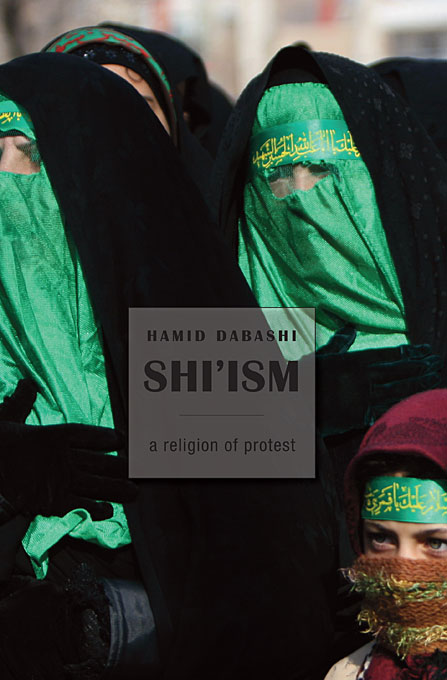
…till Syria got me asking: that there are Alawites in Lebanon too; that Hezbollah supports the Asad regime even though (I would’ve previously thought) they’re Alawite; that Alawites and Anatolian Alevis aren’t as consciously related as lots of people think, though they’re similar in many concepts and rites and are probably both a product — or remnant — of inherently heterodox frontier zones between Byzantine-Arab-Turkic-Iranian spiritual worlds, before the lines hardened; that the relationship of both to “mainstream” Shi’ism varies in intensity and in the degree to which they’re accepted by that mainstream as part of the fold (Alawites, as in the Asad-Hezbollah relation, more than Anatolian Alevis, who are kind of a world of their own); that Iran’s support of Hezbollah is part of a relationship that’s neither new nor one-way — that, in fact, Shi’ia clerics and theologians from southern Lebanon/Jabal Amil (including the Sadr clan) were instrumental in establishing Shi’ism as Safavid Iran’s state creed in the sixteenth century; that that happened in a kind of simultaneous, binary process, as such things tend to, with Ottoman Turkey becoming more orthodoxly Sunni…and more.

This is a cool, very informative book, though sometimes so personal and emotional and out-there-Persian that it becomes confusing as straight history or sociology:

Shi’ism: A Religion of Protest, Hamid Dabashi: http://www.amazon.com/Shiism-Religion-Protest-Hamid-Dabashi/dp/0674049454/ref=sr_1_1?s=books&ie=UTF8&qid=1337903598&sr=1-1

and Distant Relations: Iran and Lebanon in the Last 500 Years, H.E. Chehabi: http://www.amazon.com/Distant-Relations-Iran-Lebanon-Years/dp/1845112555/ref=sr_1_1?s=books&ie=UTF8&qid=1337903763&sr=1-1

Otherwise not good though…not Syria, not another spillover into Lebanon or its again becoming the catch-basin of Levantine conflict. None of it…

Men in a Beirut suburb burned tires and blocked roads after fellow Lebanese Shiites were abducted in the Syrian city of Aleppo. (Anwar Amro/Agence France-Presse — Getty Images)

http://www.nytimes.com/2012/05/23/world/middleeast/abduction-of-lebanese-shiites-in-syria-stokes-new-tensions.html?ref=middleeast#


Comment: nikobakos@gmail.com

Fairouz Wa habibi Good Friday 1964

13 Apr


I thought Fairouz was Orthodox; the priest and whole setting look Maronite to me.  But I was once violently yanked aside at a party by a Lebanese friend of mine and strictly forbidden from ever asking any Lebanese person’s religious affiliation (I guess I had just done so), so let’s just enjoy this rare clip and Fairouz’ beautiful voice.  Does anyone know what, if any, hymn this corresponds to in the Greek Church?  Or even the lyrics?

Comment: nikobakos@gmail.com