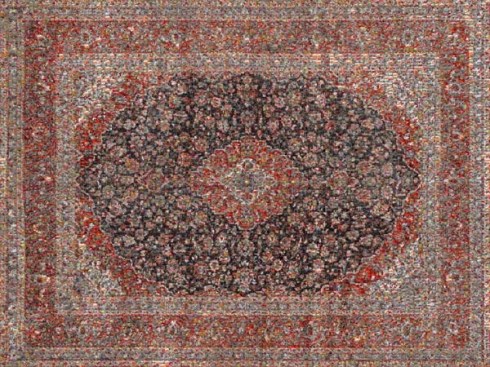
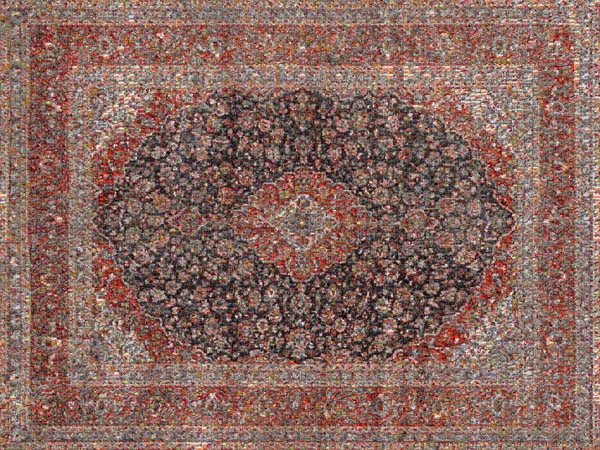
The above “carpet,” by Pakistani artist Rashid Rana, is made up of thousands…tens of thousand? hundreds?…of photographs taken of animals being slaughtered* in homes, streets and slaughterhouses all over Karachi. To be honest, I don’t know if all these photos were taken on Eid al-Adha or just over a period of time, but it seemed appropriate to the day. Eid al-Adha, known as Kurban Bayrami in Turkey and in the Balkans, Eid e Qorban in the Iranian world, commemorates the willingness of Ibrahim (Abraham) to sacrifice his son (Ismail, right? not Isaac…) according to God’s will. It also marks the end of the Hajj. Anyone who can afford to, sacrifices an animal and distributes part of the meat to neighbors, relatives and the poor. I think for many Muslims it’s the major holiday of the year. It’s always struck me as a feast that had some of the mixed solemnity-joy of Easter (aside from just the obvious element of the sacrifice of the Son), as opposed to the candied, Christmasy festivesness of Eid al Fitr.
(Kurban, which I assume is an Arabic word, is the source of the beautiful Farsi expression “Qorban-e-to” “your sacrifice” — meaning “you’re welcome” or “at your service” or “my pleasure” — I’m all yours; do with me as you wish…here’s my throat…)
Below is a detail of Rana’s piece:

I wish there were a more close-up shot of it available somewhere. It was beautiful.
It was shown here in 2010 at the Asia Society as part of an exhibit of contemporary Pakistani artists called Hanging Fire: Contemporary Art from Pakistan, which was really fascinating (starting with the title).
Some of my other favorite pieces at this exhibit was the work of Imran Qureishi, who does Mughal-style, Shah Jahan period-type portraits (one of my great aesthetic weaknesses) with figures from contemporary Pakistani reality:


But perhaps the most interesting pieces for me were from Faiza Butt, an artist born in Lahore but now working in London. Her discussion of her work should be checked out:
“My choice of medium was a reactionary response to my years as a student at the Slade School of Art, where large, physical, muscular and “technologically advanced” work held more worth than contemplative intellectual responses. [my emphasis] I started to create ambitious, highly detailed drawings with ink pens that rival “spectacles” of work and focus on art historical and gender issues.”
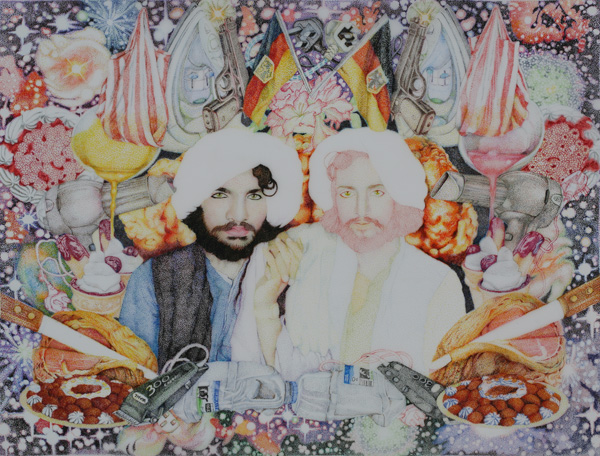
At the the exhibit were displayed two collage pieces she did out of the famous Taliban photos discovered by German photographer Thomas Dworzak in photo studios in Kandahar in 2001. The photographers were happy to give them to him; ‘most of them are dead” one said. Butt called the pieces she made out of these photos: “Get out of my dreams – I and II”:
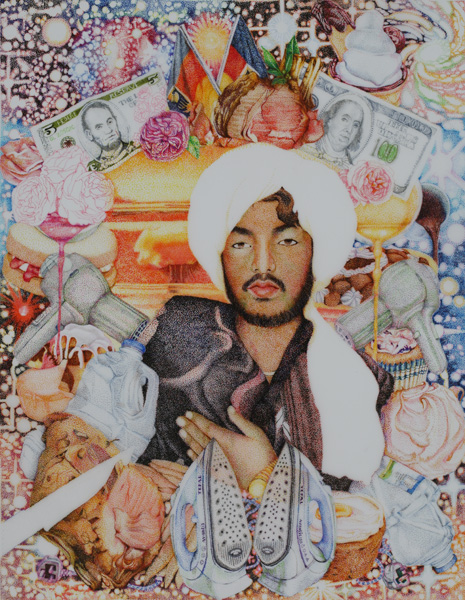
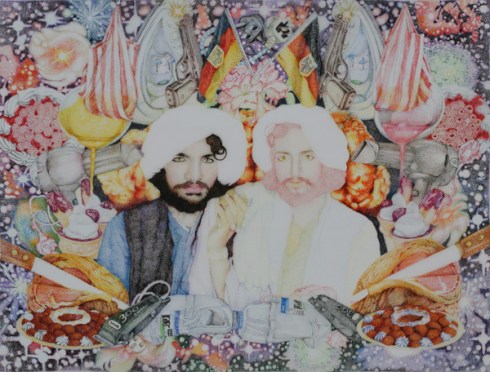
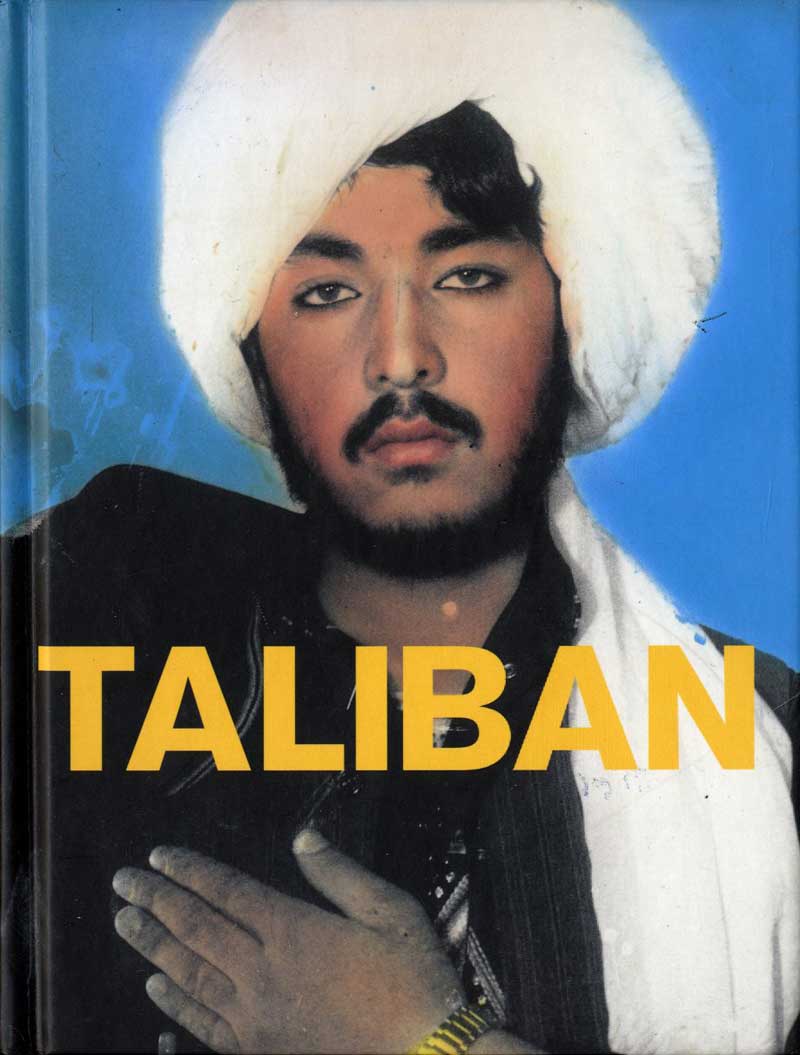
I still can’t figure out what she means. “Get out”? “Dreams”? I think there are stunning ideas behind these pieces and not the least stunning was the title. Is the strange eroticism of these men, with their khol-lined eyes out of a Perso-Indian opium dream, what draws and compels her? Or are they just Taliban monsters, whom she wants not out of her dreams, but out of her nightmares? I had seen the photographs before of course — American journalist Titan Jon Lee Anderson has compiled them into a beautiful edition (below) with an intro by Dworzak, after they first appeared in The New Yorker — but thanks to Butt, they got into my head in a new, strange and beautiful way.

A wildly divergent tangent from Eid al-Adha, eh? Or maybe not. Good feast to all.
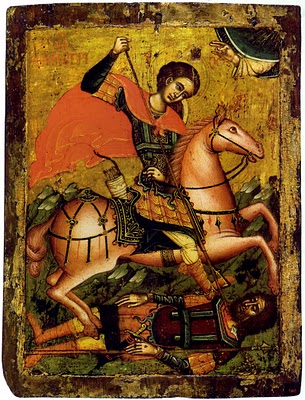
Also the feast of St. Demetrius today, by the way, Dmitriy Solunskiy — my patron.
Comment: nikobakos@gmail.com
*Sorry for the PETA girls — “slaughter” here has absolutely no moral or ethical connotations for me; it’s just how you kill animals. When applied to human beings, of course, it has a different meaning, though I know they’re both on the same ethical plane for you.
Tags: "Hanging Fire: Contemporary Art from Pakistan", Asia Society NYC, Eid al-Adha, Faiza Butt, Imran Qureishi, Islam, kurban, Mughals, Pakistan, PETA, Rashid Rana, sacrifice, St. Demetrius





 Jadde: from Bosnia to Bengal