Archive | Uncategorized RSS feed for this section

Jerusalem: “…if he cannot control her, he would rather see her dead.”

3 Jan


ISRAEL-superJumboJerusalem’s light rail trams, once a haven of normality, have come under attack in recent months. Rina Castelnuovo for The New York Times  (double click)

A line from an op=ed piece by

“Yet, with all their talk of Jerusalem’s indivisibility, neither side has a plan to enable everyone to live functional, productive lives here.

“Both sides profess their love for this city, but they love it as a violently jealous man loves a woman: If he cannot control her, he would rather see her dead.”

It says it all, and lends itself to a powerful explanation of why the fiercest nationalist is usually a male.  If I can’t have her, who cares.  Better yet, kill her, Stella-style.  This is what Venizelos was thinking when he embarked on his pipe-dream in 1919; this is what he though at Lausanne when agreeing to the Population Exchange — he had already run through several population exchange scenarios in his head with which he might seduce the Allies and bring himself glory; 1923 wasn’t the first time he had expressed such ideas.

This what Milošević was feeling when he abandoned Krajina’s Serbs to their fate and then again when he sealed the fate of Kosovar Serbs by thinking he would expel its 90% Albanian population.

This is what that other raging ego-maniac Jinnah was thinking when he convinced people to cut the heart out of Muslim India and create two dysfunctional wing statelets, one of which barely survives in horrible destitution, the other ruled by a series of some of the most hideous, corrupt, mendacious regimes in the world (see October 6: “It’s not even a country; it’s a fuckin’ acronym!”)

This is what the Messenger thinks when he starts shrieking from his Mussolini balcony: “And I don’t give a shit about Anatolian Hellenism or Politikes Kouzines or Loxandres!!! [.] I care about what’s good for Greece!!!”  Or when he stands ten kilometers from my father’s village “…where my ancestors held on tooth and nail to their land, their religion, their language, for centuries – as every other people have the right to — looks out over the valley of Dropoli and thinks out loud: “These borders could have been drawn to better advantage for us. All that was necessary would’ve been a few key population exchanges…”

The weird “contentlessness of nationalism” as I’ve said many times before.  It doesn’t matter what it is.  Or what it becomes.  It just has to be mine.  Or set a match to it.

Comment: nikobakos@gmail.com

Happy New Year

1 Jan

Pomistanbulpom(click)

Must, must, MUST see doc: BBC’s Chidren of Syria

29 Dec

https://dailymotion.com/video/x22fhfu


I hope the BBC forgives me for posting this.  And maybe takes it as a homage instead.  I’ll gladly comply with a “cease-and-desist” request.  I just think it’s some of the most gripping work on Syria to come out since the conflict began.

The cheap vulgarity of what you’re made to watch before the video begins with the material that follows kind of turns your stomach.

Comment: nikobakos@gmail.com

Image

Photo: Syria

29 Dec

Syria_man_child_getty_976(click)

Erdoğan: the man may have definitively lost it…

25 Dec

He’s acting less like a dictator even, and more like just a mad emperor…

From the BBC: Turkish police arrest boy, 16, for insulting Erdogan

Erdogan

Police in Turkey have arrested a 16-year-old student on charges of insulting President Recep Tayyip Erdogan, according to local media.

He was arrested on Wednesday after criticising the ruling AK Party during a speech at a student protest in the central Anatolian city of Konya.

The teenager could face up to four years in prison if found guilty.

Prime Minister Ahmet Davutoglu defended the arrest, saying the presidential office “needs to be shown respect”.

Turkey’s penal code makes it a crime to insult the president.

‘Everywhere is corruption’

The boy’s speech, given to commemorate the killing of a Turkish soldier by Islamists in the 1920s, was recorded on video and broadcast by Dogan News Agency.

In it, he defends secularism and the principles of Mustafa Kemal Ataturk, the founder of the modern Turkish republic.

He also singled out President Erdogan for criticism over recent corruption allegations, as the crowd chanted “everywhere is bribery, everywhere is corruption”.

Hurriyet newspaper said the boy was believed to be a member of a leftist organisation, but he denies having links with any political party.

Speaking to prosecutors, the boy said: “I’ve made the statement in question. I have no intent to insult.”

The teenager has pleaded not guilty and his lawyers have lodged an appeal against the charges.

Supporters of the Gulen movement wave Turkish flags as they gather outside the Justice Palace in Istanbul - 19 December 2014
Mr Erdogan has faced protests in recent weeks after a crackdown on media linked to Fethullah Gulen

The arrest sparked fierce criticism of Mr Erdogan with Attila Kart, a member of opposition party CHP, saying the president was creating “an environment of fear, oppression and threat”.

Mr Erdogan, who was elected president in August after serving as prime minister for 11 years, has faced several corruption allegations in recent years.

He insists they are baseless and part of a “dark plot” to oust him from power by influential cleric Fethullah Gulen, who is in self-imposed exile in the US.

Earlier this month, police arrested more than 20 journalists working for media outlets thought to be sympathetic to the Gulen movement.

A Turkish court has also issued an arrest warrant for Mr Gulen himself, but correspondents say it is considered to be largely symbolic and unlikely to be acted upon.

Comment: nikobakos@gmail.com

Great Krugman on Putin

22 Dec

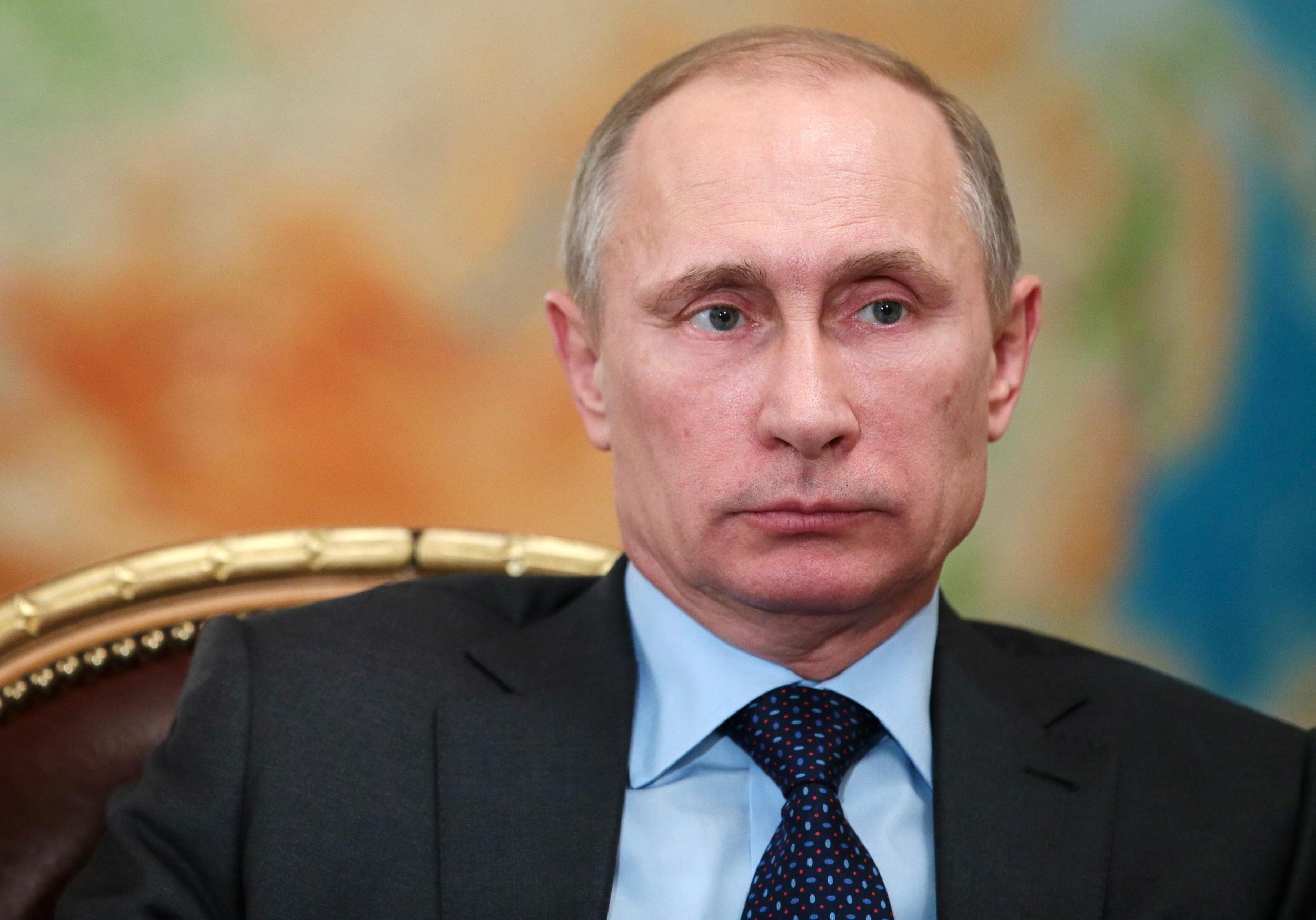
putin-russia-military-750a_4eeedb96f23edfb4cd42615d86323da2(click — if you can stand to…)

In today’s Times: Conquest Is for Losers: Putin, Neocons and the Great Illusion

Good for someone to remember these things — and say them straight up to.  Whether it’ll sink through Russian heads is not a call I can make.

“First, why did Mr. Putin do something so stupid? Second, why were so many influential people in the United States impressed by and envious of his stupidity?

“The answer to the first question is obvious if you think about Mr. Putin’s background. Remember, he’s an ex-K.G.B. man — which is to say, he spent his formative years as a professional thug. [My emphasis] Violence and threats of violence, supplemented with bribery and corruption, are what he knows. And for years he had no incentive to learn anything else: High oil prices made Russia rich, and like everyone who presides over a bubble, he surely convinced himself that he was responsible for his own success. At a guess, he didn’t realize until a few days ago that he has no idea how to function in the 21st century.”

And from me August 3rd: From the Times: Putin uses the Church…and the Church mostly lets him… ‘Позор…’  

“Does anybody remember that Putin was a KGB agent for decades — not just a cop, an agent of an instrument of mass state terror with perhaps no equal in history — and that part of his job was ruining the lives of anyone who engaged in the kind of religious pilgrimage these people are?  No.  It’s like that never happened.  And though my stomach turns when I see him on news footage solemnly standing with his candle at Easter, engaging in the non-stop crossing and bowing that Russians do in church, I’m also just stunned by his brazenness.  The word Позор (pa-zor’) in the heading of this post means “shame” but as I was trying to find somewhere to cut and paste it from I came across its etymology.  It originally meant “remarkable,” or someone or something remarkably “watchable,” from the root “zor” for vision.  And this is, in fact, the response Putin provokes: you simply stand there, staring and dumbfounded by his shamelessness.

“As for Russians themselves, sometimes I get so angry, not just at their acceptance of the political manipulation of an Orthodox Christianity that’s important to me, but at their general passiveness, gullibility, and willingness to play along with anything that promises even some tiny alleviation of their suffering, that I just want to think that they deserve their fate.”

Comment: nikobakos@gmail.com


“The sun has set on Tehran. It is Yalda now.”

21 Dec

To be super-succinct: this is where Christmas comes from.  And so consider it my Christmas greetings to folks too, ’cause I won’t have time to come up with anything else…

See 2012 post re-blogged from Tehran Bureau and pasted below.

All be well.  NB

Yalda-2012-TS(click)

Dispatch | Yalda: The Evolution of an Iranian Tradition

by CORRESPONDENT

27 Dec 2012 06:060 Comments
 A winter festival that predates the Prophet becomes an occasion to reassert national identity.
The sun has set on Tehran. It is Yalda now.It is Thursday, December 20, the last day of the month of Azar in the Persian calendar. The winter solstice has begun — the longest night of the year, the night of Yalda. The history of the seasonal celebration dates back to pre-Islamic Iran and the Mithraists, for whom Yalda was the night when Mithra, the angel of light and truth, was born. The tradition was adopted in turn by the Zoroastrians. With the arrival of Islam on the Iranian Plateau, Yalda became a purely social occasion without religious or official standing. For centuries, it was quietly observed by many Iranians with family gatherings and readings from the classical masters such as Hafez. That has largely changed.Cars choke the streets of Tehran and the capital’s notorious traffic jams are even worse than usual. People are heading to their Yalda parties after lining up outside shops since early afternoon. The shelves of pastry stores are empty. The prices for pistachios and the dried fruit-and-nut mix known as ajil have been rising for the past week, although the bakery and candy shop syndicate has announced that there is no shortage of Yalda treats. Coffee shops across the city have hung signs inviting people to come celebrate Yalda. To a foreign observer, it would seem self-evident that a national holiday is being observed.Is this the norm in modern Iran? Morteza, a cab driver who works out of an agency on Sattar Khan Street in west Tehran, does not think so. “Yalda became important in the last few years; it was just a tradition and not a very important one.” Nooshin, a psychologist from south Tehran, agrees. “Yalda was an occasion for people to get together, to meet their elders and to recite poetry and have fresh fruits and snacks.” Now, “Yalda is a really big deal for many,” she says. “From a night of family reunions and poetry readings, Yalda has evolved into a night of dancing and parties.” She has seen many Yalda fêtes where alcohol — entirely illegal in the Islamic Republic — flowed freely.For Bahareh, a 36-year-old physician, Yalda is a time to mix old traditions with new habits. “In our family, we usually get together at my grandparents’ house. All my uncles and aunts are there with their children.” She used to find such gatherings fun, but as Bahareh grew older her tastes changed. “I like my family, but hanging out with the older generation can be a bit boring,” she says.Tonight she will drop by her grandparents’ place, but then head elsewhere for most of the evening. “My brother and I will hit a few parties in the north of Tehran.” She even plans a costume change: a fashionable, yet modest outfit for the family will be followed by an evening dress for the party rounds. “It’s a younger crowd and you need to look good,” she explains. As for alcohol, she is looking forward to having some wine after hearing her grandfather read from Hafez. “A party without alcohol is not a party!” she proclaims. She is rushing home as her itinerary requires careful preparation.The shift in how Yalda is celebrated has had economic consequences, as evidenced by those retail queues. In the Yousef Abad neighborhood, at one point there were at least 80 people lined up outside Bibi, a popular pastry shop. The cost of watermelon, a Yalda delicacy, has risen to new heights. Many from north Tehran have headed to farmers’ markets on the south side to try to find it at a reasonable price. Javid, a grocery store owner in his mid-50s, is not happy. “Damn truck drivers halt by the roadside to sell their load to the passersby. I cannot find what my customers need and am losing clients to these pirates!” There is a heavy trade in alcoholic beverages as well. Kasra, a 26-year-old salesman, has already received his order of beer and Cognac for the night.

Kashani, who runs a pastry shop close to Vali Asr Square, says the celebration is good for his business. “People start to shop for Yalda a day or two before…. They come early to place orders so they can pick up fresh pastries in the afternoon.” His cakes and cream puffs disappear as soon as they emerge from the kitchen. Kashani compares the increase in his sales to the one that precedes Nowruz, the Persian New Year’s holiday. “It is not quite as much as Nowruz, but it is similar, maybe one of the biggest nights after that for us.” The spike in pistachio and pastry prices tends to presage the level of temporary inflation around New Year’s.

“What makes people happy is good for business and right now Yalda makes them happy,” says Kashani. Last year, he ran out of baked goods on Yalda. This year, he believes, he is fully prepared to meet the increased demand.

Why has Yalda grown into such a major festival? According to Morteza, “People have no real entertainment, they are not happy anymore. They use any excuse to celebrate.” Almost everyone I ask replies with some variation on that theme. Nooshin, for instance: “Yalda has become important because our people are looking for new ways of entertainment, trying to be happy.” Mr. Hosseini, a retired teacher in his 60s, says, “People are celebrating their heritage. They want to tell the government that they are Iranians and they have Iranian heritage too.”

Celebrating Yalda as a way of underscoring a distinctly Iranian identity is not new, says Nooshin. “However, people have become adamant about their cultural identity recently,” she asserts. Mr. Hosseini concurs completely. “Our government wants to change us into something we are not. People do not want that and use every opportunity to keep their traditions.” Riding Morteza’s cab, he noticed how much more visible the celebration is around the capital compared to years past. “The government does not like Yalda, but now they have to acknowledge it because of the people.”

It does seems that the authorities are taking notice. Islamic Republic of Iran Broadcasting (IRIB) 1 is airing the American blockbuster comedy Meet the Parents. Dubbed into Persian, it has been rigorously censored according to IRIB rules. No one has any doubt, however, that it is a special screening for Yalda. Other TV and radio channels are broadcasting Persian music and poetry readings. A national photography competition dedicated to capturing Yalda moments is being held.

Still, the regime is hardly joining the party wholesale. A group of high-ranking clerics just announced that Friday, the day after Yalda, is the anniversary of the Second Imam, Hassan Mojtaba, whose martyrdom has traditionally been mourned three weeks later. The pious are advised to mark the occasion with prayer and mourning ceremonies. Morteza believes the sudden change of calendar is intended to dampen the public mood on Yalda itself. If indeed that was the intent, it has evidently failed.

It is getting late and the streets are still jammed. Yalda has just begun. Tehran, under the veil of darkness, celebrates its own unconquerable spirit.

Copyright © 2012 Tehran Bureau

Comment: nikobakos@gmail.com


“Scenes that Russians hoped had receded into the past reappeared on the streets.” — from Times

16 Dec

As in the case of Iran, just what exactly are the sanctions meant to accomplish? except make ordinary Russians, most of whom have already suffered enough in their lifetimes, suffer even more.  They’re not going to turn against Putin (and needless to say, he and his cronies aren’t suffering*), nor is he going to back down under these conditions.

See whole story: Russia’s Steep Rate Increase Fails to Stem Ruble’s Decline by Andrew Kramer.

Russia Screen Shot 2014-12-16 at 4.23.43 PMThe scene at an electronics shop in Moscow. Fearing inflation, Russians are reacting to the falling ruble by snapping up expensive items like appliances and laptops. Sergey Ponomarev for The New York Times.  (click)

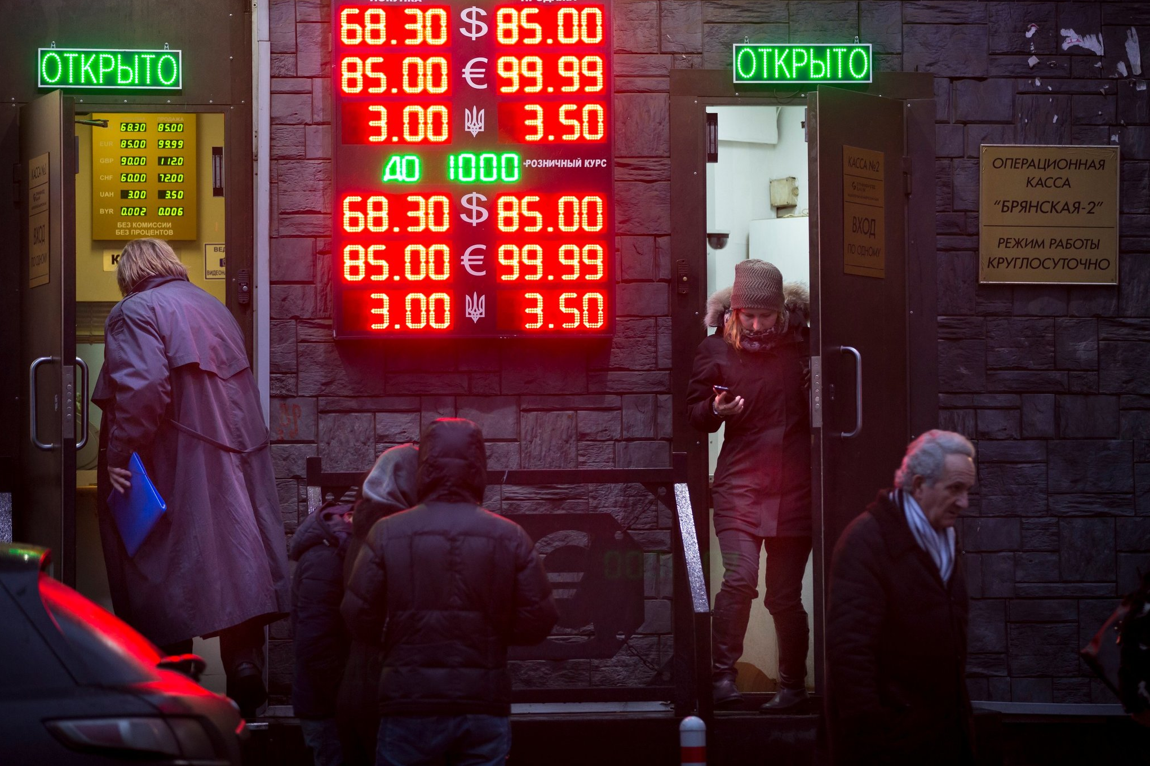
Russia Screen Shot 2014-12-16 at 4.27.49 PMOutside a currency exchange in Moscow on Tuesday. The ruble continued to slip in value despite the central bank’s decision to raise its short-term interest rate to 17 percent. Alexander Zemlianichenko/Associated Press. (click)

See also my :  The first two of my cents on Ukraine and Russia… from August 31st.

Comment: nikobakos@gmail.com

**************************************************************************************************************************************************************************

* Apparently, Putin made some crack when the EU announced restrictions on the export of foodstuffs to Russia, that: “Who needs their food?  We have Russian vodka and caviar!”  And then the joke immediately started going around: “Well, it’ll probably be moonshine and cabbage for most of us…”


Arba’een ceremony in Tehran

15 Dec

Re-blogged from Andrew Sullivan’s Daily Dish:

Arba'een ceremony in the Tehran, IranBy Fatemeh Bahrami/Anadolu Agency/Getty Images. (double click)

“Shi’ite people gather at Imam Hussein square during the Arba’een ceremony in Tehran, Iran on December 13, 2014. Hundreds of Shiite worshippers attend religious ceremonies in Tehran on the anniversary of the 40th day after the martyrdom of Imam Hussein, grandson of Prophet Mohammad who was killed in the Battle of Karbala in 681 AD.”

Should discuss my Shia sympathies some day…

Comment: nikobakos@gmail.com

My man ain’t got ninety-nine problems…just Nadal

12 Dec

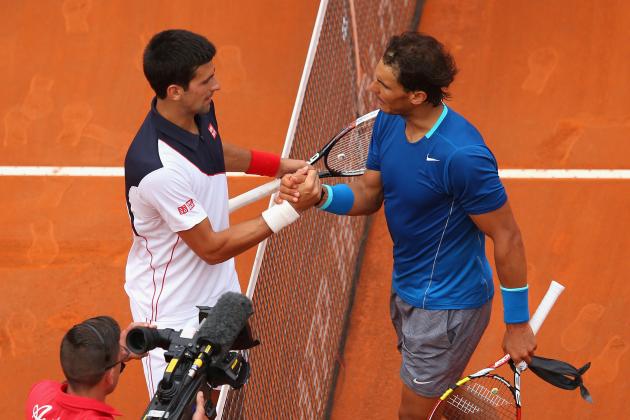
hi-res-0c731edbd10be95df90d5dc75b0df971_crop_northJulian Finney/Getty Images (click)

From DNAIndia:“‘I have a problem, his name is Rafael Nadal,’ says Novak Djokovic on elusive French Open title.”

Dunno about Rafa, but a Serb — part Kosovar Serb — saying that about me would make me very nervous.

Comment: nikobakos@gmail.com