Balkans, Anatolia, Caucasus, Levant and other Middle East, Iran, Afghanistan, South Asia, occasional forays into southern Italy, Spain or eastern Europe, minorities, the nation-state and nationalism — and whatever other quirks or obsessions lurk inside my head.
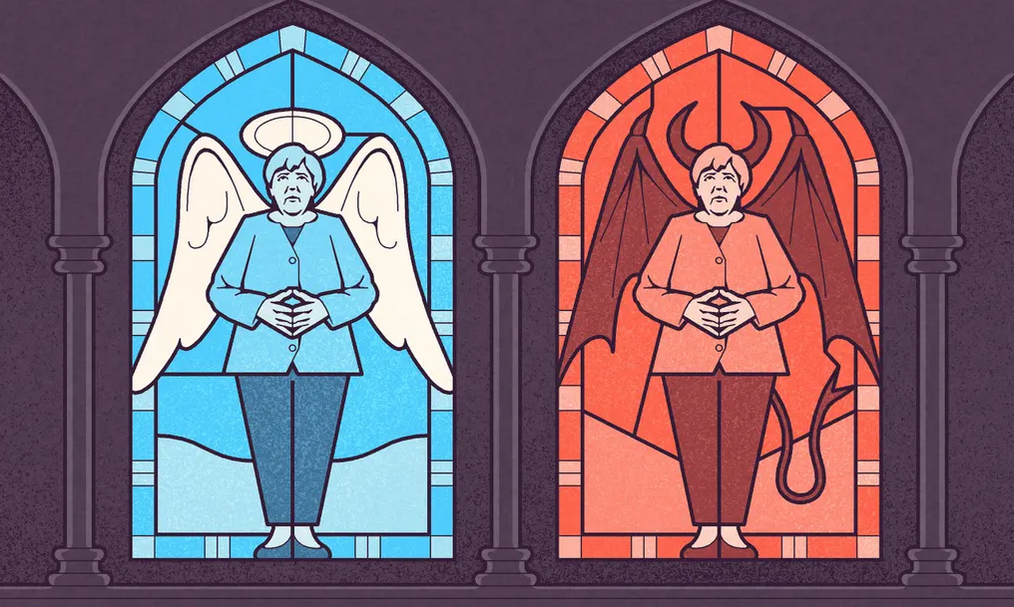
“Yet while Merkel did not radically alter the European course of the [immigration] crisis, she shifted the tone of debate at a crucial moment. Fleeting as it was, this mattered. Its effects can be seen in the way German society accommodated the 1.7 million people who claimed asylum there between 2015 and 2019. Despite the dire predictions from the right, this has been an undoubted success: as the Guardian’s own reporting has shown, more than half of those who arrived are in work and pay taxes, while more than 80% of refugee children say they feel as if they belong in Germany and are welcome. The xenophobic backlash, playing on fears of crime or terrorism, is real, but it is something that can be – and is being – challenged.”
“So, what does ‘qué oso’ mean in Spanish? In most Latin American countries, this phrase is slang for ‘How embarrassing’. is also used in awkward situationswhere you have made a fool of yourself.” [My emphases]
It literally means: “What a bear!” Some sources say it originally comes from Madrileño drug slang for a “bad trip”. Other sources say it’s a reference to the chained dancing bears of the past. Either way…
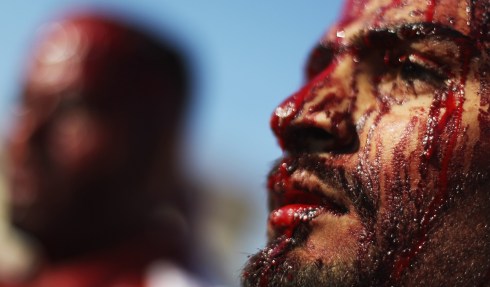
The Taliban have forbidden Ashura because they consider it an idolatrous Shia practice. Processions and gatherings have been broken up with beatings and violence. All I can say, I feel, is to repost an old post on the holiday, with a poem from Agha Shahid Ali. Look up Ali, who came from the small Shia minority of Kashmir, and who wrote in English, even, rather diconcertingly, but strange — uncanny — in a way that made his work even more beautiful. Most wonderfully odd were his poems that followed the metric and structural rules of the traditional Arab ghazal, but in English. Check him out if you want. It’s worth it.
In a distant age and climate, the tragic scene of the death of Husayn will awaken the sympathy of the coldest reader. —Edward Gibbon
Jesus and his disciples, passing through the plain of Karbala, saw “a herd of gazelles, crowding together and weeping.” Astonished, the disciples looked at their Lord. He spoke: “At this site the grandson of Prophet Muhammad (Peace be upon him) will one day be killed.” And Jesus wept. Oh, that my head were waters, and mine eyes a fountain of tears, that I might weep day and night for the slain … And Jesus wept. And as if the news has just reached them—fourteen hundred years after the Battle of Karbala (near ancient Babylon, not far from the Euphrates) in the year A.H. 61/A.D. 680—mourners weep for “the prince among martyrs,” Hussain, grandson of the Prophet and son of Ali (“Father of Clay”) and Fatima (the Prophet’s only surviving child). Memorializing Hussain on the tenth of Muharram (Ashura) is the rite of Shi’a Islam—so central that at funerals those events are woven into elegies, every death framed by that “Calvary.” For just “as Jesus went to Jerusalem to die on the cross,” Hussain “went to Karbala to accept the passion that had been meant for him from the beginning of time.”
Zainab’s Lament in Damascus
Over Hussain’s mansion what night has fallen?
Look at me, O people of Shaam, the Prophet’s only daughter’s daughter, his only child’s child.
Over my brother’s bleeding mansion dawn rose—at such forever cost?
So weep now, you who of passion never made a holocaust, for I saw his children slain in the desert, crying for water.
Hear me. Remember Hussain, what he gave in Karbala, he the severed heart, the very heart of Muhammad, left there bleeding, unburied.
Deaf Damascus, here in your Caliph’s dungeons where they mock the blood of your Prophet, I’m an orphan, Hussain’s sister, a tyrant’s prisoner.
Father of Clay, he cried, forgive me. Syria triumphs, orphans all your children. Farewell.
And then he wore his shroud of words and left us alone forever.
Paradise, hear me— On my brother’s body what night has fallen?
Let the rooms of Heaven be deafened, Angels, with my unheard cry in the Caliph’s palace:
…In the Byzantine Empire, ideas of race and gender were deeply intertwined.
“When did racism begin? Because of how ideas about race shape our contemporary world, some have argued that racism did not exist in the ancient and medieval worlds, that it was a modern invention. Proposing that there was a past before racism helped prop up the notion that Americans were living in a post-racial present, in the decades after the Civil Rights movement.”
Like, who ever thought that the Greeks and Egyptians and Romans and Byzantines and Arabs and Black Africans and Iranians and South Asians and the Chinese didn’t keep slaves for millenia? Way before white North Americans did?
Betancourt is setting up a straw man for himself to shoot down.
Balkans, Anatolia, Caucasus, Levant and rest of ME, Iran, South Asia
Me, I'm Nicholas Bakos, a.k.a. "NikoBako." I'm Greek (Roman really, but when I say that in English some five people in the world today understand what I'm talking about, so I use "Greek" for shorthand). I'm from New York. I live all over the place these days. The rest should become obvious from the blog.




 Jadde: from Bosnia to Bengal