

Never-ending Nakba
18 May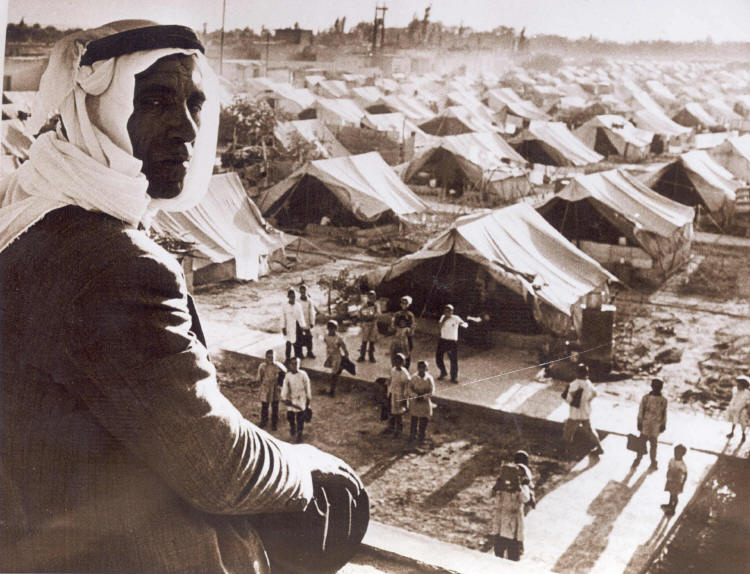
Below is a bunch of stuff I’ve thrown together on the current Palestinian decimation.
We’re used to thinking of the Nakba of having about a seventy-year vintage, but of course the expulsion and dispossession of Palestinians began, in a systematic way, as far back as late Ottoman times, with the tacit permission of both Turks and later the British mandate, until Jewish settlers and terrorist groups started turning on the Brits too, who, as is their wont (India, Palestine, Cyprus) high-tailed it out of there and left the place to implode. That’s when the Israeli state was declared, some 600,000 Palestinians fled and were chased out, a number that’s grown to several million around the world ever since.
Below is a great four-part Al Jazeera documentary on the Nakba I recently stumbled across. It’s the most detailled and all-encompassing coverage of the process from its deepest origins. It might not be for the total layman — it’s extremely thorough — but for those who know the basics, it brilliantly fills in all previous holes.
*********************************************************************************************************
Another great source of almost daily, fresh and intelligent stuff is +972Magazine: INDEPENDENTJOURNALISM
FROM ISRAEL-PALESTINE , recommended to me by friend @annia, journalist and writer, ordinarily a Lebanon person, but a general expert on the Levant and Iraq.*
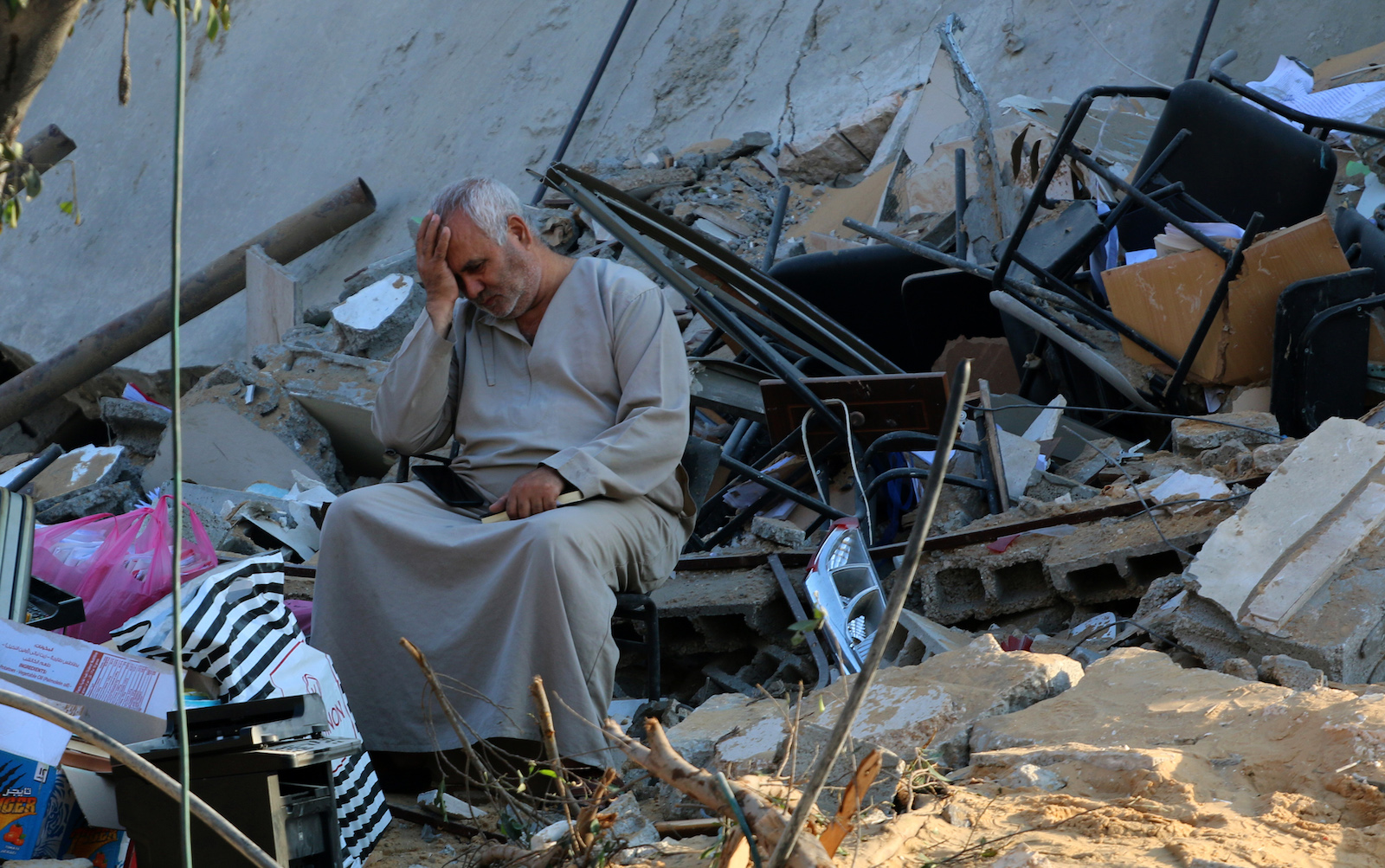
Living the Nakba, over and over
The latest assaults on Palestinians are resurfacing the intergenerational trauma we all carry. But our resistance is only growing stronger. By Dima Srouji
*********************************************************************************************************
From the WIRE, out of Delhi, on the pathology of Israeli thinking with a really powerful closing passage:

| The Delusions Driving Israeli Thinking Have Been Exposed as Never Before Something important happened in Israel on May 2021. Not just the fact that Hamas in Gaza surprised the army and the intelligence services, not to mention the government, by its ability to take command of a volatile situation, to hit deep into Israel with precision rocketry, and to impose its agenda on an overwhelmingly more powerful enemy, writes David Shulman. Not only the fact that the government and police have lost control of much of the country, especially mixed Arab-Jewish cities such as Lod, Ramleh, Jaffa, Acre and east Jerusalem, where conditions close to civil war are now in evidence. Not the acute failure of the Benjamin Netanyahu government to restore some semblance of normalcy, to say nothing of articulating a viable policy for the future. All these are there for all to see. But the crucial point is that the deeper currents of life in Israel-Palestine, and above all the regnant delusions that have driven Israeli thinking for the past many decades, have been exposed as never before. What we will witness over the coming weeks is a desperate attempt to reestablish these self-destructive axioms as political norms, despite the disaster they have, unsurprisingly, brought about. …Parts of Sheikh Jarrah were once – before the State of Israel came into being – owned by Jews; Palestinian refugees from the 1948 war were settled there by the Jordanian government in the 1950s, and they have been living there ever since. But Israeli settlers from the extreme nationalist right have been trying to reclaim these lands for the Jews, and the courts have sadly, and cruelly, gone along with them. I won’t go into the legal niceties here. Let me just note that easily a third of the properties in Israeli west Jerusalem belong to Palestinian families who lived there before 1948; under Israeli law, Palestinians have no hope of recovering their lost homes. … There were other factors in play. Elections were supposed to take place in Palestine this spring; the Palestinian Authority cancelled them, fearing they would lose ground to Hamas. It’s a reasonable fear; the PA has failed miserably to deliver anything of lasting value to the Palestinian national movement. Hamas, furious at President Abu Mazen’s decision, eagerly took over the role of defending Jerusalem, the Haram, Sheikh Jarrah and the West Bank, the latter languishing for the last 74 years under a regime of state terror and institutionalised theft of Palestinian land for Israeli settlement. And there is one more far from negligible element. It cannot be by chance that this crisis developed, to the point of war, just as the Israeli opposition parties seemed to be close to establishing a government in the wake of the last Israeli elections. Netanyahu, who has driven the country through four indecisive elections in the last two years for the sole purpose of evading the criminal charges pending against him in court, was likely to lose power. The new government-that-almost-was is now on hold, possibly ruled out. The reader can draw her own conclusions about Netanyahu’s role in running this politically useful catastrophe. All of this story has been told by others. For most Israelis, the causal chain is either invisible or forgotten, as the war unfolds. And Hamas has its own lethal actions to account for. But the core of the matter lies in the axioms I mentioned in the opening paragraph. It isn’t possible to enslave forever a population of millions, to deny them all basic human rights, to steal their lands, to humiliate them in a thousand ways, to hurt them, even kill them, with impunity, to create a regime meant to ensure permanent supremacy of one population over another, and all this by the exercise of massive military force. In fact, “forever” is an overstatement. A tiny state like Israel can apparently get away with such a policy for some decades, using, actually mis-using, the memory of the Holocaust as its moral capital. Sooner or later, severe oppression rebounds against the perpetrator. In Israel, when that happens, the answer is always and inevitably to use more violence. Most of the country, and especially its elected leadership, suffers from a chronic learning disability. [my emphasis] |
And from THE NATION:
A Nightmare of Terror Across the Landscape of Palestine
As Israeli lynch mobs roam the streets attacking Palestinians, and as Israeli war planes drop bombs on Gaza, it’s essential to understand how we arrived at this moment.
By Yousef MunayyerTwitter
May 13, 2021

Israeli forces respond to a Palestinian man protesting in Jerusalem by placing him in a choke hold. (Photo by Menahem Kahana / AFP via Getty Images)
I have been trying to think of a moment since 1948 when so broad a range of Palestinians have been exposed to as great a level of Israeli violence as they have been these last few days—and I don’t think I can.
In towns throughout Israel, Palestinians have been beaten and terrorized by rampaging mobs; one man was dragged from his car and brutalized in what many are describing as a lynching. In the West Bank, Palestinians have been shot and killed in raids by the Israeli military. In Jerusalem, Palestinian families, facing the ongoing threat of expulsion, have been harassed by settlers and military alike. And across Gaza, Israeli war planes have dropped bomb after bomb, destroying entire apartment buildings. Many have died, many more have been injured. If they manage to survive, they will witness their society shattered when the smoke clears.
The origins of this moment are as obvious as they are painful, but they bear explaining and re-explaining for a world that too often fails—in fact, refuses—to see the true terms of Palestinian suffering.
To understand how we’ve arrived at this moment, it is essential to start with the story of Sheikh Jarrah. That small Jerusalem enclave, from which several Palestinian families have been under threat of expulsion, is perhaps, the most immediate proximate cause of this latest crisis. It is also just the latest targeted dispossession of Palestinians by Israel, which has been part of a more than 70–year process.
Since occupying the West Bank in 1967, the Israeli government has pursued various policies aimed at demographically engineering the city of Jerusalem—again, all with an eye toward ensuring its perpetual dominance over the city. Among such policies are the building of illegal settlements around the city to cut it off from the rest of the Palestinian population in the West Bank; the restriction of movement to deny Palestinians access to and within the municipality itself; the revocation of Palestinian residency status, which is tantamount to expulsion; and the demolition of Palestinian homes. The Israelis also expel Palestinians from their homes, as we are witnessing in Sheikh Jarrah, so that they can be handed to Israeli settlers.
Current Issue
Subscribe today and Save up to $129.
Such policies have created a uniquely potent set of threats, humiliations, and injustices targeting Palestinians in Jerusalem. Yet what is happening in Sheikh Jarrah is not just about Jerusalem but is also reflective of the entire Palestinian experience. Since the start of Zionist settler colonialism in Palestine, the aim has been to slowly and steadily expand control over the territory, pushing the indigenous population out in a continual process of replacement. The single biggest episode of this was the Nakba of 1948, during which Jewish militias and then the state of Israel depopulated hundreds of towns and villages, made nearly two-thirds of the Palestinian Arab population refugees, and subsequently denied their return, first by military force and then by force of law. But the process did not stop there. In the decades since, the settler colonial process has moved forward in Jerusalem, the West Bank, and Gaza through the building of settlements, land theft, and brute military force.
All of this would be tinder enough for this moment, but it also happens to be taking place in a broader immediate context, one in which the vise grip of accelerating right-wing, theocratic nationalism is tightening across Israel. Recent Israeli elections brought outright Kahanists – Jewish theocratic extremists who seek to deny any rights to Palestinians and embrace ethnic cleansing—into the parliament in their most significant numbers ever. Right-wing ideologues have long dominated the Knesset, but as Israeli politics shifts ever right-ward, enabled by internationally ensured impunity, there is now increasing political space for the most open and direct racism we have seen. (It should therefore come as no surprise that it has burst out into the streets in the shape of lynch mobs.)
These new depths of depravity have coincided with the possibility that the Likud party, whose leader Benjamin Netanyahu has dominated Israeli politics longer than any other, risks losing power. This is not due to a challenge by those to his left, but those to his right who seek to replace him.
What makes the threat to Netanyahu’s grip on power particularly dangerous is that he is perhaps the most seasoned Israeli politician when it comes to riling up violence by his followers in moments of political turmoil. It is a tactic he has often deployed, perhaps most famously just before of the assassination of his political rival Yitzhak Rabin by a right-wing Israeli in 1995. Since the election in March, these violent extremists have escalated their attacks on Palestinians throughout the West Bank and have rampaged in Jerusalem, shouting “Death to Arabs” as they marched through the Old City. These attacks, fully tolerated if not outright supported by the state, further escalated during the holy month of Ramadan, culminating first with efforts by the Israeli government to shut down the Damascus Gate and then, ultimately, with the brutal raids we have seen this week by the Israeli military inside Al-Aqsa mosque.
Once again, these events, on their own, would have been enough to bring the region to this volatile and fast-shifting moment. Yet there have also been other events, and other shifts—most notably, perhaps, the rupture of an experiment in the politics of Palestinian citizens of Israel. The Joint List, which brought together several smaller parties, once reached 15 seats in the Israeli Knesset, but it broke apart this time as some parties indicated a willingness to back a Netanyahu government for the right price. The failure of this experiment was the failure of the very idea that Palestinian citizens of Israel could have their grievances addressed by participating in the Israeli government. As even these limited mechanisms of representation faltered, people were primed to take to the streets. Just as the election was taking place, thousands of Palestinian citizens of Israel rallied in the city of Umm al-Fahem, carrying Palestinian flags, and singing of their beloved homeland, foreshadowing many of the events in recent days.
Related Articles
Tomorrow My Family and Neighbors May Be Forced From Our Homes by Israeli Settlers
Mohammed El-Kurd Trump’s Obsessive Attacks Won’t Silence Ilhan Omar’s Defense of Palestinian Human Rights
Nor was it only in Israel that Palestinians have been turning away from institutions that have failed them. In late April, Palestinians throughout the West Bank, Gaza, and Jerusalem were denied the opportunity to express their voices about their so-called leaders in the Palestinian Authority when PA President Mahmoud Abbas postponed Palestinian elections indefinitely. The elections, announced in January, would have been the first in 15 years. But Abbas called off the elections because they could have presented a serious challenge to his party, and his rule, since Israel would not permit Palestinians in Jerusalem to participate in the vote. The denial of even this limited opportunity for political expression undoubtedly contributed to the mass mobilizations we are witnessing.
Support Progressive Journalism
If you like this article, please give today to help fund The Nation’s work.
The representative vehicles for Palestinians, throughout all of Palestine, have broken down irreparably. But that may not be a bad thing, since those vehicles have effectively driven them to a dead end of greater fragmentation and occupation. While many had come to this conclusion long ago, the mass mobilizations we began seeing several days ago in the streets, from Jerusalem, to Haifa, Nazareth, al-Lyd, Umm al-Fahem, Ramallah, Gaza, in refugee camps, and in the diaspora around the world have showed that a new generation not only recognizes this but that they are starting to act on it. These mass mobilizations that have united Palestinians show a shared understanding of their struggle and perhaps even the embryonic form of a united, coordinated effort against Israeli settler colonialism in all its manifestations.
The struggle for freedom is a constant journey, with stops called hope and despair along the way. While the last few days have given me incalculable reasons to despair, it is in the possibility of a united Palestinian effort, glimpsed these last few days, that I have seen a shard of hope. When freedom comes, and when the history of the struggle for it is being written, I hope this moment will prove to be a transformational one. To this end, we all have a role to play, and it is incumbent on people who believe in justice to stand in solidarity with Palestinians today and until the journey ends.
Most Popular
1
‘All We Need Is Some More Courage From the World’
2
3
A Nightmare of Terror Across the Landscape of Palestine
4
‘It’s Like a Black Hole’: ICE Has Been Holding Kids in Indefinite Detention
5
Is the Shine Starting to Come Off Bill Gates’s Halo?
*********************************************************************************************************
One inspiring development, for me especially: Palestinians with Israeli citizenship, (aka “Israeli Arabs”), along with Christian Palestinians, are taking a much more visible part in protests that at any point in the past, when they often just watched from the sidelines.
*********************************************************************************************************
And here’s @kmelkhat ‘ suggested list of relief organizations for sending aid to Gaza Palestinians:
*********************************************************************************************************
- Annia Ciezadlo @annia War, politics, climate change & food, in the Middle East & elsewhere. Author of Day of Honey: A Memoir of Food, Love, and War. RTs = interested in everything.Beirut, Chicago, New York anniaciezadlo.com Joined June 2010 5,002 Following3,676 Followers
Annia is author of Day of Honey: A Memoir of Food, Love, and War.

*********************************************************************************************************

********************************************************************************************************
Write us: with comments or observations, or to be put on our mailing list or to be taken off our mailing list, contact us at nikobakos@gmail.com.
Which Europeans think their culture is superior — gee, what a surprise…
9 MayAnd what’s up with poor, splendid Spain and it’s got those insecurity complexes going on? Greece is at top and Spain is at bottom?!

********************************************************************************************************
Write us: with comments or observations, or to be put on our mailing list or to be taken off our mailing list, contact us at nikobakos@gmail.com.
Babel
9 MayThe RWOF claims that a society can’t function, can’t exist even, without one, unifying language. But every courtroom, bureaucratic office, emergency room and even a historic barber shop in New York has one of this kind of sign posted…and they all function more quickly and efficiently than any, say, in Athens.


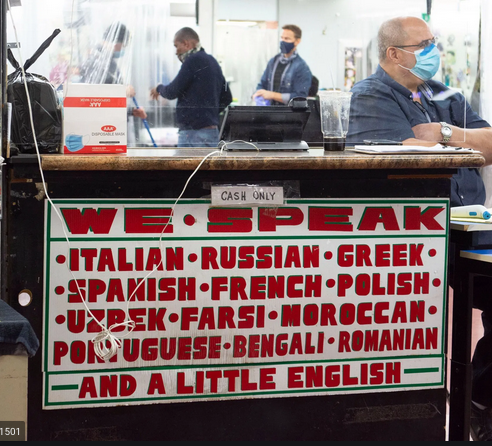
Getting Help in a Language Other than English
This is an important document. If you need help to understand it, please call 1-855-355-5777. We can give you an interpreter for free in the language you speak.
Español (Spanish)
Este es un documento importante. Si necesita ayuda para entenderlo, llame al 1-855-355-5777. Podemos proporcionarle gratuitamente un intérprete en el idioma que habla.
繁體中文 (Traditional Chinese)
這是一份重要文件。如果您在理解這份文件上需要幫助,請撥打電話:1-855-355-5777。 我們可為您免費 提供一名會講您的語言的口譯人員。
简体中文 (Simplified Chinese)
这是一份重要文件。如果您在理解这份文件上需要帮助,请拨打电话:1-855-355-5777。 我们可为您免费 提供一名会讲您的语言的口译人员。
Русский (Russian)
Это важный документ. Если вам нужна помощь, чтобы понять его, позвоните по телефону 1-855-355-5777. Мы можем бесплатно предоставить вам переводчика на ваш родной язык.
Kreyòl Ayisyen (Haitian Creole)
Sa a se yon dokiman enpòtan. Si ou bezwen èd pou w konprann li, tanpri rele 1-855-355-5777. Nou ka ba ou yon entèprèt gratis nan lang ou pale a.
বাংলা (Bengali)
এ ট এক ট পূণ ন িথ। যিদ এ ট বুঝেত আপনার সাহােয র েয়াজন হয় তেব অনু হ কের 1-855-355-5777 এ কল ক ন। আপিন য ভাষায় কথা বেলন আমরা আপনােক িবনামূেল স ভাষায় দাভাষী দান করেত পাির।
اللغة العربية )Arabic(
هذه الوثيقة مهمة. وإذا كنت بحاجة إلى مساعدة لفهم الوثيقة، يُرجى الاتصال على الرقم 5777-355-855-1. ويمكننا أن نوفر لك مترجمًا فوريًا باللغة التي تتحدثها مجانًا.
한국어 (Korean)
중요 문서입니다. 이해하는 데 도움이 필요하시면, 1-855-355-5777번으로 전화하십시오. 귀하가 사용하는 언어의 무료 통역사를 제공해드릴 수 있습니다.
Français (French)
Ceci est un document important. Si vous avez besoin d’aide pour le comprendre, appelez le 1-855-355-5777. Nous pouvons vous offrir gratuitement les services d’un interprète qui parle votre langue.
Polski (Polish)
Ten dokument jest ważny. Jeśli potrzebuje Pan(i) pomocy w jego zrozumieniu, proszę zadzwonić pod numer 1-855-355-5777. Możemy zapewnić bezpłatne usługi tłumacza w Pana(i) języku.
ह दी (Hindi)
य ह ए क म ह व प ू ण द त ा व े ज ह ।ै य द आ प क ो इ स े स म झ न े क े ि ल ए स ह ा य त ा क आ व य क त ा ह ो , त ो क ृ प य ा 1 – 8 5 5 – 3 5 5 – 5 7 7 7 प र क ॉ ल क र । ह म आ प क ो आ प ज ो भ ा ष ा ( ह द ी ) ब ो ल त े ह उ स म ि न ः श ु क द भु ा ि ष य ा स े व ा द ा न क र स क त े ह ।
اردو )Urdu(
یہ اہم دستاویز ہے۔ اگر آپ کو اسے سمجھنے میں مدد درکار ہے، تو براہِ کرم 5777-355-855-1پر کال کریں۔ ہم آپ کو آپ کی زبان میں مُفت ترجمان فراہم کر سکتے ہیں۔
shqip (Albanian)
Ky është një dokument i rëndësishëm. Nëse ju nevojitet ndihmë për ta kuptuar, lutemi merrni në telefoni në 1-855-355-5777. Mund t’ju caktojmë një përkthyes pa pagesë, në gjuhën në të cilën ju flisni.
नेपाली (Nepali)
यो एउटा मह वपूण कागजात हो। यसलाई बु न तपा लाई म त चािह छ भने, कृ पया 1-855-355-5777 मा फोन गनुह ोस्। हामीले तपा ले बो ने भाषामा तपा लाई िन:शु क दोभाषे उपल ध गराउन स छ ।
Tiếng Việt (Vietnamese)
Đây là tài liệu quan trọng. Nếu quý vị cần trợ giúp để hiểu tài liệu này, vui lòng gọi 1-855-355-5777. Chúng tôi có thể cung cấp thông dịch viên miễn phí nói ngôn ngữ của quý vị.
Italiano (Italian)
Questo è un documento importante. Se ha bisogno di assistenza per capirlo, chiami il numero 1-855-355-5777. Possiamo fornirle gratuitamente un interprete per la lingua da lei parlata.
日本語 (Japanese)
これは重要な書類です。理解するのにアシスタンスが必要な場合は1-855-355-5777までお電話下さい。お 客様のお話しになる言語の通訳を無料でお付け致します。
Ελληνικά (Greek)
Αυτό είναι ένα σημαντικό έγγραφο. Αν χρειάζεστε βοήθεια με την κατανόησή του, καλέστε στο 1-855-355-5777. Μπορούμε να σας παρέχουμε δωρεάν διερμηνέα στη γλώσσα που μιλάτε.
Tagalog (Tagalog)
Ito ay isang mahalagang dokumento. Kung kailangan mo ng tulong upang maunawaan ito, mangyaring tawagan ang 1-855-355-5777. Maaari ka naming bigyan ng isang interpreter ng libre sa (Tagalog) wika na sinasalita mo.
Soomaali (Somali)
Kani waa dokumenti muhiim ah. Haddi aad caawimaad ugu baahantahay fahamkiisa, fadlan wac 1-855-355-5777. Waxaan si bilaash ah kuugu siin karnaa adeeg turjumaan luuqadda aad ku hadasha ah.
אידיש )Yiddish(
דאס איז א וויכטיגער דאקומענט. אויב איר דארפט הילף דאס צו פארשטיין, ביטע רופט 1-855-355-5777. דמיר קענען אייך געבן א דאלמעטשער אומזיסט אינעם שפראך וואס איר רמיר.
Kiswahili (Swahili)
Hii ni hati muhimu. Ikiwa unahitaji msaada wa kuielewa, tafadhali piga simu kwa 1-855-355-5777. Tunaweza kukupa mkalimani bila malipo kwa lugha unayozungumza.
Akan kasa (Twi)
Wei yɛ nhomaa ɛho sombo. Sɛ wobɛ hia mboa de ateasie a, yɛ srɛ frɛ 1-855-355-5777. Yɛ bɛ tumi ama wo nkyerɛkyerɛmuni a yɛn gye ho hwee wɔ kasa wo ka mu.
********************************************************************************************************
Write us: with comments or observations, or to be put on our mailing list or to be taken off our mailing list, contact us at nikobakos@gmail.com.
White people go away
8 May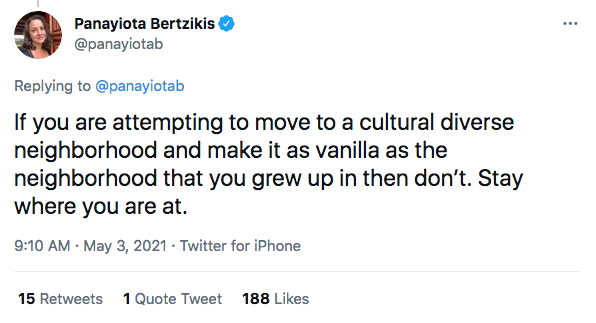
The author, Panayiota didn’t say, because she didn’t want, but last year Time Out put out an article on the world’s 50 up-and-coming coolest neighborhoods, Astoria, New York, was the only mahalla on the NYC list. Also the events, that occurred on last weekend’s Orthodox Easter — a complaint to the police that people coming out of a church carrying torches looked like they were doing something dangerous, and a complaint to the same precinct that neighbors were cooking some sort of animal on a spit and it was gross and the smell offensive — both kinna nail it that the neighborhood was Astoria.
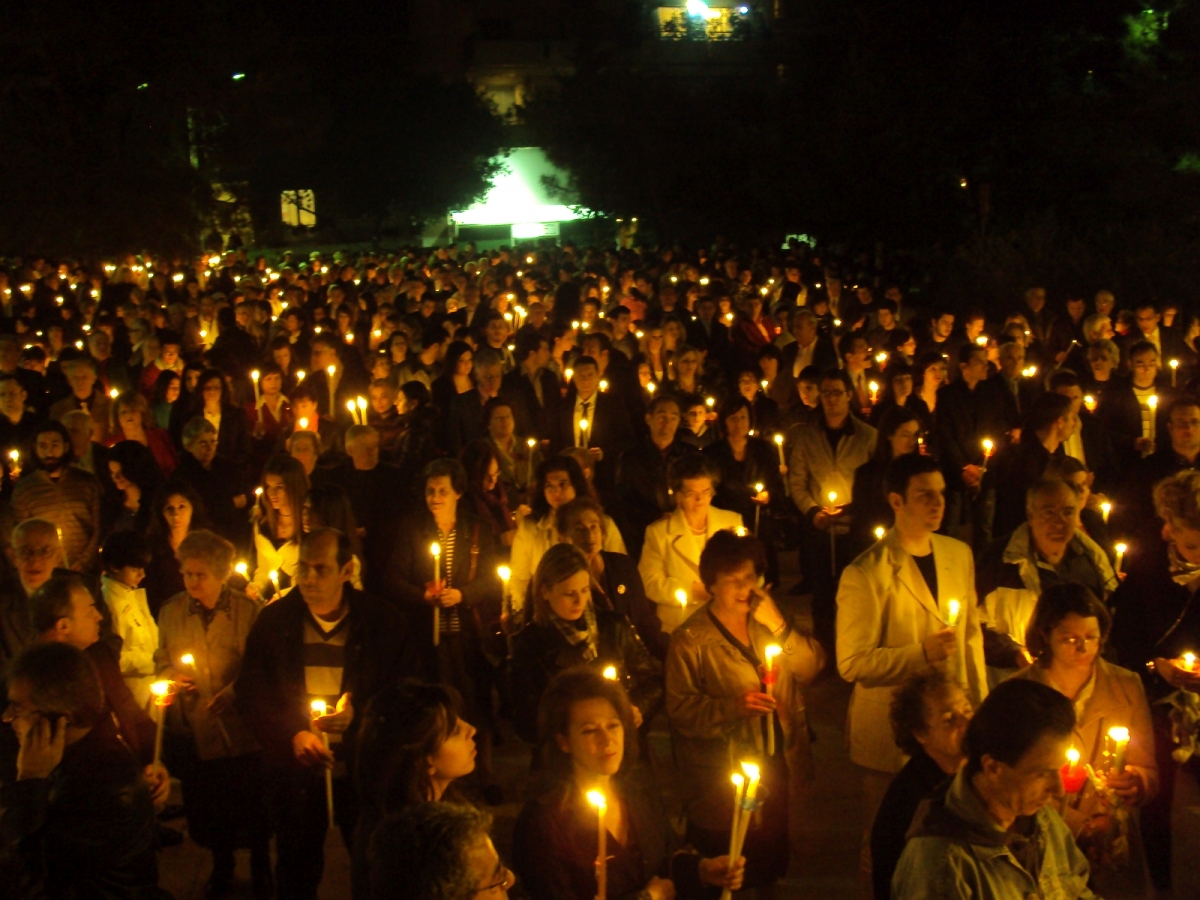

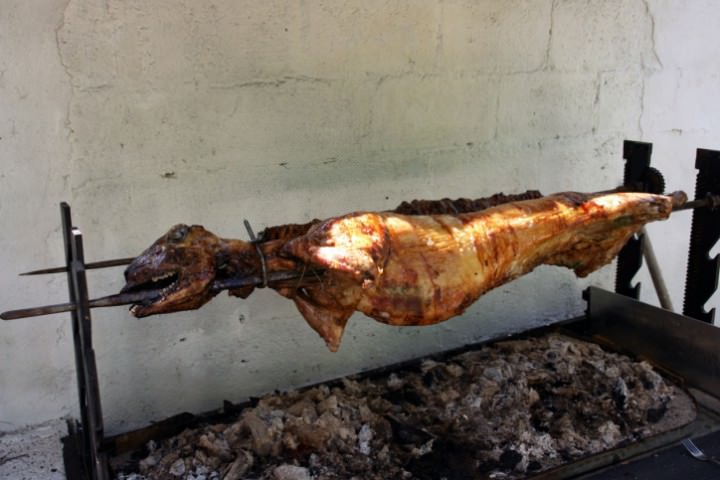
Joan Acocella, an unrecognized genius, once wrote in the New Yorker, that: “New Yorkers can be born anywhere; then one day they show up and fit right in.” That’s exactly right. But that other breed, of heartland migrants who want to bring their Wonder bread with them, and immediately start a war with the city’s funk. Well, there should be…I dunno…a screening process at least.
And my own tangential take on the ‘hood issue from Time Out, I believe from a last year’s post:
Time Out’s cities: Astoria! and…Kypsele? No Pera propaganda, brother Turks of mine :( — and Belgrade…
Ok!
Time Out has come out with the fifty coolest neighborhoods in the world, and two — arguably three — of them are Greek; one in Athens, Kypsele, and another in the capital of the Greek diaspora, New York: Astoria. (Yeah, Melbourne…ok…chill). Now there are only what, 14 or 15 million of us in the whole world, and we corner 8th and 16th outta 50. Not just not bad, but figures that make it clear there’s a connection between Greek-ness and urbanity — even Greek villages are really just tiny Greek cities — the polis and everything political life implies, that runs deep.
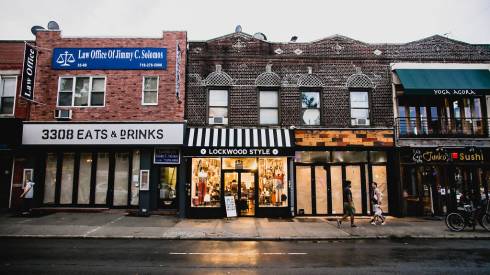
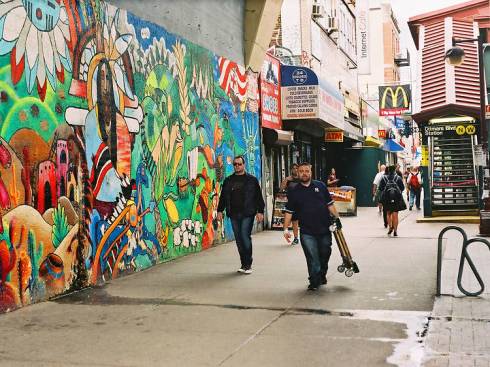 Astoria
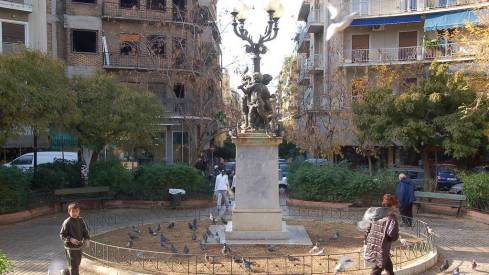 Kypsele
What if you have no Greeks (or worse, no Jews). Well, brother Turk, take a walk, or a nerve-wracking tourist shove, down what you’ve turned your “İstiklâl” into: its new garish, overlit, Gap-outlet, Gulfie, Saudi hideousness… And weep. That we left.
Oh, and what’s arguably the “third” Greek neighborhood… Ok, I scrolled down the list, nervously expecting to find Pera (Beyoğlu) there, the formerly, largely Greek mahalla — the formerly Greek, Jewish and Armenian heart of the City actually — because Turkey’s American public relations firms deserve every dollar they get from the Turkey accounts and they manage to shove a fictitious Turkish tolerant multiculturalism in our face whenever they get the chance, and Pera has, for about the past 15 years, taken pride of place in this masquerade of Istanbul hipness and Turkish cosmopolitanism — quite an accomplishment since the Midnight Express days. (Too bad Turkey itself reverts back to Midnight a little bit more every day.) And Pera wasn’t there, not on the list!

The old Grande Rue — Pera
And… Well, and…a few years back I wrote a post here called: “Nobody really cares about Gezi Park: Greek thoughts on the protests of 2013“. And perhaps the biggest stinger in the article was:
“All – I thought a lot about whether I should use “almost all” in this sentence and decided against it –because all the hippest, funkiest, most attractive, gentrified neighborhoods in the historic parts of İstanbul are neighborhoods that were significantly, if not largely, minority-inhabited until well into the twentieth century: not just Pera and Galata, but Cihangir and Tarlabaşı, and Kurtuluş — of course — and up and down the western shores of the Bosphorus and much of its eastern towns too, and central Kadiköy and Moda and the Islands. (And if serious gentrifying ever begins in the old city it’ll be in Samatya and Kumkapı and Fener and Balat; I wouldn’t put any big money into Çarşamba just yet.)”
And so, happily, I didn’t find Pera being prostituted again by Turkey as a symbol of a multiculturalism that the Turkish Republic eradicated, exterminated, expelled and that no longer exists. But I scrolled a bit further down…and there was Kadiköy and Moda, #42, also, until well into the 60s, heavily Greek and Armenian. More sweet justification!
(I’ll take Egyptians on for the empty, dingy Alexandria they got stuck with after our good-bye party in another post.)
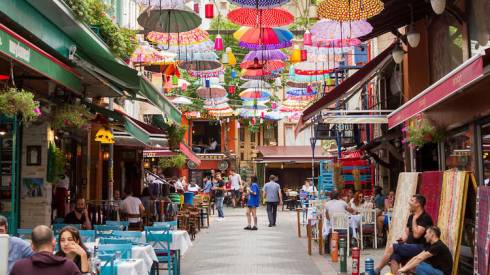 Kadiköy
Finally, came the sweetest of all, my beloved Dorćol in my beloved Belgrade. 50th on the list of 50. You have to be pretty attuned to the Serbian soul to know what coming in 50th out of 50 means. It doesn’t mean being last. It means: “You think we’re cool? Who asked you?”
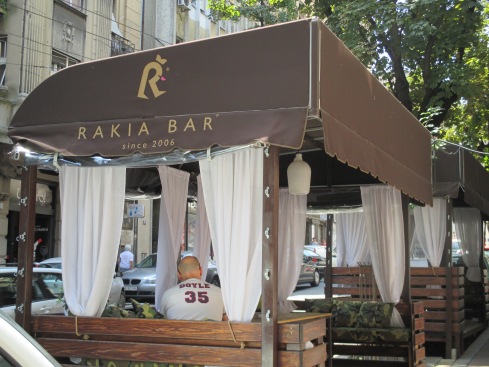 The Rakia Bar in Dorćol
Plus, Belgrade comes in in way first place over all of these cities in one important way: the guys. No joke.
Some restaurant notes:
Don’t go to Çiya in Kadiköy. Unfortunately, the food is spectacular, and I’m a sadist for posting this picture:
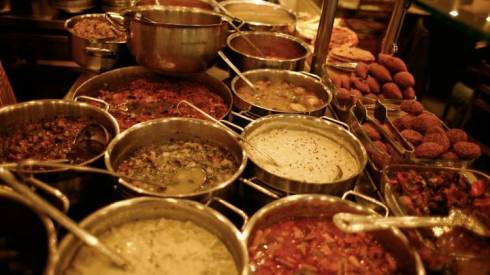 But the unfortunate part is that Çiya is owned by a sociological type: the newly comfortable, if not rich, provincial, pious middle-class; that’s the AKP’s and Erdoğan‘s political power base. What that means on the ground is that your great food is prepared by puritans who won’t serve you alcohol, so you can’t have a leisurely rakı or beer dinner, but have to scarf it all down and leave, paying with dough that might indirectly end up in the AK’s coffers or ballot boxes. The same goes with the otherwise excellent Hayvore in Pera. Amazing Black Sea dishes but no booze. Go ahead if you want. You can go to Saudi too if you want. I refuse to. Even if I didn’t want to drink: just on principle. And they — Hayvore — make one of my absolute favorite dishes which I can’t find anywhere else: an anchovy pilav. But I’ll live without. Or make it myself.
.
And then, a little less geopolitically charged, there’s the completely baffling phenomenon of Cyclades in Astoria. I can’t argue with the fish. And if fish is their mission statement then fine, because it’s always fresh and expertly cooked — even if the owners are Albanian and hadn’t seen the sea till they were sixteen. But you do want to eat something along with the fish and everything else is awful. The cacık and eggplant salad is made inedible by that crazed Greek overuse of raw garlic, so that all you have is the bitterness of the bulb and not even the taste or aroma. The zucchini and eggplant are fried in old oil. The raw oil served for greens or salad is horrible — cheap, and I’m not even sure it’s 100% olive. And in a Greek fish meal, where almost everything is dressed with raw oil, it really needs to be the best quality or everything else is shot. The bread — and one thing we do well, γαμώτομου, is bread — is nasty and old. This place reminds me of food in tourist traps in the old days before the foodie revolution in Greece in the 00s.
And they commit one incomprehensible abomination. They serve oven-baked potatoes — with lemon, fine… But. With. The. Fish. These are potatoes, that according to the taxonomy and order of Greek food, if such a primitive cuisine can be said to have such order, are baked in the oven with meat in a composite dish or casserole. It’s a sin of commission to serve them with fish, with which they haven’t even been cooked, unless you’re going for plaki which means tomatoes and a whole different palate. And they taste as if they’ve been soaked overnight in lemon. And I dunno, but the yellow color is so suspiciously bright that it looks like yellow dye #2. Investigate them; I’m sure I’m right. And, of course, everything comes garnished with piles of more lemon wedges, to satisfy that deep Greek urge to obliterate the taste of everything else on the table.
And people — Manhattan people — come out to Queens and wait, for over an hour, malaka, to get a table at this Soviet cafeteria (the lighting is awful; the music is deafening). They’ll often go cross the street to wait to be called, to get a drink at Michael Psilakis‘ MP Taverna, where the food is phenomenal. It’s only slightly reinterpreted Greek — it’s deeply faithful to the roots but Psilakis — I dunno — freshens things, and combines traditional ingredients in ways that make you wonder why no one else had ever tried this. It’s generally full and has a great and friendly bar that looks out on the bustle of Ditmars Boulevard. But it should be a destination spot and it’s not. And Cyclades is. It makes me think that white people will eat bad food if they think it gives them woke and authenticity street cred. And convince themselves it’s good.
He dicho.
–
comment: nikobakos@gmail.com
–
ΧΡΙΣΤΟΣ ΑΝΕΣΤΗ
2 MayAlways thought New York couldn’t out-run me. And it hasn’t. Period. Don’t worry.
But catching up to the city, it’s space and pace after four years away…well, that’s certainly made these last few Clonopin months.

The Dead Adonis Caravaggio
So I really have no spiritual vim this year to give you something heart-churning, transcendental, tear-inducing and beautiful. Instead, I’m just posting a rather dry Gregory Nagy article about Adonis and how the “handsome, Dying and Resurrected Young god” is a mythic theme that’s been running through the Middle Eastern religious imagination — from Atis to Adonis to JC to Hussein — since forever.
Good art anthropology. An easy read. Some juicy carnal poetry. And a few pretty pictures. Χριστος Ανέστη!

John William Waterhouse (1849–1917), The Awakening of Adonis. Andrew Lloyd Webber collection. Image via Wikimedia Commons.
*********************************************************************************************************
The theo-eroticism of mythmaking about Aphrodite’s love for boys like Adonis (FULL ARTICLE)
Gregory Nagy
January 9, 2021
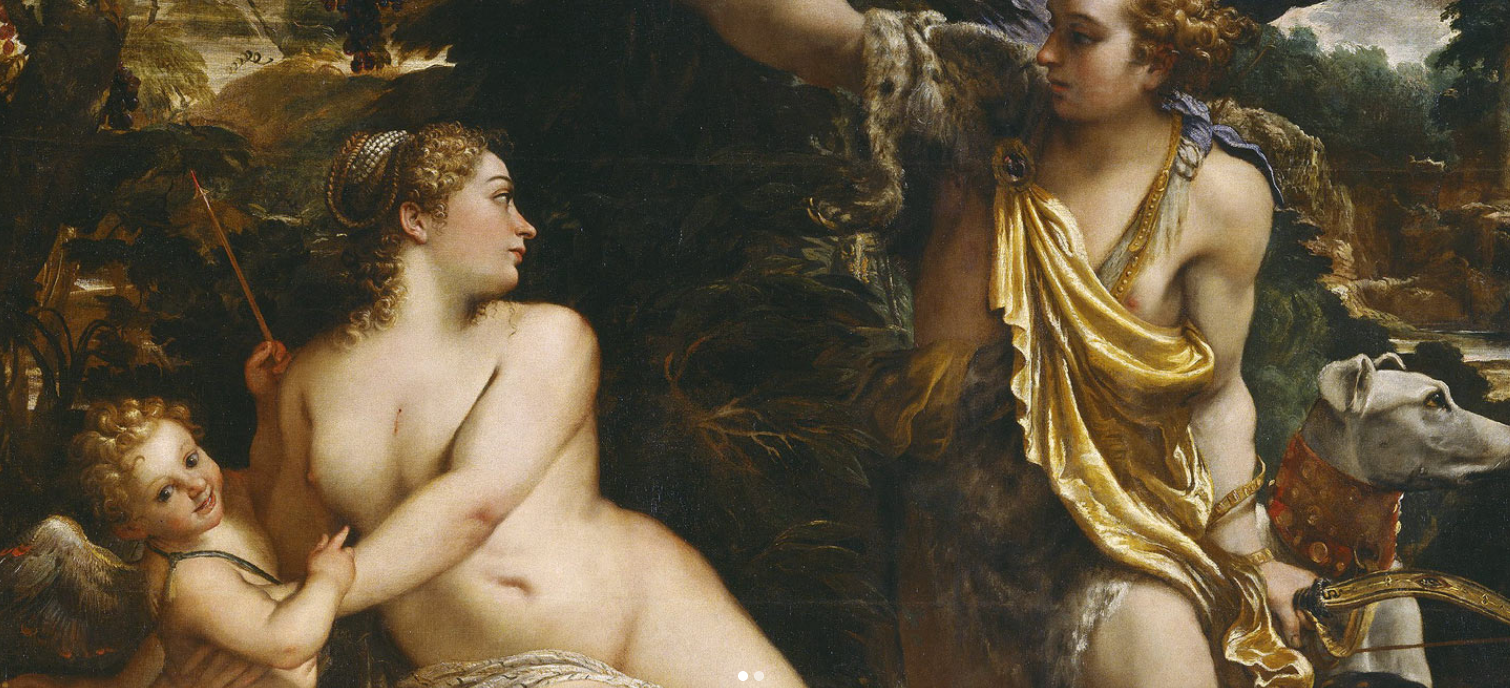
Adonis and Aphrodite Carvaggio
********************************************************************************************************
Write us: with comments or observations, or to be put on our mailing list or to be taken off our mailing list, contact us at nikobakos@gmail.com.
Joseph Fiennes in “Risen”
1 MayI think the Romans in Passion story films have always colored our vision of that people: tough, competent blokes who get things done, an image promoted by some first-class marketing of course. Especially if you’re Orthodox, and have spent a good part of several hours over your lifetime in the gilded dark of the evening of Holy Thursday or “Twelve Gospels” (technically the Matins for Good Friday), listening to the several point-of-view and repeated takes on the same narrative, the Romans almost steal the story. I was rejolted by that realization last night, by the “Seventh Gospel”s display of Latin sticklerism for fairness, and respect for juridical procedure. This is the Gospel where Jesus is taken out three times by Pilate to display to the crowds, repeating each time his ruling of the Nazarene’s innocence and pleading for his life. This is also the only Roman female voice in the Gospels too: Pilates’ wife, who warns her husband that she has dreamt terrible things about this man and that Pilate should release him.

Into this historical-narrative of what Marguerite Yourcenar correctly post-prophesied would become a bloody circling tale and horrid “series of frenzies and misconceptions…” comes Risen (2016) by Kevin Reynolds, a film that until well in the later half is wholly focused on the Romans and their practical and existential vexations. Pilate (Peter Firth) is the one we all know: coming to the end of his service, annoyed by his contentious Judeaen ward of bearded clerics, and by the constant combo of legal fraction and violent rebellion he has to navigate and keep in place, all especially with his boss Caesar’s upcoming arrival for a tour of the province.
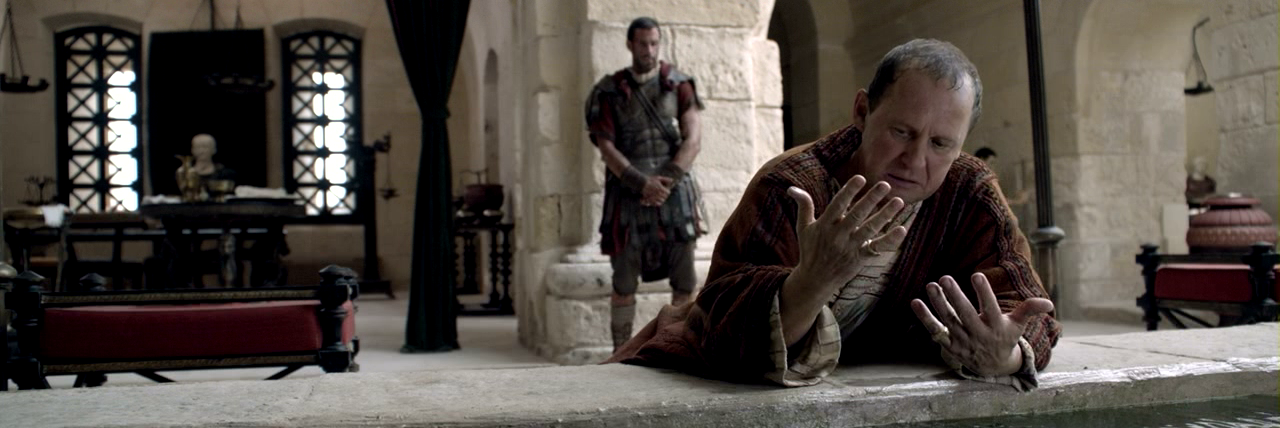
Unknown until now comes Clavius (Joseph Fiennes), looking every bit the Roman tribune: appropriate attitude, soldierly, fit and tan. He’s also dreaming of serving Rome, then finishing his military duty and duly retiring to some lovely Horatian farm idyll in Italy, with olives, vineyards, oxen and a wife. Clavius is a by-the-book man too, but he’s got a slightly different edge about him than the others. He’s relatively kinder and permissive with his men. He’s got an immediately sharper eye for what pushes the “natives” buttons — not to be confused for compassion – and senses that there’s something different and even off with the Nazarene.

This is where the emotional perspicacity of the film kind of goes off its tracks and as Clavius starts to become more and more of Christ’s followers, the late parts of the film become filled with Hallmark images of sunrises in the Galilean countryside.
I can control my reaction because the material has its emotional valence for me. Other times it’s just pissed me off. But it’s a shame, because it’s a good film with a truly innovative conceit, but as Fiennes’ strong, προβληματισμένο, complicated character starts looking more and more like he’s drinking the Kool Aid – or as one film critic, who I can’t find now, wrote: “…the colonies of bats start sailing around…” the whole thing falls into tatters. Watch the first two thirds. Don’t bother with it at all if this stuff is not your style.
Or just enjoy Fiennes’ leather-banded forearms.

********************************************************************************************************
Write us: with comments or observations, or to be put on our mailing list or to be taken off our mailing list, contact us at nikobakos@gmail.com.
New Header Image: Konstantin Savitsky, Monk 1897
28 MarThis will have to do until Holy Week/Easter.

Special thanks to Pelagia in Belgrade (old post) for first posting this image @Ljiljana1972.
*********************************************************************************************************
And some slightly weird seguing/addendum:
For more on B-Town see also: “I haven’t seen any other English-language writer pull these elements together into such a compelling portrait of the city.” :
Hi Niko,
–
Predictably enough, when I first discovered your blog (a happy accident — I was googling “Sveti Jovan Bigorski” and spent an unusual amount of time leafing through search results) one of the first things I did was look under the ‘Serbia’ tag. I’ve already seen all four of the posts you’ve referenced. All four are terrific, but I’m especially enamored of your take on Belgrade — you really understand the place and its people and its historical-geographical specifics. I haven’t seen any other English-language writer pull these elements together into such a compelling portrait of the city. It’s obvious that you care about the place, which means a lot.
Just that I’m particularly proud of that review… :)
*********************************************************************************************************
Write us: with comments or observations, or to be put on our mailing list or to be taken off our mailing list, contact us at nikobakos@gmail.com.
Thank God I’m not actually IN Greece right now — I gladly admit that I’d be fit to be tied and committed.
27 Mar
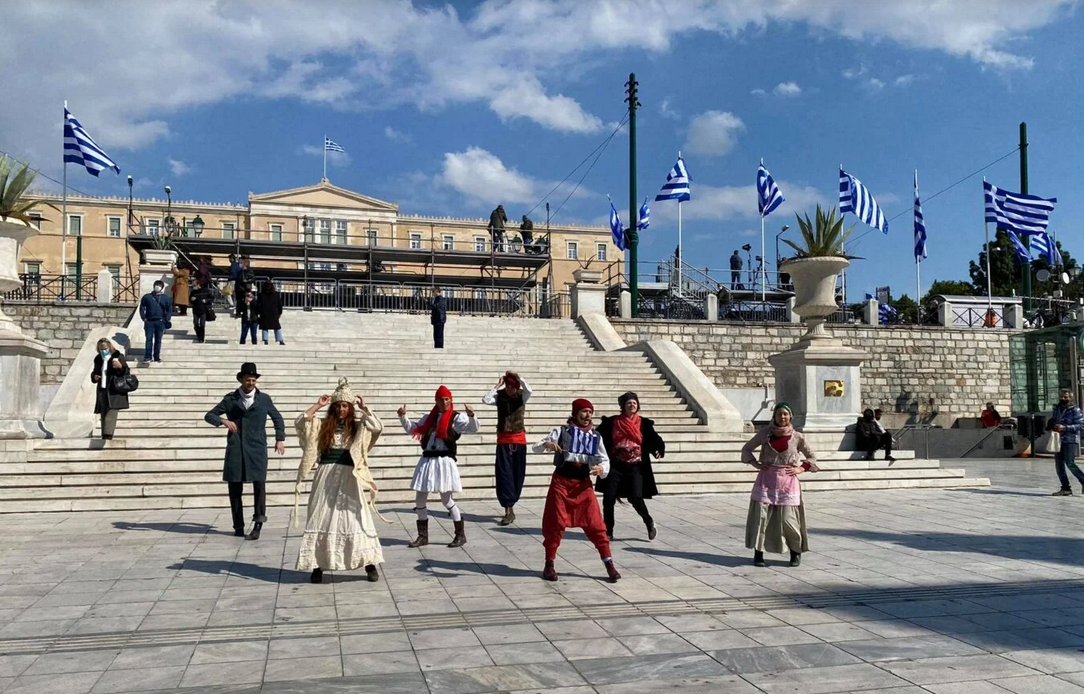
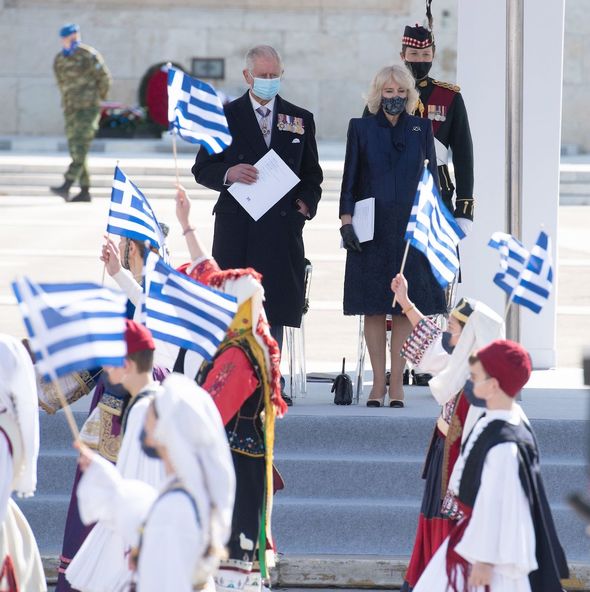
1821-2021: Prince Charles and the Duchess of Cornwall enjoy the Karagözilikia of the Bicentennial celebrations — masked, of course
27 Mar

*********************************************************************************************************
Write us: with comments or observations, or to be put on our mailing list or to be taken off our mailing list, contact us at nikobakos@gmail.com.
 Jadde: from Bosnia to Bengal