From the Guardian: Here’s what could be lost if Trump bombs Iran’s cultural treasures

7 Jan
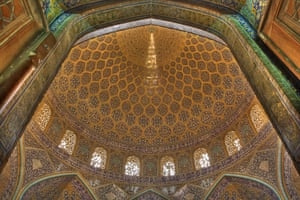
Inside the Sheik Loftallah mosque, in Isfahan, Iran. It is a Unesco world heritage site.
Inside the Sheik Loftallah mosque, in Isfahan, Iran. It is a Unesco world heritage site. Photograph: BornaMir/Getty Images/iStockphoto

If carried out, Donald Trump’s threat to targetcultural sites” in Iran would put him into an axis of architectural evil alongside the Taliban and Isis, both of which have wreaked similar forms of destruction this century. The Taliban dynamited Afghanistan’s sixth-century Buddhas of Bamiyan in 2001; Isis has destroyed mosques, shrines and other structures across Iraq and Syria since 2014, some in the ancient city of Palmyra. Not, you might have thought, company the US president would prefer to be associated with.

Does Trump know what would be lost? Probably not – but he’s hardly the only one. The fact that the country is rarely visited by western tourists is not due to a lack of attractions. With a civilisation dating back 5,000 years, and over 20 Unesco world heritage sites, Iran’s cultural heritage is rich and unique, especially its religious architecture, which displays a mastery of geometry, abstract design and pre-industrial engineering practically unparalleled in civilisation. This is is not just Iran’s cultural heritage, it is humanity’s.

Persepolis
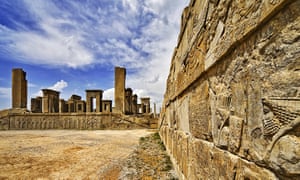
Persepolis was the ceremonial capital of the Achaemenid empire and one of the world’s greatest archaeological sites.
Persepolis was the ceremonial capital of the Achaemenid empire and one of the world’s greatest archaeological sites. Photograph: Alireza Hosseinzadeh/Getty Images/iStockphoto

The jewel in Iran’s archaeological crown: a monumental complex dating back to the sixth century BC that was designed to impress – with a vast raised terrace, grand staircases and marble palaces and temples. The city has been sacked by numerous visitors, starting with Alexander the Great, but much still remains for Trump to obliterate, including some incredibly well-preserved statues and bas reliefs of bulls, lions, mythical creatures and citizens of the multicultural Achaemenid empire.

Shah Cheragh mosque, Shiraz
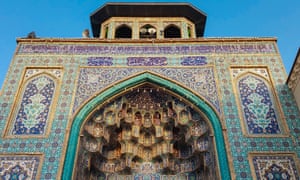
Shah Cheragh mosque, Shiraz, Iran.
Shah Cheragh mosque, Shiraz, Iran. Photograph: Feng Wei Photography/Getty Images

Vank Cathedral

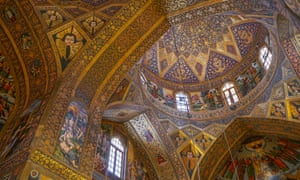
Interior of dome of Vank (Armenian) Cathedral, Isfahan, Iran.
Interior of dome of Vank (Armenian) Cathedral, Isfahan, Iran. Photograph: James Strachan/Getty Images/Robert Harding World Imagery

Iran has a long Christian history, particularly associated with Armenia at its northwestern border. Three of the oldest churches in the region are Unesco world heritage sites. Vank Cathedral, near Isfahan, was built by Armenians fleeing the Ottoman wars in the 17th century. The interior is a riotous patchwork of frescoes and gilded carvings.

Bridges of Isfahan
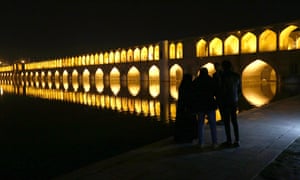
Si-o-Se-Pol Bridge (33 Arches bridge) over the Zayanderud river in Isfahan.
Si-o-Se-Pol Bridge (33 Arches bridge) over the Zayanderud river in Isfahan. Photograph: Atta Kenare/AFP via Getty Images

Western visitors marvelled at the beauty and sophistication of the long, covered bridges of Iran’s former capital, mostly built during the 17th century. They are feats of engineering but also pure functionality. The stately, 130m-long Khaju Bridge, for example, served as a dam and sluice gate to control the Zayanderud river as well as a way to cross it, while its central aisle was a shaded public meeting space boasting a tea house.

Sheik Lotfallah mosque, Isfahan
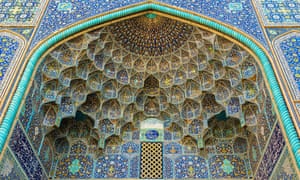
Sheik Lotfallah mosque in Isfahan.
Sheik Lotfallah mosque in Isfahan. Photograph: Leonid Andronov/Getty Images/iStockphoto

Not the largest mosque in the city but one of the most stupendously ornate, since it was built for the royal court rather than the general public. Its interior contains some of the finest tilework to be found anywhere in the world, especially the dome with its unfathomably complex geometric patterns, said to resemble a peacock’s tail – testament to untold millions of hours of care and labour.

Imam Reza Shrine, Mashhad

Cultural heritage: reconstruction of the Citadel in Bam, Iran

This is the largest mosque in the world, one of the holiest sites in the holiest city in Iran, with over 25 million visitors a year. The destruction of this mosque complex would be unforgivable to many of the world’s Muslims. As well as the tomb of Imam Reza, the eighth Shia imam, and numerous other religious figures, the complex is home to mosques, courtyards, a madrasa, and a museum containing priceless historical artefacts.

Pasargadae

The first capital of the Achaemenid empire, built by Cyrus the Great in a distinctive style, with spectacular columned palaces and other buildings laid out across large gardens divided by waterways. This influential Persian garden style was a prototype for Asian design, the inspiration for India’s Taj Mahal and Spain’s Alhambra. The buildings are mostly remnants, though one surviving structure is the supposed tomb of Cyrus himself.

Tomb of Daniel
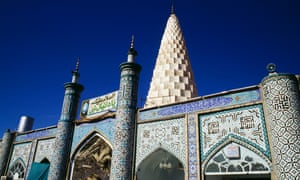
The tomb of prophet Daniel, Susa, Iran.
The tomb of prophet Daniel, Susa, Iran. Photograph: Dea/Archivio J Lange/De Agostini via Getty Images

Even if he hasn’t actually read his supposed favourite book – The Bible – Trump is likely familiar with Daniel, AKA that dude with the lions. He might be surprised to discover Daniel – a prophet in Islam as well as Christianity – is presumed to be buried in the ancient Iranian city of Susa. Daniel’s Tomb, with its distinctive conical dome, was first chronicled in the 12th century and is still a popular pilgrimage site.

The Citadel of Bam

The largest adobe building in the world, dating back to the sixth century BC. It is more a hilltop town than a single structure, spread across 180,000 sq metres (44 acres), with a central fortress surrounded by streets, houses and bazaars, all surrounded by seven metre-high walls. Bam was largely destroyed in an earthquake in 2003 but reconstruction has been going on ever since.

Gonbad-e Kavus
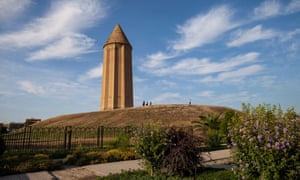
Gonbad-e Kavus tower in Golestan, Iran.
Gonbad-e Kavus tower in Golestan, Iran. Photograph: Image Professionals GmbH/Alamy Stock Photo

Another example of ancient Iranian excellence in both engineering and style. This 50 metre-tall funerary tower dates back to the early 11th century, and a millennium later it is still apparently the tallest brick tower in the world. The design is beautifully austere, a 10-pointed star in plan, with a conical roof, completely plain save for two bands of calligraphy around the bottom and the top.

[From the Guardian] Since you’re here…

… we have a small favour to ask. More people, like you, are reading and supporting the Guardian’s independent, investigative journalism than ever before. And unlike many news organisations, we made the choice to keep our reporting open for all, regardless of where they live or what they can afford to pay.

The Guardian will engage with the most critical issues of our time – from the escalating climate catastrophe to widespread inequality to the influence of big tech on our lives. At a time when factual information is a necessity, we believe that each of us, around the world, deserves access to accurate reporting with integrity at its heart.

Our editorial independence means we set our own agenda and voice our own opinions. Guardian journalism is free from commercial and political bias and not influenced by billionaire owners or shareholders. This means we can give a voice to those less heard, explore where others turn away, and rigorously challenge those in power.

You’ve read 289 articles in the last four months. We need your support to keep delivering quality journalism that’s open and independent. Every reader contribution, however big or small, is so valuable. Support The Guardian from as little as €1 – and it only takes a minute. Thank you.
 

Why support matters

“Shadows of Forgotten Ancestors:” Merry Christmas to Old Calendarists

7 Jan

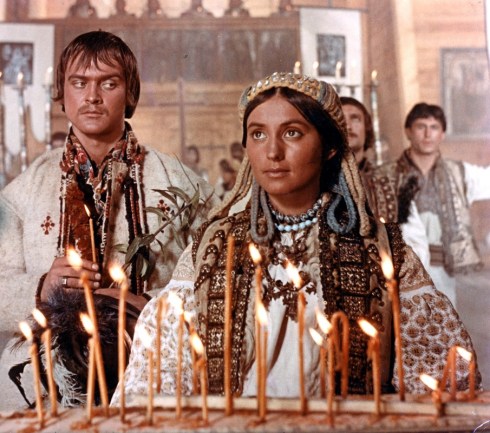
Shadows churchScene from Sergei Paradzhanov’ “Shadows…”

“Shadows of Forgotten Ancestors:” Merry Christmas to Old Calendarists

Ivanko (Ivan Mykolaychuk) and Marichka (Larisa Kadochnikova) in one of the most beautiful shots, Christmas in church, of the beautiful film Shadows of Forgotten Ancestors.  It’s maker, Sergei Paradzhanov, was forgotten for decades largely for having spent time in Soviet prisons for “social” crimes.

I’d written a post about him before (below).  Also read about Hutsuls, the Ukrainian sub-ethnic group of the Carpathians and their – what I like to call — High Folk Civilization.  Paradzhanov was clearly in love with the milieu — and the boys.  In fact, he was a little bit of a shithead.  He’d borrow embroidered shirts and heirloom vests and beaded headresses for the productions and then never return them.

Thankfully they’ve been restored and are available on a Blu-Ray package and Amazon Prime. I know, I tried not to go there, but they have a fucking monopoly on everything).

Jadde’s homepage photo: Sergei Paradzhanov

12 Nov

I had thought that maybe I would permanently keep the photographs that I first posted on the blog’s homepage when I started it (Turkish refugees from Rumeli in turn of the century Istanbul and adorable kids in Samarina in 1983), as sort of a trademark, or what obnoxious “Ok, millenials” call a “meme” — which is just a mystified/jargonized term for what used to simply be called an “image”.  But when you don’t have any new ideas, you make up fake new words to cover for the fact.

Then I saw footage from a Paradzhanov film that I love, and remembered that he’s among my two or three favorite directors.  It’s strange that I hadn’t thought of him before, because he was essentially obsessed — possessed would not be an exaggeration — with the visual beauty of our parts, of the Jadde world.  He was almost an our parts pornographer, in the most beautiful sense of the word, fixated on the image of our cultures’ physical (and I mean that sexually) and male and material beauty, more interested in the fetishized gaze and tableaux than in editing or the syntax of cinema.  In our world today, where cinematic and video language has been so perverted and debased that the average viewing time between editing cuts is less than three seconds — we’re kept watching by the fact that we’re not allowed to actually look at anything — Paradzhanov granted us the delicious luxury of lingering over every beautiful detail his cinematic mind generated.

So, I decided that every month I’m going to change the homepage pic with one from his various films.  This one is from his 1969 The Color of Pomegranates, widely considered his masterpiece, though it’s not my favorite.  That would be his 1965 Shadows of Our Forgotten Ancestors, though Pomegranates is without a doubt a beauty.

Hope you enjoy them as much as I like to watch them and post the stills.  Unfortunately, the crappy greenish Soviet color film stock they were shot in and the abysmal curatorial conditions these films were kept under for so many decades means that some of the stills will be soft or just not of optimal quality.  But I hope you enjoy them anyway and look out for opportunities to see them, and hopefully on a real screen and not your Mac…

MV5BNThmNjNmYWQtN2EwZi00NGVjLWFlZWEtZDMwZjY4ZjI2NWEzXkEyXkFqcGdeQXVyNjg3MTIwODI@._V1_

Comment: nikobakos@gmail.com

Photo: Sushi in Holargos

7 Jan

Sushi Holargos.jpg

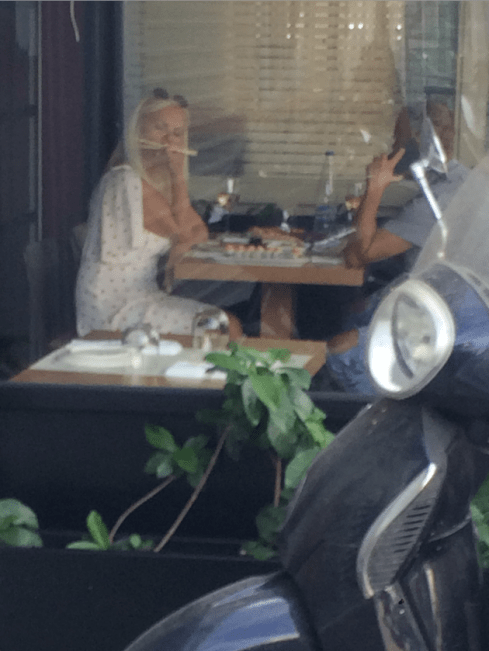
Now that they’ve learned to eat with chopsticks, would I be a real bitch if I told them that sushi is properly eaten with the fingers.

Comment: nikobakos@gmail.com

Image

Serbs: and sometimes you’re real assholes

7 Jan

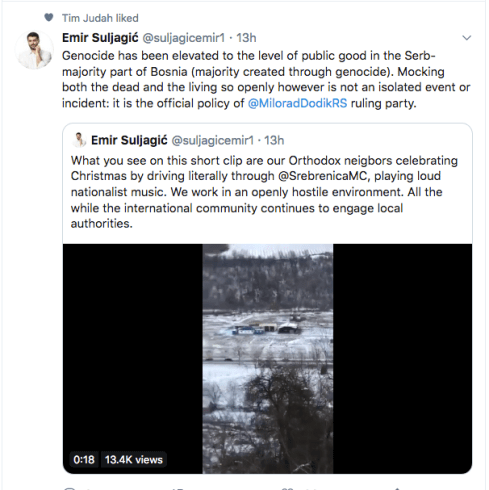
Screen Shot 2020-01-07 at 11.07.20 AMSee:@suljagicemir1

Comment: nikobakos@gmail.com

Photo: “Una fazza, una razza:” — @KlairhA — hhhhmmm??? — I dunno

7 Jan
@KlairhA  

Tehran - snowPhoto: Iason Athanasiadis

and à propos of…

Screen Shot 2020-01-07 at 10.42.44 AM…Convincing Iranian women, and Turkish women, and Greek women, and, yes, Italian women, and Syrian women, and Indian women…

ENotOw8VAAEOLlK

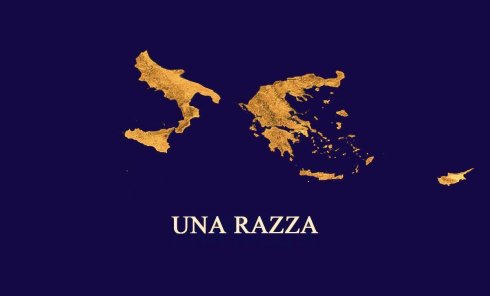
And the “una razza, una fazza” cliché might actually apply more to Iran than Italy.

Comment: nikobakos@gmail.com

From Guardian: Boy, what a model of new-normal ethics and wokeness you Catalans are…such a burden…

31 Dec

Barcelona to open southern Europe’s biggest low-emissions zone

City bans most polluting vehicles from area 20 times the size of Madrid’s zone

5401Photograph: Alejandro García/EPA

And the cathedral, which I think, that like the Tower of Babel, God won’t let it be finished because it’s so dang ugly.

Comment: nikobakos@gmail.com

Serbia detox

28 Dec

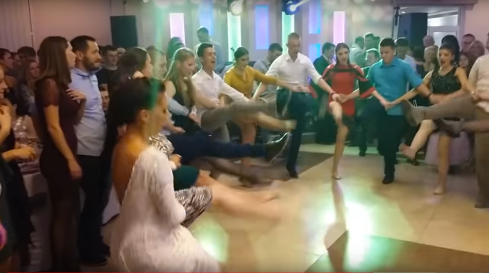
KoloAnd it’s not from the alcohol, which certainly plays a part.  It’s just everything is BIG.  The men.  The women’s legs.  The volume of men’s voices.  The women’s raspy, sexy contralto.  People’s hearts and personalities and sense of humor and irony.  The portions of food.  Everything is HUGE!

It’s a ton of fun.  And they’re totally superlovable.  But an outsider sometimes needs a break.

No joke.

Kolo

Kolo

Comment: nikobakos@gmail.com

Oooooof abi, don’t you get tired? Part 2. (Mykonos 1956 photo)

25 Dec

Stormfront Giannis has more to say.  First, He doesn’t like to still be referred to as the Stormfront bro, which I understand, but I’m sorry man, “the internet is forever”, and once a KKK/NAZI always a KKK/NAZI.  There are always people who are going to find evidence of your however brief (you claim) flirtation with white supremacism and antisemitism online.  I mean, change the site you write your comments from at least, jaanam.

On my part, as a Christian, I forgive you — and I mean that without even a drop of sarcasm or condescension — but my readers now know you as “Stormfront Giannis” and I can’t change that any more than I can delete your past from the internet.  But ok, I’ll stop repeating it, because you seem like a sincere and honorable person — except for that one little issue  :)

(An aside before I post your comment: there are/were Vikings in the Mediterranean — who really fucked up Constantinople? it wasn’t the Ottomans*, who instead immediately got busy rebuilding the City after 1453, it was the Normans and other Franco-Teutons two centuries earlier — they’re just not a separate or identifiable ethnic group anymore.)

Here’s your whole post below.  But please do me a favor and don’t write with anything long for a while because you’ve reeeeeeally backlogged me on things to respond to and I need to find the time and get a break to do so.

But ciao, yes, Merry Christmas I guess.  Later.

Not only women, but also men, architecture (the latest one has nothing to do with turkey belonging to the middle east, i am talking about the Turkish/ottoman vernacular house, which is the dominant type on the other side of the Aegean but completely absent in mykonos and most of south and islandic Greece, just like Aegean architecture is absent even in Turkish parts that Greeks used to live), and many, many other enormous differences that can’t fit in one small picture (and these differences would be even more numerous if ONE MAN wasn’t obsessed with making turkey something that it can’t be: European, and i am obviously talking about mustafa kemal)

There was technically little (or not at all) resemblance between the two sides of the Aegean when it comes for both Balkan and Mediterranean parts of Greeks and Turks. And again, i am not only talking about arts where the differences already are enormous (in spite of some undeniable similarities of course). The two societies were so fundamentally different that even today endogamy is 30% common in turkey, something that in Greece wouldn’t just be forbidden, people would feel discussed in such a case :D

Ps you don’t need to repeat every time that “i am a neonazi strofmronter” just because i used to post until 2014 in sf dude! :D

I am just speaking the truth, if i was a stormfronter i would tell you that what you see is viking descendants in the Mediterranean , something that you can see i never do.

Marry Christmas Nikolas, and a happy new year :)

* (What’s obnoxious and just stupid about Turkish triumphalism and 1453 is that the true Fall of Constantinople happened in 1204 to the western Crusaders and not 1453.  What happened in 1453 was the equivalent of beating a ninety-year-old woman with a two x four — granted a still feisty ninety-year-old woman — so I don’t know what Turks are so proud of; it’s all really silly.)

And, the photo that launched a thousand posts, “Mykonos, 1956”:

Mykonos_1956

Comment: nikobakos@gmail.com

Oooooof abi, don’t you get tired? Mykonos 1956 photo (more Stormfront)

24 Dec

The photo of Mykonos in 1956 I posted a couple of weeks or so ago made my ex-Klan reader Gianni reappear.  I’ve approved his comment and posted it in whole below.

To G: actually when I posted the photo, for a split half-second in the back of my mind, I thought of you and your Neo-Nazi bro Hristo, and thought that you would immediately take it as a representation of something liltingly lovely and Cycladic that contrasts with the ponderous Balkano-Anatolianess that Greeks like me come out of.  And, ἰδού, your epistle arrives!

And I’ll be perfectly honest.  When I first found the photograph I did ask myself what element of Grace it contained, the absence of which would make it impossible to take the same photo on the other side of the Aegean at the same time, and the answer was simple: Women.  Just look up at the apse next time you’re in an Orthodox church.  But even that’s not so simple.

Beyond that you seem to have put some water in your wine ideologically which I guess is progress but I will have to get into that at another time. :)   You’ve already overwhelmed me with “material” — but thanks for the response.

The pic:

Mykonos_1956

Giannis’ response:

“[…. ] this society, and civilization, has nothing to do with Northern Europe, or most of Central Europe etc.. but equally has nothing to do with all of West or Southern Asia.. This civilization is the Euro-mediterranean civilization, the civilization of Southern Europe.. It has nothing to do with Germany, but equally nothing to do with Iraq.. but this picture could be from anywhere in South Italy or Sicily of 1956, or even many parts of Spain.. That’s what I was talking about when I said all these things I said a few months back dude.. That’s why I strongly disagree with specific views of this blog.. Because if there is any world where Greece belongs to, this would be either Southern Europe (especially Southern mainland and the islands) or Balkans (especially Northern Greece, but saying balkans, I associate the region with eastern Europe, to be honest). And there’s nothing racistic about it.. It simply is about what I/we see as more familiar. [my emphasis]

“And with that saying, I would never be so ignorant to say that we have no west Asian influences.. Of course we have, just like all of southern Europe (and yes, even southern France, especially the mediterranean part) does…”

Image

Merry Christmas

21 Dec

watermelonstationery__91335.1417396303.900.900