Talk of poetry, the Delhi Wallah and Kashmir (May 10, “Favorite Blogs: The Delhi Wallah”) made me think of one of my favorite poets of the past few years, the Kashmiri-American — I guess one would call him — Agha Shahid Ali, a prolific poet who wrote about the ghazal, edited a book of ghazals in English: Ravishing DisUnities: Real Ghazals in English and wrote a collection of his own ghazals in English: Call Me Ishmael Tonight a tiny volume that obsessed me for months the first time I got my hands on it. That one of the most beautiful men I’ve ever known — a friend and the saqi at a bar in Astoria I used to go to — introduced me to it didn’t hurt either. “Strange and beautiful” he called them, and I still do, and often think that the one must always by necessity partake of the other to some extent: in poetry, in religion, in the physical beauty of a man or woman, in an idea…

Here’s part of Ali’s description of the genre:
“The ghazal is made up of couplets, each autonomous, thematically and emotionally complete in itself… once a poet establishes the scheme—with total freedom, I might add—she or he becomes its slave. What results in the rest of the poem is the alluring tension of a slave trying to master the master.”
In Arabic
A language of loss? I have some business in Arabic.
Love letters: a calligraphy pitiless in Arabic.
At an exhibit of miniatures, what Kashmiri hairs!
Each paisley inked into a golden tress in Arabic.
This much fuss about a language I don’t know? So one day
perfume from a dress may let you digress in Arabic.
A “Guide for the Perplexed” was written–believe me–
by Cordoba’s Jew–Maimonides–in Arabic.
Majnoon, by stopped caravans, rips his collars, cries “Laila!”
Pain translated is O! much more–not less–in Arabic.
Writes Shammas: Memory, no longer confused, now is a homeland–
his two languages a Hebrew caress in Arabic.
When Lorca died, they left the balconies open and saw:
On the seat his qasidas stitched seamless in Arabic.
Ah, bisexual Heaven: wide-eyed houris and immortal youths!
To your each desire they say Yes! O Yes! in Arabic.
For that excess of sibilance, the last Apocalypse,
so pressing those three forms of S in Arabic.
I too, O Amichai, saw everything, just like you did–
In Death. In Hebrew. And (please let me stress) in Arabic.
They ask me to tell them what Shahid means: Listen, listen:
It means “The Beloved” in Persian, “witness” in Arabic.
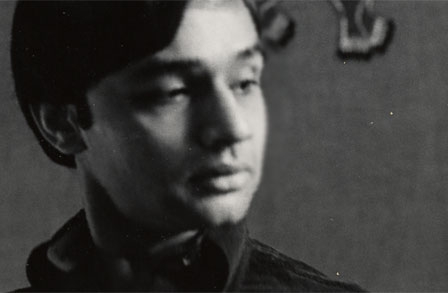
Agha Shahid Ali (1949-2001)
More here: Poetry Foundation
Some more mundane info on the ghazal: Ghazal
“In Arabic” “Reprinted from The Veiled Suite: The Collected Poems by Agha Shahid Ali. English translation copyright © 2009 by Daniel Hall. With the permission of the publisher, W.W. Norton & Company, Inc.”
Comment: nikobakos@gmail.com
Tags: Agha Shahid Ali, Astoria, ghazal, India, Indian Islam, Kashmir, poetry, saqi, shahid, Urdu

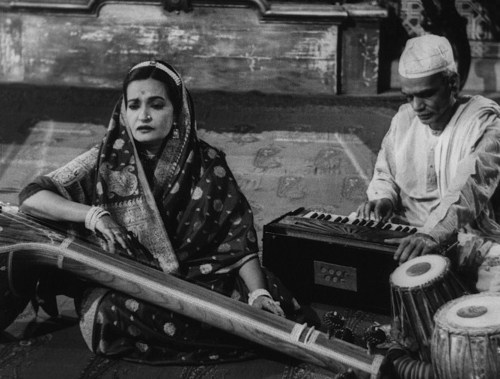


 Jadde: from Bosnia to Bengal