Tag Archives: Constantinople

Vocabulary: “Frangoi”

2 Sep

I’ve used this term several times without giving a more specific definition of it and that was a mistake because some of those posts would have made more sense if I had.

Like: “Little Rock, Greece”  (May 26th, 2012):

“But an equal object of my bashing here is the European Union, which aside from proving itself to be a neo-colonialist endeavour masquerading as the Highest Achievement of Western Humanism Project, has also revealed itself to be a half-assed, thrown together mess on so many institutional and bureaucratic levels.  (Yes, neo-colonialist: the Frangoi** gave up their colonies after the war and then discovered the exploitable potential of Europe’s own periphery again.)”

And: “Russia and Syrian Christians, ctd”  (June 5th, 2012):

“Tying your survival to extra-regional players or regimes like Assad’s that are destined to soon make their exit is a losing strategy for the region’s Christians.  The threat of Islamist violence is probably real.  Iraq and even Egypt certainly seem to indicate that.  But their only choice is probably the tricky dance of fostering, or just going with, the flow of democratic change while keeping themselves as least vulnerable as possible.  Forget Russia.  And, as Constantine XI had to heroically face in the end, there’s certainly no help coming from the Frangoi.*  If you want to live in peace and security, look to your neighbor because, ultimately, he’s the only one who can provide it for you.”

And: “Un Verano en Nueva York” (July 13th, 2012):

“In Astoria I catch the end of vespers at Hagia Eirene.  This is a church that used to be the territory of fundamentalist, Old Calendar, separatist crazies but has rejoined the flock on the condition that it was granted monastic status (and I have no idea what that means).  But it has somehow got its hands on a great bunch of cantors and priests who really know what they’re doing.  I’m impressed.  I brought friends here for the Resurrection this year and for the first time I wasn’t embarrassed.  If I hadn’t invited them back home afterwards I would have stayed for the Canon.  Only one cantor now at vespers but he’s marvelous and the lighting is right and the priest’s bearing appropriately imperial.  It’s incredibly heartening to see our civilization’s greatest achievement — which is not what the Frangoi taught us about Sophocles or Pericles or some half-baked knowledge of Plato or a dumb hard-on about the Elgin marbles or the word “Macedonia,” but this, the rite and music and poetry and theatre of the Church – performed with the elegance and dignity that it deserves.”                  

So…when the Byzantines first encountered the West and the conglomeration of Germanic kingdoms that had sprung up on the territories of the western Roman Empire, or rather, when they first felt challenged by it and not just irritated, was when Charlemagne, previously just King of the Franks, was crowned Emperor of the Romans in the year 800 by Pope Leo III, whose skin he had saved after Leo had been deposed and almost lynched by the mobs of Rome.  This, of course, was intolerable to us, because we were the Romans and we had an Emperor, with an unbroken line back to Constantine, if not Augustus.  This is close to impossible an idea for anyone today to understand; it’s even hard for modern Greeks to articulate and it’s at the core of our completely mangled identity.  It’s nearly impossible to speak definitively about consciousness or identity in the present tense, much less more than a millennium past.  But this is the simplest way I can put it: by the late first millennium, the Greek-speaking Christians of the eastern Mediterranean had a stronger sense of Imperial Roman continuity than the inhabitants of even the Italian peninsula.  Till well into the twentieth century our most common term of self-designation was “Romios” – “Roman.”  If you had asked any of my grandparents, all born Ottoman subjects, what they “were” — if they even understood the question — or even my father very often, they would’ve all answered “Roman.”  For the inhabitants of my father’s village in Albania, especially the older ones, who never had “Hellenes” imposed on them by the Neo-Greek statelet, the world is still divided into Muslim “Turks” and Orthodox “Romans,” and whether they speak Greek or Albanian is irrelevant.  The Greeks of Istanbul still call themselves “Romioi” for the most part; Turks still call them “Rum” too, out of simple historical continuity, while the Turkish state is still faithful to the appellation for partly more cynical and manipulative reasons.  I’m writing a piece with the appropriately pompous working title of “A Roman Manifesto” or “A Manifesto of Romanness” that will deal with this whole theme further.

The Frankish West (click)

So Charlemagne was a Frank, a Latinized Germanic ethnic group, and though the Pope’s primacy “inter pares” was recognized, he had no right to unilaterally crown this Frank emperor in an Italy that had become a ravaged provincial backwater from the Constantinopolitan point of view.  This didn’t end relations between the Empire and the various western European kingdoms.  They continued to trade and even contract dynastic marriages and all the rest.  But the tension, which had already been planted for quite a while before that, only went from bad to worse: power tensions; trade concessions to the Italian city-states that fatally mirror the ones the Ottomans had to make to the Western powers a millennium later; massacres of Italians in C-town that are equally mirror-like.

The West grew in confidence.  The Empire shrank.  They started bickering about theological issues, and eventually, in 1054, Rome and Constantinople excommunicated each other over some nonsense about the division of labor among the Trinity that I’ve never bothered to try and understand.  Then came the Crusades — more growing Western confidence — which the Byzantines weren’t ever really enthusiastic about because I reckon on many levels they felt less animosity for and greater cultural affinity to their the Muslim/Arab neighbors than they did to the “Franks.”  Runciman, I think writes somewhere that a ninth-century Greek felt more at home in Arab Palermo or Baghdad and Cairo that he would’ve in Paris or even Rome.

Sometimes Wiki’s gets it perfect:

“The experiences of the first two Crusades had thrown into stark relief the vast cultural differences between the two Christian civilizations. The Latins (as the Byzantines called them because of their adherence to the Latin Rite) viewed the Byzantine preference for diplomacy and trade over war, as duplicitous and degenerate, and their policy of tolerance and assimilation towards Muslims as a corrupt betrayal of the faith. For their part, the educated and wealthy Byzantines saw the Latins as lawless, impious, covetous, blood-thirsty, undisciplined, and (quite literally) unwashed.”

Then came the Fourth Crusade, led by the Venetian Doge Enrico Dandolo.  The Crusaders fell into the internecine machinations of the some Angeloi  Emperors and I think ended up feeling betrayed on some promise made to them by one party in the Byzantine political scene, and they probably were, because our latter Emperors compensated for the diminishment of their real geopolitical power and the sapped strength of their once massive military machine by becoming major manipulative sleazebags and liars, initiating a long Greek tradition that persists to our day.  In retaliation, and, or, because that had been their real object all along, the Crusaders of the Fourth Crusade, in 1204, captured the City – the first time Constantinople had ever fallen to anybody and destroyed it.

They destroyed her.  They massacred thousands, desecrated churches, including Hagia Sophia herself, and carried away what, in today’s terms, I’m sure amounted to billions in loot.  The Venetians got off with enough of a lump sum of capital to fund and run their mercantile empire for another five centuries.  But aside from the loot, which on some level is comprehensible, it’s the sheer mindless destruction of 1204 that betrays the sack as the action of thuggish, resentful provincials and their envy towards what had been the civilizational center of the Mediterranean and western Asian world for almost a millennium; it’s what an army of Tea-Partiers, NRA members or armed Texan Evangelicals would do to New York if they could.  Though pregnant already with the great traditions of this supposed thing called Western Humanism, this bunch destroyed more Classical texts and melted down or smashed more Classical sculpture into gravel than had been done at any other one time in history – far more than any fanatical Christians in any pagan city or any Arabs or Muslims in any conquered Christian city before them had.  More of the ancient world was lost to us in those few days than in any other comparable time span before that.  Just sheer idiotic vandalism.  There’s probably no more epic manifestation of Killing-the-Father in human history.

Speros Vryonis, a great historian but a seriously unpleasant man, Theos’choreston, made a career out of catalogueing the injustices done to Byzantine and post-Byzantine Greeks.  He was the great modern preacher of whining Greek victimology and one often felt that all his personal bile and biterness was poured into his work in that way; his book on the anti-Greek riots of Istanbul in 1955 is one thousand pages long; you’d think it was the most important event in twentieth-century history.  In any event, in Byzantium and Europe, he wrote:

“The Latin soldiery subjected the greatest city in Europe to an indescribable sack. For three days they murdered, raped, looted and destroyed on a scale which even the ancient Vandals and Goths would have found unbelievable. Constantinople had become a veritable museum of ancient and Byzantine art, an emporium of such incredible wealth that the Latins were astounded at the riches they found. Though the Venetians had an appreciation for the art which they discovered (they were themselves semi-Byzantines) and saved much of it, the French and others destroyed indiscriminately, halting to refresh themselves with wine, violation of nuns, and murder of Orthodox clerics. The Crusaders vented their hatred for the Greeks most spectacularly in the desecration of the greatest Church in Christendom. They smashed the silver iconostasis, the icons and the holy books of Hagia Sophia, and seated upon the patriarchal throne a whore who sang coarse songs as they drank wine from the Church’s holy vessels. The estrangement of East and West, which had proceeded over the centuries, culminated in the horrible massacre that accompanied the conquest of Constantinople. The Greeks were convinced that even the Turks, had they taken the city, would not have been as cruel as the Latin Christians. The defeat of Byzantium, already in a state of decline, accelerated political degeneration so that the Byzantines eventually became an easy prey to the Turks. The Crusading movement thus resulted, ultimately, in the victory of Islam, a result which was of course the exact opposite of its original intention.”

The Fall of Constantinople, Palma Le Jeune — 16th-17th century (click)

The Entry of the Crusaders into Constantinople –Eugene Delacroix, 1840 (click)

And, in fact, the Turks — fast-forward two-and-a-half centuries – weren’t as bad.  Maybe ’cause there wasn’t much left.  Aside from a sizeable amount of slaves, most of the loot Mehmet had promised his suicidally brave Janissaries when they finally made it into the City in 1453 consisted of cheap silver frames pried off of personal or parish-sized icons — Cavafy’s “bits of coloured glass.”  The Emperor’s tombs in the dilapidated Hagioi Apostoloi — the Byzantines’ Westminster — had already been desecrated and robbed by the Franks.  They may as well have sacked Astoria.  The rest was in Venice.  (Even the crown jewels had been pawned off to Venice a century before by Anne of Savoy, one of the most meddling Frangissa bitches in Byzantine history, to fund her episode of the Palaiologan civil wars; that’s the actual historical reference for Cavafy’s “coloured glass.”  Christouli mou, can you imagine what the Byzantine crown jewels were like?)  But one good thing happened for Greeks on Tuesday, May Twenty-Ninth, Fourteen-Fifty-Three: when the Turks finally broke into Hagia Sophia, they smashed Dandolo’s sepulcher — because, after all of the above, he had had the shamelessness to have himself interred there – and finding nothing of worth, they threw his bones out into the street and let the dogs gnaw on them.  I don’t care what else the conquering Turks did at that  point or that Menderes’ thugs did the same to the Patriarchs’ graves at Balikli in 1955; I sleep better at night because they did it to Dandolo.  I’m as close to a chaneller of the Byzantine mind and soul as you’ll find (aside from Vryonis) and I can tell you that the sweet Balkan hard-on of vengeance that image gives me even now is indescribable.

The Greeks got Constantinople back in 1261, but the City never really recovered, as the Empire itself didn’t.  Like the South Bronx in the eighties, whole parts of the City were eventually given over to orchards and bostania or just wilderness.  Yet even after that, the Byzantines managed to plant further seeds in the womb of friggin’ Western Humanism in the form of an artistic wave of unprecedented dimensions and creativity. 

The “Franks,” thereafter, were the unforgivable villains.  But even before, when Byzantine writers felt like being professional, they referred to Westerners as “Latins.”  When not, and eventually in most cases, they were “Frangoi.”  Frangoi stuck as the word for Westerners, or for Catholics at least, because Protestantism was only a minor blip on the East’s screen.   But generally it came to mean the Western Others and the Eastern Muslim world between which Byzantine and post-Byzantine Christians came to feel themselves stuck between.

“Fereng,” “Ferengi,” “Ferenj” and other variations is also a word that eventually came to be used as far east as India, but I can’t be sure whether in Iran or India it means/meant Westerner or just foreigner.  For Arabs and Turks, “Frank” came to mean those Christians over there, as opposed to “Romans,” our Christians over here.  So if you were Roman Catholic, either back home in Europe or in the Near East, you were a “Frank;” if you were an Orthodox Christian, you were a “Roman.”*  It’s confusing.  And I hope I haven’t made it worse.

For Greeks, Frangoi continued to mean Westerner both in a negative sense and not, until the nation-sate convinced us into thinking we ourselves were Westerners.  When Greek peasant men, for example, started wearing Western clothes, whereas their women wore traditional dress well into the twentieth century in many regions, those clothes were “Frangika.”  Frangoi also meant, with no negative connotation, the small communities of Catholics in the Aegean islands that were leftovers of the Crusader principalities that had been founded there after the Fourth Crusade.

It’s not used any more in common Greek parlance, but most Greeks know what you mean when you say it – though this generation is so profoundly ignorant historically that I’m not so sure.  I, of course, use it in a spirit of historical irony, though that spirit is entirely hostile.  The worst enemy of our part of the world is the European West, and not because of imperialist interventions or the usual gripes, but because of the ideological and cultural chaos we allowed it to throw us into.

Yes, Frangoi are the enemy.  I like to say that.  But it’s not true.  We think we’re Frangoi.  Unlike the Byzantines described above, who understood that their natural civilizational context was and always had been the eastern Mediterranean, we are either ignorant of the peoples to our East or despise them.  We disfigured our own identity in an attempt to remake it in the Westerners’ image.  We threw acid into our own face and now still look longingly into Europe’s eyes, and pathetically expect to see our Classical glory reflected back at us.

*One of the most graphic examples is Lebanon/Syria, where Orthodox Christians, who have long and poignantly tried to bridge the above gap, were still “Romans” into the nineteenth century and were among the founders and then long among the most loyal adherents of Arab nationalism, whereas Maronite Christians were the locals with the most exemplary Frangika delusions, always looking to the Western outsider to bolster their interests, first their “sweet mother France” and then Israel, and bringing disaster down upon their heads and that of all around them in the process.  That’s why in many previous posts my humble outsider’s advice to and hope for Syrian Christians in the current crisis has been that they think and act like Romans and not Franks.

Comment: nikobakos@gmail.com


Vienna

28 Aug

“The true Vienna lover lives on borrowed memories.  With a bitter-sweet pang of nostalgia he remembers things he never knew.  The Vienna that is, is as nice a town as there ever was.  But the Vienna that never was is the grandest city ever.”

                                               — Orson Welles, Vienna (1968)

(click)


Comment: nikobakos@gmail.com

Bread of Beirut

18 Aug

Photo by Julien Harneis

From Granta: “Bread of Beirut” by Annia Ciezadlo

Snag to all you carbophobes…

“The practice of sharing an oven goes back to the ancients, when Babylonian temples fed their subjects on the leftovers from the feasts of the gods. But the urban public oven came into its own in the medieval Mediterranean.  In cities all around the Middle Sea, Christians and Muslims, Arabs and Armenians alike brought bread and other foods to the oven at the pandocheion, a Greek word for inn that means ‘accepting all comers’. For a small fee, the public baker would cook your food, saving scarce heat and fuel for all to share – a kind of culinary carpool. Private ovens encouraged segregation; public ovens led to mixing, cross-pollination, and negotiation – in a word, relationships. And probably, I imagine, a fair amount of food and recipe sharing across religious and ethnic lines.”

Women taking cloth-covered trays of food to the fourno in the morning and coming back with them just before lunchtime were a regular neighborhood sight in Greece till the eighties even, and I can only imagine all over the Mediteranean (Iran?), especially on Sundays or feast days, when a casserole or tepsi-based dish was more expected than a “pot” dish which was easier to make at home: pastitsio, mousaka, roast lamb (with rice in the still post-Ottoman north, or potatoes in the Bavarian south), borek (again, in the still civilized north; no one in southern Greece can roll out decent yufka to save their lives), even tomato or eggplant or pepper dolma, which Greeks tend to bake rather than simmer like Turks do, with lots of extra filling spread around the pan, so the edges of the rice — the zaire, they used to call it in Epiros, which means grain or grain stock in Turkish (and sounds of Farsi origin to me) — got nice and crispy.

What Ciezadlo doesn’t point out is that the neighborhoud fournoi also saved you from so much heat in the summer in those countries, which built up in even the coolest stone and tiled houses.  And that anything cooked at the fourno just tasted incomparably better than anything made in a home oven, especially those lame electric ovens and ranges — digital cooking — used in much of Europe and the world today.

What she couldn’t have known is that by tradition almost all firincilar in the Ottoman Balkans, Constantinople and even much of Anatolia were Epirotes.  My mother’s family ran a fourno in Bucharest for three generations, the men going back and forth to Roumania from their village in shifts to manage the place.  Even today in Athens, people will often single out an Epirote baker to get their bread from.

I highly suggest that you read Ciezadlo’s article only if you have a source of good Lebanese food in easy proximity because, otherwise, it will leave you in pain.

P.S. fournos, forno, furn, firin, fir, horno — all come from the Latin furnus, so don’t get excited; it’s not a Greek word.


Comment: nikobakos@gmail.com

Greeks and Turks: Ramazan in old Tarlabasi

20 Jul

…a neighborhood about to be destroyed.  See their great website: Tarlabasi Istanbul

“In the early 1950s, waves of rural migration led to profound demographic and socio-economic changes in Istanbul. Empty houses in Tarlabaşı and other neighbourhoods were soon claimed by workers arriving from all over Anatolia. Young men started working alongside local master craftsmen, or usta, and sometimes went on to open their own stores and workshops. Yusuf Karapinar, a shoemaker, got his start in the profession at the age of 8, as an apprentice in a Greek family. “They were lovely people, extremely nice to me,” he said. “During the month of Ramadan, they never ate in front of me and my mentor’s wife always insisted on cooking an iftar meal for all of us.” Forty years later, Yusuf Usta is today one of the very last shoemakers in the neighbourhood and his shop is threatened with demolition. Turan Usta, who works with Yusuf and his son Kadir Karapinar and has been a shoemaker for 45 years, is angry about the prospect: “If they tear Tarlabaşı down, it will be the end of the artisans and of the craftsmanship here.””


Comment: nikobakos@gmail.com

Names: “Istanbul (not Constantinople)”…and Bombay!

21 Jun

I reckon I’ve now received enough emails complaining about my use of “Constantinople” that it’s time to address the issue.

Constantinople – Kwnstantinoupoles — is Istanbul in Greek.  It’s the Greek word for Istanbul.  Istanbul comes from the word Constantinople.  It’s that simple.  The way Moscow is the English word for Moskva.  The way Parigi is the Italian word for Paris.  Constantinople is the Greek word for Istanbul.  It’s that simple.

That the Republic chose to change its official name to the time-honored Turkish name of Istanbul in the 1920’s does not obligate speakers of other languages to call it that, especially not those with as heavy an emotional, historical and spiritual investment in their own name for it as we have.  Just like the world will hopefully never be obligated to call Greece “Hellas” by the idiots who are attempting to do so.  Where Istanbul is concerned, the Ottomans themselves were content, at least for official purposes, with using the Arabic Costantiniyye until very late – till the very end, 1923, if I’m not mistaken.  And it took the rest of the world several more decades, as well, to abandon “Constantinople” and conform to the Turkish Republic’s new orders — for those who thought the name just disappeared in 1453.

What exactly is the problem?  If readers think I have some nationalist, much less irredentist, reasons for referring to the city as Constantinople, then they haven’t read anything else on this blog, and know nothing about me.  If there even is any discernible pattern in my switching back and forth between the two names, it’s not easy to identify.  I mostly refer to the city’s Greek community as Constantinopolitan Greeks, usually when I’m talking about a time when there was a community.  When the present is involved I usually say something like “Istanbul Greeks.”  I call Greeks from Istanbul “Polites” and will often say “Pole,” or even “the City” in English to evoke some sense of its importance to Greeks – and to me.  And all sorts of various combinations of the above.

In both print and speech I never hear Turks call Salonica “Thessalonike” but Selanik – except for the occasional overly p.c. Turk who thinks that “Thessalonike” is what I want to hear.  And not only does Selanik not annoy me, not only do I not take issue with it or get offended by it, but it moves me.  Obviously, when a Turk calls Jiannena — one of my many hometowns – Yanya, it moves me even more.  A Turk who says Yanya is asserting his connection to that city, and that assertion becomes an immediate bond between me and him: a bond we both share to its streets, its lake and its mists, its mosques, its churches, its synagogues, its borek, the mahallades my mother used to tell me were Turkish before the twenties, including the one where she grew up, the parks she used to tell me were paved over Muslim cemeteries, that used to scare her as a girl when the region’s interminable rains would expose bones and skulls in their mud — all told with her peculiar sensitivity and strange sadness that would make you think these things were all her own; I never heard a word of ethnic animosity or hatred for anybody out of her mouth — not ethnic or any other kind — and not from my father either.

Yanya: the lake, mosques, the beautiful gate of the Ic Kale, streets, the front gate and interior of the Old Synagogue, 18th c. (The New Synagogue, 19th c., outside the city walls, was blown up by the Nazis.)

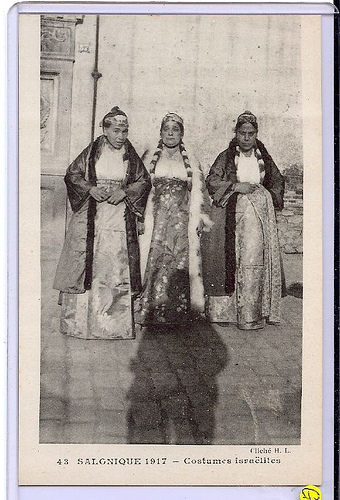
And when a Turk says Selanik, he’s asserting his deep historical connection to that city; whether he’s from there or not, he’s using a name which carries all his historical references to that place, which I’m nothing but happy to grant him.  I don’t even call it Thessalonike, but ‘Salonike.  When I think of Byzantine Thessalonike, of Selanik, Salonico, Salonica, they all evoke for me a great and ancient Mediterranean city; for a long time, the second city of the Byzantines, of St. Gregory Palamas and Nicholas Kabasilas; Salonico makes me think of the heir to the philosophical and poetic heritage of Jewish Spain; the great center of Sephardic learning, both rabbinical and the deep Kabbalistic learning that Jews brought with them from their previous homeland; I think of a Turkish city that was a flourishing center of a variety of Ottoman Sufi orders; the city where so much of Turkey’s new Republican bourgeoisie came from, just as ours came from the other direction.

Frontispiece of a Salonican Zohar, a seminal Kabbalah text, originally written in Leon, Spain.

Salonican Jews

Great caption; “the fanatical sect of Islam” being referred to are the Mevlevis!!!

 When I think of modern Thessalonike, on the other hand, I think of an unattractive, humid Balkan town with a serious second-city complex. 

But I’m a “manic lover” of St. Demetrius, its patron, so I have to visit every now and then.

Mosaic of St. Demetrius, originally from the church of St. Sophia in Kiev (or is it Kyiv?), currently in the Hermitage Museum, St. Petersburg (or is it Leningrad? or Petrograd? or just the name that everyone who knows her and truly loves her calls her, Peter…)

Funny that it took me so long but I recently realized why I dislike both Salonica and Izmir so much; despite their history, despite Salonica’s plethora of classical and Byzantine monuments even, neither of them — for reasons we all know — feel like organically old cities, the way even Athens does, though in its modern incarnation it’s far newer.  They both feel like one city was removed from that location and another one hastily put in its place.  Remade.  They don’t feel grounded.  What you feel in both of them mostly is the absence of history.*

Can you even tell which is which? — except for a few giveaway signs…

With all that said, therefore, I think we have to be very careful about whether it’s the renaming of places or persevering in the old name that represents the more nationalist impulse.  I recently confirmed for an Indian friend that, yes, Greeks still refer to Istanbul as “the City,” and he shook his head and mumbled something about the “narcissism of nationalism.”  But an increasingly fundamentalist and nationalist India may be the perfect example to start with.  Granted, Calcutta was always Kolkata in Bengali.  But what was wrong with Madras?  And what nationalist Tamil mythology does Chennai justify?  The BJP (fundamentalist Hinduism.…you’d think it’d be an oxymoron) in fact, has a list for changing the names of almost all the cities of India to more appropriately Hindu ones, not just obvious targets like Allahabad, but Delhi itself and others: see the list if you’re interested.  Aung San Suu Kyi calls her country by its perfectly legitimate name of Burma, yet for a couple of decades we were content to use the name imposed on it by its military dictatorship, Myanmar, and never asked why or by whom it had been changed.  The State is not to be questioned.  If you said “Burma,” people looked at you like you were uninformed.

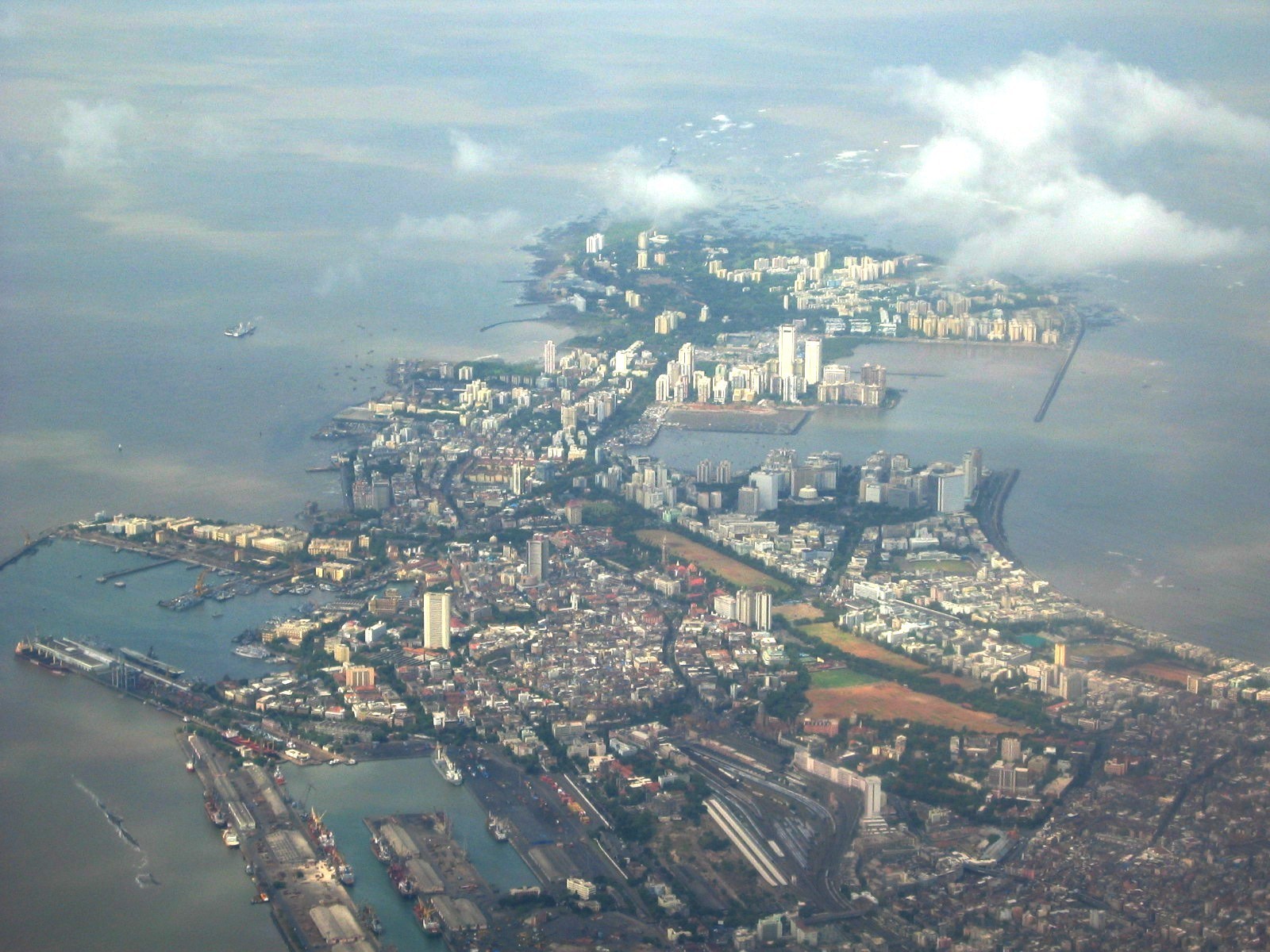
The most unfortunate and vulgar change of all is “Mumbai,” but almost no one knows or cares about how that change happened.  It was once generally accepted that Bombay comes from the Portuguese “bom bahim,” or good little harbour, just north as it is from Portugal’s long-time colony of Goa.  But even if that etymology is bogus, it was under the name Bombay that it flourished and grew under the British into the most important and cosmopolitan city in South Asia.

Bombay (gotta click on this one)

But in 1995, the Shiv Sena party (the Army of Shiva…) won control of the state government of Maharashtra, of which Bombay is a part, though it’s so different in social and ethnic make-up from the rest of that state that it deserves a separate federal district type status like Delhi has, or Mexico City, or D.C.  Shiv Sena, being a party whose power base is rural Maharashtra and poor migrant Marathis who feel they deserve more power in the city, is actively hostile to Bombay’s dizzying diversity and especially its large Muslim population.  It’s essentially a Marathi branch of the BJP, only worse (and they haven’t been getting along lately): a virulently Hindutva bunch that have not only been found to be involved in Bombay’s drug, prostitution and extortion circles, but ordered and even carried out much of the more vicious anti-Muslim attacks during the Bombay riots of 1992-93: the kerosene-dousing and burning of individuals and the burning tire around the victims’s neck were a couple of their trademarks.

When, despite all that, Shiv Sena were voted into state office in Maharashtra, their response to the poverty, massive infrastructural challenges, crime and destitution of this barely manageable city of more than twenty million was to change its name to Mumbai.  This was based on the supposed fact that there was (or is, or if there hadn’t been, I’m sure there now is) a temple of a Marathi goddess of that name on the site before the colonial city rose up, which may or may not be true, but, given the fact that every square yard of India contains at least one shrine or temple to someone or something, doesn’t mean very much.

And yet the whole world fell in line.  Thinking that, like Myanmar, if it’s coming from there it must have some sort of indigenous, authentic root, filled with post-colonial guilt and worried about offending what we thought were Indian sensibilities, we all dutifully started calling it Mumbai.  Fearing that using the old name would immediately make others imagine us to be jodhpur-clad gin-swillers, we let a bunch of criminal thugs and violent nationalists change the name Bombay — the name by which this great, open-to-the-sea-and-the-world, mercantile, diverse, cosmopolitan, sexy metropolis, a microcosm of India itself and its modern face to the world, was known for almost three centuries – and nobody asked why or breathed a word of resistance.

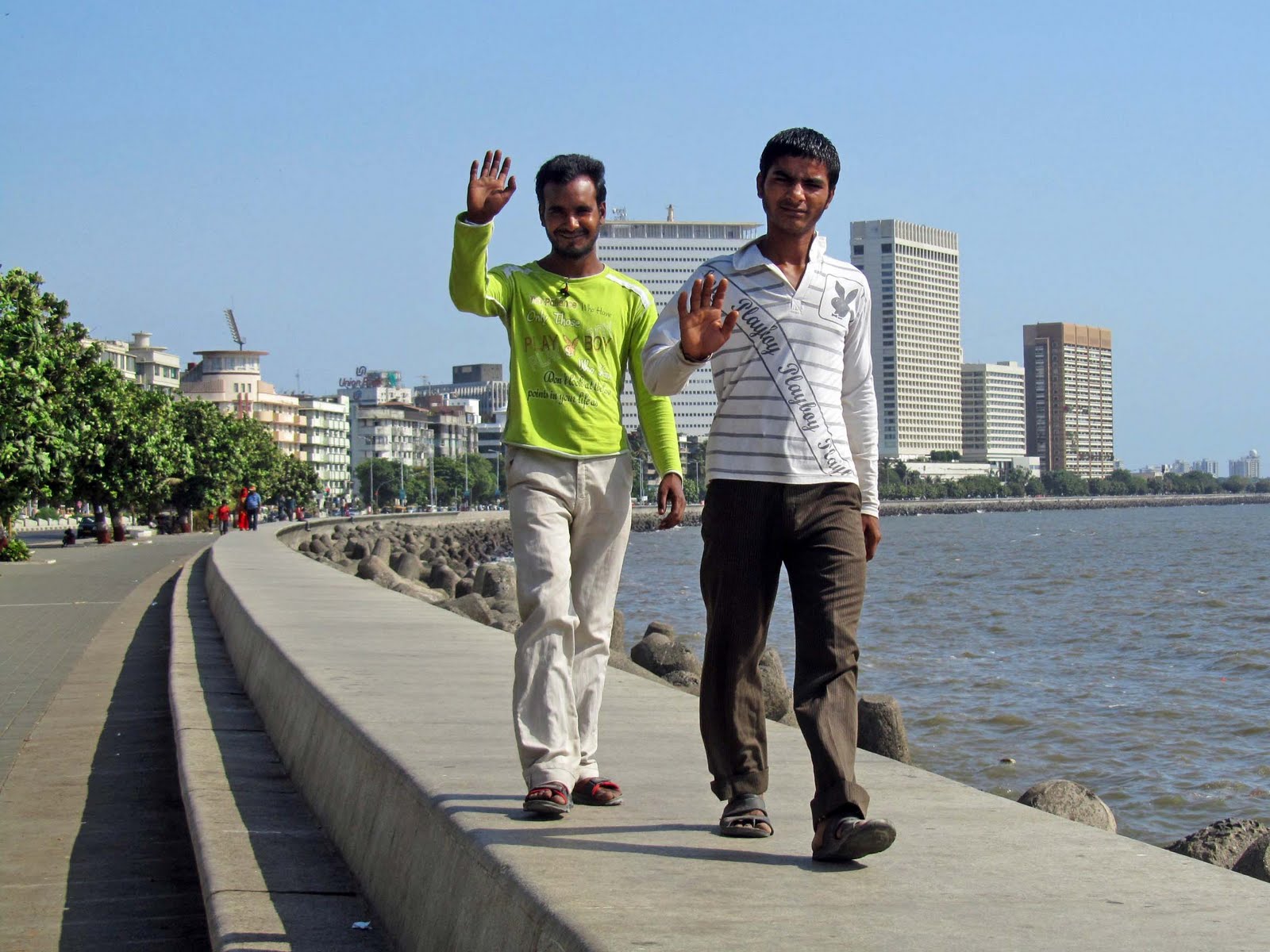
Bombay — Marine Drive — Queen’s Necklace

So as for C-town, you choose which is more “nationalist.”  Calling the city the name by which it was known to most of humanity for more than sixteen centuries?  Calling it an also venerable name that the nationalist, anti-cosmopolitan, Turkification project of a military dictatorship whose attitude to the City, its legacy, history and population was actually hostile for much of the time decided the world should call it?  Or just calling it both?

Or how ‘bout who cares?  As long as we know which city we’re talking about.

* See next post


Comment: nikobakos@gmail.com


Fethih 1453

2 Jun

Wow! This looks cool.

Anybody seen it?  I won’t even look on-line for comments ’cause I don’t expect to find anything but the usual crap.

Or maybe I will…


Comment: nikobakos@gmail.com

Domes

10 May

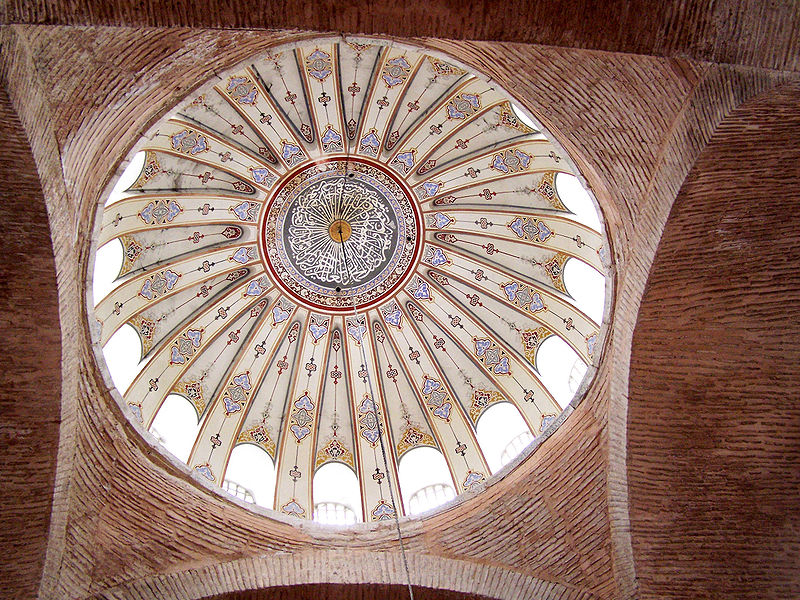
I love the remnant decoration against the bare brick of certain churches/mosques in Istanbul.

Ho Akataleptos or He Theotokos Kyriotissa/Kalenderhane Camii

He Pammakaristos/Fethiye Camii

Ho Hagios Swstes tes Choras/Kariye Camii

or just bare entirely, He Mone tou Libos or He Mone tou Prodromou/Fenari Isa Camii (top and bottom)


Comment: nikobakos@gmail.com

The name of this blog

6 Apr

The name of this blog is the old Ottoman name for the main street of the new, ‘European’ side of Istanbul, the part of the City that grew and developed on the northern side of the Golden Horn beginning more or less in the late eighteenth or early nineteenth century, the neighborhood known as Pera or Beyoglu, the Greek Pera reappearing in more and more contexts lately as nostalgia about the city has become a minor industry and cultural phenomenon (Robinson Crusoe, easily one of the coolest bookstores in the world, now refers to itself as a “bookstore in Pera”).  Originally, I was going to confine this blog to Greek and Turkish issues and though that’s changed, I’ve kept the name because it’s the main drag of what – as far as I’m concerned – is still the zone’s keystone city.  I had thought of the street as an appropriately symbolic piece of territory where Greek and Turkish interaction was for a time at its most intense, most claustrophobic, even risky.  But even more, I thought of it as a space that best represents our mutual delusions, lies and hypocrisies.

Greeks think of the Jadde as the Main Street of Greek Istanbul, but neither the neighborhood nor Istanbul itself was ever as demographically Greek as the fantasy has it.  Further, the obvious wealth to which the street’s architecture bears witness always smelled a bit too much to me of nineteenth-century minority pretensions, by which I mean those six or seven post-Tanzimat* decades during which we enjoyed unprecedented access to the Empire’s wealth and financial resources without paying any of the obligations of being part of it; it’s apparently where Greek crowds had become so brazen that they gathered to yell: “Zwa! Zwa!”…”Animals!” at Turkish troops during the Balkan War as they left for the front and the mind-boggling casualties they were to experience there.  It’s also when, as soon as traditional restrictions on church construction were lifted, our new confidence raised up the three ugliest Greek churches ever built in the entire history of Constantinople – quite a feat.  And the palatial embassies of the Great Powers that breathed down the neck of the Ottomans for two hundred years and made those idyllic conditions possible for us still line the street.

Turks in the past couple of decades have spent considerable resources ‘restoring’ the area: the street was pedestrianized at some point in the late eighties I think; they set up a cute retro trolley car that runs down the middle and seems to serve no purpose but to annoy the crowds that have to constantly get out of its way; they’ve put some money into remodeling some buildings.  All of this has come hand in hand with a subtle psychological process running in many urbanized Turks’ minds that has gradually made of the neighborhood a symbol of Istanbul’s historically multi-cultural essence, which in many and moving ways it is.

It’s also where hundreds of  Armenians were murdered in a shockingly urban episode of the Hamidian massacres of 1896**, right there in the middle of all the Belle Epoque elegance and the cafes and the hotels, an event so brilliantly handled in the ‘duck with bamya’ (bamiyeh, bhindi, okra) chapter of Loksandra, and where, in one night of September 1955, every single Greek business on the street (marked beforehand in a perverse, inverted Passover), from Taksim to Tunel, down the Yuksek Kaldirim to Karakoy, along with almost every Greek church and cemetery in the rest of the city, were vandalized or completely destroyed in what turned out, after much bogus blaming and bullshitting, to have been nothing less than a government organized pogrom — pure and simple.  The event was later cynically used as one of the lesser charges brought against Adnan Menderes, the first ever democratically elected Prime Minister of Turkey, who had been in power at the time (‘55), by the military junta that removed him in 1960 and then hanged him and several other members of his government in 1961.  That doesn’t mean he wasn’t guilty of his part in organizing the riots — this, thefirst ever democratically elected Prime Minister of Turkey – he was; that’s just not why the Turkish military hanged him.  He was later exonerated, in fact, and has been semi-canonized since.  The Greek community got bubkes in compensation.  The riots were the beginning of the end, a shocking wake-up call to the complacent sense of security the City’s Greeks had started to feel in Turkey again after the fear and discrimination of the WWII years had passed, and they produced a massive exodus, exacerbated by other measures taken against them in the early sixties, as tensions over Cyprus and the usual tit-for-tat stupidities between the two countries grew.  (One will often hear Greek Polites*** bitterly blame Greek Cypriots for the progressive dissolution of their world, in the sad tones of one irrationally seeking a reason for an unassimilable loss.)  By the late seventies, their numbers had dropped below that point of critical mass that makes the sustaining of a meaningful community life possible: old people waiting to die, young people waiting to move to Greece.  I’m sure Thracian Turks in Greece can identify.

All this unpleasantness is usually excised from the contemporary Turkish nostalgia phenom’.  I remember on my first trips to Turkey as a teenager in the eighties even, often finding myself in the confusing position of being told: “Oh, lots of Greeks used to live around here,” in a smiling and totally sincere attempt at bonding and with a totally blissful indifference or maybe ignorance as to why they didn’t anymore, leaving me feeling both touched and irritated.  Granted, people have become markedly more sophisticated since then.

Anyway…  I could have called this blog the Istiklal Caddesi, which has been the street’s name since the nineteen-twenties and which I’m usually forced to use as well so people know where I’m talking about or don’t think I’m some freaky history nerd, but that would’ve been — no offense — too Republican.  I could have called it He Megale Hodos, but nobody ever really called it that except in the most official contexts (Greeks just called it the Straight Street, ‘Ho Isios Dromos’).  The a la Franca pretensions of la Grande Rue are just as self-evident.  So the old Perso-Ottoman “Great Way,” Jadde-ye Kabir, most fit my gousta and purposes.  Jadde means “street” in Farsi (and in modern Turkish and Arabic too; they’re originally Arabic — both words) but I like “way” because I liked the sort of ironic counterpoint between the great ceremonial routes of the old Imperial city on the other side with this thoroughly bourgeois little avenue.  The “path” too, says my Farsi dictionary, which also had a nice Zen ring.

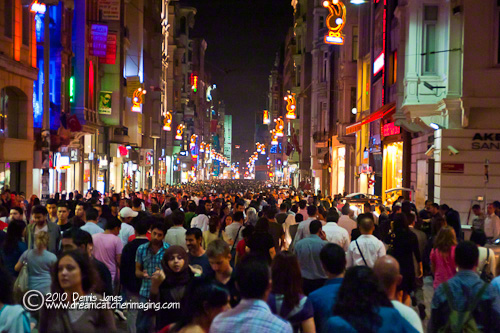
Istanbul has twice septupled in size since the middle of the last century and Greek life there has faded away into nothing: the City has turned into a gigantic, intractable monstropolis like so many others.  Almost no one in Istanbul is from Istanbul anymore.  Yet this relatively small stretch of one small street still attracts massive daily and nightly crowds.  After a couple of depressed decades caused by the minority exodus, some criminally abusive urban planning projects and the criminal neglect of its architectural heritage, the street and the whole neighborhood have come back into their own again, and then some, in a way that frankly makes me so giddily proud and happy whenever I’m in C-town that any of the past’s bitterness just vanishes — it’s ok it’s not “ours” anymore; it’s still mine.  It’s perhaps the most instant snapshot one can get of Turkey’s current cultural dynamism, sophistication, prosperity, and growing freedom – in however tricky a state that freedom still may be.  Despite the clubs and malls of the northern or Asian suburbs, and despite the even more endless suburbs beyond them, inhabited by Anatolian migrants who may have never even seen it, the Jadde still gives the impression of being the default destination of any Istanbullu who’s meeting friends, looking to consume an urban pleasure of some kind, or just has nowhere else to go or anything else to do.  It’s a delicious, overwhelming mix of commercial crassness, elegance, sexiness, good music, cool bookstores, garbage and great food: an Eastern flaneur’s paradise.  In fact, aside from the Nevsky in Petersburg, I can think of no one street in which one can read so much of a great metropolis’ experience of modern urbanity as the Jadde.  It’s one of my favorite places on earth.

— For C., Istanbul, 2010

*Tanzimat: the “reforms” I think…or the “new order” maybe.  I don’t know if it refers to the actual beginning or the whole long nineteenth-century process; the response to the barrage of external and internal problems faced by the Ottoman Empire starting in the late eighteenth century: the interference of Western power interests and extortion; the loss of Balkan and Black Sea territories and the non-stop influx of refugees from those areas; the rise of local warlords (like Ali Pasha of Jiannena) who controlled large fiefdoms that were practically independent of Constantinople; an attempt to modernize the army in an attempt to recentralize things; the attempt to enfranchise the non-Muslim minorities (who didn’t, however, give up their nationalist aspirations in return) without totally freaking out the Muslim clerical establishment; a new constitution at some point, which was then suspended by Abdul Hamid, etc., etc.  Here, read about it yourselves: Tanzimat  The politics of the period are so torturously complex that no matter how much I read, I still can’t grasp the entire process.  I can’t remember which Sultan was pro-reform and which anti and which tried to take a middle path, except for A.H., who was eventually proven to be fairly undemocratic and a bit of a paranoid nut but was responsible for some impressive modernization projects anyway.  I don’t know when or how the Young Ottomans morphed into the Young Turks or who belonged to which group.

I know that it was all a titanic, often heroic, struggle to turn the Empire into a modern state.  I know there was a half-sincere, but belated and pathetic attempt to create a sense of “Ottomaness” among all its subjects/citizens; I won’t be the first one to make the comparison to Hapsburg Austria.  I know that when the constitution was restored in 1908, a year before Abdul Hamid was finally deposed,  there are stories — way too many, frankly, to be believable – of men of all ethnicities and imams and priests embracing in the streets of cities throughout the Empire in the spirit of their new found Ottoman brotherhood.  Then just five years later, in 1912, Greece, Bulgaria and Serbia joined forces and effectively ended what was left of the Ottoman presence in the Balkans and the Turks decided: “Well, fuck this…” and started concentrating on building a modern Turkish nation-state for Turks just like everyone else was doing for themselves.  And the rest, as they say…

It’s an important period for Greeks to know about because it puts into perspective the fact that our influence and wealth in nineteenth-century Turkey was not just due to our diligence and ingenuity and brilliance — to daimonio tes fyles — but also because we were operating in a host body weakened by daunting, almost insurmountable challenges, both internal and external.

** In August of 1896, a group of Dashnaks, an Armenian independence group, took hostages at the Ottoman Bank in Karakoy – I can’t remember what their demands were — and I think set off some grenades or something.  The Pera murders were a response to this, though violence against Armenians and inter-communal violence between Armenians and Muslims, especially in the southeast, had been growing exponentially in the months and years beforehand, all during the reign of Abdul Hamid (“Ho adikiorismenos,” as Loksandra would call him), hence “Hamidian.”

*** Greeks will often refer to Constantinople as “The City” “He Pole” – since it goes without saying which city one means.  “Polites” then are Greeks from The City.

Comment: nikobakos@gmail.com