Tag Archives: Greece

The Death of Sarpedon: Who does art “belong” to?

10 Sep

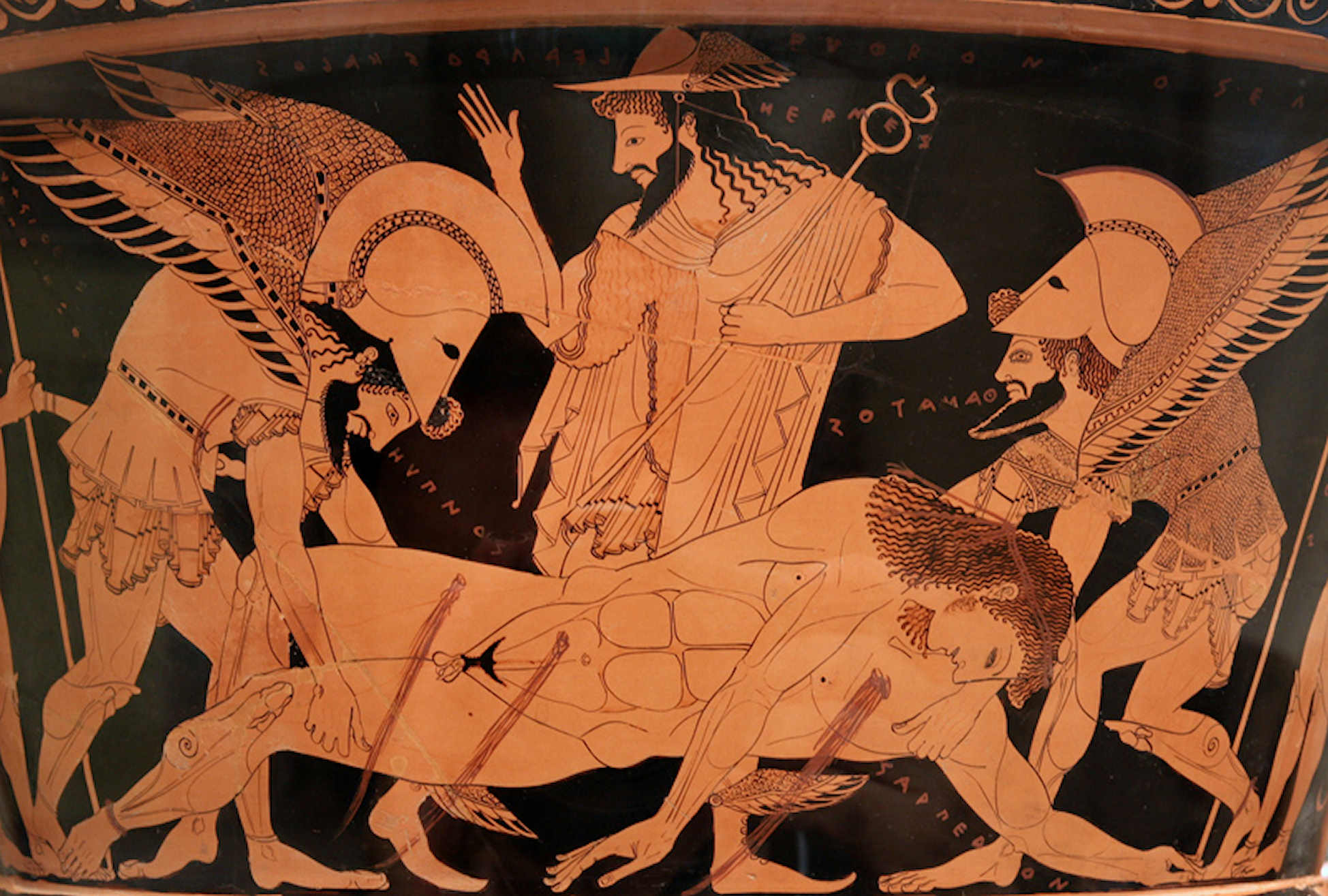
One the most irritating cases of this kind of “repatriation” of art (Where Do Antiquities Belong?)  was this red-figure Greek vase, dated around 515-510 B.C., I think of Attic origin:

(click)

This vase, one of the most beautiful depictions we have of one of the most beautiful deaths in the Iliad, was in New York’s Metropolitan Museum of Art until a few years ago, when it was “returned” to Italy because it was supposedly found and looted from a Tuscan archaeological site.  It was one of the must-see stops for me anytime I was at the Met and looked glorious in the museum’s renovated Greek and Roman art wing.  Here’s a description from NYU School of Medicine’s (?) website:

“Euphronios, one of the first to work in the red-figure method, uses his simple but skillful technique to draw the hero’s body at the moment it succumbs to death. Especially vivid are the three open wounds on Sarpedon’s body from which blood spills to the ground. Sarpedon’s eyes are closed, his limp hands drag along the ground. Zeus, powerless to prevent his son’s suffering and death, sends the god Hermes to attend to his son’s burial. Hermes, in turn, summons the caretakers Sleep and Death to transport Sarpedon to his grave.”

Yep, that’s just what Italy needed — another vase.

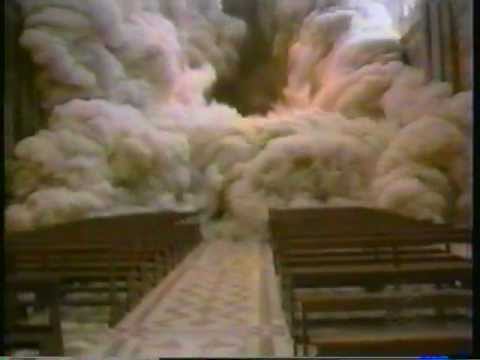
Italy can barely handle the maintenance and restoration of the artwork it has.  Whenever I’m there I constantly feel like I have to move very carefully at all times or else I’ll break something.  I say this to people and they look at me like I’m a psycopath, but whenever there’s an earthquake in Italy — not like the 1980 one in Campania, where thousands were killed, but this latest one, for example, in Emilia — I’m less shook up by the casualties than I am by the irreplaceable art and architecture that have been destroyed.  I guess I think maybe the destruction of the frescoes of the upper church of San Francesco of Assisi in 1997 is as tragic as a loss of life.

The Basilica of San Francesco (click)

And the interior collapsing during the 1997 earthquake

The Metropolitan’s Greek collection is not terribly impressive.  The Sarpedon vase shown like a jewel there.  In Italy, even if it had been put somewhere central like the Capitoline Museums, it would’ve been lost in the overwhelming artistic weight of everything around it.  But they put it in the Quirinale, the Presidential Palace!  Can the public even see it there?  I would expect this from Greece, which is constantly grasping at anything that it believes will bestow it with the cultural capital of antiquity.  I never expected Italy to be so petty.

A final note.  A classic piece of regressive ideological projection from the NYU site: “Euphronios’s depiction of Sarpedon’s death is an early portrait of the barbarity of war and the needless death that is its legacy.”

Really?  Is that what you think the Iliad is about?  That’s pretty funny…


Comment: nikobakos@gmail.com

Merkel, Spain, Greece and Nasreddin’s donkey

21 Jul

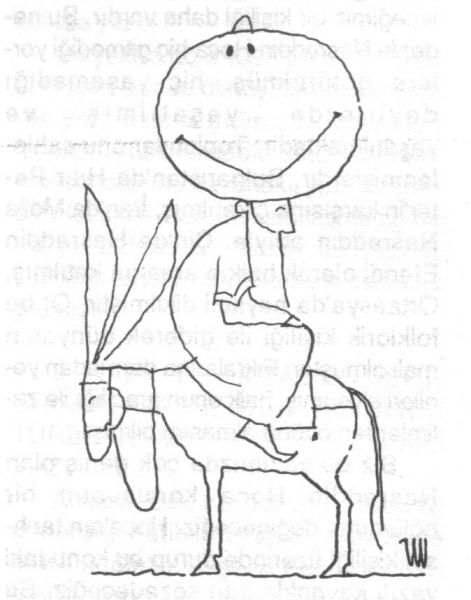
Nasreddin Hoca had a donkey.  One day he got it into his head that he could save a lot of money on feed by training the donkey not to eat.  So every day he gave his donkey just a little less food.  At first the animal seemed to labor on as if nothing had changed.  Even after his diet had been halved, the poor strong young donkey just soldiered on.  But eventually, as his daily caloric intake got reduced to almost nothing, he got weaker and weaker and slower and slower, but Nasreddin was so happy at the money he was saving through his brilliant austerity plan that he didn’t even notice.

Then one fine day, the poor, martyred beast just up and died on him, on the road, right from under his legs.

Dead.

“Damn,” said Nasreddin, “and just when he had learned not to eat.”

And without a donkey’s back to ride, he had to walk.


(All Nasreddin Hoca stories are versions learned from my father and I think would be public domain already anyway.)

Comment: nikobakos@gmail.com

This is mass murder: Austerity and Addiction — “…cases of HIV in the city center had gone up last year by 1,450%…”

10 Jul

From: The Fix: Addiction and Recovery Straight Up

Greece’s financial crisis has led to an alarming surge in intravenous drug use, overdoses, prostitution and HIV infections, according to experts in the field as well as academics studying the problem. Prior to the crisis, Greece had a historically low prevalence of HIV. But last year, the number of new infections spiked 57% over 2010, according to the Hellenic Center for Disease Control and Prevention, spreading most rapidly among a growing population of dirty needle users, among whom the rate was 15 times higher than in 2010. Little wonder, since the country saw a 20% rise in heroin use in 2010—to an estimated 24,100 users from about 20,200 the previous year, according to a report last fall in the British medical journal The Lancet.

“Drug use in Greece was already on the rise before the crisis,” said Alexander Kentikelenis, a public health policy expert at Cambridge University and the lead author of the Lancet report. “What changed after the crisis were cuts to money for needle exchange programs, condom distribution and drug rehabilitation,” he told The Fix. “So you have more people injecting drugs at the same time that you have less money available to cater to the needs of this group, and that creates a dangerous situation…..”

Last February, Greek joblessness hit a record 27.1%, with nearly 1.1 million people out of work, mostly in Athens and other cities. Hardest hit are the young—the ones most likely to turn to drugs and prostitution. A record 54% of Greeks between the ages of 14 and 25 are out of work. With a national debt that is 142% of GDP [gross domestic product], Greece had to borrow $170 billion from the International Monetary Fund under crippling austerity measures, slashing government spending by 30%. “When you have a radical drop in GDP, you need labor-market programs to help these people re-renter the job market and not become the long-term ill and unemployed,” Kentikelenis said.

In Greece, budget cuts in 2009 and 2010 killed a third of the country’s outreach programs to counsel and treat prostitutes, addicts and the homeless. An October 2010 survey of 275 drug users in Athens found that 85% were not in a drug-rehabilitation program. Reveka Papadopoulou, the general director of Medecins sans Frontieres’ Greek branch, said cases of HIV in the city center had gone up last year by 1,450%, according to The Guardian. The medical charity attributed the rise largely to the suspension of the capital’s needle exchanges. [my emphasis]

One Thousand Four Hundred and Fifty Percent!!!

If it were east Africa somewhere, do-gooder German activists with cute glasses would have mobilized an army of health crusaders to do something…

Omonoia Square, Athens

©Angeliki Panagiotou
lightstalkers.org/angeliki-panagiotou01   View all images in this gallery


The Cradle of Democracy

28 Jun

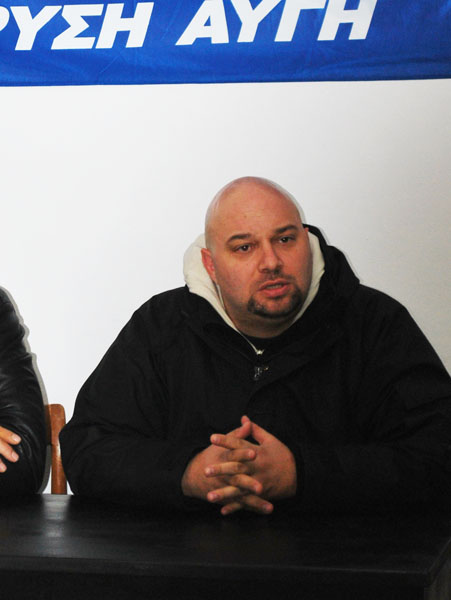
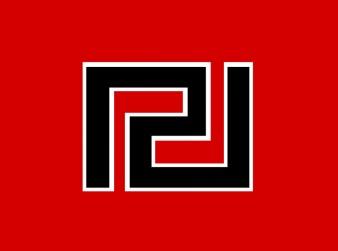
The new Greek Parliament was sworn in today, including the eighteen MP’s of the Nazi “Golden Dawn” party (down from the twenty-one seats they had won in the May elections).  Here they’re shown refusing to stand as the three Turkish MP’s from the the country’s Thracian Turkish minority are sworn in.  Actually, it’s illegal to call them “Turkish;” that’s why all media channels in the world fall in line with the the Greek government and you’ll only hear them referred to as the “Muslim” MP’s.

The official state line is that since some 30 to 40 percent of the minority consists of Bulgarian (Pomak)-speaking Muslims, it’s wrong to call them all Turkish, the Greek state being long known for its concern for minority identities and endangered languages.  As far as I know, it’s still illegal to call them Turks — just the ridiculous term “Greek Muslims,” which is something I don’t know how an EU member-state gets away with.  Till the early 2000’s it was illegal to refer to the Slavic language spoken in the country’s northwest as either Macedonian or Bulgarians as well; you had to refer to it as “ntopia” — “localish.”  Calling it either Macedonian or Bulgarian, if you happened to be a speaker of it, could land you in jail, and people there are still jittery about using it in public, will switch to Greek when a stranger comes around or wanders into one of their villages with its fake, new Greek name and don’t like to answer any questions concerning the issue.  This was probably once the numerically predominant language in Ottoman Macedonia, but most of its speakers were expelled from its central and eastern regions during the Balkan Wars and only a tiny island is left in the western Greek provinces of Emathia (Karaferia), Pella (Vodena), Kastoria (Kostur) and Florina (Lerin).  Again, it’s hard to know numbers with any accuracy, due to assimilation, shame or remnant fear.

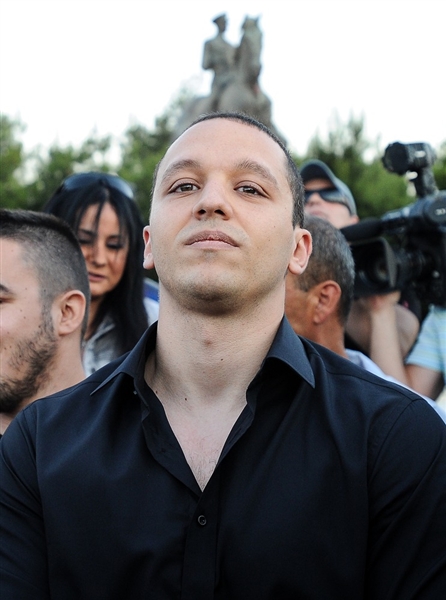
And this proud Hellenic pallikari, Ilias Kasidiaris (below), Golden Dawn’s spokesman, is now sitting free as an MP in the Greek Parliament despite the double assault immortalized by the video below (see also my previous post: Dateline Athens: From Bad to Worse)

An arrest warrant in Greece only lasts forty-eight hours, but Greek police knew where he was the whole time — even Greek police are not that incompetent — the whole country knew.  Apparently the statute of limitations on assault and battery is pretty short as well.  In any event, he now has parliamentary immunity, I think.  But he has other standing felony charges against him too; I don’t know the details.

And here’s some  pre-election cheer I had missed:

“A Far Right party has threatened to remove immigrants and their children from hospitals and nurseries in Greece if it gains power following Sunday’s general election.

Golden Dawn issued the warning at an election campaign rally in Athens, drawing loud applause from an audience.

According to the Guardian, Golden Dawn MP Ilias Panagiotaros said: ‘If Chrysi Avgi [Golden Dawn] gets into parliament, it will carry out raids on hospitals and kindergartens and it will throw immigrants and their children out on the street so that Greeks can take their place.'” [my emphases]

Panagiotaros is this stud here, who declared Kasidiaris’ assault on Dourou and Kanelle “an act of manliness.”

P.S.

According to Amnesty International’s 2007 report on Greece, there are problems in the following areas:

The US Department of State’s 2007 report on human rights in Greece identified the following issues:

  • Cases of abuse by security forces, particularly of illegal immigrants and Roma.
  • Overcrowding and harsh conditions in some prisons.
  • Detention of undocumented migrants in squalid conditions.
  • Restrictions and administrative obstacles faced by members of non‑Orthodox religions.
  • Detention and deportation of unaccompanied or separated immigrant minors, including asylum seekers.
  • Limits on the ability of ethnic minority groups to self-identify, [my emphasis] and discrimination against and social exclusion of ethnic minorities, particularly Roma.

Comment: nikobakos@gmail.com

Little Rock, Greece

26 May

One of the Little Rock Nine*, among the Black students who were the first to bravely attend officially desegregated high schools in 1957 despite the violent opposition.

If you’re Greek, and your wish that the earth would open up and swallow you hasn’t materialized yet, here’s some videos of Greeks acting like the crazed yahoos in the background of the above, now classic, photo, only towards the destitute and suffering migrants stuck in their country by EU stupidity.

One report from Al Jazeera:

And another two-part but short documentary by a Norwegian production crew that I couldn’t get any more information on:

Epiros, the beautiful but rocky and barren part of Greece readers must by now know that my family is from, is known f0r two kinds of folk songs especially: dirges to be sung at wakes for the dead (or on other occasions too, just for the cathartic pleasure they give, which tells you a lot about the region and its people), and songs of emigration (“xeniteia” — “kurbet” — yes, the Turks have a word for it too).  Xeniteia, from “xeno-” strange or foreign, is not so much emigration itself, as it is the state of being in a foreign place, away from your home, your people.  For as far back as I know, meaning up to three generations, every man on all sides of my family worked and lived abroad for perhaps the greater chunk of his adult life, in places as diverse as Constantinople, Bucharest, Buenos Aires, New York and Watch Hill, Rhode Island.  When my father’s village had around fifteen hundred people, there were around another five hundred Dervitsiotes living in Peabody, Massachusetts, working mostly in that town’s tanneries; they would joke that “Peabody, Mass.” meant “Our Peabody” — “mas” being the first person plural possessive pronoun in Greek.  Many of Epiros’ villages were inhabited almost entirely by women, children and old people; it was almost inconceivable that an able-bodied young man would just stay home and not try his luck abroad somewhere.

But Epirotes are not the only Greeks for whom xeniteia constitutes (or did) a deeply embedded chunk of consciousness and identity.  There wasn’t a Greek family from any region that didn’t have someone living and working abroad, and the longing and sorrow of that condition was something everyone instinctively felt; it was a collective emotion.

And that’s what makes these outbursts of anti-foreigner violence even more shameful and disgusting.  Again, one sees how the loss of diaspora consciousness is one of the things that has so cheapened and impoverished the Neo-Greek soul in the past few decades.  Again, I suggest, as I did in a previous post, that we all re-watch Gianni Amelio’s beautiful 1994 Lamerica: “…which is the story of how a cool, smug Young European Sicilian gets stranded in Albania and realizes that he’s only a generation away from being counted among the wretched of the earth himself — and how dangerous it is to forget that.”

I bash my peeps a lot.  There are reasons for it, complicated ones, but among them is the responsibility I feel to make sure my tribe’s slate is clean before I criticize anybody else.  But an equal object of my bashing here is the European Union, which aside from proving itself to be a neo-colonialist endeavour masquerading as the Highest Achievement of Western Humanism Project, has also revealed itself to be a half-assed, thrown together mess on so many institutional and bureaucratic levels.  (Yes, neo-colonialist: the Frangoi** gave up their colonies after the war and then discovered the exploitable potential of Europe’s own periphery again.)  A large part of these destitute peoples’ problem has been caused by EU refugee-immigration policy, which dictates that you can’t expel an asylum-seeker from the Union, but you can return him to his country of entry, which, since 2009, when Spain and Italy, with their greater resources, tightened up their maritime border security, has been Greece, the country least able to absorb them economically or deal with them administratively.  The above videos are two years old, but since that time, when by some estimates, one million refugees had accumulated in the country, all Europe did was ignore the problem while prescribing more diet pills for Greece.

Only this past spring did Brussels even give some aid to Greece to open up frighteningly named “closed hospitality centers,” detention camps on unused military sites, which given the condition I imagine those sites are in, and the fact that Greek police, who recently voted for the Nazi Golden Dawn party at a rate of more than fifty percent in some districts in Athens, will be involved in running them, will be a human rights paradise, I’m sure:

http://www.guardian.co.uk/world/2012/mar/29/greece-detention-centres-migrants

Thank God, the Merciful and the Compassionate, that we have a large, healthy Turkish minority in the northeast that provides imams, like the one in the second video, to give a decent burial to the mostly Muslim, anonymous and alone migrants who get blown up or who drown trying to cross our Rio Grande.

* The Little Rock Nine: http://en.wikipedia.org/wiki/Little_Rock_Nine

** Frangoi: a complicated but very important term that I will have to explain in another post.


Comment: nikobakos@gmail.com

Batsoi*

16 May

That so many I know in Greece are freaked out by the supposedly destabilizing and destructive potential of Syriza and Tsipras and totally silent about the below is of more than slight concern to me:

“More than half of all police officers in Greece voted for pro-Nazi party Golden Dawn in the elections of May 6. This is the disconcerting result of an analysis carried out by authoritative newspaper To Vima in several constituencies in Athens, where 5,000 police officers in service in the Greek capital also cast their ballot.”

http://greece.greekreporter.com/2012/05/11/more-than-half-of-police-officers-voted-for-neo-nazi-party/#!lightbox/0/

*”Batsoi” is derogatory Greek slang for cops, like “flics” in French.


Comment: nikobakos@gmail.com

What happens next in Greece?

15 May

The Greek Parliament in Athens (with its beautiful interior chamber at bottom), originally the Royal Palace (1843), one of the buildings in the Bavarian Neo-Classical style, often much-maligned, that were part of that beautiful city that our first, touchingly sincere and totally daft Teutonic dynasty built for us, till we levelled it all — as thoroughly as a carpet bombing and entirely on our own — between about 1960 and the early eighties.

Pessimistic and disconcerting, if semi-intelligent analysis below by Brady Kiesling (except for the actually offensive labour-camp island references — sorry, white boy, I don’t remember granting you the right to joke about that stuff, I don’t care how long you’ve lived there — and the nonsense scenarios of resurgent dictatorships).  It’s just still…well…still not totally convincing.  It just has the same general assumptions of all right-wing positions: if we challenge the giant financial actors here: Europe, banks, even what’s left of Greece’s shipping industry, they will abandon us.  But when the unpaying indebted reach a critical mass, what do the creditors do?  I still don’t understand why it’s an all or nothing question.  Hardliners outside Greece (which means Merkel mostly) have just had their positions significantly weakened; the pigs are squealing louder than ever, she just lost the Netherlands, France and even some hefty political points in her own country.  And it’ll cost them to let Greece go or kick it out, no matter what a mess it is.  I haven’t even heard Tsipras speak, honestly, other than in Al Jazeera voice-overs, so I don’t know how much of an old-school seventies populist he really is, but what if he’s just holding out for slightly more lenient terms?  Then, if they get in, no, they obviously won’t be able to give Greeks back their antideluvian frappe-paradise (and who wants to…?), but so what?  What politician comes through on his electoral positions?  Sorry if these are “communist sunday school” questions.  (Kiesling’s references to Tsipras’ KNE-te past are not smart either, just cheap.)

“Dear friends,
This pessimistic piece I just posted on Facebook, is what logic says will happen in the coming months. Logic is a slender reed, and I seriously underestimated the depth of anger at PASOK and ND when I predicted election results. Evangelos Venizelos is finding the other party leaders a tough sell, but their alternative scenarios depend heavily on magic and/or divine intervention. My prediction tracks with what the financial markets are saying, another reason to doubt it.
Feel free to share … though there’s nothing really surprising.

What happens next in Greece
Publication of an opinion poll showing SYRIZA/Alexis Tsipras as leading party has essentially destroyed the possibility of an “ecumenical” government and thus made it impossible for Greece to stay in the Euro-Zone.

Not wishing to commit electoral suicide like Karatzaferis of LAOS, Fotis Kouvelis of DIMAR refuses to join a government that does not include Tsipras. But Tsipras has been handed the opportunity to fulfill the Left’s dream of taking power democratically. Thus he prefers to force a new election.

Take a solid core of Greeks who loathe the “bourgeois” parties. Add voters who still believe in client-patron politics and want to back the winner. Add romantics who will vote for any leader who loves them enough to tell them beautiful lies, and you achieve critical mass. Though SYRIZA will probably fall short of an independent majority, the 50-seat bonus will give Tsipras the maneuvering room he needs to form a government.
Why is this bad? Papandreou, after all, made equally beautiful, terrifying promises to get elected in 1981. The 52% of the electorate that did not vote for him was sure he would turn Greece into Cuba or Libya. But in fact, Papandreou forgot his promises to take Greece out of the EU and NATO. He left the U.S. bases intact, let private education continue, and nationalized companies that mismanagement had left on the verge of bankruptcy anyway. A new set of clients got their first taste of government jobs and pensions. The Greek economy took on massive new debt, but did not instantly collapse. So electing Tsipras, who at least insists he wants Greece in the Euro, ought to be simply business as usual.
But this time it won’t work. It remains easy to break promises about foreign policy, because ordinary Greeks don’t care whether Greece is a member of NATO or not. On the economic front, Papandreou promised to give Greeks things they never had. Tsipras has made a much more dangerous promise, to restore things they recently had and still remember, their old jobs, wages, and pensions.

In 1981, Greek state books had recently almost balanced, and the debt load was manageable, with effort. The current situation is much worse. Tsipras, a non-practicing civil engineer whose knowledge of economics apparently comes from KNE (Communist Youth) Sunday school, perhaps genuinely does not understand that no lender, not even the EU, will ever agree to lend Greece (or anyone else) money for public sector wages and pensions. When he keeps insisting, they will throw him out on his ear. At that point, in order to pay for promises Tsipras dares not break, Greece will stop paying its foreign debt.

Wages and pensions, now paid in drachmes, will theoretically match their old euro levels. But without basic budget equilibrium, inflation/devaluation is inevitable. The Tsipras government, which will need every euro and dollar in the country to pay energy and other vital imports, will discover that the shipowners have fled to avoid being taxed, and the illicit savings of the wealthy are out of reach in foreign banks. People need to be fed. Farmers, however, will need strong encouragement to sell their produce for drachmes. Tsipras will be sorely tempted to make the parallel euro market and euro pricing illegal.

Technology, the technocrat’s cure for waste, fraud, and mismanagement, cannot be counted on in a society where a billion-euro industry in fraudulent pharmaceutical prescriptions simply hires a few hackers to bring down the state’s computerized prescription system.
 It is not impossible that a culture of endemic corruption will transform itself, inspired by a self-assured young socialist, into a virtuous collectivist paradise like Cuba or Venezuela. But if not, what is a humane, progressive leader to do? Greek prisons are already overflowing. SYRIZA is full of genuine human rights advocates, so the historic islands of Makronisos and Gyaros are off-limits. But about the time they find a less politically loaded location for the reeducation centers likely to be required, I fear a Greek Pinochet will install them there instead, to the applause of many of the same people now applauding the defeat of PASOK and ND. When that happens, I and my wife, though penniless by then, will follow the shipowners… Stay tuned…”

Brady Kiesling
May 11, 2012 ·

Alexis Tsipras, leader of popular and gaining left-wing Syriza party, currently the young gilded bete noire of Eurocrats across the Continent.


Comment: nikobakos@gmail.com

“…the innocent boy of seventeen…”

12 May

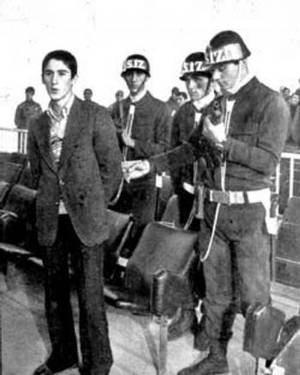
Though it was only incidental to the previous post, the image of Erdal Eren has haunted me for the rest of the night; perhaps it’s the photo of him and its painful youth and innocence; obviously the terrifying quote: that he looked forward to his execution in order to avoid thinking of the torture he had witnessed; maybe it’s that hanging has always struck me as a particularly obscene form of capital punishment’s obscenity (the setting looks prison-like, like he’s actually entering the gallows chamber there…)

Then the eerie reminder of the Cavafy poem: “27 June 1906, 2 p.m.”

27 Iουνίου 1906, 2 μ.μ.

Σαν το ’φεραν οι Xριστιανοί να το κρεμάσουν
το δεκαεφτά χρονώ αθώο παιδί,
η μάνα του που στην κρεμάλα εκεί κοντά
σέρνονταν και χτυπιούνταν μες στα χώματα
κάτω απ’ τον μεσημεριανό, τον άγριον ήλιο,
πότε ούρλιαζε, και κραύγαζε σα λύκος, σα θηρίο
και πότε εξαντλημένη η μάρτυσσα μοιρολογούσε
«Δεκαφτά χρόνια μοναχά με τα ’ζησες, παιδί μου».
Κι όταν το ανέβασαν την σκάλα της κρεμάλας
κι επέρασάν το το σκοινί και το ’πνιξαν
το δεκαεφτά χρονώ αθώο παιδί,
κ’ ελεεινά κρεμνιούνταν στο κενόν
με τους σπασμούς της μαύρης του αγωνίας
το εφηβικόν ωραία καμωμένο σώμα,
η μάνα η μάρτυσσα κυλιούντανε στα χώματα
και δεν μοιρολογούσε πια για χρόνια τώρα·
«Δεκαφτά μέρες μοναχά», μοιρολογούσε,
«δεκαφτά μέρες μοναχά σε χάρηκα, παιδί μου».

“27 June 1906, 2 p.m.”

When the Christians brought him out to be hanged
the innocent boy of seventeen
his mother there near the scaffold
was dragging and beating herself in the dust,
under the sun, the savage noon-day sun,
and now would screech, and now would howl like a wolf, like a beast,
and then exhausted the martyred woman would keen
“You only lived these seventeen years my child.”
And when they raised the boy up on the scaffold,
and passed the rope around his neck,
the innocent boy of seventeen,
and his body swung hideously in the void
wracked by the spasms of his black agony
the beautifully made youthful body,
the martyred mother rolling in the dirt
was no longer keening of years,
“Seventeen days only” she keened,
“Seventeen days only did I enjoy you, my child.”

(my translation)

Erdal Eren

Cavafy wrote the poem in remembrance of the 1906 Denshawi affair, one of Britain’s unfinest hours.  Apparently some British military personnel were returning from Cairo to Alexandria and, near the village of Denshawi, shot some pigeons that belonged to the locals.  A scuffle ensued; a rock was thrown that hit a British soldier on the head and, though he died of what was later proven to be sunstroke, like a delicate E.M. Forster memsahib, five of the residents of Denshawi, including the seventeen-year old of the poem, were imprisoned.  Fortunately, there was such a public outcry after the execution of the young man that the other four men were released, though not till two years later in 1908.  The episode still remains disgusting and Cavafy’s poem one of his most chilling, a register he usually didn’t work in.

At the same time it’s a beautiful reminder of his humanity on several levels.  One is his life-long opposition to capital punishment: “Whenever I have the opportunity I declare this,” he wrote in 1902.  The other, without re-outfitting him as a post-colonialist before his time, is his affection for and lack of alienation and estrangement towards Egypt itself.  He could have had the cloistered emotional outlook of an erudite fag in the European cocoon of Alexandria, yet the otherness that life imposed on him taught his heart the right lessons.  The above poem (even his use of “the Christians,” which in the context can mean nothing less than “the kafirs,”* is a jarring statement of identification) is only his most poignant expression of his love for the country, not just the historical Egypt of so much of his poetry, but the actual Arab Egypt he lived in; “To glyky mas Misiri,” as he calls it in one poem: “Our sweet Misiri” — our sweet Egypt.**

I wonder what he would have thought of the current state of Greek politics – not that he ever cared much for either the Neo-Greek statelet or its inhabitants.  What would a man that lived and wrote on the cusp of every possible human margin and in every plural space conceivable, who would have died before he let his Hellenism be trapped by geography, nationalism or its idiocy, have thought of Greece having the most potentially powerful Nazi (I’m tired of dignifying them with the prefix neo-) party on the European continent?  And that granted to them by a significant youth vote.  A thirty-something Athenian, and a left-leaning one at that, recounting to me the multiple incidents of petty anti-immigrant animosity that she had been witness to in Athens even before the current crisis, recently said to me, in glib defensiveness: “Well, we’re not used to strangers in our country.”  This from us, malaka, the inventors of migration and its pain, who since the beginning of our historical presence have been strangers in every stranger’s land on the planet, except those corners ventured into only by more intrepid or desperate Jews or Gypsies.  It’s beyond even remotely doubting for me that it’s partly the loss of a diaspora consciousness on Neo-Greeks’ part, and the wider sense of world it gives you, that has made us such closed, parochial idiots, just as Israel — sorry to say — has had the same effect on Jews.  And the comparison doesn’t end there; in both cases the diaspora is not just forgotten and ignored, but a source of embarrassment and shame, and each state and its official and/or fabricated culture has the hubris to think itself the metropolitan standard that those left outside should aspire to, when neither state in question contained a serious metropolitan center of either Hellenism or Jewishness until the twentieth century (…with Israel causing a progressive closing of the Jewish mind everywhere — a disaster for all of us).  Now maybe that some young Greeks have had to start emigrating again some of that attitude will get a real reality check.  The economic crisis in Greece is a source of genuine consternation for me and I’m guardedly on the anti-EU/Troika side; at the same time some humility may be exactly what that society needed.  Maybe…though voting for Nazis doesn’t exactly indicate humility but childish rage.


*Qafr, kafir: infidel

**Masr is Egypt in Arabic.  Cavafy uses “Misiri” because in Modern Greek words can only end in certain consonants.  This is something  — tzatziki, kazani, kadaifi, kokoretsi, duvari — that makes Turks giggle and strikes them as particularly funny when they hear it in Greek and the kick they get out of it has always struck me as particularly sweet in return.  I think Cavafy intended it to have this effect.


Comment: nikobakos@gmail.com

No Refuge

7 May

A British Dateline story from last year that deals with the plight of Afghan immigrants in Greece:


Comment: nikobakos@gmail.com

Mazel tov…

7 May

Greece has the official honor, I think, of being the first European state since WWII that may be about to seat Nazi MP’s, twenty-one of them, in it’s Parliament.  This is a reziliki and embarrassment of major proportions which shows up the childishness of so much of the Greek electorate, which, faced with economic hardships that I don’t want to minimize but hardly justify this response, gave some 8% of its votes to these morons, the Golden Dawn, who have no platform, no ideas other than racism and an embarrassing mish-mash of “Hellenic” Fascist symbolism, and who will probably have to buy their first suits, if a government is formed, to sit in the hallowed halls of the 300.  At the press conference of Nikos Mihaliolakos, the party’s leader, journalists were ordered to stand by one of the party’s black-shirted thugs when their leader came in (in incorrect classicized Greek; it’s “egertheti” not “egerthetw,” ass…) at which a good part of them stood…and walked out.  Again, let’s hope Greek irreverence is our saving virtue.

Mihaliolakos also warned at the press conference, for those who stayed, that: “The time has come for those who betray the Fatherland to be afraid.  We are Greek nationalists”:

On a final note:

Comment: nikobakos@gmail.com