Balkans, Anatolia, Caucasus, Levant and other Middle East, Iran, Afghanistan, South Asia, occasional forays into southern Italy, Spain or eastern Europe, minorities, the nation-state and nationalism — and whatever other quirks or obsessions lurk inside my head.
That’s the title of a book by Antoine Leiris written when he lost his wife in the Bataclan attack in Paris.
No, sorry. You’ll have my hate and my rage. What you won’t have is my fear. And you won’t make me support asinine policies or animosity against ordinary, innocent Muslims (if only so that I don’t have to hear mega-jerkMehdi Hassan screaming ad angry nauseam: “All 1.6 biilion of us?! All 1.6 billion of us?! All 1.6 billion of us?!”)
–
But rage chanelled into intelligent action against these çoğlania, both in Europe and back in their homes, I’ll support fully. And I’m willing to give up a few things too. So far Spanish police have said the men who planned this attack had connections to a French terrorist cell. And as in the Paris attacks that were planned in Brussels, they take care to conduct their attacks in a neighboring country where they’re not under the police’s radar, so that the Barcelona and Cambrils attack were due to similar failure in information sharing.
–
Sorry to all Schengen idealists, but it’s ok with me to show my passport if I’m entering Spain from France or when I’m crossing any border. If these bums can’t take advantage of no border controls then more of their plans will be foiled earlier.
–
Good for King Felipe VI and Prime Minister Mariano Rajoy (not my man politically, but…) to have shown up in Barcelona immediately. And maybe Catalans will understand that whether or not they want to be part of Spain, for Al Qaeda and ISIS, they’re still a part of the Muslim irredenta territory of Al Andalus, since that’s terrorist raison de faire behind these actions, as ISIS clearly explained to us when it took responsibility for the Spanish attacks.
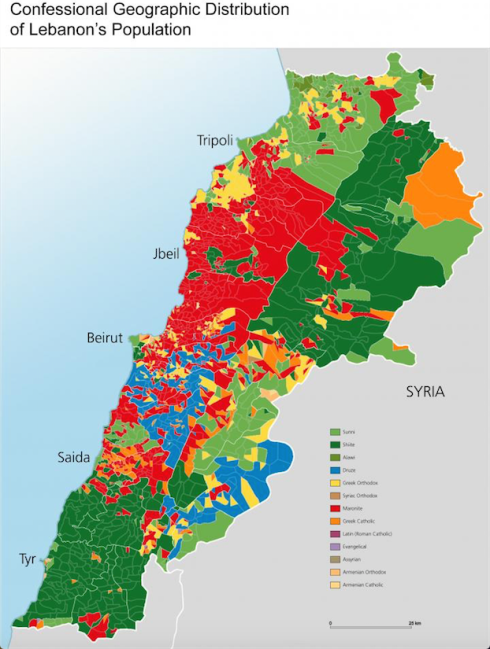
I was once dragged by force into a corner by a Lebanese friend at a party in Cambridge and told to never ask anyone Lebanese their religious affiliation, I guess because I probably just had done. Of course, I still ask. Like I implied in my Turkish post a few days ago, pretend unity (that you’re a passionate Erdoğan supporter and I’m not, or if you’re Maronite and I’m third-generation Palestinian doesn’t mean that we can’t still be “unified”), can only become real unity if differences are acknowledged. (*1)
I’ve had not dissimilar experiences with Irish folks if I’ve ever tried to talk about religion orUlster or “the Troubles.” I once asked a guy at an Irish bar in Queens who was from Northern Ireland if he was Catholic, and I got a blank and frankly angry stare in response, and with so much alcohol and testosterone in the mix, realized quickly I should shut up and look the other way or change the topic. A female bartender who heard the one-sided exchange said to me softly: “not a good idea to ask people those things…” Ok.
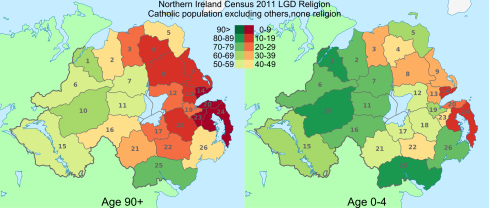
Map of Northern Ireland with distribution of Protestants (red) and Catholics (green) according to age group, showing a clear demographic decline of Protestants.
I also hear Irish anger at what they think is an out of touch diaspora that funded continuing IRA violence when the Irish themselves on both sides were starting to get tired of the violence and the fences were starting to come down — though that’s slightly disingenuous — in the early days these diaspora funders were heroes — and, as a non-metropolitan Greek, immediately assuming that the “diaspora” is “out of touch” or stuck in a time warp is a seriously irritating train of thought; there’s lotsa ways we’re more in touch than you lot.
So I’m really setting myself up as an easy target since I’m not even Irish or Irish-American. But I feel I can’t be silent as the English decide the future of any part of Ireland again.
I know that the Brexit vote came as a shock to a lot of Americans, as we were forced to confront the fact that the English are not all that smart, and can be as jingoistic, xenophobic, ignorant and proudly “know-nothing” as Americans can be. And I say the English because Scotland and Northern Ireland voted against leaving the European Union — in Northern Ireland, particularly, in percentages that would indicate a large number of Protestants voted to stay as well — and they should now be free to decide their own fates free of London.
Sometimes I feel that my views on the ethnic nation-state and minorities come across as selective and sort of random to readers, so let me take this moment to clarify a bit. I am, of course, against the brutal assimilationist policies of the nation-state and a supporter of minority language and cultural rights. On the other hand, I’m also against a minority holding an entirely polity hostage because it refuses to conform with the conditions of living in a state where they don’t hold numerical superiority.
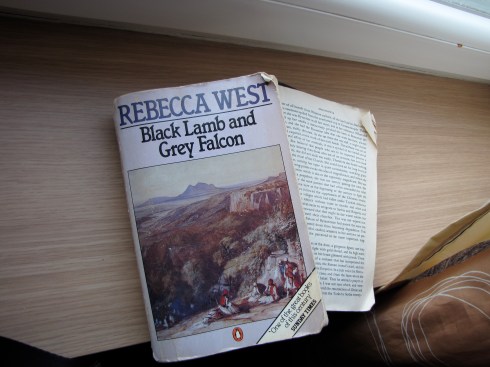
There’s a great and frustrating passage in Rebecca West‘s beautiful Black Lamb, Grey Falcon, where her Serbian (and half-Jewish) tour-guide is arguing with a Croatian intellectual in Zagreb; “but you are not loyal” says the Serb:
Croat: You treat us badly. How can we be loyal?
Serb: You’re treated badly because you’re not loyal.
Croat: How can we be loyal if we are treated badly?
Serb: If you were loyal, you wouldn’t be treated badly.
Croat: When you treat us better, we’ll be loyal.
Serb: As long as you’re not loyal you can’t expect to be treated better.
And on and on and on…
(Rebecca West, who along with disconcertingly smart and honest, was clearly a real babe as well — broke a lot of hearts and refused to forgive when hers was…cool. As Lauren Cooper would say: “Forgiving is for l-o-o-o-o-z-u-u-h-h-z-z!!!”)
Of course, we saw, during WWII, just after West’s second trip, and then again by the end of the last century, that Croatians had no intention of being loyal to Yugoslavia no matter how much bending-over-backwards to ‘treat them better’ Belgrade did.
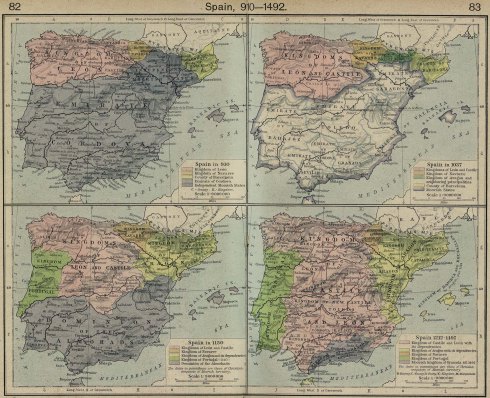
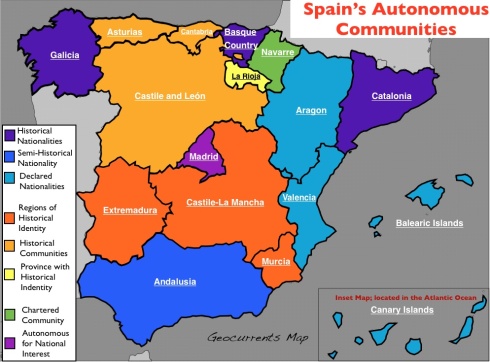
Or take Catalans again, in a state where as a minority they are treated exceptionally well. Still, with full language and cultural rights, they feel Madrid is oppressing them and they want full independence, threatening to rip apart the fabric of a country that has made impressive democratic achievements over the past few decades. And those of you who bought the public relations crap about how “hip, cool and Mediterranean” Catalonia is, and who spend your tourist money in Barcelona and the Balearics have only contributed to the discriminatory tendencies of Catalan chauvinism and the worsening crisis of Catalan separatism. Try Galicia or the Basque Country if you want to see parts of Spain that are not part of the Castilian center, but where ethno-linguistic difference has made its peace with the Spanish state and society has agreed to co-existence. Or if they’re too rainy and un-Mediterranean for you, go to Córdoba and Granada (skip Seville, too Catholic and bull-obsessed), poorer parts of the country that need your money and where you can buy the public relations spin of Edward Said instead, who once outrageously made the claim that 60% of Spanish vocabulary is of Arabic origin, (or maybe the spin of Al Qaeda and ISIS) and wallow in Al-Andalus nostalgia.
Even more and very closer to home: my father’s Greek minority village of Derviçiani in southern Albania. My early-days romance with the village is kinna over and I feel free to express things that I’m angry at myself for not saying to the faces of people there earlier.
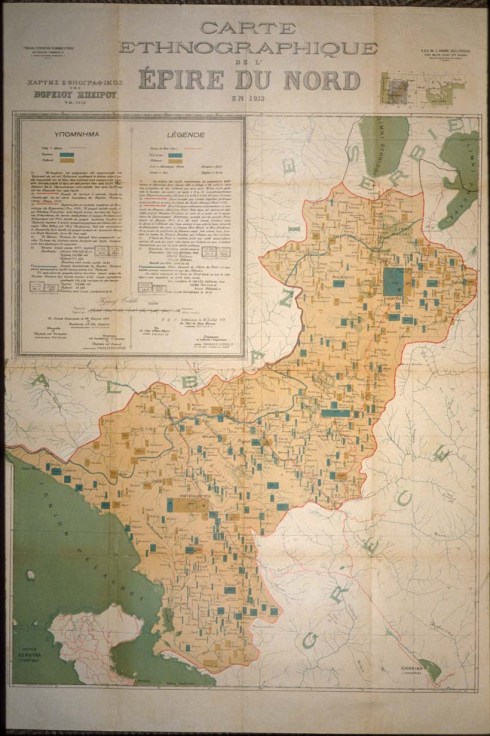
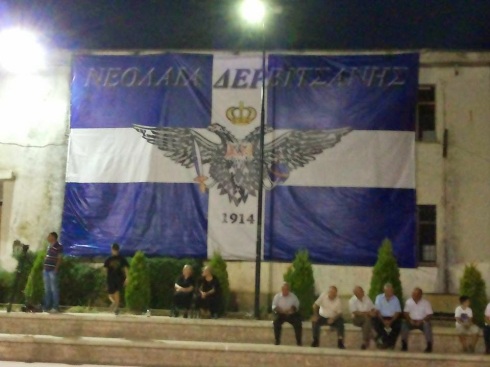
I’d love to ask: what the f*ck do you want exactly? They have Greek primary and secondary education; they have Greek churches (a Church about which few of them know anything or take seriously in any way, or have bothered to learn about in order to address the consequences of four decades of enforced atheism, but they have them); the Albanian Orthodox Church itself — meaning not just Greek minority churches, but the Church of Orthodox Albanians — in fact, is headed, run and staffed by Greeks, (extremely enlightened ones, I have to admit), the way the Arab Orthodox Churches of the Levant were for so many centuries; they have, I believe, two political parties that have members who sit in the Albanian parliament. If their villages are experiencing slow to rapid depopulation, it’s not the fault of Albanians or Tiranë; they were simply trapped — Greeks and Albanians together — in a Stalinist cage for fifty years and now are free to leave: the villages of Greek Epiros started hemorrhaging inhabitants soon after WWII, and neighboring Albanian villages, both Christian and Muslim, are also emptying of young people. Still, they’re hostile to neighboring Albanians; still, they want autonomy for “Northern Epiros,” which for some of them stretches half-way up to the middle of Albania (I don’t care if “the stones speak Greek all the way to Dyrracheio/Durrës” — The. People. Who. Live. There. Now. Don’t. And don’t want to be part of a Greek autonomous region. 2**); still, they make Muslim girls get baptized if they want to marry any of their precious boys, μη χέσω (thank God Albanians still wear their Islam kind of lightly or these poor girls would be in serious trouble) and will ostracize any Christian daughter or sister who falls in love with and marries a Muslim; still, they get offended, even a hip, British-educated nephew does, if you visit the pleasant, well-watered, historical Muslim village of Libohovo — Albanian Libohovë — across the valley and you come back and say it was very nice and that the young people there don’t seem much different than ours. Of course, this attitude is a self-fulfilling prophecy, as the conversation from Black Lamb… above indicates, so that when you put up the flag of Autonomous Northern Epiros 1914 on August 15th and the Albanian police has to come and take it down, then you’ll just end up on the bad side of the Albanian authorities and ordinary Albanians’ retaliatory instinct and the vicious cycle will just keep going.
A flag of the Youth of Derviçiani, which, just by wild and completely invented coincidence, happens to have been “founded” in 1914, the year there was a short-lived experiment in Northern Epiroteautonomy, which was squashed by Italian objections, because Italy considered Albania within its sphere of influence. Obviously not a sign of just the “youth” of the village — there was no Youth of Derviçani in 1914. And if there are still any doubts, the Palaelogan double-headed eagle lays them to rest.
(Really, is there anything as idiotic as a flag?)
But back to Ireland. I think Ulster Protestants caused enough “troubles” by acting — with the hypocritical support of England — like they were a besieged minority that couldn’t be part of the Irish Republic. So if a majority of Northern Irish voters chose to exit the Brexit, that’s a golden opportunity just dropped out of the heavens into our laps to correct an egregious historical wrong. The invasion and conquest of Ireland, its depopulation and the ripping to shreds of its society, culture and language did not start with the Potato Famine of the nineteenth century. It started with the Normans and the Plantagenets, and then the Tudors and the Stuarts and, finally, Cromwelland his Taliban, and it was a grueling, vicious, murderous process, as violent, or more, as any of Britain’s other colonial wars and right on Europe’s front door, and the Plantation of Ulster itself and the rest of Ireland was a conscious colonial policy of appropriating land and settling poor Protestant Scots and northern Englishmen in the country in order to “civilize” it and break Irish resistance to English hegemony.
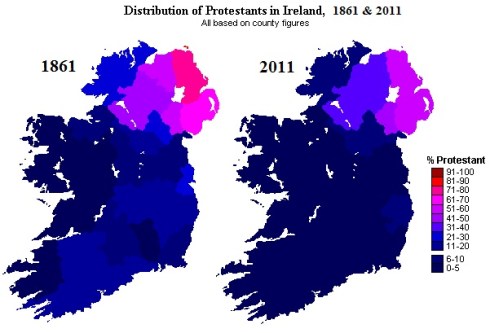
If the above maps seem to indicate that a large number of Protestants left the Irish Republic in the twentieth century because they didn’t feel comfortable without the English crown’s protection, that’s unfortunate (it was not so unfortunate in cases where the Anglo-Irish elite felt they had to flee when their expropriated land was re-expropriated) but that can’t be a justification for the continued amputation of the country.
It’s a classic strategic move, though. Ulster Protestants are not a socioeconomic group comparable to the Anglo-Irish landowners; they were always as squire-ridden as their Catholic neighbors and are still pretty much on equal footing in that sense.
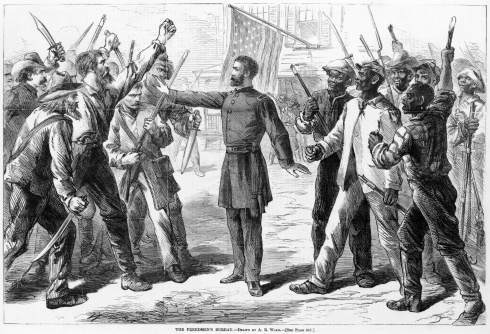
But everybody has to be better than somebody, or else you’re nobody. So, just like Catalans have to think they’re really Mare-Nostrum-Provençal Iberians (3 ***) and not part of reactionary Black Legend Spain; or Neo-Greeks have to think that they’re better than their Balkan neighbors (especially Albanian “Turks”) because they think they’re the descendants of those Greeks; or the largely lower-middle class, Low Church Anglican or Presbyterian or Methodist Brits who fled their socioeconomic status back home and went out to India in the nineteenth century in order to be somebody, had to destroy the socially laissez-faire modus vivendi that had existed there between Company white-folk and Indians, creating an apartheid and religiously intolerant, aggressively evangelizing, social system that laid the groundwork for the unbelievable blood-letting of the Indian Rebellion of 1857; or, perhaps history’s greatest example, poor whites in the American South(many, ironically, of Northern Irish Protestant origin) that had to terrorize Black freedmen back into their “place” because the one thing they had over them in the old South’s socioeconomic order, that they weren’t slaves, had been snatched away (and one swift look at the c-ontemporary American political scene shows clear as day indications that they’re, essentially, STILL angry at that demotion in status); or French Algerians couldn’t stomach the idea of living in an independent Algeria where they would be on equal footing with Arab or Berber Algerians. So Protestant Ulstermen couldn’t tolerate being part of an independent state with these Catholic savages.
A Bureau agent stands between armed groups of whites and Freedmen in this 1868 sketch from Harper’s Weekly.
Recent White supremacist rally at the University of Virginia in Charlottesville — thanks to @JuliusGoat: “Imagine if these people ever faced actual oppression.”
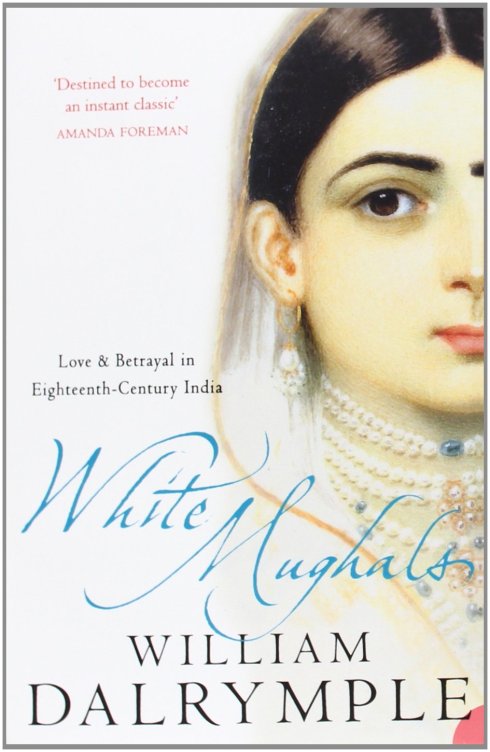
The colonial power — or just the colonized mind — then disingenuously but actively seeks to right these wrongs and protect the embattled minority. The results? A Lebanon torn apart by Maronite phobias and Palestinian victim-entitlement; the greatest threat to Spanish democracy since Franco; a Greece completely isolated from its nearest and closest — in every sense — neighbors; an India where British response to the Rebellion effectively disenfranchised Indian Muslims (4 ****) — Dalrymple shrewdly locates one of the beginnings of modern Islamic fundamentalism in that disenfranchisement and the Deobandi Islam it created 5 *****; the Ku Klux Clan and the murder of Emmett Till and Donald Trump; the vicious Algerian War of Independence, which resulted in French Algerians having to flee the country entirely to a France where they’re still a bulwark of reaction and racism, and the still bad blood between Algerian immigrants and natives in that country.
(I thought about adding Cyprus to that list, that’s going on forty-some years of division after the 1974 Turkish invasion, but didn’t, because Turkish Cypriots actually were an embattled minority, and Greek Cypriots have to do some moral self-searching about their terrorizing, or passively supporting the terrorizing, of their Turkish neighbors, before they blame either Turkey or the Greek junta for f*cking things up for them.)
I was against the Scottish independence referendum of a few years ago because I’m against separation and the putting up of borders generally. But then the apparently stoned British electorate went and separated itself from the rest of Europe, and if Scotland and Northern Ireland and Wales even, or Cornwall or the Isle of Manx or Jersey and Guernsey for that matter, want independence from England now, England will have only brought that down on its own head. If Northern Ireland votes to stay in the European Union then de facto reunion with the Republic will have occurred; I would just like de jure recognition of that facto too, so that there’s no more excuse for meddling in Irish affairs. Irishmen have done a lot of genuinely hard work confronting the demons of their own past in recent years; today’s Ireland is a democratic, pluralist, morally progressive society where the Catholic Church’s death-grip has been broken. That Ulster Protestants can’t live there in peace and security and without English protection is a ludicrous idea.
So let it happen, and if Ulstermen don’t like it — sorry to sound like a reactionary nativist — but they’re free to go back to Scotland where they came from. Or if they want they can come here and join their distant cousins in Kentucky and the Ozarks. I’m sure President Trump will consider them the “right” kind of immigrants.
1 * It’s a little reductive, but I think it’s not outrageously so to see the Lebanese Civil War as essentially, or initially, a conflict between Maronite demographic panic and paranoia (not entirely unjustified) and Palestinian entitlementof the oppressed (even more justified); every other group seems to then have had no choice but to choose sides. Then add Israel — which arguably started the whole problem — and Syria to the mix, και γάμησέ τα.
2 ** Of course, Northern Epirote Greeks’ δήθεν innocent desire for autonomy is completely disingenuous — though we’re supposed to think that Albanians are too stupid to get that — and is really just a prelude and first step to independence and union with Greece, though they’re a demographically fast-dwindling percentage of the population of the region they lay claim to. That’s not a deterrent, however; all you have to do is believe that all Orthodox Albanians are reeeeeeeally Greek and you’ve solved your demographic issue, since Muslim Albanians are just turncoat intruders in the region as far as Northern Epirotes are concerned.
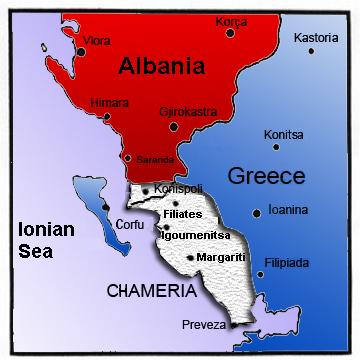
The only obstacle that would then be left is to get Albanians to forget what happened to the Muslim Albanian Çams of western Greek Epiros (Albanian: Çamëria, Greek: ΤσαμουριάTsamouriá) during WWII, when they were subjected to massacre and expulsion in a campaign of ethnic cleansing by the Greek right-wing resistance and had to flee to Albania.
I still haven’t figured out how, as Muslims, they escaped the Greco-Turkish Population Exchange of the 1920s; it would’ve been a more merciful fate. I also haven’t figured out how the tsamiko, a dance of central and southern Greece, got its name. Or else, what clues to a forgotten past the fact that my grandmother’s maiden name was Çames provides; almost all our last names are Albanian — with the Greek male nominative -s ending added to them — as in Bako-s — but as far as I know there’s no clan in our villages whose last name is actually the name of an Albanian sub-ethnic group. See: (“Easter eggs: a grandmother and a grandfather“.
This kind of issue always reminds me of the Puerto Rican expression from a song of I dunno what period: “¿Y tu abuela donde está?” or “¿Y tu agüela, aonde ejtá?” “And where’s your grandmother?” i.e., before you get all high and mighty and Whitey on us, show us the Black grandmother you’ve got hidden in the kitchen.
3 *** This fetishizing of the Mediterranean as a region, a lost paradise of cosmopolitanism and healthy diets, drives me nuts. Everyone is suddenly “Mediterranean.” The big laugh, of course, is that Turks are Mediterranean. Then comes the less funny one about Croatians being Mediterranean, whereas Serbs are clearly not — Croats wanting to have it both ways, and be Mediterranean and Mitteleuropean at the same time — even if they’re from neolithic Herzegovina and about as neanderthal themselves as their Serbian and Muslim neanderthal neighbors; Istrians have sealed their Mediterranean-ness by buying every Italian restaurant in New York City’s boroughs, and of course the largely Italianate Dalmatian coast seals in most Europeans’ minds the idea of Croatia as a country on the f*cking M-E-D-I-T-E-R-R-A-N-E-A-N. Actually, the closest example to Croatians’ appropriation of a largely Venetian Adriatic is the Turkish appropriation of Greek Aegean imagery, in tourist and p.r. language, on both the Anatolian coast and in Imbros and Tenedos.
Just as nicely condescending is the saying from some-where in the Iberian periphery that “de Madrid no se ve el mar,” “you can’t see the sea from Madrid.” Supposedly a jab at Castillian casticismo, and inward-looking provincialness. No, you can’t see the sea. That’s why Castille is such a beautiful, high plateau, dry and bright and chilly and Romanesque and stunning in its emptiness and vastness.
A White Turk friend once dragged me to Sorrento on our trip to Naples and Campania, which I knew would be a mistake, because it would be and turned out to be a tourist-swamped, hellish Thomas Cook holiday trap because it was “on the sea.” (but one makes concessions to one’s travelling partner’s fantasies.) We cut out as soon as we could and headed to Ravello, up in the mountains away from the sea and she was blown away by how beautiful it was.
And what happens to Greeks like me? who are from a part of the Greek world that is clearly more Balkan in every way than it is Mediterranean? What do we have to do to join the club?
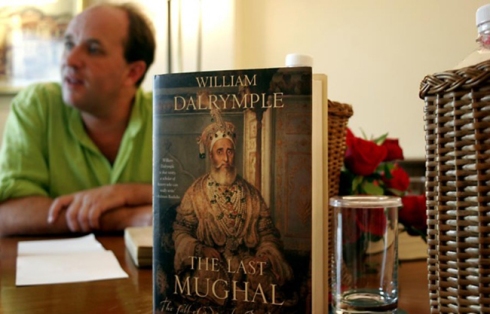
4 **** William Dalrymple is a great historical writer who does what professional academics can’t do because they’re so specialized that they can easily say: “Sorry, I don’t work on that period” when you ask them anything they don’t know. The breadth and depth of his knowledge on South Asia is truly amazing and he makes it all interesting and stimulating for the layman without dumbing it down. When I first started this blog I wrote to him asking to reproduce some of the passages on the British destruction of Mughal Delhi contained in his book, The Last Mughal, and he immediately and generously shot back with an email that said: “Go for it.” Thanks again.
“Following the crushing of the Uprising, and the uprooting and slaughter of the Delhi court, the Indian Muslims themselves also divided into two opposing paths: one, championed by the great Anglophile Sir Sayyid Ahmad Khan, looked to West, and believed that Indian Muslims could revive their fortunes only by embracing Western learning. With this in mind, Sir Sayyid founded his Aligarh Mohamedan Anglo-Oriental College (later Aligarh Muslim University) and tied to recreate Oxbridge in the plains of Hndustan.
“The other approach, taken by survivors of the old Madrasa i-Rahimiyya, was to reject the West in toto and to attempt to return to what they regarded as pure Islamic roots. For this reason, disillusioned pupils of the school of Shah Waliullah, such as Maulana Muhammad Qasim Nanautawi – who in 1857 had briefly established an independent Islamic state north of Meerut at Shamli, in the Doab – founded an influential but depressingly narrow-minded Wahhabi-like madrasa at Deoband, one-hundred miles north of the former Mughal capital. With their backs to the wall, they reacted against what the founders saw as the degenerate and rotten ways of the old Mughal elite. The Deoband madrasa therefore went back to Koranic basics and rigorously stripped out anything Hindu or European from the curriculum.*
*(It was by no means a total divide: religious education at Aligarh, for example, was in the hands of the Deobandis.)
“One hundred and forty years later, it was out of Deobandi madrasas in Pakistan and Afghanistan that the Taliban emerged to create the most retrograde Islamic regime in modern history, a regime that in turn provided the crucible from which emerged al-Qaeda, and the most radical and powerful fundamentalist Islamic counter-attack the modern West has yet encountered.”
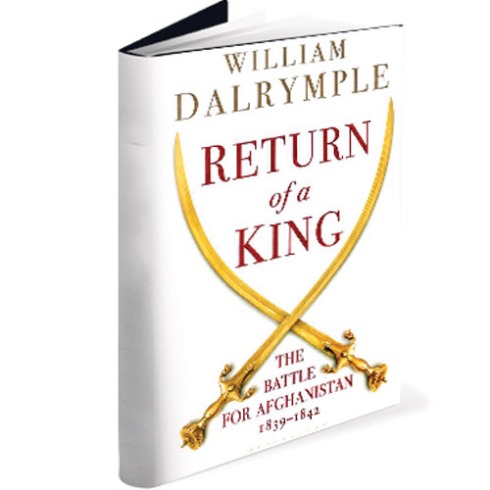
See also his magisterial The Return of a Kingon nineteenth-century Afghanistan, which I have a few issues with, particularly his conclusions, but which was a couldn’t-put-it-down one for me.
I’ve been silent for a year, more or less. And the reason is pretty simple: Turkey. It’s been hard to watch a country you feel (or should) so close to, are for better or worse geographically adjacent to, (mostly worse), and which is so key in every way to the subject matter and internal structure of this blog, implode in such spectacular fashion and not have something to say.
And yet I didn’t have anything to say that could do justice or offer any insights into what was happening. I look back at a blog entry from the end of 2015 about my arriving in C-Town on November 2nd, the day after Turks gave Erdoğan a parliamentary reward for inciting the unspeakable violence that had already occurred — and would soon start spiralling exponentially out of control — instead of punishing him for it, and note that I feel an internal tectonic shift towards the place and its people; a weird, kind of science-fiction-like creepiness and discomfort…City of Zombies.
But every time I’d try to say something, events would overgallop and trample me and I’d say nothing again. Instead of posting here, I started writing acerbic, aggressive-aggressive emails to small groups of friends – partly to get my bile out, partly to hurt some of them. I felt myself starting to fall back on ancestral nastiness: Greek clichés of Turks as inherently slow-geared: a kind of dumb manipulable mob, one who’ll sooner or later be steered by the powers-that-be that they revere so idiotically into finding a way to take out their society’s dysfunction on us.
It’s been nice to be in Jiannena since Christmas. (“Jianniotes’ Jianniotiko passion for their Jiannena is well-known…” states with unapologetic Jianniotiko pride the introduction to a really interesting book I’,ve stumbled across here about the little known late Roman and early Byzantine history of the city.*) It is an addictively pleasant town and on December 30th some friends of mine from Istanbul came to spend a few days with me here. We were glad to see each other. It had been a long time. The weather was chilly but bright and sunny. The raki bracing. And to show two Turkish friends around a city whose primary tourist sites are Ottoman, and its general ‘Ottomaness,’ is the kind of irony in such matters that I love.
So I think it might have been a kind of perverse blessing to be with them New Year’s morning after the Reina attack in Ortaköy. Here were two real people I love, in pain: not straw men to beat up or take out my frustrations on. And that made a difference. It slows down your thinking. It doesn’t let you cut emotional or intellectual corners. I might actually have something to say soon.
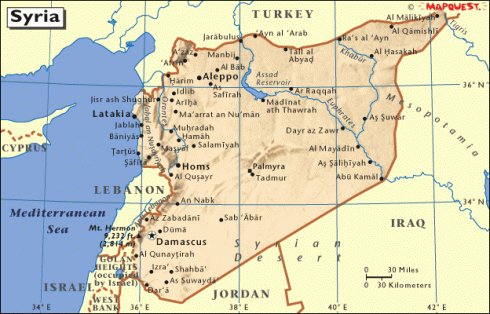
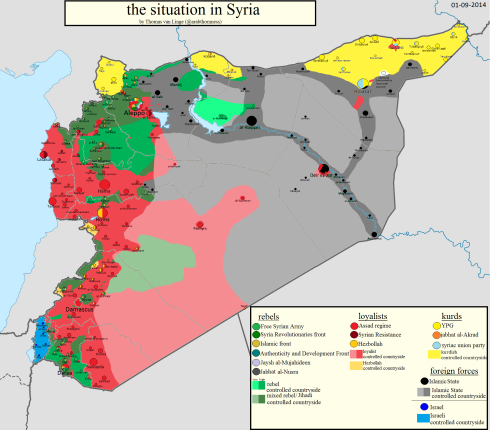
I’m going to have to write this post in bullet points of varying length, that I guess reflect the tragic fragmentation of my subject matter in some way, because putting it all together into a coherent “opinion piece” is as hard as finding coherent policy to deal with the problem itself has been. I was against talking about Syria in the beginning of its crisis as if it were an inherently fragmented and “artificial” colonial creation, as it had become the fashion to speak of most of the Levant at some point or another. I particularly objected to Andrew Sullivan’s obnoxious “Syria [or Iraq] is not a country” declarations. But since then, that’s become the reality – an insistent enough discourse makes itself a reality — so it seems to be more useful to take on all the regions, factors and players involved one at a time…and if I can bring them together usefully at the end, I will.
Russia and Assad: It’s obvious that Russia is pursuing its own agenda in Syria, but frankly — isn’t everyone? — so that’s no great cogent or original observation, and to be very frank, shouldn’t play into our response to either Assad or Putin, given the point to which things have reached at this point, because the degree to which you or I can stomach either Assad or Putin is not the point. The point is that right now I can see no great tragedy in an Assad-run — for how long can be decided later, with Russia (see below) — Russian semi-protectorate that would run from the Latakya Alawite coast down the Hama-Homs-Damascus-Dar’a, corridor, that would provide security and stability for even the region’s originally anti-Assad Sunni population, and even attract Sunnis from the rest of the country who could make their way there: such – I would think – is the ethical questionability of the various Sunni groups (aside from just ISIS I mean) into whose hands the original uprising has fallen and the degree of their war-weary victims’ terror; and — because I think it’s important to declare your subjective affinities before you can honestly put forth your hopefully objective suggestions or propositions – I hope such an entity would also provide a safe haven for part of what’s left of Syrian Christianity as well. (Yes, MESA girls, you’ve caught me again.) It would also be a good idea if we learned a little bit about the Assads and the Alawite past in the region (as it would be equally good for us to know something of Turkish/Kurdish Alevis as well), not to exonerate Assad for anything, but so that we know what we’re talking about before we start unproductively babbling about villains just sprouted out of the earth – like we did in Lebanon in the past about the Gemayels and Maronites or the Jumblatts and Druzes or southern Shiites and Hezbollah. This is homework one would like to assign to the Levant and the Middle East’s Sunni majority as well: a request that it examine its moral conscience, if such a thing exists, and its treatment of minorities in the past, but I understand that that’s probably a tall order that we can’t wait for them to comply with in order to bring some relief to the current hellishness. Assad remaining on as President of at least part of Syria is an ugly proposition. But more resistance is a luxury for Western intellectuals at this point.
So let Russia go for what it wants for now; it’s in most everyone’s interest and let’s try to turn it to everyone’s advantage instead of attacking her for every move she makes. ENGAGE RUSSIA. I beg everyone. A plea I will make later as well and repeatedly.
The Shiite crescent or triangle: This is the very real alliance of Bashar al-Assad, Hezbollah in Lebanon, a largely Shiite entity that’s essentially what’s left of Iraq, and Iran. It’s not a product of Israel’s paranoid imagination, but only Israel thinks it has any real reason to be worried about it and therefore Israel should be promptly ignored on every point and aspect of those worries.
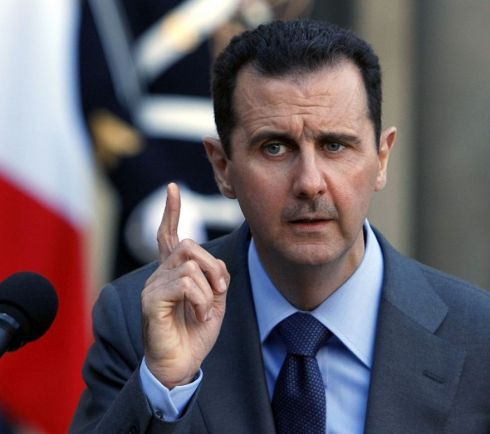
Bashar al-Assad
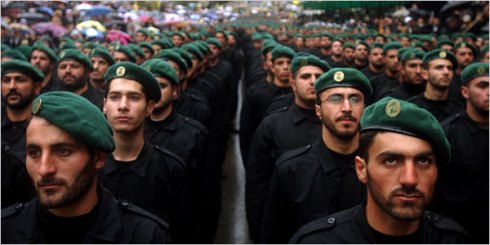
Neither Iraq nor the Iraqi army are functioning entities, so we can temporarily remove them from our discussion. I think I’ve addressed the moral “problematicness” of Assad: that there can be no solution in Syria till he’s gone, though, is a moralistic pose and not a truly moral position — sadly, one even Obama is fond of striking — and is an excuse for doing nothing and a recipe for letting the current holocaust continue. As for Hezbollah: whatever we think of its origins or the nature of its religiosity or its political ideology, it’s a highly professional organization with a highly professional, well-trained and hardened army, and the only Arab or other force that has put Israel in its place twice – took a little longer the first time but was pretty snap the second – and has pretty much served as an Akritai line that has kept it there since and, whatever its political tactics are (I honestly can’t say), it seems to me to be the one force that has kept Lebanon relatively stable (yes, as had Syria) for the past twenty years or so.
Of course, it does this with the massive organizational and material help of Iran. Which brings us to…
Iran: Get over Iran. It became a comforting cliché, with which the Middle Eastern Studies academic left aunanized itself for several decades: that the imperialist West had aborted every modern attempt at a democratic, civil society in the Muslim world and that that was therefore responsible for the rise of political Islam. Tell me which countries we’re talking about and who the leaders were who were going to lead them to this heavenly, secular modernity? The even more militaristic and fascist and statist successors of Kemal in Turkey? Look how that’s turning out and it’s still incomparably the best of the batch and, ok, there’s still hope recent setbacks can be reversed. Who else? Nasser and Egypt? Arafat or current Palestinian leadership? The Ba’athist successors of the Hashemites in Iraq? Maybe in Jordan? Ben Bella and Algeria? Bourguiba even and Tunisia? The Saudis? Jinnah’s successors, further east, or even Jinnah himself? Maybe the Afghan royal family? Who?
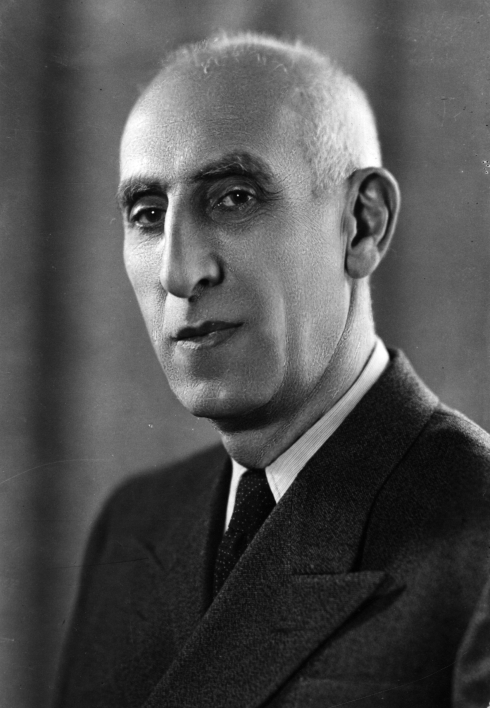
The only country in the Muslim world that in my humble opinion seemed to have had many of the prerequisites for a secular, civil society, perhaps a constitutional, truly assembly-based government, and a leader with an appropriately intellectual, bourgeois background and education — and accompanying democratic inclinations — was Iran and Mohammad Mosaddegh. And the Anglo-Americans destroyed that experiment. And yet Iran still seems to be the country, which despite the powerful institutional obstacles, has, on a popular level at least, the temperamental prodiagrafes for the development of such society and is poll-wise the most pro-American in the region. What is the rationale behind continuing to villainize and sanction and isolate? Ok, maybe not “what is the rationale?” But I’m simply calling for the acceptance of the fact that allowing Iran to open up to the world would inevitably – no, don’t give me Russia or China as examples – lead to an internal opening up as well, and both Iranians and the rest of the world have only to gain, when, and not if, that happens. Let it happen faster. As fast as you can.
Mohammad Mosaddegh
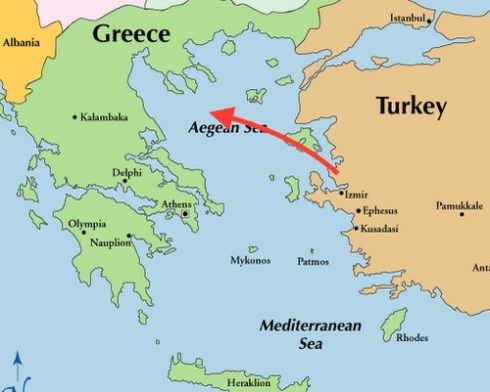
Turkey: There probably isn’t a country that, though never “officially” colonized, is a better object lesson in how to endure the machinations, infiltrations, exploitation, hypocrisies and pousties of Western manipulation – from the 18th century to this day – and how to then flip them to your advantage like a bad-ass judokathan Turkey. In dismembering the Ottoman Empire, all the Great Powers did their best to make the process of our separating from our neighbours into independent nations as long and complicated and bloody as they possibly could. When after WWI, they realized the Turks weren’t going let them split even a remnant Anatolia into six or seven parts and give those away too…suddenly…Turkey…could…do…NO…wrong…and still can’t. It’s fabled “privileged geographical position,” which no Western power was able to grab for itself, allows it to do anything it wants: supress all and any pressures for democratic change; conduct a vicious decades-long civil war against – I dunno, can it still be called a minority when it’s one-fifth of your population – its Kurds; violently harass its supposedly Lausanne-protected Greek community till they all leave en masse, while invading Cyprus to protect its Turkish minority there…and on and on and on. And now that President-to-be-for-at-least-a-decade-I-figure Erdoğan has sat on the throne Turks themselves put him on, the anti-democratization process: the societal and governmental Islamization; the assassinations and imprisonments, the suppression of journalistic rights and other democratic voices; the bullying of neighbours and throwing around of irresponsible, expansionist language; the destruction of a painfully wrought peace process that Turkish Kurds showed remarkable maturity in struggling towards, and the unleashing of the formidable, American-backed and supplied power of the Turkish military on them once again; the probable aiding and abetting of the animals of ISIS in various ways, plus the shooting down of a Russian air force jet out of pure pissing-contest impulses; not to mention the ever greater and egomaniacal vandalizing of one of humanity’s greatest and most ancient cities – all continue.And the world breathes not a word. Obama did not even address the downing of the Russian jet: all I saw him do is rudely turn around in his chair at some banquet at the Paris Climate Change Conference and off-handedly say to some journalist: “Well, a nation has the right to defend its air space.” The next day six Turkish fighter jets flew almost two-thirds the way across the Aegean into northeastern Greek airspace , and we didn’t say a word and wouldn’t have had our call taken even if we had tried, since it happens on a practically monthly basis. NATO allies, you see…
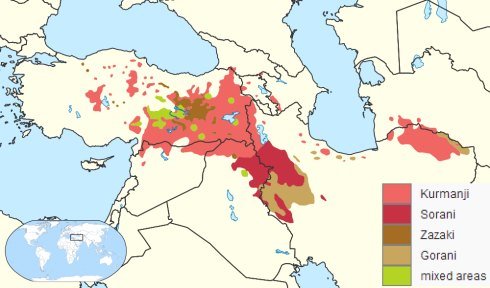
The Kurds: “I have a dream,” as they say, for Kurds: that they will recognize the fact that Iraqi Kurdistan with a capital at Erbil is already a de facto independent state and not complicate things in the neighbourhood by please resisting the urge to declare de jure independence.
Kurdish-inhabited regions of the Middle East and Caucasus, according to tribal break-down.
This centrally located political entity can serve as the hub of a wheel of still-to-be-worked-for, autonomous, Kurdish regions encircling it, and by not insisting on independence and union, they will be able to put more resources and energy into developing what they have and not fighting to defend it forever. I don’t know; maybe the future of the world will involve the devolving of nation-states into affiliated groups of semi-autonomous units with perhaps overlapping or varying degrees of jurisdiction – Holy Roman Empire style – and the Kurds may be the first to experience this as a people and benefit from it: that is, to see diaspora (if that word really applies to a non-migrating group), or political “multiplicity,” as a finger in every pie and not as separation, and be able to reap the advantages of that. Plus, again, as vehemently secular-minded, it will hopefully remain what it has already become: another safe space for the remnants of Syro-Mesopotamian Christianity.
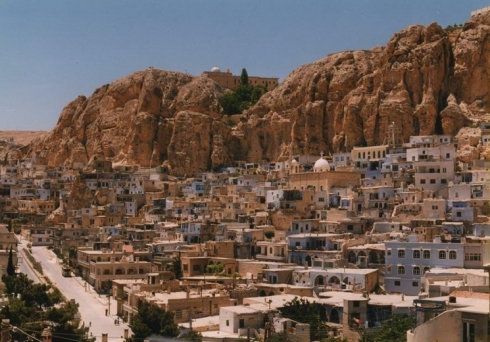
The Christian village of Maluula in Syria
Saudi Arabia and the rest of them down there: I admit that for a very long time I didn’t get this one. The fear of Russian power and the resentment of the Iranian Revolution, the obvious reasons for catering to an obnoxious Israel’s every whim and demand and the kid-glove coddling of Turkey all make some sense, though my ultimate point here will be that they no longer do. But the Saudis…no clue. Did any-one need their oil in particular? Wasn’t the United States itself already energy self-sufficient? Why? That the West always does what it does because Jews control Washington and everyone wants Saudi oil seemed to me to be the political theories of Athenian taxi-drivers.
Yet I was just speaking to someone from the ministry of energy here in Greece the other night and it turns out that compared to that of other oil-producing nations, Saudi oil (and I guess other Gulf State oil as well?) is unusually high in quality, demanding minimal refining and easy drilling as well, since its gigantic reserves are all close to the surface. The price of oil can plunge to rock bottom and they will still have monstrous amounts of a desirable product with which they can undersell any other country in the world and that will keep them filthy rich into the foreseeable future. And capable of funding jihadism everywhere. Including the spiritual “inner struggle” kind.
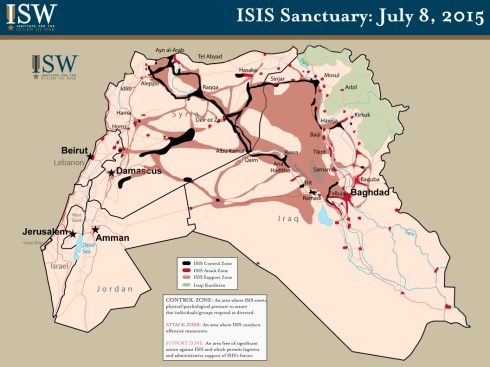
So we’ve ended up here, with a nice neat circle drawn around ISIS territory because that is our major problem and that’s the entity we’re looking to eradicate plain and simple. And it can’t be done without a profound shift in how we – I don’t how we want to define “we:” the West, the civilized world, how about just humanity? – treat and engage each and every one of the players involved in the above scenario. Because while our objective is to destroy ISIS, almost all the above policies are based on either almost irrationally selfish and small-minded views, or even more so, on a Cold War logic that simply no longer applies, and that will do little to impede the danger ISIS presents, in almost anyway you take at it or from wherever you look at it.
First and foremost and again: let Russia in. ENGAGE RUSSIA. We all have everything to gain and nothing to lose if we stop treating Russia like a pariah nation. Russian power is not a threat and can instead prove massively useful to the world if we bring Russia into the fold instead of trying to desperately keep her out of everywhere and even foolishly try and fence her in. It may be a little more complicated than a simplistic “more flies with honey” theory but whatever it is we choose to describe as Russian aggression, Russia sees as defensive and that may not be an irrational response from a powerful nation that sees itself treated as an amoral being that is constantly excluded from all the West’s major moves.
And I’m talking about radical engagement: not just lifting sanctions and trade blocks and visa requirements. I’m talking about making Russia a part of the European family of nations, as laughably dysfunctional as that family may be looking right now. Why are Montenegro or Georgia on the list of candidates for NATO membership — Montenegro probably as some sleazy old promise offered to it if it seceded from Serbia; and Georgia, one of the oldest polities in the Russians’ sphere of influence (for better or worse and partly of its own initiative at the start) and with a complicated love-hate relationship between them – while Russia itself is not? Too big to absorb. Well, yes, but my point is to stop thinking of her as an entity to control and absorb and start thinking of her as a political and especially military power that’s just too enormous to not have as an ally in the current struggle we’re engaged in.
ISIS (and Turkey to some degree) ticked off the Russians bad and they have already done more to weaken the “caliphate” in the past few weeks than all other Western actions combined. Is it escalating the conflict? There is no escalating this conflict: when your enemy is sworn to escalate it to the maximum, and there’s no reason to think they’re bluffing, you’re already there. Yes, there’s reason to fear that Russia – which uses Powell-Doctrine-type “overwhelming force” more than the United States ever has – will go too far and turn central Syria and Raqqa into a Chechnya and Grozny, but the best way to limit those kinds of excesses are to enter into some coordinated action with Russia and not just allow her to act alone. Because we’re going to need Russia when the air campaign needs to stop, when at some point it will. And that’s when I predict that Russia will also be willing to send in men on the ground and I don’t mean just a few special operations groups. While they’re certainly not eager to send their young men off to die in another Afghanistan or Chechnya, this has already – again, for better or worse – become a sort of Holy War for Russians and they will be far less squeamish about sending in troops than any other European society or even the United States at this point. And working with them on such an operation will not only increase its efficacy but limit the risks and excesses.
In the end bringing Russia in from the outside will also change it from the inside; as the nation itself feels less like it has to be on the constant defensive, then so will the Russian government adopt a more open and progressive attitude to its own internal political life. This is what we saw happening in Turkey in the early 2000s when European Union accession was still a negotiable reality; much of what Turkey and Erdoğan have turned into since are a result of those cards being taken off the table. Do it for everyone then, for us and for them. Engage Russia; it’s a win-win proposition.
As for the rest…
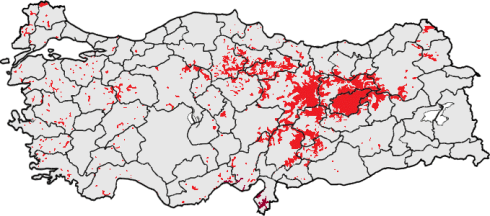
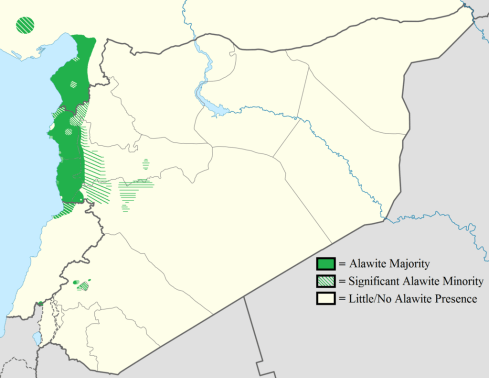
I’m sorry to say this, since being or acting or thinking positively about Turkey and Greco-Turkish relations has been one of my intellectual and emotional priorities for most of my adult life. But something when I got to Istanbul the day after the elections this November felt like a massive internal, tectonic shift for me — like something had snapped. Slap just half the sanctions and forms of isolation we’ve imposed on Russia and Iran on Turkey instead and let’s see how quickly Erdoğan’s tough guy stance lasts. And cut off military aid completely. As long as its going to a state that buys ISIS oil (which is the least we know of in terms of aiding them), as long as its being used, again, to terrorize its own Kurdish population into submission – cut it off completely. I would say take some of that aid and channel it into civil funding and assistance to Demirtaş and his HDP(Kurdish People’s Democratic Party), but that would probably be illegal, make them an even more vulnerable target and generally backfire. I would say do the same for Alevis in Turkey, whose agenda overlaps with both Kurdish and generally those of all democratic impulses there, but that would backfire even more horribly, since Alevis are a much, much more vulnerable target. (See: “Turkish Alevis and Syrian (or Lebanese…or Turkish?) Alawites — a Twitter exchange“)
Demographic distribution of Alevis in Turkey
And distribution of Alawites in the Levant, which, aside from Syria, clearly shows major concentrations in Turkish Antakya and also northern Lebanon.
The Kurds: Give the Kurds EVERYTHING they need. They’re creating a society, both in Iraqi Kurdistan and in the internal socio-political life of Turkish Kurds that is nothing short of revolutionary in its civic-mindedness, democratic tendencies and secular steadfastness. Yes, nothing’s perfect there either but it’s by far the best we have. And the loose confederation of Kurdish regions that I spoke of earlier may have perhaps an even more strategically valuable position to offer the rest of the world than Turkey does. Beg Turkish Kurds to swear to abide by ceasefire terms despite all provocations by the Turkish state; insist that Iraqi Kurdistan not declare independence. And then give them everything they need, even if it means billions in aid. Because, along with the Russians, they’re the ones who’ll probably have to do even more of the ground fighting when the airstrikes campaign reaches its inevitable limits – and starts harming civilians, which it unfortunately already has — even though they now insist that they’re not spilling any more of their own blood for anything outside of Kurdish-inhabited regions.
The rest will – if it hasn’t already – cause the reader to accuse me of fomenting a Middle East wide Sunni-Shia war, with my sympathies, both personal and ideological, firmly Shiite and that I’m proposing Russia and the West join in on the Shia side. Perhaps it is. Slap down Erdoğan (for whom this is certainly a Sunni-Shia struggle) and keep doing so till his ego is under control or he becomes a lame duck political force. Hard, but not impossible, if Turks start to see the real price they have to pay for so stupidly supporting him.Ignore Israel for now and let the Saudis (for whom this is also certainly a Sunni-Shia Struggle) stew in their own juices and cut off oil purchases if they try anything more radical. And as part of the inevitable opening of Iran and the inevitable growth of its role on the world stage, let it, Hezbollah, the, yes, despicable Assad and the, yes, still dubiously motivated but driven and highly motivated Russians all go to work on ISIS, Da’esh, whatever, and its ridiculous, vicious “caliphate.”
Sound risky? Yes, I know it does. It is. Got a better idea?
Turkey — or rather, Turks — could do a lot of things. Why they don’t is a psychological issue, perhaps, more than anything else. My take on the infuriating mood in post-elections Istanbul will come soon. Meanwhile, great article from the Guardian, which, as usual, is not afraid to shove uncomfortable questions — and accusations — in our faces.
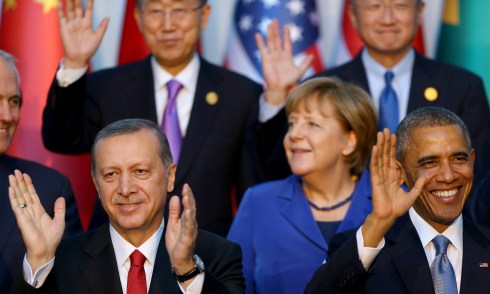
G20 leaders with Recep Tayyip Erdoğan in Antalaya on 15 November. ‘It may seem outrageous to suggest that a Nato member would in any way support an organisation that murders western citizens in cold blood.’ Photograph: Anadolu Agency/Getty Images
Some quotes:
“In the wake of the murderous attacks in Paris, we can expect western heads of state to do what they always do in such circumstances: declare total and unremitting war on those who brought it about. They don’t actually mean it. They’ve had the means to uproot and destroy Islamic State within their hands for over a year now. They’ve simply refused to make use of it. In fact, as the world watched leaders making statements of implacable resolve at the G20 summit in Antalaya, these same leaders are hobnobbing with Turkey’s president Recep Tayyip Erdoğan, a man whose tacit political, economic, and even military support contributed to Isis’s ability to perpetrate the atrocities in Paris, not to mention an endless stream of atrocities inside the Middle East….”
“How has Erdoğan got away with this? Mainly by claiming those fighting Isis are “terrorists” themselves. It is true that the PKK did fight a sometimes ugly guerilla war with Turkey in the 1990s, which resulted in it being placed on the international terror list. For the last 10 years, however, it has completely shifted strategy, renouncing separatism and adopting a strict policy of never harming civilians. The PKK was responsible for rescuing thousands of Yazidi civilians threatened with genocide by Isis in 2014, and its sister organisation, the YPG, of protecting Christian communities in Syria as well. Their strategy focuses on pursuing peace talks with the government, while encouraging local democratic autonomy in Kurdish areas under the aegis of the HDP, originally a nationalist political party, which has reinvented itself as a voice of a pan-Turkish democratic left…
‘Bloody terrorist bombings inside Turkey seemed to target civilian activists associated with the HDP. Victims have repeatedly reported police preventing ambulances evacuating the wounded, or even opening fire on survivors with tear gas .’ Photograph: Murat Bay/AFP/Getty
“…In June, HDP success at the polls denied Erdoğan his parliamentary majority. Erdoğan’s response was ingenious. He called for new elections, declared he was “going to war” with Isis, made one token symbolic attack on them and then proceeded to unleash the full force of his military against PKK forces in Turkey and Iraq, while denouncing the HDP as “terrorist supporters” for their association with them.
There followed a series of increasingly bloody terrorist bombings inside Turkey – in the cities of Diyarbakir, Suruc, and, finally, Ankara – attacks attributed to Isis but which, for some mysterious reason, only ever seemed to target civilian activists associated with the HDP….”
“The exact relationship between Erdoğan’s government and Isis may be subject to debate; but of some things we can be relatively certain. Had Turkey placed the same kind of absolute blockade on Isis territories as they did on Kurdish-held parts of Syria, let alone shown the same sort of “benign neglect” towards the PKK and YPG that they have been offering to Isis, that blood-stained “caliphate” would long since have collapsed – and arguably, the Paris attacks may never have happened. And if Turkey were to do the same today, Isis would probably collapse in a matter of months. Yet, has a single western leader called on Erdoğan to do this? [my emphases]
The next time you hear one of those politicians declaring the need to crack down on civil liberties or immigrant rights because of the need for absolute “war” against terrorism bear all this in mind. Their resolve is exactly as “absolute” as it is politically convenient. Turkey, after all, is a “strategic ally”. So after their declaration, they are likely to head off to share a friendly cup of tea with the very man who makes it possible for Isis to continue to exist.”
Radwan Shamra, 35, hoped he could survive the sectarian war between his Muslim countrymen even as many of his neighbors fled the violence that engulfed Iraq. Warrick Page for The New York Times (click)
After capturing the city in June, the Sunni militant group gave Christians a day to make up their minds: convert, pay a tax, or be killed. [Otherwise, of course, “there is no compulsion in religion.”]
Mostly, they are haunted by the abrupt end to their lives in Iraq, and to a Christian tradition that had survived in Mosul for more than 1,700 years.
“We are very much part of the Arab culture, we are citizens of Iraq,” he said. “What do we go back to? There is no home, and if this continues, there will be no country.”
A surprisingly strong-worded opinion piece from Milliyet’sAslı Aydıntaşbaş in today’s Times:
Turkish soldiers helping Kurdish families fleeing the fighting in Syria.Credit Bülent Kılıç/Associated Press (Click)
I was moved immensely by the courage shown in the closing paragraphs of the piece as well; it illustrated for me the kind of political maturity — something I can only call a “politics of compassion” —that so many parties or sectors of Turkish society, Turks and Kurds, religious and secular, have been moving towards in the past few decades, and on so many levels and issues and despite the inevitable set-backs. But then, it’s only a mature soul that feels compassion, isn’t it?
“Doing so will require a huge paradigm shift for Turkey: It must abandon its nationalist legacy and reimagine itself as a joint Turkish-Kurdish entity.[Who in Turkey says these things?!] Turkish Kurds represent about 25 percent of the population, and the government has wisely been pursuing a peace process with the P.K.K. There are ups and downs in the talks between Turkish intelligence and the imprisoned P.K.K. leader, Abdullah Ocalan. But at the end of the day, both sides need each other.
It is therefore a mistake to assume that a weakened Kurdish presence means a stronger Turkey or that Turkey’s own peace process is disconnected from the fate of Kurds outside our borders. The Turkish government cannot sit on the sidelines because it fears an autonomous, P.K.K.-controlled Kurdish zone on the border more than the Islamic State’s gains. When I asked one government official why Turkey was not helping the Kurdish forces in Syria, he replied, “Why must we choose between the P.K.K. and ISIS?”
But we must. We must choose because the Kurds are our only reasonable allies in a region of turmoil. Embracing them — our fellow citizens — would also help to heal our own fractured souls.” [My emphases]
Sulome Anderson checks in from Tripoli, the northern Lebanese town that has become a microcosm of the Syrian civil war and which today “seems to lie in ISIS’s shadow”:
Although the extremist and ultraviolent Sunni group has few open supporters here, the appearance of pro-ISIS paraphernalia and graffiti, the clash last month in the Bekaa, and the fact that Tripoli’s Sunni-majority population has a historical tendency toward radicalism, have raised worries that the group might gain a foothold here and send the city into a spiral of deepening violence.
Local tensions in Tripoli follow essentially the same ethnic lines as those in Syria’s war:
Sunni citizens largely support the increasingly fundamentalist Syrian opposition — ISIS being the most notoriously brutal of the groups fighting Syrian president Bashar al-Assad; meanwhile, the Alawites of the Jabal Mohsen neighborhood are overwhelmingly sympathetic to Assad’s regime (the Syrian leader is Alawite) and its Hezbollah allies. There are frequent and bloody gunfights between Jabal Mohsen and the Sunni district of Bab el-Tabbeneh, which border each other. Fearing violence would engulf Tripoli and potentially spread to other regions in Lebanon, the army moved in, establishing a security zone within the city limits last year. That hasn’t stopped the bloodshed, though, and the situation in Arsal triggered fresh clashes at the end of August, in which an 8-year-old girl was killed.
Also, the local Christian community is feeling threatened in a way it never has before:
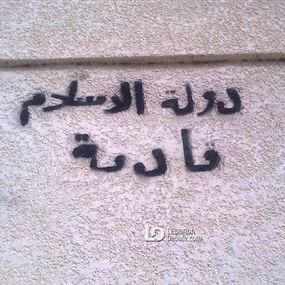
Tripoli’s Christian population has been a bit skittish lately. Several churches were vandalized at the beginning of September, their walls spray-painted with ominous threats including “The Islamic State is coming” and “We come to slaughter you, you worshippers of the cross.” Crosses were allegedly burned in retaliation for the #BurnISISFlag social media movement, Lebanon’s version of the Ice Bucket Challenge, in which people have been posting videos and pictures of themselves setting fire to the group’s banner.
Father Samir Hajjar sits in the priest’s quarters of the city’s Syriac Orthodox Church, one of the buildings that was vandalized. He is measured about the incident, but admits it was worrying. “At first, we thought this could just be ordinary vandals, or the work of children,” he says. “I’ve been here 17 years, and no one bothers us. We respect our neighbors and they respect us. But this graffiti on the walls of all the churches, that’s not children’s work. They used stencils. It’s a serious matter.”
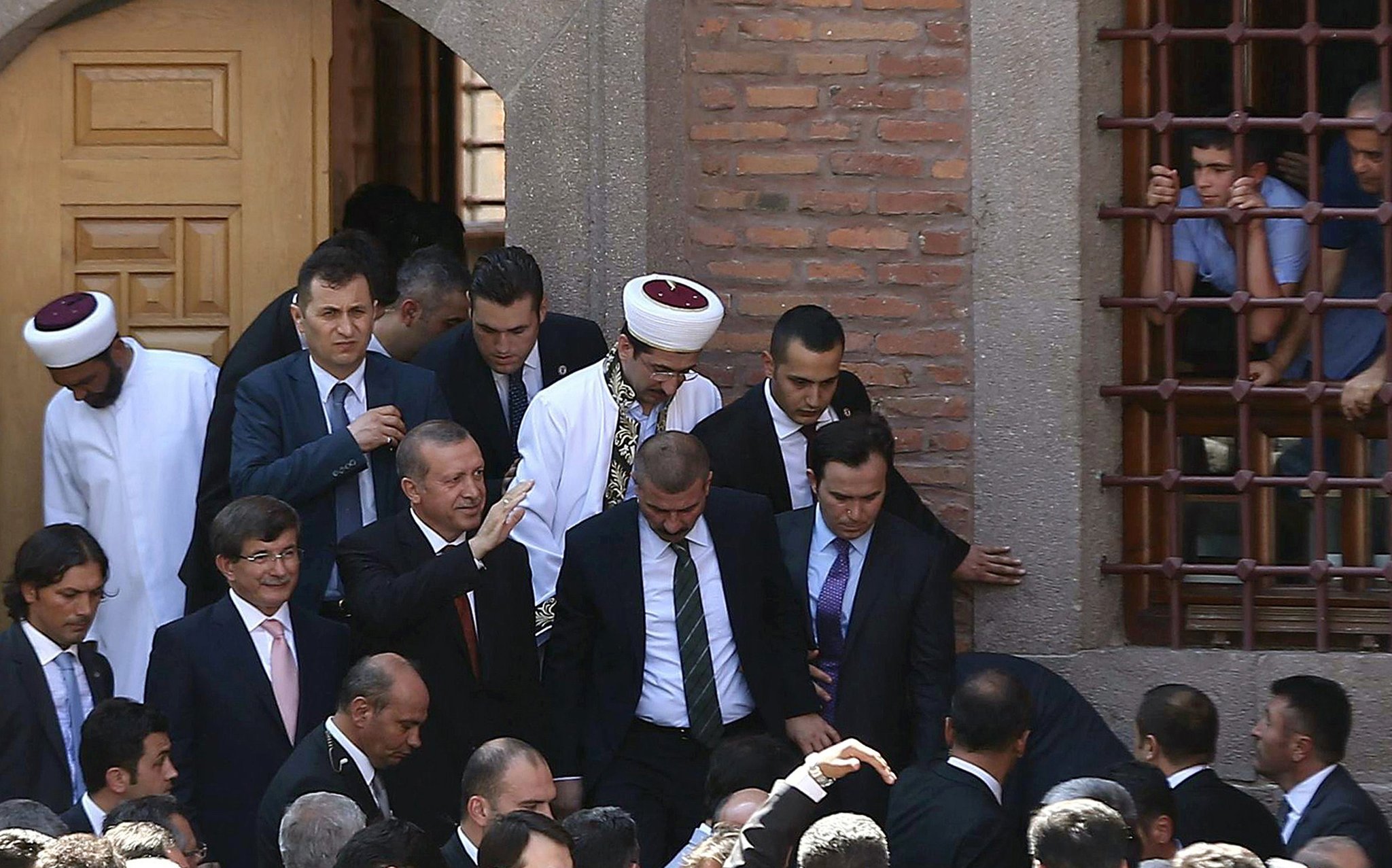
President Recep Tayyip Erdogan of Turkey, hand raised, and Prime Minister Ahmet Davutoglu, to his right, in August, leaving the Haci Bayram Veli Mosque in Ankara, the capital, where the Islamic State in Iraq and Syria is known to recruit new members. Adem Altan/Agence France-Presse — Getty Images (click)
“Hundreds of foreign fighters, including some from Europe and the United States, have joined the ranks of ISIS in its self-proclaimed caliphate that sweeps over vast territories of Iraq and Syria. But one of the biggest source of recruits is neighboring Turkey, a NATO member with an undercurrent of Islamist discontent.”
“As many as 1,000 Turks have joined ISIS, according to Turkish news media reports and government officials here. Recruits cite the group’s ideological appeal to disaffected youths as well as the money it pays fighters from its flush coffers.”
“There are clearly recruitment centers being set up in Ankara and elsewhere in Turkey, but the government doesn’t seem to care,” said Aaron Stein, a fellow at the Royal United Services Institute, a London-based think tank. “It seems their hatred for Bashar al-Assad and their overly nuanced view of what radical Islam is has led to a very short- and narrow-sighted policy that has serious implications.”
The Interior Ministry and National Police Department did not respond to requests for comment.
On a recent afternoon in Ankara, Mr. Erdogan and Mr. Davutoglu came to pray at the historic Haci Bayram Veli Mosque, just over 100 yards away from an underground mosque used by a radical Salafi sect known to oversee ISIS recruits.
When news of their visit reached the neighborhood, several residents scurried down the steep hill hoping to catch an opportunity to raise the issue.
At the same time, a 10-year-old boy lingered in his family’s shop, laughing at the crowd rushing to get a glimpse of the two leaders. He had just listened to a long lecture from his father celebrating ISIS’ recent beheading of James Foley, an American journalist. “He was an agent and deserved to die,” the man told his son, half-smirking through his thick beard.
To which the boy replied, “Journalists, infidels of this country; we’ll kill them all.”
–
Well, ain’t that just a kick? Wonder what all the Stephen Kinzers and Christopher de Bellaigues who have been crowing about the new Turkey for 20 years are now going to have to say — maybe have been saying.
Balkans, Anatolia, Caucasus, Levant and rest of ME, Iran, South Asia
Me, I'm Nicholas Bakos, a.k.a. "NikoBako." I'm Greek (Roman really, but when I say that in English some five people in the world today understand what I'm talking about, so I use "Greek" for shorthand). I'm from New York. I live all over the place these days. The rest should become obvious from the blog.


 Map of Northern Ireland with distribution of Protestants (red) and Catholics (green) according to age group, showing a clear demographic decline of Protestants.
 A Bureau agent stands between armed groups of whites and Freedmen in this 1868 sketch from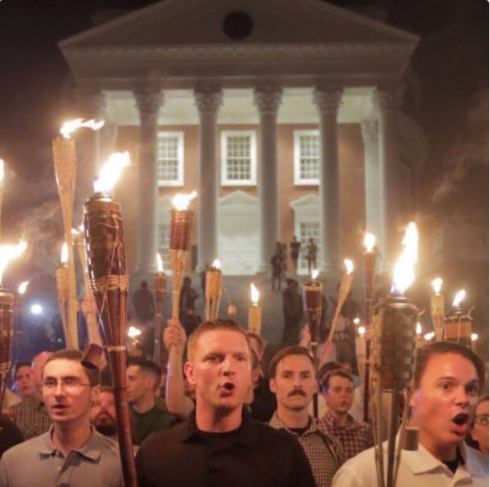





 Jadde: from Bosnia to Bengal