Balkans, Anatolia, Caucasus, Levant and other Middle East, Iran, Afghanistan, South Asia, occasional forays into southern Italy, Spain or eastern Europe, minorities, the nation-state and nationalism — and whatever other quirks or obsessions lurk inside my head.
“The true Vienna lover lives on borrowed memories. With a bitter-sweet pang of nostalgia he remembers things he never knew. The Vienna that is, is as nice a town as there ever was. But the Vienna that never was is the grandest city ever.”
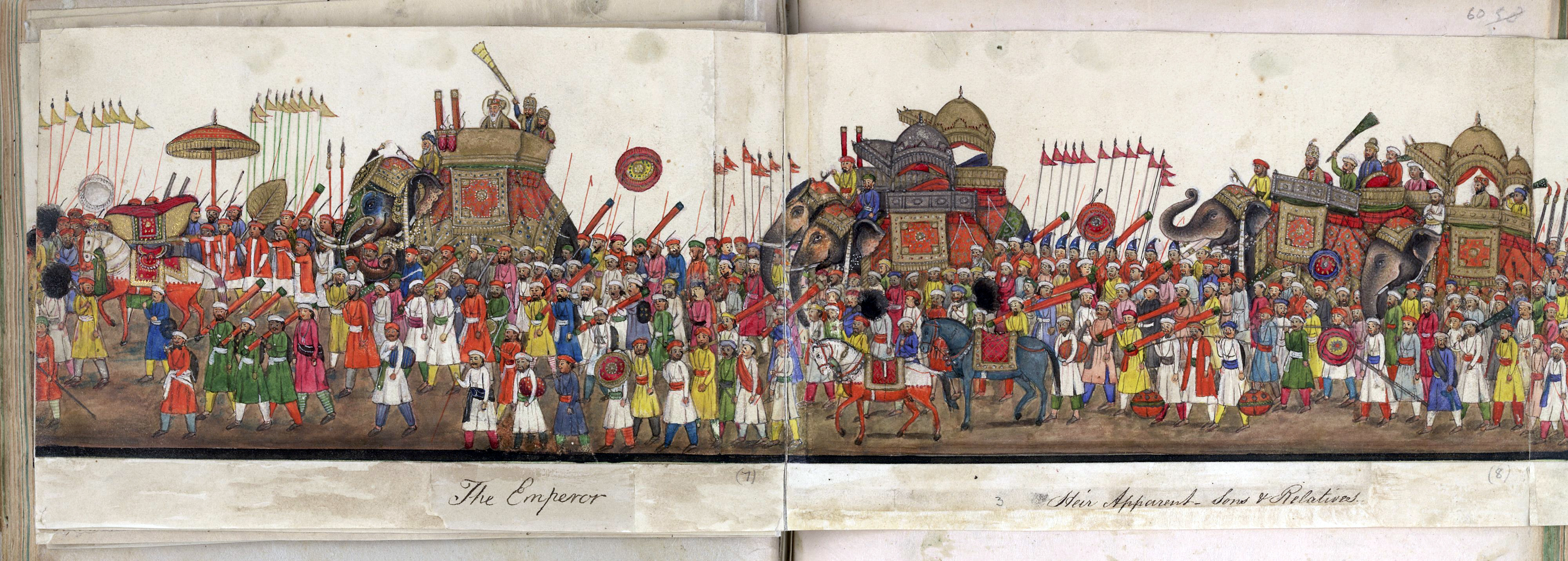
Bahadur Shah Zafar, last of the Mughal Emperors (see “Destruction of Delhi’) in Eid procession, 1843 (please click)
Today is the first day of Eid al Fitr, (usually called Bayram in Turkey and the Balkans) the three-day feast that marks the end of Ramazan.
Below is a photo of Bayram Namazi in the Blue or Sultan Ahmet mosque in Istanbul (thanks to Aykut for that; I couldn’t tell which mosque was) the morning prayer which is the official beginning of the holiday. (click)
And an impressive video of Eid Namaz at the Jama Masjid in Delhi, which we almost lost. See the Destruction of Delhi series from Dalrymple’s The Last Mughalhere, here and here.
In Bosnia (click)
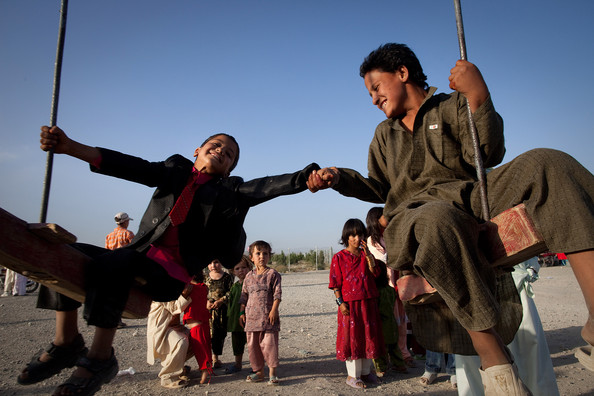
In Afghanistan
In Syria
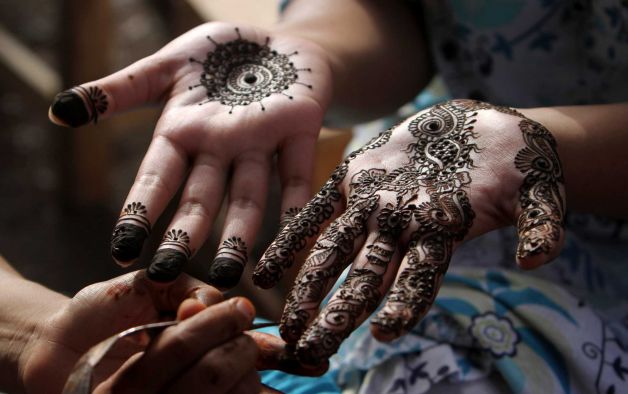
In Pakistan, where women have their hands henna-ed for the celebration(I’m assuming Indian Muslims too?)
Fresco of the Transfiguration at the Serbian Orthodox Monastery of Dečani in Kosovo. (click)
The Transfiguration – “today” all the title tracks of the Church’s feast days start with: today, here, the eternal now – is the moment when Christ revealed his divinity to John and Peter (yikes, I think, John and Peter…) on Mount Thabor, Moses and Elijah at his side. It’s a holiday that the Catholic West has largely ignored, probably because it’s too metaphysical and abstract and there are no Virgins or blood or cute babies involved, so it was of limited uses for the Counter-Reformation propaganda machine.
This isn’t like the Epiphany, which commemorates the moment Christ the Man and the Father and the Holy Spirit were all revealed at once, a holiday that the Catholic Church has also dumbed-down to the completely irrelevant “Three Kings Day,” because there they can cast a cute baby: though what the cute baby was doing freezing in a cave twelve days old waiting for the Kings to bring him gifts, when scripture says he had been taken away to Egypt way before, and why the Epiphany happens when He’s thirty and not a baby, is something that the Catholic Church, like much else, has never thought it needed to explain to its followers… Just the cheap marketing of Franciscan love for the Child — which is the distant root of the cheap marketing of Christmas.
The Transfiguration, the Metamorphosis, is Christ as God, a revelation of Divinity, a page straight out of the song book of any Indo-European or Semitic paganism, an Avatar or Incarnation — man, even animal – allowing a human to see the blinding glory of its Godhead. In this version John and Peter are just knocked to the ground, not incinerated, or impregnated or stricken with fatal love. But it’s clearly the same idea, and found its seed, like so much else, in the Semitic Christianity of the Near East.
In parts of rural Greece, it’s the day when the season’s first grapes are – or were — brought to church and blessed and distributed as prasad* to the congregation. I was moved to find this tradition oddly observed in most Greek parishes in Istanbul, by the most profoundly urban Greeks of all Greeks, with grapes from the manave.** I remember wondering what it was they needed to remember by doing this. I remember being given a handful at the Taxiarches in Arnavutkoy, munching on them as I strolled back to class in Bebek, saving a few for my best friend there.
This is the interior of the church of the Taxiarches (the Archangels, Michael and Gabriel) in Arnavutkoy. I went there a lot because it was the largest functioning church near Bogazici U, or at least the one that I knew wouldn’t be depressingly empty. The only church of the Transfiguration I know of in Istanbul is on Buyuk Ada (Prinkipo) and I couldn’t find a picture of it. Below is the Transfiguration of Corona, Queens, though, where I was baptized and raised. Under that is the Russian Orthodox Church of the Transfiguration in Williamsburg (“Preobrazhenie,” “obraz” being the Slavonic for “image,” like the Latin “figura” in Transfiguration or the Greek “morphe” in Metamorphosis) which you used to be able to see from the BQE against the Manhattan skyline before all the ugly condos for the hipsters with rich daddies went up. Below that are some grapes.
* prasad is a food offering to a Hindu deity which is blessed and then distrubuted to his devotees
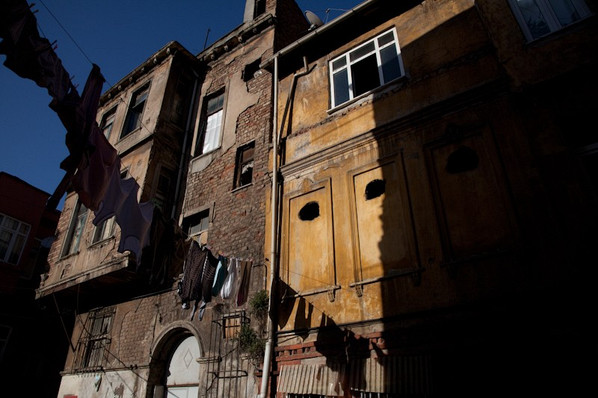
…a neighborhood about to be destroyed. See their great website: Tarlabasi Istanbul
“In the early 1950s, waves of rural migration led to profound demographic and socio-economic changes in Istanbul. Empty houses in Tarlabaşı and other neighbourhoods were soon claimed by workers arriving from all over Anatolia. Young men started working alongside local master craftsmen, or usta, and sometimes went on to open their own stores and workshops. Yusuf Karapinar, a shoemaker, got his start in the profession at the age of 8, as an apprentice in a Greek family. “They were lovely people, extremely nice to me,” he said. “During the month of Ramadan, they never ate in front of me and my mentor’s wife always insisted on cooking an iftar meal for all of us.” Forty years later, Yusuf Usta is today one of the very last shoemakers in the neighbourhood and his shop is threatened with demolition. Turan Usta, who works with Yusuf and his son Kadir Karapinar and has been a shoemaker for 45 years, is angry about the prospect: “If they tear Tarlabaşı down, it will be the end of the artisans and of the craftsmanship here.””
“Bridge-on-that-(are)-ones” would be the name of this film if you constructed a literal calque in English from the Turkish word order. We used to play a game like that in grad school — the Turks and the rest of us poor schmucks who were trying to learn Turkish — would play at having whole conversations in an English constructed on the fascinating syntactic structure of Turkic languages. “Sent-me-by book you-to yet came, huh?” if I remember correctly; “huh?” was what we used to serve as the Turkish interrogative particle “mi?” — like the Japanese “-ka” — because it was the best we could come up with. It was pretty silly but a lot of fun. And when I was teaching ESL, one thing every Turkish student of mine learned from me when he asked an Asian student whether Korean or Japanese was more similar to Chinese was that Korean and Japanese are more grammatically similar to Turkish than either of them are to Chinese. Their reaction was interesting. They swallow the silly Turanianism of Turkish Republican ideology whole, but don’t seem to like being confronted by it in such bluntly real and not mythic terms. “Wait a sec…me…and this Korean guy?”
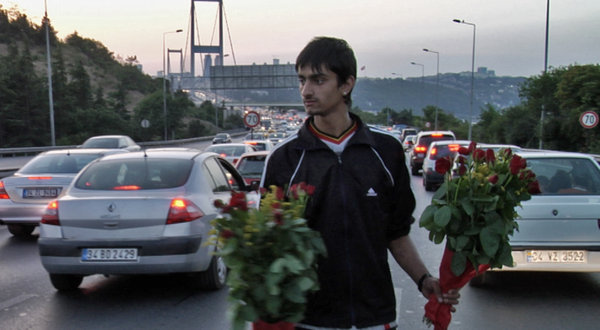
“The Men on the Bridge” — to get back to the post here — is about three men in İstanbul who are connected only by the fact that they work on the Bosphorus Bridge, the older and southernmost span between the two sides of the city. One is a gypsy boy who sells flowers to people stuck on the bridge’s usually horrendous traffic; he tries to find other employment but is functionally illiterate, can’t even hold down a job at a working-class lokanta, and ends up back on the bridge. The other is a poor, exhausted dolmuş driver (group taxi — same root as dolma, “stuffed,” which gives you an idea of how comfortable they are, though the new ones are actually very nice), who’s usually stuck in the bridge’s horrendous traffic and tormented by a frankly bitchy wife, who can’t understand why he can’t make enough money to move into a bigger apartment, though she herself doesn’t work and has no skills to get a job either, who, like most of her type, is fairly useless around the house as well, and whom any self-respecting Turkish man would have long sent packing back to her mother. The third character is a traffic cop who tries to keep the horrendous traffic moving, including by harassing the gypsy boy with the flowers and giving the dolmus driver a ticket when his wife has called him to bitch about something and won’t let him get off his cell. Played by the only professional actor in the film (his brother is an actual traffic cop), he’s a slightly dorky but handsome kid from Kayseri, with the shy, good manners that still exist in the Turkish provinces. He’s doing a bit of religious exploring, misses home, works out, and tries to find girls to date on-line — snotty İstanbullu chicks he meets up with who start looking at their watch when he says “Kayseri” and suddenly have to leave when he says “a village near Kayseri.” He’s particularly proud of his Turcoman clan lineage, one of the first, he claims, to come to Anatolia, and launches into its history with one of these girls, which I wanted to hear more of; she yawns, I think.
“Köprüdekiler” is not some major work, but it’s a very Turkishly melancholy and sweet film that makes its point powerfully enough: that is, that even if all of the recent years’ hype about Booming İstanbul and Booming Turkey is real and not the product of a good American public relations firm — like one sometimes suspects — that certainly not every Turk has gotten to be a part of it. Aslı Özge makes that point most effectively by refusing to show us even one shot of the glamorous New İstanbul that gets a major piece in the Times travel section, The New Yorker and Travel and Leisure at least once every other issue. Even the city’s beautiful sea views are almost invisible — and this in a film about a bridge — and even the one scene shot on the Jadde, a scene that makes you want to cry, where the gypsy kid and a friend are innocently checking out CD’s on a stand outside a shop and are suddenly hustled away by security to be frisked and brutally threatened, is shot in such close frame that you see none of the street’s other activity or entertainment or crowds. She takes an effective swipe at Turkish militarism and nationalism too while she’s at it.
The dumb psychedelic lights they’ve put on the bridge — which if you know how it dominates the City’s sea-and-landscape you must know are particularly irritating — weren’t present in the film and I wondered why. And then I checked and found it was made in 2009. I wondered why so many films come even to New York so late and then remembered what profit pigs and cowards American distribution companies are. I saw it at a one time screening at MOMA last month. But it’s worth the effort to find. See it. Trailers below.
From my previous post’s comments on Salonica and Izmir…
A great book on the Population Exchange, with both extensive historical background that helps a reader from outside the region understand the events; a deep theoretical analysis on nationalism and ethnicity as concepts; the wars involved; the mechanics of the Exchange itself and its consequences, both large-scale and personal; how it would be considered the most objectionable kind of Ethnic Cleansing today and would raise howls of protest from the international community, but was then considered a perfectly rational way by our two Great Leaders to solve a problem and “nation-build” — move almost three million people against their will –– setting a horrible twentieth-century precedent (which we’ll later see in Eastern Europe, Palestine, most tragically of all, India, in Yugoslavia…); and all somewhat miraculously condensed into a book of less then three hundred pages, is Bruce Clark’s Twice a Stranger: the Mass Expulsions that Forged Modern Greece and Turkey.
And if there’s a first book I recommend to anyone who wants to understand our complicated, often beautiful, mostly dysfunctional romance, and how it continues even after the Great Divorce, it’s this one:
Clark strikes the absolute perfect balance between historical and journalistic research and poignant personal accounts of both the Turkish and Greek refugees. But these personal accounts are made even more moving by Clark’s own deep, emotional sense of loss and time and violence and his investment in his subject matter (his first chapter on Ayvalik, with it’s haunting, closing quote from one of his subjects: “It’s too early to remember,” is a masterpiece). When you find out that Clark is Northern Irish, so knows of what he speaks when it comes to inter-communal viciousness, another layer of profundity is added to the experience of reading this book. Many thanks to him for his generosity in allowing me to reproduce sections of his work.
I thought of one passage in particular, like I said, when mentioning both Salonica and Izmir’s sterility in the previous post:
“In this region of ancient settlement and civilization, there is often an unhappy mismatch between where people live now, and the places to which they feel the deepest attachment; and that mismatch is reflected in the physical environment. Monuments and places of worship seem to be in the wrong place, or to be used for the wrong purpose. In contrast with European cities like Bologna or Salamanca, where the past and present seem to blend quite seamlessly, the Aegean landscape is full of odd, unhappy disjunction; places where people have lived, prayed and done business for centuries feel as soulless and ill-designed as a strip development on an American turnpike. That is partly the result, of course, of ill-managed and corrupt forms of economic development; but the legacy of an artificial exercise in social and ethnic remodeling has played a part.”[my emphases]
Some older photos that might help:
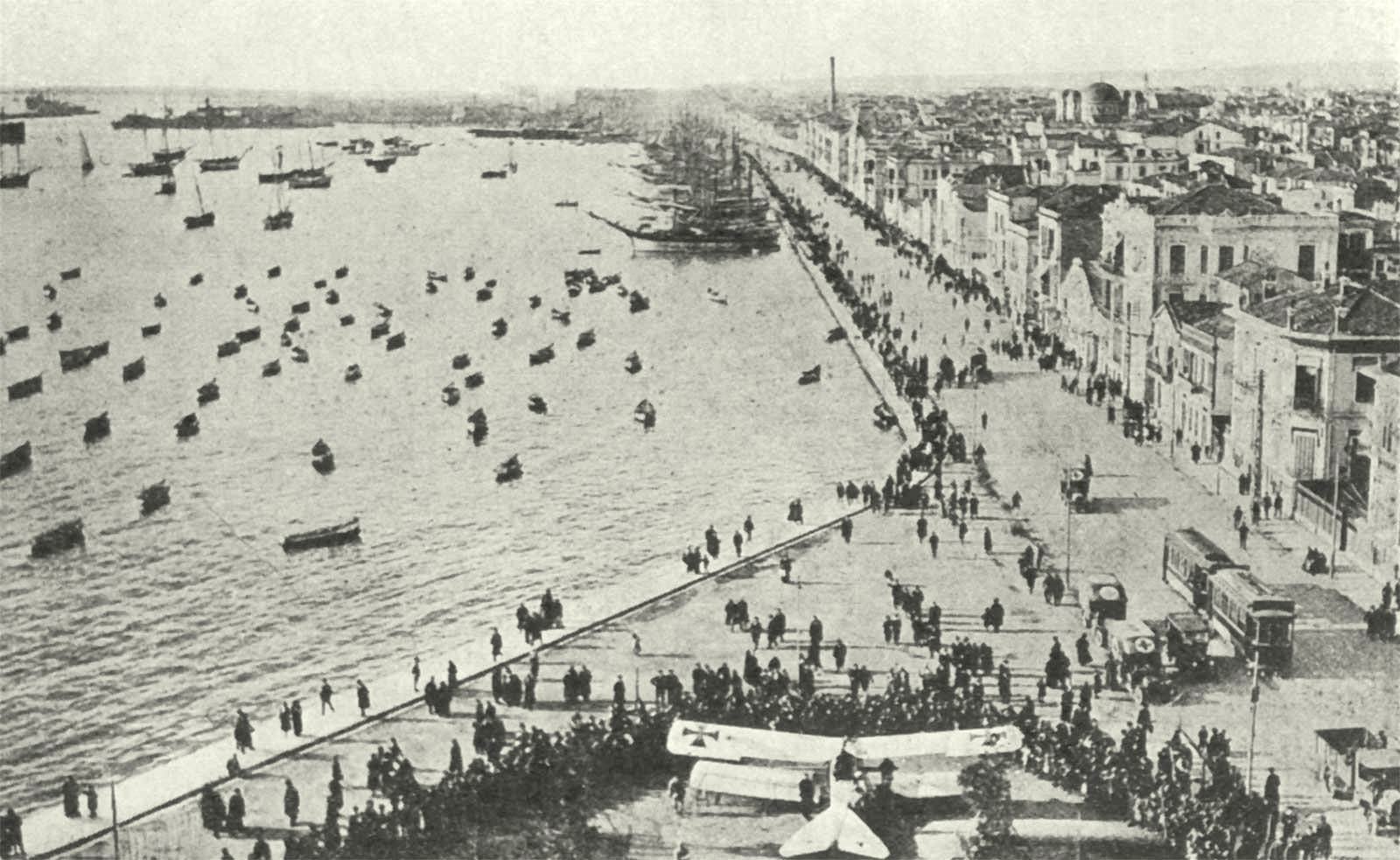
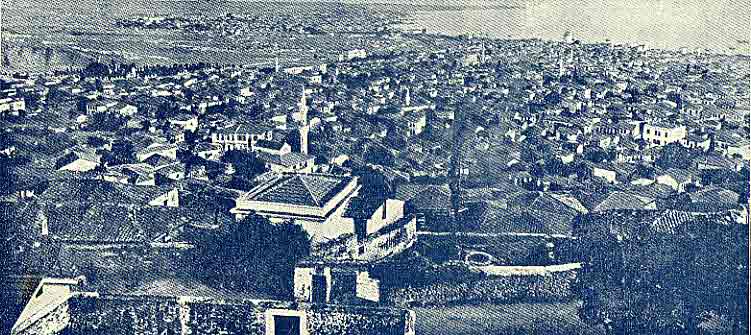
Salonika
Solun: from a Bulgarian website. That Kievan mosaic in the previous post should actually be titled Dmitiri Solunskiy, as he’s known throughout the Slavic world, where he’s widely venerated, but especially by Bulgarians and Macedonians.
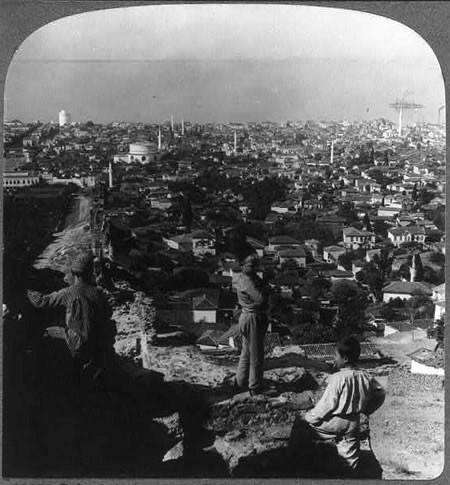
Smyrna before the twenties
Stuff like this below, though, doesn’t really help, but I find clownish and borderline offensive: Izmir’s “Aegean Greek Wine Tavern” (though the food looks great and probably is)*;I mean, if it were in Istanbul, where there’s still a living memory of Greeks, it wouldn’t be so weird, but in Izmir, where there haven’t been any Greeks in almost a century, and from where they left under horrific conditions that can’t be compared to Istanbul Greeks’ slow exodus…plus, where due to the Exchange and the flood of refugees from Greece, there are probably hardly any native Izmirli Turks to remember them either (try finding a true native Salonikan who’s not of refugee origin) makes it a little creepy.
*The classic seafood-meze-raki meyhane was almost exclusively a Greek insitution in Turkey, and clearly the association lives on. For obvious reasons, the tavern has always been default “gavur” territory, since the beginnings even of Islamic poetic culture. The fish tavern continued to be mostly Greek terrain (and Armenian) in Istanbul itself until well into the sixties; in what little modern Turkish fiction I know set in C-town the only Greeks are waiters in seaside restaurants. There are still a couple of Greek-owned ones left. Which doesn’t mean that the genre doesn’t live on without us. It flourishes in fact, and a good Turkish seafood-meze-raki meal in Istanbul is one of life’s sublime experiences. I pity those who die without having experienced it.
I reckon I’ve now received enough emails complaining about my use of “Constantinople” that it’s time to address the issue.
Constantinople – Kwnstantinoupoles — is Istanbul in Greek. It’s the Greek word for Istanbul. Istanbul comes from the word Constantinople. It’s that simple. The way Moscow is the English word for Moskva. The way Parigi is the Italian word for Paris. Constantinople is the Greek word for Istanbul. It’s that simple.
That the Republic chose to change its official name to the time-honored Turkish name of Istanbul in the 1920’s does not obligate speakers of other languages to call it that, especially not those with as heavy an emotional, historical and spiritual investment in their own name for it as we have. Just like the world will hopefully never be obligated to call Greece “Hellas” by the idiots who are attempting to do so. Where Istanbul is concerned, the Ottomans themselves were content, at least for official purposes, with using the Arabic Costantiniyye until very late – till the very end, 1923, if I’m not mistaken. And it took the rest of the world several more decades, as well, to abandon “Constantinople” and conform to the Turkish Republic’s new orders — for those who thought the name just disappeared in 1453.
What exactly is the problem? If readers think I have some nationalist, much less irredentist, reasons for referring to the city as Constantinople, then they haven’t read anything else on this blog, and know nothing about me. If there even is any discernible pattern in my switching back and forth between the two names, it’s not easy to identify. I mostly refer to the city’s Greek community as Constantinopolitan Greeks, usually when I’m talking about a time when there was a community. When the present is involved I usually say something like “Istanbul Greeks.” I call Greeks from Istanbul “Polites” and will often say “Pole,” or even “the City” in English to evoke some sense of its importance to Greeks – and to me. And all sorts of various combinations of the above.
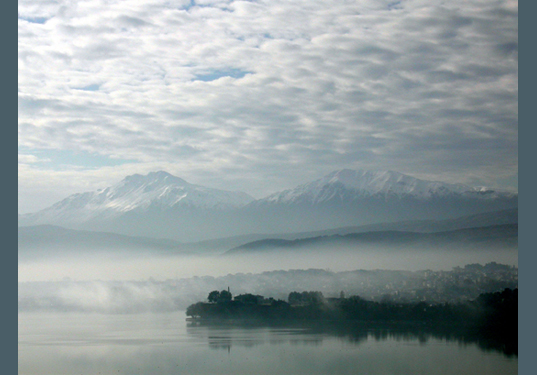
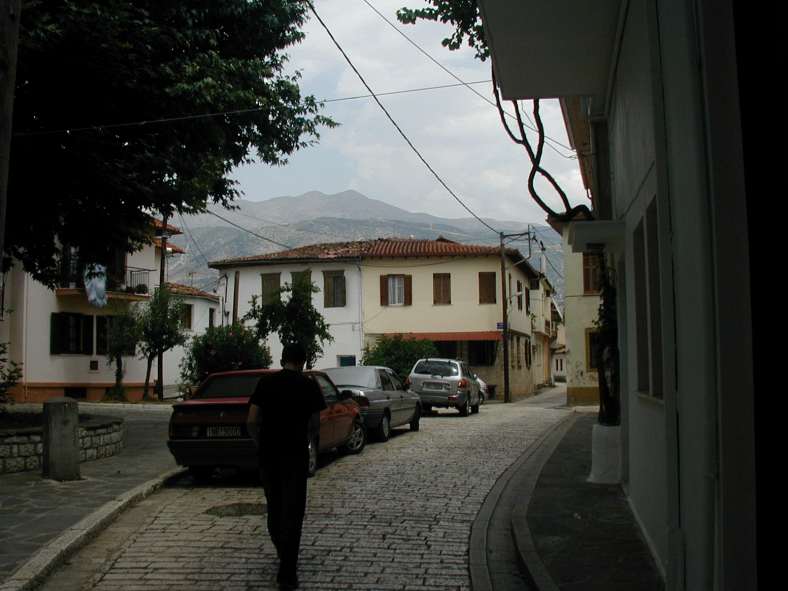
In both print and speech I never hear Turks call Salonica “Thessalonike” but Selanik – except for the occasional overly p.c. Turk who thinks that “Thessalonike” is what I want to hear. And not only does Selanik not annoy me, not only do I not take issue with it or get offended by it, but it moves me. Obviously, when a Turk calls Jiannena — one of my many hometowns – Yanya, it moves me even more. A Turk who says Yanya is asserting his connection to that city, and that assertion becomes an immediate bond between me and him: a bond we both share to its streets, its lake and its mists, its mosques, its churches, its synagogues, its borek, the mahallades my mother used to tell me were Turkish before the twenties, including the one where she grew up, the parks she used to tell me were paved over Muslim cemeteries, that used to scare her as a girl when the region’s interminable rains would expose bones and skulls in their mud — all told with her peculiar sensitivity and strange sadness that would make you think these things were all her own; I never heard a word of ethnic animosity or hatred for anybody out of her mouth — not ethnic or any other kind — and not from my father either.
Yanya: the lake, mosques, the beautiful gate of the Ic Kale, streets, the front gate and interior of the Old Synagogue, 18th c. (The New Synagogue, 19th c., outside the city walls, was blown up by the Nazis.)
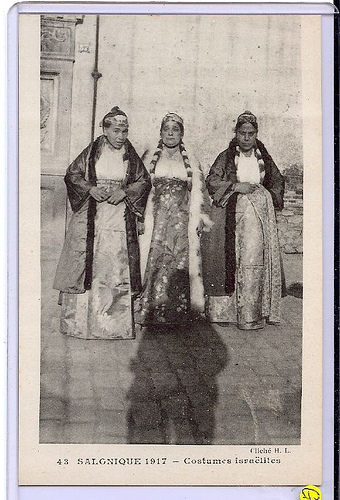
And when a Turk says Selanik, he’s asserting his deep historical connection to that city; whether he’s from there or not, he’s using a name which carries all his historical references to that place, which I’m nothing but happy to grant him. I don’t even call it Thessalonike, but ‘Salonike. When I think of Byzantine Thessalonike, of Selanik, Salonico, Salonica, they all evoke for me a great and ancient Mediterranean city; for a long time, the second city of the Byzantines, of St. Gregory Palamas and Nicholas Kabasilas; Salonico makes me think of the heir to the philosophical and poetic heritage of Jewish Spain; the great center of Sephardic learning, both rabbinical and the deep Kabbalistic learning that Jews brought with them from their previous homeland; I think of a Turkish city that was a flourishing center of a variety of Ottoman Sufi orders; the city where so much of Turkey’s new Republican bourgeoisie came from, just as ours came from the other direction.
Frontispiece of a Salonican Zohar, a seminal Kabbalah text, originally written in Leon, Spain.
Salonican Jews
Great caption; “the fanatical sect of Islam” being referred to are the Mevlevis!!!
When I think of modern Thessalonike, on the other hand, I think of an unattractive, humid Balkan town with a serious second-city complex.
But I’m a “manic lover” of St. Demetrius, its patron, so I have to visit every now and then.
Mosaic of St. Demetrius, originally from the church of St. Sophia in Kiev (or is it Kyiv?), currently in the Hermitage Museum, St. Petersburg (or is it Leningrad? or Petrograd? or just the name that everyone who knows her and truly loves her calls her, Peter…)
Funny that it took me so long but I recently realized why I dislike both Salonica and Izmir so much; despite their history, despite Salonica’s plethora of classical and Byzantine monuments even, neither of them — for reasons we all know — feel like organically old cities, the way even Athens does, though in its modern incarnation it’s far newer. They both feel like one city was removed from that location and another one hastily put in its place. Remade. They don’t feel grounded. What you feel in both of them mostly is the absence of history.*
Can you even tell which is which? — except for a few giveaway signs…
With all that said, therefore, I think we have to be very careful about whether it’s the renaming of places or persevering in the old name that represents the more nationalist impulse. I recently confirmed for an Indian friend that, yes, Greeks still refer to Istanbul as “the City,” and he shook his head and mumbled something about the “narcissism of nationalism.” But an increasingly fundamentalist and nationalist India may be the perfect example to start with. Granted, Calcutta was always Kolkata in Bengali. But what was wrong with Madras? And what nationalist Tamil mythology does Chennai justify? The BJP (fundamentalist Hinduism.…you’d think it’d be an oxymoron) in fact, has a list for changing the names of almost all the cities of India to more appropriately Hindu ones, not just obvious targets like Allahabad, but Delhi itself and others: see the list if you’re interested. Aung San Suu Kyi calls her country by its perfectly legitimate name of Burma, yet for a couple of decades we were content to use the name imposed on it by its military dictatorship, Myanmar, and never asked why or by whom it had been changed. The State is not to be questioned. If you said “Burma,” people looked at you like you were uninformed.
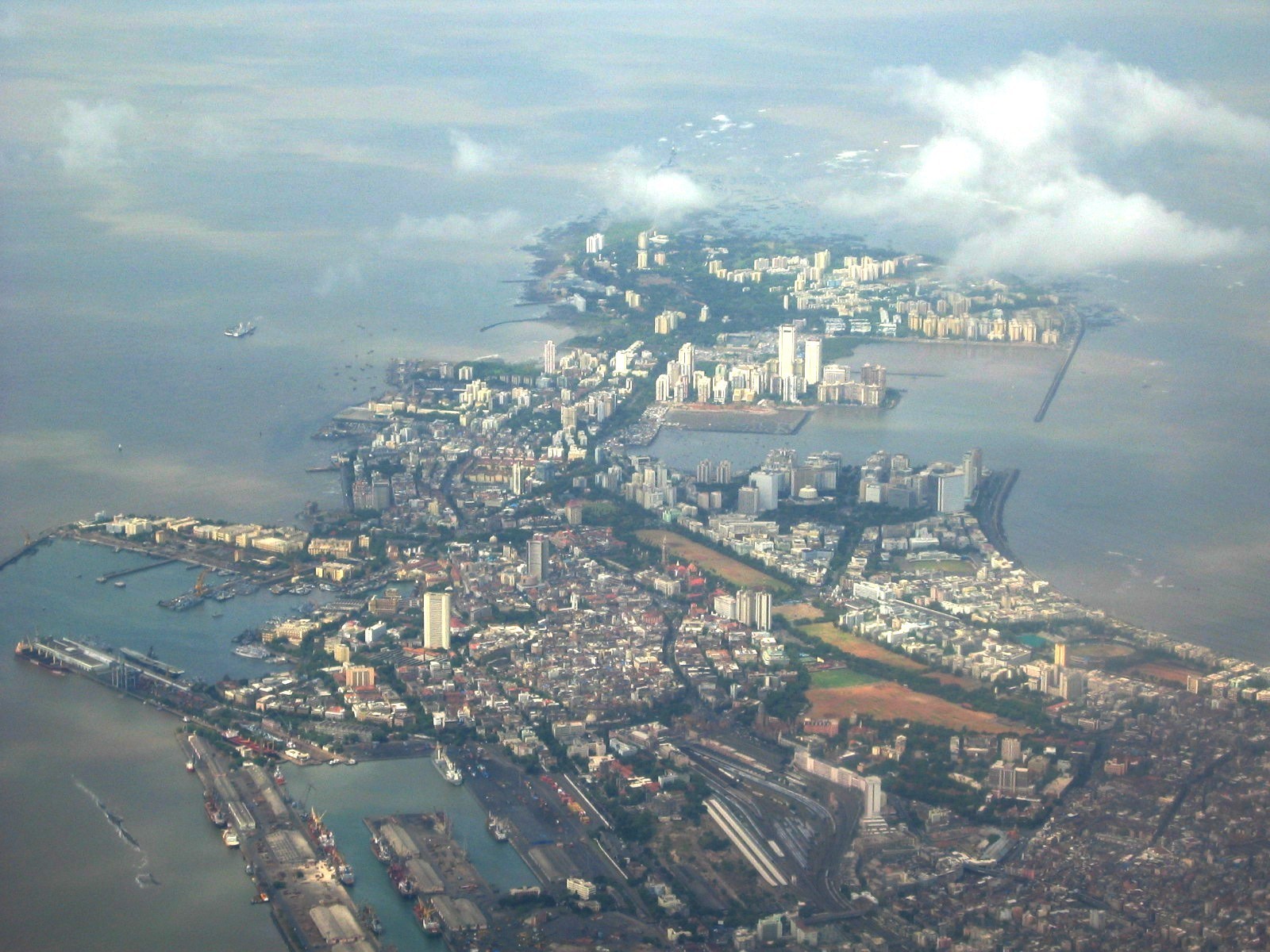
The most unfortunate and vulgar change of all is “Mumbai,” but almost no one knows or cares about how that change happened. It was once generally accepted that Bombay comes from the Portuguese “bom bahim,” or good little harbour, just north as it is from Portugal’s long-time colony of Goa. But even if that etymology is bogus, it was under the name Bombay that it flourished and grew under the British into the most important and cosmopolitan city in South Asia.
Bombay (gotta click on this one)
But in 1995, the Shiv Sena party (the Army of Shiva…) won control of the state government of Maharashtra, of which Bombay is a part, though it’s so different in social and ethnic make-up from the rest of that state that it deserves a separate federal district type status like Delhi has, or Mexico City, or D.C. Shiv Sena, being a party whose power base is rural Maharashtra and poor migrant Marathis who feel they deserve more power in the city, is actively hostile to Bombay’s dizzying diversity and especially its large Muslim population. It’s essentially a Marathi branch of the BJP, only worse (and they haven’t been getting along lately): a virulently Hindutva bunch that have not only been found to be involved in Bombay’s drug, prostitution and extortion circles, but ordered and even carried out much of the more vicious anti-Muslim attacks during the Bombay riots of 1992-93: the kerosene-dousing and burning of individuals and the burning tire around the victims’s neck were a couple of their trademarks.
When, despite all that, Shiv Sena were voted into state office in Maharashtra, their response to the poverty, massive infrastructural challenges, crime and destitution of this barely manageable city of more than twenty million was to change its name to Mumbai. This was based on the supposed fact that there was (or is, or if there hadn’t been, I’m sure there now is) a temple of a Marathi goddess of that name on the site before the colonial city rose up, which may or may not be true, but, given the fact that every square yard of India contains at least one shrine or temple to someone or something, doesn’t mean very much.
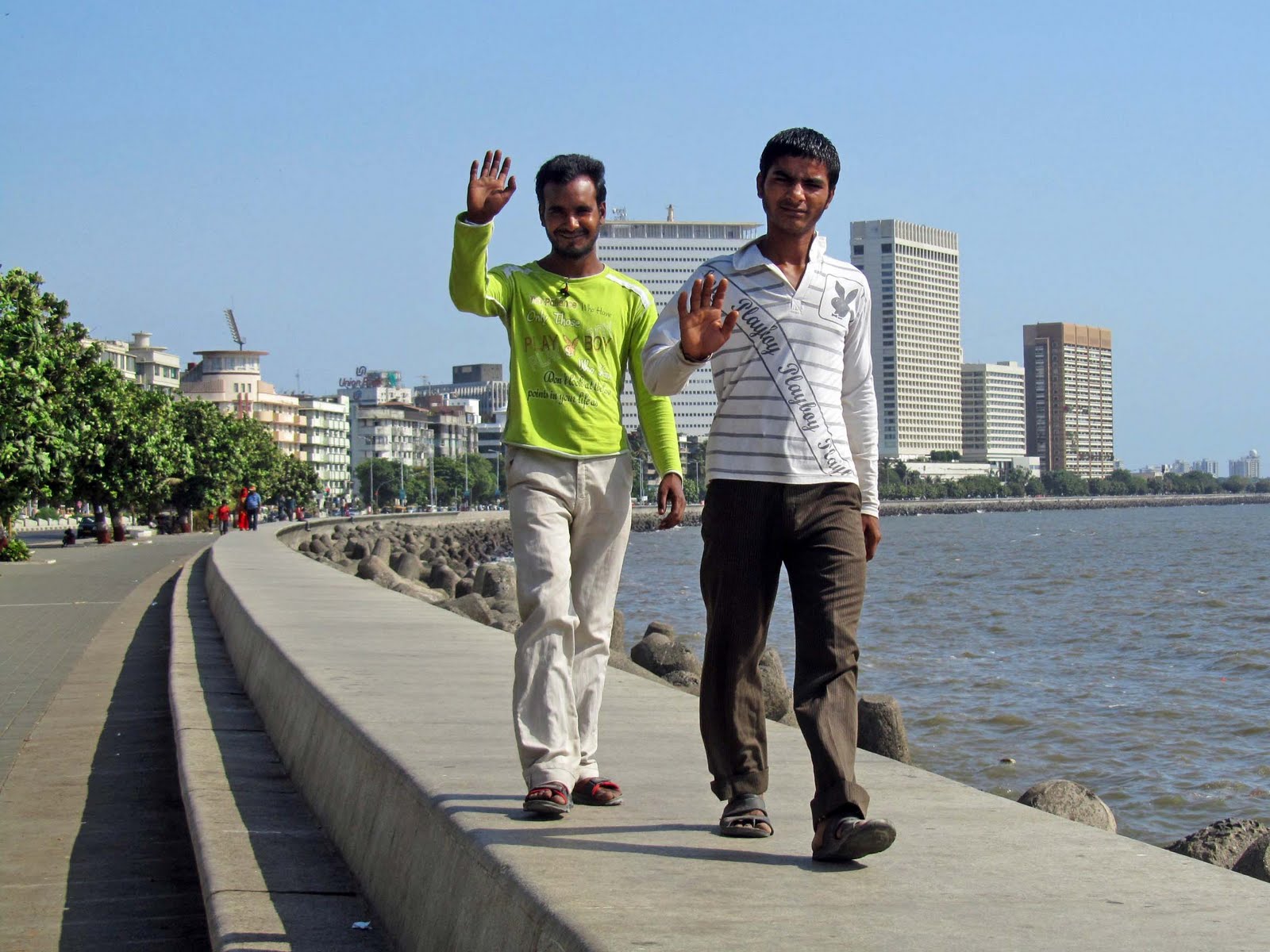
And yet the whole world fell in line. Thinking that, like Myanmar, if it’s coming from there it must have some sort of indigenous, authentic root, filled with post-colonial guilt and worried about offending what we thought were Indian sensibilities, we all dutifully started calling it Mumbai. Fearing that using the old name would immediately make others imagine us to be jodhpur-clad gin-swillers, we let a bunch of criminal thugs and violent nationalists change the name Bombay — the name by which this great, open-to-the-sea-and-the-world, mercantile, diverse, cosmopolitan, sexy metropolis, a microcosm of India itself and its modern face to the world, was known for almost three centuries – and nobody asked why or breathed a word of resistance.
Bombay — Marine Drive — Queen’s Necklace
So as for C-town, you choose which is more “nationalist.” Calling the city the name by which it was known to most of humanity for more than sixteen centuries? Calling it an also venerable name that the nationalist, anti-cosmopolitan, Turkification project of a military dictatorship whose attitude to the City, its legacy, history and population was actually hostile for much of the time decided the world should call it? Or just calling it both?
Or how ‘bout who cares? As long as we know which city we’re talking about.
The Delhi Wallah: Your gateway to alternate Delhi, the city of Hazrat Nizamuddin Auliya and Arundhati Roy is one of my favorite sub-continental blogs and even has the endorsement of the great historian and travel writer Walter Dalrymple: “The Delhi Walla is Delhi’s most idiosyncratic and eccentric website, and reflects a real love of this great but under-loved and underrated city.” The work of the assumedly pseudonymed Mayank Austen Soofi, the blog really is written with the true tenderness that only a great city fallen on slightly hard times can inspire. One thinks of Orhan Pamuk’s Istanbul, written about his youth in that city before it became the ISTANBUL! it’s become since the 1990’s.
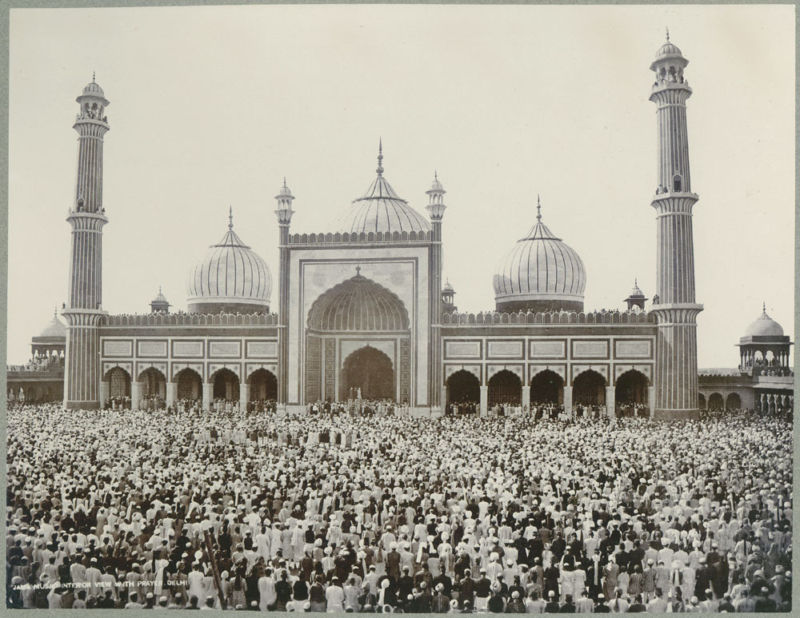
Delhi’s Jama Masjid in the 1890’s
Anyone who knows me, and some who don’t but might have already picked it out from this blog, know that I’m interested in all of India and even engage in certain Hindu practices and rites but that my true fascination is the Mughal culture of the northern Doab heartland. This comes from — just among myriad things — the composite, deeply syncretic and super-elegant aesthetic of that culture and, more personally, from a deep affinity for lost worlds and for the dignity maintained in the face of the most tragic circumstances under which Indian Islam, much like the Byzantines, not only laboured but continued to flourish for so long.
Bahadur Shah, the last reigning member of the Mughal dynasty
When I read Dalrymple’s masterpiece, The Last Mughal, The Fall of A Dynasty 1857 I was left shell-shocked, not just by the sheer scale of the Indian Rebellion’s violence, but by the mindless, post-conflict destruction of the vindictive and obviously terrified Brits, determined to teach Indian Muslims a lesson for their “mutiny.” Even the outer walls of the Red Fort and the Jama Masjid itself were saved at the eleventh hour by the orders of more intelligent superiors. It makes my head spin to think that had the cooler heads that the British so pride themselves on prevailed, Delhi today would still be a showcase of Muslim art and architecture on a par with Isfahan and Cairo or even Istanbul.
The Red Fort in Delhi, once the largest palace complex in the world, eighty per cent of which was dynamited by the British after the Indian rebellion was crushed. (click)
One can read about how upper-class Muslim life in north India proudly soldiered on into the twentieth century in books like Ahmed Ali’s beautiful Twilight in Delhi or made it through the trauma of Partition and modernity in films like Garm Hawa and Sardari Begum. (For a fairly insightful look — but one that doesn’t really tackle the most radical questions — at Indian Muslim life in the cinema seeIslamicate Cultures of Bombay Cinema by Ira Bhaskar and Richard Allen but all these can’t help but strike a certain elegiac tone.
But…what I love about the Delhi Wallah is what detailled coverage he brings you of how alive and well Muslim life and culture in Delhi still are: mushairas, qawwali gatherings, celebrations at sufi tombs — and not just Hazrat Nizamuddin Auliya’s — old ruins and mausoleums he’s constantly digging up among the chaos of the modern city — and the glorious food. He has a four-volume guidebook to the city and he’s recently done a beautiful four-part photo op and piece of his trip to Kashmir. Don’t miss this blog!
Balkans, Anatolia, Caucasus, Levant and rest of ME, Iran, South Asia
Me, I'm Nicholas Bakos, a.k.a. "NikoBako." I'm Greek (Roman really, but when I say that in English some five people in the world today understand what I'm talking about, so I use "Greek" for shorthand). I'm from New York. I live all over the place these days. The rest should become obvious from the blog.























 Jadde: from Bosnia to Bengal