Balkans, Anatolia, Caucasus, Levant and other Middle East, Iran, Afghanistan, South Asia, occasional forays into southern Italy, Spain or eastern Europe, minorities, the nation-state and nationalism — and whatever other quirks or obsessions lurk inside my head.
Sorry to be the grinch here, but it’s always just a little too late, isn’t it? This is the flip-side of the: “we all lived so happily together before — I don’t know what happened…” that people love to mumble when the actual slaughtering has started and has picked up speed: “We all lived so happily together.” Then when it’s all over, hundreds of thousands have been killed, hundreds and thousands have been displaced, centuries-old communities, their cultures, traditions, ways-of-life been lost forever — we’re all “Unity and Compassion” — “Brotherhood and Unity.”
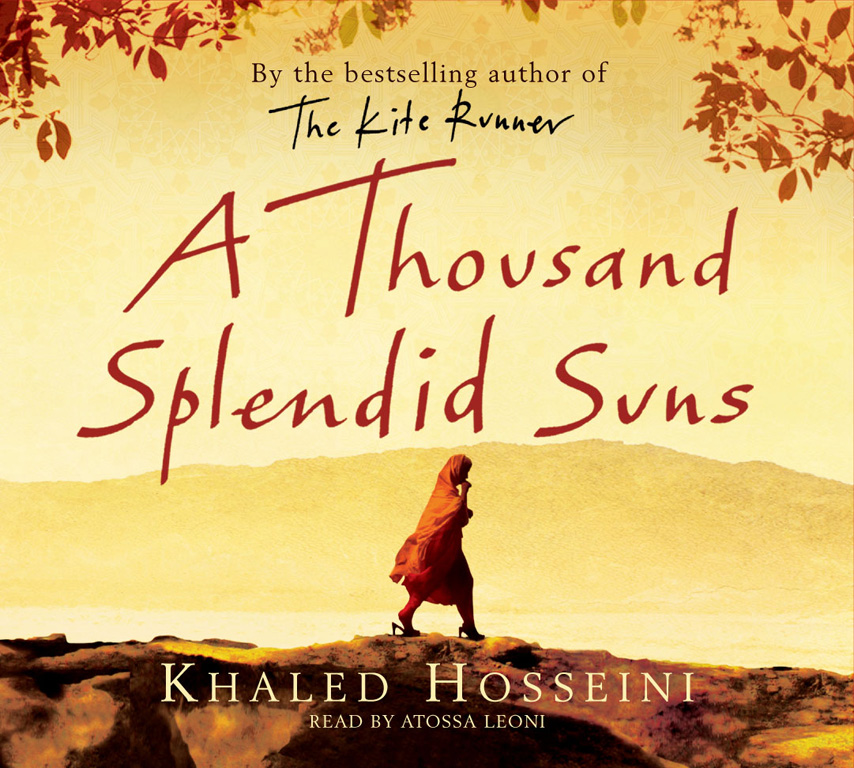
Shouldn’t be too churlish about it. But it’s Khaled Hosseini, the Afghan writer, who writes in his “A Thousand Splendid Suns” that: “It seems axiomatic in human behavior that no man regrets the damage he’s done until it’s so great that it’s irreparable.” So, haydi, go clean up your mess together now — literally and figuratively — and stop making such a fuss of how “humanitarian” or “soulfully generous” it is of you to be helping each other out. ‘Cause it makes me laugh – the icing on the cake of the destruction you wrought.
And readers, see previous posts to see how you can help all the flood-stricken countries that were once part of the noble experiment of a place called Yugoslavia.
After the Balkan floods: Unity and compassion: The Balkans floods have unleashed an unprecedented humanitarian response that cuts across borders.
Lana Pasić
During the last week, countries in the Balkans have experienced extremely heavy rain – the amount of rainfall expected over the period of three months, fell on the region in only three days, bringing about catastrophic floods. The rain has stopped, but the force of water has caused horrific destruction. Bosnia and Serbia have declared a state of emergency, and flooding has in recent days also reached eastern parts of Croatia. Entire cities are submerged. The map of the flooding shows that large parts of Serbia and a third of Bosnia and Herzegovina are under water; a territory larger than Slovenia is currently flooded. In Bosnia and Herzegovina, more than a million people live in the affected areas.
Consequences of the floods
The floods have caused not only infrastructural destruction. Tens of thousands of people have been displaced across the region. Al Jazeera Balkans has reported that over 16.000 people have been evacuated in Serbia, 10,000 in the Bosnian town of Bijeljina alone, and hundreds in Croatia. The number of victims has still not been released. As the water recedes, it is expected that more bodies will be found and the death toll will rise.
The rains have brought not only flooding, but also landslides. The poorest are often the ones who are hit the hardest during natural disasters, and this one was no different. It is heart-breaking to see that the people who have been rebuilding their houses after the war have now lost everything again. Entire villages in Bosnia have been buried due to landslides and there is nothing but the rooftops emerging from the ground to testify that these places were once inhabited. More than 200 active landslides have been identified in the eastern part of Bosnia.
The water has also inundated minefields in Bosnia, a remnant from the 1992-1995 war. The unexploded devices are likely to become a problem during the clean-up. Economic losses and health consequences are also a concern. Thousands of hectares of agricultural land in Bosnia and Serbia have been flooded, which will have an imminent impact on food distribution and prices this year. In the future, recovery of agriculture in these areas will likely be a challenge, as the soil has been contaminated by the flood water. The disaster is also expected to have epidemiological consequences, due to the shortage of clean drinking water and medicines.
Finding unity in the face of disaster
Although the destruction and loss brought by the floods have caused much pain and suffering across the region, the citizens’ voluntary mobilisation has been overwhelming. Images of this disaster have motivated thousands to join the relief efforts by donating, collecting the essentials, and distributing food, water and medicine to the affected people. The response has served as an example of unity, solidarity and humanity.
In Serbia, thousands of volunteers have joined the police and army in building barriers which have prevented the river Sava from overflowing in the town of Sabac. In Bosnia and Herzegovina, although the politicians still remained in their respective areas, rescue troops and rafting teams crossed the real and imagined borderlines, going from Bihac to Doboj, and from Foca to Zenica, in order to help their fellow citizens, regardless of their ethnicity or political party affiliation.
Soldiers in both countries have been working around the clock for days to help with the evacuation, food, water supplies and shelter. Students and youth organisations in Bosnia have organised volunteers to assist with the clean-up. On May 18, 500 students went from Sarajevo to help with recovery of Maglaj, Zavidovici and Olovo. Buses, trucks and essential aid have been provided by local transport companies and private businesses.
Hotel owners have provided free accommodation for the displaced. Initiatives of private individuals have also sprung up on social media; people throughout Bosnia and Herzegovina have offered through Facebook, shelter to those who have lost their homes. Diaspora in Europe and abroad immediately responded with contributions. Convoys of humanitarian assistance collected by Bosnians, Serbs and Croats living abroad are waiting to cross the borders and reach affected areas.
Regional solidarity at this time of need has been just as heart-warming. Neighbouring countries have sent rescue teams and humanitarian assistance. The solidarity which has emerged from the disaster has been uplifting. After the 1990s war and 20 years of hate speech, humanity still prevails. Montenegro has put all their resources at disposal of Bosnia and Serbia, and Macedonia has sent in rescue teams, humanitarian and technical assistance. In just one day, citizens of Macedonia collected more than $60,000 for Bosnia through humanitarian phone lines. Croatia, whose border towns have also been flooded, declared that, together with Serbia and Bosnia, they will apply for European Union funds for the post-disaster recovery, in order to assist the three countries in dealing with the consequences.
In Bosnia, the United Nations has given $400,000 in financial assistance for relief efforts and EU Forces have assisted rescue work in the country. Rescue teams from Slovenia, Luxembourg, UK, Austria and Russia have also joined in.
What can you do?
The disaster has caused terrible floods, and our neighbourhoods, villages and towns have been completely submerged. Livelihoods and homes have been completely destroyed. As we await another wave of floods, we take refuge in the humanity, empathy and solidarity we have witnessed so far at home and abroad. It will take years, and billions in financial aid, for Bosnia, Serbia and Croatia to recover from the disaster. Funds will be needed for medical treatment, clean-up and sanitation of the affected areas and re-building of both houses and lives.
There are various ways to help and get involved, either by actively assisting those in need, if you are in the area, or through donations. Many reputable organisations have opened accounts for this purpose, including the Red Cross Bosnia, Red Cross Croatia, Red Cross Serbia, Novak Djokovic Foundation, Government of Serbia, and Association Pomozi, just to mention a few. Please visit their websites and contribute what you can, or at least – help spread the word.
Lana Pasic is an independent writer and analyst from Bosnia and Herzegovina.
And what a welcome and needed morale booster for Serbia these days.
The Guardian: always has great play-by-play coverage of tennis, complete with slightly malicious Brit humour:
“Second set: Djokovic 4-6, 5-3 Nadal* (*denotes server) “In a stadium built for a dictator, Mussolini, it is Novak who’s doing the dictating.” Yes, someone said that. A thumping forehand is followed by a drop, and Nadal is in all sorts, a booming crosscourt forehand clawing back a point.
“Third set: *Djokovic 4-6, 6-3, 3-1 Nadal (*denotes server) This is brilliantly, beautifully, brutally dismissive from Djokovic – he goes to 30-0 with a backhand swiped crosscourt. But there follows the kind of forehand return that gives small children nightmares, whip-clubbed down the lane with intense prejudice. Still, though, Djokovic closes out the game with ease.
Third set: *Djokovic 4-6, 6-3, 5-3 Nadal (*denotes server) There’s a slightly forlorn look about Nadal now, two groundstrokes absolutely smelted past him.
“Brilliant tennis from Djokovic today, particularly in that final set. Nadal didn’t feel sufficiently confident to match his aggression, and was nowhere near in terms of execution – the winners count stands at 46-15. Whether or not this means anything remains to be seen – Nadal will be better for having played the game, and Djokovic won’t be able to use the higher bounce in Paris, where the courts play lower. Can Roland Garros start now, please?”
That’s right. Start now. Get obsessed. Roland Garros. Roland Garros. Roland Garros. Roland Garros.
“The fact that Djokovic had to work for the win was actually a positive in that it forced him to dig deep and get back in the swing of things. [My emphasis] Now the Djoker will be faced with the challenge of progressing in the Rome Masters and getting properly prepared for the French Open.”
That said….meaning, I wasn’t gonna write for a while: news too cool to not report. Djoković is in Greece, fiancée Jelena Ristić is pregnant, and though he lost his Monte Carlo Crown, he made it to semi-finals, and at least it was to Federer and not to the Catalan or anybody. All in all, not a bad Easter week for Nole.
This was the summer that I would finally do it. Me and a friend are off for a two-week tour through Macedonia, Kosovo and Montenegro. (And yes, we’re calling it Macedonia and if anybody has a problem with that….emmm…tough shit; don’t read this blog.) This is effectively the second leg of my journey; the first part was a visit to the monastery of Hilandar on Athos. If I have the time and money I may do a Sarajevo to Belgrade run later in July.
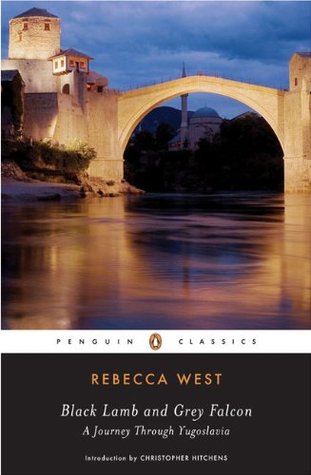
I think you have to understand the degree to which I’ve saturated myself in everything about this part of the world for twenty-five years to understand my excitement. When we crossed the border into Macedonia last night I nearly pissed on myself. If you want to come with me on this trip in spirit you’ll get your hands on Rebecca West’s Black Lamb, Grey Falcon, a book written about her trips through Yugoslavia in the 1930s that is so by far the best, most perceptive, most loving book ever written by a Westerner about the Balkans that it might as well be the only book ever written by a Westerner about the Balkans. Everybody I know in New York rushed out and bought it in the nineties because it was getting touted everywhere as the thing to read in order to understand the Yugoslav wars, and then dropped it about a quarter — if that far — of the way through because they decided it was too pro-Serbian — Western liberals generally liking to have their preconceived notions about places they don’t know shit about validated for them. The reason I’ve inhaled all 1,100 pages of this book about four times is best expressed in Christopher Hitchens’ brilliant introduction to the 2007 re-edition, Hitchens being one of the only intellectuals of our time to understand the brilliance of West’s mind, and the complexity and depth of her thought about not just Yugoslavia or the Balkans, but about masculinity and gender, war and pacifism, nationalism, fascism, anti–semitism, and just about all else:
“She never chances to employ the word, but Serbo-Croat speech has an expression that depends for its effect not on the sex lives of humans, but of animals. A “vukojebina” – employed to describe a remote or barren or arduous place – literally a “wolf-fuck,” or more exactly the sort of place where wolves retire to copulate. This combination of a noble and fearless creature with an essential activity might well have appealed to her. The term – which could easily have been invented to summarize Milovan Djilas’s harsh and loving portrayal of his native Montenegro, Land Without Justice – is easily adapted to encapsulate a place that is generally, so to say, fucked up. This is the commonest impression of the Balkans now, as it was then, and West considered it her task to uncover and to praise the nobility and culture that contradicted this patronizing impression.”
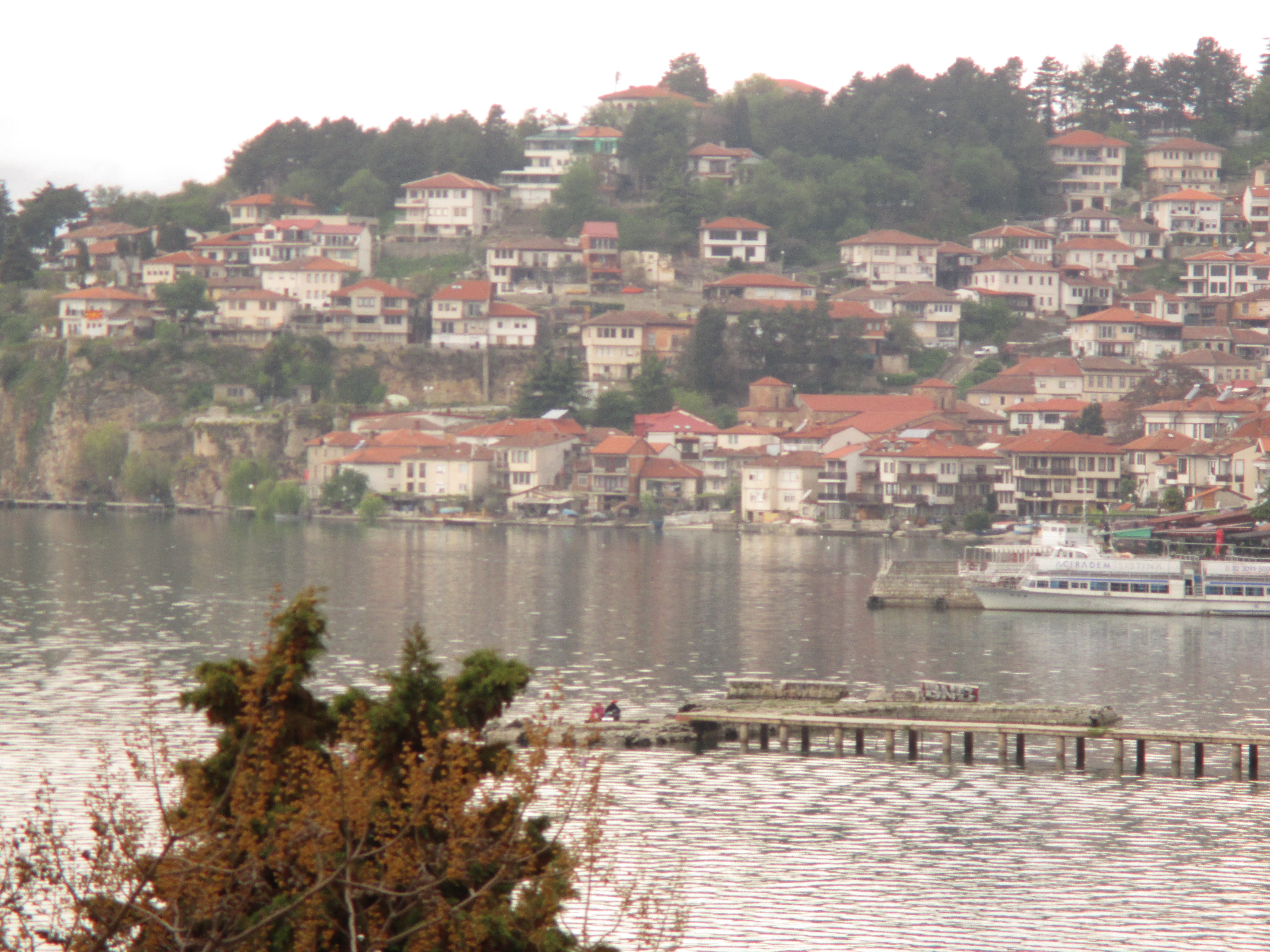
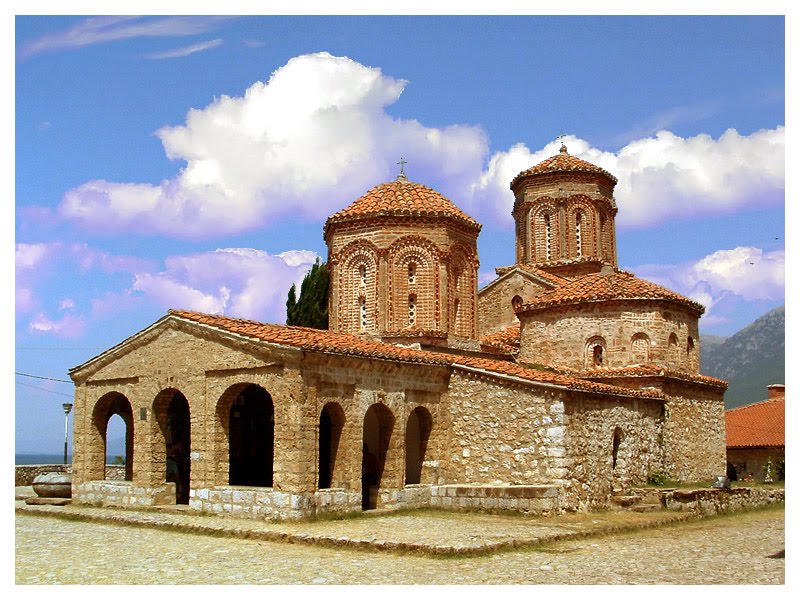
Sveti Naum, Ochrid (click)
(You’ll also find yourself a copy of Djilas’ stirring, disconcertingly moving book as well.)
I’m getting a good connection almost everywhere, but I may not have time to write a lot in the next few days — you’ll probably get some photos with quotes from West — because we’ll be on the road a lot. But next week we’re anchoring for five days on Durmitor in Montenegro, near a town called Žabljak, apparently the highest inhabited village in the Balkans, and then I’ll probably have time to write some. Till then…
“Niko I have long wanted to leave a comment about this post. I believe that what the Albanaians did for the Jews in sheltering them from the Nazis was courageous, noble and just. And besa is at its roots a tribal, and to a lesser extent, islamic code of honor. You mention Afghanistan-there is in Pashtunistan what is known as the Pashtun code Pakhtunwali which also purports to protect an accepted guest. Pakhtunwali is also tribal and islamic. Was it not this same code that protected Osama Bin Laden after his escape from Tora Bora? Is that same code rightly honored in one instance and rightly deplorable in another? Just a thought…”
NB: It is the same code Rafa. No, I personally, at least, do not think it’s deplorable in one case and not the other. Honor is absolute, absolute by definition. For me, the word itself means”no-exceptions”; otherwise it’s not honor. Whether we like its consequences or nor or whether it gets “honored” more in the breach or not is another question. Those Pashtuns didn’t have a choice. And you know who to talk to that’s most likely to agree: the American servicemen that were up there.
The Проклетије (Prokletije) or Accursed Mountains, that separate — or more likely unite — northern Albania, Montenegro and Serbia. (Click, for sure; it’s a huge file and it’s gorgeous)
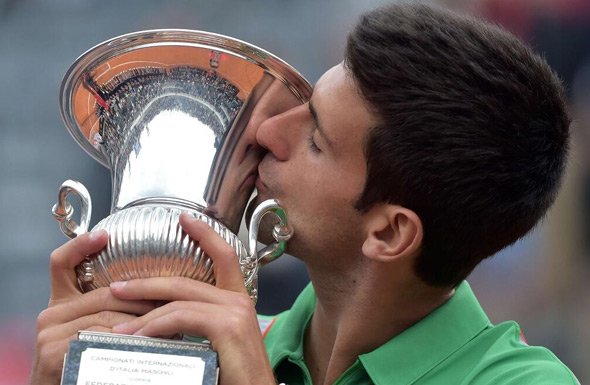
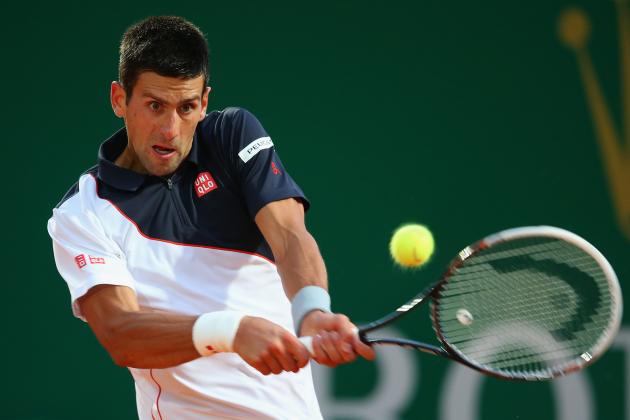
(Sorry, but sometimes the Jadde is just gonna be the Nole Djokovic page for a few days…. Especially at times like this. I know…there are more important things happening in the world, but sometimes the most important is, well…)
From The Bleacher Report:
Novak Djokovic’s Win over Andy Murray Isn’t Tainted by Bad Call
NovakDjokovic has gotten off to a relatively slow start this year, but the world No. 2 is in the process of knocking his game into overdrive.
Don’t let the fact that his victory over Andy Murray in the quarterfinals of the Sony Open was heavily assisted by a bad call fool you into thinking any differently.
Nole is 12-2 on the year, and he got his first tournament title of the year at Indian Wells in the last event. It is hard to knock that kind of start, but we’ve grown accustomed to Djokovic having multiple titles at this point of the year. This was the first time in four years he hasn’t won the Australian Open.
Apparently, that does not mean he is headed for a down year, and the Serb asserted his dominance against Murray.
“With the win at the BNPParibas Open, the No. 2 player in the world looked sharp, strong and returned to a superb form of tennis that had him as one of the most dominant forces just years ago.
“Not only did Djokovic come away with a title, but he also proved to himself that he had returned to the mentality that he had when he was crushing the competition. The 26-year-old spoke about the regained confidence with ESPN:
“Not winning a title and coming here, there were certain doubts. I had ups and downs in my concentration in opening rounds, but I managed to stay mentally strong and have that self-belief. That’s something that definitely makes this title very special to me.”
Did we all hear that?“C-R-U-S-H-I-N-G THE COMPETITION!!!”
Maybe being No. 2 is a good thing, man…keeps him hungry, I dunno… But HUUUAAAHHH!!! CRUSH the competition!!!
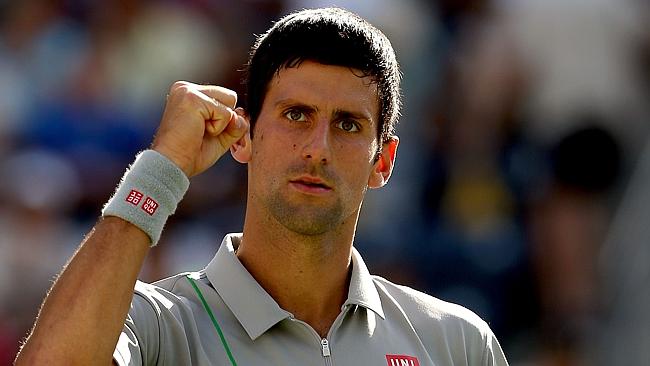
There are times, but especially in certain photos and poses, like this recently posted one:
where Djokovic looks so completely Albanian to me it almost gives me a start. He was involved as spokesman for that controversial Kosovo je Srbija (Kosovo is Serbia) campaign, but he’s not known as a rabid nationalist and I’m sure he wouldn’t mind my observation. For all I know, it’s my imagination. I only know that his father’s family is from Kosovo; he may look entirely like his mother and she may be from far northern Vojvodina and be as blonde as a German. But…a Nole just like in this picture…thinner and more beaten-up by life, more sunburned and less suntanned, was a face you saw on every construction site in Athens for more than a decade.
But that’s not so much the case any more. As I’ve written elsewhere, it’s gratifying to see how Albanians (once again) have integrated into Greek society, owning their own businesses, buying homes, and living as well (or as badly) as anybody else here.
I go to a gym here near the house of some friends I’m staying with in Athens’ Northern Suburbs. Now, the “Northern Suburbs” are more than just a set of beautiful, pleasant, green neighborhoods, perhaps the most attractive part of the city, and certainly the areas that have most preserved the ravaged natural beauty of Attica. The Northern Suburbs are a state of mind. They’re an accent (affected and obnoxious), an attitude (affected and obnoxious) and an entire world view (provincial, affected and obnoxious) and, in general, the manifestation of the whole vacuous culture of hollow prosperity that characterized Modern Greek society from 1974 until the present Crisis. What will come out of the present Crisis is yet to be seen; it may be an opportunity. Don’t hold your breaths though.
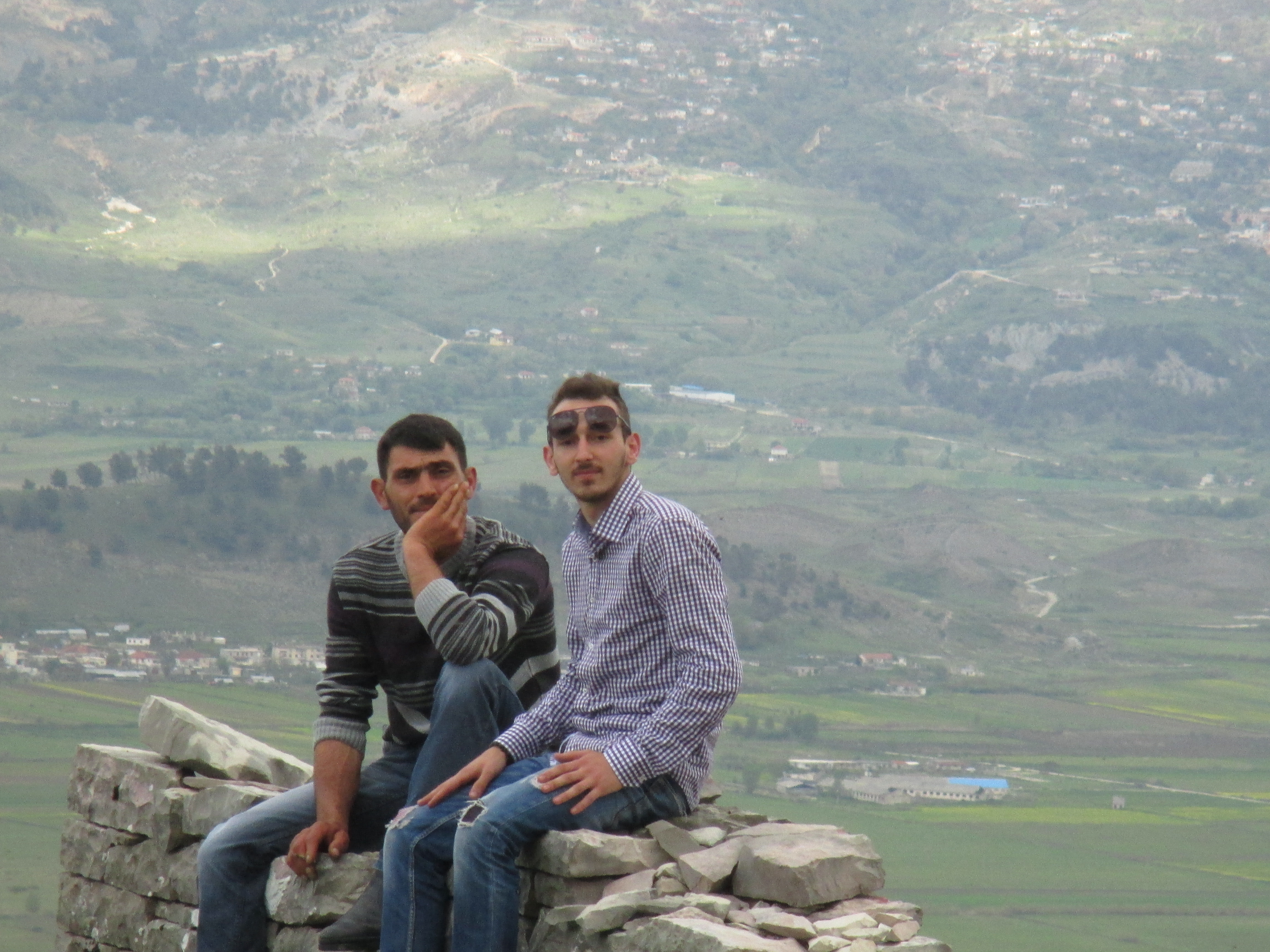
Anyway, today I was at the gym and this kid asked me for a spot. Attractive, nice body, pushing thirty, perfect Greek, even with the local “Northern Suburb” intonation. If I had had to say I would’ve said Thessaly or Epiros over Crete or Cyprus, certainly, but not regionally distinguishable in any particular way. We started talking. He asked where I was from. I said New York. “Esy?” “From Tepeleni.” Pause. “Like Ali Pasha…,”* he smiled. “I know,” I said… “My dad was from near Gjirokaster.” We didn’t talk religion or language. It was nice.
Just some thoughts. Worlds and peoples coming together. The waste of having been separated to begin with. More when I deal with that silly DNA piece I promised to translate a few weeks ago.
In my recent post Occitan and “endangered languages”, I wrote about the (mostly former) Albanian-speakers of central and southern Greece and how they had never posed an assimilation problem for the Greek state. Quite the contrary:
“…Peloponnesian Albanians were already Greeker than the Greeks in their ethnic consciousness and had proven it by essentially fighting our war of independence for us; it seems that, historically, you give Albanians — Christian or Muslim — an incentive to go to war and they’ll become more zealous crusaders of your cause than you are yourself.”
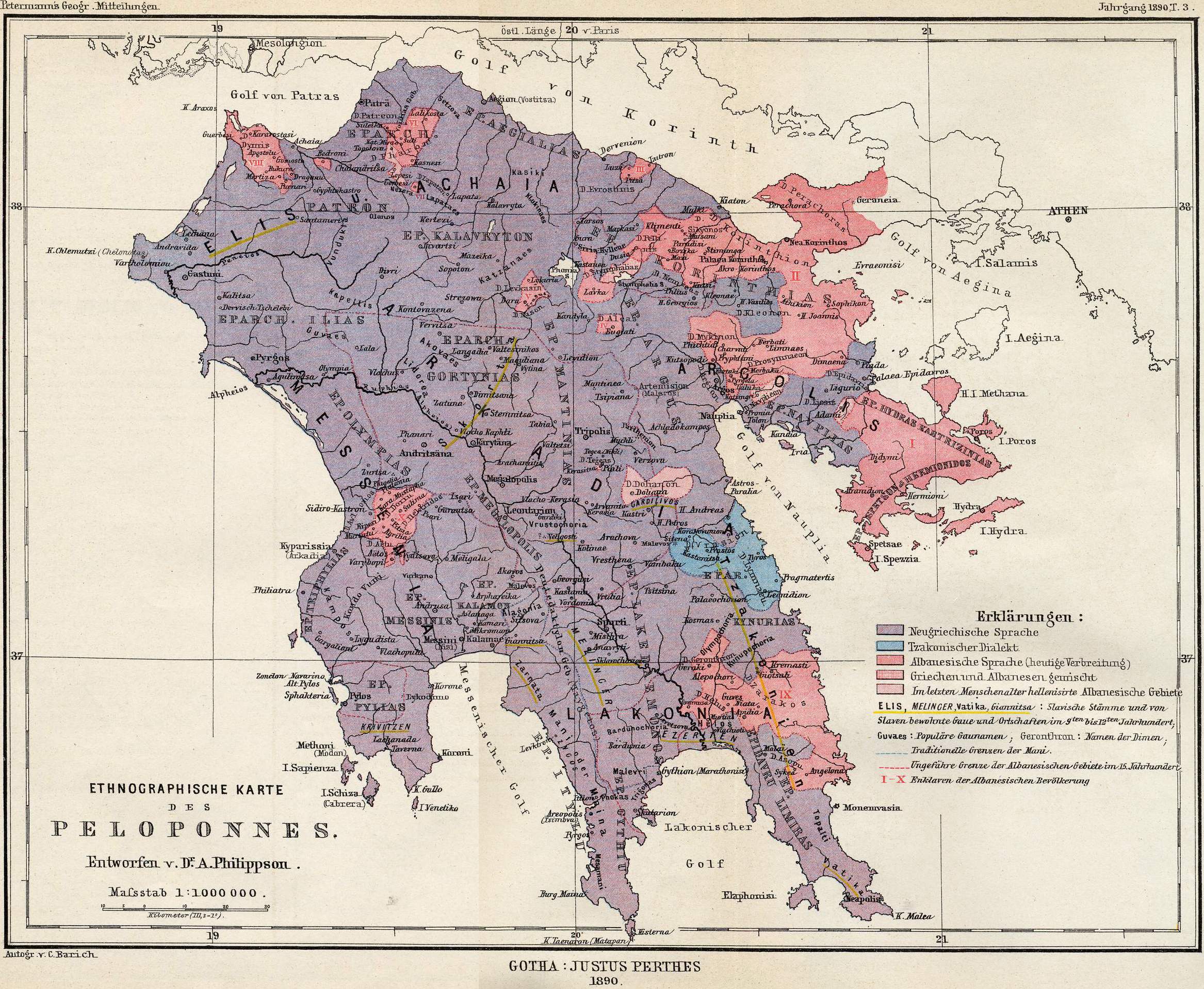
Elsewhere I’ve written about Greeks and Albanians as practically co-peoples, such has been the extent of migration and intermingling over the past millenium. This winter I read John V.A. Fine, Jr.’s six-hundred page The Late Medieval Balkans: A Critical Survey from the late Twelfth Century to the Ottoman Conquest, which I know sounds like a joke about dry academic reading, but it was actually fascinating. The chaos that followed the fall of Constantinople to the Franks in 1204 produced a bewildering number of Greek and Frankish successor states to the Byzantine Empire throughout the Greek peninsula, all constantly at war with each other and at a time when the Albanian highlands were suffering from demographic overload. Thus, whether as mercenaries in the hire of anyone who paid best, or as shepherding nomadic clans who took advantage of the extensive areas of the peninsula depopulated by constant war or epidemic diseases, Albanians in huge numbers were constantly on the move southwards for the next two centuries if not more. (I suspect that this is when their descent into Kosovo begins as well, filling in the gap as as the center of gravity of the Serbian nation moved northward.) Further waves came after the Ottoman conquest in response to Islamization campaigns in recently conquered Albania, but this time not just south to Greece but westwards to Italy and Sicily as well. And settling everywhere you could possibly imagine: Thessaly, southern Epiros, Roumeli (in the Greek meaning of the term), the Ionian islands, places as far flung and unexpected as the islands of Cythera or Ios! My point, without having any Fallmereyer-an agenda — not because I disagree with his basic theses but because I don’t thing “race” means anything — is that regions of Albanian settlement in the past were likely far larger than the regions where we find the language still spoken in the early twentieth century, shown on these maps:
Albanian-speaking areas in 1890 shown in pink above, green below (click)
This documentary that “shocked Greece” was produced by SKAI Television and called 1821 after the year the Greek revolution against Ottoman rule began and the reason it “shocked” is that it debunked long-held myths about the uprisings that eventually led to the establishment of the independent Kingdom of Greece; but really, that anybody was shocked at any of these revelations: for example, that the uprising was accompanied by the wholesale massacre of Muslims (and Jews) throughout the Peloponnese and central Greece;* that the Church anathematized it and did not support the movement (paid the price anyway with the execution of the Patriarch in Constantinople); that the “secret schools” where poor “enslaved” Greek youth were taught Greek in secret at night because the Turks had forbidden the teaching of Greek is a totally concocted fable (and such a projection of twentieth-century, nationalist, totalitarian policies back onto the Ottomans; there is practically not a single European observer of Ottoman life since at least the beginning of the eighteenth century that doesn’t comment on the quality and extent of Greek educational institutions in all Ottoman cities and even smaller towns and villages); that many if not most of the revolution’s “heroes” were Albanians, some who spoke no Greek at all; that the fustanella is originally an Albanian garment…and on and on — that any of these shocked Greeks in the early twenty-first century is just proof of how pathetically brainwashed and historically ignorant nationalism usually leaves a people. And this is the point where the documentary pulls a very cowardly copping out — by claiming that such is the price of building a new nation; it has to create new “myths” of its own. Why a nation — or a people preferably — is not stronger and better off if it knows the whole truth about its past is never delved into. But it’s worth watching, and it has English subtitles:
In any event, such was the Albanian contribution to the struggle that one wonders if the Porte let go of the Peloponnese, not because it was so far from the center of imperial authority, not because it had always been something of a provincial backwater, not because of foreign intervention, but because of some tough-*ss Albanian warriors that the Ottomans felt were no longer worth resisting. After all, they themselves knew the value of an Albanian fighter: favorite recruiting regions for the Janissaries in the classical Ottoman period had always been Albania and Serbia — not random choices.
There’s a beautiful song recorded in 1949 by Sophia Vembo, one of greatest Greek voices of the twentieth century, called “The Song of the Morea” (since at least early Byzantine times until the modern Greek state revived the clasical name, the Peloponnese was called the Morea) which is partly a homage to the role of the region in the struggle for Greek independence (ok, even as a New Territory Greek, I’ll grant them that.) And the refrain says:
“Hail and be well brother Moraites, and health to your women too; Greece owes its freedom to your manhood!”**
And I have a deeply-loved but eccentric cousin, highly intelligent but an unrehabilitated nationalist dinosaur unfortunately and to whom much of this blog is indirectly directed — or one might even say dedicated — who is so profoundly moved by the blood shed by Peloponnesian and Spetsiote and Hydriote Albanians for the cause of Greek independence, that he thinks the refrain should run:
“Hail and be well brother Arvanites (Albanians), and health to your women too; Greece owes its freedom to your manhood!”
Here it is; the music and Vembo’s voice are beautiful even if you don’t speak Greek:
The song has always provoked a strong reaction in me as well, a testimony to the power of patriotism if it can move someone who finds nationalism as repulsive as I usually do. But even that reaction is contradictory. The 1949 date of the song is not insignificant; it was recorded in the middle of the most brutal period of the Greek Civil War and was actually more a call to unity and an appeal to brotherhood than a commemoration of the revolution of 1821. Like many Greeks perhaps, my family suffered more losses in the civil war than they did in the Nazi occupation that had preceded it, and the opening lyrics of the second verse always make me tear up for a moment:
“Now that the earth sweats the blood of brothers, and Greece is drowning Greece in the hills..”
and then my heart goes cold again, because the next line is:
“Come out of your grave Thodoris Kolokotronis, and make all Greeks brothers again.”
…because it’s impossible for me to forget that Kolokotronis was the “hero” who boasted of riding his horse over Muslim corpses from the gates of Tripolitsa to its citadel, when that major city of the Morea fell to the rebels in September of 1821.
So I’d like to end this post with just a little bit of perspective, a reality check we all need every so often, because though the documentary mentions a lot of previously taboo subjects, it glosses over a few of them a little too quickly. The following is taken from the blog of a Greek-Australian, and apparently fellow Epirote (though he seems to have Samiote heritage as well), Diatribefrom a post called “Revolution Unblinkered.” It’s foreigners’ eye-witness accounts of the Massacre of Tripolitsa, interspersed with some of his own comments:
A month later, in September, a combined force led by Kolokotrones and Petrobey Mavromihalis captured Tripolitsa. Historian W Alison Philips tells a horrific tale of mutilation and slaughter “For three days the miserable inhabitants were given over to lust and cruelty of a mob of savages. Neither sex nor age was spared. Women and children were tortured before being put to death. So great was the slaughter that Kolokotronis himself says that, from the gate to the citadel his horse’s hoofs never touched the ground. His path of triumph was carpeted with corpses. At the end of two days, the wretched remnant of the Mussulmans were deliberately collected, to the number of some two thousand souls, of every age and sex, but principally women and children, were led out to a ravine in the neighboring mountains and there butchered like cattle.”
A Prussian officer described the incidents that took place after the capture of Tripolitsa by the rebels, as follows:
“A young Turkish girl, as beautiful as Helen, the queen of Troy, was shot and killed by the male cousin of Kolokotronis; a Turkish boy, with a noose around his neck, was paraded in the streets; was thrown into a ditch; was stoned, stabbed and then, while he was still alive, was tied to a wooden plank and burnt on fire; three Turkish children were slowly roasted on fire in front of the very eyes of their parents. While all these nasty incidents were taking place, the leader of the rebellion Ypsilantis remained as a spectator and tried to justify the actions of the rebels as,’we are at war; anything can happen’.”
Based on the accounts of one hundred European officers who were present at the scene, and did nothing to intervene, William St. Clair wrote:
“Upwards of ten thousand Turks were put to death. Prisoners who were suspected of having concealed their money were tortured. Their arms and legs were cut off and they were slowly roasted over fires. Pregnant women were cut open, their heads cut off, and dogs’ heads stuck between their legs. From Friday to Sunday the air was filled with the sound of screams… One Greek boasted that he personally killed ninety people. The Jewish colony was systematically tortured… For weeks afterwards starving Turkish children running helplessly about the ruins were being cut down and shot at by exultant Greeks… The wells were poisoned by the bodies that had been thrown in…”
Although the total estimates of the casualties vary, the Turkish, Muslim Albanian and Jewish population of the Peloponnese had ceased to exist as a settled community after the early massacres. Some estimates of the Turkish and Muslim Albanian civilian deaths by the rebels range from 15,000 out of 40,000 Muslim residents to 30,000 only in Tripolitsa. According to historians W Alison Phillips, George Finlay, William St. Clair and Barbara Jelavich, massacres of Turkish civilians started simultaneously with the outbreak of the revolt, while Harris J. Booras considers that the massacres followed the brutal hanging of Ecumenical Patriarch Gregory V of Constantinople. Finlay has claimed that the extermination of the Muslims in the rural districts was the result of a premeditated design and it proceeded more from the suggestions of men of letters, than from the revengeful feelings of the people. St. Clair wrote that: “The orgy of genocide exhausted itself in the Peloponnese only when there were no more Turks to kill.”*
There were also calculated massacres towards the Muslim inhabitants of the islands in the Aegean. This is because one of the aims of the Greek revolutionaries was to embroil as many Greek communities as possible in their struggle. By engineering some atrocity against the local Turkish population, diverse Greek communities would have to ally themselves with the revolutionaries fearing retaliation from the Ottomans. In one case, in March 1821, Greeks from Samos landed on Chios and attacked the Muslim population living in that island. Among the Samian belligerents was an ancestor of mine, Dimitrios Kalymnios.When the Samians withdrew to the safety of their island, the Ottomans descended upon defenceless Chios and carried out an atrocity that horrified the rest of the world: the massacre of Chios.
–
[my, N.B., emphases throughout this last paragraph — just so that nobody is allowed to take something like the the Massacre of Chios out of historic context again…]
–
The final word, if there is one, goes to Theodore Kolokotronis, who in his account of the fall of Tripolitsa, was unrepentant to the last: “When I entered Tripolitsa, they showed me a plane tree in the market-place where the Greeks had always been hung. “Alas!” I said, “how many of my own clan — of my own race — have been hung there!” And I ordered it to be cut down. I felt some consolation then from the slaughter of the Turks. …”
Wow. First thing I have to say is that if this guy is allowed to publish this kind of stuff in Melbourne’s “Neos Kosmos” English-language newspaper, then Greek Australia is eons ahead of Greek America in its sophistication on such issues. I can’t imagine a single effing channel or venue of the Greek media in New York where someone could get away with writing or saying things like this.
Then, the irony is that these revolutionaries, Greek or Albanian, were probably not fighting for a Greek state, but fighting a religious-cum-tribal war out of which they were hoping to carve out little fiefs and principalities of their own, no different than the Ottoman pashaliks that had preceded them and the internecine chaos that followed ‘liberation’ is proof of that — so let’s not over-romanticize their zeal for the “cause” or exaggerate the degree to which they were fighting for the “freedom” of the “Hellenic nation.” Finally, is the irony that many of the “Turks” these fighters were massacring in a place like Tripolitsa, were probably Albanians like themselves, only converts to Islam.
–
And one sad little detail I discovered somewhere else, though I can’t find the source for it:
“European officers, including Colonel Thomas Gordon, who happened to be at Tripolitsa during the massacre, witnessed the hair-raising incidents there, and some of them later recalled these events in all their ugliness. Colonel Gordon became so disgusted with the Greek barbarities that he resigned from the service of the Greeks. A young German philhellene doctor, Wilhelm Boldemann, who could not bear to witness these scenes, committed suicide by taking poison. Some of the other European philhellenes who were extremely disillusioned, followed suit.”
–
The poor, idealistic, Werther-like German Romantic, come to fight and liberate the sons of Pericles and Leonidas, kills himself out of disappointment…it just seemed to encapsulate the whole patheticness of a certain kind of European Helleno-latry.
Balkans, Anatolia, Caucasus, Levant and rest of ME, Iran, South Asia
Me, I'm Nicholas Bakos, a.k.a. "NikoBako." I'm Greek (Roman really, but when I say that in English some five people in the world today understand what I'm talking about, so I use "Greek" for shorthand). I'm from New York. I live all over the place these days. The rest should become obvious from the blog.


 –
–







 Jadde: from Bosnia to Bengal