Tag Archives: Syria

“The War Against Syria’s Civilians” by Jon Lee Anderson

30 Aug

From The New Yorker:
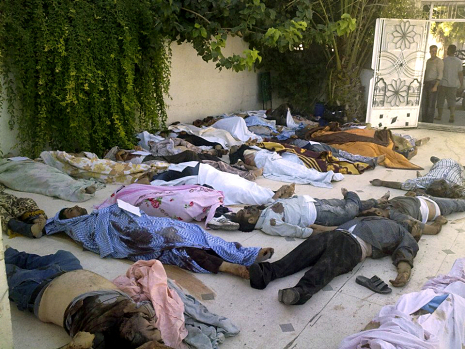
August 30, 2012
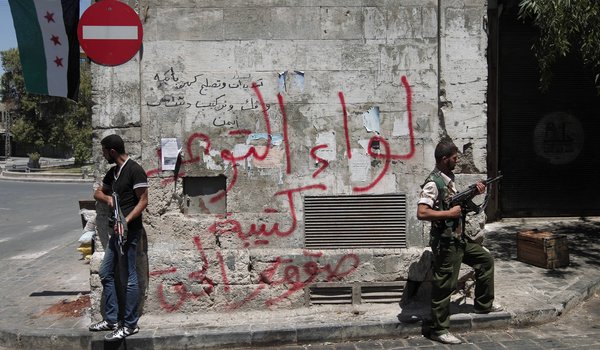
Photograph by Shaam News Network/AP Photo.

It’s becoming increasingly clear in Syria that the Assad regime has adopted a strategy of total war to stave off its collapse. If the claims made by opposition activists are true, last weekend’s mass executions of as many as four hundred suspected rebels and civilians, including children, by regime forces in the town of Daraya near Damascus, was the single largest atrocity yet committed in the eighteen-month-old conflict. There is no reason to believe that it will be the last. In this kind of war, it’s not about winning hearts and minds. This is old-school: you don’t try to win over your enemies and their family members, you kill them.

If there were ever gloves on in the regime’s response to unrest, they have now definitely come off. Indeed, everything about Syria’s carnage has acquired an exponential quality, including the death toll, which now must be rapidly approaching twenty-one thousand. Around two hundred people, mostly civilians, are reportedly dying every day now, twice as many as in June. Until Daraya, the hallmark horror was the May 25th massacre of a hundred and eight civilians in the town of Houla. The new standard is four times that.

What happened in Daraya follows a pattern that is becoming chillingly routine. Last Saturday, after a withering five-day bombardment, Syrian Army forces entered Daraya and conducted a “mopping-up” operation. What occurred there can only be imagined, but the results are visible in YouTube videos that have been uploaded by activists in the days since then: hundreds of bodies piled up inside houses, in basements, and in a mosque. Many of the bodies were those of young men of fighting age, but there were also children there, and at least one toddler. Many of the victims, as in so many other body-dumps showing up in the environs of Damascus in recent weeks, bore the telltale signs of bullets to the head, fired close-up, execution-style.

Until last February, when the burgeoning conflict centered on the city of Homs, the regime’s battle tactic was primarily to cordon off and devastate rebel areas with howitzers and tanks and, where it could, with the kind of individual terror that could be visited upon vulnerable civilians by its paramilitary thugs, the shabiha. It was shabiha, working in tandem with Army units, who carried out the Houla massacre.

But during the spring, and the hemorrhaging chaos of the long Homs siege—and assaults on Hama and other cities too—the regime began what has become a steady escalation of the conflict by introducing to the battlefield its Russian-made helicopter gunships. Though this was sure to mean a rapid increase in the civilian death toll, it did not represent a red line for the hand-wringing policymakers in Western capitals, who had allowed the futile diplomatic efforts of Kofi Annan to stand in place of any concerted action by their governments. Nor did the killings in Houla.

So the regime felt free to begin another escalation after the spectacular July 18th rebel bombing of an intelligence building in Damascus, in which four of Assad’s top security advisors were killed. That strike—which was accompanied by audacious rebel assaults into the heart of Damascus and Aleppo, where fighting has continued ever since—has been countered by the introduction of the regime’s jet fighters into the conflict. The initial appearance of a sole MiG over Aleppo in the last week of July has been followed up by daily air strikes against rebel positions, and civilian targets: hospitals where the wounded are being treated, bakeries where Syrians queue up for their morning bread, and civilian neighborhoods where the families of rebels live.

It is a cruel tactic, as old as war itself, to target the homes of enemy warriors so as to weaken them on the battlefield. But the surging numbers of civilian refugees fleeing into neighboring Turkey since the air strikes began with a vengeance two weeks ago are a testament to its brutal efficacy, especially when modernized, as it has been here, with unbridled combat air power.

Where the regime still has sufficient ground forces and the ability to deploy them as killing squads into target neighborhoods, it is doing so, usually after withering bombing and shelling assaults. This appears to be what happened in Daraya, which had been perceived as a rebel stronghold, and was taught a lesson for its stubborn resistance. The leaflets now being dropped on other Damascus neighborhoods are printed with messages urging rebels to give up or face “inevitable death.” What happened in Daraya is not mentioned on the leaflets; there is no need.


Comment: nikobakos@gmail.com
This might be the week the Syrian opposition lost me…

5 Aug

…for whatever my opinion is worth.

Executing prisoners is disgusting enough; executing civilians in cold blood, like prominent Aleppo families, because they’re friends of the Assad’s, is when I pull my vote.

And, though I’ve learned to become pretty wary of these jihadist allegations and their Bush II “war-on-terror” timbre, these don’t sound so bogus: Al Qaeda Insinuating its Way into Syria’s Conflict.

And the video:


Comment: nikobakos@gmail.com

Syrian Alawites and Turkish Alevis closer than I thought

5 Aug

From The New York Times:As Syrian War Roils, Sectarian Unrest Seeps Into Turkey”

As Syria’s civil war degenerates into a bloody sectarian showdown between the government’s Alawite-dominated troops and the Sunni Muslim majority, tensions are increasing across the border between Turkey’s Alawite minority and the Sunni Muslim majority here.

Many Turkish Alawites, estimated at 15 million to 20 million strong and one of the biggest minorities in this country, seem to be solidly behind Syria’s embattled strongman, Bashar al-Assad, while Turkey’s government, and many Sunnis, supports the Syrian rebels.

The Alawites fear the sectarian violence spilling across the border. Already, the sweltering, teeming refugee camps along the frontier are fast becoming caldrons of anti-Alawite feelings.

“If any come here, we’re going to kill them,” said Mehmed Aziz, 28, a Syrian refugee at a camp in Ceylanpinar, who drew a finger across his throat.

He and his friends are Sunnis, and they all howled in delight at the thought of exacting revenge against Alawites.

Many Alawites in Turkey, especially in eastern Turkey where Alawites tend to speak Arabic and are closely connected to Alawites in Syria, are suspicious of the bigger geopolitics, and foreign policy analysts say they may have a point. The Turkish government is led by an Islamist-rooted party that is slowly but clearly trying to bring more religion, particularly Sunni Islam, into the public sphere, eschewing decades of purposefully secular rule. Alawites here find it deeply unsettling, and a bit hypocritical, that Turkey has teamed up with Saudi Arabia, one of the most repressive countries in the world, and Qatar, a religious monarchy, both Sunni, to bring democracy to Syria.

The Alawites point to the surge of foreign jihadists streaming into Turkey, en route to fight a holy war on Syria’s battlefields. Many jihadists are fixated on turning Syria, which under the Assad family’s rule has been one of the most secular countries in the Middle East, into a pure Islamist state.

More:

The Alawites here are worried they could become easy targets. Historically, they have been viewed with suspicion across the Middle East by mainstream Muslims and often scorned as infidels. The Alawite sect was born in the ninth century and braids together religious beliefs, including reincarnation, from different faiths.

Many Alawites do not ever go to a mosque; they tend to worship at home or in Alawite temples that have been denied the same state support in Turkey that Sunni mosques get. Many Alawite women do not veil their faces or even cover their heads. The towns they dominate in eastern Turkey, where young women sport tank tops and tight jeans, feel totally different than religious Sunni towns just a few hours away, where it can be difficult even to find a woman in public.

Syria, ctd.

5 Aug

Compilation from Andrew Sullivan’s Daily Dish:

Yesterday, Reuters reported that Obama had authorized covert assistance to the Syrian rebels:

Obama’s order, approved earlier this year and known as an intelligence “finding,” broadly permits the CIA and other U.S. agencies to provide support that could help the rebels oust Assad. This and other developments signal a shift toward growing, albeit still circumscribed, support for Assad’s armed opponents – a shift that intensified following last month’s failure of the U.N. Security Council to agree on tougher sanctions against the Damascus government. The White House is for now apparently stopping short of giving the rebels lethal weapons, even as some U.S. allies do just that.

Today, Kofi Annan quit his job as the UN and Arab League’s peace envoy for Syria, citing “finger pointing and name calling” in the Security Council. Meanwhile, Juan Cole catches us up on the battle for Aleppo:

The BBC speaks of a ‘stalemate’ in Aleppo, with the regime so far unable to oust the rebels from key neighborhoods. I was told by a young activist from Aleppo, in telephone contact with family & friends, that the rebels were taking new neighborhoods and police stations. That these actions were being taken mid-week was confirmed from Aleppo by Kim Sengupta. The fighters appear to hope to take and keep Aleppo, which can be resupplied easily with arms via the Turkish border.

Massacres are occuring on both sides. Earlier this week, rebels in Aleppo executed some leaders of a local Alawite ghost brigade death squad. [Human Rights Watch]  warned them that this kind of thing could get them charged with war crimes. On Thursday, the regime was accused of carrying out executions of rebels as it went door to door in Damascus, where it killed dozens.

James Miller passes along the following video, which is said to be of families grieving over the bodies of those killed in that massacre:

The Guardian has more details about the situation in Aleppo, including analysis of a video that purports to show the Free Syrian Army (FSA) executing regime combatants. The newspaper also just built a remarkable tool to help understand the escalating death toll in Syria, while Aj Jazeera has their own tool to track regime defections. Food is running out inside Syria as well, and the nation’s banks are coming to a standstill. Meanwhile, the composition of the anti-regime forces continues to be of great concern, as foreign jihadists and Al-Qaeda are clearly operating in Syria. Two kidnapped journalists were rescued by the FSA last week after being mistakenly led into a jihadist camp and captured:

The jihadist group is believed to have arrived in the area only days earlier and is believed to be made up solely of men who identify with a salafist jihadist world view, a more puritanical version of Islam.”There wasn’t a Syrian present,” [journalist Jeroen] Oerlemans said. “They were all youngsters from other countries, African countries, Chechnya. They said they thought we were CIA agents. But then it quickly became apparent they wanted to trade us for ransom.”

(Photo: Rebel Free Syrian Army (FSA) fighters capture two policemen who the FSA allege are “Shabiha” or pro-regime militiamen, on July 31, 2012, as the rebels overran a police station in Aleppo. A watchdog said that rebels killed 40 officers and seized three police stations during the pivotal battle for the commercial capital. By Emin Ozmen/AFP/Getty Images)


Comment: nikobakos@gmail.com

Syria: “Execution by Syrian Rebels Stirs Debate”

4 Aug

And the shock?  Who’d you think these guys were? the Boy Scouts?

“Video Said to Show Execution by Syrian Rebels Stirs Debate”

Syria’s Palestinians

4 Aug

Forever f*ckedand used: “Deadly Attack on Refugee Camp in Syria Could Shift Palestinian Allegiances to Rebels”

From The New York Times:

BEIRUT, Lebanon

“The first explosion tore into a busy street in Damascus. The second, which occurred minutes later as neighbors rushed to help those wounded in the first, may put an end, analysts said, to the effort by Palestinians in Syria to stay out of the country’s widening conflict…

“The Palestinian cause is a central cause; it’s a builder of legitimacy and a basis for everything else,” said Joshua Landis, director of the Center for Middle East Studies at the University of Oklahoma. “The regime is clearly very protective of the issue, and the rebels are trying to establish a connection to it as well.”


Comment: nikobakos@gmail.com

Syria Redux

28 Jul

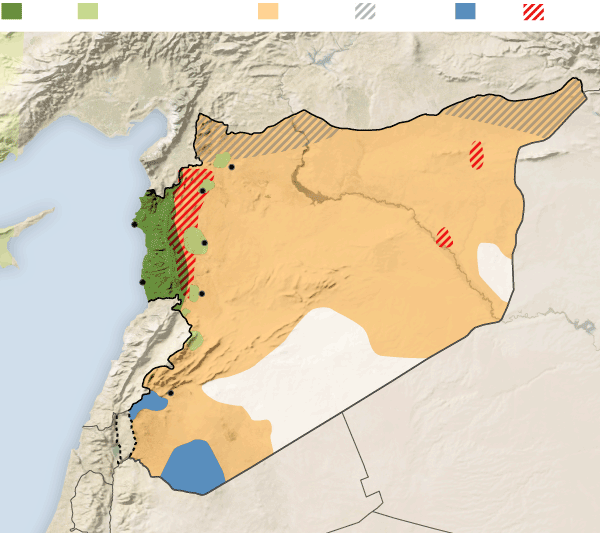
Just much more inteliigent and thoughtful: “Syria After the Fall”

Dark Green: Alawites; Light Green: “Other” Shiites; Red: Christian; Beige:Sunni; Grey: Kurds; Blue: Druze


Comment: nikobakos@gmail.com

Photo: Syria’s Free Army

28 Jul

(click)

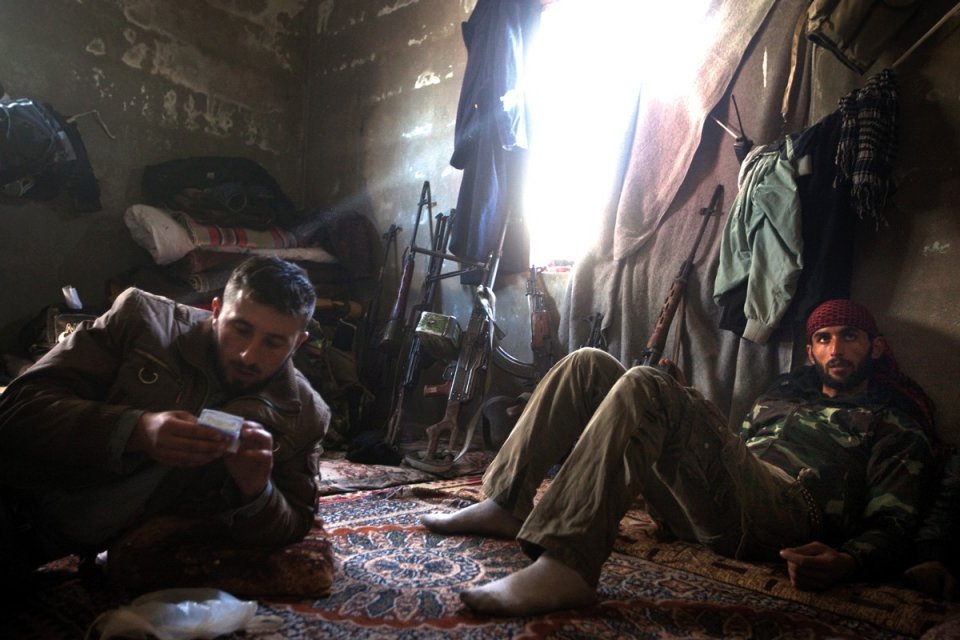
A great photo of Syrian resistance fighters by Greek photographer Giorgos Moutafis.  See the rest of his work here and his account of how he got them here: Syria’s Free Army.  The most moving line of his account: “What moved me about these people is that, realizing the imminent danger, they took us to the border. But they didn’t follow us. They went back to defend their village.”

 The Daily Beast has a great, constantly updated Syria  page, that could be the one place you need to go for everything you need to know — there and Al Jazeera, of course.

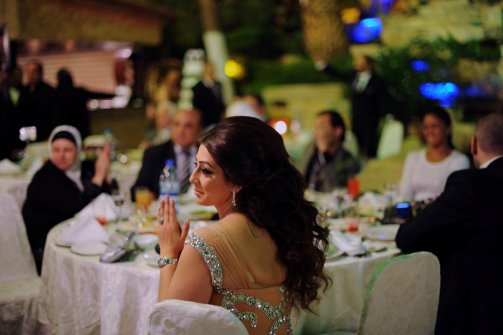
 One great story from the Beast, about how the country’s urban elites party on as Syria burns: “Champagne Flows…

See more photos from Kate Brooks and story here: Syria’s Thriving Elites


Comment: nikobakos@gmail.com


Syria, the end of Assad, and Alawites

27 Jul

The New York Times recently published a piece in its “Opinionator” blog section by Frank Jacobs, ” A Syrian Stalemate,” which makes the very interesting, but highly improbable, if not probably completely implausible, suggestion that one answer to the Syrian civil war is for Assad to retreat to his Alawite mountain homeland on the Mediterranean coast and form an independent statelet there:

Ah, a Lebanon, you mean?  What an unparalleled success story that was — let’s try that again.  At least he accepts the comparison.  Oh, and I see his got a little Hawran homeland for Druze too.

The breath-taking stupidity of this argument is not all that stupid really as it is completely a-historical and uninformed.  The victorious Free Syrian Army — whose victory this layman thinks is only a matter of when, not if — will never accept the secession or loss of the last piece of Syria’s coastline (Lebanon; then Alexandretta), and the only thing something like that might lead to is an exponential escalation of violence and a massacre of Alawites, not to mention other minorities, of a scale that’ll take us back to the ugliest events of the early twentieth century.

But if that’s ancient history for any of us, let’s just go back to the 90s and Yugoslavia.  Aside from the cynical geopolitical interests that were the catalyst for that nightmare (you know; I never thought I’d catch myself saying what I had previously considered a dumb cliche, like that the current Eurozone crisis is the third time in less than a century that Germany has destroyed Europe — Germany and Draghi — but actually this may be the fourth time; Yugoslavia was the third), there were two basic populist “reasons” that explained the support in the West given to the unnecessary, vicious dissection of that country: a confused muddle of remnant eighteenth-and-nineteenth century romantic ideas about the “self-determination of peoples” mixed up with the whole deluded late twentieth-century ideology which we’ll just put under the umbrella of “multiculturalism” for now.  “Why don’t Bosnians deserve their own country (the former)?”, Upper West Side Sontagians cried and wrang their hands, and “Why can’t everyone in that most fascinating, multicultural part of Europe get along (the latter)?”

Cutting places up into little countries doesn’t work; there’ll always be some bunch that want their own littler country.  Hopefully, nobody will ever, ever take this proposal seriously, though Jacobs says that there’s an actual escape plan for just that in Assad vaults somewhere.

But this is the point that Jacobs gets around to that I found almost as upsetting:

“Although officially a Shiite sect, with reputed syncretist elements borrowed from Christianity and other confessions, persecution by mainstream Islam as heretical has made Alawis wary of declaring their innermost beliefs. Ironically, decades of dominance may have further weakened the communal identity; Assad père et fils have always striven to narrow the perceived difference between Alawism and mainstream Islam as a way of legitimizing their regime. This enforced “Sunnification” may have effectively erased much of the theological differences with other Syrians.”

My Muslim inclinations are generally Shi’ia — forgive me the presumption of having any Muslim inclinations at all, obviously.  But I love the blood and the mystery; the Persian lack of, or better, resistance to, Arab image-phobia; ta’ziyeh; the Christ-like martyrdom of Hussein and the Virgin-like laments of Zeynep; Asure is my favorite holiday; and generally I think faith should be about passion and emotion and sacrifice and not moralism or the Law.  So anything that chips away at the monolith of any of our Great Abrahamic Religions of Peace, I’m for.

Like I’ve said before here and here.   The Donmeh-like “Sunnification” of Alawites in Syria; Alevis in Turkey, whom centuries of violence and Sunni persecution (centuries? like until the late twentieth…) have made such staunch secularists that one doesn’t even know what they practice anymore if anything; it’d be a shame to lose such fascinating, heterodox groups and their rites and cosmologies out of indifference or because hiding has had to become such second-nature for them.

And also like I said before, I don’t know how “officially a Shiite sect” either consider themselves.  In the Syrian case, at least, Iran could just be cynically using the Alawites as a Levantine power-base and vice-versa.

As for the Bektashis, who were once a Sufi order, they got tired of the Turkish Republic’s hospitality and moved their headquarters to Tirane at some point and recently, I think the 1990s, declared themselves a branch of Islam separate from both Sunnism and Shi’ism.


Comment: nikobakos@gmail.com

Wikileaks begins release of 2.4 million emails from Syrian government

5 Jul
Wow…

WikiLeaks spokesman Sarah Harrison told a news conference the emails from Syrian political figures, government ministries and companies dated from August 2006 to March 2012.

She read out a statement quoting WikiLeaks founder Julian Assange as saying: “The material is embarrassing to Syria, but it is also embarrassing to Syria’s opponents.

“It helps us not merely to criticise one group or another, but to understand their interests, actions and thoughts. It is only through understanding this conflict that we can hope to resolve it,” she said.