Becker says Nole is ready to beat Murray tonight

3 Sep

Novak Djokovic talks with his coach, Boris Becker, in New York in the build-up to the US OpenNovak Djokovic talks with his coach, Boris Becker, in New York in the build-up to the US Open at Flushing Meadows. Photograph: Julian Finney/Getty Images

See Gurdian’s — almost always the best tennis coverage of any major media outfit — story at: “Boris Becker, Novak Djokovic’s coach, plots Andy Murray’s US Open downfall”

Comment: nikobakos@gmail.com


The first two of my cents on Ukraine and Russia…

31 Aug

01UKRAINE1-master675

Alexander Demianchuk/Reuters (click)

See this story from the Times: Putin Urges Talks on Greater Autonomy for Eastern Ukraine,” which I’m pretty sure was his objective to begin with: force a crisis to get so bad and then negotiate for autonomy.  What repercussions that will have for Ukraine’s future or what patterns it’ll set for other areas (like the Baltic countries — Putin’s most vociferous critics — or Central Asia) of the former Soviet/Russian sphere that contain large Russian minorities has to be seen.

Belgravia Dispatch had an excellent and frighteningly prescient opinion piece on the escalating Ukrainian crisis back in March:  What To Do–And Not Do–About Ukraine — which, unfortunately, the whole world ignored and whose worse case scenarios have now come true, including the annexation of Crimea and what I think it is now safe to call a full-scale invasion of Ukraine by Russian forces and not just a rebel movement of local Russian separatists.

One important point from me, first and up front: the West can rush to get tough on Russia if it wants to; I can guarantee you that Russians are tougher.  This is a point that Gregory Djerejian on Belgravia makes and one that has certainly manifested itself in exactly the way he predicted.  We need to remember that this generation of Russians that has come of age since the momentous changes of the nineties are the first generation in that people’s history, perhaps, to not have been dragged to hell and back at least once in their lifetime.  They’re proud — rightfully, I feel — of their capacity for survival.  This isn’t an expression of support on my part for Putin’s cheap machismo: my loathing for him and his posturing, his whole persona and everything he represents — including the craven adulation of him that is Russians at their most infantile — is something I’ve written on endlessly.  It’s just stating a fact that the West should be aware of: they’re not going to be pushed around.  Think hard before you put them in a position where they have to prove that to you…because they will.  So treating Russia like a pariah will only play into Putin’s hand.  That’s, in fact, what has happened; the whole country has fallen in line behind him and anything like the РОССИЯ БЕЗ ПУТИНА — “Russia without Putin” — protests of two years ago would be considered, in a spontaneous act of socially unanimous censoring, pure treason these days with no one even daring to publicly air such opinions in the current heady climate of nationalist excitement.

The other point is one that Belgravia makes right off the top of his post with the following quotes:

Yet, Kievan Russia, like the golden days of childhood, was never dimmed in the memory of the Russian nation. In the pure fountain of her literary works anyone who wills can quench his religious thirst; in her venerable authors he can find his guide through the complexities of the modern world. Kievan Christianity has the same value for the Russian religious mind as Pushkin for the artistic sense: that of a standard, a golden measure, a royal way.”

–Georgy Fedotov

“The problem of the origin of the first Russian state, that of Kiev, is exceedingly complex and controversial.”

–Nicholas Riasanovksy

“Without Ukraine, Russia can remain an empire, but it cannot remain Russia.”

–Title of a recent article in Russkoye Obozreniye, a Russian periodical.

It’s like Scotland.

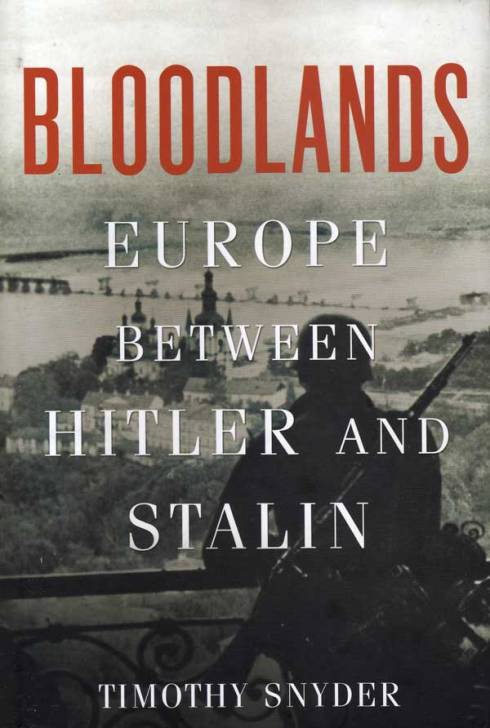
This was one of the first things you would’ve realized if you were on the ground in Russia this July and August like I was (but despite my suggestions to several industry friends and acquaintances, no Western journalists seemed to think that the “story” was not just in Donetsk or Luhansk, but in living rooms and at kitchen tables in Moscow and Petersburg and countless other places): that is that Russians simply don’t consider Ukraine a foreign country or foreign culture.  I’m not making a judgement call on whether that’s right or wrong or imperialist on their part or not; judging such sentiments “ethically” or putting them through the political-correctness grinder is pointless and counter-productive.  It’s just that their historical experiences have led Russians — and arguably, till a certain point, had led most of the people who now call themselves Ukrainians — to think that way: that they were both intimately and inseparably related, and there’s as much point in calling those feelings “wrong” as there would be in your therapist telling you that your neuroses are “wrong.”  And so Russians were/are, in fact, in shock that the rest of the world thinks it has no role to play in Ukraine or no vital interests in political developments there.  The reason that this doesn’t seem to register in Western consciousness is a result of the fact that the West is so immersed in thinking along an ethnicity-based nation-state model of discrete national units with clear, essentialized, historical trajectories, that it is incapable of seeing nationalism as a construct: flexible, malleable, unclear, even “made-up-as-you-go-along” if you will — so that Russians, and the new Ukrainian nationalists, can have radically opposing views on what their relationship is, without either of them being “wrong.”  As brilliant a historian as Timothy Snyder, author of the devastating Bloodlands: Europe between Hitler and Stalin is capable of writing in The New Republic this past May, in an article called: The Battle in Ukraine Means Everything  the following:

“Ukraine does of course have a history. The territory of today’s Ukraine can very easily be placed within every major epoch of the European past. Kiev’s history of east Slavic statehood begins in Kiev a millennium ago. Its encounter with Moscow came after centuries of rule from places like Vilnius and Warsaw, and the incorporation of Ukrainian lands into the Soviet Union came only after military and political struggles convinced the Bolsheviks themselves that Ukraine had to be treated as a distinct political unit. After Kiev was occupied a dozen times, the Red Army was victorious, and a Soviet Ukraine was established as part of the new Soviet Union in 1922.”

Snyder’s history — “of course” — with its suggestion of a straight, uninterrupted historical lineage of “Ukrainian-ness” from Kievan Rus’ to modern Ukraine is just patent bullsh*t, and is one that simply chooses, in the glossing-over-of-breaks-and-ruptures fashion and in the fabricating of false unities that nationalist narratives always engage in, to ignore several fundamental, historical realities: one, the fact that the Russian principalities that rose up in the northern forests of what we now consider the Russian heartland after Kiev’s demise at the hands of the Mongol-Tatars — Vladimir, Pskov, Novgorod and later Moscow and its unifying power — were more highly conscious of their political descent from early mediaeval Kiev and were, in fundamental ways, far more its true political and cultural and spiritual heirs than any “Ukrainian” polity could even try to claim to be until the twentieth century; two, that most of what is now Ukraine had already been part of Russia for more than two centuries before the Bolshevik revolution; and that, three, before that, the western quarter of it, maybe, was Polish and then Austrian, while much of the rest — through “every major epoch of the European past…” — was just a frontier no-man’s-land, a coming-and-going corridor for nomadic peoples either conquering or fleeing someone else.  (You can find a place for each and every corner of the world in “every major epoch of the European past” if you want to; that doesn’t mean it was central or even remotely important to that past.)  Also, thence, a crucial point: that Ukraine wasn’t so much conquered, but settled by Russia, while Snyder’s quote taken on its own makes it sound like an eternal Ukraine, populated by a people who had always thought of themselves as solidly and eternally Ukrainian, was just subjugated by the Soviet Union in the twenties.*  So it ignores all the ways that “Ukrainian-ness,” a term that did not even come into common usage until the late nineteenth and early twentieth centuries, was the product of a complex negotiation and mixture of different sub-identities converging from different directions in those fertile flatlands and has always, in that sense, been bound up in a million intricate ways with the history of its larger kin-nation to the north.  But we’re making the same mistake I believe we made in Yugoslavia: seeing the “nation” as something essential and essentialized, first and foremost; and secondly, assuming that the nationalism of the powerful player — in this case Russia, in the Yugoslav case, the Serbs — is pathological, inherently oppressive and dangerous, while ignoring the fact that the nationalism of the “little” — in these cases, Ukraine, and in Yugoslavia, that poor, powerless victim, Croatia — can not only be just as venomous and illiberal and murderous, but is often more so because it has a point to prove or a chip on its shoulder.  But the West is so in love with what by now should be the completely discredited Wilsonian idea of “self-determination” (while simultaneously supporting the “inviolability” of national borders**) that it fails to see that dark truth.  I’ll probably need to get into greater historical detail in another post in order to clarify a bit better.

(And now I’m ready for the barrage of accusations that all I ever do is knee-jerk defend my Orthodox brethren, but that’s cool — just par for the course.)

History, climate, geography have always conspired to isolate Russia.  And, in a sense, the pathos that drives Russian history and is the force behind her brilliant civilizational achievements (and, yes, her imperialism too), is  that of a constant, heroic struggle to break out of that isolation and find her place in the larger world.  Yacking on, like Snyder, about how Ukraine is somehow “essential” and central to the very idea of Europe, when, ironically, the very name Ukraine means “the edge” (from the same Indo-European cognate as the Greek “άκρη”…height or edge as in acropolis, or as Serbian “Krajina”).  The edge of what? of Russia/Poland…the EDGE of Europe…what an elevation of status Snyder grants to a proverbial Podunk, while treating Russia as dispensable or as a dangerous threat that needs to be hemmed around and contained — isolated again — is criminally unfair to Russians (if not to Putin and his cronies) and will end up backfiring on the West in ways it hasn’t even begun to anticipate.  Russia is not dispensable.  Nor is she to be ignored or patronized.  We think of her in those terms and the results will just get uglier and messier.
bloodlandsweb

**************************************************************************************************************************************************************************************************************

* There’s even a subtle subtext to the narrative of the Revolution and subsequent Civil War that Snyder gives us, which suggests some kind of identity between Ukrainian-ness and White Russian resistance to the Bolsheviks, when, in fact, I think that if the White Russian movement can be said to have had an ethnic or regional “base,” it was among the Russians of eastern Ukraine (the grandfathers of these very separatists of today? I wouldn’t know…) and the neighboring parts of southeastern Russia that stretch to the Caucasus.  The independent “frontiersman” mentality of the Russians of these areas, a sort of Russian Texas  — among its ethnic Cossack peoples especially — should not be underestimated and should not be disregarded as a possible element in the current conflict.  (See: And Quiet Flows the Don at Amazon and at Wiki.)

** The contradiction between the ideas of self-determination for peoples and the inviolability of borders — a contradiction that can’t be avoided if we keep thinking in terms of the EBNS (ethnicity-based nation-state) — has plagued do-gooder Western policies in all parts of the non-Western world from Wilson and Paris till Helsinki and still does.  And this despite the fact that its randomness and practical inapplicablity have been made so obviously clear on so many occasions: if Croatia can secede from Yugoslavia, why can’t Krajina Serbs secede from Croatia?  If Ukraine deserves — has an inalienable right — to be a country independent of Russia, then why doesn’t its overwhelmingly Russian eastern parts have an inalienable right to be independent of Ukraine?  Obviously it just comes down a particular bias of the West at a particular time

As for where it all started, Crimea, I hate to report to outraged Western observers that of all parts of Ukraine, Crimea was always the area with a practically non-existent Ukrainian element in its population.  Not that the March “referendum” was not a total farce.  But if any people have a right to Crimea and to feeling displaced and dispossessed it’s Crimean Tatars — not Ukrainians.  Hell, just to play Devil’s advocate…the millenia of Greek presence on the northern shores of the Black Sea, and the numerous Greek mercantile communities that existed in Crimea and around the Sea of Azov until the twentieth century (Chekhov attended a Greek elementary school in Taganrog), give even us a technically greater ethnic claim to Crimea than it does to Ukrainians.

In any event, I knew as far back as the early nineties, that sooner or later Russia would find a way to take Crimea back (Crimea was part of the Russian Soviet Republic until 1955) and am actually surprised it took so long.  The drang nach süden impulse that drove Russian imperial policy for hundreds of years — the equivalent of American “Manifest Destiny” — south into Ukraine and on to the Black Sea, with the ultimate objective of a re-Orthodoxed Constantinople and Russia as a Mediterranean and world super-power with access to India and the East, was not a desire for the rich soils of the Dnieper valley.  It was a need for access to warm weather ports.  Crimea thus became a crucial site for the base and deployment of Russian and then Soviet naval power and there was no way that it was just going to be handed over so casually.  Ask the United States to just hand over Camp Pendleton and Twenty-Nine Palms, the naval bases at Coronado and Loma Catalina, along with the whole San Diego metropolitan area, to Mexico.  Or just grant Hawaii its independence.  Or give it to Japan.  Or try, even, just to get the U.S. to close its base in Okinawa!  It’s the same thing.  Is this an apology for imperialism?  No.  It’s just a statement of a historical and political reality that can’t be ignored.  Or one that it’s necessarily the West’s business to “fix.”

Note: The Ukrainian national case or argument may have one key point that is rarely discussed and is surprising to me in that sense.  I’m not certain of it, but it may be that eastern Ukraine acquired its overwhelming Russian ethnic character because it was the region hardest hit and left most depopulated by Lenin and Stalin’s murderous collectivization disaster, and that many Russians were settled there afterwards when the region was turned into one of the industrial heartlands of the Soviet Union.  This is seriously guessing on my part and someone with greater knowledge should be sought out for a definitive answer.

A corollary to that is the hypocrisy of western Ukrainians, the most fanatical nationalists and quasi-Catholics, and perhaps the most extreme element on the Ukrainian political stage today (whom Putin uses, of course, to paint all Ukrainian nationalists as fascists and Nazi collaborators), who did not suffer any of the horrors of collectivization and famine because they were under Polish rule at the time — not always so benign either — and only became part of the Soviet Union in 1945.  Yet, they use those events as some of the main tools in their anti-Russian arsenal.  Furthermore, just as many Russians suffered during those violent socioeconomic processes and it’s a slightly cheap appropriation to call them a purely Ukrainian set of humanitarian disasters.

Comment: nikobakos@gmail.com

Rebecca West was never wrong: ‘a nation of lawyers’?

29 Aug

“History has made lawyers of the Croats, soldiers and poets of the Serbs.  It is an unhappy divergence,” she once wrote famously.

Then I stumble on this as I look for the Croatian-font worksheet I lost last week when my Mac’s drive crashed:

Croatian legal documents


And…  Are you proud of this?  “More than any other Slav nation.”  

Comment: nikobakos@gmail.com

More great Remnick on Russia

5 Aug

Putin140811_r25325-320

The man just keeps pumping it out.  This week’s New Yorker: probably best all-around account of the Putinshchina and turn away from ‘democracy’ and the West that has been put out there so far, Letter from Moscow: Watching the Eclipse,as told through the story of American ambassador Michael McFaul.  On his early student days at the end of Soviet times:

“There are people who encounter Russia and see nothing but the merciless weather, the frowns, the complicated language that, in casual encounters, they hear as rudeness, even menace; and there are those who are entranced by the literature and the music and the talk—the endless talk about eternal matters. McFaul was attuned to this particular kind of Russian romance.”

Extensive, even in including the new Orthodox nationalism:

“The imagery of Putinism, with its ominous warnings against political chaos and outside interference, has long been in evidence. All you have to do is watch television. In 2008, state television broadcast a cheesy docudrama called “The Destruction of an Empire: The Lesson of Byzantium,” which was hosted and produced by Tikhon Shevkunov, a Russian Orthodox priest whose church, the Sretensky Monastery, is just down the street from Lubyanka, K.G.B. headquarters. Shevkunov, who has known Putin for many years, is widely rumored to be the Russian President’s dukhovnik, his spiritual adviser. The film purports to be a history of the Byzantine Empire’s fall at the hands of the perfidious West, and not, as scholars have it, to the Ottoman Turks, who conquered Constantinople in 1453. The film is a crude allegory, in which, as the Byzantine historian Sergey Ivanov points out, Emperor Basil is an “obvious prototype of Putin, the wealthy man Eustathios is a hint at the jailed oligarch Mikhail Khodorkovsky, while Bessarion of Nicea is easily associated with another tycoon, Boris Berezovsky,” and so on. Shevkunov’s film was, in effect, about the need to resist Western influence and to shore up central authority in Russia.”

And some optimism:

“In the long run, I am still very optimistic about Russia and Russians,” he [McFaul] went on. “In my two years as Ambassador, I just met too many young, smart, talented people who want to be connected to the world, not isolated from it. They also want a say in the government. They are scared now, and therefore not demonstrating, but they have not changed their preferences about the future they want. Instead, they are just hiding these preferences, but there will be a day when they will express them again. Putin’s regime cannot hold these people down forever. I do worry about the new nationalism that Putin has unleashed, and understand that many young Russians also embrace these extremist ideas. I see it on Twitter every day. But, in the long run, I see the Westernizers winning out. I just don’t know how long is the long run.”

Wish I could say I’m that optimistic.  But take time to read it.  It says it all.

Comment: nikobakos@gmail.com


Image

Photo: Mayakovsky and Frida Kahlo

4 Aug

tumblr_m7vq1xhEDp1qzk6uvo1_1280

(click)

From the Times: Putin uses the Church…and the Church mostly lets him… “Позор…”

3 Aug

RUSSIACHURCH-1-superJumbo-v2

James Hill for The New York Times (click)

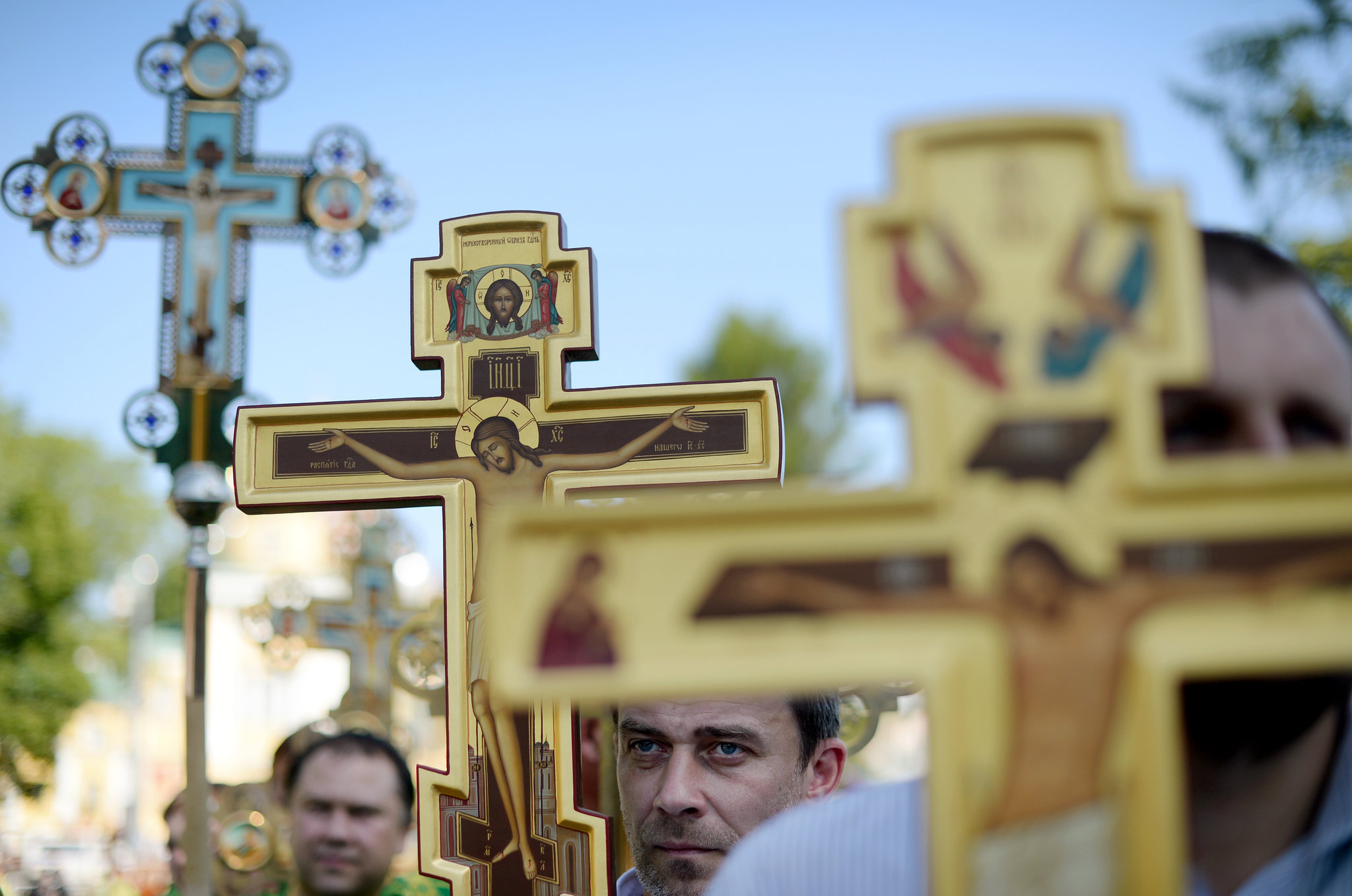
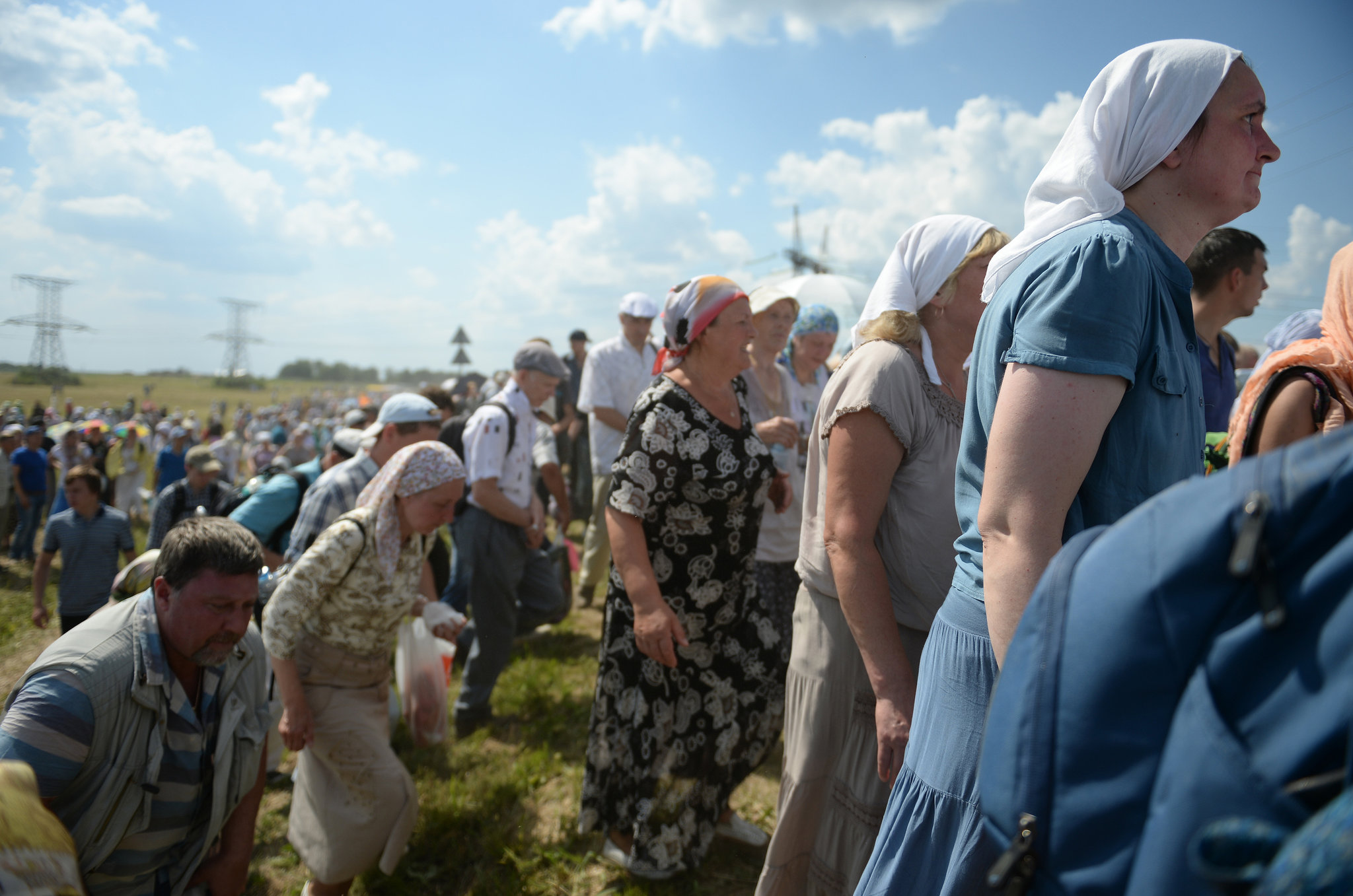
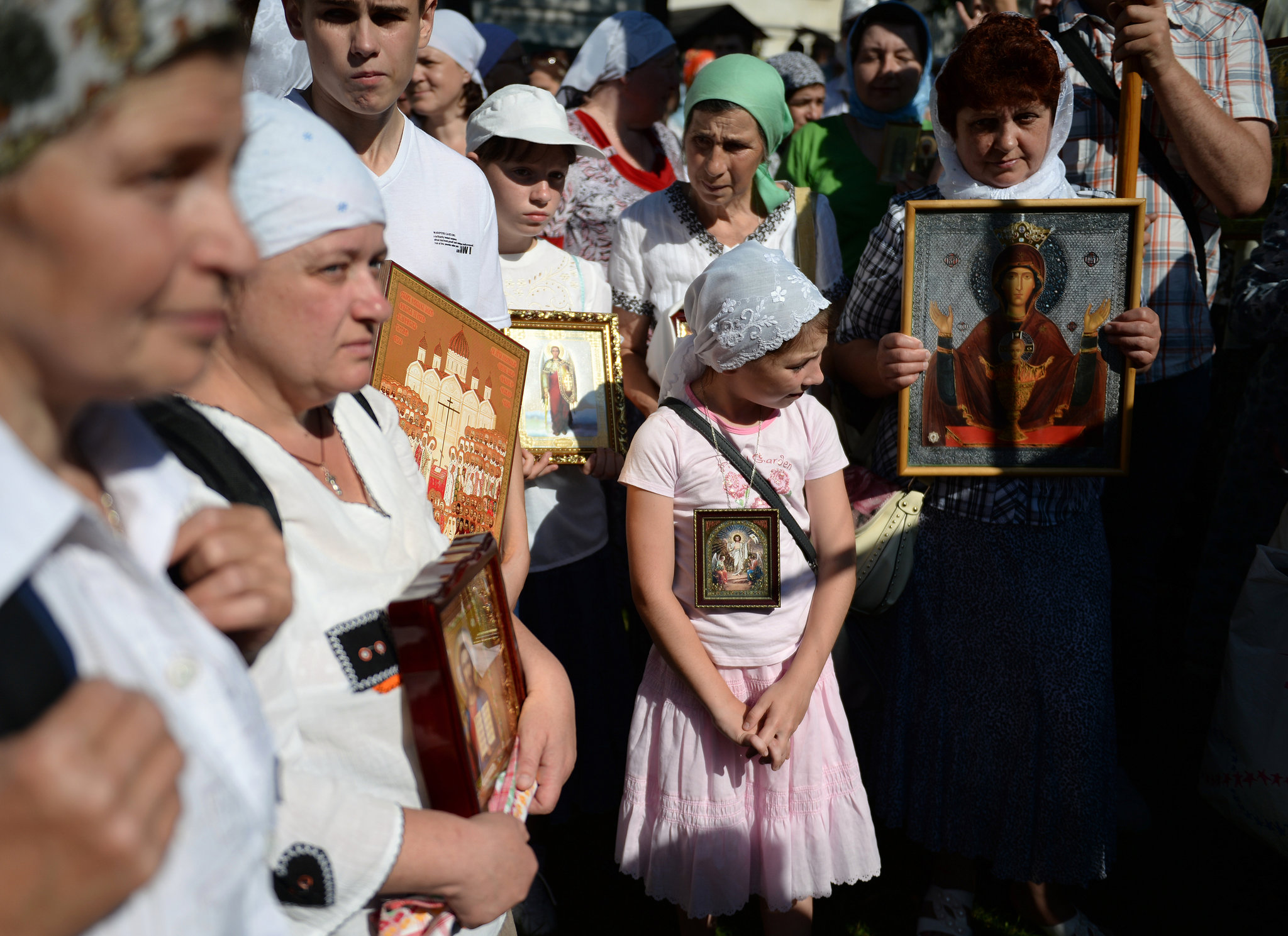
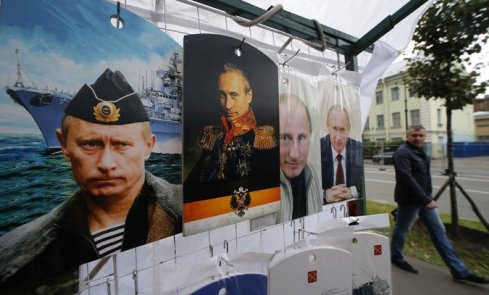
The Times has a great article, “Putin Strives to Harness Energy of Russian Pilgrims for Political Profit” on one aspect of Putin’s shameless use of the Church to foster patriotic — and racist and nationalist and rabidly anti-semitic — feelings among Russians that he hopes — and will probably succeed — will strengthen support for him among ordinary Russian people, perhaps the majority.  He has seized upon the cult of St. Sergey of Radonezh and is trying to make him a symbol of Russian unity for our times.  There are voices, historians and even clerics from inside the Church, that are resisting this manipulation, but the vast majority thinks it’s all just wonderful.  One is moved by Russian intensity and emotionalism on all levels, not least by the massive reserves of faith they access so easily, but their ability to let themselves get swept away by one grand ideological vision after another, completely forgetting the previous one and the disaster it led to, is just plain stupid often.  I was talking to an American friend of mine who was here with me in the eighties, and she commented on how people seemed smarter then, and completely cynical about any ideology they were fed, while now even educated, urbane people seem to swallow up anything they’re presented with.  The consciousness of repression may be a formidable sharpener of one’s critical capacities; the illusion of freedom may lead to a dangerous dulling of those critical skills — the non-stop-yacking-about-freedom U.S. is probably your best example.  Do those two always have to be the only choices for Russia?

Does anybody remember that Putin was a KGB agent for decades — not just a cop, an agent of an instrument of mass state terror with perhaps no equal in history — and that part of his job was ruining the lives of anyone who engaged in the kind of religious pilgrimage these people are?  No.  It’s like that never happened.  And though my stomach turns when I see him on news footage solemnly standing with his candle at Easter, engaging in the non-stop crossing and bowing that Russians do in church, I’m also just stunned by his brazenness.  The word Позор (pa-zor) in the heading of this post means “shame” but as I was trying to find somewhere to cut and paste it from I came across its etymology.  It originally meant “remarkable,” or someone or something remarkably “watchable,” from the root “zor” for vision.  And this is, in fact, the response Putin provokes: you simply stand there, staring and dumbfounded by his shamelessness.

As for Russians themselves, sometimes I get so angry, not just at their acceptance of the political manipulation of an Orthodox Christianity that’s important to me, but at their general passiveness, gullibility, and willingness to play along with anything that promises even some tiny alleviation of their suffering, that I just want to think that they deserve their fate.  Τρέξτε να προσκυνήσετε…πρόβατα…run and prostrate yourselves, sheep, like you did to Stalin before and to the Tsars before that.

JP-RUSSIACHURCH-1-superJumboJames Hill for The New York Times (click)

Money quote from one pilgrim:

Beyond spiritual matters, the crowd at the birthday commemoration at the monastery here, 45 miles north of Moscow, was unquestionably in the Putin camp. Many compared him to a czar, and meant it as a compliment.

“He has just not been anointed,” said Vladimir Bubelev, 60, an officer in the naval reserves wearing a brass pin showing the profile of Nicholas II, the last czar, on his lapel.

“But his powers are greater than those of Nicholas II,” Mr. Bubelev said. “On many questions he acts like a monarch — he makes correct, willful decisions. This is very good. Plus he is a believer!”

 JP-RUSSIACHURCH-2-superJumboJames Hill for The New York Times (click)

Comment: nikobakos@gmail.com

To be a Russian…

30 Jul

exposures-russia-slide-B6HD-superJumbo

See Misha Friedman’s beautiful photo essay in the Times.

Edmund White on Love and Friendship

27 Jul

Reblogged from Andrew Sullivan’s Daily Dish:

“[W]hen we are young and literary, we often experience things in the present with a nostalgia-in-advance, but we seldom guess what we will truly prize years from now. I always placed a high value on friendship, but even I had no way of guessing back then that it was more fun to get drunk with a friend than with a lover. Love is a source of anxiety until it is a source of boredom; only friendship feeds the spirit. Love raises great expectations in us that it never satisfies; the hopes based on friendship are milder and in the present, and they exist only because they have already been rewarded. Love is a script about just a few repeated themes we have a hard time following, though we make every effort to conform to its tone. Friendship is a permis de sejour that enables us to go anywhere and do anything exactly as our whims dictate,” – Edmund White, City Boy: My Life in New York in the 1960s and ’70s.

I know, ok.  But isn’t the anxiety great in the beginning…

Comment: nikobakos@gmail.com

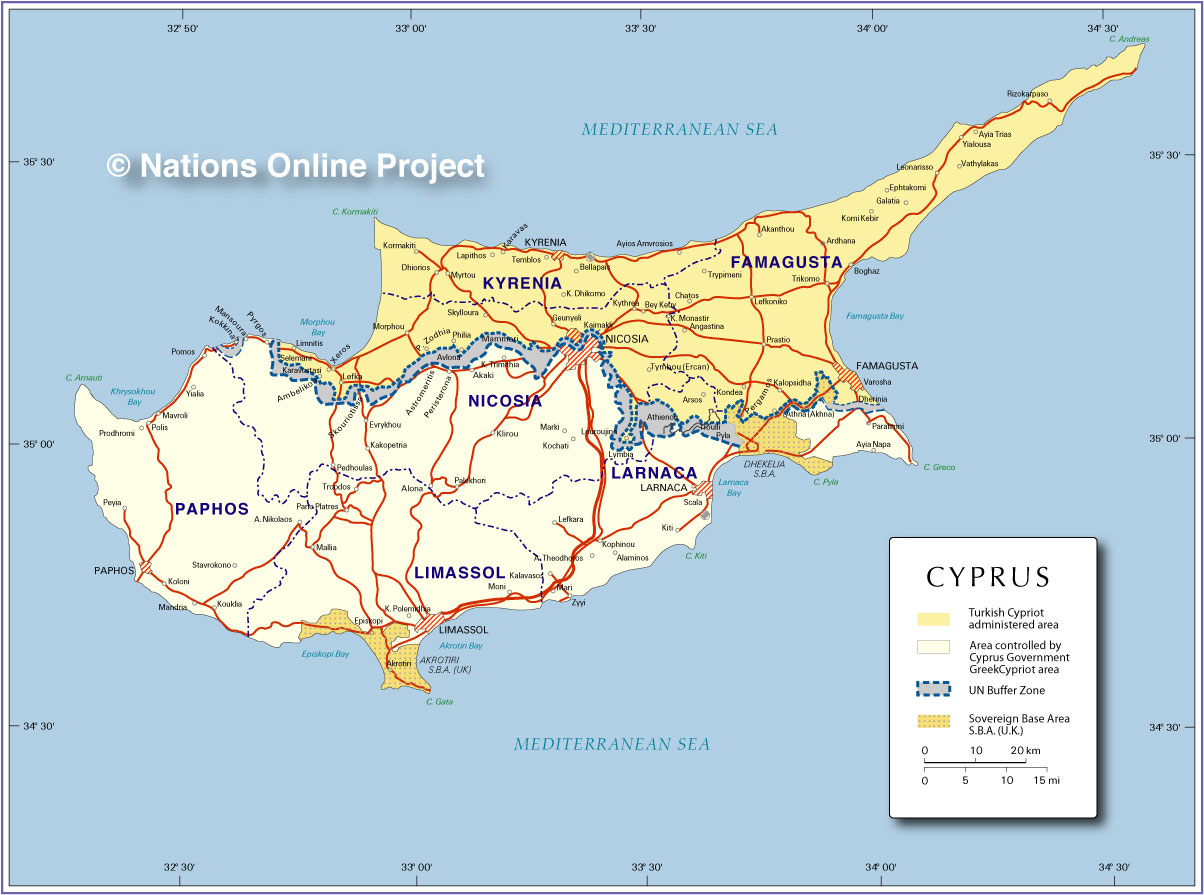
From Al Jazeera: “Cyprus divided, 40 years on”

20 Jul

cyprus_map

(click)

Cyprus divided, 40 years on

Last updated: 20 July 2014

Cyprus marks 40 years since the Turkish invasion and division of the island. What hope is there of unity today?

There had been ample warning of a Turkish invasion: the build-up of 38,000 troops at the Adana military base in southern Turkey; a flotilla of ships carrying tanks and armoured personnel carriers; preparations to launch some 80 aircraft. But it seems that Greek intelligence interpreted all this, along with radar sightings of an approaching fleet on the morning of the invasion itself, as a mere exercise.

At dawn on July 20, 1974, Turkish fighter jets began to strafe Greek infantry billets, light artillery batteries, and air force early warning stations on Cyprus’ northern shore. Moving inland, they laid waste to Greece’s main military camp in the capital, Nicosia. 

Cyprus fell within days, but Turkish forces advanced into August, long after the UN-ordered ceasefire, stopping at the line of division between ethnic Greek and Turkish communities suggested by the British in 1964.

This Green Line, as it is now known, is where Cyprus remains divided today, cutting across Nicosia to create the world’s last divided capital.

The invasion marked the only occasion when one NATO ally fought another – and it remains the only occupation on EU soil. The Turkish Republic of Northern Cyprus (TRNC) declared independence in 1983, but remains recognised only by Turkey. 

Roots of division

Cyprus’ division marked a failure to graduate a European country from British rule to independence. After World War II, a Greek-Cypriot lieutenant colonel, Yiorgos Grivas, set up a guerrilla organisation, EOKA, which attacked British troops as part of its goal to merge Cyprus with Greece. Its battle cry was Enosis, or union.

In 1955, British governor, John Harding, offered the Greek-Cypriot community leader, Archbishop Makarios, self-determination after seven years. Makarios turned it down and instead condoned the EOKA campaign – at which point Britain began to stoke Turkish interest in Cyprus.

The following year Britain offered a plan allowing some self-government to the two communities separately. Prime Minister Harold MacMillan went further down this path in 1958 – but, like the previous plans, it was rejected by Makarios.

Cyprus was given independence in 1960 on the basis of a power-sharing agreement negotiated by Greece and Turkey, which installed Makarios as president and a Turkish-Cypriot as vice president.

By December 1963, this system of self-rule broke down. Turkish-Cypriots withdrew from the administration and Turkey declared the constitution of 1960 void.

The breakdown sparked the worst intercommunal clashes to date – early in 1964 – leading Turkey to deploy troops along the highway between Nicosia and the northern port of Kyrenia, and depriving Makarios of control over parts of the island. 

Makarios turned down one last chance at Enosis that year: A US proposal that unified Cyprus with Greece, allowing Turkey to lease a small military base for 50 years.

In 1967, a group of nationalist Greek colonels who had served in Cyprus in the 1950s and grew radicalised there, seized power in Athens to prevent the election of a centre-left government. On July 15, 1974, they tried to bring about Enosis by deposing Makarios in favour of their own man, Nikos Sampson, a former EOKA guerrilla. Makarios fled, denouncing the coup as an invasion and inviting intervention – a call that Turkey answered.

Is the status quo permanent?

“I am not sure we can live with the Turkish-Cypriots,” said Christos, a banker raising a family with his wife, Anita, in a plush neighbourhood of Nicosia. Both grew up in the homogeneous state that has existed since Turkey’s intervention.

He is suspicious of Turkish motives in backing recent talks, the first since Cyprus discovered large reserves of natural gas in its territorial waters in 2013, which could transform the economy over the next few years.

“It’s obvious that they want a share in the gas wealth. Frankly, I think that we should just let them have all the gas, in return for pulling out their troops,” he said. “We don’t need the gas to prosper. We’re perfectly capable of building an economy out of our own labour. We just want to have our island back and to be left alone.”

Anita agrees, despite the fact that a reunification settlement could compensate her at today’s property rates for luxury hotels her family lost in the invasion. “I just don’t think we should legalise the invasion,” she said. The Greek word she uses means both to legalise and to render legitimate, reflecting a sentiment among Greek-Cypriots that they are being asked to surrender a moral high ground.

Christos’ and Anita’s scepticism echoes throughout Greek-Cypriot society, and lies at the heart of a disastrous attempt to reunify Cyprus ahead of its last major invasion anniversary a decade ago.

In April 2004, four out of five Greek-Cypriots rejected a UN-proposed plan that would have created a federal state, giving Greek-Cypriot and Turkish-Cypriot communities powerful local governments.

Today, many Cypriots on both sides are beginning to wonder whether they should accept the status quo as the lesser of many evils.

“For me there is no division,” said Osman Sakale, a Turkish-Cypriot shopkeeper who lives in northern Nicosia. “Turks are on this side living happily, Greeks are on the other side living happily. Any reunification by force won’t work.”

Sakale is not a native-born Turkish-Cypriot, but a settler, one of many brought in over the last 40 years by Turkey as part of an effort to alter the island’s demographics. Greek-Cypriots currently number 600,000, Turkish-Cypriots only 200,000 – and of those, an estimated 80,000 are indigenous.

Born on the island, Turkish-Cypriot filmmaker Mustafa Ersenal supports reunification. “We really do feel very claustrophobic in Cyprus; especially in northern Cyprus,” he said. 

Elena Tanou, a businesswoman who has organised a Greek- and Turkish-Cypriot business forum, agreed: “The situation now with the economy brings us to a dead end. People in both communities feel that a solution – a political solution – will bring jobs, and the chance to restore the country again altogether.”

Mightier than the sword

Despite its effectiveness, the invasion has become a millstone around Turkey’s neck. Keeping 40,000 troops on the island costs an estimated $480m a year; subsidising the TRNC’s budget costs hundreds of millions more.

Meanwhile, the expulsion of some 200,000 Greek-Cypriots from their homes in the north – from July 1974 to May 1978 – is also increasingly expensive. In 1996, a landmark European Court of Human Rights awarded Titina Loizidou, a Greek-Cypriot teacher, $915,000 in compensation for the violation of her right to the “peaceful enjoyment of her property” by preventing her from visiting her home in the north. Hundreds more cases have been filed.

In May, the ECHR ordered Turkey to pay Cyprus more than $120m – to the relatives of some 2,000 people missing since the invasion, and to Greek-Cypriots living in an enclave in the north.

These costs stand in contrast to the peace dividend Turkey could gain through reunification. In 2010, the Peace Research Institute Oslo (PRIO), a think tank, estimated the potential annual benefits to Turkey at over $16bn – chiefly in travel, tourism, financial services and exports, in addition to some $7bn in savings. 

The potential benefits to Cyprus are even greater, the PRIO believes. “With a solution to the Cyprus problem, all-island GDP [at constant 2012 prices] would rise from just over $27bn in 2012 to just under $61bn by 2035 … compared with around $34bn without a solution. In other words, the peace dividend over 20 years would be approximately $27bn.” This would translate into earnings of $38,000 a year per person, compared to $23,000 today.

And there are the diplomatic costs: Occupation has become a major obstacle to Turkish hopes for EU membership, which has helped Cyprus win diplomatic ground. The Republic of Cyprus has since 2012 been a recognised member of the EU, while the TRNC in the north is not. 

Potential diplomatic, legal and financial gains all advocate in favour of reunification, but political trust still eludes the two communities. The occupation can be withdrawn, but can Cypriots overcome the separate Greek and Turkish nationalisms that have nurtured them for so long?

Comment: nikobakos@gmail.com


“Russians…they don’t trust…”

17 Jul

Russia-Wallpaper-Picture-Desktop

(click)

The pretty clerk behind the desk at the Air Serbia counter in Belgrade where I’m checking in for my flight to Moscow-St.Petersburg smiles when sees the obvious irritation on my face as she tells me that my stuff isn’t going direct, but that I’ll have to claim my baggage in Moscow and re-check-in again for the flight to St. Petersburg, probably get charged for my extra weight again — and at a different terminal in a user-friendly airport like Sheremetyevo.

“Russians,” she grins slyly but sweetly, “they don’t trust.”

Dude, when your own ever-loyal Serbs are talking about you like that, you probably have some issues you might want to address.

Serbia(click)

Comment: nikobakos@gmail.com