
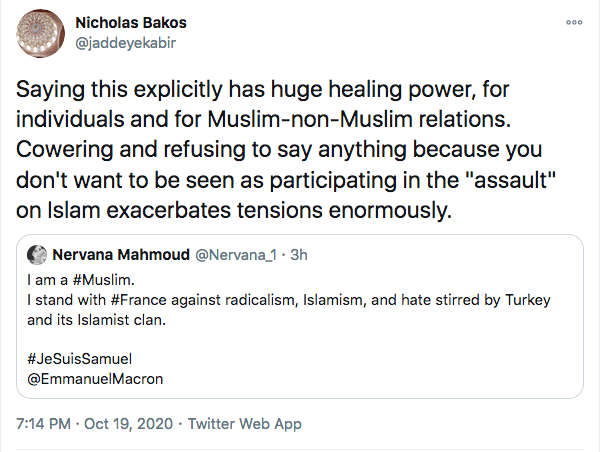
France: the sanctity of the teacher’s métier…
18 Oct…that has emerged in public discourse in the aftermath of the murder of Samuel Paty is maybe all you need to know about France.
Big Brother: an epic Cretan kavga about toilet paper; Cretans being a massive pain-in-the-*ss
18 OctAnna Maria, “the Cretan, lawyer, woman of a certain age with fried peroxide hair” is certifiably insane — even by Cretan standards. That she has the right to practice law in Greece is troubling.
And she goes on and on in a monologue about how she’s from Crete and how they should all be scared of her. Cretan chauvinism gets tired really fast.
And another one about eggs; Anna Maria vs. Raisa, a sweet little Albanian chick I love:
And Anna Maria vs. Christina:
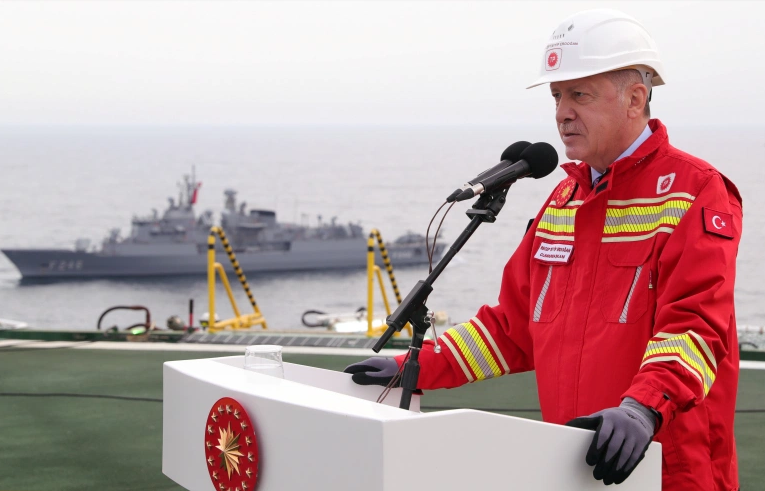
Erdie in the Black Sea: good to have no sense of irony…
18 Oct…so you never know how ridiculous you are.
Mohammad Reza Shajarian — “When Mr. Shajarian sang his lyrical version of that poem, fused in his voice were not only thousands of years of civilization and a storied musical and poetic tradition, but a century-long arc of a modern political struggle for freedom.”
18 OctIncredibly moving video of Reza Shajarian and son Humayoun, “Morgh-e Sahar” — audience as moving to watch as Shajarians themselves…
From New York Times:
A Musician Revered by Iranians, But Banned by the State
Mohammad Reza Shajarian’s politics were almost never explicit, but the Iranian people knew he stood with them.
By Nahid Siamdoust
Ms. Siamdoust is the author of “Soundtrack of the Revolution: The Politics of Music in Iran.”

Within minutes of the death of the Iranian vocalist Mohammad Reza Shajarian last week, thousands streamed into the streets surrounding his hospital in Tehran, openly wept and sang his songs in unison.
A man climbed on an ambulance and yelled to applause: “It is the right of the Iranian people to give him a majestic funeral. He belongs to all the people.” Another person called out for three days of mourning, a suggestion that drew cheers from the crowd.
A state funeral would have befit Iran’s most beloved public figure, who died at age 80 after a six-decade career. Mr. Shajarian’s music and message, drawn from the humanist canon of Persian poetry, unified people of all generations and political persuasions. But Iranian authorities kept his procession small by fencing off thousands of people paying their last respects in the ancient city of Tus, where he was buried next to the tomb of Ferdowsi, the revered Persian poet and author of the national epic “The Book of Kings.”

Though Mr. Shajarian’s verses about tolerance, freedom and justice had aligned with the revolutionary politics of 1979, the increasingly authoritarian politics of the ensuing Islamic Republic put him at odds with the revolution’s outcome.
Mr. Shajarian’s politics were almost never explicit, and he long insisted that he was not political. His work, he argued, was simply “mardomi,” a term that means “of the people.” But for several years before Iran’s 1979 revolution and in the decades since, he created some of the country’s most political songs — calling on people to join the revolution in 1979, criticizing it in 1985 with his album “Injustice,” and commenting on the hypocrisy of clerics in his 2002 album “Without You.”
His most famous ballad, “Bird of Dawn,” based on an old Persian poem, became a protest song. At his concerts, whether in Tehran or in London, Paris or New York, people implored him to sing it. With his right hand on his heart he always obliged. As he sang in his familiar plaintive tenor, Mr. Shajarian embodied the pained bird, dramatizing in music and verse the struggle of a people:
Bird of dawn, start your lament, relight my anguish
Break this cage with your scintillating sighs and turn it upside down
Wing-tied nightingale, emerge from the cage corner
And sing the song of human freedom
An enraptured audience always joined the prayerlike refrain, expressing its desire for freedom from tyranny: “O God, O Heavens, O Nature, turn our dark night into morning!”
The poem on which the song is based dates to the 1920s, when Iranians’ hopes for representative government were crushed with Reza Pahlavi’s authoritarian takeover. Repression ensued, and the poem became a call to freedom. When Mr. Shajarian sang his lyrical version of that poem, fused in his voice were not only thousands of years of civilization and a storied musical and poetic tradition, but a century-long arc of a modern political struggle for freedom.
When I pressed him on the political nature of his music in a 2011 interview, Mr. Shajarian was cryptic: He said he had always tried to “walk the right path.”
That he so often drew from the mystical tradition of Persian poetry for his lyrics was not an accident; it allowed him to offer subversive political commentary while maintaining an air of deniability.The poetry of the likes of Rumi, Khayyam and Hafez is so nearly universally revered that even arch-conseratives can’t fault it. And in an Islamic Republic where political subversion can land artists and writers in jail, Mr. Shajarian’s unparalleled virtuosity as a vocalist and his virtuousness of character long made him untouchable.
“When you’re moving with the people, your position is clear,” he said. “The people know what they want.”
For more than 40 years, Mr. Shajarian channeled the hopes and frustrations of Iranians and became the “people’s voice.” He delved into the country’s rich poetic heritage and sang verses that directly addressed people’s political and social problems. This turned his concerts into one of the few public places where crowds of strangers could get together and openly express their discontent through music.
For all his coyness, Mr. Shajarian understood this well and enjoyed nothing more than singing to his own people in his own land. He once told me, “In Iran, it’s like you’re reminiscing and sharing secrets with people you’ve suffered with.” Iranians, he said, “know what the words mean. Everything you say carries so much weight.”
But even Mr. Shajarian couldn’t stay untouchable forever. In 2009, when opposition demonstrators flooded the streets after Iran’s disputed presidential election, Mr. Shajarian spoke out against state violence on protesters and sang “Put Your Gun Down,” with lyrics drawn from a poem: “Come, sit, talk, listen/ Maybe the light of humanity will open a path in your heart.”
As a punishment, he was forbidden from ever performing in Iran again and his work — including his iftar prayer, “Rabbana,” which people had listened to on radio and television as they broke their fast on Ramadan nights for 30 years — was banned on national media. People resorted to streaming it from their phones.
“They think they are doing me harm, but they’re only harming themselves,” he said, referring to the government officials who instituted the ban. “They don’t even have enough social awareness to understand that you can’t take away from people something that they have connected with spiritually.”
Since his death, people have huddled together in groups throughout Iran to sing “Bird of Dawn” in what has become a new sort of national anthem. Crushed by government corruption, extreme U.S. sanctions and the pandemic, which has already resulted in nearly 30,000 deaths in the country, Iranians are at a particularly precarious moment. In commemorating Mr. Shajarian, they are also hanging onto the humanist messages of his songs, and the possibility — however remote — of a brighter day.
Nahid Siamdoust, a visiting assistant professor of women’s studies and anthropology of religion at the Harvard Divinity School, is the author of “Soundtrack of the Revolution: The Politics of Music in Iran.”
Related: Mohammad Reza Shajarian, Iranian Master Singer and Dissident, Dies at 80Oct. 8, 2020
Melina
18 Oct
European Commission @EU_Commission Today we celebrate politician and actor Melina Mercouri, born 100 years ago. She used her voice to stand against Greece’s fascist junta. When democracy was restored, she became a champion of Greek art and culture, and a founder of the European Capital of Culture. #EUWomen11:13 AM · Oct 18, 2020·Twitter Web App

Nicholas Danforth pillories “feel-good” histories of Middle Eastern coexistence like Ussama Makdisi’s
17 Oct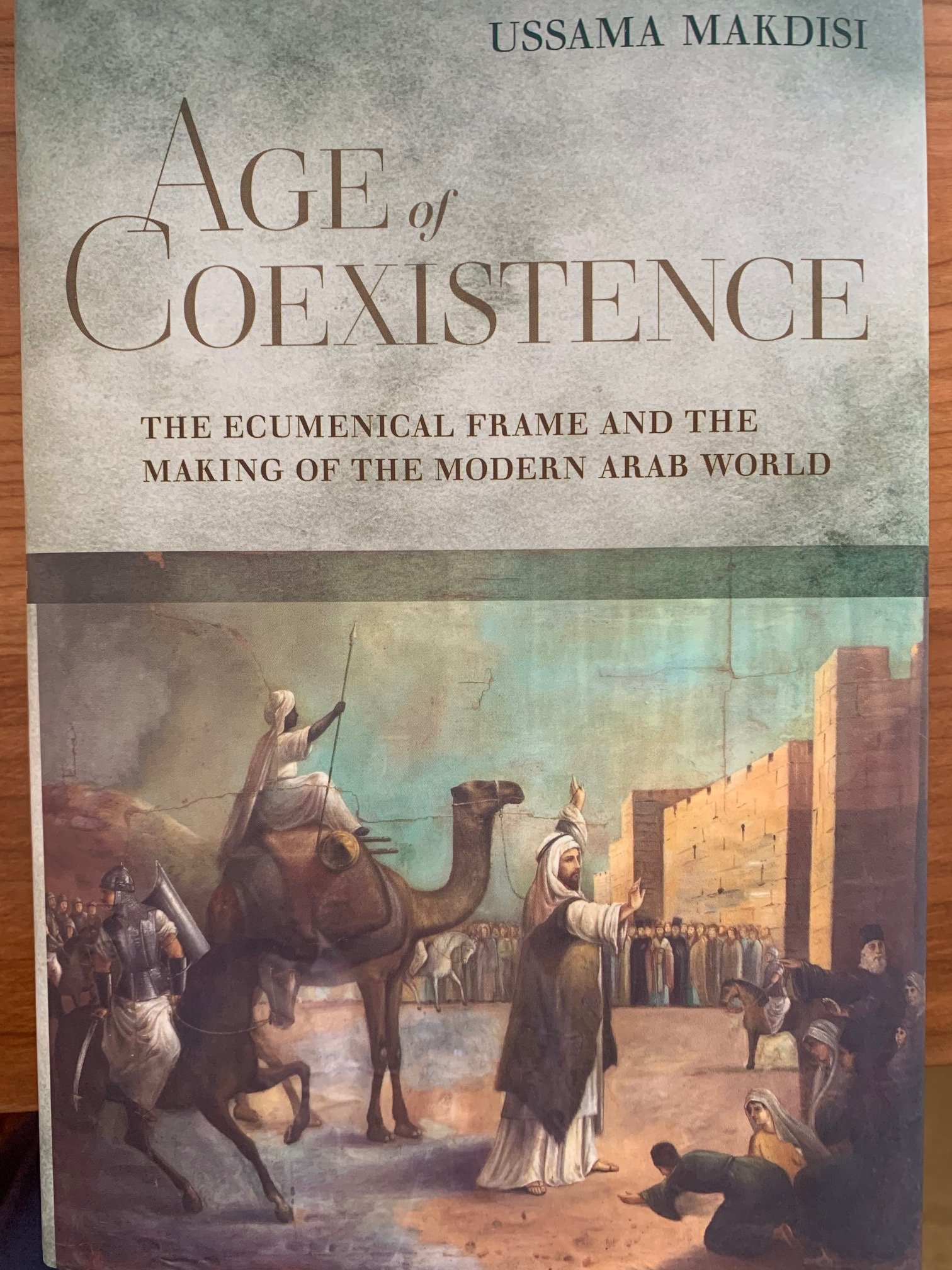
Since I leave Nicholas Danforth to take on Makdisi, let me get a couple of points out there.
I’m actually really happy that Danforth came up with this parody below; it’s a little crude but it works. I obviously respect Makdisi and his work, but he was twitter-irritating me so badly with a constant barrage of what I call the “We all loved each other so much till the evil Frangoi came and ruined it” argument that I was developing troll-like urges towards him. Nice to let Danforth take it off my chest.
And I also have to say that where I’m coming from in this discussion is the Balkan-Anatolia heartlands of the Ottoman world and not its distinctly Arab sectors. Maybe there genuinely was a broader feeling of Arab solidarity in Arab lands (just a common language and not the Babel of the Balkans might have been a more powerful force than I’ve ever considered), and more of Makdisi’s dream of co-existence was possible there. I don’t know. Maybe. Since I’m interested and attracted most to the Levant out of all parts of the Arab world, it may — may — have been possible to bring a united Syria into the modern world in 1919 instead of the weird parcels and ensuing conflict we got instead. Maybe; but I doubt it. I’ve ordered both of Makdisi’s books and am looking forward to reading them. Perhaps I’ll have more to say.
Finally — mihi ignosce pater nam peccavi — but I’ve been guilty in the past of romanticizing the possibilities of coexistence in the Ottoman world in the way Danforth mocks so savagely. I’ve been disabused of those fantasies in the past decade, not in the least by the horror-show Erdie has made of Turkey. More later. Enjoy.
************************************************************************
Since all the serious historians are basically writing high end Ottoman fan fic now i figured I’d try my hand at it too… (See: Nicholas Danforth@NicholasDanfort)
Under the Shadow of the Crescent Moon:
A made up history of the modern Middle East where the Ottomans solved everything
In a recent essay for Aeon, Ussama Makdisi argues that “European colonisation put an abrupt end to [Ottoman] political experiments towards a more equal, diverse and ecumenical Arab world.” The following account envisions what would have happened if those experiments had been allowed to succeed.

Anyone searching for the start of the much-discussed “Middle East Miracle” might well begin with the Ottoman restoration of 1924.
In June of that year, the now famous Veli Pasha assumed the throne in Istanbul and declared that the centuries-old Empire would henceforth be reconfigured as the Ottoman Constitutional Caliphal Confederation. While in hindsight this appears to be an obvious outgrowth of earlier Ottoman reform efforts, we must remember how startling it seemed at the time. Veli Pasha was an unlikely reformer as well. He had been relatively unknown even to his countrymen before his army’s dramatic recapture of Rumelia made him a household name throughout the world. Born to poor parents in the humble town of Yozgat, few imagined he would rise to reshape the 20th century — defeating European imperialism, reforming Islam, discrediting the concept of the nation state and remaking modernity in a fundamentally more humane way.
Those practicing military or diplomatic history might be interested in the details of how Veli Pasha upended centuries of geopolitics and enabled the Ottomans to emerge more powerful from the chaos of World War One. But for our purposes, we will focus on the more important subject of what his success meant for the Middle East and the world.
What proved so brilliant about the Ottoman Empire’s new model of constitutional caliphal confederation was that it simultaneously solved all the basic problems that had vexed both Western and non-Western political thinkers since the end of the medieval period. As constitutional Caliph, Veli Pasha maintained religious legitimacy in the eyes of his Muslim subjects and gave them the space to forge an authentic form of Islamic modernity untainted by radicalism. By doing this without resort to problematic Western conceptions of secularism, he also avoided creating any form of fundamentalist backlash. More importantly, the constitutional Caliphate also gave the Empire’s Christian subjects full freedom as co-equal citizens. Because of the Empire’s ecumenical tradition, they understood that the Caliph could be the defender of Islam and their constitutional rights at the same time. Some Christians even aspired to become Caliph themselves. In Veli Pasha’s famous formulation, the Sultan would be a Muslim ruler to those who demanded a Muslim ruler and a non-Muslim ruler to those who did not.
The confederal aspect of the new Ottoman administrative system followed a similar logic. When members of the empire’s ethnic minorities appealed for self rule in order to promote their own languages and cultures, Veli offered them a form of local autonomy that satisfied this wish without in any way encouraging more radical separatist demands. As importantly, he ensured that each ethnic group would exercise their autonomy in a manner which members of other ethnicities would not resent. The local parliaments in each of the Empire’s reconstituted vilayets, for example, were free to allocate their own budgets in areas such as education, but could not do so in a way that promoted their own languages or cultures over others. By encouraging cultural diversity while rejecting the foreign ideology of nationalism, the Ottoman Confederation squared a circle which had ensnared countless other countries.
Imperial harmony was also facilitated by the careful geographic delimitation of these autonomous regions. Instead of drawing their borders with no regard for the identities or wishes of the inhabitants, Veli Pasha drew them in a way that took these identities into account but did not in any way reify them. By doing so judiciously, Veli’s Ottoman Ethnicity Commission created a series of largely homogeneous regions out of the Empire’s diverse ethnic geography, ensuring each village ended up in the region it preferred without creating a complex patchwork of enclaves and exclaves that would subsequently be condemned as cynically impractical by their inhabitants.
The enduring vitality of the new Ottoman system, sometimes called centralized decentralization, was proven time and time again over the ensuing decades. Where European democracies saw their unity destroyed by class conflicts, the Ottoman model of alternate modernity steered the state through a turbulent period of industrialization without any destabilizing ideological divides. Where some European leaders consolidated power by blaming minorities for the disruptions brought about by modernization, Ottoman modernity simply avoided these disruptions, thereby preventing the rise of populism, fascism and right wing authoritarianism. This meant that by the second half of the twentieth century, the Ottoman’s pre/post-nationalist model of tolerance was so consolidated that it was only strengthened by the many waves of immigrants drawn by the Empire’s economic success.
The results of this success are obvious. Today, hundreds of millions of people live happily under the shadow of the crescent moon. From Bitola to Basra, the flag of the Ottoman Constitutional Caliphal Confederation stands as a constant rebuke to the benighted people of the West. Its elegantly curved forms remind us that we could have solved the world’s problems if only we had rejected all the ideologies that originally seemed like solutions to them.
We’ll always have Sicily III: the Cathedral of Cefalù — “the art of our ancestors safe from the plaster, whitewash, eye-gouging — and drapes — of the hysterics and puritans of monotheism…”
17 OctThe Cathedral of Cefalù (See also: “We’ll always have Sicily I: the church of the Martorana in Palermo“ and “We’ll always have Sicily II: the Cathedral of Monreale“)
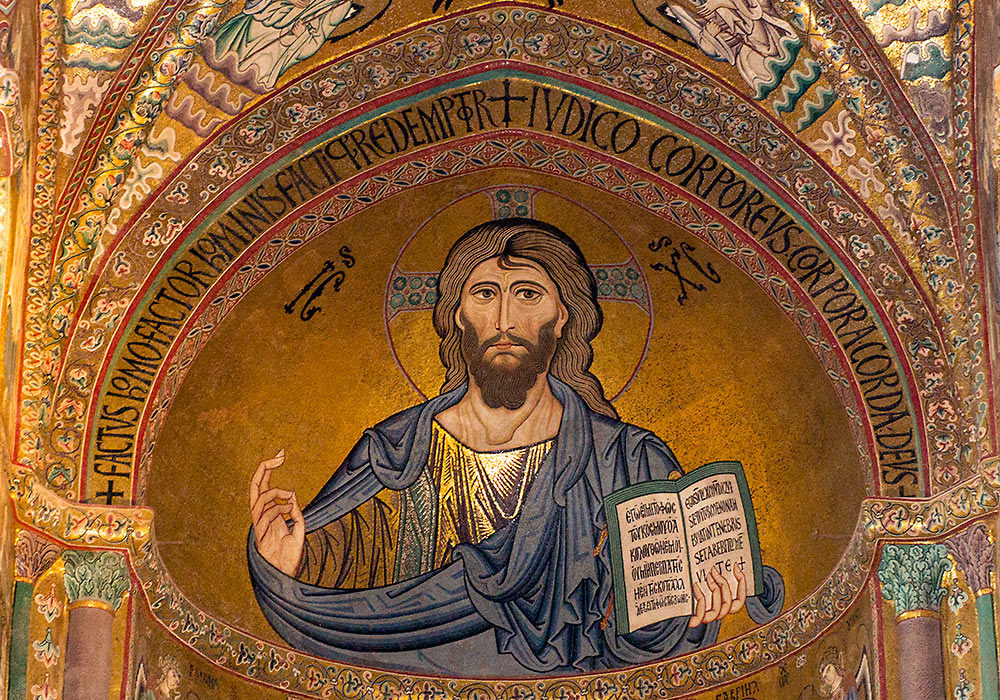
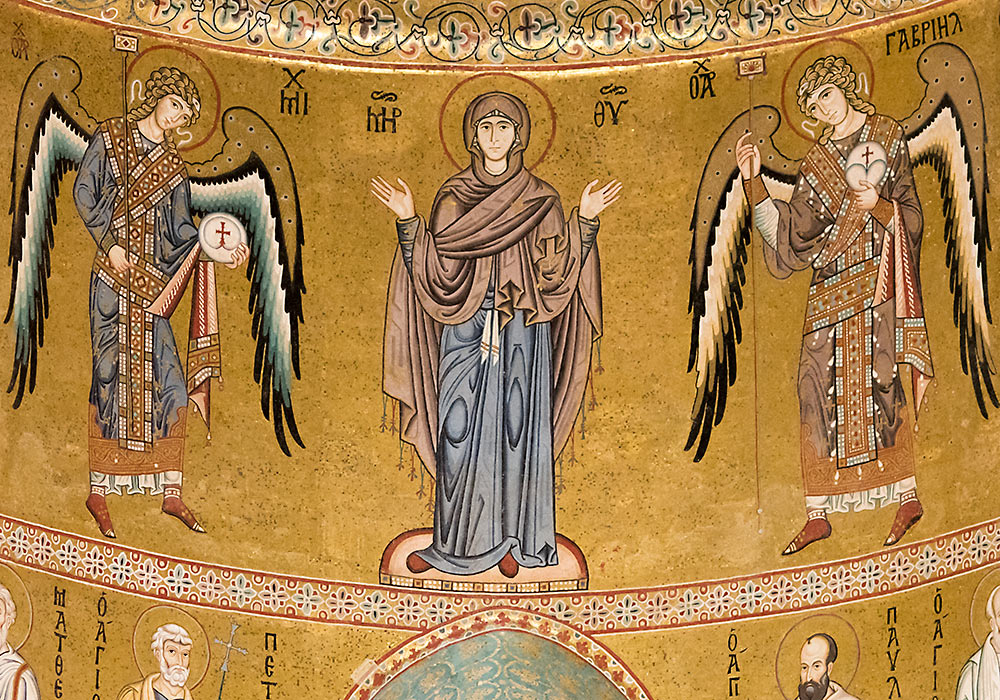

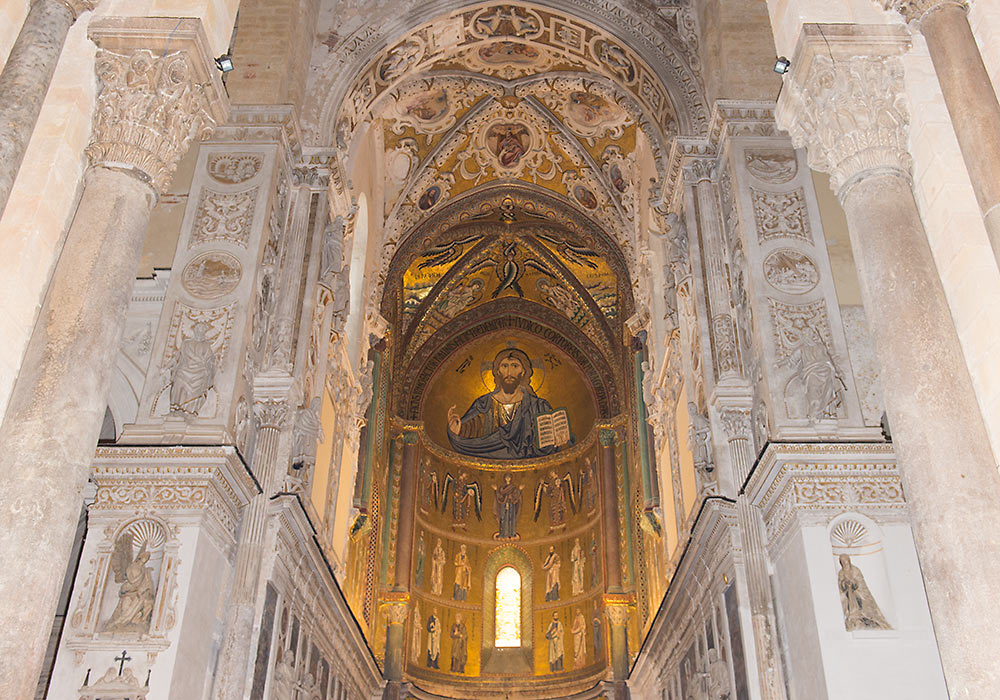
Especially interesting in Cefalù is the contrast between the mediaeval mosaics and the later Baroque marble framing of the apse.
************************************************************************
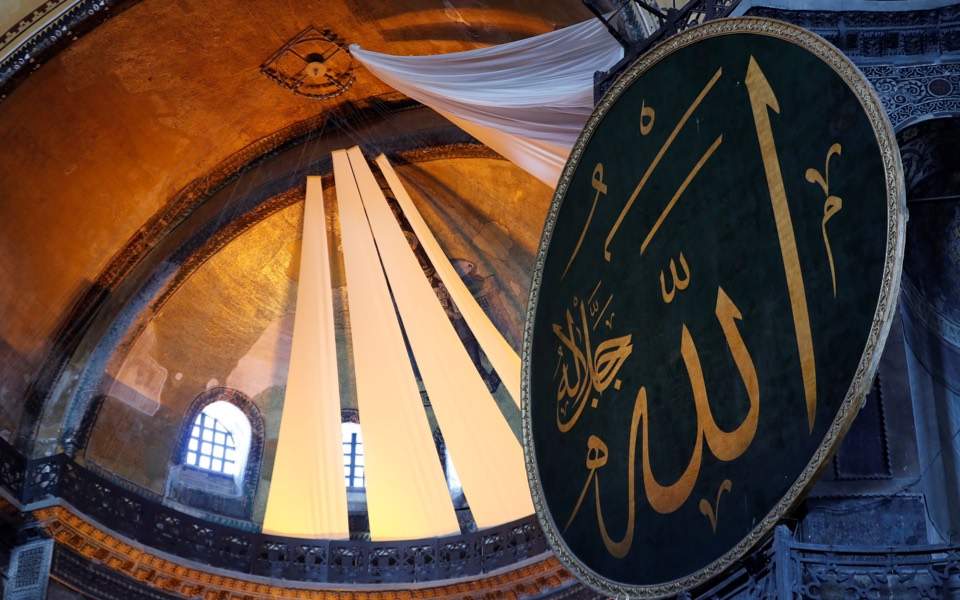
 Jadde: from Bosnia to Bengal