Balkans, Anatolia, Caucasus, Levant and other Middle East, Iran, Afghanistan, South Asia, occasional forays into southern Italy, Spain or eastern Europe, minorities, the nation-state and nationalism — and whatever other quirks or obsessions lurk inside my head.
“Other problems also bedeviled Wilson, including the vexing difficulty of determining who, exactly, deserved self-determination. Despite the precision of his maps, it was difficult to come up with clean new boundaries without stirring a hornet’s nest of ethnic rivalries.”
Other problems? It was the problem and its consequences are still with us. “…who, exactly, deserved self-determination…” was the wrong premise from the get-go. Ensuring states upheld democratic principles for all their ethnically mixed or multiple populations should have been the guiding issue, not coming up with “…clean [skin-crawl…not much of a leap from “clean” to ethnic cleansing] new boundaries…” “Self-determination” for all, or if not, then for who, sounds so impossibly naive today, only the leader of a nation-state like the U.S. could have possibly thought it was a working, guiding principle.
Seems like a miracle at this point that Yugoslavia held together for as long as it did.
I am categorically opposed to the Zionist tyranny of neo-Hebrew pronunciation, though I don’t know what gives me the right to such a strong opinion on the subject since I’m not even Jewish. But I am a New Yorker, and pretty proprietary about at least my city’s Jewish and Yiddish-speaking heritage, and it bugs me to no end that most young New York Jews now say: “L’Shan-ah To-vah” in their best Hebrew school accents, instead of “Lu-sha-nuh To-vuh,” or “Sim-chat To-rah” instead of “Sim-ches Toy-ruh” like they used to.
We have no idea how ancient, pre-Babylonian Hebrew was pronounced; the Jews returning from exile having thoroughly become Aramaic speakers. The pronunciation of Modern Hebrew was constructed on the basis of Sephardic liturgical pronunciation of the language, on the flimsy assumption of some kind of Semitic purity to be found in Sephardic usage, which the nineteenth-century Zionists in Europe who formulated the pronunciation and other structures of Modern Hebrew were probably attracted to mostly as an exotic escape from Galizianer shtetl-stigma and not any serious linguistic or historical considerations — the lost Golden Age of Jewish Spain being a nobler basis for Zionism’s new start than the muddy reality of Poylin. The old Ashkenazi-Yiddish pronunciations served the vast majority of the world’s Jews perfectly fine for many centuries and there was no need to “correct” them.
But Zionism is so often about reducing the entire Jewish historical experience — before the success of its ethically problematic project — to shame, though it was through the diaspora that Jews were forced to cultivate their greatest and most extraordinary gifts and share them with the rest of humanity as well. That’s why I feel there’s an anti-diaspora shame in this pronunciation issue too that I don’t like. And an Israeli colonization of the diaspora Jewish mind and soul, culturally and politically, that I like even less, but which is probably now irreversible. Worse — a victim-shame which, combined with genuine, horrific trauma, has all kinds of negative and destructive consequences for Jews and everyone around them. While Joseph Massad’s claim that Zionism is an: “anti-Semitic project of destroying Jewish cultures and languages in the diaspora,” is a bit hyperbolic, that’s pretty close to how I feel as well.
On a lighter note, Shvuyes is when you eat blintzes – and other dairy. I don’t know why.
Today is Pentecost (it was last Sunday in the western Church), the day that commemorates the descent of the Holy Spirit and the divine enlightenment of the gathered Apostles, when they were suddenly given the wisdom to speak all languages and that marks the institutional beginning of their mission and the Church generally. What the New Testament doesn’t say is that the Apostles were gathered to celebrate Shavuos (lit. “weeks”), “Shvuyes” in deep Yiddish pronunciation,* the day God gave the Torah to the people of Israel. The Christian feast of a gift of divine wisdom was based on the existing Jewish feast of a gift of divine wisdom, and Shavuos comes seven weeks after the first day of Passover, like Pentecost comes seven weeks after Easter – it means “fiftieth” – a name Greek-speaking Hellenistic Jews were already using for the holiday long before the Christian era.
I always loved the reading for Pentecost from the Book of Acts (below in English, the original Greek and the Vulgate Latin). In its endless list of peoples I always felt a kind of Pax Romana yearning for unity that still moves me, especially when it’s properly recited. It’s a bit of a sad holiday too because it marks the official end of the Easter cycle (like it does the end of the Counting of the Omer in Judaism). The day before is one of the several “soul Saturdays” on which the Orthodox Church commemorates the dead; old folk beliefs held that the dead dwell among us from the Resurrection until the eve of Pentecost and then depart again. And tonight at vespers, people kneel for the first time since Holy Week; the joy of the Easter season prohibits any kneeling or prostrations during the seven weeks it lasts. It’s the return to Real from Divine time. And from the period of renewal where death has been defeated to real existence again where it still holds full sway. Until the promise of the next Resurrection.
I couldn’t find a recitation of the actual second chapter. But here’s a beautiful Arabic recitation of the first chapter of Acts — which uses the same phrasing as a Greek reading would — where Christ preps the Apostles on what’s in store for them and, like a good rabbi, tells them not to ask too many questions:
And here’s Giotto’s depiction of the event from the Scrovegni Chapel in Padua, which probably contains more spectacular art than any other equivalent square footage of space in the world:
And El Greco’s more violent, Cretan-Spanish imagining (it became a tradition to include the Virgin in the scene, especially in the West, though Acts doesn’t mention her):
2 And when the day of Pentecost was fully come, they were all with one accord in one place.
2 And suddenly there came a sound from heaven as of a rushing mighty wind, and it filled all the house where they were sitting.
3 And there appeared unto them cloven tongues like as of fire, and it sat upon each of them.
4 And they were all filled with the Holy Ghost, and began to speak with other tongues, as the Spirit gave them utterance.
5 And there were dwelling at Jerusalem Jews, devout men, out of every nation under heaven.
6 Now when this was noised abroad, the multitude came together, and were confounded, because that every man heard them speak in his own language.
7 And they were all amazed and marvelled, saying one to another, Behold, are not all these which speak Galilaeans?
8 And how hear we every man in our own tongue, wherein we were born?
9 Parthians, and Medes, and Elamites, and the dwellers in Mesopotamia, and in Judaea, and Cappadocia, in Pontus, and Asia,
10 Phrygia, and Pamphylia, in Egypt, and in the parts of Libya about Cyrene, and strangers of Rome, Jews and proselytes,
11 Cretes and Arabians, we do hear them speak in our tongues the wonderful works of God.
12 And they were all amazed, and were in doubt, saying one to another, What meaneth this?
Matteo Salvini addresses the World Congress of Families in Verona. Photograph: Filippo Monteforte/AFP/Getty Images
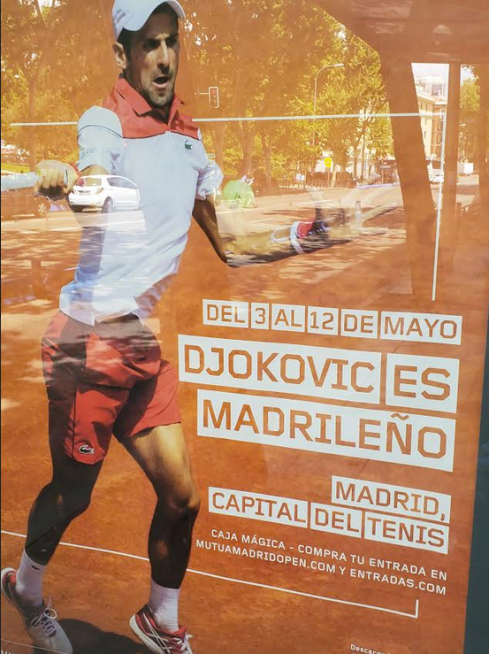
I spent part of my childhood in Ankara and part of it in Madrid. Commuting between Spain and Turkey in the early 1980s was a strange experience. Spain had recently returned to democracy after years of dictatorship, and Turkey had experienced yet another military coup. Both countries were at the fringes of Europe, neither part of the EU. It was said that “Europe finishes at the start of the Pyrenees”, but if the mountain range between France and Spain was regarded as a border, another frontier was the waters of the Bosphorus. It often felt as though I was travelling from one end of Europe to the other.
The Spain that I experienced was vibrant, welcoming and warm-hearted. Despite the occasional pro-Franco mutterings of an older generation, Spain embraced democracy. How I wanted my motherland to follow suit. But one day, on my way to school, I saw something that made me stop in my tracks. All the walls down the street were plastered with posters of dead babies thrown into bins. I froze. The disturbing and distorted images had been distributed by an ultraconservative Catholic group that claimed family values were being attacked, women had gone too far in the name of emancipation. A patriarchal backlash still lurked under the surface. The culture wars were under way.
The recent general election has made that clear. For the first time since 1978, a far-right party is making huge gains. Vox managed to get 10.26% of votes. The party, founded in 2013, has become the fastest growing movement in the country. Political scientists once smugly assumed that there were countries in which fascism could never again raise its ugly head. Germany and Spain, having gone through its horrors, were thought to be immune to the false promises of the far right. But then came Alternative für Deutschland (AfD), and now Vox, to show us how wrong those assumptions were.
What Vox is selling is strikingly similar to the package embraced by populist nationalists elsewhere: anti-immigration, anti-diversity, anti-gay marriage and LGBT rights, an aggressive longing for a mythical golden past. The Catalan conflict has played into Vox’s hands – as through history, one type of “benign” nationalism has dangerously inflamed another to stoke a vicious conflict. Populist nationalists love imaginary enemies, and Vox is no exception. Misogyny lies at its heart. Talk that men are suffering at the hands of “feminazis”, and that radical feminists are threatening the social fabric, will be familiar to watchers of the far right. They don’t believe that patriarchy exists, just as they don’t believe climate change is happening. Coming from Turkey, the misogynist rhetoric of the Spanish movement is horribly familiar to me. Just like the Justice and Development party (AKP) in Turkey, Vox wants to convert the current gender ministry into a ministry of family. The shift in words is significant. Rather than looking at gender discrimination and institutional gender disparity, the new focus is on “traditional family values”. Until recently Spain was regarded as one of the few countries that had made huge gains in gender equality. Now we know that even in such countries history can go backwards.
The party spokesman Francisco Serrano, a former judge, has even claimed there is a genocide against men, citing high suicide rates as his proof. This is typical of the far right propaganda machine – exploiting a real problem (the pressures on young men, particularly those from disadvantaged backgrounds) for its own selfish political gains. Vox is not alone in this. Ultraconservative Catholic organisations, such as Hazte Oír (Make Yourself Heard), known for its vitriolic attacks against the transgender community, are providing full support for the anti-feminist backlash. This year it hired a bus with a picture of Hitler on it captioned, “It’s not gender violence, it’s domestic violence #StopFeminazis”, and drove it around cities ahead of International Women’s Day. The message, and the identity of “the enemy”, could not be clearer.
A far-right “family rights conference” has been held in Italy, where Matteo Salvini, deputy prime minister and leader of the rightwing League, was the keynote speaker. In his speech he lashed out against two groups: feminists and immigrants. Salvini thinks low fertility rate is an “excuse” for immigration and therefore, Italian women must produce more babies. He falsely accuses feminists of pretending not to see the danger of Islamic extremism, failing to explain why one cannot be a feminist and oppose all kinds of extremism simultaneously.
In Poland, members of the Law and Justice party talk about making the country “LGBT free”. Kacyzsinki claims gays are a major threat “not just for Poland but for entire Europe, for the entire civilization that is based on Christianity.” In Hungary, Viktor Orbán, who offers financial incentives to boost the birth rate, has banned gender studies in universities. In Turkey, President Erdoğan says “every abortion is an Uludere” (a mass murder in which 34 Kurdish civilians were killed by the Turkish army in an air strike), and views birth control as a conspiracy against the great Turkish nation. He calls women who do not have children “deficient”. “Strong families lead to strong nations, every member of the nation should be mobilised in the pursuit of ‘great goals’.”
It is paradoxical that this generation of populist nationalists leads the way on international political cooperation. They copy each others’ tactics, echo their policies (the new far right in Spain even wants to build a wall along the border between Morocco and Ceuta to keep refugees out), and they’re often seen sending each other warm messages of support. Salvini welcomed the results in Spain: “I hope to have Vox as our ally in the Europe we are building.” And that is exactly what they are doing: they are building Europe. Not a new Europe, not even an old Europe, but a Europe modelled on an imaginary, mythical past. A monolithic Europe dedicated to halting and reversing progress.
If anyone doubts the nature of the political shifts we are witnessing across the world, one need only look to the raging clashes outside of politics and in our culture, from comedians in France attacking minorities in their shows to rightwing mayors in Italy vilifying John Lennon songs for being too internationalist or leftist, from bans on halal meat in Belgium to Freedom Party in Austria suggesting all Jews must register with authorities if they want to eat kosher meat. Political scientists have for too long paid too much attention only to measurable data, forgetting that culture, hard though it might be to analyse, is just as vital.
In contrast to the predictions of the US academic Samuel Huntington, the world is not going through a “war of civilisations”. What we face is far more complicated and disparate. This is the age of a thousand cultural clashes, and these battles take place within countries, not between them. They tear our societies apart and polarise politics to such an extent that it will be for ever altered.
Today, the day before Palm Sunday (Orthodox Easter is April 28th this year) is known as the Saturday of Lazarus in the Orthodox Church, the day that commemorates Christ’s raising of his friend Lazarus from the dead, prefiguring his own Resurrection.
The Resurrection of Lazarus, Guercino
And here’s Aretha Franklin’s incomparable rendition of the old gospel song: “Mary Don’t You Weep,” which commemorates the story of Lazarus and the Passover story as well. Below are the lyrics (“If you hadda been here, my brother woudna died…” always kills me) and the history of this spiritual which dates from before the Civil War, as its moving conflation of the two tales of redemption would indicate:
(Choir) Oh oh mary (x8)
(Soloist) Mmm don’t moan
Listen Mary
(Choir) Oh Mary don’t you weep
Oh Martha don’t you moan
Oh Mary don’t you weep
(Soloist) Tell your sister to don’t moan
(Choir) Oh Martha don’t you moan
(Soloist) Pharaohs Army
(Choir) Pharaohs army
(Soloist) All of them men got drowned in the sea one day
(Choir) Drown in the Red Sea
(Soloist) Yes they did
(Soloist) Now if I could
(Choir) If I could
(Soloist) If I could I surly would
(Choir) Surely would
(Soloist) I’d stand right up on the rock
(Choir) Stand on the rock
(Soloist) I’d stand right where moses stood
(Choir) Moses stood
(Soloist) Yes I would
(Soloist) Pharaohs army
(Choir) Pharaohs army
(Soloist) I know you know that story of
how they got drowned in the sea one day, oh yeah
(Choir) Drown in the Red Sea
(Soloist Lazarus Story Ad-lib)
We gonna review the story of two sisters Called mary and martha They had a brother Named Lazarus One day while Jesus was away Their dear ol’ brother died, yeah yeah Well now Mary went running to Jesus She said, “Master, My sweet lord!” “Oh if you had’ve been here my brother wouldn’t have died!” Oh yes she did. Jesus said, “come on and show me, show me where you, show me where you buried him, show me where you laid him down!” And when he got there, Jesus said, “For the benefit of you who don’t believe, Who don’t believe in me this evening! I’m gone call this creature, oh yes I am! He said “Lazarus, Mmm Lazarus, Hear my Hear my voice! Lazarus! Oh yeah!” He got up walking like a natural man, oh yes he did! Jesus said, “Now now now, Mary, Mary don’t you weep!” Mmm Oh mary don’t you weep Go on home and don’t you and your sister moan. Don’t moan. Tell martha not to moan
(Choir) Pharaohs army
(Soloist) Because you see Pharaohs army,
(Choir) Drown in the red sea
(Soloist) they got drowned in the Red Sea
(Soloist) Oh Mary don’t weep
(Choir) Oh Mary don’t you weep (x3)
(Soloist) Mary dont weep
(Choir) Oh Mary don’t you weep
(Soloist) Mary don’t weep
(Together) Tell Martha don’t you moan
Istanbul’s Hagia Sophia (Ayasofya in Turkish) was a church for almost a millennium, a mosque for almost five centuries, and has now been a museum for going on 85 years. But how much longer it will stay one remains to be seen. In 1935, Mustafa Kemal Atatürk, an ardent secularist with the kind of political capital that could only come from personally defeating a Greek army, converted the Byzantine church turned Ottoman mosque into a Turkish museum.
Since then, Turkish Islamists and conservative nationalists have long been eager to reverse the decision, and it now often feels like only a matter of time till they do. As with celebrity obituaries, some foreign correspondents may already have their stories drafted in anticipation.
Hagia Sophia’s future made news most recently as a result of the Christchurch attacks, the perpetrator of which referred to its status as a mosque. Turkish president Recep Tayyip Erdoğan, who was both threatened by name in the manifesto and also in the middle of an election campaign, responded quickly. ‘From 16,500 kilometres away they want to seize Ayasofya […]. Now, God willing, we will rename it as a mosque,’ he declared at a rally in Istanbul last month.
Unfortunately, Hagia Sophia’s history and grandeur have made it irresistible to competing civilisational chauvinisms, turning the building into a symbolic prize for those who are more interested in possessing it than worshipping in it. Strikingly, in the Islamophobic or anti-Western rhetoric of Christian or Islamic radicals respectively, claiming the Hagia Sophia is transformed into a protective measure. Turkish Islamists have consistently presented Hagia Sophia‘s conversion into a mosque as a necessary warning to hostile Christians who supposedly covet Turkish territory. And now, in the minds of a handful of white nationalists in the West, seizing the site has become linked, via violent fantasy, to stopping the supposed Muslim takeover of Europe and America. On both sides, bigotry is couched in the language of self-defence, and justified with reference to the other side’s presumed hostility.
Several commentators have identified a potential alternative to having a holy war: why not let Muslims pray in Ayasofya on Fridays, Christians pray in Hagia Sophia on Sunday and museum-goers enjoy the site’s architectural splendour under any name they want for the rest of the week? Both faiths seem to have accepted in principle that the building can go from mosque to church or church to mosque. Would the difference between doing so over the course of days or centuries really matter from a divine perspective? Icons – crucial for orthodox worship but anathema in Islam – could be covered up or removed. Carpets, which cover the floors of mosques, could be laid out or lifted up as needed.
No one is holding their breath for such a syncretic solution at the moment.[My emphases] The pressing question is what might be lost in Hagia Sophia’s next transformation. When the Ottoman sultan Fatih Sultan Mehmet II conquered Istanbul in 1453 and first made the building a mosque, he simply plastered over its Byzantine mosaics. Whether this was, as some Turkish writers optimistically claimed, a sign of his respect for the arts, it was certainly crucial to the works’ preservation. Later, in the 20th century, the conservative historian İbrahim Hakkı Konyalı boasted that when Ayasofya’s minarets were slated for destruction he saved them by fooling an ignorant museum administrator into believing their removal might bring down the whole dome. More recently, the Turkish government has earned a reputation for what the academic Ebru Erdem-Akçay has termed ‘restroying’ old buildings – stripping them of all beauty and historic character in overly aggressive restorations.
If nothing else, having survived rival religious agendas for this long, Hagia Sophia appears better prepared to endure the next round with dignity than many of the world’s political leaders.
Nicholas Danforth is a Senior Visiting Fellow at the German Marshall Fund.
How could I have once been embarrassed by the borough that took on Amazon? A new day has dawned over the Throgs Neck Bridge.
By Barbara Brotman
Ms. Brotman is a former newspaper columnist.
Jamaica Avenue, Queens, in 1958.CreditWilliam E. Sauro/The New York Times
Image
Jamaica Avenue, Queens, in 1958.CreditCreditWilliam E. Sauro/The New York Times
And so exits Amazon, pursued by the angry crowds of Queens.
As a native of Queens, I watched the battle over Amazon’s plans to build a headquarters in Long Island City with a sense of awe. Look — people not wanting Queens to change! Growing up there, I wanted Queens to change as much as possible. Preferably into Manhattan.
I just didn’t believe it could.
When I lived there in the 1960s and ’70s, Queens branded you as pure bridge-and-tunnel crowd. Queens, the embarrassment you cursed as you slunk back to Bayside after a concert at the Fillmore East. Queens, the humiliating asterisk after “I’m from New York.”
But look what it has become: Queens, the ultra-happening multicultural mecca! Queens, the darling of artists, creatives and foodies! Queens, the unrequited object of desire of a trillion-dollar tech company!
I’ve watched slack-mouthed with wonder and envy. When I was a kid there, the thought that Queens could become cool was so ridiculous that no one ever thought it. And now that it has, how I wish it had happened in time for me.
Oh, my childhood playing with friends in then-forested Bayside was idyllic. But when I became a teenager, the social disadvantages of outer-boroughhood was clear. My Queens was basically a suburb. My Queens was the place where if you wanted excitement, you had to take the bus and subway. A long way.
A multicultural wonderland proud of its status as the most ethnically diverse urban area in the world? Back then, it was the home of Archie Bunker, which for years was the first thing people said when they heard you were from Queens. Queens was whiter then, and though there were certainly different ethnic groups in the borough, most of us were too isolated in our own enclaves to know it. My own neighborhood was so homogeneous that my friends and I could have traced our families back to neighboring shtetls.
Cool people did occasionally emerge from Queens. The Ramones met in Forest Hills. Cyndi Lauper grew up in Ozone Park. Robert Mapplethorpe was born in Floral Park, of which he said, “It was a good place to come from in that it was a good place to leave.”
I also found it a good place to leave. I moved to Chicago after graduating from Queens College and over the years regularly found myself dancing the Queens-finessing quadrille.
“Oh, you’re from New York?” someone would say, clearly impressed. Then came the dreaded follow-up: “The city?”
But who was I kidding? I knew what was being asked. Was I a cool, artsy, possibly wealthy, definitely interesting, genuine New Yorker?
No, I was from Queens.
I sometimes rose to its, and my, defense: Queens hosted the 1964-65 World’s Fair and still has that neat Unisphere. Queens has a genuine Civil War fortress, Fort Totten. Queens gave me a great education, from P.S. 169 to Queens College, where, by the way, tuition then was free.
But in my heart, I knew it was still Queens.
Until, to my amazement, it wasn’t.
I have watched in disbelief as Flushing, where the big excitement used to be Alexander’s department store, became a destination for worldly foodies. As Astoria, whose streets I once used as free parking near the subway, blossomed with upscale restaurants and shops. As Long Island City, which had bizarrely seemed doomed to eternal grubbiness despite its boffo view of the skyline, got MoMA PS1, Silvercup Studios and rents of $4,000 a month.
My Bayside mind boggled. Co-working spaces in Sunnyside! Craft breweries in Ditmars! Yoga in the new Hunters Point South Park!
Then, a year ago, my millennial daughter relocated to New York. After I had spent decades of my life trying to avoid admitting I was from Queens, she proudly moved to Ridgewood.
And now the final triumph: Queens has taken on Amazon, and won.
A new day has dawned over the Throgs Neck Bridge. Sure, potshots are still lobbed at the Queens of old, which periodically gets blamed for native sons Harvey Weinstein and Donald Trump. And admittedly, I’m not exactly putting the outer-borough inferiority complex notion to rest here.
But today I can step into the light and claim my now-honorable heritage, which apparently gives my daughter major street cred, and say with pride the words I once muttered under my breath:
Balkans, Anatolia, Caucasus, Levant and rest of ME, Iran, South Asia
Me, I'm Nicholas Bakos, a.k.a. "NikoBako." I'm Greek (Roman really, but when I say that in English some five people in the world today understand what I'm talking about, so I use "Greek" for shorthand). I'm from New York. I live all over the place these days. The rest should become obvious from the blog.




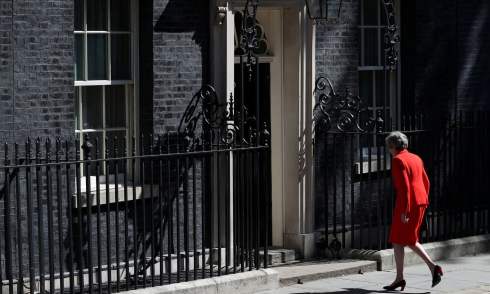 Theresa May returns to 10 Downing Street after her resignation speech. Photograph: Hannah McKay/Reuters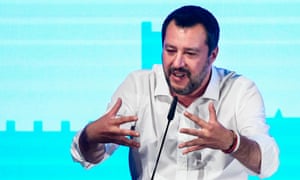


 Jadde: from Bosnia to Bengal