Balkans, Anatolia, Caucasus, Levant and other Middle East, Iran, Afghanistan, South Asia, occasional forays into southern Italy, Spain or eastern Europe, minorities, the nation-state and nationalism — and whatever other quirks or obsessions lurk inside my head.
An excellent documentary about Catalonia and its ongoing “issues”. Unbiased, both sides of the coin, covers and gives voice to everyone and every institution involved. If you’re not up on the crisis or don’t know much about Spanish politics it might be a little overwhelming; I’ve watched it twice already. The Youtube post says “trailer” but it’s the whole doc (below).
Happy New Year Amy…our brief 21st century Queen of Heartbreak…xoxoxo
“I’ll just be my own best friend.” Perhaps only a sexy British Jewess could deliver such a send-up of cheezy gringo “be-happy”-ness with such sarcastic sprezzatura.
How the Film “Looking for Oum Kulthum” by An Iranian Director shocked Egypt.
The film “Looking for Oum Kulthum” by Iranian director Shirin Neshat takes on a topic that verges on the sacred to Egyptians, and to an extent to the rest of the Arab world: the legendary Egyptian singer Oum Kulthum, whose fame is as strong as ever more than 40 years after her death.
The fact that Neshat, as a non-Arab, tackled the subject of Kulthum’s life and legacy has made her a target for criticism in Egypt, and the film, released in September 2017, had only a limited screening in the country. It was shown at the Aswan International Women Film Festival in February 2018 and at the Cairo Cinema Days festival in April 2018 and otherwise has not been distributed in theaters in Egypt, in spite of having played at prestigious film festivals around the world.
However, Neshat has insisted that Kulthum’s influence spreads beyond the Arab world and that the struggles faced by Kulthum as a female artist in a male-dominated society are similar to the struggles still faced by women in Iran and elsewhere.
In fact, Neshat had initially set out to make a straightforward biopic about Kulthum, but ultimately changed courses and made the film into a story within a story, following the path of an Iranian female filmmaker roughly modeled on Neshat herself, shooting a film about the iconic artist. The character of the filmmaker shares Neshat’s “own perspectives and challenges as an Iranian woman director attempting to make a film about an iconic Egyptian singer,” as she wrote.
The film plays with some of the criticisms Neshat herself has faced, including the fact that a non-Arabic speaker cannot truly understand or appreciate Kulthum. In one scene, for instance, an Arab woman asks the filmmaker why she would make a film about Oum Kulthum when she does not speak Arabic.
Neshat, an Iranian-born filmmaker living in exile in New York, directed her first feature film, “Women Without Men,” in 2009, for which she won the Silver Lion award for best director at the Venice Interna-tional Film Festival. “Looking for Oum Kulthum” also made its debut at the festival. Neshat co-directed the film with Shoja Azari, another Iranian-born filmmaker.
Photo: aljazeera.net
While “Women Without Men” followed the struggles of women inside Iran, Neshat has said that she wanted to move the subject of her next film away from Iran because she has been unable to enter the country in many years and no longer has an insider’s perspective. She was banned from re-entering Iran because of her work in 1996.
“I have not been back to Iran since 1996 and I was getting frustrated by this idea of an artist who was always obsessing about Iran and making work that is very nostalgic, always in this framework of exile,” Neshat told Harper’s Bazaar in an interview. “I am done with obsessing about a country that I no longer have access to.”
The director told TRT World that she was familiar with Oum Kulthum from her time growing up in Iran, where her parents listened to Kulthum and her songs are a favorite of Iranian taxi and bus drivers, just as they are in the Arab world. She noted that there is a strong Arab influence in southern Iran, where Arabic is also spoken, and that Kulthum’s popularity in Iran is also related to her similarity to Persian classical singers.
But as beloved as Kulthum might be outside Egypt, it can’t rival the obsession with her within her home country. Her funeral in 1975 was attended by four million people.
Writing in the Middle Eastern music publication Scene Noise, Egyptian writer Moustafa Daly noted: “While we take pride in her undying world-stardom, and definitely don’t mind sharing her with the world, we’re perfectly clear on that she belongs to us and that she is ours, and ours only.”
As such, it’s perhaps not surprising that the film was not necessarily greeted with open arms in Egypt. It didn’t help that, due to insurance issues and the difficulty of getting permits to shoot in Egypt, Neshat opted to shoot the film in Morocco instead, although she visited Egypt extensively to research Kulthum’s life for the film, and the movie’s lead, Yasmin Raeis, is a well-known Egyptian actress.
Iranian-born visual artist Shirin Neshat speaks during a joint press conference in Tokyo on October 17, 2017. Photo AFP
Some also pointed to inaccuracies in the film’s portrayal of Egypt and Kulthum’s life. For instance, the Egyptian news site Al Masrawy noted a scene featuring women’s protest taking place in 1914, although the first such protest known to have taken place in Egypt occurred in 1919. A review on the Al Maqal news site criticized the film for alleged inaccuracies in the portraying of historical details, as well as places and fashions, and concluded the film was “just an attempt to dismantle the myth of Oum Kulthum, but it failed.”
Other critics, as Al Monitor noted, complained of historical inaccuracies – in a scene, Oum Kulthum chokes while singing before President Gamal Abdel Nasser, which never actually happened – and fashion faux pas – scenes showing Kulthum in a short-sleeved dress and an audience member wearing a tarboush hat at a concert in the 1960s, which, the critic argued, was no longer worn Egypt at the time.
Al Monitor reported that Beirut-based MC Distributors, which holds the distribution rights to the film in Egypt, was unsure whether the film would ever be widely released there, as they were worried about a box office flop.
In an interview with Scene Noise, Neshat defended her decision to make the film, saying: “If there is one thing we all agree on in the Middle East, despite our religious and political differences, it’s our shared love for Oum Kulthum.”
“I have been attacked so many times by some in Arab communities for daring to make a film about Oum Kulthum as a non-Arab,” Neshat said. “And for me, aside from the argument that Oum Kulthum has simply transcended her Egyptian and Arab status into an international star, and has turned into an idol for millions of women across the region, it should be acknowledged that an artist from Shia background such as myself – from a country that is in direct conflict with Egypt – has spent 6 years to make a tribute to a Sunni female artist.”
The Portuguese city of Porto. Business confidence has rebounded in Portugal, production and exports have taken off, and economic growth is at its highest level in a decade.CreditRodrigo Cardoso for The New York Times
“We had faith that Portugal would come out of the crisis,” said Mr. Rivera, the general manager of Elaia. The company focused on state-of-the-art harvesting technology, and it is now one of Portugal’s biggest olive oil producers. “We saw that this was the best place in the world to invest.”
At a time of mounting uncertainty in Europe, Portugal has defied critics who have insisted on austerity as the answer to the Continent’s economic and financial crisis. While countries from Greece to Ireland — and for a stretch, Portugal itself — toed the line, Lisbon resisted, helping to stoke a revival that drove economic growth last year to its highest level in a decade.
Image
Praça do Comércio in Lisbon. In Greece, discouragement lingers after a decade of spending cuts. Portugal’s recovery has pivoted around restoring confidence to get people and businesses motivated again.CreditRodrigo Cardoso for The New York Times
The renewal is visible just about everywhere. Hotels, restaurants and shops have opened in droves, fueled by a tourism surge that has helped cut unemployment in half. In the Beato district of Lisbon, a mega-campus for start-ups rises from the rubble of a derelict military factory. Bosch, Google and Mercedes-Benz recently opened offices and digital research centers here, collectively employing thousands.
Foreign investment in aerospace, construction and other sectors is at a record high. And traditional Portuguese industries, including textiles and paper mills, are putting money into innovation, driving a boom in exports.
“What happened in Portugal shows that too much austerity deepens a recession, and creates a vicious circle,” Prime Minister António Costa said in an interview. “We devised an alternative to austerity, focusing on higher growth, and more and better jobs.”
Image
Portugal’s economic renewal has been accompanied by an increase in tourism that has helped cut unemployment in half.CreditRodrigo Cardoso for The New York Times
Image
“What happened in Portugal shows that too much austerity deepens a recession, and creates a vicious circle,” Prime Minister António Costa said in an interview. “We devised an alternative to austerity, focusing on higher growth, and more and better jobs.”CreditRodrigo Cardoso for The New York Times
Voters ushered Mr. Costa, a center-left leader, into power in late 2015 after he promised to reverse cuts to their income, which the previous government had approved to reduce Portugal’s high deficit under the terms of an international bailout of 78 billion euros, or $90 billion. Mr. Costa formed an unusual alliance with Communist and radical-left parties, which had been shut out of power since the end of Portugal’s dictatorship in 1974. They united with the goal of beating back austerity, while balancing the books to meet eurozone rules.
The government raised public sector salaries, the minimum wage and pensions and even restored the amount of vacation days to prebailout levels over objections from creditors like Germany and the International Monetary Fund. Incentives to stimulate business included development subsidies, tax credits and funding for small and midsize companies.
Mr. Costa made up for the givebacks with cuts in infrastructure and other spending, whittling the annual budget deficit to less than 1 percent of its gross domestic product, compared with 4.4 percent when he took office. The government is on track to achieve a surplus by 2020, a year ahead of schedule, ending a quarter-century of deficits.
European officials are now admitting that Portugal may have found a better response to the crisis. Recently, they rewarded Lisbon by elevating the country’s finance minister, Mário Centeno, who helped engineer the changes, to president of the Eurogroup, the influential collective of eurozone finance ministers.
The economic about-face had a remarkable impact on Portugal’s collective psyche. While discouragement lingers in Greece after a decade of spending cuts, Portugal’s recovery has pivoted around restoring confidence to get people and businesses motivated again.
“The actual stimulus spending was very small,” said João Borges de Assunção, a professor at the Católica Lisbon School of Business and Economics. “But the country’s mind-set became completely different, and from an economic perspective, that’s more impactful than the actual change in policy.”
The brighter outlook has lifted companies like Elaia, the olive oil producer. Its parent company, Sovena, opened Elaia as a start-up on a vast agricultural plain in southern Portugal in 2007, just before the downturn. Its timing could hardly have been worse, but managers persisted, paving the way for a surge in production when the crisis ebbed.
Image
A drone collecting data in an Elaia-owned olive grove in Portugal. The company focused on state-of-the-art harvesting technology, and it is now thriving.CreditRodrigo Cardoso for The New York Times
Elaia says it generates 14 percent of Portugal’s olive oil today, contributing to a renaissance in Portuguese exports, which now constitute 40 percent of economic activity. Drones buzz over vast olive groves, precision-planted with 2,000 trees per hectare, or roughly 2.5 acres, compared with around 150 trees for a traditional farm, monitoring crops for insect infestations, water levels and optimum harvesting time. Olives are picked by machine. Instead of field hands, the company hires technicians to operate the robots, and it has teamed up with universities for research.
“Portugal has benefited a lot after the tough years we had,” said Jorge de Melo, Sovena’s chief executive. “The mood is much better than it was before, and that’s important for the economy.”
Yet Portugal’s success is still vulnerable.
Growth is cooling from 2.7 percent last year, as Mr. Costa keeps public investment at a 40-year low to cut the deficit. While he restored public sector salaries to previous levels, they have barely budged since before the crisis. Social precariousness lingers, worsened by the spread of low-paying part-time contracts. And the minimum wage of 580 euros a month, although up, remains one of the lowest in the eurozone.
Portugal’s unions are now threatening strikes to press the government to increase wages and unlock more public spending to reduce inequality.
Mr. Costa insists that the government must keep cutting the deficit to offset the biggest threat to Portugal: its enormous debt, still one of the eurozone’s largest. Portuguese banks are saddled with bad loans from the earlier crisis, and the country remains vulnerable to any financial market turmoil that might be stirred up by problems in nearby Italy.
“We didn’t go from the dark side to the bright side of the moon,” the prime minister said. “There’s still a lot to do.”
“But when we started this process, a lot of people said that what we wanted to achieve was impossible,” he added. “We showed that there is an alternative.”
To cement the growth cycle, the government is putting what little investment it makes into targeted initiatives like tax breaks for foreign companies and training for the unemployed.
Image
A Mecachrome aeronautics factory in Évora, Portugal. Lured in 2016 by government incentives and European Union loans, the company invested 30 million euros, or $35 million.CreditRodrigo Cardoso for The New York Times
Image
Christian Santos, Mecachrome’s general manager in Portugal, plans to hire 150 more workers and to make millions in additional investments in the next three years.CreditRodrigo Cardoso for The New York Times
An hour and a half east of Lisbon, in Évora, a five-acre factory built by the French airplane-parts maker Mecachrome rises from rolling plains fringed with cork trees. Lured in 2016 by government incentives and European Union loans, it invested €30 million in a vast aerospace park where bulldozers are plowing fields to make way for roads and businesses.
Robots forge precision parts for Airbus, Boeing and other industry giants. Most of the 150 technicians were recruited nearby by an unemployment agency that started an intensive retraining program with the government.
Luis Salgueiro, 29, an apprentice with Mecachrome, was jobless during the crisis. He eventually got work as a waiter, and then in a tomato factory, before landing again at the unemployment office. At the Mecachrome plant, however, he was helping to code a complex machine to fashion a titanium airplane part. Completing the apprenticeship is expected to lead to a full-time job.
“The future looks really bright for me now,” he said, beaming as he gestured around the factory.
Christian Santos, Mecachrome’s director in Portugal, said he plans to hire 150 more workers and to make millions in additional investments in the next three years.
“Things are happening in Portugal,” he said. “There’s an enthusiastic mojo here.”
The Praça do Comércio in Lisbon. Nearby, in the capital’s Beato district, a megacampus for start-ups rises from the rubble of a derelict military factory.CreditRodrigo Cardoso for The New York Times
Camilo Soldado contributed reporting.
Liz Alderman is the Paris-based chief European business correspondent, covering economic and inequality challenges around Europe. She was previously an assistant business editor, and spent five years as the business editor of what was then the International Herald Tribune. @LizAldermanNYT
A version of this article appears in print on , on Page B1 of the New York edition with the headline: Portugal Dared to Cast Aside Austerity. It’s Having a Major Revival.. Order Reprints | Today’s Paper | Subscribe.
“For years and years, you just think falling means getting up again. Then suddenly you can’t stand anymore.”
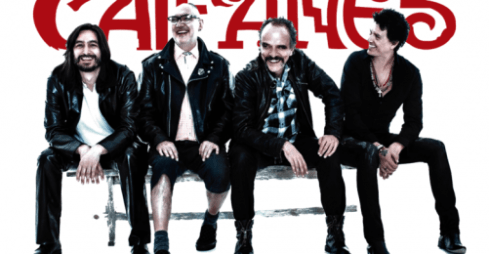
The Caifanes or now, Jaguares, one of the greatest bands of L.A. Spanish rock. And you have to love Mexicans’ hard-nosed, dead-eyed straight look in the face of sorrow, loss, age, death… (Why A.B. loved them so much?) Such a relief from the forced happiness and carnival masques lotsa other Latin Americans think they have to live with.
Check ’em out.
My favorite song. You’ll have to do the translating; it’s too personal and embarrassing for me… “Ayer Me Dijo Un Ave” — “…yesterday a bird told me”:
Greek song from the 60’s: “They light bonfires in the mahallades on St.Johna’s Eve, from what you know and tell me. Ay, how many thing like you know, that have died.”
The primary purpose of Jadde-ye-Kabir may be to pay yahrzeit to these customs and in this sense keep them alive, at least in memory.
There was a previous post, wait, here, from a couple of years ago:
People dance around a bonfire during Saint John’s night in northern Spanish town of Oviedo, late June 23, 2011. (Reuters/Eloy Alonso)
Today, June 24th is the feast day of St. John the Baptist. It’s actually one of several. June 24th is his birthday and August 29th is the day of his death (the whole Herod and Salome and head on a silver platter story). But the Orthodox Church has a tradition of setting aside the day after a particular holiday as the synaxis of the main “player,” shall we say, in the previous day’s events. Thus the Feast of the Holy Spirit comes on Monday after Pentecost, which marks its descent and illumination of the Apostles. December 26th is the synaxis of the Virgin, but there are so many other holidays dedicated to the Virgin that her synaxis the day after Christmas mostly goes unobserved. But January 7th, the synaxis,is the most important of the three St. John’s days of the Church — not his birthday, nor his death, but the day after Epiphany, January 6th, when he baptized Jesus Christ. So as opposed the Catholic West, where June 24th, today, is the most important of his feast days, what most Greeks refer to as του Άη Γιαννιού is usually January 7th and most Greek Johns celebrate their namedays on this day as the closing date of the Christmas season.
And yet his birthday is not ignored. If we remember (or ever knew) Christ and St. John were cousins, as were their mothers, Mary and Elizabeth. On March 25th, the of day the Annunciation, the first thing the Virgin Mary does after the visitation of Gabriel is run — flustered and shocked — to her cousin Elizabeth to tell her what had happened to her. (This love between the two teenage Jewish cousins has always touched me.) Elizabeth at the time was already six months pregnant with the young John, and the “babe leapt in her womb” upon hearing that his beloved cousin had been conceived, for it was John’s purpose — the “Forerunner” — to lay the groundwork, baptize Him and set Him on His mission. Three months later, at the Summer Solstice, John was born.
And so again we have the formidable astrological and astronomical symmetry that the Church most likely inherited through Zoroastrianism. Exactly three months after the Annunciation on the Vernal Equinox (Nowruz), John is born on the Summer Solstice (Tirgan), and then six months later Jesus Himself is born on the Winter Solstice (Yalda). According to Iranian friends, Tirgan is not celebrated nearly as widely as Yalda and especially not Nowruz, and even less than the Autumnal Equinox (Mehregan), but is still present as a holiday in the Iranian consciousness. Apparently there’s a certain symbolic ritual table set-up for Tirgan, like there is for Nowruz and Yalda, and I had located an image of it before but now can’t find it.
Throughout the Christian world it has traditionally been a time for building bonfires, though why this should be so in the middle of the heat and lengthy days of late June and not at the Winter Solstice has always kind of baffled me. In northern Europe (for our civilization’s perhaps greatest treatment of the season, see Shakespeare’s “Midsummer Night’s Dream” and Bergman’s “Smiles of a Summer Night” and starkly intense film version of Strindberg’s Miss Julie by Liv Ullman and starring Colin Farrell — as perhaps our civilization’s greatest treatment of the season), Scandinavia and Russia (oh, yeah, Dostoevsky’s White Nights too) this time of the year has also always been associated with a kind of — especially — erotic license and carnivalesque freedom, or even temporary bouts of lunacy or mental illness, which probably comes from not sleeping for several weeks when the sky only goes dark for about an hour every night.
The bonfire tradition still persists in parts of Greece as well, but as all such practices, is probably slowly being forgotten. The disappearance of practices like this, and the subsequent impoverishment of humanity’s symbolic consciousness and imagination that these losses entail always saddens me. As I’ve written before, a friend once said to me: “History is a personal emotion for you, N.”
There’s a song by the recently deceased Demetres Metropanos that I love which refers to St. John’s Eve and its bonfires. Metropanos was a singer very popular in Greece from the 1970s to the early part of the previous decade. I’ve never understood why so many people considered him to be slightly skylé as a singer — meaning, oh, I dunno, crudely if not underworldly, working-class. I think much of his music is lovely. This song, the lyrics of which I don’t totally understand, meaning not that I don’t understand the Greek; I don’t understand the imagery: Η σούστα πήγαινε μπροστά — “The spring (which means wire coil? shock absorbers? spring, as in both mattress and ‘jump,’ when its the name of a dance in Crete or the Dodecannese? Something else? I don’t know…) led the way forward” is one of them. But it’s a testimony to the high quality of Greek popular music at the time, that composers and singers (I don’t know who Metropanos’ lyricist was) were unafraid to use the most abstract and associative poetic imagery in their music, even if it was destined for middle and even lower-middle class audiences. as opposed to the lyrics of rebetika, which often consist of mostly repetitive, “tough-guy,” metallic jangling.
The lyrics, in Greek:
Η σούστα πήγαινε μπροστά κι ο μάγκας τοίχο τοίχο δεν έτυχε στα χρόνια αυτά τίποτα να πετύχω
Ανάβουνε φωτιές στις γειτονιές του Άη Γιάννη αχ πόσα ξέρεις και μου λες αχ πόσα τέτοια ξέρεις και μου λες που ‘χουν πεθάνει
Με βάλαν πάνω στην κορφή στ’ αγριεμένο κύμα στης Σμύρνης την καταστροφή στ’ άδικο και στο κρίμα
Ανάβουνε φωτιές στις γειτονιές του Άη Γιάννη αχ πόσα ξέρεις και μου λες αχ πόσα τέτοια ξέρεις και μου λες που ‘χουν πεθάνει
(Again, very difficult, odd to translate)
The spring led the way
With the “tough guy” (manga, maganda) hugging the wall
I never managed, in all these years, to accomplish anything.
–
They light bonfires in the mahallades on St. John’s Eve,
which you like telling me about.
Oh, all those things you know and tell me of, things that are long dead.
–
They set me up on top,
with the furious waves,
At the destruction of Smyrna,
Amidst the injustice and the pity.
–
They light bonfires in the mahallades on St. John’s Eve,
which you like telling me about.
Oh, all those things you know and tell me of,
things that are long dead.
–
“…things that are long dead…”
–
And that’s me, NikoBako: the keeper of things long dead.
Balkans, Anatolia, Caucasus, Levant and rest of ME, Iran, South Asia
Me, I'm Nicholas Bakos, a.k.a. "NikoBako." I'm Greek (Roman really, but when I say that in English some five people in the world today understand what I'm talking about, so I use "Greek" for shorthand). I'm from New York. I live all over the place these days. The rest should become obvious from the blog.








 Jadde: from Bosnia to Bengal