Tag Archives: India

The Destruction of Delhi — Dalrymple (final)

3 Jul

Bahadur Shah Zafar enthroned

Bahadur Shah Zafar ended up being the last of the Mughal emperors.  Already along in years when the Uprising began, he became, due to the enormous symbolic power the Mughal Shahenshah still commanded, the reluctant leader of a revolution that, for even a younger and seasoned warrior – of whom he was neither – would have been a daunting force to control, command and direct.  The original rebelling Hindu and Muslim sipahis (sepoys) had gravitated towards Delhi as the symbolic center of northern India.  They were soon joined by random teams of jihadis, groups of what Dalrymple calls “Wahabbis,” though always in quotes so I don’t know quite know who he means, and the usual motley crew of Pashtuns down from Afghanistan that never miss a good fight if word of one reaches them.  This alienated many Hindu factions in no good time and, bent as many of these groups were on plunder as much as Holy War, they ended up being as great a curse on the poor, long-suffering Delhiwallahs as any of the other players involved.

Zafar lived to see most of his family murdered.  Of his, I believe, thirty-one sons – who participated in the uprising from roles of active leadership to not at all – only two survived: three teenagers were shot in the heart at point blank range; two of the more ’implicated’ sons of similar age were put before a firing squad ordered to fire low in the guts for maximum pain; the rest hanged – along with all the other male notables of his court, including Hindus.  Certain amuck British officers seem to have spent days running around the ruins of the city, shooting anyone that looked even remotely “mirza”-like, or even Muslim, or just once rich.  The hangings seem to have lasted for weeks, with a cessating intervention finally coming from London itself.  Zafar was exiled first to the Andaman Islands and then to Burma, where he died in 1862.

It was the effective end of the Mughal aristocracy and the complete wiping out of an historic dynasty; a twentieth-century style liquidation of a social class; given the comparative dimensions of the societies involved, it was surely a purge of Bolshevik proportions and equally paranoid and crazy.  Dalrymple artfully carries the consequences of these events into modernity for us.

******************************************************************************************

Zafar (below)
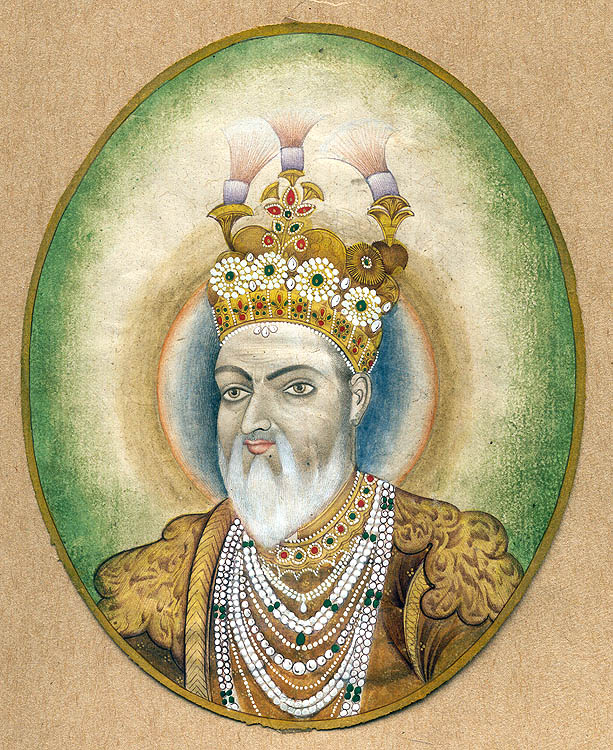
Dalrymple:

But while Zafar was certainly never cut out to be a heroic or revolutionary leader, he remains, like his ancestor the Emperor Akbar, an attractive symbol of Islamic civilization at its most tolerant and pluralistic.  He himself was a notable poet and calligrapher; his court contained some of the most talented artistic and literary figures in modern South Asian history; and the Delhi he presided over was undergoing one of its great periods of learning, self-confidence, communal amity and prosperity.  He is certainly a strikingly liberal and likeable figure when compared to the Victorian Evangelicals whose insensitivity, arrogance and blindness did much to bring the Uprising of 1857 down upon both their own heads and those of the people and court of Delhi, engulfing all of northern India in a religious war of terrible violence.

Above all, Zafar always put huge emphasis on his role as a protector of Hindus and the moderator of Muslim demands.  He never forgot the central importance of preserving the bond between his Hindu and Muslim subjects, which he always recognized was the central stitching that held his city together.  Throughout the Uprising, his refusal to alienate his Hindu subjects by subscribing to the demands of the jihadis was probably his single most consistent policy.

There was nothing inevitable about the demise and extinction of the Mughals, as the sepoys’ dramatic surge towards the court of Delhi showed.  But in the years to come, as Muslim prestige and learning sank, and Hindu confidence, wealth, education and power increased, Hindus and Muslims would increasingly grow apart, as British policies of divide and rule found willing collaborationists among the chauvinists of both faiths.  The rip in the closely woven fabric of Delhi’s composite culture, slowly widened into a great gash, and at Partition in 1947 finally broke in two.  As the Indian Muslim elite emigrated en masse to Pakistan, the time would soon come when it would be almost impossible to imagine that Hindu sepoys could ever have rallied to the Red Fort and the standard of a Muslim emperor, joining with their Muslim brothers in an attempt to revive the Mughal Empire.

Following the crushing of the Uprising, and the uprooting and slaughter of the Delhi court, the Indian Muslims themselves also divided into two opposing paths: one, championed by the great Anglophile Sir Sayyid Ahmad Khan, looked to West, and believed that Indian Muslims could revive their fortunes only by embracing Western learning.  With this in mind, Sir Sayyid founded his Aligarh Mohamedan Anglo-Oriental College (later Aligarh Muslim University) and tied to recreate Oxbridge in the plains of Hndustan.

The other approach, taken by survivors of the old Madrasa i-Rahimiyya, was to reject the West in toto and to attempt to return to what they regarded as pure Islamic roots.  For this reason, disillusioned pupils of the school of Shah Waliullah, such as Maulana Muhammad Qasim Nanautawi – who in 1857 had briefly established an independent Islamic state north of Meerut at Shamli, in the Doab – founded an influential but depressingly narrow-minded Wahhabi-like madrasa at Deoband, one-hundred miles north of the former Mughal capital.  With their backs to the wall, they reacted against what the founders saw as the degenerate and rotten ways of the old Mughal elite.  The Deoband madrasa therefore went back to Koranic basics and rigorously stripped out anything Hindu or European from the curriculum.*

*(It was by no means a total divide: religious education at Aligarh, for example, was in the hands of the Deobandis.)

One hundred and forty years later, it was out of Deobandi madrasas in Pakistan and Afghanistan that the Taliban emerged to create the most retrograde Islamic regime in modern history, a regime that in turn provided the crucible from which emerged al-Qaeda, and the most radical and powerful fundamentalist Islamic counter-attack the modern West has yet encountered.

Today, West and East again face each other uneasily across a divide that many see as religious war.  Jihadis again fight what they regard as a defensive action against their Christian enemies, and again innocent women, children and civilians are slaughtered.  As before, Western Evangelical politicians are apt to cast their opponents and enemies as the role of “incarnate fiends” and conflate armed resistance to invasion and occupation with “pure evil.”  Again, Western countries, blind to the effect their foreign policies have on the wilder world, feel aggrieved to be attacked – as they interpret it – by mindless fanatics.

Against this bleak dualism, there is much to value in Zafar’s peaceful and tolerant attitude to life; and there is also much to regret in the way that the British swept away and rooted out the late Mughal’s pluralistic and philosophically composite civilization.

As we have seen in our own time, nothing threatens the liberal and moderate aspect of Islam so much as aggressive Western intrusion and interference in the East, just as nothing so radicalizes the ordinary Muslim and feeds the power of the extremists: the histories of Islamic fundamentalism and Western imperialism have, after all, often been closely, and dangerously, intertwined.  There are clear lessons here.  For, in the celebrated words of Edmund Burke, himself a fierce critic of Western aggression in India, those who fail to learn from history are always destined to repeat it.
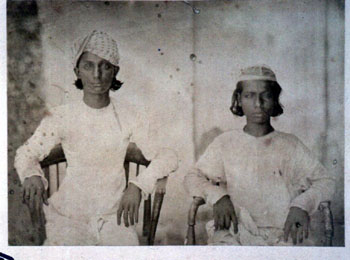
Zafar’s two surviving sons, who shared his Burmese exile with him.

****************************************************************************************************************************************************************************

Agha Shahid Ali: “After Seeing Kozintsev’s King Lear in Delhi”

Lear cries out “You are men of stones”

as Cordelia hangs from a broken wall.


I step into Chandni Chowk, a street once

strewn with jasmine flowers

for the Empress and the royal women

who bought perfumes from Isfahan,

fabrics from Dacca, essence from Kabul,

glass bangles from Agra.


Beggars now live here in tombs

of unknown nobles and forgotten saints

while hawkers sell combs and mirrors

outside a Sikh temple.  Across the street,

a theater is showing a Bombay spectacular.


I think of Zafar, poet and Emperor,

being led through this street

by British soldiers, his feet in chains,

to watch his sons hanged.


In exile he wrote:

“Unfortunate Zafar

spent half his life in hope,

the other half waiting.

He begs for two yards of Delhi for burial.”


He was exiled to Burma, buried in Rangoon.  
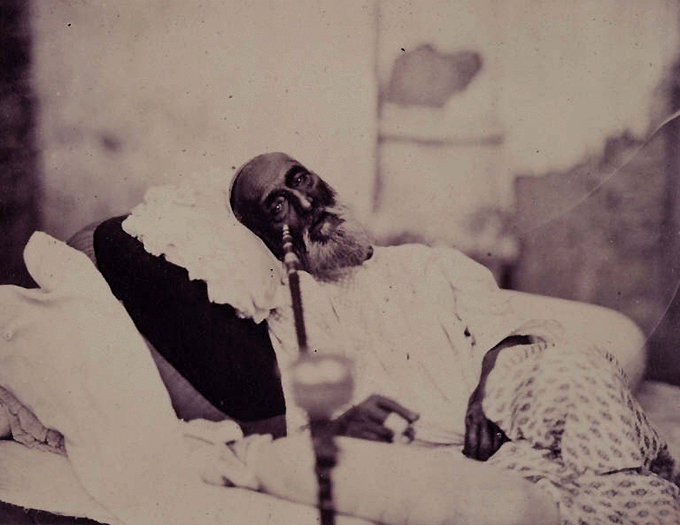
 

Last known photograph of Bahadur Shah Zafar

**********************************************************************************************************************************

I’d like to heartily and gratefully thank Mr. Dalrymple (below) for his permission to reproduce such an extensive piece of his work.  Usually permission is hard to obtain or you get no answer at all.  When I wrote Mr. Dalrymple, however, he shot an email back at me within minutes saying nothing but: “Go for it.”  Shukriya, kheyli moteshakeram, teshekur, and thanks again.

 “After Seeing Kozintsev’s King Lear in Delhi” reprinted from The Veiled Suite: The Collected Poems by Agha Shahid Ali. English translation copyright © 2009 by Daniel Hall. With the permission of the publisher, W.W. Norton & Company, Inc.

Watercolor of the Jama Masjid and old Delhi from 1852


Where’s Charlemagne When We Need Him?

1 Jul

Huh?

Not the most brilliant thing I’ve read lately but one important, though really flawed, point:

“BY 1900, only two genuine multinational empires remained. One was the Ottoman, which was by then in the process of abandoning its traditional religious toleration for Turkish nationalism and even racism. [A completely, unfair, simplistic and un-historical assessment]  The other was Austria-Hungary, home to 11 major national groups: a paradise in comparison with what it was to become. Its army had 11 official languages, and officers were obliged to address the men in up to four of them.

It wasn’t terribly efficient, but it secured an astonishing degree of loyalty. It also brought rapid economic and cultural progress to an area extending from the Swiss border to what is today western Ukraine. During World War I, Austria-Hungary fielded eight million soldiers commanded by, among others, some 25,000 Jewish reserve officers. Thirty years later, the nation-states that succeeded the empire sent most of the surviving Jewish officers to the gas chambers.”

Unfortunately, the poison of the ethnic-based nation-state ideal had gotten too far by then.  Even the portrait of Austria-Hungary he gives us is completely idealized and existed in the form he describes for less than a century.

(Click above)

How sweet though, to have lived in a world that interesting instead of the stupefying monotony of the modern nation-state.  But that idea is so powerful — no, not because it’s natural and inborn, but because the modern, bureaucratic state was the first with the technical apparatus to impose it on its population(s) — that it deletes all historical files dealing with plurality.  Not a single European tourist who comes to New York fails to make the same comment: “Amazing…all these peoples living together…” and I want to explain that that’s how humanity lived for most of its civilized existence — or just pull my hair out — but I usually don’t bother.

But that reminds me: I do live in a world that “sweet” and “interesting:”

Mr. Deak (Hungarian?) is also wrong on an even more crucial point.  The Ottoman and Austro-Hungarian empires were not the world’s last multi-ethnic states.  There’s still China.  Most of southeast Asia.  And Russia.  And most ex-Soviet republics.  And certain Latin American countries.  And almost all of Africa.  And Syria and Lebanon and Iraq and Iran and Afghanistan and Pakistan and the world’s great wonder, India.  Even Turkey.  (And wherever ethnic nationalism is a problem in those countries it’s based on the Western intellectual model.)  In fact, most of the world still lives in “plural” situations.  Only Europe (and even in Europe there’s Spain and the U.K.), has an issue with this concept, but it seems to be fading even there.  Its last bastion will probably be the growing number of viciously homogenized, ugly little states of Eastern Europe and the Balkans.  Which brings us back to Michael Ignatieff:

“The misery of the Balkans stems in part from a pathetic longing to be good Europeans — that is, to import the West’s murderous ideological fashions.  These fashions proved fatal in the Balkans because national unification could be realized only by ripping apart the plural fabric of Balkan village life in the name of the violent dream of ethnic purity.”

From Blood and Belonging: Journeys into the New Nationalism, Michael Ignatieff


The Destruction of Delhi — Dalrymple

29 Jun

The following is reproduced by permission and with the generosity of the author from William Dalrymple’s The Last Mughal: The Fall of a Dynasty: Delhi, 1857.  I’ve mentioned this brilliant book in a previous post: Favorite Blogs: The Delhi Wallah.  These are from the gripping few pages where Dalrymple describes the irrational and totally vengeful destruction of much of Delhi by the British after the Uprising of 1857 had been suppressed.

The entrance to the Jama Masjid

*******************************************************************************************************************************************

Canning had already given orders to destroy the Delhi walls and defences, but Lawrence managed to get the orders rescinded, arguing that there was insufficient gunpowder in Delhi to blow up several miles of walls.  By the end of 1859, Canning had agreed to his plan only to demolish what was needed to make the fort and city more defensible.  By 1863, the planned demolition of the eastern half of Chandni Chowk down to the Dariba had also been stopped.  Even so, great swathes of the city – especially around the Red Fort – were still cleared away, as Ghalib recorded in a series of sad letters to his correspondents across Hindustan: “The area between Raj Ghat [on the city’s eastern edge, facing the Yamuna] and the Jama Masjid is without exaggeration a great mound of bricks.”

“The Raj Ghat Gate has been filled in.  Only the niched battlements of the walls is apparent.  The rest has been filled up with debris.  For the preparation of the metalled road, a wide open ground has been made between Calcutta Gate and the Kabul Gate.  Punjabi Katra, Dhobiwara, Ramji Ganj, Sadat Khan ka Katra, the Haveli [palace, mansion, konak] of Mubarak Begum [Ochterlony’s widow], the Haveli of Sahib Ram and his garden – all have been destroyed beyond recognition.”

What had been the neighborhood around the Jama Masjid (above).  The Kashmiri Gate (below).

Other letters of Ghalib’s mourned the destruction of some of the city’s finest mosques, such as the Akbarabadi Masjid and the great Masjid Kashmiri Katra [I haven’t been able to find any photos of these, but the Akbarabadi Masjid was considered a sort of twin to the Jama Masjid — my comment]; great Sufi shrines such as that of Sheikh Kalimullah Jahanabadi;* the imambara+ built by Maulvi Muhannad Baqar; and the establishment of a cleared open space 70 yards wide around the Jama Masjid.  Four of Delhi’s most magnificent palaces were also completely destroyed; the havelis of the recently hanged nawabs of Jhajjar, Bahadurgarh and Farrucknagar, as well as that of the Raja of Ballabargh.  The great caravanserai of Shah Jahan’s daughter Jahanara was demolished and replaced by a new town hall.  Shalimar Bagh, where Aurangzeb had been crowned, was sold off for agricultural use.  Even where old Mughal structures were allowed to continue, they were often renamed: Begum Bagh, for example, became the Queen’s Gardens.

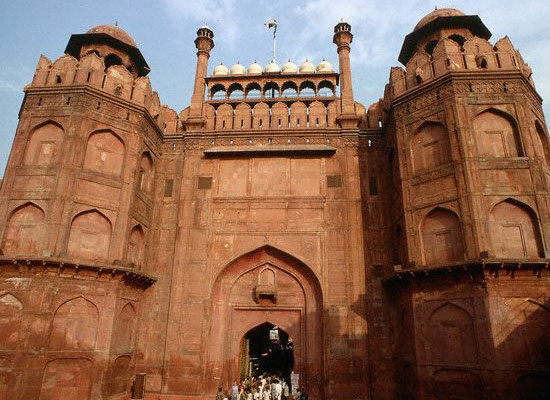
Tragically the Red Fort was another area where Lawrence intervened too late to stop the wholesale destruction.  He managed to save both the Jama Masjid and the Palace walls, but 80 per cent of the rest of the Fort was leveled.  Harriet Tyler, who was living in an apartment above the Diwan i-Am at this time, was horrified by the decision and decided to paint a panorama of the city before it disappeared.  It confirmed her in her disgust of the way the British had behaved in Delhi since the assault began on 14 September.  “Delhi was now truly a city of the dead,” she wrote in her memoirs.  “The death-like silence of that Delhi was appalling.  All you could see were empty houses… The utter stillness…[was] indescribably sad.  It seemed as if something had gone out of our lives.”

[These are some drawings I’ve been able to find of the palace and palace grounds but, though beautiful, they don’t give you much of a sense of what was destroyed — my comment]:

(the above appears in Dalrymple’s book)

The demolitions started at the Queen’s Baths in November 1857, and continued through most of the Palace, destroying an area “twice the area of the Escorial,” as the horrified historian James Ferguson pointed out twenty years later.  “The whole of the area between the central range of the buildings south and eastwards from the bazaar, measuring about 1000 feet each way, was occupied by the harem apartments – twice the area of any Palace in Europe.”

“According to the native plan I possess, which I see no reason for distrusting, it contained three garden courts, and some thirteen or fourteen other courts, arranged some for state, some for convenience; but what they were like we have no means of knowing.  Not one vestige of them now remains…  The whole of the harem courts of the palace were swept off the face of the earth to make way for a hideous British barrack, without those who carried out this fearful piece of vandalism, thinking it even worthwhile to make a plan of what they were destroying or preserving any record of the most splendid palace in the world.”

As late as March 1859 George Wagentrieber was please to record in the Delhi Gazette that “a good deal of blowing up” was still going on in the Palace.  Some of the finest buildings were the first to go, such as the Chhota Rang Mahal.  Even the Fort’s glorious gardens – notably Hayat Bakhsh Bagh and Mehtab Bagh – were swept away.  All that was left by the end of the year was about one-fifth of the original fabric – principally a few scattered, isolated marble buildings strung out along the Yamuna waterfront.  These were saved owing largely to the fact that they were in use as offices and messes by the British occupation troops, but their architectural logic was completely lost once they were shorn of the courtyards of which they were originally a part.


(click on this photo)

All the gilded domes and most of the detachable marble fittings were stripped and sold off by the Prize agents.  As Fergusson noted,

“when we took possession of the palace, everyone seems to have looted after the most independent fashion.  Among others, a Captain (afterwards Sir) John Jones [who had blown in the Lahore Gate during the capture of the Fort] tore up a great part, but had the happy idea to get his loot in marble as table tops.  Two of these he brought home and sold to the Government for 500 pounds, and were placed in the India Museum.”

These fragments included the rightly celebrated “Orpheus panel” of pietra dura inlay which Shah Jahan had placed behind his Peacock Throne.

Meanwhile, what remained of the Mughal’s Red Fort became a grey British barracks.  The Naqqar Khana, where drums and trumpets had once announced the arrival of ambassadors from Isfahan and Constantinople, became the quarters of a British staff sergeant.  The Diwan i-Am became a became a lounge for officers, the Emperor’s private entrance a canteen, and the Rang Mahal was turned into a military prison.  The magnificent Lahore Darwaza was renamed the Victoria Gate and became “a bazaar for the benefit of the Fort’s European soldiers.”  Zafar’s contribution to the Palace architecture – the Zafar Mahal, a delicate floating pavilion in a large red sandstone tank – became the centerpiece of a swimming pool for officers, while the surviving pavilions of Hayat Bakhsh Bagh were turned into urinals.

* A modest tomb of the saint is, however, still extant in the Pigeon-seller’s Bazaar in Old Delhi

+ Shia religious hall used to hold mourning ceremonies during Muharram

******************************************************************************************************************************************

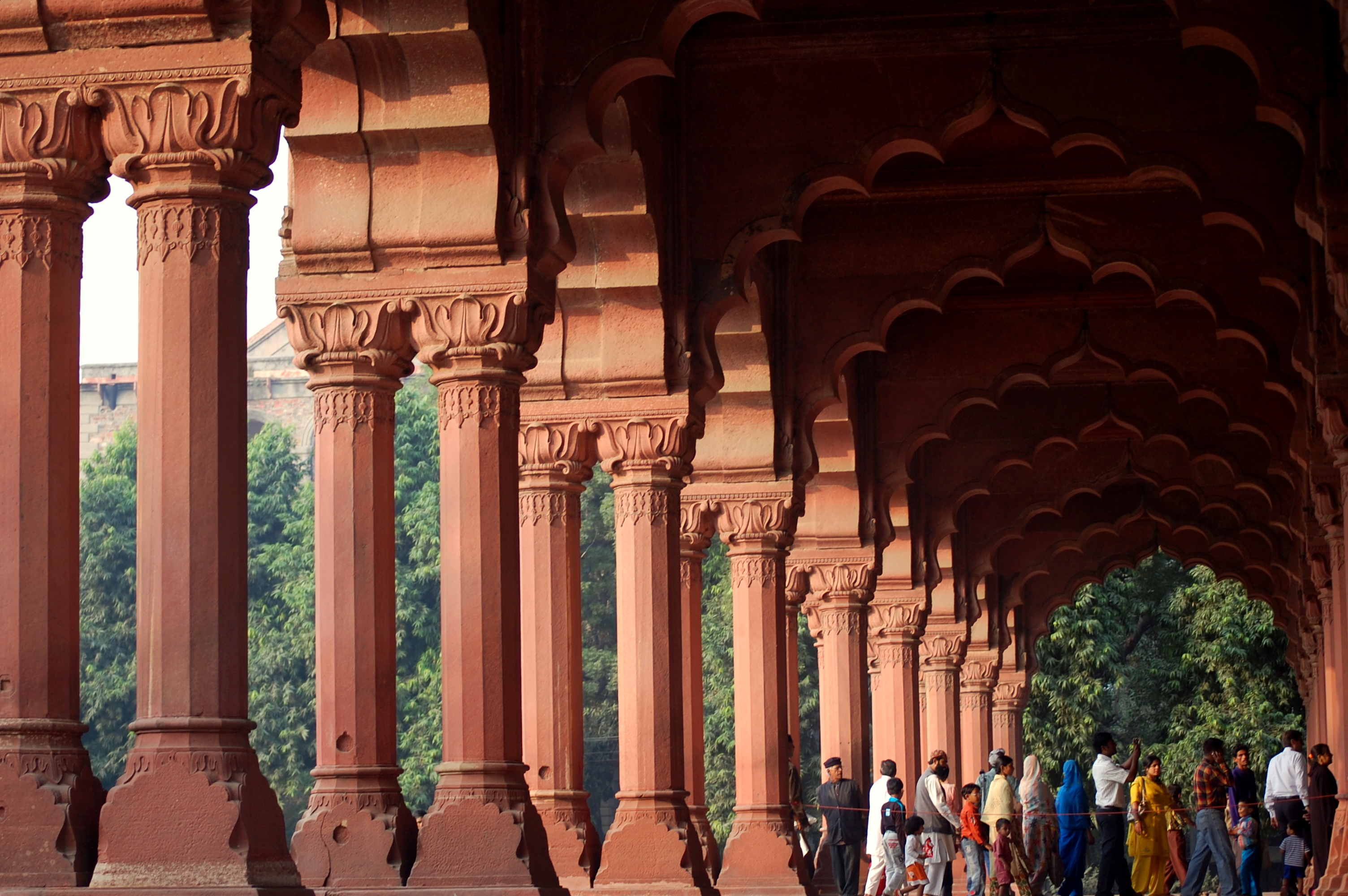
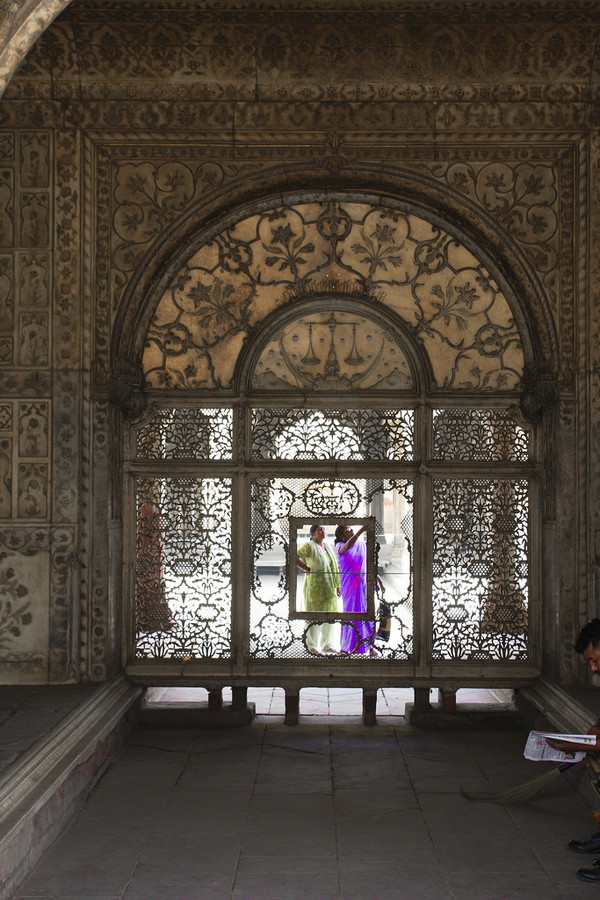
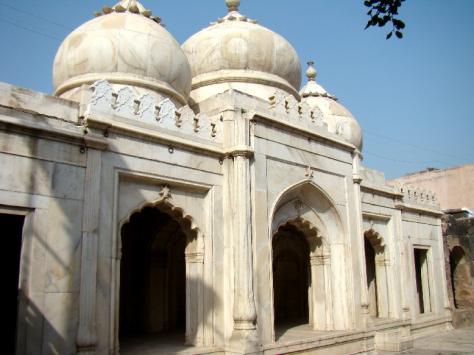
Below, I’m just posting whatever photos I can find of what’s left of the palace, without specific naming of each building, but hoping that readers constantly keep in mind that all this gorgeousness — and seen here damaged and stripped of its jewelled furnishings, gold, carpets, silken hangings, “Dacca gauzes,” running waters and the exquisitely dressed men and women of the court — is only the twenty percent of the original that survived Some photos may be clickable:

The famous Persian couplet by Amir Khosrow: “Agar Firdaus bar-ruhe-e-zamin ast, haminast o haminast o hamin ast.”  “If there is a heaven on earth, it is here, it is here, it is here.”

Photo: Kashmir

26 Jun

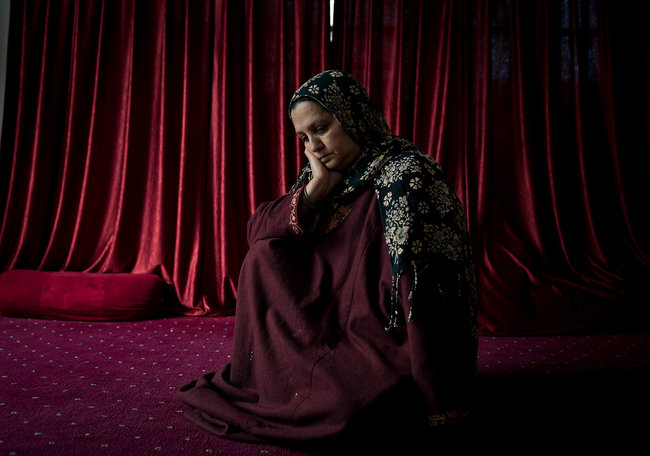
Grief. Red. Ruby. Blood. Velvet. Agha Shahid Ali. His mother. The Virgin. The clean, empty comfort of a Muslim home. The great disgrace of the “world’s largest democracy.”

Parveena Ahangar has not seen her son since three officers took him away in 1990, she said. The officers have not been punished.  (The New York Times)

“In Kashmir, Killing Ebbs, but Killers Roam Free”


Comment: nikobakos@gmail.com

Srinagar: Miraj-Ul-Alam

24 Jun

Kashmiri Muslims pray as an unseen custodian displays a holy relic, believed to be a hair from the Prophet Muhammad’s beard, at Kashmir’s main Hazratbal Shrine in Srinagar on June 22, 2012, during the last Friday of celebrations for Miraj-Ul-Alam (Ascension to Heaven).  (By Tauseef Mustafa/AFP/Getty Images.)

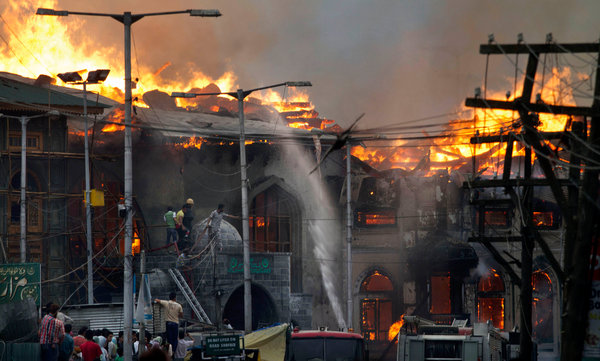
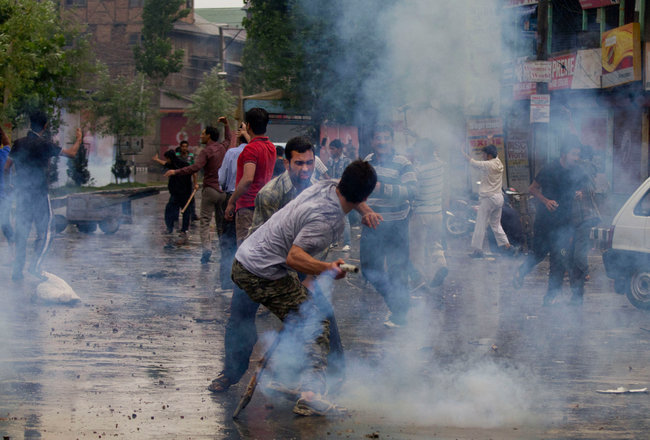
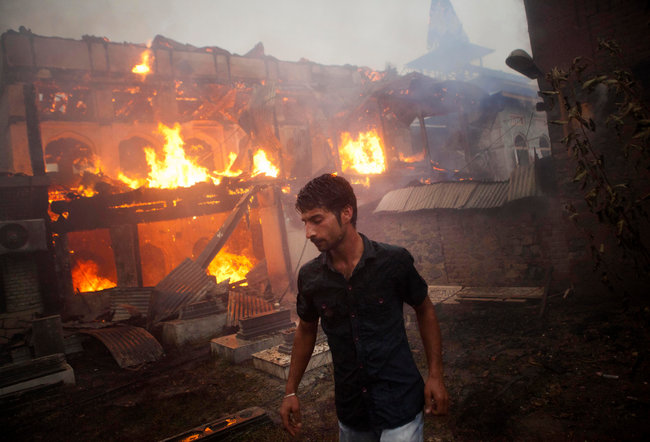
P.S.: Blaze at Sufi Shrine Triggers Violence in Indian Kashmir

Kashmiri residents helped firefighters extinguish the blaze at a Sufi shrine in Srinagar on Monday.  (Dar Yasin/Associated Press)

Protesters clashed with security forces in downtown Srinagar.  (Dar Yasin/Associated Press)

The cause of the fire at the shrine, which housed a relic of an 11th century Sufi saint, was not immediately known.  (Dar Yasin/Associated Press)

Residents pulled a water pipe to help battle the blaze.  (Danish Ismail/Reuters)

“Police sealed off roads leading to the shrine where hundreds of men and women had gathered, many of them wailing and crying.

“I feel like I’ve lost everything,” cried a 45-year-old woman, Shameema Akhtar, tears rolling down her cheeks.

Muslim militants spearheading the anti-India campaign in Kashmir have in the past tried to enforce a radical form of Islam, banning beauty parlors, cinemas and liquor shops, as well as asking women to wear the veil.

But they have had little success in a region where people mostly follow Sufiism, a gentle, mystic tradition of Islam.”

Tens of thousands of people have been killed in the years of strife in the region that both of the nuclear-armed rivals, India and Pakistan, claim. Pakistan controls part of Kashmir in the west.


Comment: nikobakos@gmail.com

Photo: Bangalore

24 Jun

Youth. Beautiful hair. Curiousity. Consumers. Smarter than you.


Comment: nikobakos@gmail.com
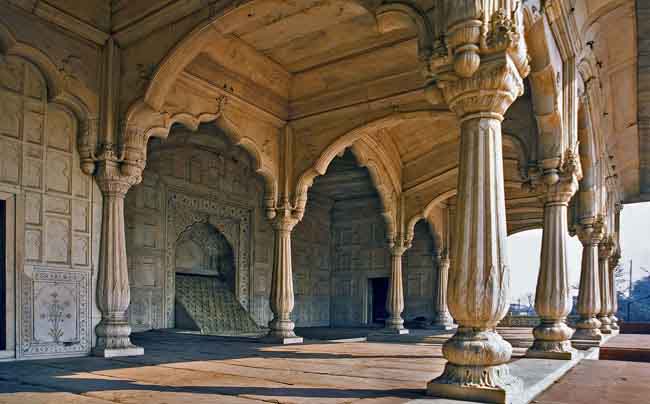
Names: “Istanbul (not Constantinople)”…and Bombay!

21 Jun

I reckon I’ve now received enough emails complaining about my use of “Constantinople” that it’s time to address the issue.

Constantinople – Kwnstantinoupoles — is Istanbul in Greek.  It’s the Greek word for Istanbul.  Istanbul comes from the word Constantinople.  It’s that simple.  The way Moscow is the English word for Moskva.  The way Parigi is the Italian word for Paris.  Constantinople is the Greek word for Istanbul.  It’s that simple.

That the Republic chose to change its official name to the time-honored Turkish name of Istanbul in the 1920’s does not obligate speakers of other languages to call it that, especially not those with as heavy an emotional, historical and spiritual investment in their own name for it as we have.  Just like the world will hopefully never be obligated to call Greece “Hellas” by the idiots who are attempting to do so.  Where Istanbul is concerned, the Ottomans themselves were content, at least for official purposes, with using the Arabic Costantiniyye until very late – till the very end, 1923, if I’m not mistaken.  And it took the rest of the world several more decades, as well, to abandon “Constantinople” and conform to the Turkish Republic’s new orders — for those who thought the name just disappeared in 1453.

What exactly is the problem?  If readers think I have some nationalist, much less irredentist, reasons for referring to the city as Constantinople, then they haven’t read anything else on this blog, and know nothing about me.  If there even is any discernible pattern in my switching back and forth between the two names, it’s not easy to identify.  I mostly refer to the city’s Greek community as Constantinopolitan Greeks, usually when I’m talking about a time when there was a community.  When the present is involved I usually say something like “Istanbul Greeks.”  I call Greeks from Istanbul “Polites” and will often say “Pole,” or even “the City” in English to evoke some sense of its importance to Greeks – and to me.  And all sorts of various combinations of the above.

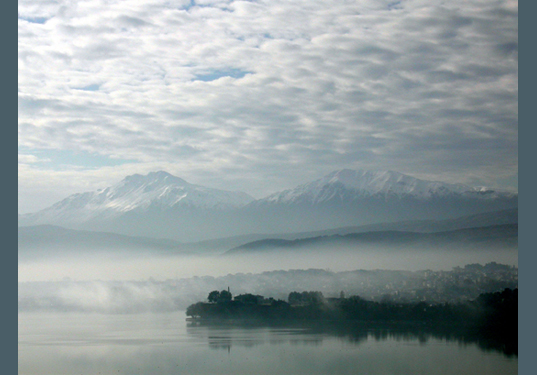
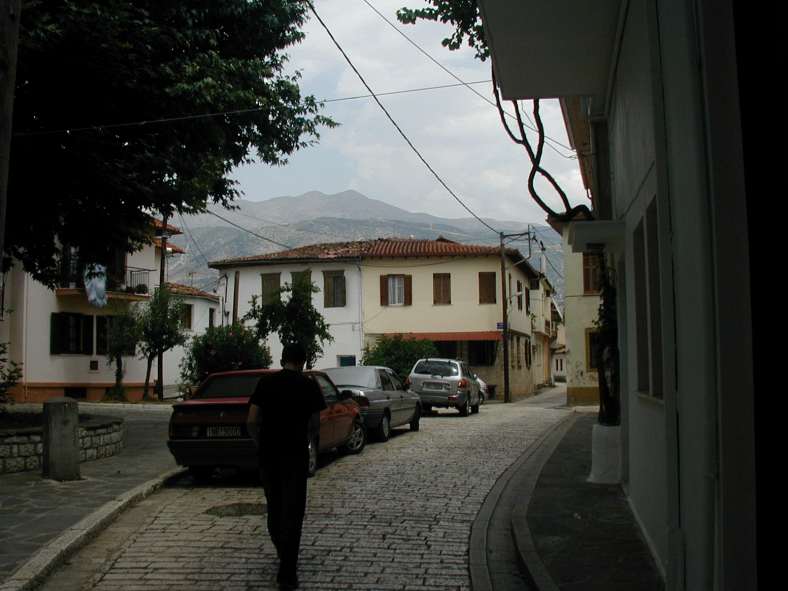
In both print and speech I never hear Turks call Salonica “Thessalonike” but Selanik – except for the occasional overly p.c. Turk who thinks that “Thessalonike” is what I want to hear.  And not only does Selanik not annoy me, not only do I not take issue with it or get offended by it, but it moves me.  Obviously, when a Turk calls Jiannena — one of my many hometowns – Yanya, it moves me even more.  A Turk who says Yanya is asserting his connection to that city, and that assertion becomes an immediate bond between me and him: a bond we both share to its streets, its lake and its mists, its mosques, its churches, its synagogues, its borek, the mahallades my mother used to tell me were Turkish before the twenties, including the one where she grew up, the parks she used to tell me were paved over Muslim cemeteries, that used to scare her as a girl when the region’s interminable rains would expose bones and skulls in their mud — all told with her peculiar sensitivity and strange sadness that would make you think these things were all her own; I never heard a word of ethnic animosity or hatred for anybody out of her mouth — not ethnic or any other kind — and not from my father either.

Yanya: the lake, mosques, the beautiful gate of the Ic Kale, streets, the front gate and interior of the Old Synagogue, 18th c. (The New Synagogue, 19th c., outside the city walls, was blown up by the Nazis.)

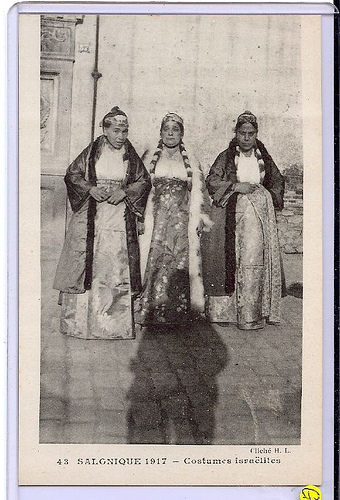
And when a Turk says Selanik, he’s asserting his deep historical connection to that city; whether he’s from there or not, he’s using a name which carries all his historical references to that place, which I’m nothing but happy to grant him.  I don’t even call it Thessalonike, but ‘Salonike.  When I think of Byzantine Thessalonike, of Selanik, Salonico, Salonica, they all evoke for me a great and ancient Mediterranean city; for a long time, the second city of the Byzantines, of St. Gregory Palamas and Nicholas Kabasilas; Salonico makes me think of the heir to the philosophical and poetic heritage of Jewish Spain; the great center of Sephardic learning, both rabbinical and the deep Kabbalistic learning that Jews brought with them from their previous homeland; I think of a Turkish city that was a flourishing center of a variety of Ottoman Sufi orders; the city where so much of Turkey’s new Republican bourgeoisie came from, just as ours came from the other direction.

Frontispiece of a Salonican Zohar, a seminal Kabbalah text, originally written in Leon, Spain.

Salonican Jews

Great caption; “the fanatical sect of Islam” being referred to are the Mevlevis!!!

 When I think of modern Thessalonike, on the other hand, I think of an unattractive, humid Balkan town with a serious second-city complex. 

But I’m a “manic lover” of St. Demetrius, its patron, so I have to visit every now and then.

Mosaic of St. Demetrius, originally from the church of St. Sophia in Kiev (or is it Kyiv?), currently in the Hermitage Museum, St. Petersburg (or is it Leningrad? or Petrograd? or just the name that everyone who knows her and truly loves her calls her, Peter…)

Funny that it took me so long but I recently realized why I dislike both Salonica and Izmir so much; despite their history, despite Salonica’s plethora of classical and Byzantine monuments even, neither of them — for reasons we all know — feel like organically old cities, the way even Athens does, though in its modern incarnation it’s far newer.  They both feel like one city was removed from that location and another one hastily put in its place.  Remade.  They don’t feel grounded.  What you feel in both of them mostly is the absence of history.*

Can you even tell which is which? — except for a few giveaway signs…

With all that said, therefore, I think we have to be very careful about whether it’s the renaming of places or persevering in the old name that represents the more nationalist impulse.  I recently confirmed for an Indian friend that, yes, Greeks still refer to Istanbul as “the City,” and he shook his head and mumbled something about the “narcissism of nationalism.”  But an increasingly fundamentalist and nationalist India may be the perfect example to start with.  Granted, Calcutta was always Kolkata in Bengali.  But what was wrong with Madras?  And what nationalist Tamil mythology does Chennai justify?  The BJP (fundamentalist Hinduism.…you’d think it’d be an oxymoron) in fact, has a list for changing the names of almost all the cities of India to more appropriately Hindu ones, not just obvious targets like Allahabad, but Delhi itself and others: see the list if you’re interested.  Aung San Suu Kyi calls her country by its perfectly legitimate name of Burma, yet for a couple of decades we were content to use the name imposed on it by its military dictatorship, Myanmar, and never asked why or by whom it had been changed.  The State is not to be questioned.  If you said “Burma,” people looked at you like you were uninformed.

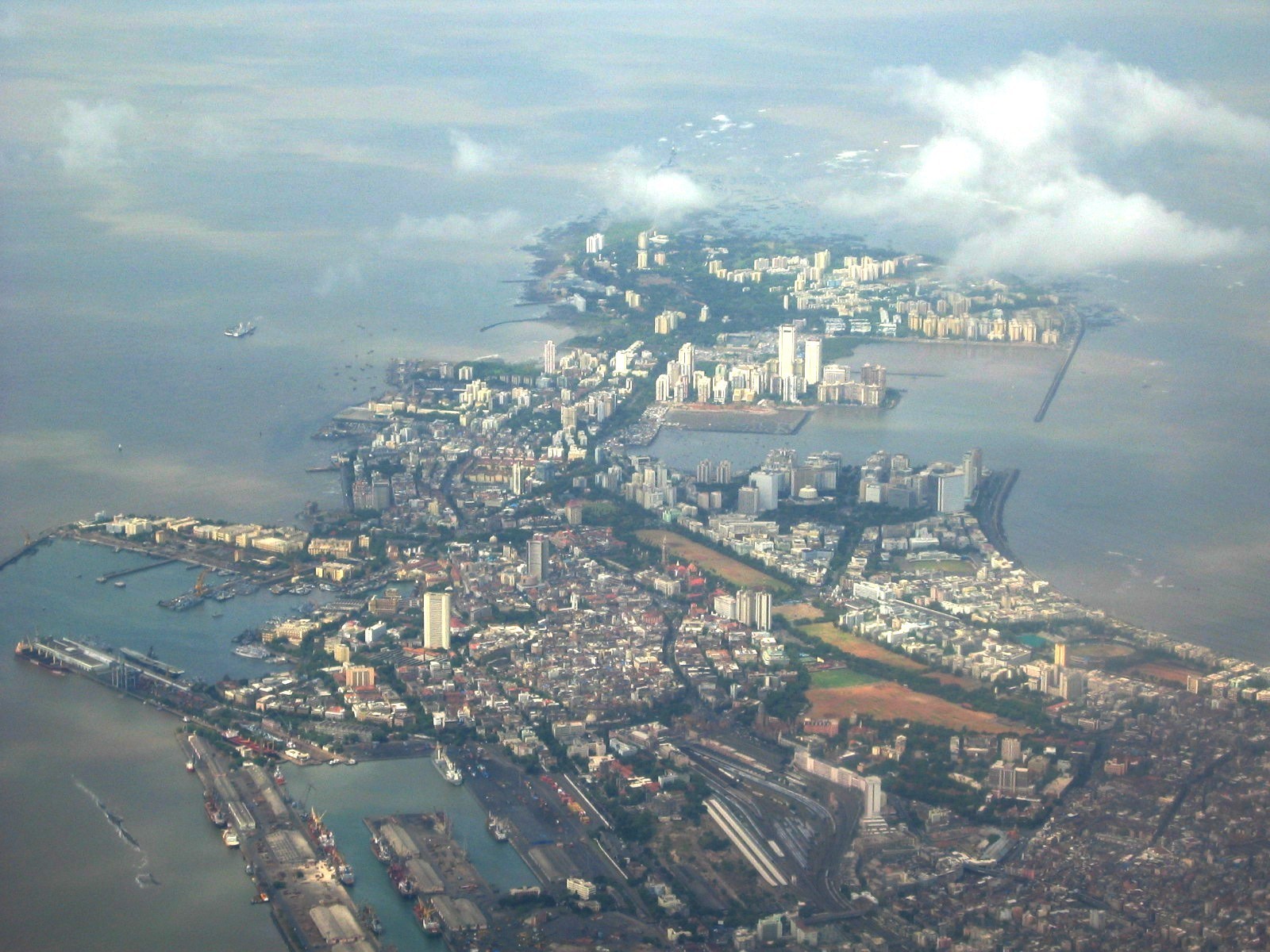
The most unfortunate and vulgar change of all is “Mumbai,” but almost no one knows or cares about how that change happened.  It was once generally accepted that Bombay comes from the Portuguese “bom bahim,” or good little harbour, just north as it is from Portugal’s long-time colony of Goa.  But even if that etymology is bogus, it was under the name Bombay that it flourished and grew under the British into the most important and cosmopolitan city in South Asia.

Bombay (gotta click on this one)

But in 1995, the Shiv Sena party (the Army of Shiva…) won control of the state government of Maharashtra, of which Bombay is a part, though it’s so different in social and ethnic make-up from the rest of that state that it deserves a separate federal district type status like Delhi has, or Mexico City, or D.C.  Shiv Sena, being a party whose power base is rural Maharashtra and poor migrant Marathis who feel they deserve more power in the city, is actively hostile to Bombay’s dizzying diversity and especially its large Muslim population.  It’s essentially a Marathi branch of the BJP, only worse (and they haven’t been getting along lately): a virulently Hindutva bunch that have not only been found to be involved in Bombay’s drug, prostitution and extortion circles, but ordered and even carried out much of the more vicious anti-Muslim attacks during the Bombay riots of 1992-93: the kerosene-dousing and burning of individuals and the burning tire around the victims’s neck were a couple of their trademarks.

When, despite all that, Shiv Sena were voted into state office in Maharashtra, their response to the poverty, massive infrastructural challenges, crime and destitution of this barely manageable city of more than twenty million was to change its name to Mumbai.  This was based on the supposed fact that there was (or is, or if there hadn’t been, I’m sure there now is) a temple of a Marathi goddess of that name on the site before the colonial city rose up, which may or may not be true, but, given the fact that every square yard of India contains at least one shrine or temple to someone or something, doesn’t mean very much.

And yet the whole world fell in line.  Thinking that, like Myanmar, if it’s coming from there it must have some sort of indigenous, authentic root, filled with post-colonial guilt and worried about offending what we thought were Indian sensibilities, we all dutifully started calling it Mumbai.  Fearing that using the old name would immediately make others imagine us to be jodhpur-clad gin-swillers, we let a bunch of criminal thugs and violent nationalists change the name Bombay — the name by which this great, open-to-the-sea-and-the-world, mercantile, diverse, cosmopolitan, sexy metropolis, a microcosm of India itself and its modern face to the world, was known for almost three centuries – and nobody asked why or breathed a word of resistance.

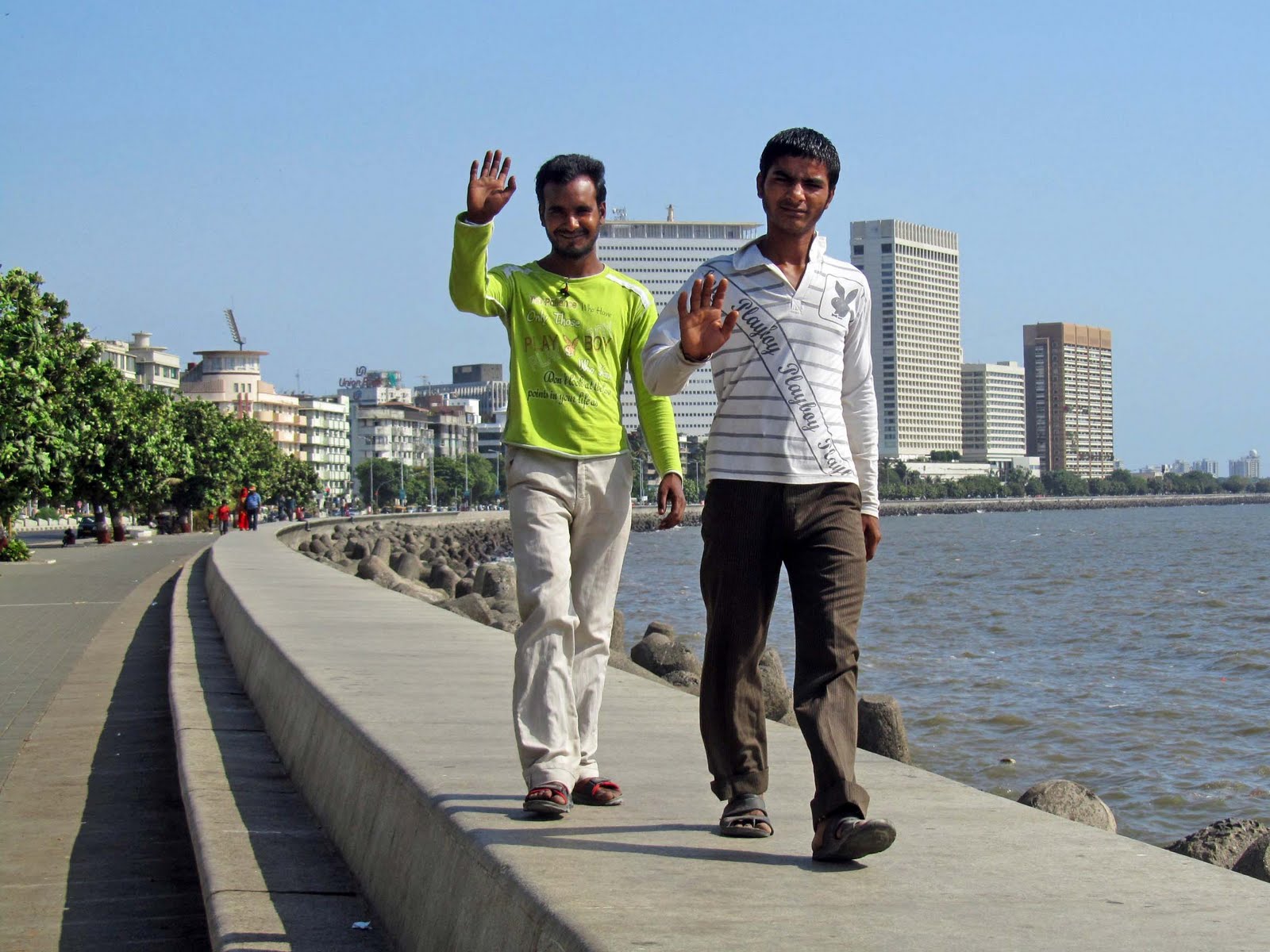
Bombay — Marine Drive — Queen’s Necklace

So as for C-town, you choose which is more “nationalist.”  Calling the city the name by which it was known to most of humanity for more than sixteen centuries?  Calling it an also venerable name that the nationalist, anti-cosmopolitan, Turkification project of a military dictatorship whose attitude to the City, its legacy, history and population was actually hostile for much of the time decided the world should call it?  Or just calling it both?

Or how ‘bout who cares?  As long as we know which city we’re talking about.

* See next post


Comment: nikobakos@gmail.com


The Dark Lord

12 May

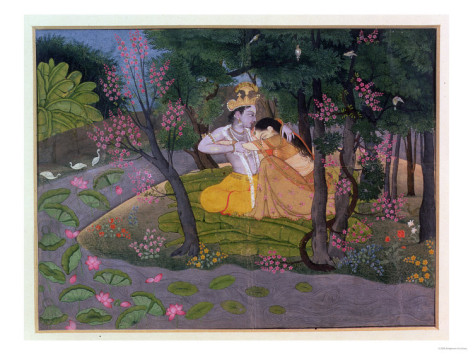
In a previous post, April 10th “A Dancing Girl,” I wrote about the ubiquity of Krishna-Radha imagery in Indian culture, from the obvious traditionally religious contexts to Bollywood cinema.  Sudhir Kakar, Indian psychologist and I guess all around cultural critic has a very interesting analysis of the Krishna archetype in Indian cinema.  He contrasts him, the playful phallic teaser, with the Majnun archetype, the distraught, longing lover (“majnun” means crazed in Arabic, the same Semitic root as “meshugeh” in Yiddish), setting up an interesting Hindu-Muslim interplay between the two:

“The Krishna-lover is the second important hero of Indian films.  Distinct from Majnun,the two may, in a particular film, be sequential rather than separate.  The Krishna-lover is physically importunate, what Indian-English will perhaps call the “eve-teasing” hero, whose initial contact with women verges on that of sexual harrassment.  His cultural lineage goes back to the episode of the mischievous Krishna hiding the clothes of the gopis (cow-herdesses) while they bathe in the pond and his refusal to give them back in spite of the girls’ repeated entreaties.  From the 1950s Dev Anand movies to those (and especially) of Shammi Kapoor in the 1960s and of Jeetendra today, the Krishna-lover is all over and all around the heroine who is initially annoyed, recalcitrant, and quite unaware of the impact the hero’s phallic intrusiveness has on her.  The Krishna-lover has the endearing narcissism of the boy in the eve of the Oedipus stage, when the world is felt to be his “oyster.”  He tries to draw the heroine’s attention by all possible means – aggressive innuendoes and double entendres, suggestive song and dance routines, bobbing up in the most unexpected places to startle and tease her as she goes about her daily life.  The more the heroine dislikes the hero’s incursions, the greater his excitement.  As the hero of the film Aradhana remarks, “Love is only fun when the woman is angry.”

“For the Krishna-lover, it is vital that the woman be a sexual innocent and that in his forcing her to become aware of his desire she get in touch with her own.  He is phallus incarnate, with distinct elements of the “flasher” who needs constant reassurance by the woman of his power , intactness, and especially his magical qualities that can transform a cool Amazon into a hot, lusting female.  The fantasy is one of the phallus – Shammi Kapoor in his films used his whole body as one – humbling the pride of the unapproachable woman, melting her indifference and unconcern into submission and longing.  The spirited, androgynous virgin is awakened to her sexuality and thereafter reduced to a groveling being, full of a moral masochism wherein she revels in her “stickiness” to the hero.  Before she does so, however, she may go through a stage of playfulness where she presents the lover with a mocking version of himself.  This in Junglee, it is the girl from the hills – the magical fantasy-land of Indian cinema where the normal order of things is reversed – who throws snowballs at the hero, teases him, and sings to him in a good-natured reversal of the man’s phallicism, while it is now the hero’s turn to be provoked and play the recalcitrant beloved.”

—  Intimate Relations: Exploring Indian Sexuality, Sudhir Kakar

Bollywood classicists will probably object to my not using one of the above-mentioned actors as a movie clip example, but I’ve chosen to use recent meteor-hottie Imran Khan instead:

Not that Imran Khan…  No relation to Shahrukh Khan either or Salman Khan, but the nephew of Aamir Khan — just in case you doubted how nepotistic Bollywood is, how full of super-size Khan egos it is, or how disproportionately Muslim the industry is, a fact that usually remains unspoken.  Other than his still teenage swagger, which the other Khans are getting a little too old to pull off, I think Imran is so perfect in the role of this archetype because he has those exaggeratedly large, murti-like* eyes and eyebrows that so many Indians have and have such deep religious significance and symbolism.  “Darshan,” or the viewing of a deity, is usually centered on the eyes — on a visit to any temple one will usually find at least one devotee staring endlessly into the god’s eyes — and Hindus believe that the deity’s energy does not come to reside in an image until that very final moment when its pupils are painted in.

Anyway, here’s Imran with his Gopis, in the title number of the 2010 I Hate Luv Stories, playing the Dusky One to perfection (though as in Kakar’s classic trajectory, he’s later humbled into the Majnun lover):

And for those old-schoolers, here’s SRK, perhaps the central casting expert at the type, in the wedding scene from Kabhi Khushi Kabhi Gham, the wedding he’s impudent enough to crash because he’s smitten with the bride’s sister and shows up to hit on her.


*”Murti” is the image of a deity in Hinduism, any image: statue, painting, drawing, cheap print from the kiosk.  Obviously I don’t use the word “idol,” with its reek of monotheist condescension and demonization, as I generally consider monotheism — all of them — to be something of a plague and a great historical tragedy.  We’ll just have to do the best we can with what we have for now.

Comment: nikobakos@gmail.com

Begum Akhtar

11 May

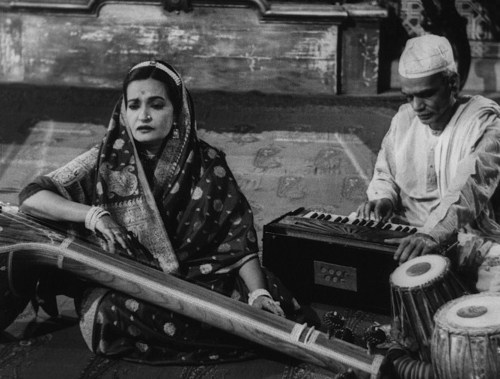
Still the undisputed queen of the sung Urdu ghazal and a figure of great and deep love for Agha Shahid Ali:

And below, in Satyajit Ray’s 1958 Jalsaghar (The Music Room), though here I need to own up to my ignorance and admit that I’m not sure if she’s singing a ghazal or thumri or some other genre.  It’s also extremely annoying and, to say the least, odd, that Ray would disrespect her performance so much by pasting most of it over by cutaways of the audience and especially the film’s idiot nouveau-riche neighbor who doesn’t even know what he’s listening to:

Begum Akhtar in Jalsaghar : (not allowed to embed it, logic of which I never understood…)

Here’s a photo anyway and more info: Begum Akhtar


Comment: nikobakos@gmail.com

Agha Shahid Ali

11 May

Talk of poetry, the Delhi Wallah and Kashmir (May 10, “Favorite Blogs: The Delhi Wallah”) made me think of one of my favorite poets of the past few years, the Kashmiri-American — I guess one would call him — Agha Shahid Ali, a prolific poet who wrote about the ghazal, edited a book of ghazals in English: Ravishing DisUnities: Real Ghazals in English and wrote a collection of his own ghazals in English: Call Me Ishmael Tonight a tiny volume that obsessed me for months the first time I got my hands on it.  That one of the most beautiful men I’ve ever known — a friend and the saqi at a bar in Astoria I used to go to — introduced me to it didn’t hurt either.  “Strange and beautiful” he called them, and I still do, and often think that the one must always by necessity partake of the other to some extent: in poetry, in religion, in the physical beauty of a man or woman, in an idea…

Here’s part of Ali’s description of the genre:

“The ghazal is made up of couplets, each autonomous, thematically and emotionally complete in itself… once a poet establishes the scheme—with total freedom, I might add—she or he becomes its slave. What results in the rest of the poem is the alluring tension of a slave trying to master the master.”

In Arabic

A language of loss? I have some business in Arabic.
Love letters: a calligraphy pitiless in Arabic.

At an exhibit of miniatures, what Kashmiri hairs!
Each paisley inked into a golden tress in Arabic.

This much fuss about a language I don’t know? So one day
perfume from a dress may let you digress in Arabic.
A “Guide for the Perplexed” was written–believe me–
by Cordoba’s Jew–Maimonides–in Arabic.

Majnoon, by stopped caravans, rips his collars, cries “Laila!”
Pain translated is O! much more–not less–in Arabic.

Writes Shammas: Memory, no longer confused, now is a homeland–
his two languages a Hebrew caress in Arabic.

When Lorca died, they left the balconies open and saw:
On the seat his qasidas stitched seamless in Arabic.

Ah, bisexual Heaven: wide-eyed houris and immortal youths!
To your each desire they say Yes! O Yes! in Arabic.

For that excess of sibilance, the last Apocalypse,
so pressing those three forms of S in Arabic.

I too, O Amichai, saw everything, just like you did–
In Death. In Hebrew. And (please let me stress) in Arabic.

They ask me to tell them what Shahid means: Listen, listen:
It means “The Beloved” in Persian, “witness” in Arabic.

Agha Shahid Ali (1949-2001)

More here: Poetry Foundation

Some more mundane info on the ghazal: Ghazal

“In Arabic” “Reprinted from The Veiled Suite: The Collected Poems by Agha Shahid Ali. English translation copyright © 2009 by Daniel Hall. With the permission of the publisher, W.W. Norton & Company, Inc.”


Comment: nikobakos@gmail.com