Tag Archives: Jews

Pentecost

8 Jun

(reposted from 2012)

Today is Pentecost, the day that commemorates the descent of the Holy Spirit and the divine enlightenment of the gathered Apostles, when they were suddenly given the wisdom to speak all languages and that marks the institutional beginning of their mission and the Church generally.  What the New Testament doesn’t say is that the Apostles were gathered to celebrate Shavuos (lit. “weeks”), “Shvuyes” in deep Yiddish pronunciation, the day God gave the Torah to the people of Israel.   The Christian feast of a gift of divine wisdom was based on the existing Jewish feast of a gift of divine wisdom, and Shavuos comes seven weeks after the first day of Passover, like Pentecost comes seven weeks after Easter – it means “fiftieth” – a name Greek-speaking Hellenistic Jews were already using for the holiday long before the Christian era.

I always loved the reading for Pentecost from the Book of Acts (below in English, the original Greek and the Vulgate Latin).  In its endless list of peoples I always felt a kind of Pax Romana yearning for unity that still moves me, especially when it’s properly recited.  It’s a bit of a sad holiday too because it marks the official end of the Easter cycle (like it does the end of the Counting of the Omer in Judaism).  Significantly, the day before is one of the several “soul Saturdays” on which the Orthodox Church commemorates the dead; old folk beliefs held that the dead dwell among us from the Resurrection until the eve of Pentecost and then depart again.  And tonight at vespers, people kneel for the first time since Holy Week; the joy of the Easter season prohibits any kneeling or prostrations during the seven weeks it lasts.  It’s the return to Real from Divine time.  And from the period of renewal where death has been defeated to real existence again where it still holds full sway.  Until the promise of the next Resurrection.

I couldn’t find a recitation of the actual second chapter.  But here’s a beautiful Arabic recitation of the first chapter of Acts — which uses the same phrasing as a Greek reading would — where Christ preps the Apostles on what’s in store for them and, like a good rabbi, tells them not to ask too many questions:


And here’s Giotto’s depiction of the event from the Scrovegni Chapel in Padua, which probably contains more spectacular art than any other equivalent square footage of space in the world:

And El Greco’s more violent, Cretan-Spanish imagining (it became a tradition to include the Virgin in the scene, especially in the West, though Acts doesn’t mention her):

2 And when the day of Pentecost was fully come, they were all with one accord in one place.

And suddenly there came a sound from heaven as of a rushing mighty wind, and it filled all the house where they were sitting.

And there appeared unto them cloven tongues like as of fire, and it sat upon each of them.

And they were all filled with the Holy Ghost, and began to speak with other tongues, as the Spirit gave them utterance.

And there were dwelling at Jerusalem Jews, devout men, out of every nation under heaven.

Now when this was noised abroad, the multitude came together, and were confounded, because that every man heard them speak in his own language.

And they were all amazed and marvelled, saying one to another, Behold, are not all these which speak Galilaeans?

And how hear we every man in our own tongue, wherein we were born?

Parthians, and Medes, and Elamites, and the dwellers in Mesopotamia, and in Judaea, and Cappadocia, in Pontus, and Asia,

10 Phrygia, and Pamphylia, in Egypt, and in the parts of Libya about Cyrene, and strangers of Rome, Jews and proselytes,

11 Cretes and Arabians, we do hear them speak in our tongues the wonderful works of God.

12 And they were all amazed, and were in doubt, saying one to another, What meaneth this?


2 Καὶ ἐν τῷ συμπληροῦσθαι τὴν ἡμέραν τῆς πεντηκοστῆς ἦσαν πάντες ὁμοῦ ἐπὶ τὸ αὐτό, καὶ ἐγένετο ἄφνω ἐκ τοῦ οὐρανοῦ ἦχος ὥσπερ φερομένης πνοῆς βιαίας καὶ ἐπλήρωσεν ὅλον τὸν οἶκον οὗ ἦσαν καθήμενοι, καὶ ὤφθησαν αὐτοῖς διαμεριζόμεναι γλῶσσαι ὡσεὶ πυρός, καὶ ἐκάθισεν ἐφ’ ἕνα ἕκαστον αὐτῶν, καὶ ἐπλήσθησαν πάντες πνεύματος ἁγίου, καὶ ἤρξαντο λαλεῖν ἑτέραις γλώσσαις καθὼς τὸ πνεῦμα ἐδίδου ἀποφθέγγεσθαι αὐτοῖς.

Ἦσαν δὲ ἐν Ἰερουσαλὴμ κατοικοῦντες Ἰουδαῖοι, ἄνδρες εὐλαβεῖς ἀπὸ παντὸς ἔθνους τῶν ὑπὸ τὸν οὐρανόν· γενομένης δὲ τῆς φωνῆς ταύτης συνῆλθε τὸ πλῆθος καὶ συνεχύθη, ὅτι [ἤκουον εἷς ἕκαστος τῇ ἰδίᾳ διαλέκτῳ λαλούντων αὐτῶν· ἐξίσταντο δὲ καὶ ἐθαύμαζον λέγοντες· Οὐχ ἰδοὺ πάντες οὗτοί εἰσιν οἱ λαλοῦντες Γαλιλαῖοι; καὶ πῶς ἡμεῖς ἀκούομεν ἕκαστος τῇ ἰδίᾳ διαλέκτῳ ἡμῶν ἐν ᾗ ἐγεννήθημεν; Πάρθοι καὶ Μῆδοι καὶ Ἐλαμῖται, καὶ οἱ κατοικοῦντες τὴν Μεσοποταμίαν, Ἰουδαίαν τε καὶ Καππαδοκίαν, Πόντον καὶ τὴν Ἀσίαν, 10 Φρυγίαν τε καὶ Παμφυλίαν, Αἴγυπτον καὶ τὰ μέρη τῆς Λιβύης τῆς κατὰ Κυρήνην, καὶ οἱ ἐπιδημοῦντες Ῥωμαῖοι, 11 Ἰουδαῖοί τε καὶ προσήλυτοι, Κρῆτες καὶ Ἄραβες, ἀκούομεν λαλούντων αὐτῶν ταῖς ἡμετέραις γλώσσαις τὰ μεγαλεῖα τοῦ θεοῦ. 12 ἐξίσταντο δὲ πάντες καὶ διηπόρουν, ἄλλος πρὸς ἄλλον λέγοντες· Τί θέλει τοῦτο εἶναι;


2 et cum conplerentur dies pentecostes erant omnes pariter in eodem loco

et factus est repente de caelo sonus tamquam advenientis spiritus vehementis et replevit totam domum ubi erant sedentes

et apparuerunt illis dispertitae linguae tamquam ignis seditque supra singulos eorum

et repleti sunt omnes Spiritu Sancto et coeperunt loqui aliis linguis prout Spiritus Sanctus dabat eloqui illis

erant autem in Hierusalem habitantes Iudaei viri religiosi ex omni natione quae sub caelo sunt

facta autem hac voce convenit multitudo et mente confusa est quoniam audiebat unusquisque lingua sua illos loquentes

stupebant autem omnes et mirabantur dicentes nonne omnes ecce isti qui loquuntur Galilaei sunt

et quomodo nos audivimus unusquisque lingua nostra in qua nati sumus

Parthi et Medi et Elamitae et qui habitant Mesopotamiam et Iudaeam et Cappadociam Pontum et Asiam

10 Frygiam et Pamphiliam Aegyptum et partes Lybiae quae est circa Cyrenen et advenae romani

11 Iudaei quoque et proselyti Cretes et Arabes audivimus loquentes eos nostris linguis magnalia Dei

12 stupebant autem omnes et mirabantur ad invicem dicentes quidnam hoc vult esse.

* See next post


Comment: nikobakos@gmail.com

A Zissen Pesach y Pesaj Alegre to everyone…

15 Apr

…or just Καλό Πάσχα, “Kalo Pascha,” as the Jews of Jiannena would say.

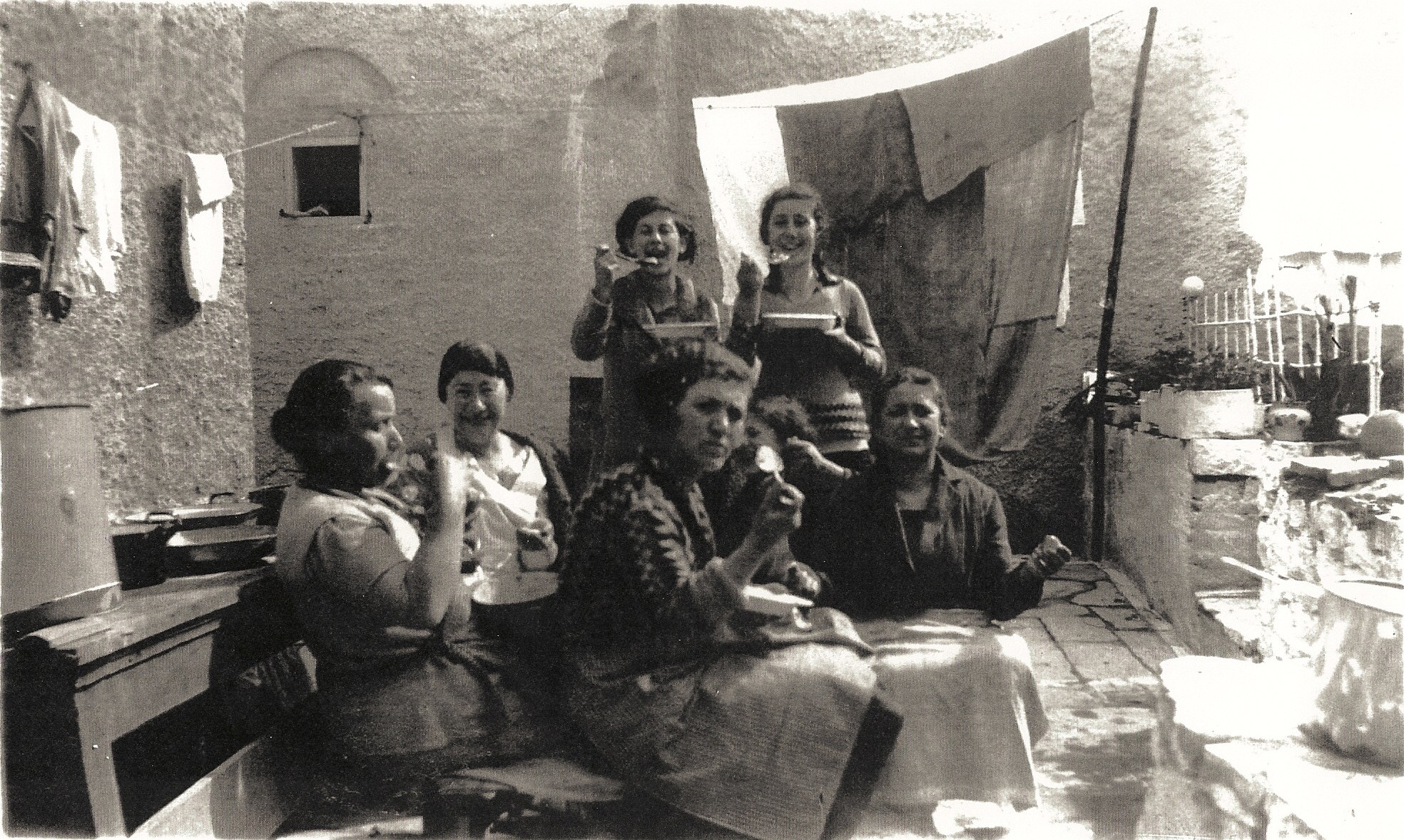
Passover in Ioannina Bechoropoulos & Attas Family 1933

The Bechoropoulos and Attas families celeberating Passover in Jiannena in 1933 (click)

Special thanks again to Marcia Haddad Ikonomopoulos and the Kehila kedosha Janena community in New York City for providing the photo.

Comment: nikobakos@gmail.com


It’s Purim tonight! — something like a letter to my mother…

15 Mar

Nicolas_Poussin_E_before_Assuerus_c.1640Esther before Assuereus, Nicolas Poussin, circa 1640 (click)

For Purim this year I’m posting this poem by Greek Jewish poet Joseph Eliya, who was from my mother’s hometown of Jiannena in the northwestern Greek region of Epiros.  (See the tab box on the right for the hundred references to Jiannena and Epiros on the Jadde).

The Jews of Jiannena were Greek-speaking Romaniotes, descendants of the Jewish communities of Greece, the Balkans and Asia Minor that existed since Hellenistic times and that held out culturally against the flood of Spanish-speaking Sephardim that found refuge in the Ottoman Empire after their expulsion from Spain in 1492.  They were called Romaniotes because Romania (the kingdom of the Romans) was what the Byzantines called their polity and what we too – till the early twentieth century – also called ourselves: “Romans” – which it always aggravates me to have to explain.  But it is one of the rich ironies of history that the only inhabitants of Greek lands that stayed faithful to their true name for themselves were Jews, while we sold our souls to the West for the promises and prestige we thought the re-excavated neologism “Hellene” would curry us from the Frangoi.

So Eliya’s native language was Greek, and though he wrote some of the most beautiful translations of Jewish Biblical texts into Modern Greek, particularly one of the Song of Songs and a series of love poems to Rebecca, in a rich, florid, archaic idiom, he also wrote homelier poems in a folksier Jianniotiko style like this one, “something like a letter to his mother” on the occasion of the feast of Purim.

For those who don’t know, Purim is the day that Esther, the Queen Consort to the Persian King Ahasureus, and her uncle Mordechai, foiled the plans of the king’s evil minister Haman, to have the Jews of the kingdom massacred.  It’s generally celebrated by listening to the book of Esther in synagogue, the Megilla, sending food and giving charity to the poor and dressing up in costume, an aspect of the celebration that may be an interborrowing due to the fact that it tends to fall around Christian Carnival.

Eliya was a poor schoolteacher who died at the young age of thirty, and I believe this poem was written when he was away from his beloved Jiannena, and his beloved mother, on a teaching post in the Macedonian city of Kolkush.  It’s a sad, therefore — and very Epirotiko in that sense and in tone — poem, that’s in sharp contrast to the happiness of the holiday.

This poem also has an added emotional subtext for me.  My mother’s best friend when she was in elementary school was a Jewish girl, Esther — Esther Cohen.  “Astro” they called her, in the Epirotiko diminutive; “Tero” is also another form for the same name.   And as a little girl from a peasant family recently moved to Jiannena from their village in the mountains just to the south, I could tell that her stories about her friendship with Astro were her first lessons in tolerance and difference, whether she would’ve called them that or not (we certainly wouldn’t in our day…I’ll leave them for another post).  And she may have known it even less, but her friendship with Astro may have prepared her for life in New York in ways she was probably never conscious of.  And what she may have been even less conscious of — though maybe I should give her some credit: I do know for sure that my mother’s stories of her friendship with Astro served as my first lessons in decency and openness to those different from you.  Of that there’s no doubt.  So this post is something like a letter to my mother too.

Always they ended in a kind of distracted silence, for she never knew what had happened to her friend during the war: “Τι νά’χει γίνει η Άστρω;” she would mumble.  “What can have happened to Astro?”  And what was strange was that she could’ve found out; there were surviving Jews in Jiannena that she knew and there were even Jewish Jianniotes in New York she could have asked.  But it was like she didn’t want to know.  Even odder, I’ve had several opportunities to find out as well; Kehila Kedosha Jiannena, the Jianniotiko shul in New York on Broome Street has records on the whole community.  But it’s been almost as if I don’t want to know either.

Here is Eliya’s original Greek, with my free verse translation below.

Purim

Purim

(Something like a letter to my mother)

It’s Purim tonight!  The thrill and joy of the great feast!

Light in our souls, and a smile on the lips of all.

And I, my orphaned mother, the refuse of exile*

Waste away in a chill joyless corner.

It’s Purim tonight!  And the synagogues open their arms wide to the faithful children of my ancient people.

And they read again with wonder, from the white parchment, the triumphs of Mordechai and Esther through the ages.

It’s Purim tonight!  Young and old gather at home, at hearth, to hear the Megilla’s** tale.

And I mother – with the burning lament of exile – tearily thumb through my Bible in a lonely corner.

Your son won’t be bringing you candles or flowers from shul*** tonight, mother.  And if your crying is bitter, don’t lament too deeply.  My Fate has been decided, and poverty — poverty, mammele**** – has no feel for sympathy.

**********************************************************************************************************************************************************************************************

Notes on my translation:

*”Exile” here does not imply political banishment or anything of the sort.  It’s the word “ξενητιά” as Eliya spells it, that’s so central to understanding the Greek and — it probably goes without saying — the Jewish soul, but is so devilishly difficult to translate precisely.  It means absence — absence from the place where one should be, from one’s heart’s homeland.  Through and because of emigration and poverty most often but not always; it’s often something one feels without having had to leave.  The Turkish “kurbet” is the word closest in meaning that I know from another language.

**Not to be disrespectful, but the Megilla, the Book of Esther, is quite long, and is proverbial, in at least Ashkenazi humor, for being tedious and monotonous to listen to — but one bears it.  It’s exactly the same as the Greek term “εξάψαλμος,” the Hexapsalm, a selection of six psalms that is always read at the beginning of Matins and I’m not sure if during other offices, and would be beautiful if correctly and carefully recited according to the rules of Orthodox recitation.  Unfortunately, it’s usually read in an incomprehensible blur of mumbled boredom by the lector or cantor, which actually makes it even more tedious and irritating to sit through.  It’s usually a good time to go out for a cigarette.  I just always thought the similarity was funny.  “Ωχ, τώρα θα’κούσουμε τον εξάψαλμο,” a Greek will say with dread when faced with a berating lecture or kvetch session or someone’s tiring complaint that’s so repetitive you just tune it out, just like a Jewish New Yorker will say: “I really can’t listen to his whole Megilla right now…”

***In the second verse, Eliya uses the Greek word for synagogues and I translated it as such.  In this last verse, he uses a homier, Epirotiko form whose intimacy I felt was better conveyed by “shul.”

****And last but not least, we run into the painful translation issues that are generated by the fact that English is almost completely lacking in a system of diminutive terms of affection, especially compared with the highly elaborate diminutive terminologies of Slavic languages or Yiddish (or I assume Ladino) or even Greek.  At no point in the poem does Eliya refer to his mother as “mother” but rather “my little mother” — “μανούλα’μ” — “manoula’m.”  This is a term of affection used often by Greeks and especially Epirotes to refer to anyone, not just one’s mother, not even necessarily a female (Athenian idiots making fun will darken or double up the “l” to make it sound more northern and Slavic and hickish; for me it’s just more beautiful…); one will say to a young boy or even a friend: “Come here, manoula mou… What’s wrong, manoula mou?”  Just like “mammele” is used in Yiddish.  But I felt that using “mammele” throughout would have sounded too Yiddishy and cute, and so I saved it for that last, most intimate verse, and used mother elsewhere.  After all, this is a poem that above all is an expression of the most Jewish kind of mother-son bond.  But Yiddish and its many beauties is cursed now, by its sudden, dramatic extinction in Europe, and its shadow survival only in American entertainment, with the danger of always lapsing into a default comic tone.  It’s sad.  The translation from the Greek of the last line of the poem, for example: “poverty has no feel for sympathy…” would literally be: “…but poverty doesn’t know from sympathy.”  But then I’d be writing Larry David dialogue.

**********************************************************************************************************************************************************************************************

FINALLY, I’d like to thank Marcia Haddad Ikonomopoulos for the scan of the Greek text of the poem.  I’m in Athens now, away from my library and couldn’t find it anywhere online.  I wrote to her and within five minutes she had written back to me with both “Purim” and “Esther,” another of Eliya’s poems about the biblical heroine.  She suggested that “Esther” is a poem more appropriate to the happiness of Purim than the melancholy of “Purim.”  Unfortunately, it’s written in a much more difficult, semi-biblical, archaic language that I didn’t have the time to translate.  I promise her however, that as soon as I get a chance I will work on it and post it on the Jadde — out of gratitude to her helping me out for this, and out of gratitude to the one-woman pillar of the Kehila Kadosha Janina community that she is.  I’d also like to thank the whole congregation there for always making me feel so welcome when I attend on Erev Simchas Torah; the rabbi and his stentorian voice, the three young men who lead prayer and are perhaps the community’s most precious resource — let’s see if I remember correctly: Seth, the rabbi’s son, and the brothers Andrew and Ethan, who though they’re from a Sephardic family from Berroia, devote their shabbes and yontif time to energizing this tiny community in need of outside help.  The warmth of the community has always moved me and I’m grateful for both the odd need for Jewishness in my life and the link to my mother and her childhood that they unknowingly provide.  Thank you.

Comment: nikobakos@gmail.com

fog_in_my_hometown

Jiannena


“Per Tolosa totjourn mai…” A fellow lover of Toulouse and reader writes:

25 Jan

New Year’s Eve, 2008.  I had a dinner party at my house, and two Spanish friends of mine brought a couple from Madrid along.  The husband, Rodrigo I think was his name, later told my friends that I was “super-majete.”  I explain this term in the footnote to Toulouse: “Who ever lov’d who lov’d not at first sight?” and it’s part of the text of “Un Verano en Nueva York” .  I remember thinking at that point: “I can die happy now.  My life has meant something.  A real Madrileno has called me ‘super-majete.'”  It’s a compliment not granted lightly.

But now a Frenchman is kind enough to recognize that I’ve understood something important about France in my Toulouse post.  So I may have to die happy and satisfied one more time.

From Phildange:

Wow, I didn’t think I could read such understanding words about any spirit of France from any Anglophone ! And you’re American ! But you’re a real traveler man, it can be easily noticed . The thing is me too had a love at first sight when I discovered Toulouse in 84 . And by this time there were dozens of bars with live gigs every night, even on mondays ! Better than NYC … If you have time, don’t miss 2 very old churches : la Daurade and l’église du Taur . La Daurade played a big role in the resistance against the Northern Barbarians sent by the Pope, and Notre-Dame du Taur is an old alchemistic sanctuary . The Cathars had discret connections with the Knights Templars, Toulouse was full of alchemists and the Kabbalah was elaborated in the South of France at this time, when the first writers started telling about the Graal . If you speak about romanesque love ( l’Amour courtois ) You should mention Clémence Isaure and her Jeux Floraux, a tournament of troubadours . There are many things to say another time, but I’m highly pleased by your article . Cheers and thank you .
( Don’t forget the girls, the most charming flowers of France …)

Thank you.  And please do share any other thoughts and ideas.  I’ll look up all the other things you mentioned.

Have you seen two previous recent posts of mine about France?:

* What I managed to put away in a day-and-a-half in Paris, and some thoughts on the “crise.”

and

* Krugman backs me up on France

isaure

Clémence Isaure and her Jeux Floraux, a tournament of troubadours (click)

(“According to legend Clémence Isaure was the foundress and president of Academie des Jeux Floraux (the Academy of Floral Games), a poetry and literature society dating from 1322.  It is a perfectly real group and is the oldest recorded literary society in the world.  This period of time was the nadir of the troubadours, or traveling musicians and poets who roamed around southern France and northern Spain, and who were responsible for a flourishing of culture in that area.  The idea of having a literary society came out of their traditions, and this first one was founded in Toulouse, the center of the troubadour area.  We know that seven troubadours/poets came together to found the society in 1322, and it was funded by the new bourgeoisie of Toulouse.  However, in legend this lady, Dame Clemence Isaure, was an heiress of a wealthy family, and she never married.  She left them all her wealth to start this literary society.  She is seen as the ultimate patroness of the arts, and her reputation was as a beautiful, virtuous, and chaste woman who dedicated her life to culture.” — From: “To study in Paris is to be born in Paris.”)

Note: Phildange does make a point about southern France that I couldn’t find a way to fit into my original Toulouse post: that its cities were flourishing centers of Jewish life and scholarship and, yes, mysticism, Kabbalah — all of which was of course destroyed, the communities scattered, mostly to the Rhineland, then only a century or two later to Poland, to which they brought their esoteric learning along with the mediaeval High German that eventually became Yiddish.

Comment: nikobakos@gmail.com

BESA: A Code of Honor

20 Nov

I can’t convey the indescribable beauty of this word for me.

For a people constantly maligned as bandits and cutthroats:

“Casting Light on Little-Known Story of Albania Rescuing Jews From Nazis”  from today’s Times:

“The exceptional difference in Albania, experts on the episode say, was rooted in a national creed called besa that obligates Albanians to provide shelter and safe passage for anyone seeking protection, particularly if there has been a promise to do so. Failure to act results in a loss of honor and standing. [my emphases]

“It involves uncompromising protection of a guest, even at the point of forfeiting one’s own life,” wrote Shirley Cloyes DioGuardi, an organizer of the New York event whose husband, former Representative Joseph H. DioGuardi, visited Albania in the early 1990s and helped unearth details of the rescue.”

and:

“Another explanation, Ms. Cloyes DioGuardi says, is that in Albania, a Roman Catholic and Eastern Orthodox country until Ottoman rule led to conversions to Islam starting in the 15th century, ethnicity has always trumped religion, and piety is less than zealous. “We knew our enemies wanted to use religion to divide and conquer us, but we knew we had the same blood,” said Akim Alickaj (a-LITCH-kye), an ethnic Albanian raised in Kosovo who owns a New York travel agency and whose father helped rescue Jews. “Religion changes, but nation and blood can’t be changed.””

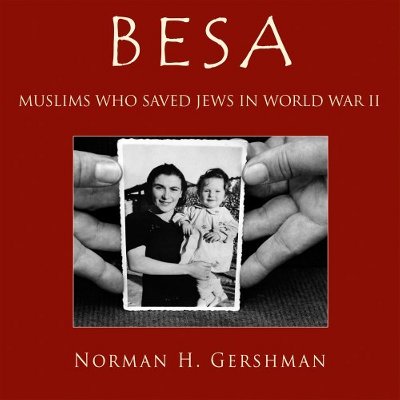
And a beautiful book that came out last year:

besa_big1

And see Yad Vashem’s site:

splash1

And I guess why I love Afghanistan so much.

comment: nikobakos@gmail.com


A reader writes: on “Screamers” and Genocide

10 Nov
“Thanks for your blog post [“Screamers:” Genocide: what is it and why do we need the term?] on the ‘genocide’ theme. I thought it was a lucid and intelligently worded piece. I was particularly struck by the fact you took issue with the airy-fairy use of the word, stating there was only one event really worthy of that distinction. You can imagine that in the world I move in, it is quite a battle to make that point come over. In that world of ‘tolerance’ and ‘combating racism and bias’ there is a strong tendency to paint all suffering with the same brush: slavery, apartheid, holocaust, it is all bad. No argument here, but we lose all perspective on the actual events by doing that.
I liked your point about the Turkish-Armenian conflict as well. I have felt for a long time there was something not completely right about the equation with the ‘Shoah’, but never knew exactly what. But you put it quite clearly.”


*********************************************************************************************************************************************************************************************


Given especially — and if you’re not here to see it, the intelligent, civilized nature of this summer’s protests are the best proof — the mature, honest way that a younger Turkey is looking at its past and is ready to question the assumptions forced on it and speak the silences that were previously inconceivable — including the Armenian issue — to try and force Turkey to concede the term “genodice,” with the kind of obsessive inat that the campaign is being conducted in some quarters, is particularly unproductive and disrespectful, I think.


“Screamers:” Genocide: what is it and why do we need the term?

7 Nov

Screamers

I watched “Screamers”* the other night, a 2006 documentary by Carla Garapedian about an Armenian-American synthpunk group based in California, who go around, among other things, “screaming” about the Armenian massacres of the early twentieth century and issues of genocide recognition generally.  They’re shown on tour, comparing Armenian experiences to those of Rwandans, Cambodians — Jews conspicuously less so — soliciting the support of U.S. congressmen, interviewing British aristocrats, Harvard professors and their own great-aunts and grandfathers telling their own story of the events they describe as the Armenian Genocide, all in an effort of course to get the Turkish government to acknowledge the “Genocide” as such.  And it left me with the usual thoughts I have on this issue: that this word – “genocide” – which is supposed to name an evil particular to our time and by naming it hopefully eradicate it, has come to be so overused as to be meaningless, was vague from its beginnings and has come to obscure more than it reveals about the phenomenon, if there is such.

Raphael Lemkin, the Polish Jewish Holocaust survivor who originated the term, described it as such:

By ‘genocide’ we mean the destruction of an ethnic group . . . . Generally speaking, genocide does not necessarily mean the immediate destruction of a nation, except when accomplished by mass killings of all members of a nation. It is intended rather to signify a coordinated plan of different actions aiming at the destruction of essential foundations of the life of national groups, with the aim of annihilating the groups themselves. The objectives of such a plan would be disintegration of the political and social institutions, of culture, language, national feelings, religion, and the economic existence of national groups, and the destruction of the personal security, liberty, health, dignity, and even the lives of the individuals belonging to such groups . . ..

T. Marcus Funk in Victims’ Rights and Advocacy at the International Criminal Court says genocide is “the deliberate and systematic destruction, in whole or in part of an ethnic, racial, caste or religious, or national group.” 

“…in whole or in part…” is controversially vague enough.  Then, how “deliberate and systematic” does it have to be to qualify?  And if its victims are members of any “ethnic, racial, caste, or religious, or national group,” is that not so all-encompassing as to include most of humanity?  What sets genocide apart then from any mass killing?  That it’s done to a socially or ethnically identifiable group?  Mass killing – apart from shootings in American shopping malls or movie theaters – is usually committed on such a group.  And by emphasizing that a “group,” usually an ethnic or minority group, is the object, it creates the unspoken assumption of irrationality, though most of the events we call genocides have and had a very rational end and, to be effective, must have used fairly rational means.  And thus I wonder if the word mystifies and, more importantly, decontextualizes to a point that ultimately may do more harm than good.

Obviously, our region gives us a variety of useful examples to look at.  Now, I often get emails here — most simply rants that I don’t bother publishing — in which I’m told that I am defeating the stated purpose of this blog by favoring one group over another or being so obviously preferential in some of my affections or animosities.  I’m told that I’m panderingly philosemitic; I don’t know about the “pandering” part, but otherwise, yes.  I’m accused of being both pro-Israeli and anti-Israeli, and anti-Palestinian and possessed of a blind good faith in Palestinian intentions and an enabler of their “tactics,” whatever that means; I guess if I can be all those things at once I may be doing something right.  I’m accused of being anti-Croatian: let’s leave that one to the side for a moment.  But mostly I’m accused of two things: that I’m pro-Turkish — this usually by angry Greeks — and that I’m a shameless apologist for Serbian criminality.

And here there is some truth: the two peoples may not much appreciate being linked in my heart, but one of the many reasons that I may have a special affection for Turks, or at least find myself defending them so often, is also one of the many reasons I have a special affection for Serbs: I think the two have historically been the most unfairly maligned groups in the region.  And that brings us back to the larger genocide discussion obviously.

It has always irritated me that critics of Serbia, both in the nineties and to this day, dutifully rehearse the main highlights of the “Serbian myth”: traumatic defeat at Kosovo; continued resistance to the Ottomans; among first to struggle for independence in the Balkans; a sincere if often faulty and undemocratic attempt to actually go through with the noble experiment of South Slav unity, only to have those attempts undermined from the get-go by a Croatia that was always a member of that union in bad faith; always supporters of Western causes only to be stabbed in the back after; further traumatic WWII memories – and then just blow them off as if none are legitimate, that they’re just the “mythical” or fictional building blocks of a national pathology that explains Serbs’ vicious behavior during the breakdown of Yugoslavia.

Nobody is denying the unscrupulous manipulation of the Serbian group ‘psyche,’ starting in the late eighties, by some of the most criminally opportunistic, thuggish politicians to emerge out of post-Cold War Europe.  Nobody denies the horrible war crimes of Serbs and Serbian paramilitaries, especially in the great victims of the Yugoslav wars, Bosnia and Kosovo.  But the simple fact is: Serbs had absolutely no reason to feel secure about their future in the states that emerged from the break up of Yugoslavia, especially not in Croatia, the West’s darling.  During WWII, the NDH, the Independent State of Croatia, the Ustaša, had a greater percentage of its population—Serbs, Jews and Gypsies — slated for elimination than any other of the Nazi’s puppet states in Eastern Europe.  The plan for the Serbs specifically was the famous “thirds” plan: kill one third, expel one third, convert the other third to Catholicism (the Ustaša was also fanatically Catholic and its support by the Vatican is one of the Catholic Church’s ugliest twentieth century moral “lapses”).  The numbers are uncertain, as always in these cases, but several hundred thousand Serbs were killed by the Croatian regime and – unfortunately – its Bosnian collaborators during the war.  Ustaša Croatia was the only one of the Nazi puppet states whose tactics even the Germans found excessive, and had to be told by Berlin to “tone it down” a little, because their viciousness was giving undue impetus to a Serbian resistance movement that was becoming increasingly difficult for the Germans to keep under control.  The reasons that post-Yugoslav Serbs might have felt insecure in independent Croatia or even an independent Bosnia are not simple “myths,” pathological obsessions with historical wrongs – especially when Tudjman’s Croatia started making all kinds of fascist noises again as soon as it gained recognition from its German buddies.

Turkey.  It’s maddening that what happened in early twentieth-century Turkey is never put into the broader historical context of the previous two centuries by groups like the Screamers or others who are bent on forcing Turkey to acknowledge the events as genocide.  You can talk and talk and argue and explain and then you come across a passage somewhere that condenses and puts it all into perspective.  The following is from Karen Barkey’s Empire of Difference: The Ottomans in Comparative Perspective.  Towards the end of a chapter where she’s discussing the deterioration of interethnic relations in the nineteenth-century empire, the penetration of European economic influence and the benefits that that created for Ottoman Christians and from which Muslims were excluded, she writes:

“If major misgivings regarding ethnic and religious difference and disparity were already well-rooted in the empire, competition and communal strife only got worse as Muslim refugees from the Balkans, the Caucasus, and the Crimea were settled in Anatolia.  Between 5 and 7 million refugees, mostly Muslims, were settled by the Ottoman government throughout the nineteenth century, mostly in Anatolia.  Kemal Karpat argues that between 1856 and 1876 at least 500,000 Crimean Tatars and 2.5 million Muslim immigrants from the Caucasus were settled in Anatolia, the Balkans, northern Syria and Iraq.  Not long after, in 1877-1878, the Caucasian population that had been settled in the Balkans was resettled in Anatolia together with a million others, mostly Muslims from the Balkans.  Another 2 million took refuge in Anatolia until 1914.  By the time of World War I, the immigrant [refugee] population of Anatolia represented nearly 40% of the total population. Such immigration, originating in the nationalist movements and independence politics of the Balkans, the Russian Wars, and the Ottoman defeats, brought in another element of Muslim discontent that not only altered the demographic balance of the empire, but also exacerbated social and economic tensions.”  [emphases mine]

Do we understand that?  Charles Simic has written: “Nationalists everywhere are unmoved by the suffering of people they hurt.”  But are the above figures enough to penetrate the armor-plated narcissism of the nationalist or even dent it?  Might some clubbing over the head be in order?  Let’s repeat them and see: in 1914, the year we’re supposed to think that Turks suddenly had a collective psychotic episode and just started massacring millions of people for no reason, 40% — forty percent – of the population of Anatolia, roughly the territory of contemporary Turkey, consisted of Muslims who had escaped from the various parts of the shrinking empire, usually under conditions that could be clearly labeled “genocidal” or definitely characterized as “ethnic cleansing” though for some reason they are not, and often, as Barkey alludes to, after having been brutally displaced twice in one or two generations: like the Bosnians who had settled in Salonica after 1878 and again in 1908, in such numbers that they gave their name to a neighborhood in that city, only to have to move once more to Anatolia in 1913; or the millions of Circassians, driven en masse out of their Black Sea homeland by Russia in the 1860’s and settled in the Balkans only to have to move on to Anatolia after Bulgarian independence.  Forty percent!  That is almost twice the percentage of incoming refugee population that Greece staggered under in the 1920s after the Population Exchange, and in an Empire that had dragged itself into a World War it was woefully unprepared to fight.

And here’s where we get to the question that every ethically honest Greek or Armenian has to ask himself: what did we expect Turks to do at that point?  Give up even what they had left?  Pack it up?  Go back to the Red Apple Tree?**  To expect that at some point Ottoman Muslims/Turks were not going to fight back in order to hold on to something, a state and territory of their own, is delusional in ways that only as totalizing an ideological structure as nationalism can produce.
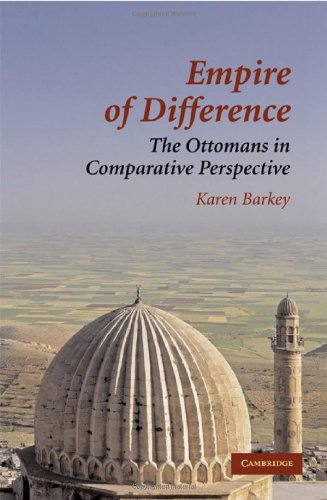
51kGIPmTZdL

(what was a really fascinating, eye-opening book for me — highly recommended…)

At no point during the long blood-soaked mess of the past two centuries have Serbs or Turks been guilty of anything that everybody else wasn’t also doing.  Thus, one of my primary objections to the use of “genocide” as a term is that it becomes part of a tool in a chronology of preference, a political expedient for stigmatizing the bad guy of the moment.  In the late nineteenth and early twentieth centuries, when European powers were obsessing with how they were going to divide the crumbling Ottoman Empire among them, there were only Muslim perpetrators of massacre in the region, never Christian ones, only the “unspeakable Turk.”  Only a tiny group of more objective observers at the time of Gladstone’s hysterical campaign asked themselves how “speakably” the Bulgarians and their Russian supporters behaved toward the Muslim population of Bulgaria in the 1870s; only Trotsky had the intelligence and conscience to report the truth about the degree and intensity of Russian/Bulgarian atrocities against the Muslim population of those lands in the 1870’s and nearly resigned from his assignment as a reporter of a Kiev newspaper as a result — he could no longer stand to physically be around the sickening violence (See Bulgarian historian Maria Todorova‘s excellent: “War and Memory: Trotsky’s War Correspondence from the Balkan Wars”  for an excellent account of Trotsky’s reporting and, through it, his brilliant and morally courageous mind; how that mind and its obvious compassion became so twistedly cruel when he turned it on his own people and country a few decades later is one of the mysteries of Bolshevik perversity.)

Later in the century, after the Cold War gave Turkey a kind of favored nation status in the Muslim eastern Mediterranean, Turkey could and still essentially can do no wrong, even if it does conduct, like in Cyprus, campaigns of what elsewhere would be called ethnic cleansing or violates the human rights of its minorities and majorities on a systematic basis.

At the beginning of the twentieth century, Serbia was “gallant little Serbia” standing up to the Austrians, beating back two massive assaults by Austria-Hungary, almost crossing the Danube into Austrian territory itself; only when Germany came to its aid was Serbia successfully defeated, and even then while putting up some of the most suicidal and vicious resistance in military history.  Serbia was a staunch supporter of the Allies in both World Wars – essentially the liberators of the Balkans in the First World War especially.  But by the end of the same century, when Serbs refused to play along with the West’s plan for what the New Balkans would look like, they were turned into pathological savages, and locked into a pariah status from which they have still not been allowed to fully emerge.

(To switch regions and periods for a moment, and examine the selective use of terminology, we never speak of the “genocide” of urban Germans or Japanese, do we, though they were a civilian population subjected to barbaric, mass, incendiary murder on a staggering scale and of questionable strategic uses and motivations other than punitive ones.)

But perhaps my most important objection to the word “genocide” should have become obvious from the above: mass murder and expulsion is what happens during nation-state formation and labeling this kind of mass murder and expulsion with some rare-orchid terminology obscures that fact.  As long as the legitimizing principle of the modern state is ethnic/tribal identity there will be groups who by their very cultural and/or religious character cannot uphold that legitimacy and will be oppressed by it.  And the time will come when they will have to be dealt with in some way or other, either through acculturation or removal, especially if their status leads them to separatist desires.  There is no such thing ultimately as genocide.  To observe the former Ottoman sphere, which is as good as any for our purposes, the rules are: form a state by grabbing as much land as you can and keep it by eliminating those who would be opposed to being part of your state.  It’s painful to say, because Bosnians got semi-trapped and stumbled into declaring independence by their two ravenous neighbors and suffered more than any in the Yugoslav conflict: but there was no Bosnian genocide, no attempt to eliminate the cultural/ethnic group that Bosnian Muslims were from the face of the earth.  There was the brutal, systematic, cruel ethnic cleansing of Muslims from parts of Bosnia that Serbia — and, of course, Croatia — wanted to hold on to because those Bosnians wanted to be part of a separate state of their own.  There was no genocide of Anatolian or Pontic Greeks, as many Greeks have lately started referring to the events of the nineteen tens and twenties.  There were decades of chronic, inter-communal violence, a war by an invading state, and the elimination of those that supported that invasion, and mostly not even through violence or by force, but by mandatory fiat agreed upon by the leaders of the countries in question.***  It’s painful to say – they’re a familiar people, one I admire, like, am close to — but as extensive as it was, as systematic and vicious in ways that set a terrible precedent for the rest of the century, it’s hard for me to call what happened to Armenians in the early twentieth century genocide. The CUP — the Young Turks — have always seemed to me to have been a bunch of loose cannons: a nefarious, often eccentric, make-it-up-as-you-go-along group of giant egos who seemed to be talking past each other most of the time and did their best in essentially ending the Ottoman Empire in the messiest way possible; and the Armenians were their single greatest victims.  But the fact remains: a people (Armenians), in a state (the Ottoman Empire) that was being torn in a million different directions, tried to form an ethnically separate state of their own (though they constituted a majority in no single region of the territory in question), and yes, often did so through violence, armed means and with outside military help.  And they were stopped.  That it was horrifying and its dimensions staggering would be obscene to deny.  That it’s some “special” form of violence — qualitatively and not just quantitatively different — and not just an extreme example of what fundamentally happens during nation-state formation is simply unsustainable as a theory for me.  I had an Armenian-American friend, and we obviously didn’t see eye to eye on these issues.  I remember him once being incensed by what he called the “macho” insensitivity of a Turkish guy who had been arguing with him and who had said: “If we hadn’t done it to you, you would have done it to us.”  Well, it’s sad, but that’s probably the truth.

No one in Screamers, not the experts or the humanitarians, not the musicians themselves, link what they want to call ‘genocide’ to the dominant political state formation of our time.  No one sees it as inevitable that if an “ethnic, racial, caste or religious, or national group” serves as the principle legitimizing force of state organization, that then some other “group” will have to be removed.  And the Helsinki Agreement’s contradictory support of both “minority rights” and “the right to self-determination” has, needless to say, been of no help in sorting out issues of this kind; Yugoslavia was the best proof of the amateurish, do-gooder thinking behind such ideas.

In fact one wonders if it was a Jew who invented the term because he and his were really the only one victims of the irrational beast we want to call genocide and are now using rather indiscriminately all over the place.  Because I can think of only one case in history where a people were not engaged in war with another country, nor in armed or any other kind of civil conflict with the surrounding population, who did not have a separatist agenda within the states they lived in or irredentist designs on parts of neighboring states, who did not constitute any kind of threat – at least real threat – to the society around them (were, quite the opposite, in fact, among those societies’ most productive and talented members), and yet became the object of a villainizing myth of incomprehensible irrationality  that marked them for complete extermination anywhere in the world they were to be found — and that is the case of the Jews.  And since we have “Holocaust” or “Shoah” for that singular episode of human horror, do we need  “genocide” at all?

I hope I haven’t insulted — worse — hurt anyone.  I hope this is the beginning of a bigger discussion.

************************************************************************************************************************************************************************************************

* Check out the film’s Wiki site; one slightly unethical thing it does is to link the great Hrant Dink’s assassination in 2007 with the the fact that he appeared in the film the year before.  There’s also some slight misrepresentation in a scene where they show Turkish nationalists trashing a fifty-year commemorative exhibit here in Istanbul of the anti-Greek pogrom of 1955 and call it an “Armenian and Greek exhibit.”

** I have no idea of the origin of this myth, or whether it developed in late Byzantine or Ottoman times, but in Greek folklore the homeland of the Turks is a place in some distant indeterminate East called the Red Apple Tree, He Kokkine Melia, and in traditional messianic thought, when the City and Romania (what the Byzantines called their polity) were brought back under Christian rule, the Turks would go back to “the Red Apple Tree.”  Ironically, Constantinople itself was known to Muslims as the Red Apple, the prize conquest, in the centuries before the fall.  I have no idea if the two myths grew out of each other or are some kind of bizarre mirror images that paradoxically developed in opposition to each other.

*** And let us all here be disabused at once of the idea that the Population Exchange agreed to at Lausanne was something that Venizelos and his government reluctantly agreed to because circumstances had made any other solution impossible.  Lefterake, our Cretan levente, was enamoured of population exchanges and similar plans far before Lausanne or even 1919.  He thought that the section of the Aegean coast that the Allies gave Greece at Paris in 1919 was eventually going to be Hellenized through exactly such a voluntary departure of its majority Muslim population, thus giving a kind of tacit approval to the atrocities committed during those years by the occupying Greek army, and, always the careerist and opportunist, one of his earlier strategies at the Paris Peace Conference had been to promise Bulgaria eastern Macedonia (Kavalla, Drama), and move its Greek population into western Macedonia where they would offset the Slavic majority of those regions, in order to coax the allies into giving him Ionia — he was a twentieth-century nationalist social engineer of the crudest kind from the beginning.  For the definitive placing of responsibility for the disastrous Asia Minor campaign on Venizelos’ shoulders, plus an extremely competent analysis of the destructive consequences of his egotistical, polarizing political style on twentieth-century Greek political life, see Michael Llewellyn Smith’s Ionian Vision: Greece in Asia Minor, 1919-1922 — an excellent account of the entire period and a great place to start if, like me, you have embarked on a minor ideological mission to dismantle the entire Venizelos myth.

Comment: nikobakos@gmail.com
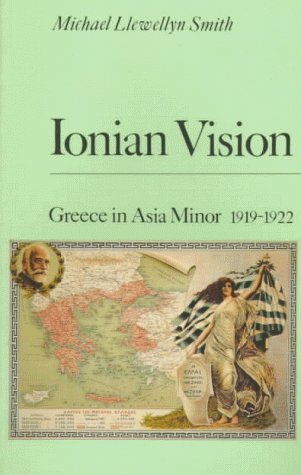
Ionian Vision

Litvaks and Galizianers

12 Oct

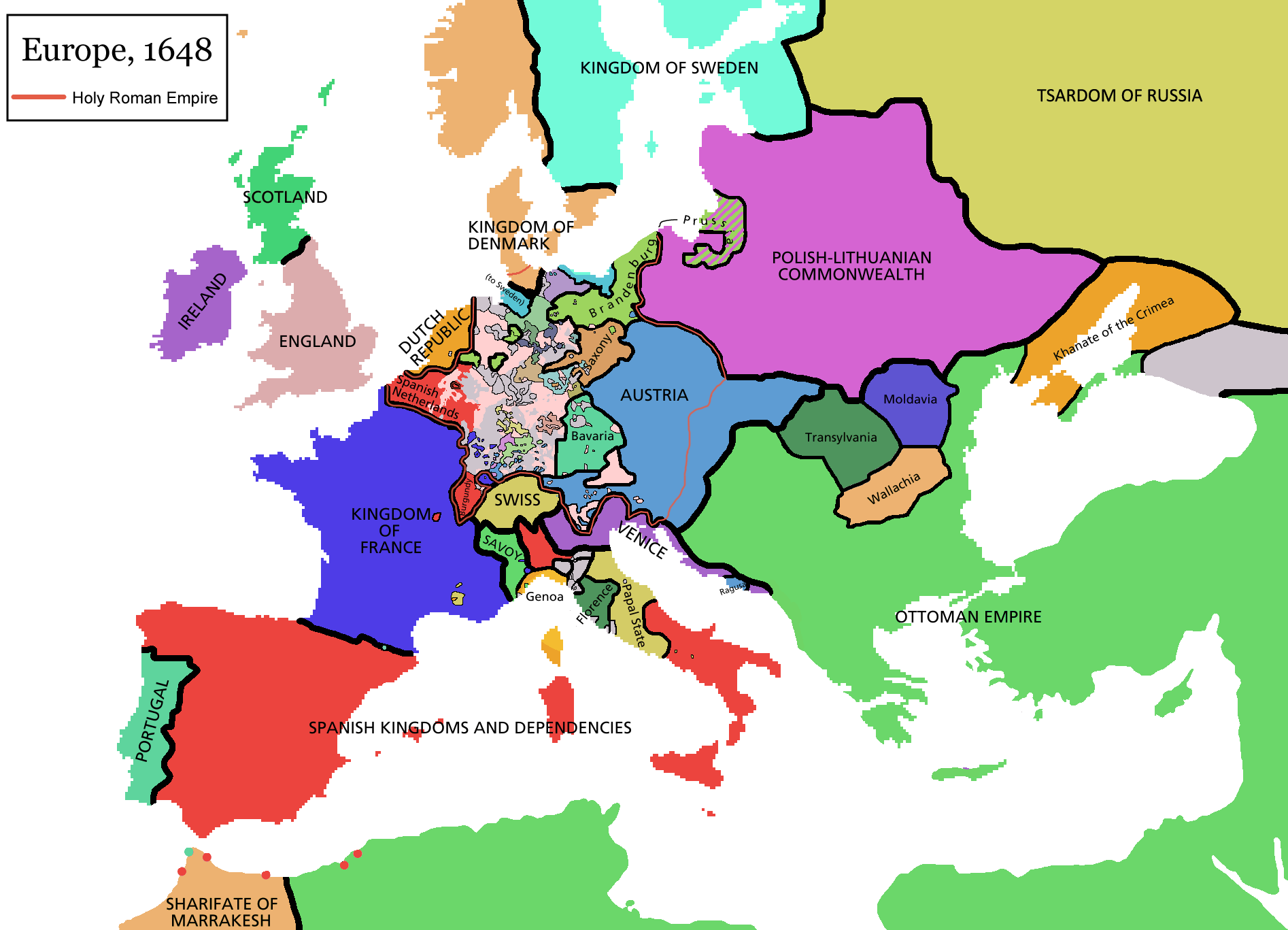
Back in a previous post/response to “Jewish London‘s” comment on “Tishabuv” I made a reference to the difference or self-categorization among Eastern European Jews as “Litvaks” and “Galizianers.”  Here’s a map of Europe in 1648.

(have to click)

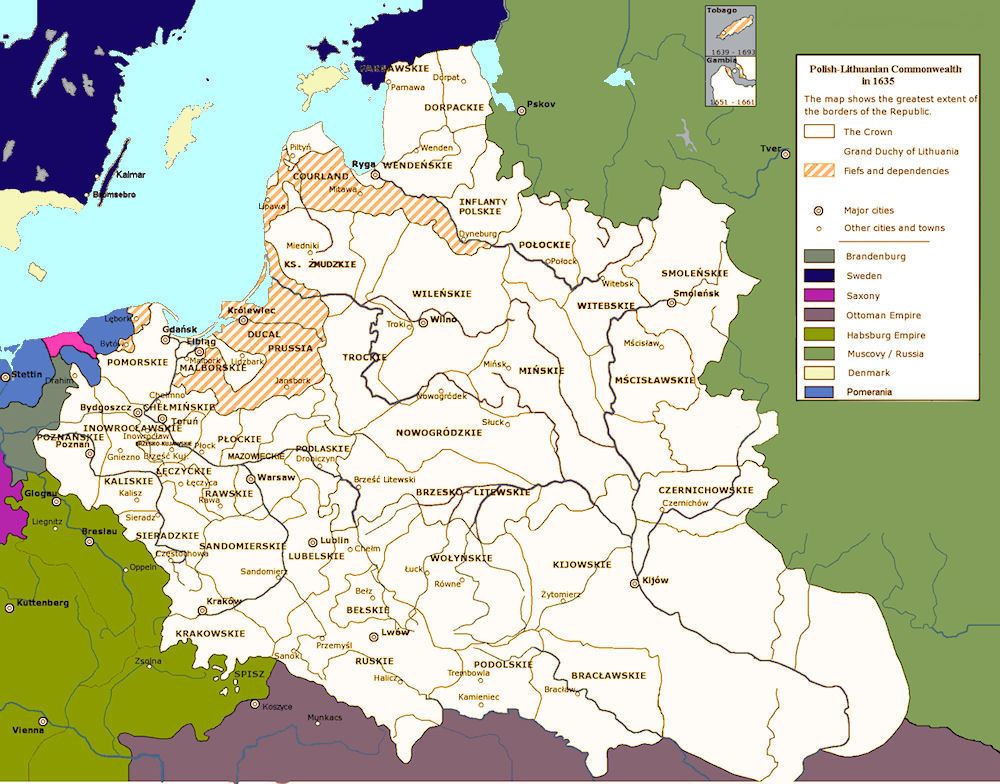
Between the beginning of the Crusades and the end of the religious wars in the German states in around 1648, a giant wave of the majority of the world’s Jews moved eastwards from German-speaking lands to Eastern Europe, preserving their form of late medieval German (Yiddish, which just means “Jewish”) in their new countries, like Spanish Jewry preserved late medieval Castillian (Ladino, but which Sephardim themselves usually refer to as “Kastelyano”) throughout the Ottoman sphere and general Mediterranean area after being expelled from Spain in 1492.  What I’d like to illustrate with the maps above and below is that no Jew ever actually migrated and settled in Russia.  The vast majority of Central European Jewry moved to the united Kingdom-Commonwealth of Poland-Lithuania, because Poland was perhaps the most progressive and open and tolerant state in Europe at the time and welcomed them gladly.  Jews later ended up in Russia and Austria when Poland was finally partitioned between those two empires and Prussia in the eighteenth century.  Otherwise, what Jew in his right mind would have gone to live in Russia?  Which was then a backwards, mediaeval theocracy — as, arguably, it still is.

(click)

The term “Litvak” refers to those Jews who lived in those territories of northeastern Poland centered around Vilna, Minsk, Bialystok and eventually Warsaw — regions more advanced or somehow “modern” than the rest of the Polish kingdom.  “Galizianer” refers to those Jews who lived in the southeastern areas of Poland — and after Partition — Austria and Russian Ukraine.

“Litvak” refers to Lithuania obviously, but mostly derived its prestige as an appellation from the central role of Vilna* in rabbinical and Jewish scholarship; as a reverse honour-indication of that role, Salonika was known as the Sephardic Vilna.  Galicia, what’s now southeastern Poland and Western Ukraine, roughly round the twin urban poles of Cracow and Lwow became, and remained into the twentieth century, one of the most overpopulated and impoverished parts of Europe — so much for enlightened Austrian rule.

One can take it from there in obvious ways: Litvak was more modern and sophisticated; Galizianer was more backwards and isolated; Litvak was more open to the modernizing influences of the German Jewish Enlightenment; the Galiizianer was more closed and isolated in his shtetl life; the tragically aborted explosion of Yiddish-language literature and theater and cinema in the early twentieth century was Litvak — with its center now moved to Warsaw; many of its themes, however, were the tales and mysticism and Hasidic other-worldliness of the Galizian south.  Opposites but complimentary.  Sholem Aleichem was a Litvak who wrote about Galizianer themes.  Renaissance and Enlightenment Jewish scholarship was Litvak; klezmer and Der Dybuk and Fiddler on the Roof are Galizia.  Helen, the receptionist for take-out orders at my dad’s coffee shop in the 70’s used to say she wouldn’t eat the store’s pastrami and corned beef because they were delivered by a “dirty Galizianer,” but she and an insurance salesman who used to have lunch there — and kinda used to hit on her — used to kid about he would never trust a “sneaky Litvak” like her; by that time, both of them were joking.

The differences mean even less today, except for that, due to New York Hasidim, Galizianer Yiddish is the most alive form of the language.  But even young New York Jewish kids know what the two words imply.  For what that was worth…

********************************************************************************************************************************************************************************

*Lithuanians — yes, I get hits from Lithuania — please do not write me and tell me the name of the city is Vilnius.  For Jewish purposes it’s Vilna; for Polish, Wilno.  See: Names: Istanbul (not Constantinople)

Note: Roumanian Jews and “Bessarabtsy” (Moldavian) Jews were kind of a separate category, though I suspect that linguistically and culturally they were pretty similar to Galizianers, aside from a reputation for being especially humourous and quick-witted and high-livers and partiers, and for introducing pastrami to New York, a linguistic and culinary kin to pastirma, one of the many ways that Roumania has always been a bridge between Ottoman and Eastern-European-Russian worlds.

Comment: nikobakos@gmail.com

Yom Kippur, Kol Nidre, Moishe Oysher and the First Roumanian (a little late…sorry)

10 Oct

Yom Kippur (pronounced “Yum Kip-per” or “Yun Kip-peh” and not “Yom Kip-pur”) is the holiest day of the Jewish year; just thought I should explain, I don’t want to under or overestimate my readers’ knowledge.  It’s the Day of Atonement, which closes the ten beautifully named Days of Awe that begin with the Jewish New Year (“Happy New Year to Everyone“), when Jews fast and atone for their – “sins” is too Catholic – for their moral failures, let’s say.

Kol Nidre, the first few words of which are heard sung by Moishe Oysher in the clip from “Overture to Glory,” (see Kol Nidre) is sung on the eve of Yom Kippur.  “All Vows” in Aramaic, the prayer, which in many ways has become the center of the day’s observance, asks God for release from any promise or oath that one will make in the coming year.  Controversial even among Jews at certain periods in Jewish history, in the Gentile world the prayer has generated volumes of anti-Semitic garbage, along the lines that one can imagine: sneaky Jews starting their year off with a legal loophole, etc.  What Kol Nidre asks of God is understanding for the many ethical obligations that an honest man knows he will not be able to completely live up to in the coming year; it’s not a request for a moral pass or a license to lie.  It’s an expression of terrible honesty, in fact.

Moishe Oysher (click)

Moishe Oysher was a Moldavian-born star of Yiddish theater and cinema, first in Europe, then mostly in the Americas, who almost accidentally stumbled into the real-life role of cantor at the First Roumanian Shul* on Rivington Street on the Lower East Side.  His powerful voice, entertaining and dramatic style (disliked by many purists), and movie star looks made him, and the First Roumanian, a sensation in the 1930s and 40s when he sang there, apparently increasing the congregation’s size to overflowing.  “Ooooh yeaaaah….” the ancient caretaker who showed me and a friend the decrepit interior the one time I was in there in the early 90s, “Moishe Oysher…they say he really packed in the gallery [where the women sat] in those days, he he…”

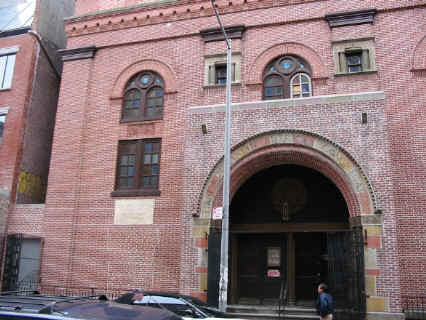
Unfortunately Oysher died young, at 51, and unfortunately the First Roumanian Shul (see below) was torn down or — like used to happen to “landmark” buildings in Greece — allowed to collapse in 2006.  It wasn’t any stunner of a building, but it was a historic center of Jewish New York and it had some of the best acoustics of any interior space in the city.  Its congregation was tiny at that point and only used the basement, even on Yom Kippur, but it could have easily been used as a concert hall or musical venue of sorts like so many houses of worship in the city whose demographic environment has changed.  In fact, it was in the process of being designated a landmark when, under shady New York real estate circumstances that may have involved the leaders of the congregation itself, city money for repairs was delayed for so long that the roof collapsed, the building was declared irreparable and the shul was demolished a few months later.

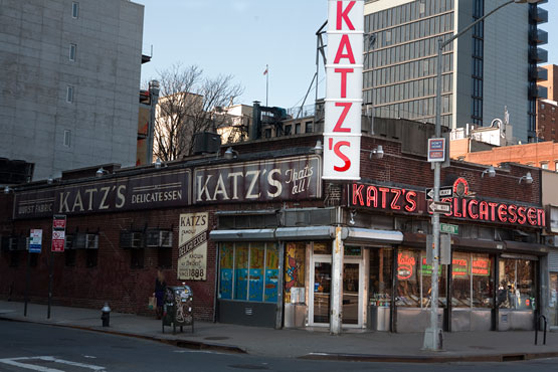
Like so much of the neighborhood, once the site of terrible poverty and the greatest population density of any equivalent set of square miles of urban space in history, but the wellspring of so much of New York’s historical and cultural and political life, the shul’s space is now occupied by a condo, with the old yeshiva side-door set into the glass façade in one of those contrived architectural pastiches that only add insult to injury for me, and Rivington Street no longer echoes to the booming voices of cantors on the High Holy Days but the screeching of drunk white girls pouring out of its series of identical bars at closing time.  At least Katz’s can still make a living.**

**********************************************************************************************************************************************************************************

*Shul: “school” literally, in Yiddish, is the traditional Ashkenazi term for “synagogue,” a Greek word which means roughly the same thing: a place to come together and pray and study (“train,” if you like, for those that recognize the second half of the word from “pedagogue” — or the movie 300…  Venetian Jews called their synagogues “scuole.”  Oddly enough, I don’t know what Sephardim call theirs.)  I don’t know where American Reform and Conservative Jews got the, frankly, sacrilegious idea of calling a “synagogue” a “Temple.”  There was only One Temple to the One God in the One City; you can’t rebuild one in Great Neck or Forest Hills.  I cringe whenever I hear it.

**Katz’s is a delicatessen on the corner of Ludlow and Houston, literally around the block from where the First Roumanian used to be.  Like most Jewish businesses on the Lower East Side by the 1980s, it was sliding downhill and hanging on by a thread, when the sudden explosion of the neighborhood (starting with, and especially, Ludlow Street) into the center of under 35 nightlife in the city gave it a new lease on life.  It’s now on every New York tourist’s itinerary and is open twenty-four hours a day, packed when the bars close after 4:00 a.m.  It has decent undistinguished pastrami, but nothing there is especially good.  A better post-bar munchies choice is Bereket, down the street on the corner of Orchard, the Turkish place that has a variety of meat-kebab-doner choices and zeytinyagli-ladera-vegetable dishes, but you have to deal with vegans there.

There’s still excellent pastrami to be had in New York around the clock, but I’m not telling where.


Comment: nikobakos@gmail.com


New Yorkers Plaster ‘Racist’ Stickers Over Islamophobic Subway Ads

28 Sep

From Thinkprogress.org:

By Ben Armbruster on Sep 25, 2012 at 9:15 am

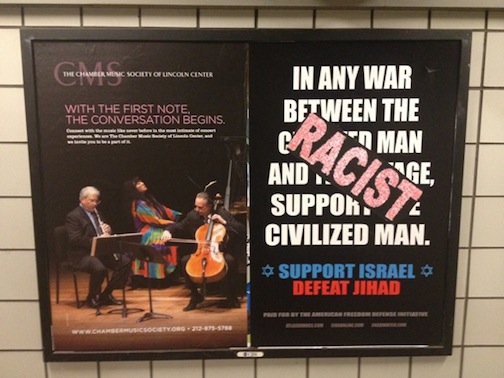
After the anti-American protests erupted in the Middle East earlier this month, Pam Geller’s American Freedom Defense Initiative (AFDI) decided to re-up its anti-Muslim ad campaign in New York’s subway system. The ad, borrowing from an Ayn Rand quote, is meant to imply that Muslims are savages.

New York City transit authorities did not want to display the ads but a federal court said refusing the ads would violate AFDI’s First Amendment rights. But now that the ads are up, New Yorkers are taking matters into their own hands, writing “RACIST” and “HATE SPEECH” over the ads in certain subway stations […]

AFDI is trying to run a similar campaign in the Washington DC Metro but authorities there have so far been successful at blocking the campaign “out of a concern for public safety.” (HT: Mondoweiss)

Even Fox News, who has promoted Geller in the past, called her group’s ads “inflammatory” and “anti-Muslim.”


Comment: nikobakos@gmail.com