Tag Archives: Kurds

Repost: Catalonia: “Nationalism effaces the individual…”

1 Oct

…fuels imaginary grievances and rejects solidarity. It divides and discriminates. And it defies the essence of democracy: respect for diversity. Complex identities are a key feature of modern society. [my emphasis] Spain is no exception.”

A brilliant op-ed piece from the Times today by Mario Vargas LLosa, among others, that exposes all the petty narcissism and destructiveness of the orgy of separatist movements that Europe has seen come to the fore in the past few decades: A Threat to Spanish Democracy .”

Catalunya+Prov+EnglishOther money quotes:

“In their attempt to undermine the workings of the constitutional government, Catalan separatists have displayed a remarkable indifference to historical truth. Catalonia was never an independent state. It was never subjected to conquest. And it is not the victim of an authoritarian regime. As a part of the crown of Aragon and later in its own right, Catalonia contributed decisively to making Spain what it has been for over three centuries: an impressive attempt to reconcile unity and diversity — a pioneering effort to integrate different cultures, languages and traditions into a single viable political community.

“Compared with the crises occasioned by the collapse of dictatorships in many European states, Spain’s transition to democracy, following the 1975 death of Francisco Franco, was exemplary, resulting in a democratic constitution granting broad powers to Spain’s autonomous regions. Yet Catalan separatists have glossed over the positive aspects of the transition.”

and:

“But the advent of democracy brought official recognition to Spain’s distinctive cultures, and set the foundations for the autonomy the Catalans enjoy today. Catalonia has its own official language, its own government, its own police force. Catalans endorsed the Constitution overwhelmingly: 90 percent of them voted yes in the referendum of Dec. 6, 1978. The millions of tourists who flock to Barcelona every year, drawn by the beguiling blend of Gothic and Gaudí, attest to the vigor of Catalonia’s culture. The claim that Catalonia’s personality is being stifled and its freedoms oppressed is simply untrue.”

The piece pretty much says it all: the bogus democraticness of separatist rights and the supposed right to self-determination completely debunked as nothing more than “little” nationalisms, which as Vassily Grossman points out in this post …the nationalism of little nations,” can be just as dangerous and certainly as small-minded as that of “bigger” nationalisms.  Ditto this op-ed for Abkhazia, South Ossetia, Ukraine (both sides), for Belgium, Scotland and, of course, for the most nightmarish manifestation of these tendencies in our time, the tragic break-up of Yugoslavia.  And that’s without even going as far back as the Partition of India, or the Greco-Turkish Population Exchange of the 1920s.

“Complex identities are a key feature of modern society.”  No, no and no…  Complex identities are not just a key feature of modern society, but humanity period, a feature of pre-modern society since the beginning of time.  The roughly two centuries of modernity or “the modern,” which we can probably date from the French Revolution on, is the only period in history when the ethnicity-based nation-state and its brutal, levelling, anti-humanist attempt to “de-complicate” human identity held sway as the predominant form of sociopolitical organization.  It’s just a blip on the screen of history and will soon come to be seen as such.  Multiple cultural identities and stable state political organization can co-exist easily.  Thinking otherwise is an idea whose burial is long overdue.

So, what irritates me most about separatist movements like that of the Catalans is that they’re really retrograde ideologies disguised as liberation movements.  Since the Barcelona Olympics of 1992, when the autonomous Catalan government had the impudence, I remember, to plaster New York City subway cars with ads that read “Catalonia is a country in Spain,” (???) Catalans have been engaged in a massive public relations campaign to project an image of sophistication, liberalism, bogus hipness, and artistic innovation (including culinary — if you can actually call the molecular nonsense Ferran Adrià put out food…) all meant to be juxtaposed against a clichéd, “Black Legend” stereotype of Spain — under whose repression Catalonia suffers — that’s just plain racist. Catalan nationalism rests mostly on the laurels of its Republican-ness and struggle against the forces of Spanish reaction in the 1930s — Hemmingway and Orwell’s “Homage.”  But the attitude of today’s average Catalan nationalist more resembles that of the average member of Italy’s Northern League, a far-right if not quite fascist but certainly racist bunch of jerks: the same smug sense of superiority towards their co-citizens and the same petit bourgeois self-righteousness about how their wealth and resources get sucked up by the parasitic rest of the country.

There is no convincing evidence that Catalan society is any more liberal or open or sophisticated than the rest of Spain.  See González Iñárritus film “Biutiful” (if you can bear to watch it; I couldn’t make it though a second viewing…but it’s the perfect antidote to Woody Allen’s nauseating “Vicky, Cristina, Barcelona”), for how much better Catalonia treats its immigrants, for example, including those from poorer parts of Spain, than any other part of Europe, or do some reading up on the discrimination Castillian-speakers in Catalonia suffer.  Catalan independence is not a liberal or liberatory idea; it’s exclusionary and elitist to the core.  The problem is that most of the world falls for the discourses of these movements –the way the West did with Croatia in the 90s — because they’re so good at playing victim.

The finger-flipping at the impressive democratic achievements of Spanish society since 1975 is particularly galling.

See also my Leader of Catalonia Calls for Independence Vote (September 27th).  And  More on Alevis and Alawites…or Alevis and Kurds…or Iraqi Kurds…or…Christian Kurds…or Assyrians…or… (September 27th)

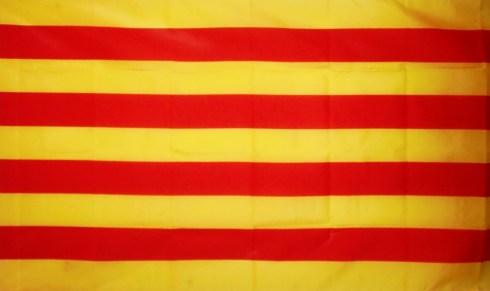
catalonia-5-x-3-flag-3475-p

Comment: nikobakos@gmail.com

Diyarbakır

24 Sep

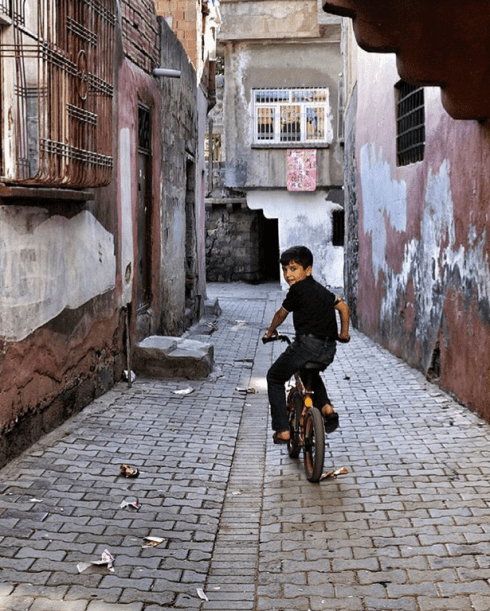
A cool Twitter account with photos of Diyarbakır, the capital of Turkish Kurdistan.  Slight weakness for the super wide angle, the last refuge of those with no compositional ideas, but interesting nonetheless.  Plus, who knows when we’ll once again be able to travel there freely.

Diyarbakir 5

Diyarbakir 3

Diyarbakir 2

Diyarbakir 4

Diyarbakir 1

Comment: nikobakos@gmail.com


Do Kurds need to do this right now, just at this very moment?

22 Sep

At the end of 2015 I wrote this piece: Syria, Russia, ISIS and what to do about everything where I expressed my hopes that Iraqi Kurds not declare de jure independence, since that would destabilize the region even further:

The Kurds: ‘I have a dream,’ as they say, for Kurds: that they will recognize the fact that Iraqi Kurdistan with a capital at Erbil is already a de facto independent state and not complicate things in the neighborhood by please resisting the urge to declare de jure independence.

Kurds

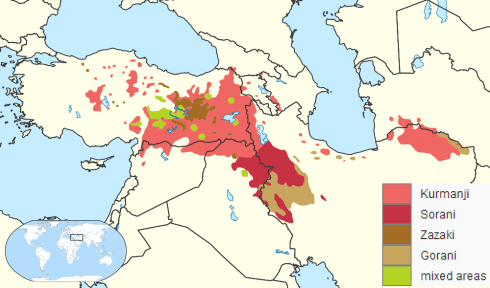
Kurdish-inhabited regions of the Middle East and Caucasus, according to tribal break-down.

“This centrally located political entity can serve as the hub of a wheel of still-to-be-worked-for, autonomous, Kurdish regions encircling it, and by not insisting on independence and union, they will be able to put more resources and energy into developing what they have and not fighting to defend it forever. I don’t know; maybe the future of the world will involve the devolving of nation-states into affiliated groups of semi-autonomous units with perhaps overlapping or varying degrees of jurisdiction – Holy Roman Empire style – and the Kurds may be the first to experience this as a people and benefit from it: that is, to see diaspora (if that word really applies to a non-migrating group), or political ‘multiplicity,’ as a finger in every pie and not as separation, and be able to reap the advantages of that.”

And my what-to-do suggestions:

“The Kurds: Give the Kurds EVERYTHING they need. They’re creating a society, both in Iraqi Kurdistan and in the internal socio-political life of Turkish Kurds that is nothing short of revolutionary in its civic-mindedness, democratic tendencies and secular steadfastness. Yes, nothing’s perfect there either but it’s by far the best we have. And the loose confederation of Kurdish regions that I spoke of earlier may have perhaps an even more strategically valuable position to offer the rest of the world than Turkey does. Beg Turkish Kurds to swear to abide by ceasefire terms despite all provocations by the Turkish state; insist that Iraqi Kurdistan not declare independence. And then give them everything they need, even if it means billions in aid. Because, along with the Russians, they’re the ones who’ll probably have to do even more of the ground fighting when the airstrikes campaign reaches its inevitable limits – and starts harming civilians, which it unfortunately already has — even though they now insist that they’re not spilling any more of their own blood for anything outside of Kurdish-inhabited regions.”

Well, it looks like “Hope” as Poles say, “is the mother of stupidity” and nobody cares about my wish-list.

The above was written before the relationship between Turkish Kurds and the Turkish government went to hell again and descended into crazy violence, before supposed anti-Erdoğan coup, massive purges, HDP’s Demirtaş’ imprisonment, and all the other fun stuff that’s happened in Turkey since.  I hate, more than anybody, to look like I’m catering to Erdoğan’s peeves, but an Iraqi Kurdish referendum on independence just at this time is a provocation for him that may turn out to be disastrous.  Erdoğan is already massing troops on Turkey’s southern borders, and though I doubt he’ll have the balls to invade what’s pretty much an American satellite, Iraqi Kurdistan, I don’t put it beyond him to send troops into the Idlib region in Syria — maybe even hold a “referendum” and annex it like the Turkish Republic did to the neighboring region of Antiocheia in the 1930s.  A friend in C-town thinks that the third and newest Bosporus bridge is named after Sultan Selim 1st (“the Grim”) not just to stick it to Alevis (he was the ruler who committed widespread massacres of them during his reign, 1512 – 1520) but to emphasize Selim’s wresting of Mesopotamia from the hated Safavid Shia of Iran and the Levant from the Mamluks of Egypt and underline Erdoğan Turkey’s role in the region.  His Neo-Ottomanism may yet find its perfect expression in post-ISIS Iraq/Syria.

Read Barzani in the Guardian: Barzani on the Kurdish referendum: ‘We refuse to be subordinates’: “Iraq’s Kurdish leader tells the Guardian why the independence vote is so vital, and how he will defy global opposition”.

Interesting times.

Comment: nikobakos@gmail.com

Memo to: a certain generation of “progressive” Turks

4 Aug

From: NikoBakos

Re: the final and total castration of the Turkish military

Date: August 2017
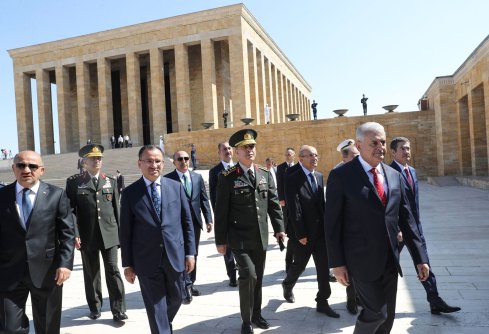
Ataturk Mausoleum Yildirim Chiefs of staffPrime Minister Binali Yildirim of Turkey, front right, and the chief of staff, Gen. Hulusi Akar, third from left, visit the Mustafa Kemal Ataturk Mausoleum before the Turkish Supreme Military Council meeting in Ankara on Wednesday. Credit Adem Altan/Agence France-Presse — Getty Images

ARE YOU HAPPY NOW???

I have two groups of friends in Constantinople:* one a group of mostly Alevi**, first-generation urbanites (from Dersim and Antiocheia); another of at least several urban generations, who are pure “White” Turks in every way.

A sub-category of this second group of friends (who are fast becoming ex-friends) are/were or considered themselves to be “leftists” (“I should cough” as one of the characters in Hester Street says).  These were always violently allergic to anything that had to do with the military, Turkish or otherwise.

Peaceniks, of course, our rift began when it proved completely in their interest to paint me as a super-American hawk during the Iraq war, even if I’m deeply un-American in my self-identification and was never a supporter of Bush’s adventure.  I simply did not know what to think about the idea of invading Iraq and toppling Saddam Hussein and took issue with their knee-jerk, anti-American attitude, with their facile certainty they knew what to think.  In the end I just decided that anybody who was automatically against the completely justified invasion of Afghanistan and the removal of the Taliban — and if that’s a tragically uncompleted project, that doesn’t mean the initial result or victory was not worthwhile…ASK ANY AFGHAN — was going to be a robot-thinker about any kind of American intervention or just about war of any kind, so I couldn’t be bothered.

Of course, these types DON’T KNOW ANY AFGHANS to ask, because they’re shameless hypocrites living in their pleasant, sheltered suburbs in C-Town, who know our Cyclades better then they know the rest of their own country — certainly better than I do — and wouldn’t dare head out to Afghanistan, even on a dare.  Why do they irritate me so much?  It’s simple.

If the original sin of the Right is selfishness, the original sin of the Left is self-righteousness, by which I mean the need to see one’s self as morally correct no matter what, even if this means a breezy indifference to the realpolitik or the reality of what’s really happening on the ground.***

Of course, they were steadfast in their belief that the Turkish military was an institution of bastardized Kemalism that was the greatest anti-democratic force in their society.  This was their justification for eventually rejecting their parents’ admittedly corrupt CHP as well, Turkey’s Kemalist Republican party.  And yet it’s ironic that the Turkish military’s “anti-democratic” orientation has repeatedly prevented the complete descent of that society into chaos.  One of these types has a whole sob story she used to recite to me about how, as a young girl in the 70s, she was terrified every day when her father left the house that he wouldn’t come home because of the terrible and constant terrorist violence that was then occurring on the streets of Constantinople.  But it was the military that put an end to that violence in 1980, like it was the military who got rid of Menderes, architect of the 1955 anti-Greek pogrom, in 1960.  And as soon as Erbakan started exceeding his limits (btw, he was the first who tried talking about limiting alcohol consumption and tables on the street in Pera and Galata), the military got rid of him too in 1997 — not exactly cause and effect there.

As a Greek, there’s obviously little love lost on my part for the Turkish military.  I just feel that if Turkey’s twentieth-century history, culminating in the Erdoğan phenomenon, has proven the country to be incapable of forming a democratic civil society that doesn’t spin out of control into violence, corruption and chaos, then you just don’t have the luxury of being anti-military.  Furthermore, from our perspective, Erdoğan’s pre- and post-“coup” military is a far more threatening force than it was previously.  Violations of Greek air space have increased exponentially under Erdoğan’s tenure, as has his, and formerly Davutoğlu’s, irresponsibly imperialist Neo-Ottoman language.  And just like it wasn’t a military junta that organized the pogrom of 1955, it wasn’t a military government that invaded Cyprus in 1974, ethnically cleansing and occupying 40% of the island to protect a Turkish minority that is only 18% of the island’s population.

Lately there had been a weird shift in their attitudes though, as it has slowly sunk in that they had supported (“I voted for him!  My God!!”) the most un-democratic, anti-consitutional, religiously retrograde, paranoid, chip-on-the-shoulder lunatic to rule Turkey since Abdülhamid (photo below).  After the takeover and purging of the daily Zaman in March of 2016, I ran the idea past a few of them: “do you think it’d be a good idea for the military to step in? …they already have more unconstitutional dirt on him than on most Turkish heads of state.”  And even the Teşvikiye girl who had worried so much about her father, didn’t get apoplectic on me like she would’ve done in the past; she simply mumbled passively, in the static cadences of Turkish passivity: “I don’t even think they’re in a position to do anything at this point.”****
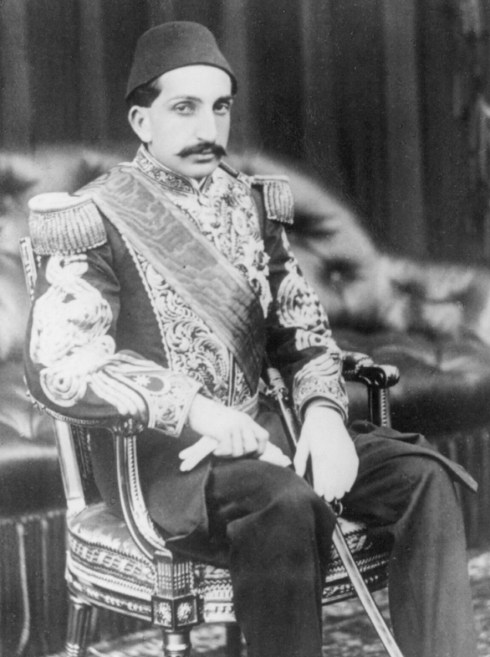
AbdülhamidAbdülhamid

Worse was one who said to me: “What Turkey needs now is unity.”  Well, your compatriots have actually shown a quite impressive amount of unity in the face of the Erdoğan challenge.  Every time he has engineered some sort of spectacular violence to terrify them over the past almost three years, they have unitedly come back, in elections and referenda and the mob-mobilization they have always been so good at, to give this “most un-democratic, anti-consitutional, religiously retrograde, paranoid, chip-on-the-shoulder lunatic to rule Turkey since Abdülhamid…” an even greater mandate on power than he had before: Daddy please save us!

Infantile beyond belief.  Is that the “unity” you wanted?  There was great unity in the mob hysteria that this supposed coup was met with (no, I don’t believe it was Gülen; no, I don’t think it was the army, unless it was army that already knew it was going to be sacked; no, I don’t think he didn’t know; I’d probably refuse to believe that Erdoğan wasn’t the architect of the whole thing — see the New Yorker‘s great Dexter Fillins’ “Turkey’s Thirty-Year Coup”).  They displayed impressive unity lynching poor little Mehmetçiks just following orders on the Bosporus Bridge (scenes guaranteed to make the hair of Greeks and Armenians stand on end), impressive unity in the Nazi-style rallies the Great Leader has convened, impressive unity in heckling men from the army and journalists and writers being led into a show trial that can quite possibly end in their execution or certainly life sentence (see “Inside Erdoğan’s Prisons” in the Times) and with the kerchiefed teyzes screaming for blood outside the courthouse in Ankara — and I’m sure they’ll show impressive unity in supporting the reinstating of capital punishment if that goes up for a referendum soon.
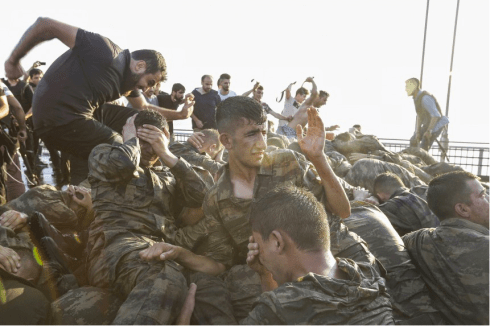
Turkish thugs and soldiersTurks beating up young conscripts on the Bosporus Bridge, defending their democratic right to elect a dictator who has abolished Turkish democracy for the most part and soon will have the power to go after whatever’s left…Turkish “unity” in action.

IS THAT THE UNITY YOU WANTED?  The unity of Kristallnacht? (or the “Septembriana” — same difference.)  The unity of Nüremberg?  The unity that comes with thinking that you can enfranchise the newly rich, provincial pious, those with absolutely no democratic education — or education of any kind — and that they won’t turn on you like swine before which pearls have been cast?  (Plato said that the “demos” — the people — shouldn’t have the right to vote because they’ll always vote for the tyrant — τυραννόφρων; Dostoevsky’s Grand Inquisitor says precisely the same thing.)  Did you want the unity of the Italians and the Germans who respectively put Mussolini and Hitler in power with their vote?  Or the Americans who voted for Trump?  Or the Russians who voted and will again vote for Putin?

Tabrik migam, then.  You got it.

And this is the cherry on your birthday cake: Erdoğan replaces the military chiefs of staff with his own men.  Good luck ever getting rid of him now.  He’s now in a position of total control, with no challenges whatsoever.  You’re stuck for life.

*************************************************************************************

* The days when in the p.c. stupidity of the metapoliteuse we used to refer to Constantinople as “Istanbul” — I mean when speaking Greek…airport announcements and newspaper by-lines used “Ιστανμπούλ“…in Greek…are over.  I’ve now taken to calling it Constantinople in English as well, as Turks are free to call Salonica Selanik or Bulgarians and Macedonians Solun and I have no problem.  I’m not going to tell others what to call cities historically important to them; it actually makes me happy.  For more on this see my: Names: “Istanbul (not Constantinople)”…and Bombay! and keep an eye out for my “Boycott ‘Mumbai” campaign” post.  In general except an upswing in South Asian posts as we approach the seventy-year anniversary of Partition.

** My friends bear out the truth that Turkey’s Kurdish-Zaza Alevis and Syria and Lebanon’s Alawites are religiously the same branch of semi-Shia Islam.  The ones from Dersim have recognized that Syrian Alawites are also Alevi like them, even if that hasn’t made them Assad supporters; and the ones from Antiocheia (Antakya in Turkish or Hatay province in the logic of Turkish science fiction nationalist narrative) are just plain Alawite Arabs, who have understood that if there’s anything separating them from Syrian or Lebanese Alawites, it’s only the Turkification campaign they were subjected to when Turkey annexed that part of then-French-mandate Syria in the 1930s.  If papers like the Times feel the need to add the caveat that they’re different in every article they publish on the subject, it’s because they’re ignorant, the Turkish Press Office has made a fuss every time they don’t add that caveat, and it’s easy to think that people separated into difference by the ethnic nation state aren’t religiously brothers.  I’ve written extensively on this in a Twitter dialogue I had with a Turk who thought everybody should fight “lies and defamation” against their country when they appear in the media:

Syrian Alawites and Turkish Alevis: closer than I thought

Turkish Alevis and Syrian (or Lebanese…or Turkish?) Alawites — a Twitter exchange

Alevis and Alawites addendum: a “p.s.” from Teomete

More on Alevis and Alawites…or Alevis and Kurds…or Iraqi Kurds…or…Christian Kurds…or Assyrians…or…

Look out for Alevis in the current struggle in Turkey.  Whereas Kurds proper are not trusted by the political establishment or most Turks because they’re convinced they’ll never give up their separatist aspirations, Alevis, who suffered terribly under the Ottomans and the early republic and still do on some level, are still loyal to the Turkish Republic and Turkey itself.  This puts them in the position to become the secular backbone of all democratic impulses that still exist in that country, something like African-Americans in the United States were in the mid-twentieth century, since their form of Islam does not aspire to becoming the State itself, as all forms of conventional Sunni Islam do.  They were a disproportionate share of the casualties and deaths that occurred during the crackdown of the 2013 protests, not because they were targetted specifically, but simply because they were already a disproportionately large percentage of the protesters.

*** It may seem irrelevant, but this type always reminds of a passage in Chesterton’s Orthodoxy in which he trashes this kind of moral correctness by trashing the New Agers of his time:

“Only the other day I saw in an excellent weekly paper
of Puritan tone this remark, that Christianity when stripped of its
armour of dogma (as who should speak of a man stripped of his armour of
bones), turned out to be nothing but the Quaker doctrine of the Inner
Light. Now, if I were to say that Christianity came into the world
specially to destroy the doctrine of the Inner Light, that would be an
exaggeration. But it would be very much nearer to the truth. The last
Stoics, like Marcus Aurelius, were exactly the people who did believe in
the Inner Light. Their dignity, their weariness, their sad external care
for others, their incurable internal care for themselves, were all due
to the Inner Light, and existed only by that dismal illumination. Notice that Marcus Aurelius insists, as such introspective moralists always do,
upon small things done or undone; it is because he has not hate or love
enough to make a moral revolution. He gets up early in the morning, just
as our own aristocrats living the Simple Life get up early in the
morning; because such altruism is much easier than stopping the games of
the amphitheatre or giving the English people back their land. Marcus
Aurelius is the most intolerable of human types. He is an unselfish
egoist. An unselfish egoist is a man who has pride without the excuse of
passion. Of all conceivable forms of enlightenment the worst is what
these people call the Inner Light. Of all horrible religions the most
horrible is the worship of the god within. Any one who knows any body
knows how it would work; any one who knows any one from the Higher
Thought Centre knows how it does work. That Jones shall worship the god
within him turns out ultimately to mean that Jones shall worship Jones.
Let Jones worship the sun or moon, anything rather than the Inner Light;
let Jones worship cats or crocodiles, if he can find any in his street,
but not the god within. Christianity came into the world firstly in
order to assert with violence that a man had not only to look inwards,
but to look outwards, to behold with astonishment and enthusiasm a
divine company and a divine captain. The only fun of being a Christian
was that a man was not left alone with the Inner Light, but definitely
recognised an outer light, fair as the sun, clear as the moon, terrible
as an army with banners.”  [All bold emphases mine.]

**** “yanlış oldu” — See Loxandra‘s amazing “duck with bamya” chapter; I never tire of recommending it.

Comment: nikobakos@gmail.com

From the Guardian: Turkey could cut off Islamic State’s supply lines. So why doesn’t it? David Graeber

19 Nov

Turkey — or rather, Turks — could do a lot of things.  Why they don’t is a psychological issue, perhaps, more than anything else.  My take on the infuriating mood in post-elections Istanbul will come soon.  Meanwhile, great article from the Guardian, which, as usual, is not afraid to shove uncomfortable questions — and accusations — in our faces.

2835

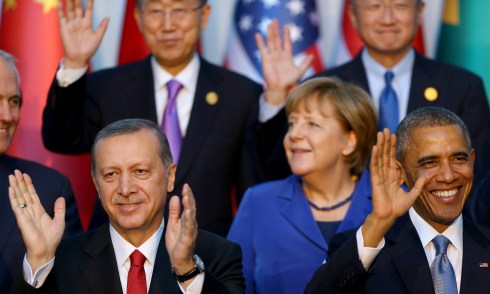
G20 leaders with Recep Tayyip Erdoğan in Antalaya on 15 November. ‘It may seem outrageous to suggest that a Nato member would in any way support an organisation that murders western citizens in cold blood.’ Photograph: Anadolu Agency/Getty Images

Some quotes:

“In the wake of the murderous attacks in Paris, we can expect western heads of state to do what they always do in such circumstances: declare total and unremitting war on those who brought it about. They don’t actually mean it. They’ve had the means to uproot and destroy Islamic State within their hands for over a year now. They’ve simply refused to make use of it. In fact, as the world watched leaders making statements of implacable resolve at the G20 summit in Antalaya, these same leaders are hobnobbing with Turkey’s president Recep Tayyip Erdoğan, a man whose tacit political, economic, and even military support contributed to Isis’s ability to perpetrate the atrocities in Paris, not to mention an endless stream of atrocities inside the Middle East….”

“How has Erdoğan got away with this? Mainly by claiming those fighting Isis are “terrorists” themselves. It is true that the PKK did fight a sometimes ugly guerilla war with Turkey in the 1990s, which resulted in it being placed on the international terror list. For the last 10 years, however, it has completely shifted strategy, renouncing separatism and adopting a strict policy of never harming civilians. The PKK was responsible for rescuing thousands of Yazidi civilians threatened with genocide by Isis in 2014, and its sister organisation, the YPG, of protecting Christian communities in Syria as well. Their strategy focuses on pursuing peace talks with the government, while encouraging local democratic autonomy in Kurdish areas under the aegis of the HDP, originally a nationalist political party, which has reinvented itself as a voice of a pan-Turkish democratic left…

4000.jpg

‘Bloody terrorist bombings inside Turkey seemed to target civilian activists associated with the HDP. Victims have repeatedly reported police preventing ambulances evacuating the wounded, or even opening fire on survivors with tear gas .’ Photograph: Murat Bay/AFP/Getty

“…In June, HDP success at the polls denied Erdoğan his parliamentary majority. Erdoğan’s response was ingenious. He called for new elections, declared he was “going to war” with Isis, made one token symbolic attack on them and then proceeded to unleash the full force of his military against PKK forces in Turkey and Iraq, while denouncing the HDP as “terrorist supporters” for their association with them.

There followed a series of increasingly bloody terrorist bombings inside Turkey – in the cities of Diyarbakir, Suruc, and, finally, Ankara – attacks attributed to Isis but which, for some mysterious reason, only ever seemed to target civilian activists associated with the HDP….”

“The exact relationship between Erdoğan’s government and Isis may be subject to debate; but of some things we can be relatively certain. Had Turkey placed the same kind of absolute blockade on Isis territories as they did on Kurdish-held parts of Syria, let alone shown the same sort of “benign neglect” towards the PKK and YPG that they have been offering to Isis, that blood-stained “caliphate” would long since have collapsed – and arguably, the Paris attacks may never have happened. And if Turkey were to do the same today, Isis would probably collapse in a matter of months. Yet, has a single western leader called on Erdoğan to do this? [my emphases]

The next time you hear one of those politicians declaring the need to crack down on civil liberties or immigrant rights because of the need for absolute “war” against terrorism bear all this in mind. Their resolve is exactly as “absolute” as it is politically convenient. Turkey, after all, is a “strategic ally”. So after their declaration, they are likely to head off to share a friendly cup of tea with the very man who makes it possible for Isis to continue to exist.”

Comment: nikobakos@gmail.com


Catalonia: “Nationalism effaces the individual…”

7 Nov

…fuels imaginary grievances and rejects solidarity. It divides and discriminates. And it defies the essence of democracy: respect for diversity. Complex identities are a key feature of modern society. [my emphasis] Spain is no exception.”

A brilliant op-ed piece from the Times today by Mario Vargas LLosa, among others, that exposes all the petty narcissism and destructiveness of the orgy of separatist movements that Europe has seen come to the fore in the past few decades: A Threat to Spanish Democracy .”

Catalunya+Prov+EnglishOther money quotes:

“In their attempt to undermine the workings of the constitutional government, Catalan separatists have displayed a remarkable indifference to historical truth. Catalonia was never an independent state. It was never subjected to conquest. And it is not the victim of an authoritarian regime. As a part of the crown of Aragon and later in its own right, Catalonia contributed decisively to making Spain what it has been for over three centuries: an impressive attempt to reconcile unity and diversity — a pioneering effort to integrate different cultures, languages and traditions into a single viable political community.

“Compared with the crises occasioned by the collapse of dictatorships in many European states, Spain’s transition to democracy, following the 1975 death of Francisco Franco, was exemplary, resulting in a democratic constitution granting broad powers to Spain’s autonomous regions. Yet Catalan separatists have glossed over the positive aspects of the transition.”

and:

“But the advent of democracy brought official recognition to Spain’s distinctive cultures, and set the foundations for the autonomy the Catalans enjoy today. Catalonia has its own official language, its own government, its own police force. Catalans endorsed the Constitution overwhelmingly: 90 percent of them voted yes in the referendum of Dec. 6, 1978. The millions of tourists who flock to Barcelona every year, drawn by the beguiling blend of Gothic and Gaudí, attest to the vigor of Catalonia’s culture. The claim that Catalonia’s personality is being stifled and its freedoms oppressed is simply untrue.”

The piece pretty much says it all: the bogus democraticness of separatist rights and the supposed right to self-determination completely debunked as nothing more than “little” nationalisms, which as Vassily Grossman points out in this post …the nationalism of little nations,” can be just as dangerous and certainly as small-minded as that of “bigger” nationalisms.  Ditto this op-ed for Abkhazia, South Ossetia, Ukraine (both sides), for Belgium, Scotland and, of course, for the most nightmarish manifestation of these tendencies in our time, the tragic break-up of Yugoslavia.  And that’s without even going as far back as the Partition of India, or the Greco-Turkish Population Exchange of the 1920s.

“Complex identities are a key feature of modern society.”  No, no and no…  Complex identities are not just a key feature of modern society, but humanity period, a feature of pre-modern society since the beginning of time.  The roughly two centuries of modernity or “the modern,” which we can probably date from the French Revolution on, is the only period in history when the ethnicity-based nation-state and its brutal, levelling, anti-humanist attempt to “de-complicate” human identity held sway as the predominant form of sociopolitical organization.  It’s just a blip on the screen of history and will soon come to be seen as such.  Multiple cultural identities and stable state political organization can co-exist easily.  Thinking otherwise is an idea whose burial is long overdue.

So, what irritates me most about separatist movements like that of the Catalans is that they’re really retrograde ideologies disguised as liberation movements.  Since the Barcelona Olympics of 1992, when the autonomous Catalan government had the impudence, I remember, to plaster New York City subway cars with ads that read “Catalonia is a country in Spain,” (???) Catalans have been engaged in a massive public relations campaign to project an image of sophistication, liberalism, bogus hipness, and artistic innovation (including culinary — if you can actually call the molecular nonsense Ferran Adrià put out food…) all meant to be juxtaposed against a clichéd, “Black Legend” stereotype of Spain — under whose repression Catalonia suffers — that’s just plain racist. Catalan nationalism rests mostly on the laurels of its Republican-ness and struggle against the forces of Spanish reaction in the 1930s — Hemmingway and Orwell’s “Homage.”  But the attitude of today’s average Catalan nationalist more resembles that of the average member of Italy’s Northern League, a far-right if not quite fascist but certainly racist bunch of jerks: the same smug sense of superiority towards their co-citizens and the same petit bourgeois self-righteousness about how their wealth and resources get sucked up by the parasitic rest of the country.

There is no convincing evidence that Catalan society is any more liberal or open or sophisticated than the rest of Spain.  See González Iñárritus film “Biutiful” (if you can bear to watch it; I couldn’t make it though a second viewing…but it’s the perfect antidote to Woody Allen’s nauseating “Vicky, Cristina, Barcelona”), for how much better Catalonia treats its immigrants, for example, including those from poorer parts of Spain, than any other part of Europe, or do some reading up on the discrimination Castillian-speakers in Catalonia suffer.  Catalan independence is not a liberal or liberatory idea; it’s exclusionary and elitist to the core.  The problem is that most of the world falls for the discourses of these movements –the way the West did with Croatia in the 90s — because they’re so good at playing victim.

The finger-flipping at the impressive democratic achievements of Spanish society since 1975 is particularly galling.

See also my Leader of Catalonia Calls for Independence Vote (September 27th).  And  More on Alevis and Alawites…or Alevis and Kurds…or Iraqi Kurds…or…Christian Kurds…or Assyrians…or… (September 27th)


catalonia-5-x-3-flag-3475-p

Comment: nikobakos@gmail.com

Even MORE Turkey, Syria and the Kurds from NYRB: Christopher de Bellaigue

14 Oct

Turkey’s Double Game in Syria

Christopher de Bellaigue

Jacob Simkin/NurPhoto/Corbis Turkish tanks standing by on the Syrian border with the battle of Kobani in the background, October 11, 2014  
Money quote:  “The vile situation in Kobani has become a case study in the ways that civil wars suck in neighbors and break down alliances as the innocent are put to the sword. It is also a powerful refutation of the trite adage that the enemy of my enemy is my friend. In this conflict there are no friends.”   

Even by the dismal standards of the Syrian civil war, the current battle for Kobani, a Kurdish town on the Syrian side of the Syrian-Turkish border, seems particularly intractable. As ISIS militants equipped with plundered American weapons have taken on poorly armed Kurdish guerrillas who can do little to stop them, there is every chance that the extremist group will strengthen its hold on Syrian Kurdistan right up to the Turkish border. Already, some four hundred have been killed, and more than 180,000 Syrian Kurds have fled across the border to Turkey—one of the largest single outflows of refugees since the conflict began.

Yet the United States and Turkey are locked in their own dispute about who should deal with the situation. While the US government concedes that its aerial bombing campaign has had little effect, the Turkish army, whose tanks are just across the border, has stood by, reluctant to support a Kurdish population it regards as hostile and allied to its sworn enemy, Bashar al-Assad. How can two ostensible allies, who are among the most powerful outside forces in the Syrian conflict, be so feckless in the face of what both declare to be a common enemy?

In fact, Kobani shows how Turkish and US objectives diverge over Syria. The US has declared its intention to destroy ISIS and defend the Kurds in Syria and Iraq, but has not involved itself directly in efforts to remove the Assad regime in Damascus. The priority of Turkey’s AK Party government, in contrast, is not to destroy ISIS but to topple Bashar al-Assad and replace him with a Sunni-dominated government sympathetic to the relatively moderate brand of Islamism favored by most Turks, and able to act as a counterweight to the Shia-dominated, pro-Iran government of neighboring Iraq. At the same time, Turkey has long been wary of the dominant group among Syria’s Kurds, the Democratic Union Party, or PYD, which does not hide its allegiance to the Kurdistan Workers’ Party (PKK), the Turkey-based Kurdish movement that has spent the past thirty years in conflict with the Turkish state. As a recently as Tuesday, Turkish jets were bombing PKK positions in southeastern Turkey. Thus, the fall of Kobani might be a price worth paying for the sobering effect it would have on what Turkey deems a greater threat: Kurdish nationalism.

For the past two years the Turks have been unsuccessfully lobbying the US to intervene to protect the hundreds of non-Kurdish Syrian towns that have been ravaged by the Assad government, and not unreasonably, they question the motives behind Washington’s sudden concern for the Kurds of Kobani—as well as the implication that Turkey should send in troops where the West fears to tread.

If ISIS captures Kobani, the militants could consolidate their control of a long stretch of the Turkish border, and establish a corridor between their stronghold of Raqqa in eastern Syria and positions further West. But the Turks are not as hostile to ISIS as the West is; until recently, the Turkish president, Recep Tayyip Erdoğan, refrained from calling it a terrorist organization, and while ISIS has beheaded Western hostages, in September Turkish negotiators were able to secure the release of 49 Turkish consular staff that the group had captured. So far, ISIS has not desecrated the tomb of the progenitor of the Ottoman sultans, which lies in the governorate of Aleppo—territory it controls—and which its fanatical iconoclasm suggests it should.

Of greater concern to the Turkish government may be Kobani’s importance as a banner for the Kurds. Until recently Kobani was one of an archipelago of towns in northern Syria that was under PYD control. In the summer of 2012, the Assad regime effectively handed over much of northern Syria to the PYD rather than let it fall into the hands of Sunni Arab groups—the so-called “moderate” Sunni opposition—that Turkey has been supporting, and it has continued to pay salaries to some officials in these areas. Even as the PYD maintains a de facto non-aggression pact with Assad, it has refused Turkish demands that it mend its bridges with those same Sunni Arab groups, thus precluding the kind of anti-Assad alliance Turkey would like to build.

During a visit he made to Ankara early this month, Salih Muslim, one of the PYD’s top leaders, reportedly begged the Turks to allow anti-tank weapons across the border into Kobani. The Turkish response was to insist that the PYD break with the Syrian government, join the mainstream Sunni opposition, and dissolve its autonomous enclaves, which it, understandably, refuses to do.

All this has thrown into doubt Turkey’s efforts to solve its own Kurdish problems. In March 2013 the PKK and the Turkish government declared their shared intention to pursue a negotiated peace, but the process has hardly advanced since then, amid Kurdish accusations that Turkey has been arming ISIS and Turkish fears that the PKK/PYD, having tasted quasi-independence in Syria, will demand a similar arrangement in Turkey as well.

Hence Turkey’s punitive indifference to the recent horrors at Kobani. President Erdoğan has called ISIS and the PKK one and the same, while Turkey’s security forces seem mainly interested in preventing Kurds in Turkey from crossing into Syria to help their brethren. Refugees coming the other way have received such a cool welcome that many have gone on into Iraqi Kurdistan.

Whatever the fate of Kobani, Turkey’s complicity in its human miseries has already had fearsome effects beyond this parched, benighted bit of land, where, ninety-nine years ago, some of the survivors of the Ottoman genocide of the Armenians slogged into Mesopotamia. Last month, from his headquarters in northern Iraq, the PKK’s operational commander, Cemil Bayık, presented more evidence that Turkey had been arming ISIS, and threatened to end its twenty-month-old ceasefire if Turkey did not stop its “war” against the Kurds of Syria.

Then, on October 7, the PKK demonstrated its undimmed ability to bring chaos to metropolitan Turkey, organizing violent protests not only across the country’s Kurdish-majority region in the southeast, but also in several cities further west. These were met—again, violently—by the security forces and by members of a Kurdish Islamist group that has been useful to the state in the past. More than twenty people were killed before the PKK’s incarcerated leader, Abdullah Öcalan, reportedly sent word that the unrest should stop.

One might wonder why the Turkish government would risk endangering a peace process with the PKK that has greatly contributed to Turkish stability, improved human rights and the rule of law, and facilitated economic development. The Turks may be calculating that the PKK cannot easily abandon a process that has brought its members new political power in some Kurdish areas and allowed Kurdish nationalist MP back into the national parliament. They also seem to believe that the Kurds are due a sharp reality check as to the impossibility of replicating Syria-style autonomy in Turkey. The ISIS advance on Kobani could serve that purpose, while the contraction of the Kurdish fief pushes the nationalists onto the tender mercies of the Turkish state—as Kobani has demonstrated. Weakened by the defeats suffered by its affiliate in Syria, the PKK may be less able to resist political demands made by the Turkish government if serious negotiations are renewed toward a final settlement.

For the United States, these calculations suggest that getting meaningful Turkish cooperation on ISIS may require a renewed US commitment toward toppling Assad. Responding to pressure from Washington, the Turkish government has agreed to join the US in training “moderate” Syrian fighters on Turkish soil. But the Turks have not approved America’s request to use their base at Incirlik in southern Turkey for US attacks on ISIS. That will only happen, the Turkish prime minister, Ahmet Davutoğlu, has insisted, if the US removes its longstanding opposition to Turkish demands for a no-fly zone over northern Syria and for the establishment of secure humanitarian corridors for displaced Syrians close to the border.

As Turkey and the United States negotiate the minutiae of a war they are fighting for different reasons, the wider fate of the Kurds is finely poised. The vile situation in Kobani has become a case study in the ways that civil wars suck in neighbors and break down alliances as the innocent are put to the sword. It is also a powerful refutation of the trite adage that the enemy of my enemy is my friend. In this conflict there are no friends.

More Turkey, Syria and the Kurds from the Times

13 Oct

WASHINGTON — With the Islamic State just miles from its border, Turkey is now facing its most severe security challenge in decades. In response, the Turkish government is seeking to accomplish the impossible; Ankara wants to fight the Islamic State, carry out regime change in Syria and roll back Kurdish autonomy all at the same time.

The risk of this overambitious approach is that it could end up accomplishing none of these objectives while squandering the opportunity to contribute to the stabilization of the region. Underpinning this risky strategy is a questionable assumption and an equally dubious policy decision.

Turkey assumes that remaining indifferent to the fate of the besieged Kurdish enclave of Kobani will not imperil its peace negotiations with Turkey’s own Kurds. Ankara has done little to assist the Kurdish enclave, ruled by an offshoot of the outlawed Kurdish Workers Party, or P.K.K. In Ankara’s eyes, the Syrian Kurds fighting there are essentially allies of Bashar al-Assad’s government in Syria.

Moreover, Turkey is uncomfortable with the degree of autonomy obtained by the Kurdish region in Syria as it could eventually become a stepping stone for the creation of a larger and independent Kurdish entity in the Middle East, which could in turn fuel secessionist tendencies among Turkey’s own Kurds.

Finally, Turkey seems to believe that despite its policy of active neglect as the Islamic State shells the Kurds in Kobani, the P.K.K. will not terminate the prevailing cease-fire and decide to fight both Turkey and the Islamic State at the same time.

This assumption is now undergoing a stress test. Many Kurds have decided to demonstrate their dissatisfaction with violent street protests, forcing the government to declare a curfew, for the first time in many years, in five predominantly Kurdish cities in Turkey’s southeast. They blame the Turkish government for not doing enough to save Kobani and for hindering Kurdish efforts to bring aid and fighters to the enclave from across the Turkish border. The Kurdish leadership even threatened to pull out of the talks should Kobani fall to the Islamic State. Indeed, the peace talks with the P.K.K. that until recently seemed on track are now at risk of derailing.

Even riskier is the policy decision Turkey’s leaders have taken in the past week. The Parliament adopted a bill allowing the government to send troops to Iraq and Syria to fight terrorism. This was rightly interpreted in the West as a belated commitment by Turkey to be part of the anti-Islamic State coalition. But Ankara is demanding Washington’s support for regime change in Syria before engaging itself more substantively in the fight against the Islamic State.

Turkey sees the Islamic State as a symptom rather than the cause of the problems that bedevil the Middle East. It believes that only a comprehensive and ambitious campaign targeting the Assad regime can help to stabilize the region in the long term. Hence Turkish leaders are demanding safe havens and no-fly zones within Syria. These protected areas would cater to the accommodation needs of future waves of refugees but also serve as an assembly and training zone for more moderate Syrian opposition fighters.

But Turkey’s stubborn emphasis on regime change in Syria is finding little support in Washington. For the United States and for much of the Western world, the Islamic State remains the core threat. Therefore Turkey’s policy of conditioning its anti-Islamic State engagement on support for an anti-Assad campaign will be at best ineffective and at worst counterproductive.

By prioritizing the removal of Mr. Assad and expending a huge amount of political capital to convince its partners of the necessity of regime change, Ankara is also losing an opportunity to mobilize international support for its ballooning refugee crisis. Turkey is now host to more than 1.4 million Syrian refugees, with government spending reaching $3.5 billion. Just a week ago, 138,000 Syrian Kurds sought refuge in Turkey, a number surpassing the total number of Syrian refugees accepted by the 28 European Union member states since the beginning of the conflict in 2011.

Yet despite the growing social and material cost of hosting the refugees, Turkey has been unable to mobilize international support for a more equitable sharing of the refugee crisis burden.

Rather than making futile demands of its allies, Turkey should instead use its role as an essential partner in the fight against jihadism as leverage to gather more substantial aid to better manage the complexities of caring for a massive refugee population. It can start by allowing multilateral institutions such as the United Nations and the World Bank to play a much bigger role in this long-term endeavor. At the very least, Ankara and Washington should jointly work on a humanitarian action plan to save the thousands of remaining residents of Kobani from slaughter. Neither nation can afford to witness the shock of another Srebrenica, perpetrated by Muslims against other Muslims, a few miles from Turkey’s border.

Turkey simply can’t afford to keep regime change in Syria at the top of its foreign policy agenda — certainly not at a time when a brutal jihadist entity is consolidating its position just miles from Turkey’s border and peace talks vital for Turkey’s own national security are at risk of collapsing.

The government must reorder its priorities. An overemphasis on bringing down Mr. Assad weakens Turkey’s ability to deal with the immediate menace posed by the Islamic State, the imminent threat of resurgent P.K.K. violence, and the more permanent challenge of an increasingly dire refugee situation.

Sinan Ulgen is a former Turkish diplomat and the chairman of the Istanbul-based Center for Economics and Foreign Policy Studies, also known as E.D.A.M.

Comment: nikobakos@gmail.com

“Turkey Must Save the Kurds” — Aslı Aydıntaşbaş

3 Oct

A surprisingly strong-worded opinion piece from Milliyet’s Aslı Aydıntaşbaş in today’s Times:

Turkey Kurds03edaydintasbasart-superJumbo Turkish soldiers helping Kurdish families fleeing the fighting in Syria. Credit Bülent Kılıç/Associated Press (Click)

I was moved immensely by the courage shown in the closing paragraphs of the piece as well; it illustrated for me the kind of political maturity — something I can only call a “politics of compassion” — that so many parties or sectors of Turkish society, Turks and Kurds, religious and secular, have been moving towards in the past few decades, and on so many levels and issues and despite the inevitable set-backs.  But then, it’s only a mature soul that feels compassion, isn’t it?

“Doing so will require a huge paradigm shift for Turkey: It must abandon its nationalist legacy and reimagine itself as a joint Turkish-Kurdish entity. [Who in Turkey says these things?!] Turkish Kurds represent about 25 percent of the population, and the government has wisely been pursuing a peace process with the P.K.K. There are ups and downs in the talks between Turkish intelligence and the imprisoned P.K.K. leader, Abdullah Ocalan. But at the end of the day, both sides need each other.

It is therefore a mistake to assume that a weakened Kurdish presence means a stronger Turkey or that Turkey’s own peace process is disconnected from the fate of Kurds outside our borders. The Turkish government cannot sit on the sidelines because it fears an autonomous, P.K.K.-controlled Kurdish zone on the border more than the Islamic State’s gains. When I asked one government official why Turkey was not helping the Kurdish forces in Syria, he replied, “Why must we choose between the P.K.K. and ISIS?”

But we must. We must choose because the Kurds are our only reasonable allies in a region of turmoil. Embracing them — our fellow citizens — would also help to heal our own fractured souls.[My emphases]

Comment: nikobakos@gmail.com

Turkish Alevis and Syrian (or Lebanese…or Turkish?) Alawites — a Twitter exchange

13 Sep

I recently stumbled on a tweet on my account that I had somehow missed from August 2012 about an article from the Times around that time (As Syria War Roils, Unrest Among Sects Hits TurkeyAugust 4, 2012   The post — mine — was called: Syrian Alawites and Turkish Alevis closer than I thought”  (August 5th, 2012 on the Jadde)

I’ll just paste the Tweet exchange all here even if it’s kind of messy-looking: