Tag Archives: Syria

Christians of Mosul Find Haven in Jordan — from the Times

27 Oct

See whole article: Christians of Mosul Find Haven in Jordan

Screen Shot 2014-10-27 at 9.03.13 AMRadwan Shamra, 35, hoped he could survive the sectarian war between his Muslim countrymen even as many of his neighbors fled the violence that engulfed Iraq. Warrick Page for The New York Times (click)

 After capturing the city in June, the Sunni militant group gave Christians a day to make up their minds: convert, pay a tax, or be killed.  [Otherwise, of course, “there is no compulsion in religion.”]

Mostly, they are haunted by the abrupt end to their lives in Iraq, and to a Christian tradition that had survived in Mosul for more than 1,700 years.

“We are very much part of the Arab culture, we are citizens of Iraq,” he said. “What do we go back to? There is no home, and if this continues, there will be no country.”

Comment: nikobakos@gmail.com

Even MORE Turkey, Syria and the Kurds from NYRB: Christopher de Bellaigue

14 Oct

Turkey’s Double Game in Syria

Christopher de Bellaigue

Jacob Simkin/NurPhoto/Corbis Turkish tanks standing by on the Syrian border with the battle of Kobani in the background, October 11, 2014  
Money quote:  “The vile situation in Kobani has become a case study in the ways that civil wars suck in neighbors and break down alliances as the innocent are put to the sword. It is also a powerful refutation of the trite adage that the enemy of my enemy is my friend. In this conflict there are no friends.”   

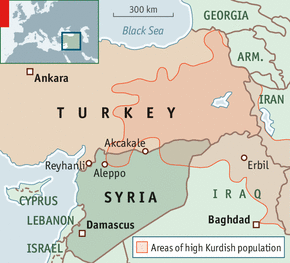
Even by the dismal standards of the Syrian civil war, the current battle for Kobani, a Kurdish town on the Syrian side of the Syrian-Turkish border, seems particularly intractable. As ISIS militants equipped with plundered American weapons have taken on poorly armed Kurdish guerrillas who can do little to stop them, there is every chance that the extremist group will strengthen its hold on Syrian Kurdistan right up to the Turkish border. Already, some four hundred have been killed, and more than 180,000 Syrian Kurds have fled across the border to Turkey—one of the largest single outflows of refugees since the conflict began.

Yet the United States and Turkey are locked in their own dispute about who should deal with the situation. While the US government concedes that its aerial bombing campaign has had little effect, the Turkish army, whose tanks are just across the border, has stood by, reluctant to support a Kurdish population it regards as hostile and allied to its sworn enemy, Bashar al-Assad. How can two ostensible allies, who are among the most powerful outside forces in the Syrian conflict, be so feckless in the face of what both declare to be a common enemy?

In fact, Kobani shows how Turkish and US objectives diverge over Syria. The US has declared its intention to destroy ISIS and defend the Kurds in Syria and Iraq, but has not involved itself directly in efforts to remove the Assad regime in Damascus. The priority of Turkey’s AK Party government, in contrast, is not to destroy ISIS but to topple Bashar al-Assad and replace him with a Sunni-dominated government sympathetic to the relatively moderate brand of Islamism favored by most Turks, and able to act as a counterweight to the Shia-dominated, pro-Iran government of neighboring Iraq. At the same time, Turkey has long been wary of the dominant group among Syria’s Kurds, the Democratic Union Party, or PYD, which does not hide its allegiance to the Kurdistan Workers’ Party (PKK), the Turkey-based Kurdish movement that has spent the past thirty years in conflict with the Turkish state. As a recently as Tuesday, Turkish jets were bombing PKK positions in southeastern Turkey. Thus, the fall of Kobani might be a price worth paying for the sobering effect it would have on what Turkey deems a greater threat: Kurdish nationalism.

For the past two years the Turks have been unsuccessfully lobbying the US to intervene to protect the hundreds of non-Kurdish Syrian towns that have been ravaged by the Assad government, and not unreasonably, they question the motives behind Washington’s sudden concern for the Kurds of Kobani—as well as the implication that Turkey should send in troops where the West fears to tread.

If ISIS captures Kobani, the militants could consolidate their control of a long stretch of the Turkish border, and establish a corridor between their stronghold of Raqqa in eastern Syria and positions further West. But the Turks are not as hostile to ISIS as the West is; until recently, the Turkish president, Recep Tayyip Erdoğan, refrained from calling it a terrorist organization, and while ISIS has beheaded Western hostages, in September Turkish negotiators were able to secure the release of 49 Turkish consular staff that the group had captured. So far, ISIS has not desecrated the tomb of the progenitor of the Ottoman sultans, which lies in the governorate of Aleppo—territory it controls—and which its fanatical iconoclasm suggests it should.

Of greater concern to the Turkish government may be Kobani’s importance as a banner for the Kurds. Until recently Kobani was one of an archipelago of towns in northern Syria that was under PYD control. In the summer of 2012, the Assad regime effectively handed over much of northern Syria to the PYD rather than let it fall into the hands of Sunni Arab groups—the so-called “moderate” Sunni opposition—that Turkey has been supporting, and it has continued to pay salaries to some officials in these areas. Even as the PYD maintains a de facto non-aggression pact with Assad, it has refused Turkish demands that it mend its bridges with those same Sunni Arab groups, thus precluding the kind of anti-Assad alliance Turkey would like to build.

During a visit he made to Ankara early this month, Salih Muslim, one of the PYD’s top leaders, reportedly begged the Turks to allow anti-tank weapons across the border into Kobani. The Turkish response was to insist that the PYD break with the Syrian government, join the mainstream Sunni opposition, and dissolve its autonomous enclaves, which it, understandably, refuses to do.

All this has thrown into doubt Turkey’s efforts to solve its own Kurdish problems. In March 2013 the PKK and the Turkish government declared their shared intention to pursue a negotiated peace, but the process has hardly advanced since then, amid Kurdish accusations that Turkey has been arming ISIS and Turkish fears that the PKK/PYD, having tasted quasi-independence in Syria, will demand a similar arrangement in Turkey as well.

Hence Turkey’s punitive indifference to the recent horrors at Kobani. President Erdoğan has called ISIS and the PKK one and the same, while Turkey’s security forces seem mainly interested in preventing Kurds in Turkey from crossing into Syria to help their brethren. Refugees coming the other way have received such a cool welcome that many have gone on into Iraqi Kurdistan.

Whatever the fate of Kobani, Turkey’s complicity in its human miseries has already had fearsome effects beyond this parched, benighted bit of land, where, ninety-nine years ago, some of the survivors of the Ottoman genocide of the Armenians slogged into Mesopotamia. Last month, from his headquarters in northern Iraq, the PKK’s operational commander, Cemil Bayık, presented more evidence that Turkey had been arming ISIS, and threatened to end its twenty-month-old ceasefire if Turkey did not stop its “war” against the Kurds of Syria.

Then, on October 7, the PKK demonstrated its undimmed ability to bring chaos to metropolitan Turkey, organizing violent protests not only across the country’s Kurdish-majority region in the southeast, but also in several cities further west. These were met—again, violently—by the security forces and by members of a Kurdish Islamist group that has been useful to the state in the past. More than twenty people were killed before the PKK’s incarcerated leader, Abdullah Öcalan, reportedly sent word that the unrest should stop.

One might wonder why the Turkish government would risk endangering a peace process with the PKK that has greatly contributed to Turkish stability, improved human rights and the rule of law, and facilitated economic development. The Turks may be calculating that the PKK cannot easily abandon a process that has brought its members new political power in some Kurdish areas and allowed Kurdish nationalist MP back into the national parliament. They also seem to believe that the Kurds are due a sharp reality check as to the impossibility of replicating Syria-style autonomy in Turkey. The ISIS advance on Kobani could serve that purpose, while the contraction of the Kurdish fief pushes the nationalists onto the tender mercies of the Turkish state—as Kobani has demonstrated. Weakened by the defeats suffered by its affiliate in Syria, the PKK may be less able to resist political demands made by the Turkish government if serious negotiations are renewed toward a final settlement.

For the United States, these calculations suggest that getting meaningful Turkish cooperation on ISIS may require a renewed US commitment toward toppling Assad. Responding to pressure from Washington, the Turkish government has agreed to join the US in training “moderate” Syrian fighters on Turkish soil. But the Turks have not approved America’s request to use their base at Incirlik in southern Turkey for US attacks on ISIS. That will only happen, the Turkish prime minister, Ahmet Davutoğlu, has insisted, if the US removes its longstanding opposition to Turkish demands for a no-fly zone over northern Syria and for the establishment of secure humanitarian corridors for displaced Syrians close to the border.

As Turkey and the United States negotiate the minutiae of a war they are fighting for different reasons, the wider fate of the Kurds is finely poised. The vile situation in Kobani has become a case study in the ways that civil wars suck in neighbors and break down alliances as the innocent are put to the sword. It is also a powerful refutation of the trite adage that the enemy of my enemy is my friend. In this conflict there are no friends.

More Turkey, Syria and the Kurds from the Times

13 Oct

WASHINGTON — With the Islamic State just miles from its border, Turkey is now facing its most severe security challenge in decades. In response, the Turkish government is seeking to accomplish the impossible; Ankara wants to fight the Islamic State, carry out regime change in Syria and roll back Kurdish autonomy all at the same time.

The risk of this overambitious approach is that it could end up accomplishing none of these objectives while squandering the opportunity to contribute to the stabilization of the region. Underpinning this risky strategy is a questionable assumption and an equally dubious policy decision.

Turkey assumes that remaining indifferent to the fate of the besieged Kurdish enclave of Kobani will not imperil its peace negotiations with Turkey’s own Kurds. Ankara has done little to assist the Kurdish enclave, ruled by an offshoot of the outlawed Kurdish Workers Party, or P.K.K. In Ankara’s eyes, the Syrian Kurds fighting there are essentially allies of Bashar al-Assad’s government in Syria.

Moreover, Turkey is uncomfortable with the degree of autonomy obtained by the Kurdish region in Syria as it could eventually become a stepping stone for the creation of a larger and independent Kurdish entity in the Middle East, which could in turn fuel secessionist tendencies among Turkey’s own Kurds.

Finally, Turkey seems to believe that despite its policy of active neglect as the Islamic State shells the Kurds in Kobani, the P.K.K. will not terminate the prevailing cease-fire and decide to fight both Turkey and the Islamic State at the same time.

This assumption is now undergoing a stress test. Many Kurds have decided to demonstrate their dissatisfaction with violent street protests, forcing the government to declare a curfew, for the first time in many years, in five predominantly Kurdish cities in Turkey’s southeast. They blame the Turkish government for not doing enough to save Kobani and for hindering Kurdish efforts to bring aid and fighters to the enclave from across the Turkish border. The Kurdish leadership even threatened to pull out of the talks should Kobani fall to the Islamic State. Indeed, the peace talks with the P.K.K. that until recently seemed on track are now at risk of derailing.

Even riskier is the policy decision Turkey’s leaders have taken in the past week. The Parliament adopted a bill allowing the government to send troops to Iraq and Syria to fight terrorism. This was rightly interpreted in the West as a belated commitment by Turkey to be part of the anti-Islamic State coalition. But Ankara is demanding Washington’s support for regime change in Syria before engaging itself more substantively in the fight against the Islamic State.

Turkey sees the Islamic State as a symptom rather than the cause of the problems that bedevil the Middle East. It believes that only a comprehensive and ambitious campaign targeting the Assad regime can help to stabilize the region in the long term. Hence Turkish leaders are demanding safe havens and no-fly zones within Syria. These protected areas would cater to the accommodation needs of future waves of refugees but also serve as an assembly and training zone for more moderate Syrian opposition fighters.

But Turkey’s stubborn emphasis on regime change in Syria is finding little support in Washington. For the United States and for much of the Western world, the Islamic State remains the core threat. Therefore Turkey’s policy of conditioning its anti-Islamic State engagement on support for an anti-Assad campaign will be at best ineffective and at worst counterproductive.

By prioritizing the removal of Mr. Assad and expending a huge amount of political capital to convince its partners of the necessity of regime change, Ankara is also losing an opportunity to mobilize international support for its ballooning refugee crisis. Turkey is now host to more than 1.4 million Syrian refugees, with government spending reaching $3.5 billion. Just a week ago, 138,000 Syrian Kurds sought refuge in Turkey, a number surpassing the total number of Syrian refugees accepted by the 28 European Union member states since the beginning of the conflict in 2011.

Yet despite the growing social and material cost of hosting the refugees, Turkey has been unable to mobilize international support for a more equitable sharing of the refugee crisis burden.

Rather than making futile demands of its allies, Turkey should instead use its role as an essential partner in the fight against jihadism as leverage to gather more substantial aid to better manage the complexities of caring for a massive refugee population. It can start by allowing multilateral institutions such as the United Nations and the World Bank to play a much bigger role in this long-term endeavor. At the very least, Ankara and Washington should jointly work on a humanitarian action plan to save the thousands of remaining residents of Kobani from slaughter. Neither nation can afford to witness the shock of another Srebrenica, perpetrated by Muslims against other Muslims, a few miles from Turkey’s border.

Turkey simply can’t afford to keep regime change in Syria at the top of its foreign policy agenda — certainly not at a time when a brutal jihadist entity is consolidating its position just miles from Turkey’s border and peace talks vital for Turkey’s own national security are at risk of collapsing.

The government must reorder its priorities. An overemphasis on bringing down Mr. Assad weakens Turkey’s ability to deal with the immediate menace posed by the Islamic State, the imminent threat of resurgent P.K.K. violence, and the more permanent challenge of an increasingly dire refugee situation.

Sinan Ulgen is a former Turkish diplomat and the chairman of the Istanbul-based Center for Economics and Foreign Policy Studies, also known as E.D.A.M.

Comment: nikobakos@gmail.com

“Turkey Must Save the Kurds” — Aslı Aydıntaşbaş

3 Oct

A surprisingly strong-worded opinion piece from Milliyet’s Aslı Aydıntaşbaş in today’s Times:

Turkey Kurds03edaydintasbasart-superJumbo Turkish soldiers helping Kurdish families fleeing the fighting in Syria. Credit Bülent Kılıç/Associated Press (Click)

I was moved immensely by the courage shown in the closing paragraphs of the piece as well; it illustrated for me the kind of political maturity — something I can only call a “politics of compassion” — that so many parties or sectors of Turkish society, Turks and Kurds, religious and secular, have been moving towards in the past few decades, and on so many levels and issues and despite the inevitable set-backs.  But then, it’s only a mature soul that feels compassion, isn’t it?

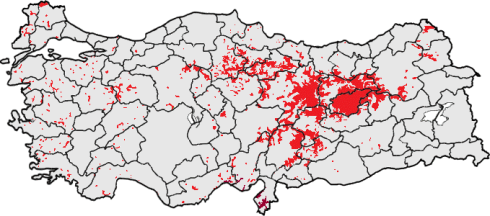
“Doing so will require a huge paradigm shift for Turkey: It must abandon its nationalist legacy and reimagine itself as a joint Turkish-Kurdish entity. [Who in Turkey says these things?!] Turkish Kurds represent about 25 percent of the population, and the government has wisely been pursuing a peace process with the P.K.K. There are ups and downs in the talks between Turkish intelligence and the imprisoned P.K.K. leader, Abdullah Ocalan. But at the end of the day, both sides need each other.

It is therefore a mistake to assume that a weakened Kurdish presence means a stronger Turkey or that Turkey’s own peace process is disconnected from the fate of Kurds outside our borders. The Turkish government cannot sit on the sidelines because it fears an autonomous, P.K.K.-controlled Kurdish zone on the border more than the Islamic State’s gains. When I asked one government official why Turkey was not helping the Kurdish forces in Syria, he replied, “Why must we choose between the P.K.K. and ISIS?”

But we must. We must choose because the Kurds are our only reasonable allies in a region of turmoil. Embracing them — our fellow citizens — would also help to heal our own fractured souls.[My emphases]

Comment: nikobakos@gmail.com

More on Alevis and Alawites…or Alevis and Kurds…or Iraqi Kurds…or…Christian Kurds…or Assyrians…or…

27 Sep

A video interview from 2011 of a smart, cute, articulate Kurdish guy from near Maraş that’s a good primer, as it claims, on all the intricacies of the above.

http://www.youtube.com/watch?v=sfDOWagfdms

Note the graphic at around 5:08: “Alevi = Alawite”.  And then the interviewer pops the million-dollar question: “So, who are you loyal to?  You’re an Alevi Kurd from Turkey.  Where do your loyalties lie?” — that kind of nails the whole issue on the head.  Because, not being the sharpest tool in the shed,  he doesn’t realize that the Kurdish guy never even gives him an answer.  Because there is none.  Because the question betrays, again, the Westerner’s incapacity to understand that multiple identities can co-exist in not just one nation or one community, but in a single individual.  And you can tell that the interviewer is getting bombarded with a complexity that he can’t even begin to make sense of — largely because he’s trying to make some sense of it in all the wrong ways.

Sad, prescient comment at the end concerning Syria: “It’s going to be a disaster.”

Comment: nikobakos@gmail.com

Life as an Illegal Immigrant in Greece — from VICE

16 Sep

Or what the Messenger would call my “aiding and abetting the enemies of our Fatherland.”

A great video piece done this past spring by that increasingly brilliant outlet, Vice.

Felt proud, though, at the number of intelligent, articulate, compassionate Greeks who appear in the video taking a stand against this deplorable situation and not indulging in the usual apologetics that have unfortunately become the Neo-Greek man-on-the-street’s default discourse: “We can’t afford to have these people here …Golden Dawn helps the people, etc.”  Or this one from the Messenger: “If that percentage of immigrants had descended on the United States all of a sudden, wouldn’t the Ku Klux Klan be voted into office the next day?”  Errr…no.  It wouldn’t.  A classic piece of simplistic knee-jerk anti-Americanism touched with his own brand of fascism-lite.

 “Greece has always been a gateway for immigrants searching for what they assumed would be a better life in Europe. But many of those who have crossed illegally into Greece have found that they have traded one bad situation for another. Refugees from war-torn countries like Syria and Afghanistan are finding themselves stuck in a country that is not only battling an economic crisis but is witnessing a rise in anti-immigrant violence—exemplified by the a nationalist political party known as the Golden Dawn.

VICE News’ Alex Miller travelled from Athens to the western port of Patras to find out what it is like to be trapped in a country you never wanted to be in in the first place.”

Comment: nikobakos@gmail.com

Tripoli, the northern Lebanese town that has become a microcosm of the Syrian civil war

16 Sep

Reblogged from Andrew Sullivan’s Daily Dish:

Fear And Loathing In Lebanon

Sep 15 2014 @ 7:45pm
 
View image on Twitter

supporters vandalized churches in Tripoli . Graffiti reads: Islamic State is coming

Sulome Anderson checks in from Tripoli, the northern Lebanese town that has become a microcosm of the Syrian civil war and which today “seems to lie in ISIS’s shadow”:

Although the extremist and ultraviolent Sunni group has few open supporters here, the appearance of pro-ISIS paraphernalia and graffiti, the clash last month in the Bekaa, and the fact that Tripoli’s Sunni-majority population has a historical tendency toward radicalism, have raised worries that the group might gain a foothold here and send the city into a spiral of deepening violence.

Local tensions in Tripoli follow essentially the same ethnic lines as those in Syria’s war:

Sunni citizens largely support the increasingly fundamentalist Syrian opposition — ISIS being the most notoriously brutal of the groups fighting Syrian president Bashar al-Assad; meanwhile, the Alawites of the Jabal Mohsen neighborhood are overwhelmingly sympathetic to Assad’s regime (the Syrian leader is Alawite) and its Hezbollah allies. There are frequent and bloody gunfights between Jabal Mohsen and the Sunni district of Bab el-Tabbeneh, which border each other. Fearing violence would engulf Tripoli and potentially spread to other regions in Lebanon, the army moved in, establishing a security zone within the city limits last year. That hasn’t stopped the bloodshed, though, and the situation in Arsal triggered fresh clashes at the end of August, in which an 8-year-old girl was killed.

Also, the local Christian community is feeling threatened in a way it never has before:

Tripoli’s Christian population has been a bit skittish lately. Several churches were vandalized at the beginning of September, their walls spray-painted with ominous threats including “The Islamic State is coming” and “We come to slaughter you, you worshippers of the cross.” Crosses were allegedly burned in retaliation for the #BurnISISFlag social media movement, Lebanon’s version of the Ice Bucket Challenge, in which people have been posting videos and pictures of themselves setting fire to the group’s banner.

Father Samir Hajjar sits in the priest’s quarters of the city’s Syriac Orthodox Church, one of the buildings that was vandalized. He is measured about the incident, but admits it was worrying. “At first, we thought this could just be ordinary vandals, or the work of children,” he says. “I’ve been here 17 years, and no one bothers us. We respect our neighbors and they respect us. But this graffiti on the walls of all the churches, that’s not children’s work. They used stencils. It’s a serious matter.”

Comment: nikobakos@gmail.com

The model for the new democratic moderate Islam: “ISIS Draws Steady Stream of Recruits From Turkey”

16 Sep

16TURKEY-superJumbo

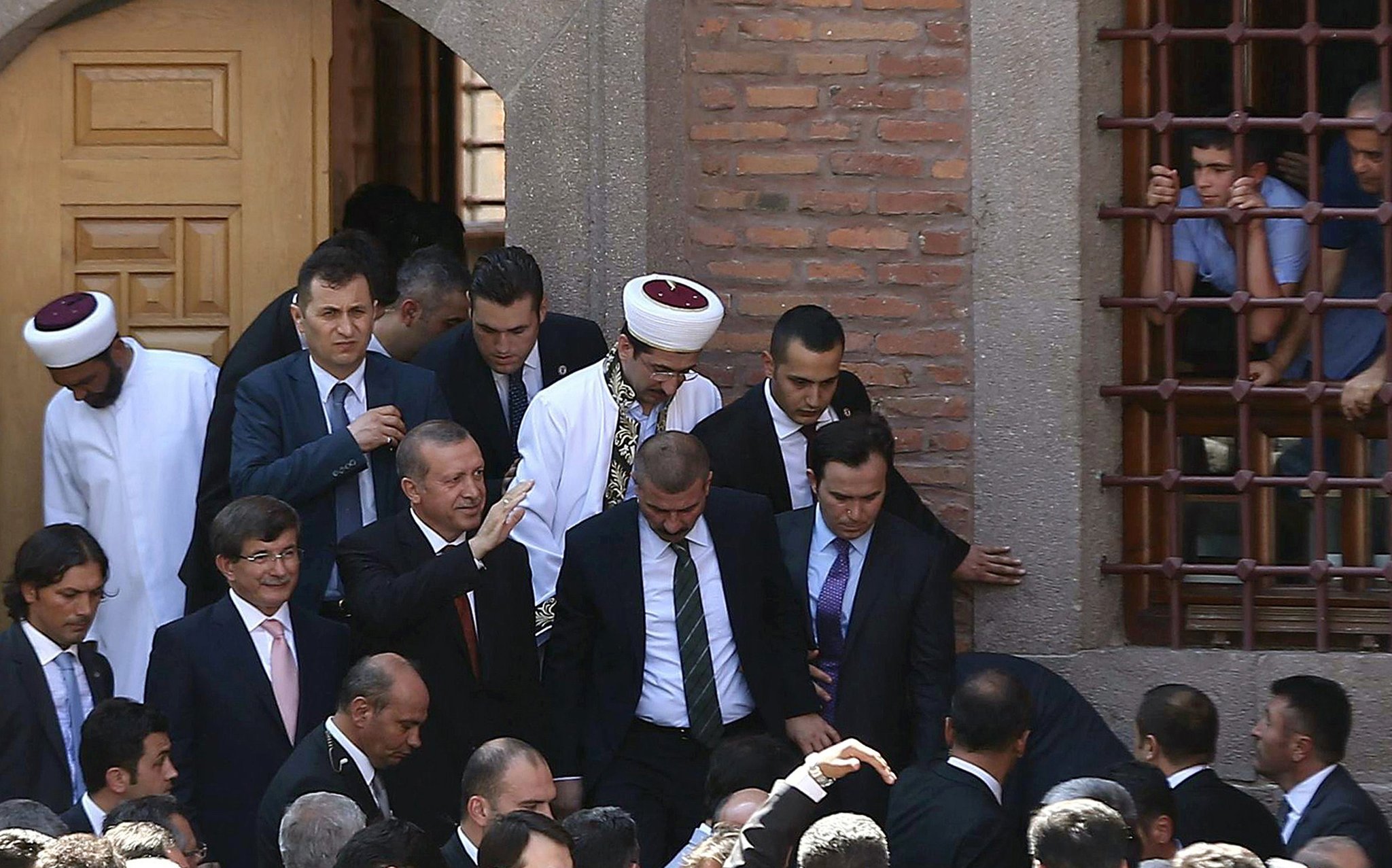
President Recep Tayyip Erdogan of Turkey, hand raised, and Prime Minister Ahmet Davutoglu, to his right, in August, leaving the Haci Bayram Veli Mosque in Ankara, the capital, where the Islamic State in Iraq and Syria is known to recruit new members. Adem Altan/Agence France-Presse — Getty Images (click)

From The New York TimesISIS Draws Steady Stream of Recruits From Turkey

Selections:

“Hundreds of foreign fighters, including some from Europe and the United States, have joined the ranks of ISIS in its self-proclaimed caliphate that sweeps over vast territories of Iraq and Syria. But one of the biggest source of recruits is neighboring Turkey, a NATO member with an undercurrent of Islamist discontent.”

“As many as 1,000 Turks have joined ISIS, according to Turkish news media reports and government officials here. Recruits cite the group’s ideological appeal to disaffected youths as well as the money it pays fighters from its flush coffers.”

“There are clearly recruitment centers being set up in Ankara and elsewhere in Turkey, but the government doesn’t seem to care,” said Aaron Stein, a fellow at the Royal United Services Institute, a London-based think tank. “It seems their hatred for Bashar al-Assad and their overly nuanced view of what radical Islam is has led to a very short- and narrow-sighted policy that has serious implications.”

The Interior Ministry and National Police Department did not respond to requests for comment.

On a recent afternoon in Ankara, Mr. Erdogan and Mr. Davutoglu came to pray at the historic Haci Bayram Veli Mosque, just over 100 yards away from an underground mosque used by a radical Salafi sect known to oversee ISIS recruits.

When news of their visit reached the neighborhood, several residents scurried down the steep hill hoping to catch an opportunity to raise the issue.

At the same time, a 10-year-old boy lingered in his family’s shop, laughing at the crowd rushing to get a glimpse of the two leaders. He had just listened to a long lecture from his father celebrating ISIS’ recent beheading of James Foley, an American journalist. “He was an agent and deserved to die,” the man told his son, half-smirking through his thick beard.

To which the boy replied, “Journalists, infidels of this country; we’ll kill them all.”

Well, ain’t that just a kick?  Wonder what all the Stephen Kinzers and Christopher de Bellaigues who have been crowing about the new Turkey for 20 years are now going to have to say — maybe have been saying.

Comment: nikobakos@gmail.com

Turkish Alevis and Syrian (or Lebanese…or Turkish?) Alawites — a Twitter exchange

13 Sep

I recently stumbled on a tweet on my account that I had somehow missed from August 2012 about an article from the Times around that time (As Syria War Roils, Unrest Among Sects Hits TurkeyAugust 4, 2012   The post — mine — was called: Syrian Alawites and Turkish Alevis closer than I thought”  (August 5th, 2012 on the Jadde)

I’ll just paste the Tweet exchange all here even if it’s kind of messy-looking:

Upon escaping from Greece…

7 Sep

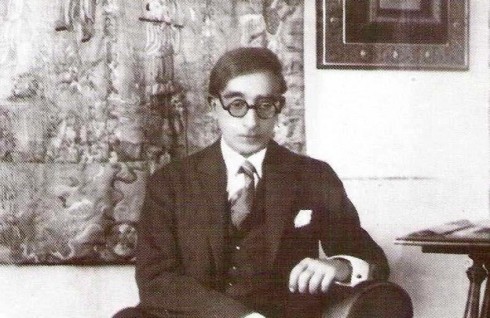
cp-cavafy2

How do you go through the work of the poet whose opus consists of the sharpest and most accurate analysis of Modern Greek identity, and find the poem that displays perhaps the most razor-sharp understanding of all of them? I’ve always known that poet was Cavafy, but I wasn’t looking for that one poem or anything, when, just leafing through his stuff a few days before I left Greece this past July, I came upon one of my favorites, the following. Please have a look first:

Going Back Home from Greece (an unbelievably clumsy translation of the Greek title)

Well, we’re nearly there, Hermippos.
Day after tomorrow, it seems—that’s what the captain said.
At least we’re sailing our seas,
the waters of Cyprus, Syria, and Egypt,
the beloved waters of our home countries.
Why so silent? Ask your heart:
didn’t you too feel happier
the farther we got from Greece?
What’s the point of fooling ourselves?
That would hardly be properly Greek. 
 
It’s time we admitted the truth:
we are Greeks also—what else are we?—
but with Asiatic affections and feelings,
affections and feelings
sometimes alien to Hellenism. 
 
It isn’t right, Hermippos, for us philosophers
to be like some of our petty kings
(remember how we laughed at them
when they used to come to our lectures?)
who through their showy Hellenified exteriors,
Macedonian exteriors (naturally),
let a bit of Arabia peep out now and then,
a bit of Media they can’t keep back.
And to what laughable lengths the fools went
trying to cover it up! 
 
No, that’s not at all right for us.
For Greeks like us that kind of pettiness won’t do.
We must not be ashamed
of the Syrian and Egyptian blood in our veins;
we should really honor it, take pride in it.

— Translated by Edmund Keeley/Philip Sherrard

Επάνοδος από την Ελλάδα

Ώστε κοντεύουμε να φθάσουμ’, Έρμιππε.
Μεθαύριο, θαρρώ· έτσ’ είπε ο πλοίαρχος.
Τουλάχιστον στην θάλασσά μας πλέουμε·
νερά της Κύπρου, της Συρίας, και της Aιγύπτου,
αγαπημένα των πατρίδων μας νερά.
Γιατί έτσι σιωπηλός; Pώτησε την καρδιά σου,
όσο που απ’ την Ελλάδα μακρυνόμεθαν
δεν χαίροσουν και συ; Aξίζει να γελιούμαστε; —
αυτό δεν θα ’ταν βέβαια ελληνοπρεπές. Aς την παραδεχθούμε την αλήθεια πια·
είμεθα Έλληνες κ’ εμείς — τι άλλο είμεθα; —
αλλά με αγάπες και με συγκινήσεις της Aσίας,
αλλά με αγάπες και με συγκινήσεις
που κάποτε ξενίζουν τον Ελληνισμό. Δεν μας ταιριάζει, Έρμιππε, εμάς τους φιλοσόφους
να μοιάζουμε σαν κάτι μικροβασιλείς μας
(θυμάσαι πώς γελούσαμε με δαύτους
σαν επισκέπτονταν τα σπουδαστήριά μας)
που κάτω απ’ το εξωτερικό τους το επιδεικτικά
ελληνοποιημένο, και (τι λόγος!) μακεδονικό,
καμιά Aραβία ξεμυτίζει κάθε τόσο
καμιά Μηδία που δεν περιμαζεύεται,
και με τι κωμικά τεχνάσματα οι καημένοι
πασχίζουν να μη παρατηρηθεί. A όχι δεν ταιριάζουνε σ’ εμάς αυτά.
Σ’ Έλληνας σαν κ’ εμάς δεν κάνουν τέτοιες μικροπρέπειες.
Το αίμα της Συρίας και της Aιγύπτου
που ρέει μες στες φλέβες μας να μη ντραπούμε,
να το τιμήσουμε και να το καυχηθούμε.

What gives this poem such pride of place as an analysis of Greek identity? For me, it starts with the simple joy both passengers feel as they’re arriving home – not approaching Greece, but leaving it. “Upon Escaping from Greece” would be my choice for the title’s English translation, because it’s clearly an experience of suffocation that the two friends have experienced that has started to lighten up for them as they cruise east through the breezy waters of the Mediterranean.

Cavafy has become an object of a resurgent cult in Greece, partly due to last year’s 150-year celebration (he was born in 1863), that’s a kind of an “emperor’s-new-clothes” phenomenon for me; not because his new clothes aren’t real, but I feel that few Greeks actually know what it is they’re suppose to be liking so much. I much prefer people who just say up front that they don’t like him. He’s “childish” they say, in response to his prose-like, early modernist experiments. These are the people who like their poetry with a capital “P”; they want it to rhyme: “φεγγαράκι μου λαμπρό…” and they want it to have epic scale heroics and ‘the thousands dead under the axles’ and ‘the living giving their blood’ in the heroic deed of ‘making the sun turn,’ along with some myrtle and oleander and jasmine thrown in for Aegean effect. (What if you’re from Epiros and you don’t know from oleander and jasmine, just tsouknida and pournari?) Others only like a very emphatically stressed “some” of his poems: these are the ones turned off by his sexuality, but who feel they can’t say so openly in 2014 – or to me. (And the degree to which that whole part of his work, a good half, was ignored by the official festivities – they wanted only “Ithaka” or “Waiting for the Barbarians” or “The City” — was amazing.*) The Messenger for example, found a publisher for his paternal grandfather’s, my great-grand-uncle on my mother’s side, fascinating memoirs, which span the whole period from the late nineteenth century and the end of Ottoman rule to WWII. Except his grandfather met a Jewish guy who screwed him over when he was a young immigrant in New York in the 20s and he included the unfortunate phrase: “Hitler was right for doing what he did to them.”**  The publisher thought maybe that line should be cut. But the Messenger stuck to his cast-iron principles and insisted it be left as is, because it would be “censorship” to remove it.  Hardly an upholder of the most liberal sentiments on issues of that kind, I have a feeling that if the comment hadn’t been about Jews, he wouldn’t have minded the censorship so much. Just a few months earlier, for example, he hadn’t thought it was “censorship” to cut a slightly too homoerotic line from a Cavafy poem he read at his father’s funeral, for fear that our landsmen, our chorianoi, would be scandalized.

These elements and others: that Cavafy preferred the tragic dénouement to the epic climax; the unconsummated to the fulfilled; that he preferred the coded to the open and disclosed, and not out of choice; but learning to love what fate had made him, he learned to love the beauty of code – its poetry — the furtive touch over some cheap handkerchiefs; that he loved the ethnically and culturally and religiously mixed margins of Greek history and the poignancy of characters who had to straddle those margins and did not write a single poem about its Attic glory days (who are all these half-breed Egyptians and Parthians and Jews and other exotic anatolites he’s always making us read about anyway? Where’s Pericles and Aristotle?); that he understood life and humanity as fundamentally amoral, and morality as a convenient weapon to be used against the unfortunate few or often just a bad joke. All this did not do much to endear him to his contemporaries, along with the fact that he famously disliked Greece and especially Athens (the latter kind of unfair in my opinion: Athens at that time must’ve been at its most beautiful and charming), and the straight, homophobic white boys of the Generation of the ‘30s in particular, despite Seferis’ famous eulogy, had no time for him. The most vehement, Theotokas (unfortunately, one of my favorite Greek writers otherwise) scathingly declared Cavafy, in his Free Spirit, a “dead end” (a common trope, whether conscious or not: the gay man begets no issue and is thus fundamentally allied with death); that his modernism was an experiment that had been taken to its logical conclusion and that the Alexandrian was now a decadent (same difference), a point of departure for what Greek letters should move on from next and not a road open for them to continue down.

That right there is the grand and egregious error. Because Greek culture and identity – in a way that makes any sense to who we are today – simply didn’t exist until the Hellenistic (and then Roman/Byzantine) periods that Cavafy chose, almost exclusively, to write about in his historical poems. The conglomeration of Indo-European tribal units who all spoke dialects of similar languages and had started coalescing into larger city-state forms of political organization by the mid-first millennium B.C. have nothing to do with us. They may have started calling themselves “Hellenes,” but let’s not forget that the Iliad does not contain one, single, blessed mention of that holy word, and was compiled only a century-and-a- half or so before the Golden Periclean Age we’re so obsessed with.

It was because he was fascinated with the true origins of Greek identity, the cauldron of cultural mixture that Alexander created that later became condensed into a more distilled Greek-speaking, Orthodox idea, that Cavafy wrote about those periods so widely and studied them so deeply. And being from such deep aristocratic Constantinopolitan roots and an Alexandrian, how could he not have felt that basic idea on a gut level.

This is another reason the mention of the words “Macedonia” and “Alexander” makes my hair stand on end. The Macedonians (by which I mean Slav Macedonians) are ridiculous in their attempt to appropriate Alexander as a phenomenon of their own culture, though many observers have written about how this conscious policy of “antikvatsiya” (“antiquization”) on the Macedonian government’s part is, partly, a response to Greek intransigence on every other grounds. But you can see from how Greeks respond to Macedonian moves that Greeks don’t get Alexander either. Alexander is not a culminating point of Hellenic history, where the great hero brought Hellenic civilization to the “borders of India.” Alexander is not even a Greek herohe very early in his career quickly became déraciné, as Mary Renault keenly observed. Alexander is where Greek history starts. It’s all really the other way around. Alexander is what brought the East, and its incomparably greater and older civilizational achievements, to us. He drove us deep into contact with that wider world, cementing what had always been our bonds to those lands and those peoples he grew to love so much, and giving us as much in return, actually more, than what we gave them. He created the great creolized cultural space that a universal, cosmopolitan Greek identity was first born in and that later – when the name for “universal, cosmopolitan identity” changed, due to political circumstances, from “Greek” to “Roman,” – changed along with it, but which left the Helladic peninsula — or “the Hellenic” generally — behind permanently as a focus of any kind. Until the twentieth century.

Alexander Renault

Hermippos and his friend, Greeks going home to Antioch in Syria or Seleucia in Mesopotamia, can’t be Greek in Greece. It suffocates them. They don’t fit into that nonsense, antiquarian straightjacket. It’s “beneath” them, as Greeks, to reject the wider world that they’ve long been an intimate and inseparable part of. Greek means cosmopolitan to them and they can’t be Greeks without that quality. It would be the most provincial thing for them to do, to act like provincials who try to hide their “easterness”:

“…like some of our petty kings
(remember how we laughed at them
when they used to come to our lectures?)
who through their showy Hellenified exteriors,
Macedonian exteriors (naturally),
let a bit of Arabia peep out now and then,
a bit of Media they can’t keep back.
And to what laughable lengths the fools went
trying to cover it up!”
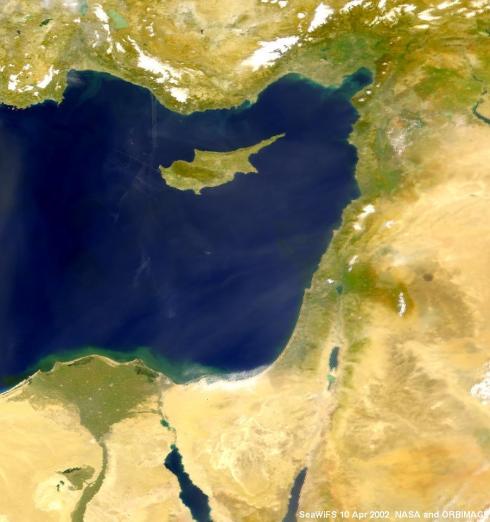
Eastern Mediterranean(click)

The nation-state is bound up inseparably with provincialness. And narrowed tribalism. And provincials hide. Not true Greek men. Cavafy’s “petty kings” are the Neo-Greek bourgeoisie, from the statelet’s origins down to our day, with their still immovable disdain for the East, who don their ancient fineries and try to make the world call them Hellenes and have no clue how ridiculous they’re being. Provincials dissimulate – not true Greek men — and that dissimulation has been the main thread of Neo-Greek culture since the late eighteenth century, so much so that all perspective has been lost. Hermippos and his buddy aren’t provincials. They’re Greek alright – from some of the richest, most sophisticated and Greekest cities in the world; but they understand the larger cultural context they’re a part of, and they’re too supremely secure in their Greekness to put down the Egypt and Syria that ‘flow in their veins.’ Greece tries to take that away from them. I imagine the Athens they had to go study at as a kind of tired old Cambridge, MA, still resting on its now dried-up laurels. But they’re too Greek to let Greece do that to them. Sorry to get repetitive. It’s an attempt to make the paradox – a wholly healthy and natural one – sink in.

Greece still tries to do that to you. And in the crisis mode it’s in today, it tries even harder because its sad inhabitants’ perspectives have become narrower and narrower to the point where they see nothing of the rest of the world and there’s simply very little language left you can share with them. “Η φτώχεια φέρνει γκρίνια,” the Greek says – “poverty makes for kvetching” — and though many people I know have faced the current crisis with the best kind of Greek dignity and humor in the face of adversity, too many others have lapsed back into ideological craziness, or just a frustrated lashing-out bitterness, or were always there but kept it hidden and now think that it’s more okay to express things openly; it’s hard to tell which.

One friend or relative has become a Golden Dawn apologist if not supporter: “What’s a young man who loves his country supposed to do?” I dunno; but half of Dostoevsky is about what to do with the unguided idealism of strong young men and phenomena like Golden Dawn wasn’t one of his answers; he strictly warned us against them, in fact. Another wants to take a DNA test to make sure he has no Albanian genes: actually believes such a thing exists – a chromosome for Albanian-ness and a test that will detect it. And this is one of those uncomfortable situations we’ve all been in where this is coming from the spouse of a good friend, so you have to keep your silence and you can’t just say: “That’s nice _______, Hitler and the Nazis were into that kind of thing too.” If I could I would’ve also asked if he wanted to see my DNA chart too, which is probably chock full of “Albanian-ness” and if he would then feel the need to maybe keep me away from his daughters. Another is still obsessing, as we go on twenty-five years since the break-up of Yugoslavia, on the “Macedonian issue.”*** And after hours of mind-bogglingly pointless conversation – “It is useless to attempt to reason a man out of a thing he was never reasoned into,” said Jonathan Swift — you take a step back and realize that that’s all that’s ever mattered to this guy. The hundreds of thousands dead produced by the Yugoslav disaster, the millions displaced, the destruction of the last part of the former Ottoman sphere where there was still some hope of survival for a multi-ethnic society, the greatest bloodletting in Europe since WWII, right on our doorstep…  He doesn’t give two shits, nor has he let one blessed thought or idea on that series of calamities occupy even one of his brain cells for a second. All he cares about is the “Macedonian Issue.” Twenty-five f*cking years later. And he doesn’t find such narcissism the least bit obscene.  “The world is burning, και το μ**νί της Χάιδως χτενίζεται.”  I won’t translate.

Whether or not they’re becoming more extreme or just showing their true colors more, it’s certain that I’ve become more radical – not in my ideological positions, which are what they always were – but in my inability to tolerate their stupidity and growing narrow-mindedness. I’m always ready to leave Greece when the time comes, but this time it had become truly unbearable. There were just too many people that it had become too uncomfortable to even be around. And stumbling on this half-forgotten Cavafy poem was no accident I feel.

And so I took that great big breath of relief that Hermippos and his friend took on the deck of their boat as the shores of Cyprus came into view when I myself left for Serbia back in July. I had to get out of this place – and disassociate myself from it and its inhabitants — if the fact that I’m Greek was going to continue to be to at all tolerable to me. I’ll always love arriving; with the new flight path south over the Attic midlands passing right over the town and beach — over the very apartment building — where I spent my childhood summers, I’ll always choke up a little at the sight of the brown hills of Attica. But when I’m ready to leave, I gotta go – and fast – and this year more urgently than any other.

And I can see myself spending more and more of my future time in “Greece” in Albania with my relatives – “deep” Greeks who don’t have the ball-and-chain of a nation-state tied around their ankles; in Istanbul – with smart young Greek and Turkish kids who are trying to do something intelligent and productive about our relationship; maybe in Cyprus – which Kosmas Polites called the last surviving remnant of his beloved lost Ionia and where I have friends to whom I owe long over-due visits; or just here in Queens — where every block and street corner and subway stop and church bears a piece of my Roman-ness.

Because Greece, man… Greece just cramps my Greekness.
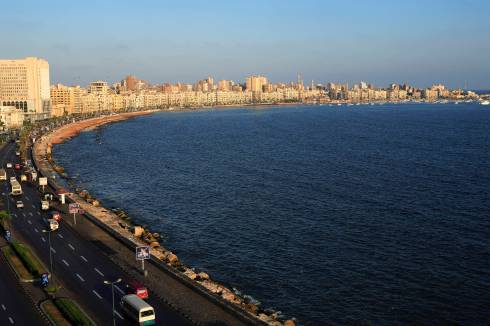
Egypte, Alexandrie, le front de merAlexandria (click)

******************************************************************************************************************************************************************************************************************

* And the thing is, if you ignore his erotic poems, I find it hard to believe that most people can even understand, much less really appreciate, the rest — the historical poems.  Who understands the religious and cultural sociology of fourth-century Alexandria enough to have the proper context to apprehend all of “Myres: Alexandria, AD 340”?  Who the hell knows where Commagene is?  Or who Alexander Jannaios was?  Or what a handsome Jewish prince is doing with the name Aristovoulos?  Or why he was murdered and “those sluts Kypros and Salome” are now gloating in private?

** It’s amazing.  And disturbing.  Anti-semitism and the extent of its popularization and the accessibility of its language.  Not only can one accusation of unethicalness — and from a Greek at that! — be used to tar a whole people, but Jews are the only people with whom that one charge leads straight to the gas chambers so easily, in people’s minds and on people’s tongues.  Not “what a sleazebag.”  Or “what a nation of sleazebags.”  But straight to “Hitler was right…”

*** Yes.  Believe it or not.  The “Macedonian” “issue.”  More on that to come.

Comment: nikobakos@gmail.com