Balkans, Anatolia, Caucasus, Levant and other Middle East, Iran, Afghanistan, South Asia, occasional forays into southern Italy, Spain or eastern Europe, minorities, the nation-state and nationalism — and whatever other quirks or obsessions lurk inside my head.
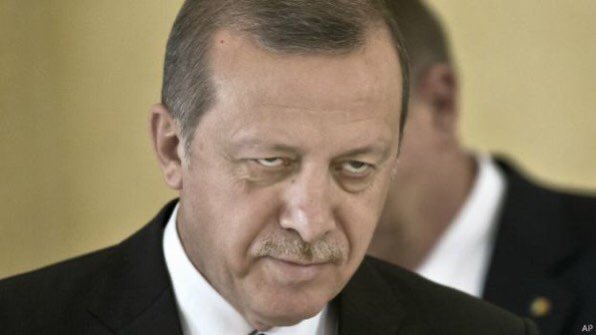
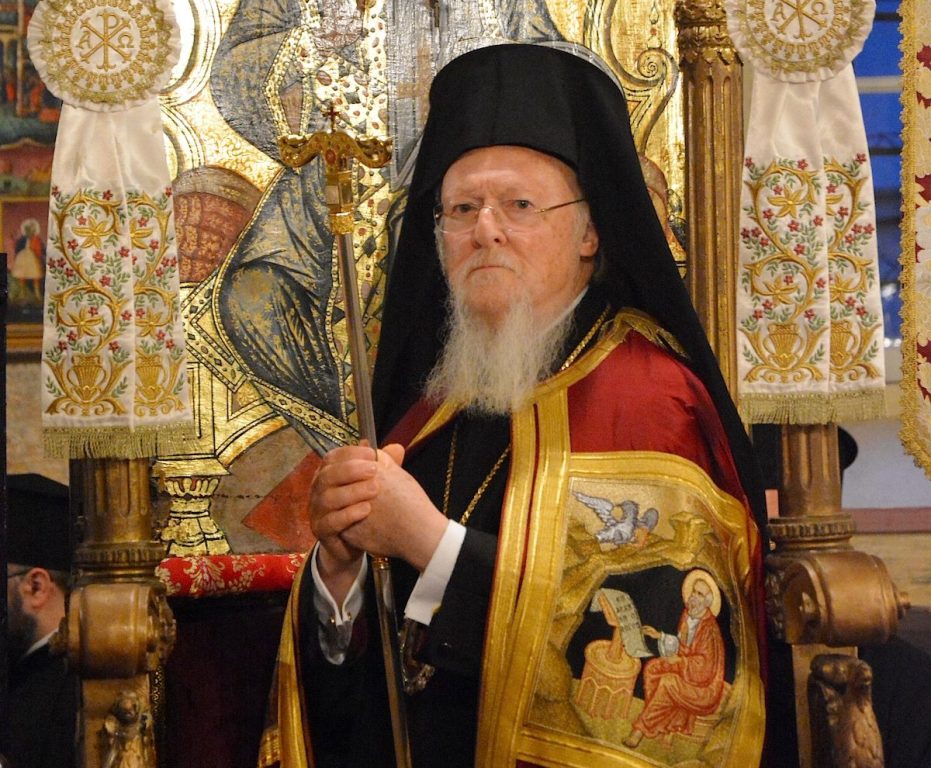
Pompeo is apparently — finally! — going to Turkey after visiting several neighboring countries, including Greece, so far this autumn and blowing Turkey off. But the US administration says that during his visit Pompeo will only meet with the Ecumenical Patriarch Bartholomew in the Phanar and not with any member of the Turkish government. And to discuss religious freedom in Turkey and around the world at that!
A major χυλόπιττα (wet “noodle” in Greek, meaning major dis or slap upside the head) for Erdoğan and Erdoğan’s Turkey generally.
Yes, too bad it’s Pompeo and the Trump administration. But the Talmud says that even the actions of the worst-intentioned individual can have positive consequences.
ApparentlyPompeo’s wife Susan is Orthodox, and “…impressed everyone with her knowledge about the Divine Liturgy…” during their visit to Greece last year.
There’s toooooons of other social media references out there today, but I couldn’t let it pass without my own contribution — especially this year and these days.
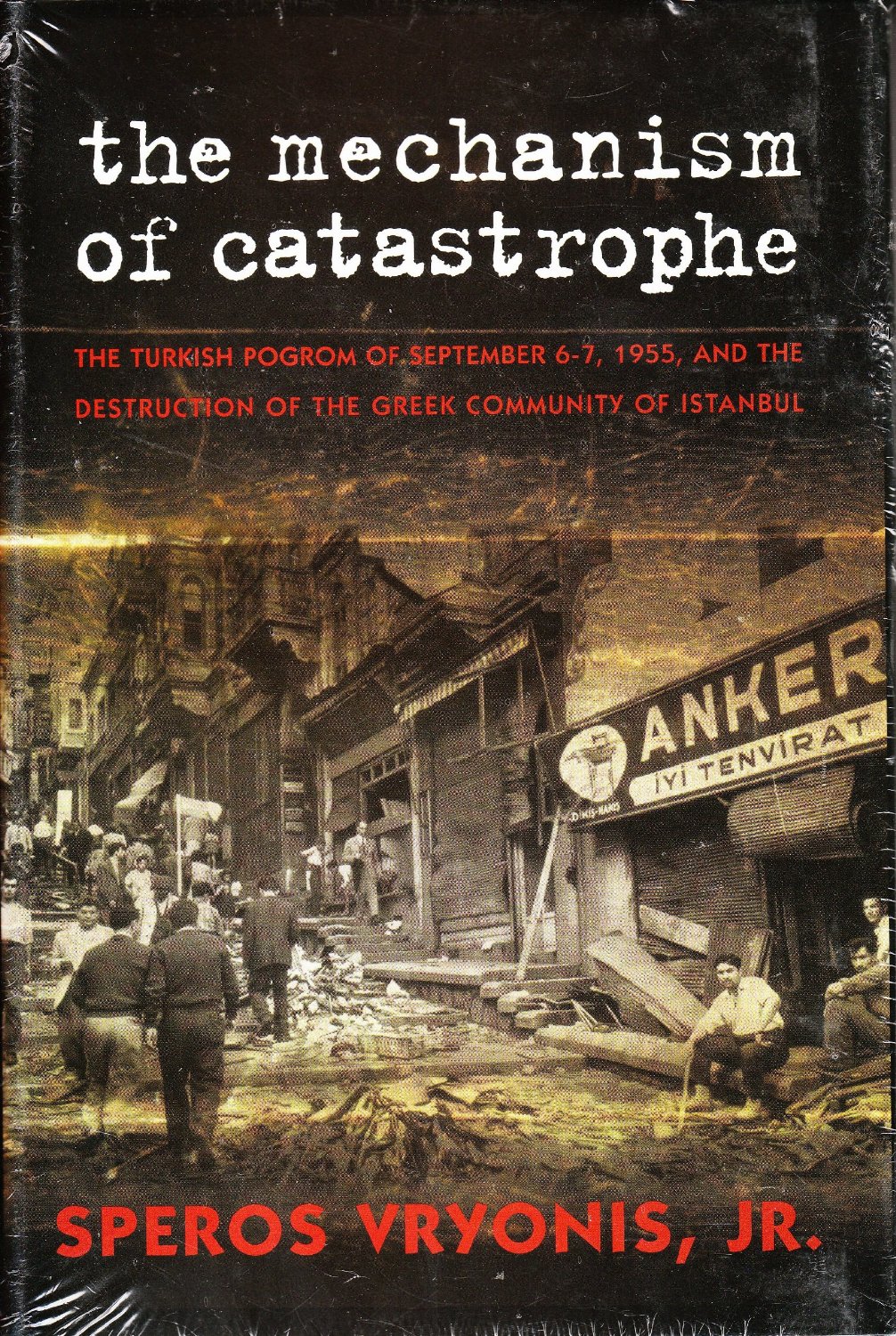
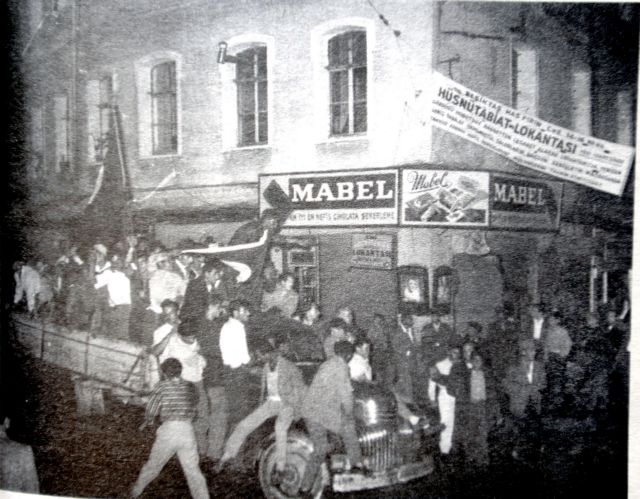
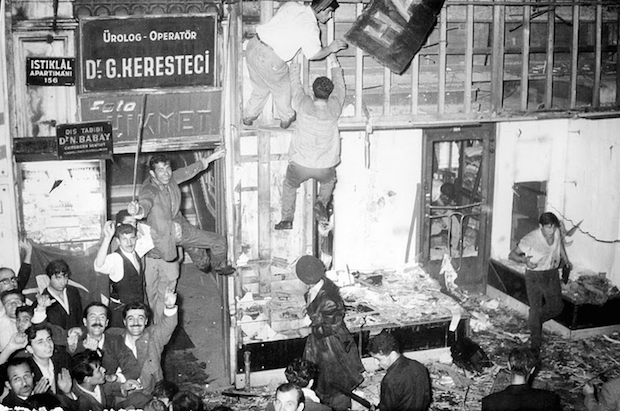
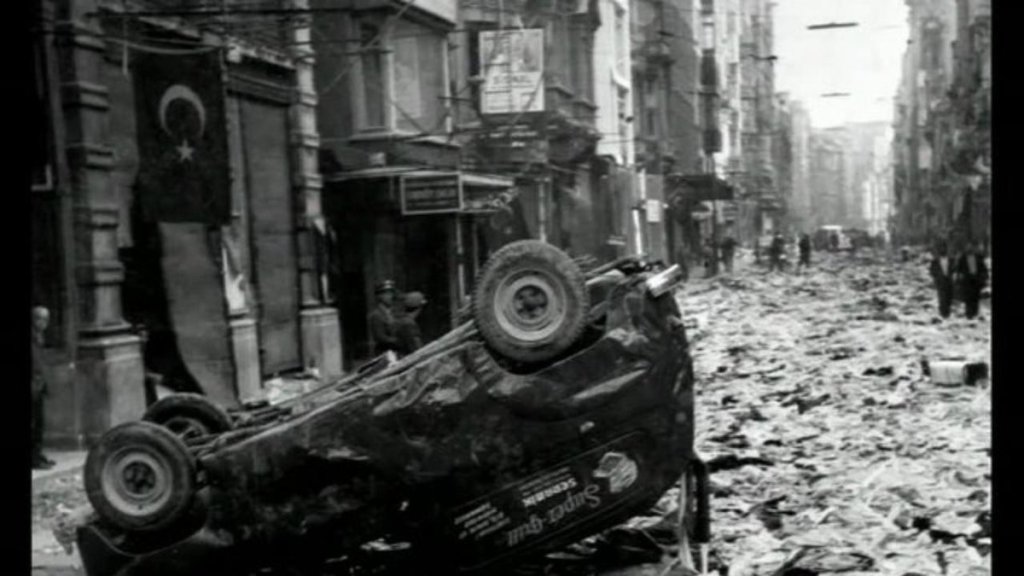
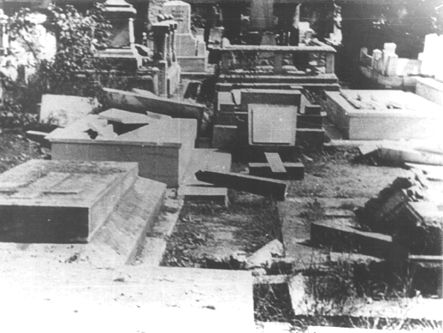
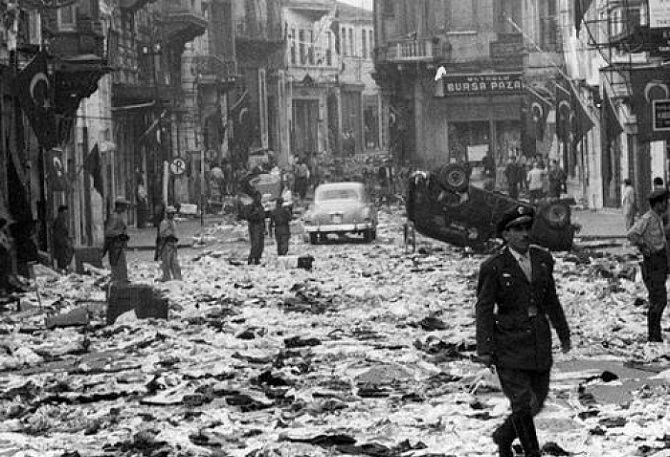
*** “Speros Vryonis The Mechanism of Catastrophe: The Turkish Pogrom Of September 6 – 7, 1955, And The Destruction Of The Greek Community Of Istanbulis a magisterial life’s work and piece of historical journalism that covers the one night of September 6-7, 1955 in which a pogrom organized by Adnan Menderes’ Demokrat Parti destroyed practically the entire commercial, financial, ecclesiastic, educational and domestic infrastructure of the City’s Greek community. I had put off reading it for quite a while — because the subject matter is upsetting and it’s long and detailled — but I was really impressed when I finally did. I hadn’t realized the exact extent of the damage: 4,500 Greek homes, 3,500 shops and businesses (nearly all), 90 churches and monasteries (nearly all), and 36 schools destroyed and 3 cemeteries desecrated. I hadn’t known that so many homes had been destroyed, leaving a large part of the community of then 80 or 90,000 or so homeless and destitute and that, as opposed to the traditional account of one old monk being burned alive, some 30 people were actually killed and many raped — others even circumcised.
“The Menderes government initially, and stupidly, tried to portray this as a spontaneous outbreak of nationalist fervor against Greeks over growing Cyprus tensions, but it was actually an extremely well-planned and executed military manoeuvre (every Turk, after all, is a soldier born) carried out and directed by local cadres of the Demokrat Parti who knew their neighborhoods and its Greek properties and institutions well and through the use of Anatolians brought in from the provinces; I guess they were afraid that local İstanbullus, who knew and lived with these Greeks, would not be as easily destructive, though the record of how the city’s Turks did act during the riots is hardly edifying. As all products of the nationalist-militarist mind, the plan was an extremely stupid move as well. It brought the economy of Turkey’s largest city to a virtual standstill, at a time when the country was in deep economic doldrums to begin with, by ripping out its retail heart, so much of it being in the hands of Greeks and other minority groups, and in the immediate aftermath there were chronic shortages of basic supplies in the city because distribution networks had been completely severed and even bread — so many bakeries being Greek and Epirote, especially, owned — was hard to find. It temporarily made Turkey an international pariah (though in that Cold War climate that didn’t last too long) and eventually played a role in bringing the Menderes government down and costing him his life — thought that all is well beyond the scope of this post, this blog and my knowledge. Vryonis’ analysis is brilliant if you’re interested.
“After the financial decimation of the community by the Varlık Vergisi, the “estate tax” of the 1940’s, when discriminatory taxation against minority groups had wiped out many, and sent many of those who couldn’t pay to forced labor camps, Greeks had bounced back to dominating the retail business of these central neighborhoods in less than a decade – only, of course, to have it all definitively trashed a few years later.
“It’s become axiomatic that the riots were the beginning of the end of Greek Constantinople; the community struggled and tried, but this time things were shattered — physically and psychologically — beyond repair.“
**** The Greek Daemon, “daemon” in the Roman sense of the word of animating genius — “To daimonio tes fyles” — is the idea that Greeks are resourceful enough to prosper anywhere and under any conditions — Patrick Leigh Fermor’s belief in their ability to “spin gold out of air” — and the repeated tragic setbacks and almost immediate comeback of the Greek community of İstanbul after nearly every catastrophe to befall it in the twentieth century tempts one to believe in its truth. Thus, one of the most poignant elements in the Constantinopolitan story is their almost masochistic refusal to leave — what it took to finally make the vast majority abandon the city they loved so much was just too overwhelming in the end however.”
Some photos:
Plebe resentment, with the sick glee of hatred, in action.
And Greeks come out of hiding the next day — stoic and classy and in heels — to pick up the pieces of a life’s work, or at least try.
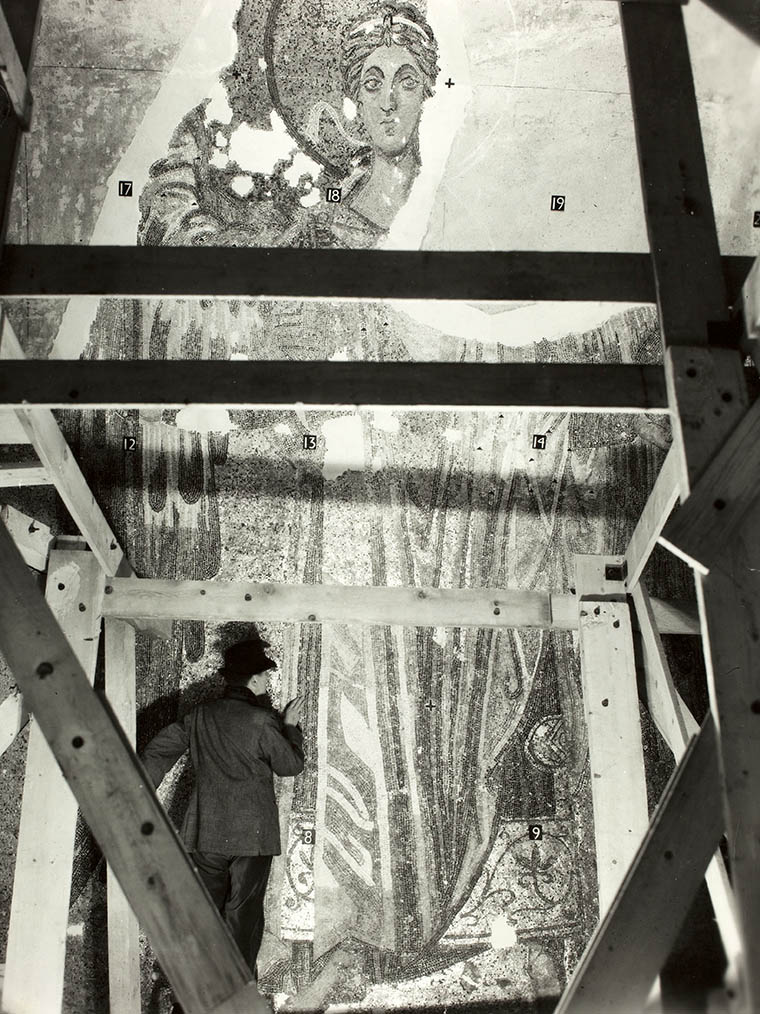
At the end of August, Turkey’s president Recep Tayyip Erdogan celebrated the Islamic New Year with aplomb. Fresh off his conversion of the monumental Haghia Sophia to a mosque, he converted another former Byzantine church, the fourth-century Chora church, one of Istanbul’s oldest Byzantine structures. The day after that he announced the largest ever natural gas depository in the Black Sea. This followed another recent discovery of natural gas fields in the eastern Mediterranean. Both of these areas are hotly contested zones of international competition between the powers around these seas. Later that week he welcomed a delegation of Hamas to Ankara, where he expressed support for Palestinians in the wake of the recent announcement of an agreement between Israel and the UAE.
All of these moves project Erdogan’s vision of Islamist strength into the world. Standing up for Islam at home goes hand in hand with securing natural resources and imposing Turkey’s power abroad. It also goes hand in hand with domestic repression. The Islamic New Year saw Erdogan further tighten his grip on social media freedom and consider pulling Turkey out of what is known, now farcically, as the 2011 Istanbul Convention, a treaty of the Council of Europe that commits countries to protecting women from domestic violence. Democratic peoples in Turkey, the Middle East, and around the world should worry.
Much has been written about Erdogan’s attempts to “resurrect” the Ottoman Empire or to style himself a sultan. There is truth here. But to understand Erdogan’s political agenda and horizon we must be specific about which Ottoman sultan Erdogan strives to be. It is the empire’s ninth sultan, Selim I.
Selim died 500 years ago in 1520. It was during his lifetime that the Ottoman Empire grew from a strong regional power to a gargantuan global empire. For Erdogan, this sultan from half a millennium ago serves his contemporary needs. Selim in many ways functions as Erdogan’s Andrew Jackson, a figure from the past of symbolic use in the present. Selim offers a template for Turkey to become a global political and economic power, with influence from Washington to Beijing, crushing foreign and domestic challengers alike. He helps Erdogan too to make his case for Islam as a cultural and political reservoir of strength, a vital component of the glories of the Ottoman past, which he seeks to emulate in contemporary Turkey against the dominant elite secularism that has reigned since its founding.
We should be wary of Erdogan’s embrace of Selim’s exclusionary vision of Turkish political power. It represents a historical example of strongman politics that led to regional wars, the attempted annihilation of religious minorities, and the monopolization of global economic resources. In addition to his attempts to monopolize natural gas reserves around Turkey, today this takes the form of Erdogan’s foreign military ventures in Libya, Syria, and Yemen. At home, he has gone after Turkey’s Shiite community, Kurds, intellectuals, Christians, journalists, women, and leftists. Erdogan cultivates his own Sunni religiosity to position Islam at the center of Turkey’s domestic agenda, with the church conversions the most potent recent symbols of this. Erdogan’s represents a political logic of zero-sum competition that pits Turkey against Saudi Arabia and Iran for control of the region and over claims of global Islamic leadership.
Erdogan likes Selim because he made Turkish global political power possible. From 1517 through the end of World War I, the Ottoman Empire maintained the geographic shape Selim won for it, dominating the Middle East and the eastern Mediterranean. In 1517, the Ottomans defeated their major rival in the region, the Mamluk Empire based in Cairo, capturing all of its territory in the Middle East and North Africa. This more than doubled the empire’s size. This explosion of the Ottoman Empire into the Middle East turned it into the region’s foremost military and political power and one of the world’s largest states. The Ottomans now controlled the entire eastern half of the Mediterranean and thus dominated the globe’s most important trade routes overland between Europe and Asia and by sea through the Persian Gulf and Red Sea. The Turkish Republic inherited much of that power after the empire’s demise and the republic’s rise in 1923.
While every modern Turkish ruler has distanced himself from the legacy of the Ottoman Empire, and Islam, to attempt to project a more “western,” “secular,” and “modern” face for the republic, Erdogan is the first who has actively embraced the Ottoman past and the empire’s Islamic heritage. Here too Selim proves key to Erdogan’s image of his rule. Selim’s defeat of the Mamluks made the Ottoman Empire a majority Muslim state for the first time in its history, after over two hundred years of being a state whose population was mostly Greek Orthodox. [my emphasis] With this victory, Selim became the first Ottoman sultan to rule Mecca and Medina, Islam’s holiest cities, thus earning the title of caliph and cementing the empire’s global Islamic credentials. If Selim was the first Ottoman to be both sultan and caliph, Erdogan is the first republican leader to profess to possessing both titles.
Like President Donald Trump’s purposeful deployment of the symbols of Andrew Jackson—prominently displaying his portrait in the Oval Office and defending his statues—Erdogan has trafficked publicly and specifically in the symbolic politics of Selim in Turkey. His most striking act was to name the recently constructed third bridge over the famous Bosphorus Strait after Selim. Erdogan has also lavished enormous resources on Selim’s tomb and other memorials to his rule. After winning a 2017 constitutional referendum that greatly expanded his powers—a process marred by irregularities—Erdogan made his first public appearance at Selim’s tomb. Staged as a kind of pilgrimage, there Erdogan returned to the long-dead sovereign his kaftan and turban that had been stolen years before. This far-from-subtle first act after winning a referendum that gave him near-limitless power made clear who Erdogan’s role model is.
Erdogan and his Islamist party colleagues regularly describe themselves as the “grandchildren” of the Ottomans. In this very pointed genealogy, Erdogan purposefully skips a generation—that of Turkey’s republican fathers since 1923—to leapfrog back in time to when the Ottomans ruled the globe with their particular brand of Turkish Sunni politics, to Selim’s day when wars and domestic repression led to wealth and territorial power. Recreating a political program akin to Selim’s is a dangerous prospect for Turkey and the Middle East and indeed the world. To make Turkey Ottoman again requires the kind of violence, censorship, and vitriol that Erdogan has indeed shown himself ready to use. The universal lesson here is that calls for returns to perceived greatness, whether in Turkey or in United States, selectively embrace controversial historical figures, mangle their history, and elevate hatred and division.
Patricia Storace‘s Dinner withPersephone (along with Patrick Leigh Fermor‘s Roumeli:Travels in Northern Greece) is one excellent book that I recommend to all friends who are planning on visitting Greece and want to know what to read.
At one point Storace writes:
“Greek is not a voluptuous language, or a lilting one, but stony and earthy, a language full of mud, volcanic rock, and glittering precious stones…”
Listen to Lambete beautiful recitation of Cavafy’s “The City” and you’ll know what she means:
Η Πόλις
Είπες· «Θα πάγω σ’ άλλη γη, θα πάγω σ’ άλλη θάλασσα. Μια πόλις άλλη θα βρεθεί καλλίτερη από αυτή. Κάθε προσπάθεια μου μια καταδίκη είναι γραφτή· κ’ είν’ η καρδιά μου — σαν νεκρός — θαμένη. Ο νους μου ως πότε μες στον μαρασμόν αυτόν θα μένει. Όπου το μάτι μου γυρίσω, όπου κι αν δω ερείπια μαύρα της ζωής μου βλέπω εδώ, που τόσα χρόνια πέρασα και ρήμαξα και χάλασα.»
Καινούριους τόπους δεν θα βρεις, δεν θάβρεις άλλες θάλασσες. Η πόλις θα σε ακολουθεί. Στους δρόμους θα γυρνάς τους ίδιους. Και στες γειτονιές τες ίδιες θα γερνάς· και μες στα ίδια σπίτια αυτά θ’ ασπρίζεις. Πάντα στην πόλι αυτή θα φθάνεις. Για τα αλλού — μη ελπίζεις— δεν έχει πλοίο για σε, δεν έχει οδό. Έτσι που τη ζωή σου ρήμαξες εδώ στην κώχη τούτη την μικρή, σ’ όλην την γη την χάλασες.
The City
You said: “I’ll go to another country, go to another shore, find another city better than this one. Whatever I try to do is fated to turn out wrong and my heart lies buried as though it were something dead. How long can I let my mind moulder in this place? Wherever I turn, wherever I happen to look, I see the black ruins of my life, here, where I’ve spent so many years, wasted them, destroyed them totally.”
You won’t find a new country, won’t find another shore. This city will always pursue you. You will walk the same streets, grow old in the same neighborhoods, will turn gray in these same houses. You will always end up in this city. Don’t hope for things elsewhere: there is no ship for you, there is no road. As you’ve wasted your life here, in this small corner, you’ve destroyed it everywhere else in the world.
And if you can see the documentary posted: Egypt: The Other Homeland by Giorgos Augeropoulos and Al Jazeera about the story of Alexandrian Greeks. It’s really beautiful; I remember I first posted it onErev Pesach in 2012 and introduced the post with: “Another people’s exodus from Egypt”. Plus, it’s good to remember the positive aspects of our long historical relationship with Egypt at times like this. I think it’s particularly noteworthy that one of the doc’s subjects talks about how Greeks slowly and steadily starting leaving Egypt because they felt there wouldn’t be any room for them in the nationalist and statist revolutionary Egypt of Nasser, but it was striking that “…we never felt fear” in Egypt.” Contrast that with the chronic low-level fear — punctuated with moments of real terror — Greeks in Istanbul lived with throughout the twentieth century…
For years I had hoped that someone, even Turkish Islamists, might have the good taste to remove those hideous green billboards. Instead it just got worse and the puritanism and neurotic iconophobia of monotheism wins out. Oh well. У другом животу…in another life.
Russian President Vladimir Putin’s proposed constitutional reforms are widely seen as an attempt to extend his hold on power. But, beyond that, no one really knows how he plans to reorganize the Russian state.Source Photograph by Mikhail Klimentyev / Kremlin Pool Photo / AP
Isaac Chotiner’s interview with Russia political analyst Masha Lipman — the money quote on Russian protest and resistance:
“However, the way it is in Russia—and I think this is what probably makes Russia different from some other countries where the regime is tough—the protests come in waves. And after the wave subsides, there is not much left there in terms of organization, in terms of an identification with a party, a movement, a leader. People rise and then they go back home and there is nothing for a long time.”
This begs the question, as much with Russia as it does with Turkey, of a people’s passivity, perhaps justified when faced with a monolith of power, or a people in paralyzed awe, simply, of intractable and dangerous authority. Asking without meaning to judge — though it’s tempting in Turks’ case — does every people get the government they deserve?
Balkans, Anatolia, Caucasus, Levant and rest of ME, Iran, South Asia
Me, I'm Nicholas Bakos, a.k.a. "NikoBako." I'm Greek (Roman really, but when I say that in English some five people in the world today understand what I'm talking about, so I use "Greek" for shorthand). I'm from New York. I live all over the place these days. The rest should become obvious from the blog.














 Jadde: from Bosnia to Bengal