Balkans, Anatolia, Caucasus, Levant and other Middle East, Iran, Afghanistan, South Asia, occasional forays into southern Italy, Spain or eastern Europe, minorities, the nation-state and nationalism — and whatever other quirks or obsessions lurk inside my head.
Not so hard to do. I was never such a fan of winter sports; nothing leaves me transfixed like the gymnastics or the swimming or the tennis of the summer games. But mostly, I had just made up my mind to not participate in any way in the Putinshchina’s premier celebration of its imperial splendor. They’re the most expensive games ever; they’re the most corrupt, with the Tsar’s cronies making billions on construction contracts given away at astronomical costs; they’re the most ecologically destructive; they’re run by a government that’s a grotesque human rights violator on all levels. I understand we make some compromises; I had my problems with Beijing too. But here there is no more room for compromise, because I think — without exaggeration — that these are the most morally compromised Olympic games since Berlin 1936.
And then there are the Circassians. I became obsessed with Circassians in high school because I had to know who these people were, so physically beautiful apparently, that they held the entire Near East in thrall for centuries. Circassians were the first reason I ever went into the New York Public Library, because the library at Stuyvesant didn’t have anything on them. This is also around the time, as a nerdy sixteen-year-old, that I started developing the totally adolescent, romantic fascination I still suffer from, for honor-obsessed, heavily-armed highlanders — Montenegrins, northern Albanians, Pashtuns — who don’t easily let themselves get pushed around by outsiders. It fed a lonely teenager’s fantasies of empowerment then. Now, I couldn’t tell you. Probably still.
The Circassians lived in a huge swath of plain, foothill and high mountain country in the northern Caucasus. Most of the sites of the this month’s games are being held on formerly Circassian territory. This is a map of their general distribution in the eighteenth century, right before Russian expansion southwards began:
(click)
For more than a century they fought a brutal tooth-and-nail war against the Russians and their Cossacks. When they finally capitulated in 1864 it was in Sochi. The majority, which would not agree to an oath of loyalty to Russia were deported, in what was probably the first campaign of ethnic cleansing of such dimensions in modern history. For months, the beach at Sochi was a Dunkerque-like humanitarian disaster zone, with tens of thousands of shelterless, starving and diseased Circassians waiting for Ottoman ships to take them to safety in Anatolia or the still-Turkish Balkans or dying on the spot.
It certainly represented the largest civilian death toll of any war up to its time and today, ninety percent of people of Circassian descent live outside their original homeland, mostly Turkey, but also Syria, Jordan and Lebanon.
Bullough goes through, in excruciating detail, the suffering of the Circassians in the past, and the non-stop massacres, mass deportations and repeated mass deportations, carpet bombings and cleansing campaigns that the mountain Turks, the Chechens, the Ingushetians and the various peoples of Dagestan have been subjected to till practically our day. It’ll certainly give you a keener insight into the sources of Chechen rage. (Dzhokhar Tsernaev.) It’s torturous to read. But it also must have been extremely difficult for Bullough to write as well — I don’t envy him his position — since you realize early in the book that he has a deep and personal relationship to Russia, Russians and Russian culture as well and that he did not go to the Caucasus to simply vilify Russians and make an account of two hundred years of Russian atrocities. He has one very painful to read passage in his conclusion, where he recalls an image told to him of a young Chechen boy cowering and hiding in a corner as bullets fly around him, an image he would like to convey to Russians:
“And it is a an image that I have kept in my head when writing this book, to avoid the world view of the Russian rulers who have imposed their own pictures on the Caucasus for too long. I hope readers will have seen that the history of Russia’s conquest is one of tragedy for the people of the mountains. The Circassians, the mountain Turks, the Ingush and the Chechens have all suffered horribly just so the map of Russia could be the shape the tsars, the general secretaries and the presidents wanted it to be.
Sadly, that suffering is not well-known in Russia, perhaps because Russians themselves have suffered so terribly that they prefer not to remember the horrors they have imposed on others. Joseph Stalin is supposed to have said: ‘One death is a tragedy, a million deaths is a statistic.’”
After what his project consisted of, it’s hard not to be moved by the compassion Bullough shows for Russians. But as someone with his own respective affective investment in Russia and Russians, I think he may get something slightly wrong there; it may not just be that Russians prefer not to remember the horrors they have imposed on others. Perhaps most Russians cannot even bear to remember the horrors imposed on them yet. I often find myself feeling like an ass with my Russian friends, hounding them on how they’re not angry enough about their past, or, especially, angry at how their future is starting to increasingly look like their past. I had one friend burst into tears at my haranguing once: “Kolya, you’re expecting us to walk around every conscious minute with the awareness that eighty years of our lives were one nightmarish mistake.” What do you say to that? In a society where two generations ago every family lost one in five of its men, in a society where there is almost no family that didn’t, at some point, have a first degree relative taken away in the middle of the night who was never seen or heard from again, does the word even fall to me — to use the Greek expression — to tell them what to remember and how?
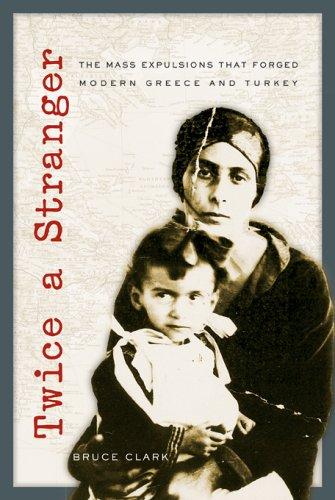
A book I’ve talked about a lot on this blog is Bruce Clark’s Twice a Stranger: the Mass Expulsions that Forged Modern Greece and Turkey, about the Population Exchange of the twenties. In one really fascinating chapter he tells the story of a mayoral election in Ayvali in the nineties I think, the town on the Aegean coast opposite Mytilene that was one hundred percent Greek before the twenties and is now almost exclusively populated by Greek-speaking (till a generation ago at least) Turks from Crete. The more progressive mayoral candidate has, as part of his agenda, a plan to restore some of the town’s Greek churches as tourist sights, generally playing on Ayvali’s Greek past as an asset and not something to be forgotten or hidden. And when he loses he experiences this very poignant moment of realization — that the idea was a little too much, was asking too much, that the pain of the past was still too raw; that, as he put it: “It’s too soon to remember.”
For Russians, for Chechens, for Turks packed up and out of their beloved Crete, it may be too soon to remember.
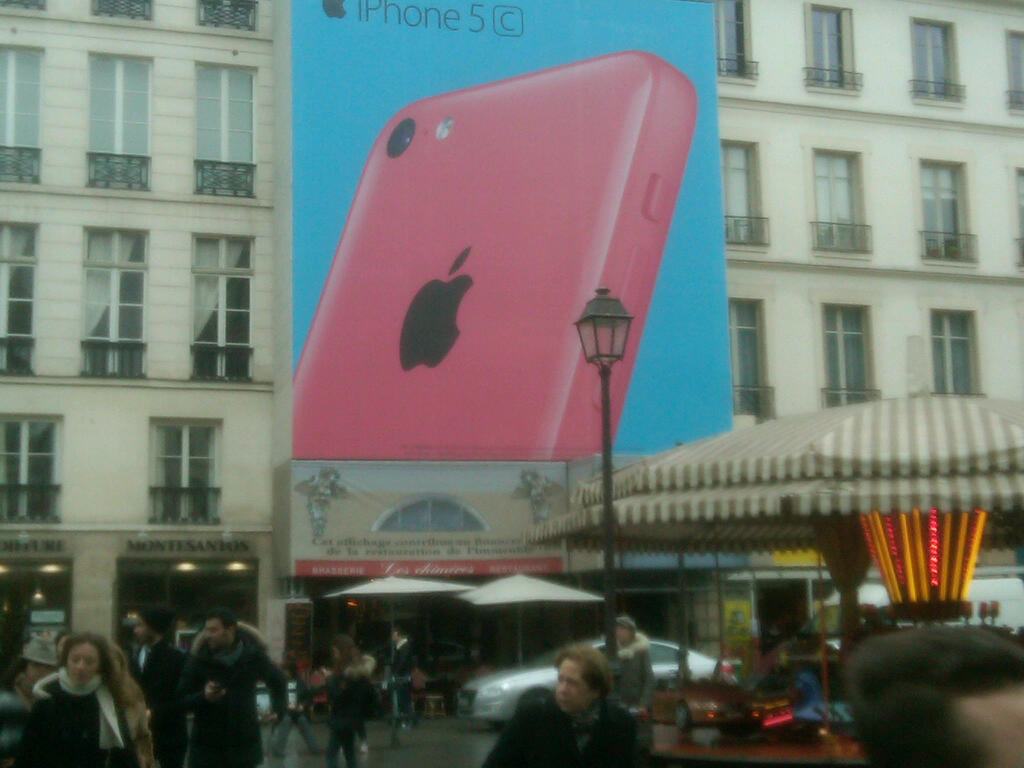
Apple has plastered Paris with massive billboards of its IPhone 5.
On the Ile de la Cite, right opposite the Quai des Grands-Augustins and fatsa with the St. Michel fountain, one of the city’s iconic meeting places, so you have to look at it the whole time you’re waiting for your friend:
On the Place des Vosges!!!
on the Rue de Rivoli, by the Palais Royal…everywhere. And the most annoying part is that at the bottom of each of these monstrous placards is written: “Cet affichage contribue au financement de la restauration de l’immeuble.” — “This billboard contributes to financing the restoration of this building.
You know, if Jobs and his successors are really such a bunch of menschen, hand over a few billion that I’m sure Paris could use and be quiet about it; put in in your next e-letter maybe. Or if you just wanna go the cheap whore route, then paste images of your hideous fluorescent-colored widget all over the beauty of humanity’s premier urban center and do it with shameless abandon if you like; I’ll respect you more. But don’t subtitle your greed and disrespect with mealy-mouthed, corporate platitudes.
I will provide readers with an explanation for that previous post: “Christouli mou, are we still talking about this stuff?” (translation: “Sweet Jesus…) because some readers complained that it wasn’t cool of me to insert a few intriguing remarks in a Greek text and then leave non-Greeks in the dark.
Philopomeon, at his beautiful blog, “Gemisto’s Paradox” — really fascinating; check it out — comments: “Indeed. This new eugenics is taking off big time online. Good thing it should at least make us Neo-Hellenes thing twice about racism and race-based nationalism. Our paternal-line Ydna is hopelessly diverse.”
But it won’t. It’s already serving to reinforce the old myths.
“As residents of the country that came up with Hollywood, Silicon Valley, and the Internet, we like to think that we lead the world in communications and entertainment. And we’re certainly ahead in one way: we pay far more for broadband Internet access, cable television, and home phone lines than people in many other advanced countries, even though the services we get aren’t any better. All too often, they are worse.
“Take the “triple-play” packages—cable, phone, and high-speed Internet access—that tens of millions of Americans buy from companies like Comcast and Time Warner Cable. In France, a country often portrayed as an economic and technological laggard, the monthly cost of these packages is roughly forty dollars a month—about a quarter of what we Americans pay. And, unlike in the United States, France’s triple-play packages include free telephone calls to anywhere in the world. Moreover, the French get faster Internet service: ten times faster for downloading information, and twenty times faster for uploading it.”
“If we want to get everything at the lowers possible cost, we cannot expect to get the best possible quality, the balance between the two being mediocrity. If we make it an ideal to be morally superior, we cannot at the same time avoid self-righteousness. If we cling to belief in God, we cannot likewise have faith, since faith is not clinging but letting go.“
I won’t even translate it; it’s too embarrassing — dirty laundry. All I have to say is that we should all brace ourselves for new genetics technologies to spawn a new racism — among certain quacks — akin to that which the racial “sciences” produced in the nineteenth and early twentieth centuries.
Πέρασαν 46.000- 59.000 χρόνια από τότε που ο σύγχρονος άνθρωπος εμφανίστηκε στον ελλαδικό χώρο, ωστόσο, χάρη στις αναλύσεις του DNA, έχουμε ακόμη πολλά να μάθουμε για την ταυτότητα των Ελλήνων. Εντυπωσιακά στοιχεία αποκαλύπτουν μέρα με τη μέρα οι γενετικές έρευνες στο Αριστοτέλειο Πανεπιστήμιο Θεσσαλονίκης (ΑΠΘ) και σε άλλα ευρωπαϊκά ιδρύματα, συμπληρώνοντας το παζλ για την καταγωγή των Ελλήνων.
Τα πιο σύγχρονα επιστημονικά στοιχεία για τη γενετική σύσταση των σημερινών κατοίκων της Ελλάδας παραθέτει στο βιβλίο του «Η γενετική ιστορία της Ελλάδας – Το DNA των Ελλήνων» ο ομότιμος καθηγητής Γενετικής και Γενετικής του Ανθρώπου, Κωνσταντίνος Τριανταφυλλίδης, ο οποίος έχει αφιερώσει πολλά χρόνια στη συγκεκριμένη έρευνα. Από τα πιο ενδιαφέροντα στοιχεία που παρουσιάζει είναι ότι οι Έλληνες όχι μόνο δεν επηρεάστηκαν γενετικά από άλλους λαούς, αλλά αντίθετα μετέδωσαν το DNA τους και στην υπόλοιπη Ευρώπη! Μάλιστα, το ελληνικό γενετικό υλικό «μοιάζει» πολύ με αυτό των Ιταλών, λιγότερο με των Γάλλων και με ένα ποσοστό των Ισπανών, όχι όμως και με των Τούρκων, όπως θα περίμενε κανείς λόγω της τουρκικής κατοχής.
[γιά φαντάσου…why did I expect those to be the findings of his research…]
Εντυπωσιακό είναι ότι το DNA των σύγχρονων Ελλήνων δείχνει καταγωγή από τη Νεολιθική εποχή και άμεση συνέχεια με αυτό των αρχαίων Ελλήνων, χωρίς να έχει υποστεί ιδιαίτερες προσμείξεις και, επιπλέον, το ενδεχόμενο οι αρχαίοι Έλληνες να είχαν φτάσει στην… Αμερική αιώνες προτού ο Κολόμβος φιλήσει το χώμα των «Δυτικών Ινδιών» εξετάζεται σήμερα ως πολύ πιθανό από τους επιστήμονες.
«Συγκρίνοντας το DNA των κατοίκων της Ελλάδας και ειδικότερα της Πελοποννήσου, με το DNA των κατοίκων της νότιας Ιταλίας, διαπιστώνεται ότι σε μεγάλο ποσοστό είναι ίδιο. Η γενετική συμβολή των Ελλήνων στη γενετική σύσταση των σημερινών κατοίκων της Σικελίας και της Νότιας Ιταλίας ανέρχεται στο 37,3% και 10%, αντίστοιχα. Είναι γνωστό ότι οι περιοχές της Μεγάλης Ελλάδας, στη νότια Ιταλία, αποτελούνται κυρίως από ελληνικούς πληθυσμούς, αλλά το πιο εντυπωσιακό είναι ότι το γενετικό αποτύπωμα εξακολουθεί να αποκαλύπτεται σήμερα, μετά από 2.500 χρόνια!», παρατηρεί ο κ. Τριανταφυλλίδης.
Στο βιβλίο του, εκτός από την παράθεση δεδομένων, ο καταξιωμένος επιστήμονας συγκρίνει τα χαρακτηριστικά των Ελλήνων με αντίστοιχα στοιχεία λαών της Βαλκανικής, της Ευρώπης, της Μέσης Ανατολής και της Αφρικής. «Η DNA υπογραφή των Ελλήνων αντικατοπτρίζει, ακόμη και σήμερα, την εξάπλωση των αρχαίων Ελλήνων και αποδεικνύει τη συνέχεια των Ελλήνων στο χώρο και στο χρόνο», επισημαίνει στον «Αγγελιοφόρο της Κυριακής» ο κ. Τριανταφυλλίδης.
Οι εκπλήξεις της γενετικής
Οι νέες έρευνες, που βασίζονται στη μελέτη του DNA και όχι στις αναλύσεις αίματος όπως παλιότερα, οδηγούν σε πιο έγκυρα συμπεράσματα και αναμένεται να δώσουν νέες πληροφορίες για το γενετικό υλικό των Ελλήνων, εκτιμά ο κ. Τριανταφυλλίδης. «Το γεγονός ότι απέχουμε γενετικά από τους Σλάβους[yes, what a relief our DNA isn’t tainted by that of some of the tallest, best-looking people on the planet…”μελαμψές φυλές, κοντοποδαρες, χονδροκωλιδες”] το είχαμε διαπιστώσει και παλιότερα, μελετώντας τις ομάδες αίματος. Πλέον έχουμε στοιχεία από 300.000 γονίδια και γενετικούς δείκτες για να αποδείξουμε ότι δεν ισχύουν, για παράδειγμα, ισχυρισμοί όπως ότι οι Έλληνες έχουν αφρικανική καταγωγή, όπως είχαν υποστηρίξει εσφαλμένα, τελικά, οι Σκοπιανοί», υπογραμμίζει ο καθηγητής.
Προσθέτει ότι με ενδιαφέρον αναμένονται και τα αποτελέσματα μελλοντικών μελετών. «Οι Σουηδοί επιστήμονες μελέτησαν οστά σε τάφους στη νότια Σουηδία και διαπίστωσαν ότι κάτοικοι των Μυκηνών είχαν φτάσει εκεί χιλιάδες χρόνια πριν, μεταφέροντας όχι μόνο πολιτιστικά αγαθά, αλλά και πλοία, καθώς και το γενετικό υλικό τους. Αυτό ξεφεύγει από όλα όσα ξέραμε ως τώρα», αναφέρει ο κ. Τριανταφυλλίδης.
Το βιβλίο θα παρουσιαστεί το Σάββατο 25 Ιανουαρίου, στις 11.30, στην Εταιρεία Μακεδονικών Σπουδών* (Εθνικής Αμύνης 4), στη Θεσσαλονίκη.
Syria’s heritage in ruins: before-and-after pictures
The war in Syria has claimed more than 130,000 lives and, as these images reveal, it is also laying waste to its historic buildings and Unesco-listed sites:
Martin Chulov
Umayyad mosque, Aleppo – pictured in 2012, before fighting destroyed it in 2013. Photograph: Alamy
They were sleepy tree-lined boulevards where people lived and worked, time-worn markets where they came to trade and exquisitely detailed mosques where, throughout the ages, they prayed.
All now stand in ruins, ravaged by a war that is not only killing generations of Syrians but also eradicating all around them, including sites that have stood since the dawn of civilisation. Across Syria, where a seemingly unstoppable war is about to enter a third year, a heritage built over 5,000 years or more is being steadily buried under rubble.
The Old Souk, Aleppo. Above in 2007 and below in 2013. Photographs: Corbis, Stanley Greene/Noor/Eyevine
The destruction of towns and villages is regularly revealed by raw, and often revolting, videos uploaded to the web, which many people stopped watching long ago. Only seldomly do the shaky images reveal the damage being done beyond the battle – to ancient churches, stone Crusader fortresses and ruins that have stood firm during several millennia of insurrection and purge but are being withered away by this unforgiving war.Syria’s war has claimed more than 130,000 lives. At least two million of its citizens have fled into neighbouring states and more than two million others have been displaced within its borders. Industry and economy has long ground to a halt. Hope too has been on a relentless slide. Syria has six Unesco sites, representing at least 2,000 years of history. All have been damaged.al-Kindi hospital, Aleppo. Above in 2012 and below in 2013. Photographs: Getty
–
These before and after pictures show the old world order of Syria reflected for decades in history books; where people bought wares in marketplaces or mingled in mosque courtyards. They also reveal the shocking scale of devastation in all corners of the country and the damage done to Syria’s soul and identity.In Aleppo, one of the oldest covered marketplaces in the world is now in ruins; its maze of stone streets has been one of the most intense battlefields in the country for the past 18 months, bombed from above by air force jets and chipped away at ground level by close quarter battles that show no sentiment towards heritage. Those who dare raise their heads above the ruins, towards the ancient citadel that stands at the centre of the city, can also see damage to several of its walls. A street in Homs, in 2011 (above) and 2014 (below)Several hundred miles south, just west of Syria’s third city, Homs, one of the most important medieval castles in the world, Krak des Chevaliers, has taken an even heavier toll. Directly struck by shells fired from jets and artillery, the hilltop fortress now stands in partial ruin.Krak des Chevaliers (click)
–
Homs itself has fared even worse. A residential street, where cars not long ago parked under gum trees, has been destroyed. Life has ceased to function all around this part of the city, as it has in much of the heartland of the country. In one shot, a destroyed tank stands in the centre of a street. The old minaret next to it has also been blown up. This photograph is thought to have been taken in the countryside near Hama, to the north of Homs. But it could just as easily encapsulate the damage done in parts of the capital, Damascus, or in towns and villages from Idlib in the north to Deraa in the south, where the first stirrings of insurrection in March 2011 sparked the war.Omari mosque in Deraa. Above in 2011 and below in 2013. Photographs: Reuters
–
In May 2012, Emma Cunliffe, a Durham University PhD student, and member of the Global Heritage Network, prepared a report on the damage done to Syria’s heritage sites, detailing the tapestry of civilisations that helped build contemporary Syria.“Numerous bronze-age civilisations left their successive marks, including the Babylonians, the Assyrians and the Hittites,” she said. “They, in turn, were replaced by the Greeks, the Sasanians, the Persians, the Romans and the Arabs, many of whom chose Syrian cities as their capitals. The European Crusaders came and left some of the most impressive castles known and the Ottoman Empire also made its mark. All these cultures co-existed and conflicted, forming something new and special and found nowhere else in the world.”Souq Bab Antakya, Aleppo. Above in 2009 and below after an attack in 2012. Photographs: Alamy, Reuters
–
Speaking this week, she said the threat to Syria’s heritage was now greater than ever. “Archaeological sites in Syria are often on the front lines of conflict and are experiencing heavy damage. Economic hardship and decreased security mean even sites away from the fighting are looted. This is denying not only Syrians but the world a rich heritage which can provide a source of income and inspiration in the future.”With little or no access to the country, satellite imagery is being used to track the destruction. The Global Heritage Fund’s director of Global Projects, Dan Thompson said: “All of the country’s world heritage sites have sustained damage, including the Unesco site cities, and a great many of the other monuments in the country have been damaged, destroyed or have been subject to severe looting..Umayyad mosque, Aleppo, pictured in 2012 (above) and 2013 (below). Photographs: Alamy, Corbis
“Shelling, shooting, heavy machinery installed in sites, and major looting are the leading causes of damage and destruction to the sites, although I would not discount that vandalism is also playing a part. As far as we know, no concrete action is being taken to combat the damage in the present moment.”
He got enough flak for the post (read through all the ctd.’s too — very interesting) and I feel kind of bad giving him more after so many months, but it’s been in the back of my mind since the fall and the argument is so irritating that I had to put in my own two cents.
It seems that every Sullivan-type pundit rushed out in 2001, or more probably 2003 when they were making their Iraq predictions, and bought some book about the Paris Peace Conference: “Paris 1919” “The Peace to End All Peace” — it’s an entire genre in itself. And there they found out about some magic secret, like in a Dan Brown novel, called the Sykes Picot line, that supposedly explains everything about the Middle East’s dysfunction, and like a little kid who realizes he’s said something that the adults have found smart or funny, they go around repeating it ad nauseum: “Sykes-Picot Line”…”Sykes Picot Line” … “this guy Sykes and this guy Picot”…”The Sykes Picot Line…” Listen to Sullivan’s own pedantic tone:
“Syria as we now know it was created by one Brit, Mark Sykes, and one Frenchman, Francois Georges-Picot in 1920. Originally, it included a chunk of Iraq (another non-country), but when oil was discovered there (in Mosul), the Brits wanted and got it. With that detail alone, you can see how valid the idea is of a Syrian “nation” is.”
The whole point is that most of the nations of the present Middle East are artificial, colonial creations — arbitrary lines drawn on a map –and that explains everything. First, these lines are not arbitrary. Whatever you might want to say about Sykes or Picot, or Churchill or Lloyd George or Clemenceau — that they were gross imperialists (which is not even redundant really but simply a tautology: “The King is a gross monarchist…”) or anything else, they weren’t ignorant or anistoretoi.* The units they put together corresponded, as so many of Sullivan’s readers point out to him, with regions with long, historically recognized identities. Where you look at a map of the Middle East and do see straight artificially drawn lines, they were drawn through places where nobody lives. Otherwise, within every one of those lines, there has always existed a shifting, changing, re- or de-centralizing identity, but one with clear continuities nonetheless.
(*Anistoretoi – ανιστόρητοι – is a Greek word that I like very much, because it literally means “un-historied” — historically ignorant, obviously, but there’s something about “un-historied” that just seems to me like a sharper condemnation of inexcusable lack of knowledge — no? — so you’ll see it on this blog here and there.)
Thankfully, no one says this about Egypt, because it so obviously has a longer continuous history of unified consciousness than even China. But what Sullivan, so damn pompous — or just so gay and so Magdalen — dismisses as the “non-country” of Iraq, the flatlands of the Tigris and the Euphrates basin, even when semi-splintered into northern, central, and southern parts, as Iraq seems to be doing now, was always seen as a unit: certainly geographically but even culturally. The two regions the Greeks called Libya and Cyrene may correspond to a west-east division that is still apparent in modern Libya (Tripoli and Benghazi), but their union is not necessarily artificial or inherently problematic. The headland to the west of Libya we call Tunisia was the first region called Africa by the Romans, where their ancient enemy Carthage had once stood. And the region where the northwestern section of the Fertile Crescent bends over and meets the Mediterranean has been called Syria since the Greeks and was probably seen as a recognized cultural entity far before them. The mountainous Mediterranean littoral of this Syria — what’s now Palestine and Lebanon and maybe a new Alawite state waiting to be born — was always a space slightly apart and more heterogeneous, but Syria nonetheless. (The arid plateau across the Jordan, inhabited by the Moabites and Edomites and Nabataeans and all those other peoples the Israelites are always defeating in the Old Testament because God loves them more, was also a region of a recognized coherence of sorts not just made up by the Brits when they decided to call it Trans-Jordan.) Syria was the birthplace of Christianity as an organized religion. Syria was the Romans-Byzantines’ richest and most sophisticated eastern province. Syria was the prize catch for the Crusaders; the real studs among them who could, got themselves a piece of booty there, not the “Holy Land.” When Zainab bears her lament to the people of Shaam (Syria or the Levant) in Agha Shahid Ali’s beautiful poem she cries out: “Hear me Syria…” addressing the people of the seat of Umayyad power in Damascus — the one in Syria — that had massacred her sacred family. Sykes and Picot didn’t make this stuff up.
What Sullivan wants to say, and what’s truly problematic about his assertion, is that Syria is not a country because it’s not ethnically or confessionally homogeneous, and dismissing it as a state for those reasons is a far more eurocentric, and anistoreto, an idea than he may know. Because if those are our standards for nation-hood, there are very few countries in the world. By those standards, if Syria is not a country, then England and France aren’t countries either. Because a polity called the Kingdom of England, or the Kingdom of France — both of which one could argue were “artificially” created by the powers that be of the time — had existed for far longer than Englishmen and Frenchmen have. And the process by which a unified national consciousness was created to match these pre-existing political units — England or France — was a long and complex one and one that followed the particular course it did only in Western Europe and trying to force it onto the peoples of states in other parts of the world is impossible and extremely dangerous. Forget what Sullivan thinks is the Machiavelian divide-and-rule politics of the colonizers that pitted ethnic groups in Syria and Iraq against each other; these colonizers were probably never as devilishly smart as we like to imagine them. What Sullivan finds inconceivable is that one can be a Latakian Alawite or a Sunni from Homs or an Aleppo Christian or a northeastern Kurd and still function as a citizen of a legitimate country called Syria; that these groups have always had boundaries that fluctuated or were permeable; and, that though relations between them historically were better at some moments than others, they were brought together in this place called Syria by organic historic processes and not corraled together there by outsiders. And by believing that it’s inconceivable they can all function as citizens of this place, he’s actually participating in the creation of a discourse that pits these groups against each other in a manner far more fatal than the supposed manipulations of the British or French. He’s creating a poetics of sectarianism, pure and simple. One only has to look at how reinforcing ethnic differences, often with the naive supposition that satisfying each group’s demands will lead to peace, only exacerbated the tragedy — the tragedies — of Yugoslavia in the 90s to see where thinking like Sullivan’s leads.
To his credit, Sullivan gives the Ottomans credit for maintaining a semblance of peace and stability in the region for several centuries. But the Ottomans had molded, over the centuries, a complex and flexible system of negotiated corporatism and autonomy that recognized the different groups of their empire and yet that held them together in one unit successfully until modern nationalism started making that impossible. What Sullivan is doing with blowhard statements like the above is just continuing that process: making it impossible for the peoples of the region that have to live together to do so peacefully and productively.
Finally, as a somewhat tangential but important aside, I’d really be interested in finding out why Sullivan doesn’t think that India is “not a country.”
And, folks, what is going on in Syria? I’ve been in France for a month and my French isn’t good enough to follow the news and the American stuff on-line seems to have less and less coverage. Has some sort of stalemate been reached? Is some kind of compromise being forged? Are people just tired? Anyone want to enlighten me?
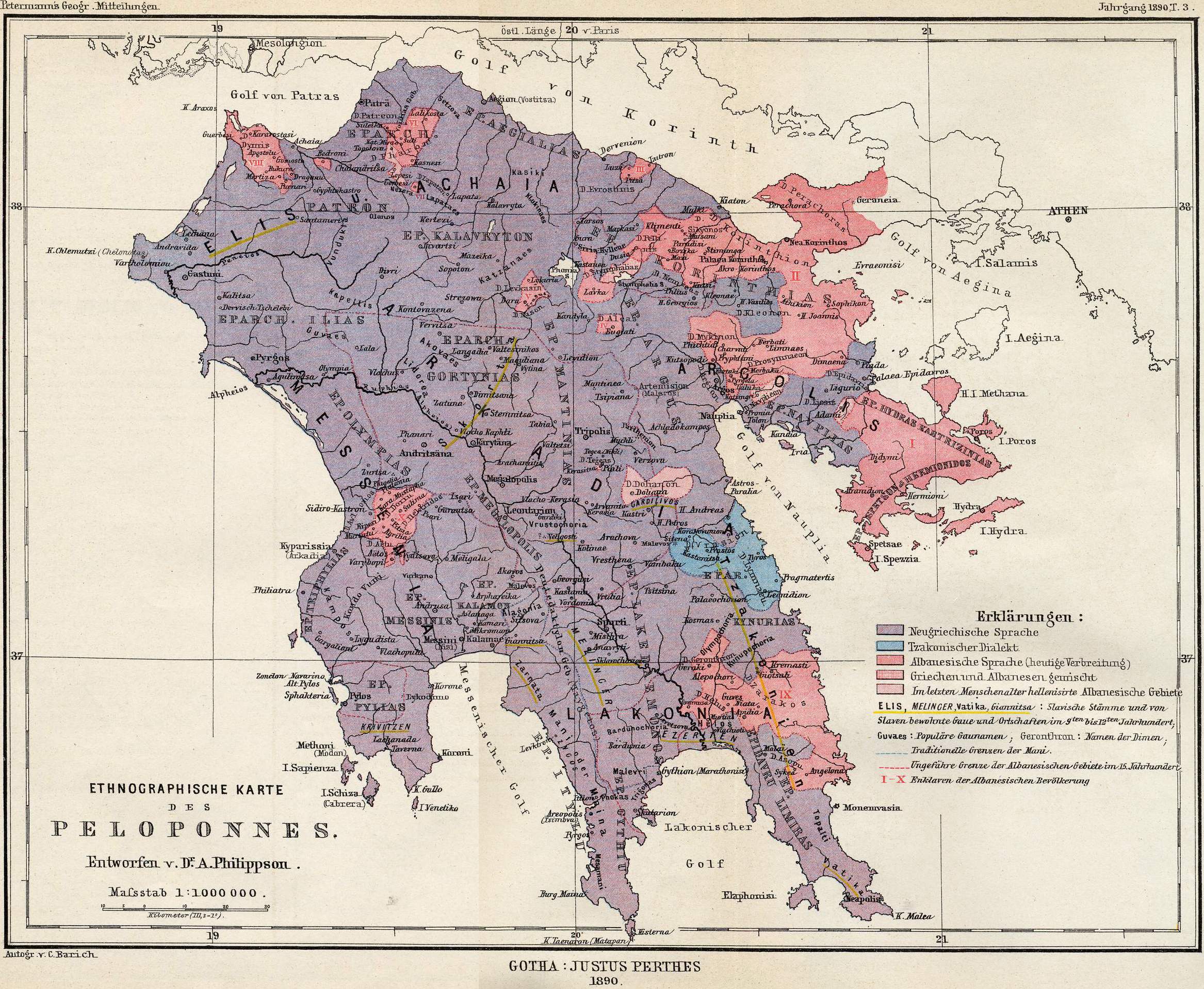
In my recent post Occitan and “endangered languages”, I wrote about the (mostly former) Albanian-speakers of central and southern Greece and how they had never posed an assimilation problem for the Greek state. Quite the contrary:
“…Peloponnesian Albanians were already Greeker than the Greeks in their ethnic consciousness and had proven it by essentially fighting our war of independence for us; it seems that, historically, you give Albanians — Christian or Muslim — an incentive to go to war and they’ll become more zealous crusaders of your cause than you are yourself.”
Elsewhere I’ve written about Greeks and Albanians as practically co-peoples, such has been the extent of migration and intermingling over the past millenium. This winter I read John V.A. Fine, Jr.’s six-hundred page The Late Medieval Balkans: A Critical Survey from the late Twelfth Century to the Ottoman Conquest, which I know sounds like a joke about dry academic reading, but it was actually fascinating. The chaos that followed the fall of Constantinople to the Franks in 1204 produced a bewildering number of Greek and Frankish successor states to the Byzantine Empire throughout the Greek peninsula, all constantly at war with each other and at a time when the Albanian highlands were suffering from demographic overload. Thus, whether as mercenaries in the hire of anyone who paid best, or as shepherding nomadic clans who took advantage of the extensive areas of the peninsula depopulated by constant war or epidemic diseases, Albanians in huge numbers were constantly on the move southwards for the next two centuries if not more. (I suspect that this is when their descent into Kosovo begins as well, filling in the gap as as the center of gravity of the Serbian nation moved northward.) Further waves came after the Ottoman conquest in response to Islamization campaigns in recently conquered Albania, but this time not just south to Greece but westwards to Italy and Sicily as well. And settling everywhere you could possibly imagine: Thessaly, southern Epiros, Roumeli (in the Greek meaning of the term), the Ionian islands, places as far flung and unexpected as the islands of Cythera or Ios! My point, without having any Fallmereyer-an agenda — not because I disagree with his basic theses but because I don’t thing “race” means anything — is that regions of Albanian settlement in the past were likely far larger than the regions where we find the language still spoken in the early twentieth century, shown on these maps:
Albanian-speaking areas in 1890 shown in pink above, green below (click)
This documentary that “shocked Greece” was produced by SKAI Television and called 1821 after the year the Greek revolution against Ottoman rule began and the reason it “shocked” is that it debunked long-held myths about the uprisings that eventually led to the establishment of the independent Kingdom of Greece; but really, that anybody was shocked at any of these revelations: for example, that the uprising was accompanied by the wholesale massacre of Muslims (and Jews) throughout the Peloponnese and central Greece;* that the Church anathematized it and did not support the movement (paid the price anyway with the execution of the Patriarch in Constantinople); that the “secret schools” where poor “enslaved” Greek youth were taught Greek in secret at night because the Turks had forbidden the teaching of Greek is a totally concocted fable (and such a projection of twentieth-century, nationalist, totalitarian policies back onto the Ottomans; there is practically not a single European observer of Ottoman life since at least the beginning of the eighteenth century that doesn’t comment on the quality and extent of Greek educational institutions in all Ottoman cities and even smaller towns and villages); that many if not most of the revolution’s “heroes” were Albanians, some who spoke no Greek at all; that the fustanella is originally an Albanian garment…and on and on — that any of these shocked Greeks in the early twenty-first century is just proof of how pathetically brainwashed and historically ignorant nationalism usually leaves a people. And this is the point where the documentary pulls a very cowardly copping out — by claiming that such is the price of building a new nation; it has to create new “myths” of its own. Why a nation — or a people preferably — is not stronger and better off if it knows the whole truth about its past is never delved into. But it’s worth watching, and it has English subtitles:
In any event, such was the Albanian contribution to the struggle that one wonders if the Porte let go of the Peloponnese, not because it was so far from the center of imperial authority, not because it had always been something of a provincial backwater, not because of foreign intervention, but because of some tough-*ss Albanian warriors that the Ottomans felt were no longer worth resisting. After all, they themselves knew the value of an Albanian fighter: favorite recruiting regions for the Janissaries in the classical Ottoman period had always been Albania and Serbia — not random choices.
There’s a beautiful song recorded in 1949 by Sophia Vembo, one of greatest Greek voices of the twentieth century, called “The Song of the Morea” (since at least early Byzantine times until the modern Greek state revived the clasical name, the Peloponnese was called the Morea) which is partly a homage to the role of the region in the struggle for Greek independence (ok, even as a New Territory Greek, I’ll grant them that.) And the refrain says:
“Hail and be well brother Moraites, and health to your women too; Greece owes its freedom to your manhood!”**
And I have a deeply-loved but eccentric cousin, highly intelligent but an unrehabilitated nationalist dinosaur unfortunately and to whom much of this blog is indirectly directed — or one might even say dedicated — who is so profoundly moved by the blood shed by Peloponnesian and Spetsiote and Hydriote Albanians for the cause of Greek independence, that he thinks the refrain should run:
“Hail and be well brother Arvanites (Albanians), and health to your women too; Greece owes its freedom to your manhood!”
Here it is; the music and Vembo’s voice are beautiful even if you don’t speak Greek:
The song has always provoked a strong reaction in me as well, a testimony to the power of patriotism if it can move someone who finds nationalism as repulsive as I usually do. But even that reaction is contradictory. The 1949 date of the song is not insignificant; it was recorded in the middle of the most brutal period of the Greek Civil War and was actually more a call to unity and an appeal to brotherhood than a commemoration of the revolution of 1821. Like many Greeks perhaps, my family suffered more losses in the civil war than they did in the Nazi occupation that had preceded it, and the opening lyrics of the second verse always make me tear up for a moment:
“Now that the earth sweats the blood of brothers, and Greece is drowning Greece in the hills..”
and then my heart goes cold again, because the next line is:
“Come out of your grave Thodoris Kolokotronis, and make all Greeks brothers again.”
…because it’s impossible for me to forget that Kolokotronis was the “hero” who boasted of riding his horse over Muslim corpses from the gates of Tripolitsa to its citadel, when that major city of the Morea fell to the rebels in September of 1821.
So I’d like to end this post with just a little bit of perspective, a reality check we all need every so often, because though the documentary mentions a lot of previously taboo subjects, it glosses over a few of them a little too quickly. The following is taken from the blog of a Greek-Australian, and apparently fellow Epirote (though he seems to have Samiote heritage as well), Diatribefrom a post called “Revolution Unblinkered.” It’s foreigners’ eye-witness accounts of the Massacre of Tripolitsa, interspersed with some of his own comments:
A month later, in September, a combined force led by Kolokotrones and Petrobey Mavromihalis captured Tripolitsa. Historian W Alison Philips tells a horrific tale of mutilation and slaughter “For three days the miserable inhabitants were given over to lust and cruelty of a mob of savages. Neither sex nor age was spared. Women and children were tortured before being put to death. So great was the slaughter that Kolokotronis himself says that, from the gate to the citadel his horse’s hoofs never touched the ground. His path of triumph was carpeted with corpses. At the end of two days, the wretched remnant of the Mussulmans were deliberately collected, to the number of some two thousand souls, of every age and sex, but principally women and children, were led out to a ravine in the neighboring mountains and there butchered like cattle.”
A Prussian officer described the incidents that took place after the capture of Tripolitsa by the rebels, as follows:
“A young Turkish girl, as beautiful as Helen, the queen of Troy, was shot and killed by the male cousin of Kolokotronis; a Turkish boy, with a noose around his neck, was paraded in the streets; was thrown into a ditch; was stoned, stabbed and then, while he was still alive, was tied to a wooden plank and burnt on fire; three Turkish children were slowly roasted on fire in front of the very eyes of their parents. While all these nasty incidents were taking place, the leader of the rebellion Ypsilantis remained as a spectator and tried to justify the actions of the rebels as,’we are at war; anything can happen’.”
Based on the accounts of one hundred European officers who were present at the scene, and did nothing to intervene, William St. Clair wrote:
“Upwards of ten thousand Turks were put to death. Prisoners who were suspected of having concealed their money were tortured. Their arms and legs were cut off and they were slowly roasted over fires. Pregnant women were cut open, their heads cut off, and dogs’ heads stuck between their legs. From Friday to Sunday the air was filled with the sound of screams… One Greek boasted that he personally killed ninety people. The Jewish colony was systematically tortured… For weeks afterwards starving Turkish children running helplessly about the ruins were being cut down and shot at by exultant Greeks… The wells were poisoned by the bodies that had been thrown in…”
Although the total estimates of the casualties vary, the Turkish, Muslim Albanian and Jewish population of the Peloponnese had ceased to exist as a settled community after the early massacres. Some estimates of the Turkish and Muslim Albanian civilian deaths by the rebels range from 15,000 out of 40,000 Muslim residents to 30,000 only in Tripolitsa. According to historians W Alison Phillips, George Finlay, William St. Clair and Barbara Jelavich, massacres of Turkish civilians started simultaneously with the outbreak of the revolt, while Harris J. Booras considers that the massacres followed the brutal hanging of Ecumenical Patriarch Gregory V of Constantinople. Finlay has claimed that the extermination of the Muslims in the rural districts was the result of a premeditated design and it proceeded more from the suggestions of men of letters, than from the revengeful feelings of the people. St. Clair wrote that: “The orgy of genocide exhausted itself in the Peloponnese only when there were no more Turks to kill.”*
There were also calculated massacres towards the Muslim inhabitants of the islands in the Aegean. This is because one of the aims of the Greek revolutionaries was to embroil as many Greek communities as possible in their struggle. By engineering some atrocity against the local Turkish population, diverse Greek communities would have to ally themselves with the revolutionaries fearing retaliation from the Ottomans. In one case, in March 1821, Greeks from Samos landed on Chios and attacked the Muslim population living in that island. Among the Samian belligerents was an ancestor of mine, Dimitrios Kalymnios.When the Samians withdrew to the safety of their island, the Ottomans descended upon defenceless Chios and carried out an atrocity that horrified the rest of the world: the massacre of Chios.
–
[my, N.B., emphases throughout this last paragraph — just so that nobody is allowed to take something like the the Massacre of Chios out of historic context again…]
–
The final word, if there is one, goes to Theodore Kolokotronis, who in his account of the fall of Tripolitsa, was unrepentant to the last: “When I entered Tripolitsa, they showed me a plane tree in the market-place where the Greeks had always been hung. “Alas!” I said, “how many of my own clan — of my own race — have been hung there!” And I ordered it to be cut down. I felt some consolation then from the slaughter of the Turks. …”
Wow. First thing I have to say is that if this guy is allowed to publish this kind of stuff in Melbourne’s “Neos Kosmos” English-language newspaper, then Greek Australia is eons ahead of Greek America in its sophistication on such issues. I can’t imagine a single effing channel or venue of the Greek media in New York where someone could get away with writing or saying things like this.
Then, the irony is that these revolutionaries, Greek or Albanian, were probably not fighting for a Greek state, but fighting a religious-cum-tribal war out of which they were hoping to carve out little fiefs and principalities of their own, no different than the Ottoman pashaliks that had preceded them and the internecine chaos that followed ‘liberation’ is proof of that — so let’s not over-romanticize their zeal for the “cause” or exaggerate the degree to which they were fighting for the “freedom” of the “Hellenic nation.” Finally, is the irony that many of the “Turks” these fighters were massacring in a place like Tripolitsa, were probably Albanians like themselves, only converts to Islam.
–
And one sad little detail I discovered somewhere else, though I can’t find the source for it:
“European officers, including Colonel Thomas Gordon, who happened to be at Tripolitsa during the massacre, witnessed the hair-raising incidents there, and some of them later recalled these events in all their ugliness. Colonel Gordon became so disgusted with the Greek barbarities that he resigned from the service of the Greeks. A young German philhellene doctor, Wilhelm Boldemann, who could not bear to witness these scenes, committed suicide by taking poison. Some of the other European philhellenes who were extremely disillusioned, followed suit.”
–
The poor, idealistic, Werther-like German Romantic, come to fight and liberate the sons of Pericles and Leonidas, kills himself out of disappointment…it just seemed to encapsulate the whole patheticness of a certain kind of European Helleno-latry.
Balkans, Anatolia, Caucasus, Levant and rest of ME, Iran, South Asia
Me, I'm Nicholas Bakos, a.k.a. "NikoBako." I'm Greek (Roman really, but when I say that in English some five people in the world today understand what I'm talking about, so I use "Greek" for shorthand). I'm from New York. I live all over the place these days. The rest should become obvious from the blog.

 ALEXEY NIKOLSKY/RIA NOVOSTI/KREMLIN POOL (click)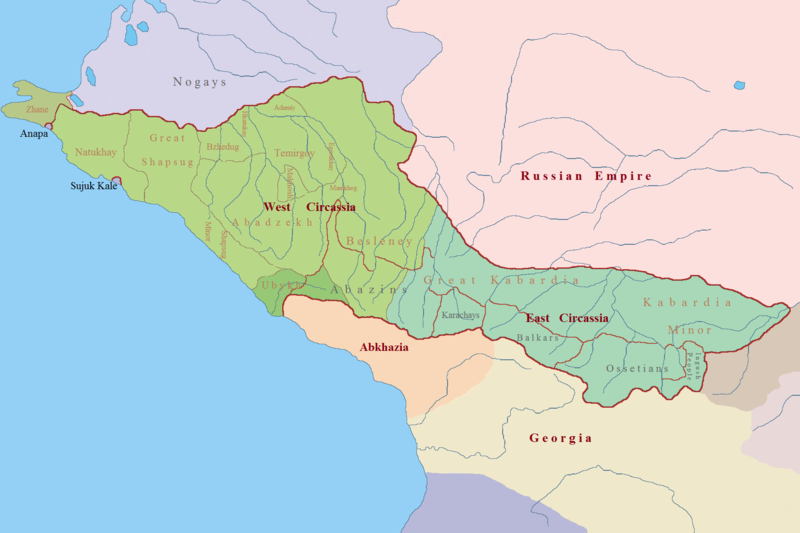
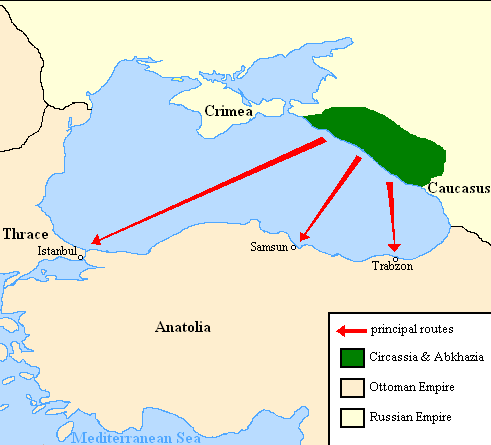 It certainly represented the largest civilian death toll of any war up to its time and today, ninety percent of people of Circassian descent live outside their original homeland, mostly Turkey, but also Syria, Jordan and Lebanon.





 The Old Souk, Aleppo. Above in 2007 and below in 2013. Photographs: Corbis, Stanley Greene/Noor/Eyevine
 al-Kindi hospital, Aleppo. Above in 2012 and below in 2013. Photographs: Getty
 A street in Homs, in 2011 (above) and 2014 (below)

 Souq Bab Antakya, Aleppo. Above in 2009 and below after an attack in 2012. Photographs: Alamy, Reuters
 Umayyad mosque, Aleppo, pictured in 2012 (above) and 2013 (below). Photographs: Alamy, Corbis


 Jadde: from Bosnia to Bengal