Archive | Uncategorized RSS feed for this section

Become a moth

20 May

Shajarian and a very young Homayoun perform the Molana-Rumi verse (with Alizadeh and Kalhor)

Perhaps the main reason I started my attempt to learn Farsi was pure spite (the other was to go to Afghanistan).  I had gotten tired of asking Iranians whether they liked this or that translation of Saadi or Hafez and being smugly told or categorically barked at: “NO! None of them; Persian poetry can’t be translated,” or reading some poor soul on You Tube gush: “My God, what beautiful music!  Can someone translate the lyrics, please?!!” only to be shot down by an Iranian: “you dont know all the metaphors references you won’t understand you cant translate poetry.”  Well, yes you can translate poetry, ‘cause if you can’t, you can’t translate anything else either.  Or you can create a set of reasonably analogous concepts that gives the other language-speaker a strongly analogous idea, at least, and just as strong a sensory feel.  In the end, the set of incommunicable ideas we’ve each got locked in our heads is pretty much as different as that between any two languages, so if you doubt translation you’re doubting the hope of any human communication really – which might, I understand, be a reasonable theory.  But we’ll forgive the Persians their snobbery because, as they say in Spanish in an expression I love: “tienen con que…” literally “they got what with…” meaning “they have reason to be” or “they a have a right to…”

But then there’s this sweet and very generous attempt of one You Tube reader to give an almost calque-like translation of this Rumi piece:

If you are going to the drunkards, become drunk

If you go towards the drunk, go drunkenly! Go drunkenly! (mastâne is a compound from mast (drunk) and the prefix -âne, which is_ a particularizer (pertaining to the qualities of X, in a X manner) e.g. from mard we have mardâne (men’s, for men; …

You should become all soul, until you are worthy of the spirits[?]

You should become all soul until you become deserving the sweetheart (beloved)

And then become the cup [?] that holds the wine of love

And then become a cup for the wine of love! Become a cup! (in English, if I’m not mistaken, one says “become a member of X” so I translated it as “become a cup…” rather than “become the cup”)

Make your heart like the [other] hearts [?], wash it seven times [till it is free] of grudges

Go and wash the chest of hatreds seven-water-ly like [real] chests (chest is the house of heart. I think, in English, one says “like a [real] chest”. Ancient people believed that washing something with water of seven seas makes it purely clean.)

And then come live with the lovers

And then, come [and] become homemate with lovers! Become homemate! (ham- = homo-, xâne = home -> homo-home like homo-phone but anyway: homemate)

Become a stranger to yourself, ruin your own home [destroy the_ nafs]

[both] make yourself alien (stranger) and make the house ruined (I think it means “desert your past and your belongings”)

And from the heart of the flame, come out, become a moth

And into fire, enter! Become a butterfly! Become a butterfly! (candle (šamë)

Abandon your deceit, O lover, become mad

O lover, abandon deceit! Become mad! Become mad! (hilat is Arabic_ form of hila -> hile. In Persian, we have sometimes taken an Arabic word as -at and sometimes as -a. Well, as for hilat, it’s not found in common Persian and we only say hila/e)


And a Farsi transliteration, not all included in the above performance:

Aan goushvaar-e shaahedaan, hamsohbat-eh aarez shodeh,

Aan goush-e aarez baayadat! dordaaneh sho, dordaaneh sho(2),

Chon Jaan-e to shod dar hava, zafsaneh-ye shiereen-eh ma,

Faany sho O chon aasheghaan! afsaaneh_ sho, afsaaneh sho(2),

Andiesheh-at Jaaie ravad, aangah to ra aanja barad

zaandisheh bogzar chon ghaza! pieshaaneh sho, pieshaaneh sho(2)

O Hielat Raha kon aashegha! divaneh sho, divaneh sho(2),

Vandar del-e aHam khiesh ra bigaaneh kon, ham khaaneh ra viraneh kon,

Vaangah bia ba aasheghaa! hamkhaaneh sho, hamshaaneh sho(2),atash dar a! parvaneh sho, parvaneh sho(2)

Ro sieneh ra chon sieneh ha, haft aab_ shoo az kieneh ha,

Vaangah sharaab-e eshgh ra! peymaaneh sho, peymaaneh sho(2),

The moth-and-flame is one of the most classic of those ‘untranslatable’ metaphors: the constant injunction to become a moth and throw yourself into the flame, surrender to the annihilation of love.  The crucial surrender here, of course, is to ignore the full spectrum of interpretations – from the religious pedant’s to the equally irritating contemporary gay ‘reads’ (those of what Joseph Massad calls “The Gay International”) – about whether the flame is God or your spiritual master or a hot kid and really surrender the urge to interpret entirely, forget about metaphor, stop the transference, which is what “metaphora” means in Greek, something that the ghazal’s connected/disconnected structure is so conducive to and which gives it so much of its power  — and which probably leads to the common assumption of untranslatability.  This is what Agha Shahid Ali’s poetry does so successfully in English.

That said, I’ve never seen a moth actually do this.  I’ve heard mosquitoes incessantly frying themselves on those machines on summer nights in the sweltering plains of northern Greece while I’m trying to enjoy a roast pig crackling, but not a moth actually burn itself in a candle or other flame — or maybe Persian moths are greater emotional risk-takers.  In my experience, whenever a moth runs into trouble around light it’s usually ended up like this guy who I found in my icon lamp.

And this is what I’ve found most contemporary humans’ experience of love to be too: stuck in a viscous mess, your wings oil-logged, pedaling frantically and unable to escape your slow suffocation till life picks you out with a paper-towel and squishes you.  Don’t we wish it were instant incineration; we’d save ourselves much pointless humiliation.  But our hearts just aren’t up to such sacrificial leaps into the abyss anymore.

“Whom the flame itself has gone looking for, that moth — just imagine!” – Bollywood song

Comment: nikobakos@gmail.com

Nicholas Gage

20 May

Yes guys, my comment on Nicholas Gage (“The Champion of Greek Outrage,” May 18), was sarcastic.  Gage has a deep and highly personal bone to pick with the Greek Left, in which I am totally behind him and totally support him and totally grant him every justification for.  I’ve got almost the same bone, in fact.  I just don’t think he’s the guy to be writing about Tsipras and Syriza.

I didn’t know Alcibiades, except enough to know that he was the homme fatal of fourth-century Athens that could crash Socrates’ parties whenever he felt like.   Zachariadis was a shit of the highest order and Greek communists under his leadership committed some of the most horrible crimes of post-war Europe — crimes of a rare Stalinist ideological purity that continued to characterize Greek communism till recently.  But it’s a little journalistically dishonest of the Times to let Gage write an op-ed piece on this issue without some background.  Out of respect, I’ll let readers find out about that on their own if they choose.


Comment: nikobakos@gmail.com

Zuckerberg

19 May

Is there anybody else who was bored or just disgusted by today’s hour by hour count of how much money Mark Zuckerberg was making or was it just me?


Comment: nikobakos@gmail.com
And On Albanians generally…

19 May

From Andrew Sullvan’s Daily Beast:

A reader writes:

“The Huff Post’s article is interesting but incomplete.  The best the writer can come up with by way of an explanation for Albania’s progressiveness on gay rights is that it has a strong “feeling of community” among the new gay Albanian activists, who also engage regularly in interventions and collaborations with other human rights NGOs and the government. The real explanation is much more basic – and way more interesting:

Until very recently, Albania was a total mess (I mean, it’s still a mess; you should see it, but it’s all relative). After all, Albania had endured over four decades of insane rule by Enver Hoxha, and when he died in the ’80s, the country descended into a period of prolonged chaos (remember the crazy stock market Ponzi schemes that nearly threw Albania into revolution?). It was just like North Korea would be if suddenly its totally unsocialized citizens were granted the freedom to do whatever the hell they wanted.

Fast forward a few decades and Albania achieved some measure of stability. It’s a new century. Technology advances connect the country to the rest of the world in hitherto unimaginable ways. The borders to neighboring countries like Greece opened up. It’s fair to say that the Albanians’ minds were blown. Exposed now to the Europe that Hoxha tried everything to prevent them from learning about, the population was able to take stock more fully of just how screwed up a country they had.  Decade after decade, as the world advanced, Albania had remained a North Korea-like backwater, and suddenly the veil was lifted. It’s like they’d just come out of stasis.

Albanians were (and still are) aghast at their fate. They’re deeply traumatized and embarrassed by how far they lag behind the rest of Europe, and they are OBSESSED with achieving modernity.  [my emphasis]

I was in Albania pretty recently and have friends there (and in Greece, were a number of them work on my family’s farmland). We talked about the push for gay rights, and they attribute it to the prime minister’s attempt to make up for lost time – to show the rest of Europe that Albania isn’t just making progress; it’s leading the way. The push for marriage equality there wasn’t quite a political stunt, but it was definitely intended to be an attention grabber that would change the rest of the world’s perception of Albania in the most dramatic way possible. The PM didn’t have any particular investment in the issue of gay rights; he just wanted to get Albania on the map FAST.

A few other things come into play, by the way. One is that it’s probably the most progressive Moslem-dominated country on the planet.  Read about Albania’s brand of Islam. It’s something unto itself. In fact, the Saudis have poured money into Albania to establish its brand of Islam there, and the Albanians thus far have had very little interest in embracing it. But that’s a topic for another email.”

Two points on what the above Beast reader writes…  My father was from Albania.  So kudos and high lauds to anyone who testifies and gives witness to what Albanians have been through in this century.  People’s complete ignorance of what an almost fictional Stalinist gulag that whole country was turned into for so many decades always infuriated me — did then and still does twenty years later — as the many friends and acquaintances that I’ve unfairly exploded at upon immediate detection of that ignorance can testify to.  (And then there were the justifiable “hay-siktiria”: like at lefty Greeks in the eighties who used to tell me everything in Albania was cool, or at Neo-Greek society in general who had emotionally abandoned ethnic Greeks in Albania until it rediscovered its claptrap nationalism in the nineties.)

Surprisingly I don’t find them to be quite as damaged as the writer says, however — they’re a pretty resilient bunch, to say the least — and I think they’re too proud, as well, for us to so easily ascribe Berisha’s comments to the channelling of some collective need to curry Western admiration; that’s probably a Greek projection.  When I went to Albania in 1992 to visit my father’s village and see relatives for the first time (my father never saw his parents again after 1945; my grandfather disappeared into a prison camp in the early sixties and my grandmother soldiered on in solitude until she died in 1989, just a year before we would’ve been able to see her again) I expected to find them all in shocked grief.  Instead — there were tears, yes — I found them in that state of relieved giddiness that one feels upon waking from a life-threatening nightmare and that they had almost immediately converted their experience into something like an absurdist performance piece that they had had to sit through and hadn’t quite understood but whose remnant bad taste they needed to laugh off at once.  To hear an eighty-year-old woman cackle about having to attend a “social criticism” meeting in what had been her church and confess that, yes, she kept two chickens more than what was permitted by the village collective’s policy, was a real lesson in how smart black humour sustained the peoples of Eastern Europe through the murderous idiocy of communism.  And, like the writer says, they were brimming with an enthusiasm to embrace anything that meant a new life.  Some beautiful parts of my village’s, and the country’s, culture may have been lost through that enthusiasm but we can do without any tradition that’s only preserved in the aspic of that kind of tyranny.

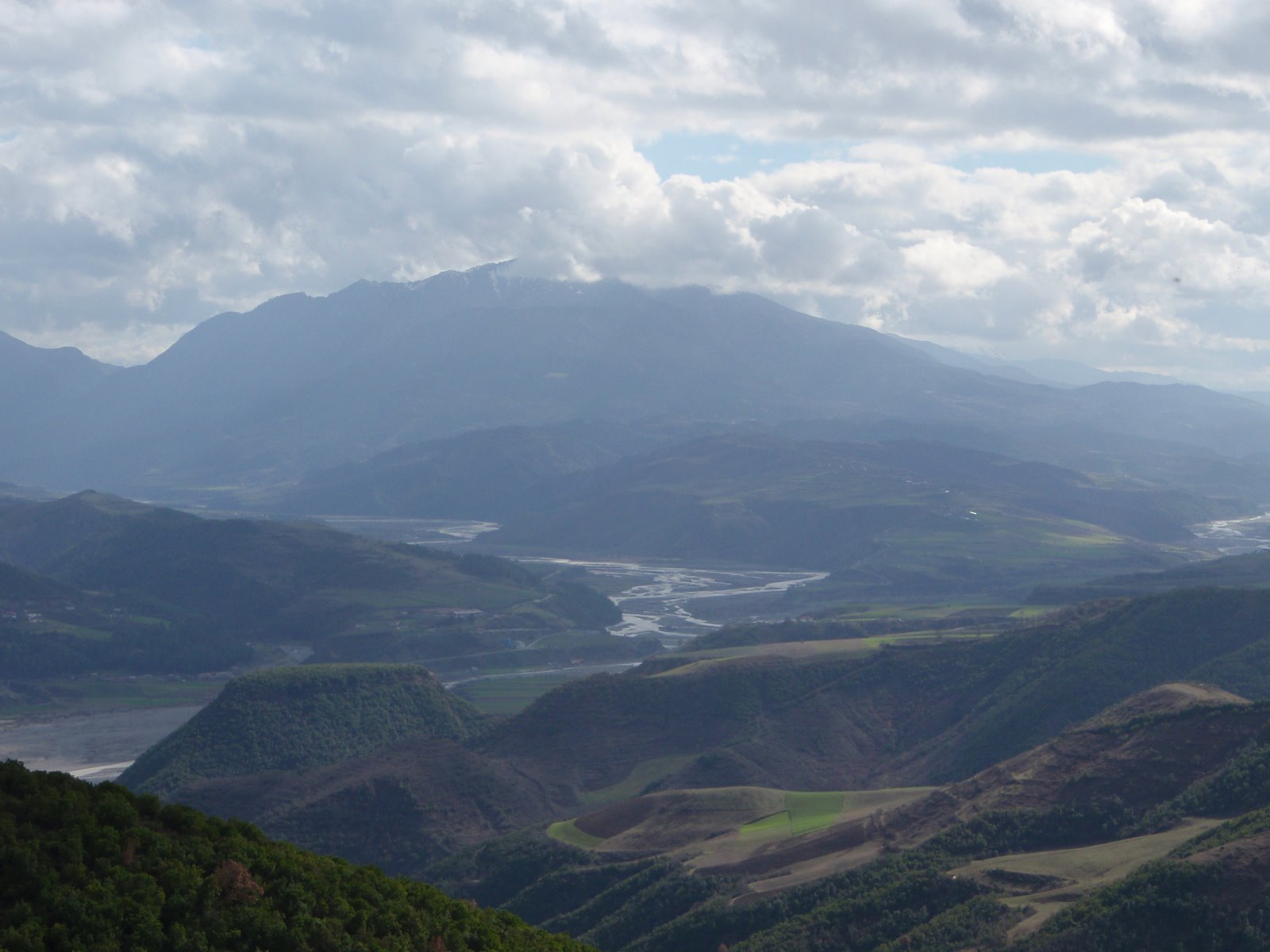
Some older folks in my village, Dervitsani, in the valley of Dropoli, the women with the characteristic white headdress of the region (click)  (photo from Michel Setboun)

Immigrants from Albania, of whatever ethnicity, brought lots of that strength and energy to Greece as well.  In the 1990’s, when Albanians flooded Greece and Greeks were faced with the horrifying realization that their northern border hadn’t really been with Austria all that time, many of them predictably behaved like racist jerks, a performance they’re repeating with others right now, except more viciously because this time they’re scared.  The Eurolatry and the essentially colonized core of the Neo-Greek mind produces a kind of delusional isolation that may be more impermeable than Albania’s ever was — a historical-emotional bubble of ignorance, a probably now unhealable neurotic disconnect from the subject’s surroundings — that made it hard for Greeks at the time to realize that that migration was only the most recent wave in a millenia-long process* that makes Greeks and Albanians practically co-peoples in so many ways.  There’s a show running in Athens now, with a sister production here in Astoria in New York, called “In-Laws from Tirane” — silly but fun and kind of smart ultimately — whose essential thesis is precisely that.  It opens with one of the main characters fuming that that year’s high school valedictorian was an Albanian immigrant kid and got to lead the town’s Independence Day parade, the irony — intentional or not — being that much of the Greek “independence” struggle from the Ottomans was fought by men who didn’t speak a word of anything but Albanian.  It’s made me happy to see how well-integrated a part of Greek life they’ve become lately (even as it crumbles around them) and what an almost American-style immigrant success story they are in so many ways.  Many have even moved on to the U.S., and are over-represented in entrepreneurial life here in Greek New York; the wildly successful seafood restaurant “Kyklades” in Astoria, known throughout the boroughs (but which I have some culinary gripes with), is owned by an Albanian who may not have seen the sea till he was fifteen.  They certainly have the kind of immigrant work ethic that puts everyone around them to shame.  When I was in Greece in 2010 I was initially baffled by the ubiquitous presence of young, attractive, well-mannered waiters and waitresses and found myself wondering who they were, since no Athenian kid has condescended to work as a waiter in about forty years, until I asked once or twice and then stopped.  They were all Albanian.

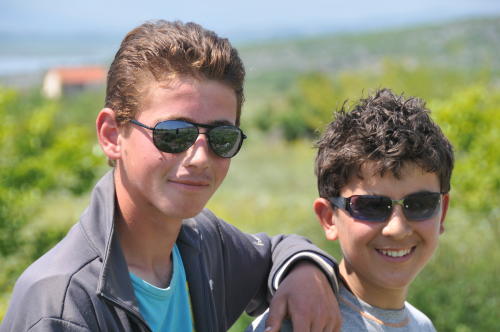
Two boys, Northern Albania, from Michael Totten

As for the writer’s Albanian “brand of Islam,” he means a heavily Bektashi-influenced form which one can probably apply to Balkan Islam in general.  The Bektashis are a Sufi order of almost Shia-like content and some pretty attractively unorthodox views of its own; on Wiki it’s surprisingly placed as part of an “Alevism” series, and they share some core beliefs and rituals, but I don’t know if either Alevis or Bektashi followers will ever tell you they’re related.  Centuries of harassment and outright persecution made both, but Alevis especially, fairly secretive about themselves and their practices; that changed radically in Turkey after some horrific twentieth-century episodes and the subsequent finding of a strong and admirably outspoken political voice on their part, but even now you get the sense that an Alevi (Turk or Kurd) needs to know you a little before he tells you.  I also don’t think either will tell you they’re Shiites: http://en.wikipedia.org/wiki/Bektashi_Order  http://en.wikipedia.org/wiki/Alevi (They’re both really interesting — read about them.)  The Bektashi order was widely associated with the Janissary corps; the classical period Janissary corps was heavily Albanian and Serbian in origin; maybe its influence in the Balkans was a circular process — I don’t know.  If you clear away the boogeyman-like associations the devsirme has in Balkan Christian legend, one of the things you learn is that many Janissaries, and even those in the Ottoman slave corps generally, maintained more contact with their culture and even community of origin than one would think (man, am I gonna get it for that one…).

Devshirme: http://en.wikipedia.org/wiki/Dev%C5%9Firme

World Headquarters of the Bektashi Community in Tirane, Albania

*Italians had trouble realizing this at the same time, meaning the almost equally constant history of Albanian migration to southern Italy and Sicily.  See Gianni Amelio’s beautiful 1994 Lamerica, which is the story of how a cool, smug Young European Sicilian gets stranded in Albania and realizes that he’s only a generation away from being counted among the wretched of the earth himself — and how dangerous it is to forget that.  It should be mandatory viewing in Greece right now.

Comment: nikobakos@gmail.com

“The Champion of Greek Outrage”

18 May

An objective, rhetoric-free NYT opinion piece from a writer with no previously professed political leanings, Greek-American Nicholas Gage:

“Throughout their history, Greeks in times of crisis have rushed to embrace charismatic demagogues like lemmings throwing themselves into the sea.

After the death of Pericles during the Peloponnesian War, Athenians allowed his seductive nephew, Alcibiades, then 35, to talk them into wasting most of their remaining military resources on a disastrous expedition in Sicily. Despite the terrible losses suffered in that debacle and even after he betrayed them to both the Spartans and the Persians, they took him back to their bosom twice.

After World War II, Nikos Zachariadis, the dynamic 43-year-old leader of the Greek Communist Party, eschewed the example of wiser Communist bosses like Palmiro Togliatti in Italy, who restrained his followers from armed rebellion even after an attempt on his life.

Mr. Zachariadis launched a brutal civil war in Greece that devastated the country as it was emerging from a harrowing Nazi occupation. Despite the futility of the conflict, enough Greeks followed Mr. Zachariadis to prolong the insurrection for four years. Not only did the conflict claim more than 50,000 lives and turn a tenth of the population into war refugees, but it also put Greece at least a decade behind Western Europe in beginning its post-war reconstruction.

The new pied piper of Hellas is Alexis Tsipras, 37, the leftist rabble rouser with keen political instincts and few scruples who led his radical left coalition, Syriza, to an astonishing second place finish in the May 6 election.”

See also post on Nicholas Gage .

Nole…chill….

17 May

(Getty Images)

Djokovic shows best and worst to reach quarter-finals

By Simon Cambers

ROME | Thu May 17, 2012 8:17pm IST

(Reuters) – World number one Novak Djokovic demonstrated how to smash a racquet and how to cope with adversity as he reached the quarter-finals of the Rome Masters on Thursday.

In a blustery wind, Djokovic mangled his racquet after losing the first set to Juan Monaco of Argentina but recovered from a break down in the second set to clinch a 4-6 6-2 6-3 win.

From 1-2 in the second set it was as if somebody had flicked a switch as a dominant Djokovic won 20 of the next 24 points to level the match.

Monaco, ranked 15th, could not sustain his level and Djokovic eased away to set up a meeting with Argentina’s Juan Martin Del Potro or Jo-Wilfried Tsonga of France.

“I hope the children watching don’t do that,” a smiling Djokovic told a news conference, referring to his racket-smashing. “But I show my emotions out there. That’s who I am.

“I struggled with the wind today and I was a bit defensive and passive in the first set but once I was more direct I started to play much better.”


Comment: nikobakos@gmail.com


Un-believable…

16 May

I know that just a few entries ago I commended Cavafy for his anti capital punishment beliefs, but this is one of those cases where you wanna say: ok, just take this guy out and stone him…or: we’re dealing with such a psychopath that this isn’t the proper venue.

From the AP:

“Bosnian Serb Gen. Ratko Mladic taunted Srebrenica survivors on Wednesday at the start of his trial for genocide, running his hand across his throat in a gesture of defiance to relatives of the worst massacre in Europe since World War II,” Reuters writes from The Hague.

The wire service says Mladic “made eye contact with one of the Muslim women in the audience, running a hand across his throat, in a gesture that led Presiding judge Alphons Orie to hold a brief recess and order an end to ‘inappropriate interactions.’ ” [my emphasis]

According to The Telegraph, “Mladic made throat-cutting gestures to Munira Subasic, a woman who lost 22 relatives to Bosnian Serb military forces when the enclave of Srebrenica was overrun in July 1995, as she watched the trial from the glassed off public gallery.”

http://www.npr.org/blogs/thetwo-way/2012/05/16/152817980/at-trial-serb-gen-mladic-taunts-survivors-with-throat-cutting-gesture

That’s why I’m so infuriated by “we-lived-so-happy-there-was-no-difference-between-us” garbage.  The readiness with which such — I’m loath to call them “traditional” — emotions, actions, gestures like Mladic’s resurface gives such obvious lie to any such simplistic, glib fictions.

And while we’re remembering Srebrenica, here’s something to make crisis-ridden Greeks proud and take their minds off the impending Tsipras tsunami:

“Greek Volunteers controversy”

Main article: Greek Volunteer Guard

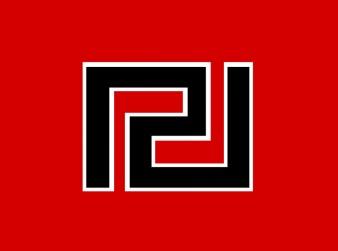
According to Agence France Presse (AFP), a dozen Greek volunteers fought alongside the Serbs at Srebrenica.[148] They were members of the Greek Volunteer Guard (ΕΕΦ), or GVG, a contingent of Greek paramilitaries formed at the request of Ratko Mladic as an integral part of the Drina Corps. Some had links with the Greek neo-Nazi organisation Golden Dawn, [my emphasis] others were mercenaries. The Greek volunteers were motivated by the desire to support their “Orthodox brothers” in battle.[8] They raised the Greek flag at Srebrenica after the fall of the town at Mladic’s request, to honour “the brave Greeks fighting on our side.”[149] Radovan Karadžić subsequently decorated four of them.[150][151][152][153]

In 2005 Greek deputy Andreas Andrianopoulos called for an investigation of the Greek volunteers’ role at Srebrenica.[154] The Greek Minister of Justice Anastasios Papaligouras commissioned an inquiry, which had still not reported as of July 2010.[155]

In 2009 Stavros Vitalis announced that the volunteers were suing the writer Takis Michas for libel over allegations in his book Unholy Alliance, in which Michas described aspects of the Greek state’s tacit support for Serbia during the Bosnian war. Insisting that the volunteers had simply taken part in what he described as the “re-occupation” of the town Vitalis acknowledged that he himself was present with senior Serb officers in “all operations” for Srebrenica’s re-occupation by the Serbs.[156][157] Michas notes that the volunteers were treated like heroes and at no point did Greek justice contact them to investigate their knowledge of potential crimes to assist the work of the International Criminal Tribunal for the former Yugoslavia at The Hague.[158]”


Comment: nikobakos@gmail.com

Batsoi*

16 May

That so many I know in Greece are freaked out by the supposedly destabilizing and destructive potential of Syriza and Tsipras and totally silent about the below is of more than slight concern to me:

“More than half of all police officers in Greece voted for pro-Nazi party Golden Dawn in the elections of May 6. This is the disconcerting result of an analysis carried out by authoritative newspaper To Vima in several constituencies in Athens, where 5,000 police officers in service in the Greek capital also cast their ballot.”

http://greece.greekreporter.com/2012/05/11/more-than-half-of-police-officers-voted-for-neo-nazi-party/#!lightbox/0/

*”Batsoi” is derogatory Greek slang for cops, like “flics” in French.


Comment: nikobakos@gmail.com
What happens next in Greece?

15 May

The Greek Parliament in Athens (with its beautiful interior chamber at bottom), originally the Royal Palace (1843), one of the buildings in the Bavarian Neo-Classical style, often much-maligned, that were part of that beautiful city that our first, touchingly sincere and totally daft Teutonic dynasty built for us, till we levelled it all — as thoroughly as a carpet bombing and entirely on our own — between about 1960 and the early eighties.

Pessimistic and disconcerting, if semi-intelligent analysis below by Brady Kiesling (except for the actually offensive labour-camp island references — sorry, white boy, I don’t remember granting you the right to joke about that stuff, I don’t care how long you’ve lived there — and the nonsense scenarios of resurgent dictatorships).  It’s just still…well…still not totally convincing.  It just has the same general assumptions of all right-wing positions: if we challenge the giant financial actors here: Europe, banks, even what’s left of Greece’s shipping industry, they will abandon us.  But when the unpaying indebted reach a critical mass, what do the creditors do?  I still don’t understand why it’s an all or nothing question.  Hardliners outside Greece (which means Merkel mostly) have just had their positions significantly weakened; the pigs are squealing louder than ever, she just lost the Netherlands, France and even some hefty political points in her own country.  And it’ll cost them to let Greece go or kick it out, no matter what a mess it is.  I haven’t even heard Tsipras speak, honestly, other than in Al Jazeera voice-overs, so I don’t know how much of an old-school seventies populist he really is, but what if he’s just holding out for slightly more lenient terms?  Then, if they get in, no, they obviously won’t be able to give Greeks back their antideluvian frappe-paradise (and who wants to…?), but so what?  What politician comes through on his electoral positions?  Sorry if these are “communist sunday school” questions.  (Kiesling’s references to Tsipras’ KNE-te past are not smart either, just cheap.)

“Dear friends,
This pessimistic piece I just posted on Facebook, is what logic says will happen in the coming months. Logic is a slender reed, and I seriously underestimated the depth of anger at PASOK and ND when I predicted election results. Evangelos Venizelos is finding the other party leaders a tough sell, but their alternative scenarios depend heavily on magic and/or divine intervention. My prediction tracks with what the financial markets are saying, another reason to doubt it.
Feel free to share … though there’s nothing really surprising.

What happens next in Greece
Publication of an opinion poll showing SYRIZA/Alexis Tsipras as leading party has essentially destroyed the possibility of an “ecumenical” government and thus made it impossible for Greece to stay in the Euro-Zone.

Not wishing to commit electoral suicide like Karatzaferis of LAOS, Fotis Kouvelis of DIMAR refuses to join a government that does not include Tsipras. But Tsipras has been handed the opportunity to fulfill the Left’s dream of taking power democratically. Thus he prefers to force a new election.

Take a solid core of Greeks who loathe the “bourgeois” parties. Add voters who still believe in client-patron politics and want to back the winner. Add romantics who will vote for any leader who loves them enough to tell them beautiful lies, and you achieve critical mass. Though SYRIZA will probably fall short of an independent majority, the 50-seat bonus will give Tsipras the maneuvering room he needs to form a government.
Why is this bad? Papandreou, after all, made equally beautiful, terrifying promises to get elected in 1981. The 52% of the electorate that did not vote for him was sure he would turn Greece into Cuba or Libya. But in fact, Papandreou forgot his promises to take Greece out of the EU and NATO. He left the U.S. bases intact, let private education continue, and nationalized companies that mismanagement had left on the verge of bankruptcy anyway. A new set of clients got their first taste of government jobs and pensions. The Greek economy took on massive new debt, but did not instantly collapse. So electing Tsipras, who at least insists he wants Greece in the Euro, ought to be simply business as usual.
But this time it won’t work. It remains easy to break promises about foreign policy, because ordinary Greeks don’t care whether Greece is a member of NATO or not. On the economic front, Papandreou promised to give Greeks things they never had. Tsipras has made a much more dangerous promise, to restore things they recently had and still remember, their old jobs, wages, and pensions.

In 1981, Greek state books had recently almost balanced, and the debt load was manageable, with effort. The current situation is much worse. Tsipras, a non-practicing civil engineer whose knowledge of economics apparently comes from KNE (Communist Youth) Sunday school, perhaps genuinely does not understand that no lender, not even the EU, will ever agree to lend Greece (or anyone else) money for public sector wages and pensions. When he keeps insisting, they will throw him out on his ear. At that point, in order to pay for promises Tsipras dares not break, Greece will stop paying its foreign debt.

Wages and pensions, now paid in drachmes, will theoretically match their old euro levels. But without basic budget equilibrium, inflation/devaluation is inevitable. The Tsipras government, which will need every euro and dollar in the country to pay energy and other vital imports, will discover that the shipowners have fled to avoid being taxed, and the illicit savings of the wealthy are out of reach in foreign banks. People need to be fed. Farmers, however, will need strong encouragement to sell their produce for drachmes. Tsipras will be sorely tempted to make the parallel euro market and euro pricing illegal.

Technology, the technocrat’s cure for waste, fraud, and mismanagement, cannot be counted on in a society where a billion-euro industry in fraudulent pharmaceutical prescriptions simply hires a few hackers to bring down the state’s computerized prescription system.
 It is not impossible that a culture of endemic corruption will transform itself, inspired by a self-assured young socialist, into a virtuous collectivist paradise like Cuba or Venezuela. But if not, what is a humane, progressive leader to do? Greek prisons are already overflowing. SYRIZA is full of genuine human rights advocates, so the historic islands of Makronisos and Gyaros are off-limits. But about the time they find a less politically loaded location for the reeducation centers likely to be required, I fear a Greek Pinochet will install them there instead, to the applause of many of the same people now applauding the defeat of PASOK and ND. When that happens, I and my wife, though penniless by then, will follow the shipowners… Stay tuned…”

Brady Kiesling
May 11, 2012 ·

Alexis Tsipras, leader of popular and gaining left-wing Syriza party, currently the young gilded bete noire of Eurocrats across the Continent.


Comment: nikobakos@gmail.com

Photo: Syria

15 May

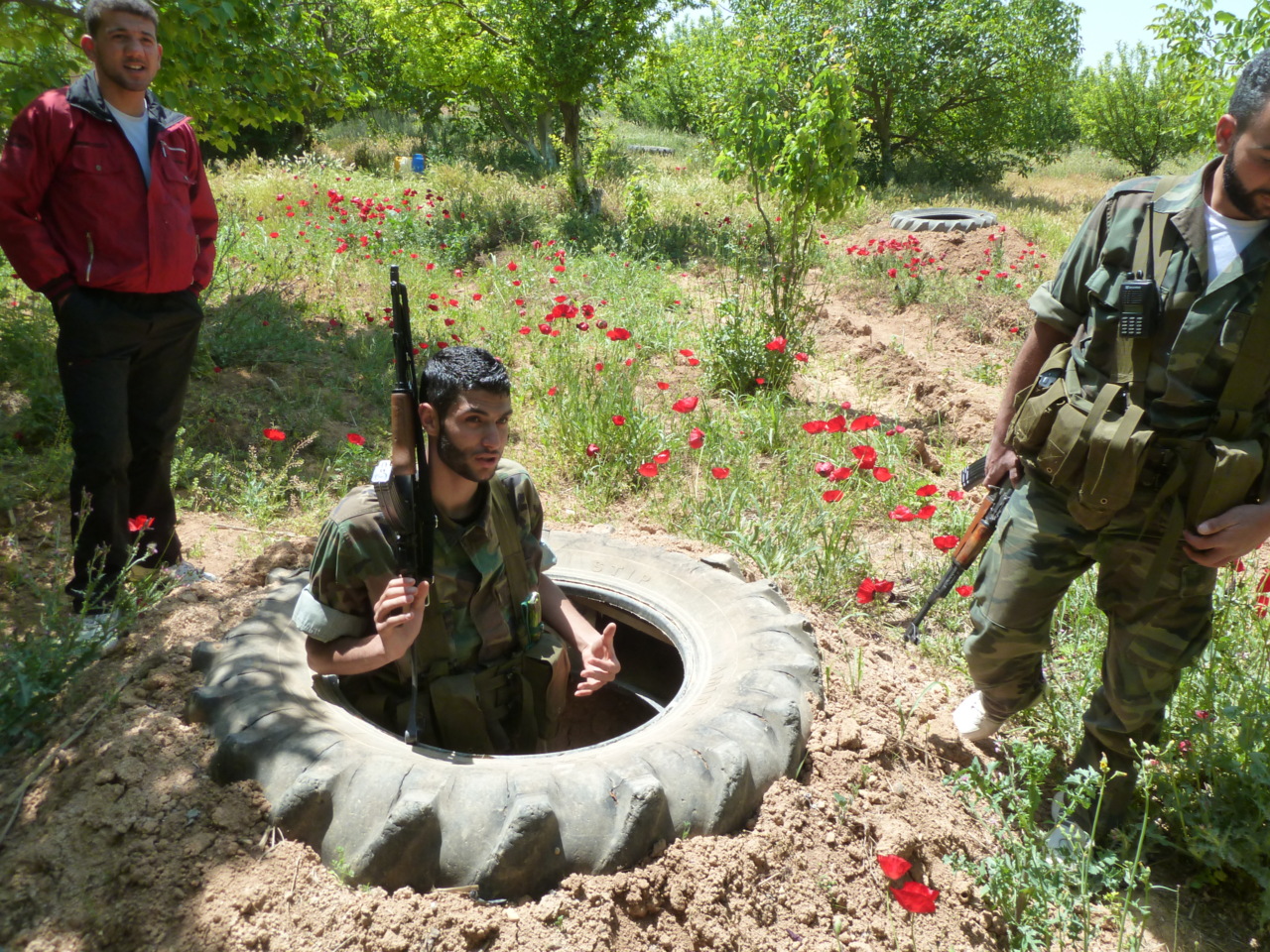
Guns. Men. The poppies that carpet the Mediterranean at springtime.

Fighter from the Free Syria Army in a foxhole in Homs province in Syria, (baysontheroad), (click).


Comment: nikobakos@gmail.com