Balkans, Anatolia, Caucasus, Levant and other Middle East, Iran, Afghanistan, South Asia, occasional forays into southern Italy, Spain or eastern Europe, minorities, the nation-state and nationalism — and whatever other quirks or obsessions lurk inside my head.
I’ve been color-numbed by the red and yellow of both Spanish and Catalan flags recently. As a consequence though, a theory I once had that the color scheme of New York bodegas comes from the colors of the Spanish flag has resurfaced in my consciousness.
It’s not that far-fetched an idea. The first large group of Spanish-speaking immigrants to New York originally came from mostly Galicia and Asturias in northwestern Spain in the late nineteenth century and settled in what are now the streets north and south of West 14th Street and in the meat-packing district. That’s why there are still so many mediocre Spanish restaurants in the far West Village and Chelsea and there’s also the still spectacularly good El Cid on West 15th.
Unfortunately Riomar — on the corner of Greenwich Street and Little West 12th, one of the most ambient-blessed bars that this city has ever seen: a real dive, with horrible food, stale potato tortilla and sweaty chunks of bad chorizo tapas and Goya jarred red peppers you ate with toothpicks, dirt on the floor, a dismal wine list and great jukebox, the feel of a real sailors’ bar in Almería with a “manchado mostrador” out of a Concha Piquer copla, where you went to have an after-dinner argument with your girlfriend which no one paid attention to because everybody else was having their own vicious spats, interrupted only by a good merengue or when Don Can’t-Remember-His-Name from Burgos, chef and owner of El Cid, pulled out his guitar — left this world about fifteen years ago.
Riomar was one of those bars that got busy with after-shift restaurant workers (including those of El Cid) who needed a post-combat drink and the scene would really pick up after around midnight or 1:00 a.m. when the kitchens let out, and if you hung out long enough, the Nuyorican meat workers would come by for a caña before work (guess like Sheryl Crow, they liked “a good beer-buzz early in the morning”), and then you went for breakfast with the other meat-workers and the drag queens at the much-loved Florent around the corner on Gansevoort Street (three over easy on a roll for the butchers, eggs benedict for the gay dudes; this old diner managed to cater brilliantly to both its clienteles for decades), also now gone. Infuriatingly, Riomar was replaced by some over-priced piece of mediocrity called Serafina Meatpacking with the gallingly named Gansevoort Meatpacking NYC Hotel across the street (“trendy hotel with a rooftop bar & pool, wi-fi, €259” says Google Maps). Actually, have you seen the size of the rooms in most of these ’boutique’ hotels? “Meatpacking” might actually be the most accurate term.
Florent has been replaced by something called Bubby’s High Line.
(Grrrrrrrr…. Why did I let myself go there? Now I’m pissed. Does anybody even want to live in this sterile Manhattan that’s replaced that one anymore?)
Ok, bodegas. A lot of the Galician and Asturian immigrants who settled in that neighborhood often came through a generation’s or less immigrant experience in Cuba or Puerto Rico, Spain’s last Caribbean colonies; if you know Havana (saludos to my pana Yusuf who does) you know two of the most imposing buildings in the city’s center are the Centro Gallego and the Centro Asturiano. One of the innumerable fascinating things about Cuba is that while it has perhaps the richest and most vibrant Afro culture of any society in the Americas, it also has some of the closest, organic ties to Spain of any Latin American country as well.
They bring the red-and-yellow color scheme? Why?
The only place in the Spanish-speaking world where “bodega” means a cruddy, smelly grocery store that you can’t live without is New York.Why?
And what you call the dank grocery is the same word as the word on the label of your $300 bottle of Rioja. Why?
Because “Bodega” in Spanish simply means warehouse or cellar. That’s why your wine, sherries especially, comes from “bodegas” in Spain. But in Cuba and Puerto Rico, the sugar plantation or ingenio/refinery company store, where first slaves collected, and then indentured workers later bought, their basic food stuffs, was the company’s warehouse — the bodega. And take a sec even today to look at the merchandise in your corner bodega, other than the beer, cigarettes and soft drinks, that really moves: plantains, yuca, yautía, malanga and other tubers, the bags of rice, beans, lard, and if it has more than just grocery pretensions, pig feet and salt pork in the counter fridge. Slave food.
So when the guajiro plantation overseer or the Cuban-Galician neighborhood businessman came to New York in 1910, he called the little store he set up that sold Cuban food staples a bodega, and I’m guessing figured the best colors for it were Spain’s red and yellow. And then it stuck. And then became tradition practically. You look for the bodega’s red and yellow lights in the streets in New York at night when you need a smoke, or a seltzer to rehydrate after drinking too much, and when you remember there’s no coffee in the house for tomorrow morning; just like you look for the flashing green pharmacy cross in a European city at night after drinking too much and when you remember there’s no ibuprofen in the house for tomorrow morning. And though the economy that produced the term has disappeared in the islands, and if you tell anyone today in Cuba or Puerto Rico or the D.R. who hasn’t visited relatives here in the city to go down to the “bodega” and buy some milk he won’t even know what you’re talking about, it survives in New York, our huge φτωχομάνα and warehouse of the world’s darkness and exile that run a constant lament under the city’s exuberance and energy and often forced-feeling hedonism.
Protesters hold a giant Spanish flag during a demonstration to support the unity of Spain on 8 October in Barcelona. Photograph: Lluis Gene/AFP/Getty Images
The Guardian has an interesting take on things in Spain: “A dangerous time for Catalonia, Spain and the rest of Europe“ that is original in that it brings together commentators from different parts of Europe who each have their own particular p.o.v. on what’s going on in terms of secession and identity politics. They’re each interesting in their way — though I expected Gerry Adams to have something more compelling to say and sort of can’t tell if he’s being ironic (David Cameron?). The most important one for me, though, is the comment on Kosovo (though it also angers you because it took so long for someone to say this):
•“Since Nato illegally bombed Serbia in 1999 to wrest control of Kosovo from the Balkan nation, we have witnessed a significant increase in the number of secessionist efforts around the world as borders have unravelled in Ukraine and elsewhere (Catalan president vows to press on with independence, 5 October). Western leaders should be ashamed at having encouraged the hopes of terrorists worldwide that borders can be changed and national sovereignty and international laws are meaningless if they can get Nato to support their cause. Get ready for a lot more trouble ahead.”
One of today’s Reuters’ titles: “Turkey urges U.S. to review visa suspension as lira, stocks tumble“ is a very deeply unintentional funny. Is he dyslexic? Am I? I’ve read it correctly, yes? The UNITED STATES is suspending visas to TURKS? The TURKISH lira and TURKISH stocks are tumbling? Right?
There’s been a ton of repetitive commentary again recently — including from me — about how Kurdish, let’s say, “pro-activeness,” in Iraq and Syria, what Kurds think is their right since they played such a key role in kicking ISIS ass, is a menace to Turkey because Turks are still traumatized by the 1920 Treaty of Sèvres that called for the remaining Ottoman Empire (Anatolia essentially) to be partitioned between the winners of WWI (and the hangers-on and cheerleaders like us), with the Straits and Constantinople internationalized (meaning British), so that Turks would have been left with a rump central Turkey and, I think, a minimal outlet to the Black Sea along the coastal stretch around Sinope.
All of that was changed by Atatürk’s declaration of a Turkish Republic at Sebasteia and the subsequent disastrous defeat of the invading Greek army. The Turkish War of Independence (please, Greeks, gimme a break and let me call it that for now) was an impressive accomplishment, and if it ended badly for the Greeks who lived there, as we remember every autumn when we recite the Megilla of Smyrna, that’s our fault and especially the fault of Venizelos who, being Cretan, found pallikaristiko demagoguery and dangerous, careerist magandalık irresistible. So impressive was Kemal’s accomplishment, in fact, that all the parties involved in Sèvres then got together at Lausanne in 1923 and decided Turkey should get whatever it wants. Suddenly, the clouds of three centuries of depressing imperial contraction, and massacre and expulsion of Muslims from the Caucasus, the northern Black Sea, the Balkans and Crete were lifted (ditch the Arabs south and call it a country seemed to be the Turkish consensus for whatever was left) and the Turkish Republic went on its merry way. Sèvres and Sèvrophobia was gone.
What Turkey suffers from now, and has for most of the twentieth century since the events we’re talking about, is a Lausanne-inspired sense of entitlement that is simply breathtaking in its cluelessness. It’s the kind that leaves you staring at some Turks, silenced and dumbfounded, and unable to tell whether what they just said to you is elegantly, sweepingly aristocratic or just passively asinine. Lausanne was first; add Kemal’s personality cult (I’m not sure that history ever threw together two bigger narcissists than him and Venizelos; they should’ve been lovers), then, what was always a silenced Ottomanness came out of the closet, allied as it always has been with the seminal triumphalist narrative of Islam itself…and you get Erdoğan!
Now he wants the U.S. to review its Turkey policies? Who is this man? Scolding the whole fucking world like we’re a bunch of children. Let him scold his children — meaning Turks — first, and then maybe we can take it from there. If I were a German diplomat in Turkey and had been summoned to His Sublime Presence for the nth time in one year to be chastised for something mocking someone in Germany had said about Him, and told “to do” something about it, I would have found it hard to control my laughter. As an outsider, I find it delightful enough that of all peoples on the planet, Turks and Germansgot involved in a multi-episode drama on the nature of irony and parody. But to have him demand shit from all sides…
No, you’re not a “mouse that roared” arkadaşım, ok? Yes, “all of Luxembourg is like one town in Turkey” (wow…ne büyük bir onur). Turkey’s a big, scary, powerful country with a big, scary, powerful military, and lots of “soft” cultural and economic power in its region too. But you’re in a schoolyard with some much bigger cats. Soon all of them — the United States, Russia, the European Union, Israel and even some who already openly can’t stand your guts — like Iran — are gonna come to the conclusion that you’re more trouble than you’re worth. Even Germany is no longer so guilt-ridden as to be polite to you. And I don’t say any of this as a Greek, because I don’t think that when they all get to that exasperated point and temporarily turn to Greece, that Greeks are going to be anything other than the chick you were drunk enough to take home for a one-nighter — Kurds are going to be the rebound girlfriend, though I can’t say right now for how long — but things have been moving rapidly in a direction where the big boys are not going to want to play with you anymore, and they’re going to let you know in a way that won’t be pretty.
Though, as with all bullies, as soon as Erdoğan’s tough-guy bluff-policy on anything is called, he backs down.
Thousands in Barcelona Protest a Push for Independence
Thousands rallied in Barcelona, Spain, on Sunday in support of a united Spanish state and against agitators for independence.Credit Pau Barrena/Agence France-Presse — Getty Images
BARCELONA, Spain — Catalonia’s silent supporters of Spanish unity found their voice on Sunday, thronging into the center of Barcelona as part of a huge rally that reverberated with chants in support of a united Spanish state and against agitators for independence.
They demonstrated solidarity with the vilified national police and proudly waved a red-and-yellow national flag that for decades had carried the stigma of a taboo nationalism.
“Catalonia is not all for independence,” said José Manuel Alaminos, a 64-year-old lawyer. He said that Carles Puigdemont, the regional president who has led the independence movement, “is supposed to represent all of us.”
The separatist push has brought about one of Spain’s worst constitutional crises since the end of the Franco dictatorship nearly 43 years ago.
“But we are Catalonians too! The world doesn’t know the truth,” Mr. Alaminos said, pointing to the enormous crowd. “This is the truth.”
Prime Minister Mariano Rajoy echoed that sentiment in an interview with the Spanish newspaper El País published late Saturday, in which he said flatly that the secession of Catalonia “won’t happen” and that he was “not ruling out anything” to maintain Spain’s integrity, including a constitutional article that allows him to disband the regional leadership and assume its powers.
“We are talking about our nation’s unity,” he said.
Mr. Puigdemont is expected to address the regional Parliament on Tuesday, when Catalan leaders could declare independence, citing the results of a referendum that the national government and the courts had said was illegal and ordered suspended.
The rally also served as a coming-out party of sorts for the national flag, which has long been associated with nostalgia for the Franco dictatorship.Credit David Ramos/Getty Images
–
The rally on Sunday was organized to show that the referendum, which attracted international attention for a police crackdown that left hundreds injured, did not represent all Catalans. They are, in fact, deeply split over independence.
Drivers flying Spanish flags from their windows blasted staccato beeps of their horns in support of people wearing Spanish flags over their shoulders like capes. As helicopters hovered overhead, a river of supporters of Spanish unity snaked from Urquinaona Square down Via Laietana and past the city’s cathedral to its historic train station, where politicians read manifestoes in favor of a united Spain.
Along the way, thousands chanted, “Long Live Spain, Long Live Catalonia,” “I am Spanish, I am Spanish,” and “Puigdemont to Prison.” They waved Spanish, Catalan and European Union flags and wore stickers of all three on their chests.
The rally — estimated by the police at 350,000 people, though organizers said it was twice that — also served as a coming-out party of sorts for the national flag, which for decades has carried a stigma associated with the far-right groups nostalgic for the Franco dictatorship.
“Everyone thinks waving the Spanish flag means we are right wing or fascists,” said Alfredo Matías, 47, who held one edge of an oversize Spanish flag. “But we are not. We are just patriotic. It should be like the flag in America. And this is a big opportunity to make that happen.”
Mr. Rajoy, in his interview, also suggested that the time had come for the flag’s stigma to be lifted.
“People have the right to say, I’m Spanish, I’m proud of it and proud of my Constitution,” he said, adding that everyone in the country had a right to defend “your symbols, your flag, your hymn.”
He said his message to Spaniards was that “they have a government who will defend, as it is its obligation, the national unity and sovereignty.”
Many demonstrators wore flags over their shoulders like capes.Credit Manu Fernandez/Associated Press
Nadia Borrallo, a 31-year-old pharmacist from nearby Sant Boi de Llobregat, said the independence movement had tried to convince the world that all of Catalonia was on its side. “This is the reality,” she said, a Spanish flag draped over her shoulders. “Look around: I see a united people.”
As she approached a Spanish flag carpeting the street in front of a paella restaurant, she said that it looked as if Spain’s soccer team had won the World Cup.
“When Spain wins, they chant, ‘I am Spanish, I am Spanish,’ ” she said. “Now they say, ‘I don’t feel Spanish, I want my independence.’ It’s nonsense.”
As demonstrators jeered at balconies hanging pro-independence flags, organizers and security forces cleared paths for politicians and celebrity supporters of Spanish unity who had lined up at the front of the rally.
“I feel very enthusiastic and optimistic,” said Mario Vargas Llosa, the Nobel Prize-winning author who became a Spanish citizen in the 1990s and has spoken out in favor of conservative Spanish causes.
They followed a flatbed truck loaded with four speakers blasting the voices of organizers who heralded demonstrators as “the silent majority.”
Until now, supporters of independence have been the most vocal, especially after the violence on the day of the referendum gave momentum to their cause. Supports of Spanish unity complained that the regional police force, the Mossos D’Esquadra, appeared to refuse a national order to block the referendum.
Supporters of independence had thrown flowers at their feet, but the demonstrators on Sunday cursed their name. The Catalan police force — the leader of which is facing sedition charges in Madrid — was almost nowhere to be seen along the rally’s route.
The rally on Sunday was organized to show that the results of the independence referendum did not represent all Catalans.Credit Pau Barrena/Agence France-Presse — Getty Images
–
Instead, the officers standing outside the National Police Headquarters bathed in the adoration of demonstrators. Officers posed for selfies, received hugs and heartfelt handshakes and smiled broadly as the demonstrators chanted, “You are not alone” and “This is our police.”
“The referendum was illegal, and these police followed their instructions,” said Danile Basteller, 51, from Barcelona. He said the police had been treated shabbily: “We are here to show them they are not alone.”
Jose Luis Rencé, a retired soldier clad in his fatigues, agreed. “The law has to be followed,” he said. “With the law, everything. Without the law, nothing.”
In front of the seat of the regional government, Manuel Perales Álvarez, a 54-year-old garbage collector, shouted at the stone-face Mossos officers standing guard.
“With what authority will you present yourself,” he screamed. “You have no shame.”
Lucas Fernández, 66, from Barcelona, stood next to him, holding a Spanish flag and yelling, “Long live Spain” toward Mr. Puigdemont’s office.
“He clearly is going to receive the message, but he is pretending he is deaf to us,” Mr. Fernández said of the Catalan president. “He doesn’t listen to the people — only to the supporters of independence around him.”
Sergi Miquel, a lawmaker from Mr. Puigdemont’s party, saw little to worry about. “The demonstrations are fine,” he said. “But I don’t think anything changes, because the referendum and the Catalan elections had clear results.”
Mr. Fernández worried that the die had already been cast for a declaration of independence. He said he wished that the supporters of Spanish unity had raised their voices sooner. “It’s a little late,” he said. “It should have been done earlier.”
Money quote section — call out — in my opinion. The emphases are mine and the entire very sharp and moving Sullivan article is below. Sullivan often lapses into mawkishness, especially when it comes to religion, which is especially sad, because his honest immersion in his faith is what makes and has always made him something of an intellectual hero for me. This piece is one of those really moving and emotionally brave pieces he’s so often capable of.
“In his survey of how the modern West lost widespread religious practice, A Secular Age, the philosopher Charles Taylor used a term to describe the way we think of our societies. He called it a “social imaginary” — a set of interlocking beliefs and practices that can undermine or subtly marginalize other kinds of belief. We didn’t go from faith to secularism in one fell swoop, he argues. Certain ideas and practices made others not so much false as less vibrant or relevant. And so modernity slowly weakened spirituality, by design and accident, in favor of commerce; it downplayed silence and mere being in favor of noise and constant action. The reason we live in a culture increasingly without faith is not because science has somehow disproved the unprovable, but because the white noise of secularism has removed the very stillness in which it might endure or be reborn.
“The English Reformation began, one recalls, with an assault on the monasteries, and what silence the Protestants didn’t banish the philosophers of the Enlightenment mocked. Gibbon and Voltaire defined the Enlightenment’s posture toward the monkish: from condescension to outright contempt. The roar and disruption of the Industrial Revolution violated what quiet still remained until modern capitalism made business central to our culture and the ever-more efficient meeting of needs and wants our primary collective goal. We became a civilization of getting things done — with the development of America, in some ways, as its crowning achievement. Silence in modernity became, over the centuries, an anachronism, even a symbol of the useless superstitions we had left behind. The smartphone revolution of the past decade can be seen in some ways simply as the final twist of this ratchet, in which those few remaining redoubts of quiet — the tiny cracks of inactivity in our lives — are being methodically filled with more stimulus and noise.
“And yet our need for quiet has never fully gone away, because our practical achievements, however spectacular, never quite fulfill us. They are always giving way to new wants and needs, always requiring updating or repairing, always falling short. The mania of our online lives reveals this: We keep swiping and swiping because we are never fully satisfied. The late British philosopher Michael Oakeshott starkly called this truth “the deadliness of doing.”There seems no end to this paradox of practical life, and no way out, just an infinite succession of efforts, all doomed ultimately to fail.
“Except, of course, there is the option of a spiritual reconciliation to this futility, an attempt to transcend the unending cycle of impermanent human achievement. There is a recognition that beyond mere doing, there is also being; that at the end of life, there is also the great silence of death with which we must eventually make our peace. From the moment I entered a church in my childhood, I understood that this place was different because it was so quiet. The Mass itself was full of silences — those liturgical pauses that would never do in a theater, those minutes of quiet after communion when we were encouraged to get lost in prayer, those liturgical spaces that seemed to insist that we are in no hurry here. And this silence demarcated what we once understood as the sacred, marking a space beyond the secular world of noise and business and shopping.
“The only place like it was the library, and the silence there also pointed to something beyond it — to the learning that required time and patience, to the pursuit of truth that left practical life behind.Like the moment of silence we sometimes honor in the wake of a tragedy, the act of not speaking signals that we are responding to something deeper than the quotidian, something more profound than words can fully express. I vividly recall when the AIDS Memorial Quilt was first laid out on the Mall in Washington in 1987. A huge crowd had gathered, drifts of hundreds of chattering, animated people walking in waves onto the scene. But the closer they got, and the more they absorbed the landscape of unimaginably raw grief, their voices petered out, and a great emptiness filled the air. This is different, the silence seemed to say. This is not our ordinary life.
“Most civilizations, including our own, have understood this in the past. Millennia ago, as the historian Diarmaid MacCulloch has argued, the unnameable, often inscrutably silent God of the Jewish Scriptures intersected with Plato’s concept of a divinity so beyond human understanding and imperfection that no words could accurately describe it. The hidden God of the Jewish and Christian Scriptures spoke often by not speaking.And Jesus, like the Buddha, revealed as much by his silences as by his words. He was a preacher who yet wandered for 40 days in the desert; a prisoner who refused to defend himself at his trial. At the converted novitiate at the retreat, they had left two stained-glass windows depicting Jesus. In one, he is in the Garden of Gethsemane, sweating blood in terror, alone before his execution. In the other, he is seated at the Last Supper, with the disciple John the Beloved resting his head on Jesus’s chest. He is speaking in neither.
“That Judeo-Christian tradition recognized a critical distinction — and tension — between noise and silence, between getting through the day and getting a grip on one’s whole life. The Sabbath — the Jewish institution co-opted by Christianity — was a collective imposition of relative silence, a moment of calm to reflect on our lives under the light of eternity.It helped define much of Western public life once a week for centuries — only to dissipate, with scarcely a passing regret, into the commercial cacophony of the past couple of decades. It reflected a now-battered belief that a sustained spiritual life is simply unfeasible for most mortals without these refuges from noise and work to buffer us and remind us who we really are. But just as modern street lighting has slowly blotted the stars from the visible skies, so too have cars and planes and factories and flickering digital screens combined to rob us of a silence that was previously regarded as integral to the health of the human imagination.
“This changes us. It slowly removes — without our even noticing it — the very spaces where we can gain a footing in our minds and souls that is not captive to constant pressures or desires or duties. And the smartphone has all but banished them. Thoreau issued his jeremiad against those pressures more than a century ago: “I went to the woods because I wished to live deliberately, to front only the essential facts of life, and see if I could not learn what it had to teach, and not, when I came to die, discover that I had not lived. I did not wish to live what was not life, living is so dear.”
Elsewhere he mentions the Philip Gröning’s beautiful documentary Into Great Silence, on an ancient Carthusian monastery and silent monastic order in the Alps. Seriously have-to watching, but if you couldn’t turn all your gadgets off to watch it, we really don’t have anything to say to each other. That also means, like, trying not to watch it on your tablet.
Based on: Wanderer Above the Sea of Fog, by Caspar David Friedrich (1818).
I was sitting in a large meditation hall in a converted novitiate in central Massachusetts when I reached into my pocket for my iPhone. A woman in the front of the room gamely held a basket in front of her, beaming beneficently, like a priest with a collection plate. I duly surrendered my little device, only to feel a sudden pang of panic on my way back to my seat. If it hadn’t been for everyone staring at me, I might have turned around immediately and asked for it back. But I didn’t. I knew why I’d come here.
A year before, like many addicts, I had sensed a personal crash coming. For a decade and a half, I’d been a web obsessive, publishing blog posts multiple times a day, seven days a week, and ultimately corralling a team that curated the web every 20 minutes during peak hours. Each morning began with a full immersion in the stream of internet consciousness and news, jumping from site to site, tweet to tweet, breaking news story to hottest take, scanning countless images and videos, catching up with multiple memes. Throughout the day, I’d cough up an insight or an argument or a joke about what had just occurred or what was happening right now. And at times, as events took over, I’d spend weeks manically grabbing every tiny scrap of a developing story in order to fuse them into a narrative in real time. I was in an unending dialogue with readers who were caviling, praising, booing, correcting. My brain had never been so occupied so insistently by so many different subjects and in so public a way for so long.
I was, in other words, a very early adopter of what we might now call living-in-the-web. And as the years went by, I realized I was no longer alone. Facebook soon gave everyone the equivalent of their own blog and their own audience. More and more people got a smartphone — connecting them instantly to a deluge of febrile content, forcing them to cull and absorb and assimilate the online torrent as relentlessly as I had once. Twitter emerged as a form of instant blogging of microthoughts. Users were as addicted to the feedback as I had long been — and even more prolific. Then the apps descended, like the rain, to inundate what was left of our free time. It was ubiquitous now, this virtual living, this never-stopping, this always-updating. I remember when I decided to raise the ante on my blog in 2007 and update every half-hour or so, and my editor looked at me as if I were insane. But the insanity was now banality; the once-unimaginable pace of the professional blogger was now the default for everyone.
If the internet killed you, I used to joke, then I would be the first to find out. Years later, the joke was running thin. In the last year of my blogging life, my health began to give out. Four bronchial infections in 12 months had become progressively harder to kick. Vacations, such as they were, had become mere opportunities for sleep. My dreams were filled with the snippets of code I used each day to update the site. My friendships had atrophied as my time away from the web dwindled. My doctor, dispensing one more course of antibiotics, finally laid it on the line: “Did you really survive HIV to die of the web?”
But the rewards were many: an audience of up to 100,000 people a day; a new-media business that was actually profitable; a constant stream of things to annoy, enlighten, or infuriate me; a niche in the nerve center of the exploding global conversation; and a way to measure success — in big and beautiful data — that was a constant dopamine bath for the writerly ego. If you had to reinvent yourself as a writer in the internet age, I reassured myself, then I was ahead of the curve. The problem was that I hadn’t been able to reinvent myself as a human being.
I tried reading books, but that skill now began to elude me. After a couple of pages, my fingers twitched for a keyboard. I tried meditation, but my mind bucked and bridled as I tried to still it. I got a steady workout routine, and it gave me the only relief I could measure for an hour or so a day. But over time in this pervasive virtual world, the online clamor grew louder and louder. Although I spent hours each day, alone and silent, attached to a laptop, it felt as if I were in a constant cacophonous crowd of words and images, sounds and ideas, emotions and tirades — a wind tunnel of deafening, deadening noise. So much of it was irresistible, as I fully understood. So much of the technology was irreversible, as I also knew. But I’d begun to fear that this new way of living was actually becoming a way of not-living.
By the last few months, I realized I had been engaging — like most addicts — in a form of denial. I’d long treated my online life as a supplement to my real life, an add-on, as it were. Yes, I spent many hours communicating with others as a disembodied voice, but my real life and body were still here. But then I began to realize, as my health and happiness deteriorated, that this was not a both-and kind of situation. It was either-or. Every hour I spent online was not spent in the physical world. Every minute I was engrossed in a virtual interaction I was not involved in a human encounter. Every second absorbed in some trivia was a second less for any form of reflection, or calm, or spirituality. “Multitasking” was a mirage. This was a zero-sum question. I either lived as a voice online or I lived as a human being in the world that humans had lived in since the beginning of time.
And so I decided, after 15 years, to live in reality.
Based on: Le déjeuner sur l’herbe, by Edouard Manet (1863). Photo: Kim Dong-kyu.
Since the invention of the printing press, every new revolution in information technology has prompted apocalyptic fears. From the panic that easy access to the vernacular English Bible would destroy Christian orthodoxy all the way to the revulsion, in the 1950s, at the barbaric young medium of television, cultural critics have moaned and wailed at every turn. Each shift represented a further fracturing of attention — continuing up to the previously unimaginable kaleidoscope of cable TV in the late-20th century and the now infinite, infinitely multiplying spaces of the web. And yet society has always managed to adapt and adjust, without obvious damage, and with some more-than-obvious progress. So it’s perhaps too easy to view this new era of mass distraction as something newly dystopian.
But it sure does represent a huge leap from even the very recent past. The data bewilder. Every single minute on the planet, YouTube users upload 400 hours of video and Tinder users swipe profiles over a million times. Each day, there are literally billions of Facebook “likes.” Online outlets now publish exponentially more material than they once did, churning out articles at a rapid-fire pace, adding new details to the news every few minutes. Blogs, Facebook feeds, Tumblr accounts, tweets, and propaganda outlets repurpose, borrow, and add topspin to the same output.
We absorb this “content” (as writing or video or photography is now called) no longer primarily by buying a magazine or paper, by bookmarking our favorite website, or by actively choosing to read or watch. We are instead guided to these info-nuggets by myriad little interruptions on social media, all cascading at us with individually tailored relevance and accuracy. Do not flatter yourself in thinking that you have much control over which temptations you click on. Silicon Valley’s technologists and their ever-perfecting algorithms have discovered the form of bait that will have you jumping like a witless minnow. No information technology ever had this depth of knowledge of its consumers — or greater capacity to tweak their synapses to keep them engaged.
And the engagement never ends. Not long ago, surfing the web, however addictive, was a stationary activity. At your desk at work, or at home on your laptop, you disappeared down a rabbit hole of links and resurfaced minutes (or hours) later to reencounter the world. But the smartphone then went and made the rabbit hole portable, inviting us to get lost in it anywhere, at any time, whatever else we might be doing. Information soon penetrated every waking moment of our lives.
And it did so with staggering swiftness. We almost forget that ten years ago, there were no smartphones, and as recently as 2011, only a third of Americans owned one. Now nearly two-thirds do. That figure reaches 85 percent when you’re only counting young adults. And 46 percent of Americans told Pew surveyors last year a simple but remarkable thing: They could not live without one. The device went from unknown to indispensable in less than a decade. The handful of spaces where it was once impossible to be connected — the airplane, the subway, the wilderness — are dwindling fast. Even hiker backpacks now come fitted with battery power for smartphones. Perhaps the only “safe space” that still exists is the shower.
Am I exaggerating? A small but detailed 2015 study of young adults found that participants were using their phones five hours a day, at 85 separate times. Most of these interactions were for less than 30 seconds, but they add up. Just as revealing: The users weren’t fully aware of how addicted they were. They thought they picked up their phones half as much as they actually did. But whether they were aware of it or not, a new technology had seized control of around one-third of these young adults’ waking hours.
The interruptions often feel pleasant, of course, because they are usually the work of your friends. Distractions arrive in your brain connected to people you know (or think you know), which is the genius of social, peer-to-peer media. Since our earliest evolution, humans have been unusually passionate about gossip, which some attribute to the need to stay abreast of news among friends and family as our social networks expanded. We were hooked on information as eagerly as sugar. And give us access to gossip the way modernity has given us access to sugar and we have an uncontrollable impulse to binge. A regular teen Snapchat user, as theAtlantic recently noted, can have exchanged anywhere between 10,000 and even as many as 400,000 snaps with friends. As the snaps accumulate, they generate publicly displayed scores that bestow the allure of popularity and social status. This, evolutionary psychologists will attest, is fatal. When provided a constant source of information and news and gossip about each other — routed through our social networks — we are close to helpless.
Just look around you — at the people crouched over their phones as they walk the streets, or drive their cars, or walk their dogs, or play with their children. Observe yourself in line for coffee, or in a quick work break, or driving, or even just going to the bathroom. Visit an airport and see the sea of craned necks and dead eyes. We have gone from looking up and around to constantly looking down.
If an alien had visited America just five years ago, then returned today, wouldn’t this be its immediate observation? That this species has developed an extraordinary new habit — and, everywhere you look, lives constantly in its thrall?
I arrived at the meditation retreat center a few months after I’d quit the web, throwing my life and career up in the air. I figured it would be the ultimate detox. And I wasn’t wrong. After a few hours of silence, you tend to expect some kind of disturbance, some flurry to catch your interest. And then it never comes. The quiet deepens into an enveloping default. No one spoke; no one even looked another person in the eye — what some Buddhists call “noble silence.” The day was scheduled down to the minute, so that almost all our time was spent in silent meditation with our eyes closed, or in slow-walking meditation on the marked trails of the forest, or in communal, unspeaking meals. The only words I heard or read for ten days were in three counseling sessions, two guided meditations, and nightly talks on mindfulness.
I’d spent the previous nine months honing my meditation practice, but, in this crowd, I was a novice and a tourist. (Everyone around me was attending six-week or three-month sessions.) The silence, it became apparent, was an integral part of these people’s lives — and their simple manner of movement, the way they glided rather than walked, the open expressions on their faces, all fascinated me. What were they experiencing, if not insane levels of boredom?
And how did their calm somehow magnify itself when I was surrounded by them every day? Usually, when you add people to a room, the noise grows; here, it was the silence that seemed to compound itself. Attached to my phone, I had been accompanied for so long by verbal and visual noise, by an endless bombardment of words and images, and yet I felt curiously isolated. Among these meditators, I was alone in silence and darkness, yet I felt almost at one with them. My breathing slowed. My brain settled. My body became much more available to me. I could feel it digesting and sniffing, itching and pulsating. It was if my brain were moving away from the abstract and the distant toward the tangible and the near.
Things that usually escaped me began to intrigue me. On a meditative walk through the forest on my second day, I began to notice not just the quality of the autumnal light through the leaves but the splotchy multicolors of the newly fallen, the texture of the lichen on the bark, the way in which tree roots had come to entangle and overcome old stone walls. The immediate impulse — to grab my phone and photograph it — was foiled by an empty pocket. So I simply looked. At one point, I got lost and had to rely on my sense of direction to find my way back. I heard birdsong for the first time in years. Well, of course, I had always heard it, but it had been so long since I listened.
My goal was to keep thought in its place. “Remember,” my friend Sam Harris, an atheist meditator, had told me before I left, “if you’re suffering, you’re thinking.” The task was not to silence everything within my addled brain, but to introduce it to quiet, to perspective, to the fallow spaces I had once known where the mind and soul replenish.
Soon enough, the world of “the news,” and the raging primary campaign, disappeared from my consciousness. My mind drifted to a trancelike documentary I had watched years before, Philip Gröning’s Into Great Silence, on an ancient Carthusian monastery and silent monastic order in the Alps. In one scene, a novice monk is tending his plot of garden. As he moves deliberately from one task to the next, he seems almost in another dimension. He is walking from one trench to another, but never appears focused on actually getting anywhere. He seems to float, or mindfully glide, from one place to the next.
He had escaped, it seemed to me, what we moderns understand by time. There was no race against it; no fear of wasting it; no avoidance of the tedium that most of us would recoil from. And as I watched my fellow meditators walk around, eyes open yet unavailable to me, I felt the slowing of the ticking clock, the unwinding of the pace that has all of us in modernity on a treadmill till death. I felt a trace of a freedom all humans used to know and that our culture seems intent, pell-mell, on forgetting.
Based on: Hotel Room, by Edward Hopper (1931). Photo: Kim Dong-kyu
We all understand the joys of our always-wired world — the connections, the validations, the laughs, the porn, the info. I don’t want to deny any of them here. But we are only beginning to get our minds around the costs, if we are even prepared to accept that there are costs. For the subtle snare of this new technology is that it lulls us into the belief that there are no downsides. It’s all just more of everything. Online life is simply layered on top of offline life. We can meet in person and text beforehand. We can eat together while checking our feeds. We can transform life into what the writer Sherry Turkle refers to as “life-mix.”
But of course, as I had discovered in my blogging years, the family that is eating together while simultaneously on their phones is not actually together. They are, in Turkle’s formulation, “alone together.” You are where your attention is. If you’re watching a football game with your son while also texting a friend, you’re not fully with your child — and he knows it. Truly being with another person means being experientially with them, picking up countless tiny signals from the eyes and voice and body language and context, and reacting, often unconsciously, to every nuance. These are our deepest social skills, which have been honed through the aeons. They are what make us distinctively human.
By rapidly substituting virtual reality for reality, we are diminishing the scope of this interaction even as we multiply the number of people with whom we interact. We remove or drastically filter all the information we might get by being with another person. We reduce them to some outlines — a Facebook “friend,” an Instagram photo, a text message — in a controlled and sequestered world that exists largely free of the sudden eruptions or encumbrances of actual human interaction. We become each other’s “contacts,” efficient shadows of ourselves.
Think of how rarely you now use the phone to speak to someone. A text is far easier, quicker, less burdensome. A phone call could take longer; it could force you to encounter that person’s idiosyncrasies or digressions or unexpected emotional needs. Remember when you left voice-mail messages — or actually listened to one? Emojis now suffice. Or take the difference between trying to seduce someone at a bar and flipping through Tinder profiles to find a better match. One is deeply inefficient and requires spending (possibly wasting) considerable time; the other turns dozens and dozens of humans into clothes on an endlessly extending rack.
No wonder we prefer the apps. An entire universe of intimate responses is flattened to a single, distant swipe. We hide our vulnerabilities, airbrushing our flaws and quirks; we project our fantasies onto the images before us. Rejection still stings — but less when a new virtual match beckons on the horizon. We have made sex even safer yet, having sapped it of serendipity and risk and often of physical beings altogether. The amount of time we spend cruising vastly outweighs the time we may ever get to spend with the objects of our desire.
Our oldest human skills atrophy. GPS, for example, is a godsend for finding our way around places we don’t know. But, as Nicholas Carr has noted, it has led to our not even seeing, let alone remembering, the details of our environment, to our not developing the accumulated memories that give us a sense of place and control over what we once called ordinary life. The writer Matthew Crawford has examined how automation and online living have sharply eroded the number of people physically making things, using their own hands and eyes and bodies to craft, say, a wooden chair or a piece of clothing or, in one of Crawford’s more engrossing case studies, a pipe organ. We became who we are as a species by mastering tools, making them a living, evolving extension of our whole bodies and minds. What first seems tedious and repetitive develops into a skill — and a skill is what gives us humans self-esteem and mutual respect.
Yes, online and automated life is more efficient, it makes more economic sense, it ends monotony and “wasted” time in the achievement of practical goals. But it denies us the deep satisfaction and pride of workmanship that comes with accomplishing daily tasks well, a denial perhaps felt most acutely by those for whom such tasks are also a livelihood — and an identity.
Indeed, the modest mastery of our practical lives is what fulfilled us for tens of thousands of years — until technology and capitalism decided it was entirely dispensable. If we are to figure out why despair has spread so rapidly in so many left-behind communities, the atrophying of the practical vocations of the past — and the meaning they gave to people’s lives — seems as useful a place to explore as economic indices.
So are the bonds we used to form in our everyday interactions — the nods and pleasantries of neighbors, the daily facial recognition in the mall or the street. Here too the allure of virtual interaction has helped decimate the space for actual community. When we enter a coffee shop in which everyone is engrossed in their private online worlds, we respond by creating one of our own. When someone next to you answers the phone and starts talking loudly as if you didn’t exist, you realize that, in her private zone, you don’t. And slowly, the whole concept of a public space — where we meet and engage and learn from our fellow citizens — evaporates. Turkle describes one of the many small consequences in an American city: “Kara, in her 50s, feels that life in her hometown of Portland, Maine, has emptied out: ‘Sometimes I walk down the street, and I’m the only person not plugged in … No one is where they are. They’re talking to someone miles away. I miss them.’ ”
Has our enslavement to dopamine — to the instant hits of validation that come with a well-crafted tweet or Snapchat streak — made us happier? I suspect it has simply made us less unhappy, or rather less aware of our unhappiness, and that our phones are merely new and powerful antidepressants of a non-pharmaceutical variety. In an essay on contemplation, the Christian writer Alan Jacobs recently commended the comedian Louis C.K. for withholding smartphones from his children. On the Conan O’Brien show, C.K. explained why: “You need to build an ability to just be yourself and not be doing something. That’s what the phones are taking away,” he said. “Underneath in your life there’s that thing … that forever empty … that knowledge that it’s all for nothing and you’re alone … That’s why we text and drive … because we don’t want to be alone for a second.”
He recalled a moment driving his car when a Bruce Springsteen song came on the radio. It triggered a sudden, unexpected surge of sadness. He instinctively went to pick up his phone and text as many friends as possible. Then he changed his mind, left his phone where it was, and pulled over to the side of the road to weep. He allowed himself for once to be alone with his feelings, to be overwhelmed by them, to experience them with no instant distraction, no digital assist. And then he was able to discover, in a manner now remote from most of us, the relief of crawling out of the hole of misery by himself. For if there is no dark night of the soul anymore that isn’t lit with the flicker of the screen, then there is no morning of hopefulness either. As he said of the distracted modern world we now live in: “You never feel completely sad or completely happy, you just feel … kinda satisfied with your products. And then you die. So that’s why I don’t want to get a phone for my kids.”
The early days of the retreat passed by, the novelty slowly ceding to a reckoning that my meditation skills were now being tested more aggressively. Thoughts began to bubble up; memories clouded the present; the silent sessions began to be edged by a little anxiety.
And then, unexpectedly, on the third day, as I was walking through the forest, I became overwhelmed. I’m still not sure what triggered it, but my best guess is that the shady, quiet woodlands, with brooks trickling their way down hillsides and birds flitting through the moist air, summoned memories of my childhood. I was a lonely boy who spent many hours outside in the copses and woodlands of my native Sussex, in England. I had explored this landscape with friends, but also alone — playing imaginary scenarios in my head, creating little nooks where I could hang and sometimes read, learning every little pathway through the woods and marking each flower or weed or fungus that I stumbled on. But I was also escaping a home where my mother had collapsed with bipolar disorder after the birth of my younger brother and had never really recovered. She was in and out of hospitals for much of my youth and adolescence, and her condition made it hard for her to hide her pain and suffering from her sensitive oldest son.
I absorbed a lot of her agony, I came to realize later, hearing her screams of frustration and misery in constant, terrifying fights with my father, and never knowing how to stop it or to help. I remember watching her dissolve in tears in the car picking me up from elementary school at the thought of returning to a home she clearly dreaded, or holding her as she poured her heart out to me, through sobs and whispers, about her dead-end life in a small town where she was utterly dependent on a spouse. She was taken away from me several times in my childhood, starting when I was 4, and even now I can recall the corridors and rooms of the institutions she was treated in when we went to visit.
I knew the scar tissue from this formative trauma was still in my soul. I had spent two decades in therapy, untangling and exploring it, learning how it had made intimacy with others so frightening, how it had made my own spasms of adolescent depression even more acute, how living with that kind of pain from the most powerful source of love in my life had made me the profoundly broken vessel I am. But I had never felt it so vividly since the very years it had first engulfed and defined me. It was as if, having slowly and progressively removed every distraction from my life, I was suddenly faced with what I had been distracting myself from. Resting for a moment against the trunk of a tree, I stopped, and suddenly found myself bent over, convulsed with the newly present pain, sobbing.
And this time, even as I eventually made it back to the meditation hall, there was no relief. I couldn’t call my husband or a friend and talk it over. I couldn’t check my email or refresh my Instagram or text someone who might share the pain. I couldn’t ask one of my fellows if they had experienced something similar. I waited for the mood to lift, but it deepened. Hours went by in silence as my heart beat anxiously and my mind reeled.
I decided I would get some distance by trying to describe what I was feeling. The two words “extreme suffering” won the naming contest in my head. And when I had my 15-minute counseling session with my assigned counselor a day later, the words just kept tumbling out. After my panicked, anguished confession, he looked at me, one eyebrow raised, with a beatific half-smile. “Oh, that’s perfectly normal,” he deadpanned warmly. “Don’t worry. Be patient. It will resolve itself.” And in time, it did. Over the next day, the feelings began to ebb, my meditation improved, the sadness shifted into a kind of calm and rest. I felt other things from my childhood — the beauty of the forests, the joy of friends, the support of my sister, the love of my maternal grandmother. Yes, I prayed, and prayed for relief. But this lifting did not feel like divine intervention, let alone a result of effort, but more like a natural process of revisiting and healing and recovering. It felt like an ancient, long-buried gift.
In his survey of how the modern West lost widespread religious practice, A Secular Age, the philosopher Charles Taylor used a term to describe the way we think of our societies. He called it a “social imaginary” — a set of interlocking beliefs and practices that can undermine or subtly marginalize other kinds of belief. We didn’t go from faith to secularism in one fell swoop, he argues. Certain ideas and practices made others not so much false as less vibrant or relevant. And so modernity slowly weakened spirituality, by design and accident, in favor of commerce; it downplayed silence and mere being in favor of noise and constant action. The reason we live in a culture increasingly without faith is not because science has somehow disproved the unprovable, but because the white noise of secularism has removed the very stillness in which it might endure or be reborn.
The English Reformation began, one recalls, with an assault on the monasteries, and what silence the Protestants didn’t banish the philosophers of the Enlightenment mocked. Gibbon and Voltaire defined the Enlightenment’s posture toward the monkish: from condescension to outright contempt. The roar and disruption of the Industrial Revolution violated what quiet still remained until modern capitalism made business central to our culture and the ever-more efficient meeting of needs and wants our primary collective goal. We became a civilization of getting things done — with the development of America, in some ways, as its crowning achievement. Silence in modernity became, over the centuries, an anachronism, even a symbol of the useless superstitions we had left behind. The smartphone revolution of the past decade can be seen in some ways simply as the final twist of this ratchet, in which those few remaining redoubts of quiet — the tiny cracks of inactivity in our lives — are being methodically filled with more stimulus and noise.
And yet our need for quiet has never fully gone away, because our practical achievements, however spectacular, never quite fulfill us. They are always giving way to new wants and needs, always requiring updating or repairing, always falling short. The mania of our online lives reveals this: We keep swiping and swiping because we are never fully satisfied. The late British philosopher Michael Oakeshott starkly called this truth “the deadliness of doing.” There seems no end to this paradox of practical life, and no way out, just an infinite succession of efforts, all doomed ultimately to fail.
Except, of course, there is the option of a spiritual reconciliation to this futility, an attempt to transcend the unending cycle of impermanent human achievement. There is a recognition that beyond mere doing, there is also being; that at the end of life, there is also the great silence of death with which we must eventually make our peace. From the moment I entered a church in my childhood, I understood that this place was different because it was so quiet. The Mass itself was full of silences — those liturgical pauses that would never do in a theater, those minutes of quiet after communion when we were encouraged to get lost in prayer, those liturgical spaces that seemed to insist that we are in no hurry here. And this silence demarcated what we once understood as the sacred, marking a space beyond the secular world of noise and business and shopping.
The only place like it was the library, and the silence there also pointed to something beyond it — to the learning that required time and patience, to the pursuit of truth that left practical life behind. Like the moment of silence we sometimes honor in the wake of a tragedy, the act of not speaking signals that we are responding to something deeper than the quotidian, something more profound than words can fully express. I vividly recall when the AIDS Memorial Quilt was first laid out on the Mall in Washington in 1987. A huge crowd had gathered, drifts of hundreds of chattering, animated people walking in waves onto the scene. But the closer they got, and the more they absorbed the landscape of unimaginably raw grief, their voices petered out, and a great emptiness filled the air. This is different, the silence seemed to say. This is not our ordinary life.
Most civilizations, including our own, have understood this in the past. Millennia ago, as the historian Diarmaid MacCulloch has argued, the unnameable, often inscrutably silent God of the Jewish Scriptures intersected with Plato’s concept of a divinity so beyond human understanding and imperfection that no words could accurately describe it. The hidden God of the Jewish and Christian Scriptures spoke often by not speaking. And Jesus, like the Buddha, revealed as much by his silences as by his words. He was a preacher who yet wandered for 40 days in the desert; a prisoner who refused to defend himself at his trial. At the converted novitiate at the retreat, they had left two stained-glass windows depicting Jesus. In one, he is in the Garden of Gethsemane, sweating blood in terror, alone before his execution. In the other, he is seated at the Last Supper, with the disciple John the Beloved resting his head on Jesus’s chest. He is speaking in neither.
That Judeo-Christian tradition recognized a critical distinction — and tension — between noise and silence, between getting through the day and getting a grip on one’s whole life. The Sabbath — the Jewish institution co-opted by Christianity — was a collective imposition of relative silence, a moment of calm to reflect on our lives under the light of eternity. It helped define much of Western public life once a week for centuries — only to dissipate, with scarcely a passing regret, into the commercial cacophony of the past couple of decades. It reflected a now-battered belief that a sustained spiritual life is simply unfeasible for most mortals without these refuges from noise and work to buffer us and remind us who we really are. But just as modern street lighting has slowly blotted the stars from the visible skies, so too have cars and planes and factories and flickering digital screens combined to rob us of a silence that was previously regarded as integral to the health of the human imagination.
This changes us. It slowly removes — without our even noticing it — the very spaces where we can gain a footing in our minds and souls that is not captive to constant pressures or desires or duties. And the smartphone has all but banished them. Thoreau issued his jeremiad against those pressures more than a century ago: “I went to the woods because I wished to live deliberately, to front only the essential facts of life, and see if I could not learn what it had to teach, and not, when I came to die, discover that I had not lived. I did not wish to live what was not life, living is so dear.”
When you enter the temporary Temple at Burning Man, the annual Labor Day retreat for the tech elite in the Nevada desert, there is hardly any speaking. Some hover at the edges; others hold hands and weep; a few pin notes to a wall of remembrances; the rest are kneeling or meditating or simply sitting. The usually ornate and vast wooden structure is rivaled only by the massive tower of a man that will be burned, like the Temple itself, as the festival reaches its climax, and tens of thousands of people watch an inferno.
They come here, these architects of our internet world, to escape the thing they unleashed on the rest of us. They come to a wilderness where no cellular signals penetrate. You leave your phone in your tent, deemed useless for a few, ecstatically authentic days. There is a spirit of radical self-reliance (you survive for seven days or so only on what you can bring into the vast temporary city) and an ethic of social equality. You are forced to interact only as a physical human being with other physical human beings — without hierarchy. You dance, and you experiment; you build community in various camps. And for many, this is the high point of their year — a separate world for fantasy and friendship, enhanced by drugs that elevate your sense of compassion or wonder or awe.
Like a medieval carnival, this new form of religion upends the conventions that otherwise rule our lives. Like a safety valve, it releases the pent-up pressures of our wired cacophony. Though easily mockable, it is trying to achieve what our culture once routinely provided, and it reveals, perhaps, that we are not completely helpless in this newly distracted era. We can, one senses, begin to balance it out, to relearn what we have so witlessly discarded, to manage our neuroses so they do not completely overwhelm us.
There are burgeoning signs of this more human correction. In 2012, there were, for example, around 20 million yoga practitioners in the U.S., according to a survey conducted by Ipsos Public Affairs. By 2016, the number had almost doubled. Mindfulness, at the same time, has become a corporate catchword for many and a new form of sanity for others. It’s also hard to explain, it seems to me, the sudden explosion of interest in and tolerance of cannabis in the past 15 years without factoring in the intensifying digital climate. Weed is a form of self-medication for an era of mass distraction, providing a quick and easy path to mellowed contemplation in a world where the ample space and time necessary for it are under siege.
If the churches came to understand that the greatest threat to faith today is not hedonism but distraction, perhaps they might begin to appeal anew to a frazzled digital generation. Christian leaders seem to think that they need more distraction to counter the distraction. Their services have degenerated into emotional spasms, their spaces drowned with light and noise and locked shut throughout the day, when their darkness and silence might actually draw those whose minds and souls have grown web-weary. But the mysticism of Catholic meditation — of the Rosary, of Benediction, or simple contemplative prayer — is a tradition in search of rediscovery. The monasteries — opened up to more lay visitors — could try to answer to the same needs that the booming yoga movement has increasingly met.
And imagine if more secular places responded in kind: restaurants where smartphones must be surrendered upon entering, or coffee shops that marketed their non-Wi-Fi safe space? Or, more practical: more meals where we agree to put our gadgets in a box while we talk to one another? Or lunch where the first person to use their phone pays the whole bill? We can, if we want, re-create a digital Sabbath each week — just one day in which we live for 24 hours without checking our phones. Or we can simply turn off our notifications. Humans are self-preserving in the long run. For every innovation there is a reaction, and even the starkest of analysts of our new culture, like Sherry Turkle, sees a potential for eventually rebalancing our lives.
And yet I wonder. The ubiquitous temptations of virtual living create a mental climate that is still maddeningly hard to manage. In the days, then weeks, then months after my retreat, my daily meditation sessions began to falter a little. There was an election campaign of such brooding menace it demanded attention, headlined by a walking human Snapchat app of incoherence. For a while, I had limited my news exposure to the New York Times’ daily briefings; then, slowly, I found myself scanning the click-bait headlines from countless sources that crowded the screen; after a while, I was back in my old rut, absorbing every nugget of campaign news, even as I understood each to be as ephemeral as the last, and even though I no longer needed to absorb them all for work.
Then there were the other snares: the allure of online porn, now blasting through the defenses of every teenager; the ease of replacing every conversation with a texting stream; the escape of living for a while in an online game where all the hazards of real human interaction are banished; the new video features on Instagram, and new friends to follow. It all slowly chipped away at my meditative composure. I cut my daily silences from one hour to 25 minutes; and then, almost a year later, to every other day. I knew this was fatal — that the key to gaining sustainable composure from meditation was rigorous discipline and practice, every day, whether you felt like it or not, whether it felt as if it were working or not. Like weekly Mass, it is the routine that gradually creates a space that lets your life breathe. But the world I rejoined seemed to conspire to take that space away from me. “I do what I hate,” as the oldest son says in Terrence Malick’s haunting Tree of Life.
I haven’t given up, even as, each day, at various moments, I find myself giving in. There are books to be read; landscapes to be walked; friends to be with; life to be fully lived. And I realize that this is, in some ways, just another tale in the vast book of human frailty. But this new epidemic of distraction is our civilization’s specific weakness. And its threat is not so much to our minds, even as they shape-shift under the pressure. The threat is to our souls. At this rate, if the noise does not relent, we might even forget we have any.
*This article appears in the September 19, 2016, issue of New York Magazine.
“I hate, more than anybody, to look like I’m catering to Erdoğan’s peeves, but an Iraqi Kurdish referendum on independence just at this time is a provocation for him that may turn out to be disastrous. Erdoğan is already massing troops on Turkey’s southern borders, and though I doubt he’ll have the balls to invade what’s pretty much an American satellite, Iraqi Kurdistan, I don’t put it beyond him to send troops into the Idlib region in Syria — maybe even hold a “referendum” and annex it like the Turkish Republic did to the neighboring region of Antiocheia in the 1930s.”
Well, the man’s deranged mind functions like clockwork. Reuters announced a few hours ago that Turkish army operations in Idlib have already begun:
ANKARA (Reuters) – Turkish President Tayyip Erdogan said on Saturday that a major military operation was underway in the Syria’s northwest province of Idlib, which Free Syrian Army rebel groups earlier said they were preparing to enter with Turkish backing.
“There is a serious operation in Syria’s Idlib today, and this will continue,” Erdogan told members of his AK Party in a speech.
Much of Idlib is currently controlled by an jihadist-led alliance of fighters. “We will never allow a terror corridor along our borders in Syria,” Erdogan said. “We will continue to take other initiatives after the Idlib operation.”
The reason this is so dangerous a move is that it’s so blindingly easy for Erdoğan to justify it. In case you’ve ever wondered why the Greco-Syrian city of Antioch, Αντιόχεια, one of the three great urban centers of Greco-Roman Christianity, is today in Turkey and not Syria, it’s because in 1939, the Turkish Republic strong-armed the French Mandate of Syria (I don’t know how) into holding a plebiscite in the Sanjak of Alexandretta (see map below) in order to determine its future incorporation into the Turkish state. And as with all such votes — like Putin’s elections, Puigdemont’s referendum — the response was overwhelmingly approving. We’re supposed to believe that 90% of the population of this region, the hinterland of Antiocheia (Antakya), where a majority of the population were, and still are, Arab Alawites/Alevis(see second to last map at bottom) who already had a little-sister, special relationship with France like Maronites did in Lebanon, followed by Turco-Kurdish Alevis and a sizeable Arab Christian community (most of which has now long moved to İstanbul), had — even after almost twenty years of watching the vicious war the Turkish Republic had been waging against Kurds, the crazed massacres of Alevis in Turkey, and the Republic’s systematic campaign to either expel or forcibly assimilate its Christian population — voted in their delighted majority to become part of Turkey.
An independent Iraqi Kurdish state, with neighboring Syrian areas already under YPG, would only need Idlib (only 100 kilometres from Turkish Antiocheia) to connect it to the strongly Assadite, Alawite region ofLaodicaea (Latakya) and give a something-like-a-Kurdish state access to the Mediterranean; it would certainly end Erdoğan’s dream of a Sunni-run Syria. I don’t even know what to think or what predictions to make. Hopefully Russia will say no. Hopefully the U.S. and the EU will too and go for serious sanctions, by which I mean not bullshit sanctions, but the cutting off of military aid completely. Erdoğan deserves a serious back-hander — not just German pissiness — from some-one, for eff’s sake, and I can’t think of a better one than to have the Turkish army, deprived of its fancy American toys, “eat its face”, as we say in Greek, against Kurdish peshmerga in northern Syria.
Hatay, where the name comes from — Hittites, I think – Hittites who came from the Sun, I think — and how there’s been a Turkic presence in the region for forty centuries (were there even homo sapiens forty centuries ago? …hmmm…maybe that’s the point) are all contained in the sacred texts of Turkish nationalism. Like I’ve said many times before, nationalism is always funny (if it weren’t at the cost of so much blood) but Turkish nationalism is hysterical, Star Trek as a SNL skit. Check it out if you’re bored at work some afternoon: Sun Language Theory.
More maps:
The Sanjak of Alexandretta — Antioch — “Hatay” province — little red corner of Syrian Mediterranean, that Turkey bullied out of French hands in 1939.
Distribution of Alawites/Alevis in Turkey (Antiocheia), Syria and Lebanon, indicating, clearly, regions of ALAWITE MAJORITY.
And Idlib governate below.
See “Alawite”, “Alevis” and then “Kurds” tags from other Jadde posts for more on this.
See Map Porn (large) for more details. And the way some natural topography seems to color anything you build over it…cool locations more or less still tangible in contemporary city, though I don’t know if all Byzantinists would agree:
* Enormous expanse of Imperial Palace. with its layout adjacent to the Hippodrome similar to that of Domus Aurea and Circus Maximus in “Old” Rome below.
* Shipyards on southern Marmara coast of Constantinople peninsula over which Erdoğan built his massive rally area — Yenikapı — despite warnings and hand-wringing of archaeologists?
* The Jadde, where it meets the Yeni Çarşı Caddesi and the Meşrutiyet Caddesi at the gates of Galatasaray Lycée and entrance to the Balık Pazarı, what Greeks call the “Stavrodromi” — the Crossroads.
* The Sıraselviler Caddesi, as it winds its way downhill through Cihangir at an angle from Taksim to Tophane.
* How much of far western city along the walls was rural, this in 1200 and even before the depopulation of the final centuries.
See below. And see Map Porn; it’s a trip; and for someone with my urban map fetish, a very apt name.
(WordPress used to have a way to click on images inserted by bloggers to show their full size, but a couple of years ago, in the way web people just have of suddenly making something user-friendly unfriendly for reasons known only to them, they changed that, so, like here at top, I usually have to add a link to the address of larger image.)
Around midnight on a recent Saturday, behind a windowless facade on Amsterdam Avenue in Washington Heights, Radhamés López led his partner, Carmen Faña, onto the dance floor.
Dozens of couples danced beside a large painting of a flowering flamboyant tree, and as a five-man band — with a guitar, bass, drum, accordion, and a grooved wooden instrument called a güiro — struck up a merengue, he took her hands. Like the night, they were no longer young; he was 62 and wore orthopedic shoes. But they could dance.
“It’s in our blood,” said Mr. López.
El Deportivo is a social club, one of the neighborhood’s last. Its official name is Centro Cultural Deportivo Dominicano de Nueva York. It was created by domino players in 1966 and still serves mainly as a gathering spot for domino players — as well as fans of table tennis, pool, bingo, softball and bowling. “Deporte” means “sport.”
Articles in this series explore how New Yorkers spend their Saturday nights in all corners of the city.
For a long time, the club was for members only. But as the old Dominican social scene began to be squeezed out by gentrification, about 15 years ago, club members voted to open its almost-hidden door to the public. The club began holding salsa nights on Fridays in its cavernous space on Amsterdam and 163rd Street (it was once a post office), live bands and karaoke on Saturdays, and traditional son dancing on Sundays.
“It’s the best place to relax and be in your culture,” said Mr. López, an assistant to Congressman Adriano Espaillat, who represents Upper Manhattan and part of the Bronx. And in what would have seemed like an impossibility not so long ago, El Deportivo has become one of the last places in Washington Heights for old-fashioned Dominican dancing.
Once, it would have been hard to find a louder place than Washington Heights on a Saturday night. As recently as the 1990s, there were endless domino matches on the sidewalks, boomboxes and parked cars blasting salsa and merengue on every corner, people pouring out of bars and restaurants that turned into dance clubs after hours. Now it’s quieter. On the avenues around Broadway a few men sat smoking hookah pipes that Saturday; there was a single domino match outside a bodega; a boutique was open late for a pop-up Wax ’N’ Sip, where women mixed pink Champagne with hair removal. Otherwise, the streets were calm.
Rising rents have pushed out the last of the raucous restaurants, and in their place are storefront churches, or nothing at all. Night life has moved further uptown, to the northern tip of Manhattan, where swanky clubs and lounges around Dyckman Street cater to a younger Latino crowd.
A late-night domino game in Washington Heights on a recent Saturday.Victor J. Blue for The New York Times
Beautifying at a pop-up “Wax ’n’ Sip” — which involves cocktails, cosmetics and waxing — in Washington Heights.Victor J. Blue for The New York Times
“It’s harder to find my music,” said Juan Moreno, an El Deportivo regular.
During the week, he works as a parking attendant in Midtown Manhattan. But on Saturday, Mr. Moreno, 51, wore a red suit, white leather shoes and a gold chain with a Che Guevara medallion. Though he lives nearby in Inwood he is still known as “El Cibaeño,” or the man from Cibao, a northern region in the Dominican Republic.
Dancing, he said, is “therapy.” “It’s how we get rid of the stress of the workweek.” That is, he said, real dancing. None of this reggaeton and urban Latin club-mix stuff. No “Despacito.” “Merengue,” he said, “bachata, son dominicano.”
Los Sabrosos de la Bachata play traditional Dominican dance music for the regulars of El Deportivo, one of the last social clubs of Washington Heights.Victor J. Blue for The New York Times
More than 720,000 people in New York City identify as Dominican, according to the most recent figures from the Census Bureau’s American Community Survey from 2015. There are more Dominicans in New York City than there are people in Seattle. Decades ago, Washington Heights was known as Santo Domingo Heights and Plátano Heights, home to the majority of the city’s Dominicans. But no longer. Only 23 percent of Dominicans live in Manhattan; 47 percent reside in the Bronx.
Yet when the weekend rolls around, some return to their first home in the city, reuniting at El Deportivo. The social club has about 300 members, or socios, most of them now middle-aged and middle-class. On the first Saturday of the month, there’s a live band, and members bring guests to dance; the cover charge typically goes to fund trips for the club’s sports teams.
That week, the $10 tickets sold at the door went to the table tennis team.
Cecilia Peña, who cleans houses during the week, handed out silver mixing bowls filled with ice and bottles of Corona and Dewar’s from behind a bar — the club’s version of bottle service. Above the bar, a big trophy case was filled with the spoils of bowling and softball tournaments past.
The remnants of a birthday party were spread across one table, and a mylar balloon was still tied to a chair. Men with close-shorn beards milled about in flat-billed caps and baggy suits of every hue.
In the women’s bathroom, women in flowing, off-the-shoulder blouses and skintight pants splashed water on their faces. They passed around a blue bottle of a Victoria’s Secret perfume called Very Sexy Now. They struggled with zippers.
“Less mangú,” or mashed plantains, said one, giving diet advice: “Less rice and beans.”
“Basically,” another woman said, “don’t eat anything Dominican.” Everyone laughed.
Around the dance floor, conversations were kept brief. “No drugs, no trouble,” said Enrique Acevedo, a labor organizer, shouting over the music, as he listed the club’s attributes. Had he had a little to drink? “A little? A lot! But I’m not driving!”
“A bailar! A bailar!” he said, herding a group onto the dance floor. Get dancing!
Romulo Almonte playing dominos with friends alongside his partner Zobeida Balcacer on a Saturday night in Washington Heights.Victor J. Blue for The New York Times
Dominicans first came to New York in large numbers in the 1960s, after the assassination of Rafael Trujillo, who ruled the country as a dictator for three decades. After the Trujillo years, social clubs sprouted up everywhere in the Dominican Republic, and newly arrived Dominicans started creating social clubs in New York, too.
El Deportivo was founded 51 years ago by a group of men who played dominoes in their Washington Heights apartments, and as the population exploded over the next decades, the club became known as “La Embajada Dominicana” — the Dominican embassy — said its spokesman, Félix Grant. (Like a real embassy, the club has a formal structure, down to a designated spokesman.) It was a place to take English classes, meet with immigration lawyers to get papers in order, and even to meet future spouses, as Mr. Grant did, 30 years ago.
At El Deportivo, dancing was for a long time an unofficial activity, just as it was all over the neighborhood, where combos played merengue in parks or even on the median along Broadway, creating impromptu dance parties, or what was called a ven tú, or a come-on-over.
It was in the 1980s and early ’90s that the dancing moved indoors. Washington Heights sits at a nexus of highways — the New Jersey Turnpike, the New York State Thruway, the F.D.R. Drive, the Henry Hudson — and in those decades, it became a pick-up spot for dealers of crack cocaine region-wide. As drug gangs like the Wild Cowboys and the Jheri Curls waged a turf war, and violence engulfed the neighborhood, social clubs became safe havens, screening movies and boxing matches, welcoming the combos that once played on the streets.
Social clubs peppered the neighborhood, representing different hometowns in the Dominican Republic, named after national martyrs and heroes. Now few remain. “Clubs began to disappear because of Happy Land,” said Mr. Grant, referring to a fire at the Happy Land Social Club in the Bronx in 1990 that killed 87 people, one of the deadliest fires in the city’s history. After the fire, Mayor David N. Dinkins ordered police to close down social clubs, which could reopen only if they were brought up to code.
Locked out of their club, members of El Deportivo staged a protest outside. “The members started playing dominoes day after day until they got permission from the city to go back inside,” said Mr. Grant.
“They said, ‘You can’t close our club.’”
Gildalina Victoriano, from Florida, dancing with her uncle Juan Augustin Polanco, who came to Washington Heights from the Bronx.Victor J. Blue for The New York Times
The trophy case at El Deportivo, which was founded more than 50 years ago as a place for devotees of table tennis, dominos, softball and other sports.Victor J. Blue for The New York Times
Berkis Cruz-Eusebio, 51, is a career and employment specialist at Hostos Community College. On Saturday, she joined girlfriends at El Deportivo, where she is a guest, not a member. They sat at a table unofficially reserved for the club’s head of sports, a few rows from the pista de baile, the dance floor. The talk was of whether they would raise enough money to send the table tennis team on a trip to the island, and, as usual, about their families. “About why our husbands wouldn’t come, or the kids,” said Ms. Cruz-Eusebio, who had left her two adult children and husband of 30 years at home in Fordham Heights, in the Bronx.
She went around the table. “Carmen is a retired teacher, she was a teacher for 20 years, and Gladys is a housewife who watches her grandkids,” she said. One woman marketed medical insurance, another sold Avon cosmetics. She knew some from weekends at the club and others since high school. Like many people there that night, Ms. Cruz-Eusebio began her American life in Washington Heights, arriving from Santo Domingo as a teenager. Her first years, in the mid 1980s, were a “total cultural shock,” she said. “People were shot in bodegas, elevators,” Ms. Cruz-Eusebio recalled. “Witnesses were killed.”
Ms. Cruz-Eusebio’s father had been a major-league baseball player, and before long she was recruited by El Deportivo’s softball coach to pitch for the girls’ team. Pitching and playing second base beat dodging catcalling men on the street, and hiding out at home, she said. “For me, it was a relief to find a refuge, because Washington Heights was completely problematic.”
Ms. Cruz-Eusebio, who became the first in her family to go to college, recalled that in her teenage years she “didn’t have much of a night life,” but at El Deportivo she found something familiar: couples dancing to the lilting melodies of Dominican son, the old-fashioned dance her grandparents had taught her. “It was wholesome,” she said.
And so, although she had once worked hard to leave her troubled neighborhood behind, she kept coming back — to dance. “They say Dominicans are born with music inside,” she said. She stood up from the table and headed to the dance floor. Sparkling in a silver tunic, she lifted her arms and waved them from side to side.
“We don’t walk, we dance.”
“We don’t walk,” one club member said the Dominican passion for music. “We dance.”Victor J. Blue for The New York Times
On a weekday afternoon, the tiled floor, no longer a pista de baile, was covered with little tables. Men sat playing dominoes and talking, paper coffee cups in hand. It was quiet enough to hear a television, which was tuned to NY1 Noticias, and the fluorescent lights revealed things that had been half-hidden in the dim light of Saturday night: charts with members’ dominoes rankings on the walls, paintings of the scowling founding fathers of the Dominican Republic.
Luis Francisco Veras, a club member known as El Sonerito, sat in a fedora and a candy-striped shirt. He held a yellowed newspaper clipping that showed him dancing with a woman, in 2013, when he took the top prize in a son competition.
Son is African-infused music that evolved about a century ago in the Caribbean and was made famous by the Cuban group Buena Vista Social Club. It is considered the foundation of several genres, including salsa. “To be a good salsero,” Mr. Veras said, “you must first be a good sonero.”
Mr. Veras, 65, was one of 10 children. He learned to dance in Santiago, the birthplace of Dominican son. When he arrived in New York two decades ago, he said, there was just one bar in Harlem to dance son. Then the social clubs opened their doors. Today, he said, there are several places to go. “But El Deportivo is the heart.”
He lives near Yankee Stadium with his wife, a psychologist. He’s retired, but when he still worked at a barbershop near Columbia University, his clients, including professors and students, used to come watch him dance. “It’s very picturesque,” he said, explaining that the suit of a sonero is as important as his step. “A sonero who doesn’t dress like a sonero doesn’t shine.”
On Saturdays, he said, he arrives at El Deportivo early, and begins the night with a whiskey. He comes with his friend Manuel Cordero, a.k.a. Pachén, at 91 the elder statesman of the soneros. When they dance, the women gather around. “They flirt with us. A lot of women want to dance with us,” Mr. Veras said. Age doesn’t matter. “Everyone wants to dance with the best dancer.”
Dance partners touching hands on a Saturday night at El Deportivo.Victor J. Blue for The New York Times
El Deportivo has moved many times over the years. About two decades ago, its members bought their current building, and from there, they have watched as their local competitors in dominoes and table tennis and softball have dwindled, displaced to the Bronx or disappearing altogether, said Mr. Grant, the club’s spokesman.
Robert W. Snyder, the author of “Crossing Broadway: Washington Heights and the Promise of New York City,” said social clubs were among the forces that had helped stabilize the neighborhood, before police cracked down on drug-related crime. “It’s very ironic,” he said. “Having stayed and won back their neighborhood from poverty and crime, they now face losing it to economic inequality and gentrification.”
El Deportivo is in no immediate danger, but one of the topics that frequently comes up at the club is what will happen in a generation, when older residents of the neighborhood, and the soneros, are gone. It may depend on winning over a new generation to the old charms.
It was nearly 2 a.m. when Jonathan Jourdain pushed through the door of El Deportivo and, still half-dancing, stepped out onto Amsterdam Avenue. Except for a tobacco shop and a fried chicken joint across the street, the block was dark. Saturday night was winding down.
Mr. Jourdain, 43, wore slacks and a billowy black-and-white shirt, damp with sweat. The next day was Dominican Father’s Day, and he had spent the evening with his father, Bienvenido Jourdain. They had sat at a table in the corner with El Cibaeño and his group, and had cocktails.
“My dad reminisces when he hears these old classic songs, and it rubs off on you,” he said. He didn’t grow up listening to his father’s music, he didn’t know the words. As a second-generation kid in the South Bronx, he heard Spanish at home, but it never caught on, he said. “My Spanish is, as Celia Cruz would say, ‘Not very good-looking.’
“My Dominicanism kicked in later in life. I was brought up as a hip-hop kid.”
He was working as an Amtrak police officer in the early 2000s when he went to the Dominican Republic with the New York Dominican Officers Organization. At dance clubs in Santiago, he heard fast, exhilarating merengue and típico, and was hooked. “I don’t know how to explain it to you,” said Mr. Jourdain. “The music, it just clicked.”
After a friend invited him to El Deportivo, he started coming every weekend. “At bars, people don’t look at you, they don’t shake your hand,” he said. When the club members decided to allow in 50 new members, Mr. Jourdain was encouraged to join. He went up for a vote and paid about $200 (applicants must also submit fingerprints and a letter of good conduct from the police). Now he gets discounts on drinks, a key to the door, and more important, he said, “the prestige of being a socio.”
And, of course, all the dancing he could ever want. “I have learned to dance,” he said, “very, very well.”
People were beginning to trickle out, though the party was still going. A group had gathered at the curb, waiting for a soup vendor, who comes around to feed them at the end of the night, and for the cars that would take them to homes all over the city.
“Time to tuck dad in,” Mr. Jourdain said. “We try to get home early. I don’t want to hear mom’s mouth.”
“But, Jews being Jews, the here-and-now of nature itself is nothing without history, and Leviticus makes it clear that the festival is also a time to commemorate the Israelites’ triumphant past: “You shall live in booths seven days,” it reads. “All citizens in Israel shall live in booths, in order that future generations may know that I made the Israelite people live in booths when I brought them out of the land of Egypt.” To hark back to our times of wandering, Jews are commanded to take all their meals in the sukkah, Hebrew for booth or hut.
“This temporary reminder of our temporary dwelling in the desert, however, needn’t be just a solemn occasion to contemplate our historical hardships. Another key Sukkot tradition is welcoming ushpizin, or guests, into our sukkah. [My emphasis] This custom, too, is not without its bit of religious significance: As the holiday lasts for seven days, we welcome in seven symbolic guests: Abraham, Isaac, Jacob, Moses, Aaron, Joseph, and David.”
WHAT IS SUKKOT?
The year’s first harvest holiday, Sukkot celebrates the pilgrimage Jews made to the Temple in Jerusalem, bearing fruits and sacrifices. Traditionally, people build temporary dwellings—sukkahs—eating and sleeping in them during the holiday.
WHEN IS SUKKOT?
In 2017, Sukkot begins at sundown on Wednesday, October 4 and ends at sundown on Wednesday, October 11. [And B&H is closed – my emphasis]
WHAT’S IT ALL ABOUT?
Sukkot is without doubt the most action-packed of all Jewish holidays. We’re commanded to build a temporary dwelling, take our meals al fresco, shake special tree branches, and so on. This, in part, has to do with the fact that Sukkot (together with Shavuot and Passover) is one of shloshet ha’regalim, or the three festivals of pilgrimage, occasions on which the ancient Israelites traveled to Jerusalem and worshipped at the Temple. This means it’s both a religious and an agricultural celebration, calling for all manner of ritual.
The holiday, the Bible instructs us, is to be celebrated “at the end of the year when you gather in your labors out of the field,” after you’ve gathered your harvest “in from your threshing-floor and from your winepress.” Sukkot, then, is the time to survey—and give thanks for—the land’s bounty, a classic agricultural feast for a classic agricultural society.*
A remnant of the ancient traditions is still visible in simchat beit ha’shoeva, or rejoicing at the place of drawing water, a celebration immediately following Sukkot. As Sukkot is also believed to be the time of year when God determines the world’s rainfall for the coming year, a special ceremony was held in the ancient Temple called nisuch ha’mayim, or the water libation ceremony, in which the priests would draw water from a Jerusalem pool and pray for rain. Following the ceremony, the worshippers would make their way to the Temple’s outer courtyard, where they would sing, dance, and give praise to God. While there’s no more Temple, and no more water-drawing ceremony, it’s still customary for Jews to get together in song and dance.
But, Jews being Jews, the here-and-now of nature itself is nothing without history, and Leviticus makes it clear that the festival is also a time to commemorate the Israelites’ triumphant past: “You shall live in booths seven days,” it reads. “All citizens in Israel shall live in booths, in order that future generations may know that I made the Israelite people live in booths when I brought them out of the land of Egypt.” To hark back to our times of wandering, Jews are commanded to take all their meals in the sukkah, Hebrew for booth or hut.
This temporary reminder of our temporary dwelling in the desert, however, needn’t be just a solemn occasion to contemplate our historical hardships. Another key Sukkot tradition is welcoming ushpizin, or guests, into our sukkah. This custom, too, is not without its bit of religious significance: As the holiday lasts for seven days, we welcome in seven symbolic guests: Abraham, Isaac, Jacob, Moses, Aaron, Joseph, and David.
While the first two days of Sukkot are considered the holiday proper, the following five are referred to as Hol Hamoed, or the weekdays of the festival. During these days, none of the holiday’s religious restrictions apply, but Jews are forbidden from strenuous work and are commanded to use that time for enjoyment.
WHAT DO WE EAT?
Unlike other holidays, there are no specific foods uniquely associated with the holiday. That said, because Sukkot celebrates the harvest, some people like to prepare seasonal vegetables and very often they decorate their sukkahs—in which it is a mitzvah to take meals—with gourds, strung popcorn, and other food stuffs.
ANY DOS AND DON’TS?
Perhaps the best known Sukkot custom involves the Four Species, or arba minim, as they’re known in Hebrew: a palm frond (lulav), myrtle tree boughs (hadass), willow tree branches (aravah), and a citron (etrog). Throughout the holiday, the four are held together daily and waved around daily along with an accompanying prayer, a commemoration of a similar ceremony practiced by the Temple’s priests in the ancient days.
The Four Species, tradition has it, symbolize both nature’s offerings and humanity’s taxonomy: the lulav has taste but no smell, symbolizing those Jews who read the Torah but don’t bother with good deeds; the hadass is fragrant but tasteless, symbolizing those Jews who do good deeds but don’t read the Torah; the aravah has neither taste nor smell, just like those Jews who care for neither good deeds nor the good book; and the etrog has both, symbolizing one perfect Jew.
And while it’s important to fulfill every mitzvah to the letter, when the Four Species are involved, Jews are traditionally far more careful with hiddur mitzvah, literally meaning the beautification of the good deed: rather than just buy the four species and perform the waving ritual, Jews take great pains to find absolute perfect exemplars of each four items, often paying top dollar in the process. This is particularly true of the etrog, which, the Bible tells us, must be flawless to be considered kosher.
ANYTHING GOOD TO READ?
Sukkot being a major festival, the Mussaf, or additional fourth daily prayer customary on significant holidays, is read daily. Synagogue congregants also sing the Hallel, a prayer consisting of six psalms[our hexapsalmo?] and designed as a joyous expression of thanksgiving to God. A final liturgical tradition is that of the Hoshanot, or supplications.
Throughout the holiday we commemorate the ancient ritual pilgrims to the Temple by circling the altar carrying willow branches and the four species and reciting the Hoshanot. The seventh day of Sukkot, therefore, is called Hoshana Rabbah, or the great supplication, and is marked by a special ceremony in which congregants circle the synagogue seven times carrying the lulav and the etrog and reciting Hoshanot. Many communities also blow the shofar after every circling. The ceremony, tradition has it, marks God’s final judgment of the world. After deciding our fate on Yom Kippur, and mulling over the downfall of rain throughout Sukkot, the Almighty finally adjudges future precipitation, the final aspect of human life that must be determined.
*These harvest markers for a no-longer agricultural society have always reminded me of the Transfiguration, when Constantinopolitan Greeks — the most deeply urban of any Greeks — bring part of their grape harvest, or now just grapes from the manave, to church to be blessed and distributed to parishioners. See Today is the Feast of the Transfiguration:
“In parts of rural Greece, it’s the day when the season’s first grapes are – or were — brought to church and blessed and distributed as praśad to the congregation. I was moved to find this tradition oddly observed in most Greek parishes in Istanbul, by the most profoundly urban Greeks of all Greeks, with grapes from the manave. [greengrocer]. I remember wondering what it was they needed to remember by doing this.”
Balkans, Anatolia, Caucasus, Levant and rest of ME, Iran, South Asia
Me, I'm Nicholas Bakos, a.k.a. "NikoBako." I'm Greek (Roman really, but when I say that in English some five people in the world today understand what I'm talking about, so I use "Greek" for shorthand). I'm from New York. I live all over the place these days. The rest should become obvious from the blog.


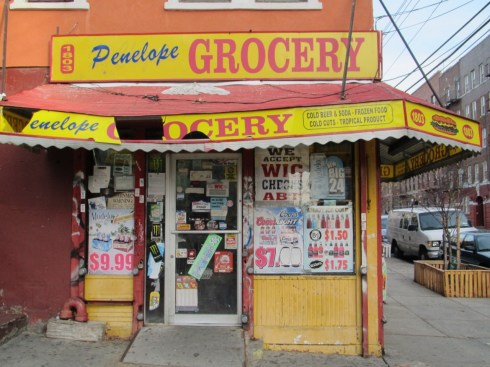
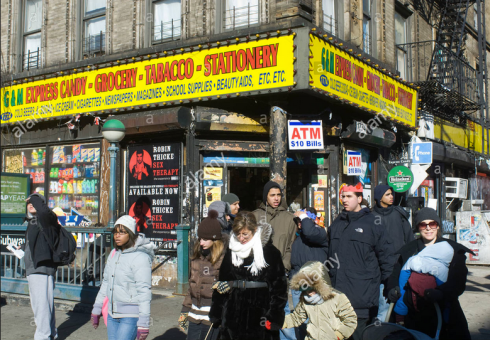
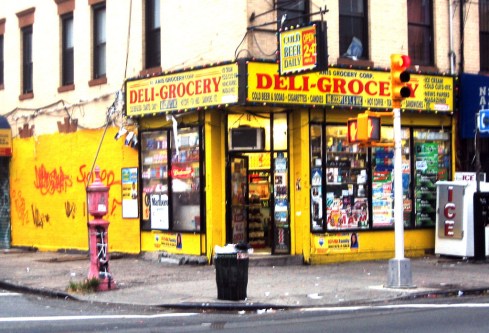
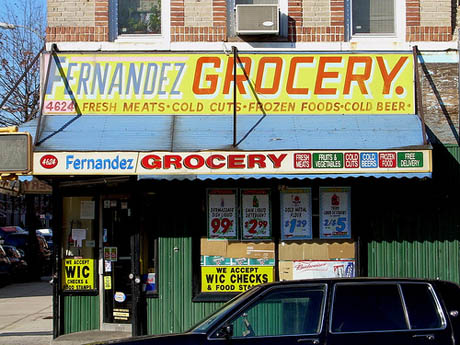


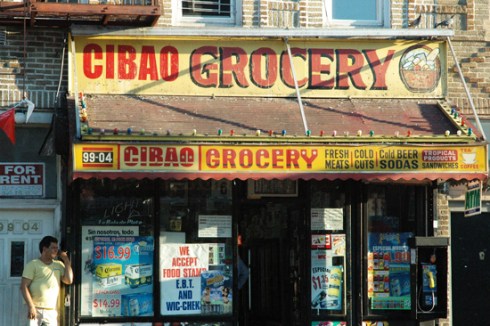
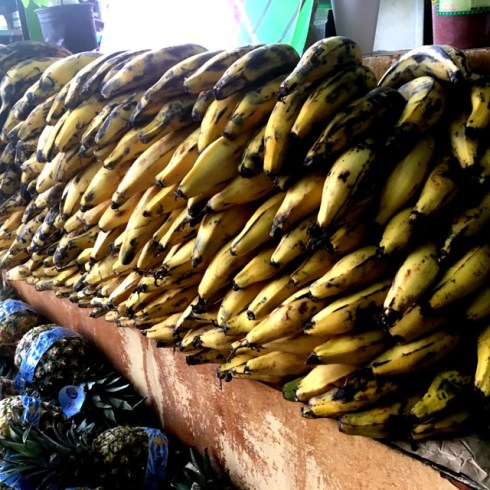

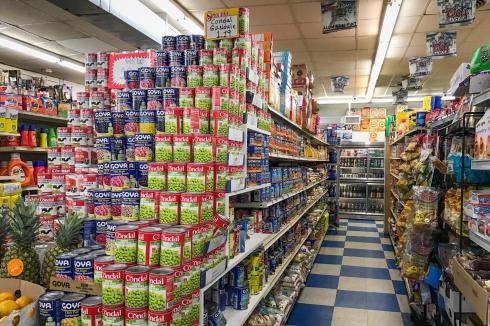
 Protesters hold a giant Spanish flag during a demonstration to support the unity of Spain on 8 October in Barcelona. Photograph: Lluis Gene/AFP/Getty Images
 –
–
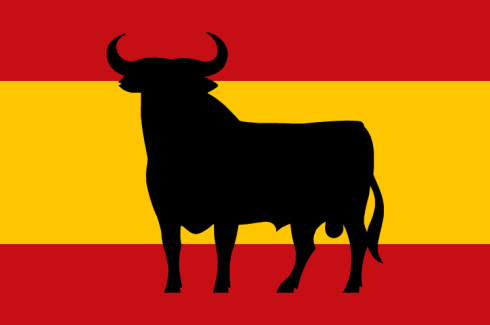


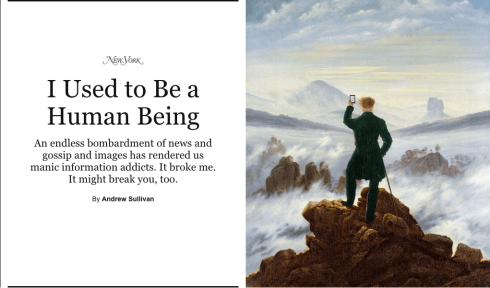
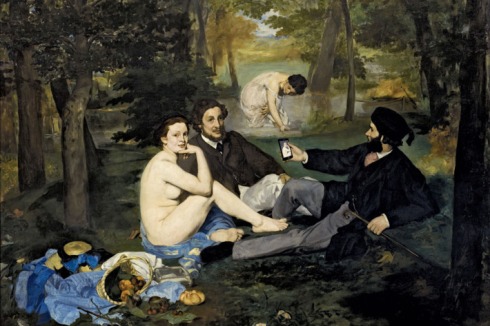
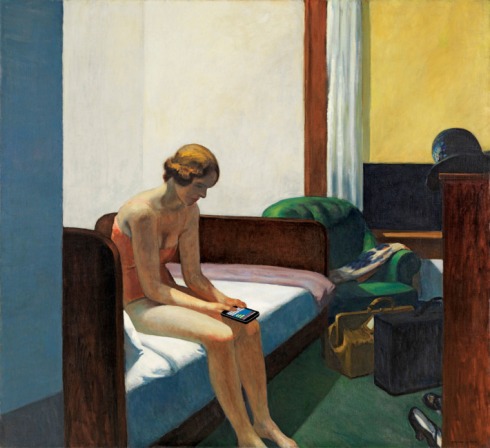
 Andrew Sullivan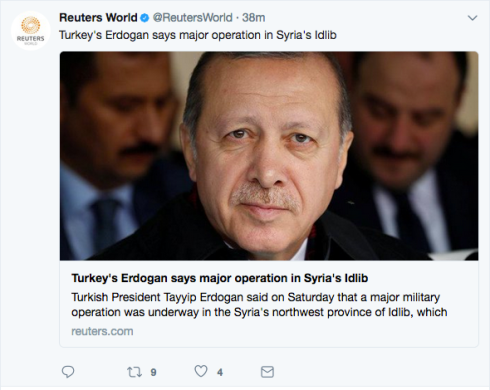
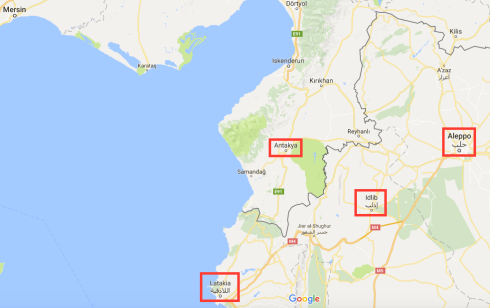
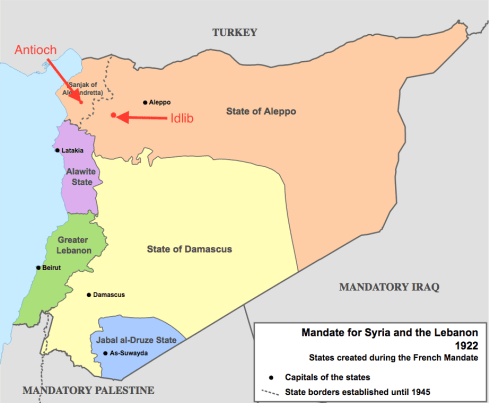
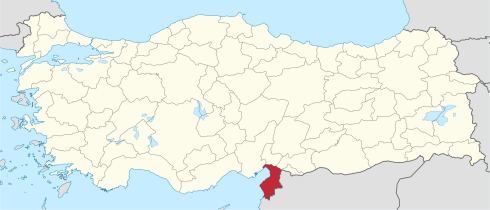 The Sanjak of Alexandretta — Antioch — “Hatay” province — little red corner of Syrian Mediterranean, that Turkey bullied out of French hands in 1939.
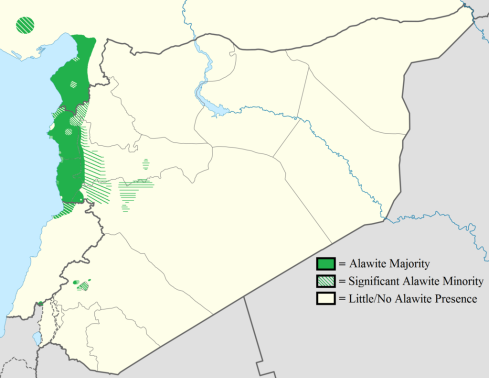 Distribution of Alawites/Alevis in Turkey (Antiocheia), Syria and Lebanon, indicating, clearly, regions of ALAWITE MAJORITY.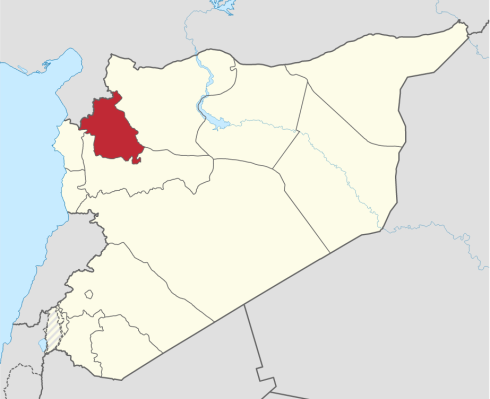

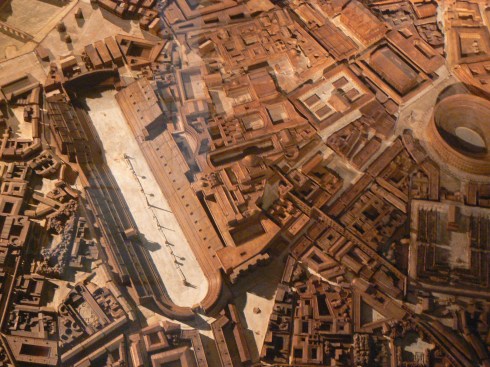


 Jadde: from Bosnia to Bengal
