Diwali photos from the Guardian

19 Oct

Many are gorgeous; these two were real knockouts though.  See all of them in full size:

Screen Shot 2017-10-19 at 7.24.22 PMA woman places earthen lamps, or diyas, on the threshold of her home on the eve of Diwali in Hyderabad, India  Photograph: Noah Seelam/AFP/Getty Images

Screen Shot 2017-10-19 at 7.30.13 PMA devotee lights oil lamps at a religious ceremony in Colombo, Sri Lanka Photograph: Dinuka Liyanawatte/Reuters
Shubh Diwali — photo from Will Dalrymple

19 Oct

@DalrympleWill

Screen Shot 2017-10-19 at 12.27.08 PM

“Iraq will remain united.” Does al Abadi have a point?

19 Oct

I wondered about the wisdom of Iraqi Kurdish independence referendum:Do Kurds need to do this right now, just at this very moment? and more than a year before that in Syria, Russia, ISIS and what to do about everything:

The Kurds: ‘I have a dream,’ as they say, for Kurds: that they will recognize the fact that Iraqi Kurdistan with a capital at Erbil is already a de facto independent state and not complicate things in the neighborhood by please resisting the urge to declare de jure independence.

Kurds

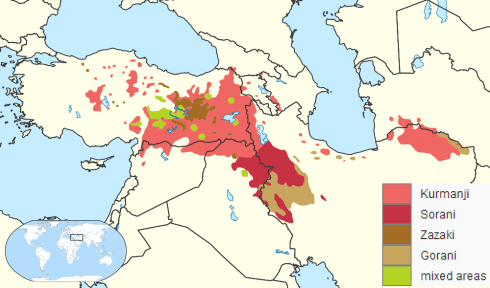
Kurdish-inhabited regions of the Middle East and Caucasus, according to tribal break-down.

“This centrally located political entity can serve as the hub of a wheel of still-to-be-worked-for, autonomous, Kurdish regions encircling it, and by not insisting on independence and union, they will be able to put more resources and energy into developing what they have and not fighting to defend it forever. I don’t know; maybe the future of the world will involve the devolving of nation-states into affiliated groups of semi-autonomous units with perhaps overlapping or varying degrees of jurisdiction – Holy Roman Empire style – and the Kurds may be the first to experience this as a people and benefit from it: that is, to see diaspora (if that word really applies to a non-migrating group), or political ‘multiplicity,’ as a finger in every pie and not as separation, and be able to reap the advantages of that.”

And my what-to-do suggestions:

“The Kurds: Give the Kurds EVERYTHING they need. They’re creating a society, both in Iraqi Kurdistan and in the internal socio-political life of Turkish Kurds that is nothing short of revolutionary in its civic-mindedness, democratic tendencies and secular steadfastness. Yes, nothing’s perfect there either but it’s by far the best we have. And the loose confederation of Kurdish regions that I spoke of earlier may have perhaps an even more strategically valuable position to offer the rest of the world than Turkey does. Beg Turkish Kurds to swear to abide by ceasefire terms despite all provocations by the Turkish state; insist that Iraqi Kurdistan not declare independence. And then give them everything they need, even if it means billions in aid. Because, along with the Russians, they’re the ones who’ll probably have to do even more of the ground fighting when the airstrikes campaign reaches its inevitable limits – and starts harming civilians, which it unfortunately already has — even though they now insist that they’re not spilling any more of their own blood for anything outside of Kurdish-inhabited regions.”

Where I was definitely wrong, or just changes on the ground proved me wrong, in  Syria, Russia, ISIS… is:

“Neither Iraq nor the Iraqi army are functioning entities, so we can temporarily remove them from our discussion.”

ISIS horrors, and the speed with which their conquests occurred, seem to have forced Iraqis to get their act together, especially militarily (and especially with American help?)

So now I find myself thinking al Abadi has a point in his Times op-ed: Iraq Will Remain United.  Also find myself thinking that if I’m so violently against Catalan separatism I can’t pick and choose my nationalist fissures…except for that Iraqi Kurds have suffered so horribly in the past, under Iraqi rule.

And what will Turkey’s next move be?  Is Erdoğan so fearful of Turkish Kurds’ separatist aspirations (which do not represent nearly as high a percentage as the PKK wants us to believe — which is why Turkish heavy-handedness in the southeast is so counter-productive and infuriating), that he’ll have to hold his nose and deal with Shia Iraq differently.  Because the ONE thing the Iraqi takeover of Kirkuk proves, it’s that power in that country definitely rests in southern, Shia hands…with all the implications that has for Iranian power in the region…

Aaaarrrgghhhh…

I dunno…

Abadi-superJumbo Mike McQuadeMike McQuade for The New York Times

Comment: nikobakos@gmail.com

Catalans’ second thoughts: ‘…the last refuge of the wallet-minded’: nationalism in all its petit bourgeois glory

17 Oct

From the Times, by

14caparros-inyt-superJumboDemonstrators in Barcelona, Spain, on Thursday protesting Catalonia’s push for independence. Credit Chris Mcgrath/Getty Images

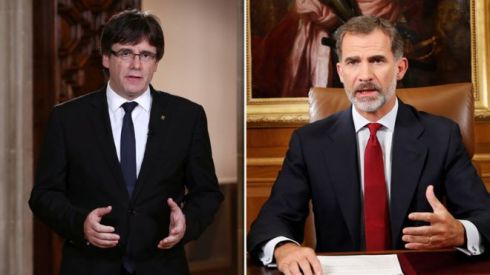
On Oct. 1, Mr. Puigdemont’s separatist cause seemed on the road to victory as images of the Spanish police beating grandmothers circled the globe and sympathy aligned with the Catalan cause.

Then came the counterattack. King Felipe VI led the charge. He stated that neither the government in Madrid nor the monarchy would negotiate with the pro-independence Catalan leaders.

But it was the joint offensive between the Spanish state and major Catalan corporations that really did the trick. On Oct. 4, the government issued a decree that would help businesses relocate from Catalonia to Spain. In the days after, the headquarters of the major Catalonian banks — Caixa and Sabadell — and the water and gas companies announced they would leave the region. Democracy also works this way: Millions of voters cast only one vote, while a few use their millions to weigh in as if they were millions…

The banks’ departure felt like a cold shower for independence supporters, willing to give it all for their motherland — except their savings accounts and their European lifestyles. For Mr. Puidgemont and his party, historically tied to those same banks, it was more like an ice-cold tsunami. [my emphasis].

It’s really tiring — and tiring, especially, is feeling the constant scathing condescension towards these idiots — to see what a playground for the puerile identity politics are.  Caparrós continues:

With the economy in danger among the waving flags and patriotic chants, it became increasingly evident that independence was more a desire than a project. For years, there has been talk about creating a new country but little discussion of its economic and social structure, which is why it was never clear how much actual social energy — how much struggle, how much sacrifice — was necessary to achieve it.

Creating a country is a complex, expensive process: To take such a step you need a huge amount of support. Usually, independence is achieved after a long war, or the fall of a colonial power. At the least, it requires the gathering of an overwhelming majority. In Catalonia, I’m glad to say, the first two options seem impossible. The third one is not in place. To start as a new but divided country would be a recipe for disaster.

Like the make-you-wanna-pull-your-hair-out Brexit: it seems — what? — nobody thought of these things?

One important thing that may have come out of, as I wrote, rethinking Yugoslavia, and the thing that Catalans and Basques, Croatians and Slovenians, and Lombards and Romagnolos, and self-righteous Brits and Germans bitching about Greek irresponsibility, should really rethink is how their supposedly parasitic South is also their major market.  See the dim shape Croatia seems to be unable to pull itself out of since independence, I’m happy to report with just a touch of schadenfreude; Croatia, which a New York Times editorial in 1992 gallingly called to be accepted “…into the West, in which it always belonged”, (see Bugarian historian Maria Todorova‘s enraged reaction in her Imagining the Balkans)…Croatia has now fallen behind the poorest countries in the EU, Romania and Bulgaria, on many indicators.

_98146567_puigdemontkingPuigdemont and Spanish King Felipe VI at recent press conferences.
Comment: nikobakos@gmail.com

Cool: Arabs discovered the Western Hemisphere along with everything else.

16 Oct

Screen Shot 2017-10-16 at 9.32.17 PM

A reconstructed Viking boat grave from the Gamla Uppsala archaeological site in Sweden is part of a Viking couture exhibition at the Enkopings Museum. Credit Therese Larsson

See Times article: ‘Allah’ Is Found on Viking Funeral Clothes.

Comment: nikobakos@gmail.com

Turkish Jews: A Spanish right of return redux

15 Oct

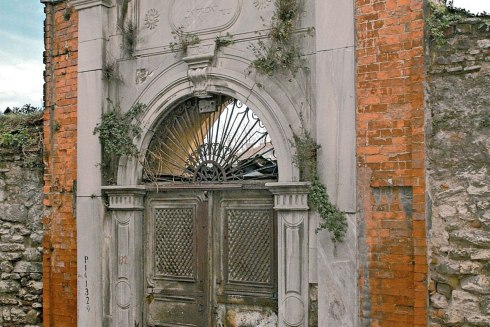
istipol-synagogue-istanbulİştipol in Istanbul

When I first came across this idea of that Spain was granting Sephardic Jews Spanish citizenship I was mildly condescending, thinking that it was the most pointless kind of Western guilt for the past and that maybe Europe had better things to think about.

Then a friend sent me this article about the shrinking Jewish community of Istanbul from Young Turkish Jews trickling away from shrinking community from the Times of Israel:

Turkey’s economic boom in the first decade of the 21st century has slowed, and its currency has lost 20 percent of its value against the dollar in the past year alone.

As tuition prices in Turkey’s increasingly competitive universities have skyrocketed in recent years, the quality of education lags behind schools in western Europe, the United States and Canada.

Like many middle-class Turks, Turkish Jews have contributed of the country’s brain drain.

“There’s no doubt anti-Semitism is a motivating factor,” said Louis Fishman, an assistant professor at Brooklyn College who has split his time in the last decade between New York, Istanbul and Tel Aviv. “But there are other groups [in the Jewish community] that are leaving because they’re part of the middle class, they can go to school in the US and get a job abroad.”

T., a 30-something resident of Istanbul who, like other Turkish Jews, preferred to speak anonymously for fear of backlash, works in a multinational company, which he said offers many Turks a means of emigrating with financial security.

“Almost all my friends think about what to do next,” said T., especially after the 2010 and 2014 anti-Israel uproar in Turkey. “Even though we are staying here, everyone is thinking of their next move.” He said that in the past five years he’s noticed a marked rise in Jewish emigration from Turkey.

Another indicator of the anxiety pervading the community is the number of Turkish Jews who have jumped at the opportunity to acquire Spanish citizenship. The vast majority of Turkey’s Jews are descendants of Spanish exiles who were welcomed into the Ottoman Empire.

Earlier this year the Spanish government announced its intention of extending citizenship to descendants of Sephardic Jews expelled in 1492. Shortly thereafter 5,000 Turkish Jews — roughly a third of the community — applied for dual citizenship, potentially opening the doors to life in Europe, according to a recent Financial Times report. [my emphasis]

I don’t know why this idea — that Spanish citizenship would open the doors to life or work anywhere in the European Union — completely skipped my mind; it’s the reason that I got my Greek citizenship (along with a little bit of a more personal tug, granted…)  Maybe it’s because all discussion of the issue was focused on the Israelis that would be granted citizenship and I totally forgot about the only real Jewish community in the Muslim world (aside from Iran) that still exists.

Still, the article gives you enough to worry about in terms of minority life in Turkey: the people who wouldn’t go on record for the writer is just one.  And, I wonder if having dual citizenship is actually allowed in Turkey and if you’re not setting yourself up for trouble.  In 1964, Turkey expelled all Greeks who held both Greek and Turkish citizenship from Istanbul, in such an over-night fashion that it effectively meant confiscation of their property as well.   Next time you’ve found the perfect Airbnb space in Pera or Tarlabaşı, ask the owner if he knows anything about the building’s history.

Below is my first post on “Spanish right of return” and below that a 1964 article from The New York Times article on the Greek expulsions.

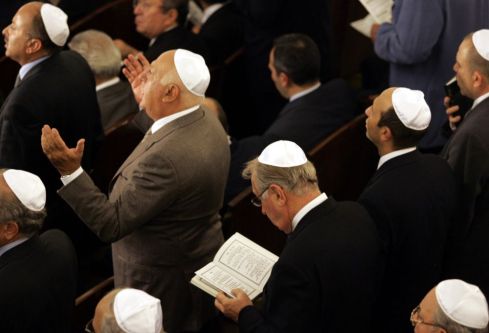
Turkish synagogueMembers of Turkey’s Jewish community pray at Neve Shalom Synagogue in Istanbul on October 11, 2004, during a ceremony to mark the official reopening of the synagogue (AP/Murad Sezer)
**************************************************************************************

A Spanish right of return for Sephardic Jews?

9 Feb

Boy, that’s a wild idea…

And I can’t help but think it’s EU-ish political correctness taken to the point of silliness.  Don’t you folks have a few other things to think about right now?

0c31974ca5f645249430604e4820ceee_18

“Why make a fuss about Spain’s ostensible effort to atone for bad behaviour, even if it’s about 524 years too late?” asks this Al Jazeera article about the Spanish offer, as it also examines some of the other complexities, ironies and…hypocrisies…behind the whole notion:

“To be sure, atonement in itself is far from fuss-worthy. Goodness knows this world could use more apologies, reparations, and truth-telling – and in fact, 1492 is not a bad place to start.

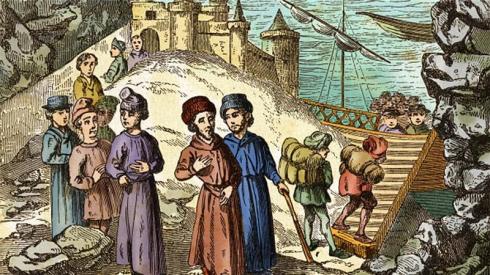
“That year happens to be rather synonymous with the decimation of indigenous populations in the Americas in the aftermath of a certain nautical expedition, authorised by the very same Ferdinand and Isabella who expelled the Jews from Spain.

“This is not to say, then, that the repercussions of centuries-old injustice aren’t alive and well; it’s merely to point out the ironies of an international panorama in which Mossad officials are granted additional homelands in Spain while Palestinians languish in refugee camps for nearly seven decades.”

And just another thought: it could hypothetically mean a minor flood of Sephardic Jews from Argentina, say, or other Latin American countries, looking for better economic possibilities.  But in Spain?  At this particular moment?  I think the days of heavy Latin American emigration to Spain have been put on hold for a while.

**************************************************************************************

ISTANBUL, Turkey, Aug. 8 —Harassment and deportation of Greek nationals in Istanbul in retaliation for Turkish set­backs on Cyprus was declared today “an open policy” of the Government.

Unless a solution to the strife between Greek and Turkish Cypriotes is found soon, the Greeks here fear that their community, once numerous and prosperous, will be dispersed before winter.

“The pressure on the Istanbul Greeks will be gradual,” said a spokesman for the Foreign Min­istry in Ankara.

Tactic Held Ineffective

Sources close to Premier Is­met Inonu said the Government believed “pressure on Greek na­tionals” was the only way left to Turkey to force Athens and the Greek‐dominated Cypriote Government to accept a satis­factory compromise.

Istanbul’s Greeks have many Turkish friends who believe the new tactic will prove as ineffec­tive as it is harsh. The consen­sus among the Greeks them­selves is that Turkey is using Cyprus as “an excuse to do what they have long wanted to do—get us out.”

This week 58 more Greeks were added to nearly 1,000 who had been deported on short no­tice since March.

New lists are expected within a few days, and the 9,000 re­maining Greek nationals are sure their days here are num­bered. Turkey has canceled, effective Sept. 15, a 1930 agree­ment under which Greeks have been privileged to live here.

There is fear now in the hearts of 60,000 Turks of Greek descent, They, too, complain of harassment, “tax persecution” and ostracism, although Premier Inonu has declared repeatedly that these minority nationals will not be discriminated against.

In the business districts of Istanbul, many Greek‐owned shops may be seen under pad­lock. They were closed on Government order or because the owners were summarily or­dered from the country. Wives and other dependents are in many cases left destitute.

Many Born in Turkey

Every morning large numbers of Greeks crowd into the arcaded foyer of the Greek Consulate to ask help and advice. Some ac­cept an emergency dole provided by the consulate; others are well dressed. Some are old and frail.

Most of those deported so far were born in Turkey, according to the consulate, and many had never been to Greece. They have no particular place in Greece to go, and they say they have no idea what to do when they get there.

Greeks scan the Istanbul newspapers for published lists, fearing they will find their names. When they do, they go to the police to be fingerprint­ed, photographed and asked to sign deportation statements. They are given a week to leave the country, and police escorts see that they make the dead­line.

Asset Sales Difficult

Families of deportees protest that it is impossible to sell businesses or personal property in so short a time. “Few want to buy from us, and no one wants to pay a fair price,” one victim said. A deportee may take with him only his cloth­ing, 200 Turkish lira (about $22) and his transportation ticket.

At first the Government de­nied that these deportations had anything to do with the dispute over Cyprus. AU the deportees were charged with “activities harmful to the Turk­ish state.”

The Greeks have found wry humor in this claim. According to a source close to the con­sulate, the deportation lists have included the names of six per­sons long dead.

There have been 121 deportees more than 70 years old and 20 over the age of 80.

Many charges have been raised against the Greek aliens: smuggling money out of the country, for example, or evad­ing taxes and military duty. The Turkish authorities say the Greeks have invested their wealth abroad and that this has damaged the Turkish economy.

Wealth Put at $200 Million

Turkish estimates of Greek wealth here have gone as high as $500 million. But recently this figure has been reduced to $200 million. Greeks say the Turks “reduced their inflated estimates when they realized that someday they might have to settle for properties taken from us.”

They blame Turkey for not having offered better invest­ment opportunities.

In addition to abrogating the 1930 agreement on residence, trade and shipping privileges, Ankara has suspended a 1955 agreement granting unrestricted travel facilities to nationals of both countries. A number of Greeks caught outside Turkey when this suspension took ef­fect are reported to be unable to return.

More seriously, Ankara re­cently decided to enforce strictly a long‐overlooked law barring Greek nationals from 30 professions and occupations. They cannot, for example, be doctors, nurses, architects, shoe­makers, tailors, plumbers, caba­ret singers, ironsmiths, cooks or tourist guides.

**************************************************************************************

Comment: nikobakos@gmail.com

Castille and Catalonia: a kulturkampf much older and psychologically complex than we think

14 Oct

Miguel_de_Unamuno_Meurisse_c_1925

The Spanish — and/or/together, autonomously together, autonomously independent but dialectically related — Basque philosopher Miguel de Unamuno, one of my highest-ranking intellectual heroes, wrote in 1905:

“Los ensayos que constituyen mi libro En torno al casticismo […] son un ensayo de estudio del alma castellana, me fueron dictados por la honda disparidad que sentía entre mi espíritu y el espirítu castellano.  Y esta disapridad es la que media entre el espíritu del pueblo vasco, del que nací y en el que me crié, y el espíritu castellano, en el que, a partir de mis veintiséis años, ha madurado mi espíritu.  Entonces creía, como creen hoy no poco paisanos míos y muchos catalanes, que tales disparidades son inconciliables e irreductibles; hoy no creo lo mismo.”

“The essays that make up my book Regarding Casticismo […] are an attempt at a study of the Castillian soul, essays I felt obligated to write due to the profound disparity between my own soul and that of Castille.  Yet this disparity is what mediates between the spirit of the Basque people, into which I was born and raised, and that of Castille, in which, since my twenty-six years of age, my own spirit began to mature.  At the time I believed, as do not a few of my compatriots and many Catalans, that these disparities were irreducible and irreconcilable: today I no longer believe so.” [my translation]

I’ve chosen to leave “casticismo” untranslated, and not take Amazon’s suggestion that it means “purity”, precisely because it means so much more than that and has a much more complex, nearly untranslatable meaning.  I mean, it’s explainable, just not with one word.  But a good explanation, to the best of my instinct, since I’m not Basque or Castillian or Spanish at all, is what I need to give readers.

I have to go back to Unamuno’s essays, which are unfortunately not available in English, to do so, however.  Just posting this as a coming attraction and to get my own head working on the issue.

Later…

Comment: nikobakos@gmail.com


NikoBako told-you-so prediction: someone’s gonna start b*tching that Bollywood promotes irresponsible drinking…

11 Oct

…someone with no sense of līlā who doesn’t get everything that’s sexy, young and fun about it:

…and doesn’t appreciate that Ranbir Kapoor’s pelvis is jointed in ways different from that of ordinary mortals.

Comment: nikobakos@gmail.com


From TIMES: Greg Weiner: an unusually moving piece about the beauty of the law and custom and language and the constitution…

11 Oct

…that doesn’t descend to the rhetorical level of those he’s criticizing.  It’s depressing how rare this kind of public thoughtfulness has become.  When the Obamas felt obligated to chime in today on the Weinstein pigsty, for example, I thought for a sec it was really all over.

One problem is that his piece sort of implicitly validates whole Anglo-Saxon tradition of unwritten, customary law, and that’s not working too well right now; I mean back home too, not just here with Trump.

**************************************************************************************

Opinion | Op-Ed Contributor

The President’s Self-Destructive Disruption

Screen Shot 2017-10-11 at 6.09.16 PM
Credit Tamara Shopsin

Donald Trump ran for the White House as a change agent hostile to the habits of Washington, the place he nicknamed “the swamp.” It worked. But the customs he continues to upend as president are the scaffolding that supports the otherwise fragile words of our written Constitution. Mr. Trump’s rejection of them is more threatening to both his presidency and our constitutional regime than any technical violation of the law that he has been accused of (at least so far).

Customs are the punctuation marks of republican politics, the silent guides we follow without pausing to consider their authority. They operate in a space that is difficult for formal rules to codify. That the president of the United States speaks with caution and dignity, that he exercises the pardon power the Constitution grants him soberly rather than wantonly, that he respects the independence of law enforcement, and that, to the extent reasonable politics permit, he speaks truthfully — these are all customs, not laws. Law is powerless to impose them and powerless without them.

When Mr. Trump drains language of its normal meaning, the law can do nothing about it. His ridiculing of the United States senator who leads the Foreign Relations Committee, his repeated use of the word “fake” to describe news coverage when he actually means “unpleasant” and his style of rhetoric in front of the United Nations, where he called terrorists “losers” and applied a childish epithet to the head of a nation in whose shadow tens of thousands of American troops serve and with whom nuclear war is a live possibility, are all cases in point. There is no way to formalize conventions of maturity and dignity for presidents. Custom fills that void.

Mr. Trump’s prodigious abuse of language violates the custom according to which presidents use words to convey serious meanings. Examples arrive daily, but here are a few more. The president has promised to decree his way to better health care, which he cannot constitutionally do. He has repeatedly tweeted threats at North Korea whose imprecision has turned red lines into smudges. He zigs and zags between alliances with and attacks on other constitutional officers in such a way that no one can constructively work with him. Yet all of these abuses of language are violations of custom, not law.

When he violates such customs, Mr. Trump is at his most impulsive and self-destructive. It may sound ridiculous to invoke James Madison or Edmund Burke when we talk about this president, but that is part of the problem. Mr. Trump could profit from the wisdom of his predecessor Madison, for whom the very essence of constitutionalism lay not in what he derided as “parchment barriers” — mere written commands there was no will to follow — but rather “that veneration which time bestows on every thing.” The Constitution, in other words, would be only as strong as the tradition of respecting it.

Burke, the foremost expositor of the authority of custom, preferred “the collected reason of ages, combining the principles of original justice with the infinite variety of human concerns” to “personal self-sufficiency and arrogance, the certain attendants upon all those who have never experienced a wisdom greater than their own.”

Burke is generally seen as the progenitor of modern conservatism, but Mr. Trump, who came late to the conservative cause, is said to be so hostile to custom that his staff knows the best way to get him to do something is to tell him it violates tradition. The tweeting, impulsivity, lying, interference with prosecutorial independence, incautious rhetoric about war and peace, demagogic campaign rallies masked as presidential addresses and the like are all violations of informal customs of presidential behavior. They also tend to be the moments when Mr. Trump makes his worst mistakes.

Of course, it is a conceit of many presidents — conceit being all but a constitutional qualification of the office — that they are saviors who, by force of personality, will transform all that preceded them. Most ultimately find the traditions of the office to be a shield. Mr. Trump is finding them to be a constraint he cannot bear. Worse, because many elements of his base associate these customs with failed politics, every violation reinforces the sense that he sides with them over a corrupt establishment.

Historically, conservatism has tended to value light governance, for which custom is even more essential. Aristotle writes that “when men are friends they have no need of justice.” In other words, rules enter where informal mechanisms of society have collapsed. The philosopher and statesman Charles Frankel summed it up powerfully: “Politics is a substitute for custom. It becomes conspicuous whenever and wherever custom recedes or breaks down.”

Mr. Trump’s many critics are not all guiltless on this score. Since Woodrow Wilson’s critique of the framers’ work, progressive legal theory has generally denied that the meaning of the original Constitution, as endorsed by generational assent, wields authority because it is customary. Much of libertarian theory elevates contemporary reason — the rationality of the immediate — above all else. Both schools of thought assume that individual reason, here and now, is better at resolving social and political questions, in all their dimensions of infinite complexity, than the accumulated wisdom of custom.

The president’s daily, even hourly, abuse of language is also deeply problematic for a republic that conducts its business with words and cannot do so if their meanings are matters of sheer convenience. The unique arrogance of Mr. Trump’s rejection of the authority of custom is more dangerous than we realize because without custom, there is no law.

TIMES: end of Little Italy: “We took it for granted that New York would always be New York.”

10 Oct
Money quote: “…a city that can’t seem to hold on to its most captivating idiosyncrasies.”
I think it was yesterday’s Bodegas piece that may have primed me for this.

Moe’s Meat Market, in Little Italy, hasn’t been a meat market for 40 years. But the floor is still tiled in black and white, the walls covered in porcelain-enameled tin sheets. When the artist Robert Kobayashi, known as Kobi, bought Moe’s and the rest of its building in 1977, he moved in with his wife, the photographer Kate Keller, and installed his studio in the storefront, leaving the walls intact. As a sculptor who worked with tin, maybe he felt an affinity for the sheet metal. Maybe he just appreciated the history.

 Robert Kobayashi in his gallery in 2009. Credit Hiroko Masuike for The New York Times

Over time Moe’s became a fixture in the local art scene, part studio, part gallery, part social space. But now Moe’s is shutting down, one more loss in a city that can’t seem to hold on to its most captivating idiosyncrasies.

In its time, that tenement at 237 Elizabeth Street was alive with history, and Kobi and Kate quickly became part of it.

Upstairs lived Mary Albanese, the matriarch of the building and mother of another Moe the butcher, in his 90s today and still cutting meat at a shop across the street. (“Moe’s just a nickname in the family,” he explained. For what? “Gandolfo.” Go figure.) Down in the basement sat a Prohibition-era wine press and a heavy safe, once guarded by a bulldog named Reggio, who got drunk on the vino and left paw prints in the wet cement floor. (They’re still there, too, the press and the prints, though not the dog.) From the tenement’s open windows, elderly women dressed in black kept eyes on the street while the next generation did the same from sidewalk lounge chairs, their hair in pink curlers.

Mary Albanese standing in front of her butcher shop around 1970.

Bohemian life among the Sicilians of Elizabeth Street was good. Kate and Kobi were embraced like family. Their daughter, Misa, became one of the gang of Italian, Chinese and Puerto Rican kids on the block, and Kobi built go-carts for them to race. The artists who started moving into the neighborhood’s cheap apartments in the 1960s gathered at Moe’s, pulled in by Kobi’s magnetism. The storefront and its back room became a kind of third space, linking the old and new worlds together.

Misa Kobayashi and neighborhood kids playing on Elizabeth Street in the early 1990s. Credit Kate Keller

On a recent night, a crowd came to say goodbye to Moe’s and toast the memory of Kobi. Since his death in 2015, Kate has struggled to keep up with the building. Saying she felt lost on her own, she sold it to a man she calls an “angel” for his willingness to let her and the other tenants (artist and Italian) stay put. The gallery, however, will have to go.


At the farewell party, friends and family gathered in the dining room behind the gallery. There was the Dutch performance artist Marja Samsom in a black-and-white checkerboard hat and Susanna Cuyler, a writer who collects the names of people who have died during the year to read aloud on the winter solstice.

People gathered at Moe’s Meat Market on Saturday to tell stories and say goodbye. Credit Benjamin Norman for The New York Times

Talk around the table drifted to memory. The actress Penny Lynn White recounted the dangerous thrills of old Elizabeth Street. “It was drug city,” she said. “You’d go in the deli and there’d be a dead guy on the floor. Then they made ‘The Godfather’ and the street had cachet. That’s when the shops started moving in.” But John Gotti still walked the walk. Of her single memorable brush with the don, Penny recalled, “He said just one word to me as I passed: ‘Nice.’ ”

Kate Keller with Moe Albanese who at 94 still runs the butcher shop across the street from Moe’s. Credit Benjamin Norman for The New York Times

Another former neighbor, David Marshall, recalled how he’d go with Kobi to Mulberry Street on the last night of the Feast of San Gennaro, when the vendors were breaking down their stalls, so they could “harvest all that lovely wood for sculptures.” Kobi scavenged his metal from Bazzini peanut cans, beer cans and the pressed tin that decorated tenement ceilings. Increasingly, those ceilings ended up in Dumpsters as the neighborhood gentrified and buildings were gutted. Many at the goodbye party had already moved away or were just hanging on.

The San Gandolfo parade on a decidedly less prosperous Elizabeth Street, circa 1980. Credit Kate Keller

By the 2000s, the northern end of Elizabeth Street was lined with upscale shops and restaurants with names like Peasant and Trust Fund Baby. It was no longer Little Italy but NoLIta, rebranded by the real-estate industry. The block is unrecognizable. No more mingling families, no more open fire hydrants or trash can barbecues or dominoes on the sidewalk. “Now it’s all transient trust-fund kids,” Misa Kobayashi said.

Some at the party shrugged and said, “New York is always changing.” But one neighbor, Beth Joy Papaleo, put it bluntly: “We took it for granted that New York would always be New York. Then money destroyed it.”

Kobi and Kate purposely never profited from the building, and it’s clear that Kate is pained by the decision to sell. Still, she’s comforted by the thought that the spirit of the place will live on in Kobi’s work, in the colorful sculptures built from the stuff of the old street.

Kate Keller on the last evening at Moe’s Meat Market. Her daughter, Misa, is reflected in the mirror. Credit Benjamin Norman for The New York Times


“New York is like a big mystery tour,” Kate said, looking out from the open door of Moe’s. “When we moved here, it was a storybook. I’m from the Midwest. We didn’t have stories.”

As for becoming a part of those stories and bringing together the people who hold the history, she said, “None of it would have happened without Kobi.”