
 (click)
A geographo-political history of Romania in maps
5 MarI know we’re talking about a polity that lasted a thousand years, but the dramatic shifts are so impressive: the loss and regaining and loss again of Italy and Africa; the ability to adapt, reconsolidate and resist –as opposed to, say the Sassanians — after the massive losses of Egypt, Syria and the Levant (I bet there are a few people in the latter regions right now that wish that had never happened…) ; the see-sawing in the Balkans, and in Anatolia even after Manzikert; the temporary reconquest of Antioch and northwestern Syria… The one constant until the very end — except for the Huns’ orgy of 1204 — being the City herself. A legitimizing principle of amazing power must have been behind that tenacity.
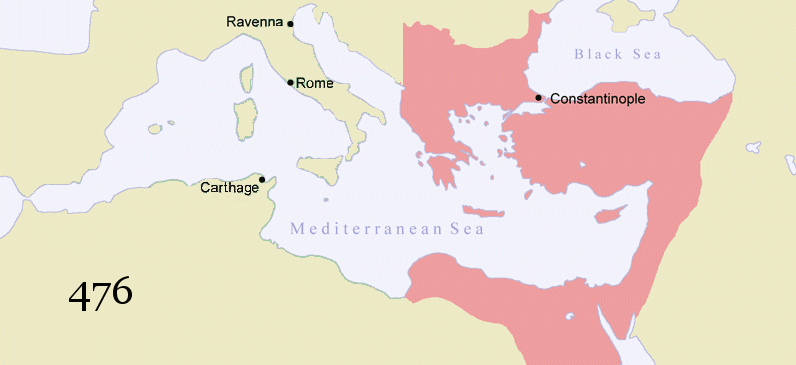
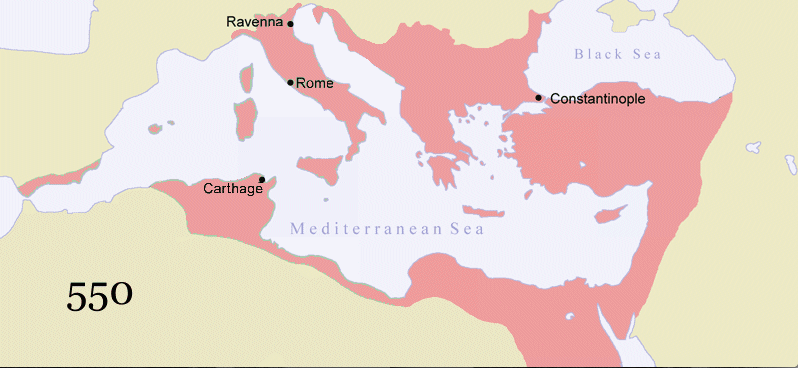
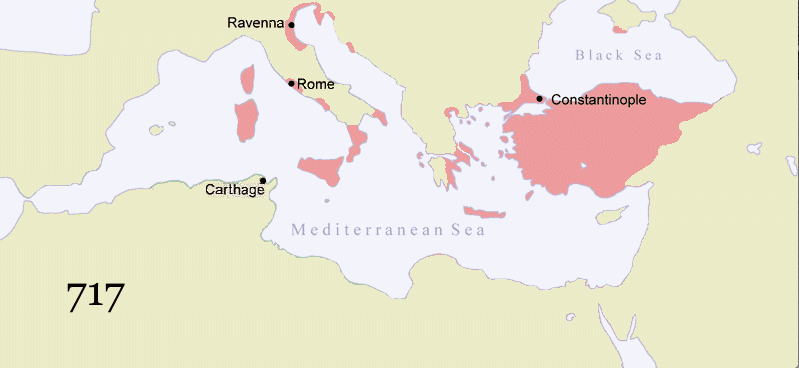
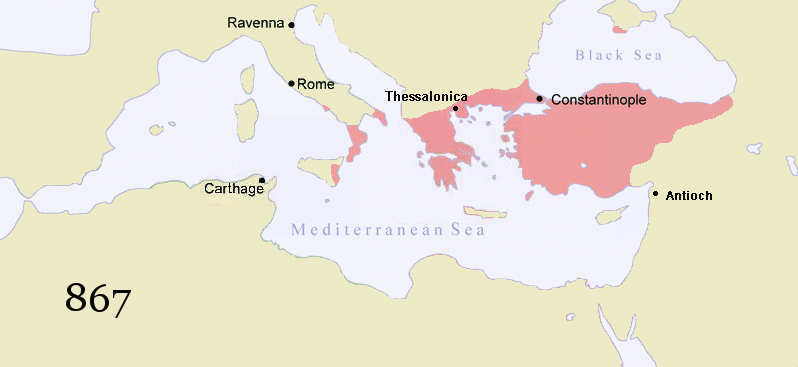
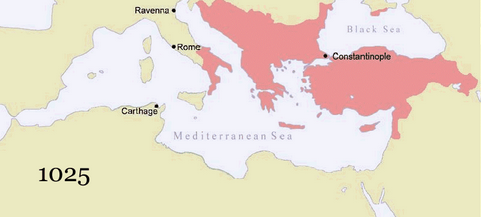
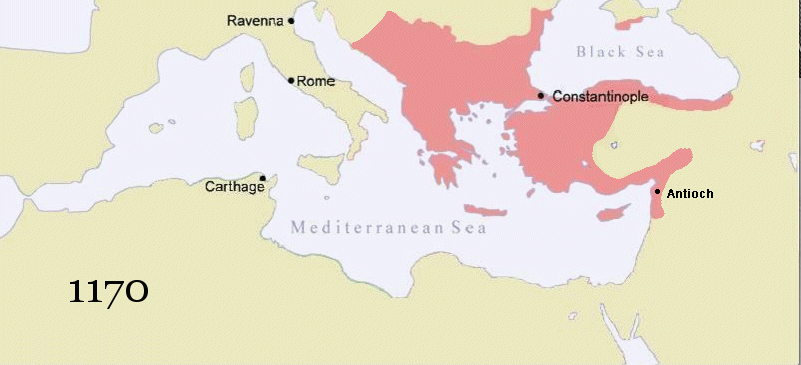
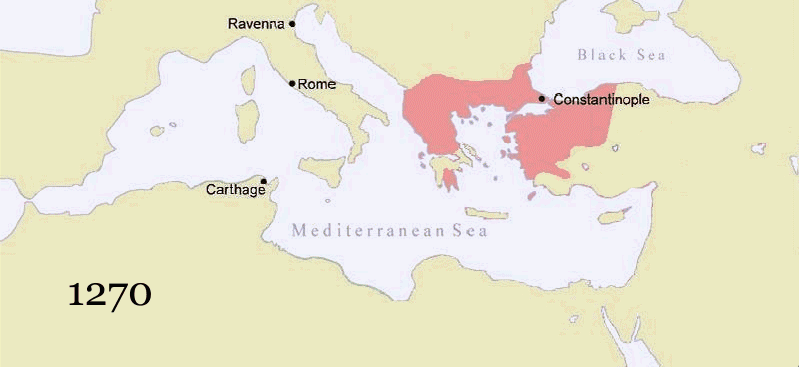
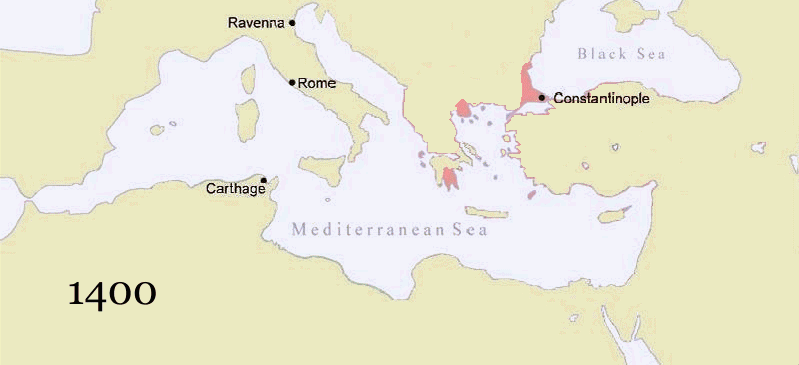 (click on all)
Rembrandt for Purim…
5 MarOnly ’cause it’s so beautiful: Ahasuerus and Haman at Esther’s Feast, by Rembrandt
 (double click)
Happy Purim — (reposted from last year)
4 Mar“It’s Purim tonight! — Something like a letter to my mother”
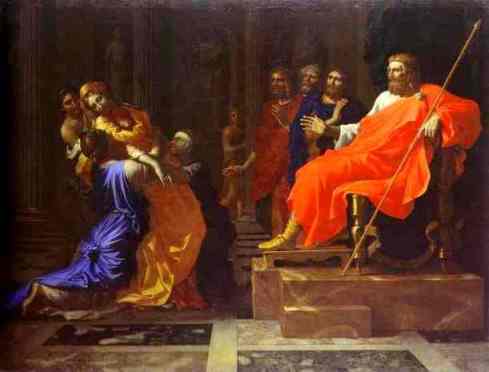 Esther before Ahasuerus, Nicolas Poussin, circa 1640
For Purim this year I’m posting this poem by Greek Jewish poet Joseph Eliya, who was from my mother’s hometown of Jiannena in the northwestern Greek region of Epiros. (See the tab box on the right for the hundred references to Jiannena and Epiros on the Jadde).
The Jews of Jiannena were Greek-speaking Romaniotes, descendants of the Jewish communities of Greece, the Balkans and Asia Minor that had existed since Hellenistic through Byzantine times and that held out culturally against the flood of Spanish-speaking Sephardim that found refuge in the Ottoman Empire after their expulsion from Spain in 1492. They were called Romaniotes because Romania (the kingdom of the Romans) was what the Byzantines called their polity and what we too – till the early twentieth century – also called ourselves: “Romans” – which it always aggravates me to have to explain. But it is one of the rich ironies of history that the only inhabitants of Greek lands that stayed faithful to their true name for themselves were Jews, while we sold our souls to the West for the promises and prestige we thought the re-excavated neologism “Hellene” would curry us from the Frangoi.
So Eliya’s native language was Greek, and though he wrote some of the most beautiful translations of Jewish Biblical texts into Modern Greek, particularly one of the Song of Songs and a series of love poems to Rebecca, in a rich, florid, archaic idiom, he also wrote homelier poems in a folksier Jianniotiko style like this one, “something like a letter to his mother” on the occasion of the feast of Purim.
For those who don’t know, Purim is the day that Esther, the Jewish Queen Consort to the Persian King Ahasuerus, and her uncle Mordechai, foiled the plans of the king’s evil minister Haman, to have the Jews of the kingdom massacred. It’s generally celebrated by listening to the book of Esther in synagogue, the Megilla, sending food and giving charity to the poor and dressing up in costume, an aspect of the celebration that may be an interborrowing due to the fact that it tends to fall around Christian Carnival.
Eliya was a poor schoolteacher who died at the young age of thirty, and I believe this poem was written when he was away from his beloved Jiannena, and his beloved mother, on a teaching post in the central Macedonian city of Kolkuş. It’s a sad, therefore — and very Epirotiko in that sense and in tone — poem, that’s in sharp contrast to the happiness of the holiday.
This poem also has an added emotional subtext for me. My mother’s best friend when she was in elementary school was a Jewish girl, Esther — Esther Cohen. “Astro” they called her, in the Epirotiko diminutive; “Tero” is also another form for the same name. And as a little girl from a peasant family recently moved to Jiannena from their village in the mountains just to the south, I could tell that her stories about her friendship with Astro were her first lessons in tolerance and difference, whether she would’ve called them that or not (we certainly wouldn’t in our day…I’ll leave them for another post). And she may have known it even less, but her friendship with Astro may have prepared her for life in New York in ways she was probably never conscious of. And what she may have been even less conscious of — though maybe I should give her some credit: I do know for sure that my mother’s stories of her friendship with Astro served as my first lessons in decency and openness to those different from you. Of that there’s no doubt. So this post is something like a letter to my mother too.
Always they ended in a kind of distracted silence, for she never knew what had happened to her friend during the war: “Τι νά’χει γίνει η Άστρω;” she would mumble. “What can have happened to Astro?” And what was strange was that she could’ve found out; there were surviving Jews in Jiannena that she knew and there were even Jewish Jianniotes in New York she could have asked. But it was like she didn’t want to know. Even odder, I’ve had several opportunities to find out as well; Kehila Kedosha Jiannena, the Jianniotiko shul in New York on Broome Street has records on the whole community. But it’s been almost as if I don’t want to know either.
Here is Eliya’s original Greek, with my free verse translation below.

Purim
(Something like a letter to my mother)
It’s Purim tonight! The thrill and joy of the great feast!
Light in our souls, and a smile on the lips of all.
And I, my orphaned mother, the refuse of exile*
Waste away in a chill joyless corner.
It’s Purim tonight! And the synagogues open their arms wide to the faithful children of my ancient people.
And they read again with wonder, from the white parchment, the triumphs of Mordechai and Esther through the ages.
It’s Purim tonight! Young and old gather at home, at hearth, to hear the Megilla’s** tale.
And I mother – with the burning lament of exile – tearily thumb through my Bible in a lonely corner.
Your son won’t be bringing you candles or flowers from shul*** tonight, mother. And if your crying is bitter, don’t lament too deeply. My Fate has been decided, and poverty — poverty, mammele**** – has no feel for sympathy.
**********************************************************************************************************************************************************************************************
Notes on my translation:
*”Exile” here does not imply political banishment or anything of the sort. It’s the word “ξενητιά” as Eliya spells it, that’s so central to understanding the Greek and — it probably goes without saying — the Jewish soul, but is so devilishly difficult to translate precisely. It means absence — absence from the place where one should be, from one’s heart’s homeland. Through and because of emigration and poverty most often but not always; it’s often something one feels without having had to leave. The Turkish “kurbet” is the word closest in meaning that I know from another language.
**Not to be disrespectful, but the Megilla, the Book of Esther, is quite long, and is proverbial, in at least Ashkenazi humor, for being tedious and monotonous to listen to — but one bears it. It’s exactly the same as the Greek term “εξάψαλμος,” the Hexapsalm, a selection of six psalms that is always read at the beginning of Matins and I’m not sure if during other offices, and would be beautiful if correctly and carefully recited according to the rules of Orthodox recitation. Unfortunately, it’s usually read in an incomprehensible blur of mumbled boredom by the lector or cantor, which actually makes it even more tedious and irritating to sit through. It’s usually a good time to go out for a cigarette. I just always thought the similarity was funny. “Ωχ, τώρα θα’κούσουμε τον εξάψαλμο,” a Greek will say with dread when faced with a berating lecture or kvetch session or someone’s tiring complaint that’s so repetitive you just tune it out, just like a Jewish New Yorker will say: “I really can’t listen to his whole Megilla right now…”
***In the second verse, Eliya uses the Greek word for synagogues and I translated it as such. In this last verse, he uses a homier, Epirotiko form whose intimacy I felt was better conveyed by “shul.”
****And last but not least, we run into the painful translation issues that are generated by the fact that English is almost completely lacking in a system of diminutive terms of affection, especially compared with the highly elaborate diminutive terminologies of Slavic languages or Yiddish (or I assume Ladino) or even Greek. At no point in the poem does Eliya refer to his mother as “mother” but rather “my little mother” — “μανούλα’μ” — “manoula’m.” This is a term of affection used often by Greeks and especially Epirotes to refer to anyone, not just one’s mother, not even necessarily a female (Athenian idiots making fun will darken or double up the “l” to make it sound more northern and Slavic and hickish; for me it’s just more beautiful…); one will say to a young boy or even a friend: “Come here, manoula mou… What’s wrong, manoula mou?” Just like “mammele” is used in Yiddish. But I felt that using “mammele” throughout would have sounded too Yiddishy and cute, and so I saved it for that last, most intimate verse, and used mother elsewhere. After all, this is a poem that above all is an expression of the most Jewish kind of mother-son bond. But Yiddish and its many beauties is cursed now, by its sudden, dramatic extinction in Europe, and its shadow survival only in American entertainment, with the danger of always lapsing into a default comic tone. It’s sad. The translation from the Greek of the last line of the poem, for example: “poverty has no feel for sympathy…” would literally be: “…but poverty doesn’t know from sympathy.” But then I’d be writing Larry David dialogue.
**********************************************************************************************************************************************************************************************
FINALLY, I’d like to thank Marcia Haddad Ikonomopoulos for the scan of the Greek text of the poem. I’m in Athens now, away from my library and couldn’t find it anywhere online. I wrote to her and within five minutes she had written back to me with both “Purim” and “Esther,” another of Eliya’s poems about the biblical heroine. She suggested that “Esther” is a poem more appropriate to the happiness of Purim than the melancholy of “Purim.” Unfortunately, it’s written in a much more difficult, semi-biblical, archaic language that I didn’t have the time to translate. I promise her however, that as soon as I get a chance I will work on it and post it on the Jadde — out of gratitude to her helping me out for this, and out of gratitude to the one-woman pillar of the Kehila Kadosha Janina community that she is. I’d also like to thank the whole congregation there for always making me feel so welcome when I attend on Erev Simchas Torah; the rabbi and his stentorian voice, the three young men who lead prayer and are perhaps the community’s most precious resource — let’s see if I remember correctly: Seth, the rabbi’s son, and the brothers Andrew and Ethan, who though they’re from a Sephardic family from Berroia, devote their shabbes and yontif time to energizing this tiny community in need of outside help. The warmth of the community has always moved me and I’m grateful for both the odd need for Jewishness in my life and the link to my mother and her childhood that they unknowingly provide. Thank you.
–
Comment: nikobakos@gmail.com
–

Jiannena
“I am not afraid…” AP on Nemtsov protests — proud….
1 MarRussians march in memory of murdered Putin critic
MOSCOW
People hold flags and posters during a march to commemorate Kremlin critic Boris Nemtsov, who was shot dead on Friday night, near St. Basil’s Cathedral in central Moscow March 1, 2015.
Credit: Reuters/Sergei Karpukhin
Related Video

Russians march in memory of murdered Kremlin critic Boris Nemtsov
Security tightens around Kremlin ahead of opposition march
Thousands of Russians march in memory of Kremlin critic Nemstov
Nemtsov seen talking on phone in Moscow studio, hours before his murder
Poroshenko: Nemtsov planned to reveal Russian links to Ukraine conflict
War in Donbass has come to Moscow with Nemtsov murder, analyst says
Russian mourners lay flowers at the spot where opposition leader was killed
(Reuters) – Tens of thousands of Russians marched through central Moscow on Sunday, carrying banners declaring “I am not afraid” and chanting “Russia without Putin” in memory of murdered Kremlin critic Boris Nemtsov.
Families, the old and young walked slowly, with many holding portraits of the opposition politician and former deputy prime minister who was shot dead while walking home from a nearby restaurant on Friday night.
The authorities have suggested the opposition itself may have been behind his shooting in an attempt to create a martyr and unite the fractured movement.
His supporters have blamed the authorities.
“If we can stop the campaign of hate that’s being directed at the opposition, then we have a chance to change Russia. If not, then we face the prospect of mass civil conflict,” Gennady Gudkov, an opposition leader, told Reuters.
“The authorities are corrupt and don’t allow any threats to them to emerge. Boris was uncomfortable for them.”
His murder has divided opinion in a country where for years after the Soviet Union collapsed many yearned for the stability later brought by former KGB agent Vladimir Putin.
A small but active opposition now says Putin’s rule has become an autocracy that flaunts international norms after Russia seized Ukraine‘s Crimea peninsula last year, fanned nationalism over the separatist war in eastern Ukraine and clamped down on dissent.
“(Nemtsov) was harmful to the authorities, but the authorities themselves are criminal. The authorities have trampled on all international rights, seized Crimea, started war with Ukraine,” said Yuri Voinov, an elderly physicist.
Police said 21,000 people attended the march. The organizers put the numbers at tens of thousands, but attendance appeared smaller than the 50,000 people the opposition had hoped for.
Reuters reporters at the march estimated the numbers in the tens of thousands.
People walked in the rain within view of the Kremlin’s red walls and past the spot, now covered in flowers, where Nemtsov was shot dead.
Some carried large banners carrying Nemtsov’s face reading “Heroes Never Die”, the same slogan used in Ukraine to celebrate more than 100 people killed in protests that overthrew Moscow-leaning President Viktor Yanukovich a year ago.
One elderly woman, her hair tucked into a woolen cap, held up a hand-written sign to cover her face: “It’s a geopolitical catastrophe when a KGB officer declares himself president for life. Putin resign!”
PUTIN REMAINS DOMINANT
Putin has vowed to pursue those who killed Nemtsov, calling the murder a “provocation”.
National investigators who answer to the Russian leader offered a 3-million-rouble reward, around $50,000, for information on Nemtsov’s death. They say they are pursuing several lines of inquiry, including the possibility that Nemtsov, a Jew, was killed by radical Islamists or that the opposition killed him to blacken Putin’s name.
Nemtsov’s funeral is due to be held on Tuesday in Moscow.
Putin’s opponents say such suggestions, repeated over pro-Kremlin media, show the cynicism of Russia’s leaders as they whip up nationalism, hatred and anti-Western hysteria to rally support for his policies on Ukraine and deflect blame for an economic crisis.
“We are told on TV that a conspiracy by the West and those among us who have sold out to them are behind our poverty. People should throw away the TV set and go to protest,” said Olga, 42, who declined to give her last name.
Some Muscovites have accepted the official line and appear to agree that the opposition, struggling to make an impact after a clampdown on dissent in Putin’s third spell as president, might have killed one of their own.
“The authorities definitely do not benefit from this. Everybody had long forgotten about this man, Nemtsov … It is definitely a ‘provocation’,” said one Moscow resident, who gave his name only as Denis.
Some young people walking in central Moscow asked: “Who is Nemtsov anyway?”
FRACTURED OPPOSITION
Nemtsov, who was 55, was one of the leading lights of a divided opposition struggling to revive its fortunes, three years after mass rallies against Putin failed to prevent him returning to the presidency after four years as prime minister.
With an athletic build and characteristic mop of curly hair, Nemtsov had been a face of the opposition for years, along with anti-corruption blogger Alexei Navalny and former prime minister Mikhail Kasyanov, though no one figure has succeeded in uniting the ranks of opposition-minded Muscovites.
The opposition has little support outside big cities and Putin has now been Russia’s dominant leader since 2000, when ailing President Boris Yeltsin chose him as his successor, a role Nemtsov had once been destined to play.
Even many of Putin’s opponents have little doubt that he will win another six years in power at the next election, due in 2018, despite a financial crisis aggravated by Western economic sanctions over the Ukraine crisis and a fall in oil prices.
Many opposition leaders have been jailed on what they say are trumped-up charges, or have fled the country.
Nemtsov, a fighter against corruption who said he feared Putin may want him dead, had hoped to start the opposition’s revival with a march he had been planning for Sunday against Putin’s economic policies and Russia’s role in east Ukraine.
The Kremlin denies sending arms or troops to Ukraine.
In a change of plan, the opposition said Moscow city authorities had allowed a march of up to 50,000 people alongside the River Moskva to commemorate Nemtsov’s death.
Ukrainian President Petro Poroshenko said Nemtsov had told him about two weeks ago that he planned to publish evidence of Russian involvement in Ukraine’s separatist conflict.
(Additional reporting by Vladimir Soldatkin, Alexander Winning and Katya Golubkova, Writing by Timothy Heritage, Elizabeth Piper and Thomas Grove,; Editing by Philippa Fletcher)
Go for it! — from the AP
1 Mar
The Associated Press
Palestinian activist: boycott of Israeli products begins
By MOHAMMED DARAGHMEH | March 1, 2015
RAMALLAH, West Bank (AP) — Most West Bank shops no longer carry the products of six major Israeli food companies, as a boycott triggered by rising Israeli-Palestinian tensions is taking hold, a boycott leader said Sunday.
The Fatah movement of Palestinian President Mahmoud Abbas announced the boycott plans earlier this month, after Israel halted transfer of vital tax revenues to Abbas’ cash-strapped Palestinian Authority. Israel took that step after the Palestinians joined the International Criminal Court to seek war crimes charges against Israel.
Fatah activists had given shopkeepers until this weekend to remove the products, warning they would destroy what hadn’t been sold by then.
Campaign leader Abdullah Kmail said Sunday that 80 percent of shops no longer carry the products. He said shopkeepers were given extra time to sell the remaining goods and that no products were seized.
Palestinian activists tried before to get consumers to shun Israeli products, with little success. The current campaign appears more effective, in part because of changing public mood.
West Bank shopkeepers said sales of Israeli products declined even before the boycott appeal. They said the main trigger was last year’s war between Israel and the Islamic militant Hamas in Gaza, in which some 2,200 Palestinians were killed, according to U.N. figures, along with 72 people on the Israeli side.
The West Bank is an important market for Israeli exports, including an estimated $700 million a year in food exports. The current campaign targets the companies Tnuva, Strauss, Elite, Osem, Prigat and Jafora.
Visits to a small grocery and a large supermarket Sunday indicated that owners are trying to comply with the campaign. Both said they are trying to sell what remains of the targeted products, and would not restock.
Kmail said the boycott in its current form would end if Israel resumes transfers of the funds it collects on behalf of the Palestinian Authority. Since the freeze of the monthly transfers in January, the Abbas government has only been able to pay partial salaries to some 150,000 civil servants and members of the security forces.
Boris Nemtsov addendum…
28 Feb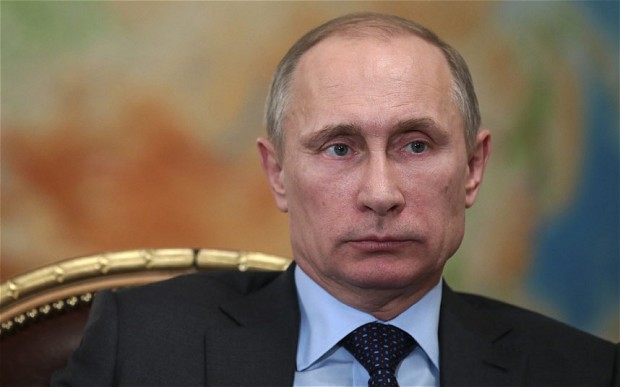
I just posted the Times story as soon as it broke yesterday in semi-amazement and without thinking too much. And then the delayed response dawns on you that is so blatantly obvious you can’t believe it was delayed. The Question: how can he possibly believe that the world won’t think that the Nemtsov hit was ordered by him — or just carried out “on his behalf” without being told so that he can claim clean hands? And then you realize — he doesn’t care if the world thinks that; he’s probably sure that that’s exactly what the world does think, in fact, but just doesn’t care. Το καθίκι… Just that simple. What are they going to do about it anyway?
Today’s Times story by Andrew Kramer: “Fear Envelops Russia After Killing of Putin Critic“
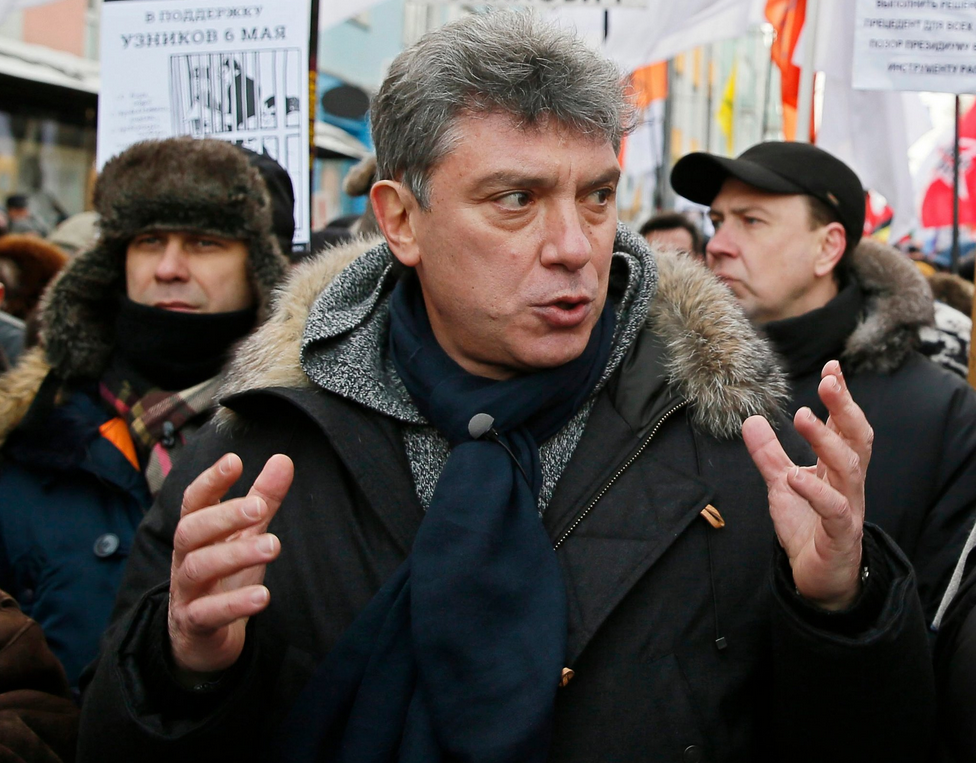 Mr. Nemtsov at an opposition rally last year. He was scheduled to lead a protest against the war in Ukraine this weekend. Credit Yuri Kochetkov/European Pressphoto Agency
–
Comment: nikobakos@gmail.com
–
Kale Sarakoste to everyone: Alexander Schmemann and “the bright sadness of Lent”
23 Feb(re-posted from last year)
 (click)
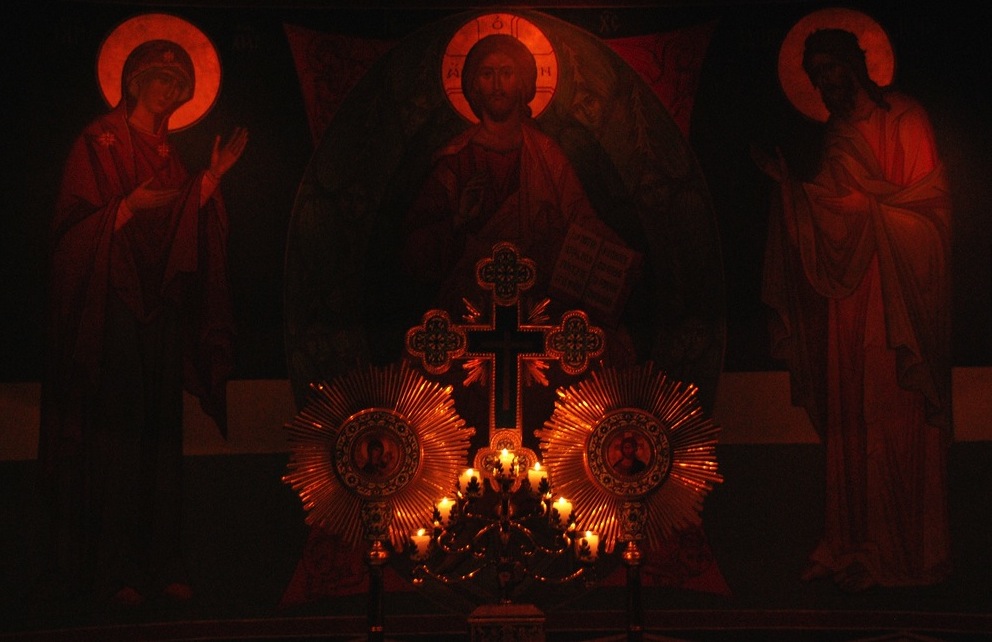
“The general impression, I said, is that of “bright sadness.” Even a man having only a limited knowledge of worship who enters a church during a Lenten service would understand almost immediately, I am sure, what is meant by this somewhat contradictory expression. On the one hand, a certain quiet sadness permeates the service: vestments are dark, the services are longer than usual and more monotonous, there is almost no movement. Readings and chants alternate yet nothing seems to “happen.” At regular intervals the priest comes out of the sanctuary and reads always the same short prayer, and the whole congregation punctuates every petition of that prayer with prostrations. Thus, for a long time we stand in this monotony — in this quiet sadness.
“But then we begin to realize that this very length and monotony are needed if we are to experience the secret and at first unnoticeable “action” of the service in us. Little by little we begin to understand, or rather to feel, that this sadness is indeed “bright,” that a mysterious transformation is about to take place in us. It is as if we were reaching a place to which the noises and the fuss of life, of the street, of all that which usually fills our days and even nights, have no access — a place where they have no power.
“All that which seemed so tremendously important to us as to fill our mind, that state of anxiety which has virtually become our second nature, disappear somewhere and we begin to feel free, light and happy. It is not the noisy and superficial happiness which comes and goes twenty times a day and is so fragile and fugitive; it is a deep happiness which comes not from a single and particular reason but from our soul having, in the words of Dostoevsky, touched “another world.” And that which it has touched is made up of light and peace and joy, of an inexpressible trust. We understand then why the services had to be long and seemingly monotonous. We understand that it is simply impossible to pass from our normal state of mind made up almost entirely of fuss, rush, and care, into this new one without first “quieting down,” without restoring in ourselves a measure of inner stability.”
Read the rest here: The Bright Sadness Of Lent
–
Comment: nikobakos@gmail.com
–
GREEK DEADLINE
20 FebGREEK DEADLINE
GREEK DEADLINE
GREEK DEADLINE
GREEK DEADLINE
GREEK DEADLINE
GREEK DEADLINE
GREEK DEADLINE
GREEK DEADLINE
GREEK DEADLINE
GREEK DEADLINE
GREEK DEADLINE
GREEK DEADLINE
GREEK DEADLINE
GREEK DEADLINE
GREEK DEADLINE
GREEK DEADLINE
GREEK DEADLINE
GREEK DEADLINE
GREEK DEADLINE
GREEK DEADLINE
GREEK DEADLINE
GREEK DEADLINE
GREEK DEADLINE
GREEK DEADLINE
GREEK DEADLINE
GREEK DEADLINE
GREEK DEADLINE
GREEK DEADLINE
GREEK DEADLINE????
GREEK DEADLINE!!!!!
Ok….let’s see
 Jadde: from Bosnia to Bengal