

(click)
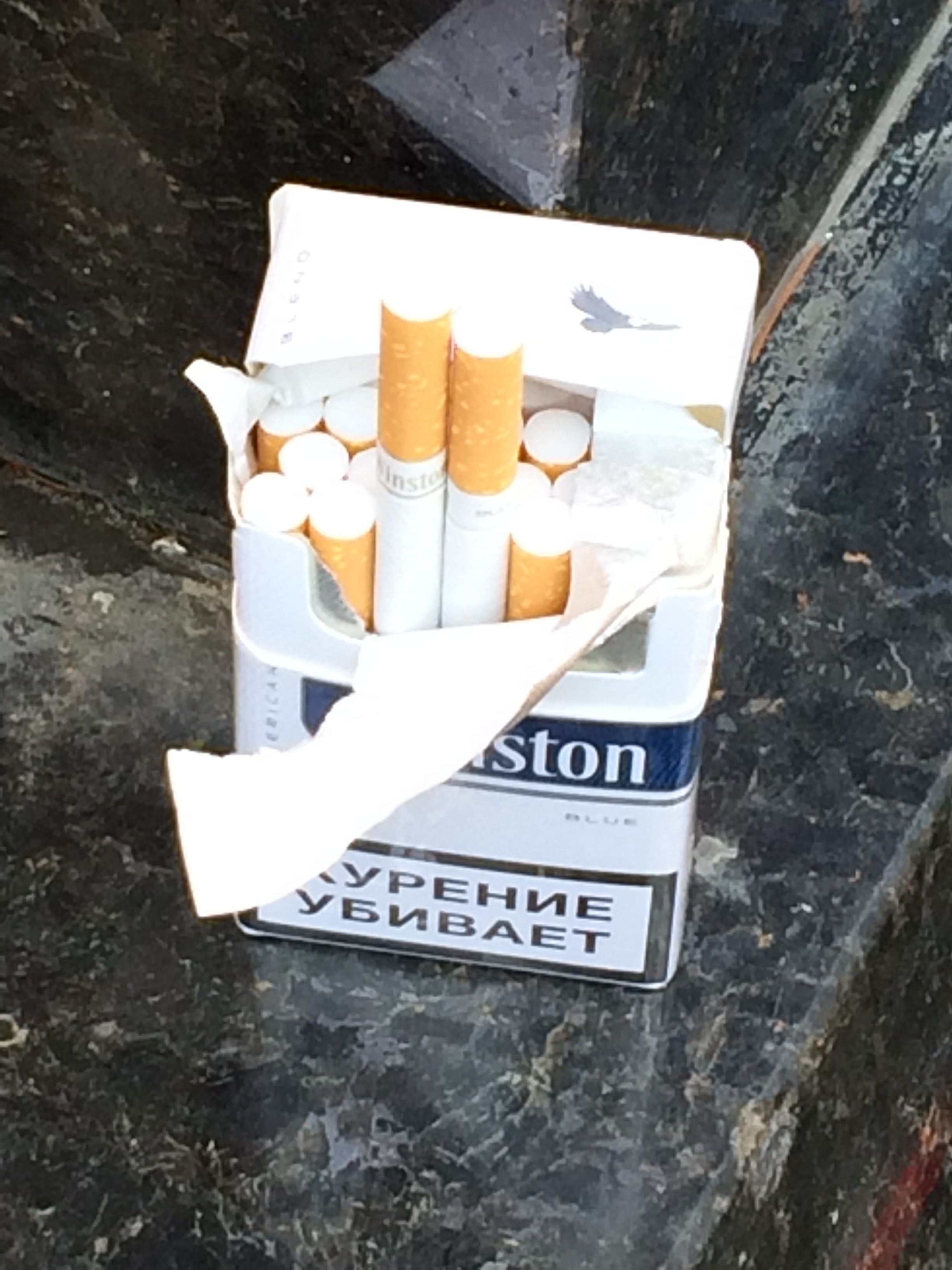
An Updike poem I’ve always loved…: “Let us not seek to make it less monstrous,
for our own convenience…”
Seven Stanzas at Easter
By John Updike
Make no mistake: if He rose at all
it was as His body;
if the cells’ dissolution did not reverse, the molecules
reknit, the amino acids rekindle,
the Church will fall.It was not as the flowers,
each soft Spring recurrent;
it was not as His Spirit in the mouths and fuddledeyes of the eleven apostles;
it was as His Flesh: ours.The same hinged thumbs and toes,
the same valved heart
that — pierced — died, withered, paused, and thenregathered out of enduring Might
new strength to enclose.Let us not mock God with metaphor,
analogy, sidestepping transcendence;
making of the event a parable, a sign painted in the
faded credulity of earlier ages:
let us walk through the door.The stone is rolled back, not papier-mache,
not a stone in a story,
but the vast rock of materiality that in the slow
grinding of time will eclipse for each of us
the wide light of day.And if we will have an angel at the tomb,
make it a real angel,
weighty with Max Planck’s quanta, vivid with hair,
opaque in the dawn light, robed in real linen
spun on a definite loom.Let us not seek to make it less monstrous,
for our own convenience, our own sense of beauty,
lest, awakened in one unthinkable hour, we are
embarrassed by the miracle,
and crushed by remonstrance.
And a poem that’s appeared on the subway recently — most of you must’ve seen it — that initially did crush me with its child-like grief and sincerity:
Heaven
by Patrick Phillips
It will be the past
and we’ll live there together.Not as it was to live
but as it is remembered.It will be the past.
We’ll all go back together.Everyone we ever loved,
and lost, and must remember.It will be the past.
And it will last forever.“Heaven” by Patrick Phillips, from Boy. © The University of Georgia Press, 2008.
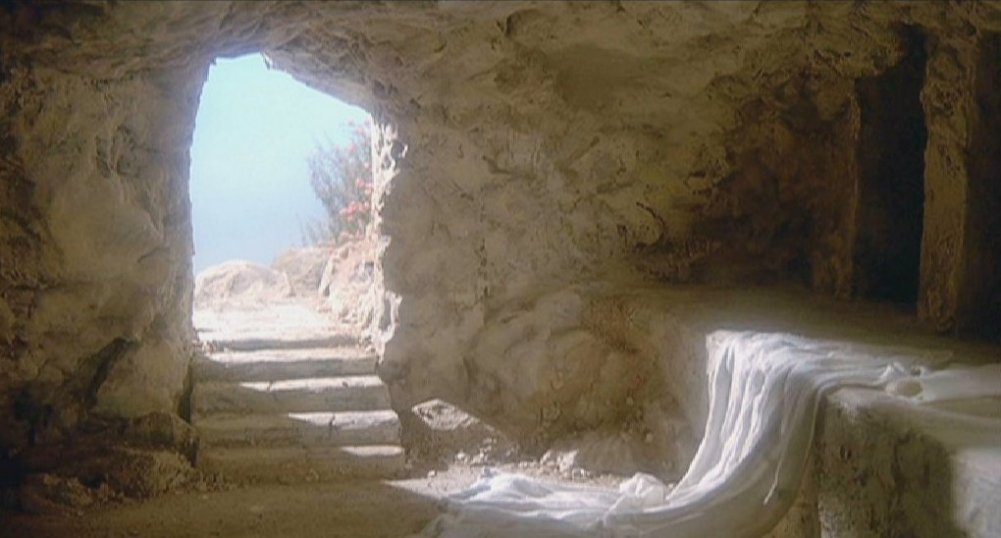
–
Comment: nikobakos@gmail.com
–
Stuck between a f*ckin’ rock and a f*ckin’ hard place. Not much more different than most eastern Christians… For a good — what is it? — 1,435? 1,436? years now…
From Al Jazeera.

Jerusalem – Palestinian Christians said they would not tolerate a repetition of the Israeli restrictions to and violence which have in past years marred Holy Week festivities – culminating on Easter Sunday – and have vowed to pursue ‘other means’ if no marked changes are made.
Speaking to journalists on Tuesday, community leaders expressed concerns that Israeli restrictions will prevent them from celebrating Easter this week, beginning with the Good Friday procession in Jerusalem, where thousands flock to walk along Via Dolorosa – the path believed to have been walked by Jesus before his crucifixion.
“There is one major change this year, and this is April 1, which is the day Palestine officially becomes a member of the International Criminal Court,” said Bassem Khoury, an Orthodox Christian from Jerusalem, and former Palestinian minister of economy. “Denial of freedom of religion is…an issue we will pursue if we are denied [access to our holy sites].”
For almost a decade, the Easter celebrations have been marked with clashes between local Christians and Israeli troops, who regularly prevent worshippers from accessing the religious sites.
“Since 2005, Israel has closed the Old City of Jerusalem for us,” said Hind Khoury, former Palestinian minister of Jerusalem affairs. “We arrive to celebrate Palm Sunday and Holy Friday only to find the access doors closed and many Israeli military checkpoints along the way.”
This Friday, pilgrims and visitors will walk down the cobbled Via Dolorosa through the walled Old City, many bearing wooden crosses, to the Church of the Holy Sepulchre, where tradition has it Jesus was buried before rising again three days later.
Restrictions
This year, Easter festivities are coinciding with the Jewish holiday of Passover. Israeli authorities impose severe restrictions on Palestinians’ movement during that time, affecting both Muslim and Christians’ access to Jerusalem holy sites.
“Israeli authorities give some permits to Christians during religious holidays,” said Fr. Jamal Khader, the rector of the Latin Patriarchate Seminary, who described himself as one of the ‘lucky ones’ to have received permission to enter Jerusalem this Easter time.
“But at the same time, the access to the Church of the Holy Sepulchre is restricted and during Pesach [Passover] there are even more restrictions,” he said. “Permits are a means of control and this is a violation of our freedom of worship.”
Khader said that families from his parish often complain that permits are not given to the entire household, which often means having to drop plans to attend the Jerusalem festivities. Even those with permits cannot always take part in the processions because the Old City is “practically closed”, he said.
“Every year when we get here for the procession, we notice that the whole area is empty except for hundreds of soldiers and policemen,” he said. “This is a real problem for regular people; it dissuades them from participating.”
Dwindling numbers
Difficulties in reaching holy sites come at a time when Christian leaders concede that the community’s numbers are in decline. In 1944, there were some 30,000 Christians living in Jerusalem’s Old City, according to official figures. Today that number does not exceed 11,000.
Many Palestinian Christians have complained in the past that they were beaten, shoved and prevented by Israeli forces from entering the Old City during religious holidays. Israeli authorities said they were merely using ‘crowd-control measures’ because of the large number of visitors. This year, the Israeli tourism ministry said it is expecting about 13,000 over the period of Holy Week and Passover.
“We are not happy with the measures by [the Israeli municipality of Jerusalem],” said Archbishop Fouad Twal, the Latin patriarch. “We are afraid of a repetition of last year[‘s events]. Sometimes I wonder whether the [Israeli] policemen know why they are there – to help or to make our lives more difficult.”
Last year, the UN’s peace envoy to the Middle East at the time and other high-ranking diplomats were prevented from going through a barricade to the Church of the Holy Sepulchre for the ‘Holy Fire’ procession – a traditional ceremony that takes place a day before Orthodox Easter.Robert Serry said Israeli police forbade him and Italian, Norwegian and Dutch diplomats from getting to the church as he was being crushed by a waiting crowd at a barricade. They also ignored his requests to speak to a superior, he said.
At the time, Serry called their behaviour “unacceptable” and demanded in a statement that all parties “respect the right of religious freedom”. Israeli authorities denied Serry’s charges, saying he had displayed “a serious problem of judgment”.
Last year, Palestinian Christian communities turned to Israel’s supreme court, which agreed that Palestinians’ rights were being violated, and that checkpoints and other restrictions were hindering access to places of worship.
‘Unhindered access’
This year, they received official Israeli assurances of unhindered access to the church. “I’m not 100 percent optimistic that things will go fine even though we have assurances from Israeli security, even the president himself,” Bassem Khoury said.
But some Christians fear that it’s not only access to their holy sites that’s being lost in these festivities: participating in celebrations that extend beyond the religious. Ra’ed Sa’adeh, who owns and manages the Jerusalem Hotel, said he grew up in the Old City and took part in Holy Week celebrations yearly.
“Many of the activities have both religious and cultural [significance],” Sa’adeh said. “And as Christians, we are being deprived from exercising our culture. Now it’s impossible to be part of the popular celebrations, which are the natural cultural expression that people have been a part of for hundreds of years.”
–
Comment: nikobakos@gmail.com
–
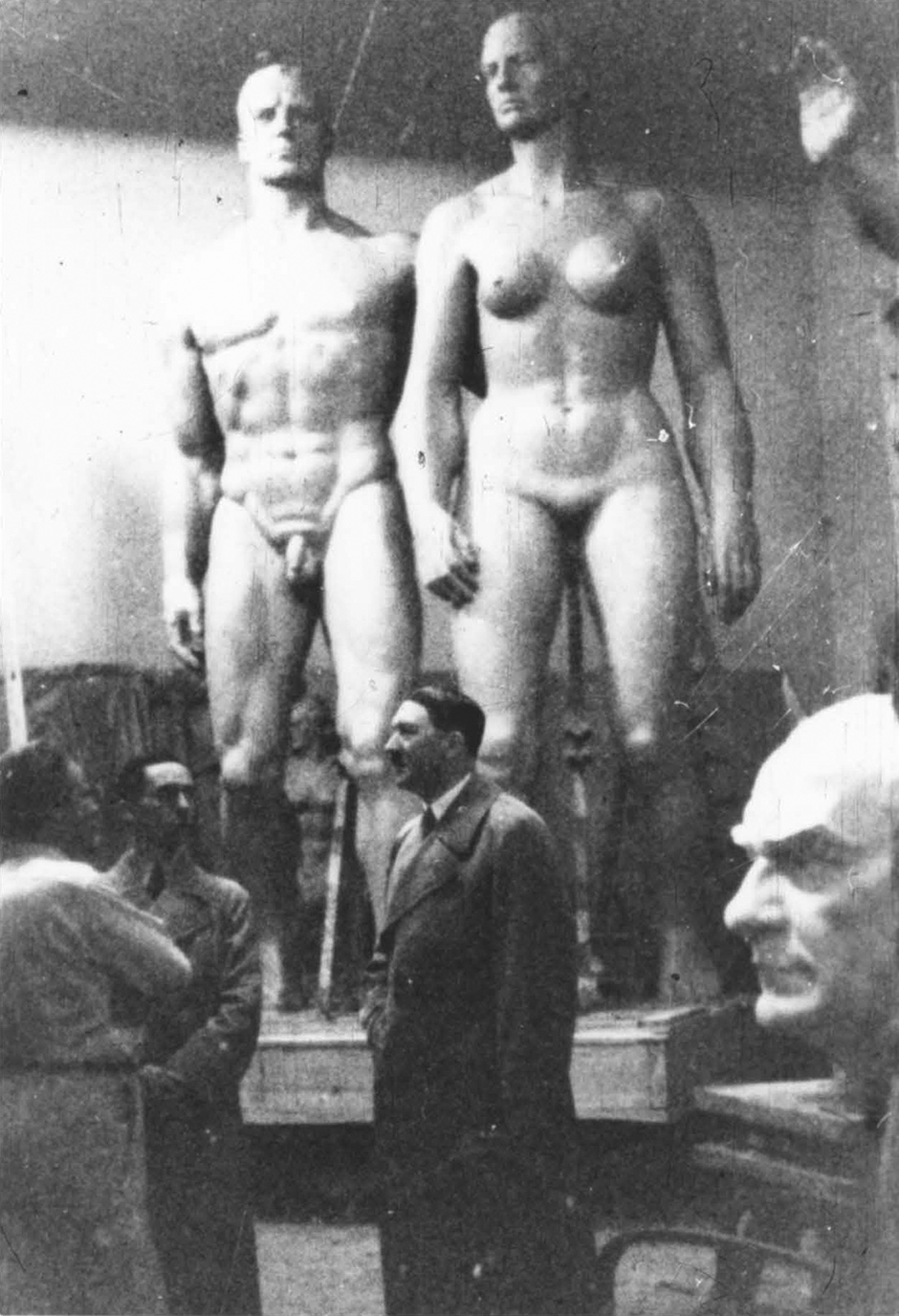 Adolf Hitler in the workshop of the sculptor Josef Thorak, with Thorak’s bust of Atatürk behind him, Munich, February 1937 (click)
From The New York Review of Book. See whole article: “Hitler & the Muslims“ by Steve Coll in April 2, 2015 volume.
Money quote (at least for our purposes):
“The aim of Atatürk in the Nazi Imagination is to document that the founder of modern Turkey deserves to be remembered as a figure equal to Mussolini in Hitler’s early political imagination. Mustafa Kemal Pasha, later glorified as Atatürk, had a record of military action that included cleansing what Hitler believed to be the inherently sapping multiethnicity of the expired Ottoman Empire.
“Indeed, in Ihrig’s account, apart from Atatürk’s personal inspiration, the organized mass killing of Armenians by Turks during World War I—the events now recognized as the Armenian Genocide—explicitly influenced Hitler’s thinking about the extermination of Jews as early as the 1920s. Ihrig quotes a multipart essay published in Heimatland, an influential Nazi periodical, by Hans Tröbst, who had fought with the Kemalists during what Turks knew as the War of Independence:
‘The bloodsuckers and parasites on the Turkish national body were Greeks and Armenians. They had to be eradicated and rendered harmless; otherwise the whole struggle for freedom would have been put in jeopardy. Gentle measures—that history has always shown—will not do in such cases…. Almost all of those of foreign background in the area of combat had to die; their number is not put too low with 500,000. [emphasis in original]’
“In incipient Nazi historiography, Ihrig writes, “the ‘fact’ that the New Turkey was a real and pure völkisch state, because no more Greeks or Armenians were left in Anatolia, was stressed time and again, in hundreds of articles, texts, and speeches.” Of course, the Nazi Holocaust was constructed in its own setting, from its own sources; one should not overemphasize the Armenian precedent, and Ihrig does not. Yet here is a documented example from the early industrialization of ethnic murder in which one campaign of genocide influenced another.
And a key point:
“Politically, Atatürk’s success offered a model of how to overcome the humiliation and prostration imposed on World War I’s losers at Versailles. Atatürk not only seized power through bold action in the name of the Turkish nation, he also forced European capitals to renegotiate the terms of the treaty they had imposed…”
–
Comment: nikobakos@gmail.com
–
 (click)
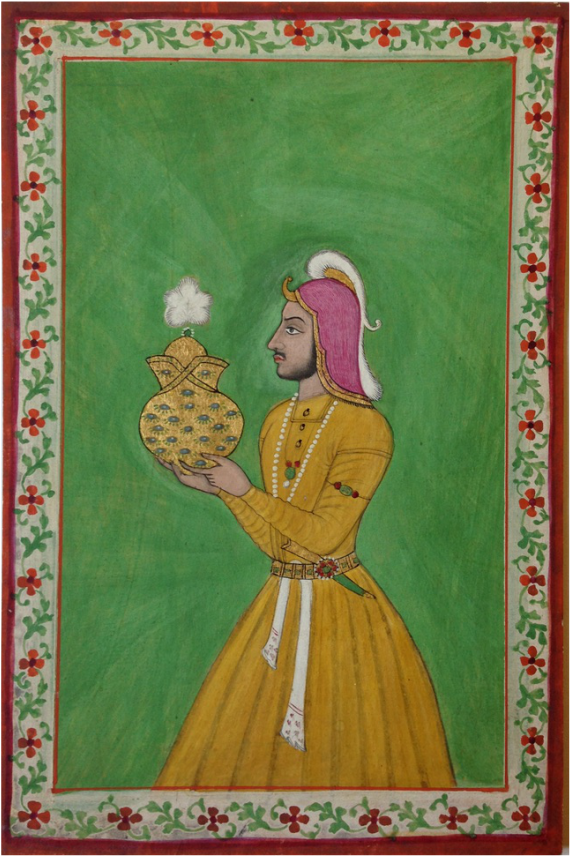
Through the Shahnameh, Alexander, sometimes as an invading villain, sometimes as a great hero, (but then the Shahnameh is an intensely complex work morally), has entered the legend canon of all Persianate societies. Pashtuns in particular, for whom the melding of “invading villain” and “great hero” must have a special resonance (smile…) think that Alexander — Sikandar — is a particularly lucky and propitious name to give a boy. (See: The Cup of Jamshid)
And…see best, most recent translation of the Shahnameh in English, and Reza Aslan’s interesting review for the Times from 2006: “The Epic of Iran” — where he discusses the work’s — and Iranians’ — ambiguous relation to Iran’s pre-Islamic past and the Arab conquest:
“FOUR hundred miles from the bustling metropolis of Tehran lie the magnificent ruins of Persepolis. Built some 2,500 years ago, Persepolis was the royal seat of an Iranian empire that, at its height, stretched from the Indus Valley to the Mediterranean Sea. Though the imperial city was sacked two centuries later by Alexander “the Accursed” (as Iranian chroniclers referred to him), the towering columns and winged beasts that still stand guard over the lost throne of Iran serve as a reminder of what was once among the most advanced civilizations on earth.
“I first visited Persepolis two years ago. Born in Iran but raised in the United States, I knew the place only from dusty academic books about the glories of pre-Islamic Iran. I was totally unprepared for the crowds I saw there. Busloads of schoolchildren from nearby Shiraz filed through the complex of temples and palaces. A tour guide walked an older group up a stone stairway etched with row upon row of subject nations humbly presenting themselves before the king, or shah, of Iran. Families laid out sheets and napped in the shade cast by the intricately carved walls.
“Breaking away from the crowd, I noticed a boy scrawling graffiti on the side of a massive stone block. Horrified, I shooed him away. When I moved closer to see what he had written, I immediately recognized a verse, familiar to many Iranians, taken from the pages of Iran’s national epic, the “Shahnameh.”
Damn this world, damn this time, damn this fate,
That uncivilized Arabs have come to make me Muslim.“Written more than a thousand years ago by Abolqasem Ferdowsi, the “Shahnameh,” or “Book of Kings,” recounts the mythological history of Iran from the first fitful moments of creation to the Arab conquest of the Persian Empire in the seventh century A.D. Ferdowsi was a member of Iran’s aristocratic class, which maintained a strong attachment to the heritage of pre-Islamic Iran…”

 Reza Aslan (click)
–
Comment: nikobakos@gmail.com
–
From the Guardian: “Rafael Nadal admits nerves and loss of confidence after Miami defeat“ — story pasted below. The BBC video hasn’t been posted yet, so just reading it doesn’t give you such a good sense of his washed-out-ness or his mangled English (compare it to Djok’s nearly flawless command), but as soon as I find it I’ll post it.
 (click)
Rafael Nadal has said he is struggling with nerves and self-confidence issues after he was beaten in the third round by his fellow Spaniard Fernando Verdasco at the Miami Open on Sunday.
“It is not a question of tennis. The thing is the question of being relaxed enough to play well on court,” he said after the 6-4, 2-6, 6-3 loss at Key Biscayne.
“A month and a half ago I didn’t have the game. My game has improved but … I am still playing with too much nerves for a lot of moments, important moments, still a little anxious on those moments.”
Nadal rejected the notion his numerous past injury problems were leading him to doubt his body.
“The physical problems are in the past. I am in competition. I’m playing weeks in a row. Is not an excuse,” he said. “It is a different story today. I am feeling more tired than usual, feeling that I don’t have this self-confidence that when I hit the ball I am going to hit the ball where I want to hit the ball, to go for the ball knowing that my position will be the right one.
“All these are small things that are difficult to explain. One of the tougher things has been fixed, that is the game, in my opinion. Now I need to fix again the nerves, the self-control on court. That’s another issue.
“I am a little bit on and off too much. That is something that didn’t happen in the past. [It was actually “didn’t happen-ed” or “diren jápenet.] In the past I have been able to change a lot of situations, negative situations, in my career and I want to do it again. I am confident that I can do it. I don’t know if I am going to do it but I hope I can.”.
With the clay court part of the season coming up, Nadal’s preferred surface, he said the opportunity is there for him to turn his form around but he said that would not happen if he is unable to fix his mental issues.
“The tournaments that are coming are historically good for my game, good tournaments for my confidence,” he said. “But if I’m not able to control all these things, I am not going to have the possibility to compete well and have success in those events.”
See also: “Why I can’t stand watching Rafael Nadal win“ and “Why I love watching Rafael Nadal lose“ and “Whatever it is [Rafa], it begins to grate.“
–
Comment: nikobakos@gmail.com
–
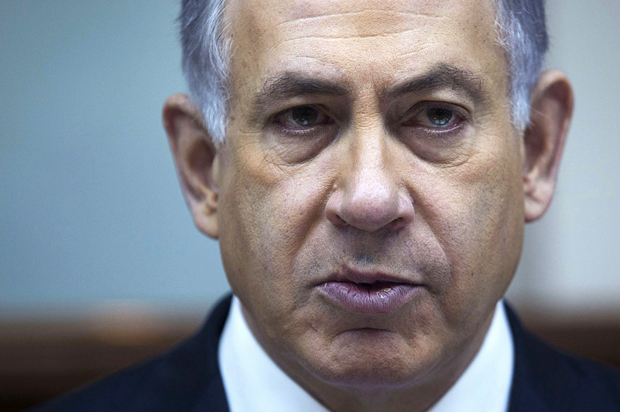
“What makes this year’s Passover Seders unlike any others is that a majority of American Jews have been forced to face the fact that Palestinians today are asking Jews what Moses asked Pharaoh: “Let my people go.” The Israeli elections, and subsequent support for Prime Minister Netanyahu’s open racism and obstinate refusal to help create a Palestinian state, is not playing well with many younger Jews, and they will be challenging their elders to rethink their blind support for Israeli policies.”
Read whole article: “Let the Palestinian people go”: What younger Jews will be asking of Israel at Passover Seder this year
–
Comment: nikobakos@gmail.com
–

Prizren, Kosovo – For a group of Sufi mystics, the advent of spring erupts in a clash of cymbals, guttural chanting, and a trickle of blood.
For hours several dozen men in the congregation have been chanting, swaying, and singing songs in Albanian, Turkish and Arabic. As the pace of the music quickens, Sheikh Adrihusein Shehu removes a small iron skewer known as a zarf from the mihrab behind him, blesses it with his lips, and inserts it slowly into the cheek of his 12-year-old son, Sejjid Emir. Several more children follow.
The annual ritual is a celebration of the birth of Ali ibn Abi Talib, the first male to accept Islam. Held annually on the spring equinox, it is also a celebration of Nowruz, the Persian new year.
“We as believers each year turn toward love in this day, and continue our road to Allah, to live together, to respect all creation which he made, and to love one another,” said Sheikh Shehu as he opened the ceremony, surrounded by visiting religious figures from around the region, from Turkey, and the United States.
 |
| A member of the Bektashi Rufai sect prepares the zarfs at the mimber before starting the Nowruz ritual [Ferdi Limani/Al Jazeera] |
Dervishes practice an ancient form of Sufi mysticism that focuses on the individual’s relationship with the divine. Religious practice involves music and dancing, which are not allowed in mainstream Islam.
Four generations of Sheikh Shehu’s family have presided over the Rufai Tekke, or house of worship, in Prizren, a charming town nestled below the mountains in southern Kosovo, just 22 kilometres from Albania.
Every Friday, Shehu presides over the zikhr, the Sufi devotional repetition of Quranic verses, that has been tradition since the Rufai Dervish order was established in southern Iraq in the 12th century.
“Our founder Pir Sejjid Ahmed Er Rufai made a miracle in his time to show others that God exists, and now we do this for tradition,” Shehu’s eldest son, Sejjid Xhemal, told Al Jazeera.
 |
| Sheikh Adrihusejn Shehu inserts a zarf into the cheek of a member of the sect [Ferdi Limani/Al Jazeera] |
The swaying men in the congregation wear white felt hats with a black band. Some of the elders have small circular scars on their cheeks from years past when they were pierced.
As the chanting crescendos, Shehu removes a larger zarf from the mihrab, bathed in green light, and begins to bless it, slowly moving each segment across his lips. This zarf has a bulb weighing almost two kilos attached to one side.
Chains dangle from the bulb, making it look like a jellyfish when upright and swish when the mystics dance.
Ali Esghar, a mustachioed elder who has been participating in the ritual for about 20 years, moves the zarf between his palms and dances in the centre of the men circled around him.
At one moment Shehu is handed a scepter, which he uses like a hammer to push a zarf into the flesh above Esghar’s right hip. He continues to gyrate, right back, left, back, right, with the zarf in his side.
Later, Esghar twists the spear into the area just above the centre of his clavicle. He appears ecstatic as a small trickle of blood emanates from his right cheek.
“It is a good feeling, I feel spiritually stronger,” says Shehu’s eldest son Sejjid Xhemal, 27. “I don’t feel pain, you can see that I have only a little blood on my cheek,” he said, pointing to a bit that had congealed on his trim beard.
 |
| Sufi mystics from Prizren clean the zarfs [Ferdi Limani/Al Jazeera] |
Xhemal wants to be clear that contrary to widespread belief, the believers are not in a trance.
“We have been doing this with full consciousness since Ottoman times,” he says. “It’s just that we feel no pain.”
Ethnic Albanians such as Shehu and most of his adherents comprise 90 percent of Kosovo’s 1.8 million inhabitants. The vast majority practice a secular form of Sunni Islam, and Sufi adherents form a small minority of believers.
The order came to the Balkans in the 16th century when Kosovo was ruled by the Ottoman Empire, though the current branch was established in Kosovo in 1860.
Dervishes in Prizren had to weather decades of intermittent war in the 20th century: first the Balkan Wars, then the First and Second World Wars before being forced underground by Josip Broz Tito’s communist vision for Yugoslavia.
 |
| Members of the Bektashi Rufai sect pierce each other, sing, and dance [Valerie Hopkins/Al Jazeera] |
But the Rufai Tekke helped revive Sufism in Kosovo. In 1974, Shehu’s father Sheikh Xhemal founded an association of dervish orders that now has about 100,000 adherents.
Shehu’s branch, or tarikat, is one of the seven practiced in Kosovo. It preaches tolerance and respect for all religions.
His message of peace is valuable in Kosovo, which is still recovering from the 1998-1999 conflict against Serbia, its former master. More than 10,000 people were killed and 90 percent of Kosovo Albanians displaced during the war, which ended after 11 weeks of NATO air strikes.
Following the conflict, Kosovo was run by the United Nations until declaring independence in 2008. It has been recognised by 110 countries, but its full realisation as a state is being hampered by Serbia, which still claims Kosovo as its own.
 |
| A member of the Bektashi Rufai sect spinning the zarfs during the Nowruz ritual in Prizren, Kosovo [Ferdi Limani/Al Jazeera] |
Many of the oldest and most hallowed monasteries of Serbia’s Orthodox Church are in Kosovo, and church leaders are among the most vocal institutions condemning independence.
Kosovo society, struggling with the legacy of war and Europe’s lowest employment rates, remains deeply divided.
Shehu urges his believers to look past ethno-nationality in order to forge a common future.
“All minorities of Kosovo: Bosniaks [Slavic Muslims], Serbs, Goranis [another Slavic Muslim minority], Turkish, are here today,” he told to a group of visitors after the ceremony. “In Kosovo, we are all Kosovars, and once we understand that there will no longer be any problems.”
 |
| The annual ritual is a celebration of the birth of Ali ibn Abi Talib, the first male to accept Islam [Valerie Hopkins/Al Jazeera] |
Shehu’s message of moderation also comes at a time when Kosovo, like most European nations, is trying to fight religious radicalisation, and show to Western Europe and the US that it is a secular country.
Between 150 and 300 Kosovars have joined armed groups in Iraq and Syria.
Seven people were indicted in early March for “inciting terrorism”. In September, nine prominent imams were among 40 people arrested in a major police operation.
The Kosovo government has banned headscarves in public schools and says it is monitoring hardliners at home and abroad.
Throughout the festivities, Sheikh Shehu emphasises the importance of respect for all believers.
“We all have faith, but in form we are different,” the Sheikh says, taking a drag on a cigarette after the ceremony.
“One goes to church, one to synagogue, one to the mosque. But we are all going because of belief in God. We must turn toward love, who gives you the right to hate?”
For why I love the Annunciation, my bashing of Greek Independence Day, the Massacre of Tripolitsa, Lauryn Hill, the smell of bacalao, Mithraism and my Everything-is-Persian theory, see my last year’s post for the date: The Annunciation: “And I thank you for choosing me…”
 Orazio Gentileschi (1623)
 Dante Gabriel Rossetti (1850)
 Henry Ossawa Tanner (1898)
 Raphael Soyer (1980)
–
Comment: nikobakos@gmail.com
–

 Jadde: from Bosnia to Bengal