A reader writes:

20 Nov

In reference to my November 7th post on genocide:

“This is probably the best summing up I’ve ever read:”

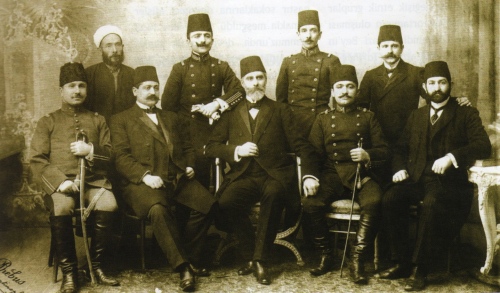
“The CUP — the Young Turks — have always seemed to me to have been a bunch of loose cannons: a nefarious, often eccentric, make-it-up-as-you-go-along group of giant egos who seemed to be talking past each other most of the time and did their best in essentially ending the Ottoman Empire in the messiest way possible…”

2724x

You might want a more objective or comprehensive view: Turkey in the First World War

And the book I recommended before: The Young Turks: The Committee of Union and Progress in Turkish Politics, 1908-1914

Young Turks

comment: nikobakos@gmail.com

BESA: A Code of Honor

20 Nov

I can’t convey the indescribable beauty of this word for me.

For a people constantly maligned as bandits and cutthroats:

“Casting Light on Little-Known Story of Albania Rescuing Jews From Nazis”  from today’s Times:

“The exceptional difference in Albania, experts on the episode say, was rooted in a national creed called besa that obligates Albanians to provide shelter and safe passage for anyone seeking protection, particularly if there has been a promise to do so. Failure to act results in a loss of honor and standing. [my emphases]

“It involves uncompromising protection of a guest, even at the point of forfeiting one’s own life,” wrote Shirley Cloyes DioGuardi, an organizer of the New York event whose husband, former Representative Joseph H. DioGuardi, visited Albania in the early 1990s and helped unearth details of the rescue.”

and:

“Another explanation, Ms. Cloyes DioGuardi says, is that in Albania, a Roman Catholic and Eastern Orthodox country until Ottoman rule led to conversions to Islam starting in the 15th century, ethnicity has always trumped religion, and piety is less than zealous. “We knew our enemies wanted to use religion to divide and conquer us, but we knew we had the same blood,” said Akim Alickaj (a-LITCH-kye), an ethnic Albanian raised in Kosovo who owns a New York travel agency and whose father helped rescue Jews. “Religion changes, but nation and blood can’t be changed.””

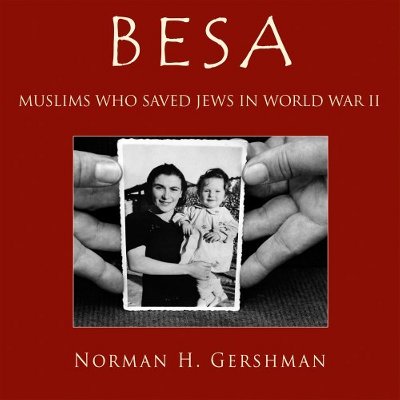
And a beautiful book that came out last year:

besa_big1

And see Yad Vashem’s site:

splash1

And I guess why I love Afghanistan so much.

comment: nikobakos@gmail.com


“Syria hear me…”

13 Nov

Just that that line shook me up upon re-reading it…

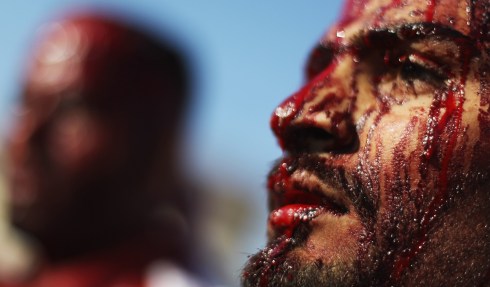
Ashura 1435: a poem from Agha Shahid Ali

13 Nov

Iraq Transitions As U.S. Forces Withdraw After 8-Year Presence

(click)

Karbala: A History of the “House of Sorrow”

In a distant age and climate, the tragic scene of the death of Husayn will awaken the sympathy of the coldest reader.
—Edward Gibbon

Jesus and his disciples, passing through the plain of Karbala, saw “a herd of gazelles, crowding together and weeping.” Astonished, the disciples looked at their Lord. He spoke: “At this site the grandson of Prophet Muhammad (Peace be upon him) will one day be killed.” And Jesus wept. Oh, that my head were waters, and mine eyes a fountain of tears, that I might weep day and night for the slain … And Jesus wept. And as if the news has just reached them—fourteen hundred years after the Battle of Karbala (near ancient Babylon, not far from the Euphrates) in the year A.H. 61/A.D. 680—mourners weep for “the prince among martyrs,” Hussain, grandson of the Prophet and son of Ali (“Father of Clay”) and Fatima (the Prophet’s only surviving child). Memorializing Hussain on the tenth of Muharram (Ashura) is the rite of Shi’a Islam—so central that at funerals those events are woven into elegies, every death framed by that “Calvary.” For just “as Jesus went to Jerusalem to die on the cross,” Hussain “went to Karbala to accept the passion that had been meant for him from the beginning of time.”


Zainab’s Lament in Damascus

Over Hussain’s mansion what night has fallen?

Look at me, O people of Shaam, the Prophet’s only daughter’s daughter, his only child’s child.

Over my brother’s bleeding mansion dawn rose—at such forever cost?

So weep now, you who of passion never made a holocaust, for I saw his children slain in the desert, crying for water.

Hear me. Remember Hussain, what he gave in Karbala, he the severed heart, the very heart of Muhammad, left there bleeding, unburied.

Deaf Damascus, here in your Caliph’s dungeons where they mock the blood of your Prophet, I’m an orphan, Hussain’s sister, a tyrant’s prisoner.

Father of Clay, he cried, forgive me. Syria triumphs, orphans all your children. Farewell.

And then he wore his shroud of words and left us alone forever.

Paradise, hear me— On my brother’s body what night has fallen?

Let the rooms of Heaven be deafened, Angels, with my unheard cry in the Caliph’s palace:

    Syria hear me

    Over Hussain’s mansion what night has fallen

    I alone am left to tell my brother’s story

    On my brother’s body what dawn has risen

      Weep for my brother World, weep for Hussain
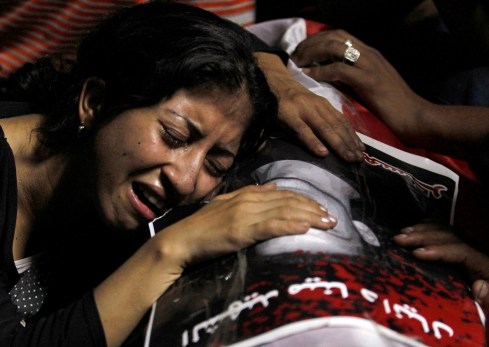
 

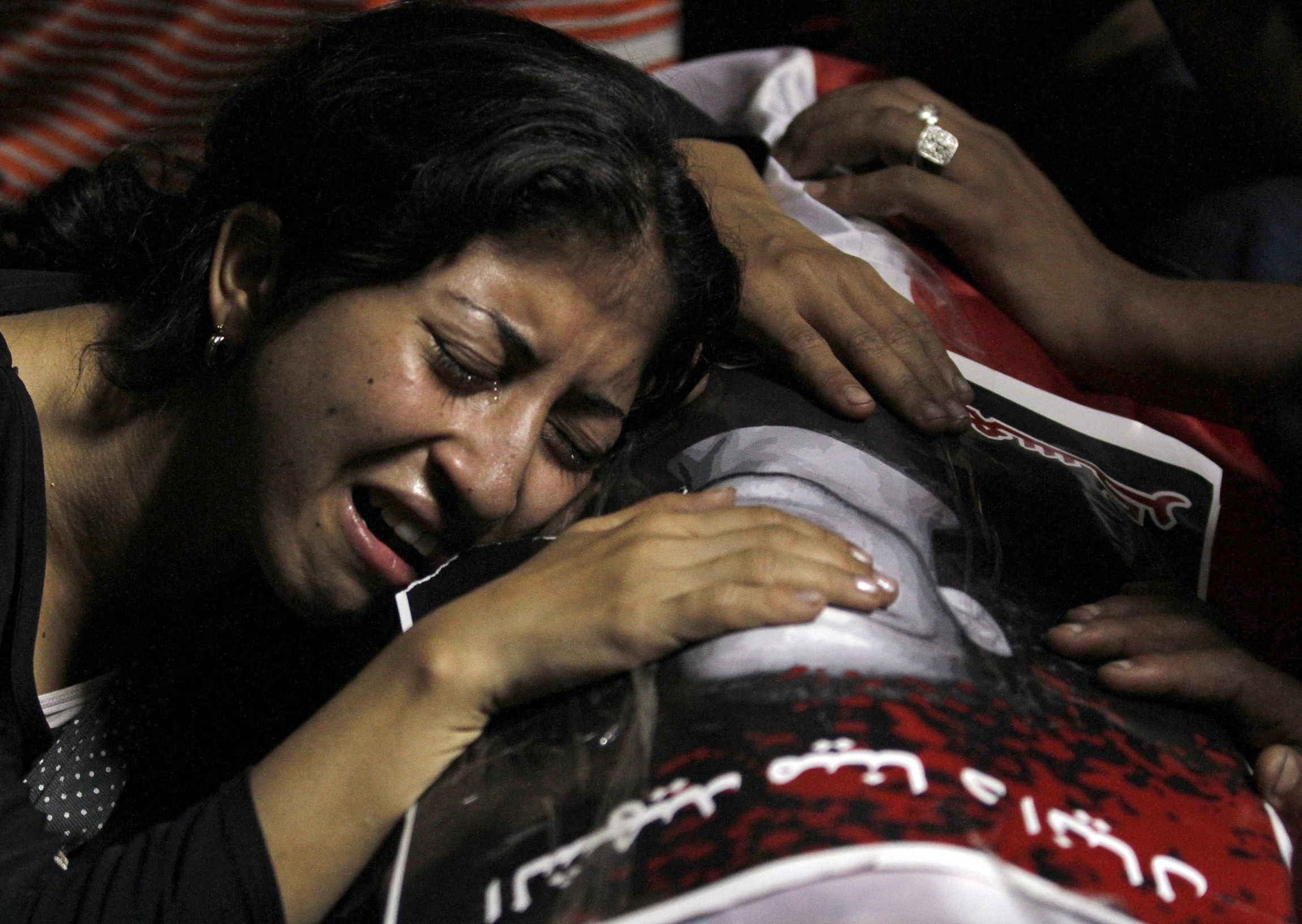
WOMAN MOURNS ON COFFIN OF VICTIM KILLED DURING PROTEST IN CAIRO

(click)

Reprinted from The Veiled Suite: The Collected Poems by Agha Shahid Ali. English translation copyright © 2009 by Daniel Hall. With the permission of the publisher, W.W. Norton & Company, Inc.

comment: nikobakos@gmail.com

Krugman backs me up on France

13 Nov

From the Times: The Plot Against France:”

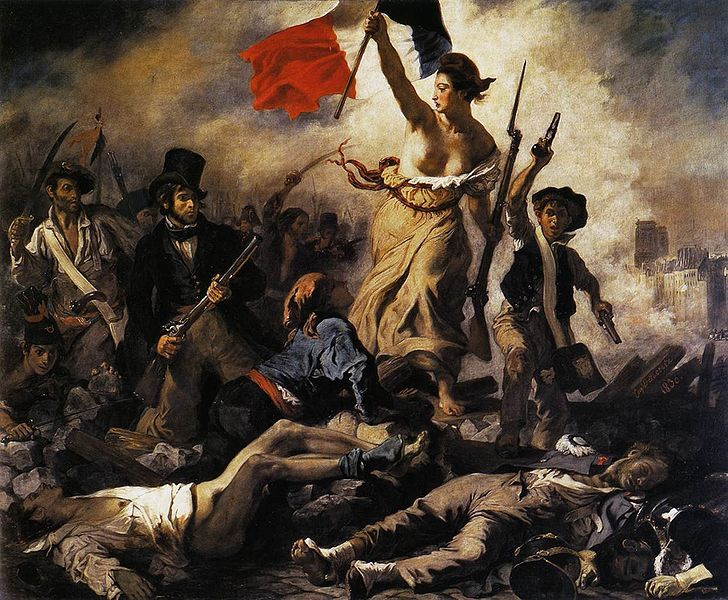
“A year ago the magazine The Economist declared France “the time bomb at the heart of Europe,” with problems that could dwarf those of Greece, Spain, Portugal and Italy. In January 2013, CNN Money’s senior editor-at-large declared France in “free fall,” a nation “heading toward an economic Bastille.” Similar sentiments can be found all over economic newsletters.

“Given such rhetoric, one comes to French data expecting to see the worst. What you find instead is a country experiencing economic difficulties — who isn’t? — but in general performing as well as or better than most of its neighbors, with the admittedly big exception of Germany. Recent French growth has been sluggish, but much better than that of, say, the Netherlands, which is still rated AAA. According to standard estimates, French workers were actually a bit more productive than their German counterparts a dozen years ago — and guess what, they still are.

“Meanwhile, French fiscal prospects look distinctly nonalarming. The budget deficit has fallen sharply since 2010, and the International Monetary Fund expects the ratio of debt to G.D.P. to be roughly stable over the next five years.”

And money quote:

“If all this sounds familiar to American readers, it should. U.S. fiscal scolds turn out, almost invariably, to be much more interested in slashing Medicare and Social Security than they are in actually cutting deficits. Europe’s austerians are now revealing themselves to be pretty much the same. France has committed the unforgivable sin of being fiscally responsible without inflicting pain on the poor and unlucky. And it must be punished.” [my emphasis]

Living securely, productively, growing at a reasonable rate, relatively stable — and all with high quality of life intact.  How do they do it?  It makes the Teutons crazy.  See my post from last week: “…some thoughts on the “crise;” or, “…the brevity of time and the immediacy of pleasure.”

marianne

(click)

comment: nikobakos@gmail.com

Nole!

13 Nov

Woefully amiss in my coverage of Nole this year…  But he was spectacular in this match: “Rafael Nadal vs. Novak Djokovic: Score and Recap from 2013 ATP World Tour Final”

“With the win, Djokovic has left the blueprint for how to beat Nadal. The problem is, he’s pretty much the only player in the world who can follow that blueprint to a T.

“Almost nobody can move as well as Djokovic. In addition, his defense is unparalleled on the tour. That means he can track down Nadal’s best shots on hard courts and then answer back with a shot that puts him on the offensive. This prevents his opponent any chance to breathe.”

hi-res-187682635-novak-djokovic-of-serbia-celebrates-a-point-in-his-mens_crop_north

(click)

This is turning into one of history’s great sports rivalries.  Neither can manage the complete shunting aside of the other– a fierce, non-stop grudge-match — and the emotional roller-coaster of following their battle is heart-pounding almost every time.

I’ll have some comments on the profile The New Yorker did on Djokovic earlier this fall, The Third Man” as soon as I get a chance.

comment: nikobakos@gmail.com

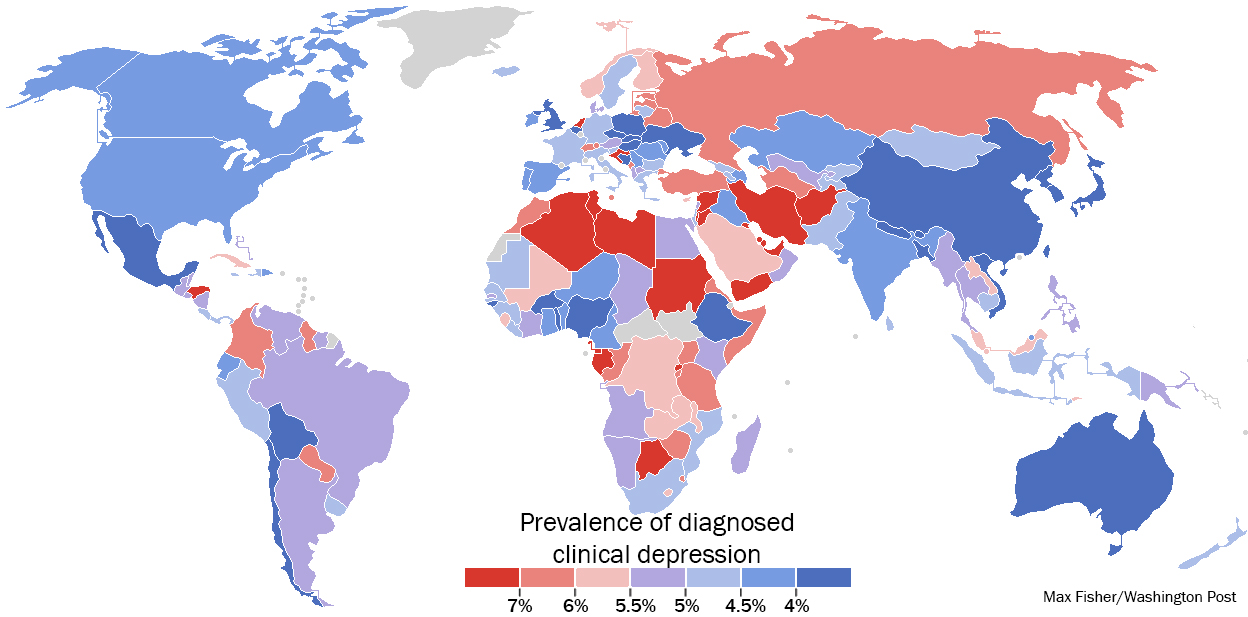
“The most depressed country is Afghanistan, where more than one in five people suffer from the disorder.”

13 Nov

From Washington Post:  “The Middle East and North Africa suffer the world’s highest depression rates, according to a new study by researchers at Australia’s University of Queensland — and it’s costing people in the region years off their lives.”

Aside from the real conditions that might explain this — real conditions — there are some really big questions though on what depression means to people.  Is ‘sadness’ or Freudian ‘melancholy’ a recognized cultural trait in these regions, a way of seeing life, even an aesthetic sensibility and not at all a debilitating force? perhaps even an empowering one? Because then we’re talking about an entirely different set of issues that I think this study may have missed.

depression-rates

An American will always tell you his life is going great, no?  Meanwhile, we have Oum Kalthoum.  And if you want to find a suite like her stunning “El Atlal” a marker of depression, you’ve got the whole culture/s wrong.  And I did not use the word “empowerment” above lightly; when you’ve seen how the public reacts in footage like this, or at a South Asian or Afghan poetry session, or even in the ritualized grieving at a funeral in Epiros, you’ll see that the participants are not ‘debilitated’ or ‘depressed’ in the least by the  emotional mood that’s generated — quite the opposite.

(Note: again, as with all this music, this is a suite, with a musical narrative structure essential to appreciating it; not a 2:30 CD track.  When you have the time, give it a chance as a whole piece. And she was such a brilliant performer…  Here’s a go-to site for translation of Arab music: Arabic Music Translation)

“Al Atlal” by the way, makes a beautiful ‘appearance’ in Anthony Shadid’s moving House of Stone: A Memoir of Home, Family, and a Lost Middle East.)

Here are the lyrics in English and Arabic:

The Ruins

My heart, don’t ask where the love has gone
It was a citadel of my imagination that has collapsed
Pour me a drink and let us drink of its ruins
And tell the story on my behalf as long as the tears flow
Tell how that love became past news
And became another story of passion
I haven’t forgotten you
And you seduced me with a sweetly-calling and tender tongue
And a hand extending towards me like a hand stretched out through the waves to a drowning person
You seduced me with the saliva (of a kiss) that a night traveler thirsts for
But where is that light in your eyes?
My darling, I visited your nest one day as a bird of desire singing my pain
You’ve become self-important, spoiled and capricious
And you inflict harm like a powerful tyrant
And my longing for you cauterized my ribs (soul or insides)
And the waiting was like embers in my blood
Give me my freedom, release my hands
Indeed, I’ve given you yours and did not try to retain anything
Ah, your chains have bloodied my wrists
I haven’t kept then nor have they spared me
Why do I keep promises that you do not honor?
When will this captivity end, when the world is before us?
He is far away, my enchanting love
Full of pride, majesty and delicacy
Sure-footed walking like an angel with oppressive beauty and rapacious glory
Redolent of charm like the breeze of the hills
Pleasant to experience like the night’s dreams
I’ve lost forever the charm of your company that radiated brilliantly
I, wandering in love, a bewildered butterfly, approached you
And between us, desire was a messenger and drinking companion that presented the cup to us
Had love seen two as intoxicated as us?
So much hope we had built up around us
And we walked in the moonlit path, joy skipping along ahead of us
And we laughed like two children together
And we ran and raced our shadows
And we became aware after the euphoria and woke up
If only we did not awaken
Wakefulness ruined the dreams of slumber
The night came and the night became my only friend
And then the light was an omen of the sunrise and the dawn was towering over like a conflagration
And then the world was as we know it, with each lover in their own path
Oh sleepless one who slumbers and remembers the promise when you wake up
Know that if a wound begins to recover another wound crops up with the memory
So learn to forget and learn to erase it
My darling everything is fated
It is not by our hands that we make our misfortune
Perhaps one day our fates will cross when our desire to meet is strong enough
For if one friend denies the other and we meet as strangers
And if each of us follows his or her own way
Don’t say it was by our own will
But rather, the will of fate.

Al Atlal (الأطلال)

شعر: إبراهيم ناجي غناء: أم كلثوم ألحان: رياض السنباطي
يا فؤادي لا تسل أين الهوى كان صرحاً من خيالٍ فهوى
اسقني واشرب على أطلاله وأروي عني طالما الدمع روى
كيف ذاك الحب أمسى خبراً وحديثاً من أحاديث الجوى

لست أنساك وقد أغريتني بفم عذب المناداة رقيق
ويدٍ تمتد نحوي كيدٍ من خلال الموج مدت لغريق
وبريق يظمأ الساري له أين في عينيك ذياك البريق

يا حبيباً زرت يوماً أيكه طائر الشوق أغني ألمي
لك إبطاء المذل المنعم وتجلي القادر المحتكم
وحنيني لك يكوي أضلعي والثواني جمرات في دمي

أعطني حريتي أطلق يديا إنني أعطيت ما استبقيت شيئا
آه من قيدك معصمي لم أبقيه فما أبقى عليا
ما احتفاظي بعهود لم تصنها وإلام الأسر والدنيا لديا

أين من عيني حبيبي ساحر فيه عزُ وجلال وحياء
واثق الخطوة يمشي ملكاً ظالم الحسن شجي الكبرياء
عبق السحر كأنفاس الربا تائه الطرف كأحلام المساء
أين مني مجلسٌ أنت به فتنة…. س…وس..
ها أنا حب وقلب هائمٌ وفراشٌ حائرٌ….من كذا….

ومن الشوق رسولٌ بيننا ونديمٌ قدم الكاس لنا
هل رأى الحب سكارى مثلنا كم بنينا من خيالٍ حولنا
ومشينا في طريقٍ مقمرٍ تجد الفرحة فيه قبلنا
وضحكنا ضحك طفلين معاً وعدونا فسبقنا ظلنا

وانتبهنا بعدما زال الرحيل وأفقنا ليت أنا لا نفيق
يقظة طاحت بأحلام الكرى وتولى الليل والليل صديق
وإذا النور نذير طالع وإذا الفجر مطلٌ كالحريق
وإذا الدنيا كما نعرفها وإذا الأحباب كلٌ في طريق

أيها الساهر تغفو تذكر العهد وتصحو
وإذا ما التئم جرح جد بالتذكار جرح
فتعلم كيف تنسى وتعلم كيف تمحو

يا حبيبي كل شيء بقضاء ما بأيدينا خلقنا ضعفاء
ربما تجمعنا أقدارنا ذات يوم بعدما عز اللقاء
فإذا أنكر خلٌ خله وتلاقينا لقاء الغرباء
ومضى كلٌ إلى غايته لا تقل شئنا فإن الحظ شاء
فإن الحظ شاء فإن الحق شاء

A reader writes: on “Screamers” and Genocide

10 Nov
“Thanks for your blog post [“Screamers:” Genocide: what is it and why do we need the term?] on the ‘genocide’ theme. I thought it was a lucid and intelligently worded piece. I was particularly struck by the fact you took issue with the airy-fairy use of the word, stating there was only one event really worthy of that distinction. You can imagine that in the world I move in, it is quite a battle to make that point come over. In that world of ‘tolerance’ and ‘combating racism and bias’ there is a strong tendency to paint all suffering with the same brush: slavery, apartheid, holocaust, it is all bad. No argument here, but we lose all perspective on the actual events by doing that.
I liked your point about the Turkish-Armenian conflict as well. I have felt for a long time there was something not completely right about the equation with the ‘Shoah’, but never knew exactly what. But you put it quite clearly.”


*********************************************************************************************************************************************************************************************


Given especially — and if you’re not here to see it, the intelligent, civilized nature of this summer’s protests are the best proof — the mature, honest way that a younger Turkey is looking at its past and is ready to question the assumptions forced on it and speak the silences that were previously inconceivable — including the Armenian issue — to try and force Turkey to concede the term “genodice,” with the kind of obsessive inat that the campaign is being conducted in some quarters, is particularly unproductive and disrespectful, I think.


I finally found it: The Young Turks…

10 Nov

The Young Turks: The Committee of Union and Progress in Turkish Politics, 1908-1914, by Feroz Ahmad

Young Turks

I’ve been looking for this book for years and there was always only some ancient hardcover on Amazon for like $100.  And yesterday I stumble on it at — of all places — a cool little bookstore in the Kadikoy skala as I was waiting for the ferry back to Kabatas.  Concise, easy to read, well-organized — I’ve devoured it already.  Great source on a critical time in Turkish history — and an especially good read if you want to know more on the context of the Armenian massacres.  (See: “Screamers:” Genocide: what is it and why do we need the term?)

Comment: nikobakos@gmail.com

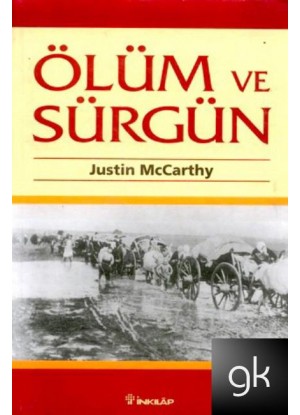
A follow up on “genocide” thoughts: Death and Exile: Justin McCarthy

8 Nov

An excellent book, and probably only monograph, to deal with the step by step expulsion and ethnic cleansing of Ottoman Muslims through the nineteenth and and early twentieth centuries, but tracing roots of the process back to even the century before is Justin McCarthy’s Death and Exile: The Ethnic Cleansing of Ottoman Muslims, 1821-1922Not polemic, not propagandistic, just the facts and figures that speak for themselves.  It should be required reading for every Christian in the former Ottoman sphere.

51qnwpuNCVL._SY344_BO1,204,203,200_

55696-olum-ve-surgun-death-and-exile-justin-mccarthy

Comment: nikobakos@gmail.com