Syria’s Palestinians

4 Aug

Forever f*ckedand used: “Deadly Attack on Refugee Camp in Syria Could Shift Palestinian Allegiances to Rebels”

From The New York Times:

BEIRUT, Lebanon

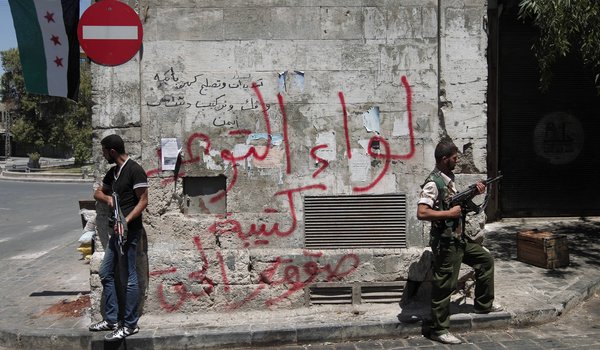
“The first explosion tore into a busy street in Damascus. The second, which occurred minutes later as neighbors rushed to help those wounded in the first, may put an end, analysts said, to the effort by Palestinians in Syria to stay out of the country’s widening conflict…

“The Palestinian cause is a central cause; it’s a builder of legitimacy and a basis for everything else,” said Joshua Landis, director of the Center for Middle East Studies at the University of Oklahoma. “The regime is clearly very protective of the issue, and the rebels are trying to establish a connection to it as well.”


Comment: nikobakos@gmail.com

To Murray, man?! To Murray?!

3 Aug

To Murray?!  Are you shitting me, Nole?!

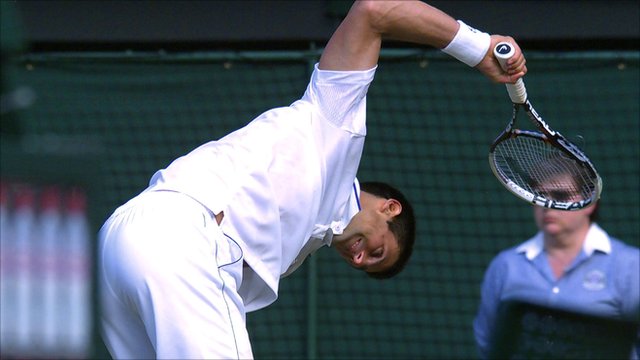
Get your bronze and get out of England.  Don’t nobody even talk to me right now.  I’m the angry man.  Beating Murray would’ve gotten Novak’s No. 1 ranking back and an Olympic Djok-Roger fight could’ve been the match of all our lifetimes.


Comment: nikobakos@gmail.com

And another gold, cabrones!!

3 Aug

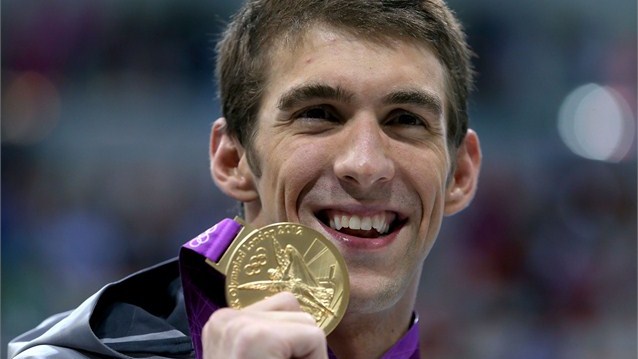
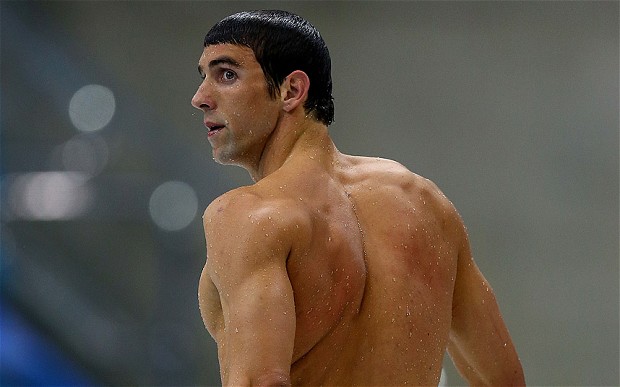
100m Butterfly — his twenty-first Olympic medal; his seventeenth gold.

And another gold!

3 Aug

200m Individual Medley — his twentieth Olympic medal; his sixteenth gold.


Comment: nikobakos@gmail.com

“An angry man — that is my subject.”

2 Aug

That’s my favorite opening line of any translation of the Iliad by W.H.D. Rouse.  Granted, it takes its liberties with the wordiness of the original Greek:

μῆνιν ἄειδε θεὰ Πηληϊάδεω Ἀχιλῆος

οὐλομένην, ἣ μυρί’ Ἀχαιοῖς ἄλγε’ ἔθηκε,

πολλὰς δ’ ἰφθίμους ψυχὰς Ἄϊδι προί̈αψεν

ἡρώων, αὐτοὺς δὲ ἑλώρια τεῦχε κύνεσσιν

οἰωνοῖσί τε πᾶσι, Διὸς δ’ ἐτελείετο βουλή

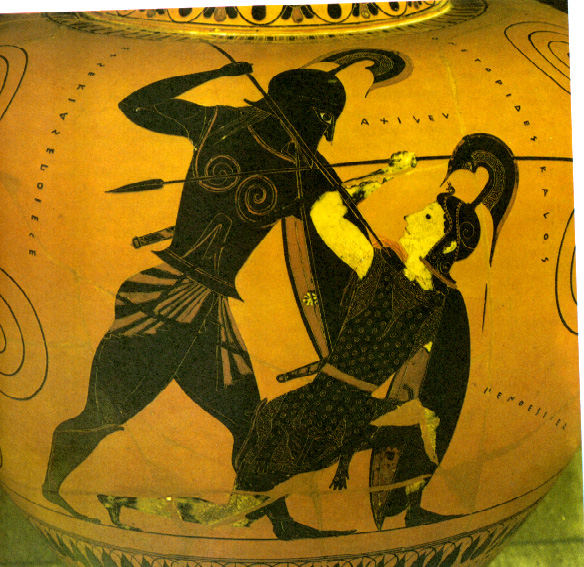
and the more literal translations: “The wrath do thou sing, O goddess, of Peleus’ son…” (A.T. Murray).  Fagles’ “rage” is better than “anger” and closer to the Greek “menos,” which, perhaps for no other reason than that it’s the first word in the Iliad, is truly terrifying, but the curtness of Rouse’s opener conveys the message better; he’s angry – too angry for too many words; don’t talk to him; better to not even get too close.  He’s angry and, in fact, his anger is the subject; it’s the whole story.  He’s begged, cajoled; nothing works.  His best friend pleads with him – yok.  He’s offered gifts and treasures far surpassing the one insignificant thing they took from him but the taking of that thing has so lacerated his rightly gigantic ego that he won’t budge.  The Achaeans send their wisest to plead with him – the ones he himself respects the most – and he and Patroclus roast their best meats and pour their best wine for them, in what is literature’s seminal account of Middle Eastern hospitality: not because of the kebab or the wine, but because the feast is entirely about the honour of the host and pleasing the guests is irrelevant.  This guy, especially, has no interest in pleasing his guests; once he’s done his duty as a host he sends them packing with a litany of insults to deliver to Agamemnon that would leave a Russian truck driver’s ears ringing.

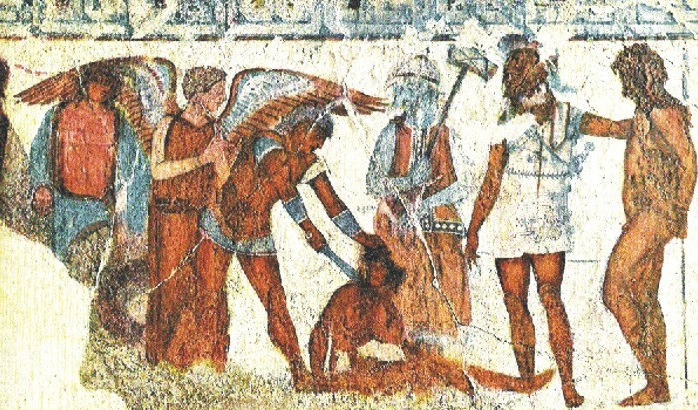
Rage is good.  I always thought so and think we’ll suffer as a society now that we’ve banished it to the corner where all our stigmatized emotions sit.  It just needs to be channeled, motivated by something other than blind ego: namely, by fully aware ego.  Even Achilles — once his rage stops being about his bloated self and becomes attached instead to his love and grief for his friend — goes to work decimating the Trojans, delivers some of the most deliciously bloody sections of the Iliad, and stages a wake the likes of which I’m envious that I’ll never attend: with games, massive quantities of food and drink, and the sacrifice of scores of sheep and goats and beautiful horses and twelve Trojan princes.

Achilles’ Rage (no more info)

Achilles’ sacrifice of the 12 Trojan prince POW’s at the funeral of Patroclus. Part of a wall painting in the Francois Tomb, Vulci, 350-330 BC. Museo Torlonia, Rome.

So you see it needs to be given the form of discipline, just as everything needs form; not tempered or minimized or put in contact with its feminine side – please, God…  Women have the right to and are certainly, perfectly and obviously capable of rage as well; but it’s not to be domesticated.  I’ve been watching athletes use it or succumb to it all summer now.

We all know I’ve been watching my man Phelps closely.  He’s not just a hero of mine and one of the greatest athletes of all time; I just wanted so badly to see him stick it to the bloodthirsty mobs who, back in 2009, were howling for his just crowned and anointed head because he had smoked some pot.  My heart sank after that first event, the 400m individual medley: fourth place?   I couldn’t believe it.  I thought they had gotten to him, psyched him down, the Lochte-mania.  In fact, the mobs did immediately start trashing him: “oh, he’s just been coasting a lot…” “oh, maybe at his age…”  What?!  He’s almost a year younger than Lochte!  As he stormed out to the lockers in a rage, I hoped he hadn’t succumbed to Djokovitis, the racket-smashing loss of concentration that’s plagued Nole since the spring.  I knew inside he was hanging his head.  Then silver in the relay, ok.

But then he came in second in the 200m butterfly, the event that he’s had in his pocket for almost a decade, so silver just wasn’t good enough, even if it tied him to Larisa Latynina, the Russian gymnast from the 1960s with the record of eighteen Olympic medals that she had held for forty-eight years.  Or because that was the medal that tied hers.  That was precisely the medal he had wanted to be gold.  He got out of the pool, looked at the clocks, threw his swimming cap back into the lane and stomped off again.

But there was something different about his anger this time, an “I’m better than this…” tone.  And sure enough, he came right back out and surpassed Latynina, who was watching in the stands, with his nineteenth medal – a gold one this time — in the 4x200m relay.

From Duncan White at The Telegraph:

“Nothing fuels Michael Phelps like anger. After failing to even get on the podium in the 400 metres medley and being beaten by the closest of touches in the 100m butterfly, he had plenty of frustrated fury to work with.”

Latynina was great:

Larisa Latynina won 18 Olympic medals in gymnastics for the Soviet Union, but she attended swimming Tuesday night. Michael Phelps was racing. He was trying to beat everyone in the pool and Latynina’s record as well. And when the moment came, she knew exactly what a great champion should do. She put on her lipstick.

Latynina joked in recent weeks that it was time for a man to be able to do what a woman had done long ago. And that it was too bad Phelps was not Russian.

Russian gymnast Larisa Latynina, winner of 18 Olympic medals, waving to the crowd during the women’s team final.  (Rolf Vennenbernd/European Pressphoto Agency)

This year in New York, Latynina did meet Phelps and presented him with a medal she had won in a Soviet-American dual meet in 1962. She found him “very simple, smiley, lovely to talk to.” They discussed training and, Latynina said, Phelps acknowledged that he had wearied of swimming and was ready to retire after the London Games.

She understood.

“I think a person should go for sport only as long as they get pleasure from it,” Latynina said. “As soon as they stop enjoying it, they should stop.”

And like she had been the lucky charm — or the older athlete mom that got to our Cancer Mikey’s heart (they’d met before — see article), our man has been cruising on gold ever since.  But I think that it’s just that he took control of his rage.

“Nothing fuels Michael Phelps like anger. After failing to even get on the podium in the 400 metres medley and being beaten by the closest of touches in the 100m butterfly, he had plenty of frustrated fury to work with.”

You wouldn’t think it, eh?

For other Phelps posts see:

“Ποιόν σοι εγκώμιον προσαγάγω επάξιον, τι δε ονομάσω σε, απορώ και εξίσταμαι”“…απορώ και εξίσταμαι.” , which explains the title of the previous Greek post; and “I told you they wouldn’t leave him alone” or my original 2009 “Michael Phelps” and check out tag box at lower right.

Comment: nikobakos@gmail.com

Tarlabaşı II: Elif Batuman, Beşiktaş, Kuzguncuk and “diversity”

2 Aug

A couple of problems I have with this New York Times article from last month  —  “Poor but Proud Istanbul Neighborhood Faces Gentrification”  — that prompted this Tarlabaşı series (see “Tarlabaşı I”), other than that it’s so confusingly written that one can’t exactly tell what the Beyoğlu municipality has in mind for the area, which may be their plan and not the fault of the writer.

One, is the “migrants” bit in the first or second paragraph of the article.  Yes, Istanbul continued to attract migrants until the early twentieth century from all over the Ottoman Empire and even the independent and impoverished successor states of the Balkans, men like my great-grandfather and his son-in-law, my great-uncle.  But the Greeks, Armenians and Jews that lived in Tarlabaşı in the 1940s and 50s where not migrants.  They were born and bred — mostly far more than two generations — Constantinopolitans who would’ve gotten somewhat apoplectic if you told then they were migrants.

Two, is that contemporary Tarlabaşı is not “diverse.”  It’s almost 99.9% Muslim and probably about 80% Turkish and 20% Kurdish – maybe with a very heavier demographic tilt toward the Kurdish end, which is natural because you would have run away to the big city too if your villages were being constantly bombed and flattened and what’s essentially the sürgün* of Kurds westward had been going on for decades.  That’s not diverse.  It’s probably pretty representative of the poor of the rest of the country.  If by diverse we mean the ex-pats that’ve found a good rental deal there and the artists who live in Tarlabaşı, that’s a whole other story.  In that case, maybe it’d be a good idea that artists recognize that they’re always the anti-diversity seed for every gentrification: they move in, their blending in with the locals is “cool” at first; the bankers, the lawyers, and the academics with a little bit of money follow the coolness (they have to do something), and then the ‘hood is gentrified and the funky artists can’t live there anymore…along with the neighborhood’s working, or maybe completely impoverished, classes.  And then come the wine bars.  Maybe the artists should go straight to Yalova or Tekirdağ, or Poughkeepsie or Scranton, so there’s no fear of the yuppies following them.  What do you think?  Demographically emptying neighborhoods, like the East Village and Williamsburg were here in New York in the eighties, obviously went first.  A mahalla with a stay-put, clannish population, like the Greeks and Italians and Bosnians of Astoria, obviously doesn’t let the process go that far, which is why Astoria has its share of artists and actors and writers and gay guys but still has functioning ethnic communities with their clubs and bars and butchers and produce shops at the same time and in the end remains far more interesting — and far more New York – a neighborhood than Williamsburg has become.
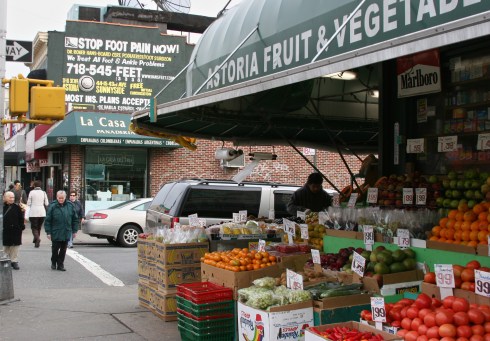
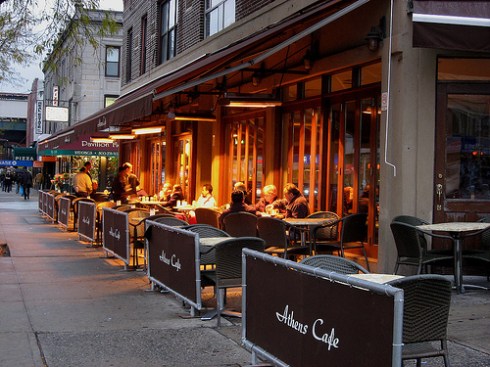
Astoria (click)

Williamsburg

But gentrification is not the issue.  The buzzword “diversity” is and that’s not even the Times’ writer’s fault.  “Diversity” and “multicultural” are words that have filled Turkey’s stock portfolio for several decades now: the less diverse İstanbul, especially, became, the greater the ubiquity of those words became; for tourists obviously, but, more importantly, for internal consumption in a dynamic so complicated that it’s always been tough to outline for me or figure out at all.  Post-eighties, late-twentieth-early-twenty-first-century, modernizing, haltingly democratizing, Turkey has a great investment in these words.  I mentioned in one of my first posts The Name of this Blog,” that:

“All this unpleasantness is usually excised from the contemporary Turkish nostalgia phenom.’  I remember on my first trips to Turkey as a teenager in the eighties even, often finding myself in the confusing position of being told: ’Oh, lots of Greeks used to live around here,’ in a smiling and totally sincere attempt at bonding and with a totally blissful indifference or maybe ignorance as to why they didn’t anymore, leaving me feeling both touched and irritated.  Granted, people have become markedly more sophisticated since then.”

Or have they?  I admit to asking this question with more than a significant dose of bitterness because the issue makes me angry.  Maybe I just want to expect – or eventually be able to expect – better from Turks.  I know what Greek nationalists think and they’re hopeless, because the bitterness of Neo-Greek impotence springs from an eternal source.  They think only Greeks ever lived in Greece.  They think there were never any Turks in pre-1913 Greece.  They don’t know how hard the Neo-Greek statelet made life for Salonican Jews between the wars (even as a little nostalgia phenom’ has developed around them in Salonica, a city hungrily looking for cultural capital).  They don’t know that Muslim Albanians were massacred and expelled from western Epiros during WWII.  If it were up to them, they would expel the Turkish minority from the north-east – were it not for fear of Turkey’s response (see Çiller’s famous comment about the Turkish army in Athens in 24 hours, the bully-face of the Turkish state at its grossest) – and they simply ignore the Macedonian minority of the north-west, terrorized and intimidated for decades, if they even know or are willing to admit it exists, etc., etc.  There’s no point in going on.  I detest Greek Turk-hatred; it’s so beyond obvious to me that it’s a projection of the total failure of the whole Neo-Greek project – politically, socially, economically and culturally – and I bow up like a friggin’ cobra whenever I sense even the slightest whiff of it.

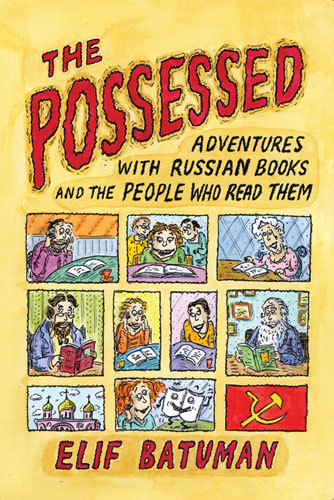
But sometimes I wonder if I prefer Greek animosity to Turkish arkadaşım-s and kardeşim-s or silent smiles.  Elif Batuman is a writer I love.*  She wrote a very funny book on Russian Studies academia in the U.S. and she’s been The New Yorker’s guy in İstanbul since she moved there in 2001.  She writes truly – not just hilarious – but perceptive articles on modern Turkey, which remind you why — if one does – you love that country and its people.  In the March 7, 2011 issue of the New Yorker she wrote a brilliant piece on İstanbul’s Beşiktaş soccer club, “The View from the Stands,” and soccer in Turkey generally that said so much about the country she should look into writing a book about it.  (Her writing often betrays her, also, as a woman who really likes men; I don’t mean “likes” like that; I mean has a deep and genuine appreciation for them and their company — she’s a guys’ girl.)  Anyway, at one point she writes:

“Hakan quoted a much repeated cliché: ‘Armenians support Beşiktaş, Jews support Galatasaray, and Greeks support Fenerbahçe.’  Nobody ever says whom the Kurds – Turkey’s largest minority – support.”

Really?  Batuman recognizes it’s a cliché and probably also asked herself the same question: What city is he talking about?  Granted the p.r. guy, for lack of a better word, for Beşiktaş’ mob-like fan club is an Armenian.  Other than him…?  How many of İstanbul’s estimated 50,000 Armenians, 25,000 Jews, or 1,500 Greeks have been to a Beşiktaş game?  (I mean…forgive me the stereotype, but the idea of a good Jewish boy going to one of the high-testosterone matches Batuman describes, with their brawls and stabbings, strains all belief; one of the old Greek ladies from the Balıklı old age home would be there first.)  Or how many of Beşiktaş’ fans, unlikely to even be from İstanbul (and whom Batuman makes you like so much you want to hang out with them), have even met one of any of the above ethnic groups – out of a city of almost 15 million?

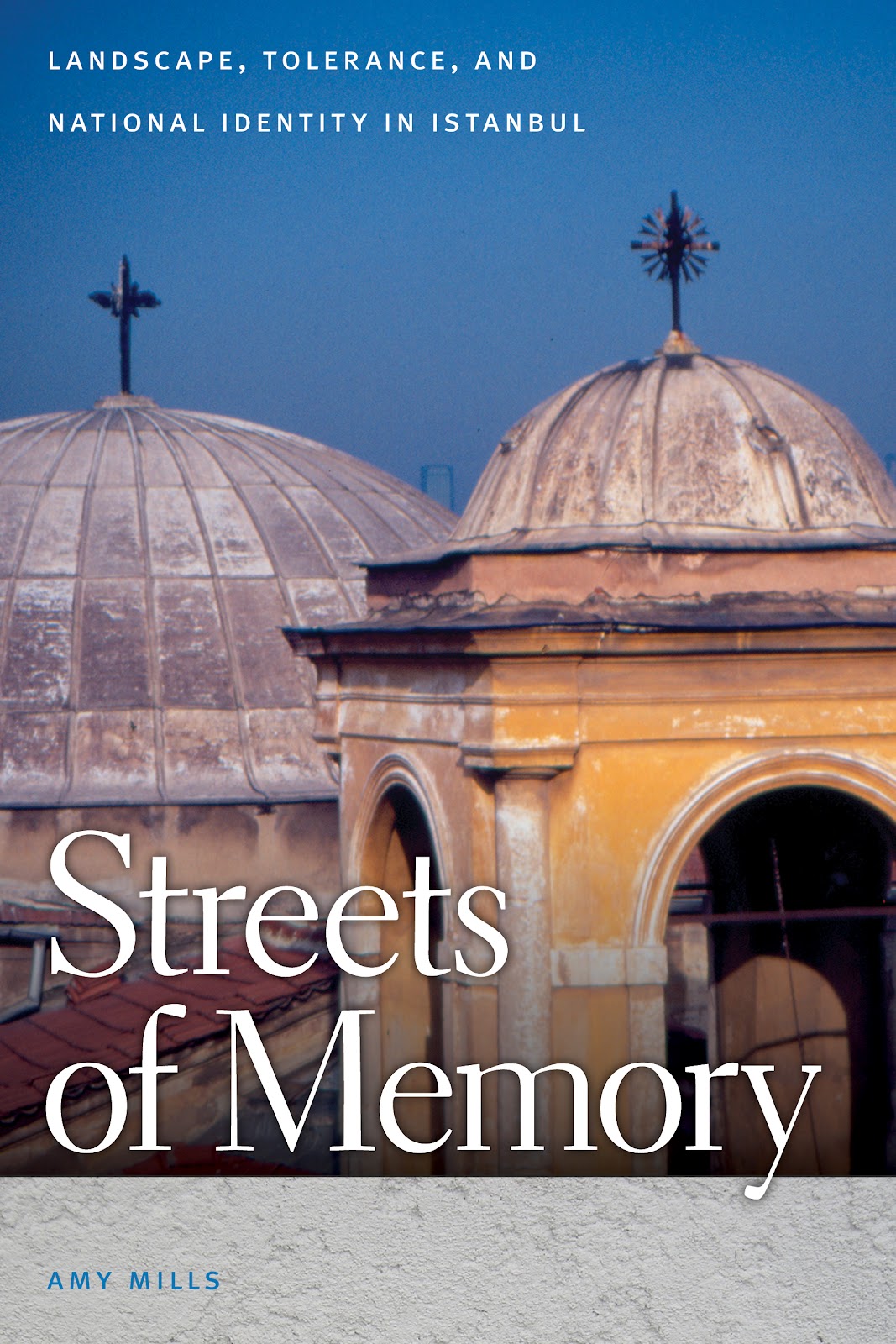
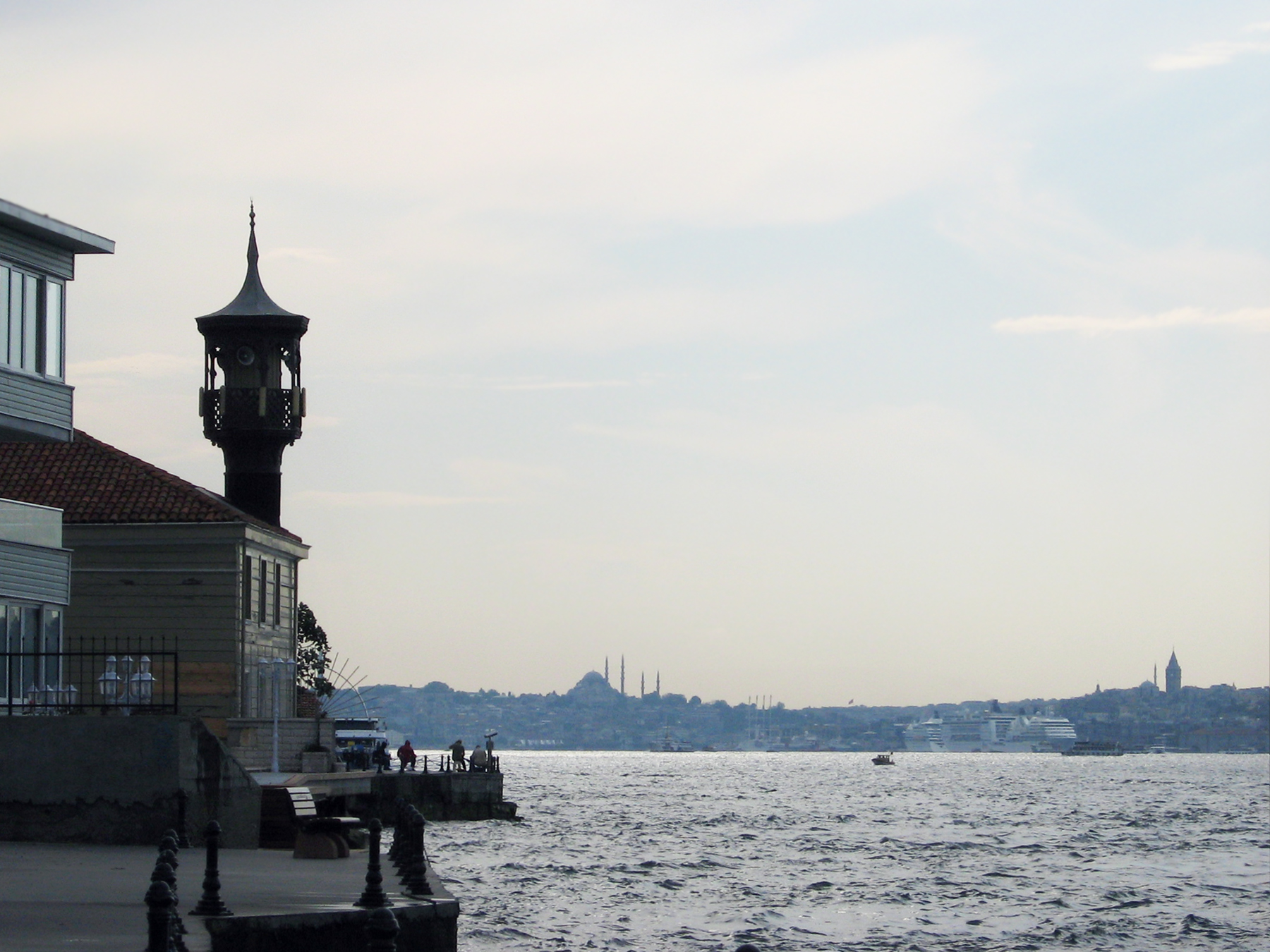
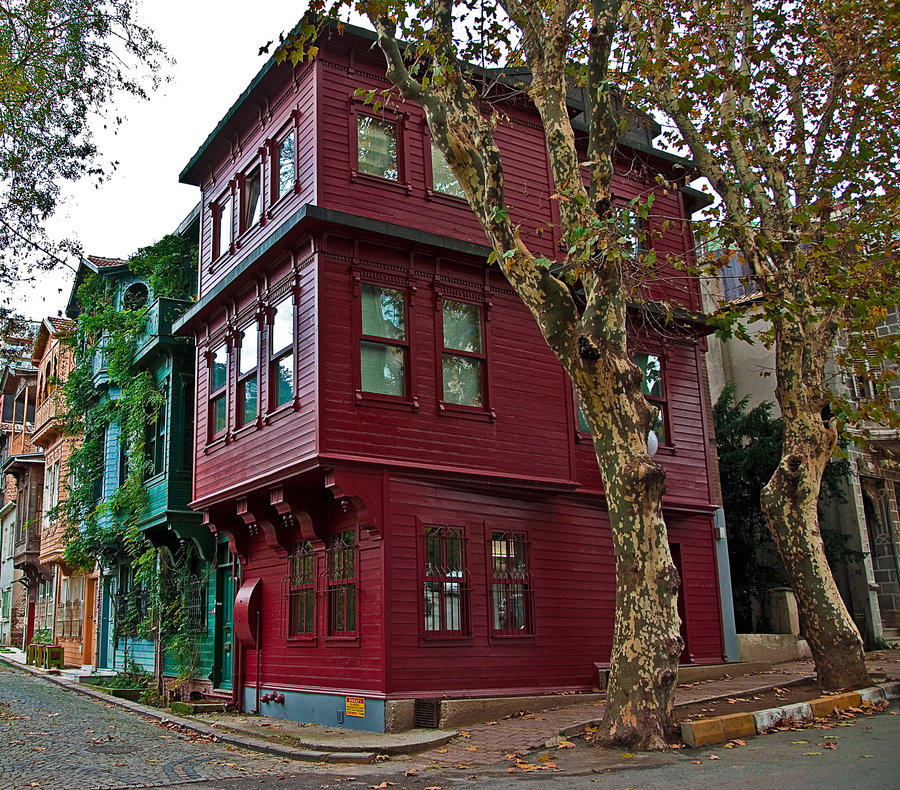
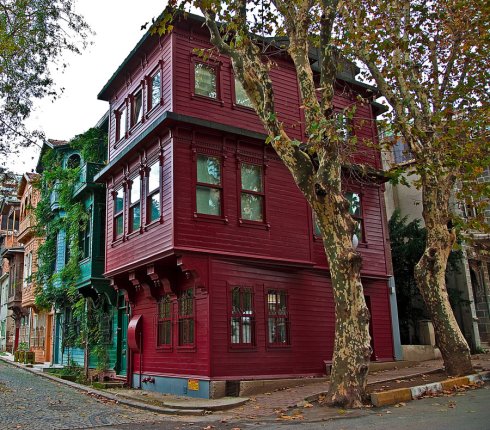
So in eternal pursuit of this question I buy Streets of Memory: Landscape, Tolerance, and National Idenitity in Istanbul, a book by Amy Mills from the University of South Carolina about Kuzguncuk and the narratives of social change that are told by its inhabitants.  Kuzguncuk is a lovely neighborhood on the Asian side of the lower Bosphorus.  It once had a large Armenian and Jewish population and a slightly smaller Greek one.  Beginning in the 1940s and into the 50s, as the minorities left for other neighborhoods or left Turkey all together, rural migrants, especially from the Black Sea coast, started to settle in the area.  But it was one of the ripest gentrification fruits in the city, dripping and ready to drop like a cracked fig: quiet, as the Asian neighborhoods of the Bosphorus are (quieter and prettier generally than their counterparts across the water; their only drawback is that in the summer they roast in the setting sun for the entire afternoon), close to Üsküdar and Kadiköy and their easy connections to the European side of the city, and still so architecturally intact that several good-ole-days, neighborhood soap operas have been shot there.  As for the quarter’s former or remaining minority residents, Mills’ doesn’t get very much out of them; the old Turkish residents of the area have the usual smiling, nostalgic accounts of their lives with the others, but are generally silent about what happened to them, or at least uncomfortable about going into details (as are the non-Muslims themselves), and the young Turkish gentrifiers of the area are, of course, too busy fighting their usual war against the newer, richer gentrifiers that the former are sure will destroy their mahalla-paradise.

The skala at Kuzguncuk (above).  Houses in Kuzguncuk (below) by Selma Arslan (click)
But after several chapters of interesting but kind of non-conclusive ethnography and lots of interesting accounts (the Greeks are the most secretive and unhelpful of her subjects — perhaps because they’re the most recently and deeply traumatized), Mills drops a theoretical bomb — for me at least — in her conclusion that summarizes everything I’ve always suspected about the issue:

“But why do non-Muslim minorities become the subject of nostalgia?  As I demonstrate in chapters 2 and 4, the nostalgic emphasis on minority cultures in Istanbul is a way of reinforcing a sense of cultural and social difference, a way of othering, that ultimately works to co-opt minorities back into the predominantly Turkish imagination of the city.  Thus nostalgia embraces and reinforces a nationalist context that defines social difference (without which, there wouldn’t be social difference) along ethnic and religious lines.  If we interrogate the cultural politics of this nostalgia, we see that nostalgia constitutes the flip side of silence.  By focusing on the dimensions of interethnic neighborhood social life that emphasizes togetherness and sharing, nostalgia erases fissures and differences.  In chapter 4, I discuss how nostalgic memories of life on the main street smooth over the violence of particular antiminority events in Kuzguncuk: the erasures accomplished by nostalgia actually reify the ideology behind the dominant national narrative, that Turkey is an inherently Turkish nation.  Nostalgia for cosmopolitanism, by sustaining the erasure of difference, writes minorities back into a seamless collective, and so nostalgia for minority places and people is part of the discursive field that dispossesses minorities of place.  Minorities comply by maintaining silence regarding their experiences of Turkish nationalist discrimination and by assimilating, thereby ensuring their safety.  In this way, the primary function of the nostalgia for cosmopolitanism is to sustain and mediate social and personal experiences of ethnic Turkish nationalism.  The conclusion is that in Istanbul, cosmopolitanism is imagined locally in ways that perpetuate the notions of social difference and inequality that cosmopolitanism, as an ideal, claims to transcend.”

Hard to say more than that; it strips “İstanbul nostalgia” down to its basic – if not hypocrisy – then at least its unintentional disingenuousness.  But there is probably one more layer that needs to be excavated there and a connection that may need looking in to.  Under the fanatically secular project of the Republic, which permits the doublethink simultaneity of pure Turkishness and gracious cosmopolitanism that Mills nails on the head to “co-exist,” may run, ironically, the frequently bloated claims of tolerance and egalitarianism that Islam has often made for itself.  There’s a suspiciously similar paternalism: “We’re in control here, but as long as you lay low, you’ll be ok…” that seems part of the foundation of both ideologies, and that might not be a coincidence.

And that’s also why Batuman’s Beşiktaş fans can recite the classic trio of vanished ethnic groups but never say what team the Kurds support: because Turkey has 14 million Kurds, and they won’t “lay low.”

**********************************************************************************************************************************************

*Sürgün means deportation in Turkish (I don’t know if it’s originally a Turkic word).  The Ottomans, the Byzantines, the Safavid and previous Persians, the Romans — all used them for strategic military purposes and to disperse peoples whose unity was considered threatening or subversive.  The Byzantines used the method extensively to re-Hellenize the Greek peninsula after the Slavic invasions of the 6th century, moving Anatolian Greeks to Greece and Slavic groups to Asia Minor; a cynic will tell you that exchanges of populations and ethnic cleansings are nothing new.

**You can find most of Batuman’s work for The New Yorker here, though most of it is behind their bitchy pay-wall, and her book: The Possessed: Adventures with Russian Books and the People Who Read Them.
Comment: nikobakos@gmail.com

See Tarlabaşı I and Tarlabaşı III

Montenegro wins over Hungary too — and Montenegro (vs.) Serbia: “Every game against Montenegro is very stressful and very emotional.”

2 Aug

How did I never notice what a wildly cool game Water Polo was?  I thought it was like underwater soccer or basketball where you can’t really grab or certainly not tackle an opponent.  Turns out it’s more like a kind of underwater rubgy…it’s become one of my favorite events.

Adam Steinmetz, left, of Hungary is pulled down by Antonio Petrovic of Montenegro during a preliminary men’s water polo match at the 2012 Summer Olympics, Tuesday, July 31, 2012, in London. (AP Photo/Julio Cortez)

Peter Biros, right, of Hungary defends against Mladan Janovic of Montenegro during a preliminary men’s water polo match at the 2012 Summer Olympics, Tuesday, July 31, 2012, in London. (AP Photo/Julio Cortez)

Hungary Facing Rare Trouble in Olympic Water Pol0

And Serbia vs. Montenegro was painful; poetry and beauty in that they tied though, but in the end…whatever it is, it’ll be a great match, like this was:

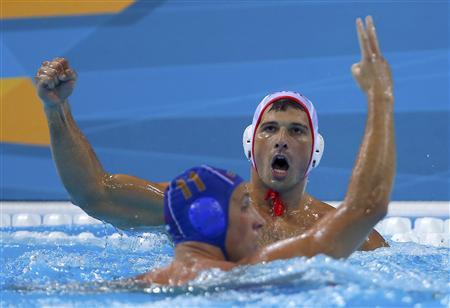
Montenegro’s Nikola Janovic (behind) and Serbia’s Andrija Prlainovic react during their men’s preliminary round Group B water polo match at the London 2012 Olympic Games at the Water Polo Arena August 2, 2012.

By Sarah Young

LONDON | Thu Aug 2, 2012 12:20pm EDT

(Reuters) – Water polo teams from Serbia and Montenegro said it remains emotionally difficult to face each other six years after the two countries separated following an 11-11 group stage draw between the two powerhouses of the sport.

“Since we separated, every time when we play against Montenegro it’s one of the most emotional games,” 25-year-old Filip Filipovic, who scored two goals for Serbia, said after the match.

“Because we were until yesterday, if I can say it, in the same room, and now we need to compete for who is going to be better, and there is very big loyalty between us. Every game against Montenegro is very stressful and very emotional.”

Both teams are medal contenders with Serbia edging Montenegro for the favorite spot, having beaten their former countrymen in the European championships final in January to take the title.

Montenegro’s captain Nikola Janovic agreed that playing Serbia caused heartache.

“We are from the same school. We know each other. It’s very difficult to play against Serbia,” he said.

Serbia failed to hold on to a two-goal lead in the final quarter, with Montenegro, cheered on by their Prime Minister Igor Luksic, catching up in the last two minutes of the grueling tussle.

Filipovic praised a stunning five-goal haul by Serbia’s Andrija Prlainovic.

“We don’t need to spend words. He’s one of the best players all the time,” he said.

Serbia, who took bronze in Beijing in 2008, are chasing their first Olympic gold after four years of winning every other big water polo title.

An Olympic medal for Montenegro would be the country’s first in any discipline.

Serbia now top Group B, the so-called “group of death” as it features the best four teams from Beijing while Montenegro are third.

There are two groups of six teams in men’s water polo with the top four in each advancing to the knockout stages.


Comment: nikobakos@gmail.com

The Dons

2 Aug

From Andrew Sullivan’s Daily Dish:

Depressed by the state of the modern university, which is “governed by an ever-proliferating thicket of rules” that reward hyper-specialization and publishing in arcane journals, Adrian Wooldridge celebrates two late, great Oxford dons, Isaiah Berlin and Hugh Trevor-Roper:

Berlin wrote a popular book on Marx (in the Home University library, of all tenure-destroying places) rather than bothering with a PhD. A striking proportion of his work appeared in out-of-the-way publications rather than learned journals. Trevor-Roper dispensed with even more academic formalities. He savaged the most revered figure in his field, R.H. Tawney, with the flourish that his work was not only incompatible with the truth but positively repugnant to it. He was an erratic, not to say self-indulgent tutor—sometimes relaxing his academic standards for the sons of dukes, or taking against over-ambitious protégés, as he did with Lawrence Stone, but also sweating blood for obscure young scholars.

This freedom from petty rules meant that Berlin and Trevor-Roper could devote themselves to cultivating the life of the mind rather than tilling a narrow field. They could study whatever caught their interest, whether it be the life of a sex-crazed sinologist or Tolstoy’s political philosophy. They could publish when they felt like it, holding back whatever did not pass the twin tests of rigour and readability, rather than dancing to the tune of state funding. 

They were the bearers, in other words, of what was once known as a “liberal education” and scholarship.  We need it now more than ever.


Comment: nikobakos@gmail.com

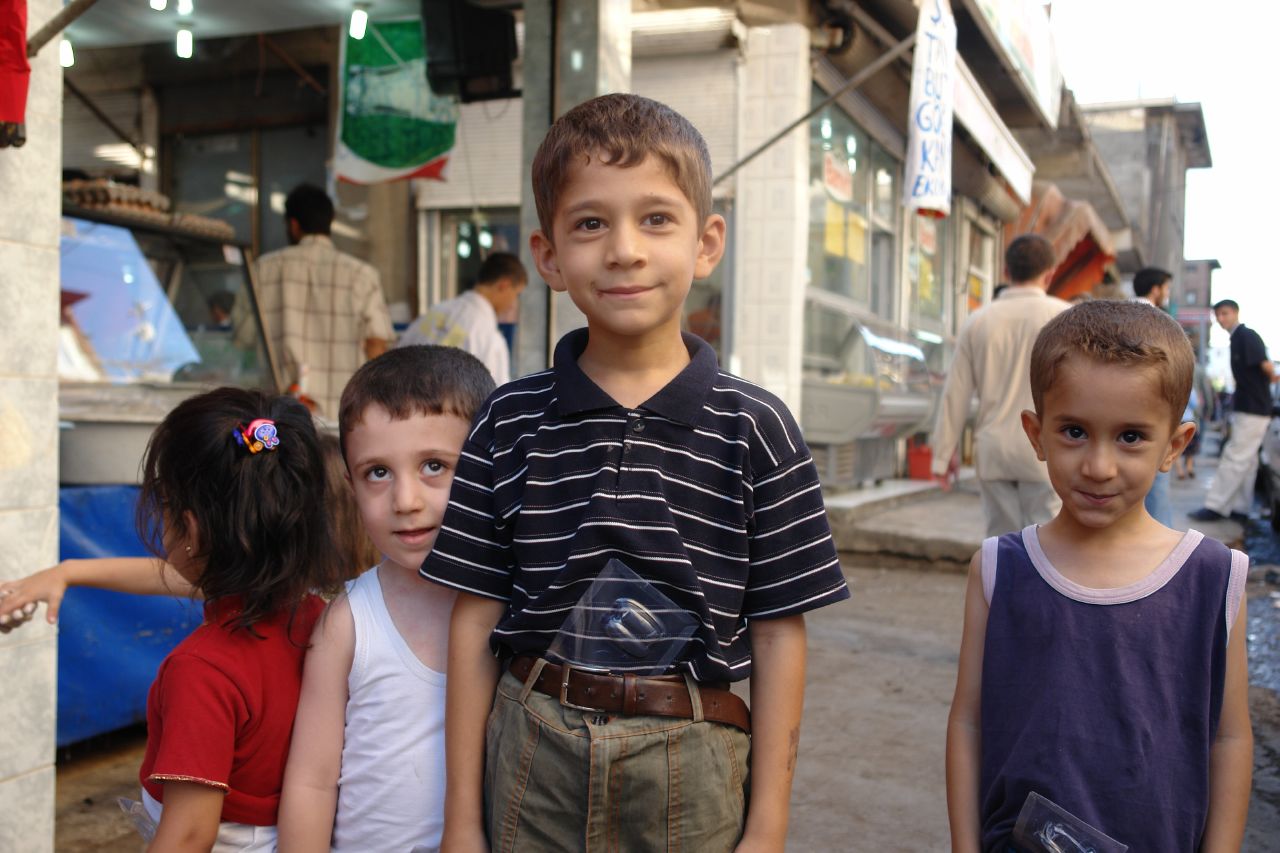
Photo: Kurdish kids in Diyarbakir

31 Jul

Just really damn cute. (click)


Comment: nikobakos@gmail.com

Moron…panderer, etc.

30 Jul

From The Washington Post: Romney faces Palestinian criticism for Jerusalem remarks

“As you come here and you see the [Gross Domestic Product] per capita, for instance, in Israel which is about $21,000 dollars, and compare that with the GDP per capita just across the areas managed by the Palestinian authority, which is more like $10,000 per capita, you notice such a dramatically stark difference in economic vitality,” Romney said, according to a pool report.

In fact, the difference is far more stark than that. According to the World Bank, Israel’s GDP per capita is actually $31,282. The same figure for the Palestinian areas is around $1,600.

Romney said he had studied a book called “The Wealth and Poverty of Nations,” searching for an answer about why two neighboring places–the U.S. and Mexico, for instance, or Israel and the Palestinian areas–could have such disparate prosperity.

“Culture makes all the difference. Culture makes all the difference,” Romney said, repeating the conclusion he drew from that book, by David Landes. “And as I come here and I look out over this city and consider the accomplishments of the people of this nation, I recognize the power of at least culture and a few other things.”

Romney also said he recognized “hand of providence in selecting this place [Israel].”

And Palestinian official Saeb Erekat responds:

“It is a racist statement and this man doesn’t realize that the Palestinian economy cannot reach its potential because there is an Israeli occupation,” Erekat said.

“It seems to me this man (Romney) lacks information, knowledge, vision and understanding of this region and its people,” he added.

To say the least…  Romney also stated that he would back Netanyahu on “anything” he chose to do on Iran.  Nice.


Comment: nikobakos@gmail.com