Dragi Novak

23 Jul

Zdravo.

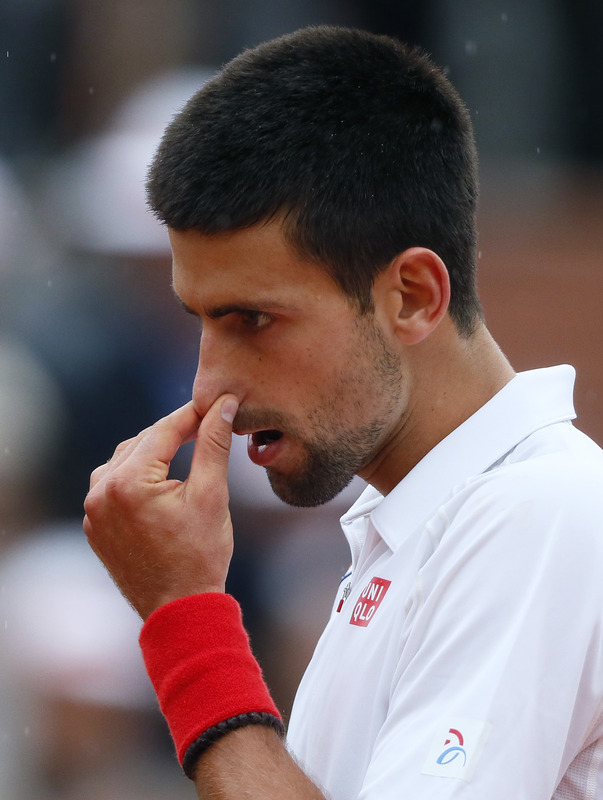
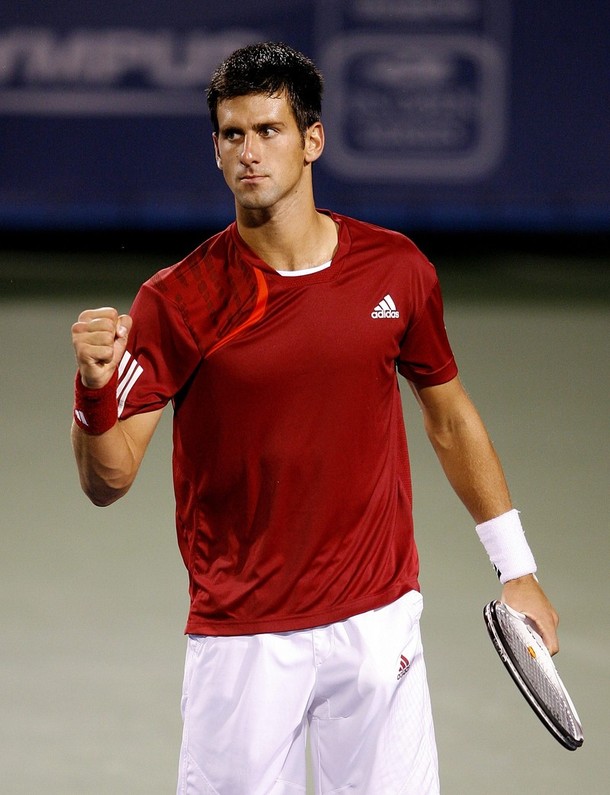
I’m a big fan of yours who’s writing to you to ask for your help.  I know you got a lot on your mind with the Olympics coming up but I need this favor from you.  I’ve been having a rough summer.  After Monte Carlo and Garros I fell into a deep funk.  After Wimbledon I got seriously depressed, couldn’t get out of bed, and started drinking heavily; my friends put me on unofficial suicide watch.

So, here’s some suggestions for how you can help me out.

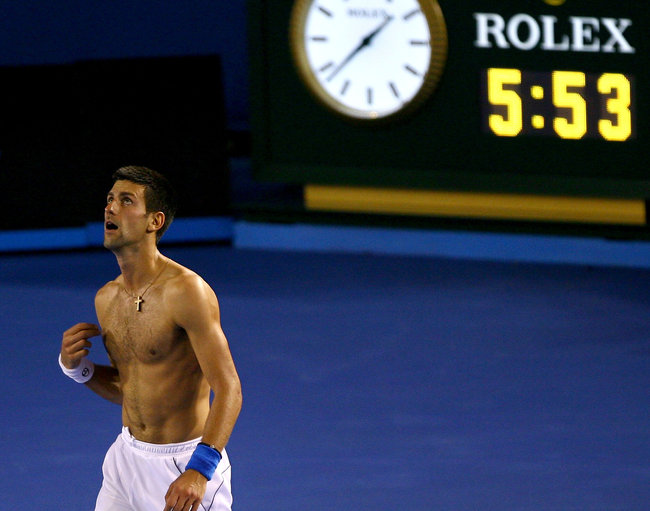
One: we all know you’re a good Orthodox kid.  You sure perform it enough (“performative” is why we love you), ripping your shirt off with that big monk’s crucifix you got on and crossing yourself and always wearing your prayer rope (“komboshoini” in Greek – I don’t know how you say it in Serbian) at every match.  Good.  Keep the faith.  I didn’t know till recently that the Patriarch had made you a member of the Order of St. Sava.  Congratulations.  I’m sure he’ll be there by your side helping you out – not the Patriarch, I mean.  St. Sava.
Two: ignore that schmuck from the The New Yorker who wrote that lame commentary before Wimbledon.  Don’t let any malicious malaka scare you about your game or your knees.  Your knees are of tempered katana steel and you’re not scared of anything anyway.  Plus, the point of “Rooting for Failure” was that Federer could only win if your own game somehow failed you, which only implies that you’re the superior player.

The Catalan is protecting himself from whatever injury he’s afraid of by staying home, but you can be sure that not being in London is making him eat his guts out.  Good.  Forget about him anyway and, generally, wipe all seed lists out of your mind; they don’t mean shit.  It’s gonna be you and Roger again in the end and he’s the worthiest opponent anyway, which should only get any good Serb’s blood flowing faster.  Focus on that.

Then, you sure this non-gluten diet is a good idea?  A lot of times we mistake coincidence for cause and result and maybe 2011 was a stellar year for you for reasons that have nothing to do with the new diet.  Wheat does have nutritive properties that other carb sources don’t and gauging the emotional and physical effects of sugars and their metabolization is tricky business.  You’ve been looking all skin and muscle lately; you’re obviously in kick-ass aerobic shape and I was just thinking that maybe that frame can afford to carry a little bit more fat on it, as a fuel reserve and as a shock absorber too.  I’m sure you have armies of nutritionists around you and I’m just a lay person, but I was just thinking…

Finally…chill brother.  Please.  Chill.  One bad set or one bad game doesn’t mean anything.  Don’t be the crazy, self-destructive Serb who flies into a rage and starts smashing rackets and loses it and shoots his concentration into shards.  Be the tough, single-minded, obsessive Serb, who grits his teeth and summons every molecule of strength and inat that he’s got in his body and soul and wins!  Please.  Do it for me.  Do it for your fans.

Win.

I’m not gonna wish you luck cause I only wish luck to those who need it.  Knock them out in London and then come here and kick ass in Flushing too.  Win.

A Greek fan.
 

Comment: nikobakos@gmail.com
Dude…

21 Jul

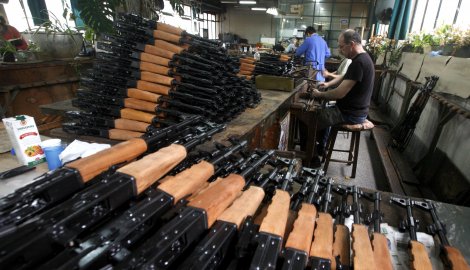
After God-Bless-America, the country with the highest rate of assault weapons per capita is Serbia… 


Comment: nikobakos@gmail.com

En solidaridad

21 Jul

¡Poneos en marcha! ¿Que adónde vais? La estrella os lo dirá: ¡al sepulcro! ¿Qué vamos a hacer en el camino mientras marchamos? ¿Qué? ¡Luchar! ¡Luchar!, y ¿cómo?

¿Cómo? ¿Tropezáis con uno que miente?, gritarle a la cara: ¡mentira!, y ¡adelante! ¿Tropezáis con uno que roba?, gritarle: ¡ladrón!, y ¡adelante! ¿Tropezáis con uno que dice tonterías, a quien oye toda una muchedumbre con la boca abierta?, gritarles: ¡estúpidos!, y ¡adelante! ¡Adelante siempre!

¿Es que con eso —me dice uno a quien tú conoces y que ansía ser cruzado—, es que con eso se borra la mentira, ni el ladronicio, ni la tontería del mundo? ¿Quién ha dicho que no? La más miserable de todas las miserias, la más repugnante y apestosa argucia de la cobardía es esa de decir que nada se adelanta con denunciar a un ladrón porque otros seguirán robando, que nada se adelanta con decirle en su cara majadero al majadero, porque no por eso la majadería disminuiría en el mundo.

Sí, hay que repetirlo una y mil veces: con que una vez, una sola vez, acabases del todo y para siempre con un solo embustero habríase acabado el embuste de una vez para siempre.


Set yourselves to marching then!  Where to?  The star will tell you: to the sepulcher!  What will we do while marching?  What?  Fight!  Fight!  And “How?”

How?  Do you run into a man who lies?  Yell in his face: Liar!  And march on!  You come upon a man who robs?  Yell at him: Thief!  And march on!  Do you come upon one mouthing foolishness, to whom a whole host of fools is listening with their mouths agape?  Howl at all of them: Stupid!  And march on!  March on always!

“And is that how…” asks one who, you know as well, bears a great yearning to join our crusade, “…is that how all lies and all thievery and all foolishness will be erased from the earth?”  Who says that no?  The most miserable of all miseries, the most repugnant and stinking and cowardly of all sophistries is the one that claims that nothing is gained by calling a thief a thief because others will keep stealing, that nothing is to be gained by calling a moron a moron to his face because that will not diminish the world’s stock of morons or fools.

Yes, it must be repeated one and a thousand times: that if you do away, for once and for good, with one single liar, it will be as if you had done away, for once and for good, with falsehood itself.

— Miguel de Unamuno, El sepulcro de Don Quijote (my translation)

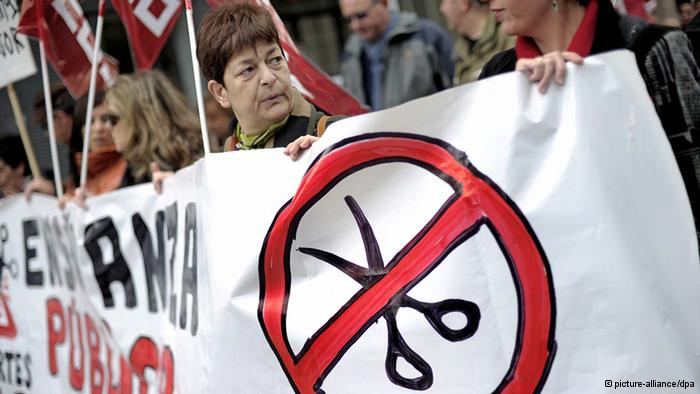
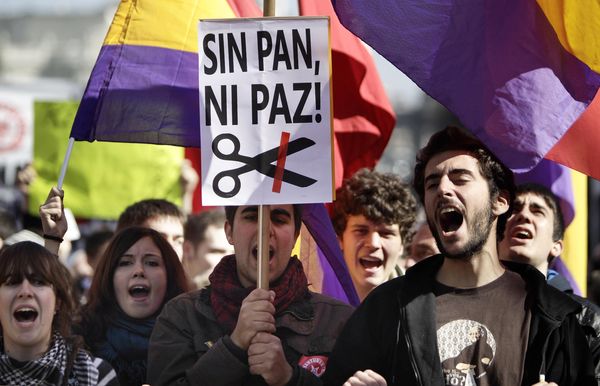
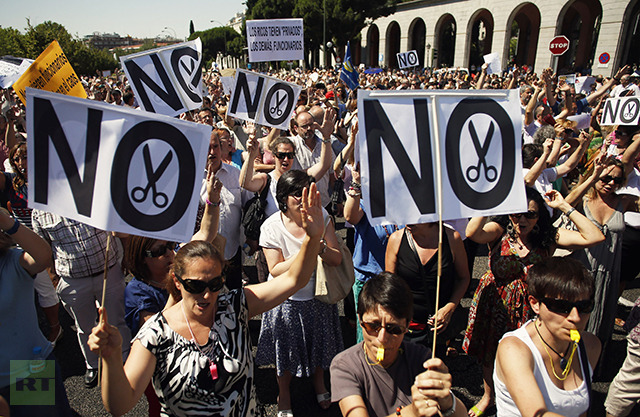
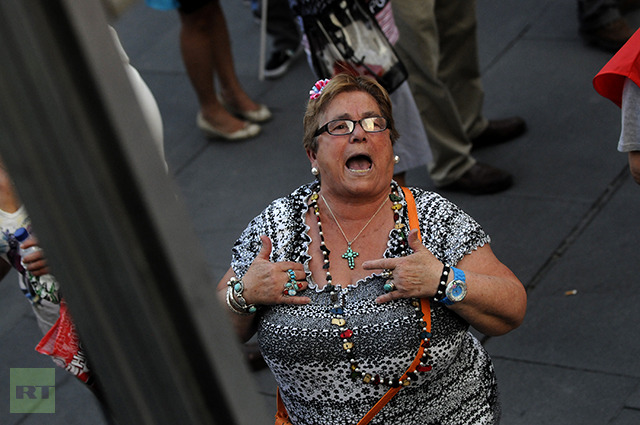
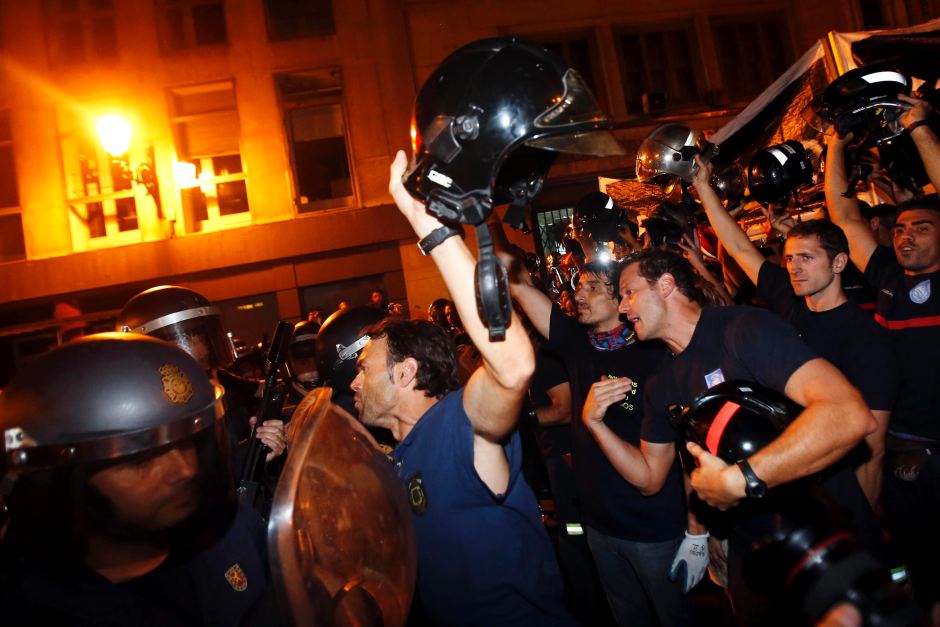
And one of their best (below) — “Not enough bread for this much chorizo.” (“pork,” i.e. corruption).

Christ, how I love that land and its people.  Fight on!


Comment: nikobakos@gmail.com

Merkel, Spain, Greece and Nasreddin’s donkey

21 Jul

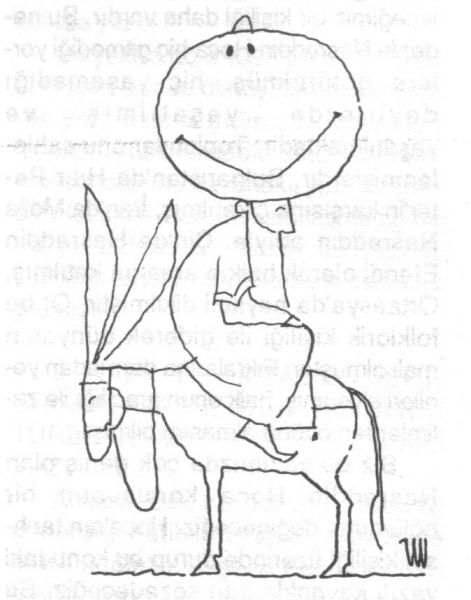
Nasreddin Hoca had a donkey.  One day he got it into his head that he could save a lot of money on feed by training the donkey not to eat.  So every day he gave his donkey just a little less food.  At first the animal seemed to labor on as if nothing had changed.  Even after his diet had been halved, the poor strong young donkey just soldiered on.  But eventually, as his daily caloric intake got reduced to almost nothing, he got weaker and weaker and slower and slower, but Nasreddin was so happy at the money he was saving through his brilliant austerity plan that he didn’t even notice.

Then one fine day, the poor, martyred beast just up and died on him, on the road, right from under his legs.

Dead.

“Damn,” said Nasreddin, “and just when he had learned not to eat.”

And without a donkey’s back to ride, he had to walk.


(All Nasreddin Hoca stories are versions learned from my father and I think would be public domain already anyway.)

Comment: nikobakos@gmail.com

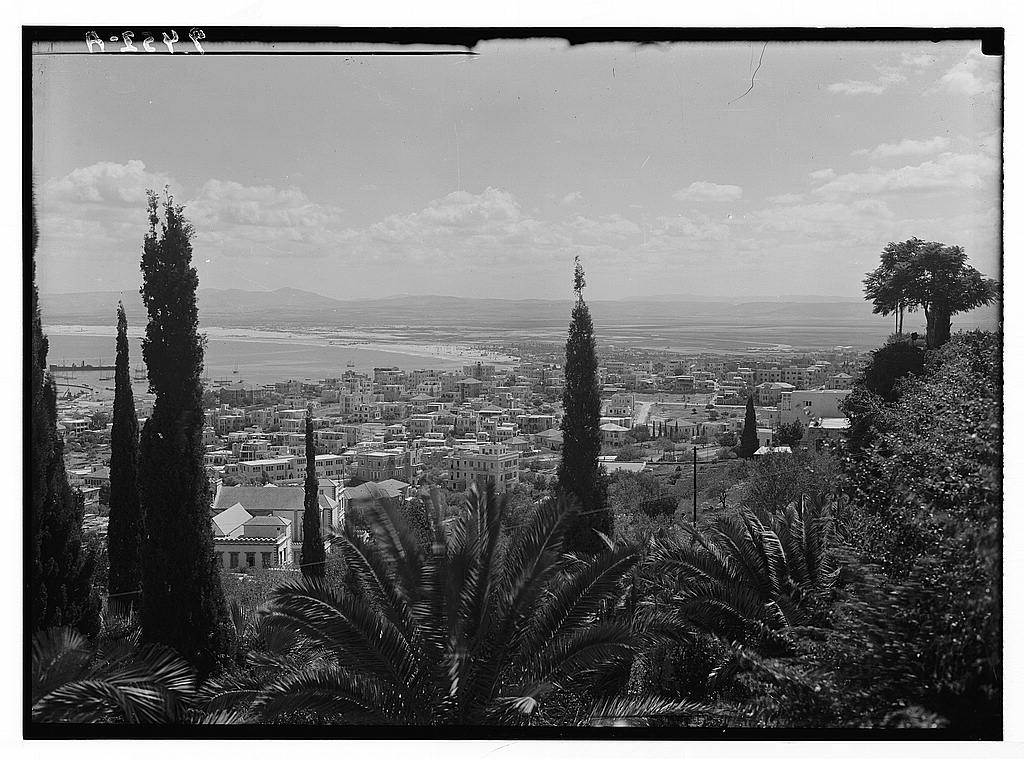
Turns out he’s the patron saint of Haifa

20 Jul

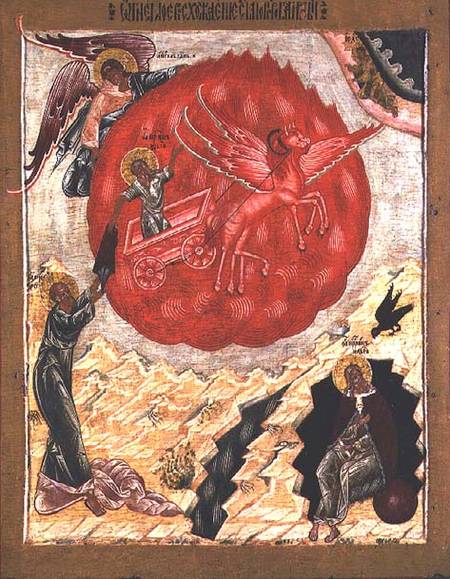
Duh…  Of course, Elijah on Mount Carmel…

An Arab icon of Elijah — and Haifa (click)


Comment: nikobakos@gmail.com

Today is the Feast of the Prophet Elijah

20 Jul

The Russians, with their flair for red, always made the most beautiful Elijah icons and were always partial to the “fiery ascent to heaven” part of his story.  Greek images of Elijah usually focus on the image in the lower right of this icon, that of Elijah in the cave in the wilderness and the “still, small voice:”

And he came thither unto a cave, and lodged there; and, behold, the word of the Lord came to him, and he said unto him, What doest thou here, Elijah?

10 And he said, I have been very jealous for the Lord God of hosts: for the children of Israel have forsaken thy covenant, thrown down thine altars, and slain thy prophets with the sword; and I, even I only, am left; and they seek my life, to take it away.

11 And he said, Go forth, and stand upon the mount before the Lord. And, behold, the Lord passed by, and a great and strong wind rent the mountains, and brake in pieces the rocks before the Lord; but the Lord was not in the wind: and after the wind an earthquake; but the Lord was not in the earthquake:

12 And after the earthquake a fire; but the Lord was not in the fire: and after the fire a still small voice.

13 And it was so, when Elijah heard it, that he wrapped his face in his mantle, and went out, and stood in the entering in of the cave. And, behold, there came a voice unto him, and said, What doest thou here, Elijah?

9 καὶ εἰσῆλθεν ἐκεῖ εἰς τὸ σπήλαιον καὶ κατέλυσεν ἐκεῖ καὶ ἰδοὺ ῥῆμα κυρίου πρὸς αὐτὸν καὶ εἶπεν τί σὺ ἐνταῦθα Ηλιο

10 καὶ εἶπεν Ηλιου ζηλῶν ἐζήλωκα τῷ κυρίῳ παντοκράτορι ὅτι ἐγκατέλιπόν σε οἱ υἱοὶ Ισραηλ τὰ θυσιαστήριά σου κατέσκαψαν καὶ τοὺς προφήτας σου ἀπέκτειναν ἐν ῥομφαίᾳ καὶ ὑπολέλειμμαι ἐγὼ μονώτατος καὶ ζητοῦσι τὴν ψυχήν μου λαβεῖν αὐτήν

11 καὶ εἶπεν ἐξελεύσῃ αὔριον καὶ στήσῃ ἐνώπιον κυρίου ἐν τῷ ὄρει ἰδοὺ παρελεύσεται κύριος καὶ πνεῦμα μέγα κραταιὸν διαλῦον ὄρη καὶ συντρῖβον πέτρας ἐνώπιον κυρίου οὐκ ἐν τῷ πνεύματι κύριος καὶ μετὰ τὸ πνεῦμα συσσεισμός οὐκ ἐν τῷ συσσεισμῷ κύριος

12 καὶ μετὰ τὸν συσσεισμὸν πῦρ οὐκ ἐν τῷ πυρὶ κύριος καὶ μετὰ τὸ πῦρ φωνὴ αὔρας λεπτῆς κἀκεῖ κύριος

13 καὶ ἐγένετο ὡς ἤκουσεν Ηλιου καὶ ἐπεκάλυψεν τὸ πρόσωπον αὐτοῦ ἐν τῇ μηλωτῇ ἑαυτοῦ καὶ ἐξῆλθεν καὶ ἔστη ὑπὸ τὸ σπήλαιον καὶ ἰδοὺ πρὸς αὐτὸν φωνὴ καὶ εἶπεν τί σὺ ἐνταῦθα Ηλιου
I don’t know what Arab images of Elijah tend to look like, but Elias is a very common name among Levantine Christians; Mar Elias is the name of the only predominantly Christian Palestinian refugee camp in the Middle East, south of Beirut.


Comment: nikobakos@gmail.com
A reader writes:

20 Jul

“The blog is fascinating. It is like the dream magazine (as in dream team). It could have been an amazing monthly magazine in print but it is just as good online with the links, videos etc.It has everything from culture and anthropology to politics, music and even sports. But always with that twisted look from an angle, a perspective free of all prejudice – except the one against prejudice – excited and sad, angry and compassionate, funny and insulting.”

Wow…  THANKS!

“…free of all prejudice — except the one against prejudice…” and “angry and compassionate…” are actually the highest compliments one can pay me.

Nick Bakos


Comment: nikobakos@gmail.com
Greeks and Turks: Ramazan in old Tarlabasi

20 Jul

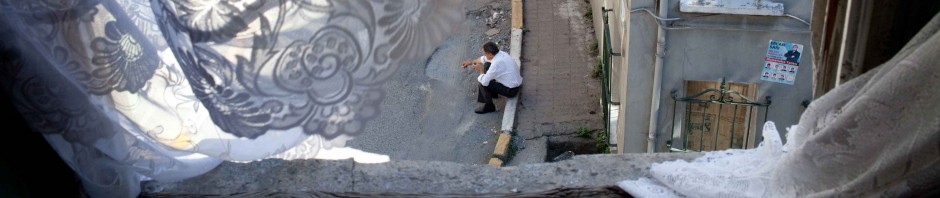
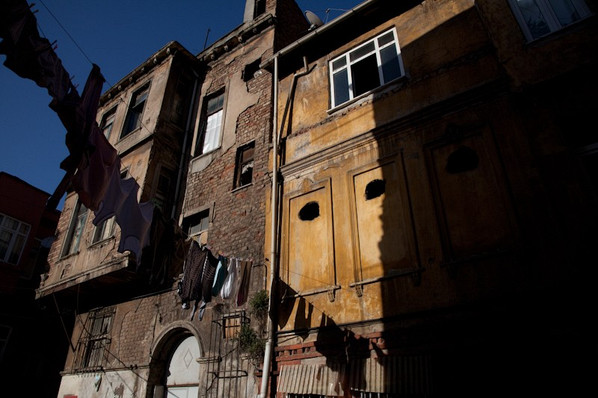
…a neighborhood about to be destroyed.  See their great website: Tarlabasi Istanbul

“In the early 1950s, waves of rural migration led to profound demographic and socio-economic changes in Istanbul. Empty houses in Tarlabaşı and other neighbourhoods were soon claimed by workers arriving from all over Anatolia. Young men started working alongside local master craftsmen, or usta, and sometimes went on to open their own stores and workshops. Yusuf Karapinar, a shoemaker, got his start in the profession at the age of 8, as an apprentice in a Greek family. “They were lovely people, extremely nice to me,” he said. “During the month of Ramadan, they never ate in front of me and my mentor’s wife always insisted on cooking an iftar meal for all of us.” Forty years later, Yusuf Usta is today one of the very last shoemakers in the neighbourhood and his shop is threatened with demolition. Turan Usta, who works with Yusuf and his son Kadir Karapinar and has been a shoemaker for 45 years, is angry about the prospect: “If they tear Tarlabaşı down, it will be the end of the artisans and of the craftsmanship here.””


Comment: nikobakos@gmail.com

Olympic athletes fasting for Ramazan

20 Jul

Two videos — God give them strength.


Comment: nikobakos@gmail.com
“Read. Read in the name of the One who created you, made you from a clot of blood.”

20 Jul

“The fast — restraint from food and water — is a practice that helps us to know the body intimately, most particularly through its limitations and weaknesses, though not always.  Sometimes the body without food is actually a stronger body, sharper, keener, more in tune with the word around it.

“And the body is like the year, the fasting month moving across it, shifting and changing throughout one’s life time.  The body is like the fasting month itself, with its own periods of activity and restraint, its own nights of revelation.

“The body is like a day: it begins with the darkness of evening, ends with the ebbing of light.

“Contains its own being nestled secretly inside.”

Kazim Ali, Fasting for Ramadan: Notes from a Spiritual Practice


Comment: nikobakos@gmail.com