
Youth. Beautiful hair. Curiousity. Consumers. Smarter than you.

Comment: nikobakos@gmail.com

This was ugly and just tacky — like, on an American-politics level tacky. Any head of state cheering on like that in jingoistic ecstasy is tacky (not to mention a German Chancellor and a game played in Poland…and in Gdansk!). Acting like that in a photo that for sure would go public at a match between Greece and Germany, given the current state of the relationship and its gross power inequality is just grotesque and the most provocative kind of public humiliation.
Some interesting commentary around about how East Germans –or semi-East Germans like Frau Merkel, with her winning elegance and a family background that combines a Lutheran upbringing and pastor father with a comfy, East German, party apparatchik lifestyle — never underwent the genuinely noble soul-searching that West Germans did after the war…
But I just find soccer culture to be grotesque all around. I always can’t wait till these “Cup” games are over.
Comment: nikobakos@gmail.com
This is Khurshid-e-Arzu, the “Sun of my Desire,” a piece both composed and sung by Shajarian junior. The lyrics are from a poem of Fereydoun Moshiri’s. Moshiri is one of Iran’s great twentieth-century poets, credited with, if not ‘modernizing’ Persian poetry, at least creating a newer language that would get past the moth-and-flame, rose-nightingale, classical imagery (but every twentieth-century Iranian poet I learn about is credited with the same thing — such is the weight of their literary past I guess.) This particular piece, at least, seems pretty traditional in its emotional tone, which is not in any way a negative assessment; I can’t tell how the language might be used differently.
This isn’t a ‘song.’ This is a composition, based on a mode like most of our music is. It’s a suite — part of one, at least — meaning it has a structure, an architecture, a narrative arc. If you don’t have twelve minutes to listen to it all in one piece (it’s already been cut from its original eighteen minutes) or twelve-minute’s worth attention span generally, then it’s best you don’t bother. All you’ll hear is an “amanes*,” some ‘oriental wailing.’ *(See footnote to “Something Beautiful from Greece: Minore-tes-Auges-Rembetiko” June 17th)
The translation obviously leaves a bit to be desired I imagine. But until we all get it together to learn Farsi, as any civilized man should, it’ll have to do. Sorry, as well, for the hokey video. It’s hard to find video of live performances. Lyrics in Farsi and English below. Enjoy.
Lay your head on my chest to hear
The song of desire of a heart in agony,
Perhaps you would no longer favor, in the affair of love,
To hurt this ensnared startled bird.
Lay your head on my chest and let me tell you
What sorrow is, what love is, where grief is.
Let me tell you of this weary bird,
So long away from its nest in yearning for you.
So much am I sick at heart that if I see you,
I wish to forever cry at your feet,
So you might stay with me forever,
Oh love, you are not true to me!
You are the blue sky, bright and still,
I, like a dove flying in your air.
One night I will pluck your stars one by one,
And with my humble tears, I will pour them at your feet.
O sweet smile of morning, let me kiss you!
O fountain of wine, let me drink you!
I long for your laughter; laugh more!
You are the sun of my desires; shine more!


Fereydoun Moshiri
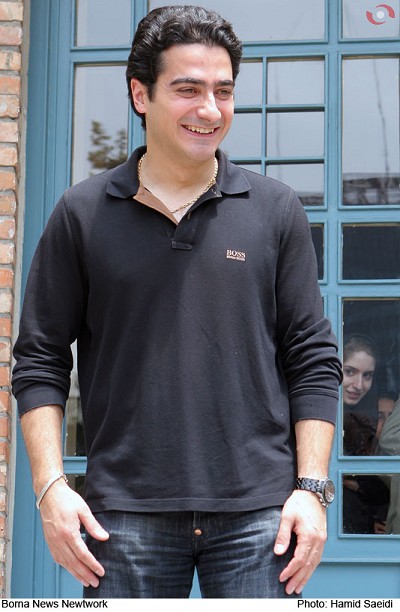
Homayoun Shajarian: enjoying a reluctant bit of a star moment… But always dead serious about his music; this is a rare shot of him smiling…
Comment: nikobakos@gmail.com


(West Bank: Second Intifada)
Jerusalem
EARLIER this month, at a private meeting with the Israeli prime minister, Benjamin Netanyahu, and his security advisers, a group of Middle East experts and former intelligence officers warned that a third Palestinian intifada was imminent. The immediate catalyst, they said, could be another mosque vandalized by Jewish settlers, like the one burned on Tuesday, or the construction of new settlement housing. Whatever the fuse, the underlying source of ferment in the West Bank is a consensus that the Palestinian Authority president, Mahmoud Abbas, has reached a dead end.
Mr. Abbas’s political strategy was premised on the notion that security cooperation between the Palestinian Authority and the Israeli government would make Israel feel safer and remove its primary justification for continuing to occupy the West Bank, thereby clearing the way for a Palestinian state. Ironically, owing to the success of his efforts, many Israelis have had the luxury of forgetting that there is an occupation at all.
Thanks to the American- and European-financed peace that Mr. Abbas’s government has been keeping in the West Bank, Israelis have come to believe they can eat their cake and have it, too. A majority of citizens polled earlier this year said their state could remain Jewish and democratic without relinquishing any of the West Bank. Years of peace and quiet in Tel Aviv allowed hundreds of thousands of Israelis to take to the streets last summer to protest the high price of cottage cheese, rent and day care without uttering a word about Palestinians in the West Bank. The issue has ceased to be one of Israel’s primary security concerns. Mr. Netanyahu would have to be either politically suicidal or exceptionally forward-thinking to abandon a status quo with which a vast majority appears satisfied.
By contrast, Palestinians today see their leadership banging its head against a wall, hoping against reason that a bit more good behavior will bring about an independent state. As a result, longstanding debates over how to achieve national liberation — by comforting Israel or confronting it — have now been resolved. Palestinians of all political stripes are no longer arguing about whether to make Israel’s occupation more costly, but how.
During the 1990s, Mr. Abbas was one of the key architects of the Oslo peace process, which envisioned a phased Israeli withdrawal from the West Bank leading to a permanent peace agreement (though not necessarily to a Palestinian state). Today, he is perhaps its last remaining believer. He has been forced to pay lip service to the demands of those who advocate confrontation by issuing repeated pledges to confront Israel — by dismantling the Palestinian Authority or refusing to negotiate unless Israel freezes settlement construction — only to renege on each one.
As the gap between the Palestinian president’s words and actions has grown, so has the distance of his policies from public sentiment, leading to his government’s turn to greater repression: torturing political opponents, blocking Web sites and arresting journalists and bloggers critical of Mr. Abbas. Even Mr. Abbas’s close advisers confide that he is at risk of becoming another Antoine Lahad, the leader of Israel’s proxy force during its occupation of southern Lebanon. The chief steward of Mr. Abbas’s policies, the unelected prime minister, Salam Fayyad, has acknowledged, “I think we are losing the argument, if we have not already lost.” And Mr. Abbas himself has admitted that the peace process is “jammed” and that his government had merely helped create “a good situation” for Israel, which, enjoying years of unprecedented cooperation with Palestinian forces in the West Bank, lacks incentives to agree to any change.
But these days, Palestinian security forces have little reason to believe their efforts are advancing national goals, and Israel can’t assume that the Palestinian Authority will provide security indefinitely. Last month, as gunfire returned to the streets of Jenin, and 1,600 Palestinian prisoners entered the fourth week of a hunger strike, Mr. Abbas said: “I cannot control the situation. I am afraid, God forbid, that the security system here will collapse.” That sentiment echoed remarks by Yuval Diskin, the recently retired head of Israel’s internal security agency: “When the concentration of gas fumes in the air is so high,” he said, “the question is only when the spark will come to light it.”
The root cause of this instability is that Palestinians have lost all hope that Israel will grant them a state. Each attempt to exert what little leverage Palestinians possess has been thwarted or has proved ineffective. Boycotts of settlement jobs and products haven’t gained mass support, and would not stop settlement growth even if they did. The Palestinians could have pushed for a vote last September in the United Nations General Assembly — a move that frightened Israel and America because of its implications for Palestinian accession to the International Criminal Court. Mr. Abbas abandoned that effort in favor of a petition for statehood at the Security Council, which was always guaranteed to fail, and then deftly sold his capitulation as defiance.
These failures have left Palestinians who hope to make present conditions untenable for Israel with only two options: popular protest and armed resistance. The first option faces enormous obstacles because of political divisions between Hamas in Gaza and Mr. Abbas’s Fatah in the West Bank. Each faction regards mass mobilization as a potential first step to its overthrow, as well as a means of empowering a new generation of leaders at the expense of existing ones.
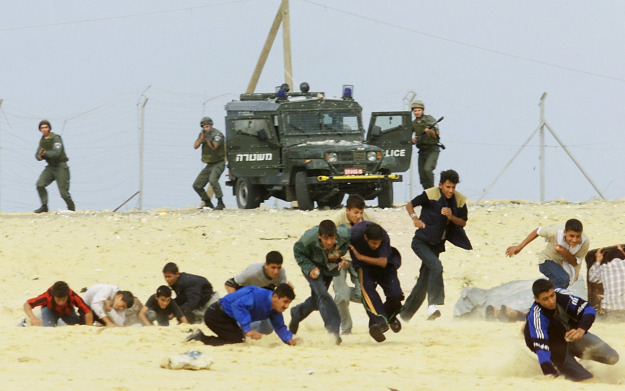
If mass demonstrations erupted in the West Bank, Israel would ask Palestinian security forces to stop any protests near soldiers or settlers, forcing them to choose between potentially firing on Palestinian demonstrators or ending security cooperation with Israel, which Mr. Abbas refuses to do. As he knows and fears, mass protests could quickly become militarized by either side. For that reason, his government has offered little more than rhetorical support for the small weekly protests so beloved by foreign activists and the Western press, and has actively prevented demonstrators from approaching any Jewish settlements.
The second option is armed confrontation. Although there is widespread apathy among Palestinians, and hundreds of thousands are financially dependent on the Palestinian Authority’s continued existence, a substantial number would welcome the prospect of an escalation, especially many supporters of Hamas, who argue that violence has been the most effective tactic in forcing Israel and the international community to act.
THEY believe that rocks, Molotov cocktails and mass protests pushed Israel to sign the Oslo Accords in 1993; that deadly strikes against Israeli troops in Lebanon led Israel to withdraw in 2000; that the bloodshed of the second intifada pressured George W. Bush to declare his support for Palestinian statehood and prodded the international community to produce the Arab Peace Initiative, the Geneva Initiative, and the Road Map for Middle East Peace. They are also convinced that arms pressured Ariel Sharon, then Israel’s prime minister, to evacuate settlers and troops from Gaza in 2005. That pullout also had the effect of freezing the peace process, supplying “the amount of formaldehyde that is necessary,” as a Sharon adviser put it, “so there will not be a political process with the Palestinians.”
For more militant Palestinian leaders, who never believed in the peace process, the lesson was clear: “Not an inch of Palestinian land will be liberated,” Mousa Abu Marzook, deputy head of Hamas’s political bureau, told me, “while Israelis feel that controlling it exacts few costs.” Matti Steinberg, a former senior adviser to Israeli security chiefs, described Mr. Abbas as the most obliging, nonviolent Palestinian leader Israel has encountered and warned of taking him for granted. “The Israeli center is caught in a vicious cycle,” he said. “It argues that it cannot make peace while there is violence, and when there is no violence it sees little reason to make peace.”
History may credit Mr. Abbas with reigning over the more virtuous phase of this cycle, but he has likely laid the groundwork for the uglier one. Hamas, meanwhile, has already moved on. “Israelis had a golden opportunity to sign an agreement with Abbas,” Hamas’s health minister, Basem Naim, told me in Gaza last November. “But the chance has already passed. They will not get it again.”
Nathan Thrall is a Middle East analyst at the International Crisis Group.
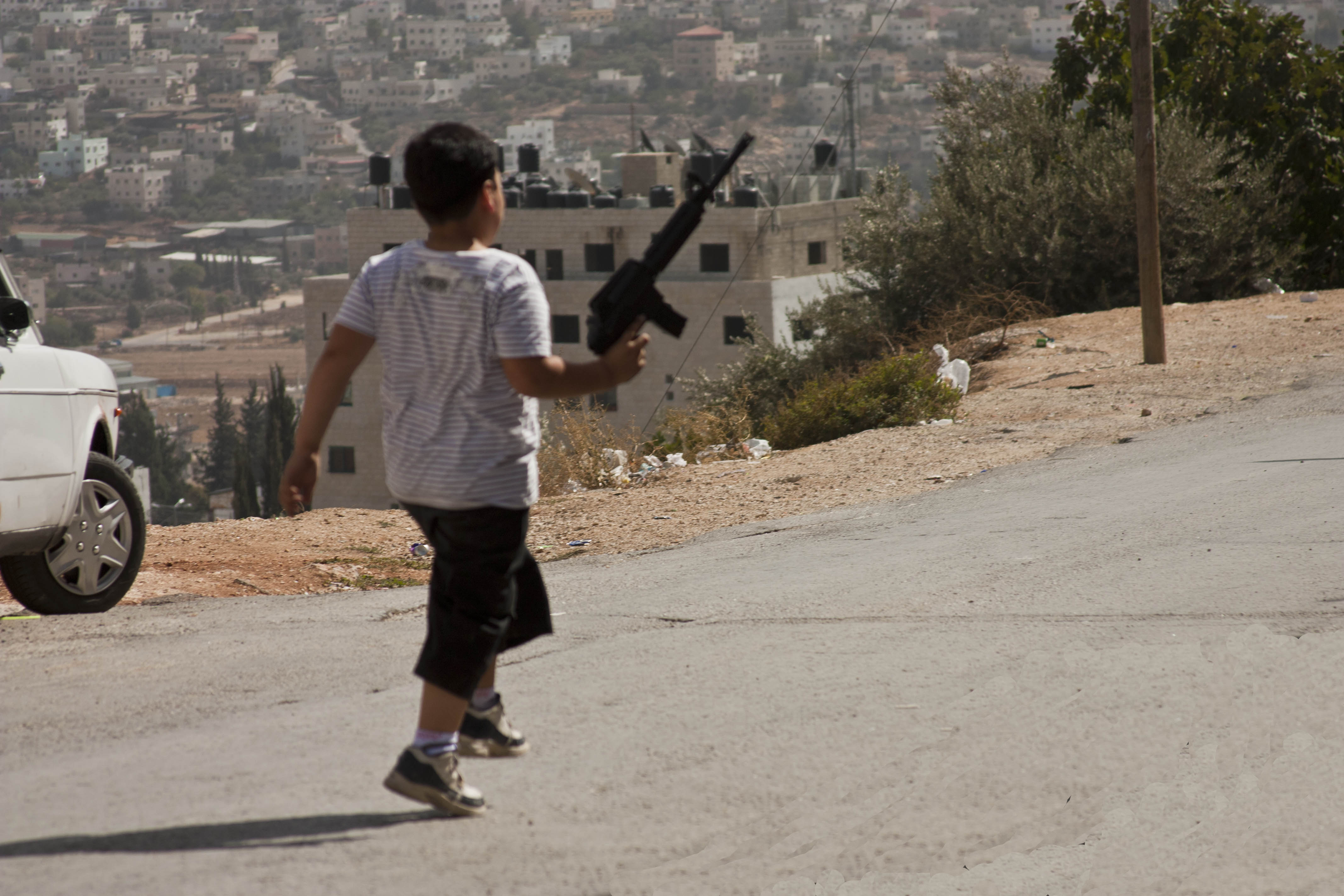
Nablus (2005)
Comment: nikobakos@gmail.com
— Rosanna Warren, The Art of Translation

Two Pashtun kids in Nangarhar, with that probing, no-shame, about-to-crack-a-smile inquisitiveness that all Afghans disarm you with.
Comment: nikobakos@gmail.com
From my previous post’s comments on Salonica and Izmir…
A great book on the Population Exchange, with both extensive historical background that helps a reader from outside the region understand the events; a deep theoretical analysis on nationalism and ethnicity as concepts; the wars involved; the mechanics of the Exchange itself and its consequences, both large-scale and personal; how it would be considered the most objectionable kind of Ethnic Cleansing today and would raise howls of protest from the international community, but was then considered a perfectly rational way by our two Great Leaders to solve a problem and “nation-build” — move almost three million people against their will –– setting a horrible twentieth-century precedent (which we’ll later see in Eastern Europe, Palestine, most tragically of all, India, in Yugoslavia…); and all somewhat miraculously condensed into a book of less then three hundred pages, is Bruce Clark’s Twice a Stranger: the Mass Expulsions that Forged Modern Greece and Turkey.
And if there’s a first book I recommend to anyone who wants to understand our complicated, often beautiful, mostly dysfunctional romance, and how it continues even after the Great Divorce, it’s this one:

Clark strikes the absolute perfect balance between historical and journalistic research and poignant personal accounts of both the Turkish and Greek refugees. But these personal accounts are made even more moving by Clark’s own deep, emotional sense of loss and time and violence and his investment in his subject matter (his first chapter on Ayvalik, with it’s haunting, closing quote from one of his subjects: “It’s too early to remember,” is a masterpiece). When you find out that Clark is Northern Irish, so knows of what he speaks when it comes to inter-communal viciousness, another layer of profundity is added to the experience of reading this book. Many thanks to him for his generosity in allowing me to reproduce sections of his work.
I thought of one passage in particular, like I said, when mentioning both Salonica and Izmir’s sterility in the previous post:
“In this region of ancient settlement and civilization, there is often an unhappy mismatch between where people live now, and the places to which they feel the deepest attachment; and that mismatch is reflected in the physical environment. Monuments and places of worship seem to be in the wrong place, or to be used for the wrong purpose. In contrast with European cities like Bologna or Salamanca, where the past and present seem to blend quite seamlessly, the Aegean landscape is full of odd, unhappy disjunction; places where people have lived, prayed and done business for centuries feel as soulless and ill-designed as a strip development on an American turnpike. That is partly the result, of course, of ill-managed and corrupt forms of economic development; but the legacy of an artificial exercise in social and ethnic remodeling has played a part.” [my emphases]
Some older photos that might help:
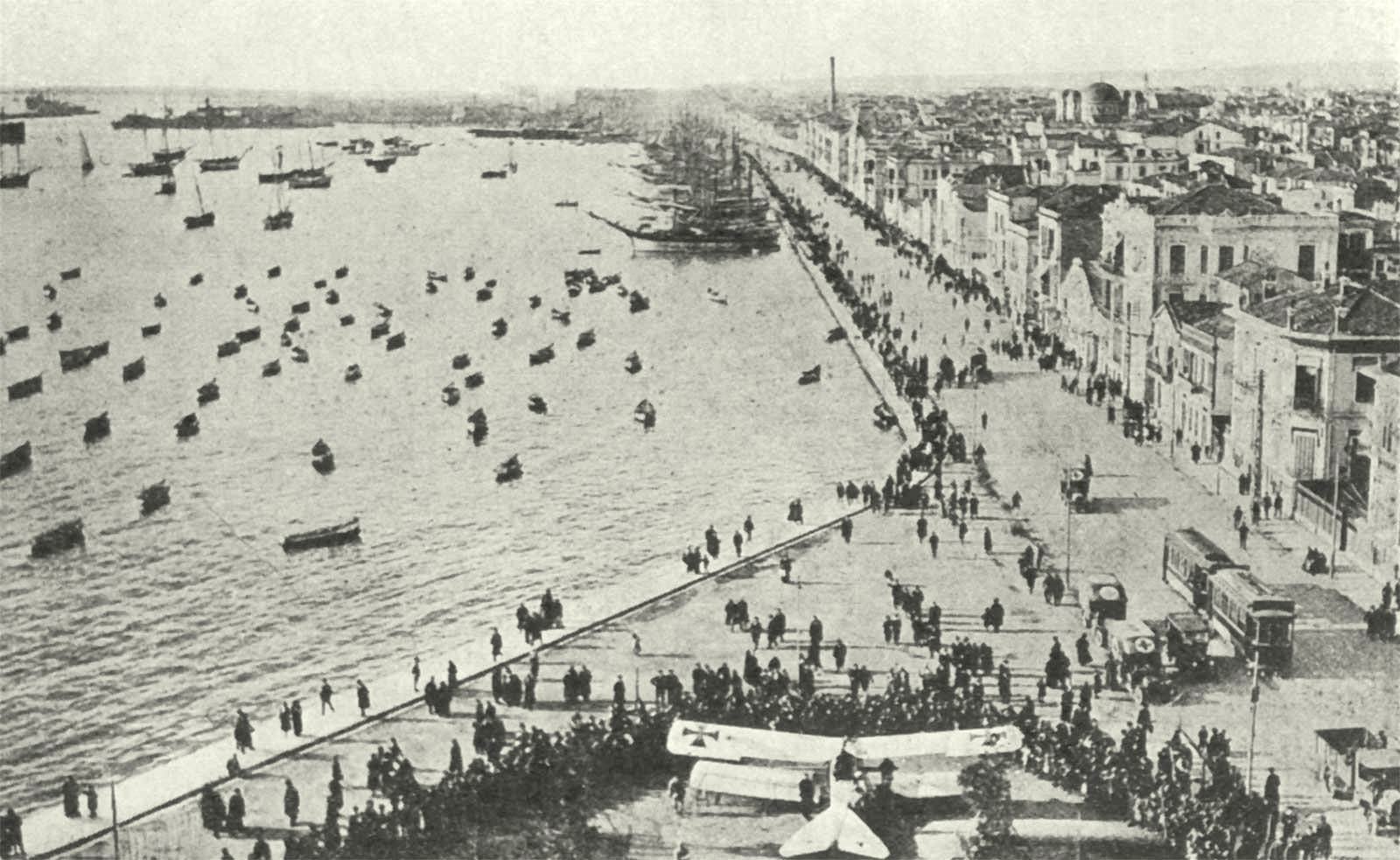
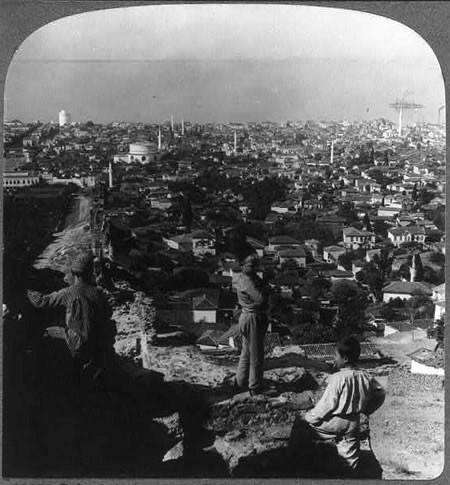
Salonika
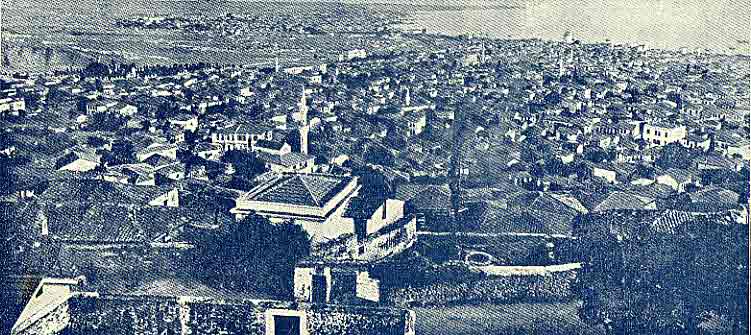
Solun: from a Bulgarian website. That Kievan mosaic in the previous post should actually be titled Dmitiri Solunskiy, as he’s known throughout the Slavic world, where he’s widely venerated, but especially by Bulgarians and Macedonians.

Smyrna before the twenties
Stuff like this below, though, doesn’t really help, but I find clownish and borderline offensive: Izmir’s “Aegean Greek Wine Tavern” (though the food looks great and probably is)*; I mean, if it were in Istanbul, where there’s still a living memory of Greeks, it wouldn’t be so weird, but in Izmir, where there haven’t been any Greeks in almost a century, and from where they left under horrific conditions that can’t be compared to Istanbul Greeks’ slow exodus…plus, where due to the Exchange and the flood of refugees from Greece, there are probably hardly any native Izmirli Turks to remember them either (try finding a true native Salonikan who’s not of refugee origin) makes it a little creepy.
*The classic seafood-meze-raki meyhane was almost exclusively a Greek insitution in Turkey, and clearly the association lives on. For obvious reasons, the tavern has always been default “gavur” territory, since the beginnings even of Islamic poetic culture. The fish tavern continued to be mostly Greek terrain (and Armenian) in Istanbul itself until well into the sixties; in what little modern Turkish fiction I know set in C-town the only Greeks are waiters in seaside restaurants. There are still a couple of Greek-owned ones left. Which doesn’t mean that the genre doesn’t live on without us. It flourishes in fact, and a good Turkish seafood-meze-raki meal in Istanbul is one of life’s sublime experiences. I pity those who die without having experienced it.
Comment: nikobakos@gmail.com

I reckon I’ve now received enough emails complaining about my use of “Constantinople” that it’s time to address the issue.
Constantinople – Kwnstantinoupoles — is Istanbul in Greek. It’s the Greek word for Istanbul. Istanbul comes from the word Constantinople. It’s that simple. The way Moscow is the English word for Moskva. The way Parigi is the Italian word for Paris. Constantinople is the Greek word for Istanbul. It’s that simple.
That the Republic chose to change its official name to the time-honored Turkish name of Istanbul in the 1920’s does not obligate speakers of other languages to call it that, especially not those with as heavy an emotional, historical and spiritual investment in their own name for it as we have. Just like the world will hopefully never be obligated to call Greece “Hellas” by the idiots who are attempting to do so. Where Istanbul is concerned, the Ottomans themselves were content, at least for official purposes, with using the Arabic Costantiniyye until very late – till the very end, 1923, if I’m not mistaken. And it took the rest of the world several more decades, as well, to abandon “Constantinople” and conform to the Turkish Republic’s new orders — for those who thought the name just disappeared in 1453.
What exactly is the problem? If readers think I have some nationalist, much less irredentist, reasons for referring to the city as Constantinople, then they haven’t read anything else on this blog, and know nothing about me. If there even is any discernible pattern in my switching back and forth between the two names, it’s not easy to identify. I mostly refer to the city’s Greek community as Constantinopolitan Greeks, usually when I’m talking about a time when there was a community. When the present is involved I usually say something like “Istanbul Greeks.” I call Greeks from Istanbul “Polites” and will often say “Pole,” or even “the City” in English to evoke some sense of its importance to Greeks – and to me. And all sorts of various combinations of the above.
In both print and speech I never hear Turks call Salonica “Thessalonike” but Selanik – except for the occasional overly p.c. Turk who thinks that “Thessalonike” is what I want to hear. And not only does Selanik not annoy me, not only do I not take issue with it or get offended by it, but it moves me. Obviously, when a Turk calls Jiannena — one of my many hometowns – Yanya, it moves me even more. A Turk who says Yanya is asserting his connection to that city, and that assertion becomes an immediate bond between me and him: a bond we both share to its streets, its lake and its mists, its mosques, its churches, its synagogues, its borek, the mahallades my mother used to tell me were Turkish before the twenties, including the one where she grew up, the parks she used to tell me were paved over Muslim cemeteries, that used to scare her as a girl when the region’s interminable rains would expose bones and skulls in their mud — all told with her peculiar sensitivity and strange sadness that would make you think these things were all her own; I never heard a word of ethnic animosity or hatred for anybody out of her mouth — not ethnic or any other kind — and not from my father either.
Yanya: the lake, mosques, the beautiful gate of the Ic Kale, streets, the front gate and interior of the Old Synagogue, 18th c. (The New Synagogue, 19th c., outside the city walls, was blown up by the Nazis.)
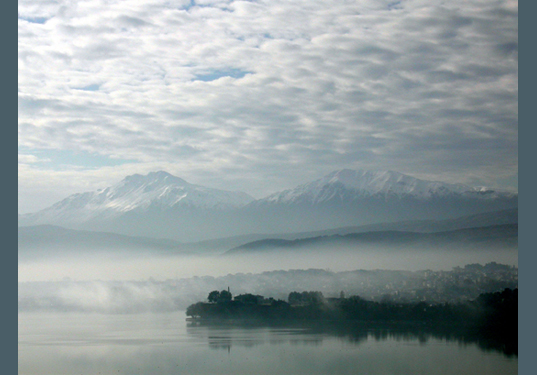


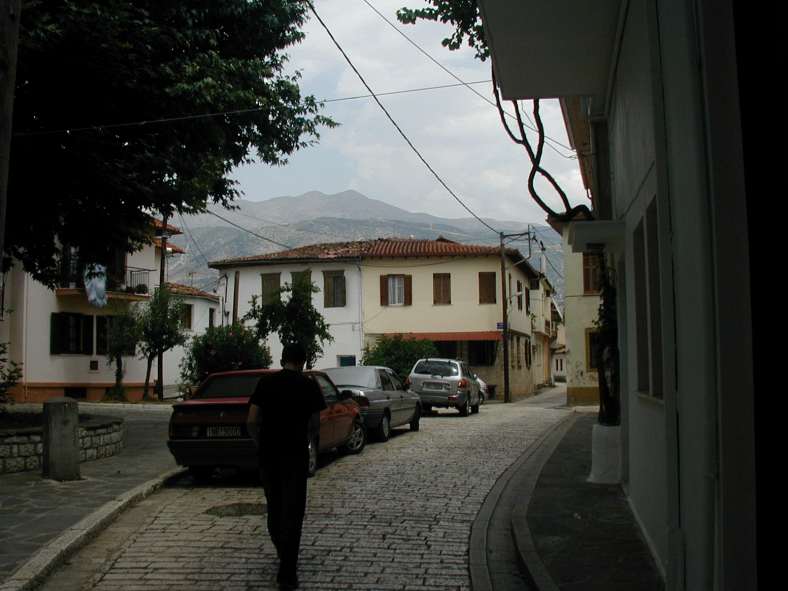


And when a Turk says Selanik, he’s asserting his deep historical connection to that city; whether he’s from there or not, he’s using a name which carries all his historical references to that place, which I’m nothing but happy to grant him. I don’t even call it Thessalonike, but ‘Salonike. When I think of Byzantine Thessalonike, of Selanik, Salonico, Salonica, they all evoke for me a great and ancient Mediterranean city; for a long time, the second city of the Byzantines, of St. Gregory Palamas and Nicholas Kabasilas; Salonico makes me think of the heir to the philosophical and poetic heritage of Jewish Spain; the great center of Sephardic learning, both rabbinical and the deep Kabbalistic learning that Jews brought with them from their previous homeland; I think of a Turkish city that was a flourishing center of a variety of Ottoman Sufi orders; the city where so much of Turkey’s new Republican bourgeoisie came from, just as ours came from the other direction.

Frontispiece of a Salonican Zohar, a seminal Kabbalah text, originally written in Leon, Spain.
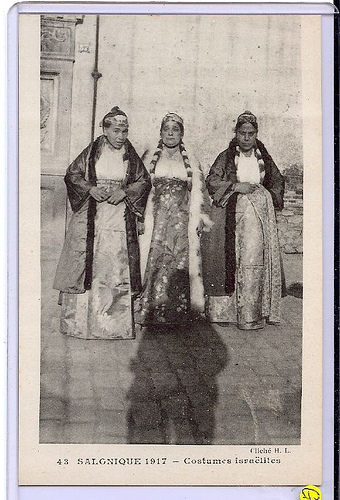
Salonican Jews


Great caption; “the fanatical sect of Islam” being referred to are the Mevlevis!!!
When I think of modern Thessalonike, on the other hand, I think of an unattractive, humid Balkan town with a serious second-city complex.
But I’m a “manic lover” of St. Demetrius, its patron, so I have to visit every now and then.

Mosaic of St. Demetrius, originally from the church of St. Sophia in Kiev (or is it Kyiv?), currently in the Hermitage Museum, St. Petersburg (or is it Leningrad? or Petrograd? or just the name that everyone who knows her and truly loves her calls her, Peter…)
Funny that it took me so long but I recently realized why I dislike both Salonica and Izmir so much; despite their history, despite Salonica’s plethora of classical and Byzantine monuments even, neither of them — for reasons we all know — feel like organically old cities, the way even Athens does, though in its modern incarnation it’s far newer. They both feel like one city was removed from that location and another one hastily put in its place. Remade. They don’t feel grounded. What you feel in both of them mostly is the absence of history.*

Can you even tell which is which? — except for a few giveaway signs…

With all that said, therefore, I think we have to be very careful about whether it’s the renaming of places or persevering in the old name that represents the more nationalist impulse. I recently confirmed for an Indian friend that, yes, Greeks still refer to Istanbul as “the City,” and he shook his head and mumbled something about the “narcissism of nationalism.” But an increasingly fundamentalist and nationalist India may be the perfect example to start with. Granted, Calcutta was always Kolkata in Bengali. But what was wrong with Madras? And what nationalist Tamil mythology does Chennai justify? The BJP (fundamentalist Hinduism.…you’d think it’d be an oxymoron) in fact, has a list for changing the names of almost all the cities of India to more appropriately Hindu ones, not just obvious targets like Allahabad, but Delhi itself and others: see the list if you’re interested. Aung San Suu Kyi calls her country by its perfectly legitimate name of Burma, yet for a couple of decades we were content to use the name imposed on it by its military dictatorship, Myanmar, and never asked why or by whom it had been changed. The State is not to be questioned. If you said “Burma,” people looked at you like you were uninformed.
The most unfortunate and vulgar change of all is “Mumbai,” but almost no one knows or cares about how that change happened. It was once generally accepted that Bombay comes from the Portuguese “bom bahim,” or good little harbour, just north as it is from Portugal’s long-time colony of Goa. But even if that etymology is bogus, it was under the name Bombay that it flourished and grew under the British into the most important and cosmopolitan city in South Asia.

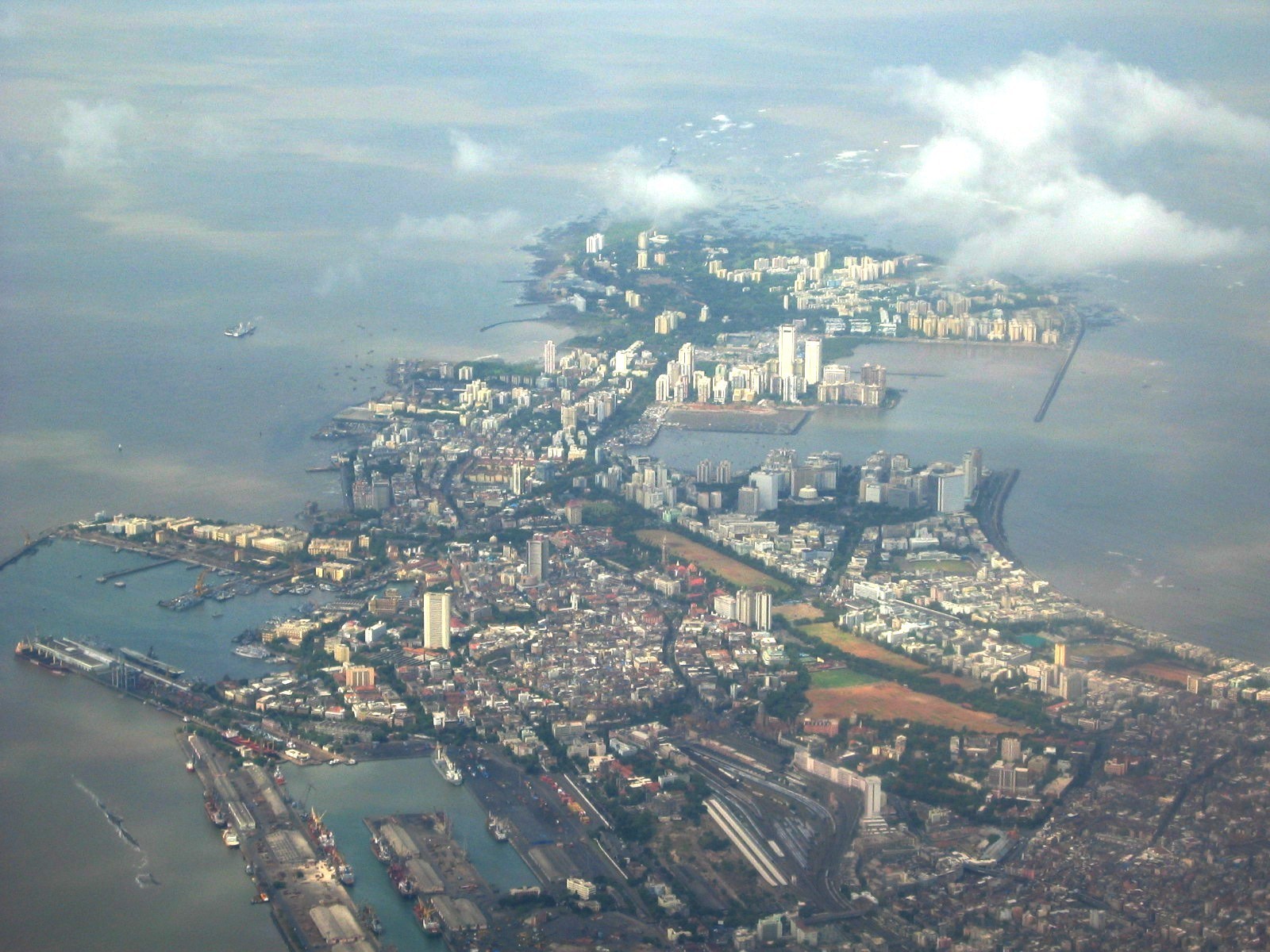
Bombay (gotta click on this one)
But in 1995, the Shiv Sena party (the Army of Shiva…) won control of the state government of Maharashtra, of which Bombay is a part, though it’s so different in social and ethnic make-up from the rest of that state that it deserves a separate federal district type status like Delhi has, or Mexico City, or D.C. Shiv Sena, being a party whose power base is rural Maharashtra and poor migrant Marathis who feel they deserve more power in the city, is actively hostile to Bombay’s dizzying diversity and especially its large Muslim population. It’s essentially a Marathi branch of the BJP, only worse (and they haven’t been getting along lately): a virulently Hindutva bunch that have not only been found to be involved in Bombay’s drug, prostitution and extortion circles, but ordered and even carried out much of the more vicious anti-Muslim attacks during the Bombay riots of 1992-93: the kerosene-dousing and burning of individuals and the burning tire around the victims’s neck were a couple of their trademarks.

When, despite all that, Shiv Sena were voted into state office in Maharashtra, their response to the poverty, massive infrastructural challenges, crime and destitution of this barely manageable city of more than twenty million was to change its name to Mumbai. This was based on the supposed fact that there was (or is, or if there hadn’t been, I’m sure there now is) a temple of a Marathi goddess of that name on the site before the colonial city rose up, which may or may not be true, but, given the fact that every square yard of India contains at least one shrine or temple to someone or something, doesn’t mean very much.
And yet the whole world fell in line. Thinking that, like Myanmar, if it’s coming from there it must have some sort of indigenous, authentic root, filled with post-colonial guilt and worried about offending what we thought were Indian sensibilities, we all dutifully started calling it Mumbai. Fearing that using the old name would immediately make others imagine us to be jodhpur-clad gin-swillers, we let a bunch of criminal thugs and violent nationalists change the name Bombay — the name by which this great, open-to-the-sea-and-the-world, mercantile, diverse, cosmopolitan, sexy metropolis, a microcosm of India itself and its modern face to the world, was known for almost three centuries – and nobody asked why or breathed a word of resistance.

Bombay — Marine Drive — Queen’s Necklace
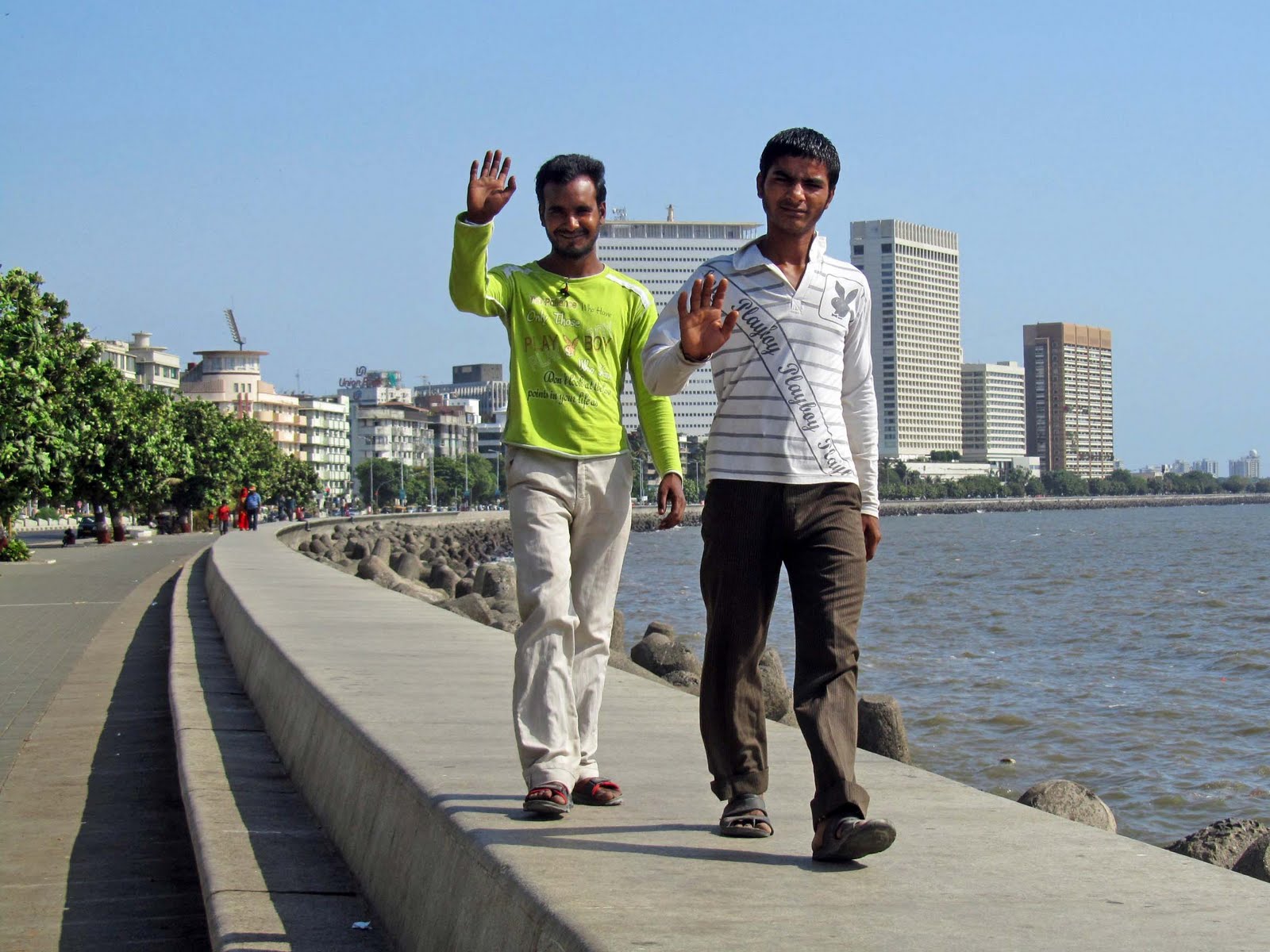
So as for C-town, you choose which is more “nationalist.” Calling the city the name by which it was known to most of humanity for more than sixteen centuries? Calling it an also venerable name that the nationalist, anti-cosmopolitan, Turkification project of a military dictatorship whose attitude to the City, its legacy, history and population was actually hostile for much of the time decided the world should call it? Or just calling it both?
Or how ‘bout who cares? As long as we know which city we’re talking about.
* See next post
Comment: nikobakos@gmail.com

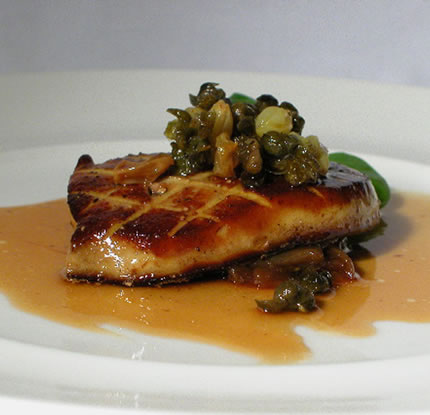
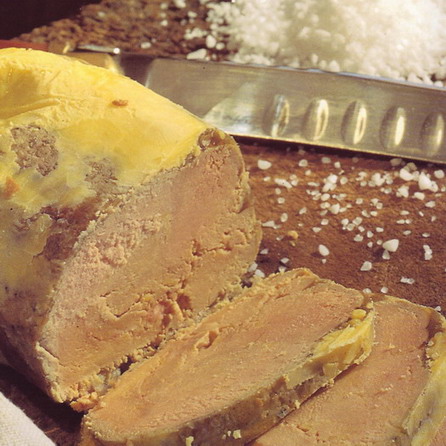
“I asked the Gonzalezes if foie gras without gavage would be possible. Several years ago, a Spanish farmer named Eduardo Sousa became famous for producing “ethical foie gras” by allowing his flock to eat freely in a lush orchard. Geese, like other migratory waterfowl, instinctively gorge in the fall, storing fat in the liver, in preparation for their flight to wintering grounds. (In 2008, Dan Barber gave a TED talk on Sousa, and then tried, unsuccessfully, to replicate his results on the East Coast.) The Gonzalezes just laughed. “That’s bogus,” Guillermo said. “A hobby,” his daughter Maria said. Sousa’s operation, they said, was not commercially viable because of the great variation in liver sizes. (In France, a liver must weigh at least three hundred grams to count as foie gras.)
“We pulled up to a gate, with a sign in Chinese and little other marking—nothing, certainly, indicating that Sonoma Artisan Foie Gras had been operating there for fifteen years. The previous owners had been Chinese poultry farmers using conventional battery-style cages; the current owners, who bought the place in 2003 and continue to lease barns and an orchard to the Gonzalezes, use the same housing for their layers. Guillermo said that when animal-rights groups started trespassing, in 2002, stealing ducks and making videos, they passed right by the chicken barns. “They had focussed on us as a target, and even though there was this highly criticizable situation with the chickens they didn’t care.” To its defenders and detractors, foie gras is an easy target—a luxury good with bad optics—and passing legislation against it is far easier than going after Big Poultry, though that may be the activists’ ultimate goal. In the meantime, Guillermo finds it bitterly ironic that when his lease terminates, on June 30th, more battery-style chicken cages will likely replace his ducks.
“Here is where we have one of the last flocks,” Guillermo said, pointing to a dirt yard shaded by walnut trees, through which a muddy rivulet ran. Black-and-white ducks—male Pekin-Muscovy mules—pecked at the water, as workers broke down wooden structures previously used to protect the birds during the “pre-gavage,” two months of outdoor, free-range binge-training to stretch the esophagus. “We have maybe two thousand ducks now,” he said. “Usually, we’d have twenty thousand.” He stopped the car in front of a thirty-thousand-square-foot barn, painted rust red, and introduced me to Santiago, who has worked for Sonoma Foie Gras for more than twenty years, and who was wearing a T-shirt that said “Peace. Love. Foie.” He led us into the barn.
“Inside was dark, lit by a few exposed bulbs; a chilly wind blew through it, and the ceiling dripped. “Santiago is going to show us the contentious gestures,” Guillermo said, chuckling, as we walked to a pen with eight ducks in it. (Individual cages, which are more efficient for feeders, are considered worse for the animals’ well being, and are being phased out by law in France.) The ducks, on their thirteenth day of feeding, were going to be processed in a few more days. They were big-bottomed, gravid with liver; they huddled at the back of the pen. Santiago pulled up an overturned plastic crate and turned on the feeding machine, which whirred and clattered. (These ducks eat straight corn, not corn-soy feed like some other foie-gras ducks.) He took a duck and, holding it by the neck, put a metal feeding pipe down its throat. Its tongue was out: ducks breathe through a hole in the tongue, not through the mouth, as humans do. The process, which pumped some four hundred grams of corn into the duck, lasted six or seven seconds, and would be repeated in twelve hours. Duck anatomy, Guillermo’s wife, Junny, said, is designed to accommodate large masses of food. “They swallow big fish, they swallow frogs,” she said.

“The fed ducks panted—thermoregulation, Guillermo said, as ducks don’t have sweat glands—and flapped their wings slightly. “It’s a natural reaction,” Maria said. “Satisfaction, really.” I cannot say for sure. They didn’t look miserable, but they didn’t look thrilled, either. They looked like animals in captivity, a few days from slaughter, and they looked very, very full.
“An hour later, I, too, had been stuffed by the Gonzalezes, although it was, in industry parlance, ad libitum. In a nearby park, Junny laid out a picnic of duck products: her rillettes, a chef friend’s torchon, breast and legs from a fatted duck. We talked about the bill, SB 1520, which then Governor Schwarzenegger signed into law in 2004 after Guillermo withdrew his opposition. (The bill contained a clause granting producers like him legal immunity, shielding them, at least in California, from animal-cruelty suits brought by activists.) The bill, some argue, could expose non-foie products to the ban, either because of its breadth (it extends to all birds and defines force-feeding as “a process that causes the bird to consume more food than a typical bird of the same species would consume voluntarily”) or because of the precedent it could set. Someone raised the possibility that the real target is the Thanksgiving turkey. Guillermo nodded. “Those turkeys are really fed”—he whistled—”to grow.”
“Like eating velvet,” a friend of mine once said.
Comment: nikobakos@gmail.com

I’ve written about the Israeli colonization of the Diaspora mind (in and not in connection with similar process among Greeks) here and here, so I was really intrigued by reading some of the comments on The Forward‘s* original post, which put a really interesting twist on things:
“They couldn’t even write it in Yiddish?” [asks one poster]
[reply] “The billboard isn’t sanctioned by any official Orthodox organization but rather the work of a lone wolf accentric [sic]. The use of Hebrew rather than Yiddish or English suggests this to be the work of an Israeli trying to import Mea Shearim standards to Brooklyn, [see: Haredi Judaism**] The overwhelming majority of Orthodox Brooklynites (including Hassidic and yeshivish) view public spiritual policing as distasteful and bordering on incitefull [sic]. Also, the use of a billboard for this message is an oxymoron, since a spiritually sensitive person that tries to watch his eyes avoids looking at billboards altogether.”
*The Jewish Daily Forward (“Forverts”), a New York institution, central to progressive causes in the city and the country since its founding: The Forward.
Comment: nikobakos@gmail.com

 Jadde: from Bosnia to Bengal