Hanuman Jayanti!!!

7 Apr

Geez, all holidays are falling together this year.  I just realized it’s Hanuman’s birthday.  And he’s my patron deity too.  Shame on me…

I can’t get into all of the complex mythology associated with Hanumanji right now; help yourselves: Hanuman   Suffice it to say that it’s one indication of the infinite brilliance of Hinduism to take an animal that so creepily resembles us, that we often use as a metaphor for the sub-human precisely because of the discomfort of that proximity, and make him the embodiment of all human heroism and virtue.

So Jai Bajrang Bali…’cause he’s the paragon of strength and courage and devotion and humility, ’cause he’s always in kick-ass shape, being the patron deity of wrestlers and all strength athletes, and ’cause he’s passionately in love with another man and it’s not about sex…

Indian wrestler at his akhara (gym-temple).  Photo by Aditya Kapoor

If you’re interested in Hanuman and his changing image in India today, especially in relation to changing concepts of masculinity or Hindutva nationalism, see Hanuman’s Tale by Phillip Lutgendorf.

If you’re interested in traditional Indian wrestling and the complex physical and moral training and ethical structures that underlie it and in the “akhara” as an institution: a combined gymnasium, wrestling pit and Hanuman shrine, see The Wrestler’s Body Identity and Ideology in North India by Joseph S. Alter.

P.S.  I just connected a few dots and realized that Hanuman Jayanti is the 15th of the Hindu lunar month of Chaitra (full moon) and Passover is the 15th of the Jewish lunar month of Nisan (full moon) so Hanumanji’s b-day and the first day of Passover always fall together — good to know.

Comment: nikobakos@gmail.com

Egypt: The Other Homeland

6 Apr

Another people’s exodus from Egypt… 

I always feel like smirking a bit when I come across the title of Mark Mazower’s 2005 book: Salonica: City of GhostsIt’s not just that “our parts” with their ‘ancient, tribal hatreds’ always seem to be ‘haunted’ in the Western imagination; it’s just that, truly, which of our cities isn’t a city of ghosts?  Salonica, Sarajevo, Istanbul, Izmir?  Beirut, Alexandria, Lahore, Delhi?  Which?

Well, Al Jazeera has produced a beautiful little documentary by Giorgos Augeropoulos about the story of Alexandrian Greeks.  Augeropoulos is apparently the director of a highly praised Greek documentary series and has been pretty vocal in Greece’s recent political and fiscal crisis/rezili, but I had never heard of him before.

Al Jazerera, by the way, has now become my primary source of news.  It’s the only place one can get any serious international news, run from the idiocy of American politics, escape from MSNBC’s twenty-four hour liberal catechism class, and catch genuinely original and — I don’t know how else to put it — sincere documentaries like this.  Watch it when you have the chance.

Below are the complete texts of the two Cavafy poems used at the beginning and end of the documentary, “Candles” and “The City” in both Greek and English.  Single-accent Greek (the appropriately named “monotonic”) literally causes me visual pain — like, I can’t look at it, actually have more trouble reading it — and when used for Cavafy the pain reaches excruciating levels, but I couldn’t find the poems in polytonic versions anywhere on line; those who know what I mean, please forgive me.  And this from “The Official Website of the Cavafy Archive,” malaka: http://www.kavafis.gr/index.asp   …criminal, ntrope.  And I’m beyond certain Cavafy himself, so much of whose work was dedicated to memory, the past, and the continuity of Greek civilization, would have agreed

The English translations are by Edmund Keeley and Phillip Sherrard, still the best around, despite the attempts of many others.  Under the Greek version of “Candles” is the Greek actress Eirene Pappa’s performance of the poem set to music by Mimes Plessas.  Below the Greek version of the “The City” is a gorgeous reading of the poem by the truly great actress Elle Lambete, whose stunning Greek face I think readers should have a photo of as a visual reference:

Patricia Storace,  in her Dinner with Persephone: http://www.amazon.com/Dinner-Persephone-Travels-Patricia-Storace/dp/0679744789/ref=sr_1_1?s=books&ie=UTF8&qid=1333821533&sr=1-1, the first book I recommend to anyone who wants to get Greece and Greeks (along with Patrick Leigh Fermor’s classic Roumeli: http://www.amazon.com/Roumeli-Travels-Northern-Greece-Classics/dp/159017187X/ref=sr_1_1?s=books&ie=UTF8&qid=1333821635&sr=1-1), writes:

“Greek is not a voluptuous language, or a lilting one, but stony and earthy, a language full of mud, volcanic rock, and glittering precious stones…”

Listen to Lambete and you’ll know what she means.

Κεριά

Του μέλλοντος η μέρες στέκοντ’ εμπροστά μας
σα μια σειρά κεράκια αναμένα —
χρυσά, ζεστά, και ζωηρά κεράκια.

Η περασμένες μέρες πίσω μένουν,
μια θλιβερή γραμμή κεριών σβυσμένων·
τα πιο κοντά βγάζουν καπνόν ακόμη,
κρύα κεριά, λυωμένα, και κυρτά.

Δεν θέλω να τα βλέπω· με λυπεί η μορφή των,
και με λυπεί το πρώτο φως των να θυμούμαι.
Εμπρός κυττάζω τ’ αναμένα μου κεριά.

Δεν θέλω να γυρίσω να μη διω και φρίξω
τι γρήγορα που η σκοτεινή γραμμή μακραίνει,
τι γρήγορα που τα σβυστά κεριά πληθαίνουν.

Pappa and Plessas: http://www.youtube.com/watch?v=_0DiYKzHHdY&feature=related

Candles

Days to come stand in front of us
like a row of lighted candles—
golden, warm, and vivid candles.
 
Days gone by fall behind us,
a gloomy line of snuffed-out candles;
the nearest are smoking still,
cold, melted, and bent.
 
I don’t want to look at them: their shape saddens me,
and it saddens me to remember their original light.
I look ahead at my lighted candles.
 
I don’t want to turn for fear of seeing, terrified,
how quickly that dark line gets longer,
how quickly the snuffed-out candles proliferate.

Η Πόλις

Είπες· «Θα πάγω σ’ άλλη γη, θα πάγω σ’ άλλη θάλασσα.
Μια πόλις άλλη θα βρεθεί καλλίτερη από αυτή.
Κάθε προσπάθεια μου μια καταδίκη είναι γραφτή·
κ’ είν’ η καρδιά μου — σαν νεκρός — θαμένη.
Ο νους μου ως πότε μες στον μαρασμόν αυτόν θα μένει.
Όπου το μάτι μου γυρίσω, όπου κι αν δω
ερείπια μαύρα της ζωής μου βλέπω εδώ,
που τόσα χρόνια πέρασα και ρήμαξα και χάλασα.»

Καινούριους τόπους δεν θα βρεις, δεν θάβρεις άλλες θάλασσες.
Η πόλις θα σε ακολουθεί. Στους δρόμους θα γυρνάς
τους ίδιους. Και στες γειτονιές τες ίδιες θα γερνάς·
και μες στα ίδια σπίτια αυτά θ’ ασπρίζεις.
Πάντα στην πόλι αυτή θα φθάνεις. Για τα αλλού — μη ελπίζεις—
δεν έχει πλοίο για σε, δεν έχει οδό.
Έτσι που τη ζωή σου ρήμαξες εδώ
στην κώχη τούτη την μικρή, σ’ όλην την γη την χάλασες.

Lambete: http://www.youtube.com/watch?v=y32nzLanljY

The City

You said: “I’ll go to another country, go to another shore,
find another city better than this one.
Whatever I try to do is fated to turn out wrong
and my heart lies buried as though it were something dead.
How long can I let my mind moulder in this place?
Wherever I turn, wherever I happen to look,
I see the black ruins of my life, here,
where I’ve spent so many years, wasted them, destroyed them totally.”
 
You won’t find a new country, won’t find another shore.
This city will always pursue you. You will walk
the same streets, grow old in the same neighborhoods,
will turn gray in these same houses.
You will always end up in this city. Don’t hope for things elsewhere:
there is no ship for you, there is no road.
As you’ve wasted your life here, in this small corner,
you’ve destroyed it everywhere else in the world.


Comment: nikobakos@gmail.com

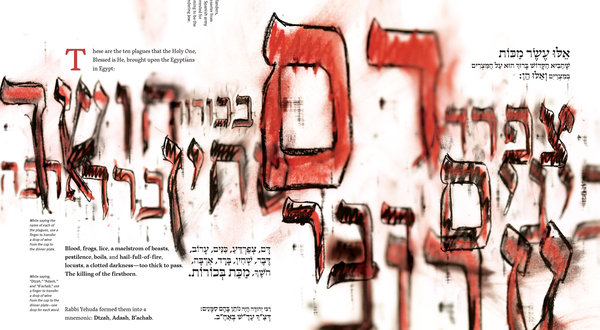
A Zissen Pesach y Pesaj Alegre to everyone

6 Apr

One of the sweetest gifts this Passover has brought us is the New American Haggadah, translated by Nathan Englander and edited by Jonathan Safran Foer.  Foer is the author of Everything is Illuminated,  http://www.amazon.com/Everything-Is-Illuminated-A-Novel/dp/0060529709/ref=pd_sim_sbs_b_1  a beautiful book made into a moving film, and Extremely Loud and Incredibly Close, a book and film both of which I perhaps unfairly ignored because I’m highly allergic to any kind of 9/11 sentimentality.  More on Foer here: http://en.wikipedia.org/wiki/Jonathan_Safran_Foer

His Haggadah is smart, both reverent and ironic, skeptical and thought-provoking, often funny: everything we want from a good Jewish text.  It’s also an absolutely beautiful edition, though at twenty bucks each might be a bit pricey if you actually wanted to use it at a large family seder: http://www.amazon.com/American-Haggadah-Jonathan-Safran-Foer/dp/0316069868/ref=sr_1_1?s=books&ie=UTF8&qid=1333823352&sr=1-1

He lays out his reasons for writing it in a recent New York Times piece: “Why a Haggadah?”:

“Though it means “the telling,” the Haggadah does not merely tell a story: it is our book of living memory. It is not enough to retell the story: we must make the most radical leap of empathy into it. “In every generation a person is obligated to view himself as if he were the one who went out of Egypt,” the Haggadah tells us. This leap has always been a daunting challenge, but is fraught for my generation in a way that it wasn’t for the desperate assimilators of earlier generations — for now, in addition to a lack of education and knowledge of Jewish learning, there is the also the taint of collective complacency.”

But the piece’s money quote has got to be this says-it-all conversation with his six-year-old son:

A few nights ago, after hearing about the death of Moses for the umpteenth time — how he took his last breaths overlooking a promised land that he would never enter — my son leaned his still wet head against my shoulder.

“Is something wrong?” I asked, closing the book.

He shook his head.

“Are you sure?”

Without looking up, he asked if Moses was a real person.

“I don’t know,” I told him, “but we’re related to him.”

Read the whole Times piece; it’s cool.  I couldn’t get a link to work.

I wish everyone the saving passing over of all evil and that whatever freedom you’re looking for, in whatever form you need, may it be granted to you.

NB

Comment: nikobakos@gmail.com

The name of this blog

6 Apr

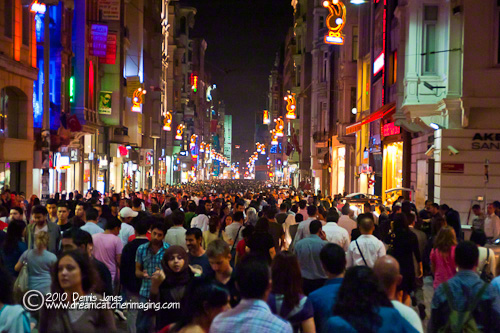
The name of this blog is the old Ottoman name for the main street of the new, ‘European’ side of Istanbul, the part of the City that grew and developed on the northern side of the Golden Horn beginning more or less in the late eighteenth or early nineteenth century, the neighborhood known as Pera or Beyoglu, the Greek Pera reappearing in more and more contexts lately as nostalgia about the city has become a minor industry and cultural phenomenon (Robinson Crusoe, easily one of the coolest bookstores in the world, now refers to itself as a “bookstore in Pera”).  Originally, I was going to confine this blog to Greek and Turkish issues and though that’s changed, I’ve kept the name because it’s the main drag of what – as far as I’m concerned – is still the zone’s keystone city.  I had thought of the street as an appropriately symbolic piece of territory where Greek and Turkish interaction was for a time at its most intense, most claustrophobic, even risky.  But even more, I thought of it as a space that best represents our mutual delusions, lies and hypocrisies.

Greeks think of the Jadde as the Main Street of Greek Istanbul, but neither the neighborhood nor Istanbul itself was ever as demographically Greek as the fantasy has it.  Further, the obvious wealth to which the street’s architecture bears witness always smelled a bit too much to me of nineteenth-century minority pretensions, by which I mean those six or seven post-Tanzimat* decades during which we enjoyed unprecedented access to the Empire’s wealth and financial resources without paying any of the obligations of being part of it; it’s apparently where Greek crowds had become so brazen that they gathered to yell: “Zwa! Zwa!”…”Animals!” at Turkish troops during the Balkan War as they left for the front and the mind-boggling casualties they were to experience there.  It’s also when, as soon as traditional restrictions on church construction were lifted, our new confidence raised up the three ugliest Greek churches ever built in the entire history of Constantinople – quite a feat.  And the palatial embassies of the Great Powers that breathed down the neck of the Ottomans for two hundred years and made those idyllic conditions possible for us still line the street.

Turks in the past couple of decades have spent considerable resources ‘restoring’ the area: the street was pedestrianized at some point in the late eighties I think; they set up a cute retro trolley car that runs down the middle and seems to serve no purpose but to annoy the crowds that have to constantly get out of its way; they’ve put some money into remodeling some buildings.  All of this has come hand in hand with a subtle psychological process running in many urbanized Turks’ minds that has gradually made of the neighborhood a symbol of Istanbul’s historically multi-cultural essence, which in many and moving ways it is.

It’s also where hundreds of  Armenians were murdered in a shockingly urban episode of the Hamidian massacres of 1896**, right there in the middle of all the Belle Epoque elegance and the cafes and the hotels, an event so brilliantly handled in the ‘duck with bamya’ (bamiyeh, bhindi, okra) chapter of Loksandra, and where, in one night of September 1955, every single Greek business on the street (marked beforehand in a perverse, inverted Passover), from Taksim to Tunel, down the Yuksek Kaldirim to Karakoy, along with almost every Greek church and cemetery in the rest of the city, were vandalized or completely destroyed in what turned out, after much bogus blaming and bullshitting, to have been nothing less than a government organized pogrom — pure and simple.  The event was later cynically used as one of the lesser charges brought against Adnan Menderes, the first ever democratically elected Prime Minister of Turkey, who had been in power at the time (‘55), by the military junta that removed him in 1960 and then hanged him and several other members of his government in 1961.  That doesn’t mean he wasn’t guilty of his part in organizing the riots — this, thefirst ever democratically elected Prime Minister of Turkey – he was; that’s just not why the Turkish military hanged him.  He was later exonerated, in fact, and has been semi-canonized since.  The Greek community got bubkes in compensation.  The riots were the beginning of the end, a shocking wake-up call to the complacent sense of security the City’s Greeks had started to feel in Turkey again after the fear and discrimination of the WWII years had passed, and they produced a massive exodus, exacerbated by other measures taken against them in the early sixties, as tensions over Cyprus and the usual tit-for-tat stupidities between the two countries grew.  (One will often hear Greek Polites*** bitterly blame Greek Cypriots for the progressive dissolution of their world, in the sad tones of one irrationally seeking a reason for an unassimilable loss.)  By the late seventies, their numbers had dropped below that point of critical mass that makes the sustaining of a meaningful community life possible: old people waiting to die, young people waiting to move to Greece.  I’m sure Thracian Turks in Greece can identify.

All this unpleasantness is usually excised from the contemporary Turkish nostalgia phenom’.  I remember on my first trips to Turkey as a teenager in the eighties even, often finding myself in the confusing position of being told: “Oh, lots of Greeks used to live around here,” in a smiling and totally sincere attempt at bonding and with a totally blissful indifference or maybe ignorance as to why they didn’t anymore, leaving me feeling both touched and irritated.  Granted, people have become markedly more sophisticated since then.

Anyway…  I could have called this blog the Istiklal Caddesi, which has been the street’s name since the nineteen-twenties and which I’m usually forced to use as well so people know where I’m talking about or don’t think I’m some freaky history nerd, but that would’ve been — no offense — too Republican.  I could have called it He Megale Hodos, but nobody ever really called it that except in the most official contexts (Greeks just called it the Straight Street, ‘Ho Isios Dromos’).  The a la Franca pretensions of la Grande Rue are just as self-evident.  So the old Perso-Ottoman “Great Way,” Jadde-ye Kabir, most fit my gousta and purposes.  Jadde means “street” in Farsi (and in modern Turkish and Arabic too; they’re originally Arabic — both words) but I like “way” because I liked the sort of ironic counterpoint between the great ceremonial routes of the old Imperial city on the other side with this thoroughly bourgeois little avenue.  The “path” too, says my Farsi dictionary, which also had a nice Zen ring.

Istanbul has twice septupled in size since the middle of the last century and Greek life there has faded away into nothing: the City has turned into a gigantic, intractable monstropolis like so many others.  Almost no one in Istanbul is from Istanbul anymore.  Yet this relatively small stretch of one small street still attracts massive daily and nightly crowds.  After a couple of depressed decades caused by the minority exodus, some criminally abusive urban planning projects and the criminal neglect of its architectural heritage, the street and the whole neighborhood have come back into their own again, and then some, in a way that frankly makes me so giddily proud and happy whenever I’m in C-town that any of the past’s bitterness just vanishes — it’s ok it’s not “ours” anymore; it’s still mine.  It’s perhaps the most instant snapshot one can get of Turkey’s current cultural dynamism, sophistication, prosperity, and growing freedom – in however tricky a state that freedom still may be.  Despite the clubs and malls of the northern or Asian suburbs, and despite the even more endless suburbs beyond them, inhabited by Anatolian migrants who may have never even seen it, the Jadde still gives the impression of being the default destination of any Istanbullu who’s meeting friends, looking to consume an urban pleasure of some kind, or just has nowhere else to go or anything else to do.  It’s a delicious, overwhelming mix of commercial crassness, elegance, sexiness, good music, cool bookstores, garbage and great food: an Eastern flaneur’s paradise.  In fact, aside from the Nevsky in Petersburg, I can think of no one street in which one can read so much of a great metropolis’ experience of modern urbanity as the Jadde.  It’s one of my favorite places on earth.

— For C., Istanbul, 2010

*Tanzimat: the “reforms” I think…or the “new order” maybe.  I don’t know if it refers to the actual beginning or the whole long nineteenth-century process; the response to the barrage of external and internal problems faced by the Ottoman Empire starting in the late eighteenth century: the interference of Western power interests and extortion; the loss of Balkan and Black Sea territories and the non-stop influx of refugees from those areas; the rise of local warlords (like Ali Pasha of Jiannena) who controlled large fiefdoms that were practically independent of Constantinople; an attempt to modernize the army in an attempt to recentralize things; the attempt to enfranchise the non-Muslim minorities (who didn’t, however, give up their nationalist aspirations in return) without totally freaking out the Muslim clerical establishment; a new constitution at some point, which was then suspended by Abdul Hamid, etc., etc.  Here, read about it yourselves: Tanzimat  The politics of the period are so torturously complex that no matter how much I read, I still can’t grasp the entire process.  I can’t remember which Sultan was pro-reform and which anti and which tried to take a middle path, except for A.H., who was eventually proven to be fairly undemocratic and a bit of a paranoid nut but was responsible for some impressive modernization projects anyway.  I don’t know when or how the Young Ottomans morphed into the Young Turks or who belonged to which group.

I know that it was all a titanic, often heroic, struggle to turn the Empire into a modern state.  I know there was a half-sincere, but belated and pathetic attempt to create a sense of “Ottomaness” among all its subjects/citizens; I won’t be the first one to make the comparison to Hapsburg Austria.  I know that when the constitution was restored in 1908, a year before Abdul Hamid was finally deposed,  there are stories — way too many, frankly, to be believable – of men of all ethnicities and imams and priests embracing in the streets of cities throughout the Empire in the spirit of their new found Ottoman brotherhood.  Then just five years later, in 1912, Greece, Bulgaria and Serbia joined forces and effectively ended what was left of the Ottoman presence in the Balkans and the Turks decided: “Well, fuck this…” and started concentrating on building a modern Turkish nation-state for Turks just like everyone else was doing for themselves.  And the rest, as they say…

It’s an important period for Greeks to know about because it puts into perspective the fact that our influence and wealth in nineteenth-century Turkey was not just due to our diligence and ingenuity and brilliance — to daimonio tes fyles — but also because we were operating in a host body weakened by daunting, almost insurmountable challenges, both internal and external.

** In August of 1896, a group of Dashnaks, an Armenian independence group, took hostages at the Ottoman Bank in Karakoy – I can’t remember what their demands were — and I think set off some grenades or something.  The Pera murders were a response to this, though violence against Armenians and inter-communal violence between Armenians and Muslims, especially in the southeast, had been growing exponentially in the months and years beforehand, all during the reign of Abdul Hamid (“Ho adikiorismenos,” as Loksandra would call him), hence “Hamidian.”

*** Greeks will often refer to Constantinople as “The City” “He Pole” – since it goes without saying which city one means.  “Polites” then are Greeks from The City.

Comment: nikobakos@gmail.com

Jadde — Starting off — the Mission

6 Apr

Dropoli

The Valley of Dropoli, the pass up to the Pogoni plateau near Libochovo, and in the distance, the snowcapped peaks of Nemerčka, from the Monastery of the Taxiarches in Derviçani, Easter 2014 (click)

When my father used to say “ta mere mas” (literally “our parts”) he was referring to the thirty or so Greek-speaking villages in the valley (shown above) and surrounding mountains of southern Albania where he grew up.  It was a term that, before I had gotten too deep into my childhood, before I could even name those places, I had understood instinctively, almost oppressively.  I knew who these people from our parts were, these landsmen, exotic even to me in certain ways.  I knew how they comported themselves, knew their body postures; I knew how they spoke, how they treated a guest.  I knew how they danced, how they sang; I knew their weird, haunting music before I could articulate why it stirred me so deeply.  I knew how they prayed; I knew how they grieved.  They didn’t laugh much.  Or smile easily.

Later, in graduate school, students from Greece, the Balkans, Turkey, Iran, the Arab Middle East and even South Asia seemed to instinctively gravitate towards one another, and not just because they were all working in the history or the politics of the area but, well, mostly because we partied well together.  I started using my father’s “our parts” semi-ironically, a little guiltily as well because it was without the Appalachian tone of mystery with which he used it, to indicate the region that all of us were somehow connected to – the region that, however vast and varied, and where, however viciously we treated each other in past and present — seemed to bring us together in an automatic comfort and feeling of ease.  The term inevitably caught on and without irony.  I guess it was bound to.

This blog is about “our parts.”  It’s about that zone, from Bosnia to Bengal that, whatever its cultural complexity and variety, constitutes an undeniable unit for me.  Now, I understand how the reader in Bihać, other than the resident Muslim fundamentalists, would be perplexed by someone asserting his connection to Bengal.  I can also hear the offended screeching of the Neo-Greek in Athens, who, despite the experiences of the past few years, or the past two centuries, not only still feels he’s unproblematically a part of Europe, but still doesn’t understand why everyone else doesn’t see that he’s the gurgling fount of origin and center of Europe.

But set aside for one moment Freud’s “narcissism of petty differences,” if we have the generosity and strength to, and take this step by step.  Granted there’s a dividing line running through the Balkans between the meze-and-rakia culture and the beer-and-sausage culture (hats off to S.B. for that one), but I think there’s no controversy in treating them as a unit for most purposes; outsiders certainly have and almost without exception negatively.  And the Balkans, like it or not, include Greece.  And Greece, even more inextricably, means Turkey, the two being, as they are, ‘veined with one another,’ to paraphrase the beautiful words of Patricia Storace.  Heading south into the Levant and Egypt, we move into the Arab heartland that shares with us the same Greek, Roman-Byzantine, Ottoman experiences, and was always a part of the same cultural and commercial networks as the rest of us.  East out of Anatolia or up out of Mesopotamia I challenge anyone to tell me where the exact dividing line between the Turkic and Iranian worlds are, from the Caucasus, clear across the Iranian Plateau into Afghanistan and Central Asia.

Granted, the descent into the suffocating Indo-Gangetic plain and its polytheism, from the suffocating monotheism of the highlands, is a cultural and most of all perhaps, a sensory rupture.  But one has to know nothing about the “dazzlingly syncretic” civilization of north India to not know how much of it is Islamo-Persian in origin or was at least forged in an Islamic crucible, and if you do know that then the Khyber pass becomes what it always was, the Khyber link.

Are the borders of this zone kind of random?  Maybe.  But to step into Buddhist Burma is somehow truly a leap for me, which maybe I would take if I knew more.  And in the other direction, I stop in Bosnia only because for the moment I’d like to leave Croatia to Europe – mit schlag – if only out of respect for the, er, vehemence with which it has always insisted that it belongs there.  Yes, I guess this is Hodgson’s “Islamicate” world, since one unifying element is the experience of Islam in one form or another, but I think it’s most essential connections pre-date the advent of Islam.  I’ll also probably be accused, among other things, of Huntingtonian border drawing, but I think those borders were always meant to be heuristic in function and not as hard-drawn as his critics used to accuse him of, and that’s the case here as well.

Ultimately what unites us more singularly than anything else, and more than any other one part of the world, is that the Western idea of the ethnic nation-state took a hold of our imaginations – or crushed them – when we all still lived in complex, multi-ethnic states.  What binds us most tightly is the bloody stupidity of chilling words like Population Exchange, Partition, Ethnic Cleansing – the idea that political units cannot function till all their peoples are given a rigid identity first (a crucial reification process without which the operation can’t continue), then separated into little boxes like forks after Easter when you’ve had to use both sets – and the horrendous violence and destruction that idea caused, causes and may still do in “our parts” in the future.

What I hope this blog accomplishes, then, is to create even the tiniest amount of common consciousness among readers from the parts of the world in question.  A very tall order, I understand, maybe even grandiose.  Time will tell if it all ends up an unfocussed mess and I end up talking to myself; it’s very likely.  But hopefully readers will respond and contribute material or comments even if they don’t feel the entire expanse of territory as their own.  I hope it’ll be a place where one can learn something, including me; in fact, I expect most of my posts will end with “does anybody know anything more about…” or “can anyone explain…” I’ll be using vocabulary and making references from all over the place, sometimes footnoting them with an explanation, but if not hoping that readers will be interested enough to please, please ask when a word or topic is unfamiliar.

Clearly my intentions are more than just explicitly anti-nationalist, but please feel free to contribute even if you consider yourself ardently opposed to those intentions (just refrain from vulgarity please).  Feel free to tell us how you’re the origins of civilization or how you saved it or how you restarted it or that you speak the first language that came from the Sun or that we don’t understand that you’re surrounded by enemies or that — in the language of a grammar school playground — you were here first and they started it, or how everything beautiful about your neighbors is ripped off from you and how everything ugly about you is the unfortunate result of your neighbor’s polluting influence.  Feel free to express legitimate concerns and disagreements as well.  Please.

I’m also sure that sooner than later the subject matter will spill over into neighboring areas (the rest of eastern Europe and southern Italy immediately come to mind), and that there’ll be occasional comments on American socio-political reality, which for better or worse affects us all. And there will probably be the more than occasional post on New York, because that’s where I live, that’s where I’m from, because it’s only from a vantage point that’s both heterogeneous and external that the phenomena I’ll be talking about can be apprehended in their fullness and because that’s where, more than any other single place or any single time in history, the cosmopolitan ideal that motivates me has manifested itself in one actual, throbbing, hopelessly chaotic and deeply sure of itself city.

I’ve been collecting material for this blog for a long time before actually sitting down to start it up, partly because life got in the way, as it tends to do, and partly cause I’m a technological spaz, so some stuff will be old (including some journal entries from a couple of years ago when I took a trip through the region), but my comments will be contemporary.  If there’s any one out there in NYC who is inspired or interested enough to help me out with things like the blog’s design or things like Greek or Arabic fonts or Turkish letter markings (sorry, on a volunteer basis for now) please feel more than free to contact me at: nikobakos@gmail.com