A Dancing Girl

10 Apr

A “dancing girl” giving us another vision of divine love…

Madhuri Dixit, maybe the most spectacular woman the gods have ever given us, playing the courtesan with the heart of gold, Chandramukhi, in perhaps the twentieth film version of Sarat Chandra Chattopadhyay’s 1917 Bengali novel Devdas, dancing a beautiful, if heavily Bollywood-ized, kathak — when she was four months pregnant…  They don’t make ’em like that anymore.  Kathak is a form of classical north Indian dance that always tells the story of the love between Krishna and Radha (Krishna an avatar of Vishnu, Radha often said to be an avatar of Lakshmi, in Hinduism’s dizzying, endlessly intelligent loops of shape-shifting.)  One of the reasons I love Kathak so much is that it’s a form developed primarily in the Muslim courts of North India, heavily Persian-derived in many of its elements, that tells a Hindu story.  One wishes that that kind of fecund inter-generosity characterized all of India’s history.  More on Kathak: http://en.wikipedia.org/wiki/Kathak  I’ll try and find more classic versions of it at some point soon.

Much to be said on Devdas.  Even more to be said on the erotic adventures — sweet, playful and tortured — of Krishna and Radha, which is the background music to, and occupies a huge space in, the collective unconscious of Indian sexuality; its imagery is ubiquitous; it turns up everywhere, sneaking up on you like Krishnaji himself on the banks of the Yamuna.  The breaking of Radha’s bangles by the adolescently phallic and annoying Krishna — “Why do you tease me so?” — who’s a god nonetheless, is one of the most powerful erotic images I know of.  When a religious culture understands that the soul in the presence of God is a flustered young woman being teased by a hot guy, there’s really nothing else to say.

Shahrukh Khan and Madhuri Dixit in Sanjay Leela Bansali’s 2002 Devdas (click)

Comment: nikobakos@gmail.com

Years After Acid Horror, Suicide Stirs Pakistan

10 Apr

http://www.nytimes.com/2012/04/10/world/asia/hope-in-pakistan-for-curbing-acid-attacks.html?ref=world

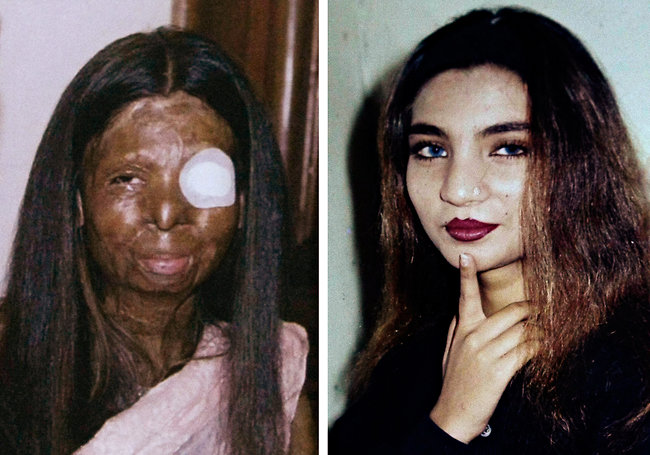
“Had she been a politician’s daughter or a general’s daughter, then we would have seen what would have happened,” Ms. Durrani said. “But who was going to fight for a dancing girl?”  [my emphasis]

This Holy Tuesday, when the evening service in the Orthodox Church commemorates the heroic love and generosity of the “myrrh-bearing harlot,” please remember vulnerable and exploited women everywhere.

Relatives of Fakhra Younas in Karachi, Pakistan, last month. The man Ms. Younas long accused of dousing her with acid, her ex-husband, Bilal Khar, was acquitted at trial nine years ago.  (Associated Press)

From the right, Ms. Younas before and after she was disfigured in an acid attack that she blamed on her then-husband.  (Associated Press)


Comment: nikobakos@gmail.com

“…a pathetic longing to be good Europeans…”

10 Apr

From Blood and Belonging: Journeys into the New Nationalism, Michael Ignatieff:

“The misery of the Balkans stems in part from a pathetic longing to be good Europeans — that is, to import the West’s murderous ideological fashions.  These fashions proved fatal in the Balkans because national unification could be realized only by ripping apart the plural fabric of Balkan village life in the name of the violent dream of ethnic purity.”


Comment: nikobakos@gmail.com

The Beygairat Brigade

9 Apr

This group — “The Dishonourable Brigade” — of smart and very cute…and very brave…Pakistani kids out of Lahore put out this cool song last year that became an instant hit.  It’s called “Aalu Anday” or potatoes and eggs, and the Punjabi refrain says “my mom made me potatoes and eggs [again]” i.e. “I’m sick of this shit,” and the song then proceeds to bash and mock the whole landscape of corruption, religious fanaticism and social stagnation of contemporary Pakistan.  A viewer will need a bigger expert than me to explain all the references, but enough can be gleaned from just the subtitles, and the YouTube comments contain a lot of information too, if you can pick it out of the mutual Indo-Pak bashing and obscenity that’s usual to YouTube comments.

Takes a lot of guts to put out a song like that but it obviously hit a nerve because it became wildly popular and was embraced in both Pakistan and India.  Does anybody know what happened to them?

Don’t miss this television interview with them, conducted in that effortless switching back and forth between Hindustani* and beautiful English that it is so damn enchanting to listen to (or is it Punjabi?):

And another one where the lead singer Ali Aftab Saeed gives us a nice acoustic version towards the end:

I’d love to get some further news on them.

Are things shifting on the sub-continent?  A new thaw apparently; Zardari visits India: http://articles.cnn.com/2012-04-08/asia/world_asia_pakistan-india-visit_1_pakistan-and-india-pakistani-leader-islamabad?_s=PM:ASIA 

A start, eh?  Now let’s get to work on reversing Partition.  Well, we can dream, can’t we?

*I use “Hindustani” as often as possible because I try — as often as possible — not to acknowledge the supposed difference between Hindi and Urdu, despite the intense efforts on respective sides of the border to Sanskritize and Islamicize what is essentially one language.  Nationalism’s manipulating of what people spontaneously speak is one of its most insidious forms of mind control.  Serbs and Croats have been trying to prove their language is not the same one for almost a century now — unsuccessfully, given the capacity of Serbian and Croatian paramilitary thugs to hurl the most fertile insults at each other across battle lines in the nineties with no comprehension problems whatsoever — and now there’s a third contender, the ‘Bosnian’ spoken by ‘Bosniaks.’  To some extent Turks and us went through the same process, though they’re obviously not the same languages: nineteenth-century Greece tried to make Greek Greeker, which meant archaicizing it, and though I don’t necessarily think katharevousa was the artificial monster a lot of people do — in its simpler, less pretentious forms it was capable of great beauty in the hands of certain writers like Papadiamantes — the ideology behind it was a deeply problematic one.  Ditto the Turkish Republic, which in the late twenties and early thirties tried to eliminate remnant Persian syntactical features from Turkish and replace all Persian and Arabic words in the language with new Turkish ones (even forcing muezzins to sing the call to prayer in Turkish), an attempt which, if it had succeeded to the full orthodox extent of its intentions, would have left the entire Turkish people mute for everything except the most basic human communication — like in the Hundred Years of Solitude where they have to write “cow” on the cow.  Apparently, in 1934, the Great Leader himself made a series of speeches in the New Turkish which were completely unintelligible to everyone except him and his inner clique.  They backed off a little afterwards apparently but, between the high learnedness of much Ottoman literature and the Republic’s tinker-tampering, much of nineteenth-century Turkish literature is now unreadable to most modern Turks.  As Benedict Anderson said, the nation-state pretends to be the guardian of your culture and traditions but “is actually hostile to the real ways of the past.”


Comment: nikobakos@gmail.com

Tebow’s Easter Show

9 Apr

http://www.youtube.com/watch?v=Cls1svaJ9e8

Ah, America…  Sweet…  I don’t know how well it’ll go over in New York though.  And “Back-up QB”???  Yeah, right.  I bet Sanchez’ people have already started putting out feelers in the modelling world, which maybe was always his primary calling anyway.


Comment: nikobakos@gmail.com

Corn Bread, Hog Maw and Chitterlin’

9 Apr

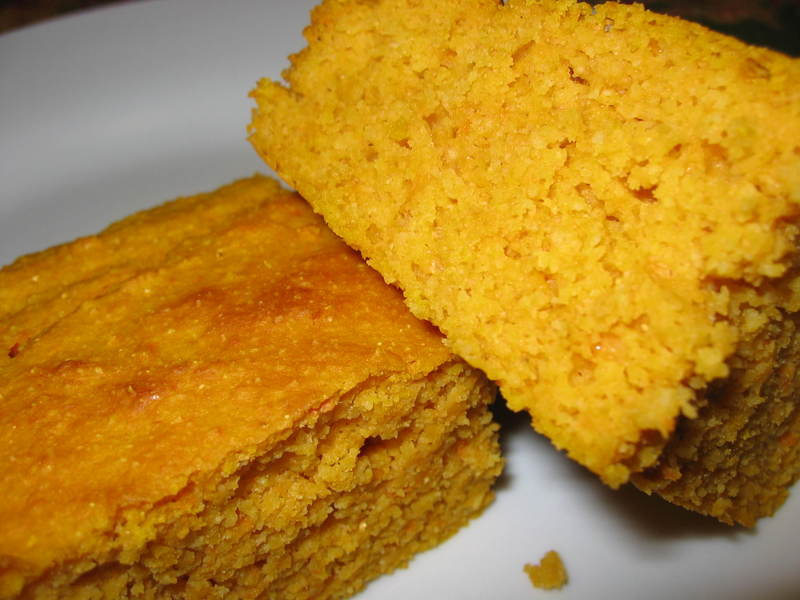
I’ve been reading so much about the Balkans lately (I’m on my third consecutive read of Milovan Djilas’ Land Without Justice) that I’ve developed an intense craving for cornbread — serious, hard, Balkan cornbread, what they call “bobota” in Epiros or “proja” in Serbia and Montenegro; I don’t know if they do so anywhere else.  I also miss a kind of cornbread burek they used to make – “bliatsaria” they used to call it – which was two layers of cornbread with a burek filling in between: spinach, leeks, feta, maybe eggs.  Corn was the poor man’s wheat; it yields far greater amounts of grain per acre than wheat does and will grow almost anywhere, like in my mother’s village, where after two feet you hit bedrock.

Does anybody have a recipe?  Somebody from the Epiros-Albania-Montenegro-Sandjak axis, or someone of Pontio-Karadenizli background is most likely to know.  The sweet, cake-like recipes  that people have posted in this recent New York Times article definitely won’t produce the dry, nearly unswallowable texture I’m looking for.

The next day, when it became truly rock hard (kids would use it in slingshots my mom used to say), they used to break it up into chunks and dump it into buttermilk (xynogalo, ayran, lassi) to make it edible.  I know that traditional cornbread in the American South used to be like that too because once in a conversation about food with a fifty-ish Black woman here in New York, I mentioned the buttermilk practice and she doubled over laughing, then smiled and snorted with that great look of feigned embarrassment and homey joy that Black Americans make when they’re talking about something – a guilty pleasure usually – that’s too down-home or too ghetto to own up to.  She couldn’t believe that people half way round the world used to eat stale cornbread mush with buttermilk the way they used to.

And tell the folks in the comments that lard is good for you and that, yes, it’s time to talk about chitterlings.  Easter’s coming up, innit?

Here’s Joe Cuba’s 1966 boogaloo classic “Bang Bang” which I used to think was called “Cornbread, Hog Maw and Chitterlins” because those are the only real lyrics.  What’s boogaloo?  “…the first Nuyorican music”: Boogaloo

Comment: nikobakos@gmail.com

“Salmon Fishing in the Yemen”

8 Apr

What a friggin’ obnoxious idea for a movie.  As we rush headlong into ecological catastrophe worldwide, as Thomas Friedman describes, just in today’s New York Times, (“The Other Arab Spring” http://www.nytimes.com/2012/04/08/opinion/sunday/friedman-the-other-arab-spring.html?_r=1&ref=thomaslfriedman# ) how much of the unrest in the Middle East has been caused by scarce resources, especially water; that, in fact, Yemen may soon be the first country on the planet to run out of it entirely — Lionsgate and BBC Films bring us this life-affirming movie about faith, overcoming doubt, going against the flow, Anglo-Saxon can-do spirit and other crap Hollywood pieties, and how they all come together to realize a rich sheikh’s dream of salmon-fishing in Yemen — er, sorry — The Yemen, a sport he apparently learned to appreciate on Scottish holiday while at Eton or Sandhurst or somewhere.

Shame on actors of McGregor, Kingsley and Scott Thomas’ caliber for participating in this shit.  Serves us right for always naively expecting better from the Brits, too. 


Comment: nikobakos@gmail.com

Happy Easter

8 Apr


Comment: nikobakos@gmail.com

“He got up walking like a natural man…”

7 Apr

Today, the day before Palm Sunday (Orthodox Easter is April 28th this year) is known as the Saturday of Lazarus in the Orthodox Church, the day that commemorates Christ’s raising of his friend Lazarus from the dead, prefiguring his own Resurrection.

The Resurrection of Lazarus, Guercino

And here’s Aretha Franklin’s incomparable rendition of the old gospel song: “Mary Don’t You Weep,” which commemorates the story of Lazarus and the Passover story as well.  Below are the lyrics (“If you hadda been here, my brother woudna died…” always kills me) and the history of this spiritual which dates from before the Civil War, as its moving conflation of the two tales of redemption would indicate:


(Choir) Oh oh mary (x8)
(Soloist) Mmm don’t moan
Listen Mary

(Choir) Oh Mary don’t you weep
Oh Martha don’t you moan
Oh Mary don’t you weep
(Soloist) Tell your sister to don’t moan
(Choir) Oh Martha don’t you moan

(Soloist) Pharaohs Army
(Choir) Pharaohs army
(Soloist) All of them men got drowned in the sea one day
(Choir) Drown in the Red Sea
(Soloist) Yes they did

(Soloist) Now if I could
(Choir) If I could
(Soloist) If I could I surly would
(Choir) Surely would
(Soloist) I’d stand right up on the rock
(Choir) Stand on the rock
(Soloist) I’d stand right where moses stood
(Choir) Moses stood
(Soloist) Yes I would

(Soloist) Pharaohs army
(Choir) Pharaohs army
(Soloist) I know you know that story of
how they got drowned in the sea one day, oh yeah
(Choir) Drown in the Red Sea

(Soloist Lazarus Story Ad-lib)

We gonna review the story of two sisters
Called mary and martha
They had a brother
Named Lazarus
One day while Jesus was away
Their dear ol’ brother died, yeah yeah
Well now Mary went running to Jesus
She said, “Master,
My sweet lord!”
“Oh if you had’ve been here my brother wouldn’t have died!”
Oh yes she did.
Jesus said, “come on and show me, show
me where you, show me where you buried
him, show me where you laid him down!”
And when he got there, Jesus said,
“For the benefit of you who don’t believe,
Who don’t believe in me this evening!
I’m gone call this creature, oh yes I am!
He said “Lazarus, Mmm Lazarus,
Hear my Hear my voice! Lazarus!
Oh yeah!”
He got up walking like a natural man,
oh yes he did! Jesus said,
“Now now now,
Mary, Mary don’t you weep!”
Mmm Oh mary don’t you weep
Go on home and don’t you and your sister moan. Don’t moan.
Tell martha not to moan

(Choir) Pharaohs army
(Soloist) Because you see Pharaohs army,
(Choir) Drown in the red sea
(Soloist) they got drowned in the Red Sea

(Soloist) Oh Mary don’t weep
(Choir) Oh Mary don’t you weep (x3)
(Soloist) Mary dont weep
(Choir) Oh Mary don’t you weep
(Soloist) Mary don’t weep
(Together) Tell Martha don’t you moan


Comment: nikobakos@gmail.com

The Banner Photos

7 Apr

A few people have asked what the two photographs at the top of the blog are of and, even more, what their juxtaposition is supposed to mean?

The photo on the left is of a coffeehouse in Istanbul at the turn of the previous century.  The photo on the right is one taken by me in the mid-eighties of children in the Vlach village of Samarina in the Pindos mountains, near the watershed that separates Epiros (where my family is from) from western Greek Macedonia.  As for the relationship between the two, I’ll leave that to readers to ponder or figure out if they care to.  As a certain Nasreddin Hoca joke (Mullah Nasreddin in Iranian lands) much beloved by my father says: “Well, if you don’t know, go home…”

Maybe I’ll make a competition out of it…

Again, any questions: what’s a Vlach? where’s Epiros? why do I call it Greek Macedonia?  Please ask.


Comment: nikobakos@gmail.com