Balkans, Anatolia, Caucasus, Levant and other Middle East, Iran, Afghanistan, South Asia, occasional forays into southern Italy, Spain or eastern Europe, minorities, the nation-state and nationalism — and whatever other quirks or obsessions lurk inside my head.
There is more to write about, which I will, on how a mind-boggling decision by the Council of State (Danıştay) includes the interpretation of the “presumption of innocence” principle according to our “local and national” law. It will be titled, “None of us are innocent, except for the state.” [my emphasis]
Turkish President Recep Tayyip Erdoğan has been increasingly adopting political tactics and rhetoric similar to Hassan al-Banna, the leader of the world’s largest Islamist movement, the Muslim Brotherhood, according to regional analysts.
“Erdoğan uses a very typical Banna rhetoric. If you decode his speeches, you will hear what the Brotherhood is saying about the West and Israel,” Gökhan Bacık, an expert on Islam and politics in the modern Middle East, told Ahval in a podcast.
Bacık said both leaders also have a similar attitude regarding domestic policies, what they say to their followers and their pragmatic stance.
Erdoğan has a long history to the Brotherhood, a pan-Islamist religious, political and social movement Banna founded in Egypt in 1928. Erdoğan had close proximity with the organisation’s ideology and practices since he was one of the most trusted political cadets of Necmettin Erbakan, the most influential figure of Islamism in Turkey. The Brotherhood’s branches in the Gulf supported Erbakan and Turkish Islamists when they faced repression from Turkey’s secular establishment more than two decades ago.
“The historical roots are the same, as well as the ideological closeness in political and religious interpretation, and finally, self-interest as political opportunism,” Lorenzo Vidino, an expert on the movement, told Ahval. He said that Erdoğan’s governing Justice and Development Party (AKP) became the biggest backer of the Brotherhood in the world.
However, the relationship between Erdoğan and the Brotherhood has not always been friendly. The Islamist movement took a negative view of Erdoğan leaving Erbakan’s shadow and founding the AKP in 2001.
“They were grapes, and now they have become wine,” the Brotherhood had said about Erdoğan and his colleagues’ defection, tacitly saying that they had become akin to a prohibited beverage – impure.
But circumstances changed with Erdoğan’s successive election victories, which secured his grip on power. The AKP government’s support for the Brotherhood abroad changed dramatically as the Arab Spring protests grew, and Ankara sought to fund ideologically similar groups that were linked to the movement.
Following its failure in the Arab Spring, the current Brotherhood is led mostly by a diaspora living exile in Turkey, where dozens of the movement’s most powerful and influential figures reside.
The majority of some 30,000 Egyptian people living in Turkey are loyal to the Brotherhood movement, according to a report by the Century Foundation, a U.S. think tank. These Brotherhood leaders, followers and their relatives live a comfortable life, under the protection of the Erdoğan administration.
The AKP’s foreign policy has been defined by promoting a pro-Brotherhood position, rather than national interests in recent years. This ideological attitude has been stubbornly maintained, despite the cost of confrontation with neighbouring countries.
Under the AKP’s first years in the power, Turkey has increased trade in the Muslim world eightfold, hosted dozens of international Islamic events, restored Ottoman-era relics across the Middle East and cancelled visa requirements and developed high-level cooperation with many Muslim states.
However, Turkey lost most, if not all, of its warm relations with Arab Muslim states in the Middle East and North Africa region – including Egypt, Saudi Arabia, the United Arab Emirates (UAE) and Syria – in the Arab Spring’s aftermath. Erdoğan has clearly taken on the role as the Brotherhood’s main guarantor and supported local branches in these countries, openly or indirectly.
Mohammad Morsi, a Brotherhood-affliated Egyptian politician, won the Cairo elections in 2012, but remained in office for 12 months until being toppled by a coup led by General Abdel-Fattah al-Sisi in July 2013.
Ever since that event, the AKP government has followed a harsh anti-Egypt policy and became the protagonist of the Brotherhood’s struggle against Sisi.
In war-torn Libya, the AKP government from the beginning has supported the Government of National Accord in Tripoli through Brotherhood-linked organisations that back the GNA.
Meanwhile, in Libya, Ankara has politically supported the internationally recognised Government of National Accord in Tripoli through Brotherhood-linked groups since the beginning of the country’s second civil war, which started in 2014.
And now Saudi Arabia, the UAE, France and Russia have manoeuvred to counter Ankara in the eastern Mediterranean and the Middle East.
Erdoğan’s embrace of Hamas makes ideological sense. The Palestinian Islamist movement emerged in 1987 as a rival to the secular, left-leaning Palestine Liberation Organisation, drawing inspiration from the Brotherhood in neighbouring Egypt, the Financial Times reported this week. The group is considered a terrorist group by Israel, the European Union and the United States.
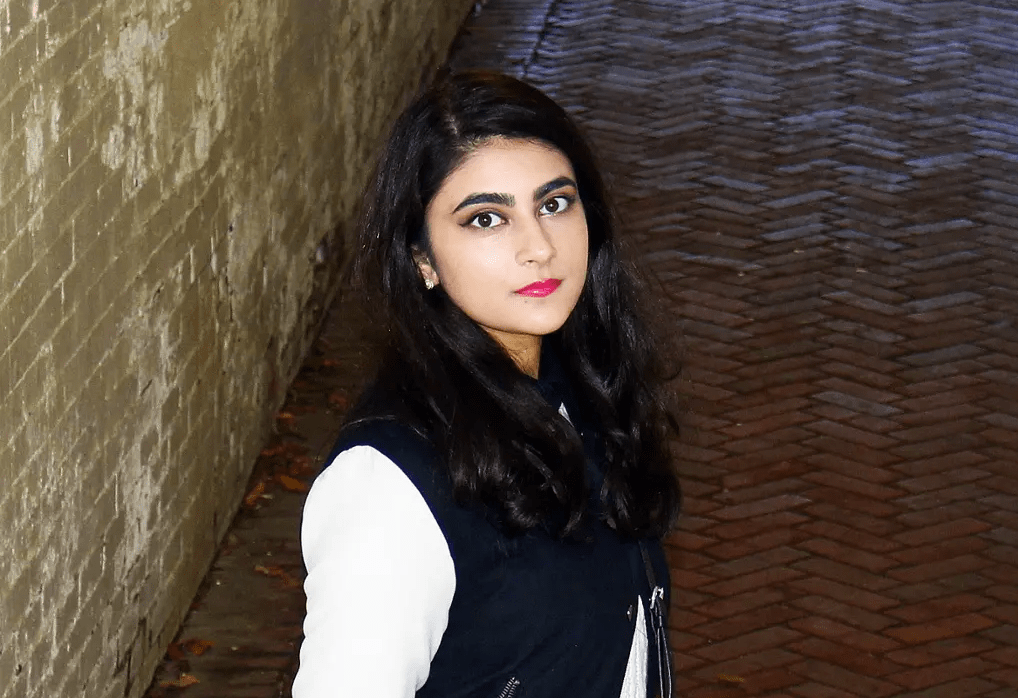
“I don’t think I can ever really be that close to people who didn’t experience the aughts the same way I did. muslims who did, im automatically close to you.”
We clear about that? Unless somebody on the street in Bradford once called you a “Paki” after 7/7, you can’t be Ayesha’s pal. “It’s a Black thang,” as Spike Lee used to say, “you wouldn’t understand.”
But after glibly incendiary crap like her quote at top, she writes that she doesn’t “want to talk politics”, ok? She just wants to know what your favorite song is… Aaaawwwww…. :(
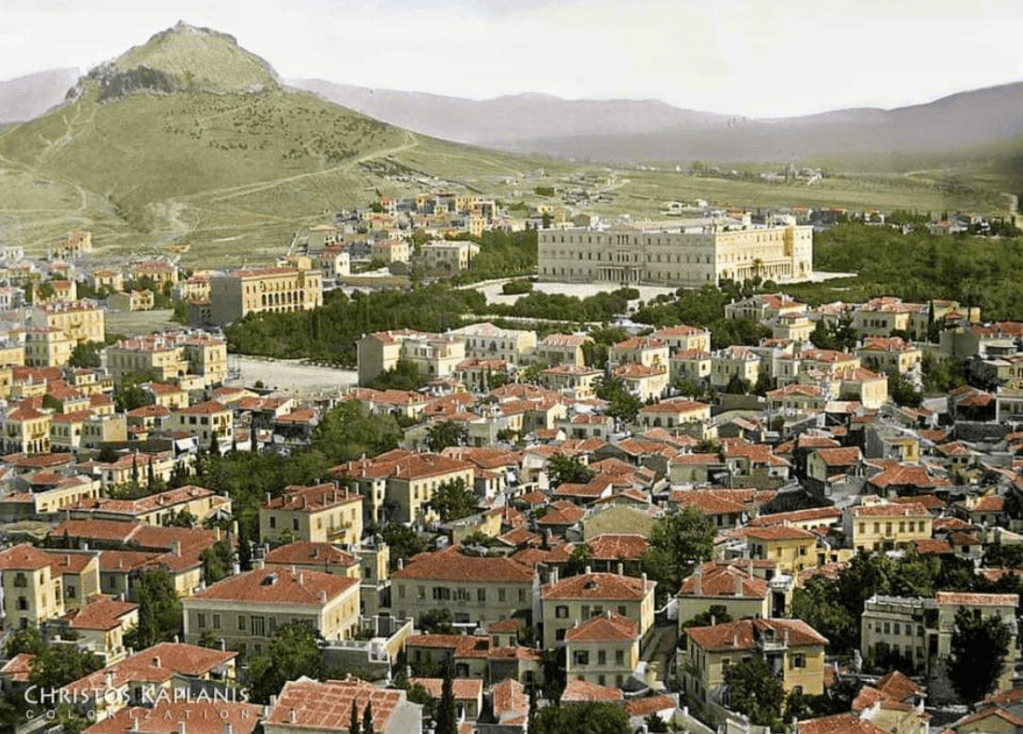
From: George Kessarios@GKesarios Check out GK for fuller-size image, since WordPress doesn’t let readers do that anymore.
These photos are beautiful, but always also depressing, given what we’ve done to Athens, which was once one of the most beautiful cities in Europe/Mediterranean.* If you’ve been to Hermoupole/Syra on the island of Syros or to Nauplio in the northeast Peloponnese — think one of those two on a much grander, Bavarian Neo-Classical, large Haussmanian boulevards and public square scale, and that was Athens until the 1960s. No other city in Europe or the Med — that wasn’t bombed in the war or which wasn’t subjected to the psycho-whims of a Stalin-type dictator — was so wholly destroyed by its own inhabitants; 80% of Athens’ pre-WWII building stock is gone.
* An exception in the Mediterranean might be Beirut. And by that I don’t mean the whole-scale destruction the city endured through the war/s of the 70s and 80s, but that even before that the city’s pre-concrete architecture had suffered large-scale destruction to be replaced by the Mediterranean beton apartment house whose only saving grace is their large balconies. I don’t have this on any source other than old photos I’ve seen and from the great Samir Kassir‘s magisterial Beirut. That said, in watching news and footage of last month’s beyond-belief destructive explosion, one of the things that surprised me was how much nineteenth and early twentieth-century architecture had survived…survived only to be trashed in 2020.
If you’re interested in a deep immersion in traditional Beiruti architecture, try and find (won’t be easy) Jennifer Fox‘ 1987 documentary: Beirut: The Last Home Movie, about the Greek Orthodox Bustros family in what I think is Achrafieh. It’s almost entirely shot in their family home and it’s a stunning look at the time-warp, physical, cultural and psychological ecosystem of the Levantine bourgeoisie. Yes, many of you will think it’s just a romanticizing of “elite minority supremacism” as my buddy X likes to say (IMBd says: “The movie shows how spoiled the Bustros family members really were, even during the horrors of the war.”) So I dunno — hold your nose, then, and watch it.
P.S. Back to Athens and lead photograph — is there anyone else out there who thinks our much-mocked Parliament (at the time of photo above it was still the Wittelsbach Royal Palace) is actually a handsomely austere and Doric and impressive building? People seem to think it’s blocky and dreary and the quintessence of Neo-Greek, neo-classical, Hellenic-wannabe pretensions. But similar architecture in Munich isn’t as disliked; it may be thought creepily Teutonic, but nobody makes fun of it. And I think it’s gorgeous.
Below, von Klenze‘s (responsible for much of the construction, street plan and general idea behind modern Athens) Propylaea in Munich’s Königsplatz.
Ussama Makdisi@UssamaMakdisi ·I recently published a book on Age of Coexistence about an inspiring and important aspect of modern Arab history, but, like so many of us who care about ME, I find myself constantly confronted by #sectarianism, #corruption, #colonialism, and #despotism in the region.
Me:
#1 Or maybe there are some people who aren’t sectarian, corrupt, colonialist or despotic but just don’t want to believe your fantasy…
#2 I’ll admit I’m talking from a Balkan-Anatolian perspective, and that maybe your fantasy was briefly more possible in an intra-Arab context than it was in the religiously AND ethnically AND linguistically mixed world I’m coming from…
#3 But I don’t have to believe your fairytale, or believe that life for non-Muslims in a Muslim world was a picnic, and that really the evil Frangoi ruined it all, just so you’re not disappointed.
If there were even one — and not a friggin’ army like youse guys are — but one Russian, Polish, Lithuanian, Ukrainian, Romanian academic out there, who had made it his life’s work to constantly shove in Jews’ faces the idea that — you know — life for Jews in Eastern Europe for those 5 or 6 centuries wasn’t really that bad and Jews and Gentiles mostly lived and coexisted and interacted with each other to an “inspiring” degree of harmony…the response would make the earth briefly tilt off its axis!
I recently translated a chapter of Maria Iordanidou’sLoxandrafor my blog because I think it’s one of the best fictional — and realistic — accounts of Ottoman Muslim/Christian coexistence there is.
“The Greek government has a humanitarian crisis on its hands in Lesvos, but it has decided to isolate thousands of vulnerable migrants behind riot police units. As is well-known, the riot police unit’s main mode of interaction with the world is violence, something they’ve proven repeatedly in Greece by indiscriminately beating elderly people and women in demonstrations all up and down the country.
“They did it again a few hours ago on the coastal road where hundreds of men, women and children who’ve been sleeping rough for five days with limited food and water, are sheltering. Stun-grenades, teargas and truncheons were deployed on very vulnerable populations. I witnessed one person, who was taking in food for a 5-member family (three of whom have medical conditions) being called by a riot policeman “filth”, presumably for seeking to alleviate the difficulties these people are experiencing.
“Older people in wheelchairs, small children clutching their teddy bears, pregnant women, young families, men, women and children all push their way down the sparsely lit road toward Mytilene, the capital of Lesbos. But they don’t get far. The march comes to an abrupt end at a roadblock set up by riot police from Athens. They are there to ensure that nobody from the immediate vicinity of the camp can escape. “Get out of here! Go back!” a policeman yells at a family with a baby. When a group of migrants lights an adjacent field on fire in protest, the police fire off tear gas. Hundreds of migrants are left with no other choice than to make their way back toward the inferno. The people stumble over each other, coughing and crying, as they wander around aimlessly in the acrid cloud of tear gas. No form of organized aid is in sight, no agency officials and no emergency personnel. Shahrzad and her family, like thousands of others, are left with no other choice but to lie down for the night on the side of the road.”
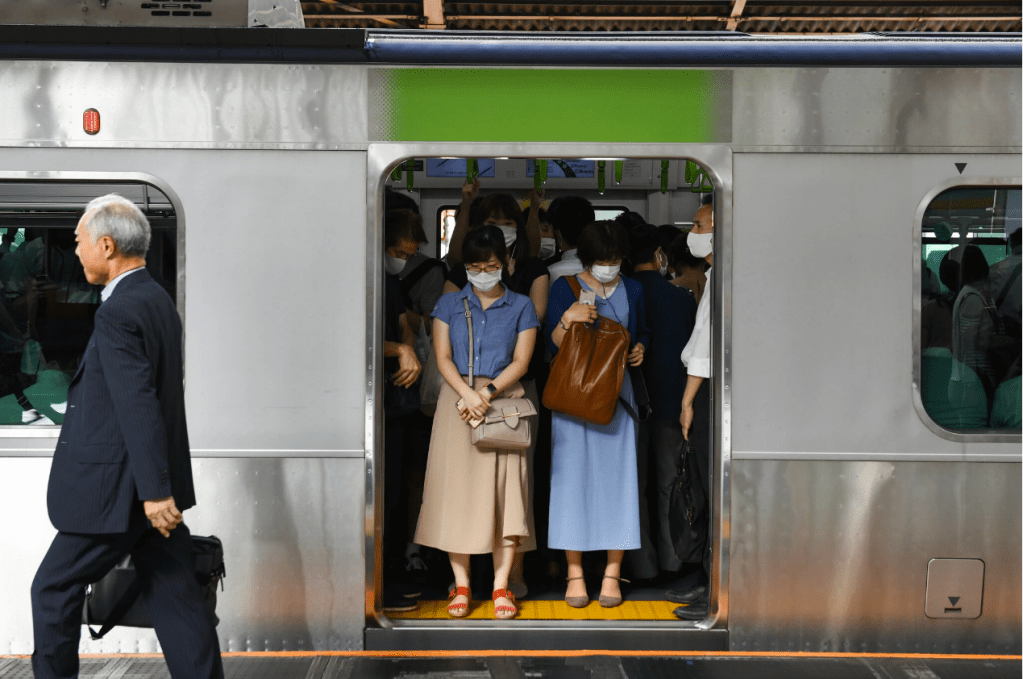
Commuters in Tokyo on Wednesday. Although the percentage of women in Japan’s work force reached an all-time high during Shinzo Abe’s tenure, more than half were in part-time or contract jobs. Credit…Noriko Hayashi for The New York Times
Balkans, Anatolia, Caucasus, Levant and rest of ME, Iran, South Asia
Me, I'm Nicholas Bakos, a.k.a. "NikoBako." I'm Greek (Roman really, but when I say that in English some five people in the world today understand what I'm talking about, so I use "Greek" for shorthand). I'm from New York. I live all over the place these days. The rest should become obvious from the blog.




 Jadde: from Bosnia to Bengal