“Recep Bey Goes to Washington” — MOTHER FUCKER FUCKING TURKEY!!! — Why not forget the EU and just join NAFTA instead?

14 Nov

Donald Trump Recep Tayyip Erdogan

US Senator blocks move to say Armenian mass killing was genocide

Actually let’s get real geopolitically.  Turkey probably should drop any hopes of getting into the European Union — for all its faults, the EU still has some integrity — AND IT SHOULD JUST JOIN FUCKING NAFTA INSTEAD. 

Then Erdoğan (and/or Turkey, because let’s not pretend that the kid-glove coddling of Turkey by the United States started with Erdoğan — it’s decades old) could also have Canada and Mexico bend over and take it up the ass whenever he gets horny, or needs someone to get on his knees and chupar his polla whenever he wants a blowjob.

Sorry.  Not retracting or have any intention of asking youse to forgive my French in this post.  It’s just fucking OUTRAGEOUS to see Turkey get EVERYTHING it wants no matter how it behaves domestically or on the world stage.

AND I WAS ALWAYS SOMEONE WHO OBJECTED TO THE RECOGNITION OF “GENOCIDE”

You can see my post:  Genocide: what is it and why do we need the term? (repost from 2015)

Comment: nikobakos@gmail.com

Image

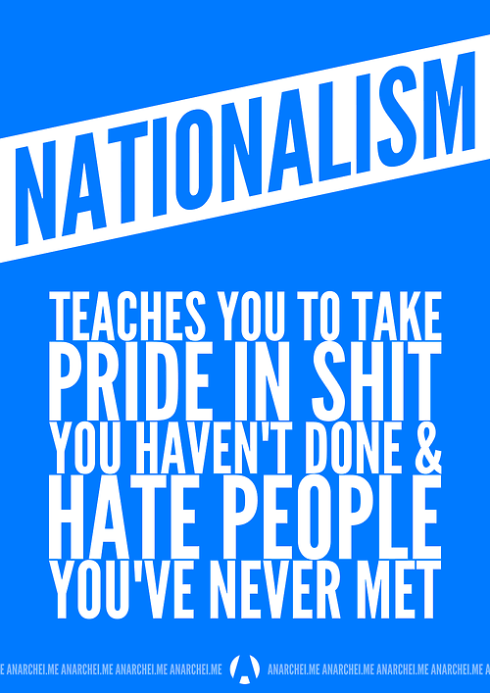
Nationalism: just something I like to repost now and then

14 Nov

nationalism-1

Comment: nikobakos@gmail.com

Prečani Serbs: I thought this passage from a previous post should also be posted separately

14 Nov

Prečani-Serbs: It’s doubtful that any Balkan peoples suffered more from the see-saw wars between the Ottomans and the Hapsburgs than the Serbs did.  It’s easy to see why; Serbian lands are pretty much the highway for getting from the south Balkans to Vienna.detailed-political-map-of-the-former-yugoslavia-1983It’s the easiest proof there is that war always had “collateral damage” and civilian casualties.  The Ottomans launched rapid campaigns up through to Vienna in 1529 and 1683.  Both times they failed to take the city and retreated.  Thank the gods, because the idea of Turkish armies at the walls of Vienna is even more terrifying than the idea of Arab armies in the Loire valley at Tours just 70 kilometers from Paris in 732. But in 1683 they not only failed to conquer Vienna, the Hapsburgs chased the retreating Ottomans across the Danube and as far south as Kosovo.  That could have meant Serbian liberation from the Ottomans 200 years before it actually happened.

But then the Austrians made the fateful decision to retreat.  I don’t know why.  Perhaps they felt overextended or thought they were getting too deep into imperial overreach.  And of course this meant horrific retaliatory violence on the part of Turks and local Muslims against the southern Serbs who had welcomed the Austrians as liberators.  And an epic exodus of the Serbs northwards, in what are called the Great Migrations of the Serbs, began.  This resulted in a massive shift to the north of the Serbian nation’s center of gravity and, perhaps most fatefully, marks the beginning of the de-Serbianization of Kosovo, which was the spiritual heartland of the Serbs.  And an influx of increasingly aggressive highland Albanians, now Islamicized and emboldened in their impunity as such, only accelerated the departure of Kosovo Serbs to the north.

Conditions in northern but still Ottoman Serbia were better than in the south.  But for many Serbs this was not enough.  A great many crossed the Danube and settled in what is now the autonomous region of Vojvodina and the parts of Croatia called Slavonia and Krajina.  Ironically, just as the Ottomans made Serbia prime recruiting country for their system of enslaving young boys to turn them into the most powerful unit in the Ottoman army, the Janissaries, the Austrians themselves also recognized that Serbs were, as always, good soldier material, and they invited Serbian fighters and their families into Austria’s border regions to protect the boundaries of the Hapsburg empire from possible Ottoman aggression.

So Prečani-Serbs, refers, very broadly, to those Serbs who went and settled in the borderlands of the Austrian empire; the term comes from “preko” or “over there” or “the other side”, across the Danube, Sava and Drina rivers, in other words, that were the borders between the Ottomans and Hapsburgs for centuries.

I don’t know whether Krajina Serbs from around Knin — shown in green in map below — are considered prečani or not, those from that part of Croatia that was largely Serbian until 1995, when it’s Serbian inhabitants were expelled with American help in what was the largest single act of ethnic cleansing in the Yugoslav wars, with some 200,000 Serbs expelled from their homes.  Serbs are soldiers and poets, as I’ve quoted Rebecca West saying so many times; Croatians are lawyers; but with the detestable Milošević having abandoned Krajina Serbs (Venizelos-style), and with Americans arming, training them and watching their backs, Croats proved themselves to be formidable warriors indeed.

war_map

So, if one can put one’s biases aside, the poignant tragedy of this whole set of some 600-years of pain and trauma becomes clear.  Bullied out of Kosovo over the centuries, Serbs move north, even so far north as to settle in Austria itself.  Then, with no one’s help, they gather Serbs from Kosovo to the trans-Danube-Sava lands where they had settled over the centuries into one state.  And less than 100 years later, they lose and are almost entirely expelled from both the Kosovo they had fled from and from the Krajina and Prečani lands they had fled to.

Good to know the whole stories sometimes.

Comment: nikobakos@gmail.com

Yugoslavia, King Aleksandar and the Карађорђевићи/Karađorđevići, addendum — and a digression about Serbian slava celebrations

14 Nov

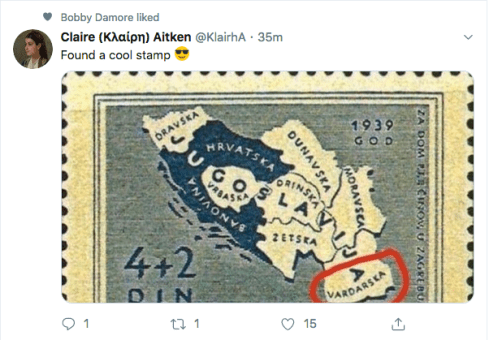
In responding to the post of the philatelic enthusiast who found the vintage Yugoslavian stamp from 1939: Yugoslavia: Yeah, you found a very cool stamp. Do you have any clue what it means?“, there was no meaningful answer or comment I could give without bringing up King Aleksandar I Karađorđević.  But there was one important point I couldn’t fit into that post about the founder of that Serbian royal house. They (along with its rival Obrenović family — we’ll get into that below) are the only post-Ottoman royal families in the Balkans to be of indigenous stock.

karadjordje-bozo-buzejic

The founder of the family, the legendary Карађорђе (Karageorge) was a pig-herder from the Šumadija who led the first general Serbian uprising against the Ottomans in 1804.  It’s believed that his near ancestors moved to that central Serbian region from Montenegro, but claiming Montenegrin descent has always been a way to establish your butch/macho credentials in Serbia, plus it’s a good claim to use as part of an insanity plea if you’re the defendant in a legal case.  Other genealogists claimed that they had discovered links between Karageorge’s Petrović clan and the glorious rulers of mediaeval Serbia, the Nemanjići, which include Car Stefan DušanBut sometimes it seems that all of Montenegro, most of Herzegovina and half of Raška claim to be descended from the Nemanjići, so let’s feel free to not take that claim too seriously.

Actually, Montenegrins see it the other way around; they don’t think they’re descended from the Nemanjići, they think the Nemanjići were descended from them.  And there’s that great joke: someone in 1913 asked a Montenegrin notable what their relationship with Russia would be, now that the Turks had been chucked out of the Balkans.  And the Montenegrin replied: “We will NEVER abandon the Russians!”

And…in all fairness, until modern times Serbs were a very clan-tribe-lineage oriented culture where families kept extensive and detailed memories of genealogical maps in their heads going back for centuries, so much of their claims may actually be true and not concocted historical fictions.  A really powerful proof of that is that the Serbs are the only Orthodox Christians to not observe personal namedays.
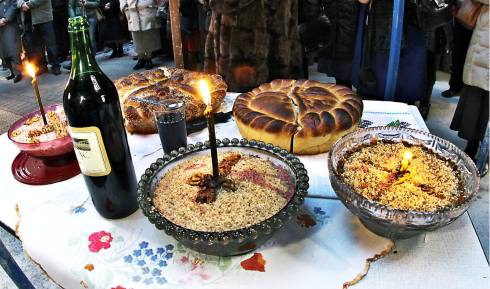
Serbian-Slava-Festivityὁ σῖτος, ὁ οἶνος καὶ τὸ ἔλεον τοῦ δούλου σουthe wheat, wine and oil of Thy servant

Instead they observe the saint’s day on which their clan’s ancestors first converted to Christianity in a beautiful celebration called a slava, (the “glory”) and hereworth reading — which is essentially an offering and feast of remembrance, a ritual of ancestor-worship that proves that Serbs probably have more of one foot still in the pagan past than any other group of Slavs.  I don’t know how seriously modern Serbs still take the observation of this custom, but I’m going to be in Belgrade December 19th this year, St. Nicholas Day, which is the most widespread slava in Serbia, so maybe I can finnaegle my way to an invitation from someone.
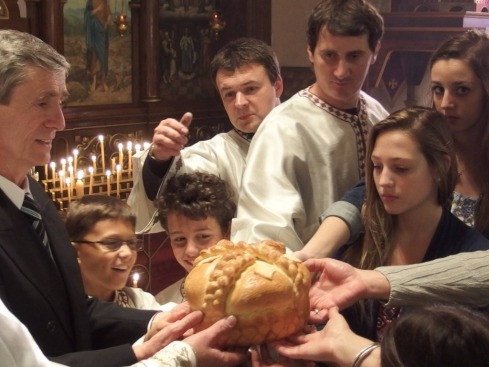
Slava 1

Many of their funerary customs are similar to ours — like the artos or artoklasia above and koljivo below — meaning they developed together spontaneously or they represent the influence of known Slavic sub-strata in the language, genes and culture of modern Greeks — and now that I said that I’ll have to go into a witness protection program.
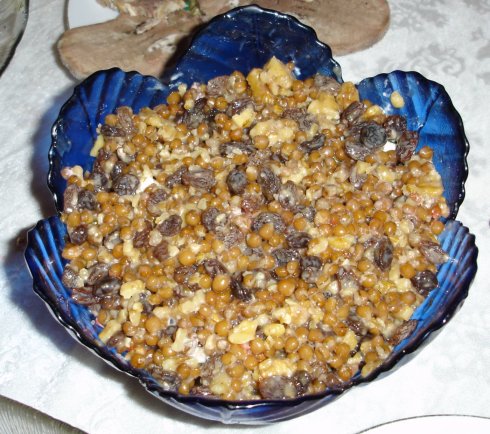
Koljivo_from_wheat

Koljivo or Koliva just like Greeks make.  Commemorating the dead with the seeds of life.

Whhhooooo…  long digression, even for NikoBako.

Anyway.  Karageorge wasn’t particularly wealthy or an Ottoman archon of any type, like the Greek Phanariotes who ruled Roumania as Ottoman vassals were.  He raised pigs and herded them across the Danube to the Prečani-Serb* inhabited regions of Austria and further in.  But he led a revolt that led to — if not complete independence — significant autonomy for Serbia.  He was assassinated fairly soon after but his descendants came back as kings of the independent country later on, in an often vicious see-saw dynamic with the rival Obrenovići which has always been too complicated for me to remember accurately, and then established themselves as the sole ruling house of Serbia in 1903, after the last Obrenonović monarch, also ironically named Aleksandar I, and his wife Draga, were chopped into pieces by a military coup who then threw their bodyparts off the balcony of the royal palace in Belgrade.

This, of course, did not exactly do wonders for Serbia’s image abroad, and is one of those events where Serbia might have needed to find a good public relations firm to work for them.

Why all this?  I dunno.  I just think it’s one of the very cool things about Serbs that they refused to be Frank-ridden after centuries of being Turk-ridden, and would not accept some lame, impotent, manic-depressed, inbred, rickety little 17-year-old nerd, tenth-in-line German or Danish princeling who spoke no Serbian as their king, the way all of the rest of the new Balkan states did.  They chose their own.  And he was a pig-herder.  And that rocks.

No joke.

Below — Karagiorge Servias Street in downtown Athens
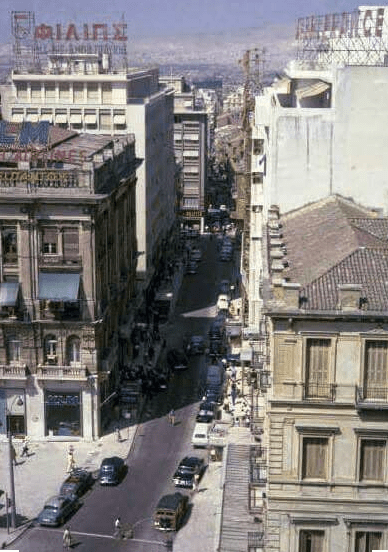
Screen Shot 2019-11-14 at 1.11.20 AM

*************************************************************************************

* Prečani-Serbs: It’s doubtful that any Balkan peoples suffered more from the see-saw wars between the Ottomans and the Hapsburgs than the Serbs did.  It’s easy to see why; Serbian lands are pretty much the highway for getting from the south Balkans to Vienna.detailed-political-map-of-the-former-yugoslavia-1983It’s the easiest proof there is that war always had “collateral damage” and civilian casualties.  The Ottomans launched rapid campaigns up through to Vienna in 1529 and 1683.  Both times they failed to take the city and retreated.  Thank the gods, because the idea of Turkish armies at the walls of Vienna is even more terrifying than the idea of Arab armies in the Loire valley at Tours just 70 kilometers from Paris in 732. But in 1683 they not only failed to conquer Vienna, the Hapsburgs chased the retreating Ottomans across the Danube and as far south as Kosovo.  That could have meant Serbian liberation from the Ottomans 200 years before it actually happened.
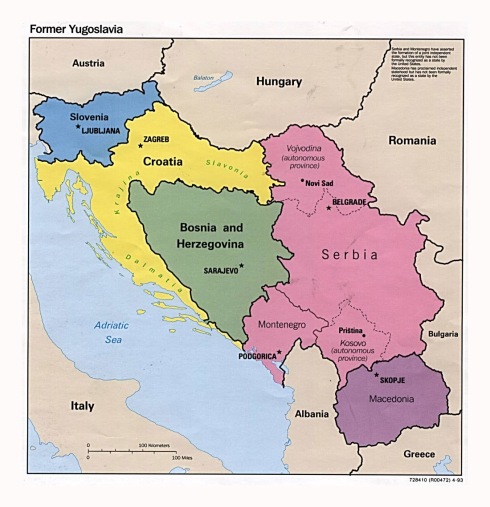
But then the Austrians made the fateful decision to retreat.  I don’t know why.  Perhaps they felt overextended or thought they were getting too deep into imperial overreach.  And of course this meant horrific retaliatory violence on the part of Turks and local Muslims against the southern Serbs who had welcomed the Austrians as liberators.  And an epic exodus of the Serbs northwards, in what are called the Great Migrations of the Serbs, began.  This resulted in a massive shift to the north of the Serbian nation’s center of gravity and, perhaps most fatefully, marks the beginning of the de-Serbianization of Kosovo, which was the spiritual heartland of the Serbs.  An influx of increasingly aggressive highland Albanians, now Islamicized and emboldened in their impunity as such, only accelerated the departure of Kosovo Serbs to the north.

Conditions in northern but still Ottoman Serbia were better than in the south.  But for many Serbs this was not enough.  A great many crossed the Danube and settled in what is now the autonomous region of Vojvodina and the parts of Croatia called Slavonia and Krajina.  Ironically, just as the Ottomans made Serbia prime recruiting country for their system of enslaving young boys to turn them into the most powerful unit in the Ottoman army, the Janissaries, the Austrians themselves also recognized that Serbs were, as always, good soldier material, and they invited Serbian fighters and their families into Austria’s border regions to protect the boundaries of the Hapsburg empire from possible Ottoman aggression.

So Prečani-Serbs, refers, very broadly, to those Serbs who went and settled in the borderlands of the Austrian empire; the term comes from “preko” or “over there” or “the other side”, across the Danube, Sava and Drina rivers, in other words, that were the borders between the Ottomans and Hapsburgs for centuries.

I don’t know whether Krajina Serbs from around Knin — shown in green in map below — are considered prečani or not, those from that part of Croatia that was largely Serbian until 1995, when its Serbian inhabitants were expelled with American help in what was the largest single act of ethnic cleansing in the Yugoslav wars, with some 200,000 Serbs expelled from their homes.  Serbs are soldiers and poets, as I’ve quoted Rebecca West saying so many times; Croatians are lawyers; but with the detestable Milošević having abandoned Krajina Serbs (Venizelos-style), and with Americans arming, training them and watching their backs, Croats proved themselves to be formidable warriors indeed.
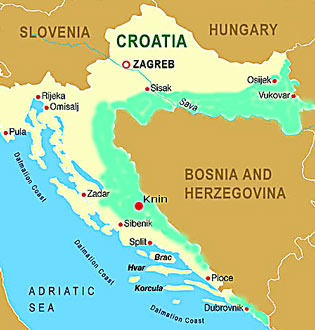
war_map

So, if one can put one’s biases aside, the poignant tragedy of this whole set of over 600-years of pain and trauma becomes clear.  Bullied out of Kosovo over the centuries, Serbs move north, even so far north as to settle in Austria itself.  Then, with no one’s help, they gather Serbs from Kosovo to the trans-Danube-Sava lands where they had settled over the centuries into one state.  And less than 100 years later, they lose and are almost entirely expelled from both the Kosovo they had fled from and from the Krajina and Prečani lands they had fled to.

It’s good to know the whole story, people, and not just buy the villain myths wholesale.

Comment: nikobakos@gmail.com

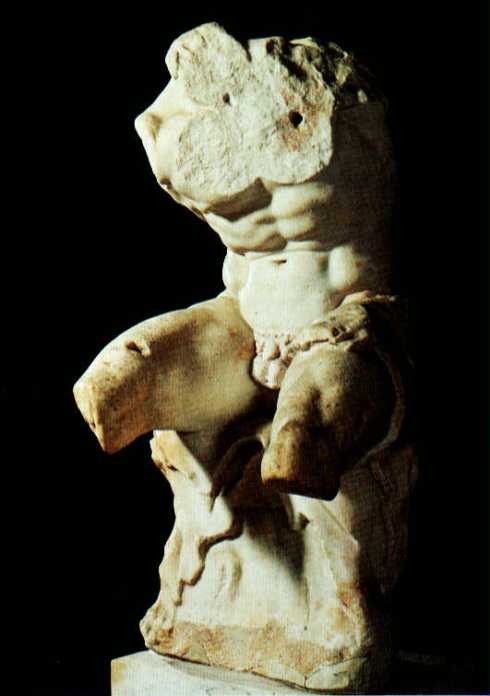
Archaic torso of Apollo — a favorite Rilke poem that also came to mind with “the Greekest image” post

13 Nov

Archaic torso of Apollo, Rainer Maria Rilke, translated by Stephen Mitchell:

We cannot know his legendary head
with eyes like ripening fruit. And yet his torso
is still suffused with brilliance from inside,
like a lamp, in which his gaze, now turned to low,

gleams in all its power. Otherwise
the curved breast could not dazzle you so, nor could
a smile run through the placid hips and thighs
to that dark center where procreation flared.

Otherwise this stone would seem defaced
beneath the translucent cascade of the shoulders
and would not glisten like a wild beast’s fur:

would not, from all the borders of itself,
burst like a star: for here there is no place
that does not see you. You must change your life.

Archaïscher Torso Apollos

Wir kannten nicht sein unerhörtes Haupt,
darin die Augenäpfel reiften. Aber
sein Torso glüht noch wie ein Kandelaber,
in dem sein Schauen, nur zurückgeschraubt,

sich hält und glänzt. Sonst könnte nicht der Bug
der Brust dich blenden, und im leisen Drehen
der Lenden könnte nicht ein Lächeln gehen
zu jener Mitte, die die Zeugung trug.

Sonst stünde dieser Stein entstellt und kurz
unter der Schultern durchsichtigen Sturz
und flimmerte nicht so wie Raubtierfelle

und bräche nicht aus allen seinen Rändern
aus wie ein Stern: denn da ist keine Stelle,
die dich nicht sieht. Du musst dein Leben ändern.

That last line: “Du musst dein Leben ändern”, “You must change your life”, is always like a kick-box punch to the gut.

apollo

See: This is perhaps the GREEKEST image I have ever seen.” 

Comment: nikobakos@gmail.com

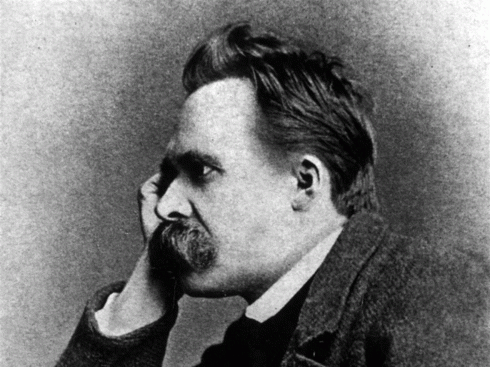
The full Nietzsche quote from “the Greekest image” post

13 Nov

“It is decisive for the lot of a people and of humanity that culture should begin in the right place – not in the “soul” (as was the fateful superstition of the priests and half-priests): the right place is the body, the gesture, the diet, physiology; the rest follows from that. Therefore the Greeks remain the first cultural event in history: they knew, they did, what was needed; and Christianity, which despised the body, has been the greatest misfortune of humanity so far.”

And here’s the whole post from a few years ago.

1-nietzsche-friedrich-portrait-1860

See: This is perhaps the Greekest image I have ever seen.” 

Comment: nikobakos@gmail.com

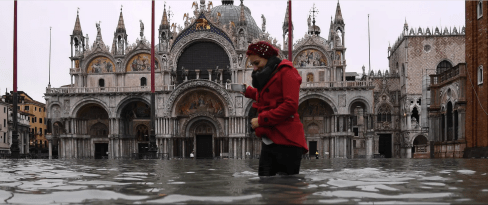
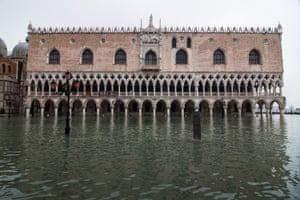
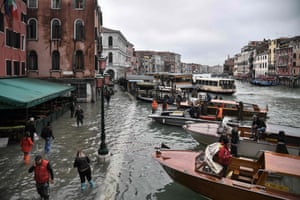
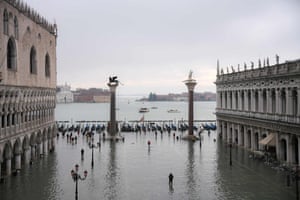
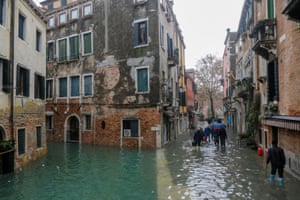
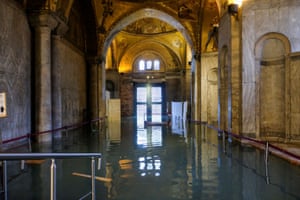
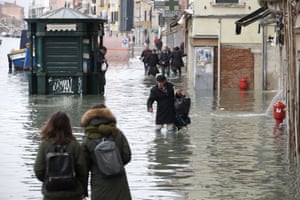
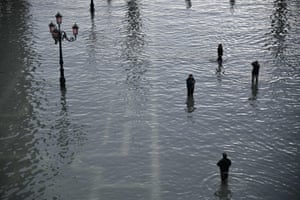
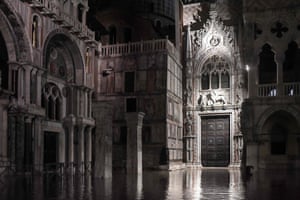
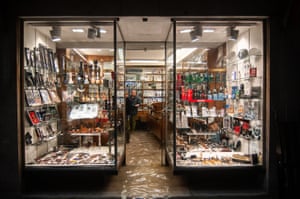
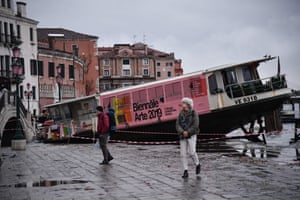
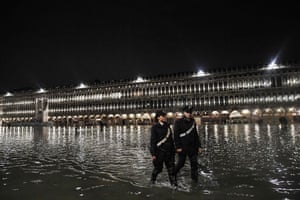
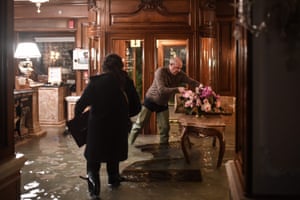
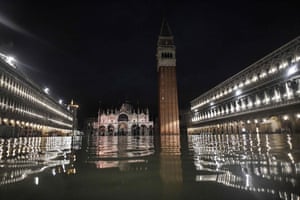
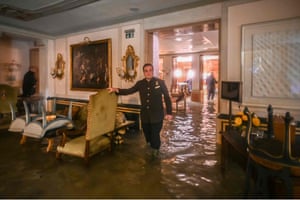
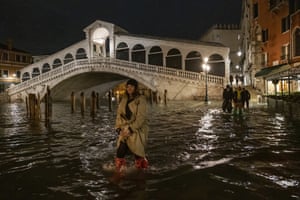
Venice floods, worst in decades

13 Nov

Screen Shot 2019-11-13 at 6.20.28 PM.png

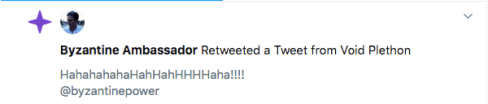
This is seriously disturbing.  I mean I theoretically “hate” Venice as much as the next Roman, but there are wacky amateur Byzantinists on-line who are gloating about the destruction because they’re loons who consider this disaster retribution for 1204 and the Fourth Crusade and they’re just ridiculous.  We’re losing what may be humanity’s most beautiful city.  I, at least, think only Rome and Paris even come close.

Even jokes about this are obscene. And I’m the Greek who theoretically should be relishing our cold-dish revenge. You’re the Franco-Teutono-Visigotho-Norman descendants of the 1204 sackers, looters and murderers themselves.  So drop it.

Screen Shot 2019-11-13 at 5.35.51 PM.png

The infuriating thing is that so much can be done.  The dam walls that can be raised in storm conditions to keep the lagoon safe from Adriatic floods have been held up for years by Italian bureaucracy and corruption.  The siphoning off of the city’s ground water tables by mainland industries has not been stopped.  Even something that should be as easy as banning huge cruiseships, which cause waves that eat at buildings’ foundations has not been banned, as far as I know.  The destruction of Venice is not inevitable.
See Guardian article for full-size photos.
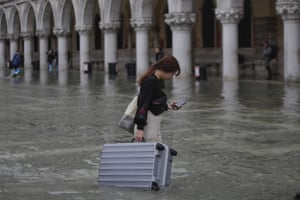
A tourist carries her luggage in a Piazza San Marco


The flooded crypt of St Mark’s Basilica


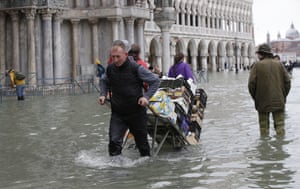
Venetians cross the Piazza San Marco


People walk past a stranded taxi boat on Riva degli Schiavoni
Police patrol across the flooded St. Mark’s square
Employees of the Gritti Palace protect furniture


The flooded San Marco square
A room in the flooded Gritti Palace


A tourist walks near the Rialto bridge


Comment: nikobakos@gmail.com

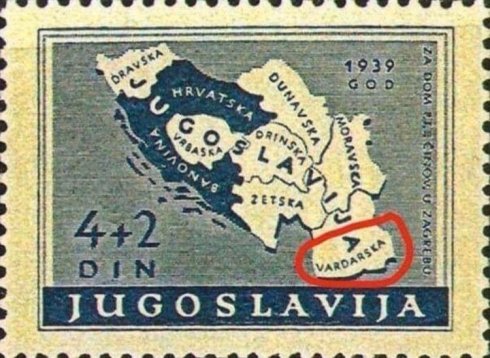
Yugoslavia: Yeah, you found a very cool stamp. Do you have any clue what it means?

12 Nov

Screen Shot 2019-11-13 at 12.10.03 AM

It shows the extreme lengths that the Yugoslav government went to throughout the 1920s and 1930s to hold the country together, under Crown Prince and then King Aleksandar — also known as Aleksandar the Unifier.  At some point during his reign, I think after it became clear that Croatian separatism was determined to obstruct the functioning of the Skupština and the Yugoslav government in any way possible, Aleksandar redrew the constituent regions of Yugoslavia which corresponded to various ethnic groups, and introduced new administrative banovine which were given the ethnically neutral names of the main rivers that ran through each region.

And yet even despite those reforms Serbs still tried to placate Croatian separatists by allowing them — and only them — to retain an ethnic name for its historical region: what’s shown as the “Hrvatska Banovina” on your stamp.

EJM_Q2FU8AA3Oi6

There is, I think, in much of Serbian pride, or even in Serbian arrogance, a certain sense of what in Greek we call φιλότιμο, “love of honor” crudely put; perhaps a better term would be “noblesse oblige”.  Since Serbs and Serbian blood pretty much created Yugoslavia singlehandedly, by fighting off the Austrians and defeating the Ottomans (along with guaranteeing us possession of Salonica ’cause they kept the Bulgarians busy while Greek Crown Prince Constantine strolled into the city like the conquering hero), you might have expected that they would work to keep a Serbian kingdom ,under the Карађорђевић (Karađorđević) dynasty, where all other ethnic groups — who did nothing to fight for south Slav independence, except tangentially the Macedonians — would simply be subject peoples to the Serbian crown.  Instead, they made a sincere and honest attempt to make the noble experiment of south Slav unity actually work, democratically and harmoniously.  There was even an ideological current running through Serbian intellectual circles of a plan for unification with Bulgaria and even Greece into one greater Balkan state, which would have made it harder for the West to push us around and fuck us up like they did and do; maybe even made us more valuable to the West than Turkey, the tail which wags the Western/US/NATO dog.

And I think King Aleksandar, for all his theoretical faults, was a genuine personification of that sense of Serbian noblesse oblige and ἀρχοντι.

And for his efforts he was assassinated in Marseille in 1934 by a Macedonian separatist in cahoots with the nasty-piece-of-work, Vatican-supported, Croatian Über-Nazi Ustaše.

And that’s what your cool stamp is all about, Charlie Brown.

Kralj_aleksandar1

King Aleksandar I

Comment: nikobakos@gmail.com


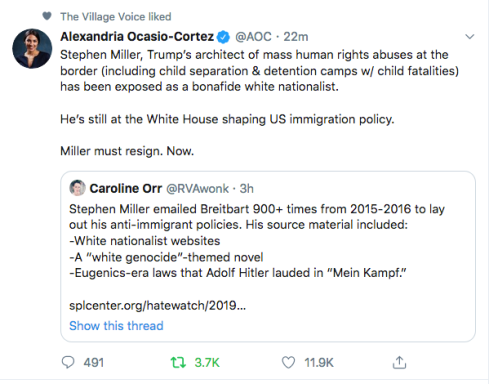
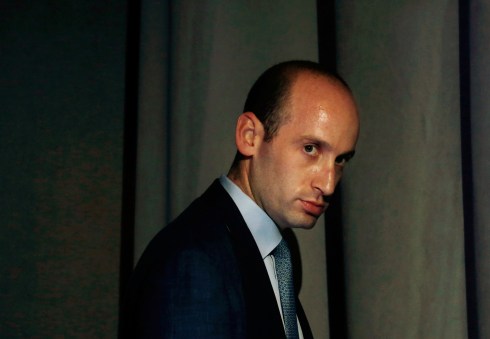
This is horrendous: I knew he was diabolical but not the Devil himself

12 Nov

What an embarrassment to Judaism and to the Jewish struggle for righteousness throughout the centuries.  But he probably is a self-hating Jew in the Roy Cohn vein…  A whole foul lineage of New York City politics might finally be terminated by these events.

Screen Shot 2019-11-12 at 11.19.21 PM190408-stephen-miller-cs-239p_9d53c98a68a5cdc21f4c7e9152e0c7e8.fit-2000w

Comment: nikobakos@gmail.com

Another party I’d like to crash

12 Nov

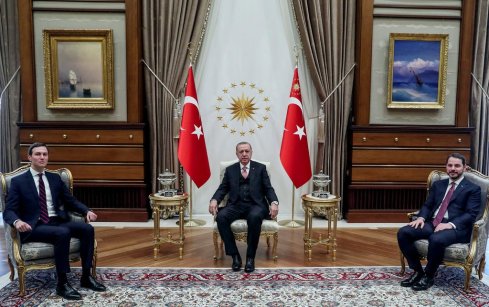
Man, Erdoğan knows how to pull off that look of studied Ottoman gravitas like nobody’s business.  No joke.

12dc-turkey1-jumboCredit…Kayhan Ozer/Agence France-Presse — Getty Images

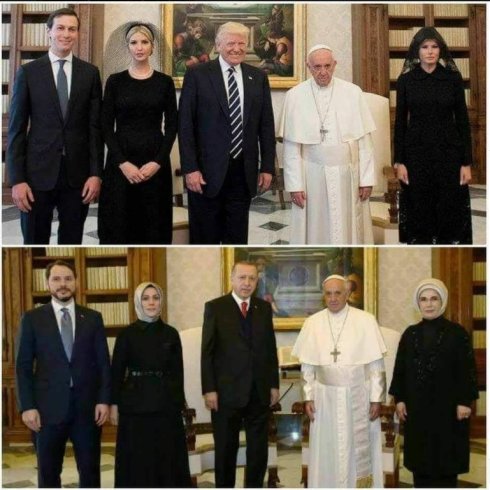
These two below are priceless as well.  Many thanks to Byz Ambassador @byzantinepower

Trump Pope

Comment: nikobakos@gmail.com