
Any city in Pakistan. Even Lahore.
**************************************************************************************
See: “Mohsin Hamid: torn between New York and Lahore“

–
Comment: nikobakos@gmail.com
–
Any city in Pakistan. Even Lahore.
**************************************************************************************
See: “Mohsin Hamid: torn between New York and Lahore“
–
Comment: nikobakos@gmail.com
–
I’ve often thought it would be the best idea. What if Israel annexes the West Bank and Gaza? Will it be able to survive as an Arab majority state? Will it be able to survive under the current apartheid “arrangement”? Will it be able to function with a disenfranchised majority?
What if we have one state…and then time will simply be on Palestinians’ side? Why is that inconceivable? Not a rhetorical question? Tell me your ideas.
**************************************************************************************

For the past 50 years, a United Nations Security Council resolution has helped to sustain Israel’s occupation of Palestine, analysts say.
Ghada Karmi, a British-Palestinian author and lecturer at Exeter University’s Institute of Arab and Islamic studies, says the central issue is that Israelis “never intended” to comply with UNSC Resolution 242, adopted on November 22, 1967.
“From the steady colonisation of the Palestinian area, you can see that there has been no attempt on the part of Israel to comply with any part of the resolution,” she said.
Following the 1967 Arab-Israeli war, a resolution called on Israel to give up the territories it occupied in exchange for a lasting peace with its neighbours.
Israel defeated the armies of Egypt, Jordan and Syria, resulting in the Palestinian “Naksa”, or setback, in June 1967.
In that year, Israel expelled some 430,000 Palestinians from their homes. The Naksa was perceived as an extension of the 1948 Nakba, or catastrophe, which accompanied the founding of the state of Israel.
In a matter of six days, Israel seized the remainder of historic Palestine, including the West Bank, East Jerusalem and Gaza, as well as the Syrian Golan Heights and the Egyptian Sinai Peninsula. Later that year, Israel annexed East Jerusalem as well.
Apart from the Sinai Peninsula, all the other territories remain occupied to this day.
Under the sponsorship of the British ambassador to the UN at the time, Resolution 242 aimed to implement a “just and lasting peace in the Middle East” region.
The resolution’s preamble explicitly prohibited the continuation of Israeli control over territory that was acquired by force during the war, citing “the inadmissibility of the acquisition of territory by war and the need to work for a just and lasting peace in which every State in the area can live in security”.
The resolution called on Israel to withdraw its forces from territories it had occupied in the Six-Day War, and urged all parties to acknowledge each other’s territorial sovereignty.
(i) Withdrawal of Israel armed forces from territories occupied in the recent conflict;(ii) Termination of all claims or states of belligerency and respect for and acknowledgment of the sovereignty, territorial integrity and political independence of every State in the area and their right to live in peace within secure and recognized boundaries free from threats or acts of force
UN Security Council Resolution 242, Article 1
However, the resolution was used by Israel to continue its occupation of the territories, as it also called for “achieving a just settlement of the refugee problem” while falling short of addressing the Palestinian people’s right to statehood, analysts note.
As a result, the Palestine Liberation Organization (PLO), which at the time was perceived by the international community and by the UN as the representative of the Palestinian people, refused to acknowledge the resolution until two decades later.
The resolution was later used as the basis for Arab-Israeli peace negotiations and the notion of creating a two-state solution along the internationally recognised 1967 borders.
But in the US-based Journal of Palestine Studies, lawyer and Georgetown University professor Noura Erekat wrote that Israel has used Resolution 242 to justify the seizure of Palestinian land.
“When Israel declared its establishment in May 1948, it denied that Arab Palestinians had a similar right to statehood as the Jews because the Arab countries had rejected the Partition Plan,” Erekat wrote, referencing UN Resolution 181.
The final language of Resolution 242 did not correct the failure to realise Palestinian self-determination, referring merely to the “refugee problem”, she added.
“Following the 1967 war, Israel argued that given the sovereign void in the West Bank and the Gaza Strip the territories were neither occupied nor not occupied,” Erekat said, noting that Israel used this argument “to steadily grab Palestinian land without absorbing the Palestinians on the land”.
Though Resolution 242 qualifies “occupied territories” as those areas occupied or acquired during the war, analysts say Israel used the “vagueness” of the language to its benefit.
“[Israel and its allies] are saying there isn’t anything specific – there aren’t any specific territories mentioned – which means, ‘We can have this or that,'” Karmi said.
“This whole vagueness argument is artificial, to throw dust in the eye. The problem with the resolution is that it has never been implemented. That is one of the most serious things about it.”
Mouin Rabbani, a senior fellow at the Washington-based Institute for Palestine Studies, said the political context of the time was the underlying force behind the resolution’s lack of execution.
“Israel’s victory in 1967 was largely seen as an American victory as much as an Israeli victory,” Rabbani told Al Jazeera. “This was in the height of the cold war.”
The United States’ UN representative at the time played a significant role in trying to steer the resolution in Israel’s favour, he said.
“It [Israel] had absolutely no intention of leaving, and it never came under sufficient political or military pressure whereby the costs of remaining in the occupied territories became higher than benefits of doing so,” he said.
The importance of Resolution 242 actually came much later, after political developments formed the basis of an international consensus for a two-state-solution – a notion that began to emerge among the Palestinian leadership in the 1970s, Rabbani said.
“Today, we always talk about the Palestinian/Israeli conflict – that didn’t really exist at the time,” he said. “It was the Arab/Israeli conflict and the question of Palestine.”
The fact that Palestinian statehood was not awarded much significance in the resolution is not the outcome of deliberate sidelining; rather, it is due to the political lens in which Palestine was seen at the time.
Despite the fact that Resolution 242 paved the way for negotiations, it is now “completely irrelevant”, Karmi said.
“The basic issue to resolve this conflict is return. This is the basic issue – these people [the Palestinians] are dispossessed,” she said.
But even with a series of brokered peace talks, there has been no real progress towards implementing a two-state solution, with discussions at a stalemate amid the expansion of Jewish settlements.
The soaring settlement project, which is in direct contravention of international law, has brought around 600,000 Israelis into dozens of Jewish settlements throughout the occupied West Bank. Israeli authorities expropriate Palestinian land and carry out home demolitions on a regular basis, most commonly to expand existing settlements, or occasionally to build new ones.
Checkpoints and Israel’s separation wall have further hindered Palestinians’ freedom of movement.
“Israel is totally in control of the Palestinian territories – not just the West Bank, but also Gaza,” Karmi said.
The Gaza Strip, home to about two million people, has been under siege for more than a decade. In 2007, after the election victory of Hamas and the group’s assumption of control over the territory, Israel imposed a strict land, aerial and naval blockade.
“The fact of total Israeli control of 100 percent of Palestine is precisely and fundamentally why you can’t have a two-state solution,” Karmi said.
 PANTELIS BOUKALAS
What keeps societies from falling apart is their members’ spontaneous and unforced compliance with unwritten laws, with principles that they do not even have to be reminded of in order to adhere to.
Values such as solidarity, altruism and hospitality may be set out in charters or schoolbooks. But that is of little consequence if it is not in a person to empathize with a stranger’s suffering. And when we say empathize, we mean standing by another person with actions, and not with vacuous, cost-free words.
Greece’s social fabric could have been ripped apart a long time ago under the pressure of the (still lingering) financial crisis. It would not have been surprising if egotism and antisocial self-interest had emerged as the sole “natural” reaction to the long chain of disappointments. After all, we live in an age of a neo-cynicism that propagates the “natural” and “unavoidable” character of social inequalities and the – also natural – character of offshore tax avoidance.
And yet, despite the difficulties, the unemployment, the underemployment, the falling wages and the devastating overtaxation, the crudeness of individualism has not managed to defeat our culture of solidarity. Its sirens failed to lure the many. The ordinary people. Those who keep a society glued together.
This failure became evident in the attitude of the majority toward the migrants and refugees. Sure, there were cases of bigotry, exploitation, even crude racism. How can one forget the xenophobic sermons from the lips of priests, those otherwise preachers of Christian love? But such behavior never became mainstream.
Altruism was also on display (in the same humble fashion) in the wake of the disastrous summer wildfires. And it is now again evident following the deadly flash floods in Mandra and Nea Peramos, on the western outskirts of Athens. Ordinary people have been offering help from their dwindling savings.
Help, in the form of manual labor (which is all they have to give), has also come from migrants and refugees. The Pakistanis and the Syrians who rushed to provide assistance in flood-stricken Mandra are also part of our society.
Similarly, we cannot deny the fact that the leadership of Golden Dawn, who organized a Greeks-only handout, despite their Christian pretensions, are also part of the same society. One had to wonder if the Arvanite Greeks (Christian Albanians who migrated to Greece in the Middle Ages) who live in the area were entitled to aid coming from the members of the country’s neo-fascist party.
**************************************************************************************
–
Comment: nikobakos@gmail.com
–
New York Times piece about things coming to a head in Ireland: “Northern Ireland Is Sinking Into a ‘Profound Crisis’” :
As the standoff drags on, and polarization increases, people find it harder to envisage Northern Ireland as an autonomous entity. “We’re back to this binary situation where people either see it as a problematic part of the U.K. or as a part of united Ireland,” said Graham Walker, a politics professor at Queen’s University, Belfast.
**************************************************************************************
My previous Ireland posts, the top more Ireland-specific, at bottom a broader look at nation and minorities:
This is not a question I ask glibly or to be deliberately provocative. In fact, I think I was a little too glib in my earlier opinions about the issue of Brexit and Ireland and I’ve been sobered up a bit.
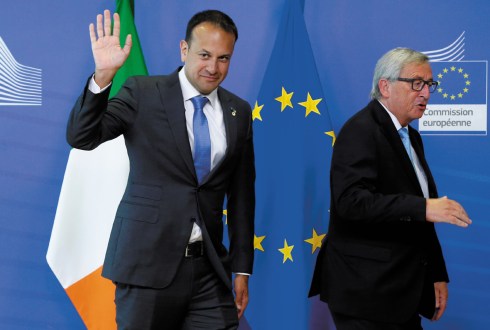 Irish Prime Minister Leo Varadkar and European Commission President Jean-Claude Juncker at a summit of the EU, Brussels, June 2017
And it’s The New York Review of Books’ excellent piece by Fintan O’Toole, “Brexit’s Irish Question“, that made me think a little more carefully about the whole issue.
I suggest everybody read the whole article since it’s open to the public, but I think even it pulls its punches a bit too much and doesn’t realize the degree of danger this “question” poses. This is not “Brexit’s Irish Question.” This is England’s Ireland Problem. AGAIN. STILL. A reversion to form. Before 1999. Before 1921. So all parties, but especially England, not Britain, should tread very carefully.
A good if rather lengthy summary/call out are the following three paragraphs from the piece:
“The Republic of Ireland was one of the most ethnically and religiously monolithic societies in the developed world. Its official ideology was a fusion of Catholicism and nationalism. The anti-homosexuality laws reflected the dominance of the Catholic Church, which was also manifest in extreme restrictions on contraception, divorce, and abortion. While the vast majority of its population was repelled by the savage violence of the Irish Republican Army’s armed campaign against British rule across the border in Northern Ireland, most agreed with the IRA’s basic aim of ending the partition of the island and bringing about what the Irish constitution called “the reintegration of the national territory.”
“But the Irish radically revised their nationalism. Three big things changed. The power of the Catholic Church collapsed in the 1990s, partly because of its dreadful response to revelations of its facilitation of sexual abuse of children by clergy. The Irish economy, home to the European headquarters of many of the major multinational IT and pharmaceutical corporations, became a poster child for globalization. And the search for peace in Northern Ireland forced a dramatic rethinking of ideas about identity, sovereignty, and nationality.
“These very questions had tormented Ireland for centuries and were at the heart of the vicious, low-level, but apparently interminable conflict that reignited in Northern Ireland in 1968 and wound down thirty years later. If that conflict was to be resolved, there was no choice but to be radical. Things that nation-states do not like—ambiguity, contingency, multiplicity—would have to be lived with and perhaps even embraced. Irish people, for the most part, have come to terms with this necessity. The English, as the Brexit referendum suggested, have not. This is why the Irish border has such profound implications for Brexit—it is a physical token of a mental frontier that divides not just territories but ideas of what a national identity means in the twenty-first century.” [My emphases]
The passage’s conclusion pretty much says it all. As the second decade of the twenty-first century comes to a close, and as Ireland approaches 100 years of freedom from almost 800 years of English rule, Ireland will enter the historical record as having taken a step forward and England as having taken a step backwards. Good riddance, to be frank, as I have to say so against some pretty deep Anglophile sentiments. It took me till much too late in life to realize that the best thing to do to an irate lover who loudly announces he’s not talking to you anymore is to ignore him, but that is what the European Union is rightly and justly doing to Britain. And Britain is doing exactly what the “irate lover” always does when you call his no-talking bluff: trying to somehow work his way back into the position where he can regain at least some of the power that he forfeited with his drama so that he can manoeuver a bit. But it’s not going to work. Europe is genuinely tired of the drama.
The issue here is that it’s unconscionable that England’s drama should again be made Ireland’s. Here’s a political map of the past two decades of Northern Irish life:
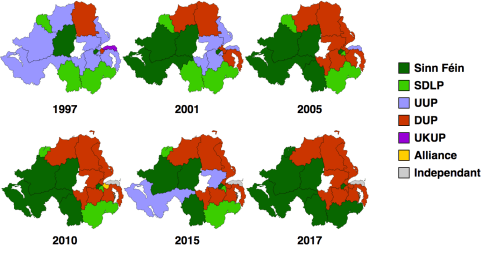
What the map shows really clearly is that, as the percentage of Protestants in Northern Ireland has declined, the two groups have actually — during almost twenty years of what we have liked to imagine was peace — grown further apart and polarized into staunchly Sinn Féin Republican constituencies and Protestant DUP constituencies. As the Review article points out Sinn Féin supporters in a non-EU Northern Ireland will now be deprived of the ability to have either or both Irish and British citizenship, something to which I cannot see them taking to very kindly. I also do not see supporters of DUP, a corrupt bunch of thugs that represents the absolute worse of the English Reformation’s traditions of Guy Fawkes’ Day, anti-Catholic hatred and racism (no, Catholics aren’t always the bad guys), easily giving up their attachments to London.
But that’s exactly what London has to do. England left Ireland in 1921 with a sizeable chunk stuck between its teeth that, like a pitbull, it would not let go of and which is why we find ourselves where we are today. It left India in 1947 like a teenager who sheepishly goes off to sleep at his girl’s after his friends have trashed his parents’ place while they were away. It left Cyprus in 1960 exactly the same, a time bomb ready to go off — which did. Under no condition should England be allowed to leave a similar mess this time. Time for the international community to make the English clean up after themselves.
The international community and NATO more specifically did not support Portugal in its attempt to hold on to Goa after Indian independence. That means the UK neither, obviously. It’s now time for the world to tell the UK to entirely and finally Quit Ireland, its closest and perhaps most deeply brutalized colony. I’m usually not so intransigent on these issues, but the historical record calls for a complete rejection of any attempts by Irish Protestants to keep England involved in Irish affairs by “protecting” them or their rights; complicated compromises only kick the can down the road. The historical record calls for a complete rejection of even a syllable of their “position.” The historical record calls for a referendum, which Unionists will lose, and calls for London to make it clear to them that they are being cut loose. Let them keep British citizenship if they want. Come up with a resettlement scheme for them if that’s what they want, immigrants that the English can live with since they can’t tolerate detestable, lazy, dirty Poles. Otherwise, bye-bye guys…
But if Theresa May and her government of buffoni were ethical enough or had the balls to do something like that, they would have started that process already, instead of still talking gibberish about everything like they are.
This might end badly. Let’s hope not.
–
Comment: nikobakos@gmail.com
–
Check out the Times article from a few days ago: “On Irish Border, Worries That ‘Brexit’ Will Undo a Hard-Won Peace“.
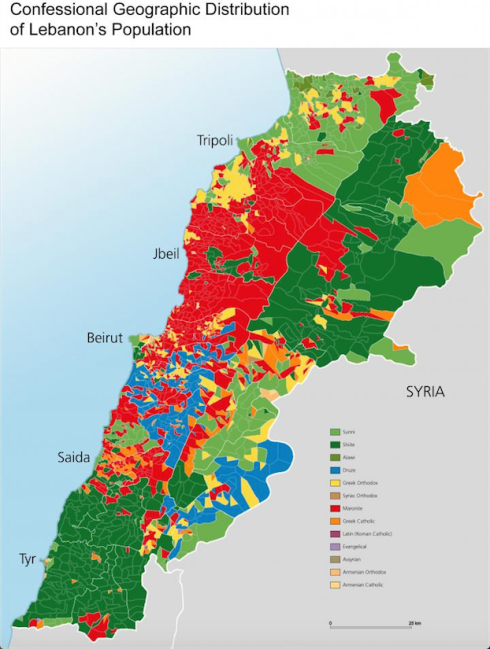
I was once dragged by force into a corner by a Lebanese friend at a party in Cambridge and told to never ask anyone Lebanese their religious affiliation, I guess because I probably just had done. Of course, I still ask. Like I implied in my Turkish post a few days ago, pretend unity (that you’re a passionate Erdoğan supporter and I’m not, or if you’re Maronite and I’m third-generation Palestinian doesn’t mean that we can’t still be “unified”), can only become real unity if differences are acknowledged. (*1)
I’ve had not dissimilar experiences with Irish folks if I’ve ever tried to talk about religion or Ulster or “the Troubles.” I once asked a guy at an Irish bar in Queens who was from Northern Ireland if he was Catholic, and I got a blank and frankly angry stare in response, and with so much alcohol and testosterone in the mix, realized quickly I should shut up and look the other way or change the topic. A female bartender who heard the one-sided exchange said to me softly: “not a good idea to ask people those things…” Ok.
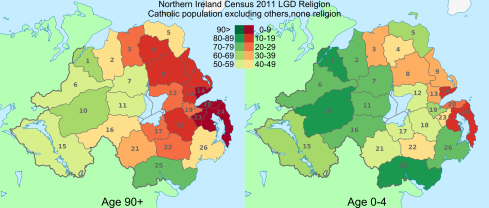 Map of Northern Ireland with distribution of Protestants (red) and Catholics (green) according to age group, showing a clear demographic decline of Protestants.
I also hear Irish anger at what they think is an out of touch diaspora that funded continuing IRA violence when the Irish themselves on both sides were starting to get tired of the violence and the fences were starting to come down — though that’s slightly disingenuous — in the early days these diaspora funders were heroes — and, as a non-metropolitan Greek, immediately assuming that the “diaspora” is “out of touch” or stuck in a time warp is a seriously irritating train of thought; there’s lotsa ways we’re more in touch than you lot.
So I’m really setting myself up as an easy target since I’m not even Irish or Irish-American. But I feel I can’t be silent as the English decide the future of any part of Ireland again.
I know that the Brexit vote came as a shock to a lot of Americans, as we were forced to confront the fact that the English are not all that smart, and can be as jingoistic, xenophobic, ignorant and proudly “know-nothing” as Americans can be. And I say the English because Scotland and Northern Ireland voted against leaving the European Union — in Northern Ireland, particularly, in percentages that would indicate a large number of Protestants voted to stay as well — and they should now be free to decide their own fates free of London.
Sometimes I feel that my views on the ethnic nation-state and minorities come across as selective and sort of random to readers, so let me take this moment to clarify a bit. I am, of course, against the brutal assimilationist policies of the nation-state and a supporter of minority language and cultural rights. On the other hand, I’m also against a minority holding an entirely polity hostage because it refuses to conform with the conditions of living in a state where they don’t hold numerical superiority.
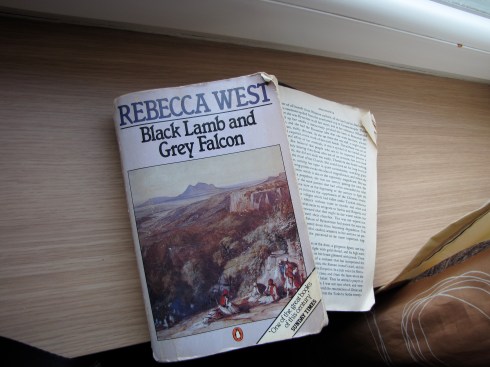
There’s a great and frustrating passage in Rebecca West‘s beautiful Black Lamb, Grey Falcon, where her Serbian (and half-Jewish) tour-guide is arguing with a Croatian intellectual in Zagreb; “but you are not loyal” says the Serb:
Croat: You treat us badly. How can we be loyal?
Serb: You’re treated badly because you’re not loyal.
Croat: How can we be loyal if we are treated badly?
Serb: If you were loyal, you wouldn’t be treated badly.
Croat: When you treat us better, we’ll be loyal.
Serb: As long as you’re not loyal you can’t expect to be treated better.
And on and on and on…

(Rebecca West, who along with disconcertingly smart and honest, was clearly a real babe as well — broke a lot of hearts and refused to forgive when hers was…cool. As Lauren Cooper would say: “Forgiving is for l-o-o-o-o-z-u-u-h-h-z-z!!!”)
Of course, we saw, during WWII, just after West’s second trip, and then again by the end of the last century, that Croatians had no intention of being loyal to Yugoslavia no matter how much bending-over-backwards to ‘treat them better’ Belgrade did.
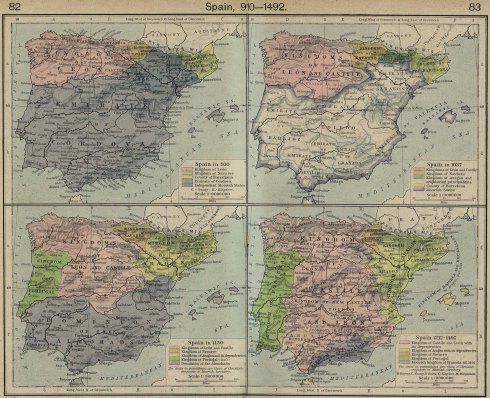
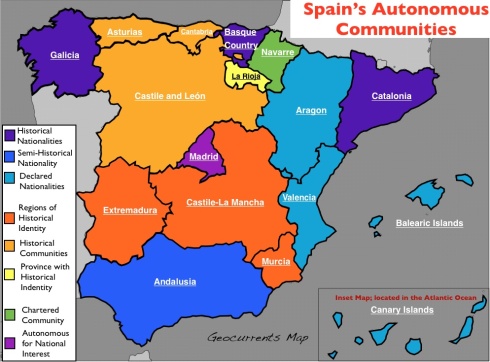
Or take Catalans again, in a state where as a minority they are treated exceptionally well. Still, with full language and cultural rights, they feel Madrid is oppressing them and they want full independence, threatening to rip apart the fabric of a country that has made impressive democratic achievements over the past few decades. And those of you who bought the public relations crap about how “hip, cool and Mediterranean” Catalonia is, and who spend your tourist money in Barcelona and the Balearics have only contributed to the discriminatory tendencies of Catalan chauvinism and the worsening crisis of Catalan separatism. Try Galicia or the Basque Country if you want to see parts of Spain that are not part of the Castilian center, but where ethno-linguistic difference has made its peace with the Spanish state and society has agreed to co-existence. Or if they’re too rainy and un-Mediterranean for you, go to Córdoba and Granada (skip Seville, too Catholic and bull-obsessed), poorer parts of the country that need your money and where you can buy the public relations spin of Edward Said instead, who once outrageously made the claim that 60% of Spanish vocabulary is of Arabic origin, (or maybe the spin of Al Qaeda and ISIS) and wallow in Al-Andalus nostalgia.
Even more and very closer to home: my father’s Greek minority village of Derviçiani in southern Albania. My early-days romance with the village is kinna over and I feel free to express things that I’m angry at myself for not saying to the faces of people there earlier.
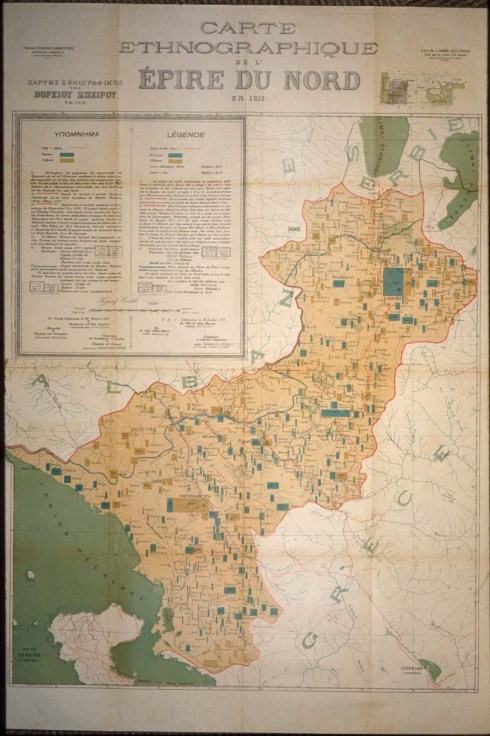
I’d love to ask: what the f*ck do you want exactly? They have Greek primary and secondary education; they have Greek churches (a Church about which few of them know anything or take seriously in any way, or have bothered to learn about in order to address the consequences of four decades of enforced atheism, but they have them); the Albanian Orthodox Church itself — meaning not just Greek minority churches, but the Church of Orthodox Albanians — in fact, is headed, run and staffed by Greeks, (extremely enlightened ones, I have to admit), the way the Arab Orthodox Churches of the Levant were for so many centuries; they have, I believe, two political parties that have members who sit in the Albanian parliament. If their villages are experiencing slow to rapid depopulation, it’s not the fault of Albanians or Tiranë; they were simply trapped — Greeks and Albanians together — in a Stalinist cage for fifty years and now are free to leave: the villages of Greek Epiros started hemorrhaging inhabitants soon after WWII, and neighboring Albanian villages, both Christian and Muslim, are also emptying of young people. Still, they’re hostile to neighboring Albanians; still, they want autonomy for “Northern Epiros,” which for some of them stretches half-way up to the middle of Albania (I don’t care if “the stones speak Greek all the way to Dyrracheio/Durrës” — The. People. Who. Live. There. Now. Don’t. And don’t want to be part of a Greek autonomous region. 2**); still, they make Muslim girls get baptized if they want to marry any of their precious boys, μη χέσω (thank God Albanians still wear their Islam kind of lightly or these poor girls would be in serious trouble) and will ostracize any Christian daughter or sister who falls in love with and marries a Muslim; still, they get offended, even a hip, British-educated nephew does, if you visit the pleasant, well-watered, historical Muslim village of Libohovo — Albanian Libohovë — across the valley and you come back and say it was very nice and that the young people there don’t seem much different than ours. Of course, this attitude is a self-fulfilling prophecy, as the conversation from Black Lamb… above indicates, so that when you put up the flag of Autonomous Northern Epiros 1914 on August 15th and the Albanian police has to come and take it down, then you’ll just end up on the bad side of the Albanian authorities and ordinary Albanians’ retaliatory instinct and the vicious cycle will just keep going.
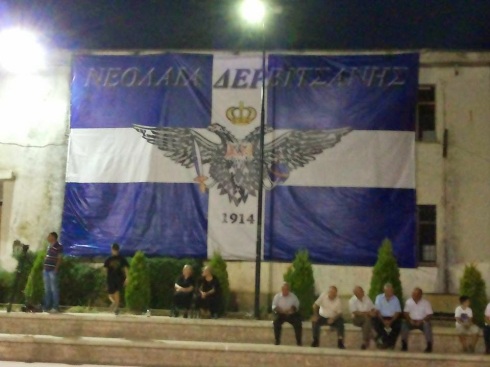 A flag of the Youth of Derviçiani, which, just by wild and completely invented coincidence, happens to have been “founded” in 1914, the year there was a short-lived experiment in Northern Epirote autonomy, which was squashed by Italian objections, because Italy considered Albania within its sphere of influence. Obviously not a sign of just the “youth” of the village — there was no Youth of Derviçani in 1914. And if there are still any doubts, the Palaelogan double-headed eagle lays them to rest.
(Really, is there anything as idiotic as a flag?)
But back to Ireland. I think Ulster Protestants caused enough “troubles” by acting — with the hypocritical support of England — like they were a besieged minority that couldn’t be part of the Irish Republic. So if a majority of Northern Irish voters chose to exit the Brexit, that’s a golden opportunity just dropped out of the heavens into our laps to correct an egregious historical wrong. The invasion and conquest of Ireland, its depopulation and the ripping to shreds of its society, culture and language did not start with the Potato Famine of the nineteenth century. It started with the Normans and the Plantagenets, and then the Tudors and the Stuarts and, finally, Cromwell and his Taliban, and it was a grueling, vicious, murderous process, as violent, or more, as any of Britain’s other colonial wars and right on Europe’s front door, and the Plantation of Ulster itself and the rest of Ireland was a conscious colonial policy of appropriating land and settling poor Protestant Scots and northern Englishmen in the country in order to “civilize” it and break Irish resistance to English hegemony.
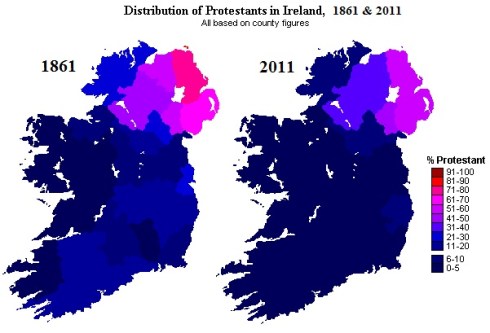
If the above maps seem to indicate that a large number of Protestants left the Irish Republic in the twentieth century because they didn’t feel comfortable without the English crown’s protection, that’s unfortunate (it was not so unfortunate in cases where the Anglo-Irish elite felt they had to flee when their expropriated land was re-expropriated) but that can’t be a justification for the continued amputation of the country.
It’s a classic strategic move, though. Ulster Protestants are not a socioeconomic group comparable to the Anglo-Irish landowners; they were always as squire-ridden as their Catholic neighbors and are still pretty much on equal footing in that sense.
But everybody has to be better than somebody, or else you’re nobody. So, just like Catalans have to think they’re really Mare-Nostrum-Provençal Iberians (3 ***) and not part of reactionary Black Legend Spain; or Neo-Greeks have to think that they’re better than their Balkan neighbors (especially Albanian “Turks”) because they think they’re the descendants of those Greeks; or the largely lower-middle class, Low Church Anglican or Presbyterian or Methodist Brits who fled their socioeconomic status back home and went out to India in the nineteenth century in order to be somebody, had to destroy the socially laissez-faire modus vivendi that had existed there between Company white-folk and Indians, creating an apartheid and religiously intolerant, aggressively evangelizing, social system that laid the groundwork for the unbelievable blood-letting of the Indian Rebellion of 1857; or, perhaps history’s greatest example, poor whites in the American South (many, ironically, of Northern Irish Protestant origin) that had to terrorize Black freedmen back into their “place” because the one thing they had over them in the old South’s socioeconomic order, that they weren’t slaves, had been snatched away (and one swift look at the c-ontemporary American political scene shows clear as day indications that they’re, essentially, STILL angry at that demotion in status); or French Algerians couldn’t stomach the idea of living in an independent Algeria where they would be on equal footing with Arab or Berber Algerians. So Protestant Ulstermen couldn’t tolerate being part of an independent state with these Catholic savages.
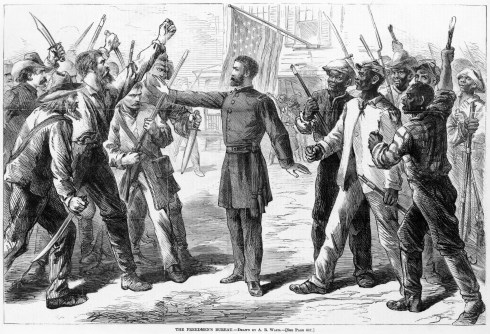 A Bureau agent stands between armed groups of whites and Freedmen in this 1868 sketch from Harper’s Weekly.
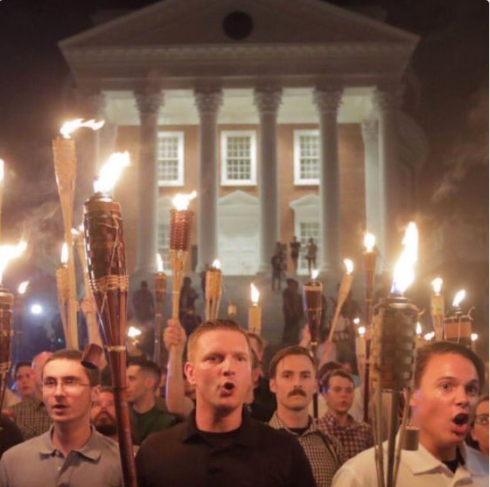
Recent White supremacist rally at the University of Virginia in Charlottesville — thanks to @JuliusGoat: “Imagine if these people ever faced actual oppression.”
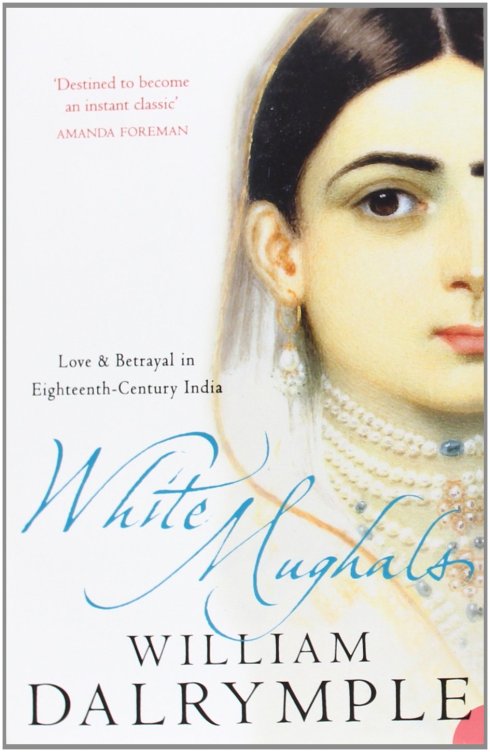
The colonial power — or just the colonized mind — then disingenuously but actively seeks to right these wrongs and protect the embattled minority. The results? A Lebanon torn apart by Maronite phobias and Palestinian victim-entitlement; the greatest threat to Spanish democracy since Franco; a Greece completely isolated from its nearest and closest — in every sense — neighbors; an India where British response to the Rebellion effectively disenfranchised Indian Muslims (4 ****) — Dalrymple shrewdly locates one of the beginnings of modern Islamic fundamentalism in that disenfranchisement and the Deobandi Islam it created 5 *****; the Ku Klux Clan and the murder of Emmett Till and Donald Trump; the vicious Algerian War of Independence, which resulted in French Algerians having to flee the country entirely to a France where they’re still a bulwark of reaction and racism, and the still bad blood between Algerian immigrants and natives in that country.
(I thought about adding Cyprus to that list, that’s going on forty-some years of division after the 1974 Turkish invasion, but didn’t, because Turkish Cypriots actually were an embattled minority, and Greek Cypriots have to do some moral self-searching about their terrorizing, or passively supporting the terrorizing, of their Turkish neighbors, before they blame either Turkey or the Greek junta for f*cking things up for them.)
I was against the Scottish independence referendum of a few years ago because I’m against separation and the putting up of borders generally. But then the apparently stoned British electorate went and separated itself from the rest of Europe, and if Scotland and Northern Ireland and Wales even, or Cornwall or the Isle of Manx or Jersey and Guernsey for that matter, want independence from England now, England will have only brought that down on its own head. If Northern Ireland votes to stay in the European Union then de facto reunion with the Republic will have occurred; I would just like de jure recognition of that facto too, so that there’s no more excuse for meddling in Irish affairs. Irishmen have done a lot of genuinely hard work confronting the demons of their own past in recent years; today’s Ireland is a democratic, pluralist, morally progressive society where the Catholic Church’s death-grip has been broken. That Ulster Protestants can’t live there in peace and security and without English protection is a ludicrous idea.
So let it happen, and if Ulstermen don’t like it — sorry to sound like a reactionary nativist — but they’re free to go back to Scotland where they came from. Or if they want they can come here and join their distant cousins in Kentucky and the Ozarks. I’m sure President Trump will consider them the “right” kind of immigrants.
Comment: nikobakos@gmail.com
*********************************************************************************
1 * It’s a little reductive, but I think it’s not outrageously so to see the Lebanese Civil War as essentially, or initially, a conflict between Maronite demographic panic and paranoia (not entirely unjustified) and Palestinian entitlement of the oppressed (even more justified); every other group seems to then have had no choice but to choose sides. Then add Israel — which arguably started the whole problem — and Syria to the mix, και γάμησέ τα.
2 ** Of course, Northern Epirote Greeks’ δήθεν innocent desire for autonomy is completely disingenuous — though we’re supposed to think that Albanians are too stupid to get that — and is really just a prelude and first step to independence and union with Greece, though they’re a demographically fast-dwindling percentage of the population of the region they lay claim to. That’s not a deterrent, however; all you have to do is believe that all Orthodox Albanians are reeeeeeeally Greek and you’ve solved your demographic issue, since Muslim Albanians are just turncoat intruders in the region as far as Northern Epirotes are concerned.
The only obstacle that would then be left is to get Albanians to forget what happened to the Muslim Albanian Çams of western Greek Epiros (Albanian: Çamëria, Greek: Τσαμουριά Tsamouriá) during WWII, when they were subjected to massacre and expulsion in a campaign of ethnic cleansing by the Greek right-wing resistance and had to flee to Albania.
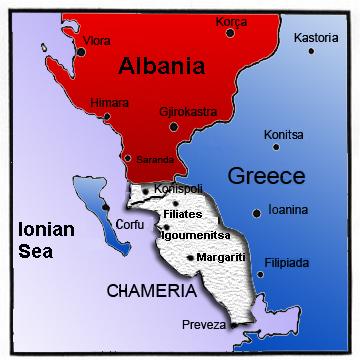
I still haven’t figured out how, as Muslims, they escaped the Greco-Turkish Population Exchange of the 1920s; it would’ve been a more merciful fate. I also haven’t figured out how the tsamiko, a dance of central and southern Greece, got its name. Or else, what clues to a forgotten past the fact that my grandmother’s maiden name was Çames provides; almost all our last names are Albanian — with the Greek male nominative -s ending added to them — as in Bako-s — but as far as I know there’s no clan in our villages whose last name is actually the name of an Albanian sub-ethnic group. See: (“Easter eggs: a grandmother and a grandfather“.
Scratch a Greek and find an Albanian, I guess… Or a Vlach… Or a Slav of some sort… (See: “Albanians in Greece and the “documentary that shocked Greece” from SKAI“)
This kind of issue always reminds me of the Puerto Rican expression from a song of I dunno what period: “¿Y tu abuela donde está?” or “¿Y tu agüela, aonde ejtá?” “And where’s your grandmother?” i.e., before you get all high and mighty and Whitey on us, show us the Black grandmother you’ve got hidden in the kitchen.
3 *** This fetishizing of the Mediterranean as a region, a lost paradise of cosmopolitanism and healthy diets, drives me nuts. Everyone is suddenly “Mediterranean.” The big laugh, of course, is that Turks are Mediterranean. Then comes the less funny one about Croatians being Mediterranean, whereas Serbs are clearly not — Croats wanting to have it both ways, and be Mediterranean and Mitteleuropean at the same time — even if they’re from neolithic Herzegovina and about as neanderthal themselves as their Serbian and Muslim neanderthal neighbors; Istrians have sealed their Mediterranean-ness by buying every Italian restaurant in New York City’s boroughs, and of course the largely Italianate Dalmatian coast seals in most Europeans’ minds the idea of Croatia as a country on the f*cking M-E-D-I-T-E-R-R-A-N-E-A-N. Actually, the closest example to Croatians’ appropriation of a largely Venetian Adriatic is the Turkish appropriation of Greek Aegean imagery, in tourist and p.r. language, on both the Anatolian coast and in Imbros and Tenedos.
Just as nicely condescending is the saying from some-where in the Iberian periphery that “de Madrid no se ve el mar,” “you can’t see the sea from Madrid.” Supposedly a jab at Castillian casticismo, and inward-looking provincialness. No, you can’t see the sea. That’s why Castille is such a beautiful, high plateau, dry and bright and chilly and Romanesque and stunning in its emptiness and vastness.
A White Turk friend once dragged me to Sorrento on our trip to Naples and Campania, which I knew would be a mistake, because it would be and turned out to be a tourist-swamped, hellish Thomas Cook holiday trap because it was “on the sea.” (but one makes concessions to one’s travelling partner’s fantasies.) We cut out as soon as we could and headed to Ravello, up in the mountains away from the sea and she was blown away by how beautiful it was.
And what happens to Greeks like me? who are from a part of the Greek world that is clearly more Balkan in every way than it is Mediterranean? What do we have to do to join the club?
4 **** William Dalrymple is a great historical writer who does what professional academics can’t do because they’re so specialized that they can easily say: “Sorry, I don’t work on that period” when you ask them anything they don’t know. The breadth and depth of his knowledge on South Asia is truly amazing and he makes it all interesting and stimulating for the layman without dumbing it down. When I first started this blog I wrote to him asking to reproduce some of the passages on the British destruction of Mughal Delhi contained in his book, The Last Mughal, and he immediately and generously shot back with an email that said: “Go for it.” Thanks again.
So check out those posts here and here and here . Better yet, buy the book.
5 ***** Worth reproducing here in whole:
“Following the crushing of the Uprising, and the uprooting and slaughter of the Delhi court, the Indian Muslims themselves also divided into two opposing paths: one, championed by the great Anglophile Sir Sayyid Ahmad Khan, looked to West, and believed that Indian Muslims could revive their fortunes only by embracing Western learning. With this in mind, Sir Sayyid founded his Aligarh Mohamedan Anglo-Oriental College (later Aligarh Muslim University) and tied to recreate Oxbridge in the plains of Hndustan.
“The other approach, taken by survivors of the old Madrasa i-Rahimiyya, was to reject the West in toto and to attempt to return to what they regarded as pure Islamic roots. For this reason, disillusioned pupils of the school of Shah Waliullah, such as Maulana Muhammad Qasim Nanautawi – who in 1857 had briefly established an independent Islamic state north of Meerut at Shamli, in the Doab – founded an influential but depressingly narrow-minded Wahhabi-like madrasa at Deoband, one-hundred miles north of the former Mughal capital. With their backs to the wall, they reacted against what the founders saw as the degenerate and rotten ways of the old Mughal elite. The Deoband madrasa therefore went back to Koranic basics and rigorously stripped out anything Hindu or European from the curriculum.*
*(It was by no means a total divide: religious education at Aligarh, for example, was in the hands of the Deobandis.)
“One hundred and forty years later, it was out of Deobandi madrasas in Pakistan and Afghanistan that the Taliban emerged to create the most retrograde Islamic regime in modern history, a regime that in turn provided the crucible from which emerged al-Qaeda, and the most radical and powerful fundamentalist Islamic counter-attack the modern West has yet encountered.”
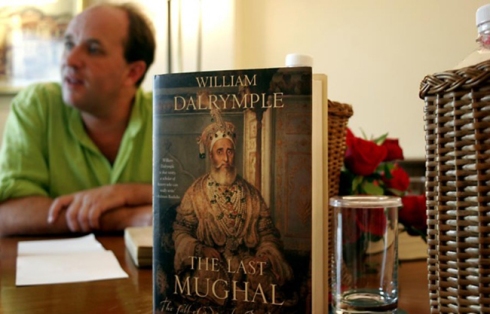
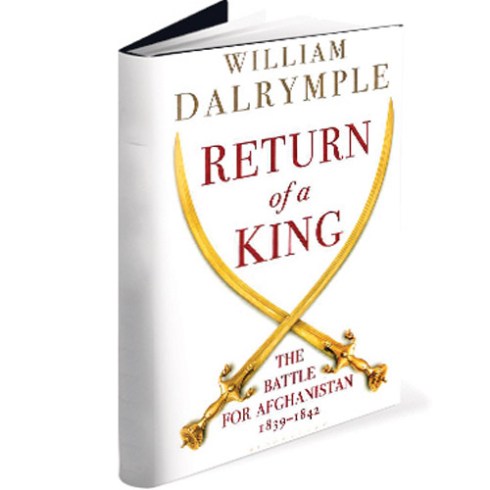
See also his magisterial The Return of a King on nineteenth-century Afghanistan, which I have a few issues with, particularly his conclusions, but which was a couldn’t-put-it-down one for me.
–
Comment: nikobakos@gmail.com
–
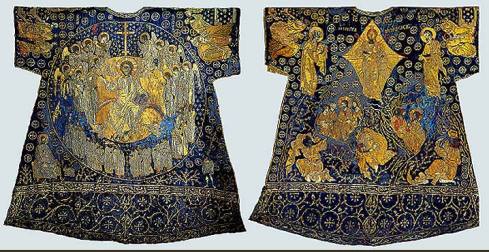 Byzantine Ambassador @byzantinepower 2 hours ago C14th Vatican Sakkos was embroidered in
 #Constantinople before going to Rome as a gift to the Papacy. The back shows the Transfiguration of Christ on Mt Tabor. #Byzantium
It’s really striking. The mountain of Byzantine loot that’s collecting dust in the basements and treasuries of Italian and European museums and churches probably dwarfs the amount of classical Greek objects collected there over the centuries. But not a one of us has spoken out against that fact or demanded their “return.” The only art we’re interested in having returned to us is the art the West itself validates — and along with that we inherit the West’s own ignoring or ignorance of two millenia of our history. How f*cked up are we…
Below is an older post on same issue.
**************************************************************************************
Another tempest in a teapot about how one statue from the British Museum‘s collection was lent to the Hermitage: “Greek Statue Travels Again, but Not to Greece“ by Steven Erlanger.
In 1811, a lone Scottish gentleman, with or without permission of the Ottoman authorities, took some of the major sculptures from the Parthenon frieze down — admitted…stunners — and shipped them back to Britain, where they’re displayed to this day.
In 1204, a motley crew of Western/Catholic armies sacked Constantinople, our capital city, destroyed more of the art and learning of the classical world in a shorter space of time than had ever been destroyed before, carried off the City’s most precious objects, and left both the City and Romania, the Empire of the Romans, one of the most long-lived states in human history, a shattered shell, which, even though the new roots of an artistic renaissance in Byzantine art and architecture were pushing forwards, not even Greek ingenuity and political prowess were ever able to put together as a viable state again. It was the most bafflingly mindless destruction of the greatest city in the world and, by far, the most violent, and to-the-root assault our civilization has ever experienced.
An yet no one asks Italy for the return of even one piece of the looted objects, which are just sitting there, most gathering dust in the treasury of San Marco in Venice. Are none of these items of any interest to us as Greeks? Are none of them as beautiful as the Elgin Marbles?
 (double click)
 (click)
 (click)
 (click)
 (click)
 (click)
 (click)
Are they less Greek? Why no fuss? Why don’t we care? I don’t support the repatriation of art works and I wouldn’t support the transfer of the objects in the San Marco treasury to Greece either. But it should make you think. Why? Because we’re so effed in the head by Western Classicism, and two millenia of our history is ignored as we obsess about fifty years of the art of one city-state…out of our entire cultural experience!
– by Dr. Tom Flynn
[Dr. Flynn can be contacted at tomflynn@btinternet.com and @artnose on Twitter.
This document can be read as a .pdf in the Documents & Articles section. It can also be found on the website of the British Committee for the Reunification of the Parthenon Marbles.]The pressure on Western encyclopedic or ‘universal’ museums to address the repatriation of cultural objects unethically removed from their countries of origin during the age of imperialism is growing ever stronger. The museums, in their efforts to resist, continue to cleave to the argument that return of even one significant object or set of objects would inevitably “open the floodgates” leading to the wholesale denuding of the world’s great museum collections.
This argument is fallacious since it implies that the majority of museum collections were unethically acquired, which is not the case. It succeeds, however, in deflecting attention away from the dubious circumstances in which certain objects were removed from their rightful homes. Few cases are more significant in this respect than the Parthenon Marbles in London. For this reason they are of pivotal importance for the future of international cultural diplomacy.
In its effort to counter mounting public pressure to return the Parthenon Marbles to Athens, the British Museum has used a range of arguments over the years, all of which can be refuted. This perhaps explains why majority public opinion continues to favour the reunification of the Marbles as the right thing to do. Through its continuing resistance, the British Museum is failing to honour the public trust.
Outlined below are the main arguments used by the British Museum to keep the Marbles in London and the counter-arguments which support the calls for return.
1. Lord Elgin “rescued” the Marbles by removing them to safety in Britain
An argument consistently promoted by the British Museum and supported by Julien Anfruns, Director-General of the International Council of Museums (ICOM). Despite ICOM’s supposed impartiality in matters of delicate cultural diplomacy, Anfruns told the Spanish journal La Nueva España: “Had the transfer never happened, who knows if we would be able to see these pieces today at all.” In fact, the Marbles that Lord Elgin did not “transfer” to Britain and which remained in Athens, survived remarkably well and have benefited from responsible cleaning by Greek conservators using state of the art laser technology. In contrast, the Marbles retained by the British Museum were scrubbed with wire brushes in the 1930s by British Museum staff in a misguided attempt to make them whiter.2. Lord Elgin “legally” acquired the Marbles and Britain subsequently “legally” acquired them from him for the British Museum
In the absence of unequivocal documentary proof of the actual circumstances under which Lord Elgin removed the Marbles, the legality of Britain’s acquisition of them will always be in doubt. More importantly, the fact that permission to remove them was granted not by the Greeks but by the Ottoman forces occupying Greece at that time undermines the legitimacy of Elgin’s actions and thus by extension Britain’s ownership.3. Lord Elgin’s removal of the Marbles was archaeologically motivated
Lord Elgin’s expressed intention was always to transport the Marbles to his ancestral seat in Scotland where they would be displayed as trophies in the tradition established by aristocratic collectors returning from the Grand Tour. Nobody with genuine archaeological interest in ancient Greek sculpture would ever have countenanced the disfiguring of such a beautiful and important ancient monument in the way Lord Elgin did. For archaeologists, an object’s original context is paramount. It is telling that Lord Elgin’s son, James Bruce, 8th Earl of Elgin, was responsible for ordering the destruction of the Old Summer Palace in Beijing during the Second Opium War of 1860. Philistine disregard for the world’s cultural monuments seems to run in the family.4. The Greeks are unable to look after the Parthenon Marbles properly
The New Acropolis Museum in Athens is a world-class museum with first-rate conservation and curatorial expertise. It is the most appropriate place in the world in which to display the Parthenon Marbles. Its proximity to the ancient monument — and the masterful disposition of the New Acropolis Museum’s Parthenon Galleries on the same architectural axis as the Parthenon itself — would return to the Marbles some measure of their architectural significance. While they remain in London, this aspect of their importance is steadily being erased from the cultural memory.5. It is impossible to restore the Parthenon and thus the aspiration towards ‘reunification’ is a false one
Restoration of the structural fabric of Parthenon temple continues apace. However, the aspiration has never been to return the frieze, pediment and metopes to the original building but rather to reunify them within the New Acropolis Museum where they can be properly appreciated and understood in the context of the original building, and preserved for posterity. In London they are willfully decontextualised and misleadingly displayed with no relation to Greek artistic or cultural history.6. The Marbles are better off in London where they can be seen in the context of other world cultures
Research on museum visitors has concluded that the average visitor does not make meaningful connections between the randomly acquired objects held and displayed by encyclopedic museums. Indeed, when given the choice between viewing the Parthenon Marbles within the artificial environment applied to them by British Museum curators and experiencing them in the city of Athens from which they originate, polls consistently demonstrate that the majority of the public would prefer to see them returned to Athens.7. The Marbles belong to “the world”, to all of us, and should therefore be left where “everyone” can enjoy them
Now that Athens has a world-class, state-of-the-art museum in which to house the Marbles, there is no longer any justification for assuming that London is the best place for the people of the world to enjoy them. Since its opening, the New Acropolis Museum has enjoyed huge visitor numbers. It is therefore reasonable to assume that visitor numbers would increase still further were the Parthenon Marbles to be reunited in the New Acropolis Museum. Moreover, Greece is in dire need of a boost to its cultural tourism, which the return of the Marbles would help it to achieve. Anyone comparing the New Acropolis Museum, bathed as it is in Attic light, with the gloomy Duveen Galleries in the British Museum would reasonably conclude that “enjoyment” of the Marbles would be immeasurably enhanced were they returned to Athens.8. If the British Museum agreed to return the Marbles to Athens, it would set a dangerous precedent that would “open the floodgates”, leading to the denuding of the world’s encyclopedic museums
For European and North American museums to suggest that they would be denuded is tantamount to admitting that the majority of their collections were dubiously acquired, which is not the case. It is therefore nonsense to suggest that museums would be emptied. Every request for repatriation should be treated on its own merits. The great encyclopedic or ‘universal’ museums in London, Paris, Berlin, New York and elsewhere are all subject to the laws laid down within internationally agreed legal instruments such as the 1970 UNESCO Convention on the safeguarding of cultural property. Refusing to return the Marbles sends the wrong message at a time when a more ethical approach is required over disputed cultural objects.9. The Marbles are too important a part of the British Museum collection to allow them to be given up
The most important part of the British Museum’s work in the future will be the fostering of creative cultural partnerships with other nations. These can lead to groundbreaking exhibitions such as the Terracotta Army from China and Moctezuma from Mexico. Returning the Parthenon Marbles would open a new chapter in cooperative relations with Greece and enable visitors to the British Museum to see new objects loaned by Greek museums. Refusal to return the Marbles is hampering this process. The Parthenon Marbles display in the Duveen Galleries at the British Museum could be reconfigured using high-quality casts, properly lit. The decision to return the Marbles to Athens would be seen as the British Museum leading the way in enlightened cultural diplomacy, the benefits of which would be diverse, long-term, and far-reaching.10. The Marbles can only be “loaned” to Athens if the Greeks agree to concede Britain’s legal ownership of the sculptures
Attaching such a precondition to a dispute over cultural property has been widely viewed as insulting and condescending and reminiscent of colonialist approaches to international relations. Seemingly intractable cultural disputes require both parties to adopt a spirit of open-minded generosity and to enter into discussions on equal terms and with no preconditions.11. “The Elgin Marbles are no longer part of the story of the Parthenon. They are now part of another story.” (Neil MacGregor, Director, British Museum)
It is not the role of museums to rewrite history to further their own nationalistic ends. As their correct name makes clear, the Parthenon Marbles are, and will always be, integral to the story of the Parthenon, one of the finest cultural achievements bequeathed to humankind by the ancient Greeks.Have we missed anything? Ah, yes, the sun shines more frequently in Athens. Case closed.
And here I am, not even realizing that I had written a response to this piece a while ago:
“This might be good or even be a strong case but I refuse to encourage Greeks’ obsession with these issues in ANY way. This stuff is crack for the Neo-Greek soul. It’s pathological and is part of the DEEP cultural fuck up of Modern Greek identity. It’s distracting, false consciousness; it’s to Greeks what soccer is to Brazilians: cheap bread-and-circus pride. Flynn is being far more colonialist or post-colonialist or whatever than those he so freely levels those accusations at in ignoring the ways that Western Classicism has damaged the Modern Greek spirit and made a coherent identity impossible. Does he know that down to my grandparents’ generation the most frequent term of self-designation we used was “Romios” — Roman, because a holistic connection to antiquity, early, middle and late was a given. But in no other part of the “colonized” world was the “colonized’s” supposed history so fundamental to the “colonizer’s” own origin myth, so the post-Enlightenment-cum-Romantic Westerners show up and we have to be who they want us to be. Does he know what the granting of selective blessing on one small part of our historical experience, while the whole rest is disregarded as a mediaeval or Ottoman dark age, does to a people’s own interpretation of their past? Is he even remotely aware of what — the state and ideological violence — it took to to turn Byzantines/Ottoman Greeks into Neo-Hellenes obsessed with proving their connections to a past that the West planted in their heads? He’s unaware that the obsession with these issues approaches the level of a psychosis among Modern Greeks that has caused them deep psychological and cultural trauma that will probably never heal until the next historical revolution in Greek consciousness occurs. In doing so, he’s being as WOEFULLY ignorant, condescending, racist, etc., about Greeks and Modern Greece as he thinks the British Museum is.”
Plus, any one who, in 2014, writes the words “bathed…in the Attic light” should be prohibited from publishing anything ever again.
My solution? Flynn points to one: “The Parthenon Marbles display in the Duveen Galleries at the British Museum could be reconfigured using high-quality casts, properly lit.“
Great. So make two perfectly “reconfigured” models of the originals, one for the British Museum and one for the New Acropolis Museum in Athens — and light them properly. Then take the originals and crush them into fine gravel and spread it over the driveways of Sandringham and Balmoral and let’s be done with the issue and let the conscience-ridden Flynns and other Frangoi of the world be tormented by their post-colonial guilt and leave us in peace with our neuroses — please…
–
Comment: nikobakos@gmail.com
–
Two images from ” Pictures of Comfort and Design: Carpets in Indian Miniature Painting“:
“Recline in a comfortable place, an atmosphere of general well-being: nowhere do carpets play such a large role as in the Islamic world. In a region where furniture was little known for centuries, carpets allowed for relaxed sitting and sleeping. At the same time, they served as an important representational element and created an impressive ambience at courtly events.”
 The Mughal Emperor Jahangir (r. 1605–27) with his wife on an imperial carpet with a lattice and flower pattern, probably from Kashmir, India or Lahore, present-day Pakistan, early 17th century, opaque watercolour and gold on paper © Staatliche Museen zu Berlin, Museum für Islamische Kunst / Ingrid Geske
 The Mughal Emperor Muhammad Shah (r. 1720–48) on a grey carpet with green scrolling vines and pink blossoms, India, first half of the 18th century, opaque watercolour and gold on paper © Staatliche Museen zu Berlin, Museum für Islamische Kunst / Ingrid Geske
–
Comment: nikobakos@gmail.com
–
…I think about Howard Jacobson, and his reference to Plato (and Dostoevsky sort of), who warned us that the masses are “tyrant-loving”…i.e. stupid. And of Mayakovsky, who rightly asked of himself (vis-à-vis the rest of us schmucks — though he didn’t need to specify): “By what Goliath was I born, so enormous and so useless…” asks me and all of us again:
Чего одаривать по шаблону намалеванному
сиянием трактирную ораву!
Видешь — опять
голгофнику оплеванному
предпочитают Варраву?
–
Why bestow such radiance on this drunken mass?
What do they have to offer?
You see — once again
they prefer Barabbas
over the Man of Calvary.

Comment: nikobakos@gmail.com
–

Hmmm… Need to think about that one. It’s right but I don’t know why — which may be the most Orthodox answer.
I do talk about the themes of the “knowing submission” of Mary in a 2015 post: “The Annunciation: “And I thank you for choosing me…”“
 The Virgin of Kazan’ — Russia’s “national” Bogoroditsa
In images of the Nativity, however, there is a serious difference. While western Virgins are shown lovingly kneeling over their newborn Son, in traditional Orthodox representations, the midwives are taking care of the Child or the kings are bent over it, while Mary is lying in bed and turned the other way in a post-partem funk, which has always seemed more psychologically honest and astute to me, in a way that perhaps only abstraction in representation can convey.
After all, Mary knows how all this started and, undistracted by angels (been there, done that), kind shepherds or generous kings, is troubled by how it will end. Is that a female perceptiveness and sensitivity that the Byzantine Ambassador nicely calls “taciturn authority.”? The Nativity narration most of us are familiar with, Chapter 2 of Luke, begins:
2 And it came to pass in those days, that there went out a decree from Caesar Augustus that all the world should be taxed.
2 (And this taxing was first made when Cyrenius was governor of Syria.)
3 And all went to be taxed, every one into his own city.
4 And Joseph also went up from Galilee, out of the city of Nazareth, into Judaea, unto the city of David, which is called Bethlehem; (because he was of the house and lineage of David:)
5 To be taxed with Mary his espoused wife, being great with child.
…but does not end with Mary’s rejoicing, but rather with the slightly jarring:
19 But Mary kept all these things, and pondered them in her heart.
19 ἡ δὲ Μαριὰμ πάντα συνετήρει τὰ ῥήματα ταῦτα συμβάλλουσα ἐν τῇ καρδίᾳ αὐτῆς.

And ‘cometh the moment, cometh the tweet’:

Christmas fast started this past Wednesday and I totally forgot. Other dates coming up.
–
Comment: nikobakos@gmail.com
–
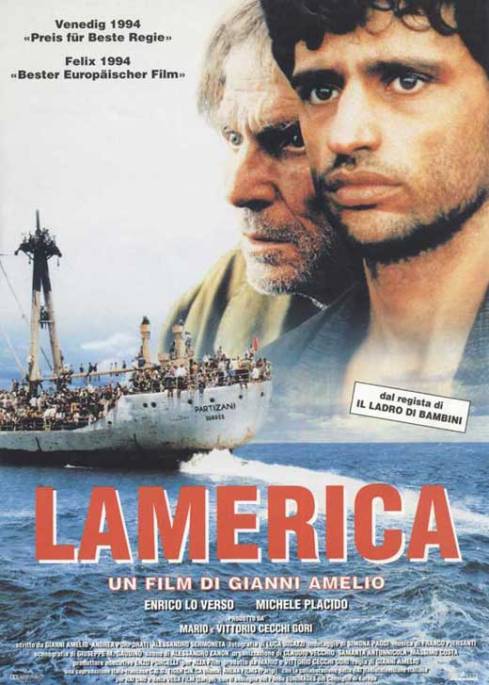
Look like Sicilians haven’t forgotten their emigrant past… (We ALL need to see Gianni Amelio’s 1994 Lamerica — and see it again if we have already, now…)
Something I’ve always said about my beloved Naples too.
A conversation with Leoluca Orlando, mayor of Palermo. Something I always said about Naples From Krytyka Polityczna & European Alternatives :
“Palermo is not a European city. It’s a Middle Eastern metropolis in Europe. It’s not Frankfurt nor Berlin, with all respect to them. We are proud of being Middle Eastern and we are proud of being European. Palermo is Istanbul, it’s Beirut. Our mission is to be a Beirut with a fast over-ground metro, to be an Istanbul fully serviced by public and free wifi…
Today, facing the epochal challenge of migration, we now are a “city of rights” where it would instead be a treason to comply with current laws. Today we are the most advanced Italian city because we have started “further back”. We have experienced the tragic and tiring journey to attain legality against organized crime, and today we want to be the reference point for the effective exercise of civil and social rights. We organised the biggest Gay Pride in Southern Europe: 300,000 people, families and kids in the street, people applauding looking outside their windows. It is thanks to migrants that we have recovered our story and our harmony: we have finally gone back to being a “Middle Eastern city in Europe.”
And the major money quote is, for me:
Beyond this, the distinction between the “asylum seeker” and the “economic migrant” based on the policies of European countries makes me shiver. What is the difference between those who are likely to be killed because their country is in war and those who are likely to starve? [My emphasis] I want to delve into this criminal logic for a moment: if I have a right to asylum, why can I not buy a plane ticket and get to Europe regularly, landing in Berlin or Rome or Madrid? The proposal to outsource the right of asylum, its management to African countries or to Turkey, and creating camps is unacceptable. Instead, it is necessary to create guaranteed arrival paths, as real humanitarian corridors.
I had felt the same shivers back in the spring of 2016 is from me, as I wrote back then:
The idea that Afghans are “economic migrants”…unlike Syrians and Iraqis, because Afghanistan is no longer a war zone, is obscene. What does the barometer for endemic violence, chronic poverty or a people’s desperation have to read for someone to be considered a “real” refugee?
And Orlando continues:
That is why I say: we must start from the local territories. From cities. Beauty is local. The fundamental values are embodied here. The national state, on the other hand, is a closed space. The European Union is not functioning precisely because it has become a place for legitimizing national selfishness. For the younger generations all that exists is the neighbourhood and the world. What’s in the middle is an obstacle to happiness, an impediment to being oneself. Migrants helped us question that idea of state, as Europe’s constituent fathers began to after the war. The construction and choice of one’s identity is the greatest act of freedom of every single person, I say as Gadamer’s pupil. My “homeland” is where I decide it is. [My emphasis]
 Palermo — (I’m assuming some well-off suburb because this doesn’t look like the Palermo I know)
–
Comment: nikobakos@gmail.com
–
 Jadde: from Bosnia to Bengal