Balkans, Anatolia, Caucasus, Levant and other Middle East, Iran, Afghanistan, South Asia, occasional forays into southern Italy, Spain or eastern Europe, minorities, the nation-state and nationalism — and whatever other quirks or obsessions lurk inside my head.
“The six simple lines of this beautiful Macedonian song:
A falcon drinks water from the Vardar. Oh Jana, white-throated Jana. O falcon, hero’s bird, Have you not seen a hero go past? A hero go past with nine heavy wounds? Nine heavy wounds, all from bullets. And a tenth wound, stabbed with a knife.
…encapsulate all you need to know about the Balkan cult of blood and tragic masculinity, which is the root of everything horrific you’ve read and heard about the region, yet, fortunately — or unfortunate, at least, for those who, as they say, can’t hold two contradictory ideas in their heads at the same time — the foundation for everything so stunningly beautiful about it.”
Maria Todorova, the Bulgarian historian, writes in her Imagining the Balkans, a book which does for the Balkans what Said’s Orientalism did for the Arab Middle East, that — I don’t have the book with me, this is a very rough summary and paraphrase — the West’s constantly describing the Balkans as “male” is one of the primary ways of exoticizing it and stigmatizing it as inherently violent and backwards. She’s right. I want to avoid that. And yet, it’s hard.
(Click on all photos.)
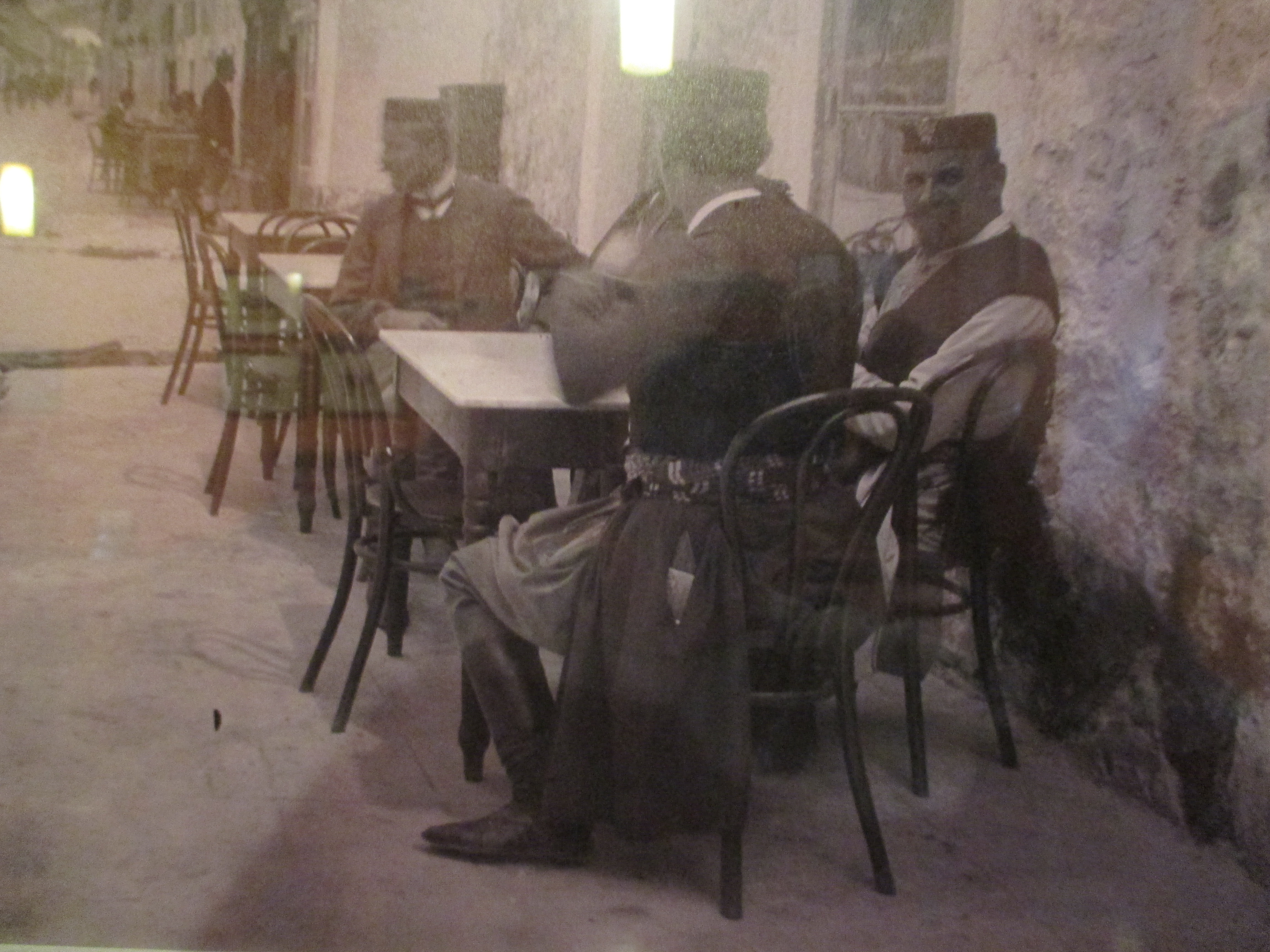
Men in Montenegrin cafe, date unknown.
Traditional Montenegrin male costume, all red and gold braid — I’ll find a color one.Men in traditional costume in Cetinje, Montenegro’s old royal capital – date unknown — and traditional coffeehouse in Cetinje.
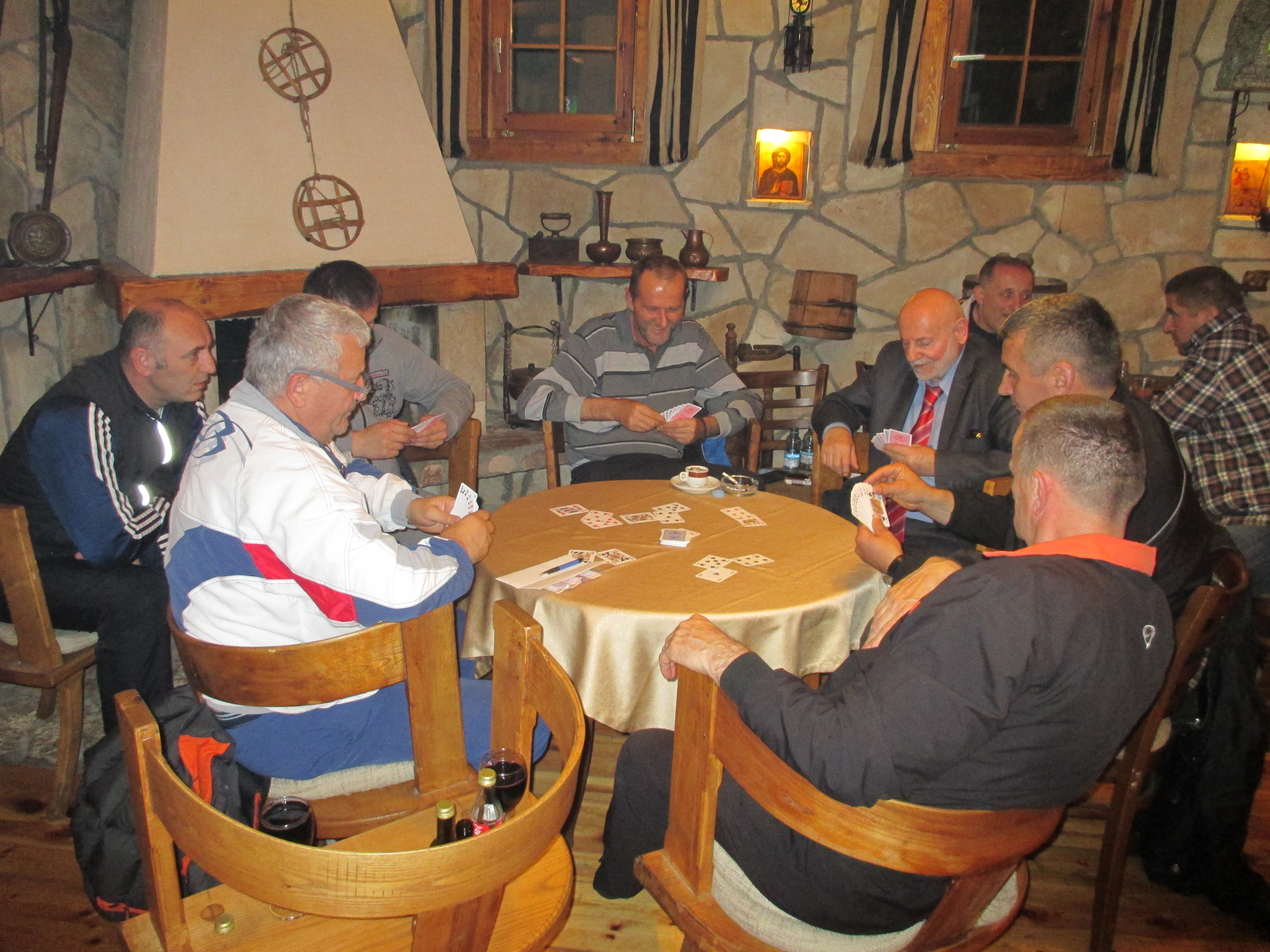
Žablak, Montenegro, the town kafene today.
FK Rudar Pljevlja won the first double in the four-season history of Montenegrin football, with their three trophies also making them the young nation’s most successful club.
Serbia’s water polo team at London Olympics 2012.
The Montenegrin team.
The cover of Said’s Orientalism contained a detail from the 19th-century painting The Snake Charmer, by Jean-Léon Gérôme (1824–1904) — painting used on first edition of Said’s book. (Click)
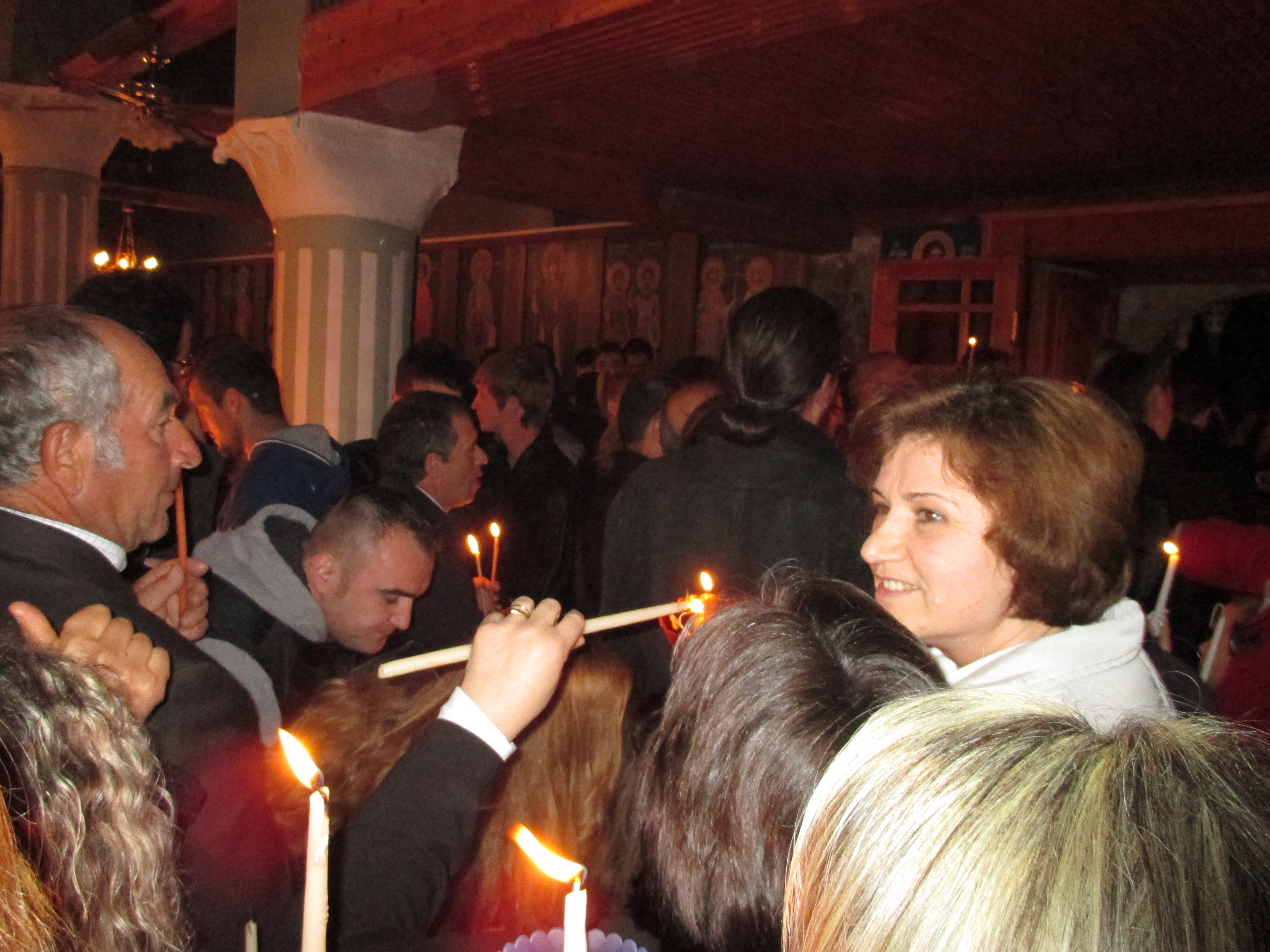
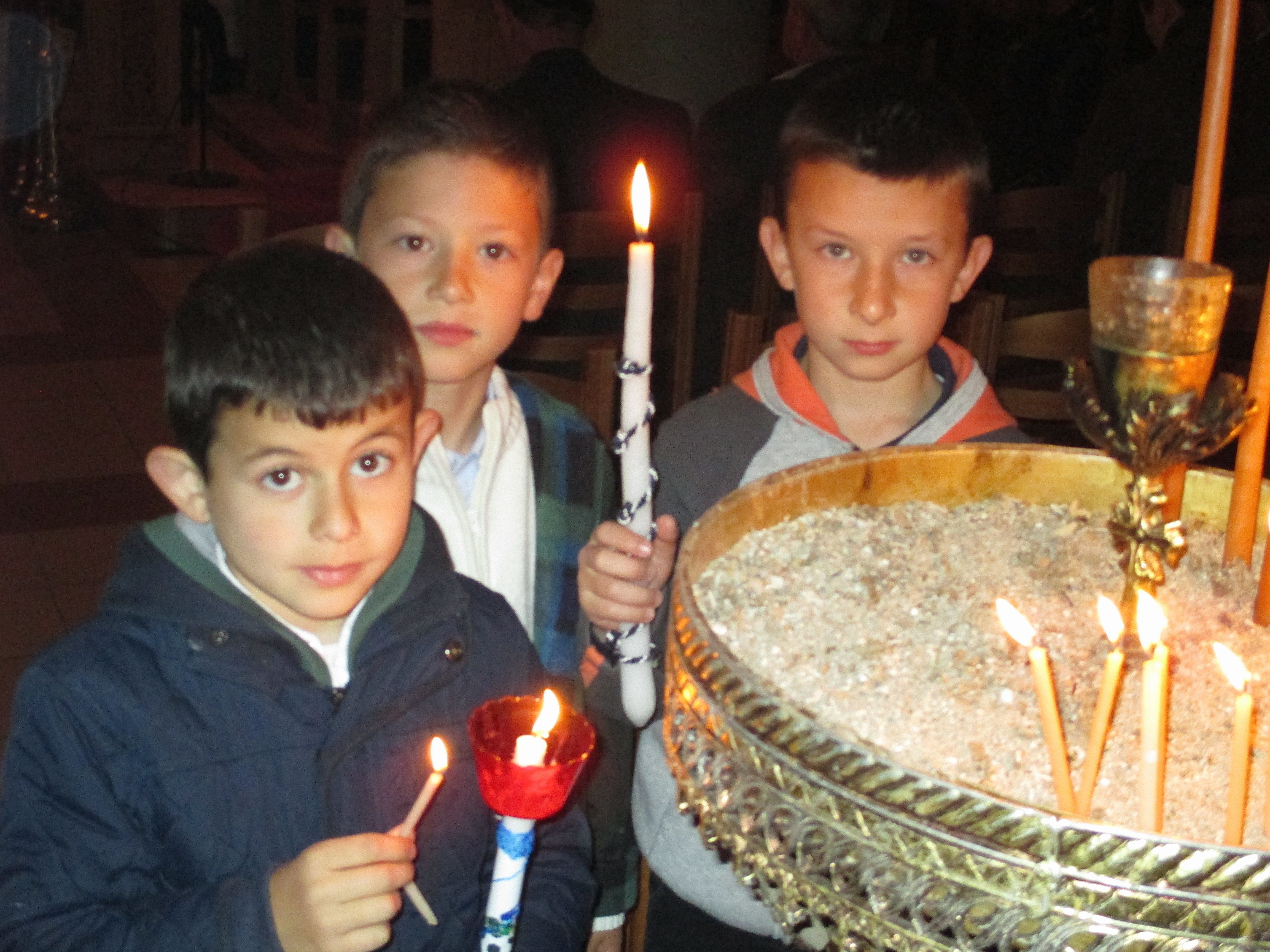
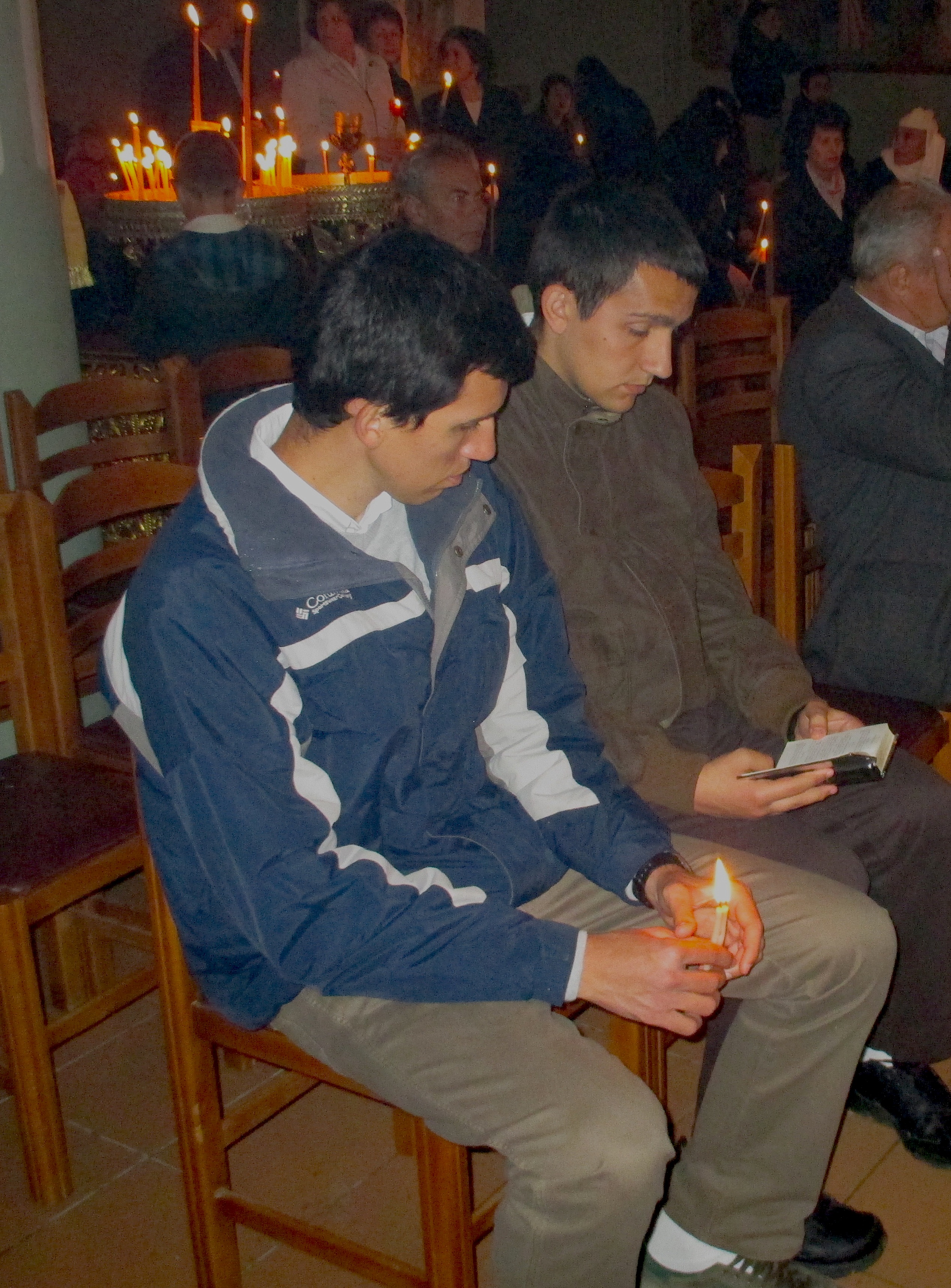
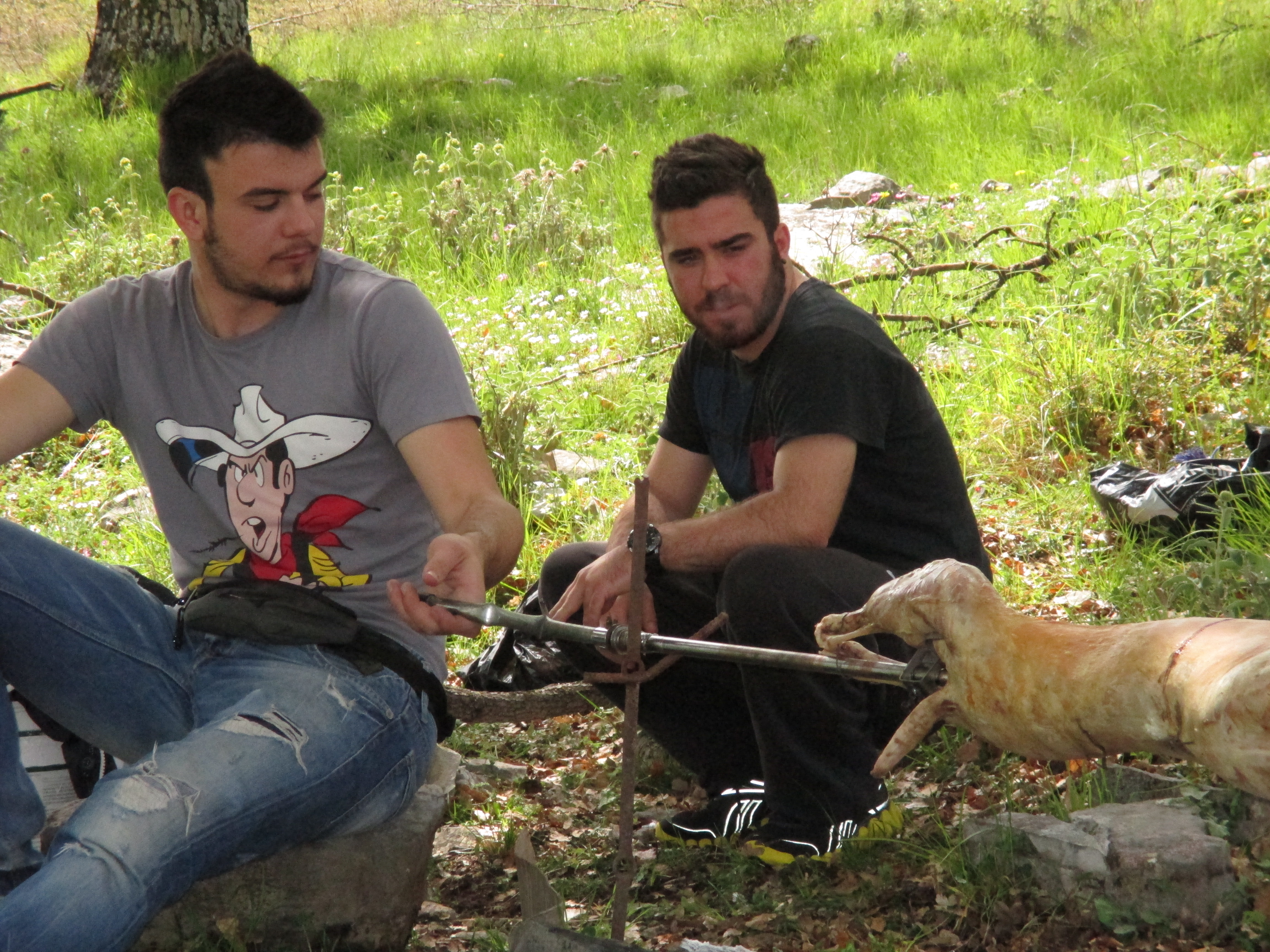
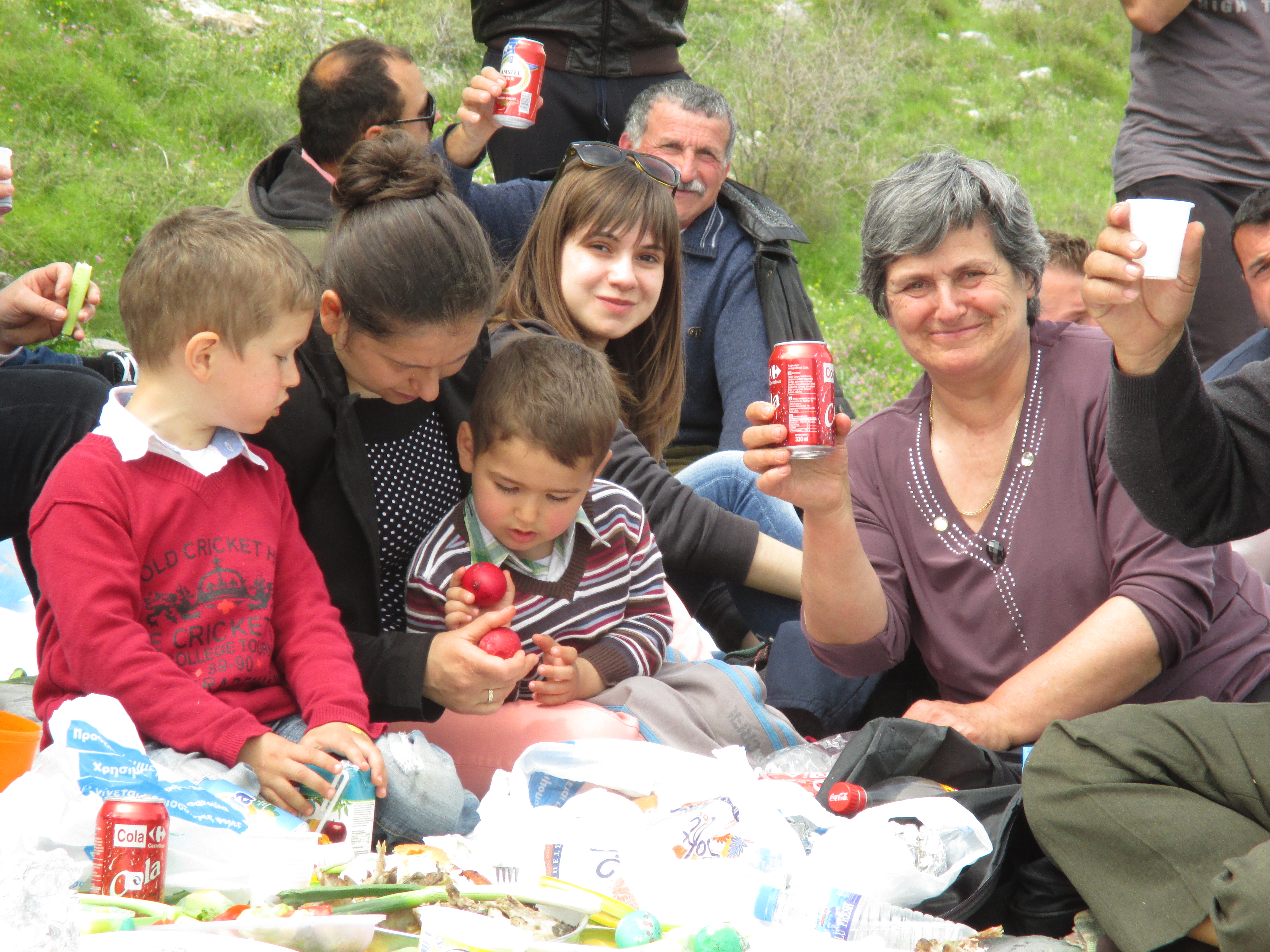
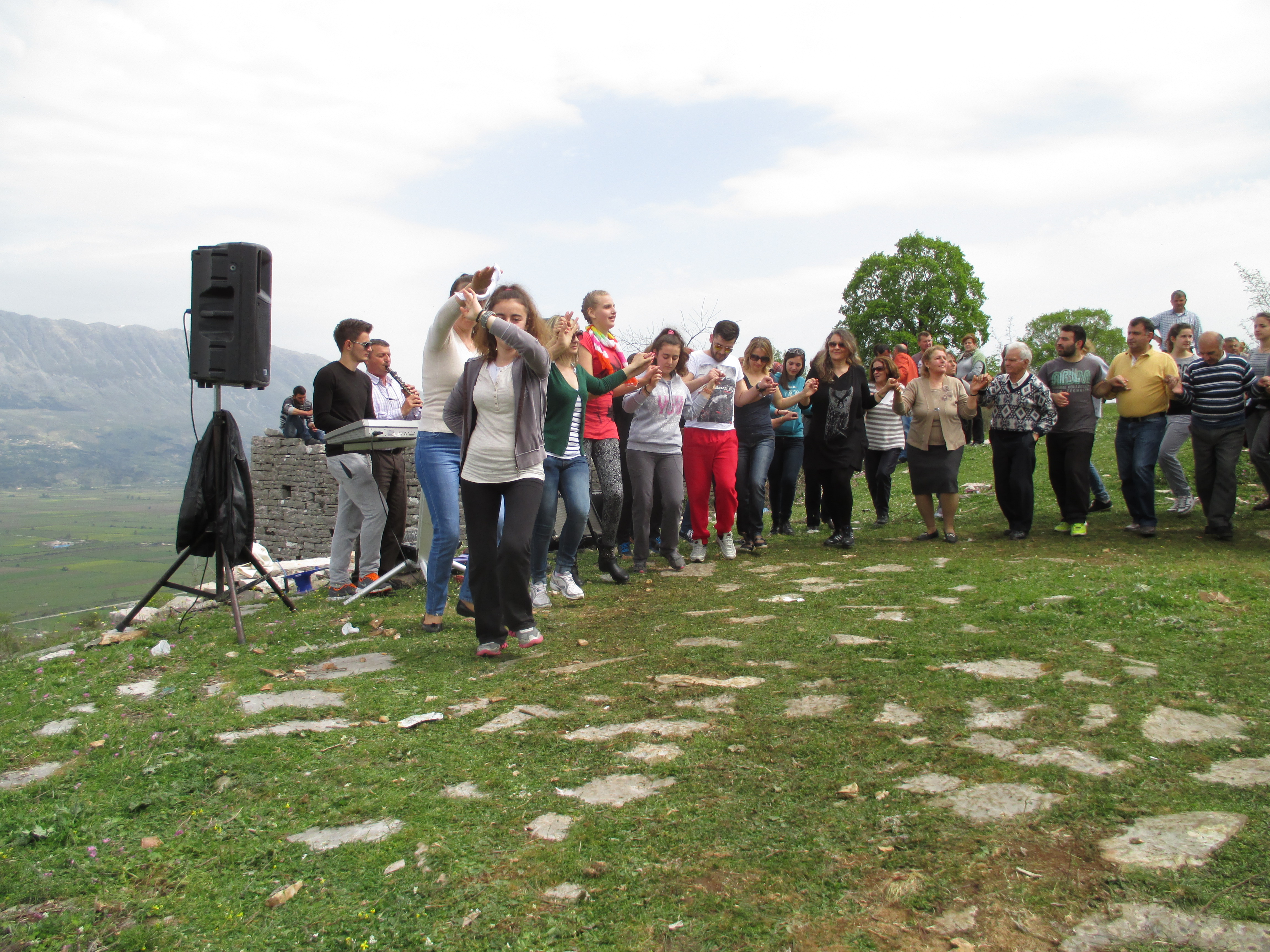
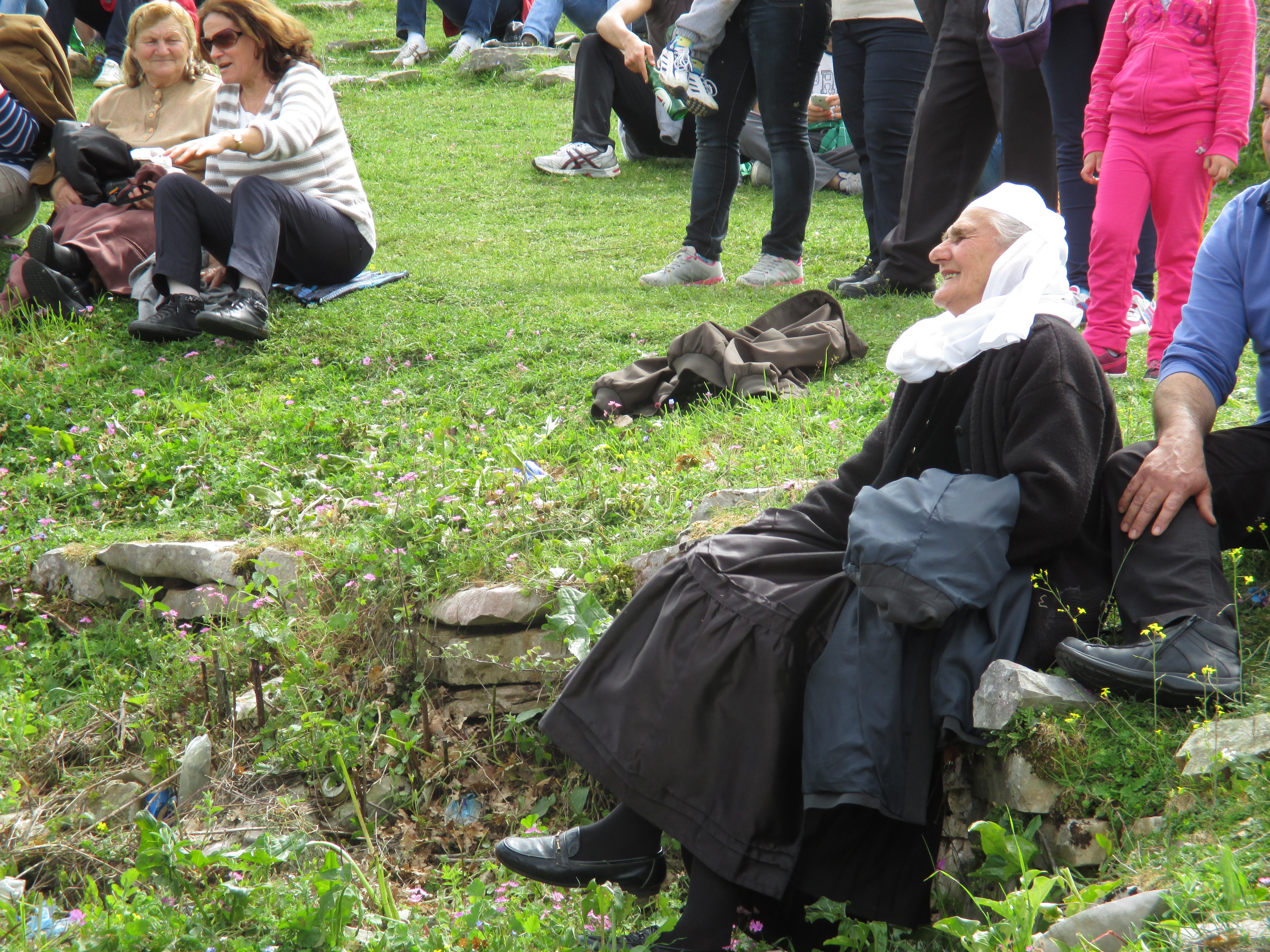
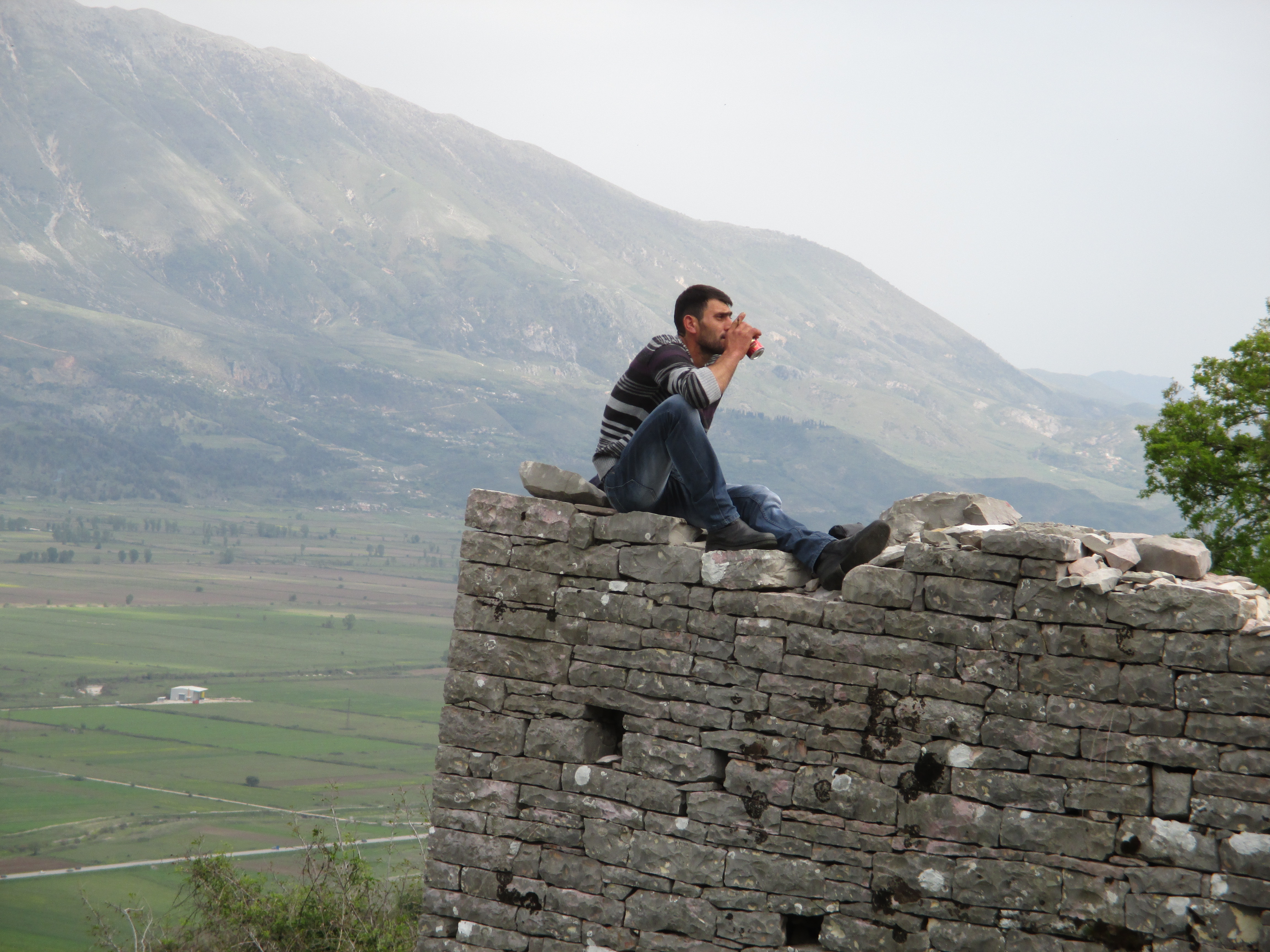
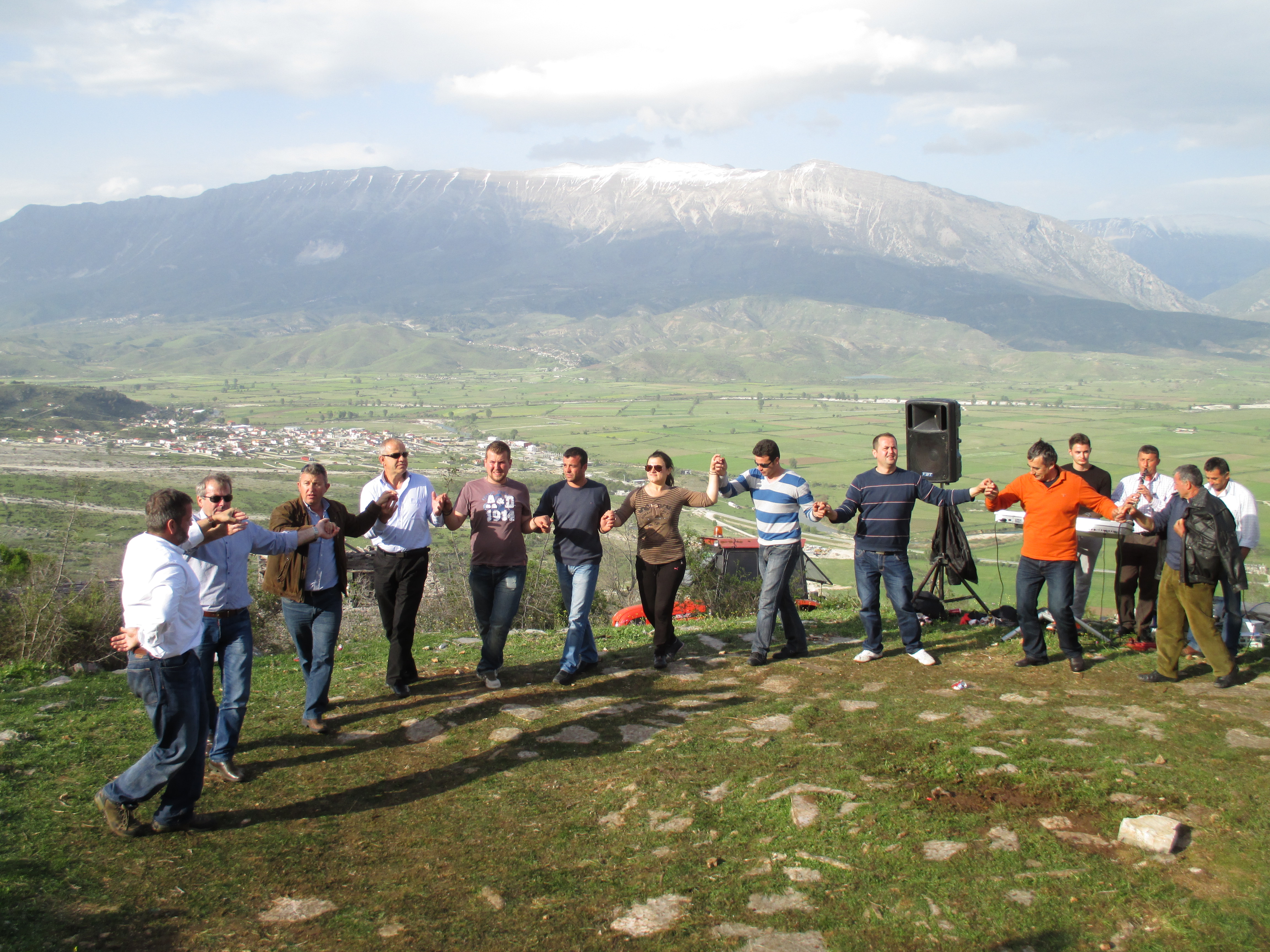
Easter in my fa… — in my — village has left behind such a mountain of tangled emotions and thoughts and joy and sadness that it’ll take me weeks, months…maybe never, to sort it all out and write anything coherent about it. Almost feel like I don’t want to. But here are some teaser pics in the meantime. (double-click on all)
“Niko I have long wanted to leave a comment about this post. I believe that what the Albanaians did for the Jews in sheltering them from the Nazis was courageous, noble and just. And besa is at its roots a tribal, and to a lesser extent, islamic code of honor. You mention Afghanistan-there is in Pashtunistan what is known as the Pashtun code Pakhtunwali which also purports to protect an accepted guest. Pakhtunwali is also tribal and islamic. Was it not this same code that protected Osama Bin Laden after his escape from Tora Bora? Is that same code rightly honored in one instance and rightly deplorable in another? Just a thought…”
NB: It is the same code Rafa. No, I personally, at least, do not think it’s deplorable in one case and not the other. Honor is absolute, absolute by definition. For me, the word itself means”no-exceptions”; otherwise it’s not honor. Whether we like its consequences or nor or whether it gets “honored” more in the breach or not is another question. Those Pashtuns didn’t have a choice. And you know who to talk to that’s most likely to agree: the American servicemen that were up there.
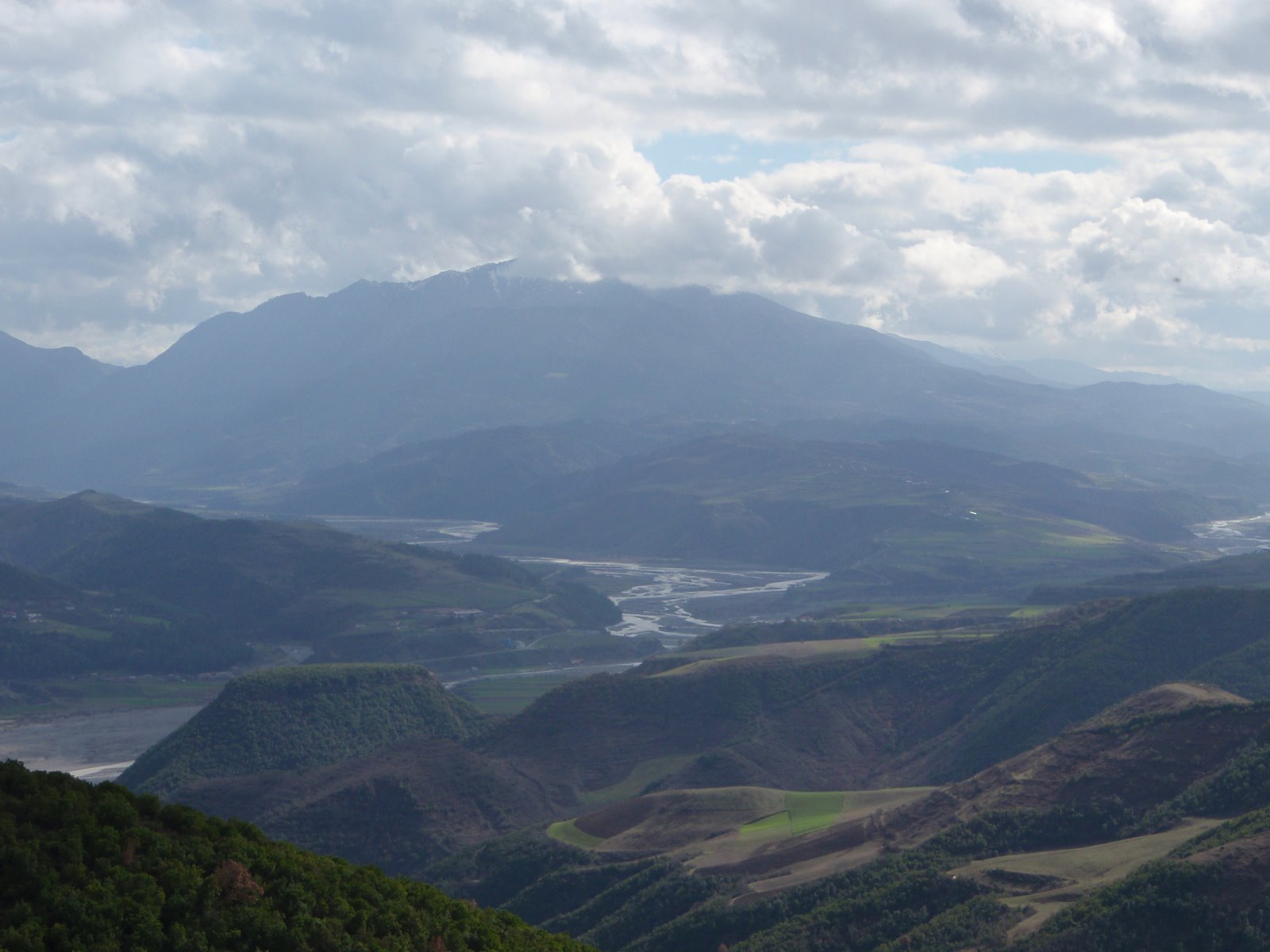
The Проклетије (Prokletije) or Accursed Mountains, that separate — or more likely unite — northern Albania, Montenegro and Serbia. (Click, for sure; it’s a huge file and it’s gorgeous)
In my recent post Occitan and “endangered languages”, I wrote about the (mostly former) Albanian-speakers of central and southern Greece and how they had never posed an assimilation problem for the Greek state. Quite the contrary:
“…Peloponnesian Albanians were already Greeker than the Greeks in their ethnic consciousness and had proven it by essentially fighting our war of independence for us; it seems that, historically, you give Albanians — Christian or Muslim — an incentive to go to war and they’ll become more zealous crusaders of your cause than you are yourself.”
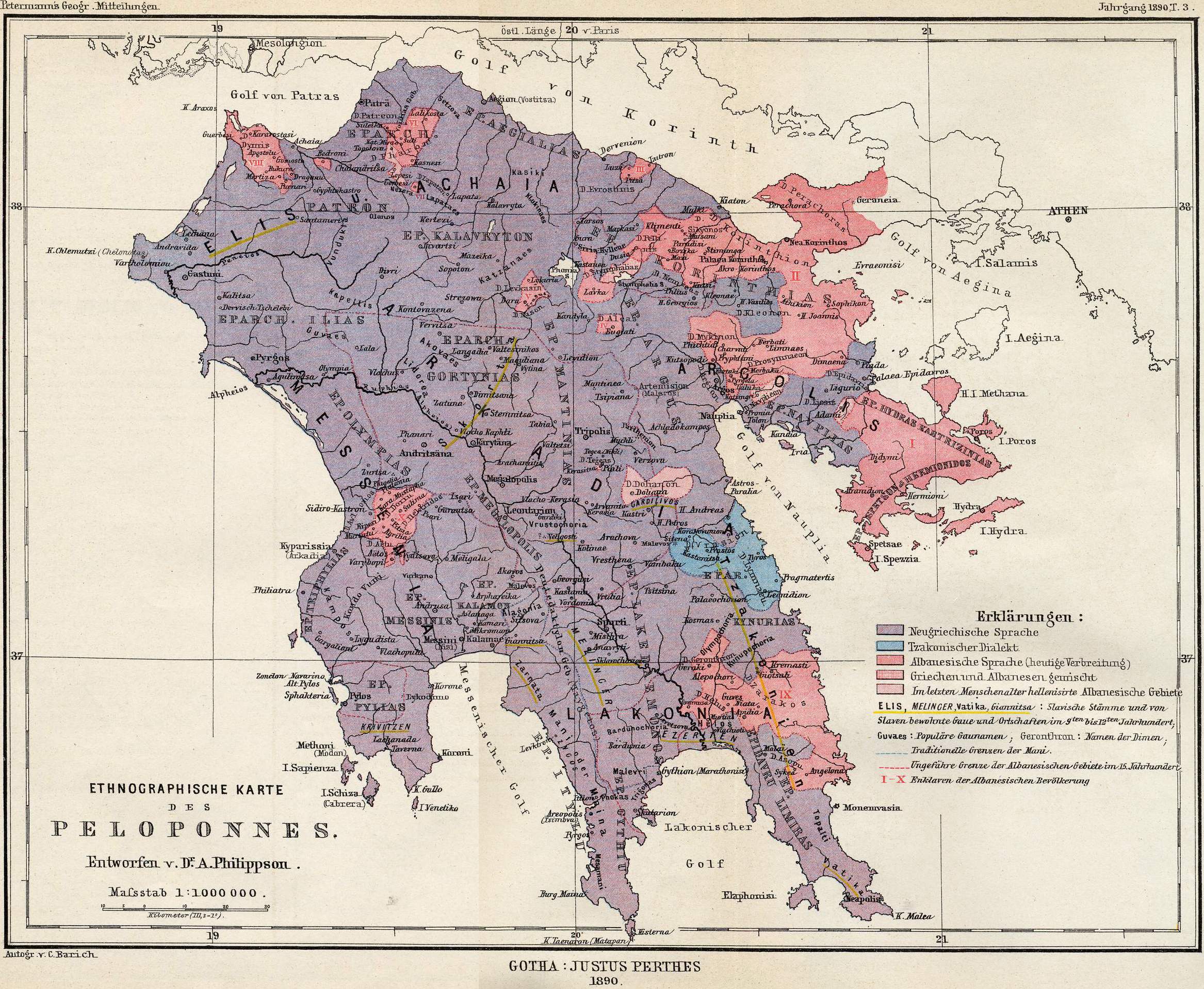
Elsewhere I’ve written about Greeks and Albanians as practically co-peoples, such has been the extent of migration and intermingling over the past millenium. This winter I read John V.A. Fine, Jr.’s six-hundred page The Late Medieval Balkans: A Critical Survey from the late Twelfth Century to the Ottoman Conquest, which I know sounds like a joke about dry academic reading, but it was actually fascinating. The chaos that followed the fall of Constantinople to the Franks in 1204 produced a bewildering number of Greek and Frankish successor states to the Byzantine Empire throughout the Greek peninsula, all constantly at war with each other and at a time when the Albanian highlands were suffering from demographic overload. Thus, whether as mercenaries in the hire of anyone who paid best, or as shepherding nomadic clans who took advantage of the extensive areas of the peninsula depopulated by constant war or epidemic diseases, Albanians in huge numbers were constantly on the move southwards for the next two centuries if not more. (I suspect that this is when their descent into Kosovo begins as well, filling in the gap as as the center of gravity of the Serbian nation moved northward.) Further waves came after the Ottoman conquest in response to Islamization campaigns in recently conquered Albania, but this time not just south to Greece but westwards to Italy and Sicily as well. And settling everywhere you could possibly imagine: Thessaly, southern Epiros, Roumeli (in the Greek meaning of the term), the Ionian islands, places as far flung and unexpected as the islands of Cythera or Ios! My point, without having any Fallmereyer-an agenda — not because I disagree with his basic theses but because I don’t thing “race” means anything — is that regions of Albanian settlement in the past were likely far larger than the regions where we find the language still spoken in the early twentieth century, shown on these maps:
Albanian-speaking areas in 1890 shown in pink above, green below (click)
This documentary that “shocked Greece” was produced by SKAI Television and called 1821 after the year the Greek revolution against Ottoman rule began and the reason it “shocked” is that it debunked long-held myths about the uprisings that eventually led to the establishment of the independent Kingdom of Greece; but really, that anybody was shocked at any of these revelations: for example, that the uprising was accompanied by the wholesale massacre of Muslims (and Jews) throughout the Peloponnese and central Greece;* that the Church anathematized it and did not support the movement (paid the price anyway with the execution of the Patriarch in Constantinople); that the “secret schools” where poor “enslaved” Greek youth were taught Greek in secret at night because the Turks had forbidden the teaching of Greek is a totally concocted fable (and such a projection of twentieth-century, nationalist, totalitarian policies back onto the Ottomans; there is practically not a single European observer of Ottoman life since at least the beginning of the eighteenth century that doesn’t comment on the quality and extent of Greek educational institutions in all Ottoman cities and even smaller towns and villages); that many if not most of the revolution’s “heroes” were Albanians, some who spoke no Greek at all; that the fustanella is originally an Albanian garment…and on and on — that any of these shocked Greeks in the early twenty-first century is just proof of how pathetically brainwashed and historically ignorant nationalism usually leaves a people. And this is the point where the documentary pulls a very cowardly copping out — by claiming that such is the price of building a new nation; it has to create new “myths” of its own. Why a nation — or a people preferably — is not stronger and better off if it knows the whole truth about its past is never delved into. But it’s worth watching, and it has English subtitles:
In any event, such was the Albanian contribution to the struggle that one wonders if the Porte let go of the Peloponnese, not because it was so far from the center of imperial authority, not because it had always been something of a provincial backwater, not because of foreign intervention, but because of some tough-*ss Albanian warriors that the Ottomans felt were no longer worth resisting. After all, they themselves knew the value of an Albanian fighter: favorite recruiting regions for the Janissaries in the classical Ottoman period had always been Albania and Serbia — not random choices.
There’s a beautiful song recorded in 1949 by Sophia Vembo, one of greatest Greek voices of the twentieth century, called “The Song of the Morea” (since at least early Byzantine times until the modern Greek state revived the clasical name, the Peloponnese was called the Morea) which is partly a homage to the role of the region in the struggle for Greek independence (ok, even as a New Territory Greek, I’ll grant them that.) And the refrain says:
“Hail and be well brother Moraites, and health to your women too; Greece owes its freedom to your manhood!”**
And I have a deeply-loved but eccentric cousin, highly intelligent but an unrehabilitated nationalist dinosaur unfortunately and to whom much of this blog is indirectly directed — or one might even say dedicated — who is so profoundly moved by the blood shed by Peloponnesian and Spetsiote and Hydriote Albanians for the cause of Greek independence, that he thinks the refrain should run:
“Hail and be well brother Arvanites (Albanians), and health to your women too; Greece owes its freedom to your manhood!”
Here it is; the music and Vembo’s voice are beautiful even if you don’t speak Greek:
The song has always provoked a strong reaction in me as well, a testimony to the power of patriotism if it can move someone who finds nationalism as repulsive as I usually do. But even that reaction is contradictory. The 1949 date of the song is not insignificant; it was recorded in the middle of the most brutal period of the Greek Civil War and was actually more a call to unity and an appeal to brotherhood than a commemoration of the revolution of 1821. Like many Greeks perhaps, my family suffered more losses in the civil war than they did in the Nazi occupation that had preceded it, and the opening lyrics of the second verse always make me tear up for a moment:
“Now that the earth sweats the blood of brothers, and Greece is drowning Greece in the hills..”
and then my heart goes cold again, because the next line is:
“Come out of your grave Thodoris Kolokotronis, and make all Greeks brothers again.”
…because it’s impossible for me to forget that Kolokotronis was the “hero” who boasted of riding his horse over Muslim corpses from the gates of Tripolitsa to its citadel, when that major city of the Morea fell to the rebels in September of 1821.
So I’d like to end this post with just a little bit of perspective, a reality check we all need every so often, because though the documentary mentions a lot of previously taboo subjects, it glosses over a few of them a little too quickly. The following is taken from the blog of a Greek-Australian, and apparently fellow Epirote (though he seems to have Samiote heritage as well), Diatribefrom a post called “Revolution Unblinkered.” It’s foreigners’ eye-witness accounts of the Massacre of Tripolitsa, interspersed with some of his own comments:
A month later, in September, a combined force led by Kolokotrones and Petrobey Mavromihalis captured Tripolitsa. Historian W Alison Philips tells a horrific tale of mutilation and slaughter “For three days the miserable inhabitants were given over to lust and cruelty of a mob of savages. Neither sex nor age was spared. Women and children were tortured before being put to death. So great was the slaughter that Kolokotronis himself says that, from the gate to the citadel his horse’s hoofs never touched the ground. His path of triumph was carpeted with corpses. At the end of two days, the wretched remnant of the Mussulmans were deliberately collected, to the number of some two thousand souls, of every age and sex, but principally women and children, were led out to a ravine in the neighboring mountains and there butchered like cattle.”
A Prussian officer described the incidents that took place after the capture of Tripolitsa by the rebels, as follows:
“A young Turkish girl, as beautiful as Helen, the queen of Troy, was shot and killed by the male cousin of Kolokotronis; a Turkish boy, with a noose around his neck, was paraded in the streets; was thrown into a ditch; was stoned, stabbed and then, while he was still alive, was tied to a wooden plank and burnt on fire; three Turkish children were slowly roasted on fire in front of the very eyes of their parents. While all these nasty incidents were taking place, the leader of the rebellion Ypsilantis remained as a spectator and tried to justify the actions of the rebels as,’we are at war; anything can happen’.”
Based on the accounts of one hundred European officers who were present at the scene, and did nothing to intervene, William St. Clair wrote:
“Upwards of ten thousand Turks were put to death. Prisoners who were suspected of having concealed their money were tortured. Their arms and legs were cut off and they were slowly roasted over fires. Pregnant women were cut open, their heads cut off, and dogs’ heads stuck between their legs. From Friday to Sunday the air was filled with the sound of screams… One Greek boasted that he personally killed ninety people. The Jewish colony was systematically tortured… For weeks afterwards starving Turkish children running helplessly about the ruins were being cut down and shot at by exultant Greeks… The wells were poisoned by the bodies that had been thrown in…”
Although the total estimates of the casualties vary, the Turkish, Muslim Albanian and Jewish population of the Peloponnese had ceased to exist as a settled community after the early massacres. Some estimates of the Turkish and Muslim Albanian civilian deaths by the rebels range from 15,000 out of 40,000 Muslim residents to 30,000 only in Tripolitsa. According to historians W Alison Phillips, George Finlay, William St. Clair and Barbara Jelavich, massacres of Turkish civilians started simultaneously with the outbreak of the revolt, while Harris J. Booras considers that the massacres followed the brutal hanging of Ecumenical Patriarch Gregory V of Constantinople. Finlay has claimed that the extermination of the Muslims in the rural districts was the result of a premeditated design and it proceeded more from the suggestions of men of letters, than from the revengeful feelings of the people. St. Clair wrote that: “The orgy of genocide exhausted itself in the Peloponnese only when there were no more Turks to kill.”*
There were also calculated massacres towards the Muslim inhabitants of the islands in the Aegean. This is because one of the aims of the Greek revolutionaries was to embroil as many Greek communities as possible in their struggle. By engineering some atrocity against the local Turkish population, diverse Greek communities would have to ally themselves with the revolutionaries fearing retaliation from the Ottomans. In one case, in March 1821, Greeks from Samos landed on Chios and attacked the Muslim population living in that island. Among the Samian belligerents was an ancestor of mine, Dimitrios Kalymnios.When the Samians withdrew to the safety of their island, the Ottomans descended upon defenceless Chios and carried out an atrocity that horrified the rest of the world: the massacre of Chios.
–
[my, N.B., emphases throughout this last paragraph — just so that nobody is allowed to take something like the the Massacre of Chios out of historic context again…]
–
The final word, if there is one, goes to Theodore Kolokotronis, who in his account of the fall of Tripolitsa, was unrepentant to the last: “When I entered Tripolitsa, they showed me a plane tree in the market-place where the Greeks had always been hung. “Alas!” I said, “how many of my own clan — of my own race — have been hung there!” And I ordered it to be cut down. I felt some consolation then from the slaughter of the Turks. …”
Wow. First thing I have to say is that if this guy is allowed to publish this kind of stuff in Melbourne’s “Neos Kosmos” English-language newspaper, then Greek Australia is eons ahead of Greek America in its sophistication on such issues. I can’t imagine a single effing channel or venue of the Greek media in New York where someone could get away with writing or saying things like this.
Then, the irony is that these revolutionaries, Greek or Albanian, were probably not fighting for a Greek state, but fighting a religious-cum-tribal war out of which they were hoping to carve out little fiefs and principalities of their own, no different than the Ottoman pashaliks that had preceded them and the internecine chaos that followed ‘liberation’ is proof of that — so let’s not over-romanticize their zeal for the “cause” or exaggerate the degree to which they were fighting for the “freedom” of the “Hellenic nation.” Finally, is the irony that many of the “Turks” these fighters were massacring in a place like Tripolitsa, were probably Albanians like themselves, only converts to Islam.
–
And one sad little detail I discovered somewhere else, though I can’t find the source for it:
“European officers, including Colonel Thomas Gordon, who happened to be at Tripolitsa during the massacre, witnessed the hair-raising incidents there, and some of them later recalled these events in all their ugliness. Colonel Gordon became so disgusted with the Greek barbarities that he resigned from the service of the Greeks. A young German philhellene doctor, Wilhelm Boldemann, who could not bear to witness these scenes, committed suicide by taking poison. Some of the other European philhellenes who were extremely disillusioned, followed suit.”
–
The poor, idealistic, Werther-like German Romantic, come to fight and liberate the sons of Pericles and Leonidas, kills himself out of disappointment…it just seemed to encapsulate the whole patheticness of a certain kind of European Helleno-latry.
I explained to a group of Albanian teenagers participating in an education program that I had begun that we could not truly represent Kosovo unless we involved Serbs, Bosnians and other minority groups. There was silence until a young Albanian girl named Pranvera blurted out in Albanian with enthusiasm, “Why not!”
This was followed by the quiet but firm voice of Labinot, who had lost several male members of his family in the war with the Serbs. He said, “I will not block it.”
Shortly thereafter, five female Serbian teenagers joined our project. One eventually assumed a leadership role in the group. While the project was conducted in English, the Albanian teenagers did not hesitate to use their Serbian language skills to bring the Serbian girls up to speed quickly.
The project continues in Kosovo today. Many of the teenagers from my group completed college and now hold professional jobs.
STEPHANIE V. GREPO New York, Nov. 19, 2013
The writer is director of capacity building at the Institute for the Study of Human Rights, Columbia University.
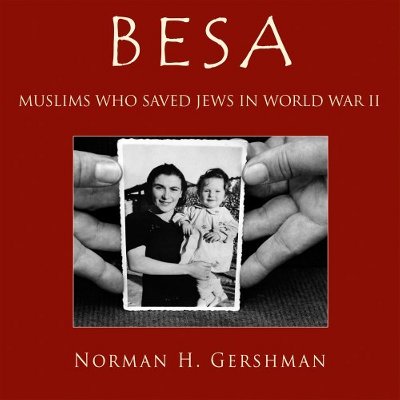
“The exceptional difference in Albania, experts on the episode say, was rooted in a national creed called besa that obligates Albanians to provide shelter and safe passage for anyone seeking protection, particularly if there has been a promise to do so. Failure to act results in a loss of honor and standing.[my emphases]
“It involves uncompromising protection of a guest, even at the point of forfeiting one’s own life,” wrote Shirley Cloyes DioGuardi, an organizer of the New York event whose husband, former Representative Joseph H. DioGuardi, visited Albania in the early 1990s and helped unearth details of the rescue.”
and:
“Another explanation, Ms. Cloyes DioGuardi says, is that in Albania, a Roman Catholic and Eastern Orthodox country until Ottoman rule led to conversions to Islam starting in the 15th century, ethnicity has always trumped religion, and piety is less than zealous. “We knew our enemies wanted to use religion to divide and conquer us, but we knew we had the same blood,” said Akim Alickaj (a-LITCH-kye), an ethnic Albanian raised in Kosovo who owns a New York travel agency and whose father helped rescue Jews. “Religion changes, but nation and blood can’t be changed.””
Olympic year or not, London has always had it all over us in terms of theater — in variety, quality, daring and in its still central role in the city’s life:
“Perhaps the most logistically ambitious part of the festival was Globe to Globe, in which leaders of Shakespeare’s Globe Theater spent nearly two years lining up 37 international theater companies to mount one of the plays in their native languages at the Globe over six weeks this spring. The shows included a new “Balkan trilogy” with theaters from Serbia, Albania and Macedonia each performing one of the three parts of “Henry VI” — not coincidentally a play about civil war — as well as productions of “The Comedy of Errors” from the Afghan troupe Roy-e-Sabs and “The Merchant of Venice” from the Habima theater company of Israel (which drew protesters waving Palestinian flags).”
Give the guys a break, dudes, they’re doing “The Merchant of Venice.”
And Afghans doing “The Comedy of Errors” is too perfect.
“The Huff Post’s article is interesting but incomplete. The best the writer can come up with by way of an explanation for Albania’s progressiveness on gay rights is that it has a strong “feeling of community” among the new gay Albanian activists, who also engage regularly in interventions and collaborations with other human rights NGOs and the government. The real explanation is much more basic – and way more interesting:
Until very recently, Albania was a total mess (I mean, it’s still a mess; you should see it, but it’s all relative). After all, Albania had endured over four decades of insane rule by Enver Hoxha, and when he died in the ’80s, the country descended into a period of prolonged chaos (remember the crazy stock market Ponzi schemes that nearly threw Albania into revolution?). It was just like North Korea would be if suddenly its totally unsocialized citizens were granted the freedom to do whatever the hell they wanted.
Fast forward a few decades and Albania achieved some measure of stability. It’s a new century. Technology advances connect the country to the rest of the world in hitherto unimaginable ways. The borders to neighboring countries like Greece opened up. It’s fair to say that the Albanians’ minds were blown. Exposed now to the Europe that Hoxha tried everything to prevent them from learning about, the population was able to take stock more fully of just how screwed up a country they had. Decade after decade, as the world advanced, Albania had remained a North Korea-like backwater, and suddenly the veil was lifted. It’s like they’d just come out of stasis.
Albanians were (and still are) aghast at their fate. They’re deeply traumatized and embarrassed by how far they lag behind the rest of Europe, and they are OBSESSED with achieving modernity. [my emphasis]
I was in Albania pretty recently and have friends there (and in Greece, were a number of them work on my family’s farmland). We talked about the push for gay rights, and they attribute it to the prime minister’s attempt to make up for lost time – to show the rest of Europe that Albania isn’t just making progress; it’s leading the way. The push for marriage equality there wasn’t quite a political stunt, but it was definitely intended to be an attention grabber that would change the rest of the world’s perception of Albania in the most dramatic way possible. The PM didn’t have any particular investment in the issue of gay rights; he just wanted to get Albania on the map FAST.
A few other things come into play, by the way. One is that it’s probably the most progressive Moslem-dominated country on the planet. Read about Albania’s brand of Islam. It’s something unto itself. In fact, the Saudis have poured money into Albania to establish its brand of Islam there, and the Albanians thus far have had very little interest in embracing it. But that’s a topic for another email.”
Two points on what the above Beast reader writes… My father was from Albania. So kudos and high lauds to anyone who testifies and gives witness to what Albanians have been through in this century. People’s complete ignorance of what an almost fictional Stalinist gulag that whole country was turned into for so many decades always infuriated me — did then and still does twenty years later — as the many friends and acquaintances that I’ve unfairly exploded at upon immediate detection of that ignorance can testify to. (And then there were the justifiable “hay-siktiria”: like at lefty Greeks in the eighties who used to tell me everything in Albania was cool, or at Neo-Greek society in general who had emotionally abandoned ethnic Greeks in Albania until it rediscovered its claptrap nationalism in the nineties.)
Surprisingly I don’t find them to be quite as damaged as the writer says, however — they’re a pretty resilient bunch, to say the least — and I think they’re too proud, as well, for us to so easily ascribe Berisha’s comments to the channelling of some collective need to curry Western admiration; that’s probably a Greek projection. When I went to Albania in 1992 to visit my father’s village and see relatives for the first time (my father never saw his parents again after 1945; my grandfather disappeared into a prison camp in the early sixties and my grandmother soldiered on in solitude until she died in 1989, just a year before we would’ve been able to see her again) I expected to find them all in shocked grief. Instead — there were tears, yes — I found them in that state of relieved giddiness that one feels upon waking from a life-threatening nightmare and that they had almost immediately converted their experience into something like an absurdist performance piece that they had had to sit through and hadn’t quite understood but whose remnant bad taste they needed to laugh off at once. To hear an eighty-year-old woman cackle about having to attend a “social criticism” meeting in what had been her church and confess that, yes, she kept two chickens more than what was permitted by the village collective’s policy, was a real lesson in how smart black humour sustained the peoples of Eastern Europe through the murderous idiocy of communism. And, like the writer says, they were brimming with an enthusiasm to embrace anything that meant a new life. Some beautiful parts of my village’s, and the country’s, culture may have been lost through that enthusiasm but we can do without any tradition that’s only preserved in the aspic of that kind of tyranny.
Some older folks in my village, Dervitsani, in the valley of Dropoli, the women with the characteristic white headdress of the region (click) (photo from Michel Setboun)
Immigrants from Albania, of whatever ethnicity, brought lots of that strength and energy to Greece as well. In the 1990’s, when Albanians flooded Greece and Greeks were faced with the horrifying realization that their northern border hadn’t really been with Austria all that time, many of them predictably behaved like racist jerks, a performance they’re repeating with others right now, except more viciously because this time they’re scared. The Eurolatry and the essentially colonized core of the Neo-Greek mind produces a kind of delusional isolation that may be more impermeable than Albania’s ever was — a historical-emotional bubble of ignorance, a probably now unhealable neurotic disconnect from the subject’s surroundings — that made it hard for Greeks at the time to realize that that migration was only the most recent wave in a millenia-long process* that makes Greeks and Albanians practically co-peoples in so many ways. There’s a show running in Athens now, with a sister production here in Astoria in New York, called “In-Laws from Tirane” — silly but fun and kind of smart ultimately — whose essential thesis is precisely that. It opens with one of the main characters fuming that that year’s high school valedictorian was an Albanian immigrant kid and got to lead the town’s Independence Day parade, the irony — intentional or not — being that much of the Greek “independence” struggle from the Ottomans was fought by men who didn’t speak a word of anything but Albanian. It’s made me happy to see how well-integrated a part of Greek life they’ve become lately (even as it crumbles around them) and what an almost American-style immigrant success story they are in so many ways. Many have even moved on to the U.S., and are over-represented in entrepreneurial life here in Greek New York; the wildly successful seafood restaurant “Kyklades” in Astoria, known throughout the boroughs (but which I have some culinary gripes with), is owned by an Albanian who may not have seen the sea till he was fifteen. They certainly have the kind of immigrant work ethic that puts everyone around them to shame. When I was in Greece in 2010 I was initially baffled by the ubiquitous presence of young, attractive, well-mannered waiters and waitresses and found myself wondering who they were, since no Athenian kid has condescended to work as a waiter in about forty years, until I asked once or twice and then stopped. They were all Albanian.
As for the writer’s Albanian “brand of Islam,” he means a heavily Bektashi-influenced form which one can probably apply to Balkan Islam in general. The Bektashis are a Sufi order of almost Shia-like content and some pretty attractively unorthodox views of its own; on Wiki it’s surprisingly placed as part of an “Alevism” series, and they share some core beliefs and rituals, but I don’t know if either Alevis or Bektashi followers will ever tell you they’re related. Centuries of harassment and outright persecution made both, but Alevis especially, fairly secretive about themselves and their practices; that changed radically in Turkey after some horrific twentieth-century episodes and the subsequent finding of a strong and admirably outspoken political voice on their part, but even now you get the sense that an Alevi (Turk or Kurd) needs to know you a little before he tells you. I also don’t think either will tell you they’re Shiites: http://en.wikipedia.org/wiki/Bektashi_Orderhttp://en.wikipedia.org/wiki/Alevi (They’re both really interesting — read about them.) The Bektashi order was widely associated with the Janissary corps; the classical period Janissary corps was heavily Albanian and Serbian in origin; maybe its influence in the Balkans was a circular process — I don’t know. If you clear away the boogeyman-like associations the devsirme has in Balkan Christian legend, one of the things you learn is that many Janissaries, and even those in the Ottoman slave corps generally, maintained more contact with their culture and even community of origin than one would think (man, am I gonna get it for that one…).
World Headquarters of the Bektashi Community in Tirane, Albania
*Italians had trouble realizing this at the same time, meaning the almost equally constant history of Albanian migration to southern Italy and Sicily. See Gianni Amelio’s beautiful 1994 Lamerica, which is the story of how a cool, smug Young European Sicilian gets stranded in Albania and realizes that he’s only a generation away from being counted among the wretched of the earth himself — and how dangerous it is to forget that. It should be mandatory viewing in Greece right now.
“Next week Albanian activists will host the country’s first-ever gay, lesbian, bisexual, and transgender (LGBT) photo exposition, with invitations sent out to ambassadors and foreign dignitaries. More important than the presence of diplomats, though, is the fact that the exhibition is open to the public, and that the exhibition, part of the activities for the International Day Against Homophobia, will be covered by the media. Attendees will walk through a labyrinth of one-meter-square photos that evoke the feeling of being an LGBT person in Albania. Such a high-profile event featuring same-sex desire is extraordinary in this small, Balkan country. What is even more exceptional is the recent history leading to this moment.
“Not quite three years ago, lesbian, gay, bisexual, and transgender issues suddenly became Albanian headlines when Prime Minister Sali Berisha (who is still in office) unexpectedly declared his support for same-sex marriage at a televised meeting of his ministers. The surprising July 2009 comment came amidst his expected support for a comprehensive national anti-discrimination law.
“…Today, to the surprise of the Albanian public, Albanian gay activists are stepping forward, showing their faces, and claiming their right to participate in the conversation about their lives.
“What lies behind this remarkable and swift transformation? In 2009 fears about possible violence, discrimination, lack of acceptance, and, perhaps most importantly, the shame that it would cause family members meant that not one person in Albania would publicly acknowledge same-sex attraction. Today, there are LGBT activists openly protesting the homophobic and violent remarks of governmental officials. Young LGBT Albanians are giving presentations in college classrooms and going on television talk shows, educating students and the Albanian public about the realities of their lives. Leaders of LGBT organizations are speaking out in newspapers and on television. There is widespread publicity for the photo exhibit. What made it possible for such change to happen in three years, for these new activists to overcome the barriers to public action and dialogue?”
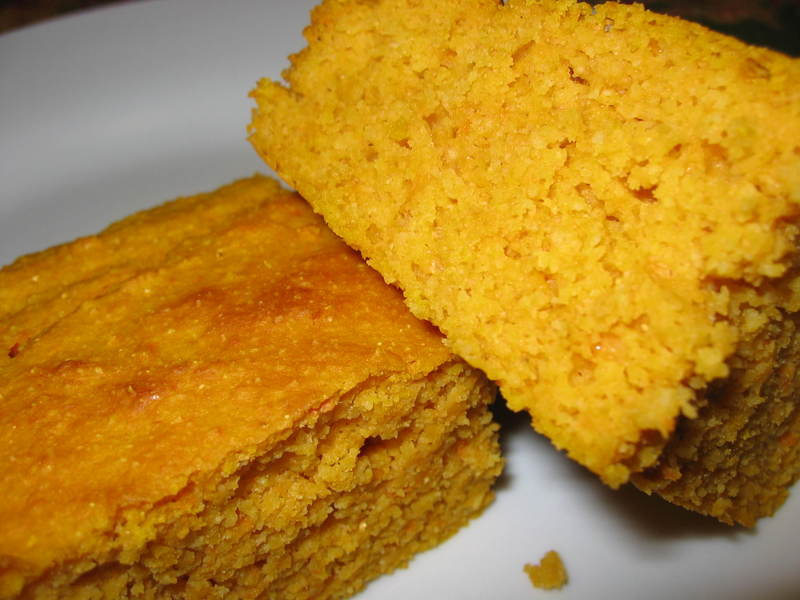
I’ve been reading so much about the Balkans lately (I’m on my third consecutive read of Milovan Djilas’ Land Without Justice) that I’ve developed an intense craving for cornbread — serious, hard, Balkan cornbread, what they call “bobota” in Epiros or “proja” in Serbia and Montenegro; I don’t know if they do so anywhere else. I also miss a kind of cornbread burek they used to make – “bliatsaria” they used to call it – which was two layers of cornbread with a burek filling in between: spinach, leeks, feta, maybe eggs. Corn was the poor man’s wheat; it yields far greater amounts of grain per acre than wheat does and will grow almost anywhere, like in my mother’s village, where after two feet you hit bedrock.
Does anybody have a recipe? Somebody from the Epiros-Albania-Montenegro-Sandjak axis, or someone of Pontio-Karadenizli background is most likely to know. The sweet, cake-like recipes that people have posted in this recent New York Times article definitely won’t produce the dry, nearly unswallowable texture I’m looking for.
The next day, when it became truly rock hard (kids would use it in slingshots my mom used to say), they used to break it up into chunks and dump it into buttermilk (xynogalo, ayran, lassi) to make it edible. I know that traditional cornbread in the American South used to be like that too because once in a conversation about food with a fifty-ish Black woman here in New York, I mentioned the buttermilk practice and she doubled over laughing, then smiled and snorted with that great look of feigned embarrassment and homey joy that Black Americans make when they’re talking about something – a guilty pleasure usually – that’s too down-home or too ghetto to own up to. She couldn’t believe that people half way round the world used to eat stale cornbread mush with buttermilk the way they used to.
And tell the folks in the comments that lard is good for you and that, yes, it’s time to talk about chitterlings. Easter’s coming up, innit?
Here’s Joe Cuba’s 1966 boogaloo classic “Bang Bang” which I used to think was called “Cornbread, Hog Maw and Chitterlins” because those are the only real lyrics. What’s boogaloo? “…the first Nuyorican music”: Boogaloo
Balkans, Anatolia, Caucasus, Levant and rest of ME, Iran, South Asia
Me, I'm Nicholas Bakos, a.k.a. "NikoBako." I'm Greek (Roman really, but when I say that in English some five people in the world today understand what I'm talking about, so I use "Greek" for shorthand). I'm from New York. I live all over the place these days. The rest should become obvious from the blog.


 Men in traditional costume in Cetinje, Montenegro’s old royal capital – date unknown — and traditional coffeehouse in Cetinje.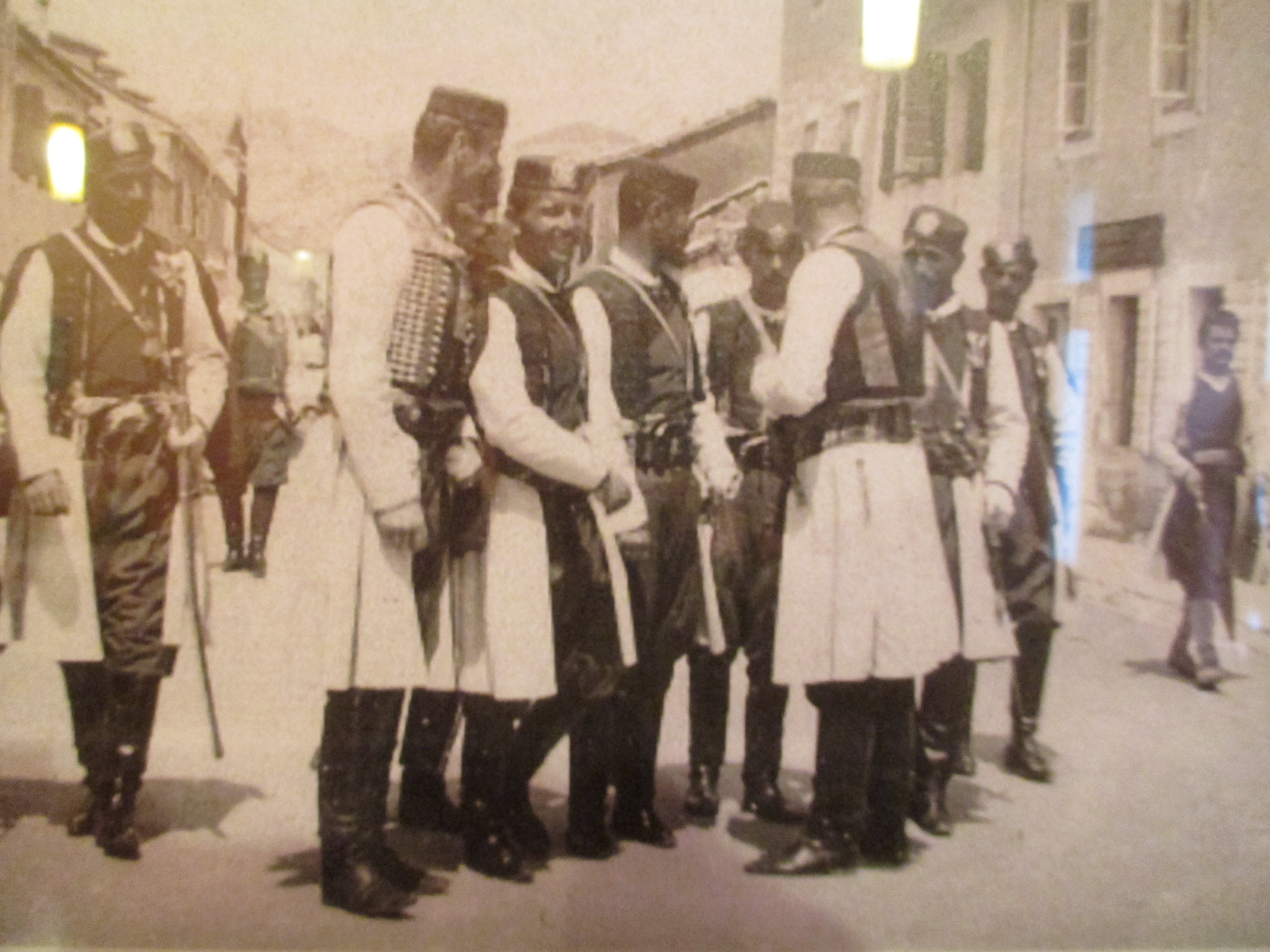

 The Montenegrin team.












 Jadde: from Bosnia to Bengal