Tag Archives: Albanians

To the Messenger and Co. — An Isaac Bashevis Singer story…

5 Jan

…full of the pain they don’t know and the humor they’re lacking…
DAB1975002W0000X-XXC.jpg

The New Yorker last week published a story of Isaac Bashevis Singer’s: “Job–to anyone who wants to read it because they haven’t hidden it from non-subscribers.  Mostly I want to dedicate it to the Messenger and his parea.  It’s a tale told to Singer by someone — I dunno if it’s a fictive character or not — in the 1970s.  It was written by Singer at the time, but was not translated from Yiddish to English until March-July, 2012 by David Stromberg.  Much like Vassily Grossman’s Life and Fate (which I touch on briefly here), it deals with the suffering of a twentieth-century Jewish everyman, sandwiched between the nightmare of Nazism and Stalinism, with bitter, caustic humor completely intact (which Grossman couldn’t really do).

Why do I dedicate this to the Messenger?

Because I remember distinctly in one late-night email battle-session, when he wrote me: “And why is it so wrong for bourgeois guys — like the both of us [his emphasis] — to have an ideology or an ideological schema?”  It’s a slightly tricky question to be asked in Greek and to have to answer from a Greek-speaker but native English-speaker’s perspective, because the word “αστικό” in Greek means urban and urbane and bourgeois, in its socio-political sense, all at once, so it’s difficult to separate.  But I quickly clarified the difference between my ethnic-American, working-class New York borough background and his petit bourgeois Athenian upbringing.  And yet I couldn’t put into words — or rather — couldn’t, at the time, find an example or definition to support the difference I was trying to establish.

But we can sort of close in on what I meant…  Someone — Simone Weil, Kafka, Solzhenitsyn, Rebecca West, Walter Benjamin, the great Hitchens, historian Timothy Snyder…I’m embarrassed that I can’t remember — said: “The twentieth century is when ordinary people realized that bookish young men who read big books full of big ideas could have a total and devastating effect on their lives.”

Or in the words of Singer’s Job: “Our young little Stalinists, the onetime yeshiva boys and simple idlers, hounded me to the point that I started longing to go back to Russia.”

And that’s where it lays.  It’s Singer’s Job that makes the knock-out realization:

“I’ve realized one thing: the worst people are those who want to save the world. Among simple folk—merchants, skilled workers, the so-called little man—one can still find decent people. But among those who want to bring about the coming of the Red Messiah there is no truth, no compassion. What’s easier than torturing in the name of an ideal?”

Of course your messianic vision doesn’t have to be Red; the Messenger’s is vehemently non-Red.  But that’s one thing that he never understood.  That that hue doesn’t matter.  That after a certain point he — he and his nationalism and his cronies’ nationalism — became the enemy for me.  The “worst people” are the ideologues.  After liberating him from the petit bourgeois prejudices he had been raised with, and becoming a model of “Roman-ness” for him, I didn’t realize that I had created a Frankenstein.  And he has never realized that he’s the enemy to me.  The people who tortured innocent women in our family like our aunt A. and killed heroic young men like our uncle S. and others, who looted and burnt down my mother’s paternal home, who imprisoned and persecuted and exiled my maternal uncle L. for decades, the people who tormented my father and his family and his extended clan for decades, who threw my grandfather into a prison camp in Albania and then into a mass grave somewhere, who isolated my grandmother in one room of the house her husband had built for her, who separated her forever from her only child, who created the pall of depression and unspoken sadness that hung over my family all my life…  Those people weren’t Albanians to me.  Or Muslims or communists or fascists or Turks or anything else or anyone else that the Messenger loves to hate.  They were petty little ideologues like him: bookish nerds who feel empowered by imposing their ideological hard-ons on innocent people, and making them suffer intolerable suffering in the name of their grand ideological vision.  “What’s easier than torturing in the name of an ideal?”  He’s the enemy.  But he doesn’t get it.  Y de allí his shock when I lay into him.

The other money quote from the Singer story:

“…I’d arrived at a certain philosophy: We can’t live openly in this world. We have to smuggle ourselves through. People, like animals, must constantly hide themselves. If the enemy’s on the right, you go left. It goes left, you crawl right. This very philosophy—you can call it cowardice, it doesn’t bother me—has helped me. I knew where the informers were and I avoided them. A lot of leftists—half-leftists and converted leftists, so to speak—went to Vilna or Kovno, but I went on to Russia, not to the big cities but to little towns, villages, collective farms. There I found a different kind of Russian: generous, ready to help. There they laughed at communism.”

Laugh at these people.  Russians’ and especially Jews’ saving strength.  That’s all there is to do.  Until they knock on your door.

Comment: nikobakos@gmail.com

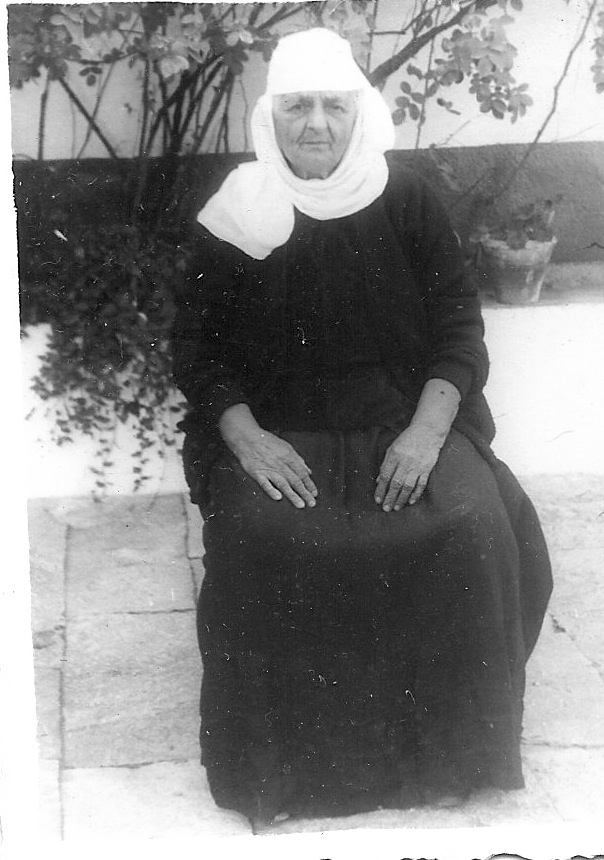
giagoulaMy grandmother (click)


And the whole article, since The New Yorker is being so unusually generous about it:

August 13, 2012
Job
By Isaac Bashevis Singer

Translated by David Stromberg

Editors’ Note: This story, by Isaac Bashevis Singer (1902-1991), was first published in Yiddish in 1970, and is appearing here in English translation for the first time. (See the translator’s note below about how it came to light.) Singer published more than sixty stories in The New Yorker, beginning in 1967; we’re grateful for this chance to present his work once again.

****

Being a writer for a Yiddish newspaper means wasting half the workday on people who come to request advice or simply to argue. The manager, Mr. Raskin, tried several times to bring this custom to an end but failed repeatedly. Readers had each time broken in by force. Others warned that they would picket the editorial office. Hundreds of protest letters arrived in the mail.

In one case, the person in question didn’t even knock. He threw open the door and before me I saw a tiny man wearing a black coat that was too long and too wide, a pair of loose-hanging gray pants that seemed ready to fall off at any moment, a shirt with an open collar and no tie, and a small black spot-stained hat poised high over his brow. Patches of black and white hair sprouted over his sunken cheeks, crawling all the way down to the bottom of his neck. His protruding eyes—a mixture of brown and yellow—looked at me with open mockery. He spoke with the singsong of Torah study:

“Just like this? Without a beard? With bared head? Considering your scribbling, I thought that you sit here covered in prayer shawl and phylacteries like the Vilna Gaon—forgive the comparison—and that between each sentence you immerse yourself in a ritual bath. Oh, I know, I know, for you little writers religion is just a fashion. One has to give the ignorant readers what they truly desire.”

A wise guy, I thought. Aloud I said, “Please, sit down.”

“And what good will it do me to sit? Let me first get a good look at you. Right here is where you write? Right here, next to this little table, is where the goods are fabricated? This is where your holy spirit, so to speak, makes its appearance? Well, it is what it is. And, anyway, how do people write all these lies? With simple pen and ink. Paper is patient. You can even write that there’s a festival in Heaven.”

“What’s your name?” I asked.

“My name is Koppel Stein, but you can call me Job, because I’ve suffered as much as Job, and possibly even a little more. Job had three friends who came to console him, and in the end God took it upon Himself to offer a word of comfort. Then He repaid him twice over: more donkeys, prettier daughters, and who knows what else. I haven’t been comforted by anyone, and the Almighty remains silent, as if nothing had happened. I’m Job squared, if one can put it this way. Do you have a match? I’ve forgotten my matches.”

I went out and brought him matches. He lit a cigarette and blew the smoke right in my face.

“Forgive me for speaking to you this way,” he continued. “As they say, it’s my troubles speaking. You know it down to the last letter: ‘blame not a man in his hour of sorrow.’ The other day you complained in your write-up about a reader who’d held you up for six straight hours. I’ll keep it short, though how can one shorten a story that’s already lasted more than forty years? I’ll give you just the bare facts and if you’re no fool it’ll be as they say: ‘a word to the wise is enough.’ I’m one of those crazy people—this, it seems, is what you called them—who want to save the world, to institute justice, and other things of that kind.

“With me it started when I was still a little kid. Our neighbor Tevel the Shoemaker worked straight from the first rays of the sun until late into the night. In the winter I heard him banging on nails when it was still dark outside. He lived in a tiny room. He had everything there: the kitchen, the bedroom, the workshop. That was where his wife, Necha, gave birth every nine or ten months, and there the infants died. My father wasn’t much richer. He was a teacher. We also lived in a single room and had so little to eat that we might as well have deposited our teeth in the bank.

“Early on I began to ask: how is this possible? My father answered that this was God’s will. And I came to despise—with a thorough hate—the very same God Almighty who sat eternally in his seventh heaven, showered with respect and greatness, while his creatures suffered and died. I won’t get into details—I know from your work that you’re familiar with these details and even with the so-called psychology of such things.

“In short, I was about fifteen when I went astray. We had a political group in town where we read Karl Marx and Karl Kautsky and even got our hands on a brochure by Lenin—in Russian, not in Yiddish. In 1917, when the Revolution broke out, I was a Russian conscript. I managed to catch some lead near Przemysl and was laid up in a military hospital. What I went through in the barracks and on the front you probably know yourself. No, you know nothing, because my greatest sorrows came from my own mouth. I told everyone the truth. I spoke against the officers. To this day I don’t understand why they didn’t have me court-martialled and shot. They must have needed cannon fodder.

“Kerensky called for further fighting and I became a Bolshevik. I ended up in Poltava, and there we went through the October Revolution. Mobs set upon us and we were chased away. Who wasn’t there? Denikin, Petliura, others. I was eventually wounded and discharged from the Red Army. I got stuck in a little town where there was a pogrom against the Jews. With my own eyes I saw how they slaughtered children. I lay in the hospital and got gangrene in one foot. I’ll never understand why, out of everyone, I came out alive. Around me people died from typhoid fever and all kinds of other diseases. For me, death was an everyday thing. But despite all this my faith in man’s progress became stronger, not weaker. Who started wars? Capitalists. Who incited pogroms? Also they. I’d seen plenty of wickedness, stupidity, and pettiness among my own comrades, but I answered myself ten times a day with the same refrain: we are products of the capitalist system. Socialism will produce a new man—and so on and so forth. Meanwhile, my parents died in Poland, my father from hunger and my mother from typhoid fever. Though possibly also from hunger.

“After the mobs were driven out and things subsided into some kind of order, so to speak, I decided to become a laborer, despite the fact that I could have taken a government post or even become a commissar. By that time I was already in Moscow. I’d studied carpentry in our little town, so I entered a furniture factory. Lenin was still alive. For the masses, the big holiday still held sway. Even the New Economic Policy didn’t disappoint us. How do the Hassidim put it? ‘Descent for the sake of ascent.’ To stand and hear Lenin speak was a compensation for all the suffering and humiliation. Yes, suffering and humiliation. Because in the factory where I worked they cursed me and called me a ‘dirty Yid’ and mocked me no less than they had in the barracks.

“I was constantly hounded—and by whom? Party members, fellow-workers, Communists. They took every chance to tell me to go to Palestine. Of course, I could have complained. You heard of cases in which workers were put behind bars for anti-Semitic acts. But I soon realized that these were not isolated incidents. The entire factory was saturated with hatred for Jews—and not only Jews. A Tartar was no less inferior than a Jew, and when the Russians felt like it they made mincemeat of Ukrainians, Belarusians, Poles. Try sweeping away a trash can. I saw with sorrow that the Revolution had not changed all the drunkenness, debauchery, intrigues, theft, sabotage. A doubt stole into my heart, but I kept it silent with all my powers. After all, this was still just the beginning.

“I promised you to be short and this is what I’ll do. Lenin died. Stalin took over. Then came the plot against Trotsky—who for me was a god. Suddenly I heard he was nothing but a spy, a lackey of Pilsudski’s, Leon Blum’s, McDonald’s, Rockefeller’s. There are hearts that burst from the least worries, and there are also hearts as solid as a rock. It seems I have a stone there on my left side. What I’ve put up with, I only wish upon Hitler, if it’s true that he’s still alive somewhere, and that someone is hiding him in Spain or Argentina. I shared a room—actually a cell—with two other workers: drunks and scoundrels. The language they used—the smut! They stole from my pockets. At the factory, they called me Trotsky more than once and pronounced the ‘r’ with a Yiddish accent. Then came the arrests and the purges. People I knew—idealists—were taken away to prison and either got sent off to Siberia or rotted in jail. I began to realize, to my horror, that Trotsky was right: the Revolution had been betrayed.

“But what is a person to do concretely? Could Russia endure a new revolution, or even a permanent revolution? Can a sick body stand one operation after another? As my mother, peace be upon her, used to say: If a dog licked my blood, it would poison itself….

“So the years passed. Permanent revolution is impossible, but there is such a thing as permanent despair. I went to sleep in despair and awoke in despair. I was drained of all hope. Yet Trotskyist circles sprang up regardless of the persecution. The old conspiracies from the Tsarist times repeated themselves. The Revolution had fallen with a thud, but humankind doesn’t resign itself. This is its misfortune.”

II

“In 1928, I came back to Poland. So to speak. I smuggled myself across the border, helped by my fellow-Trotskyists. Each step involved the worst of dangers. I forgot to tell you that while still in Russia I’d been held at Lubyanka for seven months precisely under the suspicion that I was a Trotskyist. There wasn’t a single night in which I wasn’t beaten. Do you see this crippled fingernail? This is where a Chekist stuck a glowing rod into me. I had my teeth knocked out and those who did it were my fellow-proletarians, a curse upon humankind. What was done in prison can’t be put into words. People were physically and spiritually degraded. The stench of piss pots made you crazy. In a prison you can find all sorts of people. There was homosexuality as well as outright rape. Yes, be that all as it may, I smuggled myself into Poland and came to Nieswiez—perhaps you’ve heard of this little town? As soon as I crossed the border, the Poles arrested me. They later let me out, but then I was put behind bars again.

“This was in 1930. I’d been given a contact among the Trotskyists in Warsaw, but they ended up being just a few poor youths, workers. The Stalinists considered it a good deed to denounce Trotskyists to the authorities, and most of them were imprisoned in Pawiak or Wronki—a terrible prison. In Warsaw, I tried to tell them about what was going on in Russia, and don’t ask what I had to put up with! Our young little Stalinists, the onetime yeshiva boys and simple idlers, hounded me to the point that I started longing to go back to Russia. I was beaten, spat on, and called nothing but a renegade, fascist, traitor. A few times I tried to speak to an audience, but thugs from Krochmalna Street and Smocza Street came to shut me up. Once, I was stabbed with a knife. There is no worse lowlife than a Jewish Chekist, Yevsektsia member, or plain Communist. They spit on the truth. They’re ready to kill and torture over the least suspicion. I already understood that there was no difference between Communists and Nazis, but I still believed that Trotskyism was better. Something had to be good! Not everyone could be evil.

“Up until now I haven’t mentioned my personal life, because in Russia I hadn’t had any personal life. Even if I could have sinned, there was nowhere it could be done. With several men living in a single room, you’d have to be an exhibitionist. I witnessed both sexes in their utmost shame and misery, and I, as they say, lost my appetite. Hundreds of thousands of illegitimate children were brought forth—the homeless—who in turn became Russia’s curse and peril. When a woman went to buy bread, they fell upon her and stole it from her. Very often they raped her too. There was no lack of downright thieves, murderers, drunks. The Revolution should’ve brought an end to prostitution, but whores loitered all around the very Kremlin. In Warsaw, I met a Trotskyist woman. She was hunchbacked, but for me a physical defect was no defect at all. She was clever, intelligent, idealistic. She had a pair of black eyes and from them all the sadness and wisdom of the world peered out—though where in the world is there wisdom? We became close. Neither of us thought much of the idea of going to a rabbi. We rented an attic room on Smocza Street, where we started living together. That’s also where we had our daughter, Rosa—naturally, after Rosa Luxemburg.

“My wife, Sonia, was a nurse by trade—a medic and a compassionate caregiver. She spent her nights with the ill. We seldom had a night together. I couldn’t find any work in the Polish factories and earned a little by repairing poor people’s furniture—a closet, a table, a bed. I earned peanuts. As long as there wasn’t any child, it was still bearable. But when Sonia was in her later months it became difficult. In the middle of all this I was arrested. I’d been denounced by my Jewish and proletarian brothers, who’d invented a false accusation against me and actually planted illicit literature. What do you know about what people are capable of doing? Some of them later fell in Spain—they were killed by their own comrades. Others perished in the purges or simply in Comrade Stalin’s labor camps.

“The entire trial against me was a wild invention. Everyone knew this: the investigator, the prosecutor, the judge. They put me together with people whose faces I’d never seen and said that we’d planned a conspiracy against the Polish Republic. The policemen—guardians of the law —gave false testimony and swore to lies. In prison, the Stalinists hounded me so much that each day was hell. They didn’t take me into their circle. Among the civilians there were rich people, especially women, who brought political prisoners food, cigarettes, other such things. They even provided lawyers free of charge. But since I didn’t believe in Comrade Stalin, I was as good as excommunicated. They played dirty tricks on me. They tore my books, threw dirt into my food, they literally spat on me a hundred times a day.

“I stopped talking altogether and went silent. It got to the point that I became like a mute. In order not to hear their abuse and curses, I used to stuff my ears with soft bread or cotton from my coat. They even persecuted me at night, all in the name of Socialism: a bright future, a better tomorrow, and all their other slogans. The tortured themselves became torturers. Don’t think that I have any illusions about the Trotskyists. I’ve realized one thing: the worst people are those who want to save the world. Among simple folk—merchants, skilled workers, the so-called little man—one can still find decent people. But among those who want to bring about the coming of the Red Messiah there is no truth, no compassion. What’s easier than torturing in the name of an ideal?

“It got to the point that the Polish prison guards began to stand up for me and demanded that I be left alone. I started asking them to put me among the criminal offenders, and when they at last obliged me the comrades exploited it and organized a protest demonstration opposing a political prisoner being put among criminals. In other words, they wanted me nearby to torture. This is how they behaved—those who ostensibly sat in jail for the sake of justice.

“Sitting among the thieves, pimps, and murderers was hardly a delight. They eyed me with suspicion. There prevailed an old hatred between the underworld and the politicals—ever since the times of 1905. But, compared with what I endured from the Stalinists, this was paradise. They stole my cigarettes and made off with portions of the packages that Sonia sent me, but they let me read my books in peace. Instead of ‘fascist,’ they called me ‘idiot’ and ‘good-for-nothing,’ which did less damage. It even happened sometimes that a thief or a pimp would pass me a piece of sausage or a cigarette from his own stash. What was there to do in the cell? Either you play cards—a marked and greasy pack—or you talk. From the stories I heard there, one could write ten books. And their Yiddish! The politicals babbled in the Yiddish of their pamphlets. It was not a language but some kind of jargon. The thieves spoke the real mother tongue. I heard them use words that astounded me. It’s a shame I didn’t write them down. And their thoughts about the world! They have a whole philosophy. At the time I went to prison, I still believed in revolution, in Karl Marx. I had all kinds of political illusions. Back outside I was completely cured.

“While I sat in jail, there developed in Poland a growing disappointment in Stalin. It swelled to the point that the Polish Communist Party was thrown out of the Comintern. Many of my persecutors had taken off for the ‘land of socialism’—where they were liquidated. I was told about one sucker who, having crossed the border, threw himself down and started kissing the ground of the Soviet Union, as Jews of yore used to do when arriving in the Land of Israel. Just as he lay down and kissed the red mud, two border guards approached and arrested him. They sent him to dig for gold in the north, where the strongest of men didn’t last more than a year. This was how the Communist Party treated those who had sacrificed themselves on its behalf.

“Then a new curse wriggled its way in: Nazism. It was Communism’s rightful heir. Hitler had learned everything from the Reds: the concentration camps, the liquidations, the mass murders. When I got out of jail, in 1934, and told Sonia what I thought about our little world and those who wanted to save it, she attacked me like the worst of them. The fact is that while I sat behind bars I’d become a kind of martyr or hero for the Trotskyists. I could have played the role of a great leader. But I told them: dear children, there is no cure for the human race. It was not the ‘system’ that was guilty but Homo sapiens itself, in the flesh. When they heard such heresy, they shivered with rage. Sonia informed me that she couldn’t live with a renegade. I’d had the luck of becoming a renegade twice over. It was a separate issue that, while I sat behind bars, she had lived with someone else. Hunchbacks are hot-blooded. There’s always a volunteer handy. He was a simple youth from the provinces, I think he was a barber. Little Rosa called him Daddy…”

III

“Don’t look so afraid! I won’t keep you here until tomorrow. You went away to America in 1935, if I’m not mistaken, and you know nothing about what happened later in Poland. What took place was an absolute breakdown. Stalinists became Trotskyists, while Trotskyists went into the Polish Socialist Party or the Bund. Others became Zionists. I myself tried to turn to religion. I went to a study house and sat myself down to learn the gemara, but for this one must have faith. Otherwise it’s just nostalgia.

“The anarchists raised their heads again—some of them still stood by Kropotkin, others became Stirnerists. We had guests in Poland. Ridz-Szmigli had invited the Nazis to hunt in the Białowieza Forest. Then came the Stalin-Hitler pact and the war. When they started to bomb Warsaw, those who were strong enough ran over the Praga Bridge and set out for Russia. Some had illusions, but I knew where I was going. Yet staying among the Nazis was not an option for me. I came to say goodbye to Sonia and found her in bed with the barber. Little Rosa started crying, ‘Papa, take me with you!’ These same cries follow me still. They torment me at night. They all perished. No one remained.

“I was in Bialystok when a number of Yiddish writers from Poland all at once became ardent Stalinists. Some lost no time and began denouncing their colleagues. People knew me as a Trotskyist and I was heading for certain death, but by then I’d arrived at a certain philosophy: We can’t live openly in this world. We have to smuggle ourselves through. People, like animals, must constantly hide themselves. If the enemy’s on the right, you go left. It goes left, you crawl right. This very philosophy—you can call it cowardice, it doesn’t bother me—has helped me. I knew where the informers were and I avoided them. A lot of leftists—half-leftists and converted leftists, so to speak—went to Vilna or Kovno, but I went on to Russia, not to the big cities but to little towns, villages, collective farms. There I found a different kind of Russian: generous, ready to help. There they laughed at communism.

“Until 1941, people got by somehow. When the war arrived, a famine broke out. Refugees on foot arrived by the millions. Others were brought in freight trains. Millions of Russians went to the front. I starved, slept in train stations, passed through all seven circles of Hell, but I avoided one thing: prison. I kept my mouth shut and played the role of a simple person, someone half-illiterate. I worked wherever possible. On collective farms and in factories I witnessed the thing called the communist economy. They simply destroyed the machinery. They ruined raw materials. It couldn’t even be called sabotage. It was a simple beastly indifference to anything that didn’t directly relate to them. The whole system was such that either you stole or you were dead. I entered a factory and the accountant, a fellow from Warsaw, conducted his accounting on books by Chekhov, Gogol, Tolstoy. He scribbled his numbers—obviously false—on the margins and above the printed type. You couldn’t get any blank paper there. People lived on stolen goods sold on the black market. You can’t grasp it unless you’ve seen it with your own eyes. If not for America—and had the Nazis not been such ferocious murderers—Hitler would have got as far as Vladivostok.

“I didn’t live—I smuggled myself through life. I became a worm that crawled from here to there. As long as it wasn’t trampled, it crept on. I was astonished to realize that the whole country was like this. We became like the lice that infested us. Until I arrived in Russia for the second time, I’d still had something in me that could be called romanticism or sexual morality. But with time I lost this, too. Millions of men lay scattered on the fronts and millions of wives lived with anyone who would take them. I slept with women whose names I didn’t even know. In the night I had females whose faces I hadn’t seen. I once lay with a woman on a bale of hay. She gave herself over to me and cried. I asked her, ‘Why are you crying?’ And she wailed, ‘If Grishenka only knew! Where is he, my little eagle? What have I made of him!’ Then she nestled up to me, crying. She professed, ‘To me you’re not a man but a candle for masturbation.’ She suddenly took to kissing me and wetting me with her tears. ‘What do I have against you? You’ve probably also left someone behind. A curse on fascism!…’

“In Tashkent, I got typhoid fever, which was later complicated by pneumonia. I lay in the hospital and around me people were constantly dying. Some Pole spoke to me and started telling me about all his plans. All at once he went silent. I answered him and he didn’t respond. The nurse came in and it turned out that he’d died. Just like that, in the middle of speaking. He suffered from scurvy or beriberi, and with these diseases people died, so to speak, without a preface. I became indifferent to death. I never believed this would be possible.

“You shouldn’t think that I came here just to get into your hair and tell you my life story. The fact is that I’m here and this means that I smuggled myself through everything—hunger, epidemics, murder, destruction, borders. Now I’m in your United States. I already have my papers. I’ve already been mugged in your America, and have already had a revolver held to my heart, too. A survivor with whom I crossed here on the ship has already worked his way up and owns hotels in New York. He took straight to business, forgot all the dead, all the killing. I recently found him in a cafeteria and he complained to me about his falling stocks. He married a woman who’d lost her husband and children, but she already has new children with him. I talk about smuggling myself and he’s a born smuggler. He’d already started smuggling in the German DP camps, where he waited for an American visa.… Yes, why did I come to you? I came with an idea. I beg you, don’t laugh at me.”

“What’s this idea?”

He waited a moment and lit another cigarette.

“You’ll think I’m crazy,” he said. “The idea is for all decent people to commit suicide.”

“Is that so!”

“You laugh, eh? It’s no laughing matter. I’m not the only one disappointed in the human race. There are millions of others like me. As soon as there is no longer any hope—what’s the point of hanging around to suffer fruitlessly and in vain? I read your writing back in Warsaw. I read you here. You are, as far as I know, the only writer who has absolutely no hope for mankind. You’ve lately taken to praising religion, but your religion is a religion of despair. You reduce everything to one point: this is God’s will. Perhaps God wants humankind to put an end to itself? I beg you, don’t interrupt me! There are scores of movements, who knows how many religions and sects—why shouldn’t there be a movement that preaches suicide? How long can you smuggle yourself only to be crushed in the end? My feeling is that millions of people are ready to end it all, but they lack the courage—the last push, so to speak. If millions of idiots are ready to die for Hitler and Stalin and all kinds of other scourges, why shouldn’t people want to perish as a protest? We should frankly throw back at God this gift of His: this despicable struggle for existence, which in any case ends in defeat. First of all, people must stop having children, bringing into the world new victims. Let the scumbags hope, let them fight for bread, sex, prestige, for the fatherland, for Communism, and for all kinds of other isms. If there remains among the human race a remnant of common sense, it should come to the conclusion that all this filth isn’t worthwhile.”

“My dear friend,” I said, “suicide can never be a mass movement.”

“How can you be so sure? What was the Battle of Verdun if not mass suicide?”

“People there hoped for victory.”

“What victory? They stationed a hundred thousand men and were left with sixty thousand graves.”

“Some survived. Some received medals.”

“Perhaps we should create a suicide medal?”

“You’ve remained a world-saver,” I said. “Suicide is committed alone, not with partners.”

“I read somewhere that in America there are suicide clubs.”

“For the rich, not for the poor.”

He laughed and exposed a toothless grin. He spat out his cigarette butt and stepped on it.

“So what should I do?” he asked. “Become rich? Perhaps I should. It would, actually, be like Job.”

****

Translator’s note:

Beginning in his early years in the United States, Isaac Bashevis Singer earned his living churning out texts for the Yiddish-language daily Forverts—an assortment of fiction, essays, journalism, advice, and memoir, often published in a hurry, under several pseudonyms. Later in his writing life, Singer worked on translating into English those stories he considered worthy of republication, editing and correcting them in the process.

When, in the course of my doctoral research, I came across the story “Job” (“Iyov”)—first published in Forverts in 1970, and later included by the late scholar Khone Shmeruk in a Yiddish collection titled “Der Shpigl” (“The Mirror”; Hebrew University, 1975)—I was convinced I’d find the story in English translation. Its themes of political disillusionment coupled with an inextinguishable search for salvation were tied to Singer’s larger body of work, and the story’s artistic accomplishment was confirmed by its inclusion in the Yiddish collection. The biblical title also indicated its potential significance. But I found nothing: not in any of Singer’s English-language collections, not among his uncollected or posthumously published stories, and not in the Isaac Bashevis Singer papers at the Ransom Center in Austin, Texas. It seemed I’d have to read “Job” in the original.

I’d studied Yiddish, but my vocabulary was still relatively limited. To understand anything beyond the main premise, I had to look up words in the dictionary. As I began writing them down, I realized I was on my way to translating the story. I shared my translation of “Job” with a few colleagues in Jerusalem, and reviewed it with Eliezer Niborski, a young Yiddish teacher and native speaker. We were all struck by the story—especially its sharp yet compassionate final exchange—and surprised that it had yet to be published in English.

I decided to take another look at the list of the Singer papers in Texas. Knowing now what the story was about, I noticed a folder entry among Singer’s unidentified works that caught my eye. I ordered a facsimile of this typescript fragment and, as I suspected, found that Singer, together with Dorothea Straus, had indeed translated “Job”—but that the translation was not complete. The fragment of Singer’s translation attested to his distinct and idiosyncratic mastery of English, which I felt compelled to acknowledge in my rendition of the story. I ultimately decided to introduce the author’s hand by incorporating some of Singer’s own word choices—while also aiming to avoid mimicking or impersonating his singular English style.

Arrangements were made to publish my translation of the story. I showed it to Robert Lescher, the literary agent for Singer’s estate, who gave me some insight into Singer’s publication process. Mr. Lescher said that, after they’d begun working together, in 1970, Singer would bring his stories into the office. Mr. Lescher would comment on them, sometimes Singer would make changes, and only then would they be submitted to various editors for publication. At The New Yorker, Singer worked with the fiction editor Rachel MacKenzie to get a story into its final shape.

Mr. Lescher had minor reservations about a few lines in my translation where he felt the language didn’t flow. Based on his suggestions, I made a handful of adjustments that required my straying very slightly from the literal text. We were wary of editing a great writer who was no longer with us, but felt we could fine-tune the translation: ultimately, the responsibility falls to the translator to make decisions based on the original Yiddish text, whose publication Singer had approved.

A couple of days before the story was set to appear, I found myself again working with the folder list of the Singer papers at the Ransom Center. Looking for something else altogether, I came upon yet another entry among the unidentified works that caught my attention. I realized that it contained more, though still not all, of Singer’s translation of “Job.” The rest of the manuscript had apparently not been lost—it had merely been separated from the other parts and stuffed into a different slot.

The publication of “Job” had turned into a literary experience reminiscent of a chaotic Singerian universe—where coveted objects are misplaced, or purposely hidden by imps, only to reappear just before it’s too late. I used the additional pages to reconstruct some of my initial translation solutions—though again avoiding the temptation to replicate Singer’s signature linguistic choices in English. With the help of Arcadia Falcone of the Ransom Center, I am working to locate and reunite the missing pages of Singer’s translation of “Job.” And as in a Singer story, the story of this translation is yet to be continued…

— David Stromberg, Jerusalem, March-July, 2012

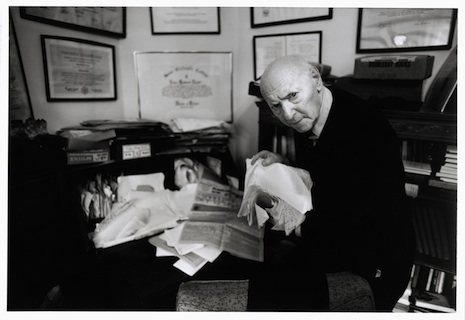
Photograph of Isaac Bashevis Singer by Bruce Davidson/Magnum.

Strange Border Kidnappings of Serbs in Kosovo — and some thoughts of mine

17 Jun

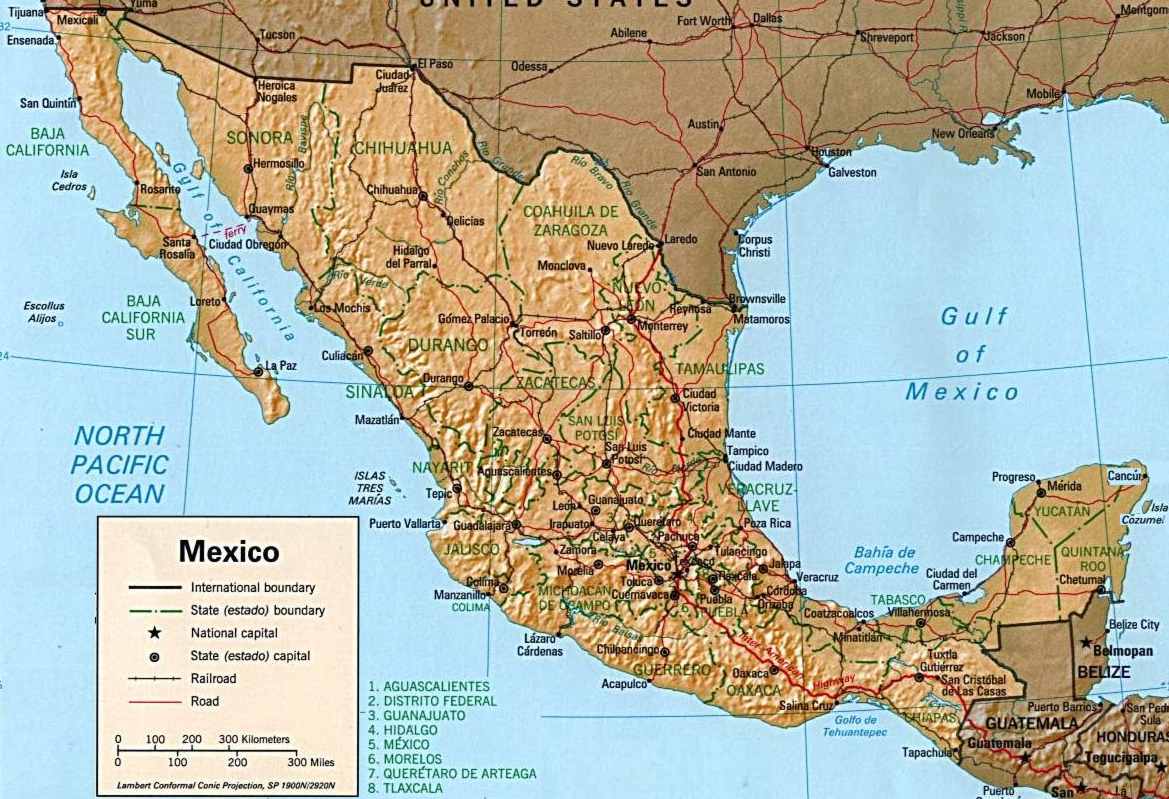
Kosovo_map

I haven’t written much, or anything really, about Kosovo, because of all the places I visited on this Balkans trip it was, despite its frantic, chaotic energy, not only a place that still felt deeply scarred itself, but also the place that left its deepest marks on me as well.  It’s a place that hurt me.  And it’s been hard for me to know where to begin to write about it.  An innate warmth and sympathy I feel for Serbs generally left me terribly depressed at the sad state of what’s left of Serbian life in Kosovo.  And yet, simultaneously, l was left overwhelmed and trembling at the mountain of atonement Serbs will have to seek out for themselves for the horrendous crimes they committed there, not just in the 1990s, but throughout the twentieth century, before they can really face a future with a clear conscience.

And then, I found almost all Kosovar Albanians deeply likeable.  I wouldn’t call them friendly exactly — Albanians don’t really do “friendly” — but they were…dashing, shall we say, in a particularly Balkan way that was immensely attractive and were always helpful with directions or anything else we needed while on our journey.  I’m also a sucker for physical beauty and I will swear to any God in the universe that I have never been in a country with such a rich embarrassment of gorgeous people of both genders in my entire life.

But whatever I may have felt about Kosovars, I will believe the most nightmarish things possible about the KLA (Kosovo Liberation Army), a collection of Berlin club bouncers, heroin smugglers, white slave traders and mob hitmen to whom the world granted the government of an independent country on a silver platter — simply because, as is usually the case in the Balkans, the West had no idea what it was doing and just wanted the whole crazy place and its people out of its hair — while they, the KLA, continue to operate as a semi-incognito organization only slightly less criminal and murderous (and I’m not even sure about the “slightly”) than the drug cartels of Colombia or Mexico.

This story of KLA members abducting Kosovo Serbs, killing them and then selling their organs — especially kidneys — on the black market has been around for a while.  The New Yorker did a story on it back in May of 2013 (posted in full below) that seemed kind of sceptical, but this reportage (video below) by Vice News, an independent news outlet originally from Montreal now based in Brooklyn — and a serious media source we should really look out for in the future; they do great work (see 2013 article about them from The Guardian) — claims that the allegations are now being taken seriously by the Hague and the European Union.

What concerns me is why the story had been forgotten for so long and I think the answer is present and not so subtly coded in The New Yorker article itself.  For about the first, I’d say, two-thirds of the piece, the allegations against the KLA are treated as completely believable.  Then, based on the evidence of one single individual, whom the KLA claims is a Serbian plant meant to discredit it, and the incoherence of his testimony, the article does a complete one-hundred-and-eighty degree turn and suddenly all kinds of doubts are cast on the potential truth behind these KLA crimes.  And then the clear and constant bias of the Western media can be heard loud and clear: the Serb can never just be the victim.  And the not so subtle suggestion is made that these allegations against the KLA might just be another example of Serbs’ supposed pathological propensity for creating nationalist mythologies and martyrdom narratives for themselves and nothing else.

Kudos to Vice News for bringing the story to the forefront again and shame on a publication with the reputation of The New Yorker  for pandering to its readership’s expectations of who the bad guys in the movie always are.

From Vice News:

“In the wake of the war in Kosovo, investigative journalist Michael Montgomery traveled to the Balkans to investigate the mysterious disappearance of Serbs. His scrutiny brought to light evidence that suggested links between a black-market crime syndicate and the upper echelon of the Kosovo Liberation Army—indicating that the end of war doesn’t necessarily mean the end of war crimes.”

 and:

The New Yorker story:

A Reporter at Large

Bring Up the Bodies

Kosovo’s leaders have been accused of grotesque war crimes. But can anyone prove it?

by May 6, 2013

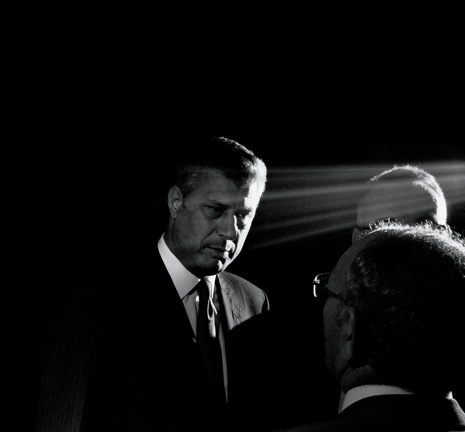
Haci Thami130506_r23468_p465Hashim Thaci, the Prime Minister, helped lead the Kosovo Liberation Army during the war. He says, “The K.L.A. was big, and you always have abusers in such organizations.” Photograph by Alex Majoli.

After the conflict in Kosovo ended, in June, 1999, a tribunal in The Hague set out to punish the perpetrators of atrocities. Louise Arbour, the lead prosecutor, described Kosovo—a former province of the Federal Republic of Yugoslavia—as “one vast crime scene.” Her investigators’ primary target was Slobodan Milosevic, the Serb who led Yugoslavia. Milosevic had claimed that Kosovo’s majority group, ethnic Albanians, treated ethnic Serbs like slaves, and armed forces under his control had waged a campaign of mass murder there, slaughtering more than ten thousand Kosovars. NATO, relying heavily on American forces, launched air strikes to stop Milosevic, and received crucial assistance from the Kosovo Liberation Army, the main rebel force in the region. K.L.A. scouts relayed Serbian tank coördinates to Green Berets, who passed on the information to American fighter jets. Three months after the air strikes began, Serbia surrendered. Milosevic was eventually arrested and sent to The Hague, where he died in prison, of a heart attack.

In Kosovo, meanwhile, the K.L.A. officially disbanded, but many of its members joined political parties. A party led by Hashim Thaci, the K.L.A.’s political chief, rose to power. In 2008, Thaci became the first Prime Minister of an independent Kosovo. Two years later, Vice-President Joe Biden hailed him as “the George Washington of Kosovo.”

Today, nearly two thousand people remain missing in Kosovo, a country that José Pablo Baraybar, a Peruvian who headed the U.N.’s Office on Missing Persons and Forensics, described to me as “one of the most exhumed places on earth.” DNA technology has helped investigators identify hundreds of bodies, many of them buried in mass graves. But, even in an era of sophisticated forensic science, definitive evidence can be elusive: in one case, the Serbs burned hundreds of corpses in a lead smelter.

Dozens of Serbs have been convicted of war crimes since the fighting stopped, but they were not the only ones responsible for violence. In Pristina, the capital of Kosovo, rumors circulated that, in the summer of 1999, K.L.A. paramilitaries had trucked prisoners across the border to secret detention camps in Albania, where they were tortured and, sometimes, killed. But, in public, Kosovars embraced a “silence taboo,” in the words of Vehbi Kajtazi, a journalist in Pristina. The men who led the K.L.A. remained a fearsome presence in the country, posing a threat to anyone who spoke out, and ethnic Serbs were a powerless bloc, falling to less than two per cent of the population. Unlike Argentina, South Africa, and Sierra Leone, Kosovo failed to establish its own truth-and-reconciliation commission.

The task of accounting for the missing was left largely to outsiders. One of them was Michael Montgomery, an American radio journalist who had helped expose the massacre of forty-one Kosovar Albanians by Serbian forces in the village of Qyshk, on May 14, 1999. He began amassing troubling stories involving the K.L.A. Multiple sources told him that, in the days after Milosevic’s defeat, the K.L.A. had shipped accused traitors to camps in Albania. A former K.L.A. member recalled guarding seven prisoners in the back of a van, their mouths taped and their hands cuffed, as they crossed the border. A K.L.A. driver said that he had been given orders not to hurt anyone; once his captives were in Albania, they were taken to a house where doctors were present. The driver heard that the doctors sampled the prisoners’ blood and assessed their health. Several sources implied that this caretaking had a sinister purpose: the K.L.A. was harvesting the prisoners’ organs and selling them on the black market.

Montgomery was concerned that these stories might be propaganda planted by the Serbian government, so he tracked down additional sources. Three people recalled taking prisoners to a yellow house outside the Albanian town of Burrel. Another K.L.A. driver told Montgomery that there were only two places where he “brought people but never picked anyone up”: the yellow house and a cream-colored farmhouse near the airport in Tirana, Albania’s capital. The farmhouse, he noted, had a “very strong smell of medicine.” The driver added that he sometimes heard other drivers talking about “organs, kidneys, and trips from the house to the airport.” Since the late nineteen-nineties, Istanbul—a short flight from Tirana—has been a destination for transplant tourism.

In late 2002, a K.L.A. member told Montgomery that the group had made “a fortune” by trafficking body parts, primarily kidneys. C., as Montgomery called the source, claimed that the K.L.A. received about forty-five thousand dollars per body. Most shipments involved body parts from “two or three Serbs,” though C. knew of an instance when the K.L.A. “did five Serbs together.”

In late 2002 and early 2003, Montgomery travelled with a colleague to Albania, carrying a map drawn by his informants. It directed them to the yellow house and to the farmhouse near the airport. But they didn’t knock on the doors. Montgomery thought that they needed stronger evidence before confronting the occupants. “The only way we felt we could report this was if bodies were recovered and matched with missing people,” he told me.

Montgomery decided to put his investigations aside, but he didn’t let the matter go entirely. He sent a memo to the U.N.’s missing-persons office in Kosovo, asserting that, in 1999 and 2000, between one hundred and three hundred prisoners were taken to Albania, where some were dispatched to a “makeshift clinic” that extracted “body organs from the captives.” The U.N. forwarded the memo to the International Criminal Tribunal for the former Yugoslavia, or I.C.T.Y. The tribunal, established in The Hague in 1993, was designed to bring a measure of justice to those who had suffered horrors in the Balkans. The Serbs did not see the tribunal as impartial, and they have remained hostile to it. Tomislav Nikolic, Serbia’s current President, said recently that the tribunal “was founded to try the Serbian people.” In fact, most of the convictions in I.C.T.Y. courtrooms have been of ethnic Serbs, in part because the Milosevic regime made little effort to conceal its crimes. In Qyshk, Serbian militia members responsible for the massacre left behind photographs of themselves posing with machine guns; the images were later used to identify some of the culprits.

The lead prosecutor at the I.C.T.Y. was Carla Del Ponte, an indefatigable fifty-six-year-old lawyer from the Italian-speaking region of Switzerland. She had joined the tribunal in September, 1999, and she had tried dozens of Serbs for crimes against humanity. The K.L.A., she suspected, had committed significantly fewer war crimes, but scale is not exculpatory.

Del Ponte received Montgomery’s memo as she was preparing to indict Ramush Haradinaj, a former bouncer who joined the K.L.A., rose to commander, and then went on to become the Prime Minister of U.N.-administered Kosovo. She intended to charge Haradinaj with “planning, instigating, ordering, committing, or otherwise aiding and abetting” the abuse of dozens of prisoners. The indictment also accused him of participating in “the abduction of persons who were later found murdered.” In documents sent to Del Ponte, Montgomery quoted his source C. saying that Haradinaj “must have known” about organ trafficking, in part because his brother Daut was close to someone “heavily involved” in the trade. (In 2002, a U.N. court convicted Daut, a former K.L.A. member, of involvement in the murder of four political rivals.)

Del Ponte was not alone in her dim view of the K.L.A. President Bill Clinton’s Balkan envoy, Robert Gelbard, had called the K.L.A. a “terrorist group,” and the organization had regularly been accused of gangsterism. In the late nineties, Italian police had arrested an Albanian for trafficking women and marijuana across the Adriatic Sea by speedboat; the suspect confessed to brokering drugs-for-guns deals between the K.L.A. and the Mafia. An Interpol representative, appearing before Congress in 2000, testified that the K.L.A. had “helped transport two billion dollars’ worth of drugs annually into Western Europe.” After the war, critics have alleged, many former K.L.A. members continued to nurture strong ties with the underworld.

Del Ponte knew that securing a war-crimes conviction against Haradinaj would not be easy. Insurgencies tend to be improvised affairs, without battle orders or formal communiqués. The K.L.A. prized secrecy and stealth. Looking to buttress the case, Del Ponte authorized Michael Montgomery to escort a U.N. team to the mysterious yellow house. One morning in 2004, under a low, granite sky, Montgomery, Baraybar—the Peruvian U.N. official—and half a dozen U.N. and I.C.T.Y. personnel travelled, in a convoy of S.U.V.s, down a dirt road outside Burrel. Following protocol, they brought along Arben Dyla, an Albanian prosecutor, who mocked their “silly” expedition. “There are no Serbs here,” he told the group. “But, if anyone did bring Serbs here and killed them, that would have been a good thing.” (Dyla denies making this remark.)

They arrived at the yellow house that Montgomery had seen a year earlier—only now it was white. Baraybar got close enough to determine that, beneath a thin coat of fresh paint, “the thing was yellow.”

The owner reluctantly let them inside. Baraybar, who was trained in forensic science, pulled on a white Tyvek suit and walked around the place. It smelled stale and sour. He sprayed Luminol—a chemical that causes traces of blood to glow—and identified a stain on the living-room floor. The owner explained to a translator who was part of the U.N. contingent that his wife had given birth at home; later, he said that the blood had come from a slaughtered animal. “Do you slaughter chickens in your living room?” Baraybar asked me. “It was quite bizarre.” Moreover, the stain had a square edge, as if blood had dripped off the corner of a table. “Is that proof of anything?” Baraybar said. “No, it isn’t. But it’s a clue.”

At one point, Baraybar went into the back yard, and noticed a pile of trash inside a thicket of brush. He dug past food scraps and plastic and retrieved gauze, syringes, drip bags, vials, an empty bottle of Tranxene, and an empty foil packet of Buscopan. He called a doctor at the U.N., who told him that Tranxene was an anti-anxiety drug and Buscopan a muscle relaxer and anti-spasmodic; both could be used to sedate patients. Baraybar asked the owner about the pharmaceuticals. He said that a nurse visited the house “on occasion” and doled out pills and medical supplies. Baraybar found the explanation “incoherent.” He placed the items in Ziploc bags, along with a fragment of cloth that he deemed “consistent with surgical overalls.”

There was a cemetery near the property, and when Baraybar walked over to it locals confronted him and told him to leave. The U.N. investigators decided to return to Pristina. Baraybar shipped the Ziploc bags to The Hague, and Del Ponte’s team inspected the material. Though suspicious, it wasn’t strong enough to anchor a case, and it couldn’t be connected to Haradinaj. Archivists at the I.C.T.Y. filed the objects away. Eventually, someone threw them out.

Del Ponte pressed ahead with prosecutions, but she discovered that it was extremely difficult to secure witnesses. A Kosovar who had testified in the murder trial of Haradinaj’s brother Daut was gunned down; an internal U.N. document noted that the Kosovar had been expected to deliver “vital” testimony in “other war-crimes cases.” Another witness told the court that “there were persons . . . whose names don’t even appear on witness lists, because they have been killed.” The I.C.T.Y. had a witness-protection program, but it was largely ineffective. Although public transcripts protected witnesses by using pseudonyms, defendants learned their identities before trials, and, during proceedings, sat only a few feet away from them. “Who were we protected from?” one witness told me. “Everyone in the court knew me.” In April, 2008, judges in The Hague acquitted Haradinaj, but they noted their “strong impression that the trial was being held in an atmosphere where witnesses felt unsafe.” (No evidence has come to light connecting Haradinaj to organ trafficking. His lawyer denied that his client had committed or sanctioned any crimes, and said that it was “false and defamatory” to suggest that Haradinaj’s acquittal was “tainted by intimidation.”)

The prosecution of Fatmir Limaj—a former K.L.A. leader and a close confidant of Prime Minister Thaci—had unravelled in similar fashion. In February, 2003, Limaj surrendered at a ski resort in Slovenia, where he was vacationing with Thaci. Limaj was accused of overseeing a detention camp, in Llapushnik, Kosovo, where prisoners were subjected to beatings, starvation, and torture. Two of his deputies were also indicted.

Del Ponte wouldn’t need to prove that Limaj wielded an axe or fired a pistol—only that he knew about atrocities and did not stop them. Her prosecution was guided by the legal theory of “command responsibility,” which dates to the fifteenth century, when Peter von Hagenbach, a governor under the Duke of Burgundy, was tried, convicted, and beheaded for presiding over the brutal occupation of a town in the Upper Rhine. “Not only was this the first recorded international war-crimes trial; it was the first recorded trial in which a commander was held responsible for crimes by his subordinates,” David Luban, an expert on war crimes at Georgetown University, told me. After the Second World War, tribunals vigorously applied the doctrine of command responsibility to Japanese and Nazi officers.

According to an internal I.C.T.Y. document from 2004, Limaj’s relatives and associates launched a campaign of “serious intimidation of and interference with potential witnesses.” Two men showed up at the house of one witness and warned him not to testify, adding, “If you make the mistake of going there, you will be dead.” Someone called the wife of a second witness and threatened, “You will be liquidated.” A third witness withdrew after a relative overheard a group of men, at a café in Pristina, saying of any people who testified against Limaj, “We will burn them, their families, and their houses.” A fourth witness refused to meet an I.C.T.Y. investigator, explaining that he “did not want to die.” Nazim Bllaca, a former K.L.A. member, told me, “This is how the Limaj case ended.” On November 30, 2005, the tribunal acquitted Limaj, though the judges observed that a “context of fear, in particular with respect to witnesses living in Kosovo, was very perceptible throughout the trial.” (A relative of one of Limaj’s indicted deputies was convicted of contempt, because he “knowingly interfered with” a witness.)

Bllaca says that he participated in more than a dozen violent acts on behalf of former K.L.A. members, including murder, kidnapping, and witness intimidation. Now under witness protection, he has testified in two cases, both of which have led to convictions. “It was very simple,” he told me. “We worked in three lanes. Kill collaborators, kill Hague witnesses, and kill L.D.K. people”—members of the Democratic League of Kosovo, the chief rival of the party led by Thaci and Limaj. In the months after the war, many L.D.K. members were murdered; one was killed at home on his couch, and another was assassinated on a street in Pristina, in the middle of the day.

In a leaked 2005 memo, Germany’s foreign spy service asserted that Haradinaj and other Kosovar leaders had inoculated themselves against criminal investigations by leveraging their connections in Kosovo’s military and intelligence agencies, and throughout the Balkan underworld. Kosovar leaders had avoided “getting their hands dirty” even as their henchmen engaged in tactics such as contract killings and bribing officials.

Last year, I met with Limaj in Pristina. He denied any responsibility for prisoner abuse. When I asked him whether he had directed his subordinates to frighten witnesses into recanting testimony, he said, with a pinched smile, “I was in The Hague. If someone here did something which was wrong, this person has to respond.” After Limaj was released from detention, Kosovars celebrated in the streets of Pristina.

In December, 2007, Del Ponte stepped down as the lead prosecutor, saying that it was “time to return to normal life.” She soon published a memoir, “Madame Prosecutor,” in which she recounted her successes in chasing Italian mobsters, Rwandan genocidaires, and Serbian generals. But she fumed about her inability to make charges stick against the K.L.A. The Limaj and Haradinaj investigations were “the most frustrating” part of her time in The Hague—and proof that “impunity shrouds powerful political and military figures” in Kosovo. She voiced her suspicion that the K.L.A. had trafficked the organs of prisoners, and offered an account of her team’s visit to the yellow house.

Del Ponte told me that “the international community” had shown a “fear-driven reluctance to apply the law” in Kosovo, adding that the United States had displayed “no political will to find out the real truths.” The K.L.A. had been a reliable ally of the Americans during the war, but it struck Del Ponte as hypocritical for the U.S. to ignore possible crimes by the group’s leaders, given the U.S. condemnation of Serbian misconduct. She also felt that allowing alleged perpetrators of war crimes to achieve leadership positions in Kosovo undermined the country’s prospects for stability.

After the publication of Del Ponte’s book, the Council of Europe decided to look deeper into the matter of organ trafficking. It assigned the task to Dick Marty, a senator from Switzerland who represented his country at the council, and who had looked into alleged human-rights abuses across the continent. His team had located C.I.A. “black sites” in Poland and Romania, and had exposed the murder of political opponents in Chechnya. Marty sent several investigators into the field. Experts in the region told him to expect a challenge, noting that the criminal networks in Albania and Kosovo were “probably more difficult to penetrate than the Cosa Nostra.”

Just as Marty’s team was getting to work, Hashim Thaci became the Prime Minister of Kosovo. In February, 2008, a month after taking office, he declared Kosovo’s independence. Joyous crowds in Pristina launched fireworks, and a giant yellow sculpture, forming the word “newborn,” in English, was installed in a plaza. Thaci stood before Kosovo’s parliament and declared, “From this day onward, Kosovo is proud, independent, and free.”

Not everyone saw Thaci in heroic terms. The 2005 German intelligence document claimed that, after the war, Thaci presided over an organized-crime empire whose leaders came from the Drenica Valley, in central Kosovo. The Drenica group allegedly coördinated its activities with Albanian gangsters throughout Europe, engaging in money laundering and maintaining links to arms and drug smugglers. According to the German report, the group kept a “professional killer” in its employ.

Not long after Thaci became Prime Minister, Lutfi Dervishi, a urologist in Pristina, began pushing to open a transplant clinic. In Kosovo, doctors need official approval to perform such operations, so Dervishi turned to a former associate, Shaip Muja, a surgeon who was working as Thaci’s health adviser. Muja made several inquiries, and in March, 2008, Dervishi opened a clinic. During the next eight months, two dozen organ transplants took place there.

That October, a young Turkish man, who had agreed to accept twenty thousand dollars for one of his kidneys, arrived at the clinic in Pristina. The kidney was removed and placed inside a seventy-four-year-old Israeli man, who had paid ninety thousand euros for it. The operations were performed by Dervishi and by a Turkish surgeon, Yusuf Sonmez, who is known in the Turkish press as Dr. Frankenstein, for his prominent role in the black-market organ trade. (Buying organs from volunteers is outlawed everywhere in the world except Iran; Luc Noël, a doctor at the World Health Organization, told me, “Human bodies should not be the source of financial gain.”)

The Turkish donor was released from the hospital while he was still woozy, and, when he got to the airport, police officers began questioning him. He said that he had donated a kidney, but the officers were suspicious and raced to the clinic, where they arrested Dervishi and his son. (Sonmez had fled.) The clinic was shut down, and Dervishi, his son, and three others (including Sonmez, who remains a fugitive) were charged with human trafficking and organized crime by the European Union Rule of Law Mission in Kosovo. The trial is currently under way, and a verdict is expected soon. According to the indictment, high-ranking Kosovars were complicit in the clinic’s activities and encouraged health officials to grant a bogus license.

Two days after prosecutors released the indictment, Dick Marty, the Swiss senator, published the results of his investigation. Marty claimed that Thaci and the Drenica group, which included Fatmir Limaj, had built a “formidable power base in the organized criminal enterprises” in the late nineties, and had exerted “violent control” over the heroin trade in the region. During and after the war, Marty wrote, Thaci was the “boss” of a “network of unlawful activity”—one that included a constellation of detention camps in Albania, where some prisoners were subjected to abuse, including torture, murder, and organ harvesting. One of the “leading co-conspirators,” Marty suggested, was Shaip Muja, the surgeon who became Thaci’s health adviser. Marty identified four sites, among them the yellow house outside Burrel, that had served as “way stations” in an organ-trafficking trade. At the farmhouse near the Tirana airport, prisoners were killed, “usually by a gunshot to the head,” before “being operated on.”

The sale of organs at Dervishi’s clinic, Marty wrote, indicated that Kosovars had continued organ trafficking after the war, “albeit in other forms.” He concluded, “Signs of collusion between the criminal class and high political and institutional office bearers are too numerous and too serious to be ignored.” He acknowledged that Serbia’s campaign of ethnic cleansing in Kosovo had been “appalling,” but insisted that the dynamic of violence was “more complex” than many had assumed: “There cannot and must not be one justice for the winners and another for the losers.”

His accusations had an explosive effect in Kosovo. Thaci called Marty’s report “an attack” on “Kosovo, the Albanian people, and me, but also against the U.S., the U.N., and NATO.” Thaci appeared on an Albanian television program and threatened to expose every Kosovar and Albanian who had assisted Marty, saying, “These individuals will be disgraced.”

In private, Thaci spoke with less bravado. He fretted to friends about whether he could still look his eleven-year-old son in the face. He summoned the American, French, German, Italian, and British envoys. “He was rocked,” Jean-François Fitou, the French Ambassador to Kosovo at the time, recalled. Thaci offered to resign if they considered him a diplomatic liability. They discussed Marty’s report. Although it was based on a sustained investigation, it did not provide conclusive details of any single crime, nor did it name sources, other than identifying them as “distinct and independent” K.L.A. insiders. Moreover, Marty’s findings carried no judicial weight. The ambassadors told Thaci that, unless hard evidence emerged, he could count on their support.

Last spring, I flew to the Balkans and visited Serbia’s Office of the War Crimes Prosecutor, in Belgrade. I traded my passport for a security badge, and was escorted upstairs to see Bruno Vekaric, a deputy prosecutor. Vekaric, a Serb who started his job in 2003, has helped secure the convictions of dozens of people for war crimes—nearly all of them Serbs. He has pursued the organ-trafficking allegations as intensely as anyone. His goal, he has said, is to find out “who committed those monstrous crimes, who was capturing and killing people for trafficking in their organs.” He is not the only Serbian government official who speaks as if it were an established fact that the K.L.A. trafficked organs. Such officials contend that the problems with securing witnesses at the Limaj and the Haradinaj trials, coupled with the discarded evidence from the yellow house, strongly suggest a coverup. Recently, Serbia’s minister of justice said that the I.C.T.Y. had “spat in the face of Serbian victims.”

Vekaric, who had invited me to visit, excitedly led me into a boardroom, its windows obscured by venetian blinds. At the end of a table sat a man wearing a black baseball cap that shaded his eyes. Vekaric introduced him and offered to let me conduct an interview, provided that I used a pseudonym for the man, who was in Serbia’s witness-protection program.

He was thirty-nine years old, with a mustache and a broken nose, and asked that I call him Adrian. Half Albanian, he grew up in Switzerland, where he became part of a community of Albanian expatriates. In 1997, he joined the K.L.A. Upon enlistment, he said, he went off to train with the French Foreign Legion. Then he travelled to Albania. Once there, he said, he headed toward the border with Kosovo, stopping at a camp near Kukes. Michael Montgomery and Dick Marty have both identified Kukes as the site of an abandoned factory that the K.L.A. transformed into a weapons depot, a barracks, and a jail.

“I met some doctors and started training with them,” Adrian said. “They told me how to take organs out, how to put them aside, and how to transport them.” One of the doctors, he noted, was Lutfi Dervishi—the urologist from the transplant clinic in Pristina.

One day in the spring of 1998, Adrian’s commander stepped on a land mine while on patrol in Kosovo, suffering grave injuries. Adrian and five others carried him, on a stretcher, to the Albanian border, but he died along the way. A van arrived at the border to pick up the commander’s body. Adrian accepted a ride, and was dropped off near the village of Helshan, where another K.L.A. camp had been established—a few tents and a converted schoolhouse. Adrian noticed that two senior K.L.A. leaders were present: Jakup Krasniqi and Sabit Geci. Krasniqi was then the spokesman for the K.L.A., and is now the president of Kosovo’s parliament. Geci headed the K.L.A.’s military police.

This was a crucial turn in Adrian’s story. In July, 2011, a European Union court found Geci guilty of war crimes, based on evidence of prisoner abuse at Kukes and another camp, Cahan. Former K.L.A. officials had long denied the existence of detention camps in Albania, but the Geci trial proved otherwise, and marked one of the most prominent convictions to date of a K.L.A. leader. The judges rendered their verdict after sixteen witnesses, most of them former captives, testified to scenes of depravity.

A Kosovar Albanian I’ll call Enver testified about being detained in Kukes, along with his brother. They had been accused of being spies—charges that they denied. One night, the guards took Enver and his brother into an interrogation room. Enver said that Geci watched as guards beat another prisoner, clubbed him with a rubber-wrapped baseball bat, and rubbed salt into his wounds. Geci himself beat the prisoner with a crutch. He pistol-whipped Enver, and told his men to beat him with metal bars; Enver repeatedly lost consciousness, and they tortured him further by dunking his head in water. On another occasion, the guards at Kukes fitted him and his brother into bulletproof jackets and fired Kalashnikovs at their stomachs until they collapsed. Later, a guard shot Enver’s brother in the knee. Enver begged for help, but his brother bled all night and died the next day.

After saluting Geci and Krasniqi at the camp in Helshan, Adrian told me, he was summoned to the converted schoolhouse. The K.L.A. officers there knew him, and were aware of his medical training. “There were school desks, three in a row, that formed a table,” he said. Three doctors, including Dervishi, stood around the table. K.L.A. guards dragged in a young man—“nineteen or twenty years old”—and lifted him onto the desks. “I didn’t know who he was or his nationality at the time,” Adrian said. The young man’s face was covered with fresh-looking bruises.

Someone tore off the young man’s shirt and splashed rubbing alcohol over his chest. Guards grabbed his wrists and ankles. Adrian suddenly realized what was happening: the prisoner’s organs were to be harvested. He gripped a scalpel and “started cutting” into the young man’s chest. Adrian recalled hearing him scream, in Serbian, “Bože pomozi mi! Nemojte to da mi radite!” (“God help me! Please don’t do this to me!”)

“That was when I figured out that he wasn’t an Albanian,” Adrian told me. Next, he sawed through the rib cage with a bayonet. While two doctors, standing across the table, lifted the prisoner’s ribs, he carved out the heart as it was still pulsing. The young Serb died.

Adrian said that he placed the heart in a box filled with preserving liquids. He put the box in a small cooler and carried it outside to an idling green Volvo 704 sedan. He fitted the cooler into the trunk’s spare-tire cavity. The entire procedure took about forty-five minutes, though to Adrian it “felt like an eternity.” Before he left the camp, Geci congratulated him and slapped him on the back.

Six months later, Adrian said, he received orders to collect a cooler from a house outside Burrel—the notorious yellow house. Adrian said that a doctor, in scrubs, met him at the door and handed him the cooler. Adrian drove to a military airport near Tirana, where a guard opened a gate to a runway. “Then we saw a private jet,” Adrian said. “It had a Turkish flag on the back of the plane.” I now grasped why Vekaric had been so eager for me to meet Adrian: his eyewitness account filled gaps that had stymied prosecutors and investigators for years.

When I asked Adrian if these episodes had darkened his view of the K.L.A., he said that he had “made a wall” in his mind and continued fighting for the group, and for another separatist movement. But in 2002, he said, “I had a problem with my conscience.” He renounced both groups but stayed in Kosovo. Not long afterward, he said, a former K.L.A. commander retaliated by kidnapping him, beating him, and administering electric shocks. He complained to a U.N. police officer; the assailant was eventually convicted of battery. Soon afterward, Adrian said, someone tossed a grenade at his home. He went into hiding, in various Balkan countries, before finally heading to Belgrade and seeking protection from the Serbian authorities.

I asked him if he felt like a traitor.

“I’m not speaking against the Albanian people,” Adrian said. “I’m speaking against people who committed crimes. I gave up everything I had in Switzerland to fight for the K.L.A., so I am not a traitor or a spy. I’m just trying to become a good person. It’s been enough for me to hide all these things in my life. I cannot do it anymore.”

He admitted, though, that he still had some secrets. “There are too many things, too many stories, too many murders that no one has ever heard about,” he said. “Many people saw things. If all of them speak as I speak, these cases would be resolved.”

Adrian’s testimony was striking, but it also seemed to connect one too many dots. By his account, he had participated in the barbaric murder of a Serb, received praise from a notorious war criminal, taken a suspicious package from a doctor at the yellow house, and delivered this parcel to a plane bound for Turkey. And his description of the surgery seemed bizarre: why, for example, had the Serb not been fully sedated?

I decided to see how much of Adrian’s story checked out. The K.L.A. had indeed encamped in Helshan, and in 2004 prosecutors presented in court the testimony of someone who claimed that a K.L.A. veteran had beaten him and administered electric shocks; the initials of the accuser matched those of Adrian’s real name. That same year, the BBC reported that a grenade had been lobbed at the house of someone sharing Adrian’s real name. But most of the story was difficult to authenticate. Dervishi, who was under indictment, and Geci, who was imprisoned, refused to talk. Krasniqi denied ever visiting Helshan in 1998 and told me that the episode Adrian described “could only be constructed in legends and films.”

Prem Shekar, a cardiac-transplant surgeon at Harvard Medical School, told me that Adrian’s tale was medically implausible, starting with the rubbing-alcohol detail. A heart transplant requires a truly sterile environment, he said: “If you take a heart that is harvested in a contaminated scenario, the recipient will get a terrible infection.” He disparaged the notion of removing a warm, pulsing heart. Typically, the heart is injected with a cardioplegia solution while it is still inside the donor, paralyzing the organ. “Only once the heart has cooled and stopped can you take it out,” he told me. Shekar also doubted Adrian’s claim that he had sawed through the Serb’s ribs. In hospitals, Shekar said, hearts are harvested through a “midline split”; a sternal saw is used to crack the breastplate in half. Moreover, a heart can last only four to six hours outside a body. There was simply no way you could transport a heart from a remote camp in Albania to a hospital in Turkey, and then complete a lengthy operation, without the heart failing first. The surgery that Adrian described, Shekar said, would suffice only as “an extremely primitive form of torture.”

I did find Adrian’s supposed commander—the one who had allegedly stepped on a land mine—on a list of K.L.A. martyrs. But the official date of death was May, 1999, a year later than Adrian had indicated. Then I scanned the roster of K.L.A. veterans, but Adrian’s name was not on it. He told me that authorities in Kosovo were “doing their best” to erase his memory from the archives.

I interviewed Adrian four times—twice in person and twice over Skype—and the disparities piled up. Even after I notified him that the commander’s date of death was 1999, he insisted that the Helshan episode had taken place in 1998. “I saw a lot of dead people,” he replied, opening the possibility that he had mistaken the commander for someone else. Originally, he claimed that he hadn’t seen Lutfi Dervishi, the urologist, since that day in Helshan; a month afterward, he said that he had seen Dervishi “later on, way after the war,” at a reception in Kosovo.

He told me that he now lived with his wife in Belgrade; his ex-wife was in Kosovo, and was related to a “very high-level, V.I.P. person.” I tracked down one of Adrian’s relatives in Europe and called her to ask about these purported family connections. (Adrian refused to tell me his ex-wife’s name, or the names of any former K.L.A. fighters who could corroborate his story.) The woman laughed, dismissing Adrian as a pathological liar who had never belonged to the K.L.A. but had served time in Germany for dealing drugs. I discovered that Adrian also had a police record in Serbia, which included vehicle theft, threatening an official with an axe, and lying to police.

Meanwhile, Adrian, under the auspices of Serbia’s Office of the War Crimes Prosecutor, was sharing his tale with others. He got a very receptive hearing from Serbian state television, which, on September 10th last year, broadcast a ninety-minute documentary, “Anatomy of a Crime.” The opening twenty minutes featured Adrian—his face obscured and his voice distorted—describing how he cut out the heart of the young Serb. Vekaric, the deputy prosecutor, also appeared, telling the host, “We absolutely are convinced that he did what he says he did.”

The program’s message was clear: just as Serbian leaders had been held accountable for war crimes, Kosovar leaders needed to be held accountable for the kinds of acts described by Adrian. Within days, Adrian’s story was disseminated around the world, as the A.P., the Telegraph, and other media outlets published summaries of the program. An Agence France Presse report, which quoted Adrian describing how “the blood started pouring” as he made incisions in the rib cage, bore the headline “GRUESOME DETAILS ON WARTIME KOSOVO ORGAN HARVESTING.”

In July, 2010, an appeals court in The Hague granted prosecutors another opportunity to try Ramush Haradinaj, the former K.L.A. commander. (The tribunal does not prohibit double jeopardy.) Not long afterward, the Office of the War Crimes Prosecutor in Belgrade notified prosecutors in The Hague that it had found a witness—one of Haradinaj’s subordinates in the K.L.A.—who had firsthand knowledge of Haradinaj’s misdeeds. That November, a prosecutor from The Hague, Paul Rogers, flew to Belgrade to meet the prospective witness.

Rogers approached the meeting with caution: it seemed unusual for a crucial witness to emerge five years after the indictment. He was also concerned about the possible bias of the Serbian government. But he assigned the witness a number, Eighty-one, and heard him out. In the summer of 1998, Eighty-one said, three men—one Serb and two Roma—were arrested by the K.L.A., accused of collaborating with Serbia, and thrown into a basement near the village of Jabllanice, in southern Kosovo. Haradinaj came to check on the captives. For the inspection, the three prisoners were taken into a courtyard. A Haradinaj lieutenant, nicknamed Toger, sliced off one of the Serb’s ears, while another lieutenant, nicknamed Maxhup, beat the Roma men with a baseball bat. Later, Eighty-one said, Toger cut out one of the Serb’s eyeballs with a knife.

Rogers noticed some inconsistencies in Eighty-one’s narrative, but people often waver when relating disturbing memories. Certainly, the account conformed to suspicions that prosecutors in The Hague had long held about K.L.A. leaders. And so, in November, 2011, Eighty-one flew to The Hague to testify, and underwent ten hours of direct examination in the courtroom.

Haradinaj’s lawyer, an Englishman named Ben Emmerson, leafed through a stack of Eighty-one’s previous statements. “The first account you gave to the prosecution was that only one of the boys’ ears was cut off and that it was cut off by Maxhup and that it was the Roma’s ear,” Emmerson said. “The second account you gave was that only one of the boys’ ears was cut off, but that it was cut off by Toger and that it was the Serb boy’s ear. . . . Now you’re saying two ears were cut off—one of a Roma and one of the Serb.” Emmerson also said, “I appreciate that it’s difficult for you to keep up with the various versions that you’ve given—but that’s because you’re making them up.”

At one point, Eighty-one blamed poor translation for the confusion. Emmerson produced a copy of a document that Eighty-one had signed earlier, attesting to the accuracy of the translations. “This is theatre!” Emmerson said. “The reason why you can’t keep them straight is because they’re all inventions.”

During closing arguments, Rogers conceded that Eighty-one’s testimony had been a disaster, and requested that the judges “ignore that evidence” while contemplating their verdict. Emmerson, in turn, said that Eighty-one was “so slippery with the slime of dishonesty that one felt the need to wash one’s hands.”

A few days later, Emmerson told me he was certain that Eighty-one had been “actively tutored” by Serbia’s intelligence agencies. Last November, Haradinaj was acquitted a second time; the judges cited Eighty-one’s “unreliable” statements as a factor.

Reading the transcripts of Eighty-one’s testimony, I noticed several similarities between him and Adrian. Both had offered unusually detailed accounts of K.L.A. savagery. Both had spent considerable time in the company of Serbian officials. Both had grown up in Switzerland. Both had a rap sheet in Serbia. In their testimony, both emphasized the importance of rank and mentioned saluting K.L.A. leaders—observations that could help prosecutors make a “command responsibility” argument.

I also learned something about the 2004 case in which Adrian had apparently testified to being kidnapped and abused by the former K.L.A. soldier. In March, 2007, the Supreme Court of Kosovo had ordered a retrial, arguing that the accusations were not “in any way corroborated by evidence.” Three years later, the prosecution withdrew its charges. At the time, the case had seemed another example of K.L.A. fighters evading accountability. Now it seemed one more instance of fabulation by Adrian.

Many questions remained. Had the Serbian government, frustrated with its inability to find conclusive evidence of Kosovar organ trafficking, deliberately planted a false story? When, and why, had Adrian begun working for Belgrade? Had his criminal record made him vulnerable to exploitation by the Serbian government? And why, if he was a trained Serbian asset, was he so incompetent?

Then, there was the role of Bruno Vekaric, the prosecutor in the Belgrade office. In his country, he told me, he had been criticized for prosecuting mainly Serbs and for his coöperation with The Hague. Was Vekaric hoping to demonstrate his patriotic credentials by advancing Adrian’s story? When I asked Vekaric if he had been duped by Adrian or was complicit in his fiction, Vekaric responded, “Maybe he is a liar. But in this organ-trafficking story I am sure he is right.”

When I last spoke with Adrian, over Skype, I asked him to confirm that he was also known as Eighty-one. He put on a blue baseball cap and tugged it over his eyes. Pushing himself away from the table, he mumbled something, in Serbian, to a female handler off-screen. She appeared in the frame and said, “He does not want to speak anymore.”

Forensic police procedurals like “C.S.I.” are predicated on the idea that every murder leaves behind a trail of evidence, however faint. In reality, some crimes prove impossible to trace. Conspiracies are hatched in dark rooms; corpses are dissolved in acid; witnesses take secrets to their graves.

Several K.L.A. leaders have survived repeated prosecution. After Fatmir Limaj, Thaci’s confidant, was acquitted in The Hague, the European Union Rule of Law Mission in Kosovo charged him with torture and prisoner abuse at a second camp. Prosecutors had persuaded a former guard, Agim Zogaj, to talk. At the camp, Zogaj had kept a diary that contained the names of prisoners. According to a report in Koha Ditore, a Kosovo daily, a “plus” or a “minus” sign beside the name signalled whether the prisoner had been freed or executed—in some cases, on Limaj’s orders. But in September, 2011, a month before Limaj’s trial began, Zogaj was found hanged in a park in Duisburg, Germany—an apparent suicide. The judges declared the diary inadmissible and acquitted Limaj. In November, 2012, however, the judges reversed their decision on the diary, and a retrial is expected to begin soon. Limaj is currently under house arrest in Pristina. A spokesman for the E.U. justified Limaj’s detention by citing the risk that he might tamper with evidence.

A senior E.U. war-crimes investigator told me he was certain that “criminality in Kosovo has not been accounted for.” Yet Serbia’s efforts to promote Adrian’s story had clearly backfired: such tactics only made it easier for the lawyers representing K.L.A. leaders to protest that their clients were victims of slander. Michael Montgomery said that Bruno Vekaric’s office in Belgrade had, in its investigation of organ trafficking, “gone out of its way to screw up everything.”

Nevertheless, the E.U. investigator told me, “With the appropriate degree of rigor, I remain convinced, it is possible to account for the most severe crimes in Kosovar Albanian factions, the K.L.A., and their affiliates, even the most complex criminal conspiracies to traffic human beings for organ extraction.” In August, 2011, the E.U. formed a “special investigative task force” to sort out the organ-trafficking saga once and for all—including the possible role of Kosovo’s leaders.

The E.U. has put an American prosecutor, Clint Williamson, in charge of this effort. Before taking the job, Williamson, a former United States Ambassador-at-Large for War Crimes Issues, examined the material gathered by Dick Marty’s team, and concluded that a full-scale investigation was merited. Williamson, an experienced diplomat, knows Kosovo well, and a decade earlier he had worked in The Hague, helping to draft the indictment against Milosevic. It would be hard to depict him as inexperienced or partisan.

Williamson set up his office in Brussels, in a nondescript E.U. government building that is protected by twenty-four-hour surveillance and a secure communications network. He told me that the failure to have a proper reckoning in Kosovo had left a “dark cloud” over the Balkans. He plans to finish his probe in 2014.

Court records pointed to glaring oversights in some previous prosecutions of K.L.A. leaders. For example, a witness in the trial against Sabit Geci—the military-police chief convicted of abuses at Kukes and Cahan—testified that one of Thaci’s top advisers had driven him to Kukes, but the judge dismissed the comment, saying that the adviser was “not a defendant in this trial.” Why hadn’t the prosecutor pursued this potential link between Thaci and Kukes?

There were other possible leads. A former detainee in the Cahan camp has said that guards there “put guns at our heads and made us beat, shoot, even sodomize other prisoners.” He noted, “Our torturers were our fellow-Albanians, the K.L.A., who were supposed to be fighting for our freedom.” The detainee, who remembered Limaj giving orders, said that, at one point, Thaci came in, looked at the prisoners, and “saw that we were tied up, injured, and in such a dirty place.” Thaci and Limaj “knew exactly what they were doing to us.” Parts of the detainee’s story eventually appeared in Le Monde, but prosecutors have not picked up the thread. (At least one other witness has placed Thaci at a detention camp: Enver, the prisoner accused of spying, recalled seeing Thaci at Kukes, wearing civilian clothes.)

In 2011 and 2012, Williamson travelled to Albania. He told me that he considered Albania, not Kosovo, the “single most important operational zone” for the K.L.A.’s alleged crimes. One place of particular interest is the farmhouse by the airport—the spot where, according to Marty, kidneys were removed from prisoners who had been shot in the head. (The owner of the farmhouse, which is in the village of Fushe-Kruje, denies any wrongdoing; he filed a claim to sue Marty for defamation, but the claim was thrown out.)

Williamson admits that the chances of finding a “smoking gun” are slim, since so much time has passed since crimes allegedly occurred. If corpses had to be moved, or videotape destroyed, it was probably done years ago. Without physical evidence, Williamson will have to rely almost entirely on testimony. He noted, “It’s one thing for people to talk to Marty or talk to a journalist. It’s quite another to participate in a criminal investigation where you ultimately have to go into a courtroom and point your finger at very powerful people.” That said, Williamson spent several years working in the Justice Department’s organized-crime-and-racketeering section, and he had found that, with the right combination of incentives, protective measures, and appeals to conscience, “even the most intractable insiders will turn witness.”

Last year, I met Prime Minister Thaci in his office, on the second floor of a drab fourteen-story tower in central Pristina. Jean-François Fitou, the French Ambassador to Kosovo, had told me that Thaci was “the Mick Jagger of the K.L.A.,” and Thaci is indeed dashing, with a clean smile, carefully groomed hair, and a buttery complexion.

Within the K.L.A., Thaci had been known as the Snake—a reference to his slippery evasion of Serbian authorities. The nickname, it seemed, was still appropriate. “Until the war broke out, the Serbs wanted to imprison me,” he said. “In wartime, they tried to kill me. After the war, they tried to compromise me, to destroy my reputation.” Thaci denies having ever been connected to a criminal syndicate and says that he was unaware of any prisoner abuse.

At one point, the conversation turned to Sabit Geci. Germany’s spy agency reported that Thaci had maintained “very good contacts” with him, but Thaci disputed this, saying, “To be frank, he was not my friend.” As we talked about Geci’s crimes, Thaci’s face turned the color of gravel and his smile contorted, as if he could taste his reputation souring on his tongue. “The K.L.A. was big, and you always have abusers in such organizations,” he said. It was almost five o’clock, and many of his aides and assistants had gone home for the day. He sank into a black leather chair and unfastened the top button on his shirt.

If Williamson found conclusive evidence that the K.L.A. had trafficked the organs of prisoners, Thaci said, “that would leave the worst legacy for Kosovo and our people.” But “never did something like this happen” with his knowledge. “That’s why I gave my full support to the task force,” he said. “In order to have the truth prevail.”

The late-afternoon sun slanted across the room. “I give my full support to justice,” he added. “I will be on the side of justice, no matter who is on the other side.”

Regaining his color, Thaci said, with a grin, “The only laws I have violated were Milosevic’s laws. And I feel very proud of that.”

PHOTOGRAPH: Magnum

Comment: nikobakos@gmail.com

“Too often we enjoy the comfort of opinion without the discomfort of thought.” — John F. Kennedy

30 May

Or just basic facts.  Or as Guatemalan singer Ricardo Arjona says: “Le sobran opiniones y le faltan argumentos.”  “He suffers from an excess of opinions and a lack of arguments.”  Which Greeks might want to put on their flag in gold embroidery across one of the horizontal white bars.

I write on May 19th: “…how I’ve been wasting my time engaged in a running war with everyone in Athens to prove basic things like the fact that Albanians are a tall, extremely attractive people.”

And a reader writes back:

“I know, why is that?  I had the same experience in Greece.  I worked for an NGO in Kosovo for a year and then hitchhiked through Albania to Greece and found Albanians in both places to be very good-looking I thought.  When I would say that in Greece people would laugh at me.  I guess politics just gets in the way.”

No, they’re just idiots.

And I have to apologize to readers if this blog has taken on an increasingly polemic or nasty tone in regards to certain issues.  But I wrote in an early post: “In the 1990′s, when Albanians flooded Greece and Greeks were faced with the horrifying realization that their northern border hadn’t really been with Austria all that time, many of them predictably behaved like racist jerks…” and nothing has changed, that’s all, and my trip to several Balkan countries has opened this toxic can of worms from all sides that I should probably just ignore, but can’t.  Whenever almost anyone has asked me where I’ve been — if they know enough to ask about these places, their neighbors — the question always has that snickering Athenian sub-tone, that smart-ass “ξέρω εγώ…” half-grin that expects tales of backwardsness or καφροσίνη or just unspoken baseline disbelief that I went and that I found it fascinating and I can’t abide it.  Others are just angry.  Because…like…why should you go there?  Aren’t they the enemy?

It’s not politics.  If anything it’s purer socio-economics and what that does to perceptions of the Other in a monocultural world, or rather one where the Other is just invisible.  And I mean social economics on two levels: one, where you really don’t see, because you’re not trained to see or to care, the real effects that economic conditions have on the physical body of a human being — Hoxha’s Albania was the only country in late twentieth-century Europe, where, like the Kims’ North Korea till this day, people suffered from literal, physical, stunting malnutriton — and two, that once that perception or non-perception is established, it becomes frozen.

kitchen-doors

How many people in New York, especially people like me who have worked in the restaurant industry a lot and get chummy with owners and managers, have not had this experience?  You’re sitting at the bar and through the kitchen door you can see a young Mexican kid who’s just started.  And the poor kid looks like hell.  He’s probably new here, so he’s probably just risked his life several times to get to New York in ways in which we would not consider risking ours even once.  He works at least six days a week for probably over twelve hours and for shit money.  He lives in a studio that’s an hour-and-a-half subway ride from where he works, with three or four other guys like him, and to escape both the claustrophobia and loneliness of his life he probably goes out a few nights a week and, with whatever money he doesn’t send home to his family, gets drunk, so lots of days he comes in hungover.  But he always does his job anyway, not only diligently and efficiently, but with a certain perverse pride that he probably needs to maintain to keep himself from feeling like an animal.  He rarely speaks and if for any reason he needs to it’s always with unfailing courtesy and politeness.

“Γλυκοχαράζουν τα βουνά, και οι όμορφες κοιμούνται, τα παλληκάρια τα καλά στα ξένα τυρανιούντε.  Tους τρώει η λέρα το κορμί και η ψείρα το κεφάλι. Ανάθεμά σε ξενιτιά, κ’εσύ και τα καλά σου.”

“Dawn breaks along the peaks, with the young beauties still asleep, and our best boys are off suffering in a stranger’s land.  Their bodies covered in filth, their heads full of lice.  May you be damned foreign lands, you and all your riches.”

an Epirotiko folk song

But he’s smart, this Mexican kid, like our grandparents were before him.  And he watches and he asks questions and he learns about the restaurant’s wines and foods and about New Yorkers and their often insufferable particularities, and what they like and what they don’t like.  And the owner notices and makes him a busboy, and then a runner, and then a waiter.  And he gets a few days off.  AND HE GETS TO SLEEP.  And he’s making a little bit more money, so he buys himself some clothes and can afford to take a girl out on his night off.  And he’s completely transformed.  And one night you say to the owner: “Who’s that hot Mexican kid you put out on the floor?”

Κι’έτσι προκόβουν τα ‘παλληκάρια τα καλά’ της Πουέμπλας και της Çoλούλας…

mexico_rilievi97

This is not a possible scenario in Greece.  Or one that the average Athenian is capable of noticing.  For one, Greeks have forgotten that just until two generations ago hundreds of thousands of their own went off to live initially hellish lives in other parts of the world like this Mexican kid does — or the Albanian migrant worker anywhere in Europe today does.  Two, the Greek is not trained to watch others or care, the way every New Yorker is an amateur anthropologist.  So the change occurs right before his eyes and he doesn’t even see it.  Because other than the parts of the world that can confer some kind of ersatz glamour on him — Europe or certain  limited aspects and places of the United States — the rest of the planet is just not on the average Neo-Greek’s radar.  I can’t put it any clearer than that.  To know the reputation that we, Greeks, have as an ethnic group in New York: that we’re open, friendly, curious, eager to learn about others and their countries, learn at least some pidgin form of others’ languages faster than they can learn English, are willing to try any food or any drink, will invite their Mexican waiter to their kids’ christenings — and then to come to Greece and see this completely shut-off from the world society, is startling.

When I came to Greece in 2010 I hadn’t been there in eight years and the gruff middle-aged waiters or relatives of the owners that served in most restaurants and tavernas had been replaced by these nice-looking polite kids and I asked who they were, since it seemed strange to me that usually cossetted Athenians kids had suddenly condescended to wait tables.  And I was told: “Oh, they’re Albanians.”  These same people now laugh if I say anything positive about those same Albanians.  Even my own people, relatives, Greeks in Albania, said to me on several occasions: Όχι, είναι ωραίος λαός…   “They’re a good-looking people.”  Like, let’s tell the truth where we should.  And then come to Athens and have people stare at you incredulously…

I don’t know why this particular issue has ticked me off so badly.

A lot of Americans once thought that all Blacks were ugly too.  I guess I’ll leave it at that.

AlbaniansOutsideAlbania

And Philopomeon adds:

“We always need to put ourselves in a status-race with others… we can’t be as good as the Frangoi, but surely we are more advanced/richer/better looking/more cultured than the Alvanoi.

“To add to that, as you know, the Albanians were noted as “poor dressers” when they crossed the border in the 90’s. They had to take hand-me downs from charity, hence the Greek insult to a poor dresser ” You look Albanian.”

“But I agree, in general, Albanians are good-looking folk. Especially Kosovar girls.. hehe.”


Kosovaroi — of both genders — were real stunners, P., you’re right.  They have even gently nudged Afghans out of their first place position for me — no mean accomplishment.  I really couldn’t believe it when I was there; you didn’t know where to proto-look. (click)

Kosovo6970F0EF-C07B-4081-AB8D-B389D162E9DC_w640_r1_s

besa_luci_main1

MINOLTA DIGITAL CAMERA

And what I should’ve done from the beginning is put these pictures together with all the pictures of the young Derviçiotes I have in photos and videos and asked a random group of thirty-something  Athenian Concrete-Cave-dwellers to tell me which ones are the Greeks and which the “ugly” Albanians.  And see the results…

Comment: nikobakos@gmail.com

Philopomeon writes: “Easter in Derviçani”

30 May

To this April 25th’s post on Easter in my village,  Easter in Derviçani,” Philopomeon writes:

“Beautiful. It’s rare that we get a look of what is going on among Greeks in Albania without having to hear about ‘Vorio Ipiros’ and ‘Chameria’ back and forth.”

Yeah P., except for a few real old die-hards, that stuff is pretty much over, and most people, young and old, have very maturely and intelligently, gone on with their lives and accepted things as are.  The most striking example of that is that there are youth associations from each of the Greek villages in the region, with members in Jiannena or Athens or all over the rest of Greece or Albania or the States or Australia, but the old pan-Voreio-Epirotiko associations like MABH, with their irredentist discourses have pretty much dissolved.  The hate is gone too, which was the most heartening thing to feel: the on-going, still often fatal feud with the neighboring Albanian Muslim village of Lezarates is mostly personal at this point and not an issue of religion or ethnicity.  I know more infantile little fascistakia in Athens, with no relation whatsoever to our villages, who are more preoccupied with those old causes — and feel like they have a right to shoot their mouths off about them as well — than anybody in Derviçani is today and who probably are greatly disheartened by our indifference to our “national issues.”  You’ve never wanted to lose it on someone so bad as I do when your family has been through what mine has (see: Easter Eggs…”) and then have some snot-nosed Kollegiopaido  think he can lecture you on how you don’t live up to them and lack their “national feelings” and other such bull-shit.

The young people of my village, particularly, are a marvel, a youth that any society would — or should — pray to have.  They are fanatically in love with their village; they return every chance they get — dozens come from Jiannena on just a regular weekend.  They’ve organized a new panegyri (village festival on the village saint’s day) on August 15th, when the village’s population is the highest.  This has happened all over Greece; since most people go on vacation in August, depopulated villages that only fill up with returnees at that time often organize a second “unofficial” panegyri in August, along with the traditional one which could be at any time of year, to take advantage of the greater presence of chorianoiDerviçani, however, has never really had this problem, because this is a village with such a gigantic ego that no mere saint would serve; its traditional panegyri was Easter itself! culminating on Easter Friday — της Ζωοδόχου Πηγής — and always packed, then and now…   But, what can I say, it’s a party town.  The youth association pays for this summer festival out of its own pocket; they’ve put a stop to the stupid drunken brawling that used to go on, even though they themselves can pack it away for sure.  They do tons of volunteer work for the village: roads, squares, little beautification projects, football fields and basketball courts.  Natally bilingual, interacting with the “other” and crossing borders both figurative and literal all their lives, they have that innate cosmopolitanism and perceptiveness of the wider world that can’t be learned in any school and that no Northern Suburb çoğlani could buy himself with all the millions in the world or a thousand trips to Europe or New York.  They’re strong, attractive, smart, open, friendly, generous and whether they’re busting their backs at the hardest manual work in Greece or other parts of Albania, or acing it at universities in Greece or in Europe, they’ve built active, productive lives for themselves out of nothing.  I’m not ashamed to say they put me to shame in almost every way.

The most satisfying feeling and identification I shared with them though was the sense that they knew who they were: Derviçiotes, Dropolites, Epirotes, and Greeks  — and that they have absolutely no need for the Neo-Greek nation-state as a reference point to bolster those identities.  Greece never did anything for them anyway except make their lives difficult when they got there in the nineties or provide leftist intellectuals to tell them that life in communist Albania wasn’t that bad or little Athenian pricks to mock them as “Albanians.”  (As opposed to the Church of Greece, however, which I’ve always found to be an abominably reactionary institution, but has really helped a lot of Greek kids from our parts find their way in life and adjust: learn trades, increase their Greek literacy skills, get them into universities, etc. — recognition should be granted when it’s due.)  They get tired of explaining to Neo-Greeks that they’re not Albanian, but ultimately they don’t give too much of a shit: one, because they don’t think being Albanian is an insult and, two, they know they’re Greek — in fact, they know they’re Greeker.  Their generational cohort in Greece would not want to hear their opinion of most of them.

They love their Church, they love their music and they love their dancing.  Here are two videos of the early twenty-somethings, “Manastiri 1” and “Manastiri 2” (age groups and families take their turns) dancing up at the Monastery over the village on Easter Monday. My camera work on my brand-new little pocket Cannon is atrocious, but their spirit will come through.  I was astonished by how down-packed and completely internalized they had the traditional gestures and body language of the regional dance tradition — though I think dancing with open beer bottles is a new innovation and by the second video you can see they’re getting kind of sloppy.  There’s this one kid, FotoDretso, with the cartoon cowboy t-shirt, at the head of the line in the first video with the beautiful statuesque girl in the white sweater that no one can identify (“maybe she’s from another village…” the phantom beauty who showed up at our panegyri…), who is the son of GianneDretso, a village character out of Djilas’ Land Without Justice  with a fearsome reputation for leaping across borders and mountain tops like some cougar — a good rep to have around there.  Foto is also shown turning his spitted lamb in the Easter in Derviçani” post.  He seems to be something of a village youth leader, but the reason I couldn’t get enough video of him that day is, not just that he has my father’s name, but he dances exactly like my father did.  At times it was chilling.  Watch in that first video at around 1:35 when he takes lead of the dance.

IMG_0093FotoDretso, buddy and animal at the Monastery, Easter Monday 2014 (click)

In one of Misha Glenny’s books on Kosovo, Glenny asks a female Albanian politician in Tetovo, the unoffical capital of Macedonia’s some twenty to twenty-five percent Albanian minority: “Do you still dream of a Greater Albania? Where all Albanians can live in one state?”  And he got nearly the identical answer from her that I got from an Albanian guy I was talking to in the restaurant of our hotel in Tetovo: “Well…of course.  I guess we all do.  But those years are over.  The point now is not changing borders.  The point is making the borders not count.”

This is what most of my chorianoi — my “landsmen,” for New Yorkers, the rest of you can use your context clues, as we used to say in ESL — young and old seem to feel these days.  They live productive, happy as possible lives, where the border is practically a technicality and only promises to become more so as the years go on and the general integration of the region continues — a process that I see being halted only by those ideologues who get hard-ons at the thoughts of borders and nation-states and playing with little tin soldiers and tanks to defend them with.  But they’re a dying breed, unlikely to ever again reach a critical mass with which they could make a difference, whether they know or like it or not.  And the sooner the better.  So we can all get on with our lives.

Below are the kids dancing from my crappy footage.  But I have FINALLY found THE documentary video that captures the ethos of the whole music and dance tradition of Epiros as perfectly and deeply as possible but I’m thinking of the right way to set it up for readers.  In the meantime, enjoy.

This third video, ΔΕΡΒΙΤΣΑΝΗ 2013 ΧΟΡΟΣ Ι.ΜΠΑΡΟΥΤΑ,” is taken at the August dance, all generations participating.  The woman dancing at the head, Agathe Baruta — what relation to my Barutaioi I don’t know — is a stunning dancer (and a beautiful woman), and displays the precise, stylized seriousness that’s considered both beautiful dancing and proper elegant comportment for a woman.  (The kerchief is a remnant from a time when a man and a woman never touched publicly, even if related; the tall, handsome man she’s dancing with is her husband and is a member of the Greek Presidential Guard.  But some things are traditional formalities while the realities, obviously, change; one song from the new repertoire says: “Join the dance later and hand me a note with your cell number on it.”)  You’ll get a better sense of the communal joy this simple to-and-fro incites in people from this video because it’s more ordered than the kids’ dances above.  What you see here goes on, literally, for hours, till it induces an almost trance-like state; it starts at around eight in the evening and goes till dawn — for three nights in a row.  Unfortunately, I wasn’t able to capture in my videos above — nor is there a point here — a moment where the musicians slow down the tempo and the dancers get even more excited.  (At the end you get a fast number that really reminds you of how Balkan and Klezmer traditions are often connected.)  If you can, give it some time, because it needs time to build, time that we all have so little of; this whole tradition is the antithesis of the quick high and fake fun that characterizes our civilization: “Play it sweetly boys, sweet and slow, to heal the sickness I have in my heart”:

IMG_0182Meanwhile, back at Easter, some of the adolescents, watching the dance respectfully till it’s their turn.  (click)

IMG_0185The older guys, below, on dance break (click).

IMG_0196

IMG_0198

Some nephews of mine being bozos; every time I lifted the camera at them they would put their hunk of meat down and pose, so I asked them to be natural and this is what I got. (click)

IMG_0112

Comment: nikobakos@gmail.com

Athens = homogeneity? = racist? = just boring…?

19 May

OLYMPUS DIGITAL CAMERAHere she is, the gigantic poured-grey-cement Balkan village of five million people: who all think alike, look alike, act alike, talk alike and can’t agree on anything.  Απολαύστε την.  (Double-click to take in all the rich architectural detail.)

Sorry, I was just thinking to myself about what parts of my Balkan trip I needed to post next; people who kindly gave me interviews or let me photograph them and how I have to get on it…  And, how I’ve been wasting my time engaged in a running war with everyone in Athens to prove basic things like the fact that Albanians are a tall, extremely attractive people.  People in mono-cultural societies say the most deafeningly racist crap — you can’t imagine.  If one more person smirked at me when I said: “You know, Tirane is actually kind of a nice city…” things would’ve ended badly.  If it weren’t so offensive, it’d be fun to hear ignorance trumpetted with such certainty.  But it is.  Good timing to head to Istanbul.  Where I can’t understand the racist crap people are probably saying.

And I thought to myself, what? is it going on twenty-five years now that Athenians have been freaking out about immigration?  And it doesn’t seem to have crossed the brain of even the most intelligent or open-minded Athenian’s to make that an asset for the city and not a “scary” liability.  Where is this immigrant Athens?  In all these years, malaka, not one person has said to me: “Yo, Niko, there’s apparently this great Pakistani place in Patissia; you wanna go check it out?”  Everyone knows I’m into South Asia.  “Wanna go to the laike (market) on Saturday in Kypsele and see the stuff the Afghans sell?”

Or, all these tens of thousands of single, alone and lonely Albanian men…  There must me some woman somewhere they hire to make them börek or baklavadhes for bayramia and namedays and things.  Like the Mexican women who make tamales for parties in New York.  Where is she?  Where are they?  In New York she’d have a full front-page spread on the “Metro” or the “Food and Wine” sections of the Times and she’d be taking orders from Upper East Side ladies by now and have her own thriving business.

All the cement-cave-dwellers have had sushi though — without exception mediocre and psychotically over-priced…

Provincials, vlachadera, isolationists…μικροαστά, petit bourgeois συχαşιάρεδες…

Taco stand on Roosevelt Avenue in Corona, Queens, about five blocks from where I grew up, where for three to five dollars you can have a full meal of some of the freshest, most complex tastes of any of the world’s cuisines.  I know Athenians who have been coming to New York for years and who I haven’t been able to convince to try one of these places even once.taco-cart-99th-and-roosevelt

Actually, what I’d really love to do is bring a Kurdish kid home to New York with me from Istanbul with a big tepsi of stuffed mussels and watch him become a millionaire.  I don’t know where I’d set him up first though: Astoria? Sunnyside? or straight to Manhattan? or Long Beach or somewhere?  Or get him a booth at the Italian summer festival circuit…

Midye1625x833xtlbsptyp.jpg.pagespeed.ic.sQpGbKsyQV

Midye2Smstuffedmussel0001

Comment: nikobakos@gmail.com

Besa: A Reader Responds…

14 Apr

Besa: A Code of Honor  (November 20th)

“Niko I have long wanted to leave a comment about this post. I believe that what the Albanaians did for the Jews in sheltering them from the Nazis was courageous, noble and just. And besa is at its roots a tribal, and to a lesser extent, islamic code of honor. You mention Afghanistan-there is in Pashtunistan what is known as the Pashtun code Pakhtunwali which also purports to protect an accepted guest. Pakhtunwali is also tribal and islamic. Was it not this same code that protected Osama Bin Laden after his escape from Tora Bora? Is that same code rightly honored in one instance and rightly deplorable in another? Just a thought…”

NB: It is the same code Rafa.  No, I personally, at least, do not think it’s deplorable in one case and not the other. Honor is absolute, absolute by definition.  For me, the word itself means”no-exceptions”; otherwise it’s not honor. Whether we like its consequences or nor or whether it gets “honored” more in the breach or not is another question.  Those Pashtuns didn’t have a choice.  And you know who to talk to that’s most likely to agree: the American servicemen that were up there.

Prokletije163571

The Проклетије (Prokletije) or Accursed Mountains, that separate — or more likely unite — northern Albania, Montenegro and Serbia.  (Click, for sure; it’s a huge file and it’s gorgeous)

Comment: nikobakos@gmail.com

Maybe we all look Albanian?

16 Mar

There are times, but especially in certain photos and poses, like this recently posted one:

Novak+Djokovic+-+Getty

where Djokovic looks so completely Albanian to me it almost gives me a start.  He was involved as spokesman for that controversial Kosovo je Srbija (Kosovo is Serbia) campaign, but he’s not known as a rabid nationalist and I’m sure he wouldn’t mind my observation.  For all I know, it’s my imagination.  I only know that his father’s family is from Kosovo; he may look entirely like his mother and she may be from far northern Vojvodina and be as blonde as a German.  But…a Nole just like in this picture…thinner and more beaten-up by life, more sunburned and less suntanned, was a face you saw on every construction site in Athens for more than a decade.

But that’s not so much the case any more.  As I’ve written elsewhere, it’s gratifying to see how Albanians (once again) have integrated into Greek society, owning their own businesses, buying homes, and living as well (or as badly) as anybody else here.

I go to a gym here near the house of some friends I’m staying with in Athens’ Northern Suburbs.  Now, the “Northern Suburbs” are more than just a set of beautiful, pleasant, green neighborhoods, perhaps the most attractive part of the city, and certainly the areas that have most preserved the ravaged natural beauty of Attica.  The Northern Suburbs are a state of mind.  They’re an accent (affected and obnoxious), an attitude (affected and obnoxious) and an entire world view (provincial, affected and obnoxious) and, in general, the manifestation of the whole vacuous culture of hollow prosperity that characterized Modern Greek society from 1974 until the present Crisis.  What will come out of the present Crisis is yet to be seen; it may be an opportunity.  Don’t hold your breaths though.

Anyway, today I was at the gym and this kid asked me for a spot.  Attractive, nice body, pushing thirty, perfect Greek, even with the local “Northern Suburb” intonation.  If I had had to say I would’ve said Thessaly or Epiros over Crete or Cyprus, certainly, but not regionally distinguishable in any particular way.  We started talking.  He asked where I was from.  I said New York.  “Esy?”  “From Tepeleni.”  Pause.  “Like Ali Pasha…,”* he smiled.  “I know,” I said…  “My dad was from near Gjirokaster.”  We didn’t talk religion or language.  It was nice.

Just some thoughts.  Worlds and peoples coming together.  The waste of having been separated to begin with.  More when I deal with that silly DNA piece I promised to translate a few weeks ago.

**********************************************************************************************************************************************************************************************

* Ali Pasha Tepelenli will also have to wait for a different post

Comment: nikobakos@gmail.com

Tepelene.8

Ok, ok…

18 Feb

I will provide readers with an explanation for that previous post: “Christouli mou, are we still talking about this stuff?”  (translation: “Sweet Jesus…) because some readers complained that it wasn’t cool of me to insert a few intriguing remarks in a Greek text and then leave non-Greeks in the dark.

But first, let me finish reading the thrilling prequel to John V.A. Fine, Jr.’s The Late Medieval Balkans: A Critical Survey from the Late Twelfth Century to the Ottoman Conquest, which came up in this previous post: Albanians in Greece and the “documentary that shocked Greece” from SKAI,”          

978-0-472-08260-5-frontcover

which is his The Early Medieval Balkans: A Critical Survey from the Sixth to the late Twelfth Century, because it deals with the period crucial to the ethnic/racial/genetic subject matter of that Greek text.

9780472081493_p0_v1_s260x420        

Philopomeon, at his beautiful blog, “Gemisto’s Paradox” — really fascinating; check it out — comments: “Indeed. This new eugenics is taking off big time online. Good thing it should at least make us Neo-Hellenes thing twice about racism and race-based nationalism. Our paternal-line Ydna is hopelessly diverse.”

But it won’t.  It’s already serving to reinforce the old myths.

Albanians in Greece and the “documentary that shocked Greece” from SKAI

26 Jan

In my recent post Occitan and “endangered languages”, I wrote about the (mostly former) Albanian-speakers of central and southern Greece and how they had never posed an assimilation problem for the Greek state.  Quite the contrary:

“…Peloponnesian Albanians were already Greeker than the Greeks in their ethnic consciousness and had proven it by essentially fighting our war of independence for us; it seems that, historically, you give Albanians — Christian or Muslim — an incentive to go to war and they’ll become more zealous crusaders of your cause than you are yourself.”

Elsewhere I’ve written about Greeks and Albanians as practically co-peoples, such has been the extent of migration and intermingling over the past millenium.  This winter I read John V.A. Fine, Jr.’s six-hundred page The Late Medieval Balkans: A Critical Survey from the late Twelfth Century to the Ottoman Conquest, which I know sounds like a joke about dry academic reading, but it was actually fascinating.  The chaos that followed the fall of Constantinople to the Franks in 1204 produced a bewildering number of Greek and Frankish successor states to the Byzantine Empire throughout the Greek peninsula, all constantly at war with each other and at a time when the Albanian highlands were suffering from demographic overload.  Thus, whether as mercenaries in the hire of anyone who paid best, or as shepherding nomadic clans who took advantage of the extensive areas of the peninsula depopulated by constant war or epidemic diseases, Albanians in huge numbers were constantly on the move southwards for the next two centuries if not more.  (I suspect that this is when their descent into Kosovo begins as well, filling in the gap as as the center of gravity of the Serbian nation moved northward.)  Further waves came after the Ottoman conquest in response to Islamization campaigns in recently conquered Albania, but this time not just south to Greece but westwards to Italy and Sicily as well.  And settling everywhere you could possibly imagine: Thessaly, southern Epiros, Roumeli (in the Greek meaning of the term), the Ionian islands, places as far flung and unexpected as the islands of Cythera or Ios!  My point, without having any Fallmereyer-an agenda — not because I disagree with his basic theses but because I don’t thing “race” means anything — is that regions of Albanian settlement in the past were likely far larger than the regions where we find the language still spoken in the early twentieth century, shown on these maps:

Pelopones_ethnic

Albanian-speaking areas in 1890 shown in pink above, green below (click)

Arvanitika map

This documentary that “shocked Greece” was produced by SKAI Television and called 1821 after the year the Greek revolution against Ottoman rule began and the reason it “shocked” is that it debunked long-held myths about the uprisings that eventually led to the establishment of the independent Kingdom of Greece; but really, that anybody was shocked at any of these revelations: for example, that the uprising was accompanied by the wholesale massacre of Muslims (and Jews) throughout the Peloponnese and central Greece;* that the Church anathematized it and did not support the movement (paid the price anyway with the execution of the Patriarch in Constantinople); that the “secret schools” where poor “enslaved” Greek youth were taught Greek in secret at night because the Turks had forbidden the teaching of Greek is a totally concocted fable (and such a projection of twentieth-century, nationalist, totalitarian policies back onto the Ottomans; there is practically not a single European observer of Ottoman life since at least the beginning of the eighteenth century that doesn’t comment on the quality and extent of Greek educational institutions in all Ottoman cities and even smaller towns and villages); that many if not most of the revolution’s “heroes” were Albanians, some who spoke no Greek at all; that the fustanella is originally an Albanian garment…and on and on — that any of these shocked Greeks in the early twenty-first century is just proof of how pathetically brainwashed and historically ignorant nationalism usually leaves a people.  And this is the point where the documentary pulls a very cowardly copping out — by claiming that such is the price of building a new nation; it has to create new “myths” of its own.  Why a nation — or a people preferably — is not stronger and better off if it knows the whole truth about its past is never delved into.  But it’s worth watching, and it has English subtitles:


In any event, such was the Albanian contribution to the struggle that one wonders if the Porte let go of the Peloponnese, not because it was so far from the center of imperial authority, not because it had always been something of a provincial backwater, not because of foreign intervention, but because of some tough-*ss Albanian warriors that the Ottomans felt were no longer worth resisting.  After all, they themselves knew the value of an Albanian fighter: favorite recruiting regions for the Janissaries in the classical Ottoman period had always been Albania and Serbia — not random choices.

There’s a beautiful song recorded in 1949 by Sophia Vembo, one of greatest Greek voices of the twentieth century, called “The Song of the Morea” (since at least early Byzantine times until the modern Greek state revived the clasical name, the Peloponnese was called the Morea) which is partly a homage to the role of the region in the struggle for Greek independence (ok, even as a New Territory Greek, I’ll grant them that.)  And the refrain says:

“Hail and be well brother Moraites, and health to your women too; Greece owes its freedom to your manhood!”**

And I have a deeply-loved but eccentric cousin, highly intelligent but an unrehabilitated nationalist dinosaur unfortunately and to whom much of this blog is indirectly directed — or one might even say dedicated — who is so profoundly moved by the blood shed by Peloponnesian and Spetsiote and Hydriote Albanians for the cause of Greek independence, that he thinks the refrain should run:

“Hail and be well brother Arvanites (Albanians), and health to your women too; Greece owes its freedom to your manhood!”

Here it is; the music and Vembo’s voice are beautiful even if you don’t speak Greek:

The song has always provoked a strong reaction in me as well, a testimony to the power of patriotism if it can move someone who finds nationalism as repulsive as I usually do.  But even that reaction is contradictory.  The 1949 date of the song is not insignificant; it was recorded in the middle of the most brutal period of the Greek Civil War and was actually more a call to unity and an appeal to brotherhood than a commemoration of the revolution of 1821.  Like many Greeks perhaps, my family suffered more losses in the civil war than they did in the Nazi occupation that had preceded it, and the opening lyrics of the second verse always make me tear up for a moment:

“Now that the earth sweats the blood of brothers, and Greece is drowning Greece in the hills..”

and then my heart goes cold again, because the next line is:

“Come out of your grave Thodoris Kolokotronis, and make all Greeks brothers again.”

…because it’s impossible for me to forget that Kolokotronis was the “hero” who boasted of riding his horse over Muslim corpses from the gates of Tripolitsa to its citadel, when that major city of the Morea fell to the rebels in September of 1821.

So I’d like to end this post with just a little bit of perspective, a reality check we all need every so often, because though the documentary mentions a lot of previously taboo subjects, it glosses over a few of them a little too quickly.  The following is taken from the blog of a Greek-Australian, and apparently fellow Epirote (though he seems to have Samiote heritage as well), Diatribe from a post called “Revolution Unblinkered.”  It’s foreigners’ eye-witness accounts of the Massacre of Tripolitsa, interspersed with some of his own comments:

**********************************************************************************************************************************************************************************************

From “Diatribe”:

A month later, in September, a combined force led by Kolokotrones and Petrobey Mavromihalis captured Tripolitsa.  Historian W Alison Philips tells a horrific tale of mutilation and slaughter  “For three days the miserable inhabitants were given over to lust and cruelty of a mob of savages. Neither sex nor age was spared. Women and children were tortured before being put to death. So great was the slaughter that Kolokotronis himself says that, from the gate to the citadel his horse’s hoofs never touched the ground. His path of triumph was carpeted with corpses. At the end of two days, the wretched remnant of the Mussulmans were deliberately collected, to the number of some two thousand souls, of every age and sex, but principally women and children, were led out to a ravine in the neighboring mountains and there butchered like cattle.”

A Prussian officer described the incidents that took place after the capture of Tripolitsa by the rebels, as follows:

“A young Turkish girl, as beautiful as Helen, the queen of Troy, was shot and killed by the male cousin of Kolokotronis; a Turkish boy, with a noose around his neck, was paraded in the streets; was thrown into a ditch; was stoned, stabbed and then, while he was still alive, was tied to a wooden plank and burnt on fire; three Turkish children were slowly roasted on fire in front of the very eyes of their parents. While all these nasty incidents were taking place, the leader of the rebellion Ypsilantis remained as a spectator and tried to justify the actions of the rebels as,’we are at war; anything can happen’.”

Based on the accounts of one hundred European officers who were present at the scene, and did nothing to intervene, William St. Clair wrote:
“Upwards of ten thousand Turks were put to death. Prisoners who were suspected of having concealed their money were tortured. Their arms and legs were cut off and they were slowly roasted over fires. Pregnant women were cut open, their heads cut off, and dogs’ heads stuck between their legs. From Friday to Sunday the air was filled with the sound of screams… One Greek boasted that he personally killed ninety people. The Jewish colony was systematically tortured… For weeks afterwards starving Turkish children running helplessly about the ruins were being cut down and shot at by exultant Greeks… The wells were poisoned by the bodies that had been thrown in…”
 
Although the total estimates of the casualties vary, the Turkish, Muslim Albanian and Jewish population of the Peloponnese had ceased to exist as a settled community after the early massacres. Some estimates of the Turkish and Muslim Albanian civilian deaths by the rebels range from 15,000 out of 40,000 Muslim residents to 30,000 only in Tripolitsa.   According to historians W Alison Phillips, George Finlay, William St. Clair and Barbara Jelavich, massacres of Turkish civilians started simultaneously with the outbreak of the revolt, while Harris J. Booras considers that the massacres followed the brutal hanging of Ecumenical Patriarch Gregory V of Constantinople.  Finlay has claimed that the extermination of the Muslims in the rural districts was the result of a premeditated design and it proceeded more from the suggestions of men of letters, than from the revengeful feelings of the people.  St. Clair wrote that: “The orgy of genocide exhausted itself in the Peloponnese only when there were no more Turks to kill.”*
 
There were also calculated massacres towards the Muslim inhabitants of the islands in the Aegean. This is because one of the aims of the Greek revolutionaries was to embroil as many Greek communities as possible in their struggle.  By engineering some atrocity against the local Turkish population, diverse Greek communities would have to ally themselves with the revolutionaries fearing retaliation from the Ottomans. In one case, in March 1821, Greeks from Samos landed on Chios and attacked the Muslim population living in that island. Among the Samian belligerents was an ancestor of mine, Dimitrios Kalymnios. When the Samians withdrew to the safety of their island, the Ottomans descended upon defenceless Chios and carried out an atrocity that horrified the rest of the world: the massacre of Chios.
[my, N.B., emphases throughout this last paragraph — just so that nobody is allowed to take something like the the Massacre of Chios out of historic context again]

The final word, if there is one, goes to Theodore Kolokotronis, who in his account of the fall of Tripolitsa, was unrepentant to the last: “When I entered Tripolitsa, they showed me a plane tree in the market-place where the Greeks had always been hung. “Alas!” I said, “how many of my own clan — of my own race — have been hung there!” And I ordered it to be cut down. I felt some consolation then from the slaughter of the Turks. …”

DEAN KALIMNIOU
 
First published in NKEE on Saturday 6 April 2013.
READ HIS WHOLE POST: “Diatribe” ; it’s very intelligent.
**********************************************************************************************************************************************************************************************
Wow.  First thing I have to say is that if this guy is allowed to publish this kind of stuff in Melbourne’s “Neos Kosmos” English-language newspaper, then Greek Australia is eons ahead of Greek America in its sophistication on such issues.  I can’t imagine a single effing channel or venue of the Greek media in New York where someone could get away with writing or saying things like this.
Then, the irony is that these revolutionaries, Greek or Albanian, were probably not fighting for a Greek state, but fighting a religious-cum-tribal war out of which they were hoping to carve out little fiefs and principalities of their own, no different than the Ottoman pashaliks that had preceded them and the internecine chaos that followed ‘liberation’ is proof of that — so let’s not over-romanticize their zeal for the “cause” or exaggerate the degree to which they were fighting for the “freedom” of the “Hellenic nation.”  Finally, is the irony that many of the “Turks” these fighters were massacring in a place like Tripolitsa, were probably Albanians like themselves, only converts to Islam.
And one sad little detail I discovered somewhere else, though I can’t find the source for it:
“European officers, including Colonel Thomas Gordon, who happened to be at Tripolitsa during the massacre, witnessed the hair-raising incidents there, and some of them later recalled these events in all their ugliness. Colonel Gordon became so disgusted with the Greek barbarities that he resigned from the service of the Greeks. A young German philhellene doctor, Wilhelm Boldemann, who could not bear to witness these scenes, committed suicide by taking poison. Some of the other European philhellenes who were extremely disillusioned, followed suit.”
The poor, idealistic, Werther-like German Romantic, come to fight and  liberate the sons of Pericles and Leonidas, kills himself out of disappointment…it just seemed to encapsulate the whole patheticness of a certain kind of European Helleno-latry.
**********************************************************************************************************************************************************************************************
* Why isn’t that genocide?  A question for those who objected to my post on Genocide last November.
** Forgive me the crude translation of “leventeia” as “manhood;” it’s just too complex an attribute to go into in an already long post.
 

Occitan and “endangered languages”

25 Jan

Romance_20c_en

(click)

If people here talk about the Albigensian Crusade like it happened last week, the more regionally nationalist talk about La Vergonha (the shaming) like it happened yesterday.  La Vergonha refers to the systematic process of imposing French on the Occitan-speaking peoples of the south (number 7 and 8 on the map and if you want to include Catalan in the same family, which many linguists do, number 6 too) when education became compulsory in the nineteenth century.  Reduced to a rural language (which has always come described in nationalist literature as “an unwritten dialect or patois”) after the Albigensian Crusade destroyed its high literary culture, the process involved not only the teaching of French but the systematic punishing of the speaking of Occitan, even outside of school, of the children of the region, and the conditioning of adults to feel embarrassed to speak it publicly as well.  The statistics are truly astounding — and sad: “In 1860, before schooling was made compulsory, native Occitan speakers represented more than 39%of the whole French population, as opposed to 52% of francophones proper; their share of the population declined to 26-36% in the 1920s,and then dropped to less than 7% by 1993.”  Despite strong pressure to do so, the French government still refuses to grant it official status as one of the nation’s official languages and frankly, with only 7% of the population actually fluent in it, why would they?  And this is France, the state that created hyper-centralized statism.  How Occitan nationalists think they’re going to obtain the recognition they want is beyond me.

SpeakFrenchBeClean

(click)

This happened during the formation of every modern nation-state.  A Greek Istanbullu of a certain age might find the sign above, from a French classroom, disturbingly familiar: “Citoyen, parle francais!”  In Greece, only one linguistic minority really bore the brunt of such oppressive language suppression: the Macedonian speakers of the northwest.  No Greek government would’ve ever dared trying to forbid the speaking of Turkish in the northeast; though actually calling yourself Turkish can still theoretically get you into certain kinds of trouble.*  The Albanian speakers of south and central Greece were really not a problem; not only was the language clearly dying out of its own by the early twentieth century, but Peloponesian Albanians were already Greeker than the Greeks in their ethnic consciousness and had proven it by essentially fighting our war of independence for us; it seems that, historically, you give Albanians — Christian or Muslim — an incentive to go to war and they’ll become more zealous crusaders of your cause than you are yourself.**  As for Vlachs, they were always chameleons, everywhere in the Balkans, mostly keeping their Vlachness to themselves and intelligent enough to let how they really felt remain a mystery to those around them; I recently came across a description of Vlachs as “the perfect Balkan citizens, because they are able to preserve their culture without resorting to war or politics, violence or dishonesty.”  (They’re the little mustard-coloured dots spread out over northern Greece and southern Albania and Macedonia in the map above.)

But are they preserving their culture?  That’s the question I get stuck on, no matter how much an enemy of forced nation-state homogenization I am.  Or more specifically, how much is something like Occitan language-nationalism sincere and how much is post-modern micro-identities coming alive for some reason I’m not able to explain really?  Is it just dilettantism?  You hear a lot about Occitan here in Toulouse, the dialect of which, in fact, is the basis for the language’s standard; what you don’t hear is any Occitan.  I live around the corner from an Occitan cultural center here in the Carmes quarter of the city and they have classes for kids and I hear them singing sometimes or reciting things.  And whenever I see their parents out front waiting for them and the kids are let out all anyone is speaking is French.  I don’t mind the EU spending money on bilingual signs — here, in Galicia, in Brittany, wherever — but those expressions of recognition actually seem more petty than anything else and some even seem disrespectful, almost a mockery: announcements in the Toulouse subway system are bilingual, for example.  Great.  So now the young descendants of the troubadours can proudly say: “Watch the closing doors.  The next stop is Esquirol” in the Occitan of their ancestors.

Occitan_and_French_language_signs_in_Toulouse

Bilingual street sign in Toulouse

Or even in Greece.  For the life of me I can’t imagine what “Arvanitika” organizations in Greece do: when nobody speaks the language, and they call themselves “Arvanites” and not “Albanoi” which would imply Albania, which is where their ancestors came from and that would be taboo.  Do they try to revive the language?  Not that I know of.  Do they do anything that the Albanian-speaking communities of Italy do?  Do they go on trips to Albania to get to know the land of their ancestors?  Of course not.  Do they set up aid organizations for recent Albanian immigrants to Greece in a spirit of fraternal support?  Even less.  They’re much more likely to have put them to work in their fields in Boeotia picking tomatoes for slave wages, or were until the new Albanians wised up.  Or Vlachs.  It seems that every year the number of Vlach cultural organizations and fraternal associations increases in inverse proportion to the number of true, living native speakers of the language that are still around.  The material or music and dance culture of Vlachs is not noticeably different than that of their neighbors; if they’re not learning Vlach, what are they doing?  Pane ekdromes?  They could do that as regular Greeks too.

There are more dangerous and toxic manifestations of that kind of localized-identity nationalism as well, most noticeably the Basques.  Less than 25% of the people who claim that they are Basques ethnically in Spain can actually speak the language at all — at all.  I once caught a hysterical comedy skit on Spanish television where a man in San Sebastian was trying to pull off a bank robbery in Basque — on principle.  And it wasn’t working because the teller couldn’t understand him.  Then the neighboring teller chimes in about the robber’s grammar and that it’s incorrect according to the teacher at the night-school Basque classes she goes to and the other customers on line start arguing with him and the tellers about noun declensions and whether his use of the subjunctive is correct or not.  And the robber starts to scream, frustrated: “I’m in Donostia (San Sebastian in Basque) goddammit!  Not Burgos!  And I can’t even hold up a bank in my own language!”  Finally, the cops arrive and instead of apprehending him, they get caught up in the one-upmanship of the group of barely Basque-speaking Basques’ grammar arguments and the robber, frustrated, makes his escape.  It was hilarious and it was on YouTube for a while but I haven’t been able to find it again.  But that’s not all a joke.  People killed each other in the hundreds for decades for a an identity with only the most fragile of real footing and a language that none of them spoke; and in post-Franco Spain, one of the most liberal, progressive on social issues nations in Europe, where you’re free to learn any language you want and maintain any kind of culture you like.  So, at the risk of sounding glib, make the effort to  learn the language first — BE a Basque first —  before you start killing people.

I guess I’m a supporter of American style laissez-faire policies culturally and linguistically.  No language should be prohibited; but none should necessarily receive state support either, especially for a language that actually has very little chance of survival.  Reviving it, maintaining it, disseminating it is the community’s choice; if they can do it, halali.  But a language or culture that’s strong enough or rich enough to survive will not need support of any kind, almost by definition.  In multilingual situations where practical problems are presented, like with the immense number of Spanish-speakers in the United States, I think it’s fair for the state to step in and offer services that facilitate bureaucratic operations.  But nothing more than that.

What’s irritating is the ethnicity-based nation state’s inability to believe that people can be successfully, functionally bilingual.  People have been so for centuries, especially in our part of the world, where, especially in the cities, being monolingual was the exception rather than the rule, and almost as much so in rural communities, at least among men who had more dealings with the outside world or had emmigrating experiences.  Puerto Ricans, both in New York and on the island, are going on their fourth generation of being successfully bilingual.  I understand that with the spread of literacy and compulsory schooling some kind of standard had to be established, but that standard doesn’t have to be the same for every community.  And ultimately, it’s not proper or efficient social functioning that the nation-state is looking for in imposing language uniformity (New York bureaucracies, where five or six or a dozen or more different languages are regularly used in the daily functioning of one office are much more efficient than, say, Greek bureaucracy); it’s ideological uniformity.  The fear is not that you won’t be able to function in the national language; the fear is that if you speak another one as your first language it’ll serve as a conduit for anti-national ideas.

And that’s what the Vergonha was all about.


Comment: nikobakos@gmail.com


**********************************************************************************************************************************************************************************************

* “The Greek government refers to the Turkish community as Greek Muslims or Hellenic Muslims, and does not recognise a Turkish minority in Western Thrace.[14] Greek courts have also outlawed the use of the word ‘Turkish’ to describe the Turkish community.[19][20] In 1988, the Greek High Court affirmed a 1986 decision of the Court of Appeals of Thrace in which the Union of Turkish Associations of Western Thrace was ordered closed. The court held that the use of the word ‘Turkish’ referred to citizens of Turkey, and could not be used to describe citizens of Greece; the use of the word ‘Turkish’ to describe ‘Greek Muslims’ was held to endanger public order.[20] Greece continued this stance in the beginning 21st century when Greek courts ruled to dissolve or prohibit formation of Turkish associations.[19][21][22]”

**More on Albanians in Greece in an upcoming post.