Tag Archives: Balkans

Merkel, Spain, Greece and Nasreddin’s donkey

21 Jul

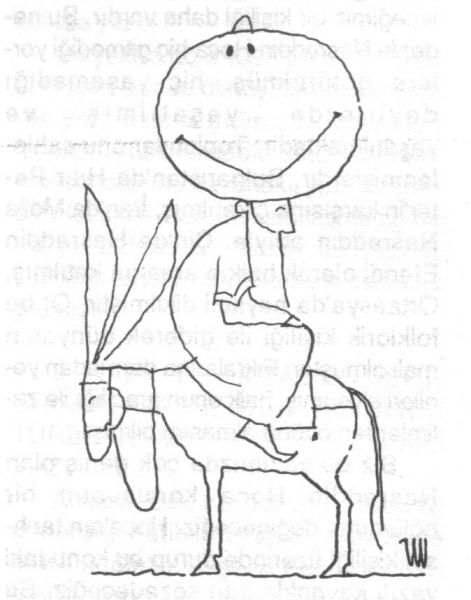
Nasreddin Hoca had a donkey.  One day he got it into his head that he could save a lot of money on feed by training the donkey not to eat.  So every day he gave his donkey just a little less food.  At first the animal seemed to labor on as if nothing had changed.  Even after his diet had been halved, the poor strong young donkey just soldiered on.  But eventually, as his daily caloric intake got reduced to almost nothing, he got weaker and weaker and slower and slower, but Nasreddin was so happy at the money he was saving through his brilliant austerity plan that he didn’t even notice.

Then one fine day, the poor, martyred beast just up and died on him, on the road, right from under his legs.

Dead.

“Damn,” said Nasreddin, “and just when he had learned not to eat.”

And without a donkey’s back to ride, he had to walk.


(All Nasreddin Hoca stories are versions learned from my father and I think would be public domain already anyway.)

Comment: nikobakos@gmail.com

New burial of Srebrenica victims – no comment

11 Jul

The forensics’ teams of the International Commission of Missing Persons considers this one of their most challenging cases ever, since the original mass grave, which they now think may have contained up to 9,000 bodies and not the original rough estimate of 7,000, was dug up with bulldozers for Serbian fear of its being found (of all things, this is what they decided they were going to get retroactive cold feet about?) and the bodies reburied in smaller pits all over Bosnia, damaging evidence, obviously, and leaving one individual’s body parts in a potential multitude of sites.  Some of the ICMP people have identified bodies that they say may have been buried, dug up and reburied up to three or four times and fewer than six thousand have been identified, subjecting Bosnians to this incessant wound re-gashing as the process continues and newly identified remains are buried in mass funerals.  It almost makes you wonder whether modern forensics and DNA technology are such a great thing.


Euro: Make Example of Croatia, Says Anti-Racism Group

17 Jun
By REUTERS Published: June 17, 2012 at 10:44 AM ET

WARSAW (Reuters) – UEFA must make an example of Croatia by punishing them heavily for the racism charges leveled at their fans during Euro 2012, the head of Football Against Racism in Europe (FARE) said on Sunday.

European soccer’s governing body has charged Croatia’s Football Federation (HNS) for racist chants and symbols displayed by the national team’s fans during the Group C match against Italy in Poznan on Thursday.

FARE, an independent anti-discrimination and social inclusion network which works closely with UEFA to identify instances of racism at matches, said hundreds of Croatian fans had racially abused Italy striker Mario Balotelli.

UEFA is also investigating reports that a banana was thrown on to the pitch in the same game, and is looking into racist chanting during two other matches.


Comment: nikobakos@gmail.com

“In the Land of Blood and Honey”

20 May

A lot of us probably had our doubts about this one – in retrospect, unfair doubts and probably (not a little bit) sexist ones.  La Jolie has made a film about us Balkanians…  How could she possibly understand our mystery, our inscrutable savagery, the complexity of our past?  A Hollywood vanity project, for sure.

It turns out this is a great film.  It’s beautiful as a film: beautifully written, shot, acted (some tragic editing errors or omissions though).  And it’s beautiful and intelligent as ethnography and history as well.  She’s modest about her descriptions of her work, but whatever corner of the collective unconscious belongs to our fucked up little part of the world, she was channeling it.

The film recently “premiered” in Belgrade.  A few dozen people showed up and half of those left after the first few scenes, which tells you how much progress we’re making on the Serbian front.  But it struck me really hard that Jolie didn’t attend either.  I thought it was cowardly and, after the love and intelligence she’s obviously put into the project, just plain stupid on her part. Granted, some of the actors, all Bosnian, meaning Serb and Muslim, have been threatened, had their car windows smashed but, you know, all great art has always provoked…

No really, why was she not there?  I clearly, for whatever historical or cultural or mostly emotional reasons, have a special love for Serbs.  I understand they often come across as — or are even – unruly, contrarian, inat-driven, loose cannons (this word, “inat,” deserves an entry of its own and can’t be wrapped up in a footnote).  But I know that more than anything they want to hear and be heard; they crave a healthy confrontation.  That the nineties continue to be simplistically narrated as the story of their villainy rightly pisses them off to no end and they want the chance, at least, to present another narrative; if they pretend that they don’t give a shit what the world thinks it’s just hurt pride or they’ve just given up trying.  Without wanting to add to the reams of crap written about what macho lunatics they are, Serbs are guys – by which I mean the women too – and if Jolie had gone it would’ve gained her instant balls and street cred’ in their eyes and led to all kinds of productive discussion and exchange; I’m not kidding one bit.  If she had truly wanted to say something about the Balkans or the Yugoslav wars and not just about women, she undid more than half the good she could’ve done.

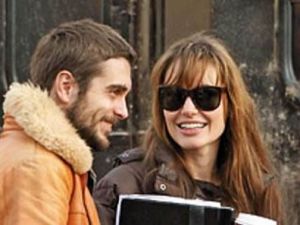
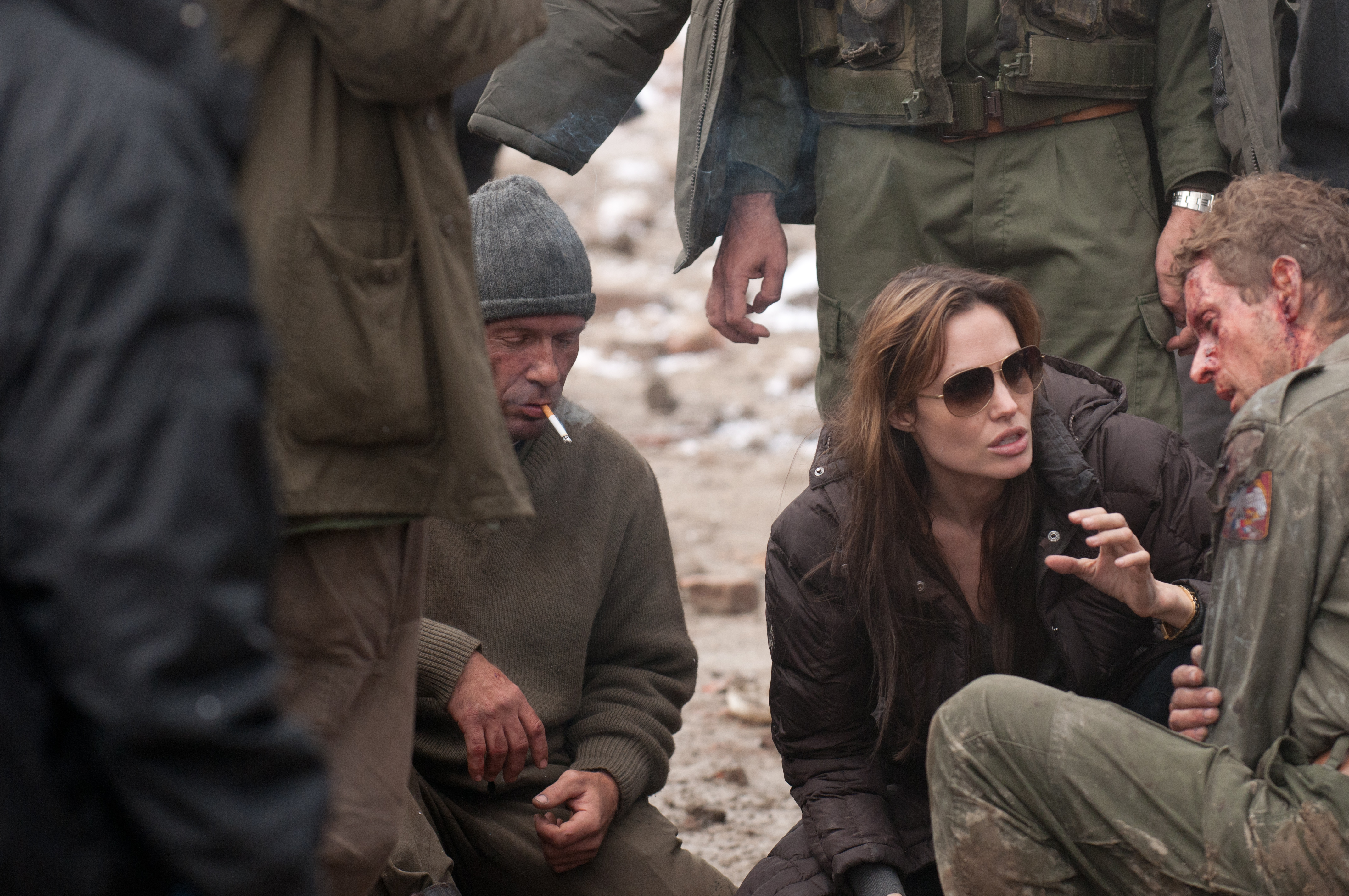
Jolie with extras

One thing that makes you furious about the isolation that was the result of that pointless separating into dumb little countries is that we don’t otherwise know these actors; we got a near fatal dose of Kusturica while Bosnia was on our screens and then it disappeared.  (See below for some extra photos of all.)  Their performances are flawless and their technical competence is proven, if by nothing else, than by the fact that they pulled off the amazing feat of shooting the entire film in both languages.  Not dubbing or anything.  They shot the entire film twice: once in SerboCroatoBosnoHerzegovinoMontenegrin (to be scrupulously correct but which I’ll just call Serbian from here on) and once in English.  Jolie and her team had something to do with how well this came off too.  They let the actors speak the English they speak, which is literally perfect but has the tiny idiosyncrasies that a non-native speaker’s naturally has.  This is the opposite of what Hollywood usually does, which is write a role for, say, Penelope Cruz, in an absolutely impeccable American English which someone with her incomprehensible accent couldn’t possibly speak and which makes her even more incomprehensible and cripples what might otherwise be a decent performance.  But beyond that, they’re all great.  If this one Sarajevo can produce all these actors it makes you want to live there just to go to the theatre or wait for someone to make their next film.

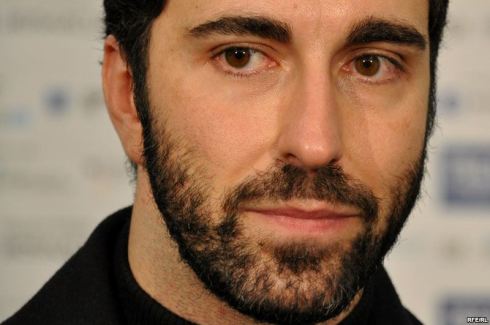
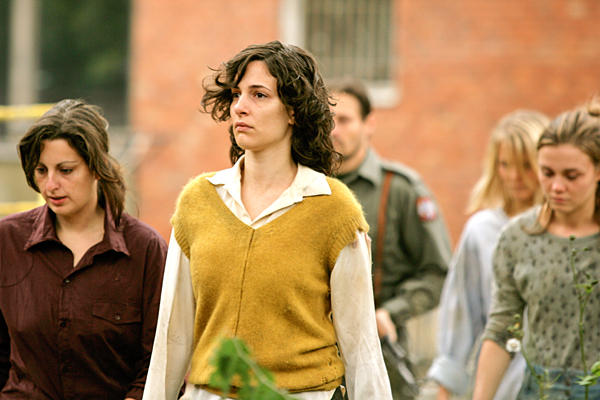
Of course the two you can’t take your eyes off and can’t get out of your head afterwards are the two leads: the painfully sexy Goran Kostić as Danijel, the Serbian cop thrust into the role of Bosnian Serb army captain, and Žana Marjanović as the inscrutable Ajla, the Muslim woman he falls for, one of those close to six-foot Dinaric beauties that make you hate all ex-Yugos; she goes out in one of the opening sequences in heels, a blue dress and a traditional silverwork belt and makes you want to cry, for all kinds of reasons.  I say inscrutable partly because a South American friend who saw the film described her as “parca,” which means dry or stiff or cold — the same root as “parched” maybe – and I had to explain that that attitude implies nobility in our parts, a posture that Ajla doesn’t slip from even for one moment, despite the hell she’s put through; in fact she clings to it even more desperately throughout, her dignity the only thing she has left, her only weapon against male power.  (“Archontia” is another word I need to give a full entry to at some point.)

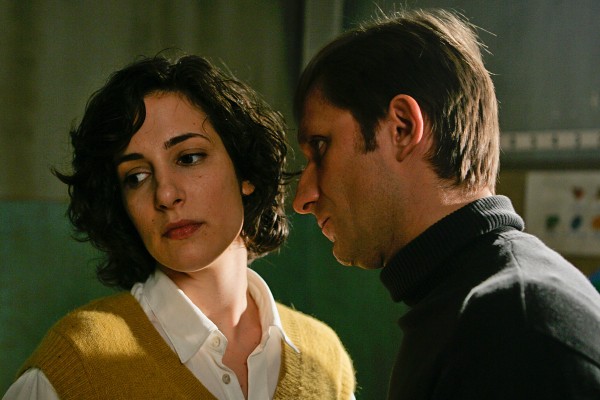
Goran Kostić (Danijel) and Žana Marjanović (Ajla)

They meet, fall in love just before the war — he in a spellbound way that would be unbelievable if Kostić’s performance didn’t make it so naively magical that you buy it — and then, under circumstances which also strain belief a tiny bit but which you forgive, she ends up in his “custody” as a female POW, for lack of a better word.  Jolie says some trite stuff in the “Making of…” about a “love story that could’ve ended up in happiness, in marriage and children and what war does to that” but, whether she knows it or not, she’s made a film about something so much more complex and true.  Ajla (Marjanović) is both terrified and in the grips of the acute, aching desires of Stockholm Syndrome, but though Danijel is constantly groping around blindly in her heart, he never knows whether she’s there because she “wants” to be with him or not.  Kostić plays the perfect good soldier and officer — the way perfect good soldiers have always been perfect: he’s brave, tough, loves his men, is completely scared to death the whole time and never finds the slightest relief from the tormenting doubts of what he’s doing.
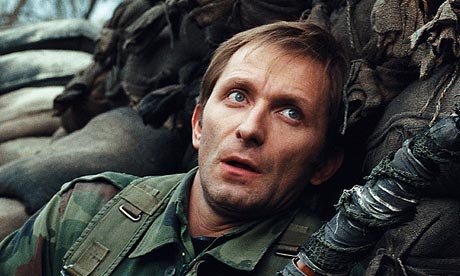
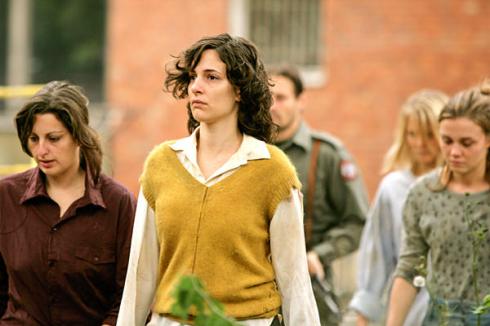
This is a film about anything but a love story — or it’s about a real love story, since these two are in love not in spite of, but because of, war.  It’s a story about the fear that women feel in the presence of potential male violence, something that no man will ever, ever understand in his gut, and Marjanović, like the painter her character Ajla is, gives you a hundred different shades of that fear; it’s about how men will never stop feeling the temptations of that violence; it’s about how sex and love are always about fear and violence.  It’s about how your tribal affiliations are not the product of the Western media but will burst out of you under the slightest pressure in what you had thought was a forgotten and buried language of hatred; it inverts the traditional Muslim-Christian power structure of the region’s sexual captivity narratives; it confronts your loyalties and asks what they’re worth to you; it throws your capacity for betrayal in your face and challenges you to deny it.  Serbian viewers might have been slightly flattered by the discursive lip service given to the Serbian position in the conflict.  But if the film has any real compassion for that position it’s in how the two lovers end up, a subtle and powerful metaphor for the two societies.*  Ajla is battered to no end — and a horrible one; it leaves you feeling crushed in ways that I am unable to describe and, as a man, wouldn’t try to.  But she achieves a kind of heroic closure ultimately that Danijel never can.  He’s the film’s true tragic figure, driven by a child’s insatiable thirst to be loved that’s impossible to quench and that ultimately destroys him in ways that she’s spared.
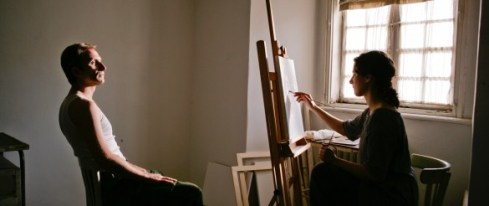
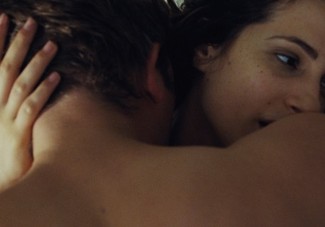
(* The absent Croats in this metaphor are that species of bad driver who never gets into any accidents himself but causes them all around him — just a calculating version.)

Get the Blu-Ray if you can.  It gives you a choice between the English or Serbian.  On either DVD or Blu-Ray, watch the “Making of…” segment and definitely see the “Deleted Scenes” because I don’t know what they were thinking when they cut these segments out of the final film.  If it was to fit Hollywood commercial length expectations it was particularly dumb because that audience is just not going to see this film anyway.  There are several segments in there that help you understand the sado-masochistic intensity of Danijel and Ajla’s relationship and how they get to that point.  And there’s one scene of priceless beauty where Ermin Bravo (Mehmet), sings what I think is a “sevdalinka,” a Bosnian love song, to his beloved, Vanesa Glodjo (Lejla) — see both below – a scene that breaks your heart with the realization that even another’s most exquisite tenderness will only relieve the agony of a tragic loss for a brief moment.  Every soul is on its own.

Some of the rest of cast:
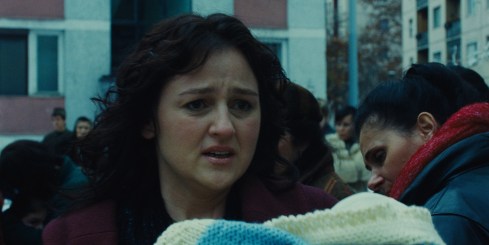
Vanesa Glodjo (Lejla)

Ermin Bravo (Mehmet)
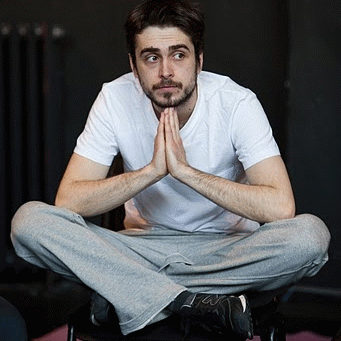
Boris Ler (Tarik)

And with Jolie

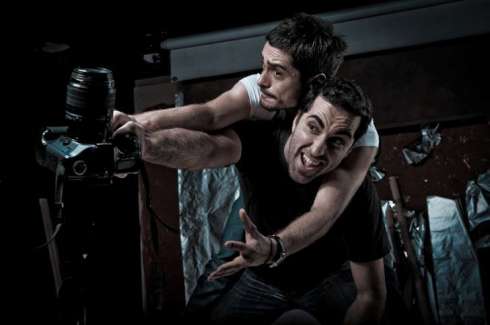
Ler and Bravo in a great shot (from another, unknown stage production) — again, this city must have great theatre… (photo: Irfan Redzović)

Comment: nikobakos@gmail.com


And On Albanians generally…

19 May

From Andrew Sullvan’s Daily Beast:

A reader writes:

“The Huff Post’s article is interesting but incomplete.  The best the writer can come up with by way of an explanation for Albania’s progressiveness on gay rights is that it has a strong “feeling of community” among the new gay Albanian activists, who also engage regularly in interventions and collaborations with other human rights NGOs and the government. The real explanation is much more basic – and way more interesting:

Until very recently, Albania was a total mess (I mean, it’s still a mess; you should see it, but it’s all relative). After all, Albania had endured over four decades of insane rule by Enver Hoxha, and when he died in the ’80s, the country descended into a period of prolonged chaos (remember the crazy stock market Ponzi schemes that nearly threw Albania into revolution?). It was just like North Korea would be if suddenly its totally unsocialized citizens were granted the freedom to do whatever the hell they wanted.

Fast forward a few decades and Albania achieved some measure of stability. It’s a new century. Technology advances connect the country to the rest of the world in hitherto unimaginable ways. The borders to neighboring countries like Greece opened up. It’s fair to say that the Albanians’ minds were blown. Exposed now to the Europe that Hoxha tried everything to prevent them from learning about, the population was able to take stock more fully of just how screwed up a country they had.  Decade after decade, as the world advanced, Albania had remained a North Korea-like backwater, and suddenly the veil was lifted. It’s like they’d just come out of stasis.

Albanians were (and still are) aghast at their fate. They’re deeply traumatized and embarrassed by how far they lag behind the rest of Europe, and they are OBSESSED with achieving modernity.  [my emphasis]

I was in Albania pretty recently and have friends there (and in Greece, were a number of them work on my family’s farmland). We talked about the push for gay rights, and they attribute it to the prime minister’s attempt to make up for lost time – to show the rest of Europe that Albania isn’t just making progress; it’s leading the way. The push for marriage equality there wasn’t quite a political stunt, but it was definitely intended to be an attention grabber that would change the rest of the world’s perception of Albania in the most dramatic way possible. The PM didn’t have any particular investment in the issue of gay rights; he just wanted to get Albania on the map FAST.

A few other things come into play, by the way. One is that it’s probably the most progressive Moslem-dominated country on the planet.  Read about Albania’s brand of Islam. It’s something unto itself. In fact, the Saudis have poured money into Albania to establish its brand of Islam there, and the Albanians thus far have had very little interest in embracing it. But that’s a topic for another email.”

Two points on what the above Beast reader writes…  My father was from Albania.  So kudos and high lauds to anyone who testifies and gives witness to what Albanians have been through in this century.  People’s complete ignorance of what an almost fictional Stalinist gulag that whole country was turned into for so many decades always infuriated me — did then and still does twenty years later — as the many friends and acquaintances that I’ve unfairly exploded at upon immediate detection of that ignorance can testify to.  (And then there were the justifiable “hay-siktiria”: like at lefty Greeks in the eighties who used to tell me everything in Albania was cool, or at Neo-Greek society in general who had emotionally abandoned ethnic Greeks in Albania until it rediscovered its claptrap nationalism in the nineties.)

Surprisingly I don’t find them to be quite as damaged as the writer says, however — they’re a pretty resilient bunch, to say the least — and I think they’re too proud, as well, for us to so easily ascribe Berisha’s comments to the channelling of some collective need to curry Western admiration; that’s probably a Greek projection.  When I went to Albania in 1992 to visit my father’s village and see relatives for the first time (my father never saw his parents again after 1945; my grandfather disappeared into a prison camp in the early sixties and my grandmother soldiered on in solitude until she died in 1989, just a year before we would’ve been able to see her again) I expected to find them all in shocked grief.  Instead — there were tears, yes — I found them in that state of relieved giddiness that one feels upon waking from a life-threatening nightmare and that they had almost immediately converted their experience into something like an absurdist performance piece that they had had to sit through and hadn’t quite understood but whose remnant bad taste they needed to laugh off at once.  To hear an eighty-year-old woman cackle about having to attend a “social criticism” meeting in what had been her church and confess that, yes, she kept two chickens more than what was permitted by the village collective’s policy, was a real lesson in how smart black humour sustained the peoples of Eastern Europe through the murderous idiocy of communism.  And, like the writer says, they were brimming with an enthusiasm to embrace anything that meant a new life.  Some beautiful parts of my village’s, and the country’s, culture may have been lost through that enthusiasm but we can do without any tradition that’s only preserved in the aspic of that kind of tyranny.

Some older folks in my village, Dervitsani, in the valley of Dropoli, the women with the characteristic white headdress of the region (click)  (photo from Michel Setboun)

Immigrants from Albania, of whatever ethnicity, brought lots of that strength and energy to Greece as well.  In the 1990’s, when Albanians flooded Greece and Greeks were faced with the horrifying realization that their northern border hadn’t really been with Austria all that time, many of them predictably behaved like racist jerks, a performance they’re repeating with others right now, except more viciously because this time they’re scared.  The Eurolatry and the essentially colonized core of the Neo-Greek mind produces a kind of delusional isolation that may be more impermeable than Albania’s ever was — a historical-emotional bubble of ignorance, a probably now unhealable neurotic disconnect from the subject’s surroundings — that made it hard for Greeks at the time to realize that that migration was only the most recent wave in a millenia-long process* that makes Greeks and Albanians practically co-peoples in so many ways.  There’s a show running in Athens now, with a sister production here in Astoria in New York, called “In-Laws from Tirane” — silly but fun and kind of smart ultimately — whose essential thesis is precisely that.  It opens with one of the main characters fuming that that year’s high school valedictorian was an Albanian immigrant kid and got to lead the town’s Independence Day parade, the irony — intentional or not — being that much of the Greek “independence” struggle from the Ottomans was fought by men who didn’t speak a word of anything but Albanian.  It’s made me happy to see how well-integrated a part of Greek life they’ve become lately (even as it crumbles around them) and what an almost American-style immigrant success story they are in so many ways.  Many have even moved on to the U.S., and are over-represented in entrepreneurial life here in Greek New York; the wildly successful seafood restaurant “Kyklades” in Astoria, known throughout the boroughs (but which I have some culinary gripes with), is owned by an Albanian who may not have seen the sea till he was fifteen.  They certainly have the kind of immigrant work ethic that puts everyone around them to shame.  When I was in Greece in 2010 I was initially baffled by the ubiquitous presence of young, attractive, well-mannered waiters and waitresses and found myself wondering who they were, since no Athenian kid has condescended to work as a waiter in about forty years, until I asked once or twice and then stopped.  They were all Albanian.

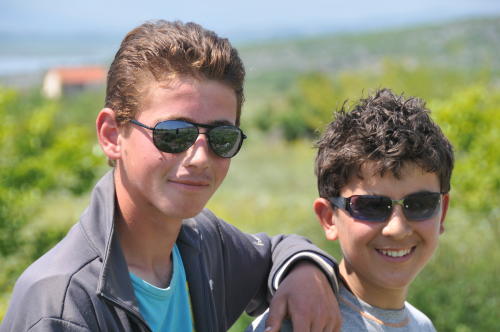
Two boys, Northern Albania, from Michael Totten

As for the writer’s Albanian “brand of Islam,” he means a heavily Bektashi-influenced form which one can probably apply to Balkan Islam in general.  The Bektashis are a Sufi order of almost Shia-like content and some pretty attractively unorthodox views of its own; on Wiki it’s surprisingly placed as part of an “Alevism” series, and they share some core beliefs and rituals, but I don’t know if either Alevis or Bektashi followers will ever tell you they’re related.  Centuries of harassment and outright persecution made both, but Alevis especially, fairly secretive about themselves and their practices; that changed radically in Turkey after some horrific twentieth-century episodes and the subsequent finding of a strong and admirably outspoken political voice on their part, but even now you get the sense that an Alevi (Turk or Kurd) needs to know you a little before he tells you.  I also don’t think either will tell you they’re Shiites: http://en.wikipedia.org/wiki/Bektashi_Order  http://en.wikipedia.org/wiki/Alevi (They’re both really interesting — read about them.)  The Bektashi order was widely associated with the Janissary corps; the classical period Janissary corps was heavily Albanian and Serbian in origin; maybe its influence in the Balkans was a circular process — I don’t know.  If you clear away the boogeyman-like associations the devsirme has in Balkan Christian legend, one of the things you learn is that many Janissaries, and even those in the Ottoman slave corps generally, maintained more contact with their culture and even community of origin than one would think (man, am I gonna get it for that one…).

Devshirme: http://en.wikipedia.org/wiki/Dev%C5%9Firme

World Headquarters of the Bektashi Community in Tirane, Albania

*Italians had trouble realizing this at the same time, meaning the almost equally constant history of Albanian migration to southern Italy and Sicily.  See Gianni Amelio’s beautiful 1994 Lamerica, which is the story of how a cool, smug Young European Sicilian gets stranded in Albania and realizes that he’s only a generation away from being counted among the wretched of the earth himself — and how dangerous it is to forget that.  It should be mandatory viewing in Greece right now.

Comment: nikobakos@gmail.com

Peace, Justice Elude Rape Victims Of Bosnian War

30 Apr

Bosnian Muslim women hold posters with the names of the missing during a protest at the U.N. office in Sarajevo in 2008. Hundreds of wartime rape victims were protesting the decision of the U.N. war crimes tribunal to reject the prosecution’s request for rape charges to be added against two Bosnian Serbs who were on trial for other war crimes.

A story from NPR, one of the U.S.’s saving journalistic institutions.  Read and listen to whole story here: http://www.npr.org/2012/04/30/151688541/peace-justice-elude-rape-victims-of-bosnian-war

And another NPR story from back in early April:

Two Decades After Siege, Sarajevo Still A City Divided

http://www.npr.org/2012/04/05/150009152/two-decades-after-siege-sarajevo-still-a-city-divided?ps=rs

“Even education is strictly segregated. Children from different ethnic groups — often in the same building — follow totally separate curricula.

Ahmet Alibasic, a professor at the University of Sarajevo’s Faculty of Islamic Studies, says the result is that today, most Muslim, Croat and Serb children are totally ignorant about each other.

“I must admit I am a bit worried, because many of the causes of the conflict are still there,” Alibasic says. “Given the wrong combinations of conditions and circumstances, they might produce another conflict.”

Hopes of restoring Bosnia’s prewar multi-ethnic tapestry have proved elusive. Many Bosnians hope that commemorating the 20th anniversary of the start of the war will revive international attention and stimulate efforts to build a more inclusive society.”

Also, SEE Angelina Jolie’s Land of Blood and Honey.  I know; I had my doubts too, but it’s excellent.


Comment: nikobakos@gmail.com

Turkey in Europe

22 Apr

According to Stephen Kinzer, New York Times correspondent and the paper’s bureau chief in Istanbul for a good part of the nineties, the appeal of EU membership to those countries waiting for it is (or was) political, social, and economic.  “For Turkey it is also psychological,” he writes in his 2001 Crescent and Star:

“The central question facing Turks today is whether their country is ready for full democracy, but behind that question lies a more diffuse and puzzling one: who are we?  The Ottomans knew they were the servants of God and lords of a vast and uniquely diverse empire.  The true heart of their empire, however, was not Anatolia but the Balkans…  But by caprice of history the founders of the Turkish republic found themselves bereft of the Balkans and masters instead of Anatolia.  To make matters worse, through a series of twentieth-century tragedies Anatolia lost most of the Armenians, Greeks and Jews who had given it some of the same richness that made the Balkans so uniquely appealing.”

There’s a lot there I’m not sure of, like the Ottomans’ heart having been in the Balkans and their backs turned on Anatolia.  I also don’t know if “who are we?” isn’t too categorical a way to phrase the dilemma Kinzer is talking about.  Unlike Greeks, Turks know who they are; their growing willingness to accept, not only the former existence of their neighbors among them, but the plurality of their own ethnic make-up would indicate that: Albanian fraternal associations, Tatar and Circassian language classes, seem to be coming out of the woodwork of the Republic’s forced homogenization, and even the lay-low-and-keep-your-head-down Alevis have found a new courage in asserting themselves.  (Poor Republic: no sooner does it harass one minority out of its existence, another one pops up to take its place.)  That’s a process that requires confidence, whereas we remain isolated in our ignorant dream of purity — and banging our feet to prove it to the rest of the world on top of it — a ringing sign of insecurity.  As mangled as Turks’ knowledge of themselves may have become by their own nationalism, I think phenomena like nostalgia for the multiethnic or the Neo-Ottomanism that has pervaded cultural life and even motivated political life and foreign policy in Turkey recently (and I don’t think that’s a bad thing or necessarily a “threat” to anyone; we, Greeks, might want to take advantage of it actually) is an attempt to right that disfigurement, not a deep existential reorientation.  Proof might be that since Kinzer wrote his book in 2001, Turkish membership in the European Union has pretty much become a dead-in-the-water issue.  And that may be partly because, in almost head-on contrast to Kinzer’s interpretation, Turkey was looking for political and economic benefits and not for Europe to validate its psychological needs, as the Neo-Greek statelet always has since its beginnings, a craven and cringingly embarrassing pandering to the West’s classical image of what Greeks are supposed to be being the foundation of Neo-Greek identity.  However the Ottomans may have felt about the Balkans or wherever modern Turks end up with their renewed embracing of the Ottoman past, they seem to be increasingly feeling — even the old, staunchly Kemalist bourgeoisie, or at least their children — that they don’t need European validation to prove they’re part of a civilization that they’re not.  And good for them.  I wonder when we’ll get the message.

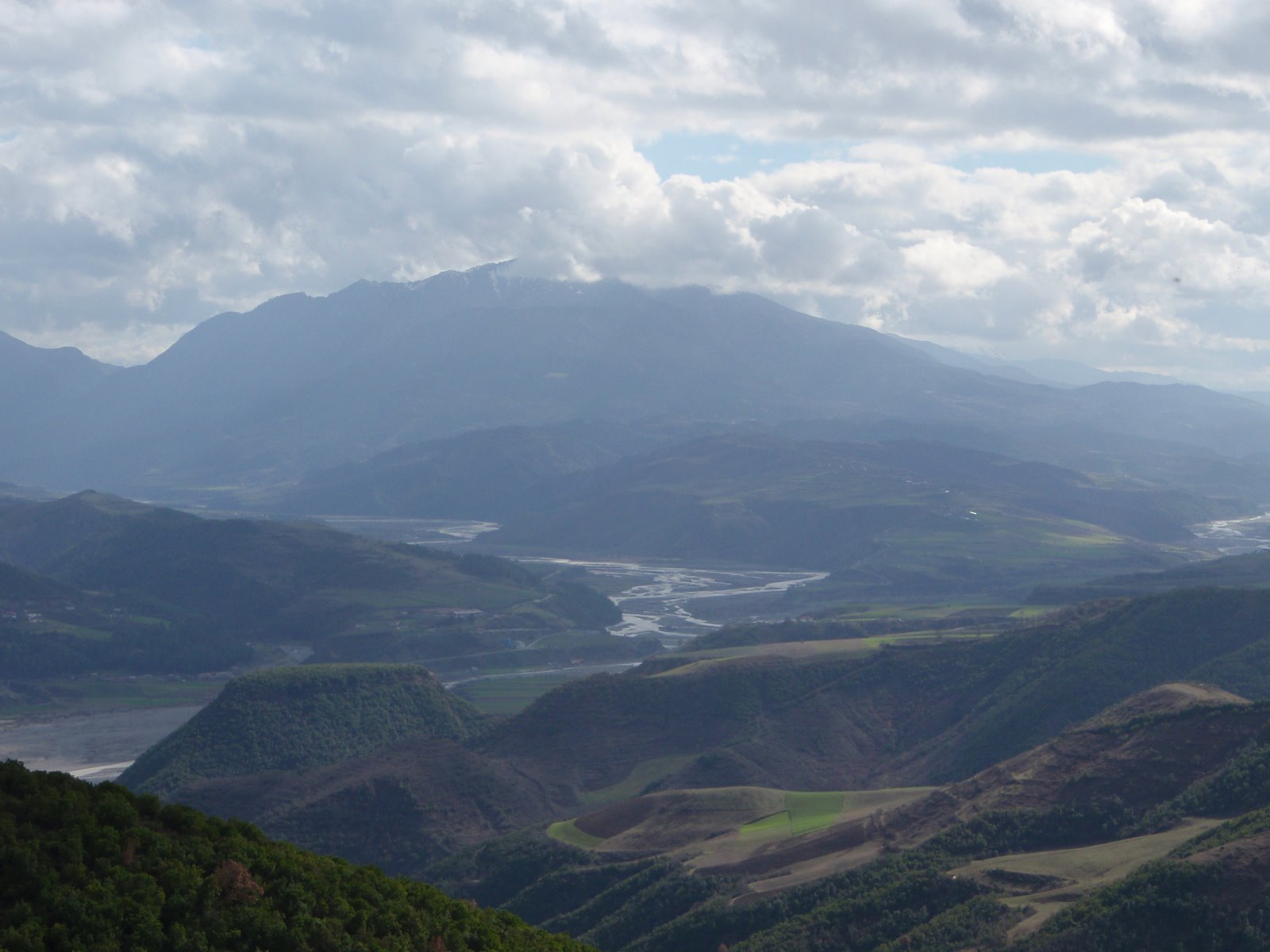
On a lighter note, it’s not often one hears the Balkans described as “so uniquely appealing.”  It’s a line I’ll have to remember.  Often when people find out I’m Greek, they launch into delirious and happy memories of the Aegean and little white houses and sparkling blue waters and then I have to watch their faces drop as I tell them: “Well, the part of Greece my family is from is really more the Balkans than the Mediterranean…  And it rains all the time.”

Landscape approaching my mother’s village, in its usual mood. (click)

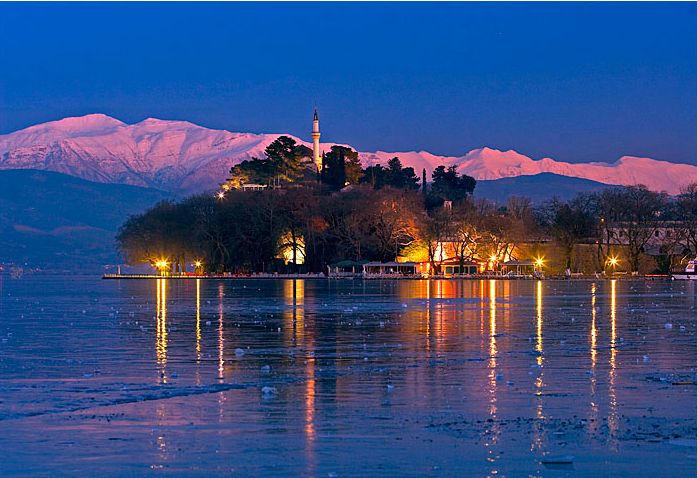
But then it is often “so uniquely appealling,” to get back to the Turks and the Balkans.  The main city of the region (Epiros) is Jiannena/Yanya, a beautiful little city by a lake that always had an air of luxuriant civility about it, proof of which may be that the Greek population didn’t rush to pull down the minarets or demolish all the mosques of the city as soon as the last Turks left in the twenties.*  It’s one of those Balkan cities the Turks loved.  Here’s a winter photo of Yanya’s main cami, the Aslan Pasha Mosque, overlooking the icy lake, below. (click)

Jiannena deserves a post of its own.  I gotta dig up some 2010 notes I have.

* On the other hand, the city government and developers have done all they can since WWII, including harassment and straight-out vandalism, to expropriate the city’s large and very romantic Jewish cemetery, which unfortunately for the city’s 40 surviving Jews, sits on some prime real estate.  Last I heard they had taken the issue to the EU, which makes me very happy.  Maybe the economic slump will give them a reprieve.  More on Jiannena’s Jews in the future.


Comment: nikobakos@gmail.com

Nole! Nole! Nole!

20 Apr

Novak Djokovic beat Alexander Dolgopolov at the Monte Carlo Masters on Thursday, just hours after finding out his beloved grandfather had died.  After almost succumbing at first to the shock and grief, he rallied and emerged victorious, advancing to the quarterfinals.  Then, walking off the court, he broke into tears, unable to speak to interviewers.

From the Telegraph:

“The opening set was almost uncomfortable to watch, for Djokovic was so far from being himself. Normally a superb judge of attacking options, he came out swiping at the ball as if blaming it for what had just happened.

A couple of enormous forehands were winners, but plenty more flew long, and Dolgopolov had the first set 6-2.

That seemed to do the trick for Djokovic’s concentration. The fog cleared from his eyes and he romped through the second set 6-1.”

Then he beat Robin Haase today to advance to the semifinals.

Here’s a “60 Minutes” interview with him from March with some footage of him with his grandfather, among other things.  His relationship to his childhood trainer is particularly sweet (he calls her “kardia mou/kalbim/my heart” as he’s walking through the gate in the final scene):

I wonder if he would’ve agreed to the interview though, if he had known beforehand of the segment’s condescending voice-over comments about Serbia and the lame questions that would be posed to him.  In any event, Djokovic answers with a smiling turning of the tables, taking — maybe unconsciously — Simon’s attempt to have a twenty-four-year-old tennis star answer the segment’s stupid implications of Serbian guilt and turning it into a statement on Serbian toughness.  No Bob Simon, Roger Federer doesn’t constantly carry the heavy burden of making Switzerland feel good about itself, its role as an international center of money-laundering and secret banker to world dictators, its racist immigration and asylum policies, and its cushy, amoral “neutrality” because, despite all that, the Swiss seem to feel just fine about themselves and Switzerland isn’t villainized constantly and internationally pariah-fied like Serbia still is.  It’s i-n-f-u-r-i-a-t-i-n-g how current and accepted these simplistic, patronizing interpretations of the Yugoslav wars of the 90’s still are twenty years later.

But blow all that and enjoy Nole’s incorrigible Serbian swagger.  It’s such a refreshing difference from the mincing p.c. humility you’d probably get out of so many other men in his place and in our time, or out of some American athlete who’d be talking about “God” and his family.

Watch a  strong young man flush with pride in himself and his deeds.

‘Cause too many someones, somewhere, probably think he’s “a little inappropriate.”

Vjecnaja pamjat for Novak’s much loved grandfather and always onto bigger and greater victories for him.  Your fans are always beside you.

P.S. he beat Berdych today (Saturday) and goes to the final against Nadal tomorrow!

Comment: nikobakos@gmail.com

“…a pathetic longing to be good Europeans…”

10 Apr

From Blood and Belonging: Journeys into the New Nationalism, Michael Ignatieff:

“The misery of the Balkans stems in part from a pathetic longing to be good Europeans — that is, to import the West’s murderous ideological fashions.  These fashions proved fatal in the Balkans because national unification could be realized only by ripping apart the plural fabric of Balkan village life in the name of the violent dream of ethnic purity.”


Comment: nikobakos@gmail.com

Corn Bread, Hog Maw and Chitterlin’

9 Apr

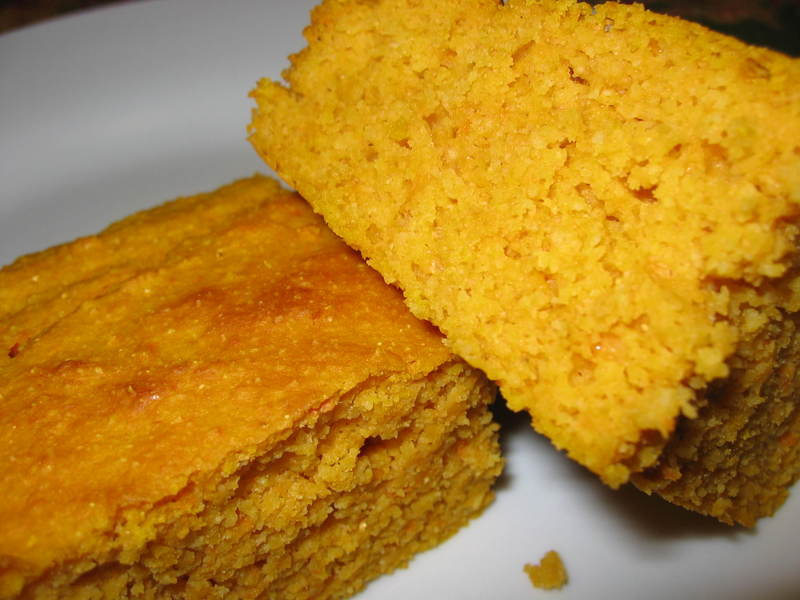
I’ve been reading so much about the Balkans lately (I’m on my third consecutive read of Milovan Djilas’ Land Without Justice) that I’ve developed an intense craving for cornbread — serious, hard, Balkan cornbread, what they call “bobota” in Epiros or “proja” in Serbia and Montenegro; I don’t know if they do so anywhere else.  I also miss a kind of cornbread burek they used to make – “bliatsaria” they used to call it – which was two layers of cornbread with a burek filling in between: spinach, leeks, feta, maybe eggs.  Corn was the poor man’s wheat; it yields far greater amounts of grain per acre than wheat does and will grow almost anywhere, like in my mother’s village, where after two feet you hit bedrock.

Does anybody have a recipe?  Somebody from the Epiros-Albania-Montenegro-Sandjak axis, or someone of Pontio-Karadenizli background is most likely to know.  The sweet, cake-like recipes  that people have posted in this recent New York Times article definitely won’t produce the dry, nearly unswallowable texture I’m looking for.

The next day, when it became truly rock hard (kids would use it in slingshots my mom used to say), they used to break it up into chunks and dump it into buttermilk (xynogalo, ayran, lassi) to make it edible.  I know that traditional cornbread in the American South used to be like that too because once in a conversation about food with a fifty-ish Black woman here in New York, I mentioned the buttermilk practice and she doubled over laughing, then smiled and snorted with that great look of feigned embarrassment and homey joy that Black Americans make when they’re talking about something – a guilty pleasure usually – that’s too down-home or too ghetto to own up to.  She couldn’t believe that people half way round the world used to eat stale cornbread mush with buttermilk the way they used to.

And tell the folks in the comments that lard is good for you and that, yes, it’s time to talk about chitterlings.  Easter’s coming up, innit?

Here’s Joe Cuba’s 1966 boogaloo classic “Bang Bang” which I used to think was called “Cornbread, Hog Maw and Chitterlins” because those are the only real lyrics.  What’s boogaloo?  “…the first Nuyorican music”: Boogaloo

Comment: nikobakos@gmail.com