Tag Archives: Greeks

Σήμερον κρεμάται επί ξύλου…

17 Apr

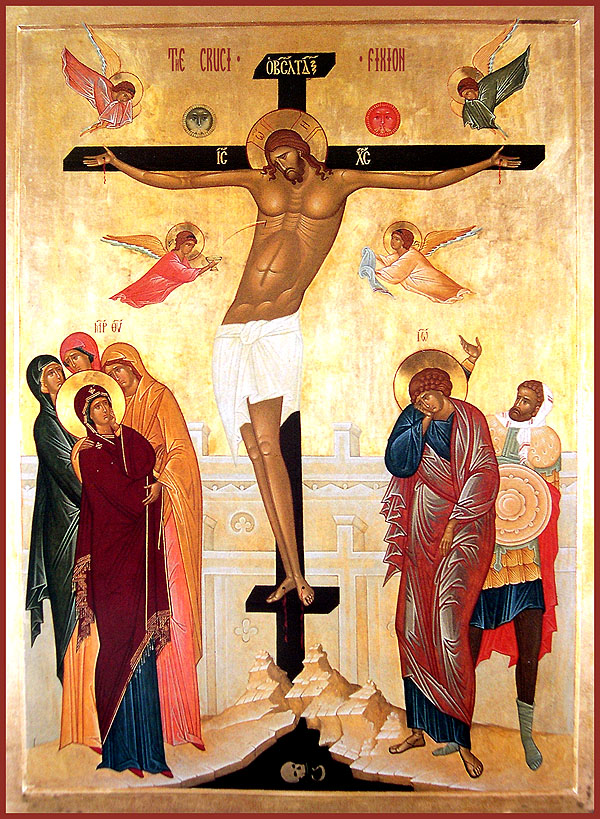
crucifixion2

(click)

“Today hangs suspended from a piece of wood, the One who suspended the earth amidst the waters…” begins the main hymn of tonight’s service in the Orthodox Church.  It’s matins for Good Friday, sung the night before; it corresponds to the Oficio de Tinieblas in the Catholic Church, or the Via Crucis, or Stations of the Cross.  Except it’s not the forty-five minutes Cliff notes version.  It’s a four — with Russians, five plus — hour, perfectly paced and structured, oratorio that uses twelve gospel selections (it’s colloquially known as the “Twelve Gospels” among both Greeks and Russians and I imagine other Orthodox peoples), and a surfeit of beautiful and psychologically astute poetry and music to tell the story of the Last Supper, and Christ’s arrest, judgement, crucifixion, death and burial.  It’s my favorite Holy Week service.  Because it’s a masterpiece.  It doesn’t draw any of its power from made-up, sadistic Mel Gibson details that aren’t even in the gospels: like how many times Christ fell, or where they whipped Him, or where and when they spat on Him, or where He scraped his knees, or any of the bloody kitsch and sensationalism and fabricated detail so physical that it’s disrespectful and that the Catholic Church allows and encourages; one speaks of the body of Christ with a certain laconic awe I would think, no matter what it was put through.  Its power comes from the perfection of its theater and its theology and — if anything — from the spareness of the story it tells.

Background to this post…  For years, whenever I heard that relatives or friends from Greece, especially under a certain age and especially from Athens, were coming to New York to visit for Easter, my guts would get twisted up in knots of anxiety in anticipation because I just could not endure having them around at that time of year.  Anticipation of what?  Well, there came a time, for me a crucial turning point in post-1974 Neo-Greek culture — it was around the early-eighties — when Greeks started asking each other: “Where are you going for Easter?”  And I couldn’t imagine what I would answer if asked.  Where am I going for Easter?  I dunno…  I’m going to be home.  I’m going to my village.  It’s Easter.  Where should I be going?  This is because there came a point, when, for the demographic I’m talking about, Holy Week and Easter had become the equivalent of Spring Break, some free days to go off on a vacation somewhere.

So I could anticipate their attitude.  I knew they wouldn’t appreciate the subtle shift in the pace of life that occurs in a Greek neighborhood like Astoria when Palm Sunday dawns.  The sobriety mixed with the rush of preparation and excitement.  I would anticipate instead the surprise, at best, but mostly the grinning condescension, with which they’d react to how seriously diaspora Greeks still took this time of the year, how backwards and un-hip and un-Euro it was of us.  I’d know they’d want to go out to a cool baraki on Good Friday night.  I’d know they’d ask to be taken shopping on Holy Saturday, in the middle of the cooking and cleaning: there were some shoes they had seen on sale at Macy’s.  I had two Turkish roommates for a while once: totally secular, modern Istanbullu girls; they just didn’t eat pork.  And out of respect, or just to prevent possible squeamishness on their part — they had never even said anything to me — I would keep salami and pancetta and other pork products in the basement refrigerator that they never used.  On the other hand, I once had to have a screeching match with a Athenian guest about not having meat in the house on Good Friday — I ended up feeling like a friggin’ Talib — because she needed her protein and fasting reminded her of how oppressive her mother was during her childhood.  Just a couple of years ago, a cousin saw me go off to the first Nymphio on Palm Sunday evening and said to me: “You mean…like…you’re going to go be going to church…like…every night this week?  In Greece nobody goes.  That’s something left over in the diaspora…” she had the archidia to say to me.  It was never something they had lost; it was always something “left over” among us.  I said nothing.  But, as you can imagine — as opposed to the sentiment of “Next year in Jerusalem” — the idea of being stuck in Greece for Easter had always been my nightmare.  I only came this year because it was going to be one of the rare years professionally when I could go to my father’s village in Albania for what I knew would be a traditional Easter that wouldn’t infuriate me.

And instead I’ve been amazingly and pleasantly surprised.  I don’t know what Greece it is that this cousin of mine lives in where nobody goes to church, but all through Lent and especially this week, every church I’ve been in has been packed.  Tonight was the most moving “Twelve Gospels” I’ve ever attended.  The massive (as massive as a pre-Tanzimat church could be) eighteenth-century, stone cathedral of Jiannena was filled to the rafters — literally; it has a two-floor gallery where the women used to traditionally stand and even both of them were full.  The cantors were perfect.  The procession of the Cross immaculately pulled off.  I felt like Vladimir’s envoys in Hagia Sophia.

But what most moved me most was the breadth of age and sex of the crowd.  If anything, there were even more young people than there would be in New York — young guys, parea — following the text from the little black book carefully, people with that relaxed reverence that the best Greek — knowing how to be respectful, but comfortable in his father’s house — displays when in church.  Almost everyone stayed to the very end.  I really felt in my heart and gut what Yosef Eliya felt in his Purim poem when he writes: “Tonight the synagogues open their arms wide to the faithful children of my ancient people…”

Tomorrow it’s off to Albania.

Kale Anastase and Happy Easter…my ancient people.

Comment: nikobakos@gmail.com

Ignoring Sochi

18 Feb

putin-bigALEXEY NIKOLSKY/RIA NOVOSTI/KREMLIN POOL (click)

Not so hard to do.  I was never such a fan of winter sports; nothing leaves me transfixed like the gymnastics or the swimming or the tennis of the summer games.  But mostly, I had just made up my mind to not participate in any way in the Putinshchina’s premier celebration of its imperial splendor.  They’re the most expensive games ever; they’re the most corrupt, with the Tsar’s cronies making billions on construction contracts given away at astronomical costs; they’re the most ecologically destructive; they’re run by a government that’s a grotesque human rights violator on all levels.  I understand we make some compromises; I had my problems with Beijing too.  But here there is no more room for compromise, because I think — without exaggeration — that these are the most morally compromised Olympic games since Berlin 1936.

And then there are the Circassians.  I became obsessed with Circassians in high school because I had to know who these people were, so physically beautiful apparently, that they held the entire Near East in thrall for centuries.  Circassians were the first reason I ever went into the New York Public Library, because the library at Stuyvesant didn’t have anything on them.  This is also around the time, as a nerdy sixteen-year-old, that I started developing the totally adolescent, romantic fascination I still suffer from, for honor-obsessed, heavily-armed highlanders — Montenegrins, northern Albanians, Pashtuns — who don’t easily let themselves get pushed around by outsiders.   It fed a lonely teenager’s fantasies of empowerment then.  Now, I couldn’t tell you.  Probably still.

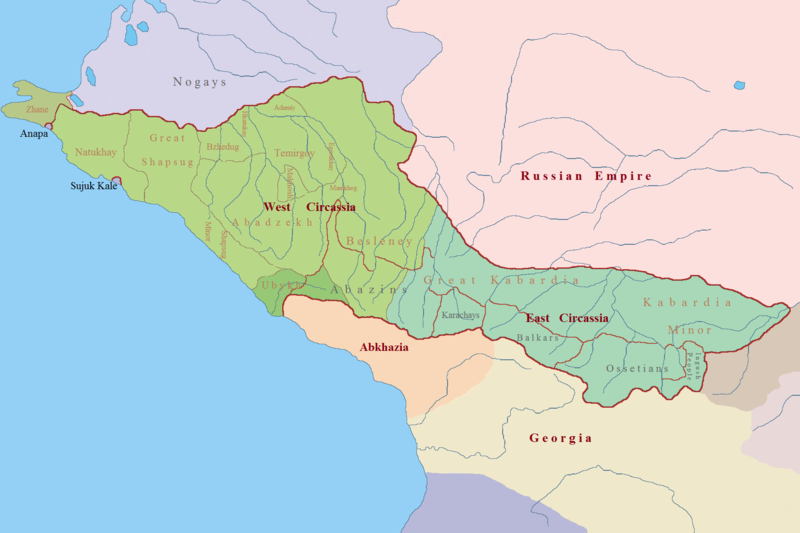
The Circassians lived in a huge swath of plain, foothill and high mountain country in the northern Caucasus.  Most of the sites of the this month’s games are being held on formerly Circassian territory.  This is a map of their general distribution in the eighteenth century, right before Russian expansion southwards began:

Circassia_in_1750

(click)

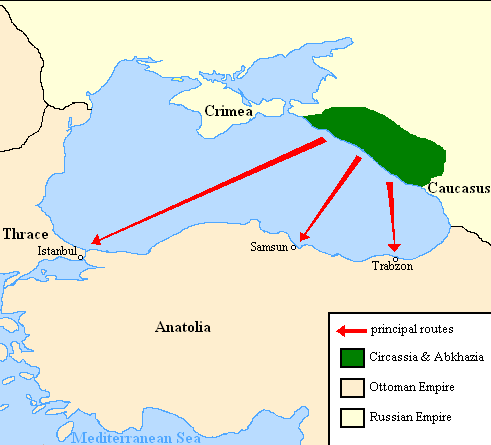
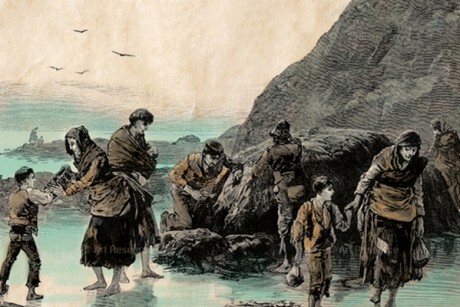
For more than a century they fought a brutal tooth-and-nail war against the Russians and their Cossacks.  When they finally capitulated in 1864 it was in Sochi.  The majority, which would not agree to an oath of loyalty to Russia were deported, in what was probably the first campaign of ethnic cleansing of such dimensions in modern history.  For months, the beach at Sochi was a Dunkerque-like humanitarian disaster zone, with tens of thousands of shelterless, starving and diseased Circassians waiting for Ottoman ships to take them to safety in Anatolia or the still-Turkish Balkans or dying on the spot.

Expulsion_map_of_the_Circassians_in_19th_centuryIt certainly represented the largest civilian death toll of any war up to its time and today, ninety percent of people of Circassian descent live outside their original homeland, mostly Turkey, but also Syria, Jordan and Lebanon.

The suffering of Circassians and all the other Muslim peoples of the Caucasus are laid out in a bit of an uneven but heartfelt and informative book by Oliver Bullough called Let Our Fame Be Great: Journeys Among the Defiant People of the Caucasus — here’s his website too (check out some interesting pics): Oliver Bullough: Let Our Fame Be Great.

lofbg-usa-cover-300w

Bullough goes through, in excruciating detail, the suffering of the Circassians in the past, and the non-stop massacres, mass deportations and repeated mass deportations, carpet bombings and cleansing campaigns that the mountain Turks, the Chechens, the Ingushetians and the various peoples of Dagestan have been subjected to till practically our day.  It’ll certainly give you a keener insight into the sources of Chechen rage.  (Dzhokhar Tsernaev.)  It’s torturous to read.  But it also must have been extremely difficult for Bullough to write as well — I don’t envy him his position — since you realize early in the book that he has a deep and personal relationship to Russia, Russians and Russian culture as well and that he did not go to the Caucasus to simply vilify Russians and make an account of two hundred years of Russian atrocities.  He has one very painful to read passage in his conclusion, where he recalls an image told to him of a young Chechen boy cowering and hiding in a corner as bullets fly around him, an image he would like to convey to Russians:

“And it is a an image that I have kept in my head when writing this book, to avoid the world view of the Russian rulers who have imposed their own pictures on the Caucasus for too long.  I hope readers will have seen that the history of Russia’s conquest is one of tragedy for the people of the mountains.  The Circassians, the mountain Turks, the Ingush and the Chechens have all suffered horribly just so the map of Russia could be the shape the tsars, the general secretaries and the presidents wanted it to be.

Sadly, that suffering is not well-known in Russia, perhaps because Russians themselves have suffered so terribly that they prefer not to remember the horrors they have imposed on others.  Joseph Stalin is supposed to have said: ‘One death is a tragedy, a million deaths is a statistic.’”

After what his project consisted of, it’s hard not to be moved by the compassion Bullough shows for Russians.  But as someone with his own respective affective investment in Russia and Russians, I think he may get something slightly wrong there; it may not just be that Russians prefer not to remember the horrors they have imposed on others.  Perhaps most Russians cannot even bear to remember the horrors imposed on them yet.  I often find myself feeling like an ass with my Russian friends, hounding them on how they’re not angry enough about their past, or, especially, angry at how their future is starting to increasingly look like their past.  I had one friend burst into tears at my haranguing once: “Kolya, you’re expecting us to walk around every conscious minute with the awareness that eighty years of our lives were one nightmarish mistake.”  What do you say to that?  In a society where two generations ago every family lost one in five of its men, in a society where there is almost no family that didn’t, at some point, have a first degree relative taken away in the middle of the night who was never seen or heard from again, does the word even fall to me — to use the Greek expression — to tell them what to remember and how?

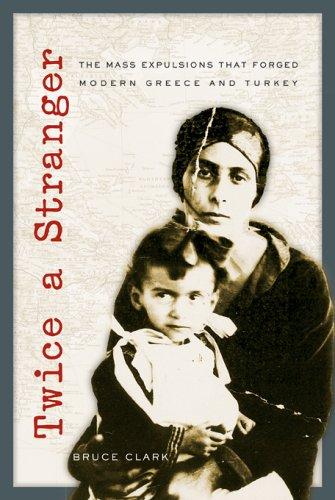
A book I’ve talked about a lot on this blog is Bruce Clark’s Twice a Stranger: the Mass Expulsions that Forged Modern Greece and Turkey, about the Population Exchange of the twenties.  In one really fascinating chapter he tells the story of a mayoral election in Ayvali in the nineties I think, the town on the Aegean coast opposite Mytilene that was one hundred percent Greek before the twenties and is now almost exclusively populated by Greek-speaking (till a generation ago at least) Turks from Crete.  The more progressive mayoral candidate has, as part of his agenda, a plan to restore some of the town’s Greek churches as tourist sights, generally playing on Ayvali’s Greek past as an asset and not something to be forgotten or hidden.  And when he loses he experiences this very poignant moment of realization — that the idea was a little too much, was asking too much, that the pain of the past was still too raw; that, as he put it: “It’s too soon to remember.”

For Russians, for Chechens, for Turks packed up and out of their beloved Crete, it may be too soon to remember.

But when then?

412711-l

Ok, ok…

18 Feb

I will provide readers with an explanation for that previous post: “Christouli mou, are we still talking about this stuff?”  (translation: “Sweet Jesus…) because some readers complained that it wasn’t cool of me to insert a few intriguing remarks in a Greek text and then leave non-Greeks in the dark.

But first, let me finish reading the thrilling prequel to John V.A. Fine, Jr.’s The Late Medieval Balkans: A Critical Survey from the Late Twelfth Century to the Ottoman Conquest, which came up in this previous post: Albanians in Greece and the “documentary that shocked Greece” from SKAI,”          

978-0-472-08260-5-frontcover

which is his The Early Medieval Balkans: A Critical Survey from the Sixth to the late Twelfth Century, because it deals with the period crucial to the ethnic/racial/genetic subject matter of that Greek text.

9780472081493_p0_v1_s260x420        

Philopomeon, at his beautiful blog, “Gemisto’s Paradox” — really fascinating; check it out — comments: “Indeed. This new eugenics is taking off big time online. Good thing it should at least make us Neo-Hellenes thing twice about racism and race-based nationalism. Our paternal-line Ydna is hopelessly diverse.”

But it won’t.  It’s already serving to reinforce the old myths.

“Syria Is Not A Country” — Andrew Sullivan lets fly another one of his kotsanes and then rushes to cover his tuches

27 Jan

Sykes-Picot

He got enough flak for the post (read through all the ctd.’s too — very interesting) and I feel kind of bad giving him more after so many months, but it’s been in the back of my mind since the fall and the argument is so irritating that I had to put in my own two cents.

It seems that every Sullivan-type pundit rushed out in 2001, or more probably 2003 when they were making their Iraq predictions, and bought some book about the Paris Peace Conference: “Paris 1919” “The Peace to End All Peace” — it’s an entire genre in itself.  And there they found out about some magic secret, like in a Dan Brown novel, called the Sykes Picot line, that supposedly explains everything about the Middle East’s dysfunction, and like a little kid who realizes he’s said something that the adults have found smart or funny, they go around repeating it ad nauseum: “Sykes-Picot Line”…”Sykes Picot Line” … “this guy Sykes and this guy Picot”…”The Sykes Picot Line…”  Listen to Sullivan’s own pedantic tone:

“Syria as we now know it was created by one Brit, Mark Sykes, and one Frenchman, Francois Georges-Picot in 1920. Originally, it included a chunk of Iraq (another non-country), but when oil was discovered there (in Mosul), the Brits wanted and got it. With that detail alone, you can see how valid the idea is of a Syrian “nation” is.”

The whole point is that most of the nations of the present Middle East are artificial, colonial creations — arbitrary lines drawn on a map –and that explains everything.  First, these lines are not arbitrary.  Whatever you might want to say about Sykes or Picot, or Churchill or Lloyd George or Clemenceau — that they were gross imperialists (which is not even redundant really but simply a tautology: “The King is a gross monarchist…”) or anything else, they weren’t ignorant or anistoretoi.*  The units they put together corresponded, as so many of Sullivan’s readers point out to him, with regions with long, historically recognized identities.  Where you look at a map of the Middle East and do see straight artificially drawn lines, they were drawn through places where nobody lives.  Otherwise, within every one of those lines, there has always existed a shifting, changing, re- or de-centralizing identity, but one with clear continuities nonetheless.

(*Anistoretoi – ανιστόρητοι – is a Greek word that I like very much, because it literally means “un-historied” — historically ignorant, obviously, but there’s something about “un-historied” that just seems to me like a sharper condemnation of inexcusable lack of knowledge — no? — so you’ll see it on this blog here and there.)

Thankfully, no one says this about Egypt, because it so obviously has a longer continuous history of unified consciousness than even China.  But what Sullivan, so damn pompous — or just so gay and so Magdalen — dismisses as the “non-country” of Iraq, the flatlands of the Tigris and the Euphrates basin, even when semi-splintered into northern, central, and southern parts, as Iraq seems to be doing now, was always seen as a unit: certainly geographically but even culturally.  The two regions the Greeks called Libya and Cyrene may correspond to a west-east division that is still apparent in modern Libya (Tripoli and Benghazi), but their union is not necessarily artificial or inherently problematic.  The headland to the west of Libya we call Tunisia was the first region called Africa by the Romans, where their ancient enemy Carthage had once stood.  And the region where the northwestern section of the Fertile Crescent bends over and meets the Mediterranean has been called Syria since the Greeks and was probably seen as a recognized cultural entity far before them.  The mountainous Mediterranean littoral of this Syria — what’s now Palestine and Lebanon and maybe a new Alawite state waiting to be born — was always a space slightly apart and more heterogeneous, but Syria nonetheless.  (The arid plateau across the Jordan, inhabited by the Moabites and Edomites and Nabataeans and all those other peoples the Israelites are always defeating in the Old Testament because God loves them more, was also a region of a recognized coherence of sorts not just made up by the Brits when they decided to call it Trans-Jordan.)  Syria was the birthplace of Christianity as an organized religion.  Syria was the Romans-Byzantines’ richest and most sophisticated eastern province.  Syria was the prize catch for the Crusaders; the real studs among them who could, got themselves a piece of booty there, not the “Holy Land.”  When Zainab bears her lament to the people of Shaam (Syria or the Levant) in Agha Shahid Ali’s beautiful poem she cries out: “Hear me Syria…” addressing the people of the seat of Umayyad power in Damascus — the one in Syria — that had massacred her sacred family.  Sykes and Picot didn’t make this stuff up.

What Sullivan wants to say, and what’s truly problematic about his assertion, is that Syria is not a country because it’s not ethnically or confessionally homogeneous, and dismissing it as a state for those reasons is a far more eurocentric, and anistoreto, an idea than he may know.  Because if those are our standards for nation-hood, there are very few countries in the world.  By those standards, if Syria is not a country, then England and France aren’t countries either.  Because a polity called the Kingdom of England, or the Kingdom of France — both of which one could argue were “artificially” created by the powers that be of the time — had existed for far longer than Englishmen and Frenchmen have.  And the process by which a unified national consciousness was created to match these pre-existing political units — England or France — was a long and complex one and one that followed the particular course it did only in Western Europe and trying to force it onto the peoples of states in other parts of the world is impossible and extremely dangerous.  Forget what Sullivan thinks is the Machiavelian divide-and-rule politics of the colonizers that pitted ethnic groups in Syria and Iraq against each other; these colonizers were probably never as devilishly smart as we like to imagine them.  What Sullivan finds inconceivable is that one can be a Latakian Alawite or a Sunni from Homs or an Aleppo Christian or a northeastern Kurd and still function as a citizen of a legitimate country called Syria; that these groups have always had boundaries that fluctuated or were permeable; and, that though relations between them historically were better at some moments than others, they were brought together in this place called Syria by organic historic processes and not corraled together there by outsiders.  And by believing that it’s inconceivable they can all function as citizens of this place, he’s actually participating in the creation of a discourse that pits these groups against each other in a manner far more fatal than the supposed manipulations of the British or French.  He’s creating a poetics of sectarianism, pure and simple.  One only has to look at how reinforcing ethnic differences, often with the naive supposition that satisfying each group’s demands will lead to peace, only exacerbated the tragedy — the tragedies — of Yugoslavia in the 90s to see where thinking like Sullivan’s leads.

To his credit, Sullivan gives the Ottomans credit for maintaining a semblance of peace and stability in the region for several centuries.  But the Ottomans had molded, over the centuries, a complex and flexible system of negotiated corporatism and autonomy that recognized the different groups of their empire and yet that held them together in one unit successfully until modern nationalism started making that impossible.  What Sullivan is doing with blowhard statements like the above is just continuing that process: making it impossible for the peoples of the region that have to live together to do so peacefully and productively.

Finally, as a somewhat tangential but important aside, I’d really be interested in finding out why Sullivan doesn’t think that India is “not a country.”

And, folks, what is going on in Syria?  I’ve been in France for a month and my French isn’t good enough to follow the news and the American stuff on-line seems to have less and less coverage.  Has some sort of stalemate been reached?  Is some kind of compromise being forged?  Are people just tired?  Anyone want to enlighten me?

A follow up on “genocide” thoughts: Death and Exile: Justin McCarthy

8 Nov

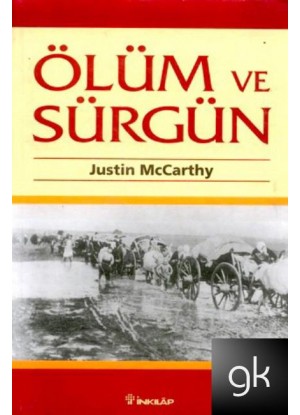
An excellent book, and probably only monograph, to deal with the step by step expulsion and ethnic cleansing of Ottoman Muslims through the nineteenth and and early twentieth centuries, but tracing roots of the process back to even the century before is Justin McCarthy’s Death and Exile: The Ethnic Cleansing of Ottoman Muslims, 1821-1922Not polemic, not propagandistic, just the facts and figures that speak for themselves.  It should be required reading for every Christian in the former Ottoman sphere.

51qnwpuNCVL._SY344_BO1,204,203,200_

55696-olum-ve-surgun-death-and-exile-justin-mccarthy

Comment: nikobakos@gmail.com

“Screamers:” Genocide: what is it and why do we need the term?

7 Nov

Screamers

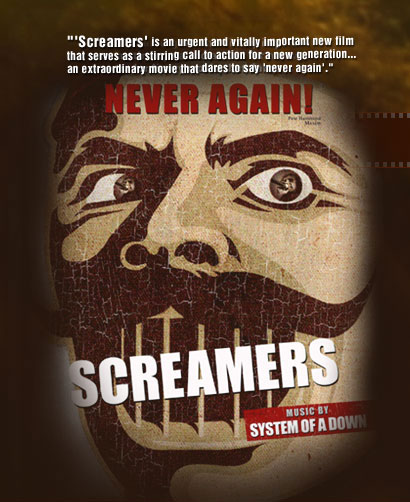
I watched “Screamers”* the other night, a 2006 documentary by Carla Garapedian about an Armenian-American synthpunk group based in California, who go around, among other things, “screaming” about the Armenian massacres of the early twentieth century and issues of genocide recognition generally.  They’re shown on tour, comparing Armenian experiences to those of Rwandans, Cambodians — Jews conspicuously less so — soliciting the support of U.S. congressmen, interviewing British aristocrats, Harvard professors and their own great-aunts and grandfathers telling their own story of the events they describe as the Armenian Genocide, all in an effort of course to get the Turkish government to acknowledge the “Genocide” as such.  And it left me with the usual thoughts I have on this issue: that this word – “genocide” – which is supposed to name an evil particular to our time and by naming it hopefully eradicate it, has come to be so overused as to be meaningless, was vague from its beginnings and has come to obscure more than it reveals about the phenomenon, if there is such.

Raphael Lemkin, the Polish Jewish Holocaust survivor who originated the term, described it as such:

By ‘genocide’ we mean the destruction of an ethnic group . . . . Generally speaking, genocide does not necessarily mean the immediate destruction of a nation, except when accomplished by mass killings of all members of a nation. It is intended rather to signify a coordinated plan of different actions aiming at the destruction of essential foundations of the life of national groups, with the aim of annihilating the groups themselves. The objectives of such a plan would be disintegration of the political and social institutions, of culture, language, national feelings, religion, and the economic existence of national groups, and the destruction of the personal security, liberty, health, dignity, and even the lives of the individuals belonging to such groups . . ..

T. Marcus Funk in Victims’ Rights and Advocacy at the International Criminal Court says genocide is “the deliberate and systematic destruction, in whole or in part of an ethnic, racial, caste or religious, or national group.” 

“…in whole or in part…” is controversially vague enough.  Then, how “deliberate and systematic” does it have to be to qualify?  And if its victims are members of any “ethnic, racial, caste, or religious, or national group,” is that not so all-encompassing as to include most of humanity?  What sets genocide apart then from any mass killing?  That it’s done to a socially or ethnically identifiable group?  Mass killing – apart from shootings in American shopping malls or movie theaters – is usually committed on such a group.  And by emphasizing that a “group,” usually an ethnic or minority group, is the object, it creates the unspoken assumption of irrationality, though most of the events we call genocides have and had a very rational end and, to be effective, must have used fairly rational means.  And thus I wonder if the word mystifies and, more importantly, decontextualizes to a point that ultimately may do more harm than good.

Obviously, our region gives us a variety of useful examples to look at.  Now, I often get emails here — most simply rants that I don’t bother publishing — in which I’m told that I am defeating the stated purpose of this blog by favoring one group over another or being so obviously preferential in some of my affections or animosities.  I’m told that I’m panderingly philosemitic; I don’t know about the “pandering” part, but otherwise, yes.  I’m accused of being both pro-Israeli and anti-Israeli, and anti-Palestinian and possessed of a blind good faith in Palestinian intentions and an enabler of their “tactics,” whatever that means; I guess if I can be all those things at once I may be doing something right.  I’m accused of being anti-Croatian: let’s leave that one to the side for a moment.  But mostly I’m accused of two things: that I’m pro-Turkish — this usually by angry Greeks — and that I’m a shameless apologist for Serbian criminality.

And here there is some truth: the two peoples may not much appreciate being linked in my heart, but one of the many reasons that I may have a special affection for Turks, or at least find myself defending them so often, is also one of the many reasons I have a special affection for Serbs: I think the two have historically been the most unfairly maligned groups in the region.  And that brings us back to the larger genocide discussion obviously.

It has always irritated me that critics of Serbia, both in the nineties and to this day, dutifully rehearse the main highlights of the “Serbian myth”: traumatic defeat at Kosovo; continued resistance to the Ottomans; among first to struggle for independence in the Balkans; a sincere if often faulty and undemocratic attempt to actually go through with the noble experiment of South Slav unity, only to have those attempts undermined from the get-go by a Croatia that was always a member of that union in bad faith; always supporters of Western causes only to be stabbed in the back after; further traumatic WWII memories – and then just blow them off as if none are legitimate, that they’re just the “mythical” or fictional building blocks of a national pathology that explains Serbs’ vicious behavior during the breakdown of Yugoslavia.

Nobody is denying the unscrupulous manipulation of the Serbian group ‘psyche,’ starting in the late eighties, by some of the most criminally opportunistic, thuggish politicians to emerge out of post-Cold War Europe.  Nobody denies the horrible war crimes of Serbs and Serbian paramilitaries, especially in the great victims of the Yugoslav wars, Bosnia and Kosovo.  But the simple fact is: Serbs had absolutely no reason to feel secure about their future in the states that emerged from the break up of Yugoslavia, especially not in Croatia, the West’s darling.  During WWII, the NDH, the Independent State of Croatia, the Ustaša, had a greater percentage of its population—Serbs, Jews and Gypsies — slated for elimination than any other of the Nazi’s puppet states in Eastern Europe.  The plan for the Serbs specifically was the famous “thirds” plan: kill one third, expel one third, convert the other third to Catholicism (the Ustaša was also fanatically Catholic and its support by the Vatican is one of the Catholic Church’s ugliest twentieth century moral “lapses”).  The numbers are uncertain, as always in these cases, but several hundred thousand Serbs were killed by the Croatian regime and – unfortunately – its Bosnian collaborators during the war.  Ustaša Croatia was the only one of the Nazi puppet states whose tactics even the Germans found excessive, and had to be told by Berlin to “tone it down” a little, because their viciousness was giving undue impetus to a Serbian resistance movement that was becoming increasingly difficult for the Germans to keep under control.  The reasons that post-Yugoslav Serbs might have felt insecure in independent Croatia or even an independent Bosnia are not simple “myths,” pathological obsessions with historical wrongs – especially when Tudjman’s Croatia started making all kinds of fascist noises again as soon as it gained recognition from its German buddies.

Turkey.  It’s maddening that what happened in early twentieth-century Turkey is never put into the broader historical context of the previous two centuries by groups like the Screamers or others who are bent on forcing Turkey to acknowledge the events as genocide.  You can talk and talk and argue and explain and then you come across a passage somewhere that condenses and puts it all into perspective.  The following is from Karen Barkey’s Empire of Difference: The Ottomans in Comparative Perspective.  Towards the end of a chapter where she’s discussing the deterioration of interethnic relations in the nineteenth-century empire, the penetration of European economic influence and the benefits that that created for Ottoman Christians and from which Muslims were excluded, she writes:

“If major misgivings regarding ethnic and religious difference and disparity were already well-rooted in the empire, competition and communal strife only got worse as Muslim refugees from the Balkans, the Caucasus, and the Crimea were settled in Anatolia.  Between 5 and 7 million refugees, mostly Muslims, were settled by the Ottoman government throughout the nineteenth century, mostly in Anatolia.  Kemal Karpat argues that between 1856 and 1876 at least 500,000 Crimean Tatars and 2.5 million Muslim immigrants from the Caucasus were settled in Anatolia, the Balkans, northern Syria and Iraq.  Not long after, in 1877-1878, the Caucasian population that had been settled in the Balkans was resettled in Anatolia together with a million others, mostly Muslims from the Balkans.  Another 2 million took refuge in Anatolia until 1914.  By the time of World War I, the immigrant [refugee] population of Anatolia represented nearly 40% of the total population. Such immigration, originating in the nationalist movements and independence politics of the Balkans, the Russian Wars, and the Ottoman defeats, brought in another element of Muslim discontent that not only altered the demographic balance of the empire, but also exacerbated social and economic tensions.”  [emphases mine]

Do we understand that?  Charles Simic has written: “Nationalists everywhere are unmoved by the suffering of people they hurt.”  But are the above figures enough to penetrate the armor-plated narcissism of the nationalist or even dent it?  Might some clubbing over the head be in order?  Let’s repeat them and see: in 1914, the year we’re supposed to think that Turks suddenly had a collective psychotic episode and just started massacring millions of people for no reason, 40% — forty percent – of the population of Anatolia, roughly the territory of contemporary Turkey, consisted of Muslims who had escaped from the various parts of the shrinking empire, usually under conditions that could be clearly labeled “genocidal” or definitely characterized as “ethnic cleansing” though for some reason they are not, and often, as Barkey alludes to, after having been brutally displaced twice in one or two generations: like the Bosnians who had settled in Salonica after 1878 and again in 1908, in such numbers that they gave their name to a neighborhood in that city, only to have to move once more to Anatolia in 1913; or the millions of Circassians, driven en masse out of their Black Sea homeland by Russia in the 1860’s and settled in the Balkans only to have to move on to Anatolia after Bulgarian independence.  Forty percent!  That is almost twice the percentage of incoming refugee population that Greece staggered under in the 1920s after the Population Exchange, and in an Empire that had dragged itself into a World War it was woefully unprepared to fight.

And here’s where we get to the question that every ethically honest Greek or Armenian has to ask himself: what did we expect Turks to do at that point?  Give up even what they had left?  Pack it up?  Go back to the Red Apple Tree?**  To expect that at some point Ottoman Muslims/Turks were not going to fight back in order to hold on to something, a state and territory of their own, is delusional in ways that only as totalizing an ideological structure as nationalism can produce.

51kGIPmTZdL

(what was a really fascinating, eye-opening book for me — highly recommended…)

At no point during the long blood-soaked mess of the past two centuries have Serbs or Turks been guilty of anything that everybody else wasn’t also doing.  Thus, one of my primary objections to the use of “genocide” as a term is that it becomes part of a tool in a chronology of preference, a political expedient for stigmatizing the bad guy of the moment.  In the late nineteenth and early twentieth centuries, when European powers were obsessing with how they were going to divide the crumbling Ottoman Empire among them, there were only Muslim perpetrators of massacre in the region, never Christian ones, only the “unspeakable Turk.”  Only a tiny group of more objective observers at the time of Gladstone’s hysterical campaign asked themselves how “speakably” the Bulgarians and their Russian supporters behaved toward the Muslim population of Bulgaria in the 1870s; only Trotsky had the intelligence and conscience to report the truth about the degree and intensity of Russian/Bulgarian atrocities against the Muslim population of those lands in the 1870’s and nearly resigned from his assignment as a reporter of a Kiev newspaper as a result — he could no longer stand to physically be around the sickening violence (See Bulgarian historian Maria Todorova‘s excellent: “War and Memory: Trotsky’s War Correspondence from the Balkan Wars”  for an excellent account of Trotsky’s reporting and, through it, his brilliant and morally courageous mind; how that mind and its obvious compassion became so twistedly cruel when he turned it on his own people and country a few decades later is one of the mysteries of Bolshevik perversity.)

Later in the century, after the Cold War gave Turkey a kind of favored nation status in the Muslim eastern Mediterranean, Turkey could and still essentially can do no wrong, even if it does conduct, like in Cyprus, campaigns of what elsewhere would be called ethnic cleansing or violates the human rights of its minorities and majorities on a systematic basis.

At the beginning of the twentieth century, Serbia was “gallant little Serbia” standing up to the Austrians, beating back two massive assaults by Austria-Hungary, almost crossing the Danube into Austrian territory itself; only when Germany came to its aid was Serbia successfully defeated, and even then while putting up some of the most suicidal and vicious resistance in military history.  Serbia was a staunch supporter of the Allies in both World Wars – essentially the liberators of the Balkans in the First World War especially.  But by the end of the same century, when Serbs refused to play along with the West’s plan for what the New Balkans would look like, they were turned into pathological savages, and locked into a pariah status from which they have still not been allowed to fully emerge.

(To switch regions and periods for a moment, and examine the selective use of terminology, we never speak of the “genocide” of urban Germans or Japanese, do we, though they were a civilian population subjected to barbaric, mass, incendiary murder on a staggering scale and of questionable strategic uses and motivations other than punitive ones.)

But perhaps my most important objection to the word “genocide” should have become obvious from the above: mass murder and expulsion is what happens during nation-state formation and labeling this kind of mass murder and expulsion with some rare-orchid terminology obscures that fact.  As long as the legitimizing principle of the modern state is ethnic/tribal identity there will be groups who by their very cultural and/or religious character cannot uphold that legitimacy and will be oppressed by it.  And the time will come when they will have to be dealt with in some way or other, either through acculturation or removal, especially if their status leads them to separatist desires.  There is no such thing ultimately as genocide.  To observe the former Ottoman sphere, which is as good as any for our purposes, the rules are: form a state by grabbing as much land as you can and keep it by eliminating those who would be opposed to being part of your state.  It’s painful to say, because Bosnians got semi-trapped and stumbled into declaring independence by their two ravenous neighbors and suffered more than any in the Yugoslav conflict: but there was no Bosnian genocide, no attempt to eliminate the cultural/ethnic group that Bosnian Muslims were from the face of the earth.  There was the brutal, systematic, cruel ethnic cleansing of Muslims from parts of Bosnia that Serbia — and, of course, Croatia — wanted to hold on to because those Bosnians wanted to be part of a separate state of their own.  There was no genocide of Anatolian or Pontic Greeks, as many Greeks have lately started referring to the events of the nineteen tens and twenties.  There were decades of chronic, inter-communal violence, a war by an invading state, and the elimination of those that supported that invasion, and mostly not even through violence or by force, but by mandatory fiat agreed upon by the leaders of the countries in question.***  It’s painful to say – they’re a familiar people, one I admire, like, am close to — but as extensive as it was, as systematic and vicious in ways that set a terrible precedent for the rest of the century, it’s hard for me to call what happened to Armenians in the early twentieth century genocide. The CUP — the Young Turks — have always seemed to me to have been a bunch of loose cannons: a nefarious, often eccentric, make-it-up-as-you-go-along group of giant egos who seemed to be talking past each other most of the time and did their best in essentially ending the Ottoman Empire in the messiest way possible; and the Armenians were their single greatest victims.  But the fact remains: a people (Armenians), in a state (the Ottoman Empire) that was being torn in a million different directions, tried to form an ethnically separate state of their own (though they constituted a majority in no single region of the territory in question), and yes, often did so through violence, armed means and with outside military help.  And they were stopped.  That it was horrifying and its dimensions staggering would be obscene to deny.  That it’s some “special” form of violence — qualitatively and not just quantitatively different — and not just an extreme example of what fundamentally happens during nation-state formation is simply unsustainable as a theory for me.  I had an Armenian-American friend, and we obviously didn’t see eye to eye on these issues.  I remember him once being incensed by what he called the “macho” insensitivity of a Turkish guy who had been arguing with him and who had said: “If we hadn’t done it to you, you would have done it to us.”  Well, it’s sad, but that’s probably the truth.

No one in Screamers, not the experts or the humanitarians, not the musicians themselves, link what they want to call ‘genocide’ to the dominant political state formation of our time.  No one sees it as inevitable that if an “ethnic, racial, caste or religious, or national group” serves as the principle legitimizing force of state organization, that then some other “group” will have to be removed.  And the Helsinki Agreement’s contradictory support of both “minority rights” and “the right to self-determination” has, needless to say, been of no help in sorting out issues of this kind; Yugoslavia was the best proof of the amateurish, do-gooder thinking behind such ideas.

In fact one wonders if it was a Jew who invented the term because he and his were really the only one victims of the irrational beast we want to call genocide and are now using rather indiscriminately all over the place.  Because I can think of only one case in history where a people were not engaged in war with another country, nor in armed or any other kind of civil conflict with the surrounding population, who did not have a separatist agenda within the states they lived in or irredentist designs on parts of neighboring states, who did not constitute any kind of threat – at least real threat – to the society around them (were, quite the opposite, in fact, among those societies’ most productive and talented members), and yet became the object of a villainizing myth of incomprehensible irrationality  that marked them for complete extermination anywhere in the world they were to be found — and that is the case of the Jews.  And since we have “Holocaust” or “Shoah” for that singular episode of human horror, do we need  “genocide” at all?

I hope I haven’t insulted — worse — hurt anyone.  I hope this is the beginning of a bigger discussion.

************************************************************************************************************************************************************************************************

* Check out the film’s Wiki site; one slightly unethical thing it does is to link the great Hrant Dink’s assassination in 2007 with the the fact that he appeared in the film the year before.  There’s also some slight misrepresentation in a scene where they show Turkish nationalists trashing a fifty-year commemorative exhibit here in Istanbul of the anti-Greek pogrom of 1955 and call it an “Armenian and Greek exhibit.”

** I have no idea of the origin of this myth, or whether it developed in late Byzantine or Ottoman times, but in Greek folklore the homeland of the Turks is a place in some distant indeterminate East called the Red Apple Tree, He Kokkine Melia, and in traditional messianic thought, when the City and Romania (what the Byzantines called their polity) were brought back under Christian rule, the Turks would go back to “the Red Apple Tree.”  Ironically, Constantinople itself was known to Muslims as the Red Apple, the prize conquest, in the centuries before the fall.  I have no idea if the two myths grew out of each other or are some kind of bizarre mirror images that paradoxically developed in opposition to each other.

*** And let us all here be disabused at once of the idea that the Population Exchange agreed to at Lausanne was something that Venizelos and his government reluctantly agreed to because circumstances had made any other solution impossible.  Lefterake, our Cretan levente, was enamoured of population exchanges and similar plans far before Lausanne or even 1919.  He thought that the section of the Aegean coast that the Allies gave Greece at Paris in 1919 was eventually going to be Hellenized through exactly such a voluntary departure of its majority Muslim population, thus giving a kind of tacit approval to the atrocities committed during those years by the occupying Greek army, and, always the careerist and opportunist, one of his earlier strategies at the Paris Peace Conference had been to promise Bulgaria eastern Macedonia (Kavalla, Drama), and move its Greek population into western Macedonia where they would offset the Slavic majority of those regions, in order to coax the allies into giving him Ionia — he was a twentieth-century nationalist social engineer of the crudest kind from the beginning.  For the definitive placing of responsibility for the disastrous Asia Minor campaign on Venizelos’ shoulders, plus an extremely competent analysis of the destructive consequences of his egotistical, polarizing political style on twentieth-century Greek political life, see Michael Llewellyn Smith’s Ionian Vision: Greece in Asia Minor, 1919-1922 — an excellent account of the entire period and a great place to start if, like me, you have embarked on a minor ideological mission to dismantle the entire Venizelos myth.

Comment: nikobakos@gmail.com

Ionian Vision

Nobody really cares about Gezi Park: Greek thoughts on the protests of 2013

1 Nov

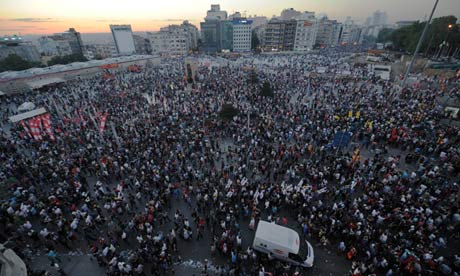
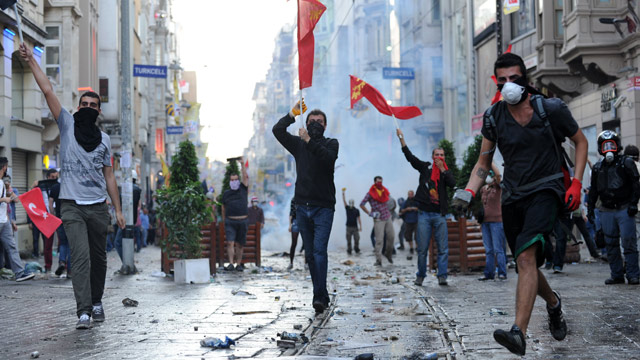
Taksim Square protest

“Oh, is that what it’s called?” I remember saying to myself when last summer’s protests erupted, and I suspect I was joined by quite a few lovers of İstanbul and even natives when they found out that the scruffy, forlorn lot north of Taksim and behind the Arab nargile places along the Cumhurriyet actually had a name.  I may have spent about four or five accumulated months of my life in İstanbul over the years and I think I’ve been inside this park once; one look is enough — and the much bandied-about slogan about “saving the last green space in central Istanbul” becomes comical.  A sudden nostalgia for the place sprang up at the time; everyone suddenly had memories of playing there as a child, but they didn’t seem very convincing.  Nobody cares about Gezi park.  Or did last summer.

What young Turks cared about was Taksim, but even more the string of neighborhoods south of Taksim to Karaköy and their enormous importance in the life of İstanbul.  Proof enough – and weighty proof at that – is that serious civil disobedience began in the area back in the spring, not when the government tried to start construction in Gezi, but when it tried to impose limitations on alcohol consumption in the neighborhood.  Remember the alcohol – it’s a central part of our story, enough for us to maybe have called the whole upheaval the Rakı Revolution and not the Taksim/Gezi protests.  But somehow the press and the people itself forgot that.  Somehow that got lost as the movement morphed into a catch-all protest with a not particularly convincing “green” bayraki propped up as its mascot in a shabby, dirty park.

Unclear?  Yes.  It is to me too and I’m sorting it out as I write.

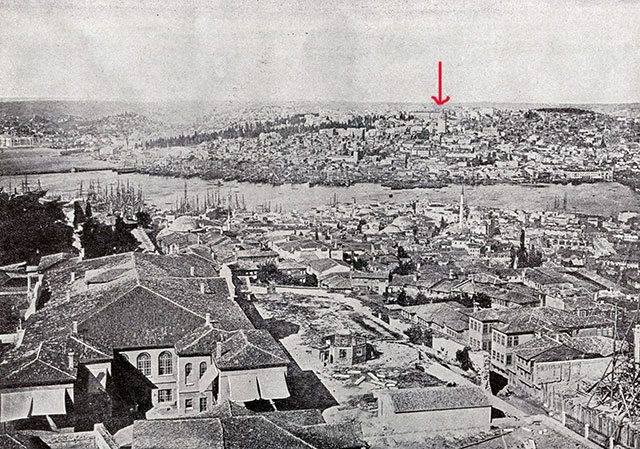
It goes like this: Pera and Galata — because those are the core areas of the municipality of Beyoğlu that really concern us (Taralabaşı too but as a side show, another story) — were, until the middle of the previous century, heavily Greek.  And Armenian and Jewish, but Greek enough so that pidgin Greek was the quarter’s common means of communication till the early nineteen-hundreds. Pera and Galata were centers of non-Muslim life in İstanbul and Pera and Galata were where you went to drink.  Not a coincidence obviously.  And Pera and Galata are still where you go to drink and party – in fact even more than ever.  And that’s why the fact that attempted restrictions of alcohol consumption set off the civil disobedience of 2013 is so important.

The tourist literature and the press never tire of calling this the center of contemporary Istanbul and tourists who used to stay in Sultanahmet and wonder at the eerie emptiness of the old city’s streets at night have finally started to discover the area – the “Old New Town” as Alexandros Massavetas calls it in his loving, lyrical Going Back to Constantinople: a City of Absences.  And truly, as I’ve written before, these neighborhoods dominate the contemporary social and cultural life of İstanbul in a way that’s not comparable to any other major metropolis I’m familiar with.

A060512g

Buyuk_Beyoglu_Haritasi

The neighborhoods we’re talking about, Beyoğlu, with Pera (“over there” in Greek, meaning from the old Byzantine/Ottoman city) at its center. (click)

And here we run into our first paradox, or the origins of a chain of paradox: that this now central “heart” of İstanbul began as a space of marginality.  The Byzantines originally put some of their unwanted Catholics there: Galata’s mother city is actually Genoa.  In Ottoman times, Christians and Jews lived there and made wine and everybody else came there to drink it.  While not an exclusionary, extramural ghetto of any sort – to their credit the Ottomans didn’t often do that kind of thing – it was sort of the wrong side of the tracks: the Ottoman equivalent of the suburbs or the across-the-river Zoroastrian neighborhoods in Iran where Hafez and company went to drink the infidel’s wine and torment themselves with the beauty of the innkeeper’s son: the other side of town, the refuge of disbelief and transgression, of unorthodoxy and the unorthodox in every sense.  The alcohol…

The nineteenth century marked Pera and Galata’s – Pera’s especially — transformation into uprent enclaves: gentrification avant-la-lettre in effect.  The Christian-ness of the area only attracted more of them, then foreign Europeans; the influx of non-Muslims from the rest of the city concentrated its gavur character even more deeply.  There were foreign embassies.  Foreign embassy cultural activities followed.  Cafés.  Theaters.  Neoclassical Row houses and apartment buildings in an eclectic mix of local versions of the Neoclassical or Art Nouveau.  All the apparatus of contemporary European urbanity developed: a place of often obscene display of non-Muslim privilege that reminds one of Durrell’s Alexandria or descriptions of the foreign concessions in Shanghai before the revolution, and increasingly alienating to the average un-Westernized Muslim.  But a city.  One as we mean it.  In the Benjaminian sense.  With everything that the modern city at the time implied and still does: socializing and the public space, boulevard culture, entertainment, exteriority…  WOMEN…  Alcohol, of course…  And with Kyr Panos’ taverna and Monsieur Avram’s textile shop still flourishing alongside.
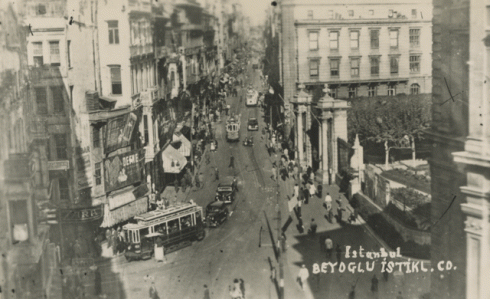
Az081210mnisuaz

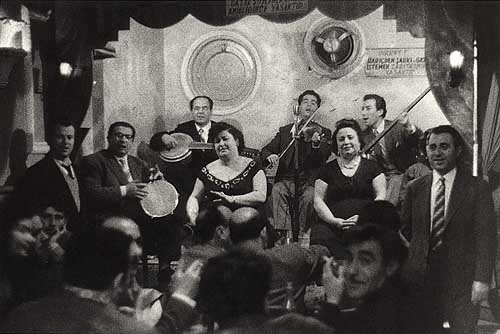
The Jadde at its height, probably early Republican times, by the gates of Galatasaray Lycée (above).  This was the neighborhood known as the Staurodromi by Greeks, the “crossroads” because it’s where the Grande Rue meets Yeni Çarşı Caddesi (the New Market — not sure what that referred to — food market around Balık Pazarı?)  (Click)  Bottom photo is by Ara Guler*

And then all the Kyr Panoses and the Monsieur Avrams went away, for reasons readers know and this blog touches on often and will inevitably look back at again.  And this “center of the city” sat in a kind of rancid aspic for a few decades until a young and dynamic and sophisticated Turkish society reclaims it.  And it comes alive again.  And yet the paradox still stands, now sharper than ever (though how conscious and to whom is very much up for debate and may be my real question): that this is the cosmopolitan center of İstanbul; but what made it cosmopolitan were populations that don’t live there any more, but whose legacy is in both the air and breath of the place and in its physical matter itself.  And what we, Turks today, do about that – how we reconfigure a center of our city so laden with the presence and absence of others in order to suit our contemporary needs – is, to a great extent, what progressive Turks and Erdoğan were fighting about last summer.  Not Gezi park.

Some of Erdoğan’s ideas don’t seem so bad to me; a tunnel for one (already built?), that as I gather goes under in Dolapdere and emerges somewhere in Kabataş I think, that would finally free Taksim, never an aesthetically promising piece of real estate, from having to be a major traffic circle,  though Harvard’s Hashim Sarkis’ idea that: “We know from the 1960s that pedestrianizing everything doesn’t work…Managing the balance is better…” makes sense, and I often wonder about the wisdom of having pedestrianized the İstiklal itself.  The (now aborted?) reconstruction of the Ottoman barracks may turn out to be a piece a kitsch, but you never know.  In Moscow, for example, much that was destroyed by Stalin has been carefully reconstructed and it’s lovely; and some of the rest unnecessary, and garish – and often silly.  Either way, I wouldn’t miss the park.

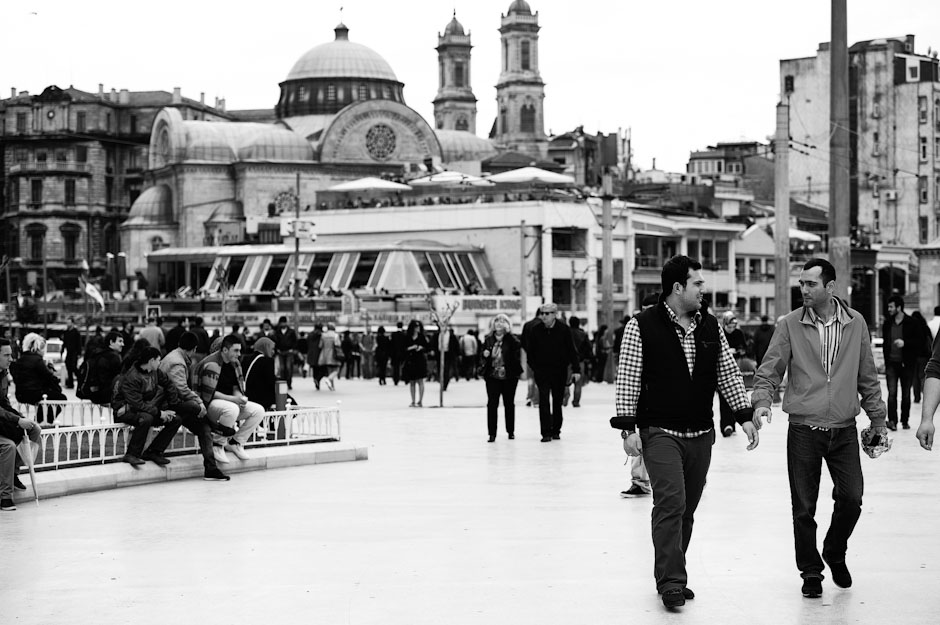
The true big elephant in the Taksim room is a big old elephant of a Greek church that lords over the whole space.  The church of the Hagia Triadha is one of the post-reform churches of İstanbul, churches that were built during the Tanzimat, when traditional restrictions that imposed visual discretion and inconspicuousness on non-Muslim places of worship were lifted and Greeks in İstanbul built some very conspicuous –and often conspicuously ugly — churches.  The Hagia Triadha is actually one of the lovelier of them – it reminds me of the Balyan mosques a little – and gives you a real sense of just how confident Greeks in the City felt in the late nineteenth century.  But its presence is almost impudent; I can only imagine how more traditional Ottoman Muslims must have felt as they saw these giants go up after the 1850s, and to be honest as I’ve walked by at times even I’ve found myself overtaken by what I can only describe as a mild shtetl-anxiety and thinking: “But so big?  And right here?  Can this be good for the Jews?”  So you can imagine that to Erdoğan and the Turkish Islamist mind its bulk must be doubly provocative, and presents a problem that needs to be solved.  The “central square” of the “modern center” of İstanbul just can’t be left looking so…well…so Christian.

Agia_Triada_Greek_Orthodox_Church,_İstanbul

dsc3663

The church of the Hagia Triadha alone and surrounded by its kebab shops.  (Click on both)

0053 - Istanbul - Taksim Square - Hagia Triada - Orthodox Church

15fk7xv

And another aerial view of the church, the school and surrounding area that gives a clearer idea of layout (click)

So Erdoğan is going to make good on a long-term promise/threat to build a large mosque there to balance out the religious character of the space.  First, he’s going to tear down the circle of döner and kokoreç stands that surround the Hagia Triadha and the neighboring Zappeion, once İstanbul’s most elite Greek school for girls, which is a shame because a circle of smoking lamb fat wafting around the billowing clouds of a church’s incense was always a beautiful olfactory image to me – this is what the Temple must’ve smelled like – and because neighborhood partiers will be deprived of much-needed early morning sustenance.  But philistines like Erdoğan don’t like the smell of lamb fat – probably too familiar — or as Auntie Mame might have said, when you’re from Kasımpaşa you have to do something, so the döner stands will have to go.  And I originally had no sources for this other than my own suspicions, but I was wondering if the döner stands aren’t part of the church’s vakoufia (religious trust properties) and that removing them is another act of expropriation of Greek community real estate that has been going on steadily for decades now; and the Greek community is indeed split into warring camps already about whether taking down the stands is expropriation of parish property or is a good thing; only Greeks can be reduced to a community of about a thousand people, mostly over seventy, and still find energy to bicker about everything; but then there are two Jews left here in Kabul — two –and they’re not speaking to each other over some maintenance issue concerning their one synagogue.  Anyway, the official claim, however, is that the food stands will have to go – get this — in order to make the church more visible so that it and its new neighboring mosque can clearly stand side by side as confessional brothers in the new, beautified Taksim.  Turkey has tried desperately over the past few decades to gain political and cultural capital through gross multicultural gestures of this sort.  This has to be the most nauseating example to date.**

The English-language coverage of the protests paid only the scantest attention to issues of this sort.  Even this piece from the New York Times by Michael Kimmelman: “In Istanbul’s Heart, Leader’s Obsession, Perhaps Achilles’ Heel,” about the reconstruction of Taksim managed to not include a single photograph of the Hagia Triadha, which is quite hard to do actually and, were I a bit more of a conspiracy theorist, would think might be intentional.  As to the former ethnic composition of the area, all reference to the area’s former cultural and linguistic character is colored by the inability of Western — whether American or European — thinkers, to think about multiethnic societies outside of the immigrant societies they know.  In this piece also from the Times that prompted my Tarlabaşı series, “Poor but Proud Istanbul Neighborhood Faces Gentrification,” Jessica Burque says: “Migrant workers have a long history of living in Tarlabaşı, dating from the early 1900s when Greek, Jewish and Armenian craftsmen lived in the area” — no sense that they had belonged to the city for generations, centuries before 1900.  And the above referenced article by Kimmelman refers to Beyoğlu as an area where: “poor European immigrants settled during the 19th century.” — no sense that these people were natives of the city, often of communities that predated the Ottomans, or that they were essential component parts of Ottoman society, from other parts of the empire perhaps, but not outsiders or “immigrants.”  There’s often some vague reference to the buzzwords “diversity” and “cosmopolitan” and no serious mention of what drove the “cosmopolitans” and “migrant workers” away; again a perception that seems informed by seeing this all through the prism of the American immigration experience: as if Pera were a neighborhood on the 7 train, let’s say, and its Dominicans have now moved on to the greener suburban pastures of Bayside.

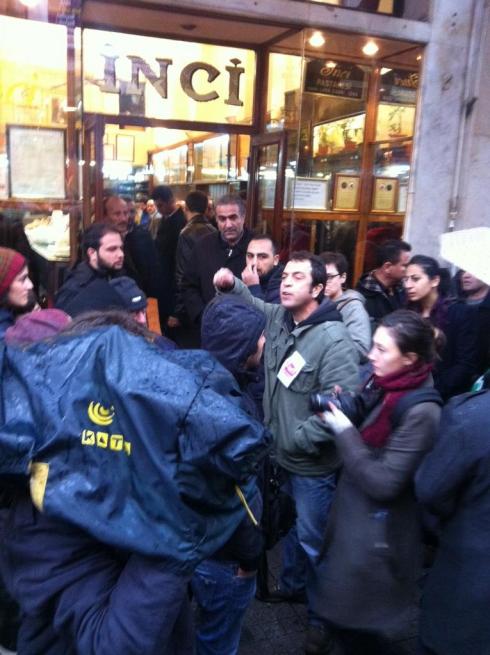
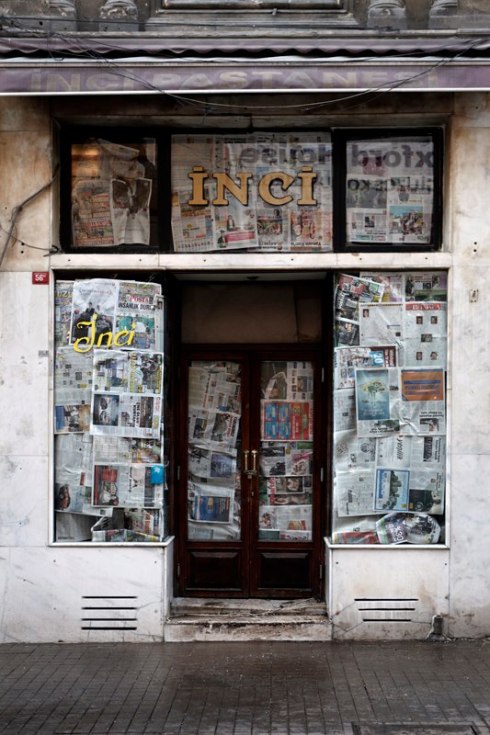
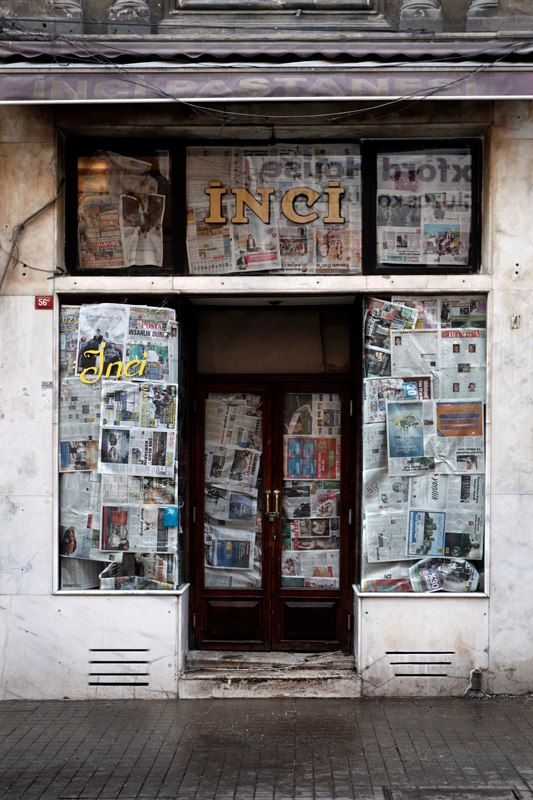
Unfortunately I don’t know if the Turkish press made any reference to the area’s former social composition when covering the protests or if any Turks did at all.  The closing of İnci, the patisserie, is what most brought this all home to me: “the closing of the historic Emek cinema and a much-loved pastry shop…”  There was quite a fuss about İnci apparently, but was any mention made at the time that this had been one of the last Greek businesses in the neighborhood?  There are two more left in all of Beyoğlu I think, İmroz, the restaurant on Nevizade and, perhaps the only growth industry in Greek İstanbul, a coffin-maker’s near the Panayia in Stavrodromi.  Inci had been there since 1947.  I leaf through Speros Vryonis’ massive “The Mechanism of Catastrophe”*** to the pages containing K. Ioannides’, a journalist from the Salonica-based Macedonia newspaper, cataloguing of ransacked Greek businesses in the area, which means all of them, without exception.  On just the İstiklal Caddesi, Meşrutiyet Caddesi, Pasaj Evropa, Yüksek Kaldırım and Perşembe Pazarı there is a list of three-hundred and twenty-nine businesses.  And you really have to marvel and wonder at whether the Greek “daemon” is more than a myth.****  After the financial decimation of the community by the Varlık Vergisi, the “estate tax” of the 1940’s, when discriminatory taxation against minority groups had wiped out many, and sent many of those who couldn’t pay to forced labor camps, Greeks had bounced back to dominating the retail business of these central neighborhoods in less than a decade – only, of course, to have it all definitively trashed a few years later.  And, sure enough, there it was, at number 27 on the list: “Pastry shop İnci of Loukas and Lefteres.”  When people mourned the loss of İnci last summer, was there any sense that something more than a charming old patisserie was disappearing?  Or that this was a place that had bounced back from total loss in one Istanbul tragedy and then went on to continue serving the city for more than fifty years?

İnci, before and during protests, after closure.

inci-pastanesi-kapatildi

inci-pastanesi_110960868246

inci (5)

inci-pastanesi_443808

inci1-F0BA-2415-C212

What do I want exactly?

All – I thought a lot about whether I should use “almost all” in this sentence and decided against it –because all the hippest, funkiest, most attractive, gentrified neighborhoods in the historic parts of İstanbul are neighborhoods that were significantly, if not largely, minority-inhabited until well into the twentieth century: not just Pera and Galata, but Cihangir and Tarlabaşı, and even Kurtuluş — of course — and up and down the western shores of the Bosphorus and much of its eastern towns too, and central Kadiköy and Moda and the Islands.  (And if serious gentrifying ever begins in the old city it’ll be in Samatya and Kumkapı and Fener and Balat; I wouldn’t put any big money into Aksaray or Çarşamba just yet.)  If young Turks are fighting to preserve the cosmopolitan character of areas made cosmopolitan by a Greek presence, among others, is it a recognition of that presence, however vestigial, that I want?  Yes.  Is it because some recognition might assuage some of the bitterness of the displacement?  Perhaps.  Is the feeling proprietary then?  Does the particular “cool” quality of these neighborhoods that protesters have been fighting to protect register for me as a form of appropriated “coolness?”  I’m afraid that yes, sometimes it does.  In darker moments this spring and summer, these Occupy Gezi kids annoyed me: “What’s wrong mes p’tits?  The Big Daddy State threatening to break up your funky Beyoğlu party?  Do you know the Big Daddy State made life so intolerable for the dudes who made Beyoğlu funky that they not only had to break the party up, but shut down shop altogether and set up elsewhere?  That your own daddies and granddaddies probably stood by and watched, approved even?  Do you know that now?  Do you care?”

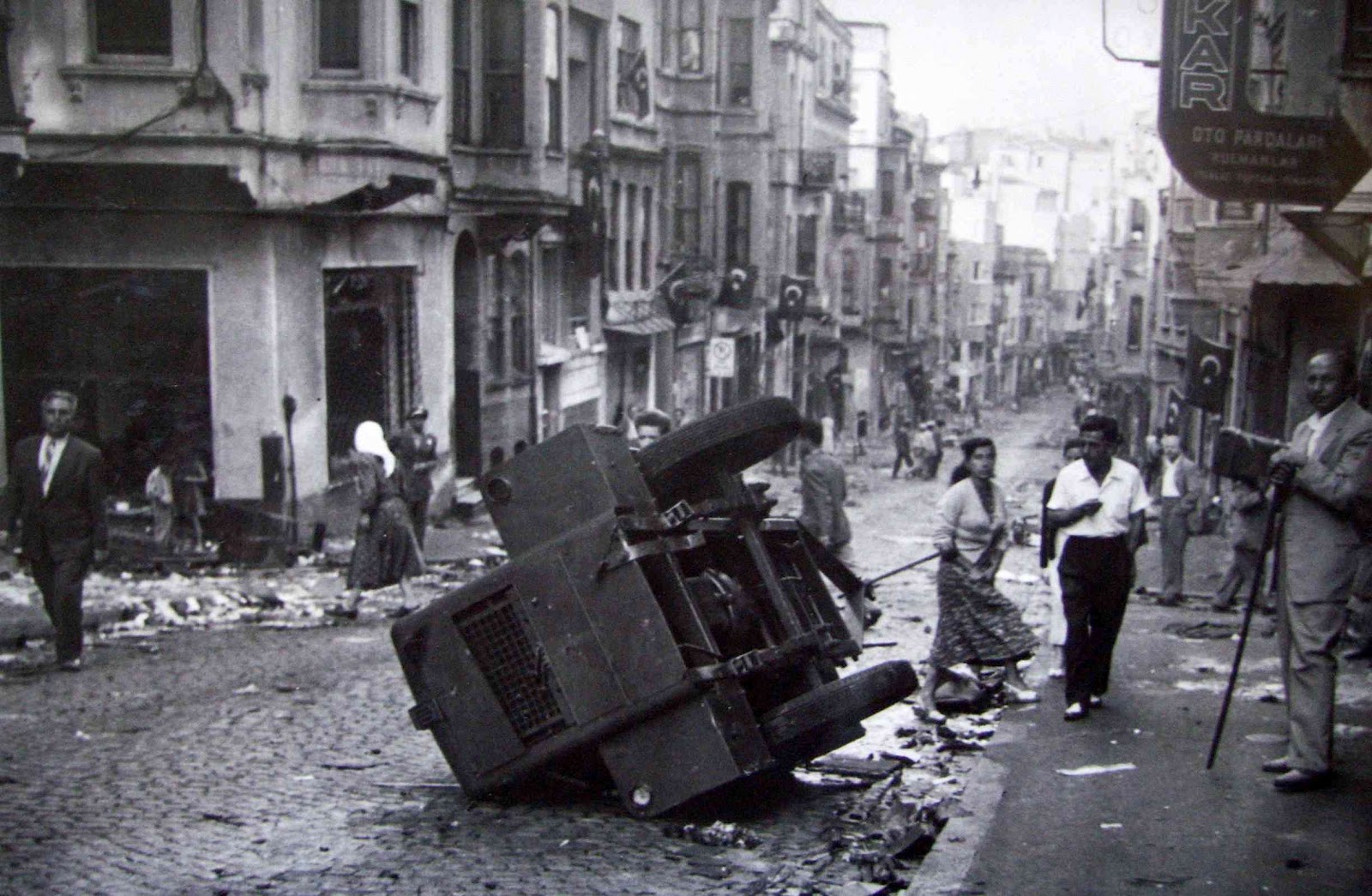
taksim4Cleaning up in a Greek neighborhood after the pogrom of 6-7 September 1955.  I’ve spared readers and myself more and worse photos. (Click)

No one in New York would think of talking about the Lower East Side, for example, or the Bronx, without due respect to the Jewish role in the formation of those areas and, by extension, every aspect of New York culture.  You mourn the passing of every Ratner’s and Second Avenue Deli even if you aren’t Jewish and even if five of them take their place in Kew Gardens or Borough Park.  Or to use a significantly more heated example: if the young white professionals now moving in large numbers into Harlem refused to acknowledge that Harlem’s atmosphere, style, musicality — that the whole Harlem phenomenon — were  largely African-American contributions to the city’s life, wouldn’t any culturally or historically conscious New Yorker find that problematic or reprehensible; not to mention how the neighborhoods Blacks would feel (and do…)  And Jews and Blacks were never driven out of New York by a systematic campaign of violence, harassment, confiscation and forced expulsion.

Therefore: If 2013’s protests then – at least İstanbul’s –were at their core about protecting aspects of the essential urbanity of İstanbul, and Greeks played such a large role in shaping that urbanity, shouldn’t that be acknowledged?  If Turkish society is playing out – again, at least in İstanbul – its most intense culture wars on a ghost blueprint of vanished minorities, then wouldn’t making that a more explicit part of the contest be immensely productive – all around?

But these grudges are usually not this deep and usually don’t last long.  Partly because I’m always on the side of the partiers – any partiers.  Partly because I trust the growing consciousness and honesty of most young Turks.  The protesters as a rule behaved so civilly and politely, their chants and slogans so witty and intelligent for the most part, that you couldn’t help but be impressed.  As opposed to Erdoğan and his party’s grand Haussmanian plans, I think they didn’t really want much: Gezi was just a convenient object.  I think they want the area neither Islamized and Neo-Ottomanized or “re-Republicanized” as it were.  I think they’re tired of those two poles, and as a close friend of mine said, they want another option.  I think they wanted the neighborhood to stay as it is and always has been: a place of pleasure and freedom and difference, of uncomfortable, musty cinemas that offer something more interesting than the suburban multiplexes, of Art Nouveau cafes, no matter how garishly over-renovated or turned into fast-food lunch shops, of badly lit meyhanes that you have to know to find, a couple of gay bars, of mini-skirts and transvestites – both separately and together — everything that the strange sensuality of Istanbul offers and the freedom to not be told how and when to enjoy it.  Every man’s inalienable right to want a sweaty glass of rakı and some leblebi or a good mojito when he wants it.

Protesters in Istanbul

And they’ll win too.  Just as Hafez says:

Might they open the doors of the wine shops

And loosen their hold on our knotted lives?

If shut to satisfy the ego of the puritan

Take heart, for they will reopen to satisfy God.

image007

                                                                                                                                                                                                                                                — Kabul, November 2013

*********************************************************************************************************************************************************************************************************************************************************

* Two more of Güler’s most famous photographs:
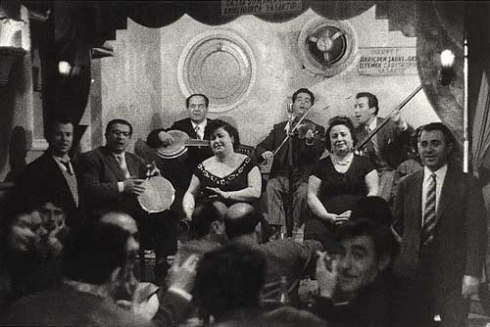
Guler1

D-amp-K-PASAJ-KAHVESI-BEYOGLU-ISTANBUL-ARA-GULER__51726491_0

While there’s no documentation that the subjects of these photos are Greek, the period, the neighborhood they were taken in and — well — just their look, seem to say so.  Ara Güler was a prolific photographer whose work has been sadly overexposed by excessive postcard-ization.  He once famously said: “Today, 13 million people live here. We have been overrun by villagers from Anatolia who don’t understand the poetry or the romance of Istanbul. They don’t even know the great pleasures of civilization, like how to eat well. They came, and the Greeks, Armenians and Jews, who became rich here and made this city so wonderful, left for various reasons. This is how we lost what we had for 400 years.”

He was called a racist by many leftists for that comment.  But who pays them any heed?  His website: Ara Güler: Official Website

** For more of my thoughts on the hypocrisies of multi-culti İstanbul nostalgia see my early piece The Name of this Blog, and my series Tarlabaşı I, Tarlabaşı II, and Tarlabaşı III .  Especially see Amy Mills’ Streets of Memory: Landscape, Tolerance, and National Identity in Istanbul  based on her research in the Bosporus suburb of Kuzguncuk, where she argues that nostalgia for the cosmopolitan actually serves to erase minorities and discrimination against them from public memory and reinforce Turkish Republican ethnic homogeneity.  I think that’s exactly what’s happening in Beyoğlu.

*** Speros Vryonis The Mechanism of Catastrophe: The Turkish Pogrom Of September 6 – 7, 1955, And The Destruction Of The Greek Community Of Istanbul is a magisterial life’s work and piece of historical journalism that covers the one night of September 6-7, 1955 in which a pogrom organized by Adnan Menderes’ Demokrat Parti destroyed practically the entire commercial, financial, ecclesiastic, educational and domestic infrastructure of the City’s Greek community.  I had put off reading it for quite a while — because the subject matter is upsetting and it’s long and detailled — but I was really impressed when I finally did.  I hadn’t realized the exact extent of the damage: 4,500 Greek homes, 3,500 shops and businesses (nearly all), 90 churches and monasteries (nearly all), and 36 schools destroyed and 3 cemeteries desecrated.  I hadn’t known that so many homes had been destroyed, leaving a large part of the community of then 80 or 90,000 or so homeless and destitute and that, as opposed to the traditional account of one old monk being burned alive, some 30 people were actually killed and many raped.

A1iZR7nssVL._SL1500_

The Menderes government initially, and stupidly, tried to portray this as a spontaneous outbreak of nationalist fervor against Greeks over growing Cyprus tensions, but it was actually an extremely well-planned and executed military manoeuvre (every Turk, after all, is a soldier born) carried out and directed by local cadres of the Demokrat Parti who knew their neighborhoods and its Greek properties and institutions well and through the use of Anatolians brought in from the provinces; I guess they were afraid that local İstanbullus, who knew and lived with these Greeks, would not be as easily destructive, though the record of how the city’s Turks did act during the riots is hardly edifying.  As all products of the nationalist-militarist mind, the plan was an extremely stupid move as well.  It brought the economy of Turkey’s largest city to a virtual standstill, at a time when the country was in deep economic doldrums to begin with, by ripping out its retail heart, so much of it being in the hands of Greeks and other minority groups, and in the immediate aftermath there were chronic shortages of basic supplies in the city because distribution networks had been completely severed and even bread — so many bakeries being Greek and Epirote, especially, owned — was hard to find.  It temporarily made Turkey an international pariah (though in that Cold War climate that didn’t last too long) and eventually played a role in bringing the Menderes government down and costing him his life — thought that all is well beyond the scope of this post, this blog and my knowledge.  Vryonis’ analysis is brilliant if you’re interested.

It’s become axiomatic that the riots were the beginning of the end of Greek Constantinople; the community struggled and tried, but this time things were shattered — physically and psychologically — beyond repair.

**** The Greek Daemon, “daemon” in the Roman sense of the word of animating genius — “To daimonio tes fyles” — is the idea that Greeks are resourceful enough to prosper anywhere and under any conditions — Patrick Leigh Fermor’s belief in their ability to “spin gold out of air” — and the repeated tragic setbacks and almost immediate comeback of the Greek community of İstanbul after nearly every catastrophe to befall it in the twentieth century tempts one to believe in its truth.  Thus, one of the most poignant elements in the Constantinopolitan story is their almost masochistic refusal to leave — what it took to finally make the vast majority abandon the city they loved so much was just too overwhelming in the end however.

There is one important corollary to the “Greek Daemon” myth, however: it only operates for Greeks outside of the Greek state itself, and unfortunately history seems to continue to bear this out.

Comment: nikobakos@gmail.com

What is the Iliad about?

20 Sep

In a description of the Sarpedon vase, “The Death of Sarpedon: Who does art “belong” to?,” that used to be at New York’s Metropolitan Museum, I commented on an interesting political correcting of the Iliad that I came across on a slightly unexpected website:

“A final note.  A classic piece of regressive ideological projection from the NYU site: “Euphronios’s depiction of Sarpedon’s death is an early portrait of the barbarity of war and the needless death that is its legacy.”

Really?  Is that what you think the Iliad is about?  That’s pretty funny…”

Here’s a relevant section from Bernard Knox’ introduction to Robert Fagles moving 1990 translation, in which Knox quotes a Simone Weil essay — yes, quite a line-up.  It sets out from a Book XVI episode where Patroclus spears a Trojan charioteer, Thestor, through the jaw and lifts him out up of his chariot in a way that makes Homer think of a hooked, gasping fish.

“…clearly Homer is walking the borderline of credibility here.  He does it for a reason: that simile.  It emphasizes the grotesque appearance of violent death by a comparison with a familiar fact of every day life: Thestor is gaping like a fish on the hook.  The spearthrust destroys his dignity as a human being even before it takes his life.  But the simile does something more: it shows us the action from the point of view of the killer – the excitement of the hunter dispatching his prey, the joy of the fisherman hauling in his catch.  The lines combine two contrary emotions: man’s instinctive revulsion from bloodshed and his susceptibility to the excitement of violence.  And they are typical of the poem as a whole.  Everywhere in the saga of the rage of Achilles and the battles before Troy we are made conscious at one and the same time of war’s ugly brutality and what Yeats called its “terrible beauty.”  The Iliad accepts violence as a permanent factor in human life and accepts it without sentimentality, for it is just as sentimental to pretend that war does not have its monstrous ugliness as it is to deny that it has its own strange and fatal beauty, a power, which can call out in men resources of endurance, courage and self-sacrifice that peacetime, to our loss and sorrow and loss, can rarely command.  Three thousand years have not changed the human condition in this respect: we are still lovers and victims of the will to violence, and so long as we are, Homer will be read as its truest interpreter.”

This was recognized by Simone Weil in an essay written long before she left her native France for wartime London, where she filled her brilliant notebooks with reflections on Greek literature and philosophy in the short time left to her to live.  This classic (and prophetic) statement – L’Iliade ou le Poeme de la Force – presented her image of Homer’s poem as an image of the modern world.

“The true hero, the true subject, the center of the Iliad, is force.  Force as man’s instrument, force as man’s master, force before which human flesh shrinks back.  The human soul, in this poem, is shown always in its relation to force: swept away, blinded by the force it thinks it can direct, bent under the pressure of the force to which it is subjected.  Those who had dreamed that force, thanks to progress, now belonged to the past, have seen the poem as a historic document; those who can see that force, today as in the past, is at the center of all human history, find in the Iliad its most beautiful, its purest mirror”.

She goes on to define what she means by force: “force is what makes the person subjected to it a thing.”   She wrote these words in 1939: the article was scheduled for publication in the Nouvelle Revue Francaise, but before it could be printed Paris was in the hands of the Nazis and her compatriots, like all Europe, were subjected to force and turned into things – corpses or slaves.

“Its most beautiful, its purest mirror…”  The most marvelous lines in the Iliad owe their unearthly, poignant beauty to the presence of violence, held momentarily in reserve but brooding over the landscape.  These are the lines that end Book 8 and describe the Trojans camped on the plain, awaiting the next dawn, which will launch them on their attack on the Greek fortification:

“And so their spirits soared

as they took positions down the passageways of battle

all night long, and the watchfires blazed among them.

Hundreds strong, as stars in the night sky glittering

round the moon’s brilliance blaze in all their glory

when the air falls to a sudden, windless calm…

all the lookout peaks stand out and the jutting cliffs

and the steep ravines and down from the high heavens bursts

the boundless bright air and all the stars shine clear

and the shepherd’s heart exults – so many fired burned

between the ships and Xanthus’ whirling rapids

set by the men of Troy, bright against their walls.

(8.638 – 49)

“These are surely the clearest hills, the most brilliant stars and the brightest fires in all poetry, and everyone who has waited to go into battle knows how true the lines are, how clear and memorable and lovely is every detail of the landscape the soldier fears he may be seeing for the last time.”

And that’s what the Iliad is all about Charlie Brown…

Soldiers with Alpha Company 2-327 (TF No Slack) 1BCT of the 101st Airborne Division make a small fire to keep warm high up in the mountains on border of Afghanistan and Pakistan. (David Gilkey, NPR) (Click)

Comment: nikobakos@gmail.com

Vocabulary: “Frangoi”

2 Sep

I’ve used this term several times without giving a more specific definition of it and that was a mistake because some of those posts would have made more sense if I had.

Like: “Little Rock, Greece”  (May 26th, 2012):

“But an equal object of my bashing here is the European Union, which aside from proving itself to be a neo-colonialist endeavour masquerading as the Highest Achievement of Western Humanism Project, has also revealed itself to be a half-assed, thrown together mess on so many institutional and bureaucratic levels.  (Yes, neo-colonialist: the Frangoi** gave up their colonies after the war and then discovered the exploitable potential of Europe’s own periphery again.)”

And: “Russia and Syrian Christians, ctd”  (June 5th, 2012):

“Tying your survival to extra-regional players or regimes like Assad’s that are destined to soon make their exit is a losing strategy for the region’s Christians.  The threat of Islamist violence is probably real.  Iraq and even Egypt certainly seem to indicate that.  But their only choice is probably the tricky dance of fostering, or just going with, the flow of democratic change while keeping themselves as least vulnerable as possible.  Forget Russia.  And, as Constantine XI had to heroically face in the end, there’s certainly no help coming from the Frangoi.*  If you want to live in peace and security, look to your neighbor because, ultimately, he’s the only one who can provide it for you.”

And: “Un Verano en Nueva York” (July 13th, 2012):

“In Astoria I catch the end of vespers at Hagia Eirene.  This is a church that used to be the territory of fundamentalist, Old Calendar, separatist crazies but has rejoined the flock on the condition that it was granted monastic status (and I have no idea what that means).  But it has somehow got its hands on a great bunch of cantors and priests who really know what they’re doing.  I’m impressed.  I brought friends here for the Resurrection this year and for the first time I wasn’t embarrassed.  If I hadn’t invited them back home afterwards I would have stayed for the Canon.  Only one cantor now at vespers but he’s marvelous and the lighting is right and the priest’s bearing appropriately imperial.  It’s incredibly heartening to see our civilization’s greatest achievement — which is not what the Frangoi taught us about Sophocles or Pericles or some half-baked knowledge of Plato or a dumb hard-on about the Elgin marbles or the word “Macedonia,” but this, the rite and music and poetry and theatre of the Church – performed with the elegance and dignity that it deserves.”                  

So…when the Byzantines first encountered the West and the conglomeration of Germanic kingdoms that had sprung up on the territories of the western Roman Empire, or rather, when they first felt challenged by it and not just irritated, was when Charlemagne, previously just King of the Franks, was crowned Emperor of the Romans in the year 800 by Pope Leo III, whose skin he had saved after Leo had been deposed and almost lynched by the mobs of Rome.  This, of course, was intolerable to us, because we were the Romans and we had an Emperor, with an unbroken line back to Constantine, if not Augustus.  This is close to impossible an idea for anyone today to understand; it’s even hard for modern Greeks to articulate and it’s at the core of our completely mangled identity.  It’s nearly impossible to speak definitively about consciousness or identity in the present tense, much less more than a millennium past.  But this is the simplest way I can put it: by the late first millennium, the Greek-speaking Christians of the eastern Mediterranean had a stronger sense of Imperial Roman continuity than the inhabitants of even the Italian peninsula.  Till well into the twentieth century our most common term of self-designation was “Romios” – “Roman.”  If you had asked any of my grandparents, all born Ottoman subjects, what they “were” — if they even understood the question — or even my father very often, they would’ve all answered “Roman.”  For the inhabitants of my father’s village in Albania, especially the older ones, who never had “Hellenes” imposed on them by the Neo-Greek statelet, the world is still divided into Muslim “Turks” and Orthodox “Romans,” and whether they speak Greek or Albanian is irrelevant.  The Greeks of Istanbul still call themselves “Romioi” for the most part; Turks still call them “Rum” too, out of simple historical continuity, while the Turkish state is still faithful to the appellation for partly more cynical and manipulative reasons.  I’m writing a piece with the appropriately pompous working title of “A Roman Manifesto” or “A Manifesto of Romanness” that will deal with this whole theme further.
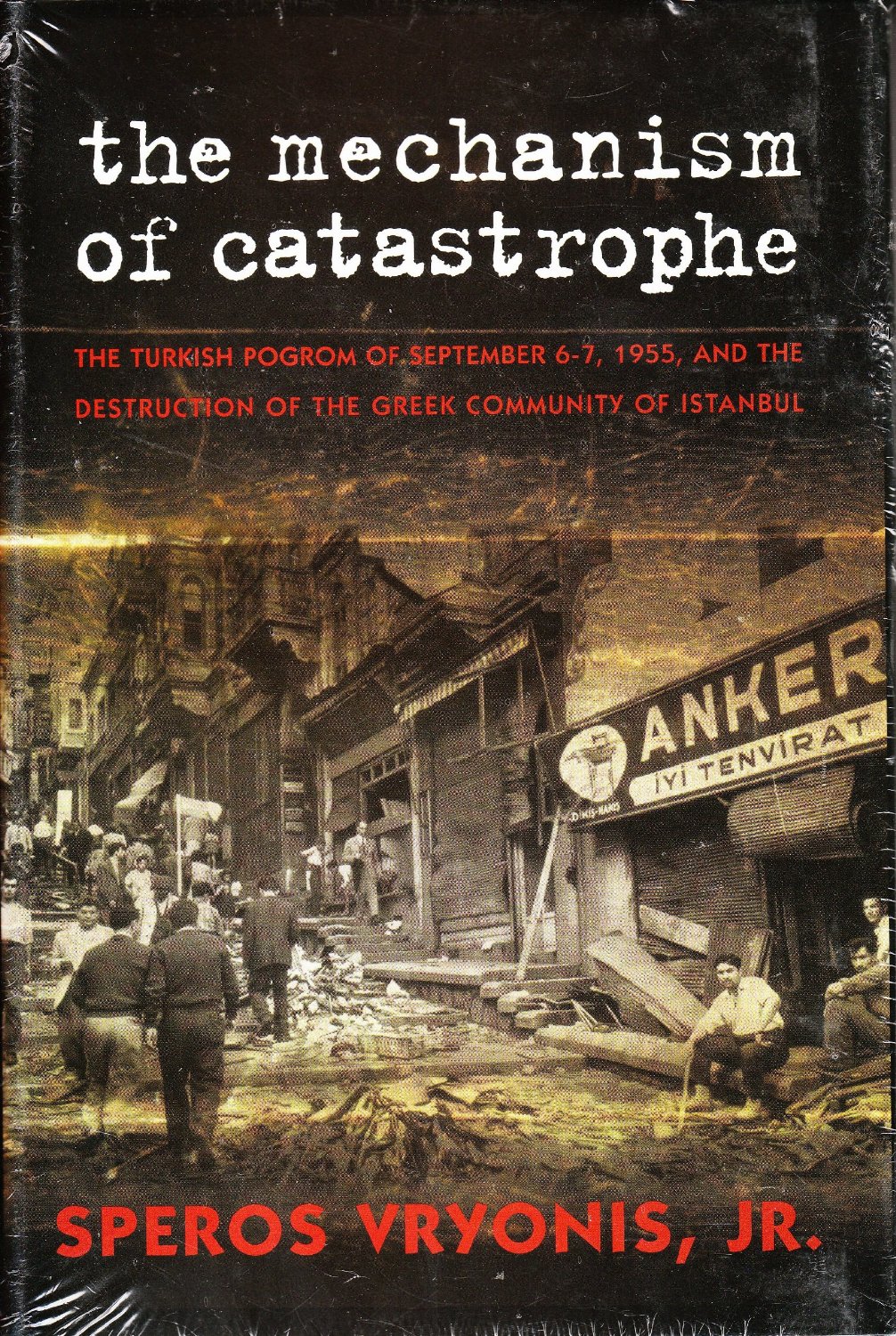
The Frankish West (click)

So Charlemagne was a Frank, a Latinized Germanic ethnic group, and though the Pope’s primacy “inter pares” was recognized, he had no right to unilaterally crown this Frank emperor in an Italy that had become a ravaged provincial backwater from the Constantinopolitan point of view.  This didn’t end relations between the Empire and the various western European kingdoms.  They continued to trade and even contract dynastic marriages and all the rest.  But the tension, which had already been planted for quite a while before that, only went from bad to worse: power tensions; trade concessions to the Italian city-states that fatally mirror the ones the Ottomans had to make to the Western powers a millennium later; massacres of Italians in C-town that are equally mirror-like.

The West grew in confidence.  The Empire shrank.  They started bickering about theological issues, and eventually, in 1054, Rome and Constantinople excommunicated each other over some nonsense about the division of labor among the Trinity that I’ve never bothered to try and understand.  Then came the Crusades — more growing Western confidence — which the Byzantines weren’t ever really enthusiastic about because I reckon on many levels they felt less animosity for and greater cultural affinity to their the Muslim/Arab neighbors than they did to the “Franks.”  Runciman, I think writes somewhere that a ninth-century Greek felt more at home in Arab Palermo or Baghdad and Cairo that he would’ve in Paris or even Rome.

Sometimes Wiki’s gets it perfect:

“The experiences of the first two Crusades had thrown into stark relief the vast cultural differences between the two Christian civilizations. The Latins (as the Byzantines called them because of their adherence to the Latin Rite) viewed the Byzantine preference for diplomacy and trade over war, as duplicitous and degenerate, and their policy of tolerance and assimilation towards Muslims as a corrupt betrayal of the faith. For their part, the educated and wealthy Byzantines saw the Latins as lawless, impious, covetous, blood-thirsty, undisciplined, and (quite literally) unwashed.”

Then came the Fourth Crusade, led by the Venetian Doge Enrico Dandolo.  The Crusaders fell into the internecine machinations of the some Angeloi  Emperors and I think ended up feeling betrayed on some promise made to them by one party in the Byzantine political scene, and they probably were, because our latter Emperors compensated for the diminishment of their real geopolitical power and the sapped strength of their once massive military machine by becoming major manipulative sleazebags and liars, initiating a long Greek tradition that persists to our day.  In retaliation, and, or, because that had been their real object all along, the Crusaders of the Fourth Crusade, in 1204, captured the City – the first time Constantinople had ever fallen to anybody and destroyed it.

They destroyed her.  They massacred thousands, desecrated churches, including Hagia Sophia herself, and carried away what, in today’s terms, I’m sure amounted to billions in loot.  The Venetians got off with enough of a lump sum of capital to fund and run their mercantile empire for another five centuries.  But aside from the loot, which on some level is comprehensible, it’s the sheer mindless destruction of 1204 that betrays the sack as the action of thuggish, resentful provincials and their envy towards what had been the civilizational center of the Mediterranean and western Asian world for almost a millennium; it’s what an army of Tea-Partiers, NRA members or armed Texan Evangelicals would do to New York if they could.  Though pregnant already with the great traditions of this supposed thing called Western Humanism, this bunch destroyed more Classical texts and melted down or smashed more Classical sculpture into gravel than had been done at any other one time in history – far more than any fanatical Christians in any pagan city or any Arabs or Muslims in any conquered Christian city before them had.  More of the ancient world was lost to us in those few days than in any other comparable time span before that.  Just sheer idiotic vandalism.  There’s probably no more epic manifestation of Killing-the-Father in human history.

Speros Vryonis, a great historian but a seriously unpleasant man, Theos’choreston, made a career out of catalogueing the injustices done to Byzantine and post-Byzantine Greeks.  He was the great modern preacher of whining Greek victimology and one often felt that all his personal bile and biterness was poured into his work in that way; his book on the anti-Greek riots of Istanbul in 1955 is one thousand pages long; you’d think it was the most important event in twentieth-century history.  In any event, in Byzantium and Europe, he wrote:

“The Latin soldiery subjected the greatest city in Europe to an indescribable sack. For three days they murdered, raped, looted and destroyed on a scale which even the ancient Vandals and Goths would have found unbelievable. Constantinople had become a veritable museum of ancient and Byzantine art, an emporium of such incredible wealth that the Latins were astounded at the riches they found. Though the Venetians had an appreciation for the art which they discovered (they were themselves semi-Byzantines) and saved much of it, the French and others destroyed indiscriminately, halting to refresh themselves with wine, violation of nuns, and murder of Orthodox clerics. The Crusaders vented their hatred for the Greeks most spectacularly in the desecration of the greatest Church in Christendom. They smashed the silver iconostasis, the icons and the holy books of Hagia Sophia, and seated upon the patriarchal throne a whore who sang coarse songs as they drank wine from the Church’s holy vessels. The estrangement of East and West, which had proceeded over the centuries, culminated in the horrible massacre that accompanied the conquest of Constantinople. The Greeks were convinced that even the Turks, had they taken the city, would not have been as cruel as the Latin Christians. The defeat of Byzantium, already in a state of decline, accelerated political degeneration so that the Byzantines eventually became an easy prey to the Turks. The Crusading movement thus resulted, ultimately, in the victory of Islam, a result which was of course the exact opposite of its original intention.”

The Fall of Constantinople, Palma Le Jeune — 16th-17th century (click)

The Entry of the Crusaders into Constantinople –Eugene Delacroix, 1840 (click)

And, in fact, the Turks — fast-forward two-and-a-half centuries – weren’t as bad.  Maybe ’cause there wasn’t much left.  Aside from a sizeable amount of slaves, most of the loot Mehmet had promised his suicidally brave Janissaries when they finally made it into the City in 1453 consisted of cheap silver frames pried off of personal or parish-sized icons — Cavafy’s “bits of coloured glass.”  The Emperor’s tombs in the dilapidated Hagioi Apostoloi — the Byzantines’ Westminster — had already been desecrated and robbed by the Franks.  They may as well have sacked Astoria.  The rest was in Venice.  (Even the crown jewels had been pawned off to Venice a century before by Anne of Savoy, one of the most meddling Frangissa bitches in Byzantine history, to fund her episode of the Palaiologan civil wars; that’s the actual historical reference for Cavafy’s “coloured glass.”  Christouli mou, can you imagine what the Byzantine crown jewels were like?)  But one good thing happened for Greeks on Tuesday, May Twenty-Ninth, Fourteen-Fifty-Three: when the Turks finally broke into Hagia Sophia, they smashed Dandolo’s sepulcher — because, after all of the above, he had had the shamelessness to have himself interred there – and finding nothing of worth, they threw his bones out into the street and let the dogs gnaw on them.  I don’t care what else the conquering Turks did at that  point or that Menderes’ thugs did the same to the Patriarchs’ graves at Balikli in 1955; I sleep better at night because they did it to Dandolo.  I’m as close to a chaneller of the Byzantine mind and soul as you’ll find (aside from Vryonis) and I can tell you that the sweet Balkan hard-on of vengeance that image gives me even now is indescribable.
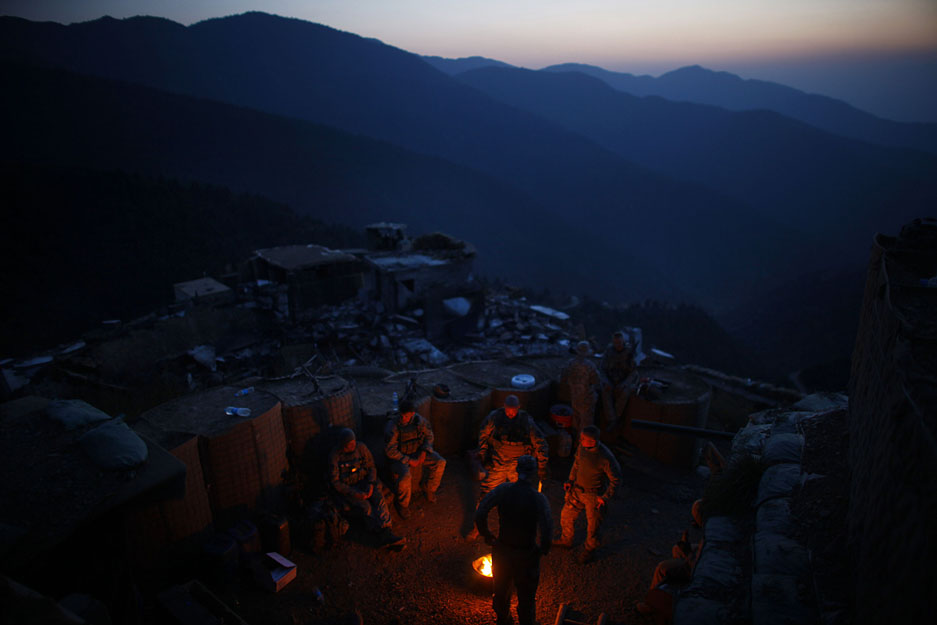
The Greeks got Constantinople back in 1261, but the City never really recovered, as the Empire itself didn’t.  Like the South Bronx in the eighties, whole parts of the City were eventually given over to orchards and bostania or just wilderness.  Yet even after that, the Byzantines managed to plant further seeds in the womb of friggin’ Western Humanism in the form of an artistic wave of unprecedented dimensions and creativity. 

The “Franks,” thereafter, were the unforgivable villains.  But even before, when Byzantine writers felt like being professional, they referred to Westerners as “Latins.”  When not, and eventually in most cases, they were “Frangoi.”  Frangoi stuck as the word for Westerners, or for Catholics at least, because Protestantism was only a minor blip on the East’s screen.   But generally it came to mean the Western Others and the Eastern Muslim world between which Byzantine and post-Byzantine Christians came to feel themselves stuck between.

“Fereng,” “Ferengi,” “Ferenj” and other variations is also a word that eventually came to be used as far east as India, but I can’t be sure whether in Iran or India it means/meant Westerner or just foreigner.  For Arabs and Turks, “Frank” came to mean those Christians over there, as opposed to “Romans,” our Christians over here.  So if you were Roman Catholic, either back home in Europe or in the Near East, you were a “Frank;” if you were an Orthodox Christian, you were a “Roman.”*  It’s confusing.  And I hope I haven’t made it worse.

For Greeks, Frangoi continued to mean Westerner both in a negative sense and not, until the nation-sate convinced us into thinking we ourselves were Westerners.  When Greek peasant men, for example, started wearing Western clothes, whereas their women wore traditional dress well into the twentieth century in many regions, those clothes were “Frangika.”  Frangoi also meant, with no negative connotation, the small communities of Catholics in the Aegean islands that were leftovers of the Crusader principalities that had been founded there after the Fourth Crusade.

It’s not used any more in common Greek parlance, but most Greeks know what you mean when you say it – though this generation is so profoundly ignorant historically that I’m not so sure.  I, of course, use it in a spirit of historical irony, though that spirit is entirely hostile.  The worst enemy of our part of the world is the European West, and not because of imperialist interventions or the usual gripes, but because of the ideological and cultural chaos we allowed it to throw us into.

Yes, Frangoi are the enemy.  I like to say that.  But it’s not true.  We think we’re Frangoi.  Unlike the Byzantines described above, who understood that their natural civilizational context was and always had been the eastern Mediterranean, we are either ignorant of the peoples to our East or despise them.  We disfigured our own identity in an attempt to remake it in the Westerners’ image.  We threw acid into our own face and now still look longingly into Europe’s eyes, and pathetically expect to see our Classical glory reflected back at us.

*One of the most graphic examples is Lebanon/Syria, where Orthodox Christians, who have long and poignantly tried to bridge the above gap, were still “Romans” into the nineteenth century and were among the founders and then long among the most loyal adherents of Arab nationalism, whereas Maronite Christians were the locals with the most exemplary Frangika delusions, always looking to the Western outsider to bolster their interests, first their “sweet mother France” and then Israel, and bringing disaster down upon their heads and that of all around them in the process.  That’s why in many previous posts my humble outsider’s advice to and hope for Syrian Christians in the current crisis has been that they think and act like Romans and not Franks.

Comment: nikobakos@gmail.com


“The Graves Are Walking”: Was the Great Potato Famine a genocide?” (And, let’s rethink “genocide” in general)

20 Aug

“A new book argues that free-market ideology, not murderous intent, killed Ireland’s millions.”  See Salon‘s entire review of the book here.

Some quotes:

“Citing an Irish nationalist author who accused Britain’s Assistant Treasury Secretary Charles Trevelyan of infecting Irish children with a special “typhus poison” in a government laboratory, he writes that the man “should have stuck to the truth. It was incriminating enough.” The story Kelly tells in “The Graves are Walking” is indeed damning, a shameful, bloody blot — and far from the only one — on the history of the British Empire. But calling it a genocide, however satisfying that pitch of moral condemnation may be, only acts to obscure the chilling contemporary relevance of Ireland’s 19th-century agony.”  [my emphasis]

Exactly.  Even if there was “no murderous intent,” it was still criminal.

“Kelly, like most historians, places the brunt of the responsibility for this fiasco on the shoulders of Trevelyan. As the policy leader of the famine response program, Trevelyan was not a Mengele-style mad scientist but a civil servant known for his “unbending moral rectitude and personal intensity.” Unfortunately for the Irish, the faith he embraced was a fusion of Moralism, “an evangelical sect that preached a passionate gospel of self-help” and the laissez-faire economics of Adam Smith and Edmund Burke. At several key points in the evolution of the catastrophe, when strategic intervention might have fended off thousands of deaths, Trevelyan refused, maintaining that there was no greater evil than interfering with market forces. When a subordinate protested, he would send him a copy of Burke’s “Thoughts and Details on Scarcity.”” [my emphases]

See my older post Maybe Germans ARE Scary, my commentary on a borderline Nazi opinion piece that appeared in the New York Times“German Austerity’s Lutheran Core”, in which I argue that Protestantism-s (except for Anglicanism, which grew out of very different historical circumstances and forms of “protest”) aren’t really religions at all but moralist codes, on which capitalism depended for its growth, and for which, whatever transcendent entity their adherents may believe in, serves only as divine confirmation of their righteousness.  It was the aggressive evangelical fervor that swept Methodist, Presbyterian and “low church” Britain in the mid-Victorian age that was perhaps the primary cause of the Indian Rebellion only a decade after the Irish catastrophe (see William Dalrymple’s brilliant The Last Mughal: The Fall of a Dynasty: Delhi, 1857).

“These strategies amount to the 19th-century version of what Naomi Klein has dubbed the “Shock Doctrine”: an attempt to force economic reforms on a population reeling in the aftermath of a disaster.”

Like Germany and southern Europe today?  (Read Klein’s great book: The Shock Doctrine: The Rise of Disaster Capitalism)

“Both sides were ignorant and shortsighted, confident in their stereotypical notion of the irresponsible, fanciful and lazy “Irish character” but oblivious to all the ways that rural subsistence economies cannot be expected to start functioning like England’s more developed agricultural one overnight.”

The classic accusation of laziness in these situations (like against Greeks, who, it turns out — when they had employment — worked more hours than the population of any EU country) is just infuriating.  People don’t work when they don’t have an incentive to, when the technological and political and class restrictions imposed on them limit them to anything more than subsistence or, in the Irish case, even rob them of the means of subsistence.  That the Irish are lazy, man…  To know what work-horses, and I mean that only with great respect and admiration, these Irish kids are, who are coming to New York again in the wake of the Euro-crisis and to even think “lazy”…

Yes, well, not England’s finest hour — though it’s a nation and a people I respect and feel a curiously personal pride in.  And yes, Ireland is outside the borders of the “Jadde” world.  But I love the Irish so much that they’ll keep appearing from time to time and, actually, they’re as much objects of Western imperialism as we are.

But really I’m posting this piece because I think it’s past time that we, in the “Jadde” world, begin some serious discussion on the use of the term “genocide.”  I think it’s getting thrown around much too loosely lately, and that not only disrespects the victims of true genocides, it pariah-fies and unfairly singles out certain groups for vilification (Turks, Serbs) and creates simplistic analyses of complex historical events that then become conventional wisdom, all in ways that makes deeper dialogue between our peoples impossible.  So, we need to talk about it and what “it” really is.


Comment: nikobakos@gmail.com