Tag Archives: Serbia

“But there has rarely been a tennis champion more adept at absorbing pace and thwarting ambition than Novak Djokovic, particularly on a hard court.” — The New York Times

4 Sep


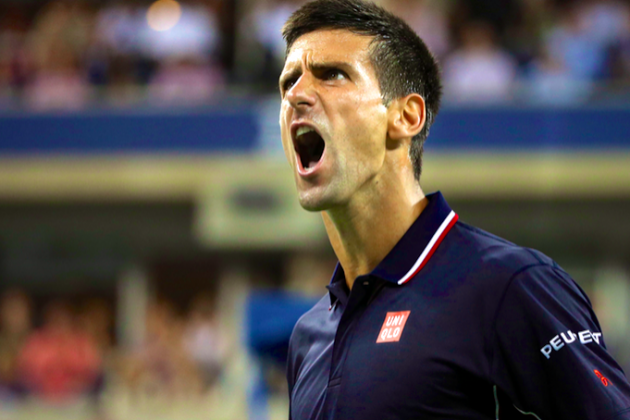
b9352043f44b231b599dd6c06205d806_crop_northAP Images (click)

Didn’t find the match nearly as exciting as the Times seems to have.  Both players seemed angry and irritable at having to start so late — the result of a four hour plus match where an impressive, and previously unknown to me, Kei Nishikori beat Stanislas Wawrinka — and by half way it had just become a game of physical and nervous attrition.  Happy result though. 

My call is Djoković and Federer again in final —  see if Nole can reproduce Wimbledon win.

Whole Times article: Novak Djokovic Defeats Andy Murray to Reach U.S. Open Semifinals

While The Bleacher Report both gushes and points out his weaknesses:

“He’s got a serve that’s efficient, if not blinding. He’s got incredible agility and tremendous speed. He runs down shots that seem irretrievable, shots that have the fans gasping—and then roaring.

If there is a weakness in his game, it may be a failure to put away an opponent. He had Murray beaten in the second set—or was Murray beating himself? After losing that set, Djokovic returned to display the skills he possesses.”

Comment: nikobakos@gmail.com

The first two of my cents on Ukraine and Russia…

31 Aug

01UKRAINE1-master675

Alexander Demianchuk/Reuters (click)

See this story from the Times: Putin Urges Talks on Greater Autonomy for Eastern Ukraine,” which I’m pretty sure was his objective to begin with: force a crisis to get so bad and then negotiate for autonomy.  What repercussions that will have for Ukraine’s future or what patterns it’ll set for other areas (like the Baltic countries — Putin’s most vociferous critics — or Central Asia) of the former Soviet/Russian sphere that contain large Russian minorities has to be seen.

Belgravia Dispatch had an excellent and frighteningly prescient opinion piece on the escalating Ukrainian crisis back in March:  What To Do–And Not Do–About Ukraine — which, unfortunately, the whole world ignored and whose worse case scenarios have now come true, including the annexation of Crimea and what I think it is now safe to call a full-scale invasion of Ukraine by Russian forces and not just a rebel movement of local Russian separatists.

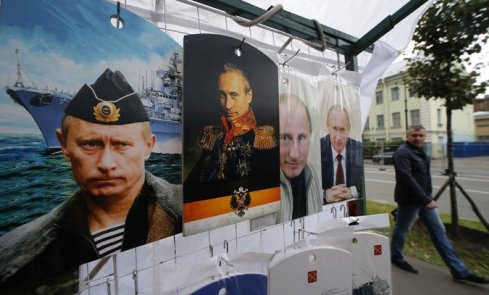
One important point from me, first and up front: the West can rush to get tough on Russia if it wants to; I can guarantee you that Russians are tougher.  This is a point that Gregory Djerejian on Belgravia makes and one that has certainly manifested itself in exactly the way he predicted.  We need to remember that this generation of Russians that has come of age since the momentous changes of the nineties are the first generation in that people’s history, perhaps, to not have been dragged to hell and back at least once in their lifetime.  They’re proud — rightfully, I feel — of their capacity for survival.  This isn’t an expression of support on my part for Putin’s cheap machismo: my loathing for him and his posturing, his whole persona and everything he represents — including the craven adulation of him that is Russians at their most infantile — is something I’ve written on endlessly.  It’s just stating a fact that the West should be aware of: they’re not going to be pushed around.  Think hard before you put them in a position where they have to prove that to you…because they will.  So treating Russia like a pariah will only play into Putin’s hand.  That’s, in fact, what has happened; the whole country has fallen in line behind him and anything like the РОССИЯ БЕЗ ПУТИНА — “Russia without Putin” — protests of two years ago would be considered, in a spontaneous act of socially unanimous censoring, pure treason these days with no one even daring to publicly air such opinions in the current heady climate of nationalist excitement.

The other point is one that Belgravia makes right off the top of his post with the following quotes:

Yet, Kievan Russia, like the golden days of childhood, was never dimmed in the memory of the Russian nation. In the pure fountain of her literary works anyone who wills can quench his religious thirst; in her venerable authors he can find his guide through the complexities of the modern world. Kievan Christianity has the same value for the Russian religious mind as Pushkin for the artistic sense: that of a standard, a golden measure, a royal way.”

–Georgy Fedotov

“The problem of the origin of the first Russian state, that of Kiev, is exceedingly complex and controversial.”

–Nicholas Riasanovksy

“Without Ukraine, Russia can remain an empire, but it cannot remain Russia.”

–Title of a recent article in Russkoye Obozreniye, a Russian periodical.

It’s like Scotland.

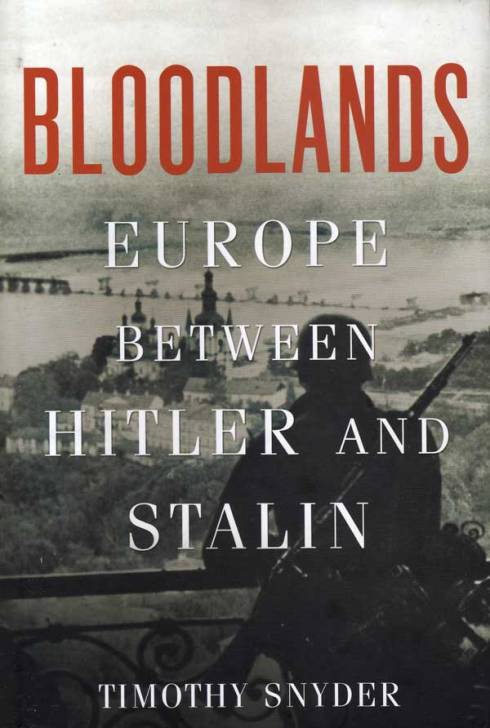
This was one of the first things you would’ve realized if you were on the ground in Russia this July and August like I was (but despite my suggestions to several industry friends and acquaintances, no Western journalists seemed to think that the “story” was not just in Donetsk or Luhansk, but in living rooms and at kitchen tables in Moscow and Petersburg and countless other places): that is that Russians simply don’t consider Ukraine a foreign country or foreign culture.  I’m not making a judgement call on whether that’s right or wrong or imperialist on their part or not; judging such sentiments “ethically” or putting them through the political-correctness grinder is pointless and counter-productive.  It’s just that their historical experiences have led Russians — and arguably, till a certain point, had led most of the people who now call themselves Ukrainians — to think that way: that they were both intimately and inseparably related, and there’s as much point in calling those feelings “wrong” as there would be in your therapist telling you that your neuroses are “wrong.”  And so Russians were/are, in fact, in shock that the rest of the world thinks it has no role to play in Ukraine or no vital interests in political developments there.  The reason that this doesn’t seem to register in Western consciousness is a result of the fact that the West is so immersed in thinking along an ethnicity-based nation-state model of discrete national units with clear, essentialized, historical trajectories, that it is incapable of seeing nationalism as a construct: flexible, malleable, unclear, even “made-up-as-you-go-along” if you will — so that Russians, and the new Ukrainian nationalists, can have radically opposing views on what their relationship is, without either of them being “wrong.”  As brilliant a historian as Timothy Snyder, author of the devastating Bloodlands: Europe between Hitler and Stalin is capable of writing in The New Republic this past May, in an article called: The Battle in Ukraine Means Everything  the following:

“Ukraine does of course have a history. The territory of today’s Ukraine can very easily be placed within every major epoch of the European past. Kiev’s history of east Slavic statehood begins in Kiev a millennium ago. Its encounter with Moscow came after centuries of rule from places like Vilnius and Warsaw, and the incorporation of Ukrainian lands into the Soviet Union came only after military and political struggles convinced the Bolsheviks themselves that Ukraine had to be treated as a distinct political unit. After Kiev was occupied a dozen times, the Red Army was victorious, and a Soviet Ukraine was established as part of the new Soviet Union in 1922.”

Snyder’s history — “of course” — with its suggestion of a straight, uninterrupted historical lineage of “Ukrainian-ness” from Kievan Rus’ to modern Ukraine is just patent bullsh*t, and is one that simply chooses, in the glossing-over-of-breaks-and-ruptures fashion and in the fabricating of false unities that nationalist narratives always engage in, to ignore several fundamental, historical realities: one, the fact that the Russian principalities that rose up in the northern forests of what we now consider the Russian heartland after Kiev’s demise at the hands of the Mongol-Tatars — Vladimir, Pskov, Novgorod and later Moscow and its unifying power — were more highly conscious of their political descent from early mediaeval Kiev and were, in fundamental ways, far more its true political and cultural and spiritual heirs than any “Ukrainian” polity could even try to claim to be until the twentieth century; two, that most of what is now Ukraine had already been part of Russia for more than two centuries before the Bolshevik revolution; and that, three, before that, the western quarter of it, maybe, was Polish and then Austrian, while much of the rest — through “every major epoch of the European past…” — was just a frontier no-man’s-land, a coming-and-going corridor for nomadic peoples either conquering or fleeing someone else.  (You can find a place for each and every corner of the world in “every major epoch of the European past” if you want to; that doesn’t mean it was central or even remotely important to that past.)  Also, thence, a crucial point: that Ukraine wasn’t so much conquered, but settled by Russia, while Snyder’s quote taken on its own makes it sound like an eternal Ukraine, populated by a people who had always thought of themselves as solidly and eternally Ukrainian, was just subjugated by the Soviet Union in the twenties.*  So it ignores all the ways that “Ukrainian-ness,” a term that did not even come into common usage until the late nineteenth and early twentieth centuries, was the product of a complex negotiation and mixture of different sub-identities converging from different directions in those fertile flatlands and has always, in that sense, been bound up in a million intricate ways with the history of its larger kin-nation to the north.  But we’re making the same mistake I believe we made in Yugoslavia: seeing the “nation” as something essential and essentialized, first and foremost; and secondly, assuming that the nationalism of the powerful player — in this case Russia, in the Yugoslav case, the Serbs — is pathological, inherently oppressive and dangerous, while ignoring the fact that the nationalism of the “little” — in these cases, Ukraine, and in Yugoslavia, that poor, powerless victim, Croatia — can not only be just as venomous and illiberal and murderous, but is often more so because it has a point to prove or a chip on its shoulder.  But the West is so in love with what by now should be the completely discredited Wilsonian idea of “self-determination” (while simultaneously supporting the “inviolability” of national borders**) that it fails to see that dark truth.  I’ll probably need to get into greater historical detail in another post in order to clarify a bit better.

(And now I’m ready for the barrage of accusations that all I ever do is knee-jerk defend my Orthodox brethren, but that’s cool — just par for the course.)

History, climate, geography have always conspired to isolate Russia.  And, in a sense, the pathos that drives Russian history and is the force behind her brilliant civilizational achievements (and, yes, her imperialism too), is  that of a constant, heroic struggle to break out of that isolation and find her place in the larger world.  Yacking on, like Snyder, about how Ukraine is somehow “essential” and central to the very idea of Europe, when, ironically, the very name Ukraine means “the edge” (from the same Indo-European cognate as the Greek “άκρη”…height or edge as in acropolis, or as Serbian “Krajina”).  The edge of what? of Russia/Poland…the EDGE of Europe…what an elevation of status Snyder grants to a proverbial Podunk, while treating Russia as dispensable or as a dangerous threat that needs to be hemmed around and contained — isolated again — is criminally unfair to Russians (if not to Putin and his cronies) and will end up backfiring on the West in ways it hasn’t even begun to anticipate.  Russia is not dispensable.  Nor is she to be ignored or patronized.  We think of her in those terms and the results will just get uglier and messier.
bloodlandsweb

**************************************************************************************************************************************************************************************************************

* There’s even a subtle subtext to the narrative of the Revolution and subsequent Civil War that Snyder gives us, which suggests some kind of identity between Ukrainian-ness and White Russian resistance to the Bolsheviks, when, in fact, I think that if the White Russian movement can be said to have had an ethnic or regional “base,” it was among the Russians of eastern Ukraine (the grandfathers of these very separatists of today? I wouldn’t know…) and the neighboring parts of southeastern Russia that stretch to the Caucasus.  The independent “frontiersman” mentality of the Russians of these areas, a sort of Russian Texas  — among its ethnic Cossack peoples especially — should not be underestimated and should not be disregarded as a possible element in the current conflict.  (See: And Quiet Flows the Don at Amazon and at Wiki.)

** The contradiction between the ideas of self-determination for peoples and the inviolability of borders — a contradiction that can’t be avoided if we keep thinking in terms of the EBNS (ethnicity-based nation-state) — has plagued do-gooder Western policies in all parts of the non-Western world from Wilson and Paris till Helsinki and still does.  And this despite the fact that its randomness and practical inapplicablity have been made so obviously clear on so many occasions: if Croatia can secede from Yugoslavia, why can’t Krajina Serbs secede from Croatia?  If Ukraine deserves — has an inalienable right — to be a country independent of Russia, then why doesn’t its overwhelmingly Russian eastern parts have an inalienable right to be independent of Ukraine?  Obviously it just comes down a particular bias of the West at a particular time

As for where it all started, Crimea, I hate to report to outraged Western observers that of all parts of Ukraine, Crimea was always the area with a practically non-existent Ukrainian element in its population.  Not that the March “referendum” was not a total farce.  But if any people have a right to Crimea and to feeling displaced and dispossessed it’s Crimean Tatars — not Ukrainians.  Hell, just to play Devil’s advocate…the millenia of Greek presence on the northern shores of the Black Sea, and the numerous Greek mercantile communities that existed in Crimea and around the Sea of Azov until the twentieth century (Chekhov attended a Greek elementary school in Taganrog), give even us a technically greater ethnic claim to Crimea than it does to Ukrainians.

In any event, I knew as far back as the early nineties, that sooner or later Russia would find a way to take Crimea back (Crimea was part of the Russian Soviet Republic until 1955) and am actually surprised it took so long.  The drang nach süden impulse that drove Russian imperial policy for hundreds of years — the equivalent of American “Manifest Destiny” — south into Ukraine and on to the Black Sea, with the ultimate objective of a re-Orthodoxed Constantinople and Russia as a Mediterranean and world super-power with access to India and the East, was not a desire for the rich soils of the Dnieper valley.  It was a need for access to warm weather ports.  Crimea thus became a crucial site for the base and deployment of Russian and then Soviet naval power and there was no way that it was just going to be handed over so casually.  Ask the United States to just hand over Camp Pendleton and Twenty-Nine Palms, the naval bases at Coronado and Loma Catalina, along with the whole San Diego metropolitan area, to Mexico.  Or just grant Hawaii its independence.  Or give it to Japan.  Or try, even, just to get the U.S. to close its base in Okinawa!  It’s the same thing.  Is this an apology for imperialism?  No.  It’s just a statement of a historical and political reality that can’t be ignored.  Or one that it’s necessarily the West’s business to “fix.”

Note: The Ukrainian national case or argument may have one key point that is rarely discussed and is surprising to me in that sense.  I’m not certain of it, but it may be that eastern Ukraine acquired its overwhelming Russian ethnic character because it was the region hardest hit and left most depopulated by Lenin and Stalin’s murderous collectivization disaster, and that many Russians were settled there afterwards when the region was turned into one of the industrial heartlands of the Soviet Union.  This is seriously guessing on my part and someone with greater knowledge should be sought out for a definitive answer.

A corollary to that is the hypocrisy of western Ukrainians, the most fanatical nationalists and quasi-Catholics, and perhaps the most extreme element on the Ukrainian political stage today (whom Putin uses, of course, to paint all Ukrainian nationalists as fascists and Nazi collaborators), who did not suffer any of the horrors of collectivization and famine because they were under Polish rule at the time — not always so benign either — and only became part of the Soviet Union in 1945.  Yet, they use those events as some of the main tools in their anti-Russian arsenal.  Furthermore, just as many Russians suffered during those violent socioeconomic processes and it’s a slightly cheap appropriation to call them a purely Ukrainian set of humanitarian disasters.

Comment: nikobakos@gmail.com

“Russians…they don’t trust…”

17 Jul

Russia-Wallpaper-Picture-Desktop

(click)

The pretty clerk behind the desk at the Air Serbia counter in Belgrade where I’m checking in for my flight to Moscow-St.Petersburg smiles when sees the obvious irritation on my face as she tells me that my stuff isn’t going direct, but that I’ll have to claim my baggage in Moscow and re-check-in again for the flight to St. Petersburg, probably get charged for my extra weight again — and at a different terminal in a user-friendly airport like Sheremetyevo.

“Russians,” she grins slyly but sweetly, “they don’t trust.”

Dude, when your own ever-loyal Serbs are talking about you like that, you probably have some issues you might want to address.

Serbia(click)

Comment: nikobakos@gmail.com


Belgrade: Wimbledon 2014, rakia with M., and what’s with me and all the Djoković…

12 Jul

TENNIS-GBR-WIMBLEDONGetty Images (click)

“What’s with you and all the Djoković?”

This is M. in Belgrade, after the sixth or seventh rakia, giving me a hard time about my Nole cult. M. is an old Serbian student of mine from New York. He’s one of my favorites actually; out of the nearly ten years I taught English at CUNY, he’s one of those special ones that I can count on one hand. Funny, charismatic, super-smart – when he came to class – he was a real asset to have.

“I was your best student,” he says, a propos of nothing and with characteristic modesty.

“Yeah, when you came to class,” I say.

We live ten minutes from each other in New York but never see each other – bumped into each other at some bars a couple of times – except that every year at Orthodox Easter he comes to my house. But I haven’t been home for Easter for the past three years, so we didn’t see each other then either. Except for one night, two nights ago, the stars arranged for us to both be in Belgrade together and we couldn’t pass up the opportunity to get some long-due drinking done.

So this is M. getting all up in my face Serbian style:

“If you’re such a fan, why are you here? Why aren’t you in Montenegro at his wedding trying to get a picture?”

I didn’t even know Djoković was getting married this weekend and M. knows I’m too old and probably knows enough else about me to know I’m not some idiot groupie:

“Like the other groupies…” he says nevertheless. “You could try to take a picture of him with the bride…one with the bride alone…one with…”

The thing is his teasing is so good humored it makes you wanna jump right into the ring with him and take him on, so it’s always fun and it only makes you like him more. I also came away from the evening feeling good because M. and I barely know each other actually, but a bunch of his friends showed up and it was obvious how loved he was by all of them and that was nice to see; I like when my instincts about a person are correct even when I don’t have much evidence to go by.  But he’s relentless…

“You could try to get a picture of the dog…”

Well for M. or anybody, if you still don’t know what my Djoković thing is about and how it relates to my Serb thing and how possessive and defensive I get about both, you haven’t been reading my blog very regularly. So let me try again. Back to Wimbledon…

I don’t think any real tennis aficionado could’ve asked for a better Wimbledon 2014 – unless you have the frankly hilarious misfortune of being a Nadal fan, in which case you deserve your fate and I’ll tell you when it’s ok to come out of your room and stop being embarrassed. For Djoković it was no easy climb. Great tennis all the way, but he wasn’t granted anything. With Čilić, with Raonić, with Dimitrov, there was practically not a single give-away. He had to wrestle every point from the hands of the universe.

Of course the finals match between him and Federer was a friggin’ dream. It was everything you want from good tennis, from good sport, competition, art, or a good war even: matched skill and guts, intelligent tactics, constant reversal and coming back from behind – and the masochistic pleasure or knowing that even if your guy loses, he’ll have lost to someone you respect. This was one of those matches that the phrase “toe-to-toe” was invented for. At no single point during the more than three hours did either man have enough of a numerical lead to allow his supporters to relax for a few minutes. Neither of them was ever more than just one step ahead of the other and that never lasted long enough for you to take even half a breath.

I watched the game in an empty Greek bar with a friend of mine and don’t think I actually sat back on my seat for a second. And I don’t know whether it was the emptiness of a bar in suburban Athens, perhaps, on a hot July, Sunday afternoon — the hours of high summer heat in Attica still turn the city into a desert — but this was the first time that Djoković’ loneliness on the court struck me so hard. Existentially.  How completely lonely he sometimes seems.  Of course, that day, Wimbledon had to do with it as well. For a variety of reasons we all know, Novak’s always been considered the kind of odd man out in the tennis world despite his stupendous capabilities as an athlete, and Wimbledon is clearly the most classist of all tennis venues where that would show up in its starkest form. I don’t know if it was the shots that the Greek network we were watching was being fed, but not once during the whole match, were the cameras able to get even a single shot of the crowd looking satisfied or anything but stressed whenever an exchange went well for Nole; except occasionally from Becker and his team; no one from his family even seemed to be there — getting ready for the wedding circus I can now presume, but didn’t know at the time. Unlike the always cool French, who’ll applaud you for your art no matter who you are or where you’re from, like the standing ovation they gave Djok for his battle against the Catalan that left him in tears at Roland Garros, here there was the unmistakable look of British and other jet-set spectators at a sporting event in the grip of pure class terror: that their suave Swiss aristocrat would lose to this Balkan nut-job…and at Wimbledon.

I remembered that shitty little article by Lauren Collins that The New Yorker had run last September — The Third Man — about Novak, which kept essentially asking whether he can learn how to act like a proper tennis player: “Can he make us like him?” Like you guys are the arbiters of what exactly and he needs your liking?  And all my pro-Serb and pro-Nole nerves got twisted into knots again, like when I had first read it. The whole article was just dripping with condescension and I thought to myself that if Collins had written an article like that about an athlete from a “country of color,” The New Yorker would have been faced with a howling riot of censoring anger and cries of racism. “Is Nole too ghetto for Wimbledon?” Collins had essentially wanted to know. She could’ve consulted me and I would’ve come up with at least twenty terms from half a dozen Balkan languages for “ghetto” that she could have used.

Then the fifth set started and it became clear that both men knew this was it, life or death, especially because it started to become clear that physical and – from the tightness of the game and competition – nervous exhaustion had started to set in. And Nole got that look he gets late in matches, where he alternates between a look of steely professionalism and hunger that’s ready to rip his opponent to shreds, and this strange watery-eyed look of almost spiritual exaltation, looking dreamily skyward, or gazing down at the ground blankly. And this latter look, though beautiful, is a little worrisome because it means he’s either going to start playing like a man possessed by some god and steamroll whoever he’s up against into the ground – or just start f*cking up and making a royal mess of everything.

It became clear that he was in a state of deity-possession almost as soon as the set started. And then he stopped looking lonely to me. Instead we was simply magnificently alone, the akritas fighting it out on the marble threshing-floor, the young kraljević single-handedly taking on the hostile hordes of pink frangoi in their sun-screen and appropriate hats.

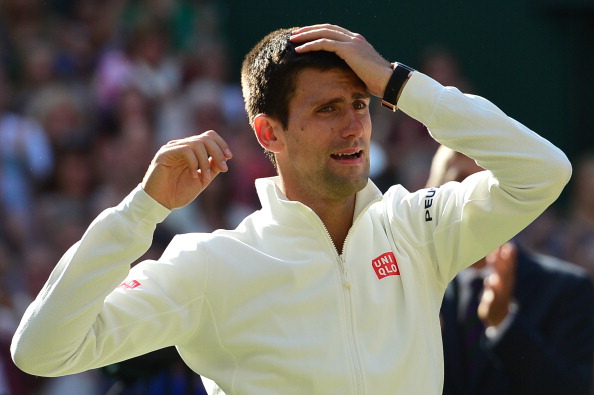
NOLEUSE1404667649000-AFP-531415517Glyn Kirk, AFP/Getty Images (click)

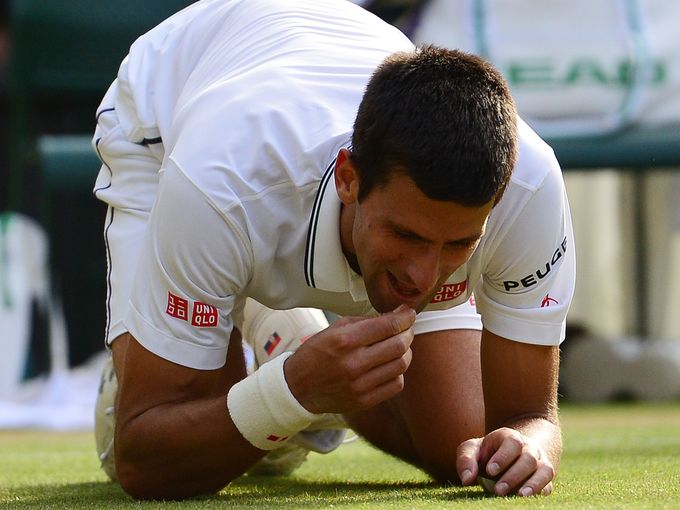
And Federer hit the ball into the net and it was all over. And Nole cracked open; not up, open — like the cracks that Leonard Cohen says let the light get in, except the light here was not flooding in but out of him in this great luminous glow. I don’t know what mad idea of redemption or humility or gratitude was going through his crazed Slavic mind when he knelt and started eating the grass off the court, but in the back of my mind I could hear some Serbian Sonya Marmeladova crying:

“This is what you shall do! Go at once, this very moment to the crossroads and kiss the earth which you have defiled and bow down to the world and say: ‘I am grateful. I am humble. I am grateful. I am humble.’”

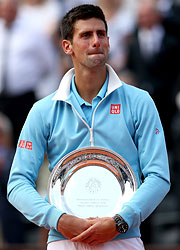
And then the tears of that gratitude and humility started flowing and I haven’t even wanted to watch any of the post-game interviews or read anything; I just want to be left with that image of him holding the cup and bawling. Weeping copiously.  Like a man.

wimbledon-men-novak-djokovic-wimbledon-trophy_3169070Getty images (click)

My sense here in Serbia is that there’s a little bit of a conflict between Djoković’ status as saintly national hero and the celebrity circus that’s constantly flowing around him, and that that’s what M.’s cynicism was about with the wedding and all. But a girl, I., who was in M.’s kompaniya that night: very smart and pretty, who speaks absolutely native-speaker American English and who is always running what’s apparently one of Serbia’s fastest-growing websites from from her IPad – which she was doing that night – while still managing to remain front and center of any conversation she happens to find herself in, says that’s the girlfriend and the media’s fault, not his, and that it really irks her.

“What does ‘irk’ mean, M.?” I decide to play professor with him, addressing him by his last name.

“It means like when something bother-… What do you mean what does it mean?!  I know what it means.  I was your best student!”

“Yeah. When you came to class.”

I. also talked some about some genuine darkness that was part of Nole’s childhood, the details of which are common knowledge here, but I’m not going to get into because it’s part of this blog’s journalistic policy not to go there with cheaply personal and especially hurtful personal issues, and especially not with someone I love and admire and who’s as much of a hero of mine as Djoković is. But let’s just say the redeeming, protecting hero archetype is a structurally core part of his psyche.

“He’s a beautiful man and he has a beautiful soul,” I. declared, definitively ending that conversation, as I imagine she must definitively end others when she wants to.

And I felt vindicated.

Do you have your answer now, M.?

Out of respect for this spectacular victory and the Djoković-and-tennis tolerance of my readers I promise there will be no Djoković or tennis at all until the U.S. Open.

But see you before then.

Djokunnamed

Comment: nikobakos@gmail.com

Note:  Speaking of “marble threshing-floors…”  The court at Wimbledon is in such shit state that it can only be called a grass court in the most ideally Platonic terms.  Really; cute British shabbiness has its limits.  Beer and probably piss-stained pub carpeting is one thing.  A court where most of the playing is done on parched, packed, rock-hard dirt, made that much more treacherous by the fine layer of sand it kicks up and coats itself with, is another.  It definitely put a cramp on both players’ styles at several moments during the match and there were times where it even looked like it could cause dangerous injury.  With Nole I didn’t know whether his super-human flexibility would protect him or if it would make his propensity for taking acrobatic risks that much more risky.  Either way, do something.  It’s one of those things that’s not charming about England anymore.

Image

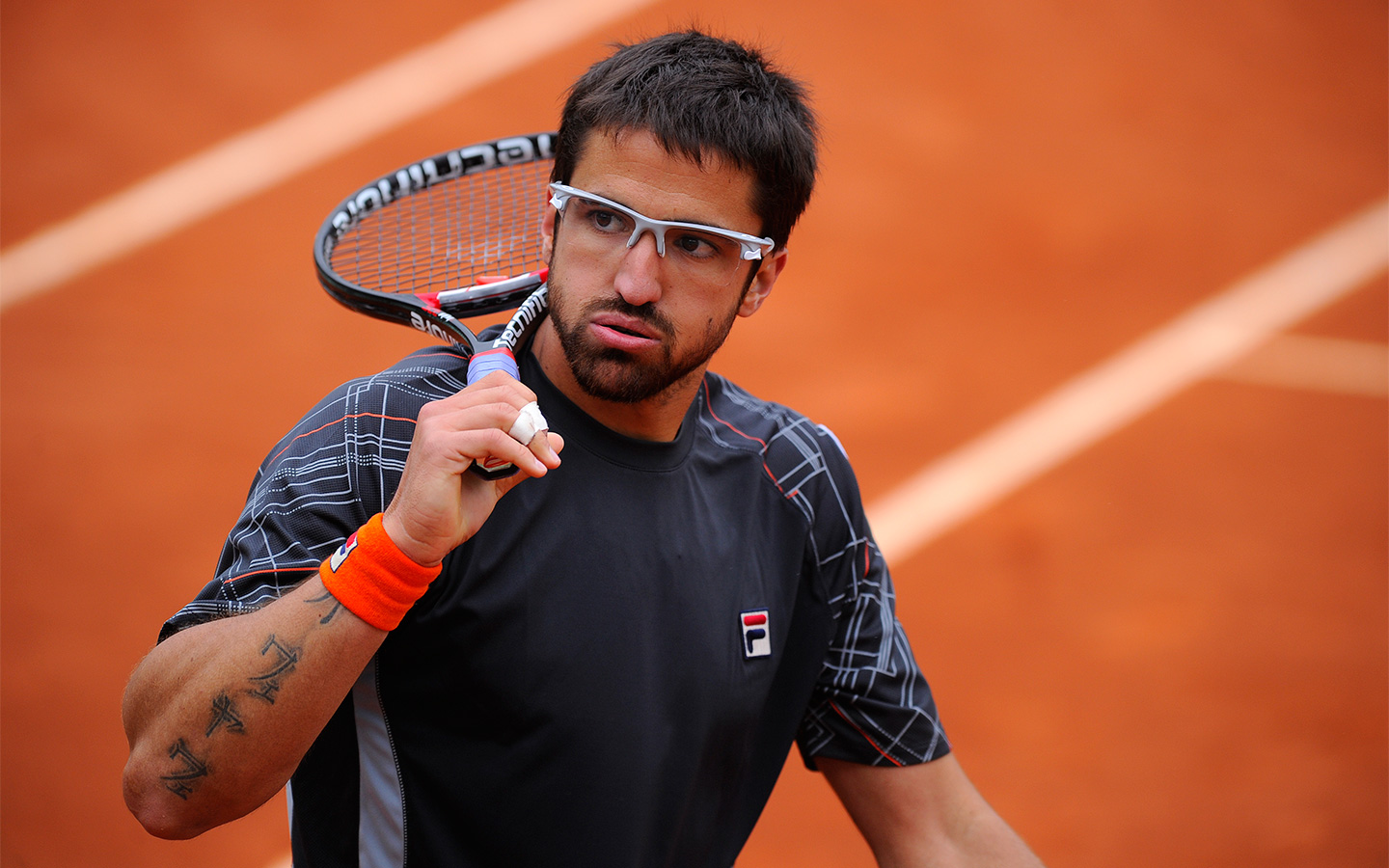
PS: Guys, where has Janko Tipsarević disappeared to?

4 Jul

Janko-Tipsarevic-HD-wallpaper

(click)

Comment: nikobakos@gmail.com

What…A…Fucking…GUY!

28 Jun

And can I get a witness please…  Like, several.  Because I have some big time testimony to make…

Read the Fox piece below ( I know — what are you gonna do?)

From now on I promise, Lord, that next time anybody disses Nole as a baby or a Balkan-wild-man clown, or unprofessionally erratic, or as uncoolly displaying too much emotional investment in his game (like…huh?).  Or as anything else even, other than a noble, generous, chivalrous, sportsmanlike, kick-ass athlete that shows up once a decade if we’re lucky in any sport — a knight, a fighter, a caballero, a steel-balled Kosovar and a man Russians would anoint with their highest possible compliment: “Broad-souled” (and yeah, yeah, of course, a Serb and gorgeous, we know), he’s gonna have to have me to deal with.  So help me God AND praise the Lord.  Amen.

And this is at Wimbledon too — where he knows he’s probably not gonna get to the top anyway and it takes heart to give away even tiny potential advantages like this.  HEART.

062514-TENNIS-Radek-Stepanek-of-Czech-Republic-hugs-Novak-Djokovic-PI.vadapt.955.medium.0Steve Bardens / Getty Images Europe

Novak Djokovic opts for ‘fair play’ during win over Radek Stepanek


The Centre Court match at Wimbledon featured only two service breaks, but wait, there was much, much more:

* Novak Djokovic giving away a point to Radek Stepanek that could have been replayed following an over-rule on a line call during a crucial time in the match, a move seldom seen in tennis.

* Stepanek cutting his right knee on one of his dozen or so falls on the grass during the 3-hour, 17-minute second-round match Wednesday.

* And on the final point of the match, a successful challenge by Djokovic on a call originally called out, with Stepanek getting down on his hands and knees in a prayer pose.

“Today in the challenges I was so unlucky, a millimeter here, a millimeter there,” Stepanek said. “I guess I hoped and I prayed that one time it will go with me.”

It didn’t. Djokovic’s forehand cross-court pass was ruled in after the video replay showed the ball landed on the line. Djokovic completed a 6-4, 6-3, 6-7 (5), 7-6 (5) win. The two players, good friends and frequent practice partners, hugged at the net.

The third-set tiebreaker featured each player winning five points in a row — Djokovic to take a 5-2 lead, only to have Stepanek come back to take it 7-5.

“I was two sets up, I had some break-point chances in the third and should have closed it out in the third-set tiebreak,” Djokovic said. “But credit to him for fighting. He’s 35 years old and still moving very well and surface wise grass is probably his most preferred. He loves to engage the crowd.”

That Stepanek did, with his give-it-all style of play swaying the Centre Court spectators his way late in the match. Stepanek repeatedly made unsuccessful challenges on line calls. When he finally got one right, he looked up to the skies in relief.

Stepanek said he couldn’t recall ever falling down so many times in a match.

“Maybe not, but that’s the way I play on grass, you have a little bit of comfort,” he said. “But that’s how I play anyway, with my heart.”

Stepanek said he was surprised by Djokovic’s gesture to give him the point. At 5-all in the third set, Djokovic had a game point on his serve when Stepanek hit a backhand that was called long. After Stepanek successfully challenged the call, Djokovic conceded the point even though it could have been replayed.

“That’s why I asked the whole crowd to clap,” Stepanek said. “It was incredible sportsmanship, and it proves just what a great champion he is.”

Djokovic played down the move.

“For me it’s just natural, just something that is normal to do,” he said. “I felt like I had no chance to play that ball, (so) of course I would concede the point. I’ve done it a few times in the past. OK, yes, the point was very important. …

“Nevertheless, I think it’s fair play. It’s something that I would expect my opponent to do for me. It doesn’t happen very often, unfortunately.”  [my emphases]

Nole after Garros: “…a lengthy and resounding ovation for his efforts, moving Djokovic to tears.” What a beautiful kid…

9 Jun
ROLAND GARROS 2014

Djokovic Draws Motivation From Ovation

Paris, France
by ATP Staff | 08.06.2014Djok5002A5B779F54BB3B9A554FAFD0C0FAA.ashx

Novak Djokovic’s hopes of completing the career Grand Slam and reclaiming the No. 1 Emirates ATP Ranking were put on hold Sunday at Roland Garros, but he received a boost from the outpouring of support he received following his defeat to Rafael Nadal.

The Parisian crowd rose to its feet and gave the two-time runner-up a lengthy and resounding ovation for his efforts, moving Djokovic to tears.

“It was fantastic,” he admitted. “I am so grateful for the opportunity to play here… To be able to also be appreciated by the fans the way I was in the end of the match just gives me more strength and motivation to come back here and try till the end of my career hopefully to get at least [one] title.”

For a third straight year, and for a sixth time in his 10 appearances, Djokovic’s Roland Garros campaign ended with a loss to Nadal. It marked his first defeat to the Mallorcan since the 2013 US Open final. Djokovic had won four straight meetings entering their 42nd FedEx ATP Head2Head clash, including last month in the Internazionali BNL d’Italia final.

Novak & Rafa: The Rivalry

“I wasn’t playing at the level that I wanted, especially in the second part of the match,” he said. “These kind of big matches obviously take the best out of players, and of course it’s a huge challenge.

WATCH DJOKOVIC INTERVIEW


A five-game run late in the second set, when he limited Djokovic to a mere five points, sparked Nadal’s 3-6, 7-5, 6-2, 6-4 victory on Sunday. Djokovic also lost to the nine-time Roland Garros champion in four sets in the 2012 final, and fell in a 9-7 decisive set in last year’s semi-final.

“It’s not impossible, but it’s very, very difficult to stay with Rafa on this court throughout the whole match on the highest level of performance,” said Djokovic. “It’s normal that you have ups and downs. I was just hoping that in the fourth I would be able to come back. I started feeling a little bit better, but I wasn’t managing to bring my A game when it was most needed in the end of the fourth.

“I think he was covering the forehand angle quite well,” he added. “My backhand crosscourt wasn’t as effective as it was maybe in the previous matches against him. He was hitting his down-the-line forehand really, really well, so I think his first shot off the forehand, off my return, was terrific today.”

The 27 year old will next return to action at Wimbledon, where he will look to reclaim the crown he won in 2011 (d. Nadal). Djokovic finished runner-up to Andy Murray last year.

A Bit of Greek History in Serbia

3 Jun

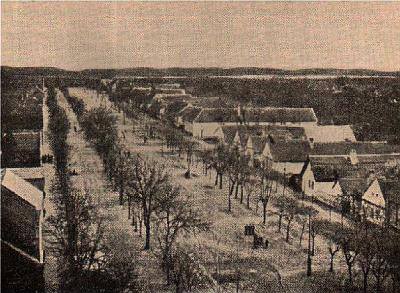
Buljkes

A discovery by Professor Vladimir Bosković of Harvard which he thought might be of interest to members of the MGSA, the Modern Greek Studies Association:

“MAY 1945 (image). The Bulkes (now Maglić) was a small town in northwestern Serbia, in the bend of the Danube in Vojvodina. Almost all the inhabitants were German colonizers. The city was given to the Greek political refugees, around 5000-6000 souls, with their families. After the December defeat, thousands of ELAS fighters went to Yugoslavia and settled in Bulkes. In May 1945, with a permission of the Communist Party of Yugoslavia, 4,650 members of ELAS settled in the abandoned village houses. Until 1949 Bulkes was treated as an extraterritorial Greek municipality on the territory of Yugoslavia, governed by Greek laws and using special Greek banknotes.”

Bulkes Greek Dinars (1945 – 1949), In: Greek Banknotes, <http://www.greekbanknotes.com/greek-banknotes/bulkes/> (20. V 2014). 

Milan Ristović, ”The Buljkes Experiment “Greek Republic” in Yugoslavia 1945-1949”, In: Annual for Social History, year IV, no. 2-3, Belgrade, 1997, <http://www.udi.rs/articles/The_Buljkes.doc> (20. V 2014).

Best,
Vladimir Boskovic
And a member asks:
Dear Mr. Boskovic
Since in Jugoslavia was already existing a “People’s Republic of Macedonia” (1944) , what was the reason of moving the Greek political refugees as well as the ELAS fighters (with their families and the kidnapped or not kidnapped children), most of which were “Macedonians” all the way to Voivodina ?
Why create a “Macedonian Diaspora” ?
Why not place the Greek political refugees and the “Macedonians” of ELAS in the newly formed “People’s Republic of Macedonia” in order to make it more “Macedonian” than ever?
Any reply would be appreciated.
 
Thank you
George Tsapanos
That’s not such a difficult question to answer, in my humble opinion.  First, it’s very ideologically questionable to assume that all ELAS fighters or members were Macedonians, or since you put it in quotes, let’s call them Slav-speakers of Greek Macedonia, though I don’t agree that their identity should continue to be qualified by quotes.  But this was a basic tenet or, rather, ideological ploy, of the Greek right during WWII and the Civil War: an attempt to conflate all Greek communists with Slav-Macedonians, thus killing two birds with one stone in essence, or marking them as double traitors; since they’re communists they must be Slavs and since they’re Slavs they must be communists.  So I would be very careful about falling into that trap.  Communism is not something inherently Slavic — which I’m sure you don’t believe — the way Greek nationalist propaganda tried to portray it on and off during the post-war years.  Ask the hundreds of millions of Slavic peoples who suffered most from that ideological experiment and they’ll tell you.
So we don’t have any real information on who these ELAS-ites who were settled in Bulkes in Vojvodina were ethnically or linguistically, at least not from the article that Professor Bosković sent out.
Then, the news item is a little problematically worded.  The German inhabitants of Vojvodina were not “colonizers.”  They had lived there for centuries because as you must know Vojvodina had been part of the Hapsburg Empire since Hungary was conquered back from the Ottomans in the seventeenth century.  They may have even arrived in the area at the same time that Serb colonists did from the south, or Old Serbia, during the so-called “Great Migration,”or may have even pre-dated them.  Germans were present even in the mediaeval Serbian kingdoms — Saši or Saxons — especially working in the silver mines of Novo Brdo in Kosovo and other locales that the pre-Ottoman Serbian kingdoms drew so much of their wealth from.  And I think that at the beginning of WWII, they were the second largest ethnic group in the region, after Serbs — or third, with Hungarians the second.
Linguistic_map_of_Vojvodina,_Serbia_(based_on_1910_census)
The other fact the article doesn’t mention is that all these Germans were expelled from the region and that many of Vojvodina’s Hungarians left, as well, after the war.  We don’t hear much about it but I believe that the numbers of Germans expelled from Eastern Europe after the war not only dwarfed the numbers of our tragic population exchange with Turkey in the twenties, but may have been even greater than the fourteen million  people who were dislocated as a result of the partition of India.  We’re just still a little uneasy talking about Germans as victims.
So that, as opposed to a poor region like Macedonia with a fairly dense population and an already slightly volatile Kosovo-like ethnic climate, Vojvodina was rich, fertile and had huge tracts that had been left empty by the departure of these Germans, and it probably made much more sense to settle these Greek communists there than anywhere in southern Yugoslavia.  Serb and Montenegrin settlers were also encouraged to come fill these now empty spaces of Vojvodina at the same time. 
And finally, Yugoslav ideology did not encourage the spirit of ethnic particularism, quite the opposite, so they would never have settled “Macedonians” in Macedonia in order to make it more Macedonian.
Does that help?
Nicholas Bakos

Comment: nikobakos@gmail.com

From the New York Times: “And Novak all fired up now goes, ‘Serbia! Serbia!’ ”

27 May
DjokParisCITY-CLAREY-superJumboDjokovic defeated Joao Sousa in straight sets Monday, 6-1, 6-2, 6-4. Credit Gonzalo Fuentes/Reuters (click)


Djokovic’s Greatest Motivation Isn’t on Court By CHRISTOPHER CLAREY    MAY 26, 2014

PARIS — Novak Djokovic was safe and dry after his first-round victory at the French Open on Monday, and it was noted that he often seems to play his best when he is playing for a cause higher than tennis.

“You’re right; you’re right,” he said. “It’s an interesting observation. I did also feel this at times when I had the last couple of years certain kinds of situations in life, good and bad, that were a lesson in a way for me. I noticed that I found that extra motivation to perform well on the court and to go far.”

But can he go all the way here over the next two weeks and join an exclusive seven-member men’s club by winning the only Grand Slam singles title he is missing?
Playing for Serbia has been a powerful motor for Djokovic. An emotional run to the 2010 Davis Cup title, Serbia’s first, helped him make the leap from serial Grand Slam contender to serial Grand Slam winner in 2011.
Wojtek Fibak, the former Polish star who advised Djokovic at last year’s United States Open, said he used that for fuel again when Djokovic was upset after his semifinal with Stan Wawrinka was scheduled first during the day after he had played primarily night matches.

Fibak said Djokovic had “the worst warm-up” and was in “a horrible mood” so he tried his best to get him back to the essential. “I said, ‘Remember your parents, remember your father had to sell his car for you to play tennis,’ ” Fibak said. “I kept bringing it up, and Novak’s eyes were big, and I said: ‘Do you know why they did it? So you could play the U.S. Open, and now you are in the semis of the U.S. Open and you don’t want to fight and you’re not happy just because of the time? I said do it for your father, your mother, for Serbia.’ And Novak all fired up now goes, ‘Serbia! Serbia!’ ”

He went on to beat Wawrinka in five sets before losing to Nadal in the final.

Now, as he returns to the tournament he wants to win more than any other, Serbia is again at the forefront of his thoughts. He has been seriously involved in raising money and awareness for relief efforts after this month’s floods in southeastern Europe, primarily in Serbia and Bosnia and Herzegovina, that killed dozens and forced hundreds of thousands from their homes.
Djokovic has donated his prize money — listed at 549,000 euros, or $750,000 — from winning the Masters 1000 event in Rome.

“I’ve seen the images and followed the news every single day, and it was something I’ve done because I felt like that was the right thing, and that’s it,” Djokovic said. “The second thing I thought about was that it was going to attract more of the donors from the international world to see that the situation is as serious as the prize money I donated. We’re talking about billions of dollars needed.”
Several players from the region took part with Djokovic in an on-court show of solidarity during an exhibition day at Roland Garros before the tournament. It was a small yet deeply symbolic gesture. Croatia, Serbia and Bosnia were all part of Yugoslavia before war broke the country apart in the 1990s. But Djokovic said that if there were any upside to this, it would be that former antagonists were now cooperating.

“To be honest there is something that I did not predict, did not expect,” Djokovic said. “And that is the solidarity of the people of the three countries that were in conflict only 15 years ago. That’s something that was incredibly moving and very encouraging for the relationship for the future of these people, because maybe we cannot be the same country again. Maybe people are thinking that’s not a good idea, but there is definitely a lot more room for improvement of the respect and solidarity between the people.”

When he is serious, Djokovic speaks in long paragraphs. He makes less eye contact than in his earlier days, but what remains remarkable is his ability to shift tone in a hurry. On Monday, marooned on a bench on a changeover during a second-set rain delay at Roland Garros, he invited the ball boy holding his umbrella to join him on the bench for a chat. He then finished off Joao Sousa, 6-1, 6-2, 6-4.
In a news conference, he doubled over with laughter and put his head on the desk when an Italian journalist asked Djokovic, who eats a gluten-free diet, if adopting the same regimen would help him improve his writing.  Moments later he was discussing the floods again and then, moments after that, answering a query about Boris Becker, the former champion who is coaching Djokovic this year along with his longtime coach Marian Vajda.

Becker won every Grand Slam tournament except the French Open and never won a professional clay-court title, which makes him an intriguing choice of mentor. What kind of advice might Becker be giving him for the French Open?

“He doesn’t tell me to serve and volley, that’s for sure,” Djokovic cracked. “But you know on a serious note, he is still one of the most successful players to play the game even though he hasn’t won Roland Garros.”  For Djokovic, Becker’s experience in big matches and big events is precious cargo even if he failed to win the Australian Open with him in his camp and has had most of his big victories this year with only Vajda in attendance. But the whole team was together in Rome.

“I feel that we understand each other much better already since Rome,” Djokovic said of Becker.

For now, Djokovic remains, with Becker, one of the best men’s players never to win the French Open, a list that includes John Newcombe, Jimmy Connors, John McEnroe, Stefan Edberg and Pete Sampras. But in light of Djokovic’s excellence on the surface, he may now be the best men’s clay-court player in the Open era never to win it.

Djokovic has won Rome three times and Monte Carlo and Madrid once. At Roland Garros, it took Roger Federer in full flight to stop Djokovic in the semifinals in 2011. It took Nadal in full fight to stop him in a rain-interrupted final in 2012 and then again in last year’s classic five-set semifinal.

Beating Nadal at Roland Garros remains the toughest task in tennis, and Djokovic said that the death of his grandfather inspired him in 2012, just as the death of his childhood coach Jelena Gencic in the midst of last year’s tournament inspired him before he fell just short, losing by 9-7 in the fifth.

“I cannot say that the images and memories of these people were not in my head while I was playing but I tried to channel this energy and information in the positive direction,” he said. “And I knew both of these people who were very supportive of my career would like me to play and win for them, so that’s
something I had in the back of my mind.” There is much more for the back of the mind this year. There are Serbia and
its neighbors. There is his coming marriage to Jelena Ristic and the birth of their first child later this year.

“It’s true; I have plenty of causes right now,” he said with the second round on the horizon.

Comment: nikobakos@gmail.com

Even if he’s a Serb…

23 May

…is the subtext of this article from AP and Canadian Press about Djokovic donating his full check from the Rome Masters to relief aid for Serbia and Bosnia  A nice guy, even though…

Nolegb148-512-2013-162604-high-jpg(AP Photo / Gregorio Borgia — click)

Novak Djokovic unites old enemies for flood relief effort

Serbian brings together former Balkan wartime foes

After winning the Masters tournament in Rome on May 18, tennis player Novak Djokovic donated all the prize money, about $500,000 US, to the flood victims in Serbia, Bosnia and Croatia.

Novak Djokovic has served many match-winning aces on the tennis court, but now he has fired a major one in the flood-hit Balkans.

The world’s No. 2 tennis player has achieved what no politician has managed since the bloody Balkan wars in the 1990s: to at least temporarily reunite former bitter wartime foes as they jointly struggle against the region’s worst flooding in more than a century.

Djokovic has sparked worldwide financial and media support for victims of the massive river water surge that has killed at least 45 people and left hundreds of thousands homeless in Serbia, Bosnia and Croatia.

The Serb has in the past triggered fury in the other former Yugoslav republics for what people considered nationalistic gestures, such as celebrating his victories with a three-finger victory sign that was used by Serb soldiers during their wartime campaigns in Croatia and Bosnia.

‘My heart is breaking when I see that so many people were evacuated and endangered in Bosnia. … Help will come from the world.’– Tweet from Serbian tennis star Novak Djokovic

What has set Djokovic’s flood salvage campaign apart is that he didn’t just seek international support for Serbia. He also did it for Bosnia and Croatia which were at war with Serbia. All three states are still harbouring a deep mutual hatred and distrust, 20 years after the wars ended and the former Yugoslavia split up into seven different countries.

“My heart is breaking when I see that so many people were evacuated and endangered in Bosnia! More than 950,000!!! Hold on brothers … help will come from the world,” Djokovic wrote on Twitter. “I also see that the east of Croatia is hit by floods … I sincerely hope that it will not hit you like Serbia and Bosnia. Keep safe.”

“Long live the people of former Yugoslavia. Let God be with you,” he wrote, adding a map of the former Yugoslavia with the flags of now different countries.

The floods have triggered unprecedented regional solidarity in the Balkans, with the former Yugoslav countries sending rescue teams and humanitarian aid to each other over their borders.

$500,000 US donation

After beating top-ranked Rafael Nadal in the final of the Masters tournament in Rome on Sunday, Djokovic donated all the prize money — about $500,000 — to the flood victims. His charity foundation collected another $600,000.

“There have not been floods like this in the existence of our people,” Djokovic said. “It is a total catastrophe of biblical proportions. I don’t really know how to describe it.”

Djokovic’s gestures triggered mostly positive public support in both Croatia and Bosnia.

“I’m not Djokovic’s supporter or like tennis,” said Davor Buric, a university student in Zagreb, Croatian capital. “It is nice that he mentioned not only Serbia, but also Croatia and Bosnia. Djokovic has nothing to do with the war, and I have never heard him saying anything against other nationalities.”

In Bosnia, national football team coach Safet Susic said Djokovic had won “the support of the whole of Bosnia” with his campaign, and promised to support him in the upcoming Grand Slam tournaments — the French Open and Wimbledon. Djokovic replied by saying he will support Bosnia at the World Cup in Brazil.

Such sentiments in Bosnia and Croatia have prompted some commentators to nickname him “Marshal Djokovic” after Marshal Josip Broz Tito, the post World War II Yugoslav communist leader who managed to keep Yugoslavia united with iron fist. With his death in 1980, the country started unraveling along ethnic lines.

“This water … has destroyed what we have been building for the past 20 years,” wrote prominent Croatian columnist and writer Vedrana Rudan in an ironic commentary on her web page.

“Djokovic has sketched the map of Yugoslavia, he greets both our and his people … the slaughter has separated us, the drowning has reunited us.”

© The Canadian Press, 2014

*************************************************************************************************************************************************************************************************************

This is the three-finger gesture they’re talking about, along with a temporary tattoo Djokovic got at some point of the Serbian national crest (with “Born in Serbia and ‘something’ in Monaco” added), and generally looking a little bit like a Belgrade club bouncer:

djokovic-tattoo-novak-djokovic-15906276-500-735

But it’s not a nationalist victory gesture “used by Serb soldiers during their wartime campaigns in Croatia and Bosnia.”  Those are the three fingers Orthodox Christians make the sign of the cross with and, according to my sources (granted, all Serbian), did not become a Serbian symbol or gesture of any kind until WWII, when members of the Nazi-collaborationist Ustaša regime of Croatia and those Bosnian Muslims who worked with them (for reasons I’ve never understood) made a habit of cutting those fingers off both corpses and the living.  It then became a symbol of resistance.  The Ustaša’s plan for the Serbs that fell under their control during the war was the “thirds” plan: kill one third, expel one third, convert the last third to Catholicism (good luck with that last one…)  See my post on genocide from last November.  Also yesterday’s After the Flood, Unity and Compasion…yeah.

You wanna casually throw some history around in lazy, half-informed North American style, at least look back a little further than twenty years.

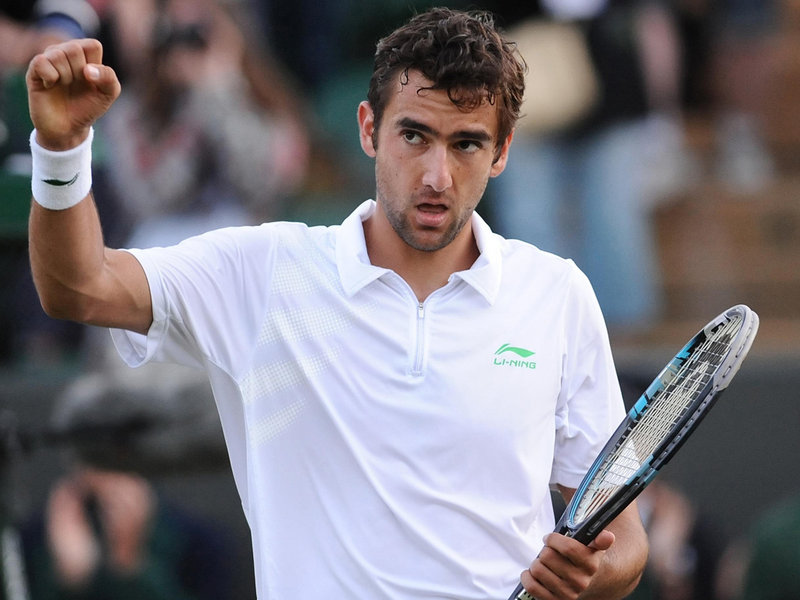
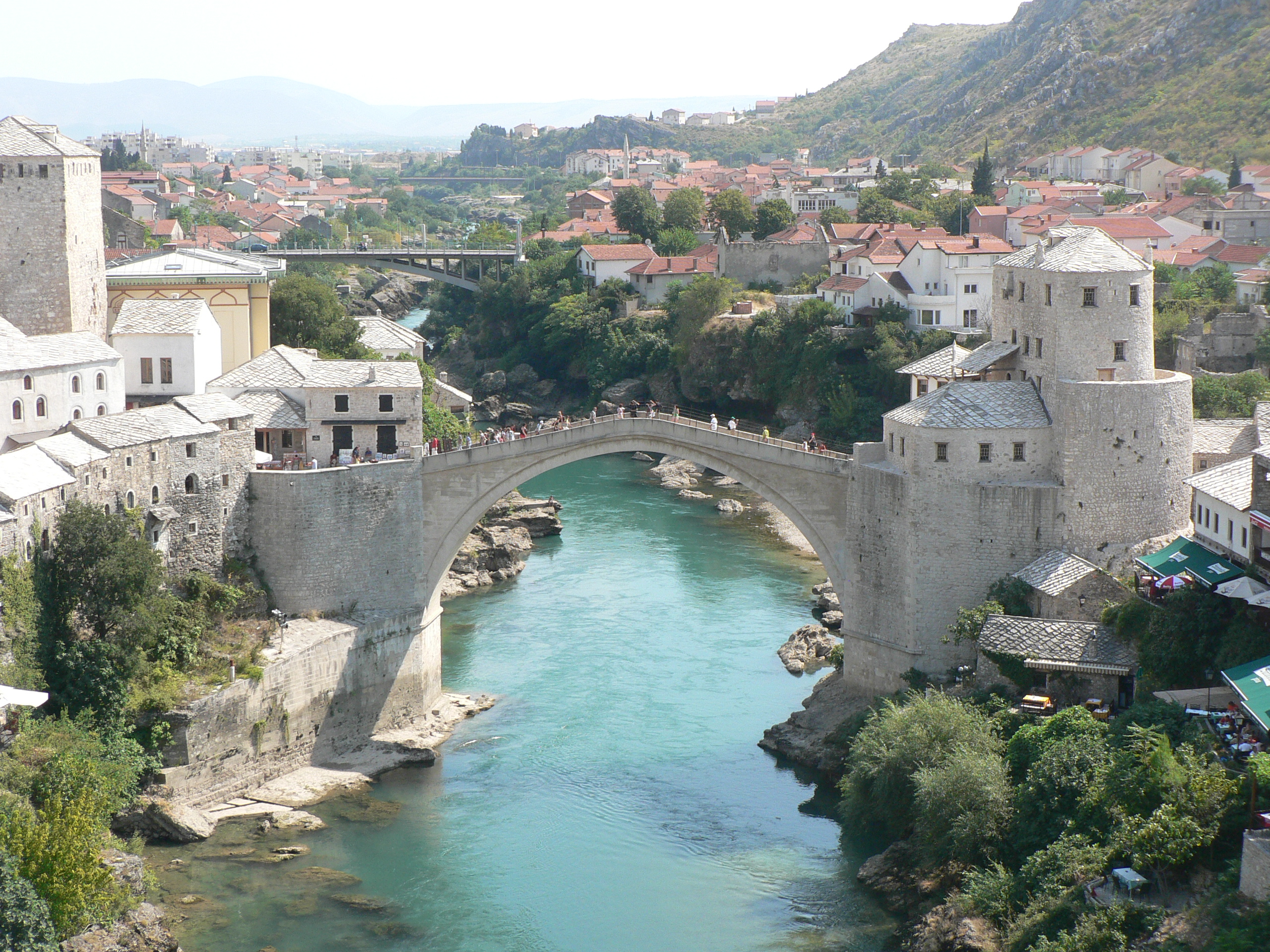
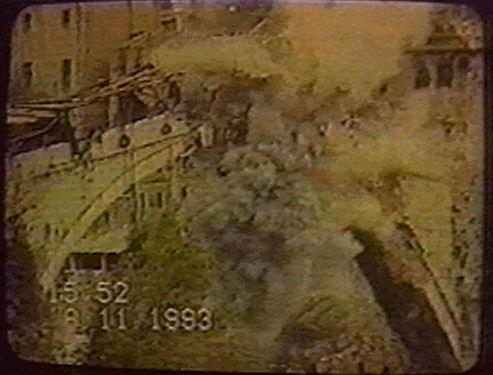
Marin Čilić is never ‘the tennis player from the country that created one of the ugliest, most homicidal Fascist regimes of twentieth-century Europe,’ is he?  Or ‘from the country that committed as many if not more atrocities in Bosnia during the wars of the nineties, and ethnically cleansed larger parts of the areas under its control of both Muslims and Serbs, and more thoroughly as well’ is he?  Or that ‘still holds on to a huge part of occupied Bosnia where Muslims suffer worse than they do in the Serb-held parts,’ is he?  Or, ‘that blew up the famous Ottoman bridge of Mostar?’ is he?   Nor should he be…considered anything other than an exceptional tennis player and a great athlete.

Marin-Cilic-celeb_2788159

Marin Čilić (click)

Yet Nole is constantly having to prove he’s not the “ugly Serb.”  Why can’t this just be the story of a deeply Christian kid, which is essentially what Novak is — and very genuinely so — who wants to help his neighbors?  Why is he held responsible for “fixing” damage he didn’t do?  And his people still responsible for a war they didn’t start?

He’s certainly far more  above all of it than I am, and God bless him.

Comment: nikobakos@gmail.com

2-jpg

 The Bridge of Mostar, now rebuilt (click)mostar

mostar5a(click)

(AP Photo/Gregorio Borgia)