

I know! Isn’t it wonderful?!
–
Tags: Turkey
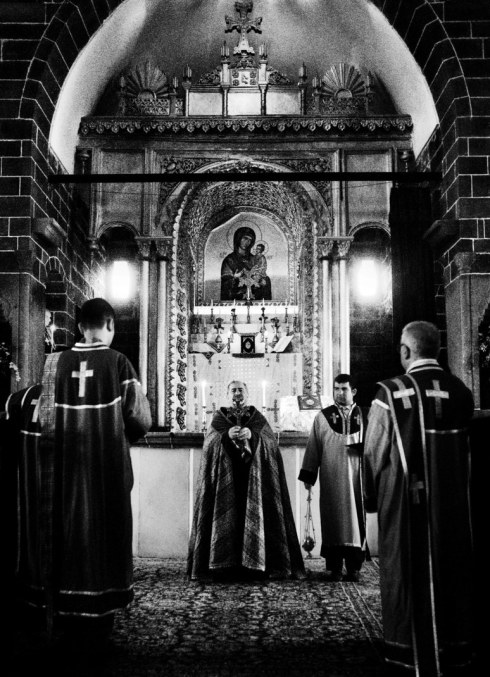 Easter Mass in Sourp Giragos in Diyarbakır, 2014. Because the church still has no priest assigned to it, a priest flies in from Istanbul. Pari Dukovic
From “A Century of Silence: A family survives the Armenian genocide and its long aftermath.“:
“As the villagers fled to Diyarbakir from the surrounding areas, it became a Kurdish city. In time, the Diyarbakir Kurds began to recognize that their role in the genocide was a kind of original sin in their modern political history. “I remember this one Armenian priest,” Demirbaş told me. “A Kurd was insulting him, and this priest told him, ‘We were the breakfast for them, you will be the lunch. Don’t forget.’ And that was important for me.'”” [My emphasis]
While we’re on Armenians, at a time when Syria plunges more deeply into hell than we had ever thought possible, when the West abandons the Kurds to Erdoğan and Assad, proving again that the U.S. is Turkey’s hamali, or that Turkey’s tail wags the dog, if you prefer, a historical reality check might be called for.
The American and almost every other media might be too superficial or too impatient to dig so deep historically because they’d lose their audience, but there is one, and one big thing that disproves Donald Trump’s assertion that Turks and Kurds have been fighting each other for centuries and are “natural enemies“ (see video below). And that is the fact that perhaps the greater portion of the massacres of Armenians and other Christians in eastern Anatolia during the last decades of the 19th c. and first two and a half decades of the 20th c. were conducted by Kurds.* Not by the Ottoman military, but by Kurdish para/irregular forces or just Kurdish tribal chieftains craving more land and authority and wealth, and conducting/justifying their campaigns of mass murder with the rippling green banner of Islam, under which Turks and Kurds were just brothers in defense of the faith. Only when the forces of modern nationalism started displacing the older bonds of religion and empire, did Kurds arguably start to feel themselves a separate entity from Turkish Muslims, and did the power of clan loyalties shift from semi-feudal to Kurdish nationalist ones; it’s even arguable that Republican Turkey’s anti-ağa, anti-religious and Turkification campaigns stoked the fires of the new Kurdish nationalism more than anything else. (Somewhat of a similar process occurs between the Ottomans and Muslim Albanians in the early 20th c., and Orthodox Greeks and Orthodox non-Greeks: Bulgarians, Macedonians, Vlachs, Albanian Christians — as the latter groups discovered/invented new identities to replace the old religious-institutional bonds.)
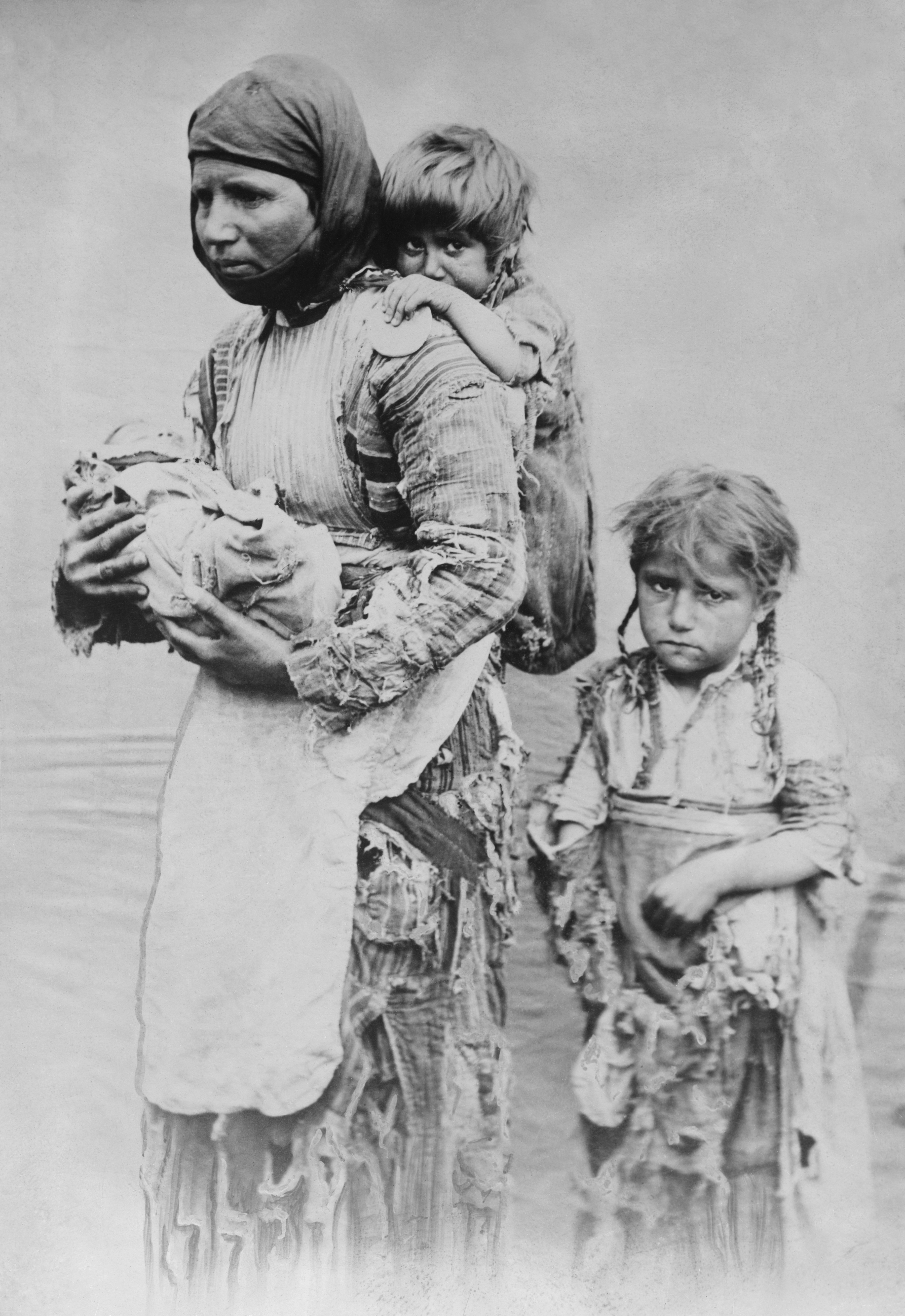 An Armenian woman and her children who were refugees of the massacres and sought help from missionaries by walking far distances. Photo unknown provenance.
So I’m sorry that couldn’t counter Trump’s claims of eternal Turkish-Kurdish enmity with something pretty about how — on the contrary — eternally well they have gotten along but rather by implicating both parties in coordinated mass murder. And forgive me the occasional snicker at Greek pro-Kurdish poses and the general sanctification of Kurds that we’ve witnessed in the past couple of decades.
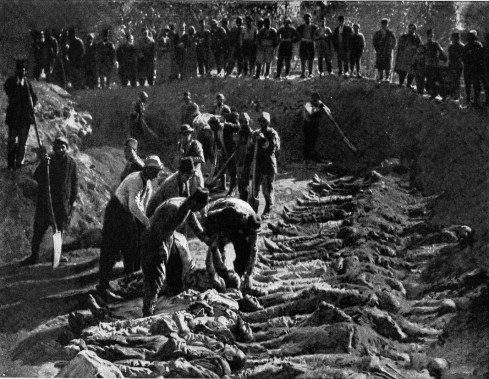 Armenian victims of the massacres being buried in a mass grave at Erzerum cemetery. Photo unknown provenance.
* From Wiki:
(“In 1890-91, at a time when the empire was either too weak and disorganized or reluctant to halt them, Sultan Abdul Hamid gave semi-official status to the Kurdish bandits. Made up mainly of Kurdish tribes, but also of Turks, Yöruk, Arabs, Turkmens and Circassians, and armed by the state, they came to be called the Hamidiye Alaylari (“Hamidian Regiments“).[16] The Hamidiye and Kurdish brigands were given free rein to attack Armenians, confiscating stores of grain, foodstuffs, and driving off livestock, and confident of escaping punishment as they were subjects of military courts only.) [my emphasis]
And not just eastern Anatolia. Istanbul’s Kurdish population played a major role in the 1896 Hamidian Armenian massacres in the City, where hundreds were killed right there in Pera, in ab-fab Beyoğlu, in the middle of the elegant, Beaux Arts, now garish and overlit Istiklâl. Referred to this before and to how brilliantly these events are handled in the “Duck with Okra” chapter in Maria Iordanidou’s Loxandra.
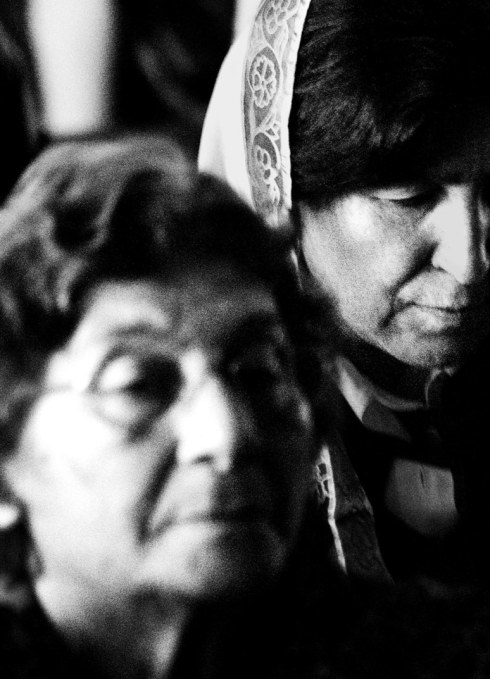
Only fair, however, that I include a reference to this 2015 article from The New Yorker, “A Century of Silence: A family survives the Armenian genocide and its long aftermath.“ by Raffi Khatchadourian, in which the then mayors of Diyarbakır and the separate municipality of the Old City, Osman Baydemir and Abdullah Demirbaş respectively, apologize for the Kurdish role in the Armenian massacres and rebuild and restore the city’s main Armenian church, Sourp Giragos (Hagios Kyriakos in Greek) and allow it to function (see photo above) for the handful of Armenians left in the city. Khatchadourian‘s article has some beautiful photos too by Pari Dukovic.
“We Kurds, in the name of our ancestors, apologize for the massacres and deportations of the Armenians and Assyrians in 1915. We will continue our struggle to secure atonement and compensation for them.”
–
Comment: nikobakos@gmail.com
–
Not 100% sure how I feel about this; see “Screamers: Genocide: what is it and why do we need the term?“. I voice my major apprehensions there.
But “bully” is such an apt term for the Turkish Republic and the Turkish body politic (“thug” also comes to mind), that I think anything that puts Turkey in its place is a positive development.
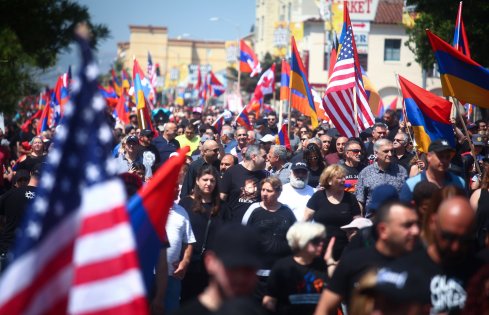 Credit…Mario Tama/Getty Images
Power’s money quotes:
Although Turkish officials may see the vote as retaliation for Turkey’s recent forced displacement of Syrian Kurds, that operation — as well as President Recep Tayyip Erdogan’s sweeping human rights crackdown in Turkey and his purchase (over American and NATO protests) of a Russian air defense system — simply reduced the impact of Turkish blackmail.
……..
First, as a baseline rule, for the sake of overall American credibility and for that of our diplomats, Washington officials must be empowered to tell the truth.
Over many years, because of the fear of alienating Turkey, diplomats have been told to avoid mentioning the well-documented genocide. In 2005, when John Evans, the American ambassador to Armenia, said that “the Armenian genocide was the first genocide of the 20th century,” he was recalled and forced into early retirement. Stating the truth was seen as an act of subordination.
When I became ambassador to the United Nations in 2013, I worried that I would be asked about the Armenian genocide and that when I affirmed the historical facts, I could cause a diplomatic rupture.
Second, when bullies feel their tactics are working, they generally bully more — a lesson worth bearing in mind in responding to threats from China and Saudi Arabia. The Turkish government devotes millions of dollars annually to lobbying American officials and lawmakers: more than $12 million during the Obama administration, and almost as much during the first two years of the Trump presidency. Turkish officials have threatened to respond to genocide recognition by suspending lucrative financial ties with American companies, reducing security cooperation and even preventing resupply of our troops in Iraq.
On Friday, the Turkish ambassador warned that passage of the “biased” House resolution would “poison” American-Turkish relations, and implied that it would jeopardize Turkish investment in the United States which provides jobs for a “considerable number of American citizens.”
It is easy to understand why any commander in chief would be leery of damaging ties with Turkey, an important ally in a turbulent neighborhood. But Turkey has far more to lose than the United States in the relationship. The United States helped build up Turkey’s military, brought it into NATO and led the coalition that defeated the Islamic State, which carried out dozens of attacks on Turkish soil. Over the past five years, American companies have invested some $20 billion in Turkey.
If Mr. Erdogan turns further away from a relationship that has been immensely beneficial for Turkey in favor of deepening ties with Russia or China, it will not be because the House voted to recognize the Armenian genocide. It will be because his own repressive tactics are coming to resemble those of the Russian and Chinese leaders. [my emphases]
–
Comment: nikobakos@gmail.com
–
Humorless and totally irony-free; self-important and grandiose; and a stunning combo of arrogance and blockheadedness — he may be the quintessential Turk at his worst.
–
Comment: nikobakos@gmail.com
–
White House reveals policy shift, which follows conversation between Trump and Erdoğan
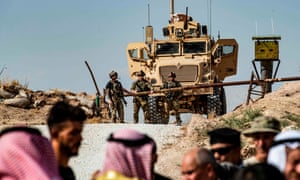
The White House has given the green light to a Turkish offensive into northern Syria, moving US forces out of the area in an abrupt foreign policy change that will in effect abandon Washington’s longtime military partners, the Kurds.
Kurdish forces have spearheaded the campaign against Islamic State in the region, but the policy swerve, after a phone conversation between Donald Trump and Recep Tayyip Erdoğan on Sunday, means Turkey would take custody of captured Isis fighters, the White House said.
It has also raised fears of fresh fighting between Turkey and Kurdish forces in Syria’s complex war now the US no longer acts as a buffer between the two sides.
The Kurdish-led Syrian Democratic Forces (SDF) said on Monday morning that their US partners had already begun withdrawing troops from areas along Turkey’s border. Footage aired on Kurdish news agency Hawar purportedly showed US armoured vehicles evacuating key positions near the towns of Ras al-Ayn and Tal Abyad in the border region. Erdogan himself also confiirmed the development in remarks to reporters on Monday morning in Ankara.
The SDF spokesman, Mustafa Bali, accused the US of leaving the area to “turn into a war zone”, adding that the SDF would “defend north-east Syria at all costs”.
A statement from the Turkish foreign minister, Mevlüt Çavuşoğlu, also early on Monday said that Ankara had “supported the territorial integrity of Syria since the beginning of the crisis and will continue to do so … [We are] determined to ensure survivability and security of Turkey by clearing the region from terrorists. We will contribute to bringing safety, peace and stability to Syria.”
The decision represents the latest in a series of erratic moves by Trump, fighting impeachment at home, apparently taken without consultation with, or knowledge of, US diplomats dealing with Syria, or the UK and France, the US’ main international partners in the country.
In August, the US and Turkey came to an agreement to create a “safe zone” in northern Syria, by which the US-backed Kurdish-led SDF would pull back from the border. Ankara sees the SDF as indistinguishable from Kurdish insurgents inside Turkey and views it as a serious security threat. The safe zone deal was due to forestall a Turkish military offensive which has been threatened since Trump announced last December the 2,000 US special forces stationed in Syria would leave.
In the White House statement issued just before 11 pm on Sunday, however, that agreement was not mentioned.
“Today, President Donald J Trump spoke with President Recep Tayyip Erdoğan of Turkey by telephone,” the surprise statement said. “Turkey will soon be moving forward with its long-planned operation into northern Syria. The United States Armed Forces will not support or be involved in the operation, and United States forces, having defeated the Isis territorial ‘caliphate’, will no longer be in the immediate area.”
The statement suggested that in return for US acquiescence in a Turkish offensive, Erdoğan had assured Trump that Turkey would take over the detention of Isis militants captured by the SDF, on the battlefield.
The custody of Europeans and other foreign fighters has long been one of Trump’s preoccupations, and he has lambasted European governments for not taking responsibility for their own nationals in Isis’ ranks.
“The US government has pressed France, Germany, and other European nations, from which many captured Isis fighters came, to take them back, but they did not want them and refused,” the White House statement continued.
“The US will not hold them for what could be many years and great cost to the United States taxpayer. Turkey will now be responsible for all Isis fighters in the area captured over the past two years in the wake of the defeat of the territorial caliphate by the United States.”
Syria experts warned that the US abandonment of the SDF would lead to another, new front in the eight-year Syrian conflict, and could push the Kurds into seeking an arrangement with the Assad regime in Damascus. The Kurdish leadership has long been in talks with Damascus to ensure a level of Kurdish autonomy in north eastern Syria in the event of a US pullout.
Two weeks ago, at the UN general assembly, the US special envoy for the global coalition to defeat Isis, James Jeffrey, stressed that the US had an agreement with Turkey on a safe zone, in recognition of Ankara’s security concerns, that obviated the need for an Turkish incursion.
“We listen to the Turks’ concerns. We try to respond to them when we can,” Jeffrey said. “And we have made it clear to Turkey at every level that any unilateral operation is not going to lead to an improvement in anyone’s security – not Turkey’s, not the people in the north-east, not the people around the world who feel threatened by Daesh [Isis], which is the basic purpose for our US military being in the north-east in the first place.”
Ankara says the planned safe zone could allow up to two million Syrian refugees currently living in Turkey to return, although international observers and the SDF say such a move would amount to demographic engineering. Turkish presidency spokesperson Ibrahim Kalin said on Monday that Turkey has “no interest in occupation or changing demographics”.
Another outcome of the Trump-Erdoğan call is that the Turkish leader is expected to visit the White House next month.

Why did we know that even if we were not definitely told by anybody? i.e., that the whole culture and ceremony of meze-fish-rakı is a Greek contribution to İstanbul.

The last Greek restaurant, İmroz (Ίμβρος) on Nevizâde Sokağı closed soon after its owner passed away in 2015. Before that there was still İnci, the patisserie on the Jadde itself that was momentarily a part of the Gezi protests in 2013. See my: “Nobody really cares about Gezi Park: Greek thoughts on the protests of 2013“.
So, it’s over; I think it’s now official. At least as far as I know. I’m 99.9% certain that there are no longer any Greek retail businesses left in the City. Anyone who knows any different, let me know.
*************************************************************************************

On any given night, bustling, narrow Nevizade Street in the heart of Istanbul’s Beyoğlu district buzzes with thick crowds of evening revelers searching for the best table while clean-shaven waiters in their customary uniform of pressed white shirts and V-neck sweaters attempt to lure the crowds into their establishments.
Hyperactive as it may be, Nevizade – a hub for the meyhane, the Turkish taverna where plates of meze are enjoyed alongside slowly sipped rakı and grilled fish – has for decades had one distinctive, constant presence: Yorgo Okumuş, co-owner of the meyhane Krepen’deki İmroz and sole proprietor of a pair of almost comically bushy white eyebrows and an enigmatic mien that seemed to say he’s seen it all (which he probably had).
This week, sadly, Nevizade lost its elder statesman, with Yorgo Baba (as he was affectionately known) dying at the age of 94 after a short period of bad health. With the passing of Yorgo, a member of Istanbul’s dwindling Greek community, Beyoğlu lost one of the living links to its once vibrant multicultural and cosmopolitan past. At the same time, with his meyhane, Yorgo leaves behind an Istanbul institution that itself serves as a link to that past and that tells the incredible story of the fall and rise of the Beyoğlu neighborhood and its nightlife and dining scenes.
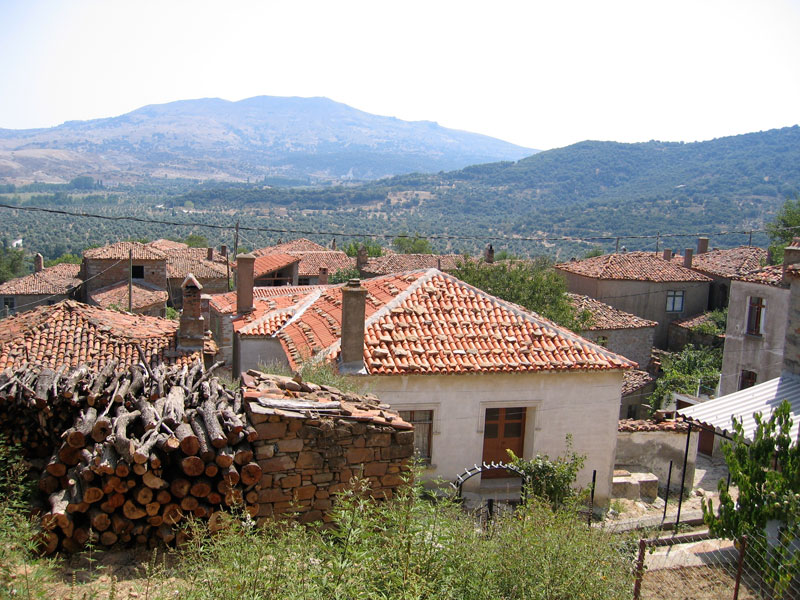 While Nevizade and the streets surrounding it comprise one of the most lively and well-known nightlife hotspots in Istanbul, the meyhanes there trace their roots to a humbler, grittier period from where a time traveler would find the Beyoğlu of today utterly unrecognizable. “We were the first meyhane to arrive in Nevizade, in 1982. No one else was around in those days, and there was a mortician next door,” 57-year-old Mustafa Yıldırım, co-owner of Krepen’deki İmroz, told us during a recent visit. The name, which translates as “İmroz from Krepen,” is a nod to the island (known in Greek as İmroz and Gökçeada in Turkish) from which Yorgo hailed and a reference to its former location, the late Krepen Pasajı, where it opened in 1941.
Built sometime in the second half of the 19th century, the arcade was home to shoemakers and tailors until the early 1940s, when meyhanes began to move in one by one, resulting in a rowdy alcove of debauchery, where good-natured hell was raised on a nightly basis until the passage was razed in 1982. It was later rebuilt as a more mild-mannered arcade for secondhand bookshops, and remains so to this day.
Krepen might have been demolished, but Yorgo and Mustafa decided to carry on, relocating to Nevizade Street, just off Beyoğlu’s fish market, and İmroz became Krepen’deki İmroz so that it would be recognized by patrons from the previous era. “The backstreets were dangerous,” Mustafa said of Beyoğlu in the ’70s and early ’80s. “They were terrible back then. As far as a woman walking through during the day, forget it. It was even difficult for men to pass by. There were drunks and junkies, and the possibility of a fight breaking out was high.”
“We really struggled against this,” he said, adding that mafia pressure (still a factor in Beyoğlu today) was a major reality back then, with legendary kingpin Dündar Kılıç exerting a formidable presence in the area.
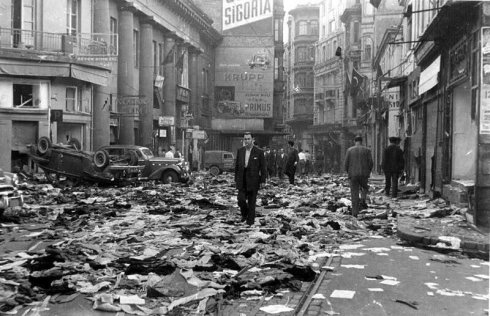
The cosmopolitan feel of Beyoğlu created by the Greeks, Armenians, Jews and Levantines (residents of European descent) who once dominated the area began to disintegrate in the second half of the 20th century, when non-Muslim Istanbullites vacated the area en masse, leaving a wealth of gorgeous, European-style architecture behind as tokens of their once established presence. The devastating anti-Greek pogrom of September 6-7, 1955, set its sights on minority-owned homes and businesses throughout the city, but the damage in Beyoğlu was particularly severe, resulting in a large number of Greeks leaving the country. Just under a decade later, thousands of Istanbul Greeks were expelled from the city as Greek-Turkish relations turned sour over Cyprus, a nail in the coffin for the once robust community and the urbane quality of Beyoğlu.
Krepen Pasajı, with its raucous array of meyhanes run by both Turks and Greeks alike, successfully navigated those complicated twists and turns in Beyoğlu’s social life. The Turks learned the trade from the Greeks, and Yorgo was perhaps the last meyhane proprietor of his kind in Istanbul, where the Greek population has now fallen below 2,000.
 Yorgo and Mustafa opened Krepen’deki İmroz in 1982, but the two had actually worked together since 1970, when a 12-year-old Mustafa was hired on as a busboy in the meyhane where Yorgo was working as a waiter at the time. When they opened their own place, the beginning of a new social life began to take root in Beyoğlu. “In the 1970s, while working in Krepen, there were no female customers. Maybe in a month you would see one or two. Families would not go there,” recalled Mustafa. “The atmosphere was one of vulgar, slang-ridden conversations between men. After we moved to Nevizade in the ’80s, women started to show up, and the men began to watch their mouths.” Kadir’in Yeri (“Kadir’s Place”), one of İmroz’s neighbors from Krepen Pasajı, followed suit by opening on Nevizade under its current moniker, Krepen’deki Kadir’in Yeri.
At that time, Beyoğlu was far from the vast entertainment hub that it is known as today. The back alleys were beyond sketchy, and young people did not go there to socialize, instead heading to the quarters of Ortaköy, Nişantaşı and Etiler, which now rank among the most expensive and luxurious neighborhoods in the city. Krepen’deki İmroz was part of Beyoğlu’s gradual change, which surged after 1988, when the district’s main avenue, İstiklal, was designated pedestrian-only, and the adjacent Tarlabaşı Boulevard was expanded across six lanes.
“Eventually the pavyon segment of Beyoğlu began to transform into one of pubs, cafés and grillhouses, and young people began to come hang out,” Mustafa said, referring to a kind of “gentlemen”-only nightclub where customers would pay to have women flirt with them tableside and which was once a main fixture of the district during its seedier days.
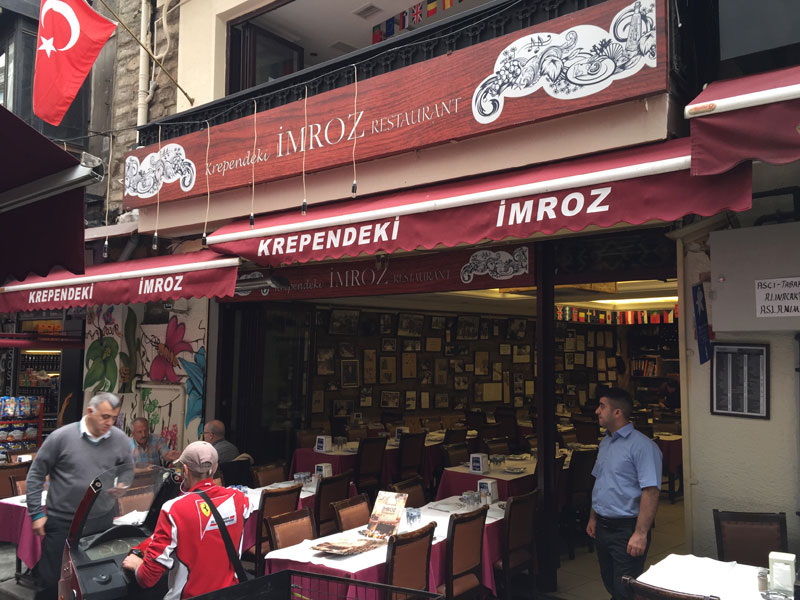 Dining habits in the meyhane also changed in the post-Krepen era, Mustafa told us. Back then, the meze affair was much simpler: While İmroz’s meze tray today groans with the weight of some 40 selections, it only carried a half-dozen or so in the old days. Not-for-the-faint-of-heart choices such as grilled kidney and ram’s testicles were also on the menu once upon a time, but have since quietly disappeared.
The years treated Mustafa and Yorgo well until recently. Mustafa said that the Gezi Park protests of 2013 and the subsequent iron fist of police violence that slammed down on Beyoğlu for months afterward have irreparably damaged business, sinking revenues by as much as 50 percent. The constant cat and mouse of police and protestors – and the ensuing tear gas – routinely spilled over into backstreets like Nevizade and profoundly affected the area.
“Since we’ve been around for so long, we have been able to stay on our feet. Some of our neighbors are having a harder time,” Mustafa said solemnly.
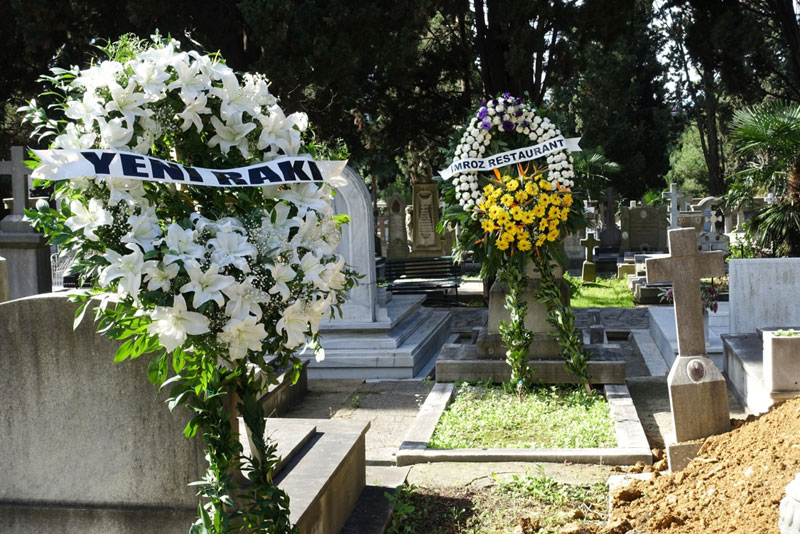 Many of those neighbors turned up for Yorgo’s Wednesday funeral at the Greek cemetery in Istanbul’s Şişli neighborhood. Meyhane keepers, merchants from the Beyoğlu fish market and waiters, some in their work attire, all came to pay their respects. One man walked through the greeting line wearing an apron. Near Yorgo’s grave was a large funeral wreath from Coşkun Kasap, an old-time Beyoğlu butcher who supplies many of the meyhanes. Not far from that wreath was one sent by Yeni Rakı, Turkey’s largest distiller of the anise-flavored spirit.
Old customers were there in force as well, unshaven, many looking hungover. They smoked and gathered in knots, as if congregating in the dining room of İmroz, all wearing a photo of Yorgo pinned to their jackets. “He was the last of the Mohicans,” Emre, a tour guide and regular, told us. A spice merchant from the fish market said, “He was a four-star human, a beautiful person.”
One old regular of İmroz recalled Yorgo’s occasional temper, which over the years became part of his charm. “Many times I’d do something to annoy him and he’d blow up on me. But that came from his love,” he said. “Love and friendship – that should stay in our minds when remembering Yorgo Baba.”
Yorgo’s son, giving an interview to a television station, simply said, “He was the heart of Beyoğlu, the heart of the fish market.”
Not far from the freshly dug grave, a group of friends caught up with each other. “We’re getting the team back together,” one said. “5:30, İmroz.” They all nodded. “5:30, İmroz!”
Additional reporting was contributed by Ansel Mullins.
(photos by Ansel Mullins, Paul Osterlund and Yigal Schleifer)
–
Comment: nikobakos@gmail.com
–
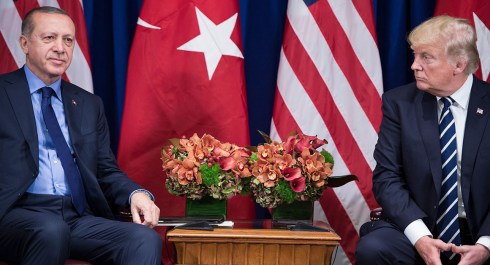
Read Politico’s no-pulled-punches: “Why Turkey Feels Burned By Trump“.
 Brendan Smialowski/Getty Images
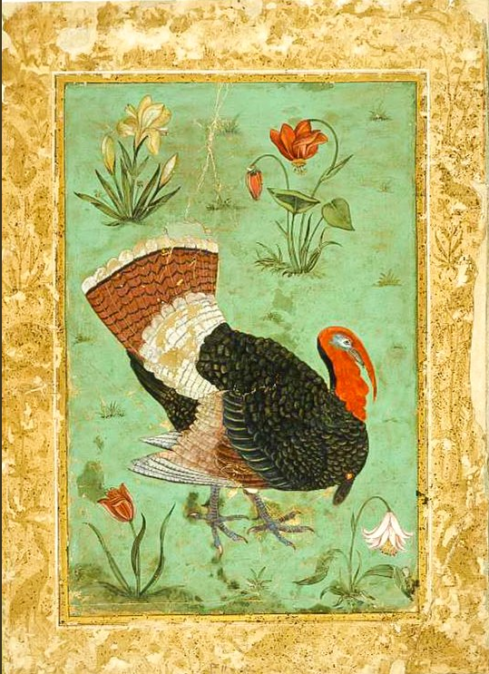
Turkey. Shah Jahan era. Fitzwilliam Museum, Cambridge. @ambrin_hayat @DalrympleWill @Chemburstudio
Though never invested a very great deal of emotional energy in Thanksgiving, I thought this Shah Jahan era miniature was beautiful, and maybe one more reason to not eat the bird: ’cause it looks better than it tastes.
–
Comment: nikobakos@gmail.com
–
New York Times piece about things coming to a head in Ireland: “Northern Ireland Is Sinking Into a ‘Profound Crisis’” :
As the standoff drags on, and polarization increases, people find it harder to envisage Northern Ireland as an autonomous entity. “We’re back to this binary situation where people either see it as a problematic part of the U.K. or as a part of united Ireland,” said Graham Walker, a politics professor at Queen’s University, Belfast.
**************************************************************************************
My previous Ireland posts, the top more Ireland-specific, at bottom a broader look at nation and minorities:
This is not a question I ask glibly or to be deliberately provocative. In fact, I think I was a little too glib in my earlier opinions about the issue of Brexit and Ireland and I’ve been sobered up a bit.
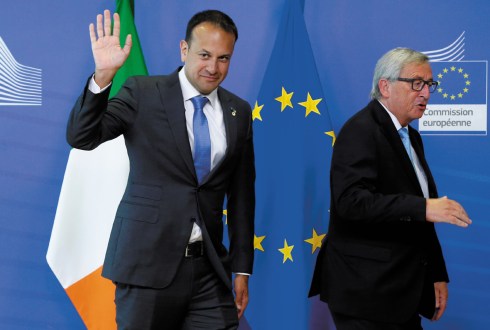 Irish Prime Minister Leo Varadkar and European Commission President Jean-Claude Juncker at a summit of the EU, Brussels, June 2017
And it’s The New York Review of Books’ excellent piece by Fintan O’Toole, “Brexit’s Irish Question“, that made me think a little more carefully about the whole issue.
I suggest everybody read the whole article since it’s open to the public, but I think even it pulls its punches a bit too much and doesn’t realize the degree of danger this “question” poses. This is not “Brexit’s Irish Question.” This is England’s Ireland Problem. AGAIN. STILL. A reversion to form. Before 1999. Before 1921. So all parties, but especially England, not Britain, should tread very carefully.
A good if rather lengthy summary/call out are the following three paragraphs from the piece:
“The Republic of Ireland was one of the most ethnically and religiously monolithic societies in the developed world. Its official ideology was a fusion of Catholicism and nationalism. The anti-homosexuality laws reflected the dominance of the Catholic Church, which was also manifest in extreme restrictions on contraception, divorce, and abortion. While the vast majority of its population was repelled by the savage violence of the Irish Republican Army’s armed campaign against British rule across the border in Northern Ireland, most agreed with the IRA’s basic aim of ending the partition of the island and bringing about what the Irish constitution called “the reintegration of the national territory.”
“But the Irish radically revised their nationalism. Three big things changed. The power of the Catholic Church collapsed in the 1990s, partly because of its dreadful response to revelations of its facilitation of sexual abuse of children by clergy. The Irish economy, home to the European headquarters of many of the major multinational IT and pharmaceutical corporations, became a poster child for globalization. And the search for peace in Northern Ireland forced a dramatic rethinking of ideas about identity, sovereignty, and nationality.
“These very questions had tormented Ireland for centuries and were at the heart of the vicious, low-level, but apparently interminable conflict that reignited in Northern Ireland in 1968 and wound down thirty years later. If that conflict was to be resolved, there was no choice but to be radical. Things that nation-states do not like—ambiguity, contingency, multiplicity—would have to be lived with and perhaps even embraced. Irish people, for the most part, have come to terms with this necessity. The English, as the Brexit referendum suggested, have not. This is why the Irish border has such profound implications for Brexit—it is a physical token of a mental frontier that divides not just territories but ideas of what a national identity means in the twenty-first century.” [My emphases]
The passage’s conclusion pretty much says it all. As the second decade of the twenty-first century comes to a close, and as Ireland approaches 100 years of freedom from almost 800 years of English rule, Ireland will enter the historical record as having taken a step forward and England as having taken a step backwards. Good riddance, to be frank, as I have to say so against some pretty deep Anglophile sentiments. It took me till much too late in life to realize that the best thing to do to an irate lover who loudly announces he’s not talking to you anymore is to ignore him, but that is what the European Union is rightly and justly doing to Britain. And Britain is doing exactly what the “irate lover” always does when you call his no-talking bluff: trying to somehow work his way back into the position where he can regain at least some of the power that he forfeited with his drama so that he can manoeuver a bit. But it’s not going to work. Europe is genuinely tired of the drama.
The issue here is that it’s unconscionable that England’s drama should again be made Ireland’s. Here’s a political map of the past two decades of Northern Irish life:
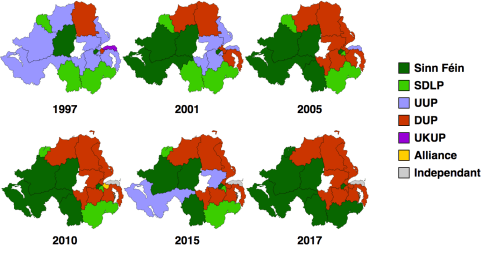
What the map shows really clearly is that, as the percentage of Protestants in Northern Ireland has declined, the two groups have actually — during almost twenty years of what we have liked to imagine was peace — grown further apart and polarized into staunchly Sinn Féin Republican constituencies and Protestant DUP constituencies. As the Review article points out Sinn Féin supporters in a non-EU Northern Ireland will now be deprived of the ability to have either or both Irish and British citizenship, something to which I cannot see them taking to very kindly. I also do not see supporters of DUP, a corrupt bunch of thugs that represents the absolute worse of the English Reformation’s traditions of Guy Fawkes’ Day, anti-Catholic hatred and racism (no, Catholics aren’t always the bad guys), easily giving up their attachments to London.
But that’s exactly what London has to do. England left Ireland in 1921 with a sizeable chunk stuck between its teeth that, like a pitbull, it would not let go of and which is why we find ourselves where we are today. It left India in 1947 like a teenager who sheepishly goes off to sleep at his girl’s after his friends have trashed his parents’ place while they were away. It left Cyprus in 1960 exactly the same, a time bomb ready to go off — which did. Under no condition should England be allowed to leave a similar mess this time. Time for the international community to make the English clean up after themselves.
The international community and NATO more specifically did not support Portugal in its attempt to hold on to Goa after Indian independence. That means the UK neither, obviously. It’s now time for the world to tell the UK to entirely and finally Quit Ireland, its closest and perhaps most deeply brutalized colony. I’m usually not so intransigent on these issues, but the historical record calls for a complete rejection of any attempts by Irish Protestants to keep England involved in Irish affairs by “protecting” them or their rights; complicated compromises only kick the can down the road. The historical record calls for a complete rejection of even a syllable of their “position.” The historical record calls for a referendum, which Unionists will lose, and calls for London to make it clear to them that they are being cut loose. Let them keep British citizenship if they want. Come up with a resettlement scheme for them if that’s what they want, immigrants that the English can live with since they can’t tolerate detestable, lazy, dirty Poles. Otherwise, bye-bye guys…
But if Theresa May and her government of buffoni were ethical enough or had the balls to do something like that, they would have started that process already, instead of still talking gibberish about everything like they are.
This might end badly. Let’s hope not.
–
Comment: nikobakos@gmail.com
–
Check out the Times article from a few days ago: “On Irish Border, Worries That ‘Brexit’ Will Undo a Hard-Won Peace“.
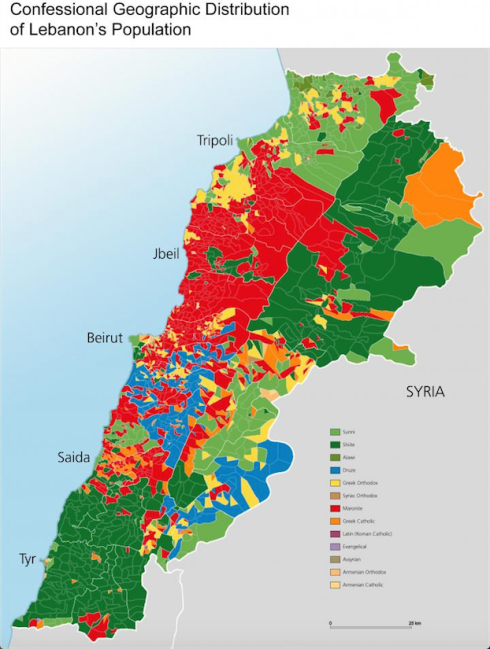
I was once dragged by force into a corner by a Lebanese friend at a party in Cambridge and told to never ask anyone Lebanese their religious affiliation, I guess because I probably just had done. Of course, I still ask. Like I implied in my Turkish post a few days ago, pretend unity (that you’re a passionate Erdoğan supporter and I’m not, or if you’re Maronite and I’m third-generation Palestinian doesn’t mean that we can’t still be “unified”), can only become real unity if differences are acknowledged. (*1)
I’ve had not dissimilar experiences with Irish folks if I’ve ever tried to talk about religion or Ulster or “the Troubles.” I once asked a guy at an Irish bar in Queens who was from Northern Ireland if he was Catholic, and I got a blank and frankly angry stare in response, and with so much alcohol and testosterone in the mix, realized quickly I should shut up and look the other way or change the topic. A female bartender who heard the one-sided exchange said to me softly: “not a good idea to ask people those things…” Ok.
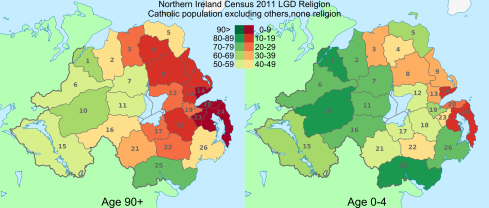 Map of Northern Ireland with distribution of Protestants (red) and Catholics (green) according to age group, showing a clear demographic decline of Protestants.
I also hear Irish anger at what they think is an out of touch diaspora that funded continuing IRA violence when the Irish themselves on both sides were starting to get tired of the violence and the fences were starting to come down — though that’s slightly disingenuous — in the early days these diaspora funders were heroes — and, as a non-metropolitan Greek, immediately assuming that the “diaspora” is “out of touch” or stuck in a time warp is a seriously irritating train of thought; there’s lotsa ways we’re more in touch than you lot.
So I’m really setting myself up as an easy target since I’m not even Irish or Irish-American. But I feel I can’t be silent as the English decide the future of any part of Ireland again.
I know that the Brexit vote came as a shock to a lot of Americans, as we were forced to confront the fact that the English are not all that smart, and can be as jingoistic, xenophobic, ignorant and proudly “know-nothing” as Americans can be. And I say the English because Scotland and Northern Ireland voted against leaving the European Union — in Northern Ireland, particularly, in percentages that would indicate a large number of Protestants voted to stay as well — and they should now be free to decide their own fates free of London.
Sometimes I feel that my views on the ethnic nation-state and minorities come across as selective and sort of random to readers, so let me take this moment to clarify a bit. I am, of course, against the brutal assimilationist policies of the nation-state and a supporter of minority language and cultural rights. On the other hand, I’m also against a minority holding an entirely polity hostage because it refuses to conform with the conditions of living in a state where they don’t hold numerical superiority.
There’s a great and frustrating passage in Rebecca West‘s beautiful Black Lamb, Grey Falcon, where her Serbian (and half-Jewish) tour-guide is arguing with a Croatian intellectual in Zagreb; “but you are not loyal” says the Serb:
Croat: You treat us badly. How can we be loyal?
Serb: You’re treated badly because you’re not loyal.
Croat: How can we be loyal if we are treated badly?
Serb: If you were loyal, you wouldn’t be treated badly.
Croat: When you treat us better, we’ll be loyal.
Serb: As long as you’re not loyal you can’t expect to be treated better.
And on and on and on…

(Rebecca West, who along with disconcertingly smart and honest, was clearly a real babe as well — broke a lot of hearts and refused to forgive when hers was…cool. As Lauren Cooper would say: “Forgiving is for l-o-o-o-o-z-u-u-h-h-z-z!!!”)
Of course, we saw, during WWII, just after West’s second trip, and then again by the end of the last century, that Croatians had no intention of being loyal to Yugoslavia no matter how much bending-over-backwards to ‘treat them better’ Belgrade did.
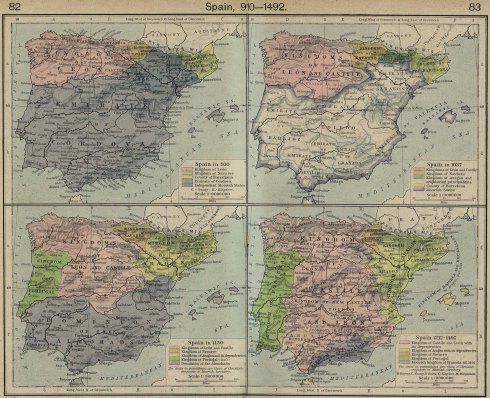
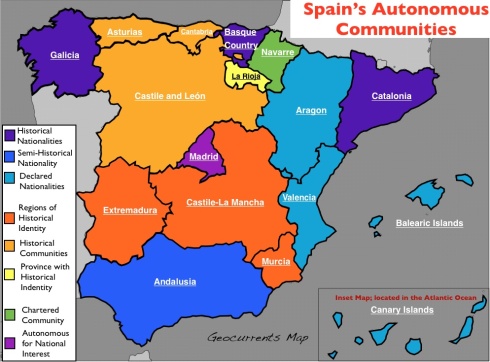
Or take Catalans again, in a state where as a minority they are treated exceptionally well. Still, with full language and cultural rights, they feel Madrid is oppressing them and they want full independence, threatening to rip apart the fabric of a country that has made impressive democratic achievements over the past few decades. And those of you who bought the public relations crap about how “hip, cool and Mediterranean” Catalonia is, and who spend your tourist money in Barcelona and the Balearics have only contributed to the discriminatory tendencies of Catalan chauvinism and the worsening crisis of Catalan separatism. Try Galicia or the Basque Country if you want to see parts of Spain that are not part of the Castilian center, but where ethno-linguistic difference has made its peace with the Spanish state and society has agreed to co-existence. Or if they’re too rainy and un-Mediterranean for you, go to Córdoba and Granada (skip Seville, too Catholic and bull-obsessed), poorer parts of the country that need your money and where you can buy the public relations spin of Edward Said instead, who once outrageously made the claim that 60% of Spanish vocabulary is of Arabic origin, (or maybe the spin of Al Qaeda and ISIS) and wallow in Al-Andalus nostalgia.
Even more and very closer to home: my father’s Greek minority village of Derviçiani in southern Albania. My early-days romance with the village is kinna over and I feel free to express things that I’m angry at myself for not saying to the faces of people there earlier.
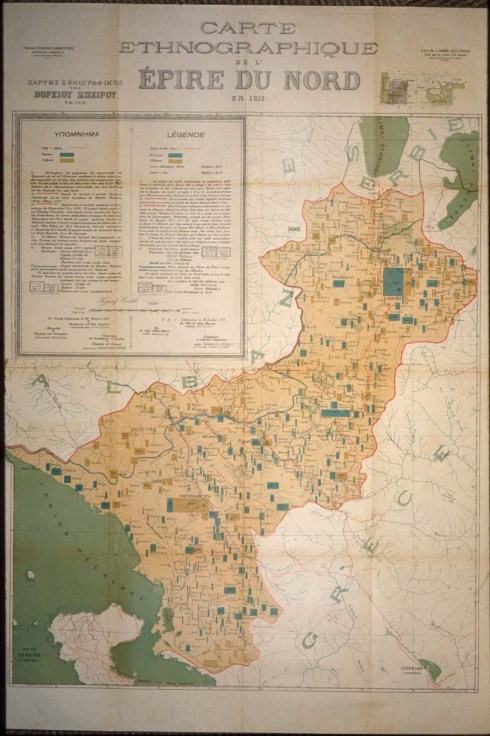
I’d love to ask: what the f*ck do you want exactly? They have Greek primary and secondary education; they have Greek churches (a Church about which few of them know anything or take seriously in any way, or have bothered to learn about in order to address the consequences of four decades of enforced atheism, but they have them); the Albanian Orthodox Church itself — meaning not just Greek minority churches, but the Church of Orthodox Albanians — in fact, is headed, run and staffed by Greeks, (extremely enlightened ones, I have to admit), the way the Arab Orthodox Churches of the Levant were for so many centuries; they have, I believe, two political parties that have members who sit in the Albanian parliament. If their villages are experiencing slow to rapid depopulation, it’s not the fault of Albanians or Tiranë; they were simply trapped — Greeks and Albanians together — in a Stalinist cage for fifty years and now are free to leave: the villages of Greek Epiros started hemorrhaging inhabitants soon after WWII, and neighboring Albanian villages, both Christian and Muslim, are also emptying of young people. Still, they’re hostile to neighboring Albanians; still, they want autonomy for “Northern Epiros,” which for some of them stretches half-way up to the middle of Albania (I don’t care if “the stones speak Greek all the way to Dyrracheio/Durrës” — The. People. Who. Live. There. Now. Don’t. And don’t want to be part of a Greek autonomous region. 2**); still, they make Muslim girls get baptized if they want to marry any of their precious boys, μη χέσω (thank God Albanians still wear their Islam kind of lightly or these poor girls would be in serious trouble) and will ostracize any Christian daughter or sister who falls in love with and marries a Muslim; still, they get offended, even a hip, British-educated nephew does, if you visit the pleasant, well-watered, historical Muslim village of Libohovo — Albanian Libohovë — across the valley and you come back and say it was very nice and that the young people there don’t seem much different than ours. Of course, this attitude is a self-fulfilling prophecy, as the conversation from Black Lamb… above indicates, so that when you put up the flag of Autonomous Northern Epiros 1914 on August 15th and the Albanian police has to come and take it down, then you’ll just end up on the bad side of the Albanian authorities and ordinary Albanians’ retaliatory instinct and the vicious cycle will just keep going.
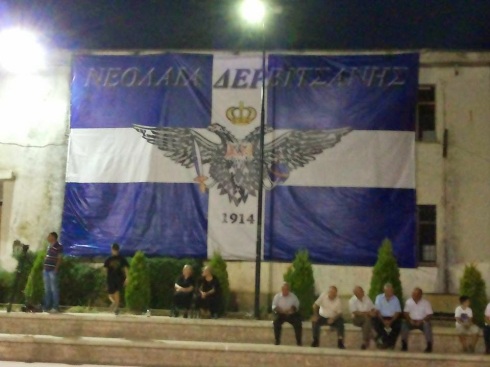 A flag of the Youth of Derviçiani, which, just by wild and completely invented coincidence, happens to have been “founded” in 1914, the year there was a short-lived experiment in Northern Epirote autonomy, which was squashed by Italian objections, because Italy considered Albania within its sphere of influence. Obviously not a sign of just the “youth” of the village — there was no Youth of Derviçani in 1914. And if there are still any doubts, the Palaelogan double-headed eagle lays them to rest.
(Really, is there anything as idiotic as a flag?)
But back to Ireland. I think Ulster Protestants caused enough “troubles” by acting — with the hypocritical support of England — like they were a besieged minority that couldn’t be part of the Irish Republic. So if a majority of Northern Irish voters chose to exit the Brexit, that’s a golden opportunity just dropped out of the heavens into our laps to correct an egregious historical wrong. The invasion and conquest of Ireland, its depopulation and the ripping to shreds of its society, culture and language did not start with the Potato Famine of the nineteenth century. It started with the Normans and the Plantagenets, and then the Tudors and the Stuarts and, finally, Cromwell and his Taliban, and it was a grueling, vicious, murderous process, as violent, or more, as any of Britain’s other colonial wars and right on Europe’s front door, and the Plantation of Ulster itself and the rest of Ireland was a conscious colonial policy of appropriating land and settling poor Protestant Scots and northern Englishmen in the country in order to “civilize” it and break Irish resistance to English hegemony.
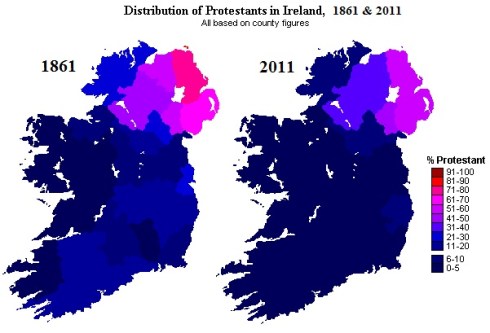
If the above maps seem to indicate that a large number of Protestants left the Irish Republic in the twentieth century because they didn’t feel comfortable without the English crown’s protection, that’s unfortunate (it was not so unfortunate in cases where the Anglo-Irish elite felt they had to flee when their expropriated land was re-expropriated) but that can’t be a justification for the continued amputation of the country.
It’s a classic strategic move, though. Ulster Protestants are not a socioeconomic group comparable to the Anglo-Irish landowners; they were always as squire-ridden as their Catholic neighbors and are still pretty much on equal footing in that sense.
But everybody has to be better than somebody, or else you’re nobody. So, just like Catalans have to think they’re really Mare-Nostrum-Provençal Iberians (3 ***) and not part of reactionary Black Legend Spain; or Neo-Greeks have to think that they’re better than their Balkan neighbors (especially Albanian “Turks”) because they think they’re the descendants of those Greeks; or the largely lower-middle class, Low Church Anglican or Presbyterian or Methodist Brits who fled their socioeconomic status back home and went out to India in the nineteenth century in order to be somebody, had to destroy the socially laissez-faire modus vivendi that had existed there between Company white-folk and Indians, creating an apartheid and religiously intolerant, aggressively evangelizing, social system that laid the groundwork for the unbelievable blood-letting of the Indian Rebellion of 1857; or, perhaps history’s greatest example, poor whites in the American South (many, ironically, of Northern Irish Protestant origin) that had to terrorize Black freedmen back into their “place” because the one thing they had over them in the old South’s socioeconomic order, that they weren’t slaves, had been snatched away (and one swift look at the c-ontemporary American political scene shows clear as day indications that they’re, essentially, STILL angry at that demotion in status); or French Algerians couldn’t stomach the idea of living in an independent Algeria where they would be on equal footing with Arab or Berber Algerians. So Protestant Ulstermen couldn’t tolerate being part of an independent state with these Catholic savages.
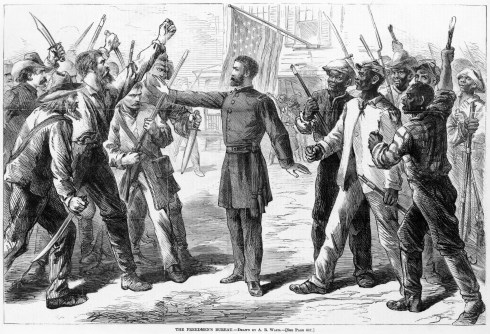 A Bureau agent stands between armed groups of whites and Freedmen in this 1868 sketch from Harper’s Weekly.
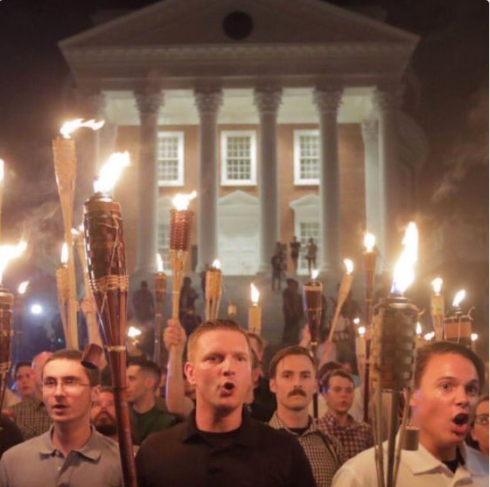
Recent White supremacist rally at the University of Virginia in Charlottesville — thanks to @JuliusGoat: “Imagine if these people ever faced actual oppression.”
The colonial power — or just the colonized mind — then disingenuously but actively seeks to right these wrongs and protect the embattled minority. The results? A Lebanon torn apart by Maronite phobias and Palestinian victim-entitlement; the greatest threat to Spanish democracy since Franco; a Greece completely isolated from its nearest and closest — in every sense — neighbors; an India where British response to the Rebellion effectively disenfranchised Indian Muslims (4 ****) — Dalrymple shrewdly locates one of the beginnings of modern Islamic fundamentalism in that disenfranchisement and the Deobandi Islam it created 5 *****; the Ku Klux Clan and the murder of Emmett Till and Donald Trump; the vicious Algerian War of Independence, which resulted in French Algerians having to flee the country entirely to a France where they’re still a bulwark of reaction and racism, and the still bad blood between Algerian immigrants and natives in that country.
(I thought about adding Cyprus to that list, that’s going on forty-some years of division after the 1974 Turkish invasion, but didn’t, because Turkish Cypriots actually were an embattled minority, and Greek Cypriots have to do some moral self-searching about their terrorizing, or passively supporting the terrorizing, of their Turkish neighbors, before they blame either Turkey or the Greek junta for f*cking things up for them.)
I was against the Scottish independence referendum of a few years ago because I’m against separation and the putting up of borders generally. But then the apparently stoned British electorate went and separated itself from the rest of Europe, and if Scotland and Northern Ireland and Wales even, or Cornwall or the Isle of Manx or Jersey and Guernsey for that matter, want independence from England now, England will have only brought that down on its own head. If Northern Ireland votes to stay in the European Union then de facto reunion with the Republic will have occurred; I would just like de jure recognition of that facto too, so that there’s no more excuse for meddling in Irish affairs. Irishmen have done a lot of genuinely hard work confronting the demons of their own past in recent years; today’s Ireland is a democratic, pluralist, morally progressive society where the Catholic Church’s death-grip has been broken. That Ulster Protestants can’t live there in peace and security and without English protection is a ludicrous idea.
So let it happen, and if Ulstermen don’t like it — sorry to sound like a reactionary nativist — but they’re free to go back to Scotland where they came from. Or if they want they can come here and join their distant cousins in Kentucky and the Ozarks. I’m sure President Trump will consider them the “right” kind of immigrants.
Comment: nikobakos@gmail.com
*********************************************************************************
1 * It’s a little reductive, but I think it’s not outrageously so to see the Lebanese Civil War as essentially, or initially, a conflict between Maronite demographic panic and paranoia (not entirely unjustified) and Palestinian entitlement of the oppressed (even more justified); every other group seems to then have had no choice but to choose sides. Then add Israel — which arguably started the whole problem — and Syria to the mix, και γάμησέ τα.
2 ** Of course, Northern Epirote Greeks’ δήθεν innocent desire for autonomy is completely disingenuous — though we’re supposed to think that Albanians are too stupid to get that — and is really just a prelude and first step to independence and union with Greece, though they’re a demographically fast-dwindling percentage of the population of the region they lay claim to. That’s not a deterrent, however; all you have to do is believe that all Orthodox Albanians are reeeeeeeally Greek and you’ve solved your demographic issue, since Muslim Albanians are just turncoat intruders in the region as far as Northern Epirotes are concerned.
The only obstacle that would then be left is to get Albanians to forget what happened to the Muslim Albanian Çams of western Greek Epiros (Albanian: Çamëria, Greek: Τσαμουριά Tsamouriá) during WWII, when they were subjected to massacre and expulsion in a campaign of ethnic cleansing by the Greek right-wing resistance and had to flee to Albania.
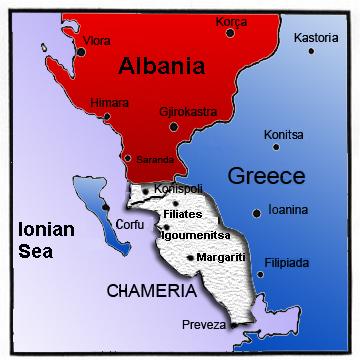
I still haven’t figured out how, as Muslims, they escaped the Greco-Turkish Population Exchange of the 1920s; it would’ve been a more merciful fate. I also haven’t figured out how the tsamiko, a dance of central and southern Greece, got its name. Or else, what clues to a forgotten past the fact that my grandmother’s maiden name was Çames provides; almost all our last names are Albanian — with the Greek male nominative -s ending added to them — as in Bako-s — but as far as I know there’s no clan in our villages whose last name is actually the name of an Albanian sub-ethnic group. See: (“Easter eggs: a grandmother and a grandfather“.
Scratch a Greek and find an Albanian, I guess… Or a Vlach… Or a Slav of some sort… (See: “Albanians in Greece and the “documentary that shocked Greece” from SKAI“)
This kind of issue always reminds me of the Puerto Rican expression from a song of I dunno what period: “¿Y tu abuela donde está?” or “¿Y tu agüela, aonde ejtá?” “And where’s your grandmother?” i.e., before you get all high and mighty and Whitey on us, show us the Black grandmother you’ve got hidden in the kitchen.
3 *** This fetishizing of the Mediterranean as a region, a lost paradise of cosmopolitanism and healthy diets, drives me nuts. Everyone is suddenly “Mediterranean.” The big laugh, of course, is that Turks are Mediterranean. Then comes the less funny one about Croatians being Mediterranean, whereas Serbs are clearly not — Croats wanting to have it both ways, and be Mediterranean and Mitteleuropean at the same time — even if they’re from neolithic Herzegovina and about as neanderthal themselves as their Serbian and Muslim neanderthal neighbors; Istrians have sealed their Mediterranean-ness by buying every Italian restaurant in New York City’s boroughs, and of course the largely Italianate Dalmatian coast seals in most Europeans’ minds the idea of Croatia as a country on the f*cking M-E-D-I-T-E-R-R-A-N-E-A-N. Actually, the closest example to Croatians’ appropriation of a largely Venetian Adriatic is the Turkish appropriation of Greek Aegean imagery, in tourist and p.r. language, on both the Anatolian coast and in Imbros and Tenedos.
Just as nicely condescending is the saying from some-where in the Iberian periphery that “de Madrid no se ve el mar,” “you can’t see the sea from Madrid.” Supposedly a jab at Castillian casticismo, and inward-looking provincialness. No, you can’t see the sea. That’s why Castille is such a beautiful, high plateau, dry and bright and chilly and Romanesque and stunning in its emptiness and vastness.
A White Turk friend once dragged me to Sorrento on our trip to Naples and Campania, which I knew would be a mistake, because it would be and turned out to be a tourist-swamped, hellish Thomas Cook holiday trap because it was “on the sea.” (but one makes concessions to one’s travelling partner’s fantasies.) We cut out as soon as we could and headed to Ravello, up in the mountains away from the sea and she was blown away by how beautiful it was.
And what happens to Greeks like me? who are from a part of the Greek world that is clearly more Balkan in every way than it is Mediterranean? What do we have to do to join the club?
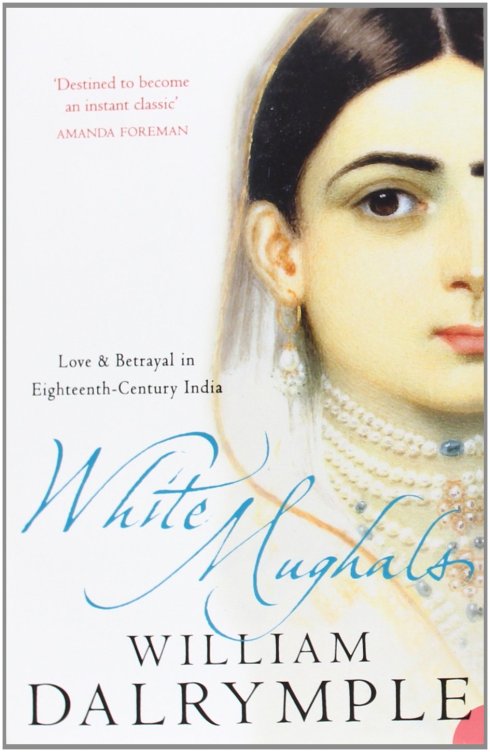
4 **** William Dalrymple is a great historical writer who does what professional academics can’t do because they’re so specialized that they can easily say: “Sorry, I don’t work on that period” when you ask them anything they don’t know. The breadth and depth of his knowledge on South Asia is truly amazing and he makes it all interesting and stimulating for the layman without dumbing it down. When I first started this blog I wrote to him asking to reproduce some of the passages on the British destruction of Mughal Delhi contained in his book, The Last Mughal, and he immediately and generously shot back with an email that said: “Go for it.” Thanks again.
So check out those posts here and here and here . Better yet, buy the book.
5 ***** Worth reproducing here in whole:
“Following the crushing of the Uprising, and the uprooting and slaughter of the Delhi court, the Indian Muslims themselves also divided into two opposing paths: one, championed by the great Anglophile Sir Sayyid Ahmad Khan, looked to West, and believed that Indian Muslims could revive their fortunes only by embracing Western learning. With this in mind, Sir Sayyid founded his Aligarh Mohamedan Anglo-Oriental College (later Aligarh Muslim University) and tied to recreate Oxbridge in the plains of Hndustan.
“The other approach, taken by survivors of the old Madrasa i-Rahimiyya, was to reject the West in toto and to attempt to return to what they regarded as pure Islamic roots. For this reason, disillusioned pupils of the school of Shah Waliullah, such as Maulana Muhammad Qasim Nanautawi – who in 1857 had briefly established an independent Islamic state north of Meerut at Shamli, in the Doab – founded an influential but depressingly narrow-minded Wahhabi-like madrasa at Deoband, one-hundred miles north of the former Mughal capital. With their backs to the wall, they reacted against what the founders saw as the degenerate and rotten ways of the old Mughal elite. The Deoband madrasa therefore went back to Koranic basics and rigorously stripped out anything Hindu or European from the curriculum.*
*(It was by no means a total divide: religious education at Aligarh, for example, was in the hands of the Deobandis.)
“One hundred and forty years later, it was out of Deobandi madrasas in Pakistan and Afghanistan that the Taliban emerged to create the most retrograde Islamic regime in modern history, a regime that in turn provided the crucible from which emerged al-Qaeda, and the most radical and powerful fundamentalist Islamic counter-attack the modern West has yet encountered.”
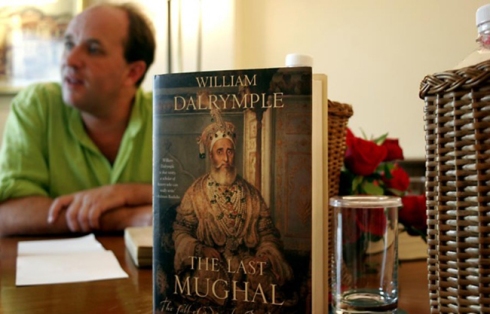
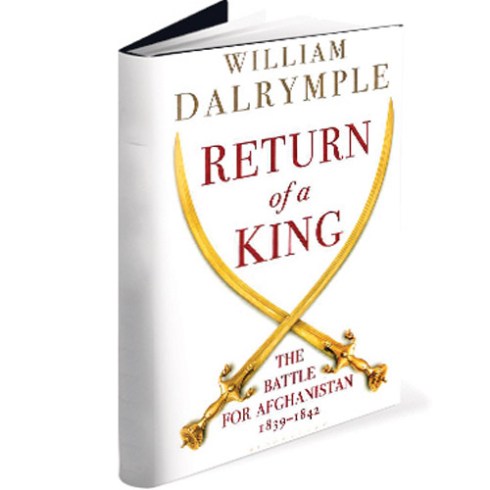
See also his magisterial The Return of a King on nineteenth-century Afghanistan, which I have a few issues with, particularly his conclusions, but which was a couldn’t-put-it-down one for me.
–
Comment: nikobakos@gmail.com
–

The Greek side is technically correct in my opinion, but I’m not even going to dignify the issue by going into it. The two rocks have a name as well — in both Greek and Turkish — but I won’t dignify the rocks with actual names.
Τα παιδία παίζει.
 Jadde: from Bosnia to Bengal