Serbian “Άξιον Εστί” — Достoйно eсть — In the Kyriotissa in C-town

15 Nov

Serbian theology students chant “Axion Esti” — “It is worthy..” — perhaps the Orthodox liturgy’s main chant to the Virgin — in the Panagia Kyriotissa (we think) now the Kalenderhane Camii, a functioning mosque, in İstanbul.  The Church Slavonic transliterated into Greek in the subtitles.

Hard to see who’s singing; is it really just a recording played over the video?  If not, and it’s real, man, it really proves Serbs have balls of steel.  Then again, the Turks, usually older guys who are the keepers of these churches/mosques in the old city, are usually pretty relaxed about this stuff.

But, there go a bunch of Serbian dudes for ya’.

Досто́йно есть, я́ко вои́стину блажи́ти тя Богоро́дице, присноблаже́нную и пренепоро́чную, и Ма́терь Бо́га на́шего. Честне́йшую херуви́м, и сла́внейшую вои́стину серафи́м, без истле́ния Бо́га Сло́ва ро́ждьшую, су́щую Богоро́дицу, Тя велича́ем.

Ἄξιόν ἐστιν ὡς ἀληθῶς,
μακαρίζειν σε τὴν Θεοτόκον,
τὴν ἀειμακάριστον καὶ παναμώμητον
καὶ μητέρα τοῦ Θεοῦ ἡμῶν.
Τὴν τιμιωτέραν τῶν Χερουβεὶμ
καὶ ἐνδοξοτέραν ἀσυγκρίτως τῶν Σεραφείμ,
τὴν ἀδιαφθόρως Θεὸν Λόγον τεκοῦσαν,
τὴν ὄντως Θεοτόκον,
σὲ μεγαλύνομεν.

(And the always miserable translation…)

It is truly right to bless thee, O Theotokos,
thou the ever blessed, and most pure, and the Mother of our God.
Thou, the more honorable than the cherubim,
and beyond compare more glorious than the seraphim,
who without corruption gavest birth to God the Word,
thou the true Theotokos, we magnify thee.

As I was once bitching about the attempted Westernization/harmonization of Greek ecclesiastic music, mostly in Greece and by the Autocephalous abomination known as the Church of Greece…

“But the more central a hymn was considered to a service’s meaning, the more likely it was to have been set, at some point, to a boring, semi-Western, “Mary-had-a-little-lamb” melody” [here  “…απορώ και εξίσταμαι.” ) … in order to encourage, you know, congregational participation along Protestant and Neo-Catholic lines, as if it were more spiritually edifying to sing badly in a group (we’re not Black, you know) than to listen to the technically demanding music of the Church — essentially a branch of the Perso-Ottoman classical tradition — performed by highly trained cantors.  Maybe I’ll remember that next time I’m at the opera.”

…I remembered that Axion Esti is probably one of those hymns that no Greek-American — or Greek, for that matter — churchgoer has ever heard except to that treacly nineteenth-century setting.  But last Sunday, at the Panagia in Pera, I heard the young Syrian cantors there belt out a version to an old Ottoman setting — in the best traditional Constantinopolitan/Patriarchal tradition — that blew me away.  I felt like I had never heard it before…this hymn I’ve heard at every liturgy I’ve attended in my entire life.

Comment:nikobakos@gmail.com

The Japanese rock and so does the Guardian: “All You Need to Know About How the Jeweled Rod Goes In and Out”

15 Nov

From The Guardian:

Centuries-old works of art depicting graphic sex are being displayed in a tiny Tokyo museum with curators wanting the public to appreciate their ‘humour’

5864

(click)

“Japan’s adult movie industry is among the biggest in the world, and its range of pornographic manga is eclectic and ubiquitous. But it has taken centuries-old works of art for the country to challenge official reticence towards graphic depictions of sex.

“In recent weeks, tens of thousands of people have flocked to a tiny museum in suburban Tokyo to cast their eyes over woodblock prints and paintings of couples, and sometimes groups, in the throes of sexual ecstasy.

“With titles such as Pillow Book for the Young: All You Need to Know About How the Jeweled Rod Goes In and Out, the images leave little to the imagination.”

Read whole article: Pornography or erotic art? Japanese museum aims to confront shunga taboo

Comment: nikobakos@gmail.com

Nothing to say about Paris

14 Nov

…except that after the hullabaloo on my Hajj comments, to stress that this is an attack on our Sacred City, and that I hope the response is commensurate.  I am Albanian after all.

Just a reposting of a couple of old Parisian posts of mine.

And begging Europe, PLEASE, to not take it out on the current desperate people flooding into the continent; they’re innocent and are fleeing the same animals.  If anything, I hope this produces some greater empathy; they’ve lived through days like yesterday in Paris on a regular basis.

And since the attackers are highly unlikely to be recent immigrants……but European born, I intend to cancel my subscription to any publication — Times, New Yorker, New York Review of Books — that now shoves some sap-story article about the alienated youth of the banlieues in my face…for example: “The Other France: Are the suburbs of Paris incubators of terrorism? By George Packer“​ — no matter how much I respect the writer, the journalism or the publication itself.

How should the inhabitants of American inner cities — with their far greater economic misery and alienation and hopelessness and violence and what’s come to be systematic murder at the hands of authorities — be responding, then, to the conditions of their lives?

******************************************************************************************************************************************************************

Leaving…

Window

It gets harder to leave Paris every time.  That my departure falls exactly on the eve of Lent today makes it a bit more melancholy but a bit easier to take as well.  “Here,” I think, “I’ll lose this for now; maybe again soon I’ll have it back.”  Like any Lenten action, you might have to have it taken away to keep the edge of your love for it sharp and even.  I dunno.

I don’t need to tell readers that I’m totally unembarrassed by my sheer, sappy sentimentality and ready-to-die-for loyalty to this city.  You can keep the unkempt disorder of dank, mouldy London and its claustrophobic spaces and the nightly threat of getting the shit beaten out of you at 11:00 when the pubs close (I’ve never in a lifetime in New York City, even as a teen during the Dark Ages of the seventies and eighties, felt that kind of menace on that kind of regular basis) and whatever it is that everybody suddenly decided is so cool about it since the nineties.  You can keep sehr-hip Berlin with everyone in their funky Libeskind glasses and with that constant annoying earnest look, or the architectural wonders of Oslo and the new cosmopolitanism of the Rotterdam waterfront or the New Pittsburgh — or friggin’ B-a-r-c-e-l-o-n-a — or any of the other newly minted urban centers that found some way to remake their grimness over as cutting-edge in the post-industrial world and that supposedly left Paris behind in the dust.  I’ll take her over any of them at any time.

Something here, if you’re susceptible to it, makes you sick forever.  Forever.  It’s a promise of perfection, of a possible and absolute Attic kind.  Of perfect image, of perfect moment.  Of what Hadrian felt for Athens, having just seen a stage production of Yourcenar’s book here.  In Athens, a young man bending over to lace up his sandal.  Here, a girl wrapping her scarf; the posture and composure of the kid refilling your glass — that twist of the wrist that slays; the highly conscious, almost Japanese rituals of courtesy exchanged with even everyday shopkeepers.  Some fleeting view of what the civilized ideal looks like, rushing past you in a furtive but powerful array of images all day and all night.  And all marked by the supremely intelligent understanding that it all starts on the surface — that that’s what counts — and that it works its way down from there.

New York holds out a radical promise too, but of a very different sort, and New York makes it clear that you’ll have to suffer so much to obtain it that you’ll be too exhausted to actually live it in the end. And I’m from there anyway and don’t have that outsider’s magic belief that some kind of fulfillment is waiting for me there “if only just…”  Just nothing; it’s just my hometown; superior to all the rest — obviously — for the simple reason that it contains the whole world, but really just home.  Queens.  Here it’s not about something you’re expected to achieve necessarily; it’s about being part of a life as it should be lived.  There’s no being more specific than that; it’s just the way things should be.  The myth is so overpowering and myth is our only reality anyway and when, of course, it falls short, as everything in a fallen world does, that doesn’t heal the sickness.  It just makes it worse because the temptation to keep wishing the moment frozen grows as any real possibility of that recedes.  And I guess that means ultimately that the secret of what makes leaving Paris each time that much harder is just age.

I discovered a cousin I had never known before who lives here, an experience like finding a beautiful old photograph of someone you don’t know in a shoebox in the back of a closet.  “…you’re never through with the city…” she wrote me, after we had had coffee one morning.

Insha’allah.

Paris, Gare Montparnasse, March 2, 2014

platform

******************************************************************************************************************************************************************

Novak at Paribas Masters: “…when will love be secure?”

13 Nov

Novak Paribas

(click)

My constantly frazzled tennis nerves usually get a rest between the US Open and Melbourne, but Djok beating Murray too in straight sets, even if only at Paribas — it’s getting kind of unnerving.  When your guy’s game is up and down, you worry about his consistency; when it’s become superhuman in the trail of wreckage it leaves behind, then, of course, you start wondering how long he can keep it up.  Such is the human condition.  Never satisfied.  Never at ease.  Never content.

Especially in love.  “When will labor be joyful? when will love be secure?” — Giosuè Carducci…I think…

From the Bleacher Report:

Novak Djokovic beat Andy Murray 6-2, 6-4 in the BNP Paribas Masters 2015 final to set a new record for Masters titles won in a single year, grabbing his sixth of the season, per tennis writer Carole Bouchard. The Serb already held the previous record of five, which was set in 2011. 

Djokovic dominated Murray from start to finish, once again showing why he’s considered one of the world’s best returners. Murray held his own in the rallies but never found his serve on the slower hard court in Paris.

Per Sky Sports, the Djoker has now beaten Murray 21 times in 30 meetings, and he’s still unbeaten on indoor hard courts against the Scot. Sunday’s win handed him his 58th career title, via bet365.

Djokovic has been in sensational form since the US Open and he instantly put heaps of pressure on Murray’s serve. Fans in Paris were treated to a 20-shot rally on just the second point, but it wasn’t a preview of what was to come.

Murray barely held his serve in the opening game, couldn’t even steal a point on Djokovic’s serve and immediately gave up three break points in the third game….

See the rest.

Comment: nikobakos@gmail.com

This is the saddest story: Syria’s last Jews leave — By Sami Moubayed, Special to Gulf News

12 Nov

Aleppo’s last Jewish family leaves Syria

Family separated for the first time after Israel rejects Muslim members

SOURCE: Govorkov Central Synagogue of Aleppo

By Sami Moubayed, Special to Gulf News

Beirut: The last Jewish family has left Aleppo, according to sources in northern Syria, ending a long and illustrious chapter in the diverse demographic and religious history of the city that is now torn by war due to almost five years of a vicious conflict.

Chances are that Aleppo Jewry will never return as the city remains at the crosshairs of an ongoing war between Syrian troops, Russian airplanes, and a large variety of rebels fighting on Syrian soil.

Armenian photographer Derounian’s 1914 photograph of a Jewish wedding party in Aleppo. The men, women and children are all dressed in European fashion, except for one Fez-wearing family member


The family was that of Mariam, a salt-and-peppered haired feeble 88-year old Jewish grandmother, born in Aleppo during a military uprising against French colonial rule in 1927. Childhood memories of foreigners running around her city with their light arms would have remained vividly imprinted in her mind — Frenchmen, Brits, Turks, Nazi Germans, Indians in the British Army. All of them passed through Aleppo at some point during her life in the city, either right after the First World War or throughout the Second.

More recently so have Chechens, Tajiks, Saudis, Jordanians, Iraqis, Moroccans, and a colourful assortment of European Islamist radicals who have all flocked to join Daesh.

As Daesh closed in on Aleppo earlier last summer, Mariam’s nerves collapsed. Fearing slaughter at the hands of Abu Bakr Al Baghdadi’s men, she nodded helplessly when her two daughters showed up saying that they must leave Halab — as the city is known in Arabic and Hebrew — immediately.

An Israeli-American tycoon named Moti Kahana stepped in with a mission to get the city’s last Jews out. Israel has in the past run secret operations to get Arab Jews it perceives to be in danger out of their countries.

A Central Synagogue of Aleppo. Picture taken pre-1940s


With very little luggage, Mariam sluggishly boarded a minibus provided by Kahana with her two daughters Gilda and Sarah, a single woman in her 40s, and all of her grandchildren. Present with them was Khalid, the Muslim husband of Gilda. All the women wore the Muslim headscarf — the hijab, to avoid arousing unnecessary attention at Islamist checkpoints. They waited for the guns to go silent at noon prayer then whizzed through the streets of Aleppo, driving through debris and dead bodies, crossing checkpoints manned by the Al Qaida-affiliated Al Nusra Front and Daesh. It took them 36-long hours to reach safety at a small apartment in Istanbul, where Moti Kahana was waiting for them.

Kahana was very proud of his feat — himself a loud opponent of the Syrian regime who posts online photos of himself carrying the green tricolour of the Syrian uprising. According to Kahana’s own account of the story, since no member of the Syrian Jewish family agreed to speak to the press, only Mariam and Sarah were allowed safe passage into Asqalan (Ashkelon), where they have now settled.

Gilda and her family were turned down because her husband was a Muslim and she had converted to Islam three years ago, in keeping with Israeli law that only allows naturalisation Jews. The Muslim members of the family were told to stay in Turkey but they refused, preferring to return to their war-torn country than live in refugee camps.

After a painful separation from her aging mother, Gilda returned to Aleppo with her Syrian passport, and now lives there in silence with her Muslim husband and children, refusing to ever comment about the entire ordeal. Moti Kahana was the person to break the story, saying: “I got the last Jewish woman out of Aleppo. I feel very emotional when I think about it.”

Coexistence lost

Just 15 years ago, there were approximately 200 Jews living in Syria, a small number compared to the country’s then-population of 23 million. The number dropped significantly over the past decades, once standing at 15,000 during the short-lived Syrian-Egyptian Union (1958-1961). In 2000-01, 150 Jews lived in Damascus while the rest were divided between Aleppo and Qamishli in north-eastern Syria.

According to the US annual International Religious Freedoms Report, the number of Jews inside Syria had dropped to no more than 80 by the year 2005. Last December, various sources put the number at approximately 50 Jews, mostly living in Hay Al Yahud (the Jewish Quarter) within the walled Old City of Damascus, side-by-side with Shiites.

The Jewish community of Aleppo was once a powerful and wealthy one, well-connected in overseas trade and deeply rooted in the city’s ancient history. As early as 1901 they established the Aleppo Jewish Community Synagogue in occupied Jerusalem and bankrolled Syrian Jewish migrants who fled to the Americas during the First World War.

Aleppo was considered the unofficial capital of Sephardic (eastern) Jews and according to popular lore the city’s Grand Synagogue was erected by one of the Biblical King David’s generals.

The community started to gradually to lose influence and leave Aleppo, either to Israel or to Brooklyn, New York after 1948, when their homes and synagogue were attacked by hoodlums during the first Palestine War.

One of its celebrated figures was Yom Tov Assis, an Aleppo-born reputed historian who now teaches at the Hebrew University in occupied Jerusalem and chairs its centre of Aleppine Jewry, an institute dedicated exclusively to studying the city’s Jewish community.

Sami Moubayed is a Syrian historian and former Carnegie scholar. He is also author of ‘Under the Black Flag: At the frontier of the New Jihad’.

Comment: nikobakos@gmail.com

From Al Jazeera: “A star-studded protest in India” — Finally someone speaks up against Modi and the BJP

12 Nov

FINALLY…  It had to have been Al Jazeera, of course.  I’ve been watching the BBC for days here and all it is is praise and gushing: he’s creating economic confidence in India around the world, which is all the business-world whores care about.  I’m not impressed the Indian diaspora is mad about him.  There hasn’t been a single report on whether any one in the crowds he draws for his cheap Bollywood-like spectacles in Britain and soon to go to the U.S. is Muslim.  And the even cheaper use of Hindu love-and-namaste imagery that the West is such a gullible child about as a cover is doubly repellent: spread enough saffron and marigolds around and you think everyone is going to forget your horrendous, sectarian, nationalist background and how your holding Prime Minister’s office is only strengthening its poisonous effect on Indian society.

23a4f30b7f404637b3587fd8b764b297_18

Indian Bollywood actor Shah Rukh Khan [AFP]

And who finally calls out the emperor’s new clothes but Bollywood itself?  We’ve always known that Bollywood is a slightly disproportionately Muslim industry and seen as suspiciously so by Hindu conservatives — like Hollywood and Jews — to the point where in the past many Muslims often changed their names to save their career (Dilip Kumar was born Yusuf Khan in Peshawar, malaka), but you also expect Bollywood to generally have the principles of a pack of weasels, so that this standing up to Modi from SRK and others is pretty impressive.

Read “Chandrahas Choudhury” whole opinion piece here.

Comment: nikobakos@gmail.com

For all the senders of “Islamophobe” accusations: facile, hysterical, stupid, or all of the above…and some notes on the corrida

6 Nov

242896_orig

I’ve gotten a thousand emails about my Hajj comments and about the Pakistani cab-drivers post.  Not unexpected.  And actually a quite gratifying response as it may allow me to begin a serious discussion about monotheism and my discontents and not just Islam.  Just give me some time because it’ll be a long post, its being something that I’ve been thinking about most of my life.

But some quickies…  For one writer: not only, yes, would I have been as obnoxious to an American Christian Fundamentalist — or an Orthodox nationalist crazy here in Greece or in Russia — if he had given me a hard time about my “pagan” tattoo, I would’ve ripped either of them apart much more mercilessly, because they don’t have the excuse of being born Muslim, so don’t worry about my soul’s economy of justice or fairness.

For the writer who objected to me referring to Muhammad as “just” [not a word I used] one man” — I don’t get it.  Isn’t that the point?  That he was a man?  Isn’t what so many Muslims find a ridiculous idea (in my experience), and what so many Muslim and Jewish theologians through the ages objected to — not precisely to the Christian idea of the Incarnation — that God and Man are one, that God became a Man in order in order to approach a beloved humanity?

As for the PETA chick (just assumptions — both “PETA” and “chick” — because the email address betrays neither, just the tone and content do…) who thought my reprinting Saba Imtiaz’ beautiful photo essay on Eid-al-Adha in Karachi was not only a glorification of violence against animals, but a perpetuating of stereotypes about Islam as “a religion of blood,” you haven’t read any of the rest of my blog, so I will really have nothing to say to you — as I don’t to most of you — except perhaps that I’m an avid fan of the Spanish corrida, and if there’s a good goring the better, so I don’t associate normal, biological blood-shed with Islam.

But I’ll be back.

2009 in pictures corrida goring

Photo: For those who don’t know, this is a particularly dramatic goring, as the torero had already gotten the bull with a perfect through-the-traps, into the chest cavity, sword-thrust, so it would’ve been a matter of seconds probably before it had collapsed dead, but it still managed to get the guy in the guts before dying — but that’s always the most dangerous moment in a bullfight anyway.  Most bullfighters go for the over the horns into the shoulder stab, then instinctively jump ever so slightly out of the way.  The super-majete torero, however — was it Manolete who was famous for this? – gets the sword in…and stands there…in the extremely risky hope that the animal will immediately drop dead at his feet.  As you can see, it doesn’t always turn out that way.  According to a Mexican friend and corrida aficionado, the torero in the photograph is Spaniard Alejandro Talavante, though I can’t find anything on-line about him getting hurt like this.

But see what you learn on the Jadde…

Comment: nikobakos@gmail.com

My ‘hood: “Finding the American Ideal in Queens” — ‘In Jackson Heights’ from the New Yorker, Richard Brody

4 Nov

Screen Shot 2015-11-04 at 2.23.44 PM(cick)

Frederick Wiseman’s new documentary film, “In Jackson Heights,” is about the very stuff of life—the ability to make a living, to live in safety, to live without fear, to plan for the future. Credit Photograph courtesy Zipporah Films

(Though this photo shows the 7 train passing through Woodside already and not Jackson Heights — J.H. is Queens’ largest historic district; Woodside is not nearly as attractive.)

Frederick Wiseman’s approach to documentaries is so radically interventionist, his personal imprint is so strong in his choice of subject and his approach to it, that he has no need to show himself in the mirror, or put his voice on the soundtrack, or allow the films’ participants to address him and make viewers aware that he’s there. Though Wiseman is never seen or heard, he’s present in virtually every frame by the force of his analytical conception of the events onscreen. In his new film, “In Jackson Heights,” his powerful and far-reaching ideas come through with the emphatic clarity of a manifesto.

All three words of the title are important: the movie isn’t about Jackson Heights, and it certainly isn’t about the essence or definition of Jackson Heights. It’s a record of some people, places, and events that Wiseman found in Jackson Heights—but what he found there is what he was looking for. “In Jackson Heights” is, for the most part, a non-spontaneous documentary, a documentary by design. Wiseman did some filming in the street, in unplanned and uncontrolled circumstances, of things that took place when he happened to be there. But he didn’t put much of that in the film. Rather, most of the film takes place at meetings that were planned in advance. What Wiseman found in Jackson Heights is people talking, mainly in organized, formalized settings that have their pretext and their agenda defined. He finds civic life taking place in public and quasi-public places—houses of worship, stores, storefront offices of non-profit community organizations, and local governmental offices, including the storefront office of the neighborhood’s City Council representative, Daniel Dromm.

The movie runs more than three hours, and Wiseman lets the talk unfold gradually, with respect for the underlying logic of the matters at hand as well as for the passions that they inspire. The discussions that he films involve such matters as fair labor practices, gentrification, the legal ramifications of urban gardening, the push for change in traffic-safety regulations, school redistricting, police harassment of gay and transgender bar patrons, fear of deportation, citizenship-test study, and the laws and norms to pass a taxi-driver test. In other words, the movie is about the very stuff of life—the ability to make a living, to live in safety, to live without fear, to plan for the future.

The problems that Wiseman finds are local, practical, intimate, but the emotions that he films are grand and tragic. One woman’s account, delivered in a storefront meeting, of her daughter’s harrowing trip through the desert after crossing the border from Mexico has the desperate dramatic coherence of a feature film in itself. A discussion in a barbershop, about the suspected role of a planned Business Improvement District in the displacement of local businesses and the takeover of property by major real-estate investors, has the analytical scope of an investigative opera.

Here, as he has been doing throughout his career, Wiseman films people in walks of life that rarely get them in front of a camera, walks of life that don’t often involve public speaking, and he films them talking. It should be no surprise that they have a lot to say and that they say it engagingly. (As I wrote here recently, it’s a pet peeve of mine that educated filmmakers write working-class characters as stolid, silent types.) Most people do; Wiseman cares enough to look and to listen, to take an interest in what they have to say—and to find the wider societal implications in what they say and to put the ideas along with the people at the center of his film.

That’s why, if the end-of-year lists were to be made today, “In Jackson Heights” would be a contender for Best Screenplay. The fact that its dialogue wasn’t written by Wiseman is irrelevant. He didn’t author the words but he authored their cinematic form, the images and the rhythms, the selection and the context, that rescues them from the stream of time and seemingly sculpts them, in high relief, onscreen. Wiseman (who recorded the sound himself) and the cinematographer John Davey find a splendidly simple visual trope to lend the speech of individuals a public and collective identity: filming discussions for the most part without closeups or speakers isolated in the frame, but, rather, with the speakers set in a composition featuring many people together, as if creating a real-life theatre of political discourse taking place on the wing.

Wiseman highlights the distinctions between neighborhood and community. What he finds in Jackson Heights are communities that seem to have little connection. Latino immigrants meet and speak with each other, as do members of gay-pride organizations; an imam preaches to Muslims in a mosque, a priest preaches to Catholics in a church, Jewish congregants speak to congregants during a service in a synagogue. The only significant public gathering that features a diverse group of attendees is a public meeting regarding traffic safety—and there, Wiseman shows only one speaker, the representative of a nonprofit organization devoted to that purpose. The neighborhood of Jackson Heights appears to be inhabited by members of communities who live side by side but, identifying with their groups, seem to have little contact with those who identify with other groups.

But the crucial connections that spark most of the movie’s discussions are provided by nonprofit organizations and by community organizers who work for them. These organizations that play a central role in the film—whether as the very sites of discussions in their storefront offices or during the visits of organizers to the stores and offices of local merchants—come off as crucial gears in the social and political process. For recent immigrants, these organizations are key points of entry into civic life, the engagement with public institutions as well as the insulation that eases contact with organized forms of public power.

These residents and their organizers aren’t solely protesting or venting grievances—though they’re doing that, too, as well they should. They’re beginning to take part in what comes through, in Wiseman’s view, as the essence of American life, which is its political structures and systems. If there’s a theatre of public life that Wiseman finds, these nonprofit groups are the impresarios who provide the stage for residents who, for the most part, are unconnected from and unrepresented in political life—not least because many aren’t citizens and therefore can’t vote.

The absences in “In Jackson Heights” are as conspicuous as the presences—the absence of relations between communities; the absence of the voices of children and teens (I wonder whether filming in schools might have revealed closer inter-community friendships); the absence of the resented gentrifiers themselves; the absence of resentment overall, including from multigenerational residents against relative newcomers there only for a decade or two.

But the biggest and most conspicuous absence is homes. Wiseman’s subject is political life in the most classical sense—the polis, the life of the city—and his emphasis on urban dwellers’ struggle for a part in the political process, his vision of what surpasses the boundaries of the self-defined community and reaches far beyond local neighborhood, is the idea of equality under the law, fair treatment by the law—in short, the political ideal of the United States. Wiseman’s humanism isn’t narrow in scope; it’s based on the inextricable connection between personal intentions and desires and the societal circumstances that foster or thwart them, the near-constant impingement of the workings of the law on the conduct of daily life, of the inseparability of personal fulfillment and the quest for justice.

“In Jackson Heights” is about America, about the American Dream; it’s a loving depiction of people who pursue it despite mighty obstacles—and of the dream itself, to live without fear of the authorities, to believe that the government will protect one’s interests fairly, to believe in the prospect of a better life through one’s own labors. But, as Wiseman also makes clear, the system that makes personal progress possible is a legal system of fair and just conditions, not utterly unconstrained ones; it depends not on the rhetoric of boundless possibilities but on the definition of legitimate ones,.

The underlying subject of “In Jackson Heights” is the meaning of the “unum” in “E pluribus unum.” It isn’t, as this year’s Presidential-campaign xenophobes would have it, conformity to some preëxisting national culture that, given the nation’s immigrant origins, it would be absurd to call nativist. The plural is culture; the unifier is the political system itself: devotion to the Constitution, to the rule of law, to the exercise of the rights that it guarantees, and to the responsibilities and protections that it affirms. What Wiseman saw in Jackson Heights could perhaps have been found elsewhere, and what he filmed there may not even be the most salient aspects of Jackson Heights. Rather, what he found in Jackson Heights is, as the film meticulously, intellectually, allusively, yet ardently shows, a crucial aspect of American experience, a working-out on film of the American democratic ideal.

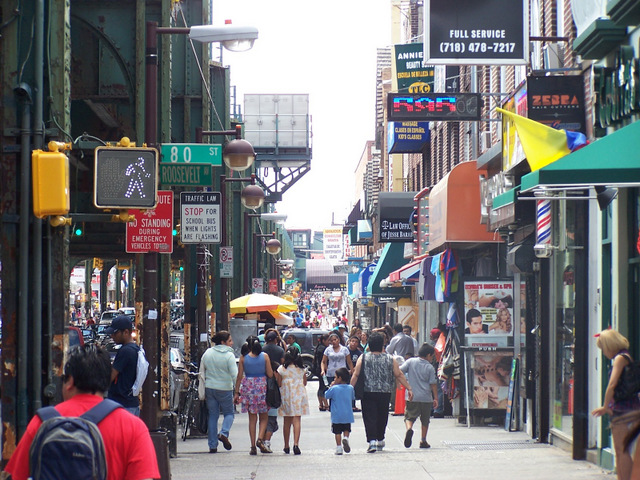
(And here’s what Jackson Heights really looks like, or at least my street and Roosevelt Avenue under the El.  (click on all)

IMG_0946 IMG_0949

roosevelt-avenue-jackson-heights-little-india-micro-neighborhoods-nyc-untapped-cities-brennan-ortiz

Comment: nikobakos@gmail.com

Photos: Arlanda, Stockholm

18 Oct

norwegian-air-shuttle

Travelling used to be fun.  Well for some people.  I always hated it.  A sufferer of both mild agoraphobia and claustrophobia, both airport crowds and then being packed into the tin cans airplanes have become and I’m a pile of nerves by the time I get anywhere I’m going.

So, realizing that eight or nine or ten hour translatlantic flights to and from Greece or Turkey or Russia were getting dangerous for my sanity, I started deliberately looking for flights with stopovers somewhere in Western Europe.  But that’s when stopovers were fun.  Now they suck too.

My budget Norwegian Air was pure misery.  They won’t even give you water if you haven’t paid for food.  I was next to an old Swedish couple and the man was coughing uncontrollably the whole time — they all look so healthy, I thought they never get sick — in between what was probably muttering about me for not turning my reading light off.  Because the wife had actually asked me to turn it off!  I said “I don’t sleep on planes so I need to read so I’m not turning my light off and sitting in the dark for six hours biting my nails….” and she called one of the flight attendants — who were all African-American (???) — and she told her “Sorry ma’am, we can’t make him turn his light off” and so the old lady sat there glaring at me the whole rest of the flight.

Plus…  I detest anyone who can sleep in today’s economy class seats.  Anybody who can actually sleep sitting up in those seat — for hours…the sleep of the just — has to be a little bit of a burro.  I look at them and want to scream like Blanche: “You healthy Polack without a nerve in your body; how can you possibly know what anxiety feels like!”  While I sit there feeling like I’m being forcibly sleep-deprived in Guantánamo or something.

But back to formerly fun stopovers.  You used to get out of the plane.  See foreign faces.  Hear foreign languages.  Drink a good foreign beer or try some foreign food.  It was like a mini-visit to another country not part of your itinerary.

Now globalization has made every airport almost exactly the same.

In Stockholm at Arlanda airport, which I was looking forward to.  But it’s 65 degrees!  In Stockholm in October…  And being all Green like all Euros are now the AC’s not strong enough and the seltzer’s warm and there’s no ice.  Plus…  I was looking forward to a beer and some herring in one form or other — and Swedes do a thousand different delicious things to herring; one of the reasons I remember loving Sweden — and there isn’t any anywhere.  I’m outraged.  Just fake Irish pubs and Starbucky-type chains that don’t even have good danishy things — the other things Swedes are great at — just microwaved scones and mozarella-ciabatta sandwiches.

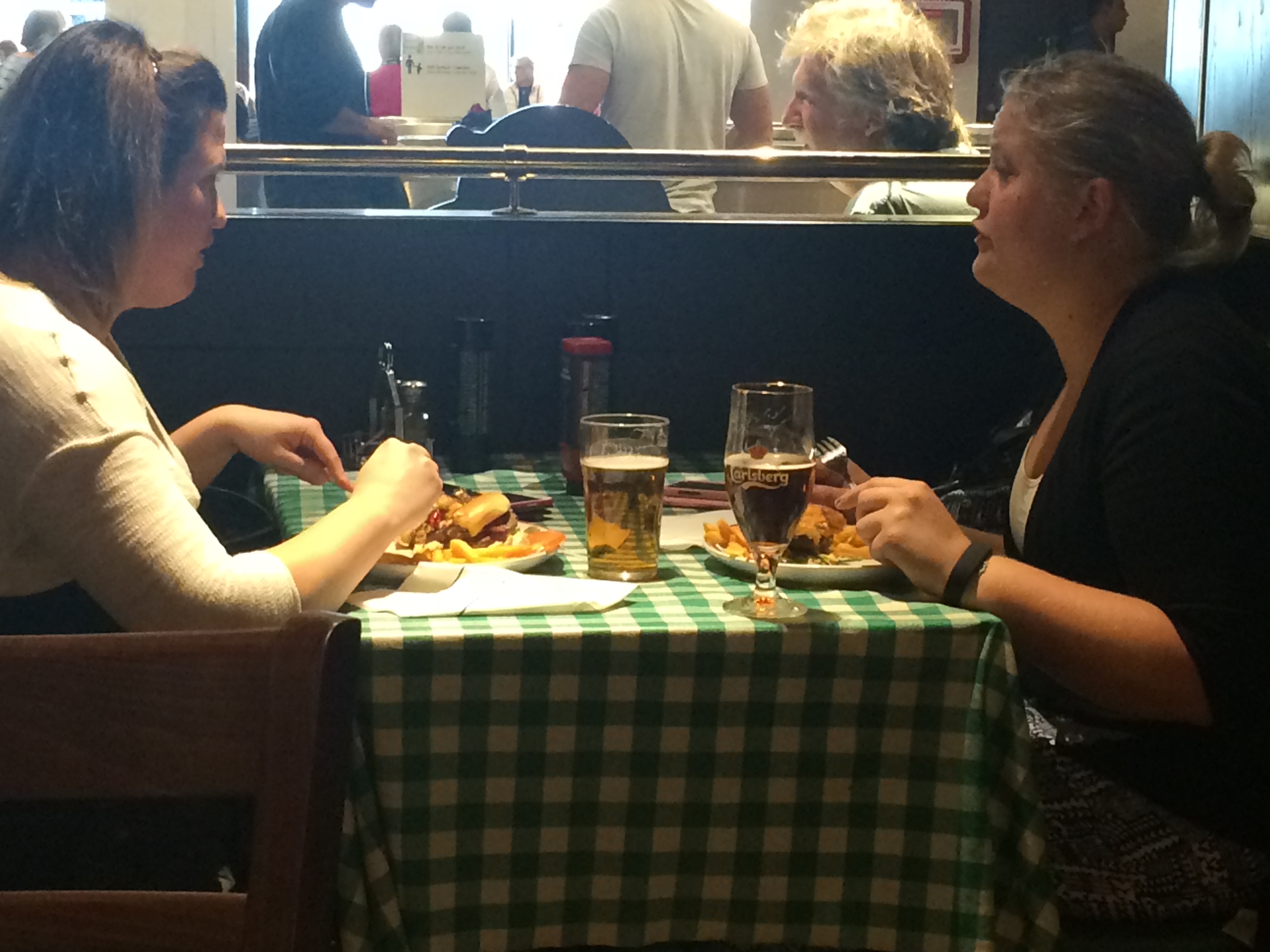
I get a Brooklyn Lager at the fake Irish pub.  I look at the hamburgers and nachos and buffalo wings menu with disgust.  Not a piece of herring in sight. Two young girls are eating bacon-cheeseburgers next to me with their forks and knives.

IMG_0720
Euro-losers, please, if you’re going to eat American garbage — and on what looks like a regular basis — eat it like an American.  I think of silly Italians, most of whom today treat pizza like it’s a night-out treat and who eat it with a fork and knife also, carefully cutting out and eating only the cheesy-tomato part in the middle and perversely leaving the intact ring of crust on their plate.  When I tell them that in nineteenth-century Naples pizza was street food, that it was folded over twice into a curved quarter and eaten by hand, like crêpes au sucre in France, they look at me like I’m crazy.
IMG_0723
Finally I find the twisted, sticky cardomom buns Swedes make and that I’ve always loved.  And some of the best I’ve ever had…at the airport tattoo parlor.  Which was kind of sexy.  ‘Specially on the right blond shoulder.  But weird.  I have two to strengthen my nerves for the gate scene full of Greeks.  Four more hours and I’ll be free.
Screen Shot 2015-10-04 at 5.38.34 PM

Comment: nikobakos@gmail.com

For Hanuman-ji and the Pakistani cab-drivers: Aditya Kapoor’s beautiful photo essay of a wrestling akhara in Benares

17 Oct

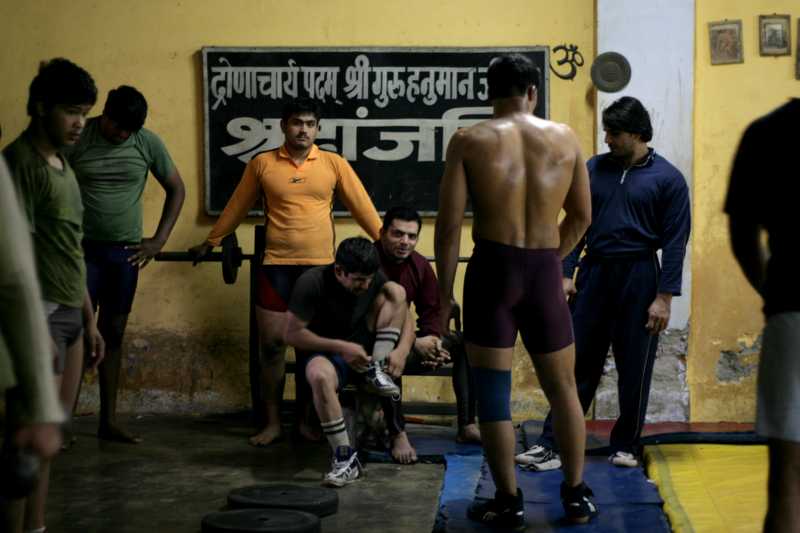
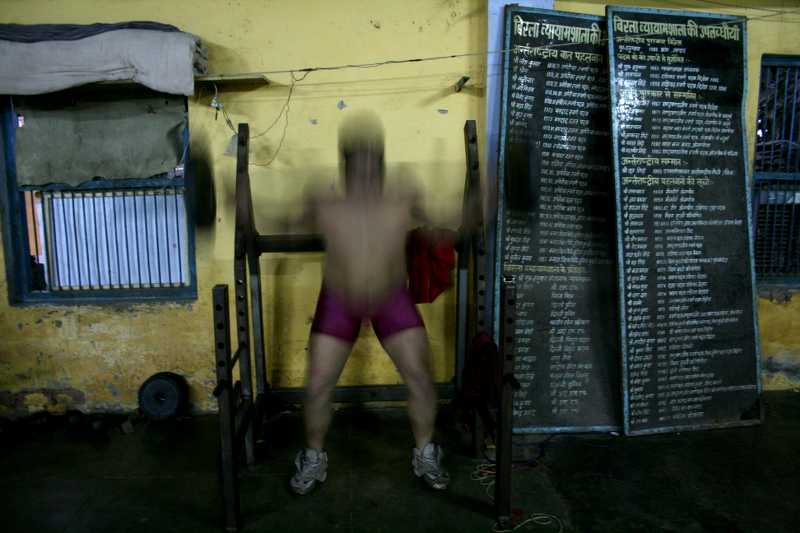
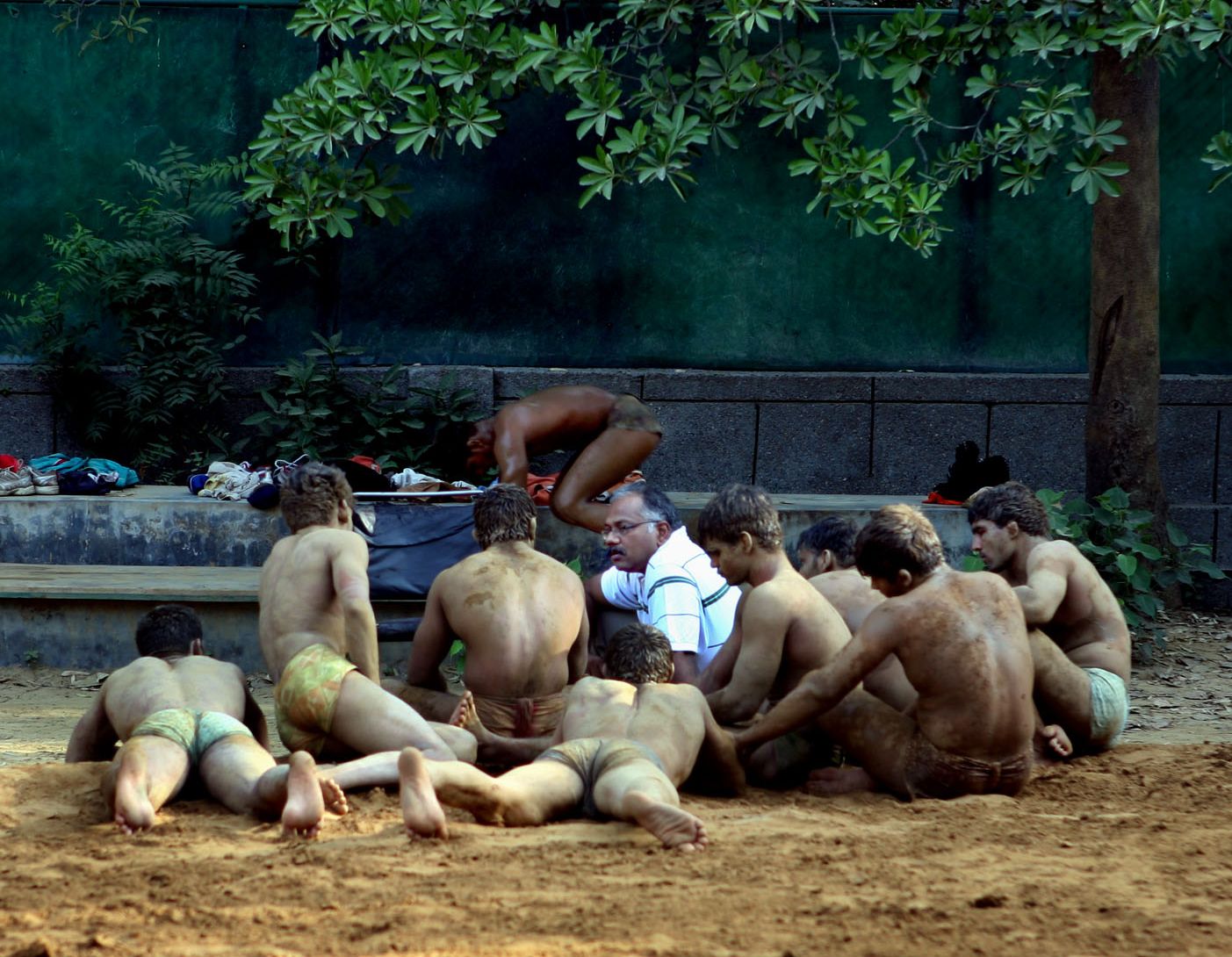
“At 5 in the morning when most of us are still curled up in bed, some young wrestlers  begin a daily tradition. A tumbler full of warm milk and 30 almonds down they reach the practice ground and pay their respects to Lord Hanuman, the God of good health and courage. Then begins the strenuous training of theses wrestlers aka Pehlwans.

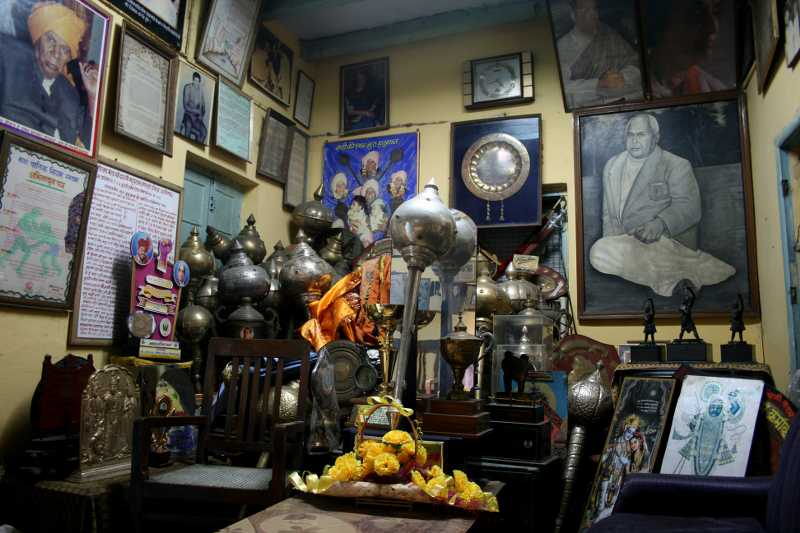
[Every wrestling akhara is also a Hanuman shrine]

“This is the modern day wrestling in India locally called ‘Kushti’. It is also a dying art that traces its roots to  the 5th century BC. Once, the sport enjoyed royal patronage and immense popularity. Whole villages would turn out to watch the local tournaments. But over the past few decades, like all other sports, it lost its popularity to cricket – an obsession in India.

“But these phelwans are nowhere near giving up. They lead parallel lives working as part time cops, railway officials and make do with what (if at all) the government offers them. And they need all they can get because wrestling is by no means a cheap profession. Their daily diet consists of 3-5 litres of milk, about a 100 almonds and three square meals a day.

“These photographs document the training sessions of many such wrestlers.”

— Aditya Kapoor

Indian Wrestler

IMG_0014_800x533

IMG_0028_800x533

IMG_0178_800x533

IMG_0181_800x533

IMG_9737_800x533

IMG_9738_800x533

IMG_9770_800x533

IMG_9801_800x533

IMG_9806_400x600

IMG_9809_800x533

IMG_9811_800x533

IMG_9816_800x533

IMG_9837_800x533

IMG_9865_800x533

IMG_9888_800x533

IMG_9912_800x533

IMG_9922_800x533

IMG_9960_800x535

wrestlers-akhara-guru

Comment: nikobakos@gmail.com