RAE recognizes Ladino

3 Dec

Piri_Reis_map_of_Europe_and_the_Mediterranean_Sea

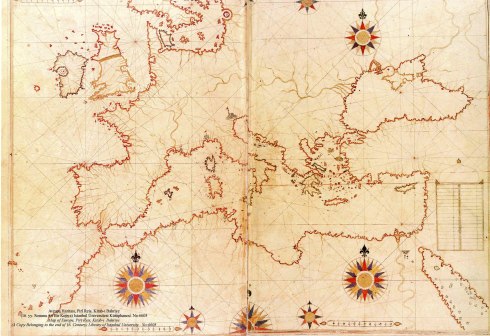
A late 16th century copy of the Mediterranean by Ottoman cartographer and geographer Piri Reis from Kitab-ı Bahriye.

RAE, the Real Academia Española, (Royal Spanish Academy) the body of academics that sets the standard for correct Castillian with all the sadistic glee of Spanish pedantry, but which has significantly lightened up in recent decades, especially in regards to Latin American usage, has hired eight academics to guide its Judeo-Spanish or Ladino “branch.”  The full article for Spanish-speakers is here.

Comment: nikobakos@gmail.com

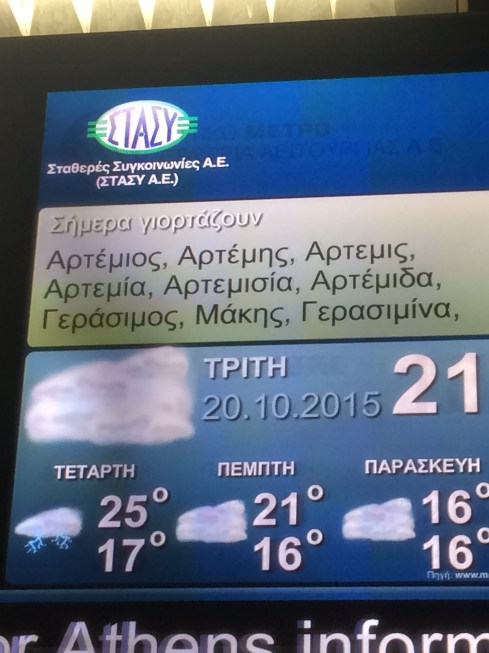
Photo: Athens metro — “Today is the nameday of…”

3 Dec

IMG_0833In recent years — I don’t know how long — the Athens metro system has began to add a list of daily namedays to the signs on platforms that give passengers the date, time and weather — so they don’t forget to at least call or text and well-wish their friends and relatives.  A nameday, for those who could possibly still not know, is the feast day of the saint you were named after.  Above the weather, the sign in the photo, which I took back on October 21st, says: “Today is the nameday of: Artemios, Artemes, Artemis, Artemisia, Artemida, Gerasimos, Makes, Gerasimina, etc.”  It’s really different versions of two names — Artemis and, the most popular among them, the male Gerasimos, the patron saint of the Ionian island of Cephalonia — but the Orthodox calendar usually celebrates more than one saint on each day of the year, since it didn’t go through their files the way the Catholic Church did after Vatican II and remove from the calendar those saints whose miracles didn’t have the requisite scientific backing (……)

Saints’ days and namedays have come up on several occasions on this blog, probably the most detailled exposition of the tradition on my part is this post from last December: Today is my nameday,” from which there’s a money quote below in case you don’t want to wade through the whole text.

This is all a part of a very tender traditionalism that has taken hold of a segment of the Greek soul since the current economic and social crisis began, the kind of refuge a society is wont to take in comforting old forms of social behavior and interaction under such circumstances, but had begun before things hit rock bottom the way they have now; it had actually started to lift as soon the the heavy malakia of metapoliteuse thinking had started to wear off as early as the 90s: this term — metapoliteuse – is defined briefly in the first footnote of this post: “Careful what you wish for…Erdoğan and Ottoman Turkish” — but culturally included a rejection of all things Church-and-Orthodoxy-related as part of the reaction against the right-wing, the monarchy and the Church of Greece’s unforgivable support in the 60s and 70s for the junta that tormented Greece with its idiocy until it fell in 1974  (See much of Pamuk’s commentary on the much more radical spiritual vacuum in which the Turkish Republic’s anti-clericism left his own class in Turkey and that may be part of the state that society finds itself in today.)  I owe readers a post that will be called “The Perfect Metapoliteuse Idiot” to borrow the term and subject matter from Mario Vargas Llosa‘s book “Guide to the Perfect Latin American Idiot” which describes a sociological phenomenon and type startlingly similar to its Neo-Greek counterpart.

manual-del-perfecto-idiota-latinoamericano-de-atlantida-4387-MLA3538134950_122012-F

And so the nameday makes a comeback.  Not that the Western birthday celebration and its obnoxious gimme-gimme narcissism has not also taken root here; it has.  (And like everywhere else, no one thinks about what a baby learns about the world when a glowing piece of confectionery is shoved in front of his face and all the big, powerful adults in his life chant to him like he’s the emperor.)  But the nameday celebration, in which you give and, generally, don’t expect to receive, is still going strong.

(Let me make just one note here: the “traditionalism” of which I’m speaking has nothing to do with the invented, racist, cruel Neo-Traditionalism of Golden Dawn and its supporters; theirs is the obnoxious militaristic “tradition” — including its revolting Spartan/Leonidan warrior pretenses that has nothing to do with any real past — of a reborn Greek fascism.)

Music, food, a renewed interest in agricultural life and processes — often as a form of survival — tiny gracious gestures of etiquette — all of these are parts of this renewal.  But what surprises me the most are the ones that concern religious observations.  Often these are performed in recognition of their cultural beauty and not necessarily as expressions of any deep spiritual impulse.  Still.  All the more, in fact.  I, for example, had always been terrified of having to spend what I thought would be a barren, empty Easter in modern Greece, which I had never had to in my life; when I finally did last year (see: “Σήμερον κρεμάται επί ξύλου…“) I was pleasantly surprised at how immersed the society was in the observation of this central, defining pole of our identity.

And now we’re in the middle of the Christmas fast, which began forty days before Christmas, on November 15th.  This is the period known as Advent in the West, for those who still remember, and as the word implies, indicates that Christmas, like Easter, was once an anticipatory holiday, with a forty-day period of fasting and relative sobriety preceding it, like Easter still is and has in the East.  Christmas was not the consumption orgy that now starts in late October and a tree that goes up on Thanksgiving and gets thrown out before New Year’s even.  Christians waited for Christmas: and it began on Christmas Eve — with the setting up of the decorated evergeen in the northern European tradition, as the West’s entire literary tradition has it, and then the celebration of the “twelve days” that ended on January 6th.  But all that was scrapped because it doesn’t fit in with distinct shopping-spree periods or quarterly earnings reports and didn’t allow enough time for too many exhausting, gluttonous “holiday” parties with people you don’t want to be with and for buying plastic crap to hang on your door.

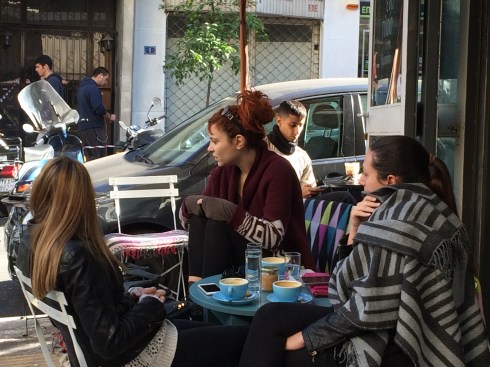
So that bright Sunday Attic afternoon, the first day of the Christmas fast, I was sitting here (below) in a very, sehr cool little cafe-bar in Pagkrati (a very cool little neighborhood), when a pretty, elegant twenty-something girl suddenly said to her boyfriend in a testily audible voice: “Σου είπα ότι είναι νηστεία σήμερα και δεν αρταίνομαι ” — “I told you it’s the start of the fast today and I don’t partake” — using an archaic form for “partake”“αρταίνομαι” — that I can’t find the etymological root of.  I nearly fell off my chair.
Plastera Cafe 1Plastera Cafe 3

Plastera Cafe 4Plastera Cafe 2

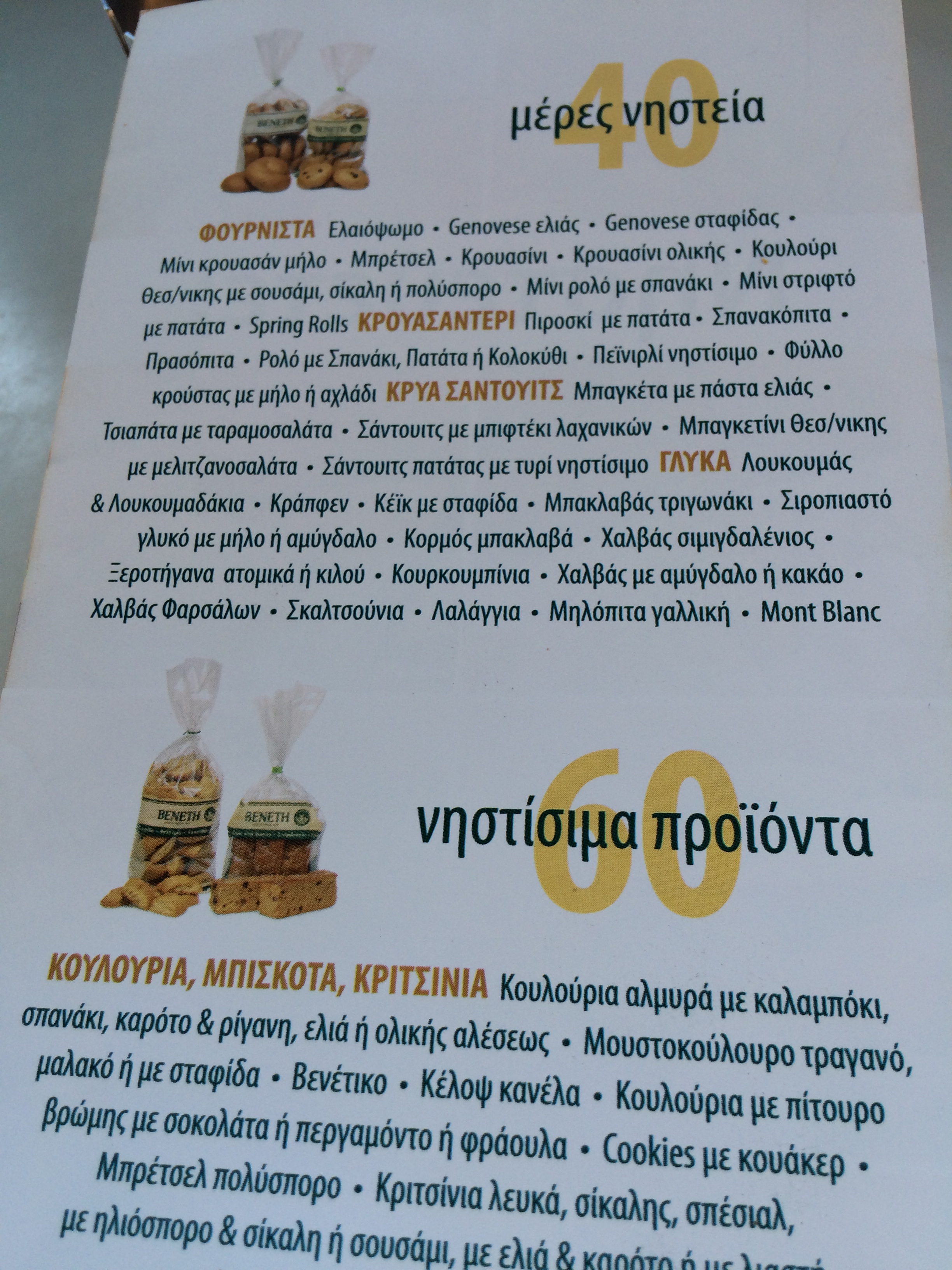
And then Venetis, a large bakery-patisserie-café chain here — which actually has some pretty good stuff — has this notice on its tables: “Νηστεύετε;” – “Are you fasting?”  And on the back: “40 μέρες νηστεία…60 νηστίσιμα προϊόντα.” — “40 Days of Lent…60 Lenten Products.”  

IMG_1162

IMG_1168.JPG

Commercial.  But a commercial use of something latched onto in the zeitgeist air.  Un-heard of…laughing-stock corny…less than even a decade ago.

Quote from “Today’s my nameday” that I mention at top:

“What I most love is that, among Greeks, your nameday is a day critical to your honor and reputation…

“…It’s a day when it’s your obligation to give and serve and prove your noblesse and not, as Western birthdays have become, a day when you sit around waiting for others to do for you or give you gifts.  Western, American, birthdays are only slightly less gross to me than the totally American ugliness of wedding and baby showers: “I’m getting married and/or I’m pregnant; so I’m having a party where you have to bring me things.”  And don’t even start me on bridal registries, where you tell people, not just that they have to bring you something, but what they have to bring you.”

Comment: nikobakos@gmail.com

“¡Cuba es autentica!”

30 Nov

Not for long…

The beginning of the end: a commercial about a country that doesn’t even exist yet.  Consider yourselves blessed, ye who have already been…

Christ, the shot of the gachís with their mojitos is enough.

nikobakos@gmail.com

From the Times: “The gates of Western nations are closed on us, Mr. Ghani said. ‘Our dignity, our respect is in Afghanistan.’”

24 Nov


24afghanmigrants-web-superJumbo.jpg

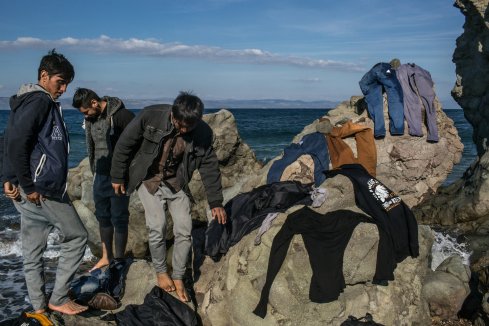
Afghan migrants from Mazar-i-Sharif waited for their clothes to dry on the Greek island of Lesbos after crossing the Aegean Sea in a boat from Turkey. (Mauricio Lima for The New York Times)

Read whole story: Afghan Leaders Try to Halt Exodus, but Pleas Ring Hollow

nikobakos@gmail.com

If the Russians flattened Incirlik tomorrow I would have no problem

24 Nov

If only to teach that ass a lesson and start putting him in his place.  And I would tell all Hacivat-syndrome-ridden Turks that: “Sorry, you voted for him…” (see link to previous post below), the way all the lefty White Turks I knew back in 2003 told me “my” Congress had voted to invade Iraq and who are still easing their lazy academic consciences by blaming everything on the American invasion.

IMG_8950

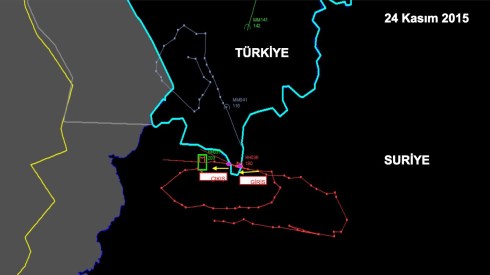
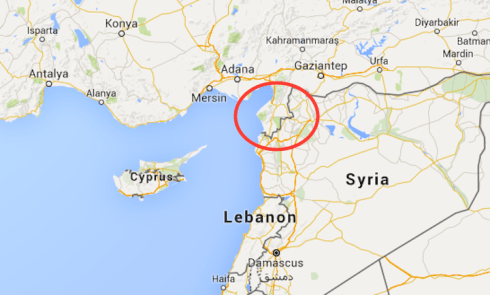
This is the tiny corner of Antakya where said violation of airspace took place — a corner which shouldn’t even belong to Turkey and was acquired in the late 30s by our “peace-at-home-peace-in-the-world” neighbor’s strong-arming of the League of Nations (no great achievement) into calling a bogus referendum for what was then an autonomous part of the French Mandate of Syria.  If Greece had NATO backing to shoot down every Turkish jet that committed intrusions of Greek airspace — on a regular basis wildly more radical than these Russians may have — Turkey would have no air force now.

When you’re making me a Putin supporter — congratulations — ’cause you’ve found all the right/wrong buttons to push.

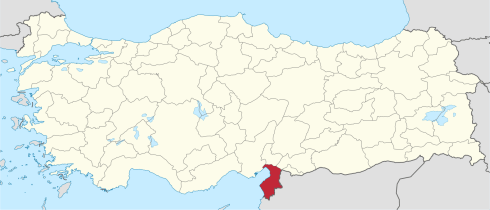
Below (circled in red and marked in red in the lower map) is the stretch of the mountainous littoral of the northwestern Syrian coast that was ‘acquired’ by Turkey in 1939.  In antiquity its population was — and remains to this day — heavily Semitic/Arab; in classical times with a large Greek presence in the cities, including the great Greek city of Antioch, one of the three or four most important cities of the Roman Empire, and pretty much the birthplace of institutional Christianity.  Like the mountains of coastal Syria to the south (its Alawite heartland) and most of Lebanon, it became, over the centuries after the advent of Islam, a highland refuge for religious minorities fleeing the pressures of the intolerable tolerance and egalitarianism of the majority Sunnism of the Levant.  When comically renamed “Hatay” after Turkish acquisition — after the Hittites, I think, who, in the science fiction historiography of Republican Turkey are modern Turks’ ancestors (all nationalist mythologies are comical, but Republican Turkey’s was clearly lifted from a Star Trek episode) — its large non-Turkish, non-Sunni population was subjected to the heavy-handed Turkification campaign and religious discrimination all non-Turks of the Republic were The tiny corner of the southern edge of this zone is where the intrusion, shown above, of the Russian air jet, supposedly took place.

Screen Shot 2015-11-25 at 5.02.28 PM

1579px-Hatay_in_Turkey.svg

Most of the region’s Christians, who were Syrian Orthodox Arabs, have departed for Istanbul over the past decades, so see also an upcoming post on the community of these Antiocheian Christians in Istanbul and the odd revivifying role they’re playing in the dying Greek community of the City.

See: “From the Guardian: Turkey could cut off Islamic State’s supply lines. So why doesn’t it? David Graeber

nikobakos@gmail.com


For F. Khaanum and all my Iranian friends: Derti, love and the afflictions of Naipaulian self-loathing…

19 Nov

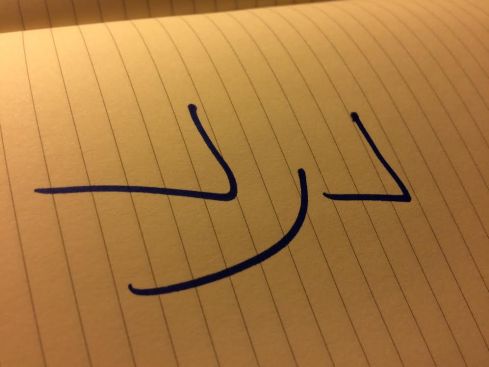
derdThere’s a radio station in Athens — just got out of a cab — called “Dertia.98.6” — “Love-aches.98.6,” — from the Farsi obviously — dedicated solely to torturous, soul-trampelling, ripped-out-heart, impossibly painful, love songs.
درد  — “dard” is one of those words that entered Greek through Ottoman Turkish (and Turkish pronunciation: “dert”) but has now retained only very specific, cultural and socio-contextual meanings.  It means “pain” in Farsi, but in Greek you would never use it for a head-ache or a bad knee.  It’s only used to mean a broken heart, an unquenched desire, and their attendant sufferings, and then only in the context of a very popular, let’s call it “arabesque”-type music, the listeners of which are usually of my cab-driver’s sociological profile, though in truth Greeks of all classes enjoy it as well — but only as a secret, guilty pleasure that they’re scared is too ghetto to actually own up to.  It’s a great injustice, as much of this music is beautiful.  But such are the self-hating complexes of an insecure and provincial people.

Because there’s an experience I’ve had from South Asian dance parties in the East Village to Greek clubs in Astoria to San Juan to Madrid to Naples to Belgrade to Salonica to Istanbul to Kabul.  You go to a club and all the pretty young things are standing around listening to club-crap, with a drink in their hands and a studied look of coolness that is actually masking profound boredom.  Then like at around 3:00 am, the d.j. relents: the “local” stuff — Paco Ortega or Kaite Garbe or Tarkan — comes on; the hand-clapping which all Spaniards are secret experts at, the hip-shimmying that all Istanbullu — who are really Maraşlı — girls have drunk with their mother’s milk, suddenly explode…and everybody finally allows themselves to have a good time.  It’s pathetic.

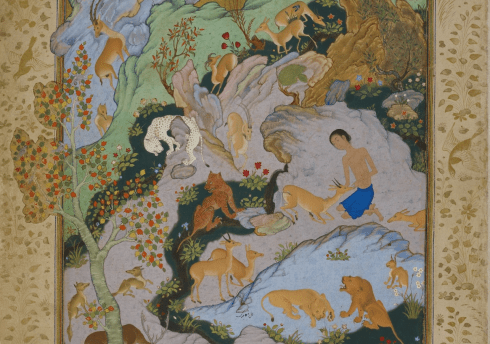
Majnun.jpg

Majnun in the Wilderness, from the Shah Tahmasp copy of the Khamsahname by Niz̤āmī. Mid-16th century, painted by Mīrak.

This — by the way — was the song playing in the cab: “​​Φύγε κι άσε με” — “Leave…and let me be…” a 1962 tune, sung by Panos Gavalas and Zoe Panagiotou.  This is part of a particular sub-genre of popular Greek music, that hit its heights from the mid-50s to the early 60s, and that was heavily, and clearly, influenced by the popularity of Bollywood films and music in Greece at the time, (until Greek fascism and racism, including that of Tsitsanes himself, silenced it)…often just complete ripped-off reworkings, or “sampling” in Black hip-hop parlance, which is probably just a completely natural part of music since its the beginnings.  But that’s a whole other post.

nikobakos@gmail.com

From the Guardian: Turkey could cut off Islamic State’s supply lines. So why doesn’t it? David Graeber

19 Nov

Turkey — or rather, Turks — could do a lot of things.  Why they don’t is a psychological issue, perhaps, more than anything else.  My take on the infuriating mood in post-elections Istanbul will come soon.  Meanwhile, great article from the Guardian, which, as usual, is not afraid to shove uncomfortable questions — and accusations — in our faces.

2835

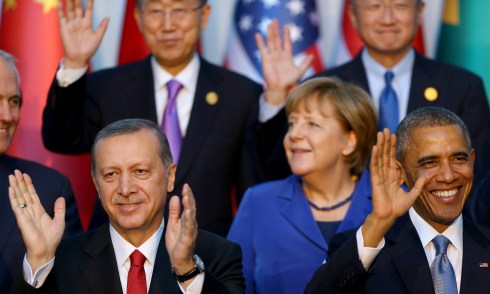
G20 leaders with Recep Tayyip Erdoğan in Antalaya on 15 November. ‘It may seem outrageous to suggest that a Nato member would in any way support an organisation that murders western citizens in cold blood.’ Photograph: Anadolu Agency/Getty Images

Some quotes:

“In the wake of the murderous attacks in Paris, we can expect western heads of state to do what they always do in such circumstances: declare total and unremitting war on those who brought it about. They don’t actually mean it. They’ve had the means to uproot and destroy Islamic State within their hands for over a year now. They’ve simply refused to make use of it. In fact, as the world watched leaders making statements of implacable resolve at the G20 summit in Antalaya, these same leaders are hobnobbing with Turkey’s president Recep Tayyip Erdoğan, a man whose tacit political, economic, and even military support contributed to Isis’s ability to perpetrate the atrocities in Paris, not to mention an endless stream of atrocities inside the Middle East….”

“How has Erdoğan got away with this? Mainly by claiming those fighting Isis are “terrorists” themselves. It is true that the PKK did fight a sometimes ugly guerilla war with Turkey in the 1990s, which resulted in it being placed on the international terror list. For the last 10 years, however, it has completely shifted strategy, renouncing separatism and adopting a strict policy of never harming civilians. The PKK was responsible for rescuing thousands of Yazidi civilians threatened with genocide by Isis in 2014, and its sister organisation, the YPG, of protecting Christian communities in Syria as well. Their strategy focuses on pursuing peace talks with the government, while encouraging local democratic autonomy in Kurdish areas under the aegis of the HDP, originally a nationalist political party, which has reinvented itself as a voice of a pan-Turkish democratic left…

4000.jpg

‘Bloody terrorist bombings inside Turkey seemed to target civilian activists associated with the HDP. Victims have repeatedly reported police preventing ambulances evacuating the wounded, or even opening fire on survivors with tear gas .’ Photograph: Murat Bay/AFP/Getty

“…In June, HDP success at the polls denied Erdoğan his parliamentary majority. Erdoğan’s response was ingenious. He called for new elections, declared he was “going to war” with Isis, made one token symbolic attack on them and then proceeded to unleash the full force of his military against PKK forces in Turkey and Iraq, while denouncing the HDP as “terrorist supporters” for their association with them.

There followed a series of increasingly bloody terrorist bombings inside Turkey – in the cities of Diyarbakir, Suruc, and, finally, Ankara – attacks attributed to Isis but which, for some mysterious reason, only ever seemed to target civilian activists associated with the HDP….”

“The exact relationship between Erdoğan’s government and Isis may be subject to debate; but of some things we can be relatively certain. Had Turkey placed the same kind of absolute blockade on Isis territories as they did on Kurdish-held parts of Syria, let alone shown the same sort of “benign neglect” towards the PKK and YPG that they have been offering to Isis, that blood-stained “caliphate” would long since have collapsed – and arguably, the Paris attacks may never have happened. And if Turkey were to do the same today, Isis would probably collapse in a matter of months. Yet, has a single western leader called on Erdoğan to do this? [my emphases]

The next time you hear one of those politicians declaring the need to crack down on civil liberties or immigrant rights because of the need for absolute “war” against terrorism bear all this in mind. Their resolve is exactly as “absolute” as it is politically convenient. Turkey, after all, is a “strategic ally”. So after their declaration, they are likely to head off to share a friendly cup of tea with the very man who makes it possible for Isis to continue to exist.”

Comment: nikobakos@gmail.com


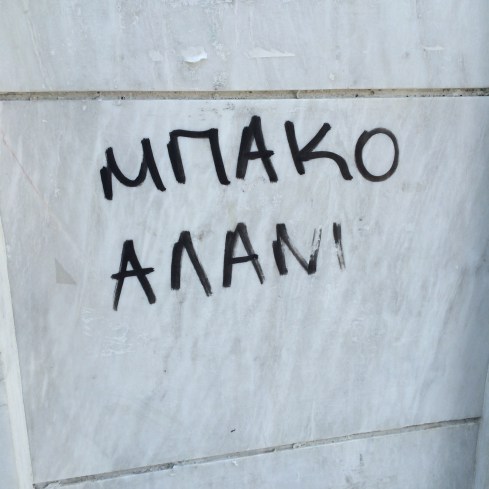
Photo: Μπάκο αλάνι…”Bako Alani” Redux

17 Nov

IMG_0579

(see previous post: “Photo: Jiannena graffitti: “Bako Alani“)

“Niko, I was curious, so I checked my Greek dictionary. Αλανη with an η does mean street dude, etc. as you say. Αλανι with an ι means an open space between occupied buildings. So maybe the graffiti was a sort of verbal squatting, a claim to the space as _un_occupied?”

H., sorry, but something happened to the word gender-wise in Greek slang that your dictionary doesn’t seem aware of; it became neuter to signify the person too.  Just google “είσαι πολύ αλάνι” and see what comes up:

“Γιαγιά είσαι πολύ μεγάλο αλάνι τελικά…”

“Μαλακα είσαι πολύ τυχερός που έχεις μια τέτοια γκόμενα, μπράβο ρε αλάνι, ;-)”

“αλάνι” — (neuter noun.) hate to contradict your dictionary again — doesn’t really mean an open space between two buildings, like it were an unbuilt-on lot waiting for a developer.  It usually means an unbuilt, by implication, unfenced piece of property, on the edges of a built-up area or on the edge of town, i.e., an area where “αλανιάρικα” kinds of activities take place: semi-legal and unwholesome (or superwholesome and fun).

Where “alana” has remained feminine in gender, it can mean empty lot.  But I know of only one use of it in modern Greek, in the haunting song of Giannes Spanos with lyrics by Leuteres Papadopoulos, one of the greatest lyricists of the Golden Age of twentieth-century Greek music, about the firing squad execution of Aristeides Pagkratides, thought to be Salonica’s infamous Şeyh Sü murderer, but later posthumously exonerated.

Μουσική: Γιάννης Σπανός

Στίχοι: Λευτέρης Παπαδόπουλος

Σ’ έστησαν σε μια γωνιά κι ήσουνα νέο παλικάρι
σ’ έστησαν σε μια γωνιά κι ήτανε τέσσερις φαντάροι
σ’ έστησαν σε μια γωνιά και σημαδεύαν την καρδιά σου
σ’ έστησαν σε μια γωνιά κι ήταν πρωί και παγωνιά

Σε καρτερούσε η ζωή και μια παραδουλεύτρα μάνα
κι έγινες κείνο το πρωί κόκκινο κρίνο στην αλάνα

Σ’ έστησαν σε μια γωνιά κι έκλαιγε η μοίρα σου παρέκει
σ’ έστησαν σε μια γωνιά κι είχε κι ο χάροντας τουφέκι
σ’ έστησαν σε μια γωνιά και τους κοιτούσες και γελούσες
σ’ έστησαν σε μια γωνιά κι ήταν πρωί και παγωνιά

Σε καρτερούσε η ζωή και μια παραδουλεύτρα μάνα
κι έγινες κείνο το πρωί κόκκινο κρίνο στην αλάνα

 –
“They set you up in a corner and you were a young man*
They put you in a corner and there were four soldiers
They put you up against a wall and were all aiming for your heart
They set you up in a corner and it was morning and freezing.
 –
“Life was “karterouse” you (waiting for/craving/expecting more of you)
along with a housekeeper mother.
But that morning you became a red lily in the alana.
 –
“They set you up in a corner and even your fate had stepped aside crying
They put you in a corner and even Death had a rifle
They put you up against a wall and you were looking at them and laughing
They set you up in a corner and it was morning and freezing.”
 –
(refrain)

The particular piece of graffiti in the Jiannena photo would have no meaning at all, if you’re dictionary were correct, since it’s on the corner of a completely built up intersection of a Jiannena avenue, with buildings on both sides and on the three other corners of the intersection it’s built on.  What then could it mean?  An advertisement for an “αλάνι” somewhere else that belongs to some Bakos?  Then it would be genitive: “Αλάνι Μπάκου”; or is it vocative? “Yo Bako! I got an alani I’m selling!” (Actually, “Yo Bake…” preferably, as an old girlfriend used to sarcastically address me when she could see me shifting gears into “Alani” mode.)


No.  It means:
             “MΠAKO”…(yes, vocative)
[είσαι] ALANI”
“Bakos, you street-dude”
Or, perhaps I am the “open space” in your dictionary?  Is it just a comment on my vapidness then?  Still…how did they know?
Because of course, the graffiti and the joke I tried to make about its possibly mysterious intent for me from an unknown sender/writer is now no longer even remotely funny.  As is ruined, as well, for me personally, the Spanos song, which I always though was about someone much more heroic than a mistaken-identity serial-killer — someone in the anti-Nazi resistance, for example, a partisan — and the song unfortunately is — or was — a great zeibekia.
 –

Comment: nikobakos@gmail.com

***********************************************************

* I’m not going to get into the definition of “pallikari” — how much more it means than just “young man” — in this post, not just now.  I don’t have the energy to do the word’s beauty justice.  The one foreigner who understood the word so perfectly and sweetly that he knew precisely when to — rightfully — stab us in the ribs with it was Tanpınar in his masterpiece “Huzur.”

Photo: Edward Snowden

16 Nov

snowden 10_Cnt24_Fr26a1

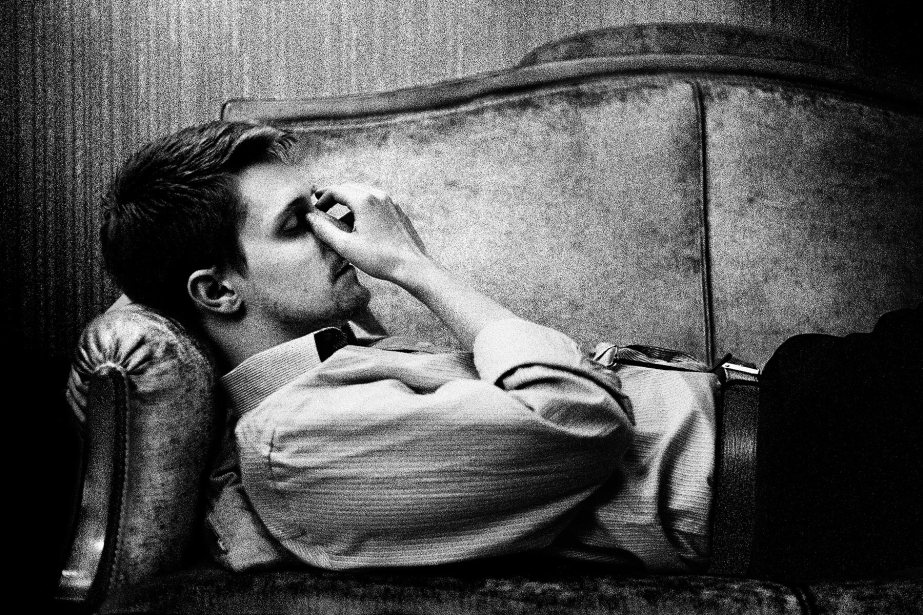
How hot is it when a dude is cute, smart and brave…

No news — least not that I know of — just the BBC has a running commercial with a spot of him and am seeing him every day.  SEE the Poitras doc (+ for Greenwald’s exemplary journalism) if you haven’t.

That’s an order.

Comment: nikobakos@gmail.com


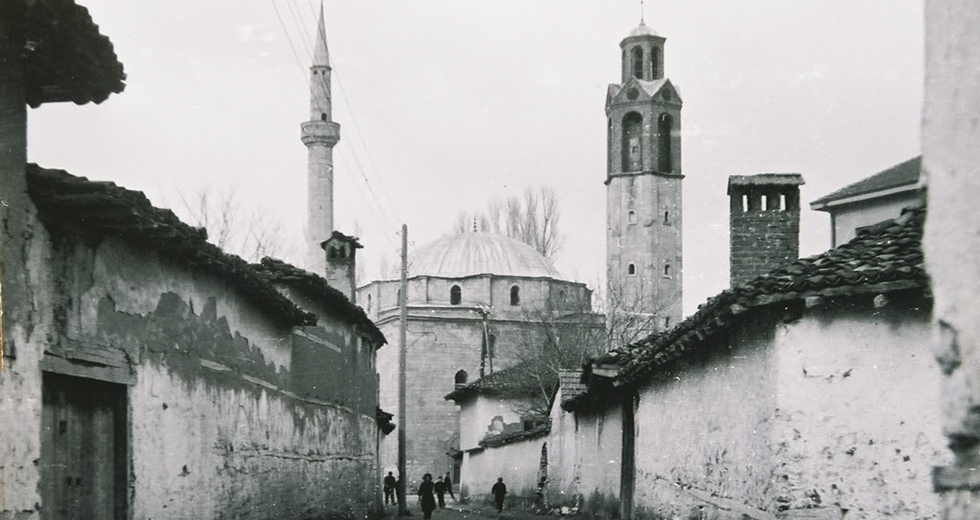
Photo: Ђаковица, Diakovica, Gjakova in Kosovo

15 Nov

In some happier multi-ethnic, but just as filthy and miserable time:

Djakovica

(click)

Comment:nikobakos@gmail.com