
To all my Serb/Montenegrin friends whose pictures I promised to post. They will come! I’m very sorry. Haven’t had the time.
Macedonia: Mavrovo, Dimitri and the Two Falcons
6 May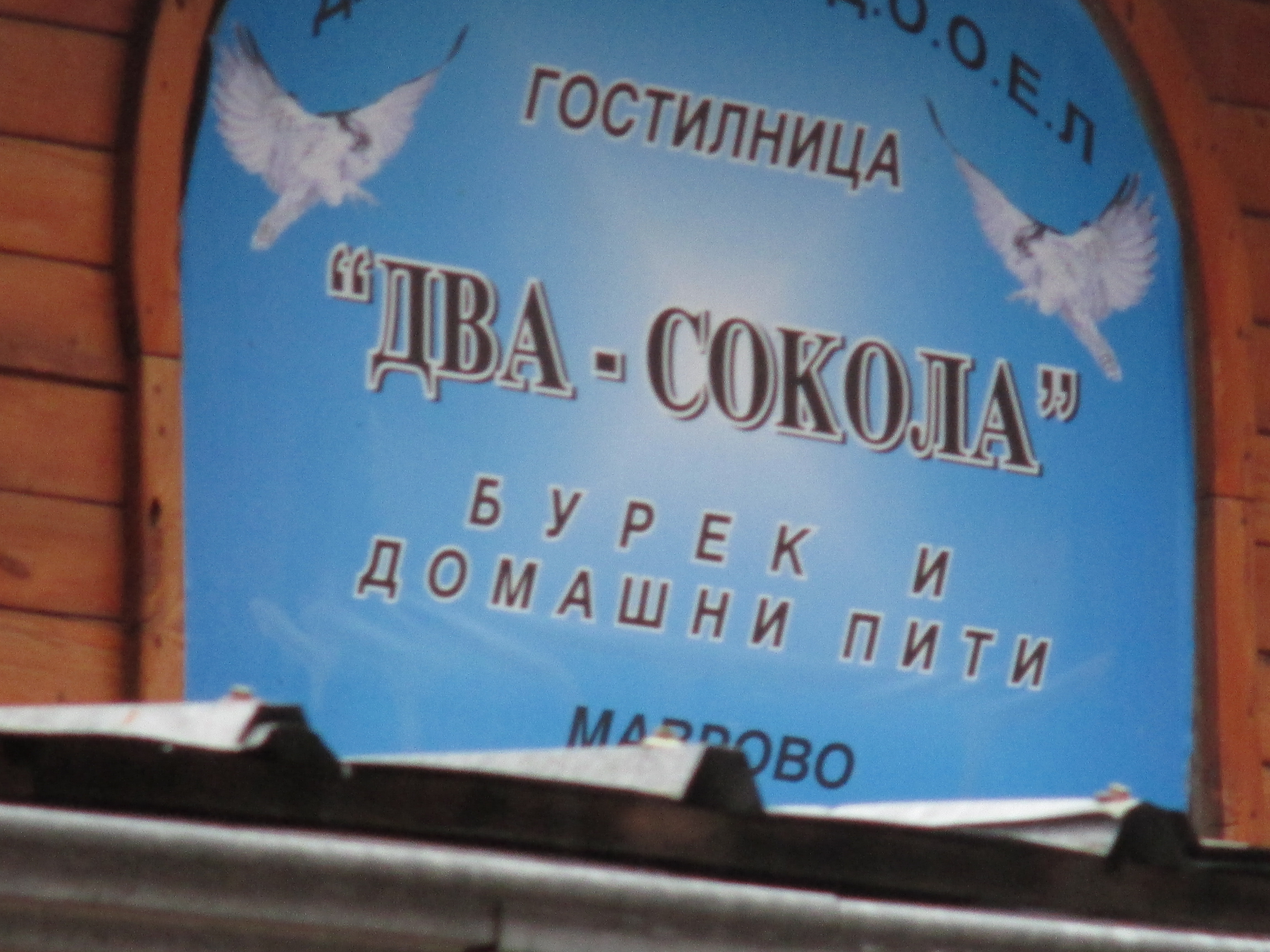
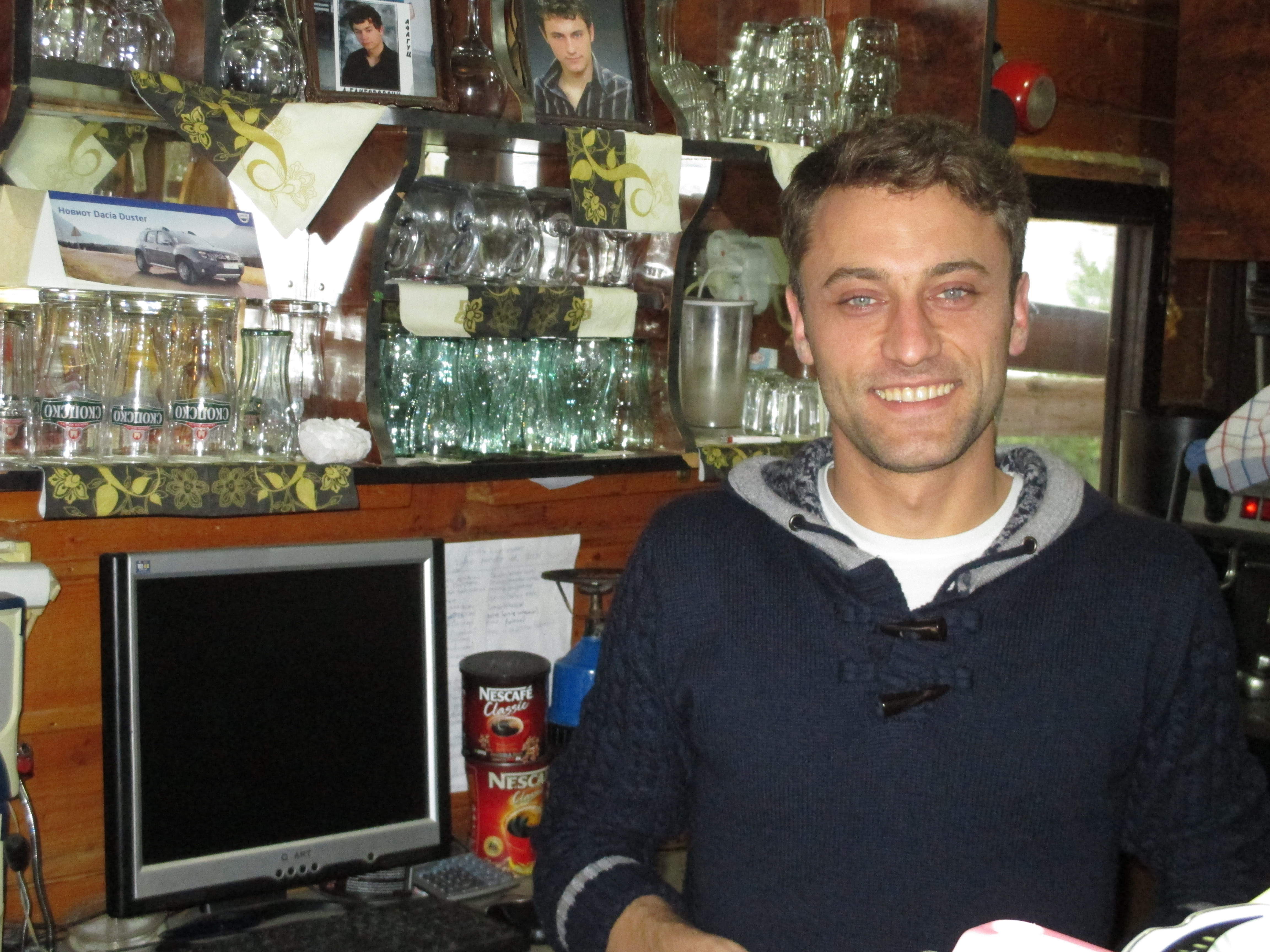
This kid, Dimitri (someone correct me if it’s different in Macedonian) gives new meaning to the words of the Greek folk song: “Mother, you married me badly…”
The song I mean is originally a Sarakatsan song; the Sarakatsanoi are a Greek-speaking, (as opposed to Vlachs, who were the most widespread practitioners of pastoral transhumance in the Balkans and speak or mostly spoke a Romance language), formerly nomadic group who kept their flocks in the lowlands in the winter and migrated up into the cooler, greener mountains in the summer, where there were richer pasturelands and, especially, water, for them and their livestock, though unlike the semi-nomadic Vlachs,* who used their mobility to engage in extensive commerce as well and were noikokyrides who built big beautiful stone villages in their mountain homes, the Sarakatsanoi lived in huts traditionally, both in the plains and the hills. This kind of transhumance is not unique to the Balkans, but existed in Spain, in southern Italy, Anatolia (Yörük-s), and many other parts of the world. My mother used to remember day after day of the constant tinkling of sheep-bells as Sarakatsanoi passed through the valley under her village, moving their huge flocks to the higher mountains of the Djoumerka in the spring time. My great-grandmother was a Sarakatsana. And though permanently settled, often by force in some countries, there are still huge amounts of livestock moved (now by truck) into higher altitude areas all over the Balkans and I know, at least, in the Pyrenees too, on both French and Spanish sides.
The song tells the lament of a young bride who has been married off to a family in a lowland village, what in some Andean countries is known — with horror — as tierra caliente as opposed to tierra fria:
“Mάνα με κακοπάντρεψες και μ’ έδωκες στον κάμπο, κι εγώ στο κάμμα δεv βαστώ, ζεστό νερό δεν πίνω.”
“Mother, you married me badly, and gave me to the plains, and I can’t bear the scorch, or drink this tepid water.”
There is also an alternative version: “…κι εγώ στ’αλέτρι δε βαστώ, ζεστό νερό δεν πίνω.” — “…and I can’t handle a plow, or drink this tepid water…” which gives a stronger sense of the highland pastoralist’s traditional aristocratic contempt for agricultural life — plowing and digging in the dirt and mud and burning sun — that used to be felt all over the Balkans for the people of the lowlands. You have to know how miserable the lowland, previously often malarial, parts of the Balkans still are to really feel these words under your skin. They give me, at least, the chills. There must be a Yörük song about the plain of Çukurova that expresses nearly identical sentiments, or a Pashtun song about the Punjabi lowlands. For Christians in the Balkans, to some extent, altitude also meant freedom, from Ottoman — or any — authority really, and from the likelihood that your community would end up part of some exploitative ağa’s çiftlik. Except for Albania, in much of the Balkans (and in the Levant, too) altitude was often a good correlator with the Christian/minority percentage of the population.
Back to Dimitri. Dimitri left his beautiful mountain village of Mavrovo in the Šar Mountains of Macedonia (shown below) to go work in Doha, malaka! In Qatar! (όνομα και πράμα)** Of course, he could only stand it for about a year, but made some money and came back to Mavrovo and opened a hotel and little bar-pastry-shop with his brother Darko, not in Mavrovo proper, but in Mavrovi Ani (The Hans of Mavrovo — from the Turkish-Persian for “inn”), because the mule caravans heading north into the plains of Tetovo and the rest of the Balkans used to meet here. Mavrovo — maybe it’s just my imagination or maybe tribal instinct — has the distinct feel of a front-line Christian village in a largely Muslim-Albanian area, like Derviçani, with Sveti Jovan, just up the road, watching its back. And from Mavrovo to Tetovo, unofficial capital of Macedonia’s some twenty-percent Albanian minority, all the crossbridges over the highway had “MAVROVO” graffitied on them. (I’ll get shit from the MESA Thought Police for writing stuff like this and probably even for dissing Qatar — though they’re allowed to — but, whatever, it comes with the territory. I’ll explain in another post.)
The mountains of Mavrovo national Park and the lake of Mavrovo below (click).

And below the view of the lake from Dimitri’s cafe (click). Can you imagine leaving here to go to the Gulf? And the mist and fog don’t even allow the photo to do the landscape justice.

Dimitri’s place, called Dva Sokola, “The Two Falcons” (I guess that’s him and Darko), has a great selection of home made raki of different kinds (grape, plum, quince), which in Macedonia you drink ice-cold out of these cool little decanters… (click on all)

pastries — and grrrreat börek! (I’ll write another post about why I get so excited about börek at a later time).

It was the end of April, but we needed a fire…

The “Two Falcons” is also a very nice hotel; if you’re in the region, which I highly recommend visiting, try and stay here; good skiing too, but this was a bad winter for snow. Their email address is:
dooel-da-di-kompani1@hotmail.com and they have a Facebook page at: Gostilnica “Dva Sokola” — check it out.

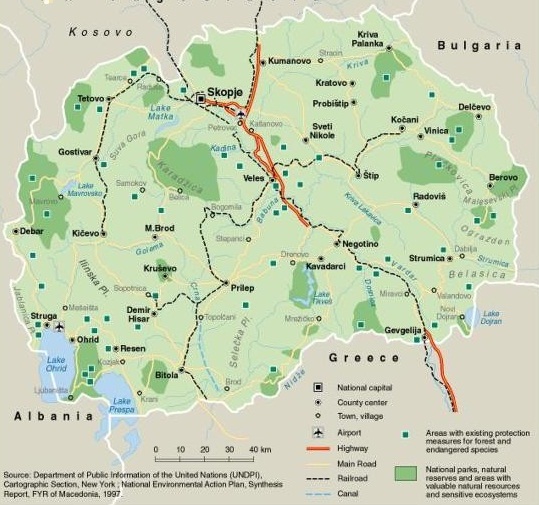 Mavrovo is in the far west of the country, the road we took from Ochrid to Tetovo basically straddling the border with Albania.
*************************************************************************************************************************************************************************************************************
*Vlachs, who are found throughout the southern Balkans, and were serious political players in the Middle Ages in an empire they co-ruled with the Bulgarians (also, unbeknownst to me till recently, the imperial Byzantine family of the Comnenoi were of Thracian Vlach origin), are not just an all-around pleasant people, but the most attractively non-nationalist in the Balkans, even though until just this past generation their language was alive and well and sense of identity strong. Instead of engaging in the waste of blood, lives and time that the dissolution of Ottoman power in the Balkans entailed, they simply devoted their considerable skills and energy to being part of whatever country they ended up in — the Balkans’ first post-modernists. There was a brief attempt by Roumania to make them feel Roumanian before and up to WWII, but it pretty much petered out. Scratch about half the millionaires of the nineteenth-century Greek diaspora who built the Greek nation’s institutions, physically and organizationally, and you’ll find a Vlach. Same for Albania and Macedonia. Their separate ethnic consciousness and language survives most strongly in Albania, where I think they were recognized as a separate minority in communist times and, again, I think, even had schools in their language, though their numbers are greatest in Greece.
** Like most humor, this will be totally unfunny in translation, but I didn’t want to be unfair to non-Greek readers. “…όνομα και πράμα…” literally means “the name and the thing” in Greek; in other words, the name — in this case Qatar — says it all: “katara” is Greek for “curse.”
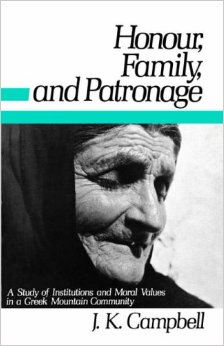
Note: The best book about traditional Sarakatsan life is “Honour, Family and Patronage: A Study of Institutions and Moral Values in a Greek Mountain Village” by John K. Campbell, and the best book about traditional Vlach life in Greece was written in 1905 but has thankfully been reissued: “The Nomads of the Balkans, an Account of Life and Customs Among the Vlachs of Northern Pindus” by A.J.B. Wace, one of those insatiably curious, intrepid Brits to whom we owe so much.

–
Comment: nikobakos@gmail.com
–
Macedonia: Sveti Jovan Bigorski
4 May
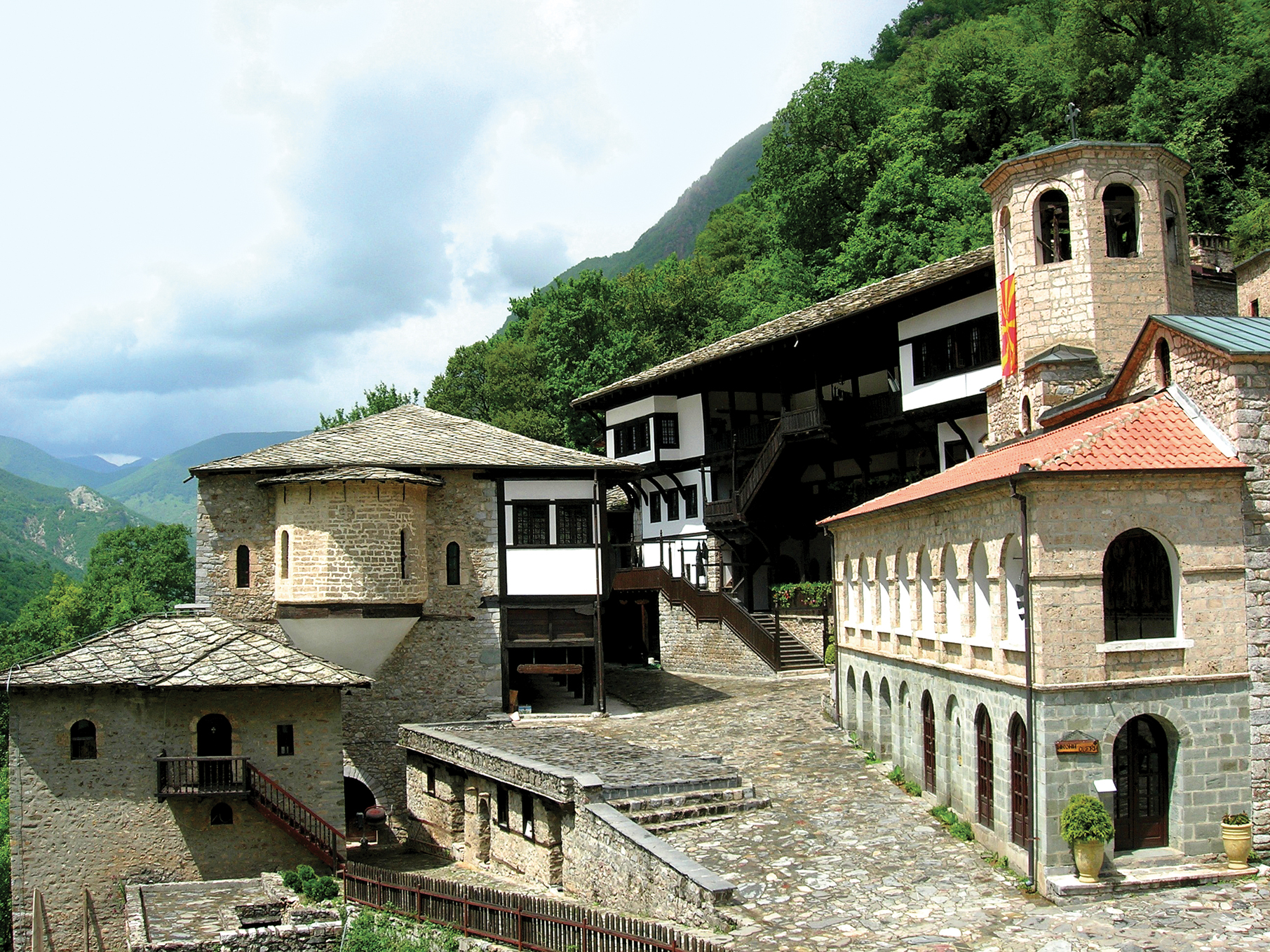
(click)
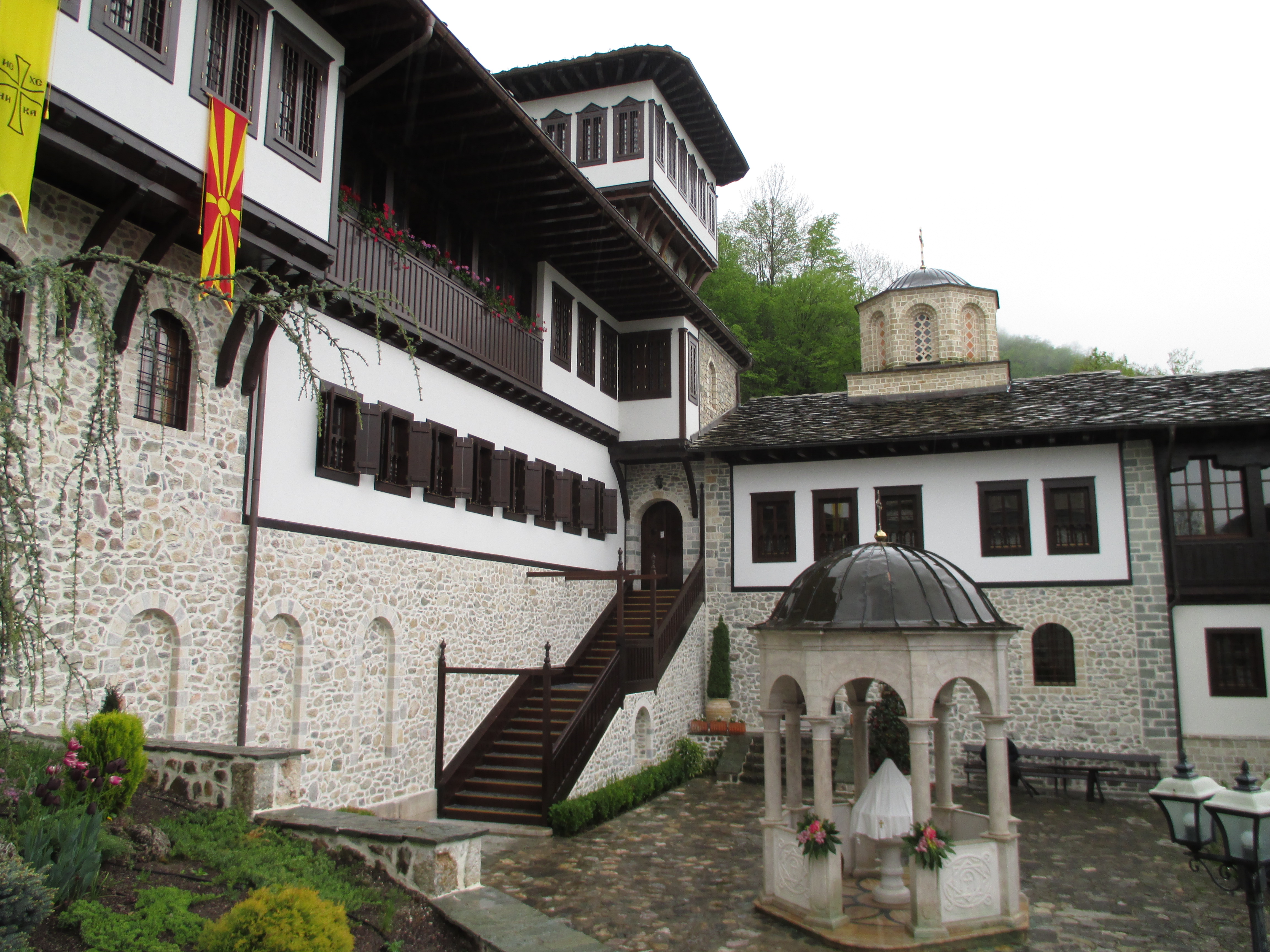
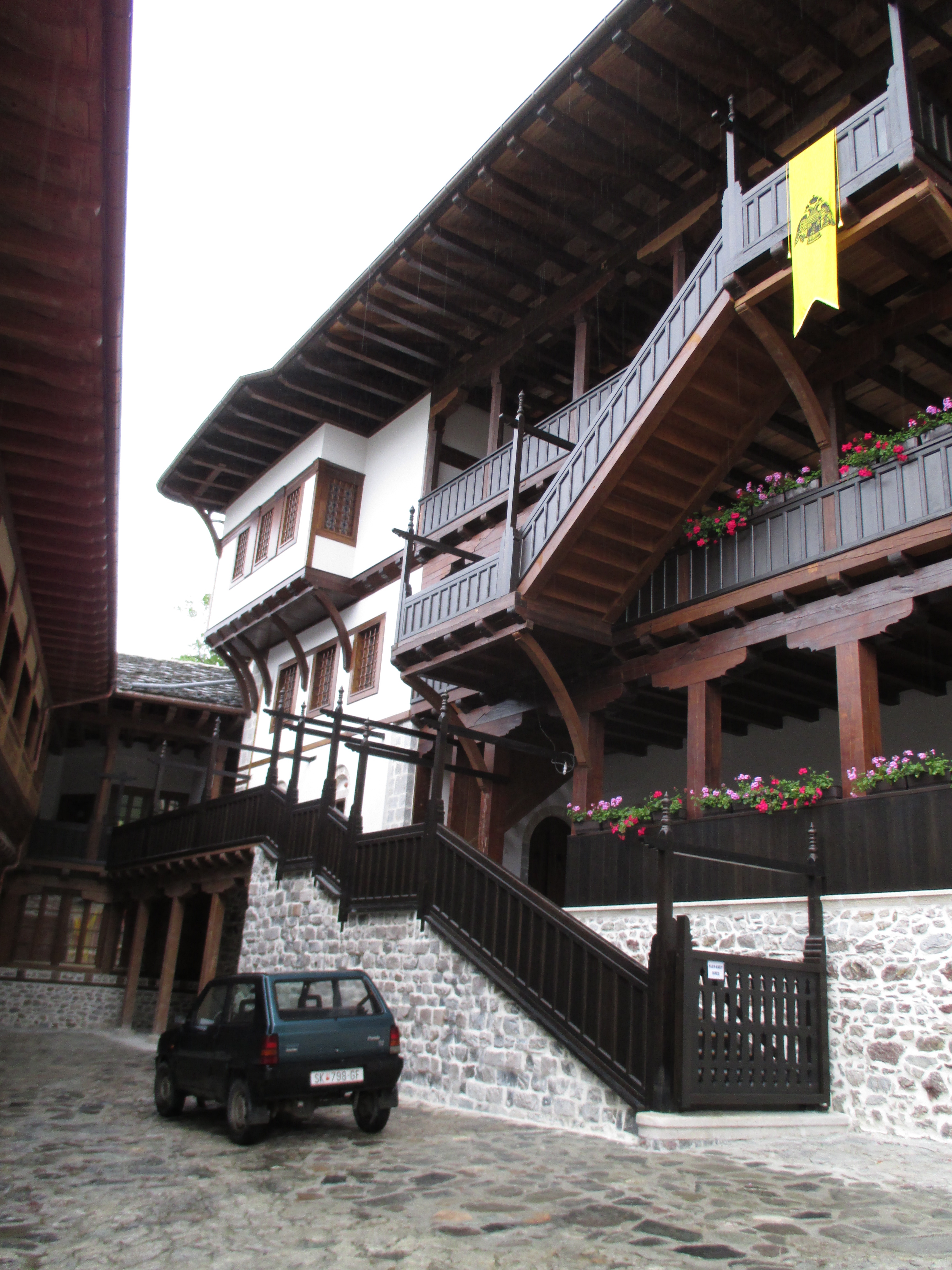
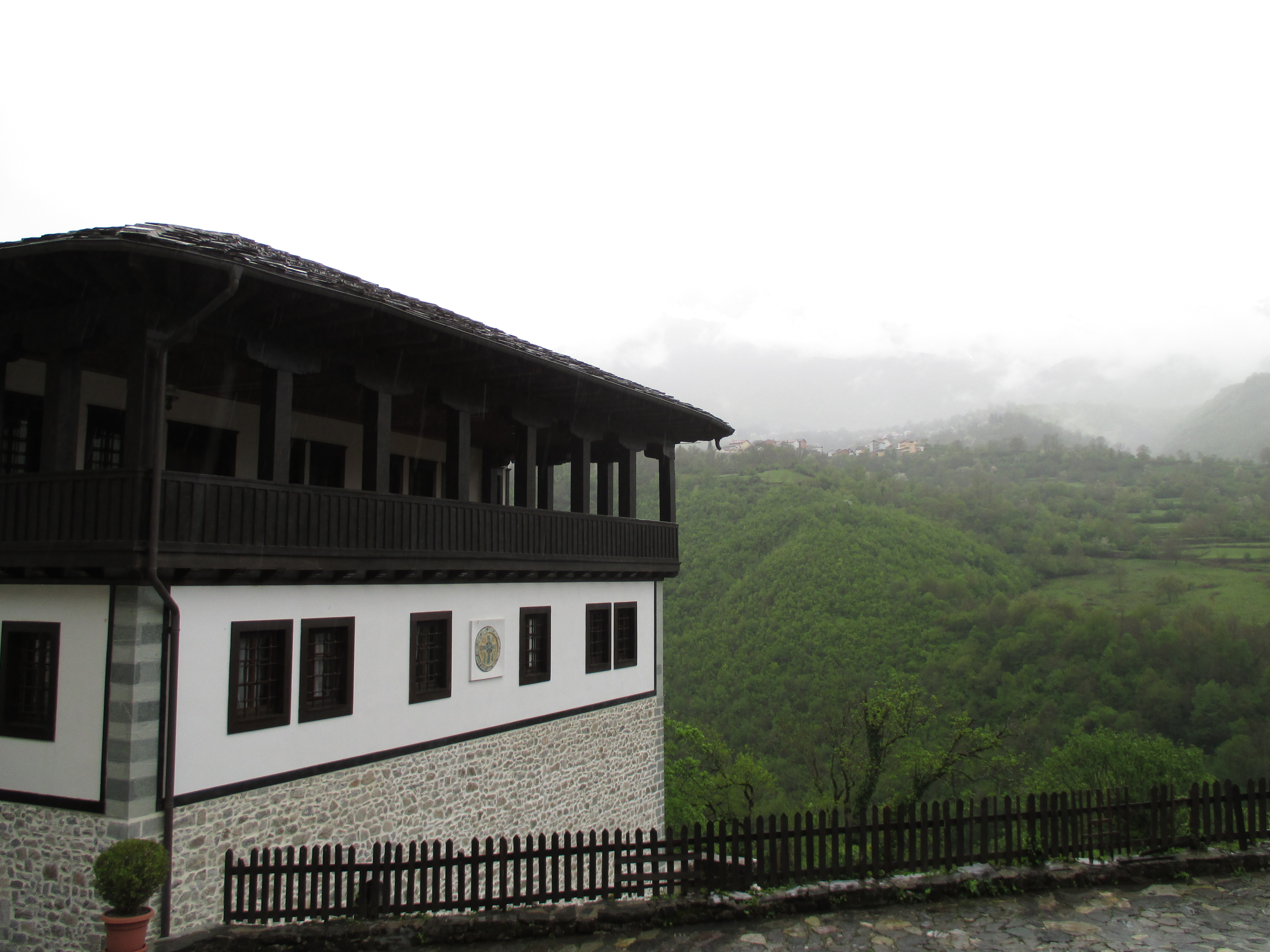
The Monastery of Sveti Jovan Bigorski, high up in a pass in the Šar Mountains that separate western Macedonia from Albania, was on our road from Ochrid to Tetovo in the northern plains of Macedonia. This is really the way to drive through the country if you want mountain scenery as gorgeous as any in the Balkans, as opposed to down the central Vardar valley. The monastery is dedicated to St. John the Baptist and though the Macedonian Orthodox Church is led by the Archbishop of the church-glutted lakeside town of Ochrid and has its seat in Skopje, this monastery is so important that it’s sort of the heart of Orthodox Macedonia. Unfortunately, we arrived just as vespers were starting, so we couldn’t talk to anybody about the monastery, and our schedule didn’t allow us to stay through vespers, which is also unfortunate because the interior of the main church is stunning as well. No pictures allowed though.
If looking at the pictures below, it appears that the monastery complex is in super good condition, that’s because it is. Most of the complex, except for the church itself, burnt down in 2009 and has since been rebuilt (like the administrative buildings of the Patriarchate in Istanbul, which burnt down in the 40s and for which permission to rebuild was only granted by the Turkish Republic in the 1990s). This is a kind of Ottoman tradition: build in wood, suffer repeated fires like the kind that wiped out whole districts of Istanbul throughout its history and killed tens of thousands. Then rebuild in wood again. It’s not known who said that the definition of neurosis is repeating the same action over and over and expecting a different result, but it also might be the definition of stupidity. Only after a fire destroyed two thirds of Pera in 1870 in just six hours did people in those predominantly Christian and Jewish areas start building in masonry, which is why those neighborhoods are architecturally far older today than those of the now ugly two-thousand-year-old city on the original peninsula, where there is almost no old domestic architecture left (except, again, in former minority neighborhoods, for some reason, like Fanari or Balata or Samatya). The fires also did create the famous Istanbul tradition of the tulumbacı (the “tube” or “hose” men? like the name of the dessert?) volunteer firefighters who were supposedly the great pallikaria of their mahallades, but just as often engaged in looting and robbing while doing their heroic duty. NONE of this is a swipe at the Ottomans, Turks or Muslims. Apparently the late Byzantines built domestic structures in wood as well — as did and do the Japanese, a culture I’d have no reason to mock.
And speaking of the Japanese… The thought occurred to me at Sveti Jovan that just rebuilding things when they get too shabby or structurally rotted and dangerous is not such a bad thing. The Japanese, for example, have a completely different concept of authenticity than we do. If the Katsura, the Imperial Villa complex in Kyoto (below) seems to be in great shape even though it dates from the seventeenth century, it’s because, as with other ancient structures in Japan, the Japanese have no problem with just replacing old or rotting wooden structures with new ones piece by piece as necessary. So the Katsura is — materially speaking or in our terms — really not that old at all; parts of it might be what we would consider brand new, in fact.


 (click on bottom two)
So what’s wrong with rebuilding the monastery structures of a complex like Sveti Jovan? The stone is usually immune. And if the rest is just wood and çatma and plaster anyway, why not replace it when it starts to go?
Back to Macedonia… Sveti Jovan is the most impressive Orthodox monastery I’ve been in outside of Athos. Nothing in Greece, Kosovo, or even Russia compares. In fact, I would say that if any Orthodox — or any — woman wants to get an impression of what the great, sprawling monastic palace-fortresses of the Holy Mountain are like, then a visit to Sveti Jovan is mandatory. Here are some pics; the last two of the church’s famous iconostasis were lifted from on-line. (Click on all.)




–
Comment: nikobakos@gmail.com
–
Maria Todorova and “A Falcon drinks water from the Vardar”
2 MayI wrote in “A Falcon drinks water from the Vardar”: Good-bye to Macedonia” that:
“The six simple lines of this beautiful Macedonian song:
A falcon drinks water from the Vardar.
Oh Jana, white-throated Jana.
O falcon, hero’s bird, Have you not seen a hero go past?
A hero go past with nine heavy wounds?
Nine heavy wounds, all from bullets.
And a tenth wound, stabbed with a knife.…encapsulate all you need to know about the Balkan cult of blood and tragic masculinity, which is the root of everything horrific you’ve read and heard about the region, yet, fortunately — or unfortunate, at least, for those who, as they say, can’t hold two contradictory ideas in their heads at the same time — the foundation for everything so stunningly beautiful about it.”

Maria Todorova, the Bulgarian historian, writes in her Imagining the Balkans, a book which does for the Balkans what Said’s Orientalism did for the Arab Middle East, that — I don’t have the book with me, this is a very rough summary and paraphrase — the West’s constantly describing the Balkans as “male” is one of the primary ways of exoticizing it and stigmatizing it as inherently violent and backwards. She’s right. I want to avoid that. And yet, it’s hard.
(Click on all photos.)
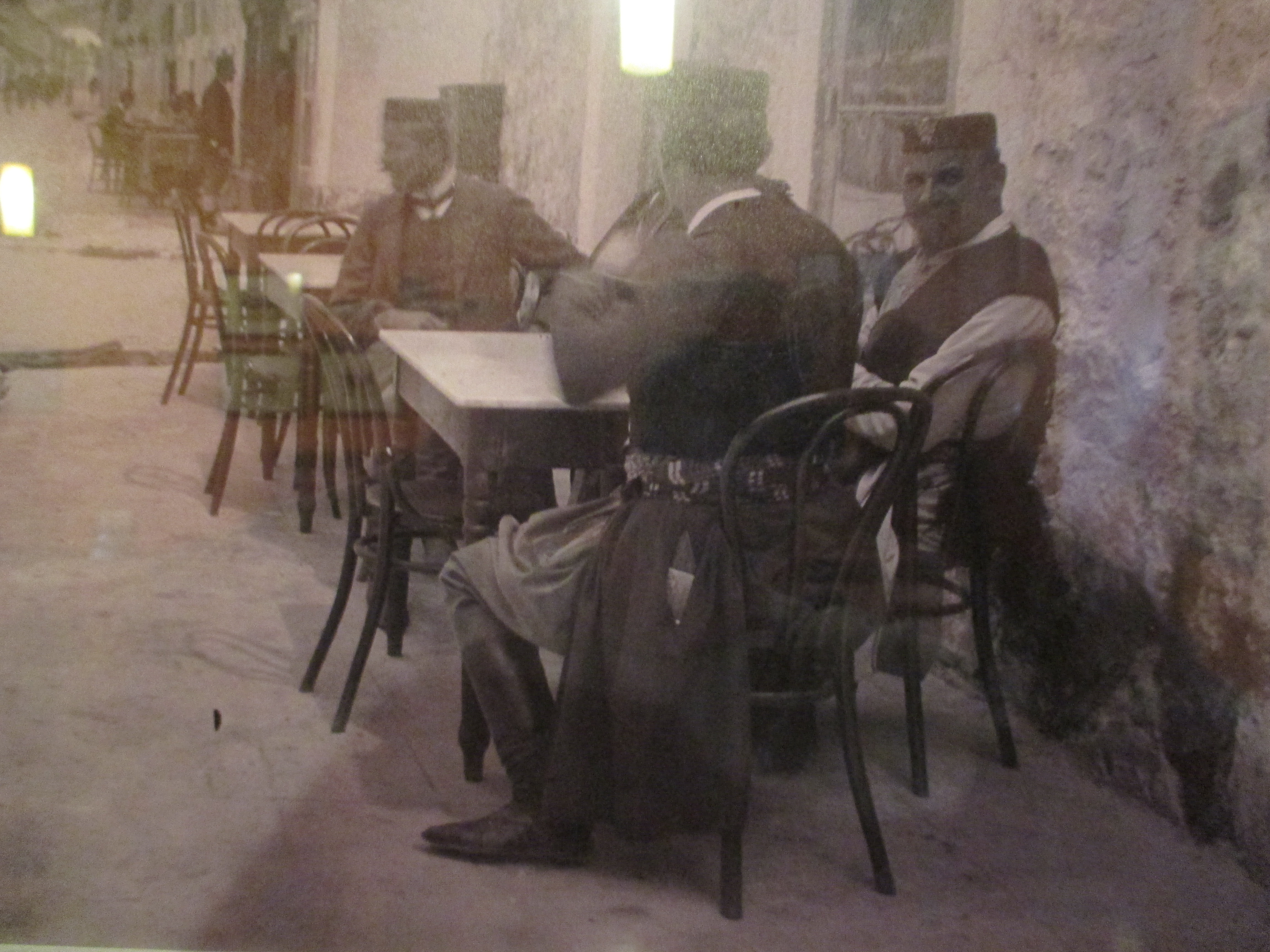
Men in Montenegrin cafe, date unknown.

Traditional Montenegrin male costume, all red and gold braid — I’ll find a color one. Men in traditional costume in Cetinje, Montenegro’s old royal capital – date unknown — and traditional coffeehouse in Cetinje.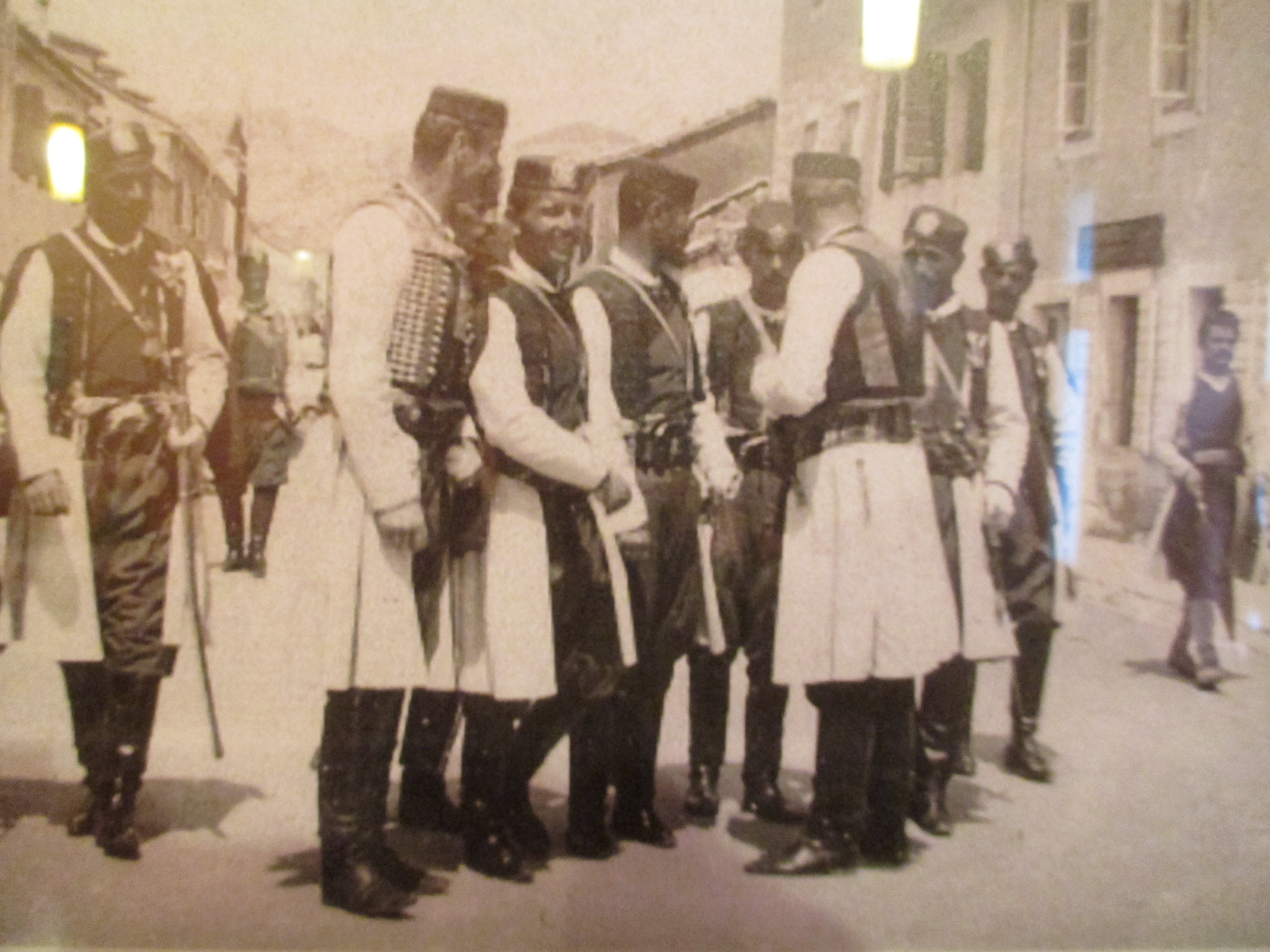
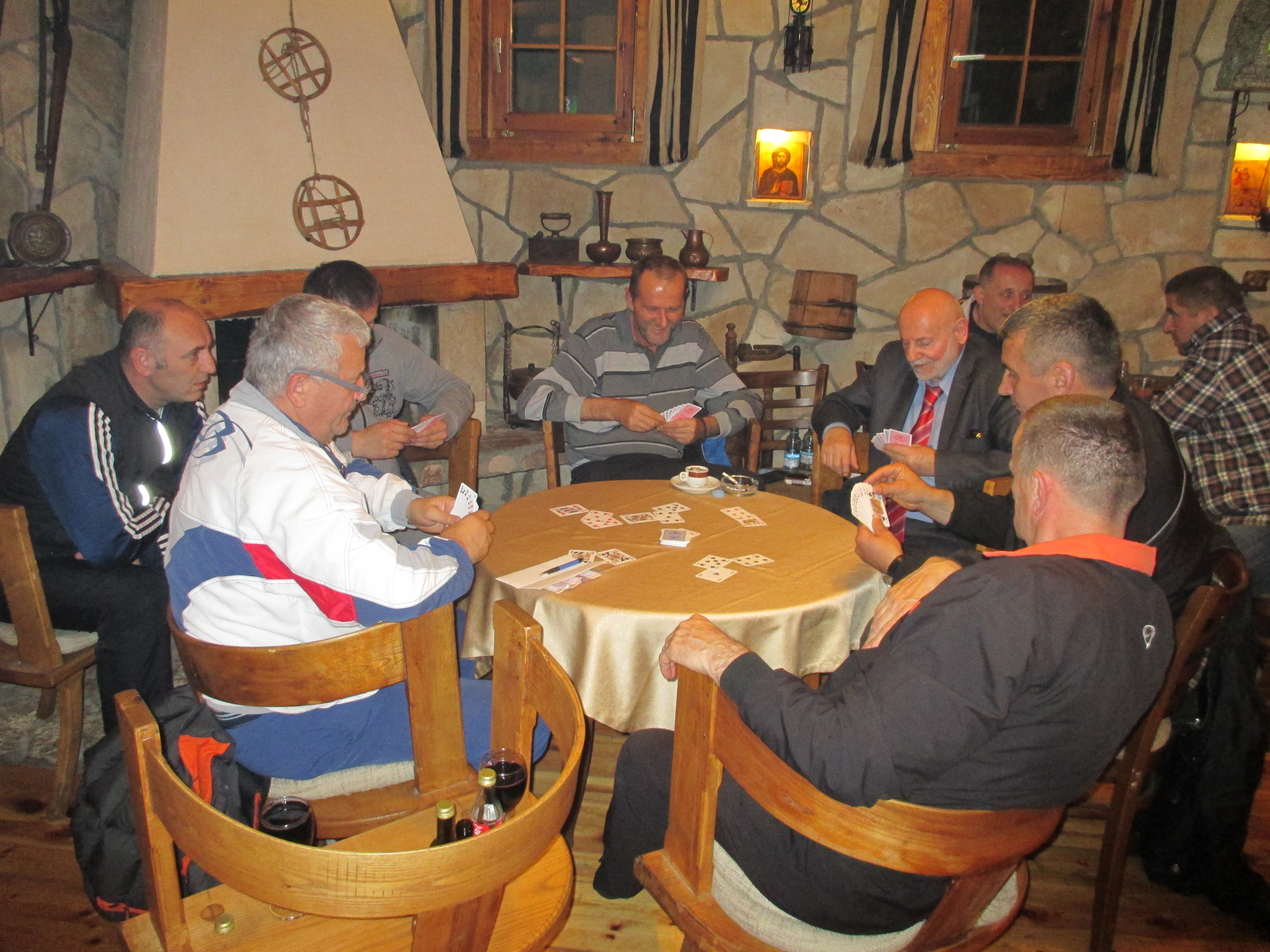
Žablak, Montenegro, the town kafene today.
FK Rudar Pljevlja won the first double in the four-season history of Montenegrin football, with their three trophies also making them the young nation’s most successful club.

Serbia’s water polo team at London Olympics 2012.
 The Montenegrin team.

The cover of Said’s Orientalism contained a detail from the 19th-century painting The Snake Charmer, by Jean-Léon Gérôme (1824–1904) — painting used on first edition of Said’s book. (Click)

–
Comment: nikobakos@gmail.com
–
Montenegro: Baptized in the Tara
2 MayΤό’χα τάμα. I had promised myself I’d do it. The river and the canyon are spectacular. Like an idiot I dove right in and got the most vicious ice cream headache in the world in one second flat. I could only bear about two more minutes in the freezing waters. But I never felt cleaner in my life.

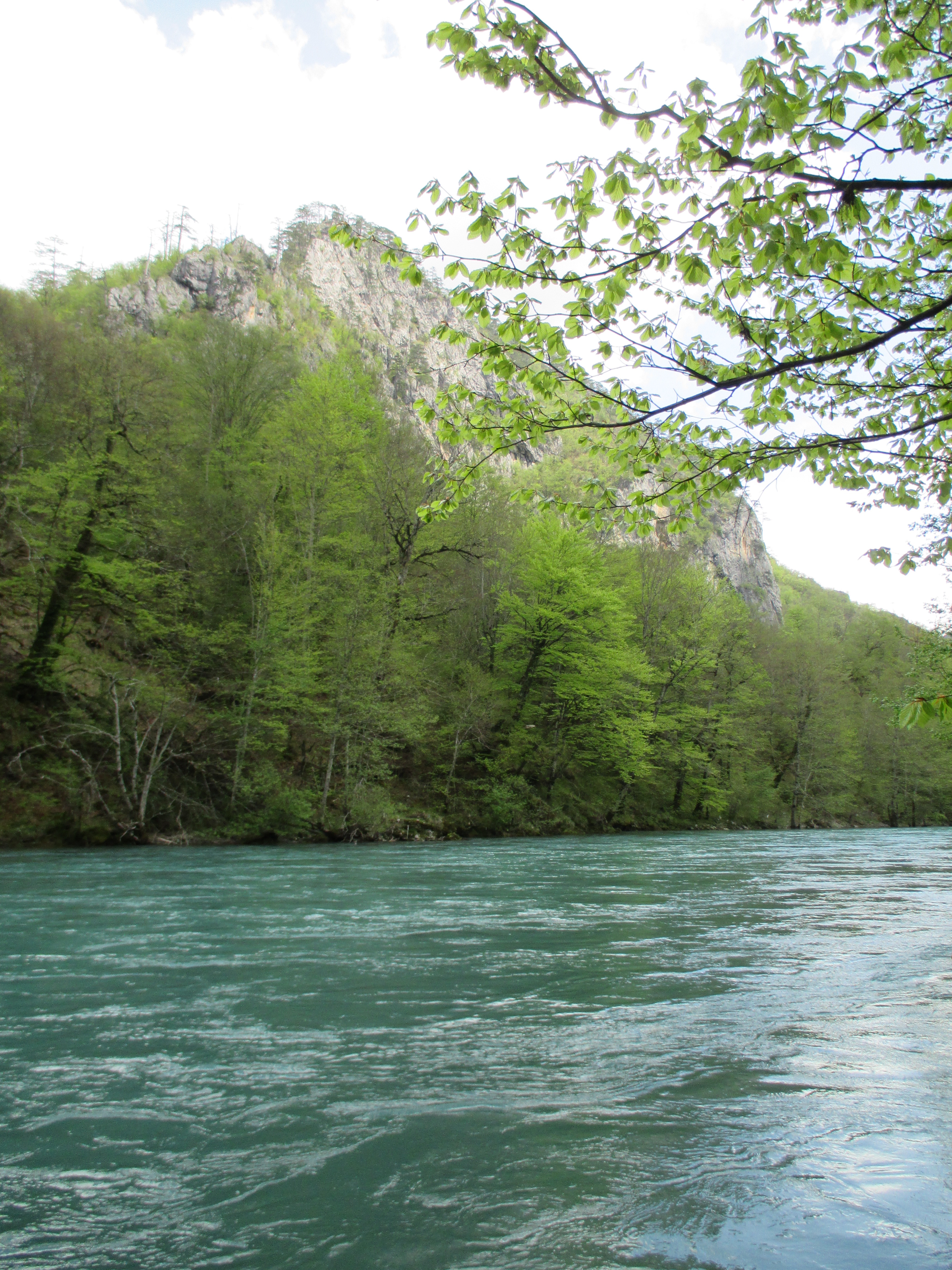
 (click on all)
Unfortunately, the bridge over the beautiful river is pretty ugly, since Montenegro isn’t in the European Union and can’t get a zillion dollars from Brussels, so they can pocket half of it and then hire Santiago Calatarava to build them some spectacular eagle span across the canyon with whatever’s left. Like Greece.

Note: I’m still in Montenegro but will be jumping back and forth between countries, so expect “redux” posts on Macedonia and Kosovo.
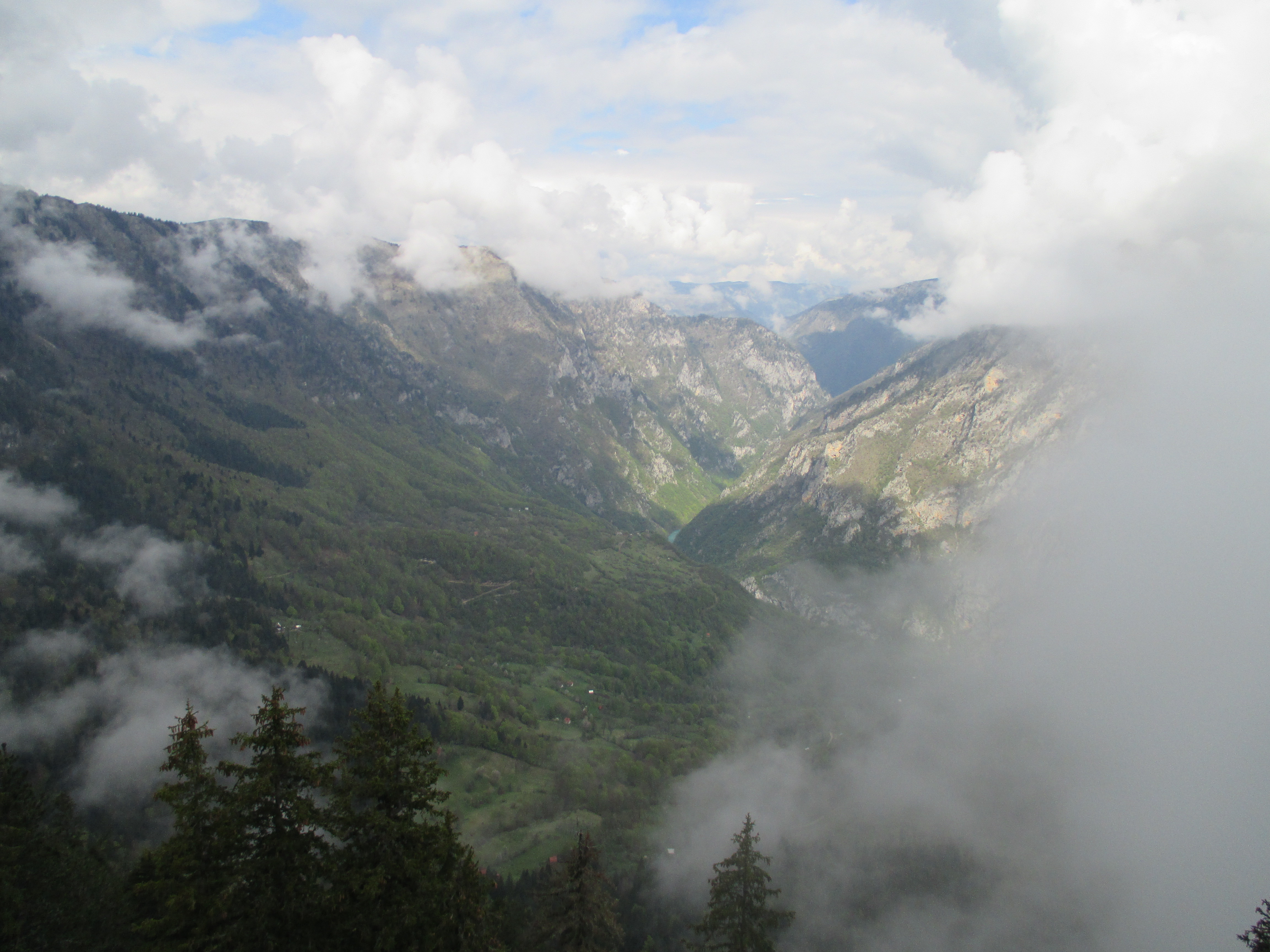
The Tara canyon — the river barely visible — from further up on Durmitor (click).
–
Comment: nikobakos@gmail.com
–

“A falcon drinks water from the Vardar” — good-bye to Macedonia
27 AprLeft Macedonia this morning and crossed into Kosovo; in Gračanica now, where we found the most amazing place to stay right by the famous monastery, and a world away from the horrible mess of Priština.
The six simple lines of this beautiful Macedonian song:
A falcon drinks water from the Vardar.
Oh Jana, white-throated Jana.
O falcon, hero’s bird, Have you not seen a hero go past?
A hero go past with nine heavy wounds?
Nine heavy wounds, all from bullets.
And a tenth wound, stabbed with a knife.
…encapsulate all you need to know about the Balkan cult of blood and tragic masculinity, which is the root of everything horrific you’ve read and heard about the region, yet, fortunately — or unfortunate, at least, for those who, as they say, can’t hold two contradictory ideas in their heads at the same time — the foundation for everything so stunningly beautiful about it. This is what Rebecca West understood so profoundly and in her soul and why she loved and defended the region’s peoples with such unapologetic passion. This is what Milovan Djilas accepts with such love and intelligence, when he describes his Homeric people as capable of the most profound sweetness and tenderness in the midst of the grossest violence and destitution — again, with no apologies and no judgements, just true understanding of the their humanity. The Macedonian transliteration is below. You get it or you don’t.
The photographs are extraordinary. Balkan female dress — which all over the southern Balkans is an entire civilization in itself — reaches the apogee of richness and complexity across this swath of southern Albania, Macedonia, Kosovo and the rest of Old Serbia. More about Macedonia to come.
–
More sokol pie,
Voda na Vardaro,
More sokol pie,
Voda na Vardaro.
Jane, Jane le belo grlo
Jane, Jane le krotko jagne.
More oj sokole,
Ti junacko pile.
More neli vide,
Junak da pomine,
Jane, Jane le belo grlo
Jane, Jane le krotko jagne.
Junak da pomine,
S’devet luti rani
S’devet luti rani,
Site kursumlii
Jane, Jane le belo grlo
Jane, Jane le krotko jagne.
A desetta rana,
So noz probodena.
A desetta rana,
So noz probodena.
Jane, Jane le belo grlo
Jane, Jane le krotko jagne.
–
And another beautiful Macedonian song, “Jovano, Jovanke.” “Mor’ Gianno, mor’ Giannoula” closest translation into Greek. Jovana, Gianna…Joan, more exact translation is, again, impossible with English’ lack of diminutives.
Only translation — from my half-assed Russian, which actually served me in good stead in all these countries — of transliterated lyrics I can make out from the one verse given:
“Jovano, Jovanke
Kraj Vardarot sedish, mori
Belo platno belish
Belo platno belish dusho
Se na gore gledash”
is
“Gianno, mor’ Giannoula, You sit on the banks of the Vardar,
“Washing your white linen, and glancing off into the mountains.”
(I think – can anybody help us with the rest of the translation)
–
The “Jovano” video is also beautiful, and has some interesting photos: the first shot is of a gathering at the monastery of Sveti Jovan Bigorski, the defending mountain fortress of Macedonian Orthodoxy (more on that later), and the third photo — all of them really — is pretty amazing in showing how little male body language in “our parts” has changed over the centuries. That’s the connection of the two pics on the blog’s homepage, but nobody got it. Here are some more boys from my village at Easter; maybe that’ll make it more obvious.
 (click)
Notes: I don’t know if these two songs above are composed “folk” songs, analogous to “Gerakina” or “Xekinaei mia psaropoula” in Greek, but the lyrics are stark enough to seem authentic. In those Greek “folk” songs I’m talking about, their “composed” status is made obvious by not only the melody but the conspicuously over-folksy content of the lyrics. The “folk” did not sing about the mundane details of their everyday life — going to get water from the well or mending fishing nets. They sang about nature, about love, about the pain of emigration, about death, and about the heroic exploits of their men and often their women. A friend of mine from Naousa in Greek Macedonia, the town just south of Vodena that is famous for its carnival celebrations, says both “More Sokol” and “Jovano” are played as instrumentals in that region, the gypsy musicians who play them usually being the carriers of songs and musical forms from country to country and region to region.
Also surprising: “more,” a word, like “bre,” used all across the southern Balkans, means “hey you” or “yo” or “oh, listen”…I dunno, a vocative case pronoun basically — does that sound right Philopomeon? In Macedonian it has Greek gender endings: “more” and “mori.” How did that happen? That was the only way I knew that Jovano was a female and not a male name.
–
Comment: nikobakos@gmail.com
–

A Reader writes: “Off to ex-Yugoland”
25 AprFrom “anonymous:”
“Niko enjoy your jaunt through the southern balkans, I hope you can stop by Kosovo Polje. I couldn’t agree more with your comment on Macedonia. It is the name of a place, and it encompasses several countries. If one of them speaks Macedonian and is geographically within Macedonia, tough toenails if anyone objects to their use of the name!”
Hey! Thanks for the well-wishing. But why “anonymous”? You must be from the neighborhood, no? Don’t you want to tell us more?
NB

–
Comment: nikobakos@gmail.com
–
The Djok’s in Greece
25 AprThat said….meaning, I wasn’t gonna write for a while: news too cool to not report. Djoković is in Greece, fiancée Jelena Ristić is pregnant, and though he lost his Monte Carlo Crown, he made it to semi-finals, and at least it was to Federer and not to the Catalan or anybody. All in all, not a bad Easter week for Nole.

(click)
–
Comment: nikobakos@gmail.com
–
 Jadde: from Bosnia to Bengal