Balkans, Anatolia, Caucasus, Levant and other Middle East, Iran, Afghanistan, South Asia, occasional forays into southern Italy, Spain or eastern Europe, minorities, the nation-state and nationalism — and whatever other quirks or obsessions lurk inside my head.
Maybe calling them “pop” is inaccurate, especially because “Serbian pop” usually makes people think of Turbo-folk or Ceca, the Dowager Queen of Serbia. I think what most of these songs are is New Starogradskamusic, literally New Old-City music, “city” here meaning urban, meaning not folk or country, roughly the same popular tradition that goes as λαϊκά in Greek. Correct me, Serbs, if I’m wrong. And speaking of Greek, what’s cool about many of these songs is what a Greek-like affective tone they strike.
Here goes:
If you’re wondering what’s up with the action in these videos, they’re intercut with footage of the television series they come from, Ubice mog oca — “The Murderer Killed Himself” apparently. It’s a really good cops-and-bad-guys series, and I say that though roughly 70% of the time I’m not sure what’s going on; there are no subtitles, of course, and I just make do with vocabulary I can guess from my Russian and the action and character and plot conventions of the genre.
Ubice… stars Vuk Kostić as Aleksandr Jakovljević, detective and the star, I’d say, of the series. He’s the guy who’s shown hanging in clubs and in romantic entanglements in the videos. Aleksandr is a kind of male archetype found all over the Slavic world: he’s tough and soldierly, but also goofy, always in the same too small t-shirt and the same baggy jeans hanging off his ass, he’s a disaster with women, has a child out of wedlock with his boss, lives with his mother (Elizabeta Đorevska, who I adore), and drinks too much; in fact, the scenes of him trashed and the messes he gets himself into are brilliantly acted; I’ve never seen a better screen drunk before. And, of course, not too deep down, he has a heart of gold. He’s best in the Halid Bešlić video: “Ja bez tebe ne mogu da živim”; the title and refrain of the song — which he stands up to and drunkenly belts out for the whole club, despite his partner’s best attempts to get him to behave — means “I can’t live without you.”
Vuk Kostić as Aleksandr Jakovljević in Ubice Mog Oca
Next come my favorite Nikola Rokvić songs:
Below is “Honey and sweet grapes”… “My only sin is love…” Really like the song, but the video is lame and it contains a horrible stereotype of Serbian women in lip gloss. (Check out the Metaxa bottle in the refrigerator rack).
And then there’s this: “From craziness to craziness” “…I only live for you and that’s what kills me…” (aaawwww…) that Rokvić shares with Nikola Marinković, both incorrigible and adorable Serbian hams.
And my favorite Rokvić song:
Refrain:
Here comes the spring but I can’t stand how quickly time is passing, yet to me, it has stopped. Mothers, daughters, sons, and they all go to weddings. But mine will come from sadness, as my broken heart cracks.
The footage in this song is from Žigosani u reketu, a series about young men in a basketball club in Belgrade. They just started putting up episodes of it on YouTube and I’m peeing in my pants at the prospect of watching endless hours of television that I don’t understand.
I’m particularly enamoured of Goran Babić (Jovan Jovanović) in this series, the super tall guy with the green glasses. Here he is in a scene (no music) from Žigosani… Goran is the team’s intellectual — the thinking man’s jock — and in this video he’s expounding on something about Bosnian-Croat-Yugoslav writer Ivo Andrić of Bridge on the Drina fame. A friend translated it all for me once, but I forgot — something about “looking for him [Andrić] in all the wrong places.”
Oooooffff… Ok. Thought I’d get to Beogradski Sindikat but that’ll have to wait as it’s really a whole other genre anyway. So, that’s all for now. More next year.
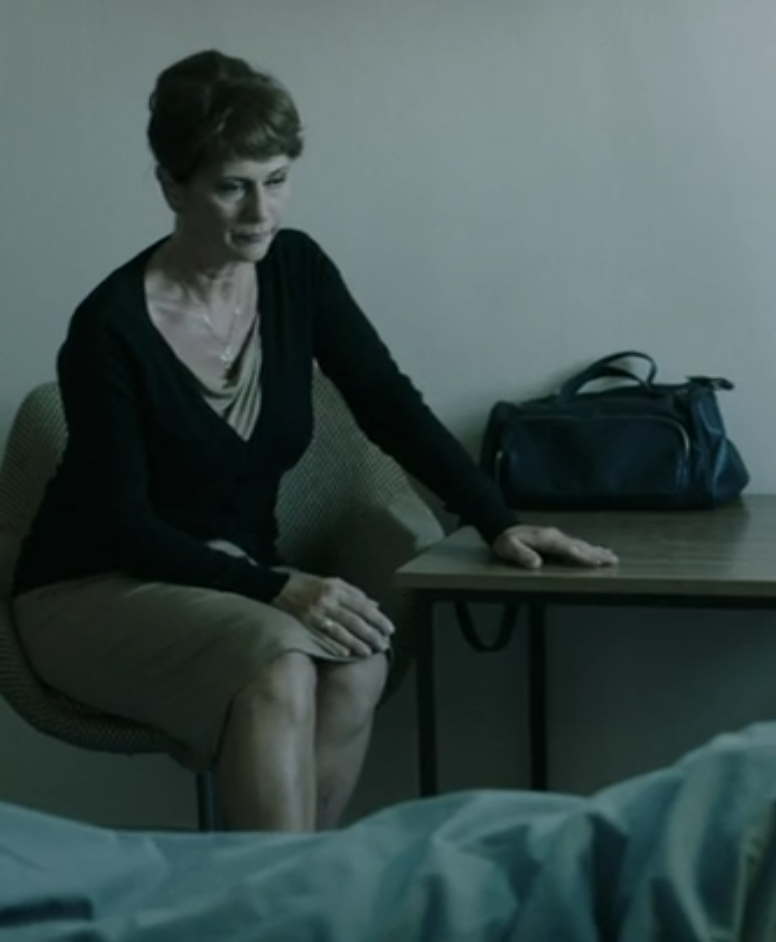
Elizabeta Đorevska
Elizabeta Đorevska (above) as Olja Jakovljević, mother of Aleksandar Jakovljević (Vuk Kostić); there’s an argument to be made that Serbian women age better than any other women in the world; they have great bodies, great legs and stay beautiful and regal into their 60s or 70s. I really find Serbian women of this age super-sexy.
Luke Ranieri is more than a classicist; he’s what Greek aunties used to call “a beast of learning”. He makes professional — challenging but accessible — videos on a whole range of linguistic issues, but mostly Latin and secondarily, Greek.
Here he runs through chapter 2 of Luke, the most quoted of the gospels where Christmas narratives are concerned while surfing a live chat of questions for 2:30 hours…completely in Latin! easy, fluent, what sounds like conversational Latin. It’s kinna freaky and very cool to listen to.
(Luke is also generally considered the best writer of the four evangelists, though my grasp of Koinē is hardly good enough to judge; he tells a good story though, probably because he was the only Greek of the four.)
I’ll be back with more of Ranieri’s videos soon.
In the meantime, for those less academically inclined, here is perhaps our civilization’s most famous and influential reading of Luke — Linus:
A 2020 salute to a country I love, more this year than ever, for all its wounds, and because my man Manu (whatever youse might think of him) had our (Greeks’) backs all year.
And this is Nathaniel Drew’s video on his first time in France (Nate is the guy from: “Wonderful Jewish grandmother who speaks a ton of languages“). It’s silly and sentimental, but that’s me: silly and sentimental. Enjoy. Some good photography at least.
ANTHONY BOURDAIN: “When I die, I will decidedly not be regretting missed opportunities for a good time.’ ‘My regrets will be more along the lines of a sad list of people hurt, people let down, assets wasted, and advantages squandered.”
Ouuuuuuuuyyyy mooo….: WHAT sad list of people did you hurt, WHAT people let did you let down, WHAT assets wasted, and and WHAT advantages squandered?
Tell me! You were a God! You were a KING! Even in knowing it was time to go, you were the KING!
Love you always — Changed my Life — Love Forever — Super-majo* till the end!
NikoBako
P.S. I remember all the trite, dumb stuff people wrote and commented after his suicide — “what a waste”…”how sad…”, even some aunt of his, I think, saying that: “He had more money than you could possibly imagine! He had more fame than you can possibly imagine!”
Well, all that was obviously not enough, lady. And how little you must have ever understood him to come out with something so slight.
*Majeza,n., or maj-o/-a, adj.: you can read the whole post where the meaning of this word appears previously: “Un Verano en Nueva York”, but if not, here’s the quote from it:
“Majeza is a very Spanish term that encompasses such a complex of qualities that it’s difficult to explain, especially in English, which is tragically lacking in a comparable term, as its speakers (aside from the Irish) are in most of its qualities. It means openness and frankness and humour and swagger; it means being hospitable without being in anyway servile; it means being able to put away copious amounts of wine and pig meat; being friendly and spirited and generous while always maintaining a kind of stylish dignity and flair; it partakes of some of the qualities of Greek and Turkish leventeia in that sense; in fact, it’s a word with a certain undoubtable Balkanness about it. Soon after the term appeared in, I think, the late eighteenth-century, working-class barrios of Madrid, it almost immediately became associated during the Napoleonic Wars with the city’s street kids, who terrified the French with their suicidal bravery, so it probably originally implied a quickness to pull a knife too and no squeamishness about seeing a little bit of your own blood shed as well… In any event, courage is still certainly an implied element of being majo. There’s a great, chapter-long analysis of majeza in Timothy Mitchell’s Blood Sport: A Social History of Spanish Bullfighting, if you’re interested and can get your hands on it.”
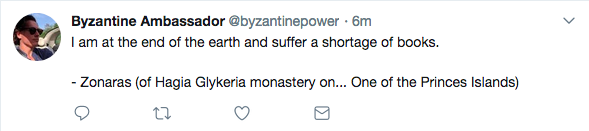
The reason that Byzantine Ambassador’s tweeting of Joannes Zonaras’ whine about being stuck on the Princes’ Islands — (“Adalar” or what Jews called, with wonderful syncretism, “Las Adas”) — “the end of the earth” — is funny…
— is that this(below)…
…is how far the Princes’ Islands are from Constantinople. In fact, it was generally considered that exile on the Islands was particularly painfulbecause one could still see the City from there.
But, as the Bard said: “There is no world outside Verona walls…”
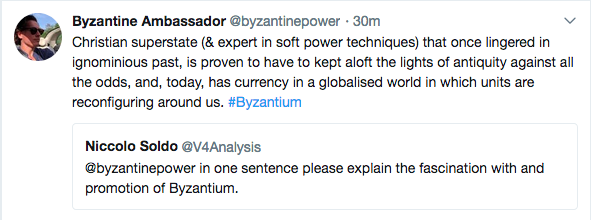
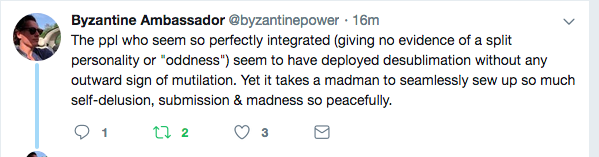
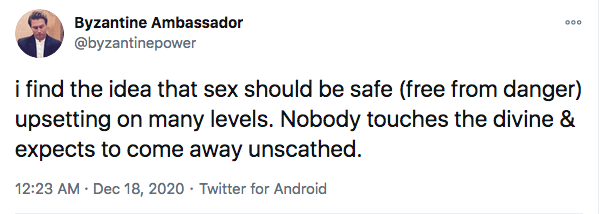
Check out ByzAmb (a.k.a. Henry Hopwood-Phillips) at @byzantinepower or at his website: THE BYZANTINE AMBASSADOR. He’s a tipaccio in the great tradition of truly erudite, eccentric Brits, and is always up to smart, scarily learned, quirky takes on Byzantium, Orthodoxy, what we used to call Christendom, MENA and western Eurasia more generally, and lots else.
Balkans, Anatolia, Caucasus, Levant and rest of ME, Iran, South Asia
Me, I'm Nicholas Bakos, a.k.a. "NikoBako." I'm Greek (Roman really, but when I say that in English some five people in the world today understand what I'm talking about, so I use "Greek" for shorthand). I'm from New York. I live all over the place these days. The rest should become obvious from the blog.
















 Jadde: from Bosnia to Bengal